
Alexander Calder
Alexander Calder was born on July 22, 1898, in Lawnton, Philadelphia, into a family of sculptors, his grandfather Alexander Milne Calder having created the colossal statue of William Penn atop Philadelphia City Hall and his father Alexander Stirling Calder being a well-known public sculptor. His mother was a professional portrait artist who had studied at the Académie Julian in Paris. Despite this heritage, his parents did not want him to be an artist, and Calder enrolled at the Stevens Institute of Technology in Hoboken, graduating with a degree in mechanical engineering in 1919. He held various jobs before deciding to pursue art, studying at the Art Students League in New York and working as a sketch artist for the National Police Gazette, where an 1925 assignment sketching the Ringling Bros. and Barnum & Bailey Circus sparked a lifelong fascination with the circus. He moved to Paris in 1926, where he befriended Joan Miró, Fernand Léger, Jean Arp, and Marcel Duchamp, and married Louisa James, a grandniece of author Henry James, in 1931. He was posthumously awarded the Presidential Medal of Freedom by President Gerald Ford in 1977. Calder Gardens, a dedicated center for his work, opened on Philadelphia’s Benjamin Franklin Parkway in September 2025.
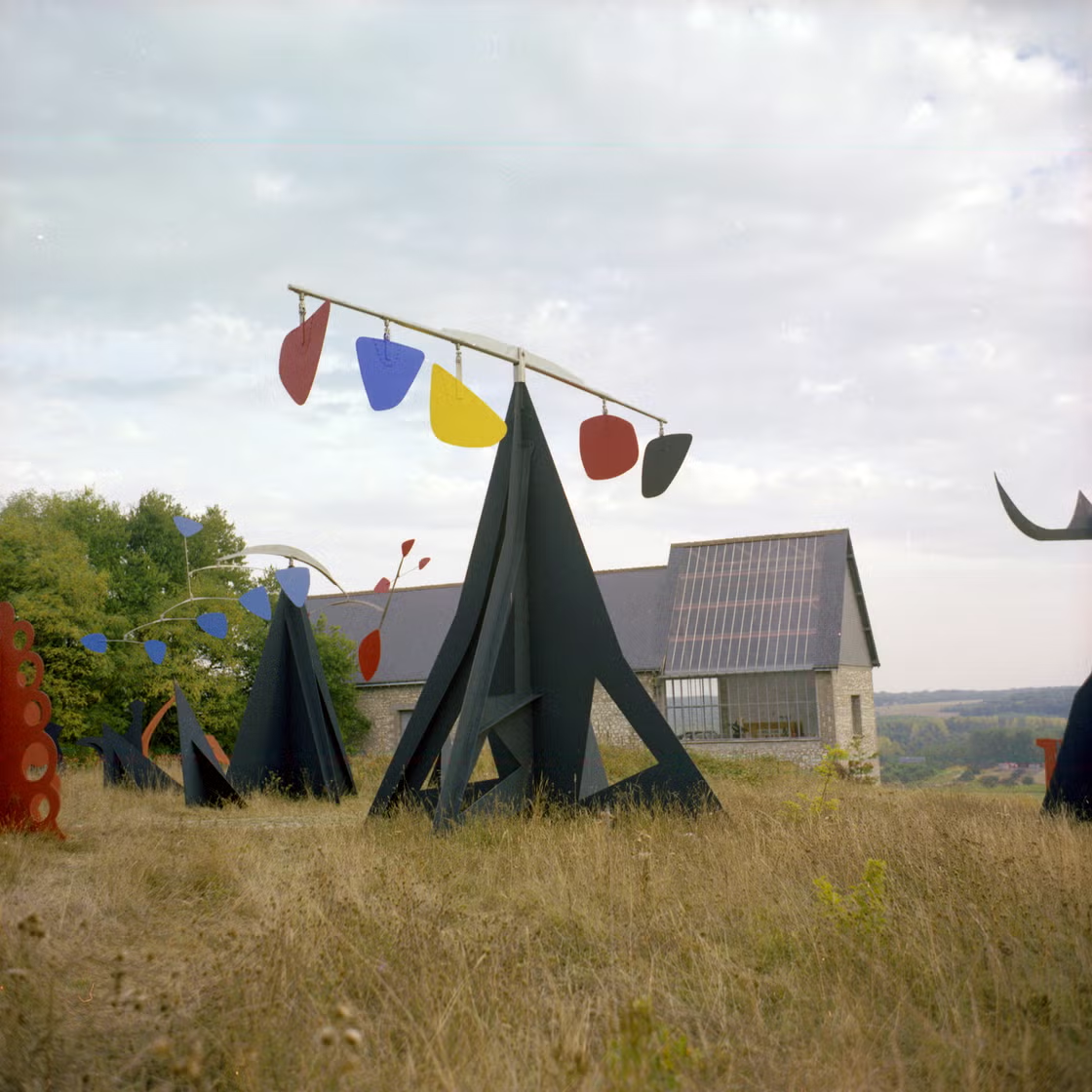
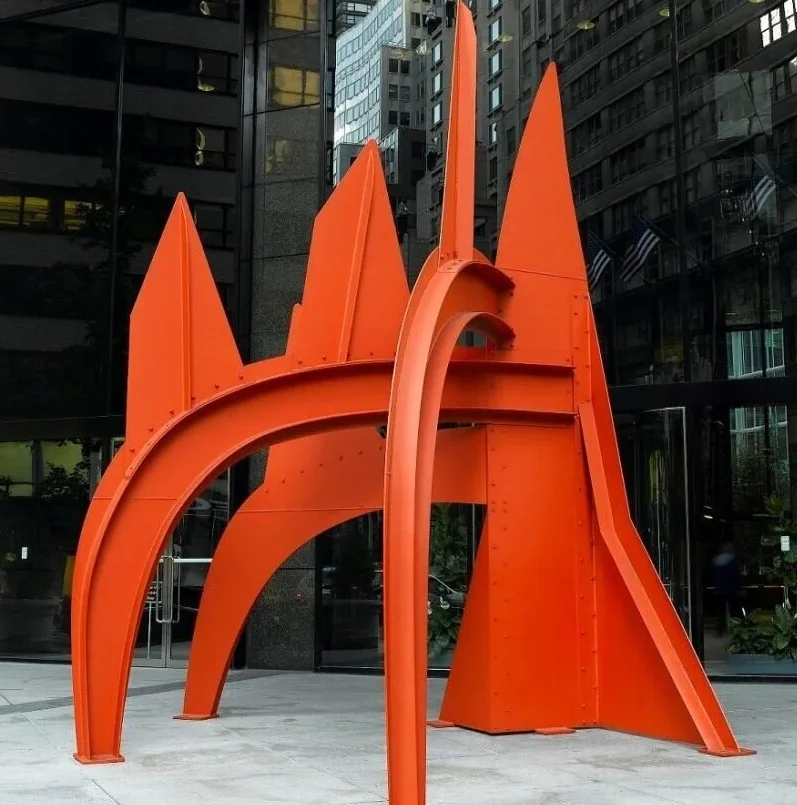
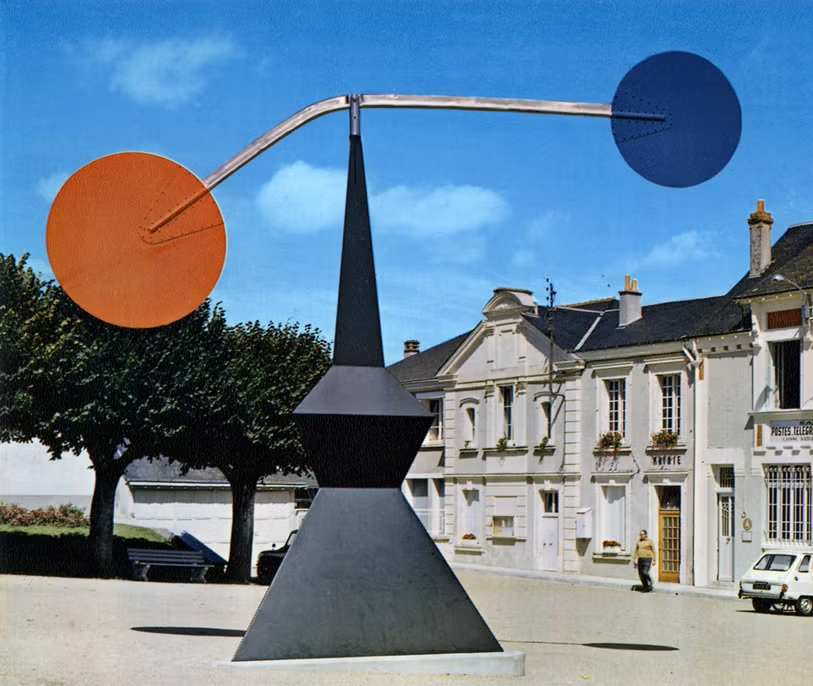
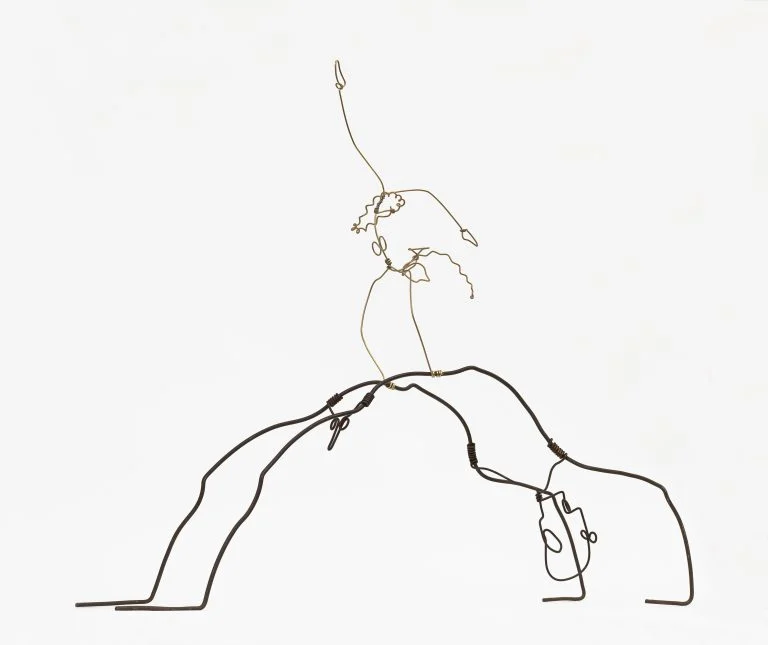
In Paris, Calder developed his celebrated Cirque Calder, a miniature circus fashioned from wire, cloth, and found objects that was presented on both sides of the Atlantic and became popular with the Parisian avant-garde. A visit to Piet Mondrian’s studio in 1930 shocked him into fully embracing abstraction. His first motor-powered kinetic sculptures followed in 1931, christened “mobiles” by Marcel Duchamp in a French pun meaning both “motion” and “motive.” By 1932 he had replaced motors with hanging sculptures that moved from touch or air currents, and Jean Arp coined the term “stabiles” for his static abstract counterparts. His 1946 show at Galerie Louis Carré in Paris, organized by Duchamp with a catalogue essay by Jean-Paul Sartre, made a major international impact. From the 1960s onward, monumental public commissions multiplied across the world, including La Grande Voile for MIT, La Grande Vitesse in Grand Rapids, which was the first civic sculpture in the United States to receive National Endowment for the Arts funding, Flamingo at Federal Plaza in Chicago, and El Sol Rojo for the 1968 Mexico City Olympics. He also created over 2,000 pieces of jewelry over his career, designed stage sets for Martha Graham and other theatrical productions, and painted a Braniff International DC-8 jet as a flying canvas in 1973, as well as the first BMW Art Car in 1975.
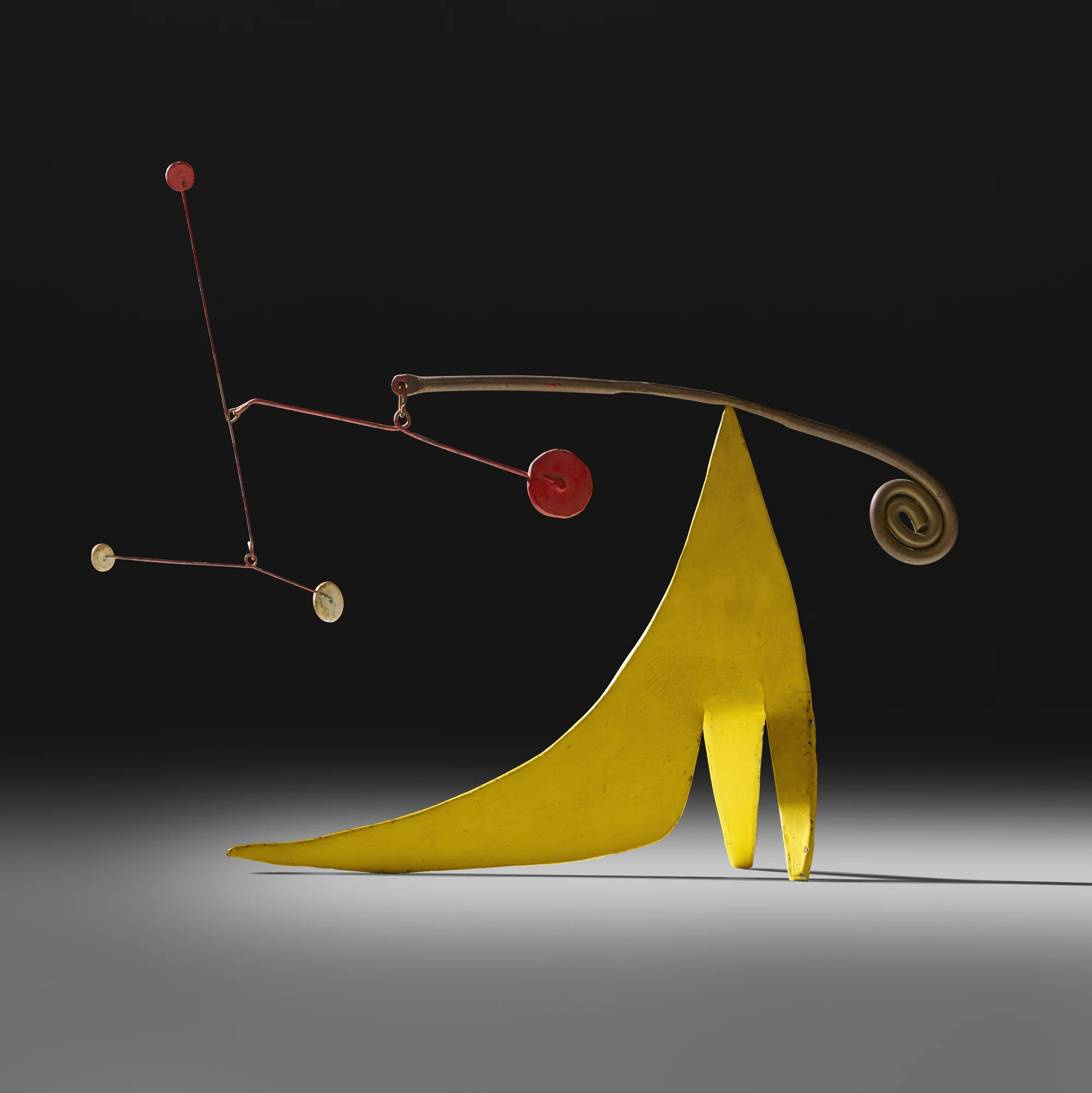
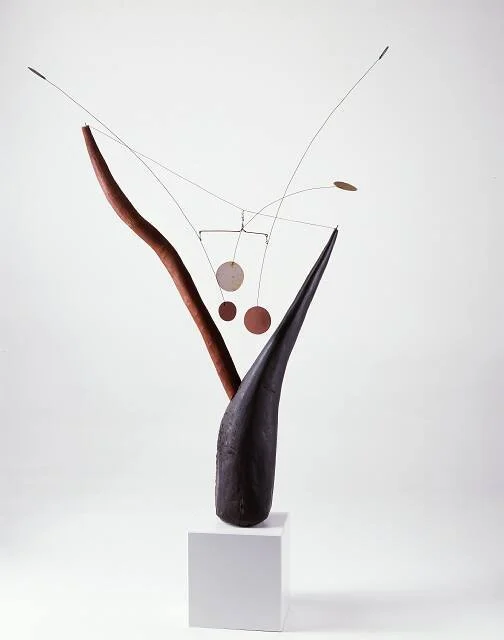
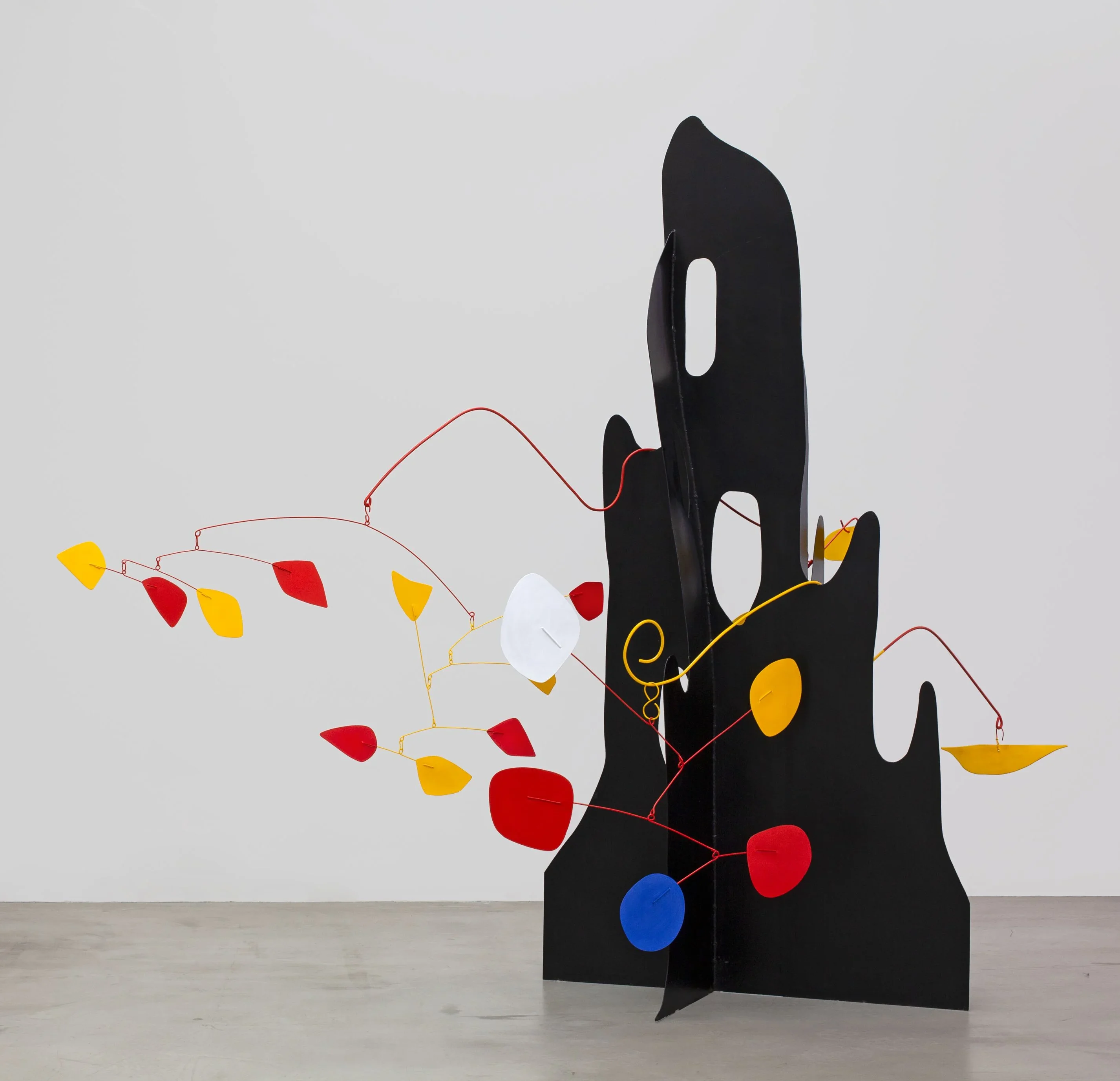
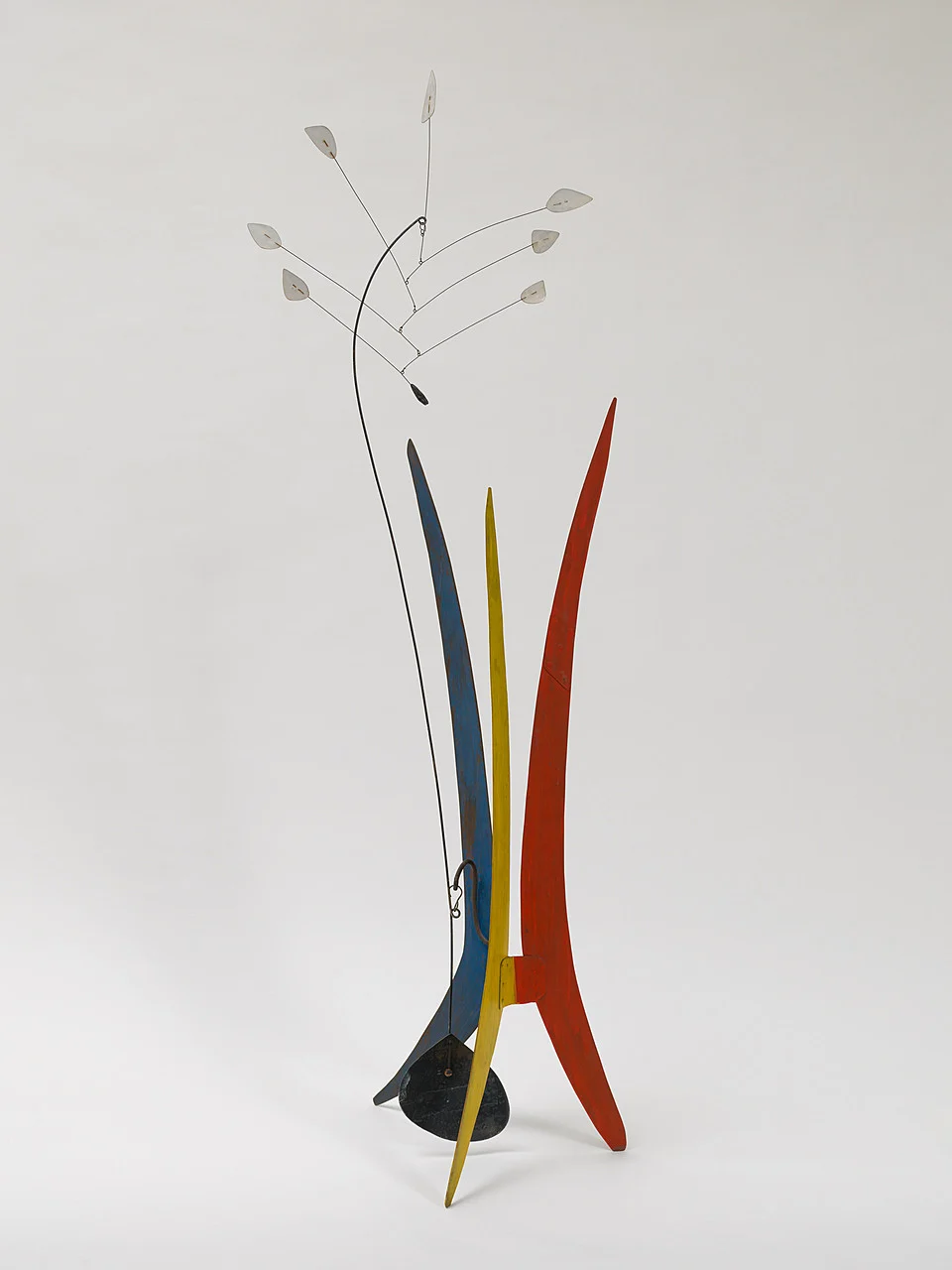
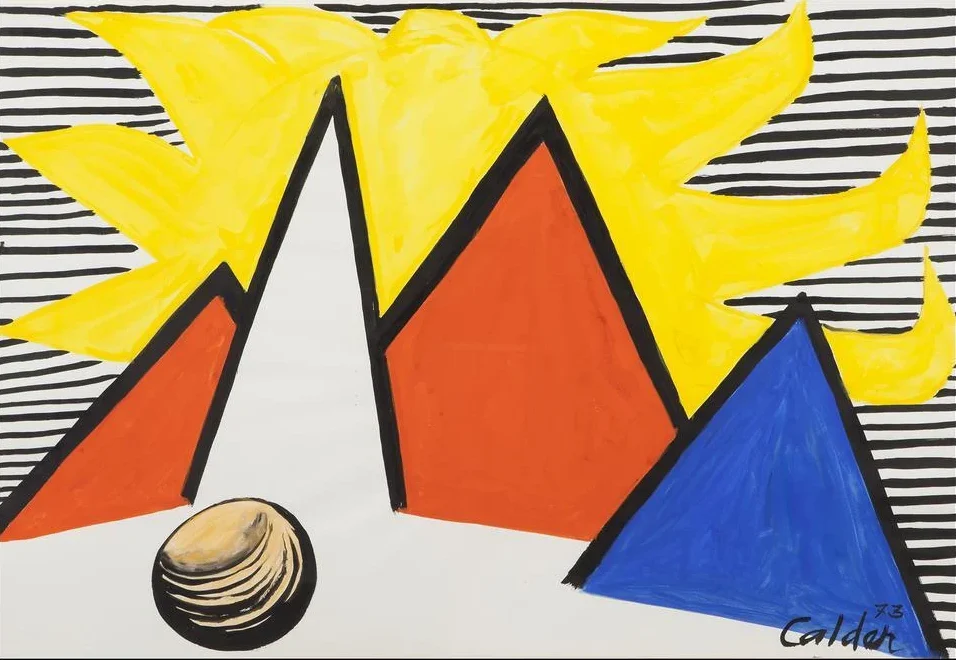
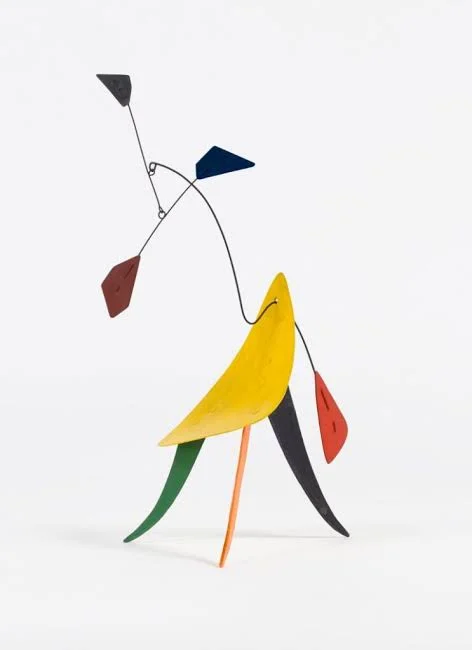
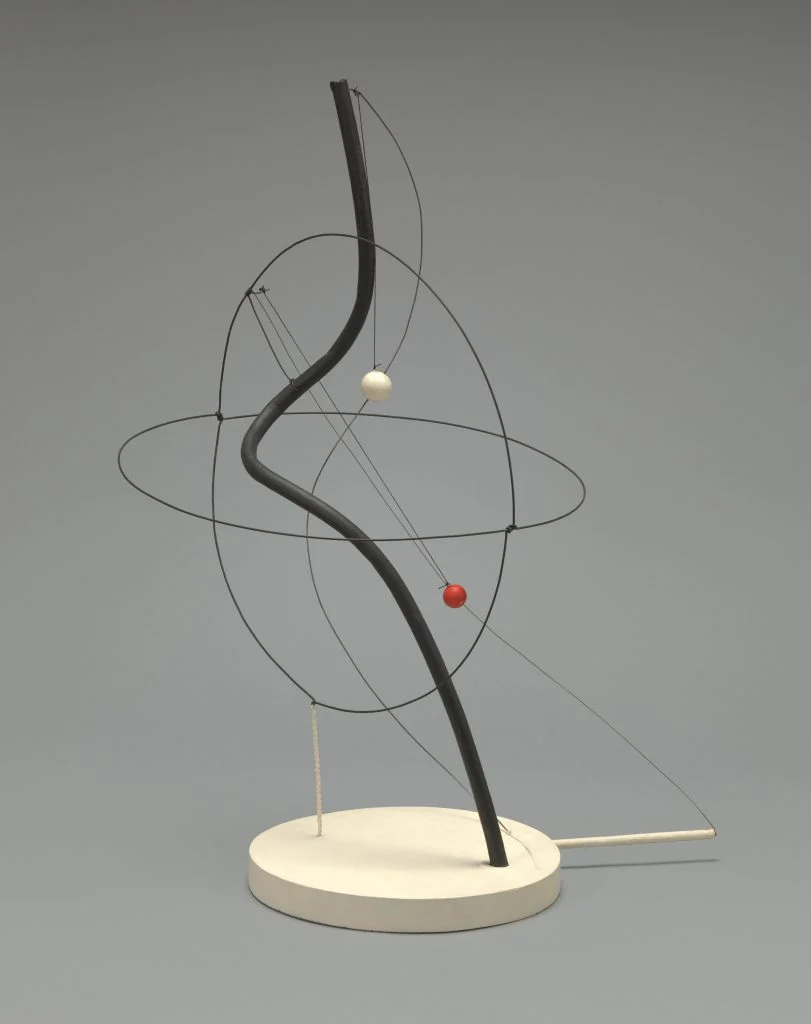
Calder’s work embraced chance and movement as aesthetic factors, treating sculpture as something that lived in time rather than static space, with his hanging mobiles responding to the slightest air currents in constantly shifting configurations that could never be exactly repeated. His palette was bold and declarative, typically red, black, yellow, and blue, applied to simple geometric forms whose relationships transformed continuously as they moved. His engineering training gave his work a structural ingenuity that distinguished it from both traditional sculpture and pure abstraction, achieving a quality of playfulness and organic life that made him one of the most beloved artists of the 20th century.
Key Influences
- Invention of the Mobile: His development of kinetic sculpture powered by air currents rather than motors created an entirely new sculptural category and introduced chance and time as fundamental aesthetic materials.
- Mondrian and Abstraction: His 1930 visit to Mondrian’s studio was the decisive turning point that led him from representational wire sculpture to pure abstraction.
- Public Art: His monumental stabiles and standing mobiles, commissioned by architects including I.M. Pei and placed in plazas, airports, and campuses worldwide, helped establish large-scale abstract sculpture as a central feature of the American built environment.
- Cirque Calder: His miniature circus bridged fine art and performance, introducing kinetic and theatrical elements into sculpture and anticipating the interdisciplinary practice that would define much of late 20th-century art.
- Pop Art Precedent: His boldly colored geometric forms, derived from everyday objects and popular imagery, made him a recognized progenitor of Pop Art and influenced artists from Jasper Johns to contemporary designers.
If you are interested in further stories of the artists who shaped Art Deco, return to our artists page to browse the full directory.

Related Products from ArtDecoCollection.com