
Accessories
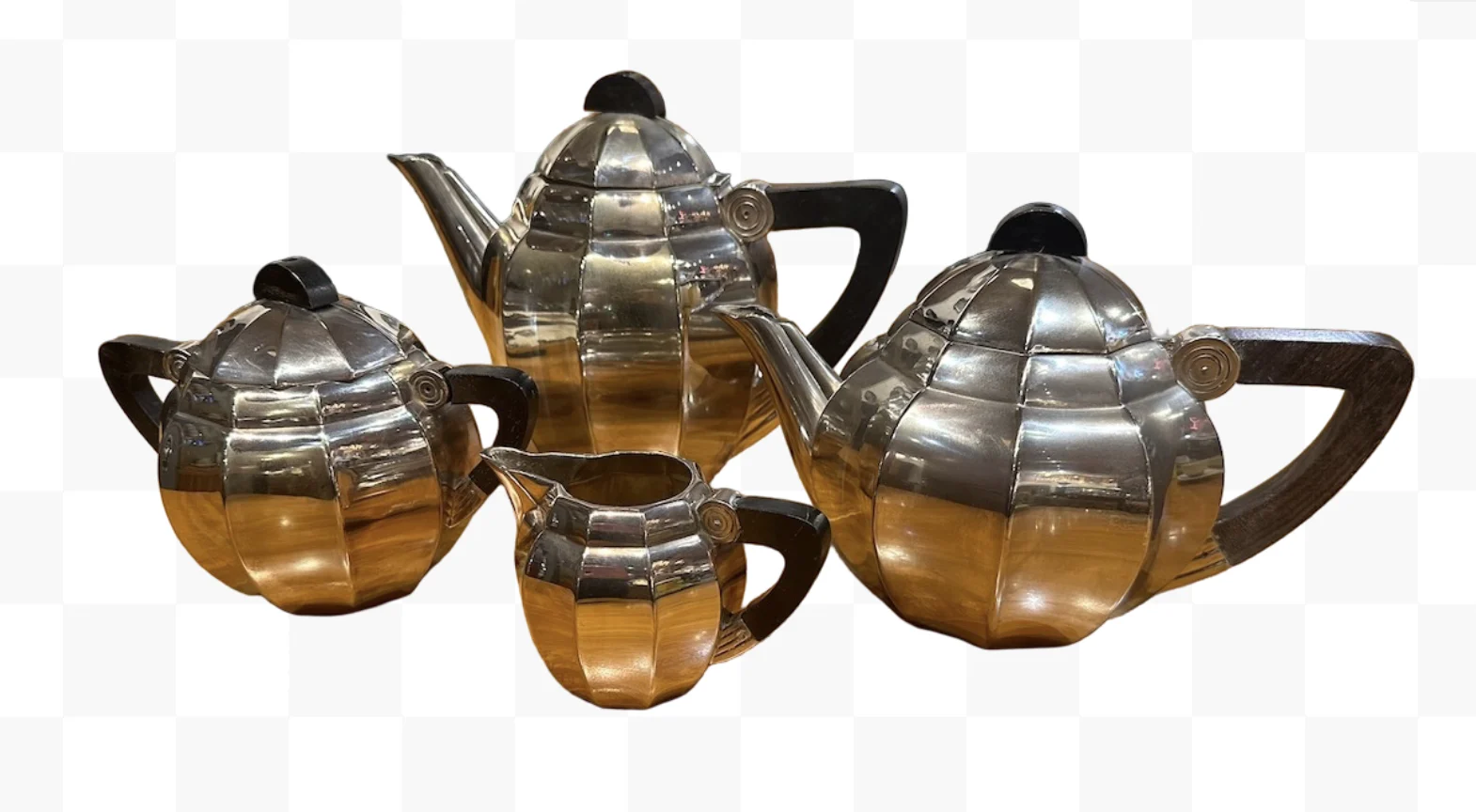
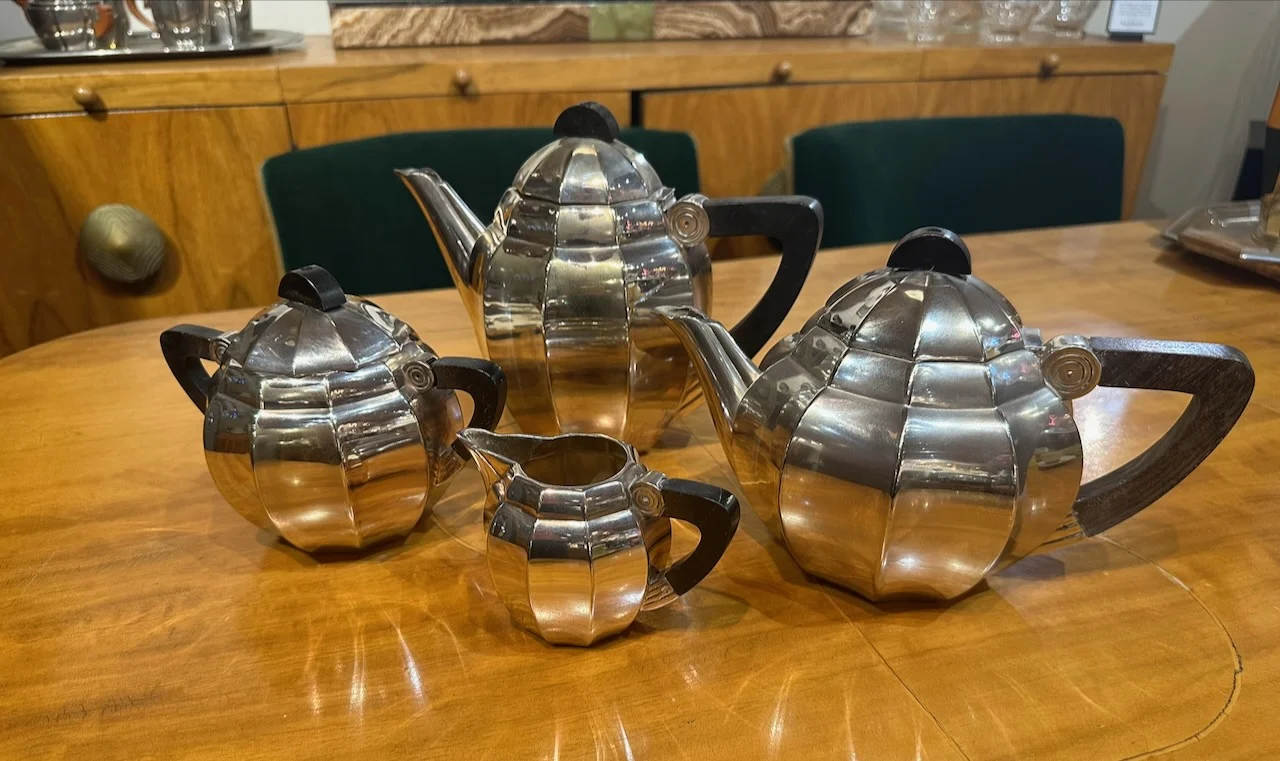
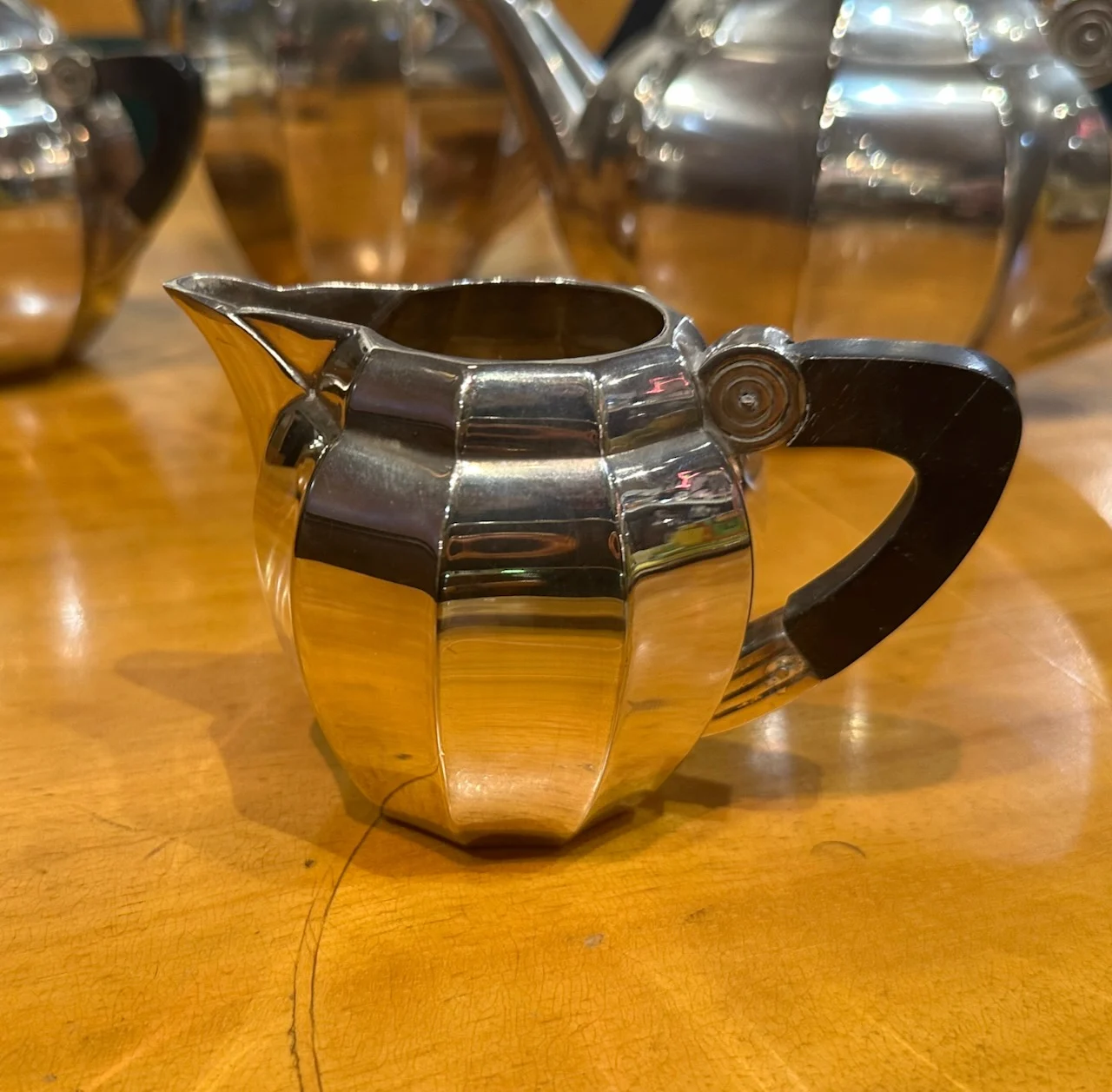
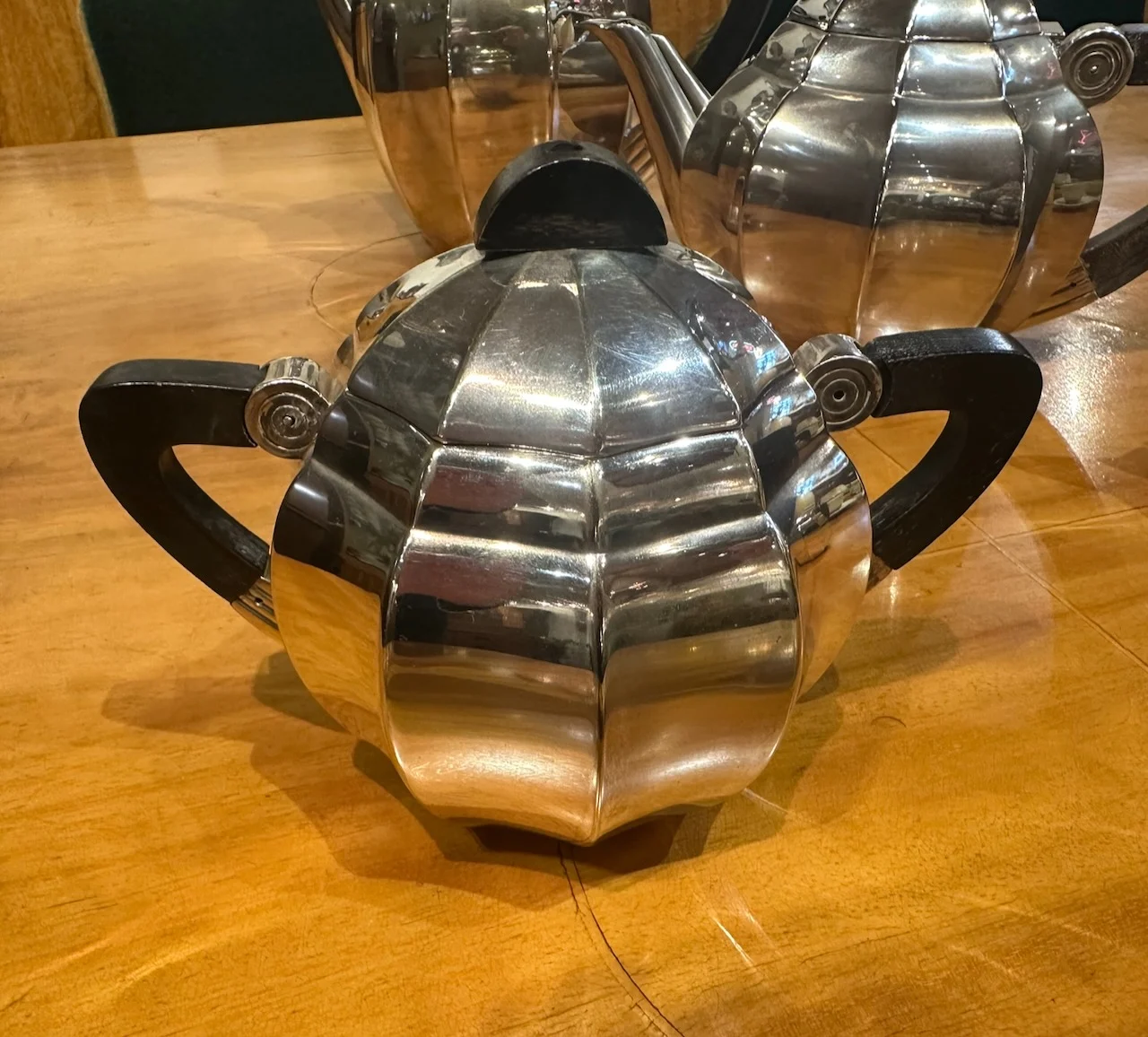
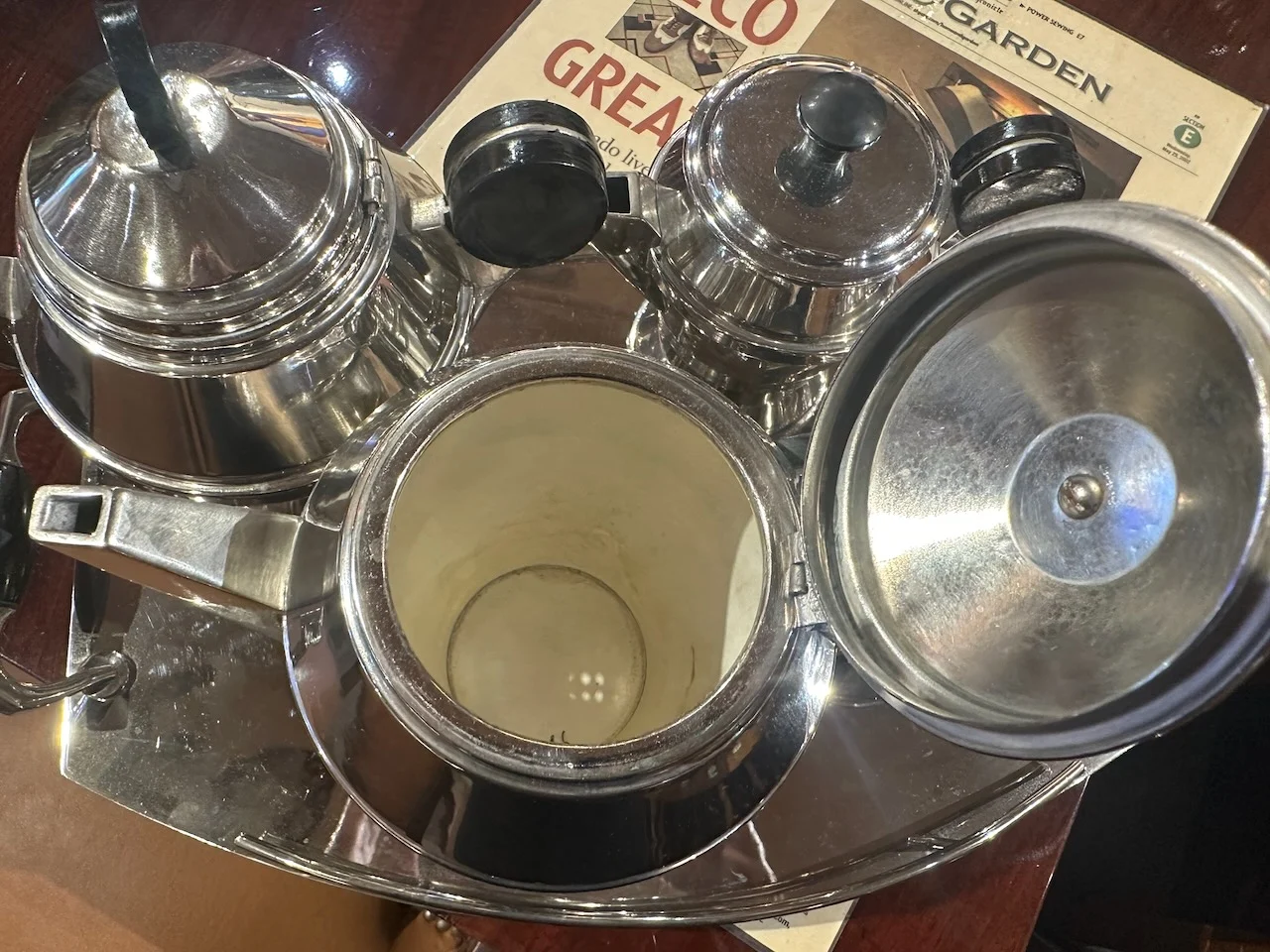


Art Deco Tea and Coffee Set by Maurice Dufrene for Christofle
Among the finest examples of French Art Deco silver is this remarkable tea service designed by Maurice Dufrêne for Christofle's Gallia Collection. Created during the height of the Art Deco movement in the mid-1920s, the set illustrates the marriage of modern design, exceptional craftsmanship, and everyday functionality that defined the era.
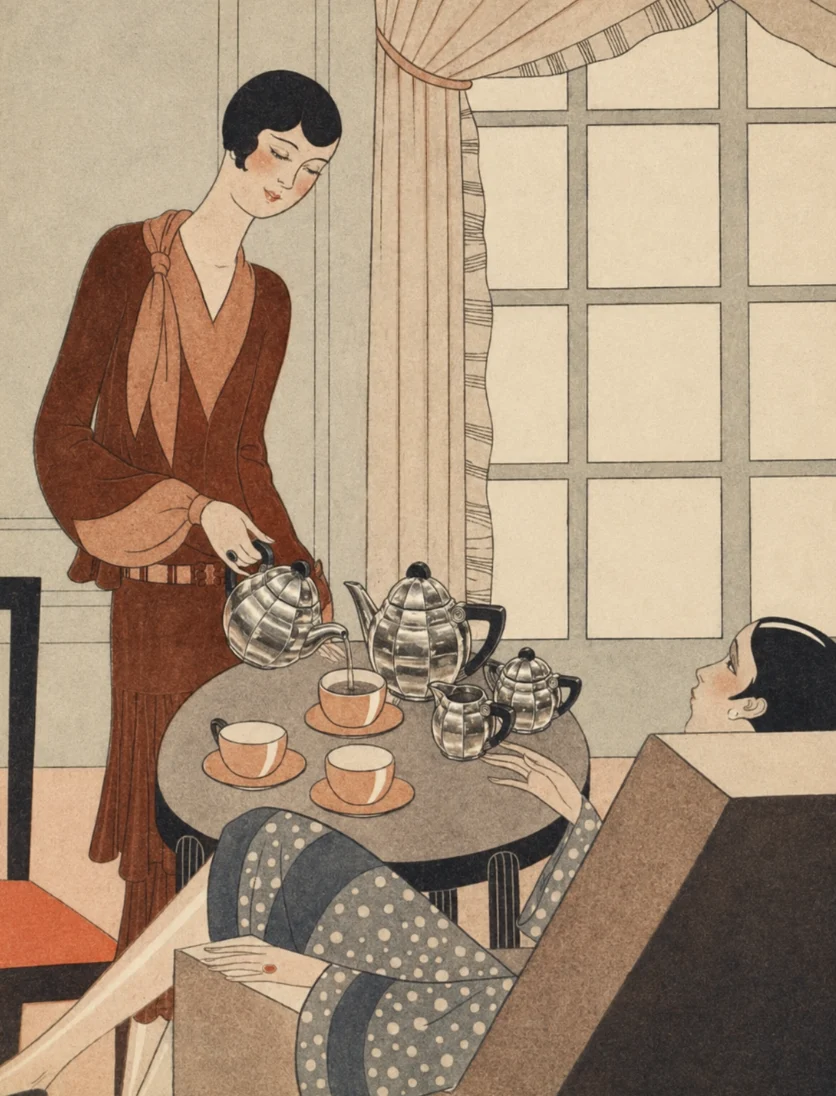
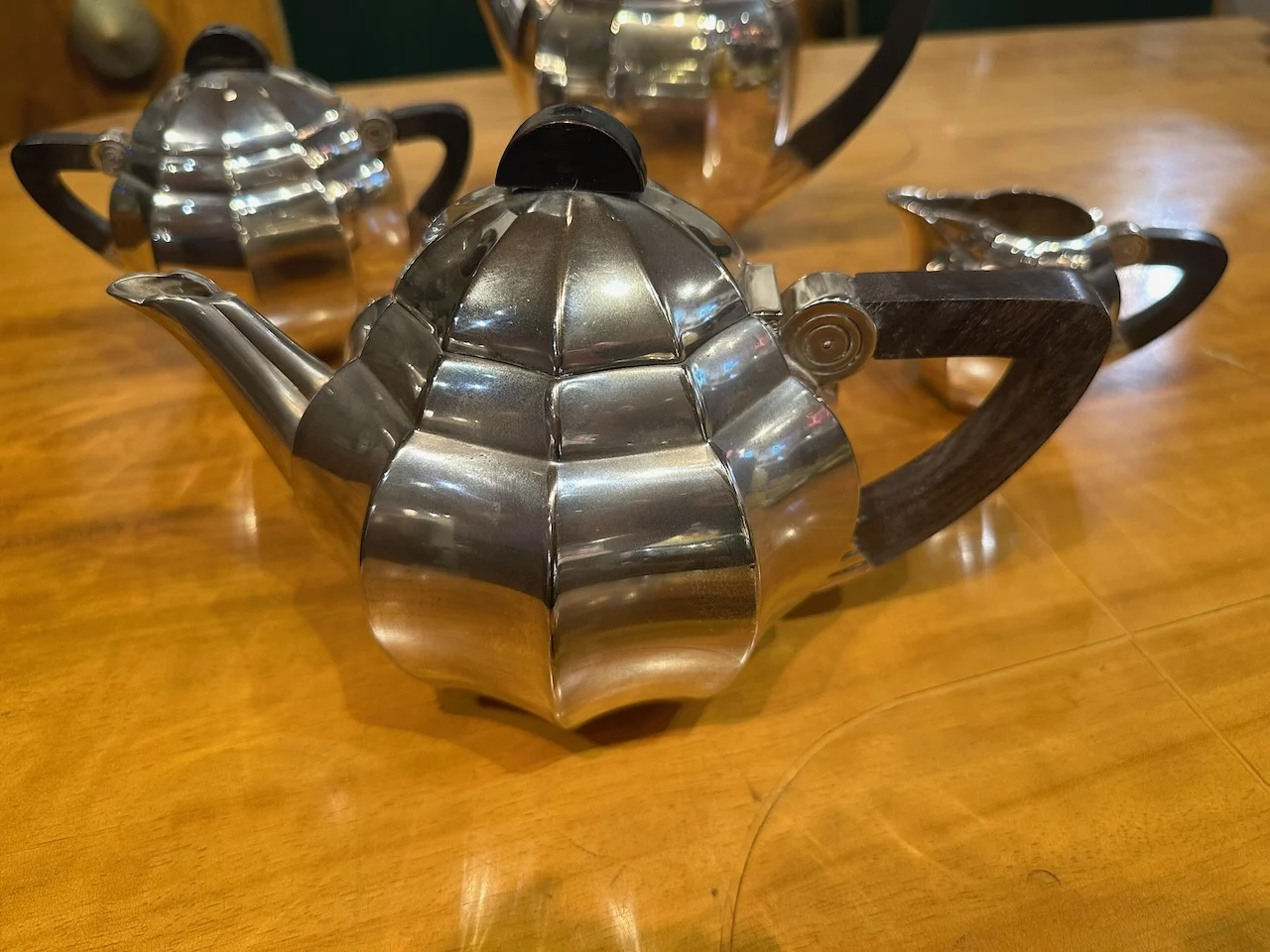
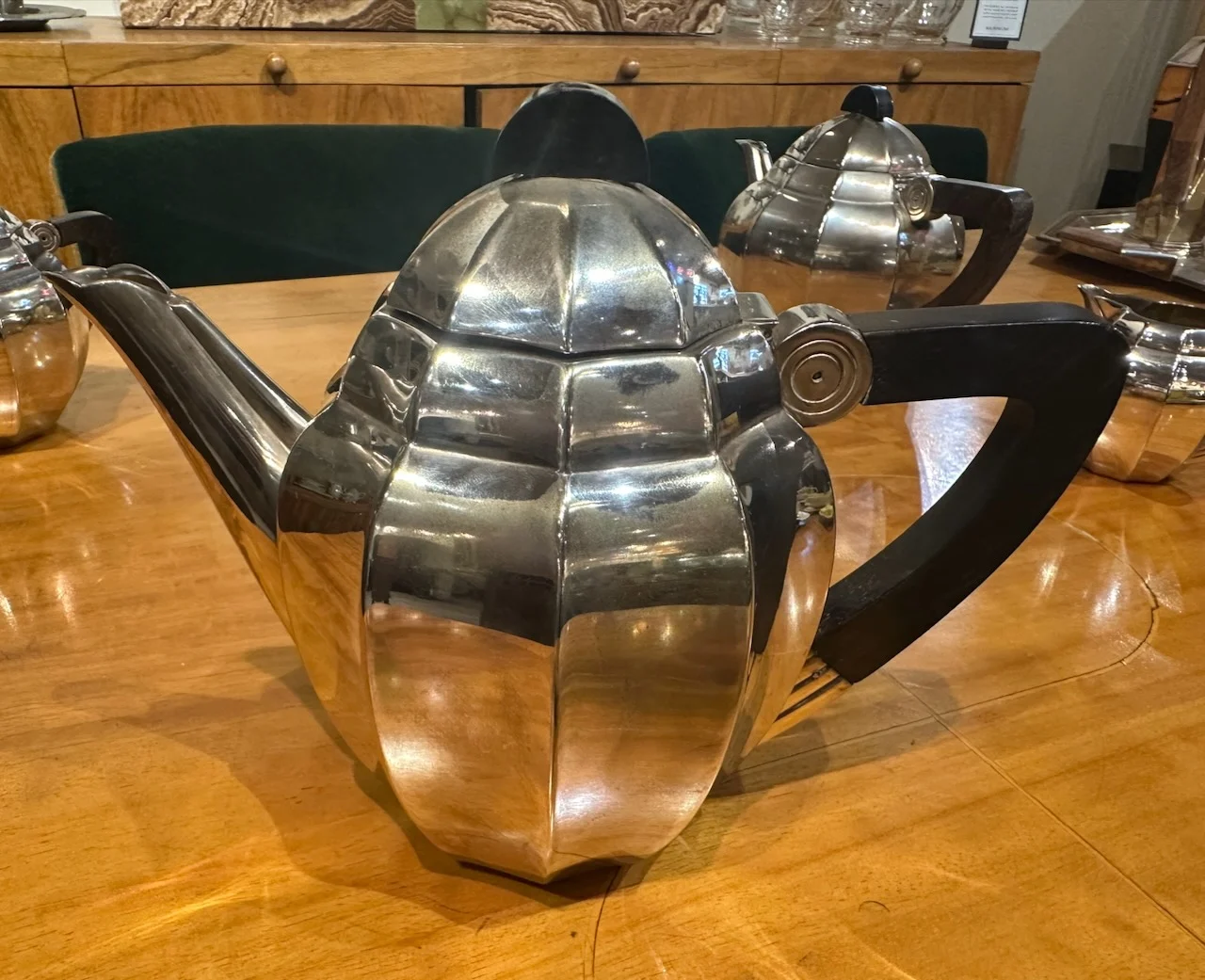
The service consists of a coffee pot, teapot, covered sugar bowl, and creamer, each executed in heavy silver plate with sculpted ebony handles and finials. Rather than relying on elaborate ornament, Dufrêne created visual interest through bold geometry. The gently faceted bodies catch and reflect light from every angle, giving each piece a sculptural quality while maintaining perfect balance and usability.
Christofle's Gallia line provided an ideal partnership for designers such as Dufrêne. Introduced as a collection of artist-designed silver-plated objects, Gallia encouraged some of France's most important designers to rethink traditional tableware using the new design vocabulary of the twentieth century. The result was a series of objects that were unmistakably modern while maintaining the exceptional quality and craftsmanship for which Christofle had long been known.
Today, Maurice Dufrêne's work for Christofle is highly regarded by collectors of French decorative arts, appreciated not only for its style but also for its importance in the history of twentieth-century design. Whether displayed as sculpture or used for elegant entertaining, this Gallia tea service represents the timeless sophistication that has made Art Deco one of the world's most enduring design movements.
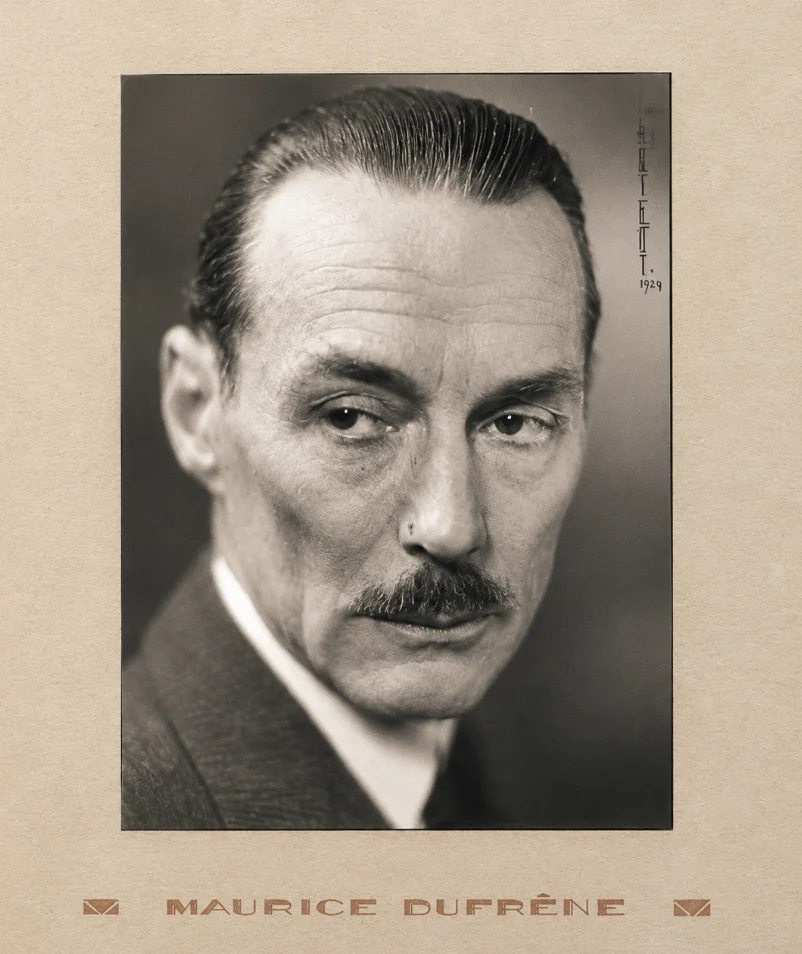
Under Dufrene's direction, the Maîtrise workshop at the prestigious store, Galeries Lafayette in Paris produced high-quality furniture, textiles, carpets, wallpapers, and decorative objects intended for a wider public than elite collectors. His exhibit at the 1925 International Exposition of Decorative Arts in Paris helped solidify the quintessential Art Deco style, and he also designed luxury boutiques, a music salon, and the living room of the Ambassade Française pavilion for the exposition.
His work was also honored at the 1915 Panama-Pacific International Exposition in San Francisco and can be found today in the Musée des Arts Décoratifs and the Budapest Museum of Applied Arts.