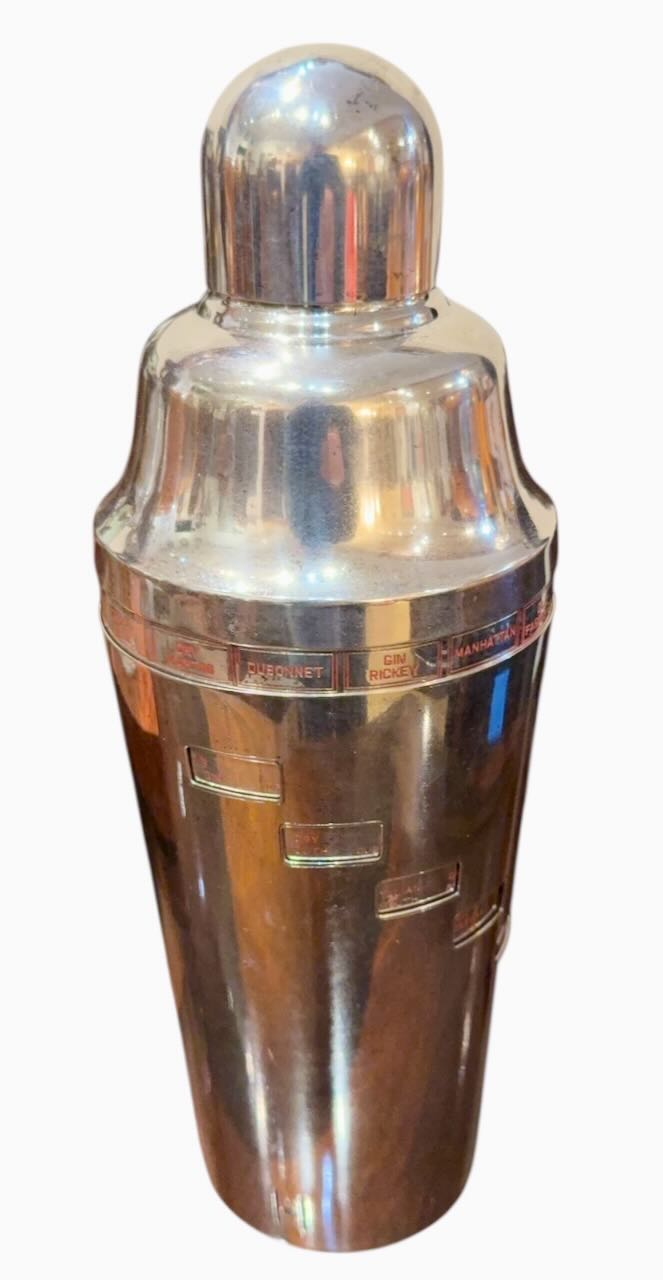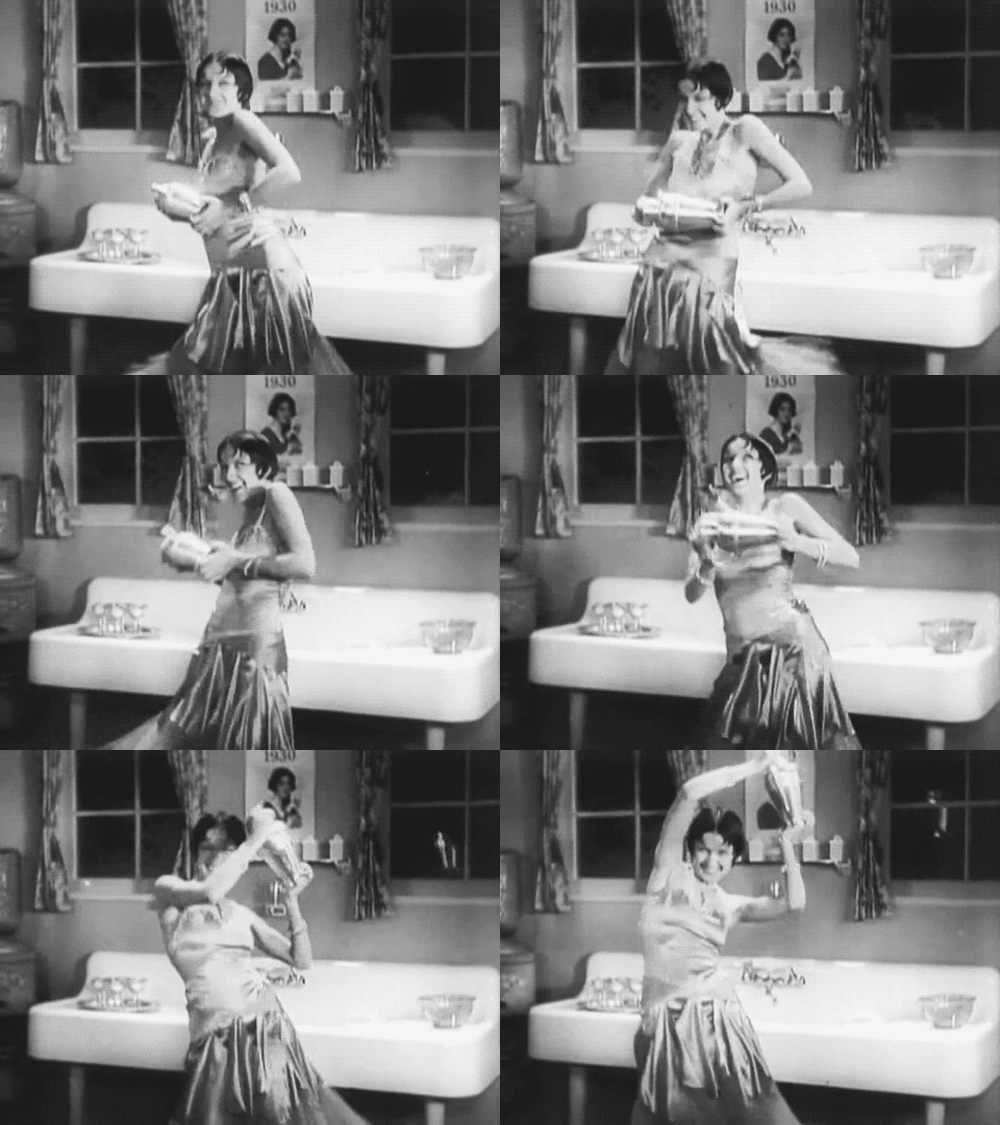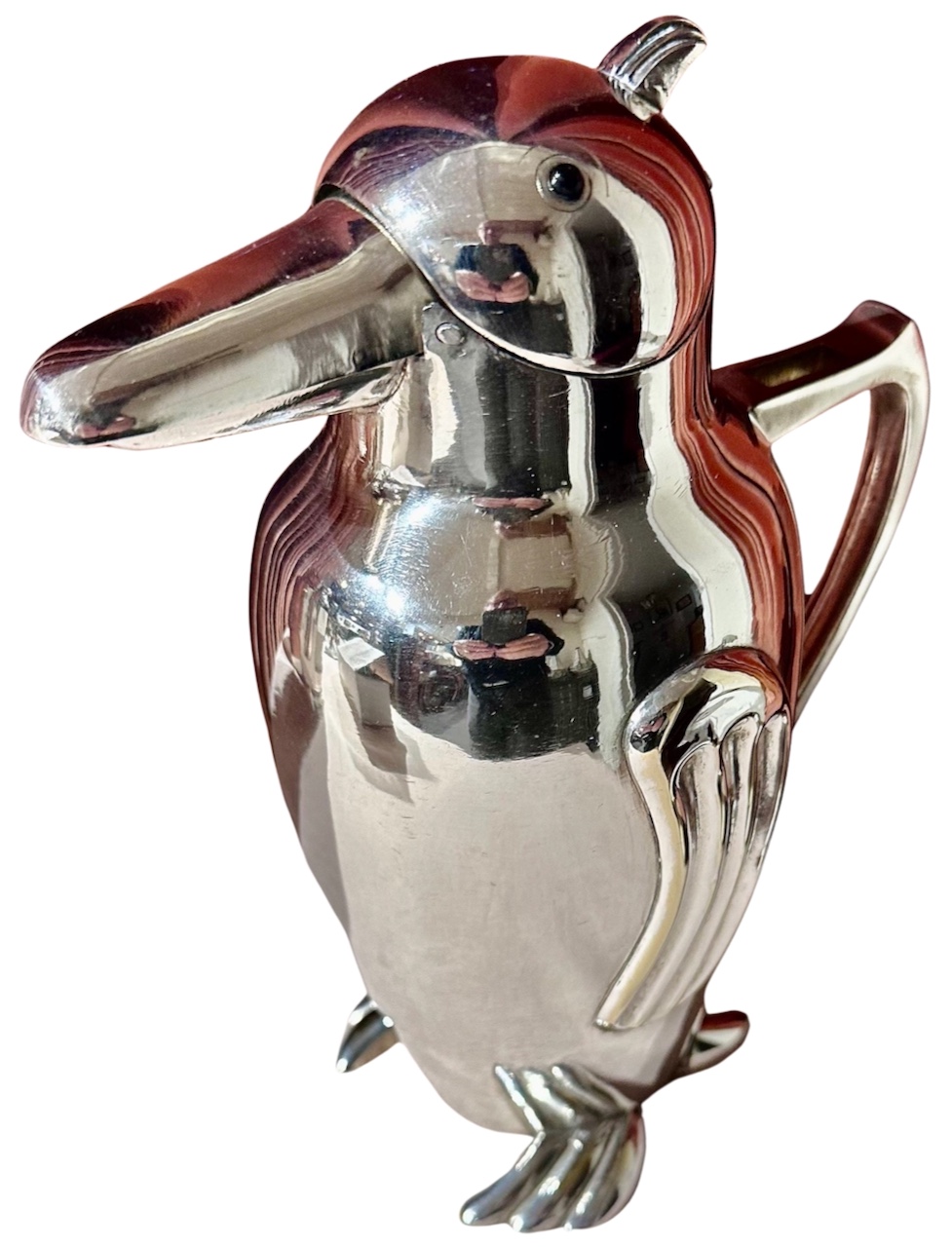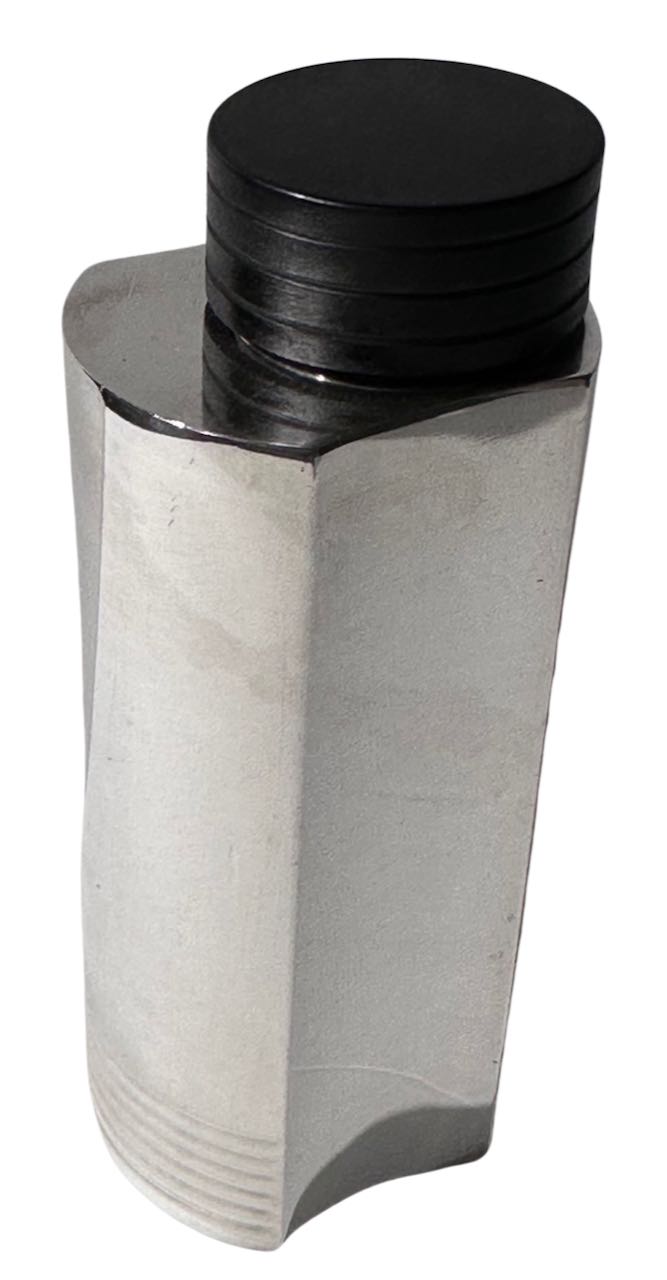

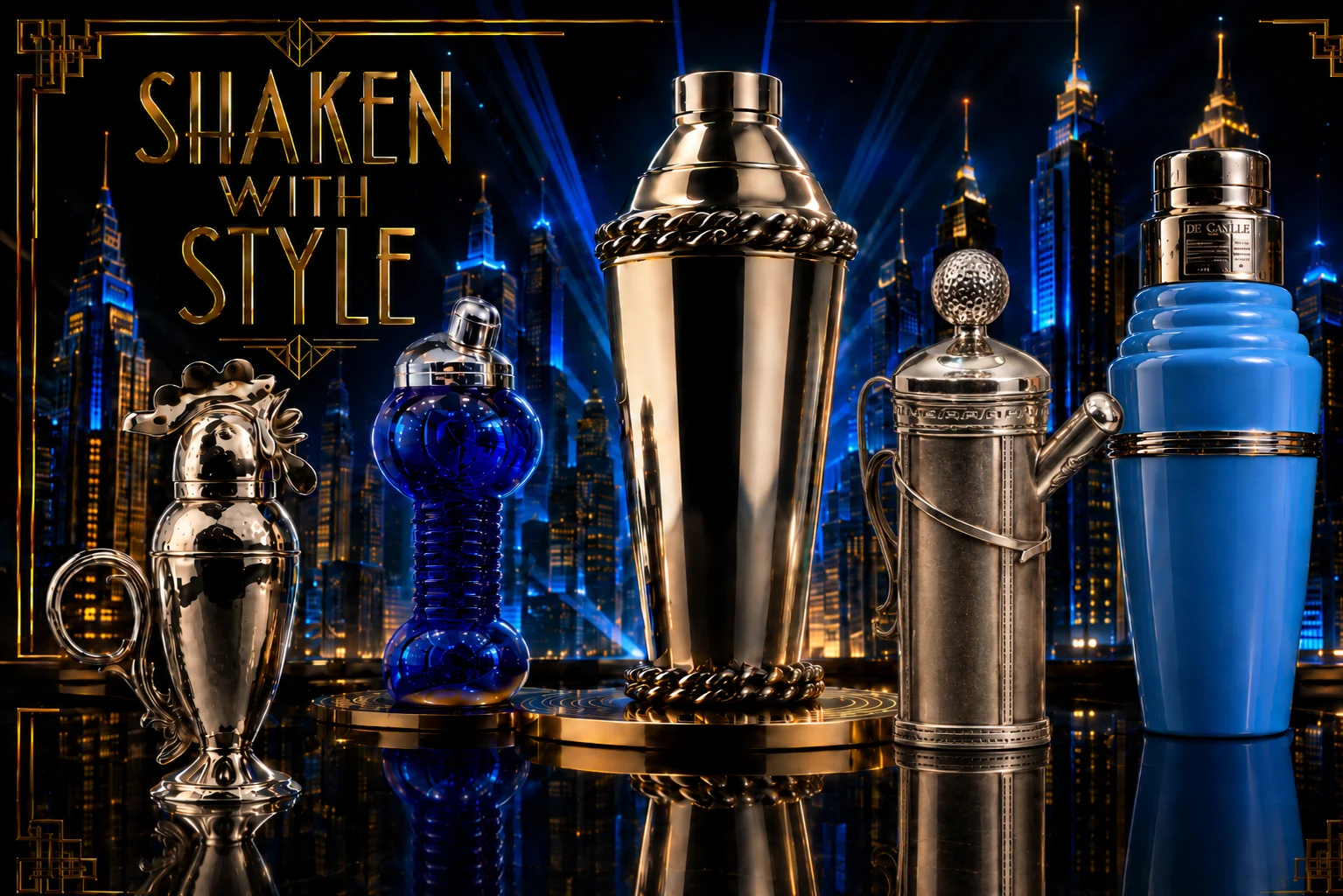
Shaken with Style: The Cocktail Shaker Collection of Robert Greenberg
A Life in Music, Education and Collecting!
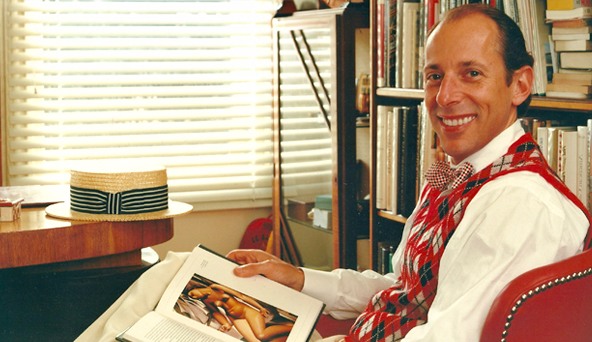
I have known Robert Greenberg for over 35 years. We first met when he was a client and I was exhibiting at the Art Deco Show & Sale in San Francisco. From the beginning, Bob had a serious interest in cocktail shakers. Over time, that interest grew into one of the finest collections I have ever seen. During those same years, we became close friends, and I learned a great deal from him about these remarkable objects.
Robert Greenberg’s professional life has been shaped by music. He has spent much of his career helping people understand music in a deeper and more meaningful way. He is a pianist and composer, which gives him a natural understanding of structure, timing, and detail. His work as a lecturer has also made him especially skilled at explaining complex subjects with clarity and enthusiasm. Those same qualities are reflected in the way he approached collecting.
The shakers shown here come from many parts of the world. Each one adds something different to the story. Some are architectural in form. Others are humorous, sculptural, or unexpectedly modern. Together, they show how the cocktail shaker became much more than a bar accessory. It became part of the larger story of design, social ritual, and modern life during the Art Deco era.
A collection of this level cannot be assembled by money alone. It takes years of searching to find the right examples. It also takes knowledge to understand why one shaker is ordinary while another is exceptional. Bob followed auctions, visited dealers, traveled widely, and continued to learn wherever he went. His collection reflects a lifetime of curiosity and serious attention, and we are pleased to present it as part of the Art Deco Resource Guide. –Rick Fishman
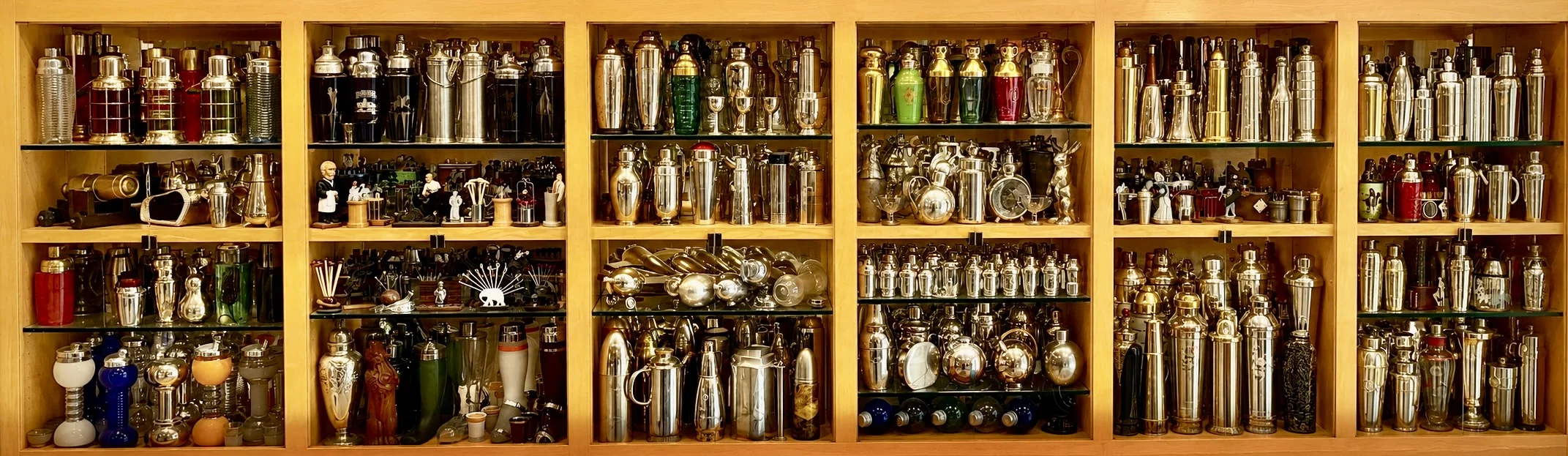
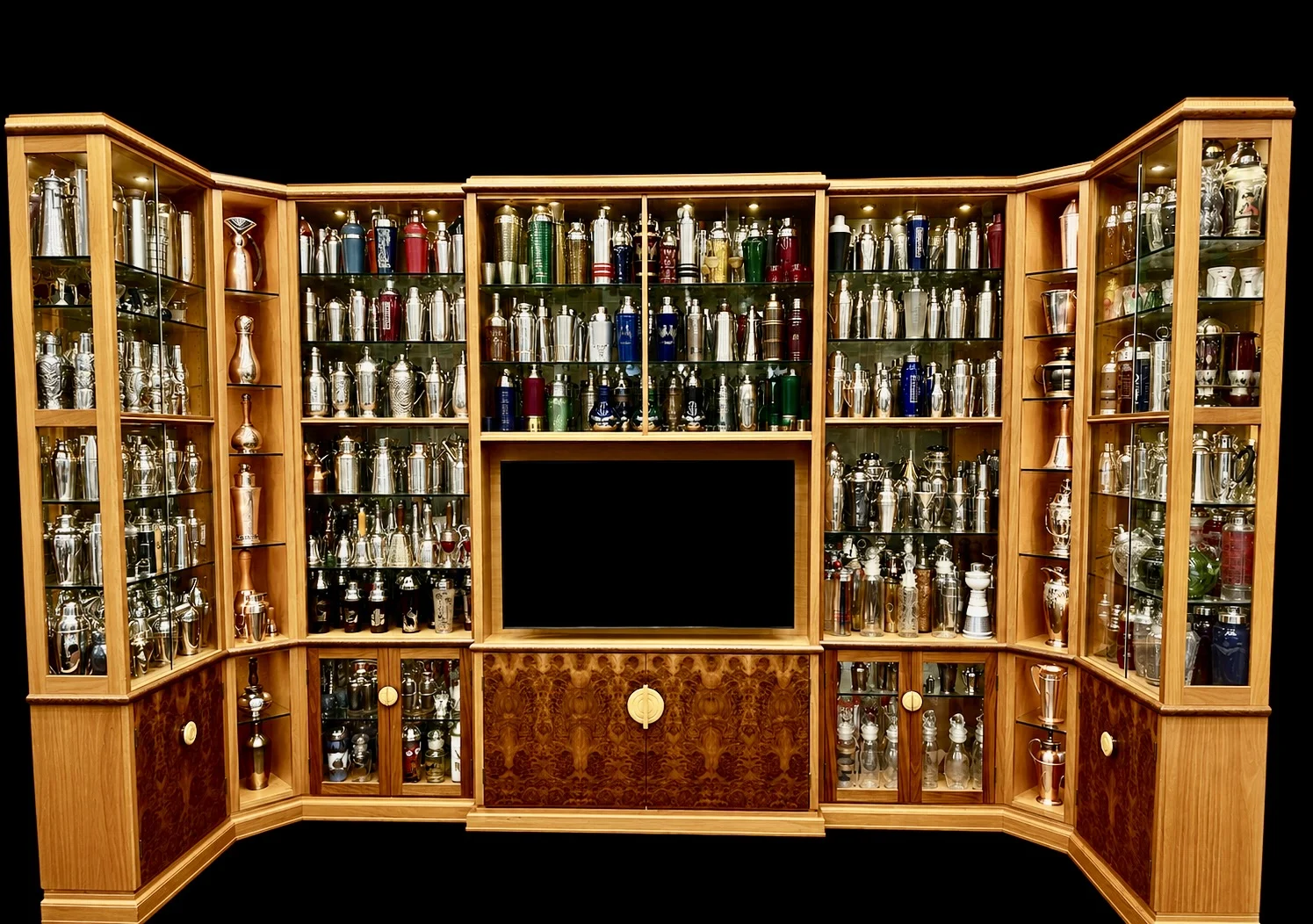
The Collection Display Cabinets
Click to Enlarge
The Art Deco Cocktail Shaker
Form, and Function: A Preparatory Discussion
By Robert Greenberg
Art Deco design married form and function to a degree that they became utterly indivisible from one another. In its form, art deco design celebrated machine-age modernity in its bold use of geometric figuration, angularity, and razor-sharp clarity of line; in its streamlined aerodynamic curves; in its verticality, which evokes upwards thrust and with it, progress, and movement; and in its use of what were new “industrial” materials, including plastics (like Bakelite and Catalin), chrome, aluminum, stainless steel and silver.
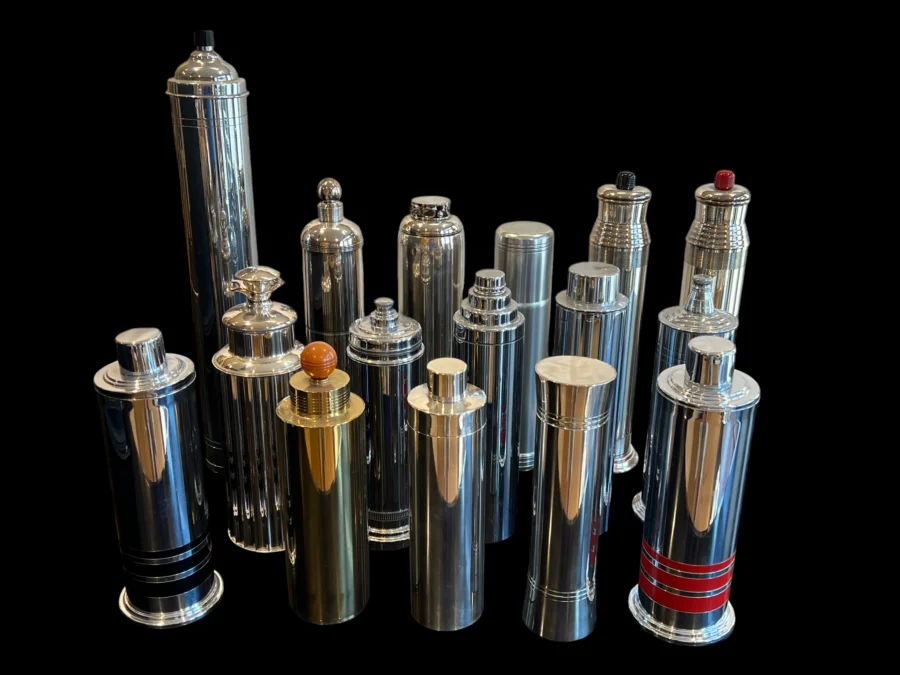
A selection of so-called Skyscraper Cocktail Shakers, which epitomize the streamlined, machine-age angularity and verticality of Art Deco design.
Back row, left-to-right:
- Unmarked; USA, circa 1930. At 22.5 inches (57.15 cm), it is the tallest shaker in my collection
- Lurelle Guild, International Silver Co., USA, circa 1929
- Maker unknown, “Made Exclusively for Carole Stupell,” USA(?), circa 1930s
- Color Craft, USA, circa 1940
- Albert Frederic Saunders and George Switzer, “Nocturne,” Benedict Manufacturing Co., circa 1932-1934 (black Catalin top)
- Albert Frederic Saunders and George Switzer, “Nocturne,” Benedict Manufacturing Co., circa 1932-1934 (red Catalin top)
Middle row, left-to-right:
- Wallace Bros., USA, circa 1930
- Continental Silver Co., USA, circa 1935
- Evercraft, USA, circa 1930s
- Norman Bel Geddes, “Manhattan Cocktail Shaker,” Revere Copper and Brass, USA, 1935-1941
- London & Brighten (LB), UK, circa 1935
Front row, left-to-right:
- Manning Bowman, “Diana,” USA, circa mid-1930s (black bands)
- Unmarked; USA, circa 1935
- Bramcasa, Italy, circa 1960
- El de Uberti, Italy, circa 1950
- Manning Bowman, “Diana,” USA, circa mid-1930s (red bands)
Unlike Art Nouveau, which was primarily an ornamental, decorative style, Art Deco design – form – was married to function to create virtually countless every-day objects. (The same can be said for Art Deco’s progeny, Mid-Century Modern.) From private homes and apartment building to theaters and skyscrapers. Modes of transportation, trains and automobiles, to airplanes to ocean liners. Art Deco designs was found in radios, telephones, record players and juke boxes to musical instruments. The design influence is found in furniture, clothing, textiles, sculpture, jewelry and graphic design and even prosaic household objects as teapots, vacuum cleaners, irons, toasters and dishware. Even children’s toys were created in Art Deco style. It was a triumphant synthesis of high-end form and practical function.
Among the most iconic Art Deco objects to mark this triumphant coupling of form and function is the cocktail shaker. Across the span of this article, we will be witness to a mind-boggling variety of cocktail shaker forms. Yet they all share a single, common function: to combine various fluids and ice to create elixirs that, when consumed, make us susceptible to divine influence.
It is a noble device, this thing we call a “cocktail shaker,” and its invention and use represent but one of many things that separates humans from the presumably “lower creatures.” It was thanks to the era of Art Deco design that the formof the cocktail shaker reached a height equal to that of its function.
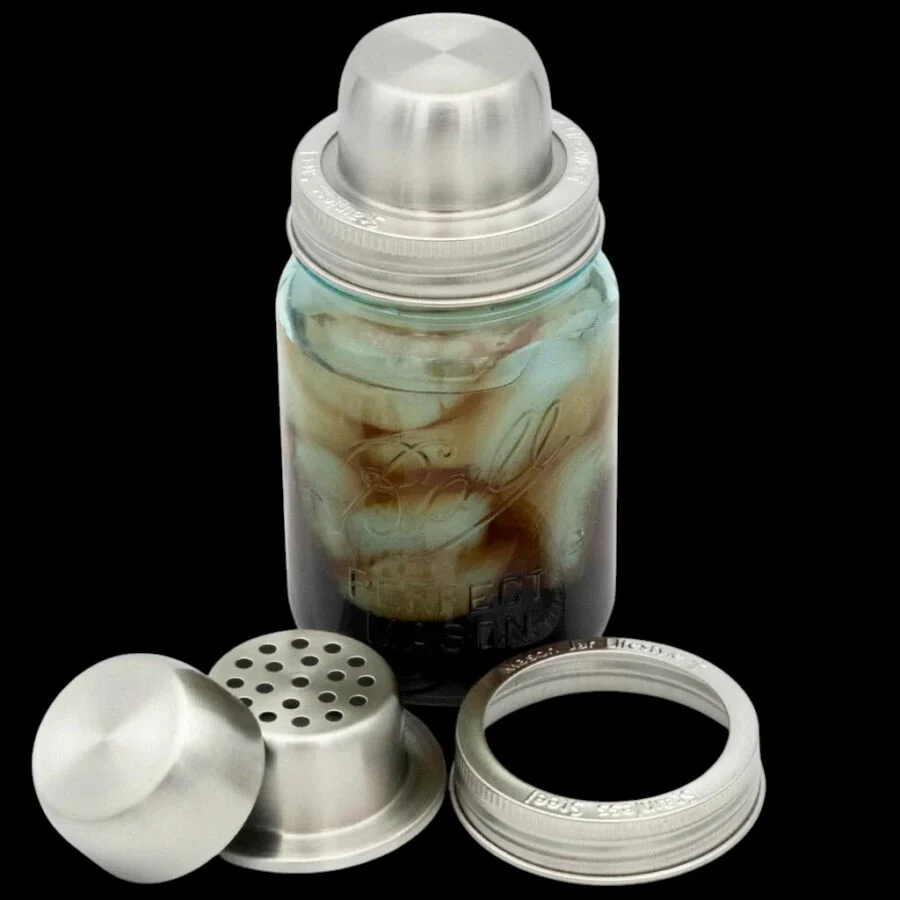
An abomination: a Mason Jar marketed as a ‘cocktail shaker’
(Go ahead: use a Mason Jar to make a cocktail if you must, but speaking for myself, I could no more use said jar to mix a fine, über-dry martini than I could make my ice from toilet water. Excuse me, but when indulging in the noble art of preparing cocktails, the tools of the trade must be equal to the dignity of the task at hand. Anything less is barbaric.)
The post-World War One years marked Prohibition in the United States, which, of course, romanticized and encouraged drinking rather than not. The cocktail shaker had come into its own as a necessary household object. The years between roughly 1920 and 1940 corresponded with the advent and flowering of Art Deco and the attendant belief that even the most common household objects should be informed with a stylish, modern design.
The Cocktail Shaker as an International Phenomenon
The first cocktail shakers to be patented as such appeared in the United States circa 1885.
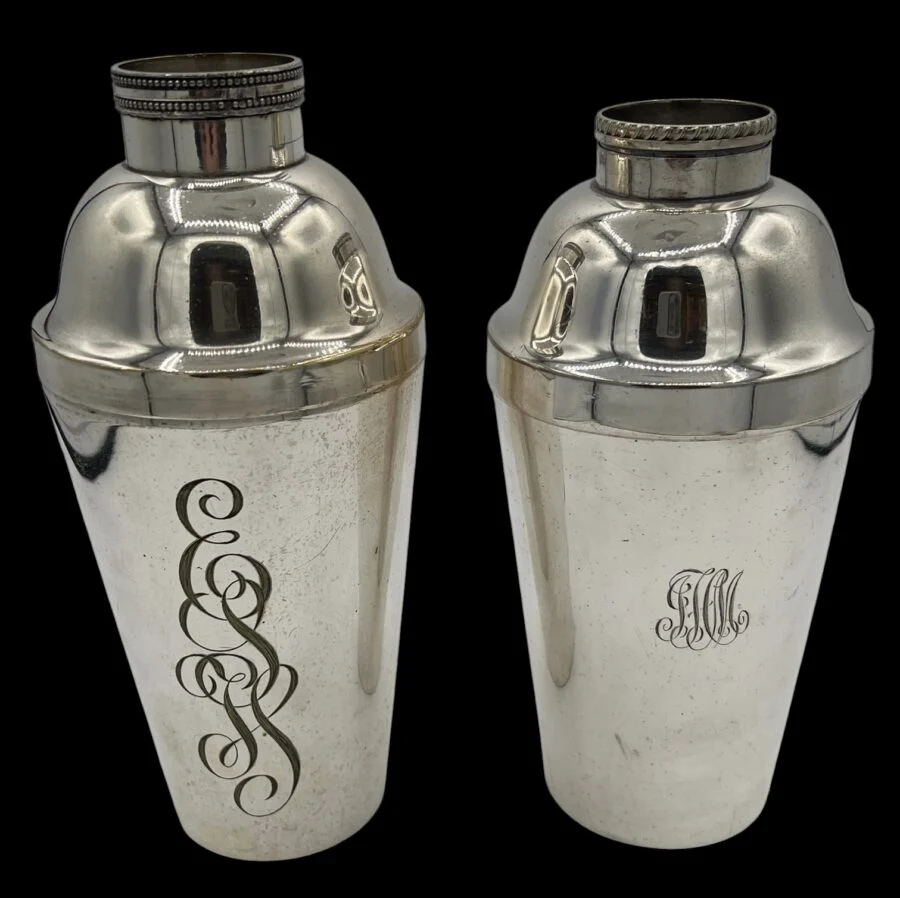
Early cocktail shakers: on the left, Manning, Bowman & Co. (inscribed: “Patented Aug. 11, 1885; Manning, Bowman & Co.”); on the right, Tiffany & Co. (made circa 1890)
I’d suggest that along with blues, jazz, rock ‘n’ roll, baseball, and the myriad gastronomic joys of fast food, the cocktail shaker is among the very greatest gifts America has given the world.
Having said that, by the turn of the twentieth century, cocktail shakers were being produced across the globe, and by the 1920s, the Art Deco aesthetic had come to dominate cocktail culture internationally.
Here’s small sampling of internationally manufactured cocktail shakers:
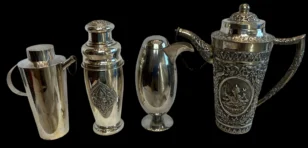
From left-to-right:
- Finland; inscribed “ALPAKKA HO/Y,” circa 1935
- Thailand; inscribed “Thailand; Silver 925,” circa 1930
- Indonesia; “TME Banka Tin; John Wu’s; Djakarta,” circa 1930
- India; no inscription (typical of Indian colonial silver), .880-.970 Silver, circa 1920
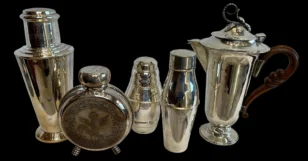
From left-to-right:
- Argentina; inscribed “PRAT; 13; Industria Argentina,” circa 1930s
- Brazil; inscribed “M; Meridional; E.S.,” circa 1950
- Spain; inscribed with a star within an oval (Sterling Silver), circa 1950
- The Netherlands; made by Gerritsen and Van Kemp; inscribed with four Dutch Hallmarks; .833 Silver, 1917
- Mexico; inscribed “Sterling 925; Made in Mexico,” circa 1930
Unfortunately, the mass manufacture of cocktail shakers died a quick death with the advent of World War Two (which began in Asia in 1937; in 1939 in Europe; and in 1941 in the United States), as industries across Asia, Europe, and the United States retooled to produce war matériel. After the end of the war (1945), manufacture of cocktail shakers resumed only slowly, and then in considerably smaller numbers than before the war and in a style generally called, today, “mid- century modern” (MCM).
Today, cocktail shakers constitute a fringe portion of the “home accessory” business. And while there are some genuinely cool cocktail shakers still being created today (particularly in Italy), the otherwise derivative and clunky cocktail shakers made in India and China and sold by such retailers as Restoration Hardware, Pottery Barn, Target, and Authentic Models are but poor imitations of their Art Deco age predecessors.
Cocktail Shakers: A Quick Primer!
There are three types of cocktail shakers: the Boston shaker, the French shaker, and the Cobbler shaker.
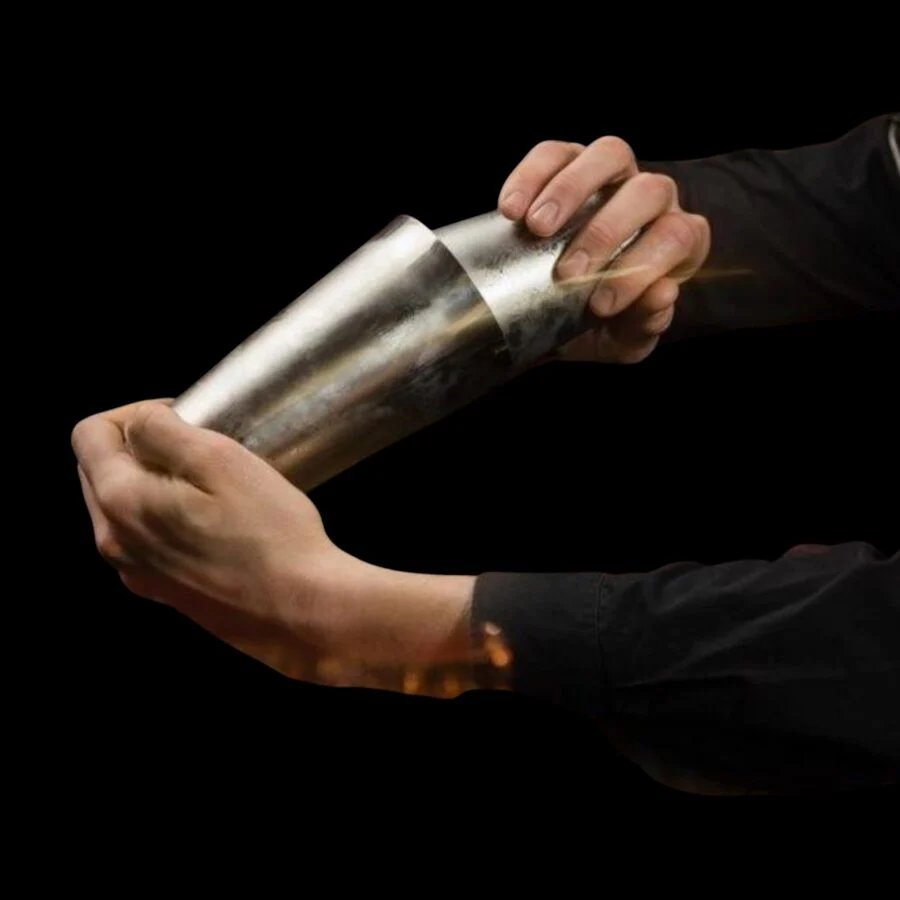
The Boston shaker is what most professional bartenders employ: a two-piece contraption in which a smaller tumbler (of glass or metal) is inserted into a larger tumbler (or “tin”), usually made from metal. This “Boston” shaker got its name from its city of origin, Boston, Massachusetts. Invented in the mid-19th century as American bartending evolved. Its two-piece design was first documented and popularized in establishments throughout the Boston area circa 1860.
French (or “Parisian”) cocktail shakers are so called because – duh – they were invented in Paris during the early years of the 20th century. Like a Boston shaker, a French shaker is a two-piece device. However, the two metallic pieces fit flush together, in what must be considered a significantly more stylish design than a Boston shaker. Nevertheless, in terms of variety of design, Parisian Shakers are, shall we say, limited. For example:
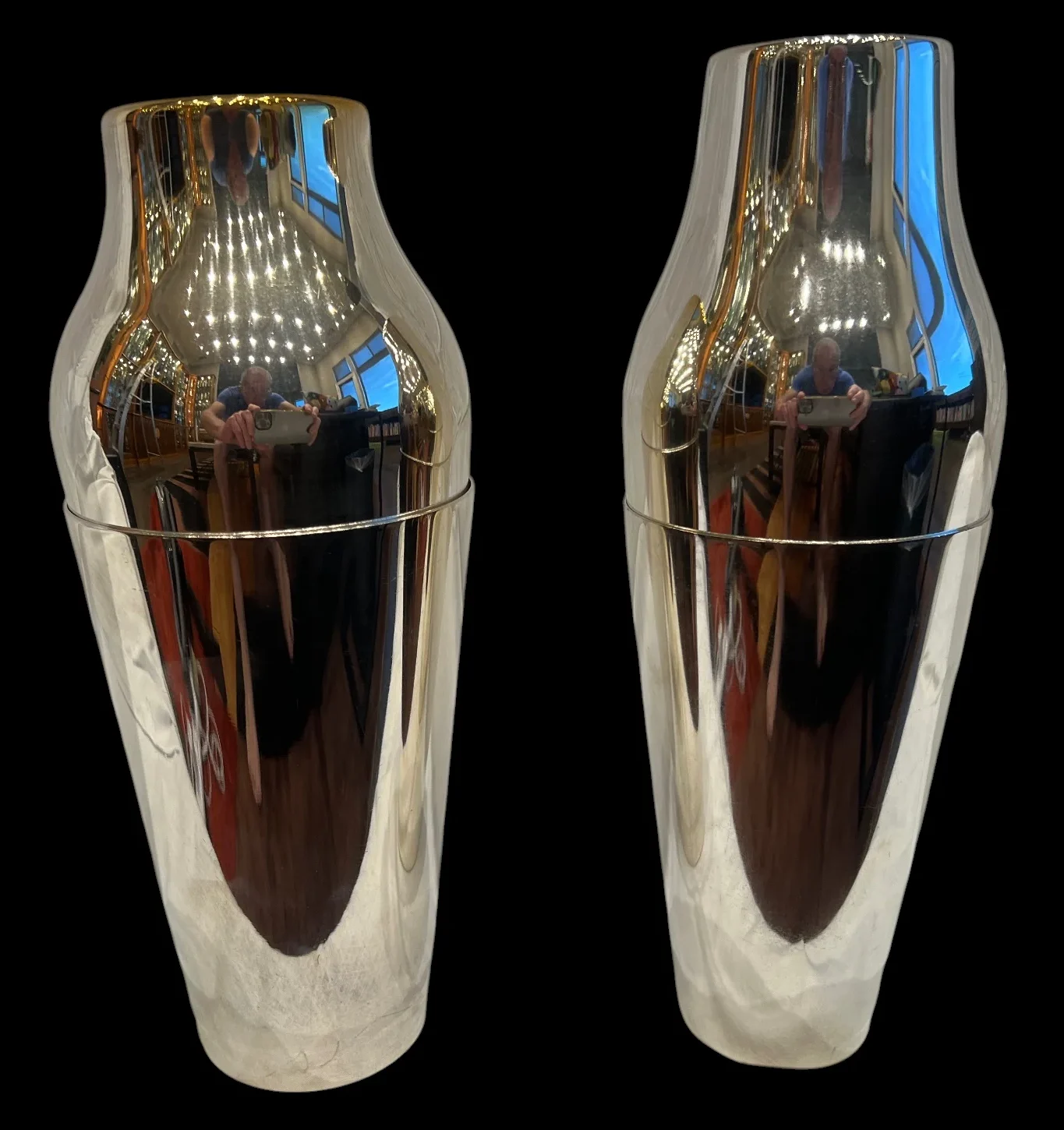
Parisian-style shakers, both circa 1925. Left-to-right:
- Inscribed “Christofle, made in France”
- Inscribed “98; WMF; NS; 0.5L,” made in Germany
Finally, there is the so-called “Cobbler” shaker. Patented by Edward Hauck of Brooklyn, New York, in 1884, a Cobbler shaker is a three-piece design consisting of a mixing container, or “tin” on the bottom, a fitted top with a built-in strainer above, and a fitted cap above that. The design was inspired and named for what was then the single most popular drink in New York City and its environs, the Sherry Cobbler, the making of which required lots of ice and vigorous shaking!
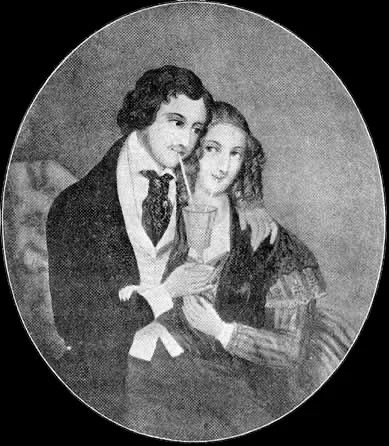
A happy couple sharing a sherry cobbler through another recent invention, drinking straws, circa 1865
The vast majority of collectible cocktail shakers are cobbler shakers made during the Art Deco era, in a seemingly endless variety of sizes, shapes, and designs. Based merely on my collection, there are teapot-shaped shakers (so-called because like teapots, they have spouts and handles):
The list goes on (and on), though mercifully I will not.
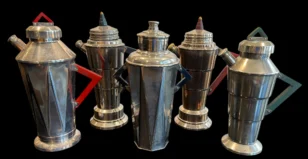
Art Deco-inspired teapot shakers:
- Designed by Howard L. Budd, Friedman Silver Co., USA, circa 1928
- Inscribed “EPNS; LB; 12.25,” Lehmann Brothers, USA, circa 1935
- Inscribed “J.F. [crown hallmark] E.P.N.S.,” USA, circa 1930
- Inscribed “EPNS; LB,” Lehmann Brothers, USA, circa 1935
- Inscribed “WMC; EPNS; N637,” USA, circa 1928
There are skyscraper-shaped shakers (as we have seen); and figural cocktail shakers shaped like ladies’ legs and boots, lighthouses, and bells:
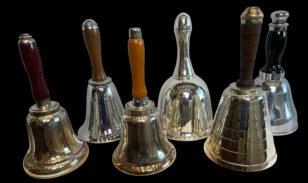
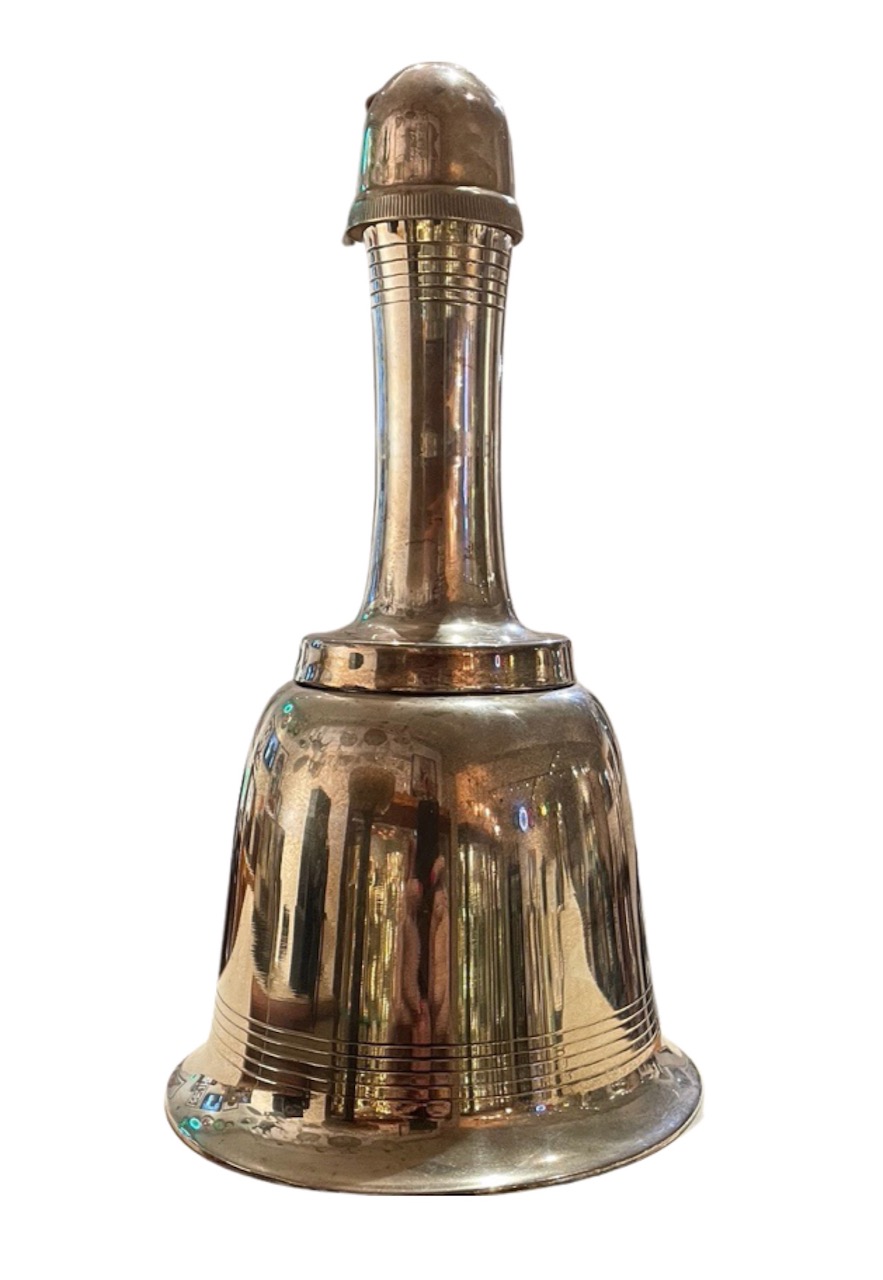
Bell cocktail shakers
- Inscribed “Industria Argentina,” circa 1930s
- Inscribed “R.G.M.; B.E.P.W.E.,” Germany, circa 1930s
- “Town Crier’s Bell,” inscribed “Pat. Pend.,” USA, designed 1937
- Inscribed “RH&S (BH&S?),” England (UK), circa 1930s
- Inscribed “SLtd EPNS A1; Kingsway Plate; Made in England; 5836,” William Suckling, Ltd., 1928
- Inscribed “Made in France,” circa 1930
There are shakers designed to look like milk jugs, golf bags, and bowling pins;
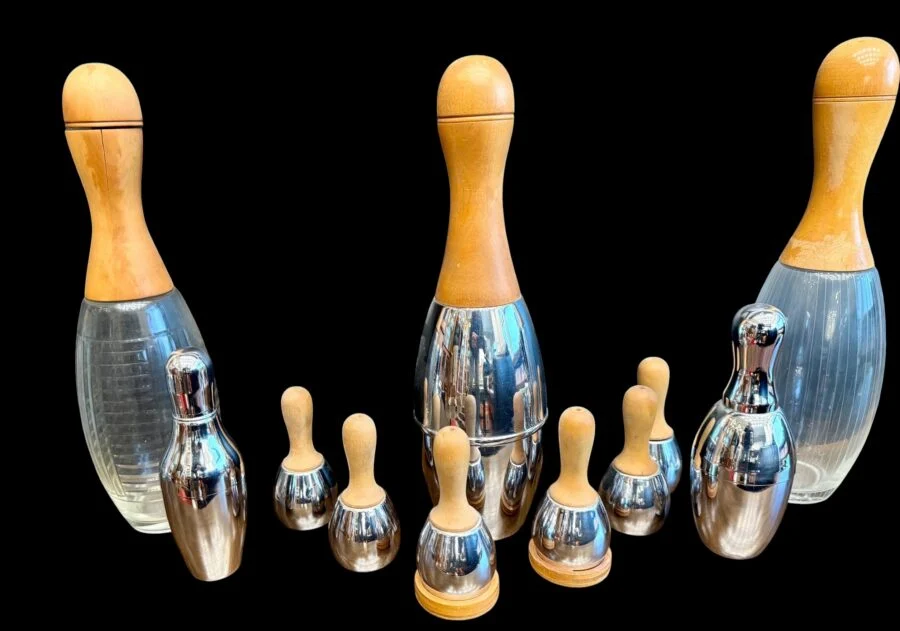
Bowling pins
Back row:
- Three Maple-handled bowling pins and cups; maker unknown, USA, circa 1930s
Front Row, left-to-right:
- Inscribed “MMM; P33233,” circa 1960s(?)
- Inscribed “Japan,” circa 1950s
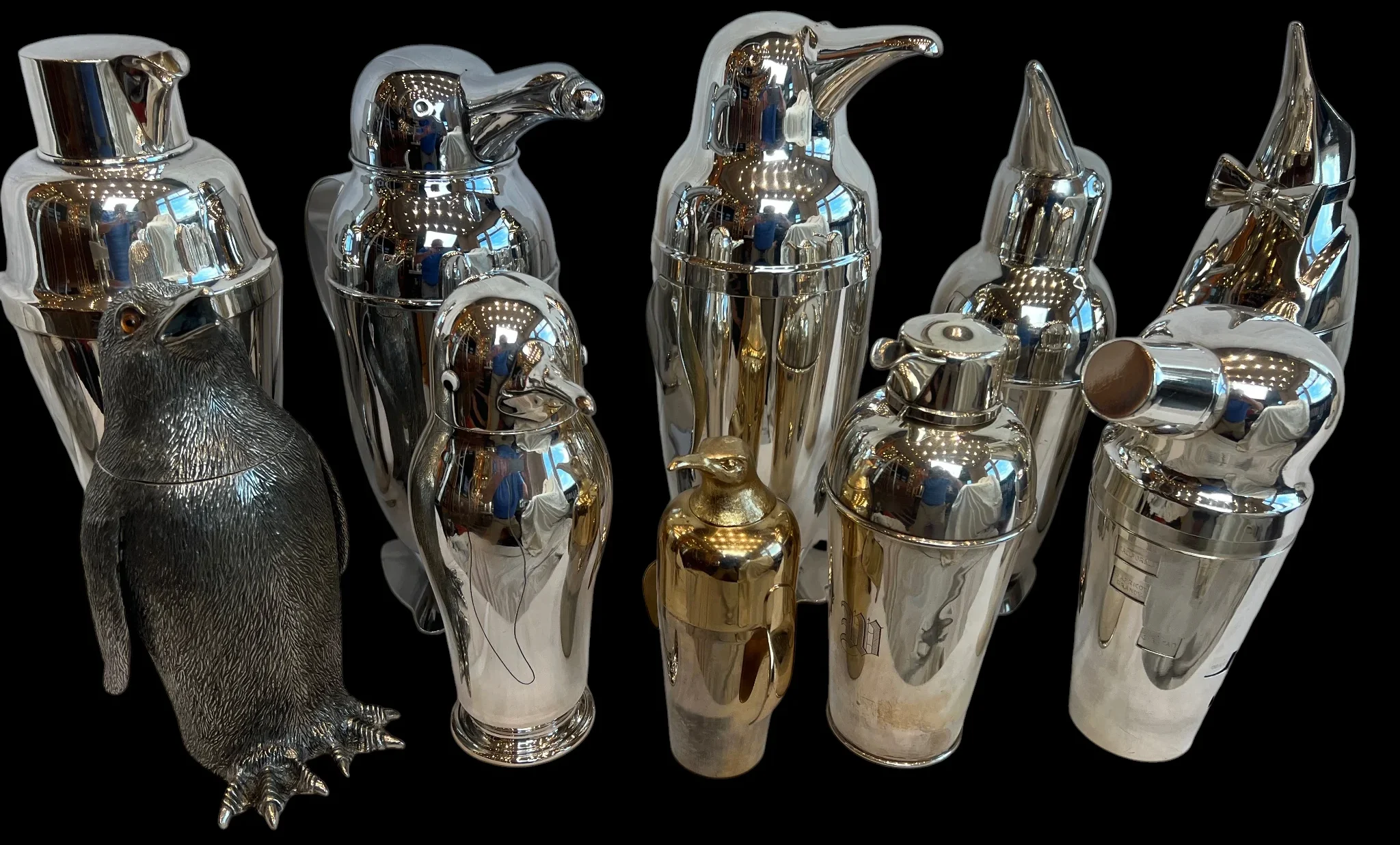
There are shakers designed to look like all sorts of animals. For example
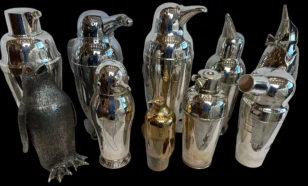
Penguins (The birdies above constitute just 9 of the 22[!] penguin cocktail shakers presently in my collection.)
Back row:
- Inscribed “REED & BARTON; SILVER SOLDERED; 400; 40 OZ,” USA, circa early 1930s
- No inscription, USA, circa 1937
- Inscribed “NAPIER; PAT. D-101559,” designed by Emil Schuelke, USA, 1937
- No inscription, 2000s
- Ken Fulk, inscribed “Pottery Barn,” USA, 2017
Front row:
- Vagabond House Pewter Penguin, inscribed “VH 95,” USA, 2010s
- Inscribed “A Bros Ltd; EPNS. AJ,” Adie Bros., England (UK), circa 1935
- Inscribed “Napier; Pat. Pend. ‘Gold Plated,’” USA, 1938
- Inscribed “Shreve & Co.; San Francisco; Sterling,” USA, 1925
- Inscribed “Endemann AS,” England (UK), circa 1925
The Bird in a Tuxedo

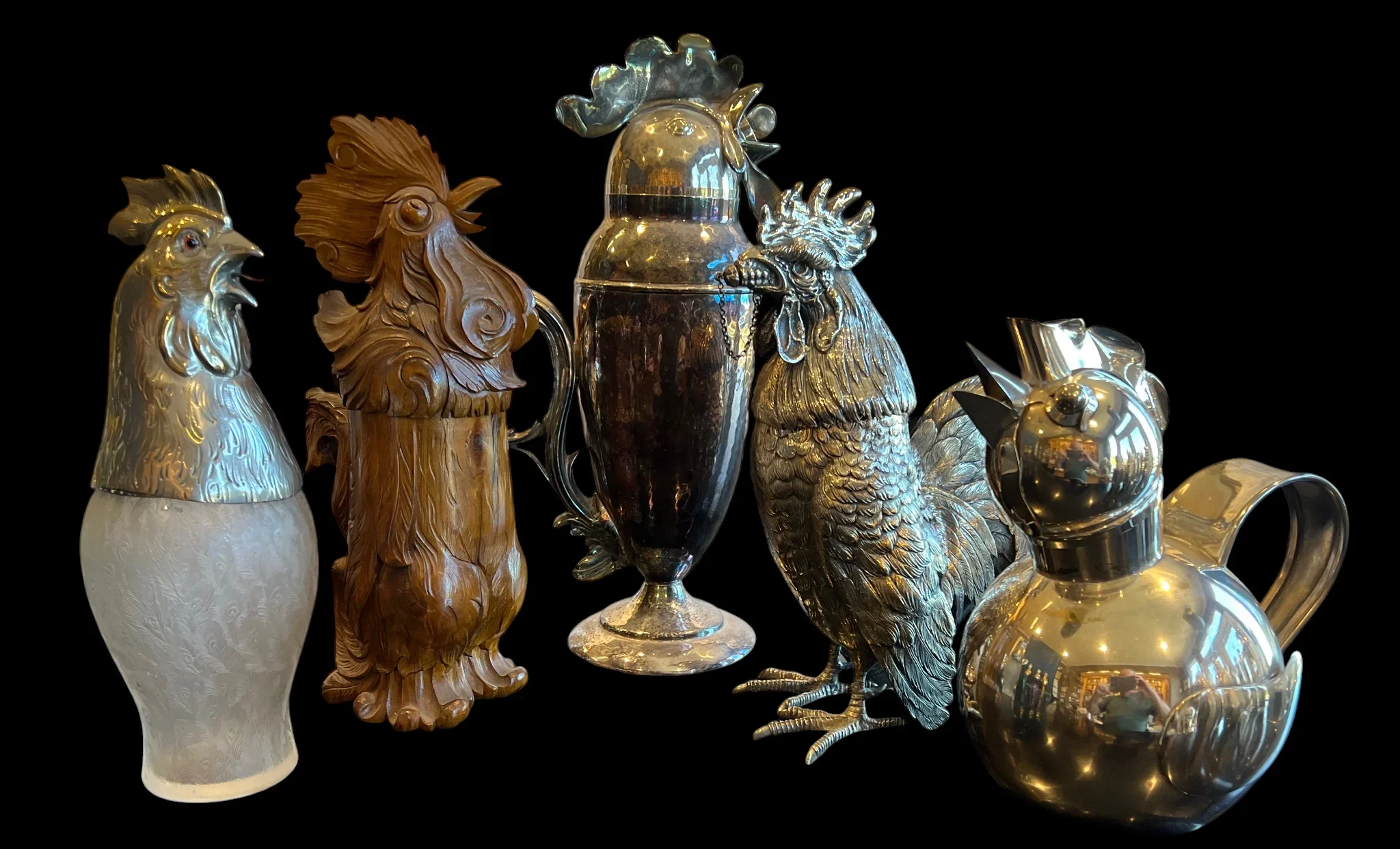
Roosters, left-to-right:
- No inscription, Austria, circa 1920s
- Inscribed “Made in Italy; Macabo; Cusano Milanino,” circa 1950
- Inscribed “Trade-Mark; WB (in crest); 3880,” Wallace Bros., circa 1928
- Inscribed “Germany; D.R.G.M.; Pat. Pend,” circa 1920
- Napier, USA, circa 1935
Rooster Cocktail Shakers
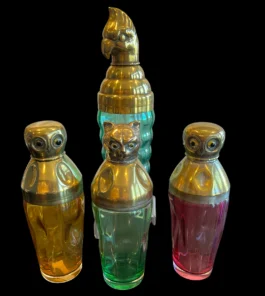
Austrian-made animal cocktail shakers:
In the back there is a cocktail shaker featuring a very petulant-looking parrot; in the front, a classic ménage à trois of two owls flanking one pussycat!
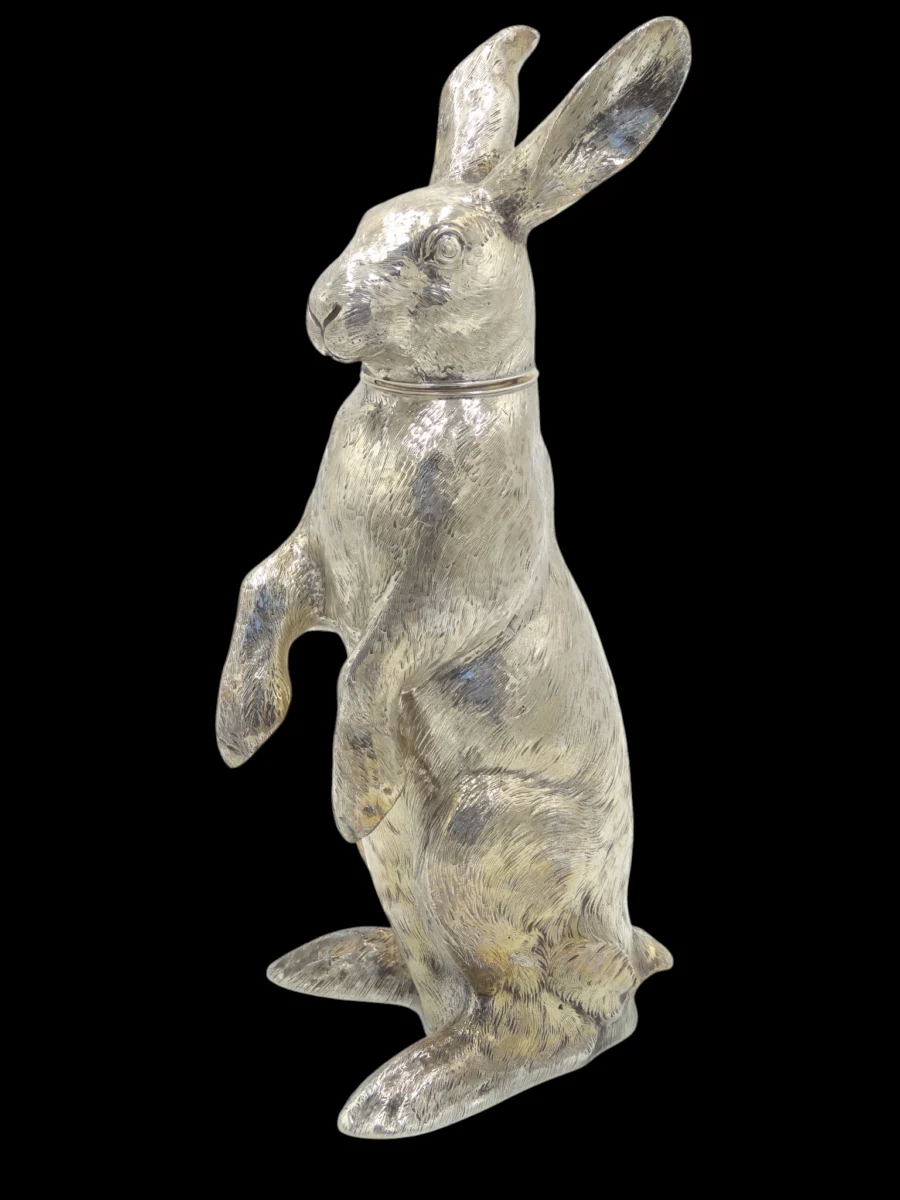
A German-made rabbit (or hare):
- Inscribed with hallmarks of Ludwig Nereshheimer of Hanau, Germany, 1920
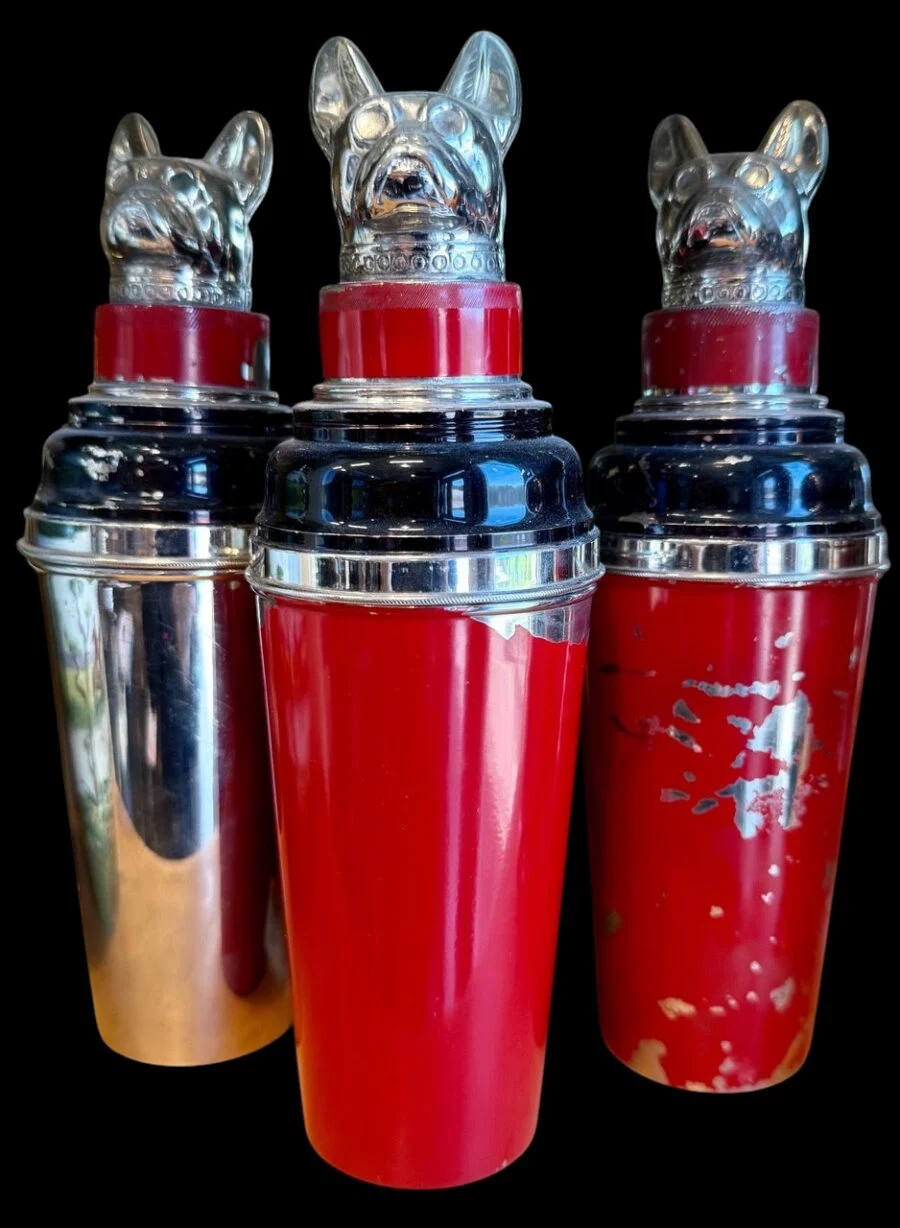
German (Prussian!) Bulldogs:
Inscribed “Germany,” circa 1930, these are known as “Trinkhund” cocktail shakers: literally, “Drinking Dog” shakers
Please: as a gentle reminder: we’re still talking about just a few of the many different types of figural (cobbler) cocktail shakers! There are shakers made to look like lanterns, airplanes, zeppelins, vases and loving cups. Regarding the loving cups: like Transformer toys for adults, these puppies disassemble and reassemble into cocktail shakers!
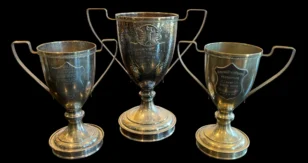
Loving Cups
There are cocktail shakers made to look like fire extinguishers (so-called “Thirst Extinguishers”) and like beer tankards and champagne bottles (I am particularly enamored of these latter cocktail shakers because of the double-duty they imply: preparing one sort of alcoholic drink in a figural cocktail shaker dedicated to the consumption of yet another alcoholic drink!
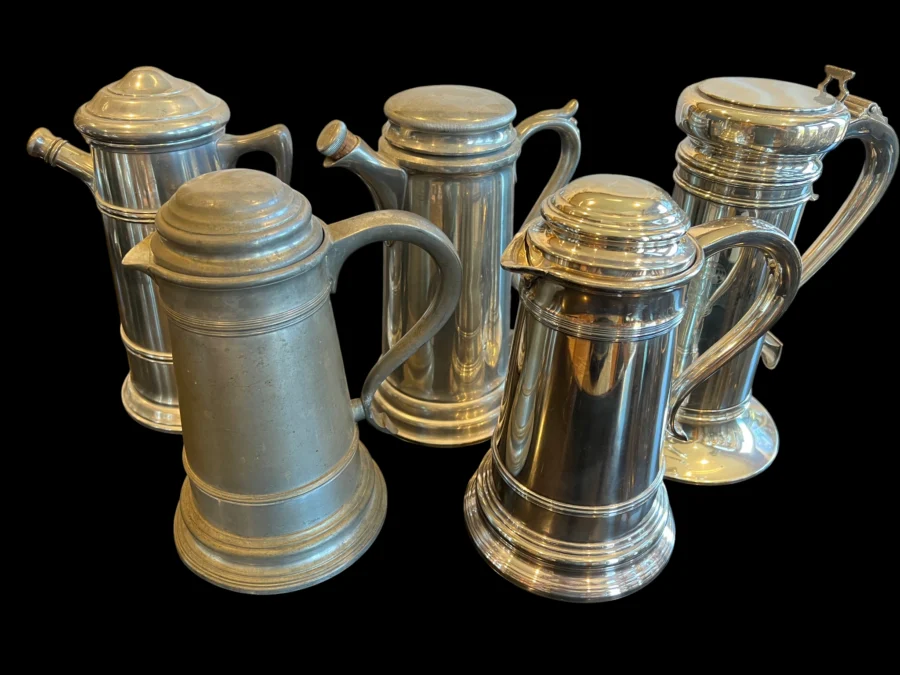
Tankard cocktail shakers, left-to-right:
- Inscribed “The Bailey Banks & Biddle Co. Pewter P7923,” USA, circa 1935
- Inscribed “Brewster Pewter; 4659; 42 oz,” USA, circa 1935
- Inscribed “Meriden S. P. Co; International S. Co; 357; 42 oz.,” USA, 1927
- Inscribed “Flagg & Homan; Pewter; 37; SANI-TITE; Reg. U.S. Pat. Off.; 1 1/2 Qts,” USA, 1905
- Inscribed “Crichton & Co Ltd; New York; 2 Pints; Sterling 6710,” USA, 1931
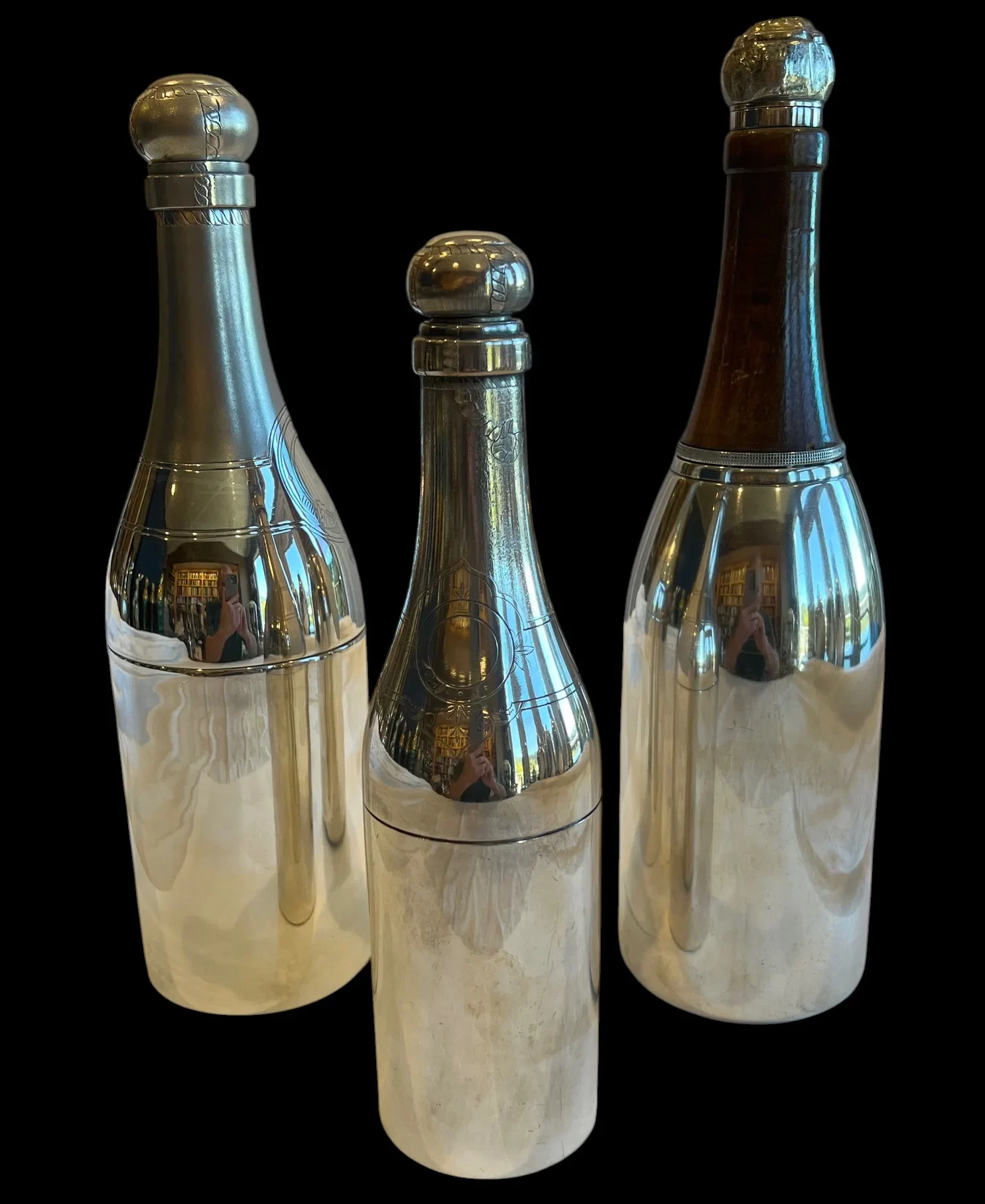
Champagne Bottle cocktail shakers, left-to-right:
- Inscribed “Ralph Lauren,” India(?), 2008
- Inscribed “Depose [patented],” France, circa 1930
- Inscribed “S. LTD; EPNS; A1; Kingsway Plate; Made in England; 5835; Two Pint,” circa 1930s
For those of a military bent, there are shakers made to look like artillery shells, aerial bombs, cannon, and even a World War One British airplane and a Mark 1 tank!
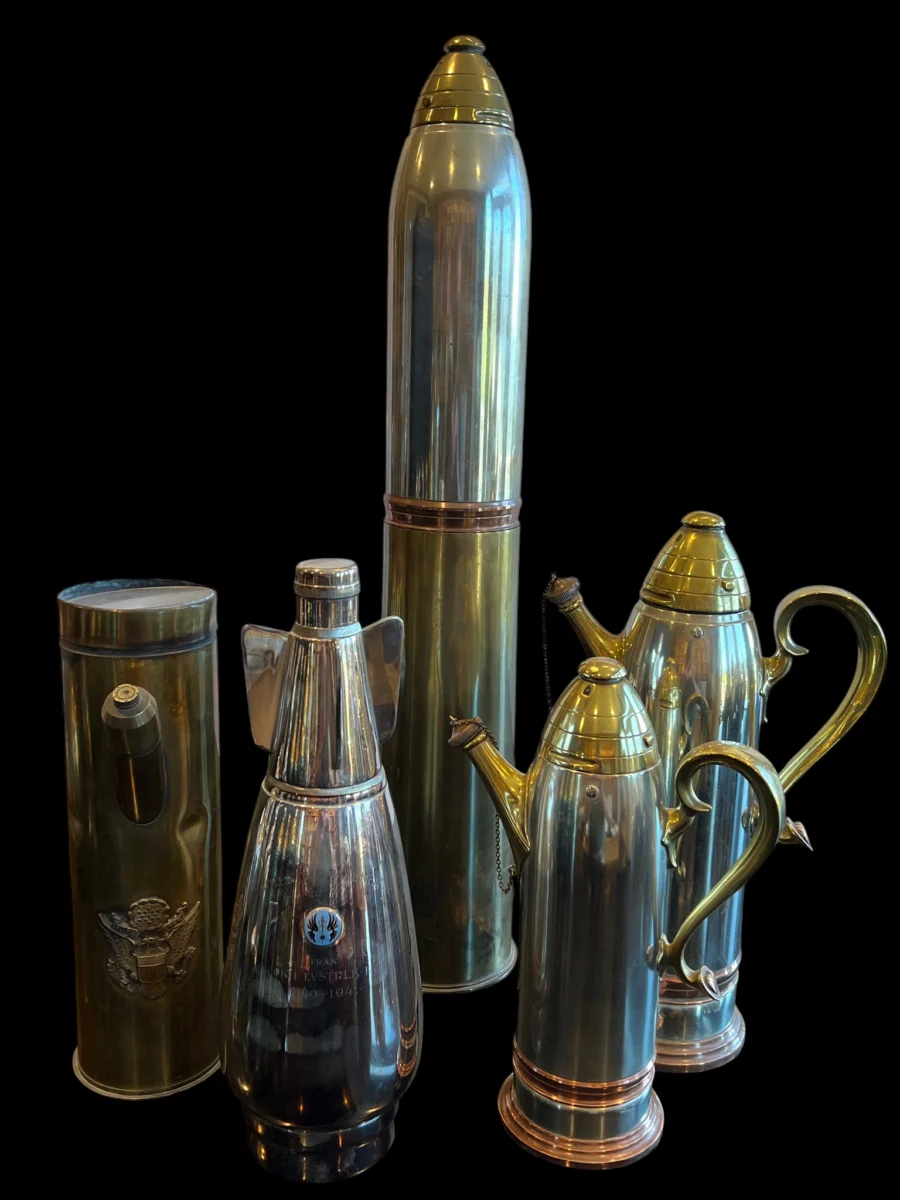
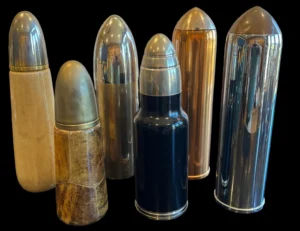
Artillery shells and aerial bombs, left-to-right:
- Trench Art cocktail shaker, inscribed “75 MM M18; LOT 50123; 27 F.A. 1942,” circa 1942-1945 (the 75 mm M18 was the standard shell for the Sherman Tanks of the 27th Field Artillery Regiment, which fought in North Africa and Italy during WWII)
- Inscribed “Fac-Simile Eighteen Pounder Shrapnel Shell; Patent Applied for in America and Foreign Countries,” Gorham Manufacturing Company, USA, circa 1915
- Inscribed “01070,” Gorham Manufacturing Company, USA, circa 1915
- Inscribed “01077,” Gorham Manufacturing Company, USA, circa 1915
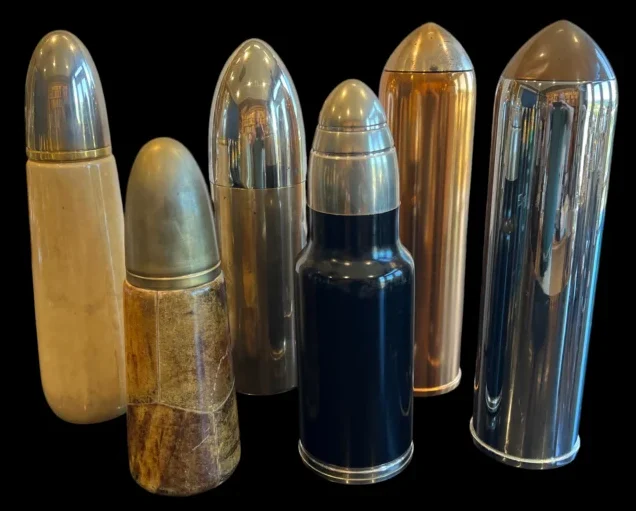
Artillery shells, left-to-right:
- Labeled “Creazione Tura Italy,” Aldo Tura, circa 1950
- Labeled “Creazione Aldo Tura Italy,” Aldo Tura, circa 1950
- Inscribed “Lion Hallmark; WB; 179,” Wallace Bros., USA, circa 1930
- Inscribed “Silver Towne, Attleboro MASS,” USA, circa late 1930s
- No inscription, USA, circa 1930s
- As above
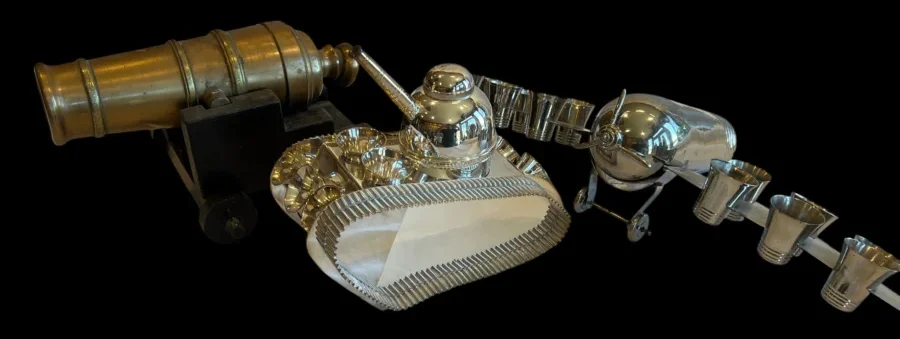
Cannon, World War One Mark 1 British tank, Monoplane, left-to-right
- No inscription, UK(?), circa 1920s
- Inscribed “Regent Plate,” UK, circa 1925
- Inscribed “Regent Plate,” UK, circa 1925
Things That Go Boom:
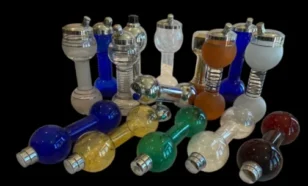
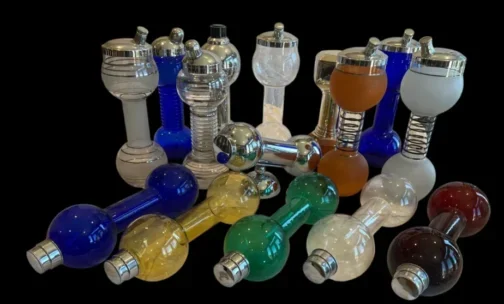
Dumbbells
And for the armchair astronaut, there cocktail shakers made to look like rocket ships!
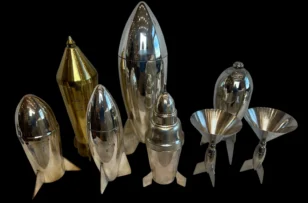
- Inscribed “Ralph Lauren,” India, 2005
- Inscribed “Mighty Maxwell For Cocktails Out Of This World; Solid Brass,” USA, circa 1950
- Inscribed “Made in England; Gerrard & Co. Ltd.; 112 Regent Street, London W; ‘Regency’ Plate; L. 1931/1 Pt.,” UK, 1931
- Inscribed “The PULLMAN; “Cosmos”; 003 of 100; 925, London, 2001,” created by Simon Kachadourian
- Inscribed “800; GFrey&Söhne; Breslau,” Germany (today Czech Republic), circa 1930
- No inscription, Godinger, USA, circa 2000
Bells and Rockets
As for materials, they were made out of everything. Along with Sterling silver (.925 pure), there are cocktail shakers made of coin silver (.800), gold plate, silver plate, nickel plate, chrome and chrome plate, aluminum, copper, bronze, brass, pewter, tin, stainless steel, and laminated goat skin (we’ll get there). There are shakers made from fine crystal and glass of every color; from bone china and porcelain, wood and lacquered wood, to Bakelite and Catalin. There are glass cocktail shakers decorated with lacquered and painted imagery and decals; glass shakers with delightful art deco etchings; and glass shakers bearing paper-thin Sterling overlays.
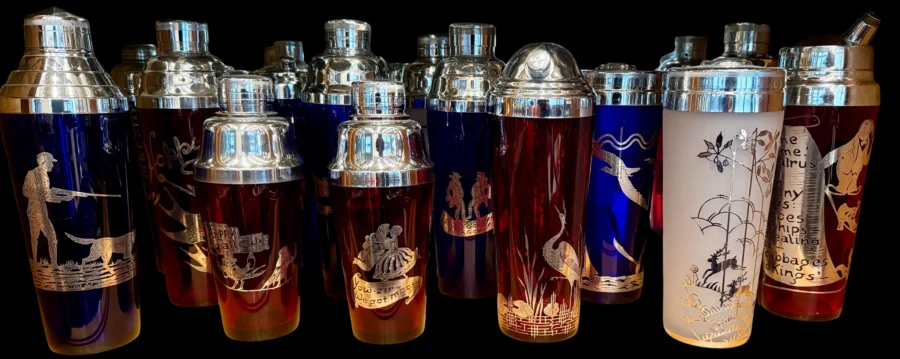
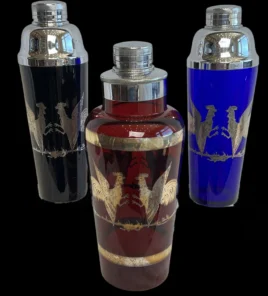
These American, applied-Sterling overlay glass shakers deserve a word. Cocktail shakers with these striking, whimsical, and even humorous Sterling overlays (what amounts to Sterling silver decals) are favorites of mine. They fit loosely into three categories.
Category One: unsigned glass blanks (though often of the highest quality) decorated with anonymously created silver overlays. For example.
Category Two: Blanks identifiable as being made by the Cambridge Glass Company (of Cambridge, Ohio), bearing anonymous Sterling overlays of real artistic quality:
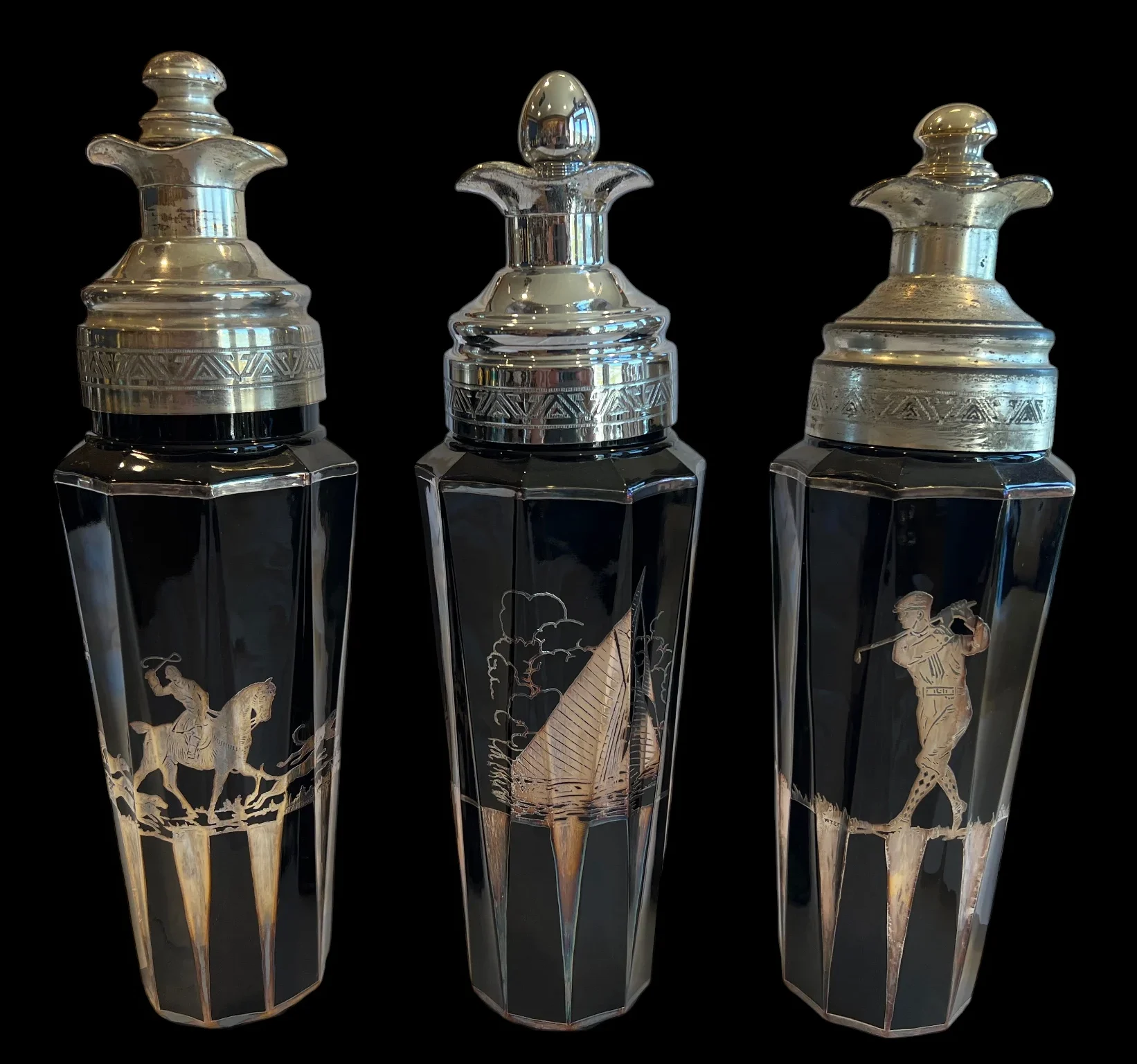
Set of three vintage black glass cocktail shakers with silver-plated lids and engraved horse rider, sailboat, and golfer designs
Cambridge Glass Company blanks (manufactured in Cambridge, Ohio) with anonymous, though expertly made Sterling overlays
Category Three: Cambridge Glass Co. blanks decorated with ornate Sterling overlays made by the Rockwell Silver Company. Rockwell Silver (of Meriden, CT) produced remarkably detailed, exceptionally high-quality hand-cut Sterling silver overlays for glass, crystal, and china. For example.
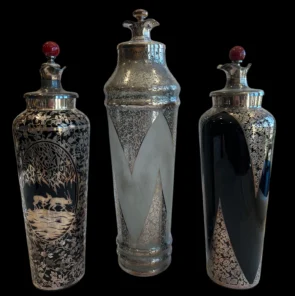
Rockwell Silver Company Sterling overlays on large, Cambridge Glass blanks
Cocktail Mixers?
Some will rightly ask, “but what, dear Dr. Bob, what about cocktail mixers?”
It is a fair if controversial question. As an inveterate shaker of cocktails (particularly martinis), I frankly (and perhaps, unfairly) look askance at those who would insist on stirring, which is what cocktail mixers are all about. Nevertheless, the variety of Art Deco cocktail mixers – while not equal to that of shakers – is nevertheless striking and inspiring. As such, know that I will write an article on cocktail mixers at some point in the future.
Collecting Cocktail Shakers
Among the greatest joys of collecting shakers is their endless variety. No matter how experienced (or jaded!) a collector, there is always something new and theretofore unknown to be found hiding around a corner. After nearly 40 years of collecting, that happens to me all the time.
As someone living in the United States (the San Francisco Bay Area), my initial collecting experience was limited to what I could find in antique shops locally and on visits to my family in the New York metropolitan area. The vast majority of the shakers I found in my first few years of collecting – pre-internet, roughly 1987 to 1993 – were made in the USA.
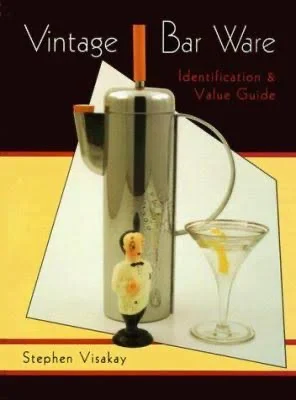
These North American-made cocktail shakers have been well documented in the collecting literature. The overwhelming majority of cocktail shakers discussed in Steve Visakay’s book Vintage Barware, Updated Version(Collector Books, 2000; a volume generally considered to be the Bible of cocktail shaker collecting) are of North American manufacture. On top of that, a wide sampling of North American-made cocktail shakers has been featured in an equally wide variety of books about American glass manufacturers; Chase Brass and Copper Company; American tableware; and American Art Deco design.
However, as my collecting has taught me, North American-made cocktail shakers represent only a fraction of the Art Deco and mid-century shakers made worldwide. Most unfortunately, unlike North American cocktail shakers, these non-American shakers have yet to be systematically documented. This fact will dictate our approach for the remainder of this article. Rather than examine cocktail shakers chronologically, or by the materials of their manufacture, or continue to group them by their figural design, we will instead discuss them by their country of origin, and consequently observe some of the national design elements that characterize cocktail shakers made outside the United States. Only then, at the conclusion of this article, will we examine some iconic American Art Deco cocktail shakers, including some not discussed in Steve Visakay’s book.
British Cocktail Shakers
British cocktail shakers of all shapes, sizes, and metals were designed and produced by a wide variety of major manufacturers, including Asprey, Mappin & Webb, William Suckling, Ltd., Hukin & Heath, Ades/Adie Brothers, and Garrard & Co.
British-made shakers exude quality. In my experience, their heavy plating rarely wears through. When they employ wood in their designs, it is typically Rosewood or Macassar Ebony (rather than the walnut typically used in American shakers). And while ceramics are rarely used in the manufacture of cocktail shakers, no one made better cocktail shakers from ceramic (specifically, porcelain) than Royal Doulton in Staffordshire, England.
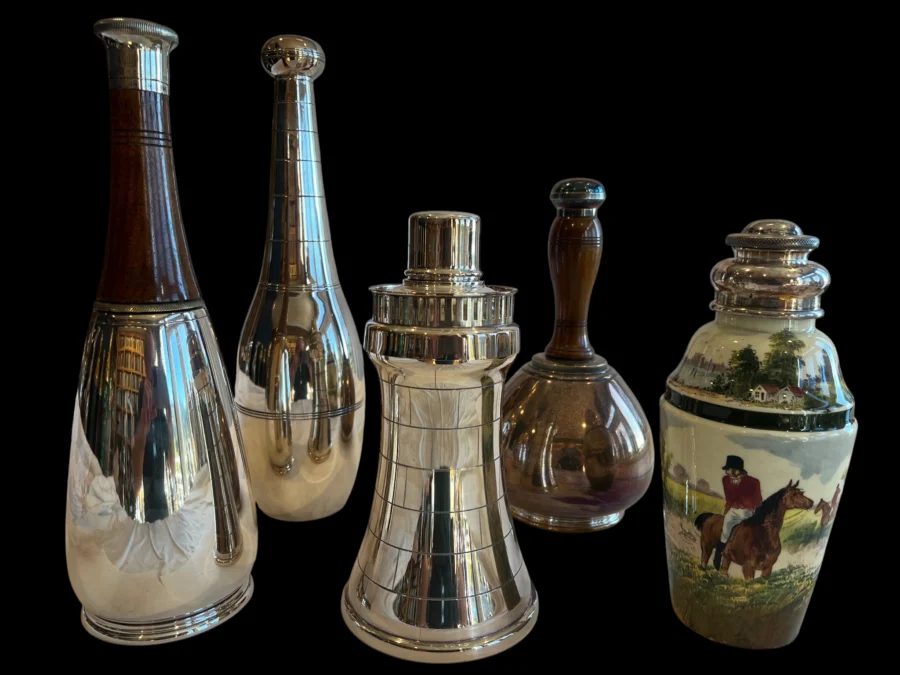
Quality, Quality, and More Quality: A few such English cocktail shakers, left-to-right:
- Skittle Pin, ins cribbed “SLtd EPNS A1; Kingsway Plate; Made in England; REG2 No825163; 5825; One & Three Quarter Pints; QS 124,” William Suckling, Ltd., circa 1925
- Skittle Pin, inscribed “E.P.N.S.; Made in England; Reg. No. 833103; various hallmarks,” circa 1935
- Lighthouse, inscribed “BHLd EP,” Birmingham Handicrafts Ltd., circa 1920
- Baby Rattle, inscribed 5; S Ltd; EPNS A1; Kingsway Plate; Made in England; Reg P No. 825164; 5824; One & Three Quarter Pints,” William Suckling, Ltd., circa 1930
- Porcelain Fox Hunt Scene, inscribed “Made in England; Royal Doulton; RgNo 71`8885; ‘Made in England expressly for Roos Brothers Inc.’” circa 1930
Among the most sought-after British-made cocktail shakers are the Master Incolor series, “one of the most recognizable and technically advanced bar accessories produced during the Art Deco period.”
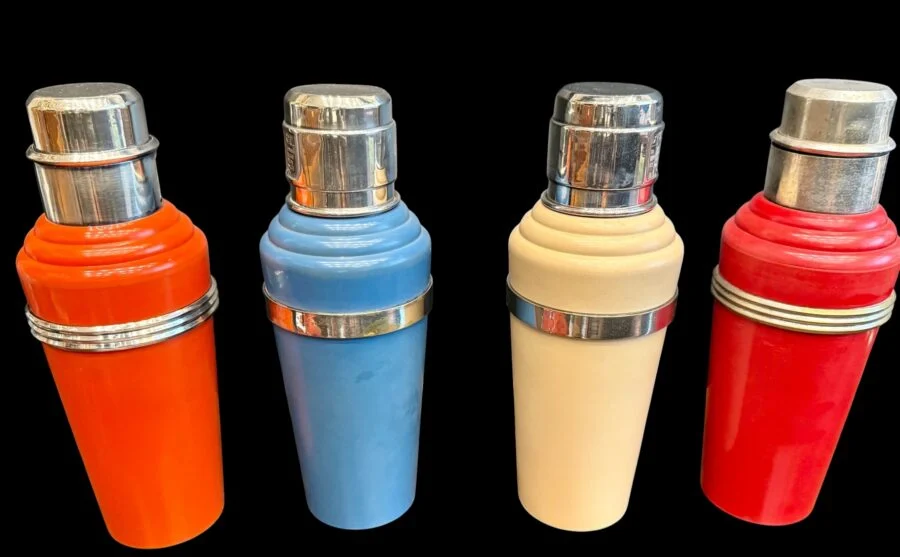
The shakers are made from molded urea formaldehyde (otherwise known as Bakelite), and were manufactured in London in the mid-1930s by the firm of Wilson & Gill. The shaker came in six colors, though putting together a full set today is, to my marked frustration, nearly impossible. As the photo above attests, my collection is still in need/want of blue and black Master Incolor shakers.
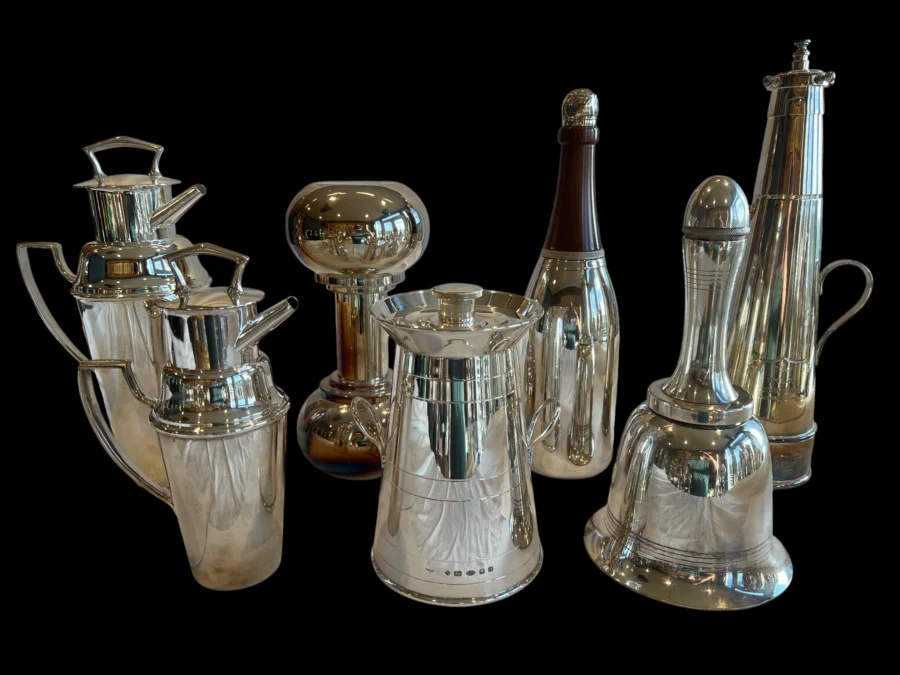
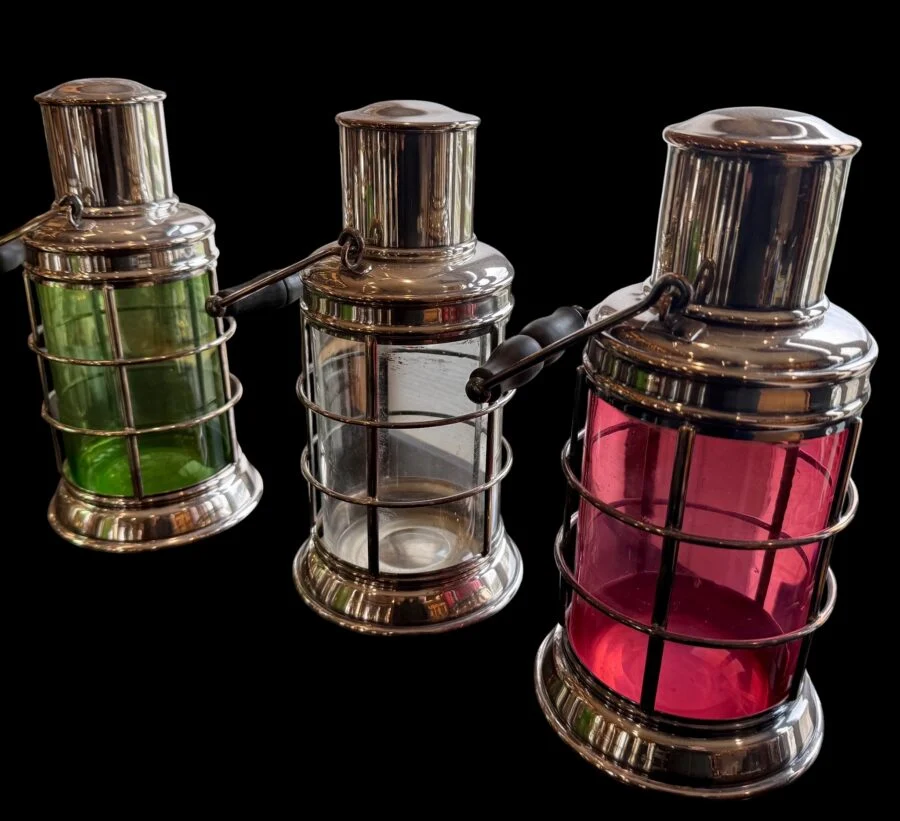
Talk about collectible: the London-based luxury brand of Asprey & Co. produced a series of figural cocktail shakers – predominately in silver plate – that remain among the most desirable shakers out there. These include (left-to-right in the photos below) milk jugs (both small and large), a dumbbell, a milk can/churn (in Sterling Silver), a champagne bottle (also in Sterling); a bell, an old-style English fire hydrant, and ships’ lanterns (green glass for starboard; clear glass for stern, and red glass for port). Fabulous, killer shakers all!
(FYI: Asprey continues to create new cocktail shakers (now exclusively in Sterling Silver) in its London workshop to this day. These newly created Asprey & Co. cocktail shakers include a lighthouse, a racing car, an airplane, a rocket ship, a bobsled, and a pagoda. They are presently priced between $13,700 (for the lighthouse) to $30,250 (for the pagoda).
Pricey.
When I dream of cocktail shakers, I dream of these!
French Cocktail Shakers
French designed and manufactured Art Deco-styled cocktail shakers were produced by such companies as Cartier, Christofle, St. Médard, Baccarat, Lalique, and Saint-Louis. They are – as is so typical of French design – freakin’ Magnifique: inspired in design and elegantly crafted whether manufactured in Sterling, plate, or crystal.
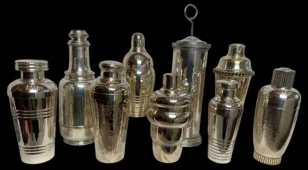
A selection of French Shakers; from left-to-right:
- Inscribed “LF; 25; 2,” Lenain & Fils, Paris, circa 1920s
- Water Bottle figural cocktail shaker, inscribed “Cartier; Sterling 925-1000; 4 Pint; 1,” 1925
- Naked lady etched on shaker, two small hallmarks, 1930s
- No inscription, circa 1930
- Inscribed “4; Cornet 48; 15,” Cornet, circa 1930
- Trombone cocktail shaker, inscribed “51; Christofle; 2537506,” Christofle, circa 1930
- Inscribed “H-F; 12” circa 1930
- Inscribed “J-Despres,” Jean Despres, circa 1940
- Inscribed “1,” circa 1930
Of particular note are the miniature, one drink cocktail shakers that were a specialty of French producers. These are spectacular, and almost entirely unique to French manufacturers. Standing between three and four inches in height, these miniature shakers offer up a mind-blowing variety of Art Deco designs. Many are “illustrated” with etched imagery and all sorts of applied designs. Love these!
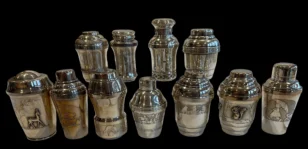
A sampling of miniature, one-drink French cocktail shakers
Scandinavian Shakers
No one did super high-end Art Deco cocktail shakers any better than the three Scandinavian countries of Denmark, Sweden, and Norway. (FYI: Finland, Iceland, and Greenland are not properly part of Scandinavia but rather, are among the Nordic countries.)
Most Scandinavian producers treated the cocktail shaker as a luxury Art Deco item, and as often as not they were designed (and signed) by major Scandinavian artists and manufactured in Sterling Silver. But even those not signed by their designer and not made from Sterling Silver embody a natural elegance and clarity of line that are the essence of Art Deco!
A particular feature of many (if not most) Scandinavian cocktail shakers – a feature that immediately announces their Scandinavian origin – are their finials: those topmost bits of decor sticking up from their caps.
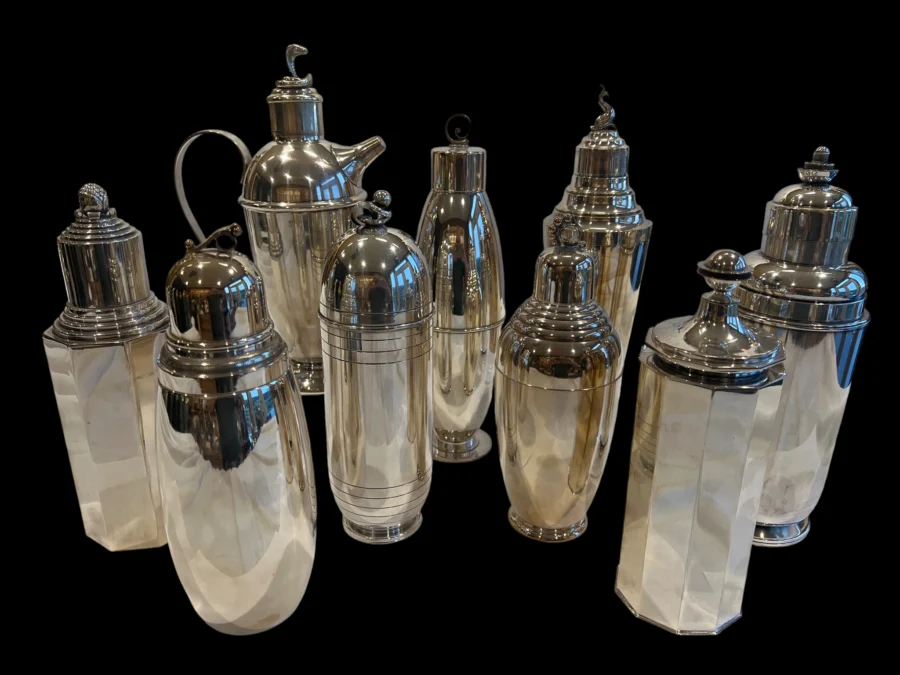
A selection of Scandinavian shakers with finials
- Inscribed “’CC’ in crown; FDC; P; Denmark,” Denmark
- Inscribed “Sølvplet,” Denmark
- Inscribed “Prima Sølvplet JR,” Denmark
- Inscribed “ALP; Danmark; ALTA 25,” Denmark
- Inscribed “CGH IMA ALP; Made in Sweden,” Sweden
- Inscribed “DANA; DFA [n triangle]; M; 115,” Denmark
- Inscribed “DANA; DFA; FUNKIS; 4764; 0,” Denmark
- Inscribed “ALP DANMARK ATLA 23,” Denmark
- Inscribed “IMP; ALPACCA,” Denmark
Such finials became standard in Scandinavian hollowware and tableware design as far back as the 16th century, when they were employed to evoke national pride (finials with crowns) or the wealth and agricultural prosperity of their nation (finials with stylized balls, pomegranates, flowers, and animals). 20th century Scandinavian Art Deco design retained the finials, but stripped away the ornamentation of the past and replaced it with geometric designs, abstracted organic shapes, and animals of all sorts.
The shakers created by the leading Scandinavian designers in the 1920s are, for me, the very pinnacle of the Art Deco cocktail shaker. Having said that, tragically, their fabulous prices have precluded me from acquiring as many as I’d like. Nevertheless, I’ve enough of them to demonstrate their artistry here and now.
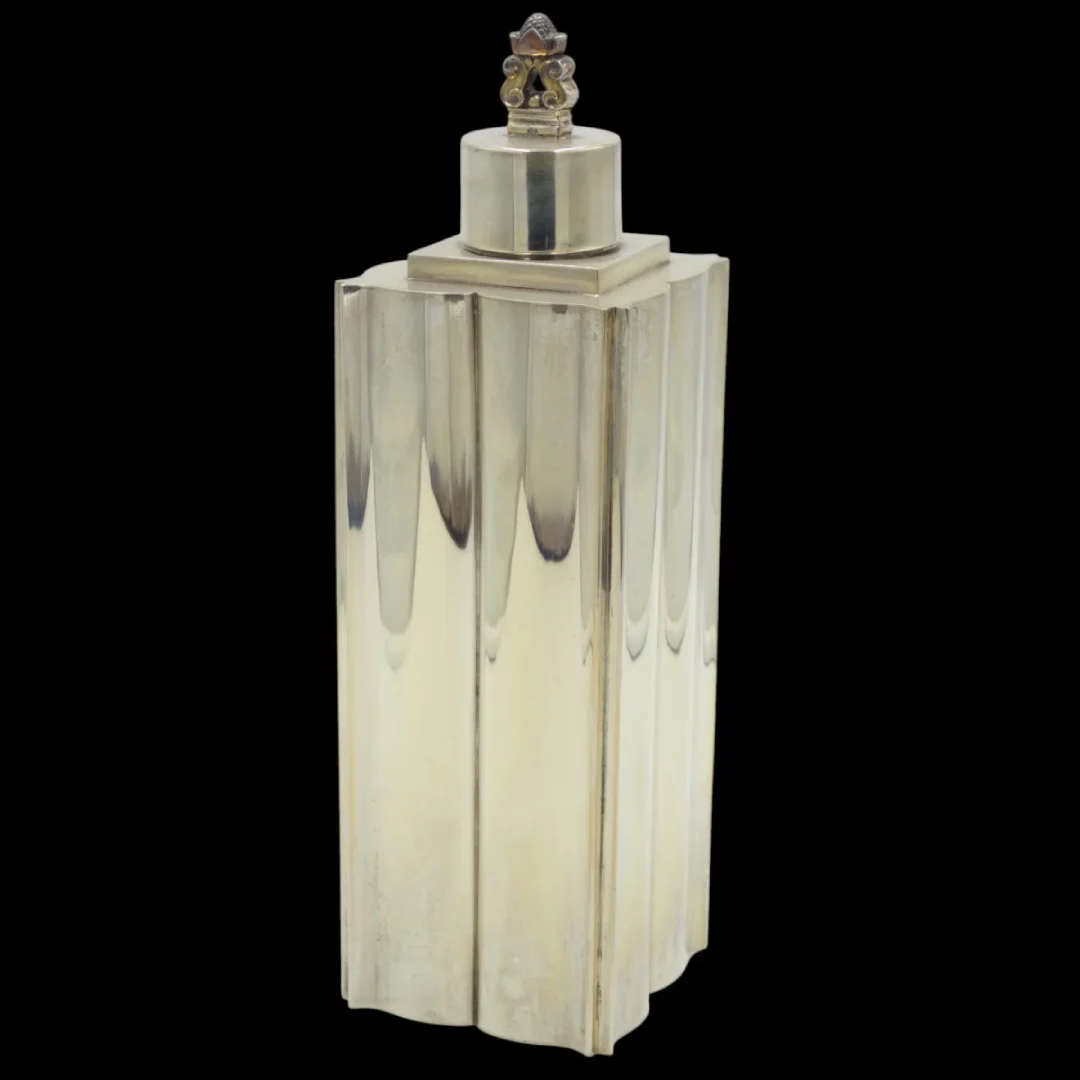
Those Danish artists whose shakers have attained downright mythic status include Sigvard Bernadotte (1907-2002) and Harald Nielsen (1892-1977), who designed cocktail shakers for George Jensen; and Holger Rasmussen (1871-1952) and Arne Bang (1901-1983) who designed for Anton Michelson).
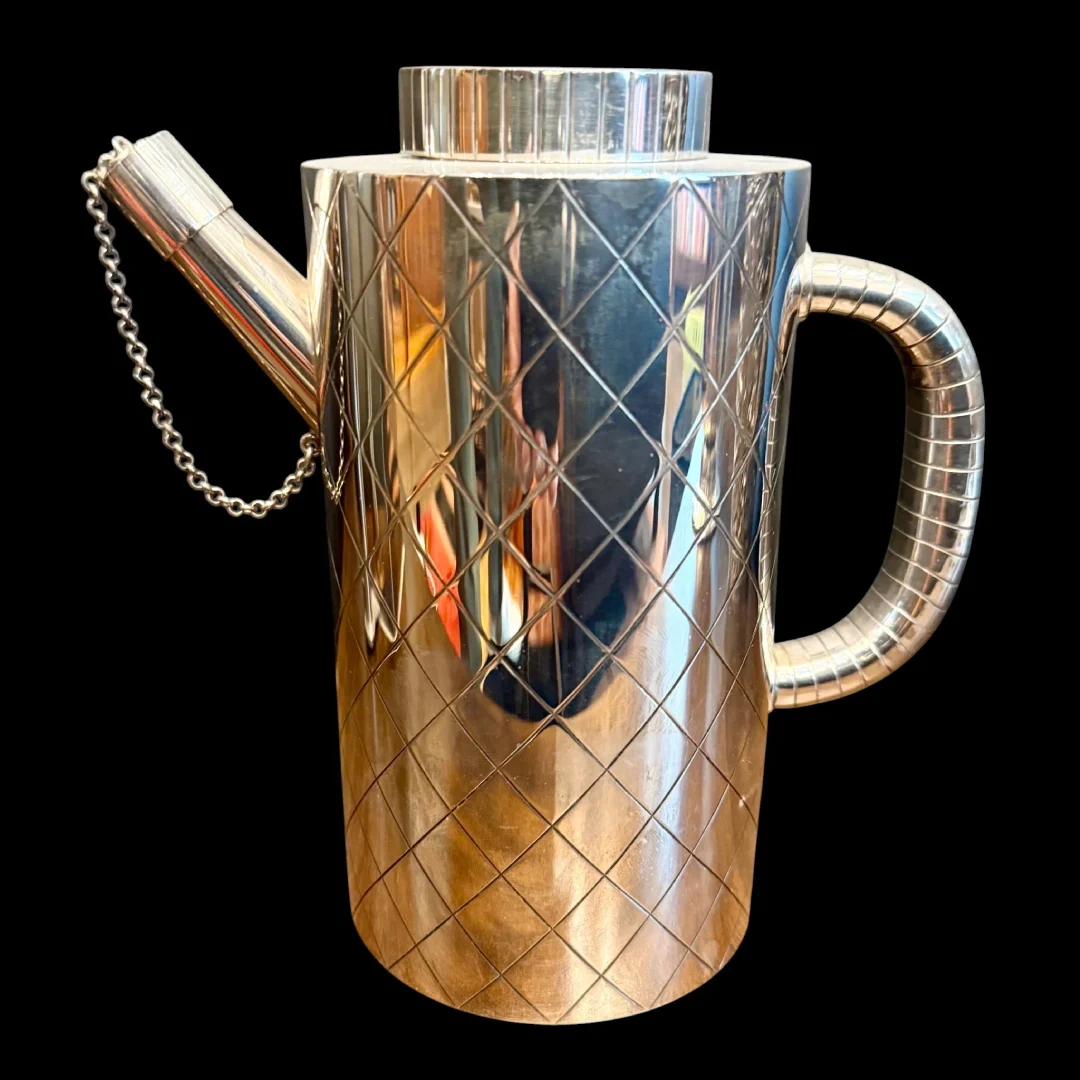
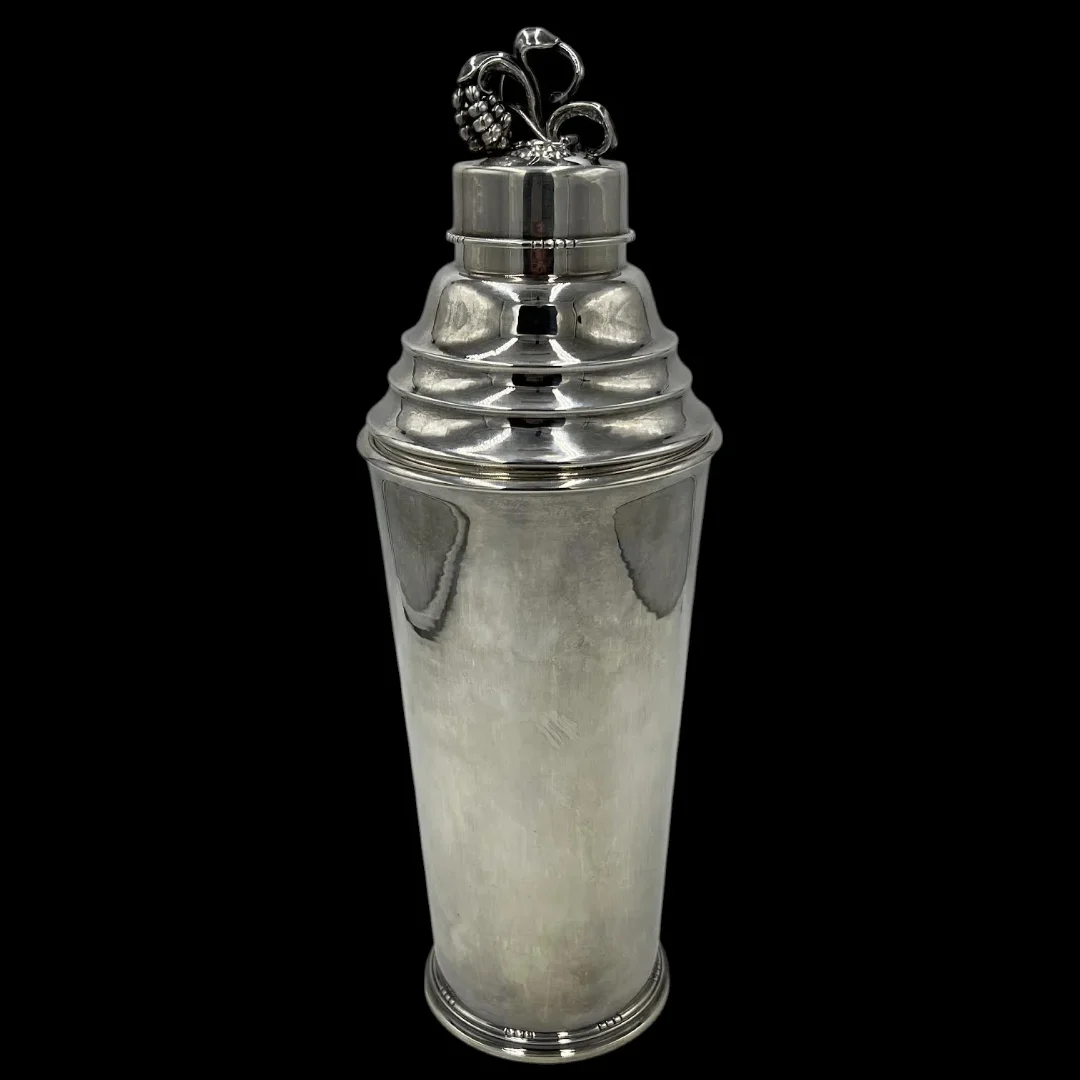
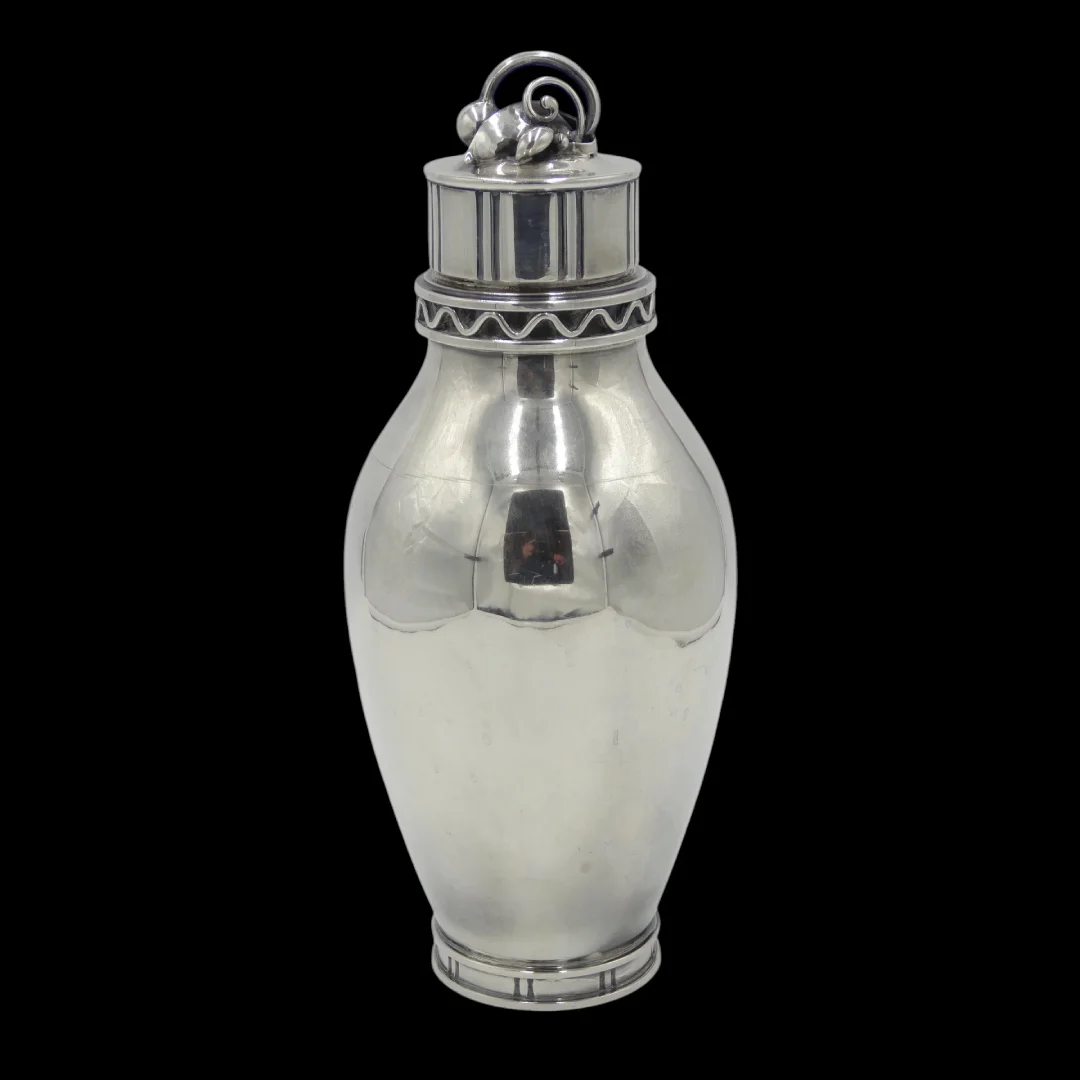
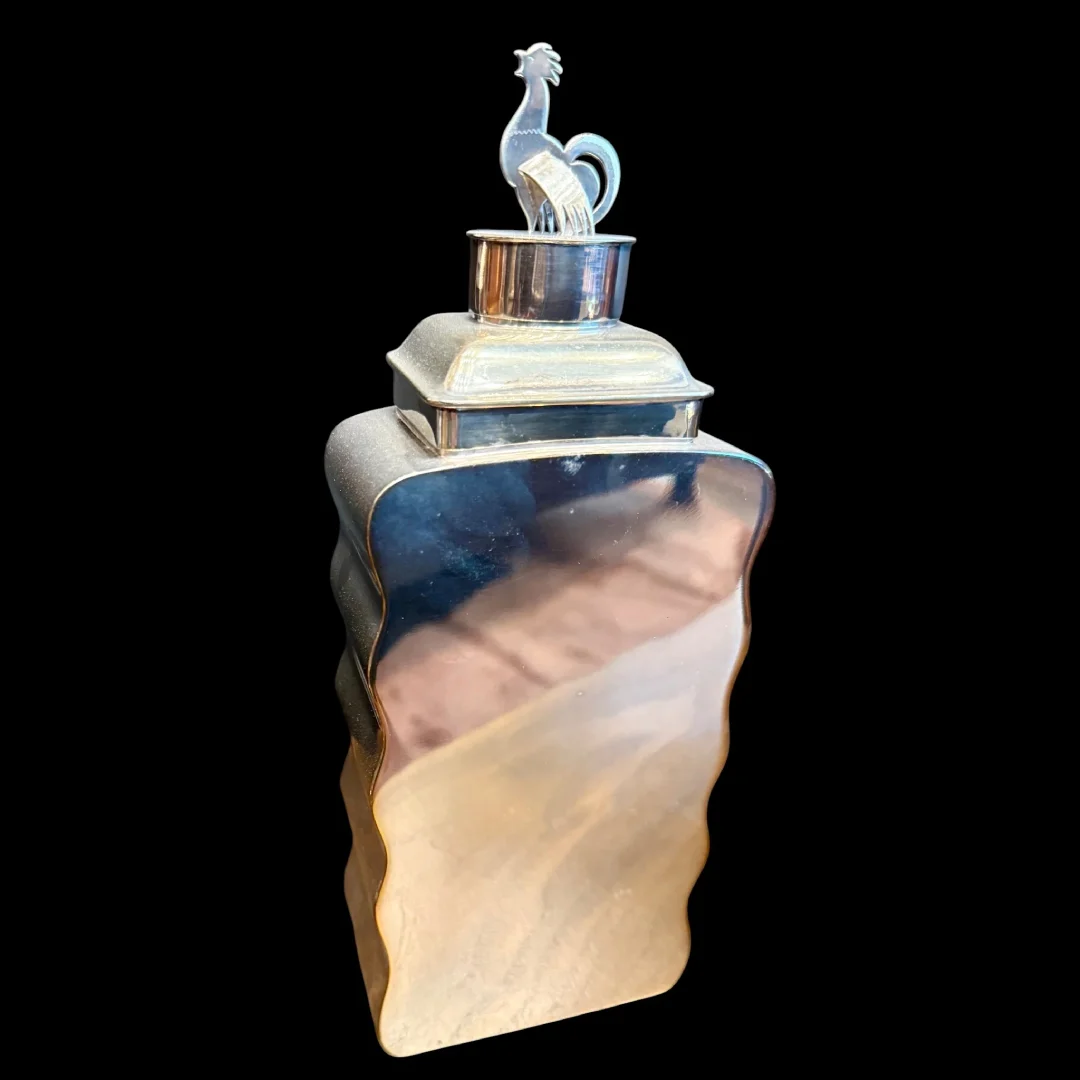
From Top Left to Bottom Right:
- Sivgard Bernadotte, inscribed “Sigvard; Georg Jensen; Denmark Sterling; 819; B,” 1937
- Harald Neilsen, inscribed “Sterling; 462B; Denmark HN; Georg Jensen; 925,” 1945
- Holger Rasmussen, inscribed “HR; Sterling; 925.S; Denmark,” 1945-1956
- Arne Bang, inscribed “AB; various hallmarks,” circa 1942
In Sweden, Tage Göthlin (circa 1900-circa 1965) designed for Tenn & Silver, AB; Folke Arstrom (1907-1997) for Guldsmeds Aktiebolaget; and Sylvia Stave (1908-1994) for Carl Gustav Hallberg.
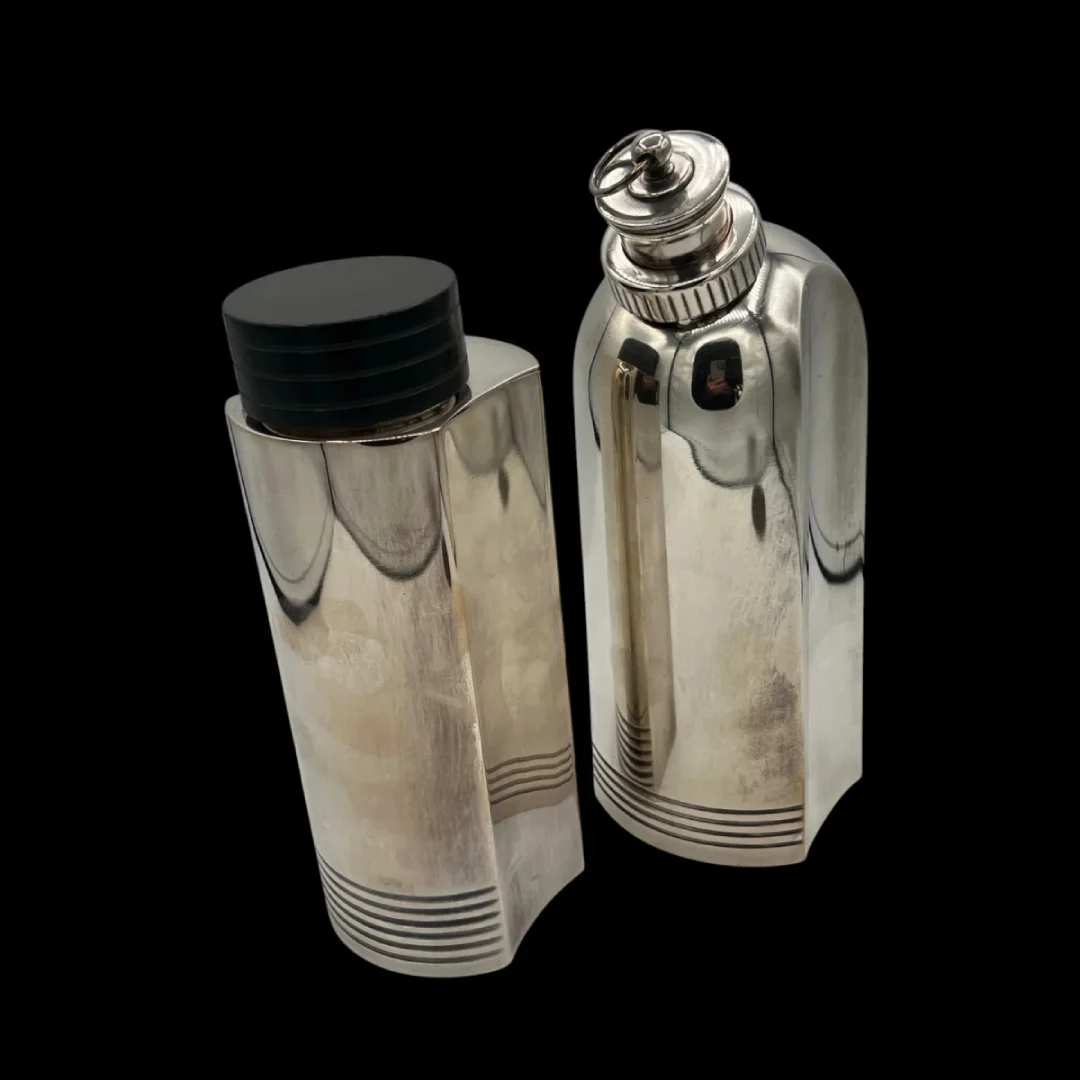
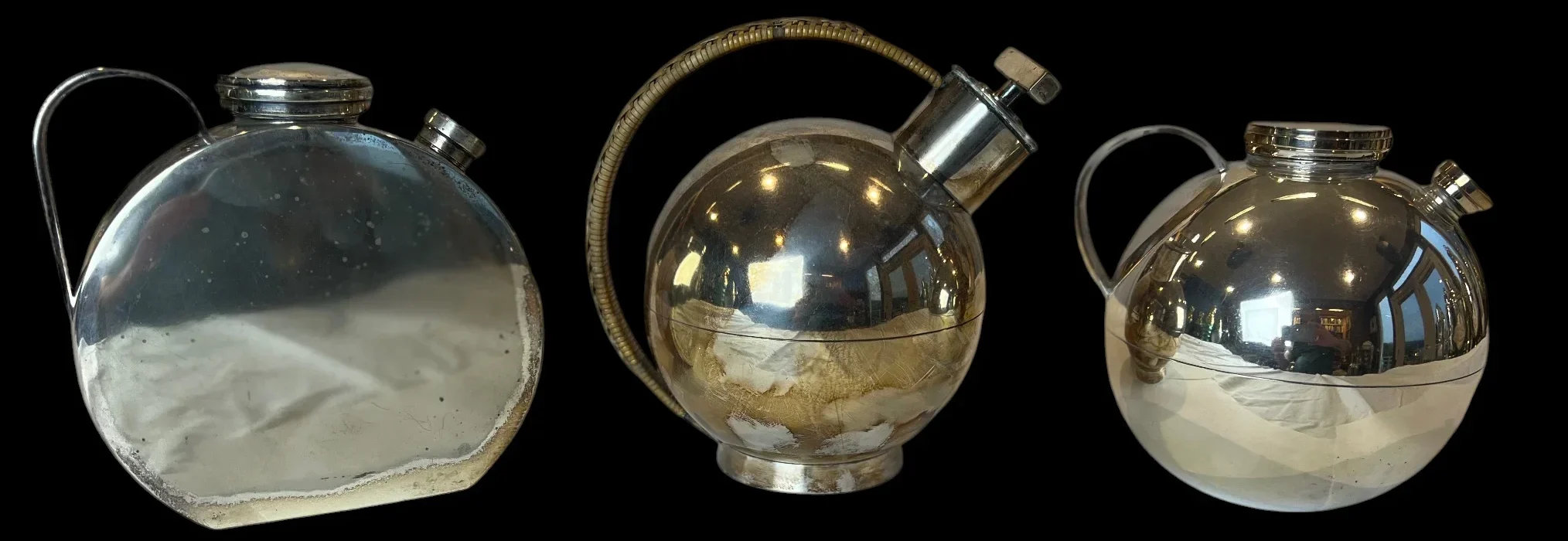
Top, Left to Right:
- Tage Göthlin, inscribed “TESI; hallmarks: “G” with crown; three crowns; “S” in lozenge; X8,” 1948
- Folke Arstrom circa 1935; shaker on left inscribed “GAB ALP”; on right “GAB NS ALP,” both circa 1935
Bottom:
- Sylvia Stave, three metal canteens made for Carl Gustav Hallberg; circa 1925-1935
In Norway, Harry Sørby designed for David Andersen, and Oskar Sørensen (1898-1987) designed for J. Tostrup Co.
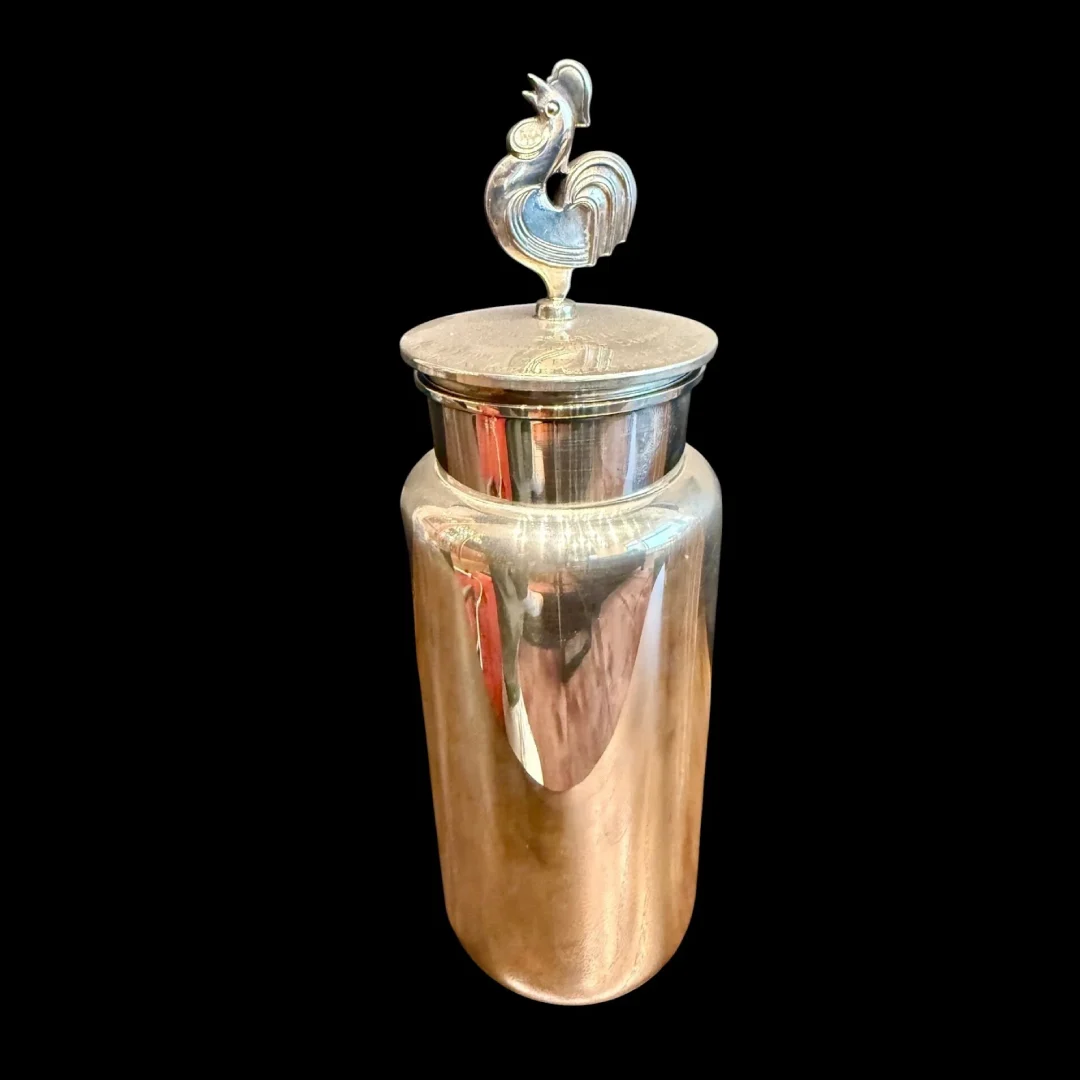
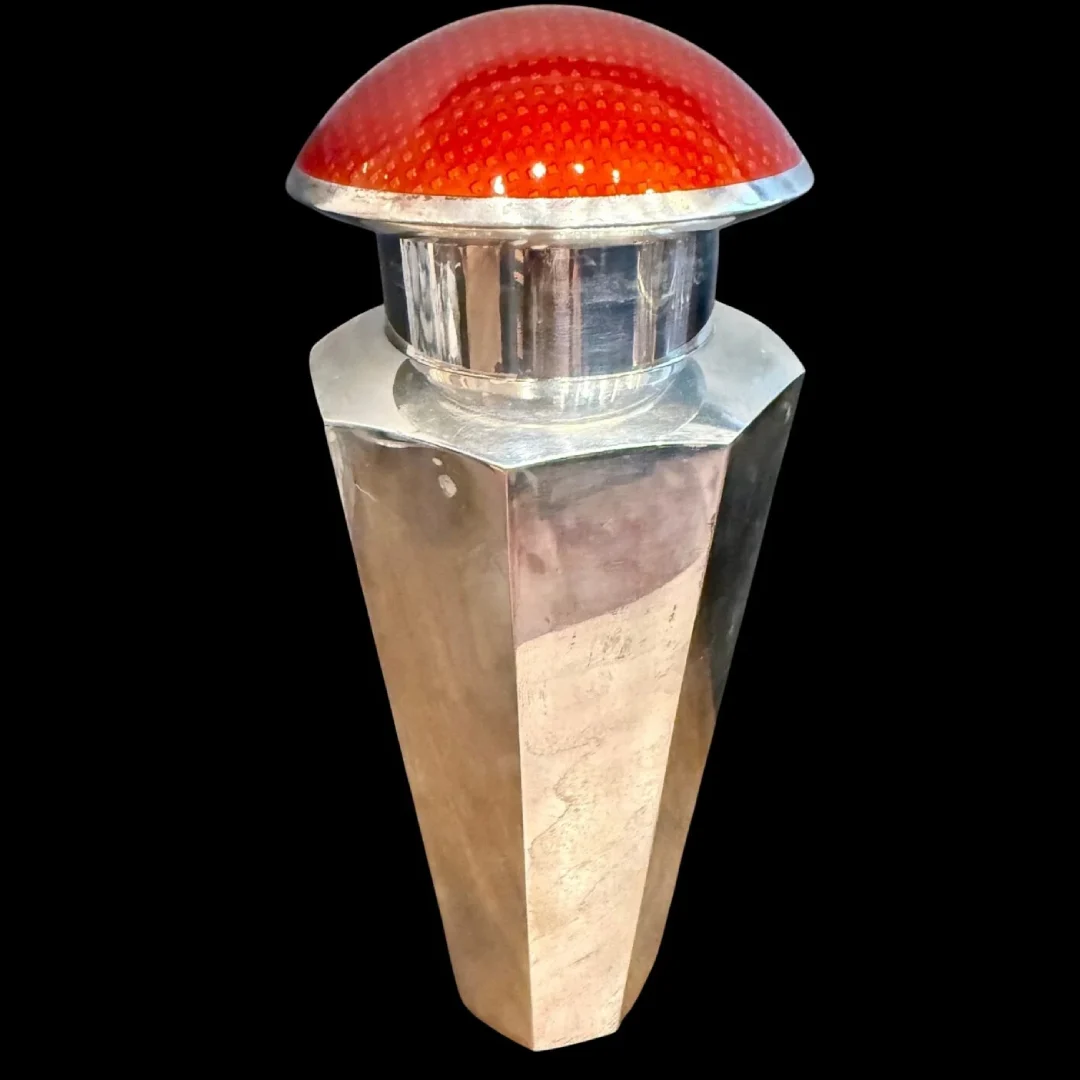
From Left to Right:
- Harry Sørby, inscribed “D. A. 830S,” .830 silver, 1949
- Oskar Sørensen, inscribed “J. Tostrup; .880; 1954,” 1954
SCANDINAVIAN SHAKERS
German Shakers
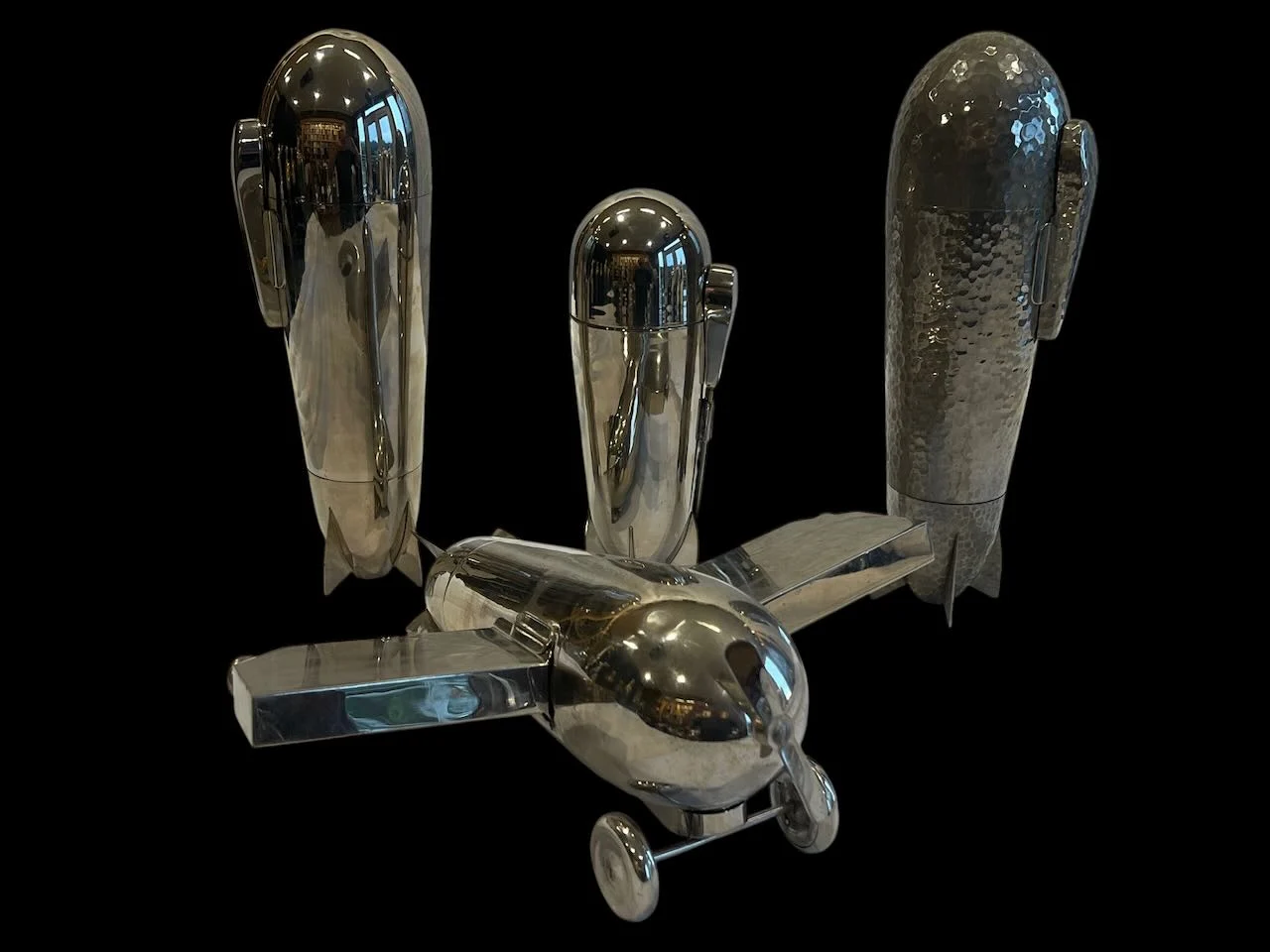
The most representative (and well known) German cocktail shakers of the art deco era make virtually no reference to the past whatsoever. These are the iconic figural airplane and zeppelin cocktail sets made most notably by J.A. Henckel, between roughly 1928 and 1935.
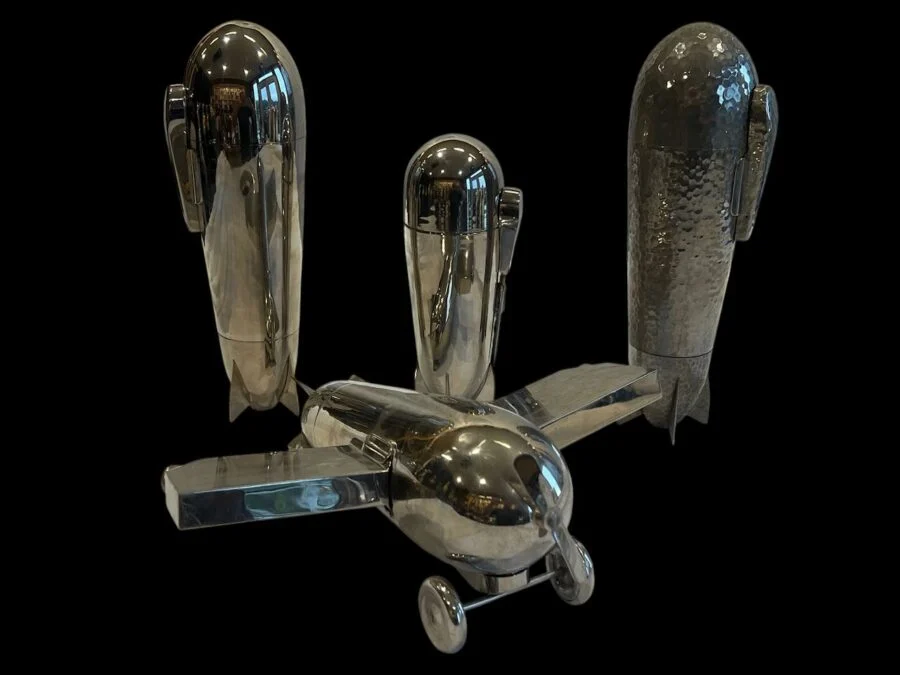
The airplanes and zeppelins came in three sizes – 9 inch, 12 inch, and 17½ inch – and depending upon their size and manufacturer, broke down into bar sets of anywhere between 10 and 23 separate pieces. These shaker sets represent German ingenuity and fit-and-finish at its very best. (Although, as it has been observed, after two or three cocktails, reassembling one of these puppies is a significantly greater challenge than taking it apart.)
German Shakers
Czech Shakers
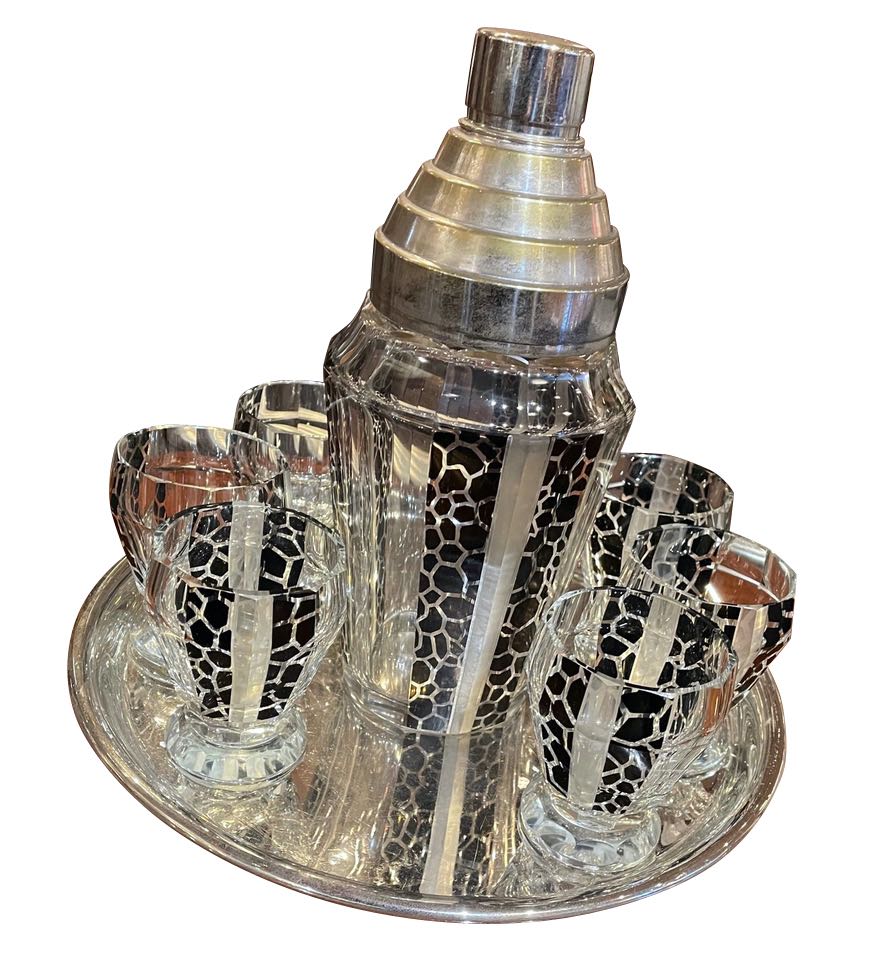
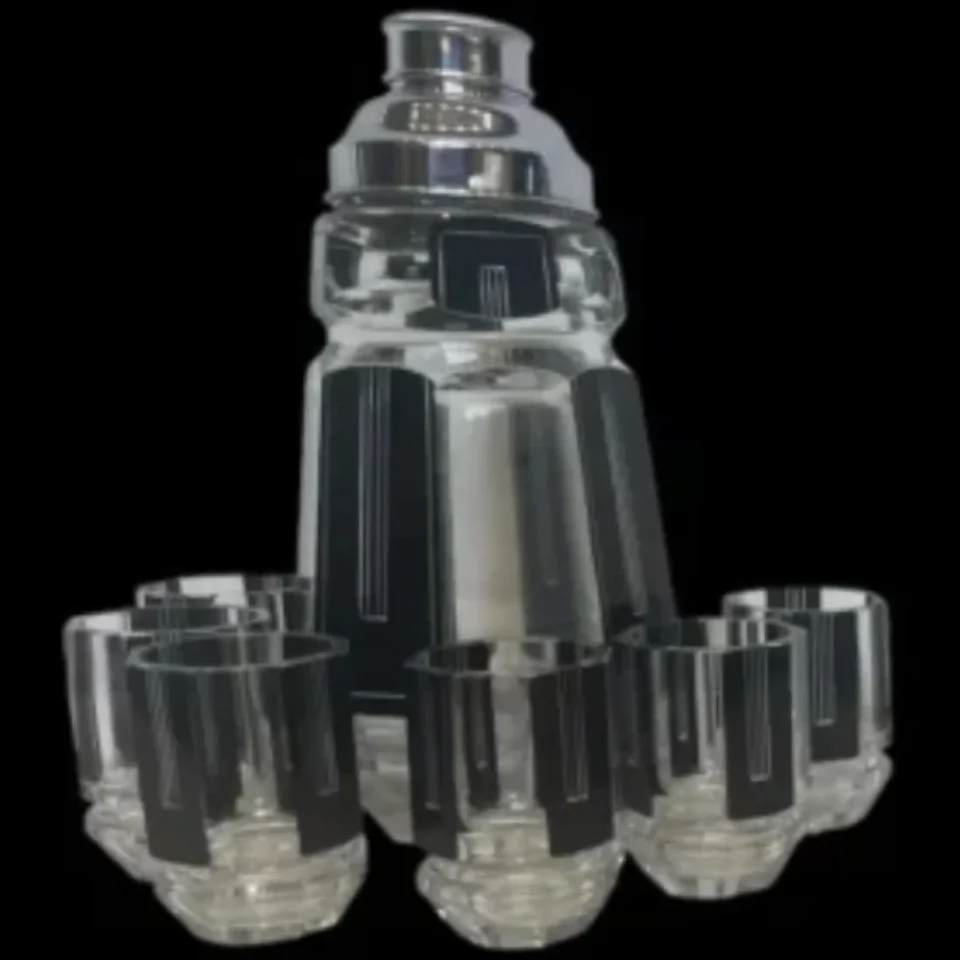
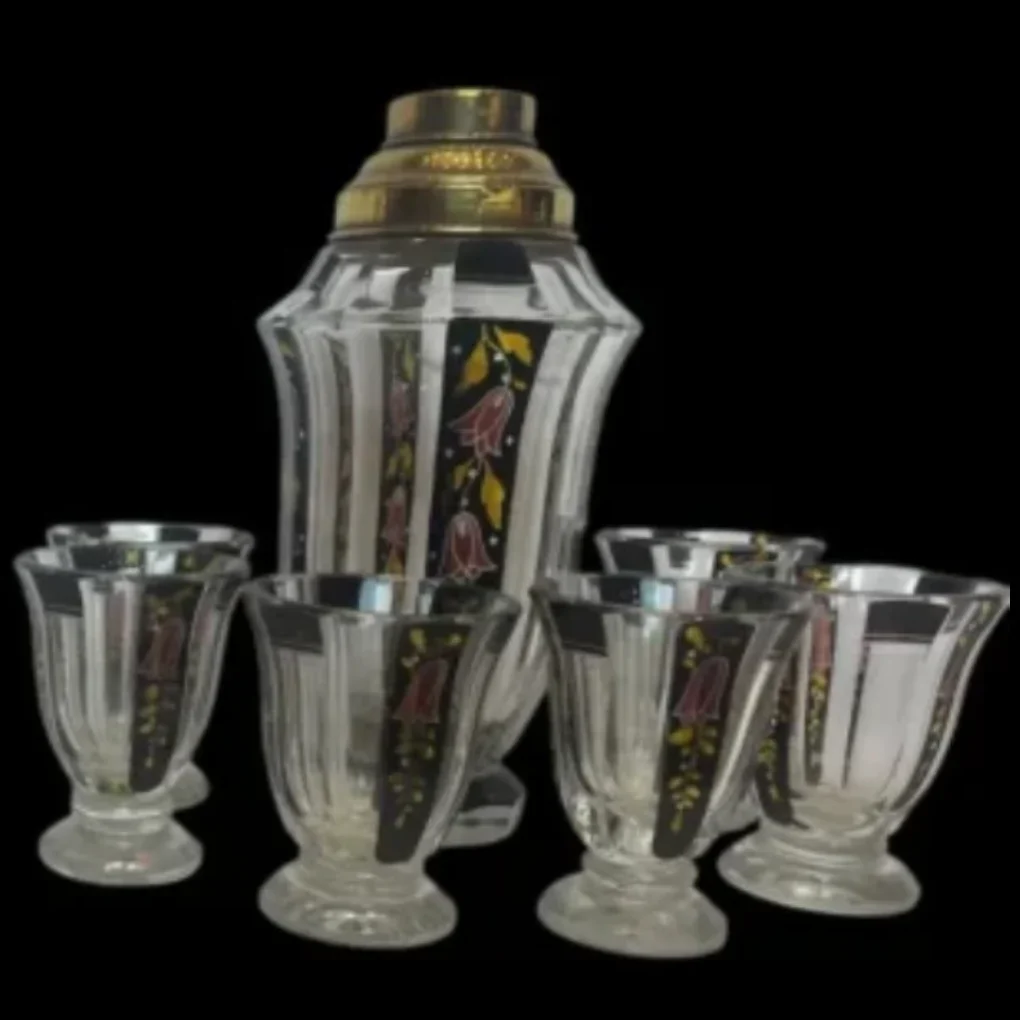
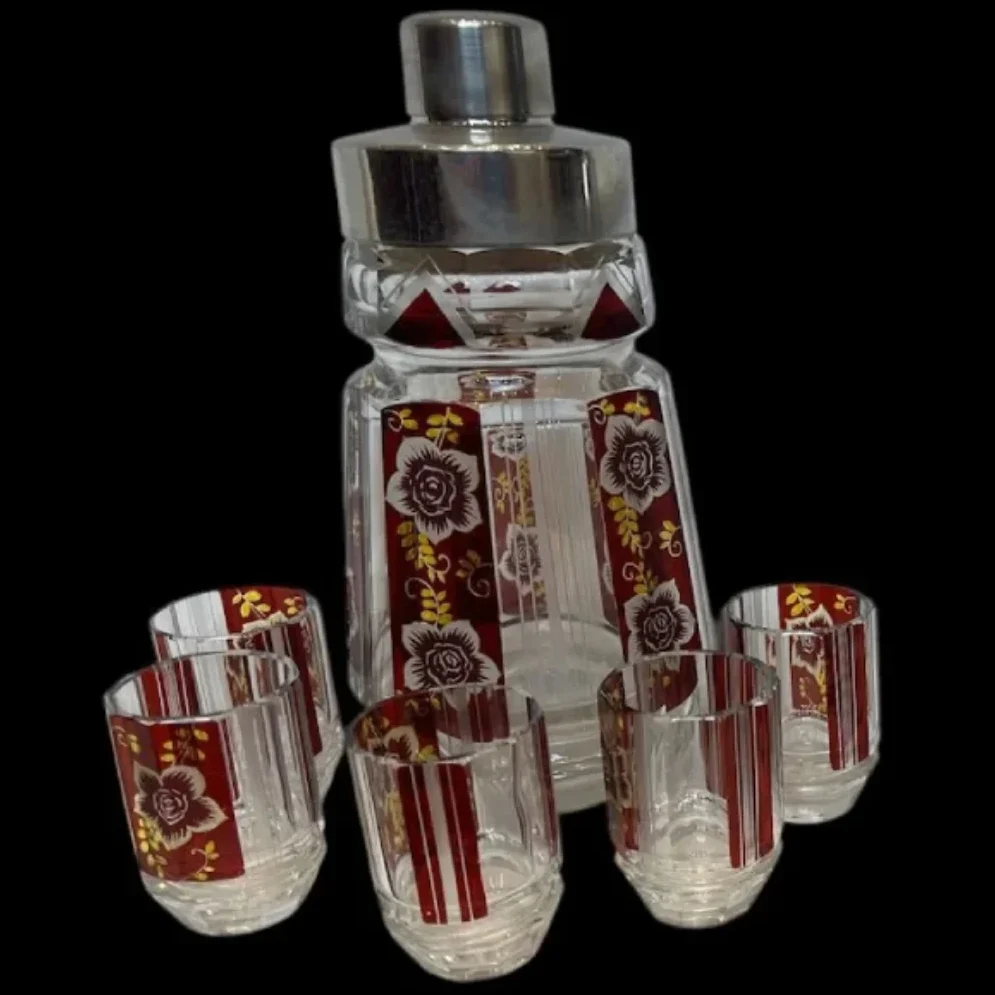
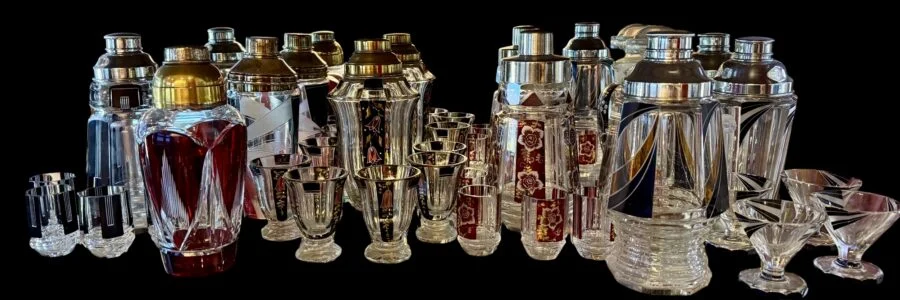
Czechoslovakia was (and remains) famous for its glassware and crystal. It should come as no surprise, then, that Czech shakers made between the wars are – to my knowledge – made (except for their top caps) exclusively of glass and crystal. Czech shakers made of glass are easily recognizable thanks to the quality and color of their glass. But instantly recognizable are the extraordinary Czech crystal cocktail shakers, glasses, and decanters designed and manufactured in the 1930s by the firm of Karl Palda (1863-circa 1938).
The Palda factory, located in Nový Bor, in Bohemia, produced a seemingly endless variety of crystal ware with dazzling art deco shapes, geometric patterns, floral designs, and enameling. Collectively, the Palda company’s work constitutes among the most sophisticated art deco barware ever created.
Peruvian Shakers
At the other end of the “sophistication” spectrum are the figural silver cocktail shakers produced in Peru during the 1920s and 1930s.
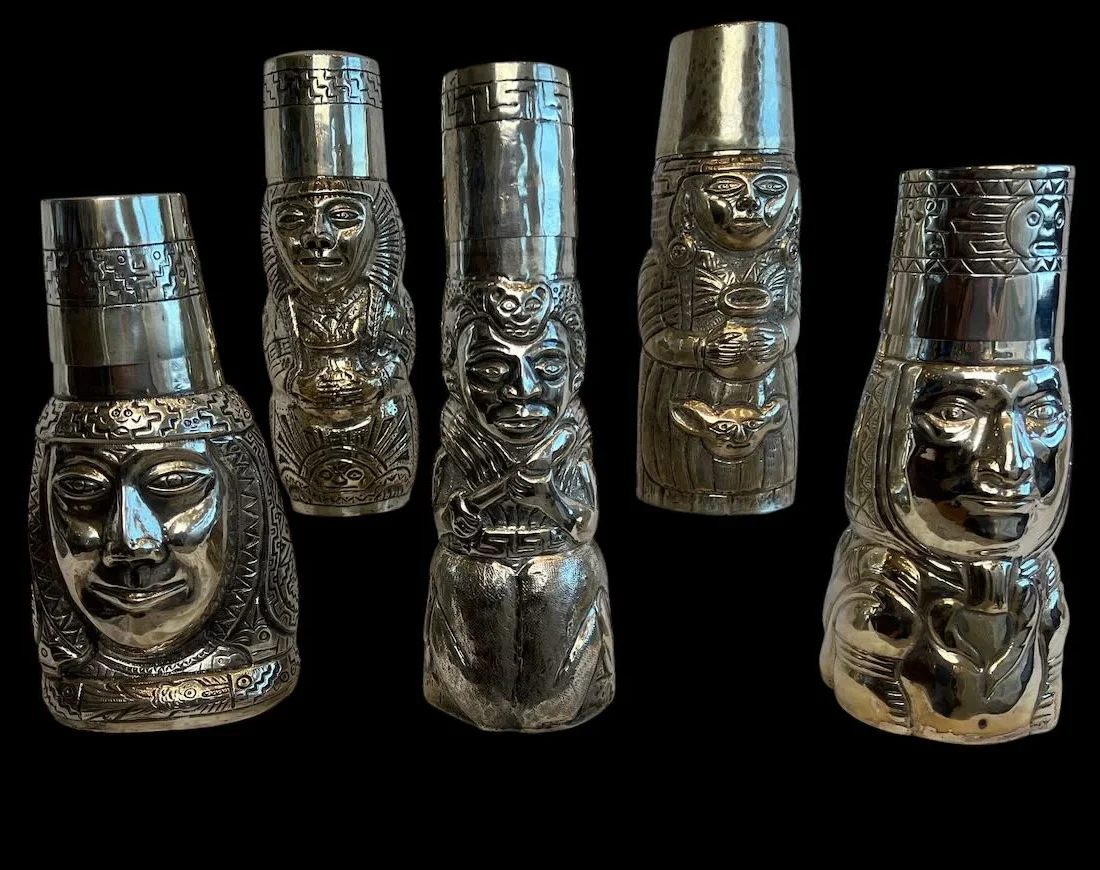
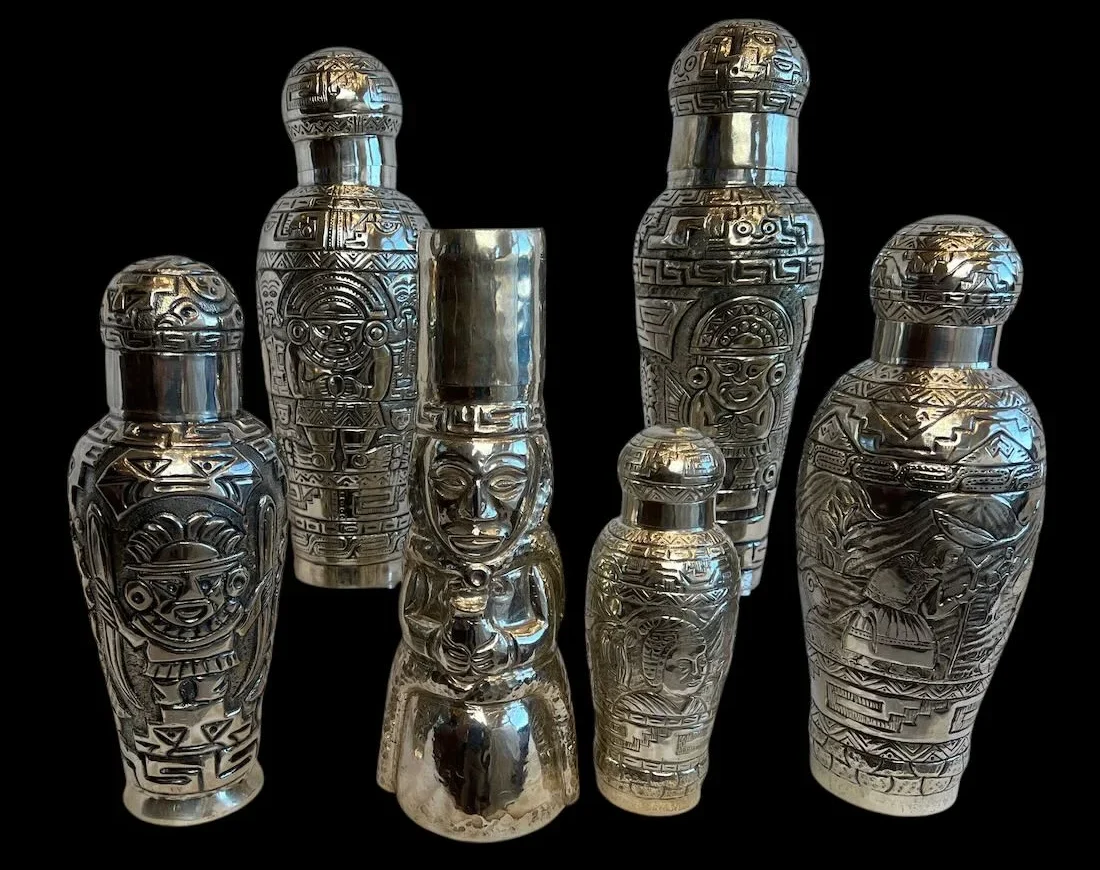
Hand-made by native Peruvian artisans, each and every one of these shakers is different. They exude a sort of pre-Columbian, folk-art directness that is a major part of their charm, and which is the antithesis of machine age art deco design. Featuring Incan deities and Andes Mountain scenes and animals, these shakers range from 90% silver (.900) to nearly 100% silver.
East Asian Shakers
By “East Asian,” we’re referring here to Chinese and Japanese cocktail shakers. And while people of Chinese and Japanese descent generally hate being lumped together with each other, when it comes to cocktail shakers, that “lumping” is fair, as – for the most part – Chinese and Japanese cocktail shakers plumb the same design aesthetic.
At the most sophisticated level are pre-war, Sterling Silver cocktail shakers that feature traditional imagery – most commonly snarling shakers, made in both pre-war China and post-war Japan, many of which are quite striking.
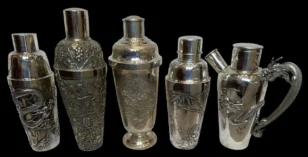
Japanese and Chinese Sterling Silver Shakers, left-to-right:
- Dragon design, inscribed with three Chinese hallmarks, circa 1920s
- Floral design, inscribed “China; Shengyuan,” circa 1930
- Landscape design, inscribed “HC; hallmarks,” Hung Chong & Co., Shanghai, China, 1925
- Floral design, inscribed “Benton; Yokohama; Sterling,” Japan, circa 1920
- Dragon design, inscribed “ZEEWO,” Shanghai, China, circa 1900-1920
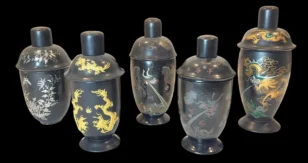
A selection of pre-World War II Chinese Lacquered Cocktail Shakers
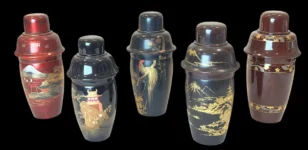
A selection of post-War Japanese Lacquered Cocktail Shakers
Finally, and unique to prewar China, there are the marvelous and monumental Art Deco pewter cocktail shakers manufactured primarily in Swatow (modern-day Shantou), China, for export.
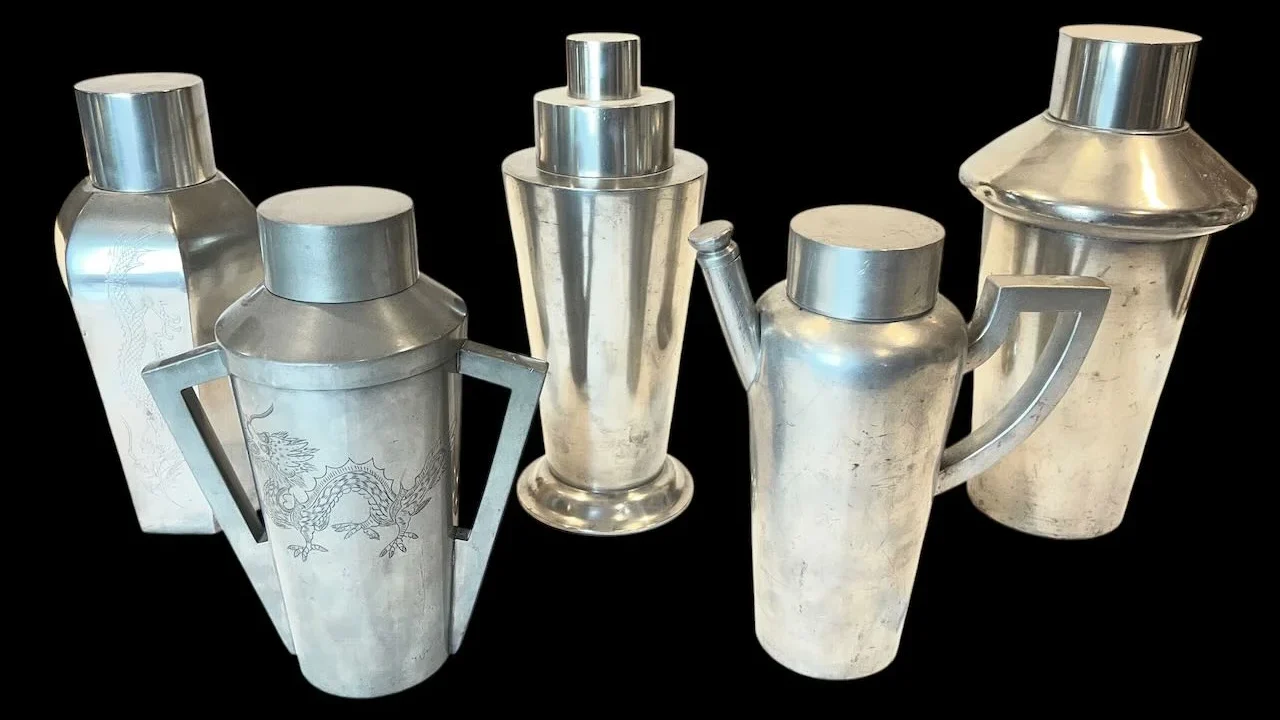
Pre-War Chinese Pewter Shakers
Given the high lead content of their pewter, these shakers most certainly should not be used to mix cocktails. Which is unfortunate, given that shaking these monsters provides quite an upper-body workout.
Italian MCM Cocktail Shakers
The best Italian cocktail shakers were designed and produced post-war, during the 1950s and 1960s. And while this is clearly after the “Art Deco era,” the mid-century modernist aesthetic of these post-war Italian shakers puts them firmly within the lineage of their art deco ancestors.
For example, the famed midcentury modern Italian designers Lino Sabattini (1925-2016) and Gio Ponti (1891-1979) both created cocktail shakers powerfully influenced by an Art Deco aesthetic. They remain among the most striking MCM shakers ever designed.
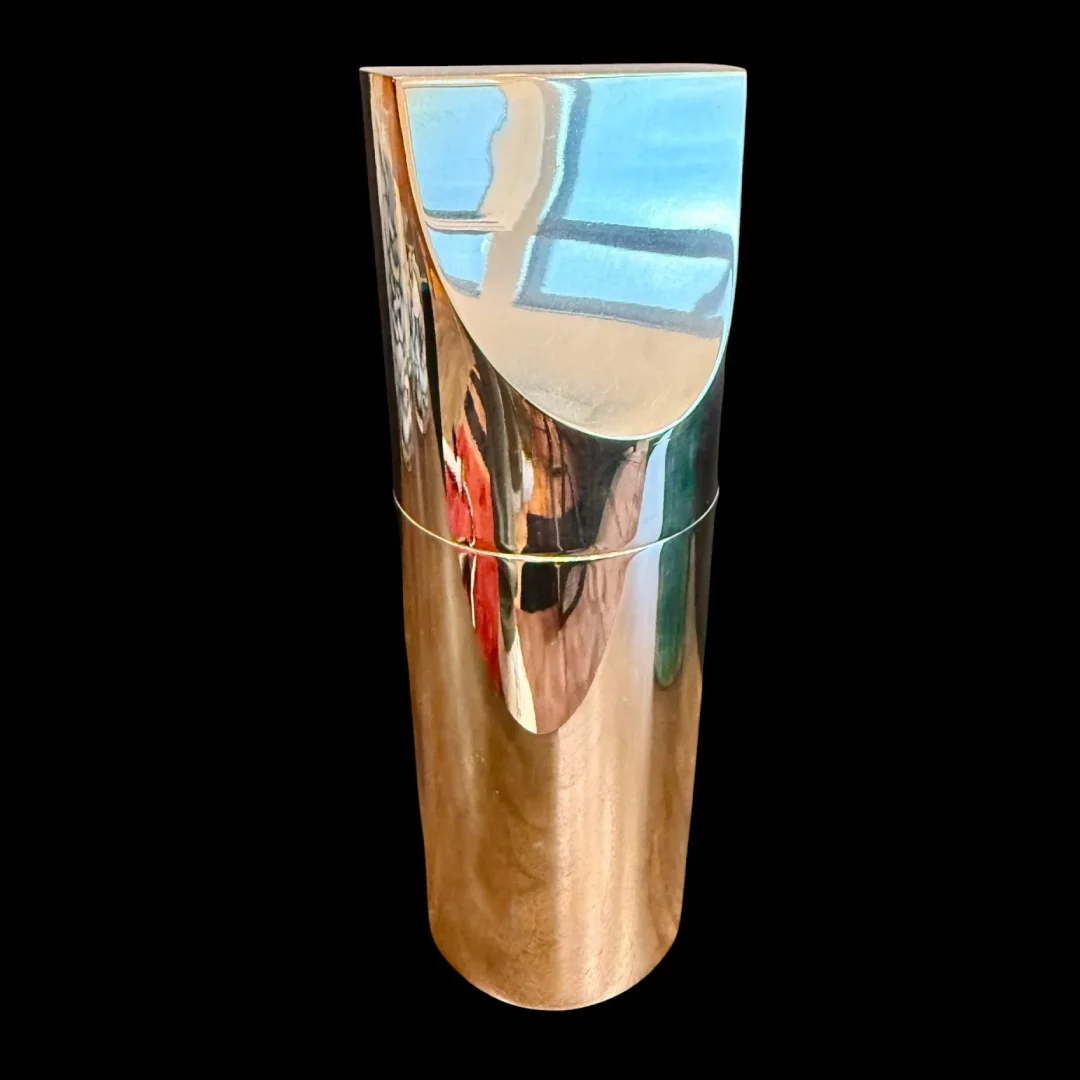
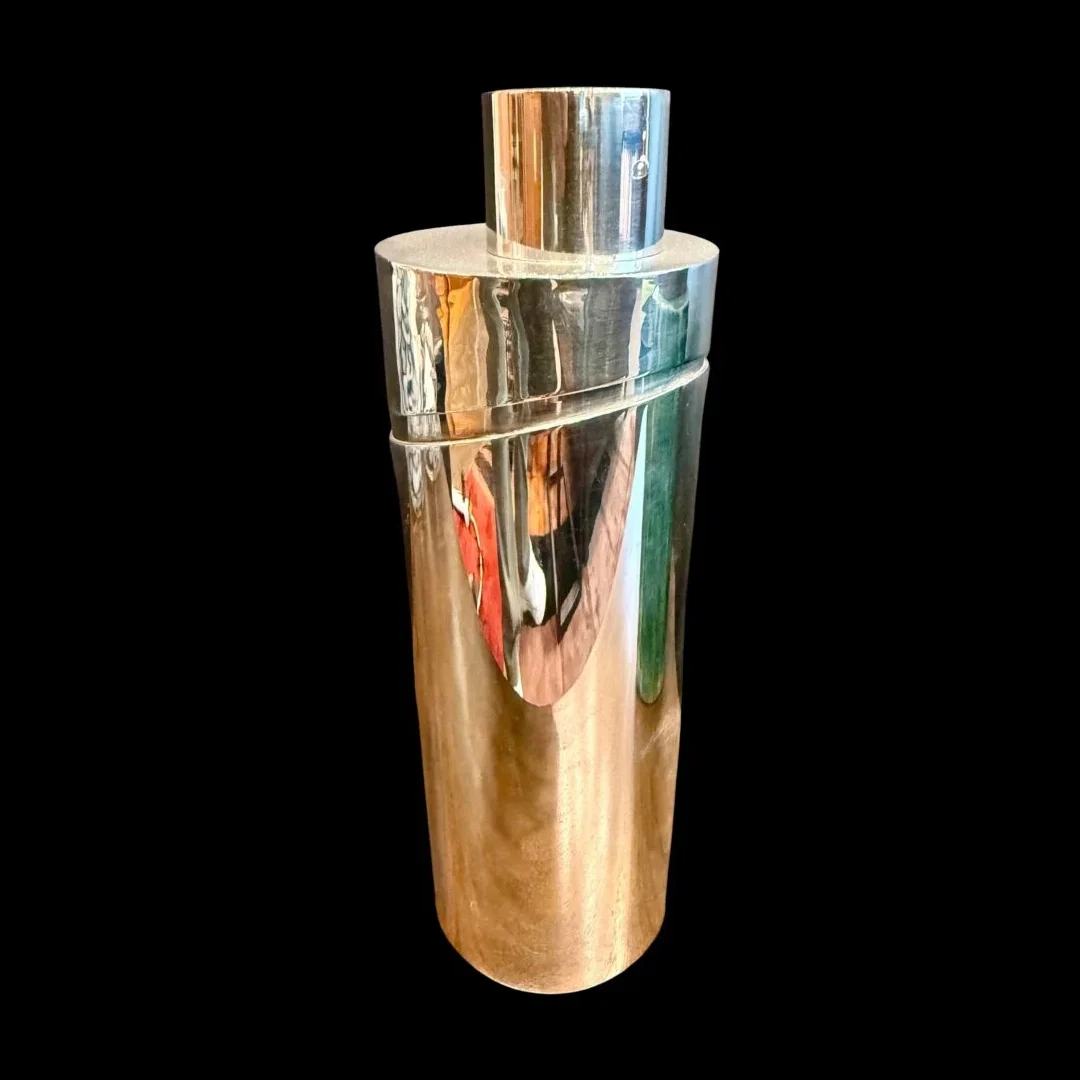
From Left to Right:
- Sabattini cocktail shaker, inscribed “24; Sabattini; Made in Italy,” 1965
- Gio Ponti cocktail shaker, inscribed “Gallia; France; Prod Christofle; 247,” 1956
(FYI: Ponti’s shaker was manufactured by the French firm of Christofle. Nevertheless, its design aesthetic is pure mid-century Italian!)
Instantly recognizable as being mid-century Italian are the sleek, eye-catching brass shakers that were made in a wide variety of shapes and sizes. Marked simply “Made in Italy,” I personally have become quite enamored of these babies, and buy them whenever I find them!
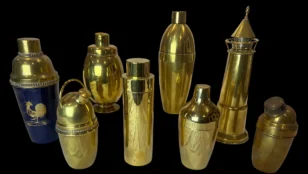
Selection Italian Brass cocktail shakers, inscribed with either “Italy” or “Made in Italy,” circa 1950-1965
Finally, there are the mid-century cocktail shakers designed and manufactured by Aldo Tura (1909-1963). Tura was best known as a furniture designer who combined an Art Deco vocabulary with a mid-century minimalism to create glamorous and colorful, one-of-a-kind designs. He was known for using unusual materials in his work, like goatskin, parchment, and eggshells, materials he used in his cocktail shakers as well.
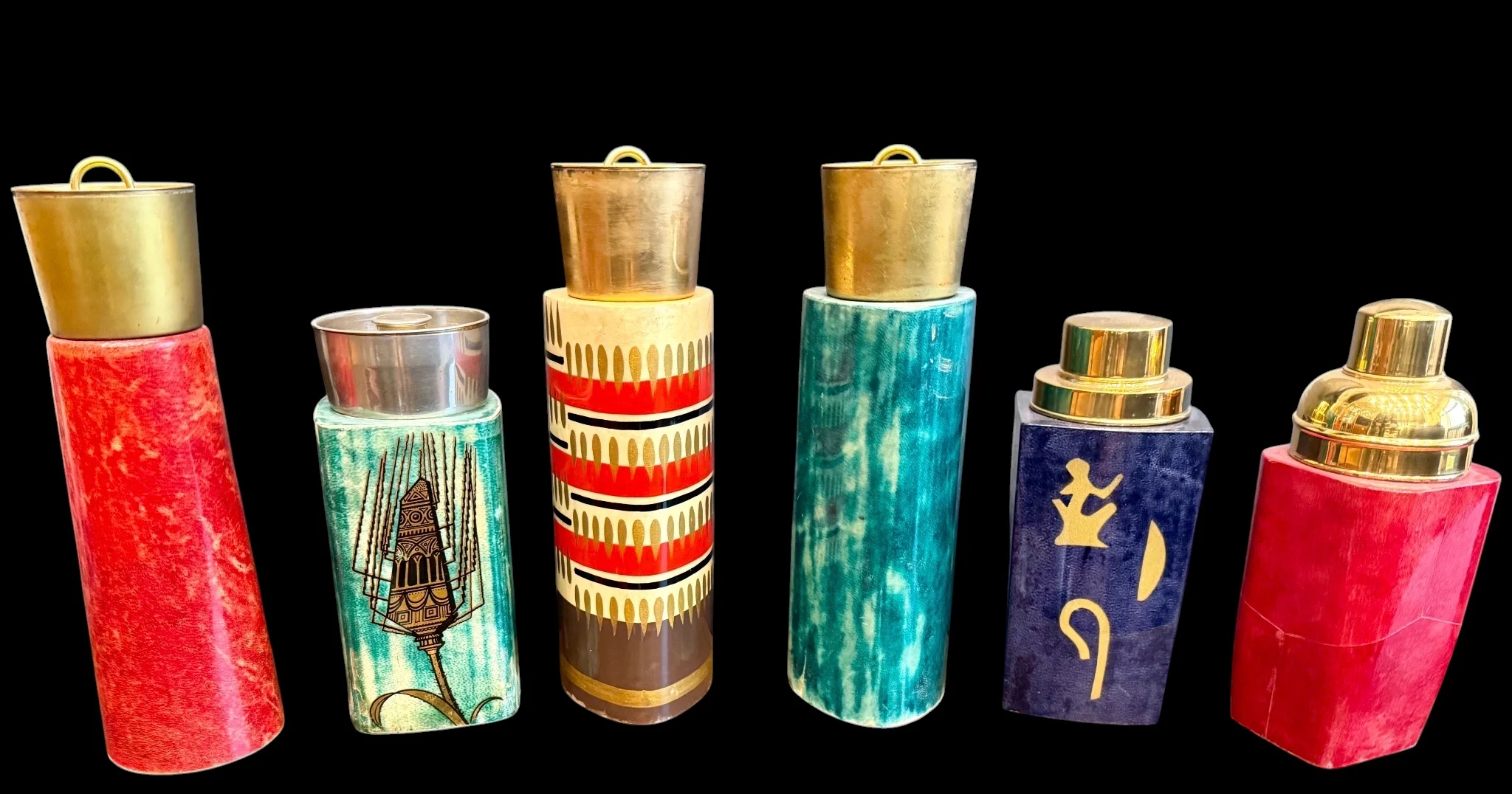
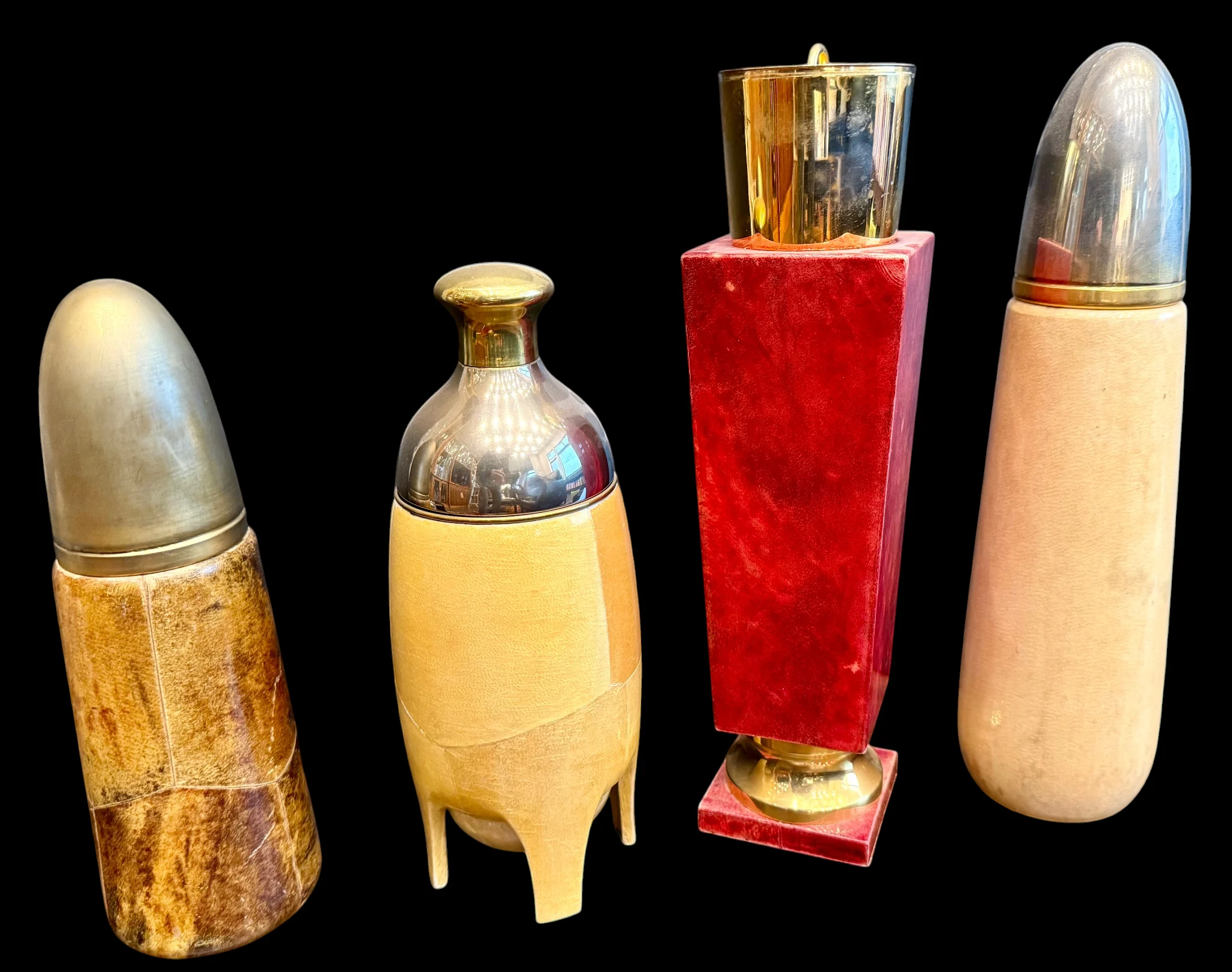
Aldo Tura cocktail shakers, manufactured in the northern Italian city of Brianza, between Milan and Como
American Shakers and the International Silver Co.
By the Art Deco era, Meriden, Connecticut, had come to be known as “Silver City.” Rarely has such a Chamber of Commerce-styled moniker been more accurate. By the 1920s, Meriden’s “International Silver Company” had become the umbrella corporation for more than a dozen silver and plate companies that had, over time, merged with International Silver. These companies included Meriden Britannia Company, Meriden Silver Plate Co., Middletown Plate Company, Derby Silver Plate Co., Wilcox Silver Plate Co., Barbour Silver Co., C. Rogers and Brother, Simpson Nickel Company, and Watrous Manufacturing Company.
(FYI, the Napier Company and Manning, Bowman & Co. were also headquartered in Meriden, CT, although they were independent entities and not part of the International Silver Corporation.)
Through its various divisions, International Silver produced items in both plate and Sterling that ranged from flatware and holloware to cutlery of every sort, for both domestic and commercial use. In terms of design, pride of place must go to International’s modernist designers, who produced some of the most striking cocktail shakers ever made.
For example: The German-born designer, silversmith, and jeweler George Albert Feinauer (1886-1955) played a key role in bringing German Bauhaus design to American silver after settling permanently in the United States in 1925. The shaker he designed for the International Silver Company’s Barbour division in 1929, in silver plate and Catalin, remains as breathtaking today as it was 95-plus years ago.
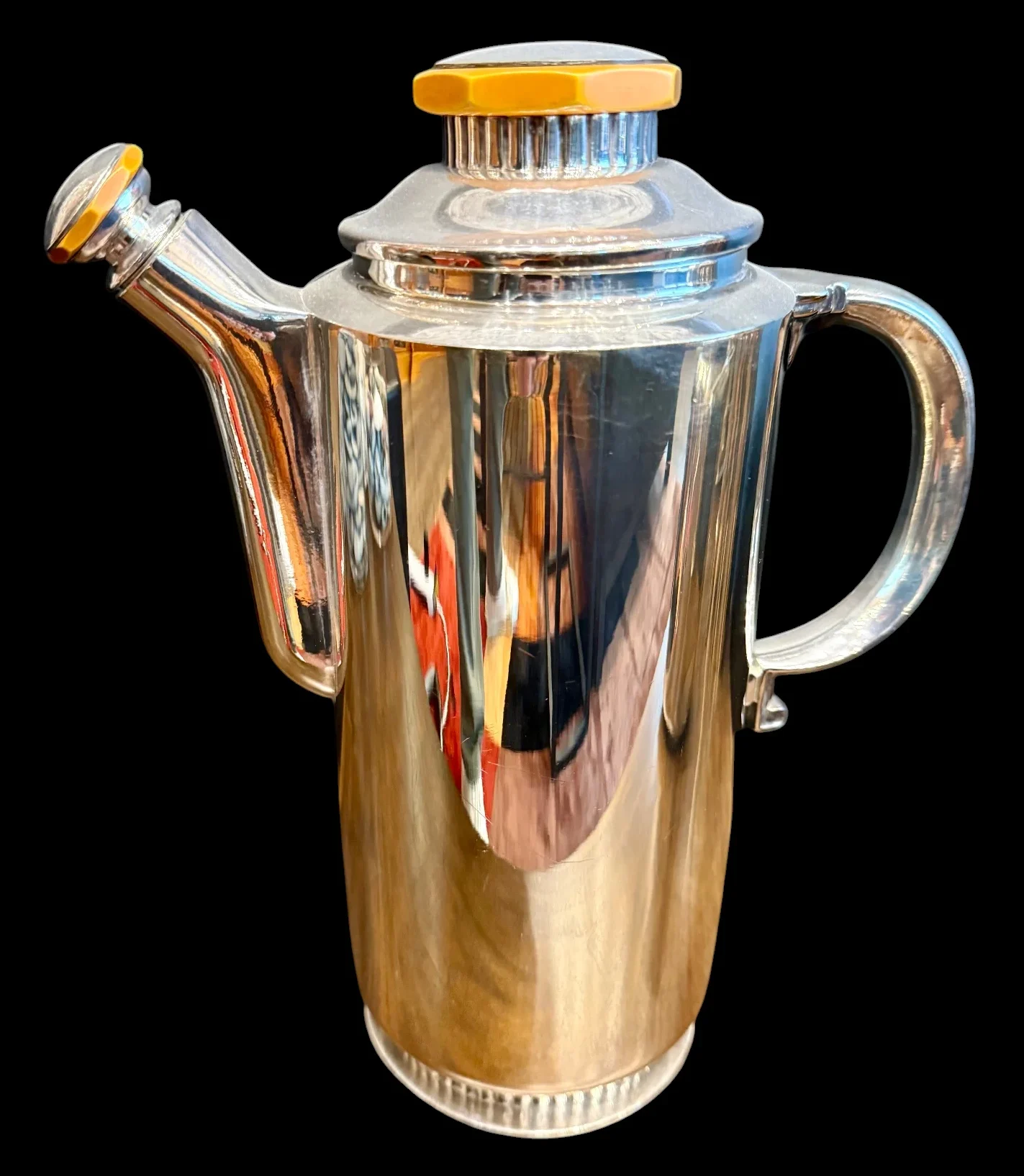
George Albert Feinauer cocktail shaker, inscribed “Barbour 6733,” 1929-1930
Paul Lobel (1899-1983) was a Romanian-born American designer of jewelry and metalware who was profoundly influenced by Art Deco design. His exceedingly rare cocktail shaker – designed in 1934 and manufactured by the Wilcox Silver Plate division of International Silver – is an icon of American Art Deco design.
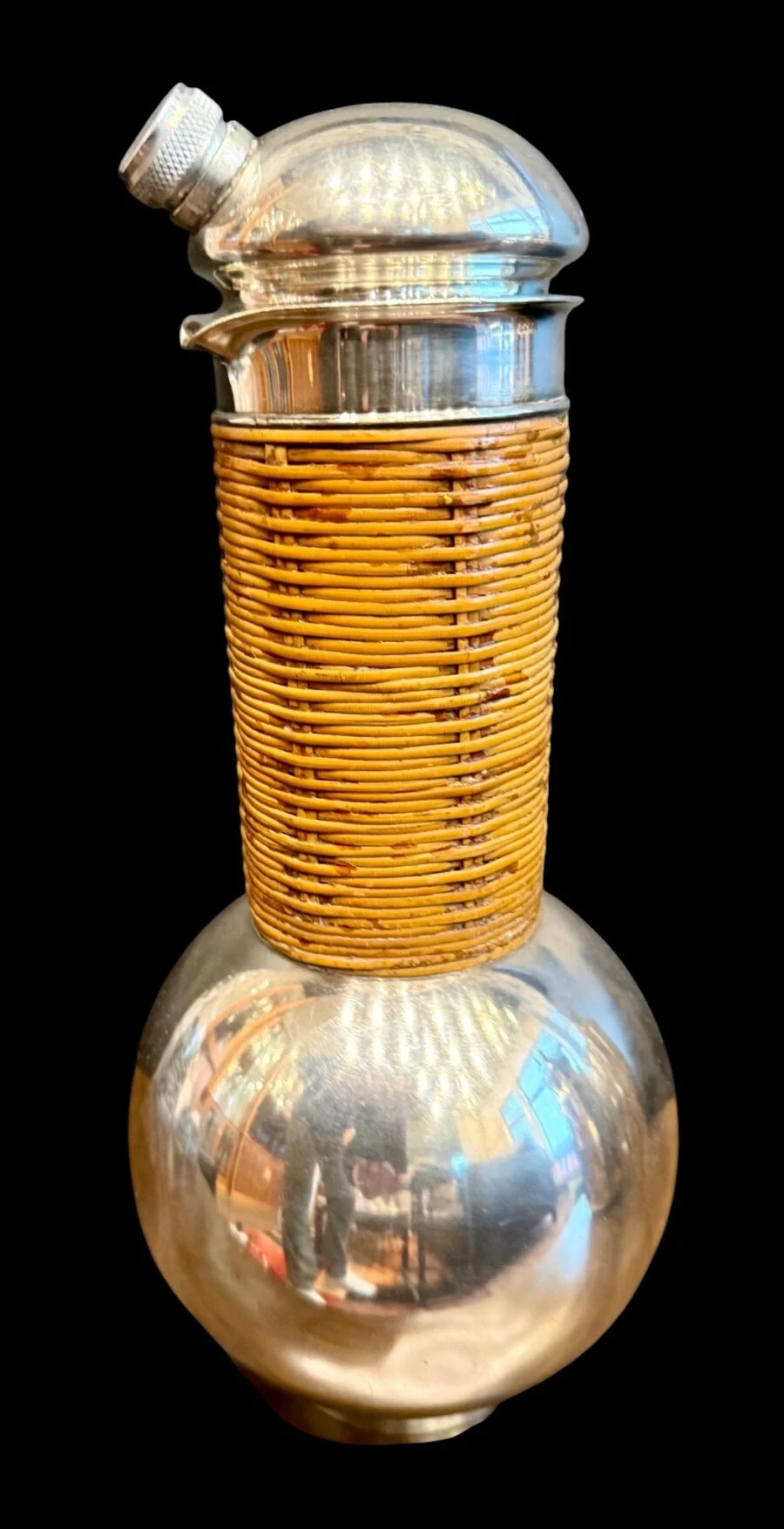
Paul Lobel cocktail shaker, inscribed “WILCOX S. P. CO. INTERNATIONAL S. CO. N5874 IS,” 1934
No small number of International Silver’s most striking Art Deco cocktail shakers were designed anonymously. The pictures below illustrates but a few of them (with one designed by Johan Rohde thrown in for good measure!)
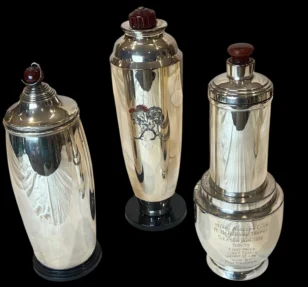
International Silver Company, from left-to-right
- “Cherry-On-Top” cocktail shaker, inscribed “Meriden S. P. Co.; International S. Co.; 370,” circa 1930
- Rooster cocktail shaker, inscribed “Meriden & Co.; International & Co.; 369; Patented January 11, 1927”
- Johan Rohde cocktail shaker, inscribed “Meriden S. P. Co.; International S. Co.; 378; 48 oz; Patented Jan. 11, 1927”
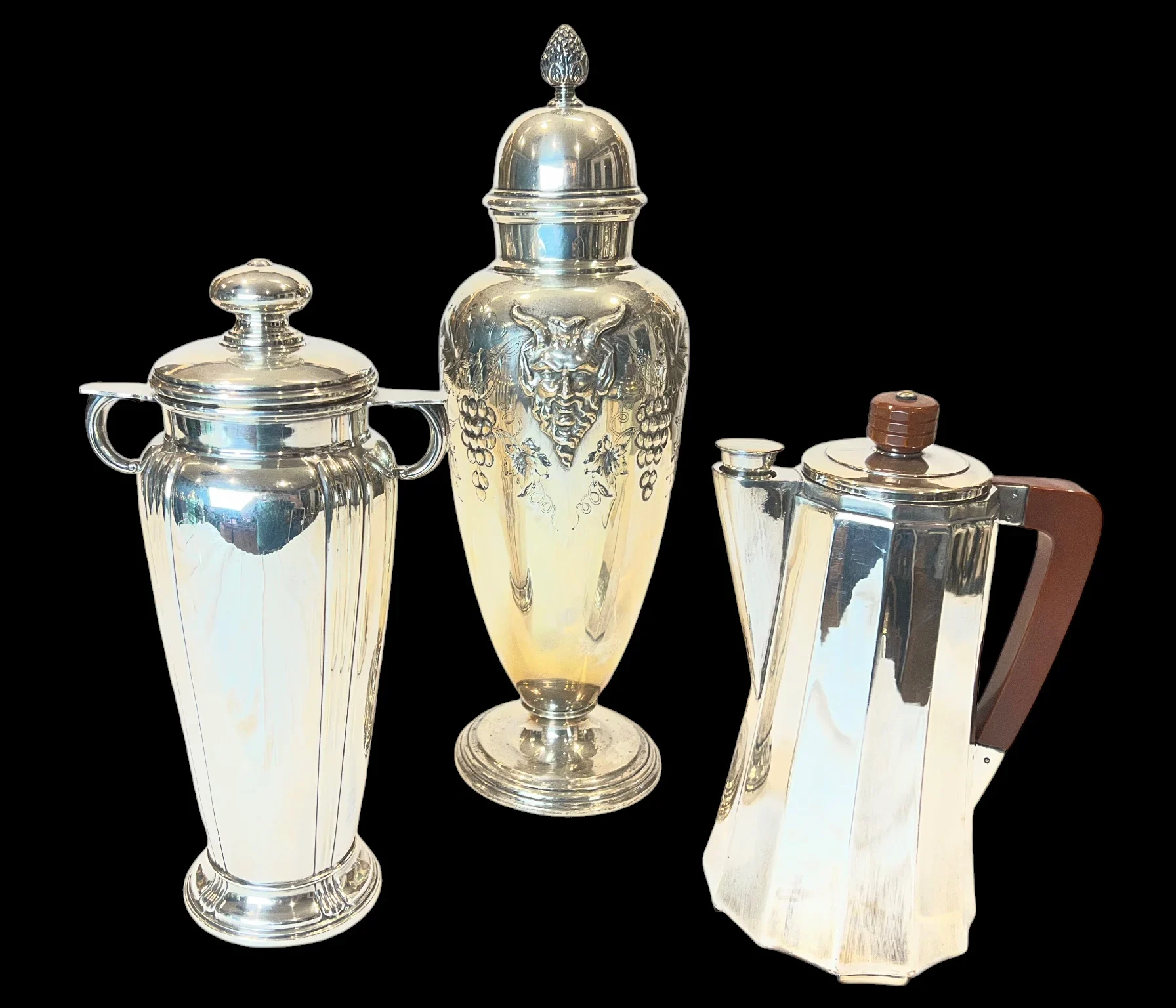
International Silver Company, from left-to-right
- Urn-shaped Sterling Silver cocktail shaker, inscribed “Internation Sterling; 1 – duck – 0; 2 1/2 Pts,” circa 1935
- Bacchus cocktail shaker, inscribed “International STERLING ; 42C; 4 PINTS,” circa 1930
- Teapot-style Art Deco cocktail shaker, inscribed “Meriden S. P. Co.; International S. Co.; 365; Patented Jan. 11, 1927”
The Napier Co. (which was also headquartered in Meriden CT!) is most famous for its penguin cocktail shaker, designed by Emil Schulke in 1936. But in fact, Napier made a wide variety of cocktail shakers, a number of which are pictured below.
Napier selection
However, no single Napier cocktail shaker is more highly valued than the “trombone shaker,” so-called because the cocktail itself emerges through a curved valve after the trombone-like slide has been pumped up-and-down!
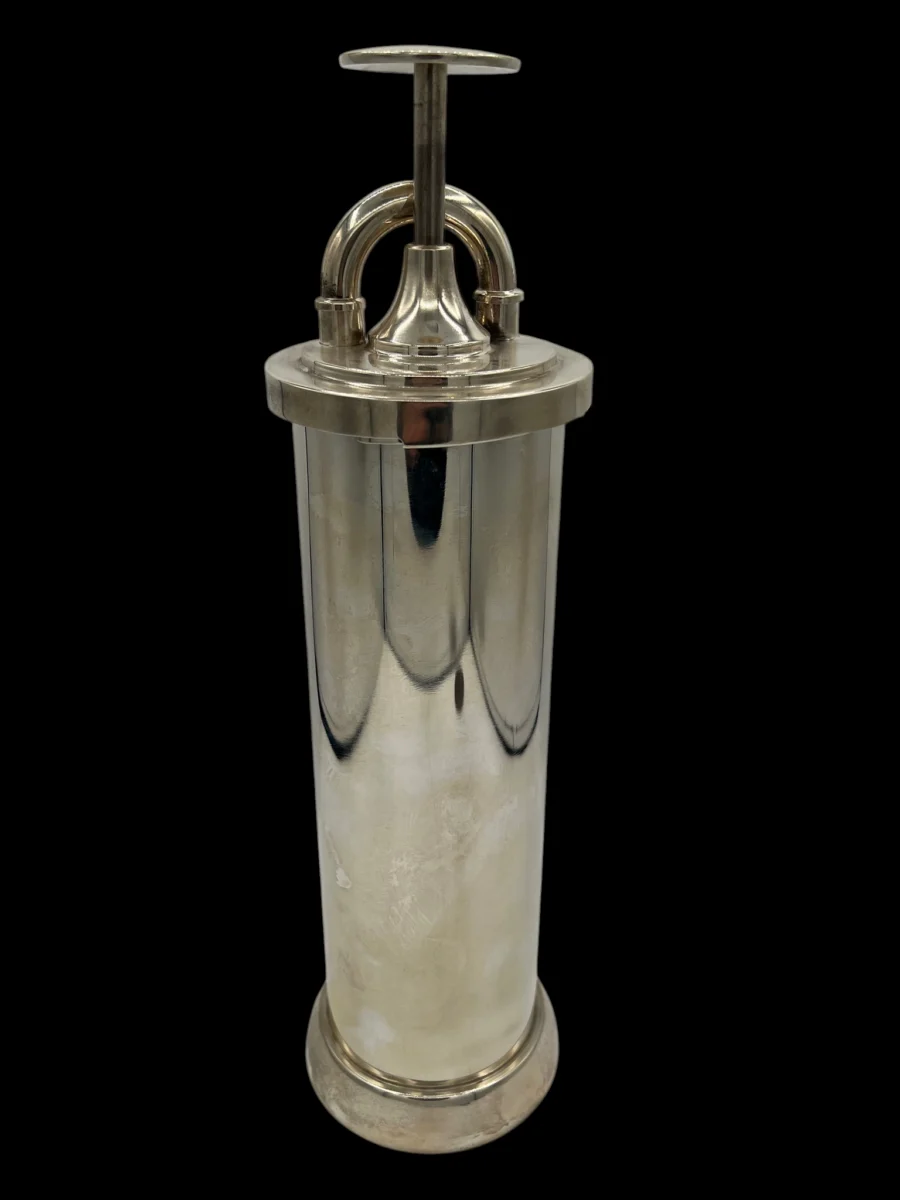
Napier Trombone cocktail shaker, inscribed “Napier Pat. Pend.,” circa 1935
Finally, we conclude where we began: with a skyscraper cocktail shaker. It was designed circa 1928 by Louis W. Rice (1872-1933), and sold by Bernard Rice’s Sons of New York City. It is a masterwork of streamline, Art Deco design.
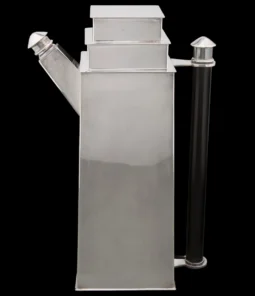
Louis Rice Skyscraper cocktail shaker inscribed “SKYSCRAPER/DES. PAT. PENDING/APOLLO E.P.N.S./MADE IN U.S.A. BY BERNARD RICE’S SONS, INC/5267,” 1920-1922
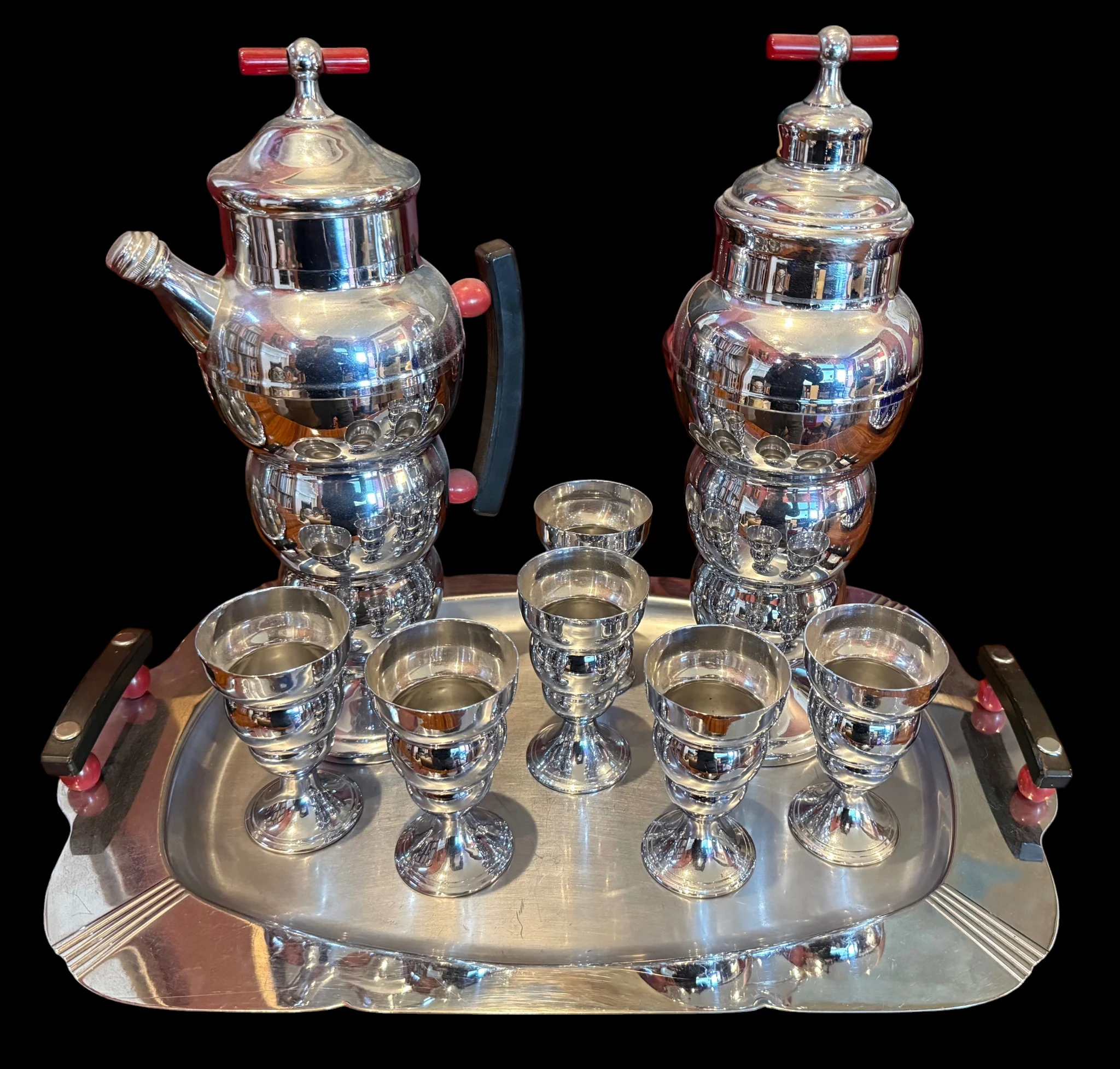
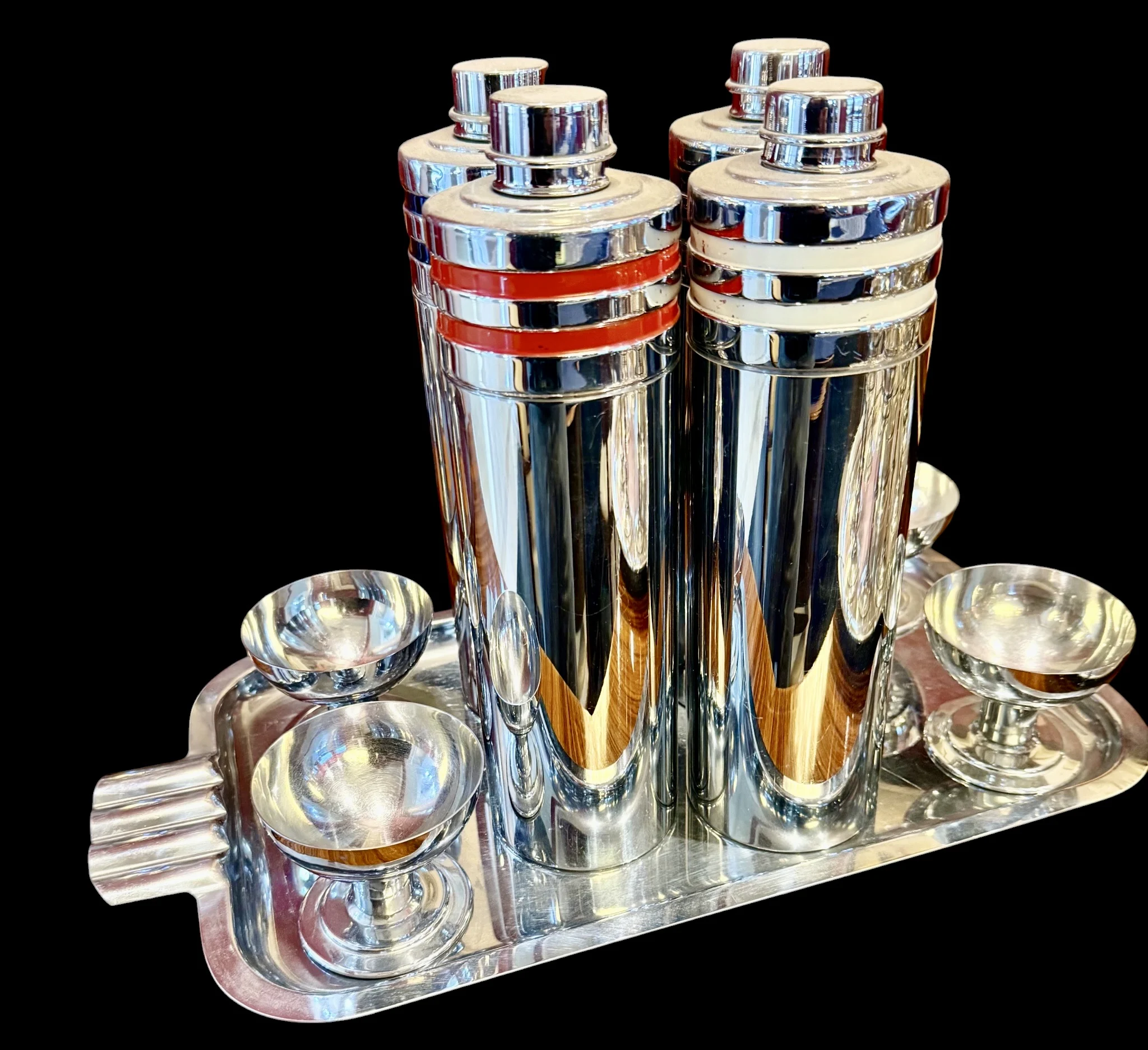
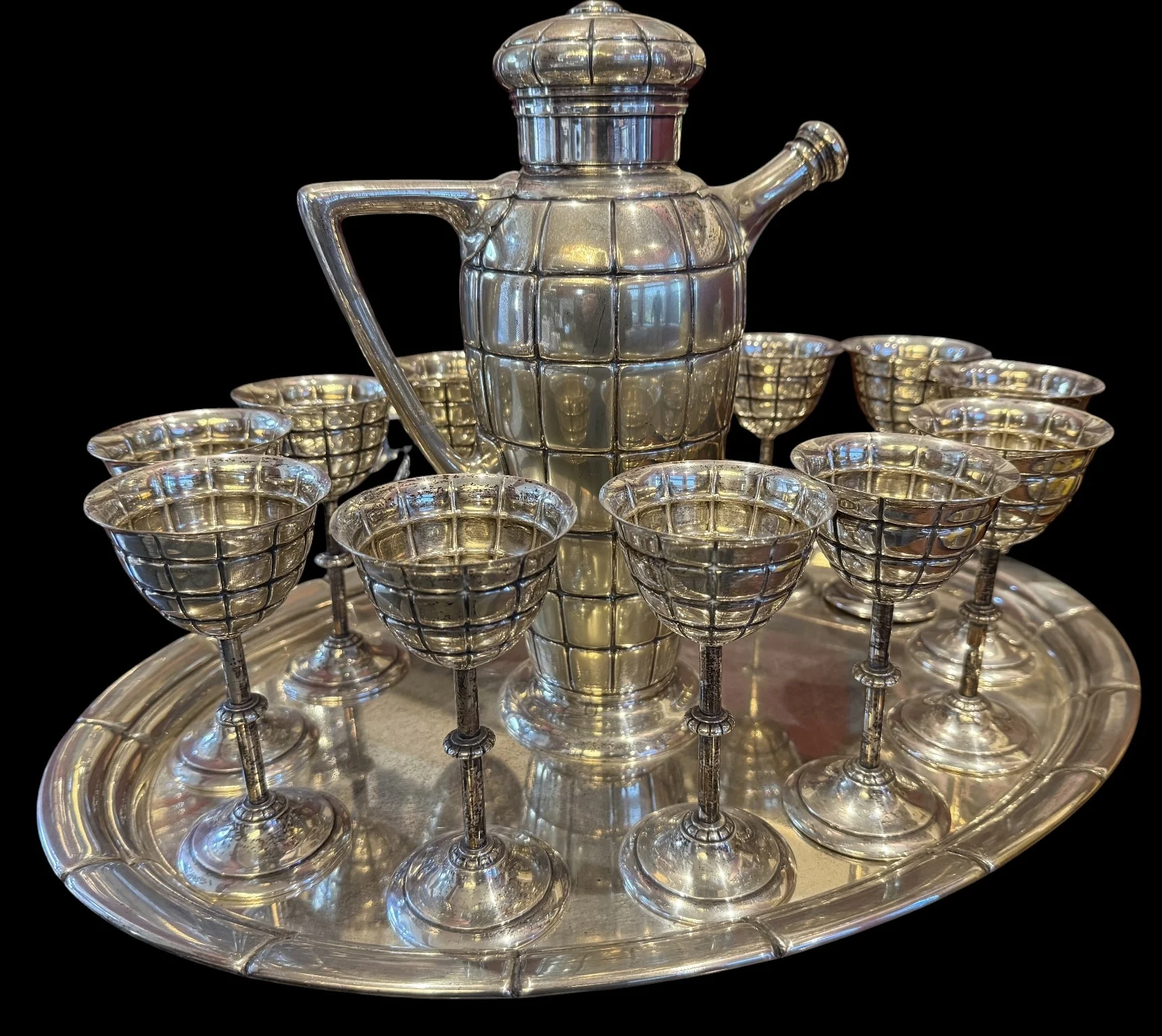
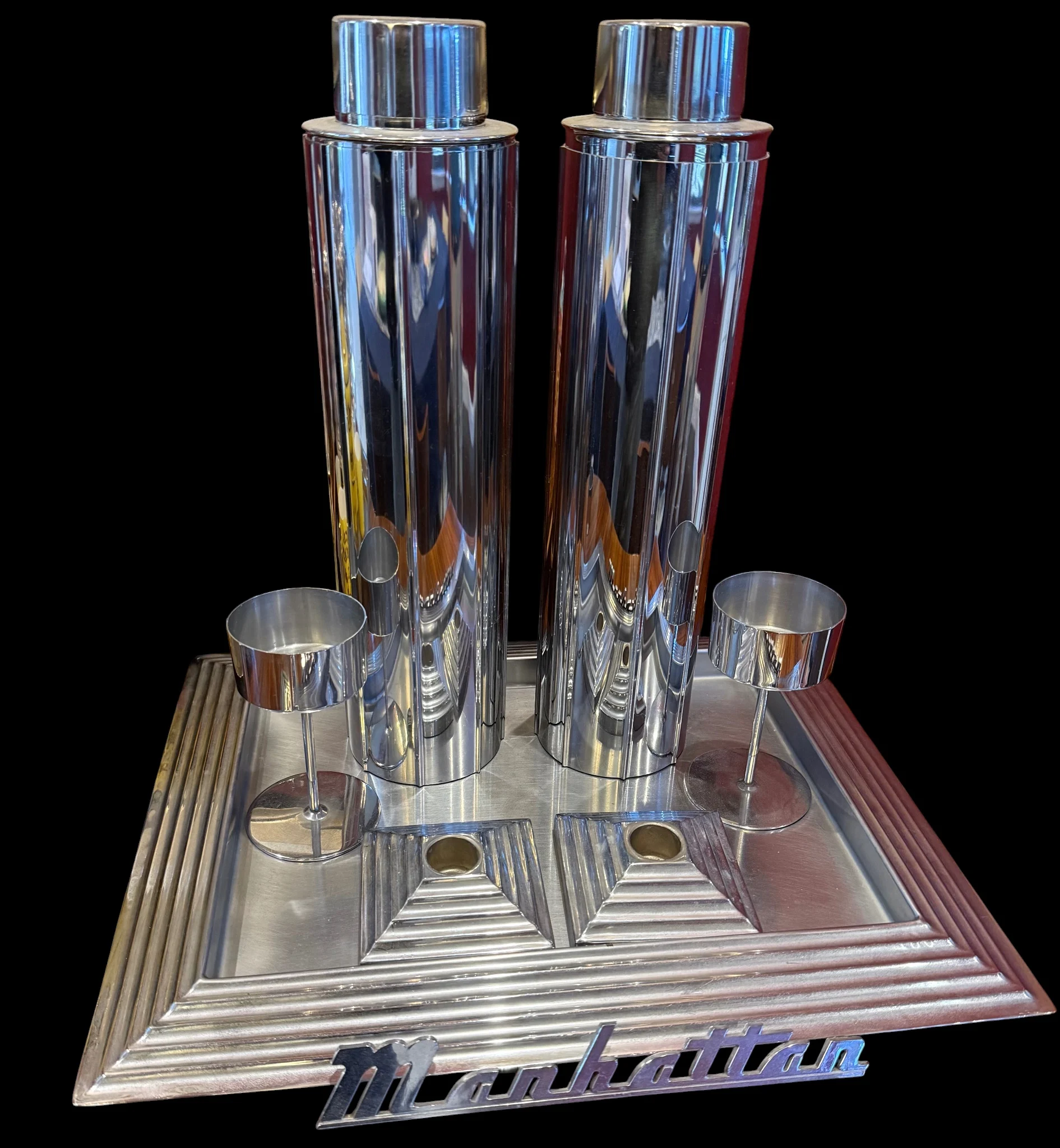
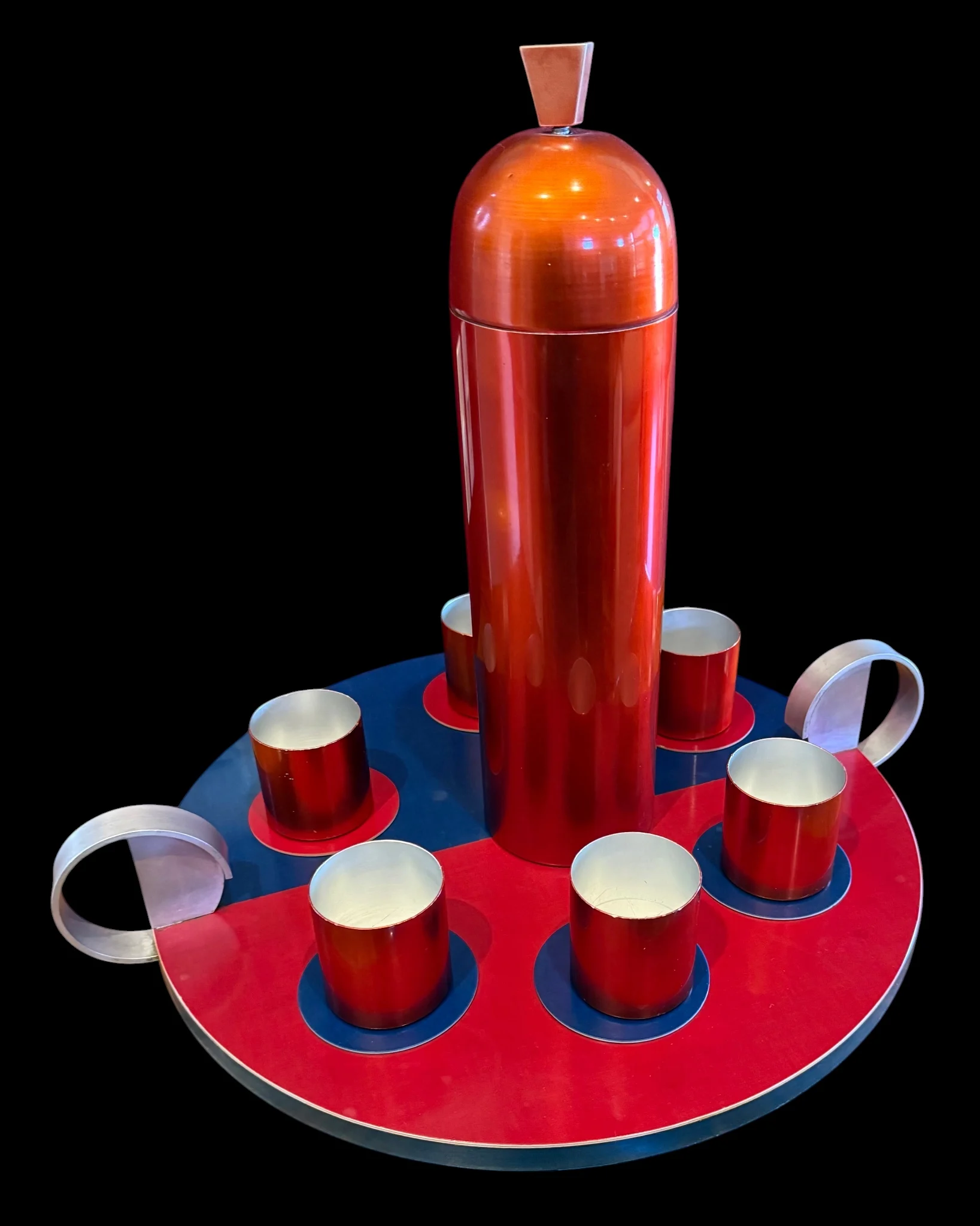
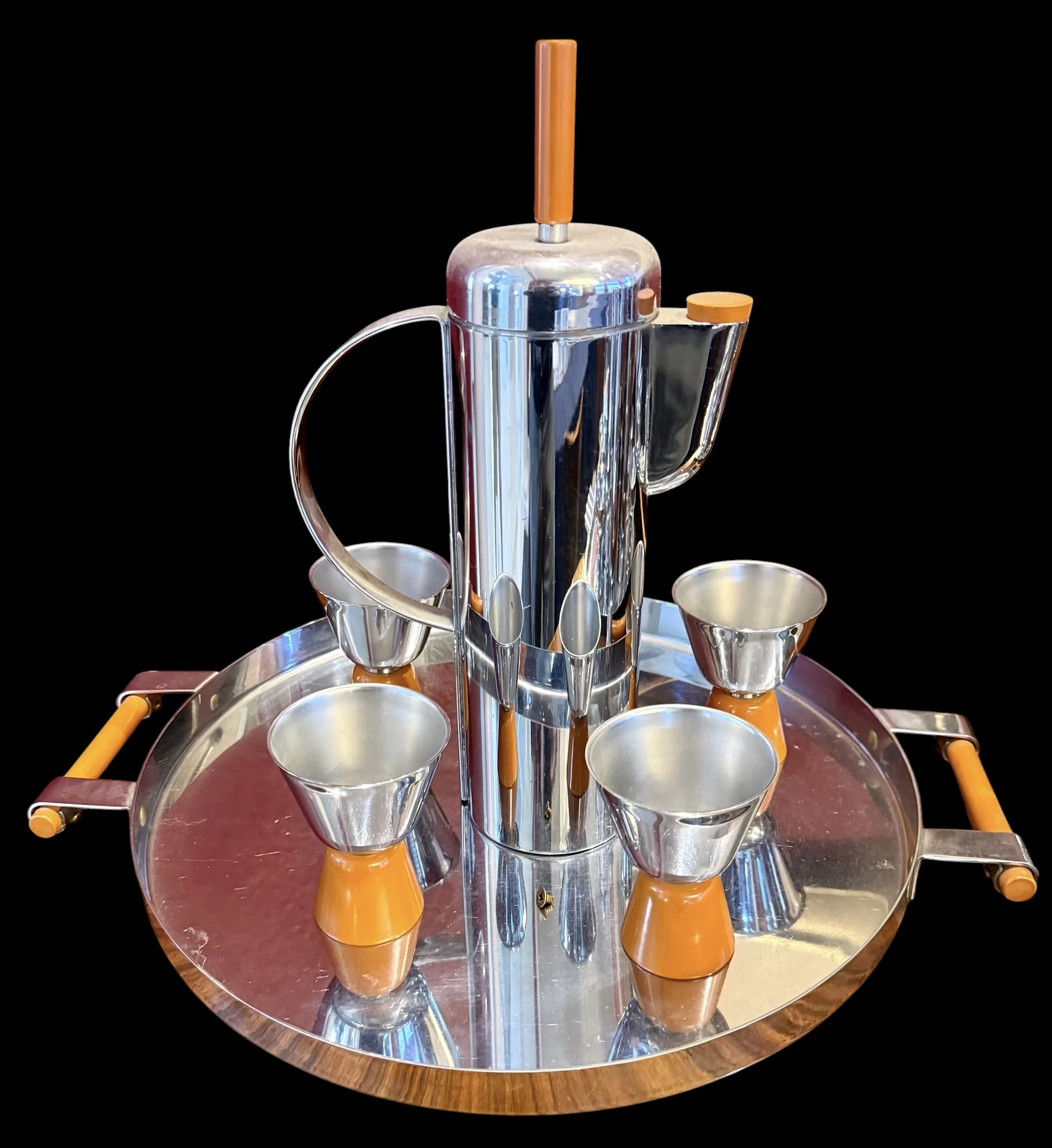
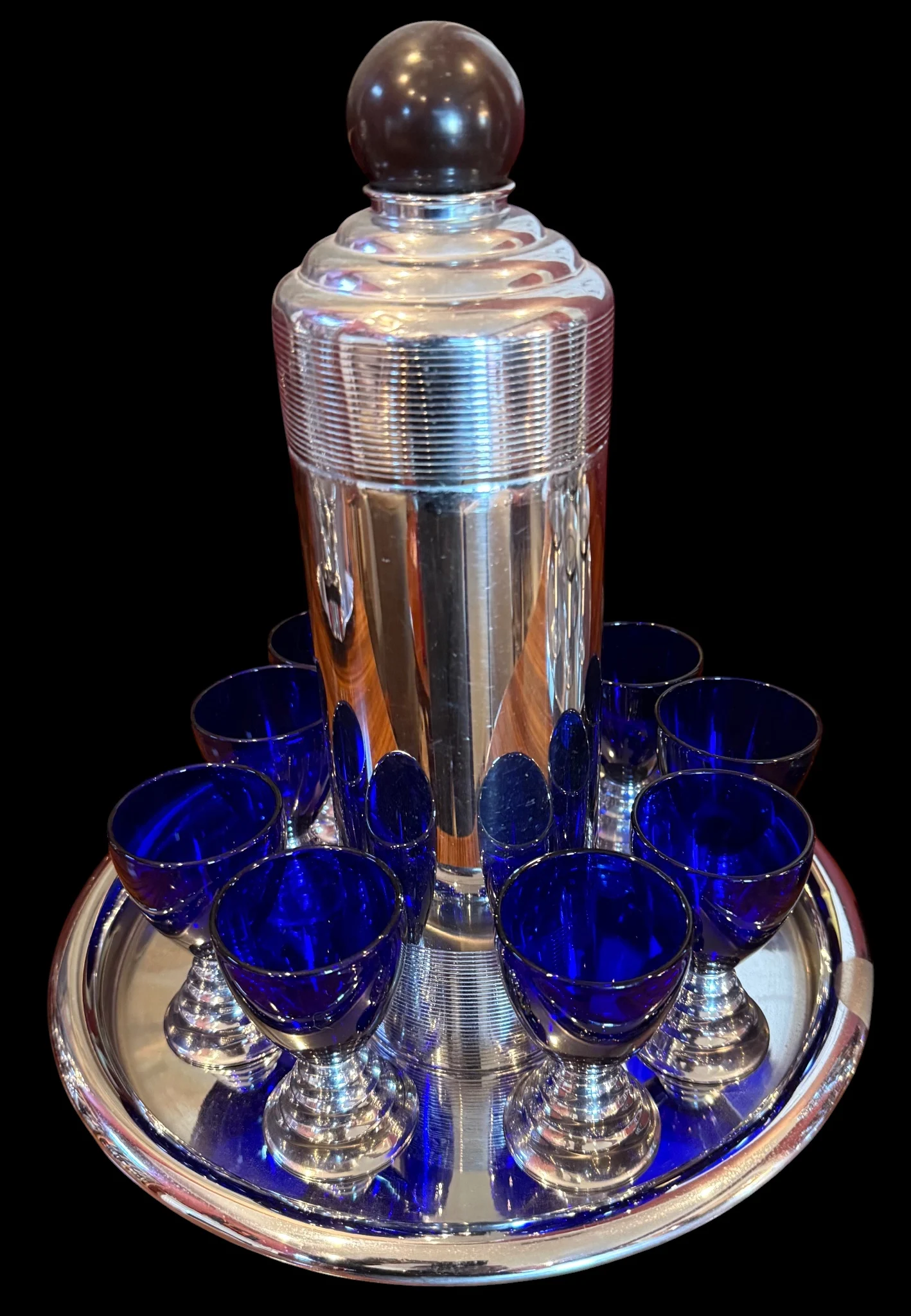
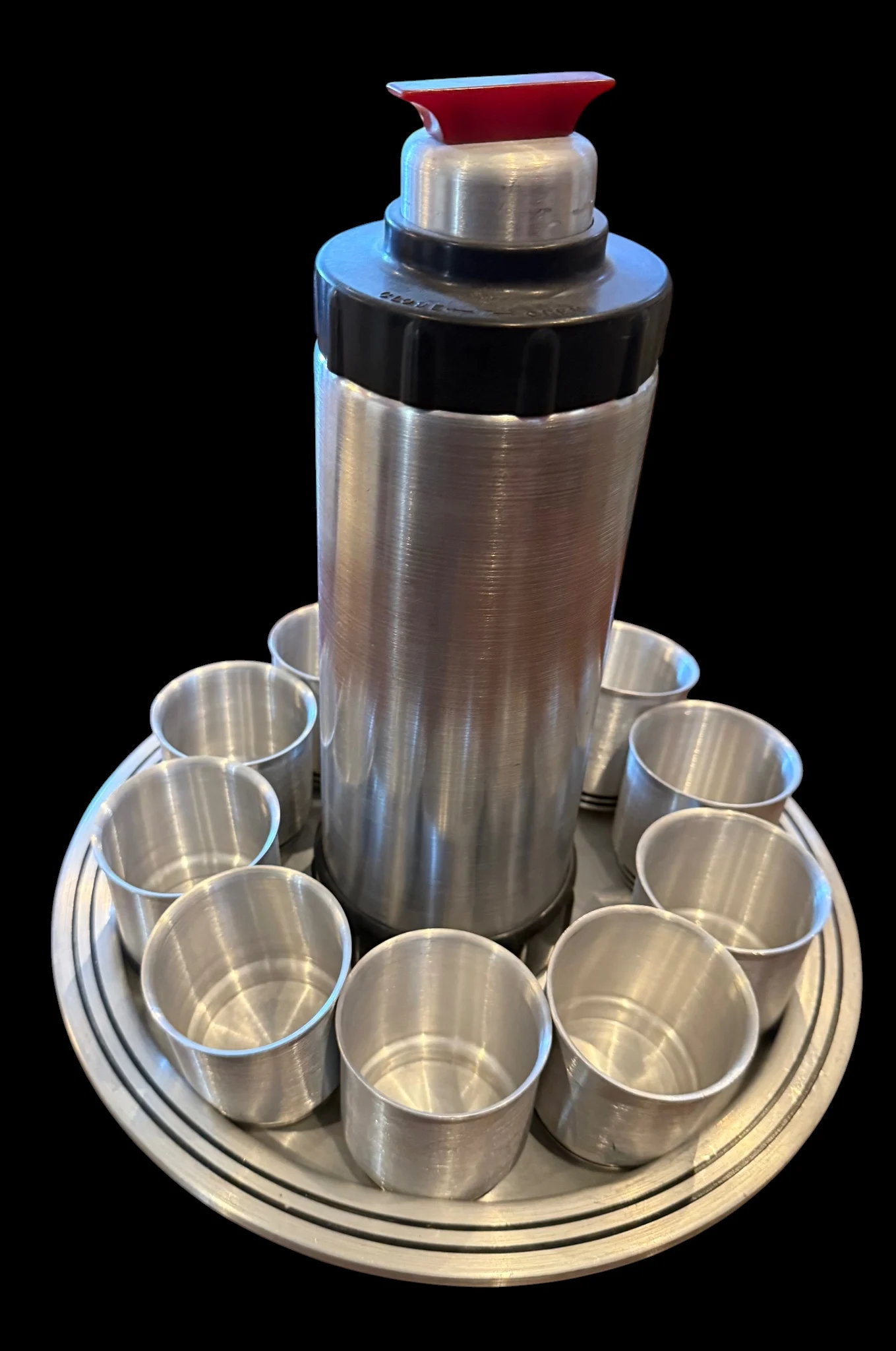
So many more wonderful cocktail shakers, and yet so little time!
This article must end somewhere, despite the fact that there are still many hundreds of fascinating Art Deco cocktail shakers in my collection that are just screaming to be seen. (Have you ever heard a cocktail shaker scream? It’s best avoided, if at all possible.)
Form and Function, Redux
What virtually all the cocktail shakers illustrated and discussed in this article have in common – no matter their form, country of origin, size, or material of manufacture – is their function: to prepare consciousness altering potions for human consumption. It is a noble and practical function indeed!
About Stephen Visakay
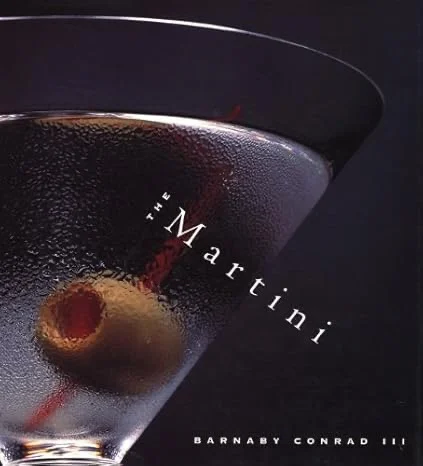
No story about Robert Greenberg’s cocktail shaker collection would feel complete without recognizing the influence of Stephen Visakay. He deserves a special place in the history of the modern cocktail revival. Long before the craft cocktail movement became widely popular, Visakay helped people see the cocktail shaker in a new way. It was not simply a bar tool. It was a work of design. It carried the spirit of entertaining, modern living, and American social history.His work as a collector and historian has also intersected with my own work as an Art Deco dealer and seller for the past 35 years. We were both featured separately in Barnaby Conrad’s book, The Martini: An Illustrated History of an American Classic, published in 1995. That book also included many of Robert Greenberg’s cocktail shakers and related memorabilia, connecting several important parts of the cocktail collecting world.
Visakay’s role became nationally recognized in 1996, when Art & Antiques Magazine named him one of America’s Top 100 Collectors. The following year, his book Vintage Bar Ware: An Identification and Value Guide was published by Collector Books. It became an important reference for collectors who wanted to identify vintage cocktail shakers, glassware, and related bar objects. His influence was later noted in Noah Rothbaum’s 2007 book, The Business of Spirits, where Visakay was cited as a factor in the rise of today’s cocktail culture. His contribution was not simply that he owned rare pieces. He helped frame these objects as part of a larger story about design, entertaining, nostalgia, and the return of the cocktail.
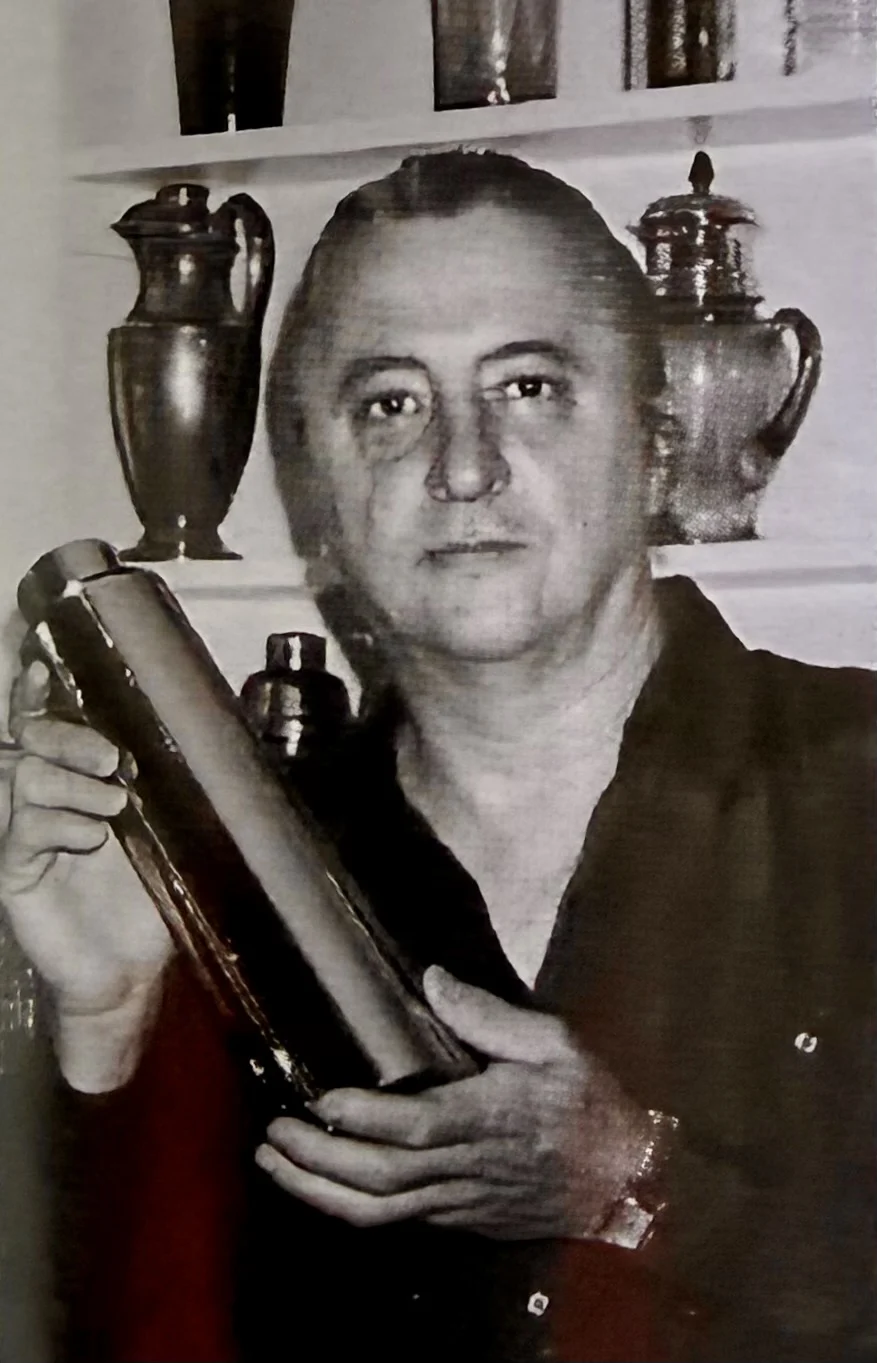
His landmark exhibition, Shaken, Not Stirred: Cocktail Shakers and Design, toured the country from 1993 to 1998 and appeared at seven venues. These included the Milwaukee Art Museum, the Louisiana State Museum at Jackson Square, and the Montgomery Museum of Fine Arts. The exhibition received worldwide media attention and helped introduce cocktail shakers to a much broader public. Visakay also displayed twenty shakers at Dale DeGroff’s groundbreaking cocktail dinner at New York’s Rainbow Room in 1995, where cocktails were paired with each course. The timing was ideal. Retro music, style, and cocktail culture were all returning to public imagination. His final exhibition at the San Francisco International Airport Museum, March 21, 1998 – February 20, 1999 was seen by an estimated 12,000 people every 24 hours for eleven months. Today, Steve oversees his Facebook website group called Cocktail Shaker Collectors with over thousand subscribers. Visakay Website
A Personal Note from Robert Greenberg
A word about Stephen Visakay (born 1939), who literally wrote the book on cocktail shakers. More than any other individual, it is Visakay who has elevated our view of the cocktail shaker from that of a prosaic, household object to a historically significant object of art. Stephen’s encyclopedic knowledge and passion for cocktail shakers is only outdone by his extraordinary generosity: for decades, he has unstintingly shared his knowledge, research, and passion with the collecting community, taken as widely as we please. As a novice collector nearly 40 years ago, it was Stephen Visakay who personally set me on my collecting path. There is not a single major collector that I know who doesn’t owe Stephen that same debt of gratitude.
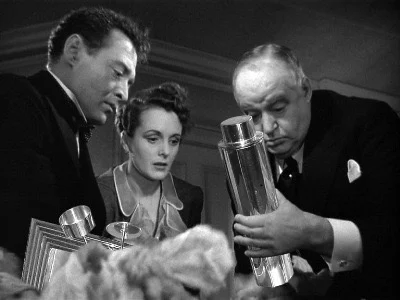

Robert Greenberg’s collection is best understood alongside the life that helped shape it. He was born in Brooklyn, New York, in 1954 and has lived in the San Francisco Bay Area since 1978. His education in music began at Princeton University, where he received his BA in music, magna cum laude, in 1976. In 1984, he received a Ph.D. in music composition, With Distinction, from the University of California. Greenberg has received numerous honors, including being designated an official “Steinway Artist,” and has composed over fifty works for a wide variety of instrumental and vocal ensembles. Greenberg has performed, taught and lectured extensively across North America and Europe.
That background helps explain the seriousness and care he brought to collecting. For Greenberg, the cocktail shaker is not simply a clever bar object. It is a small work of modern design. It reflects the social life of its period, the imagination of its maker, and the changing taste of the 20th century. His collection preserves that story through objects that might otherwise be seen only as accessories. Seen together, they become part of a much larger history of modern living, design, and personal passion.

To learn more about Robert Greenberg and his work in music,
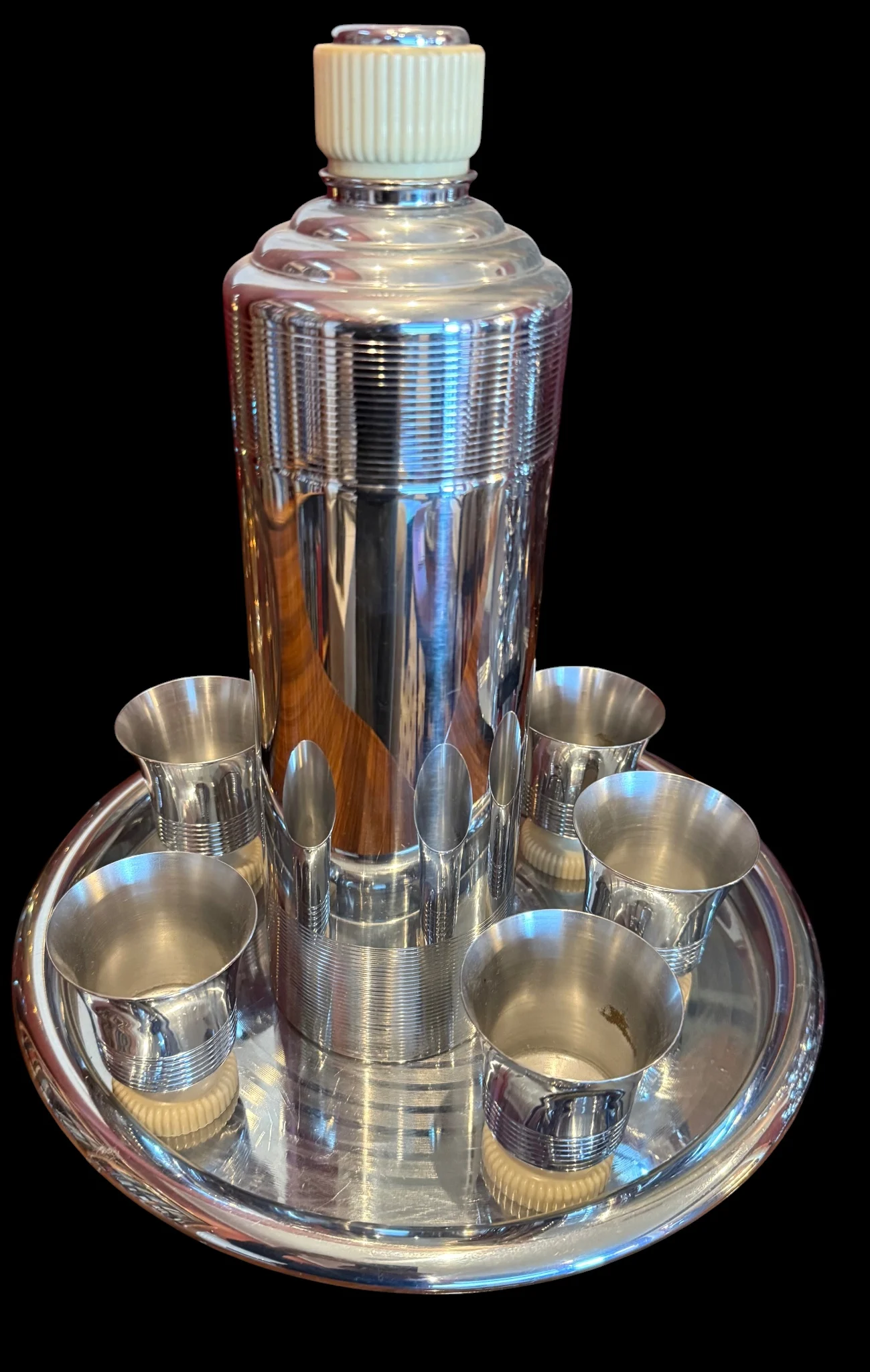
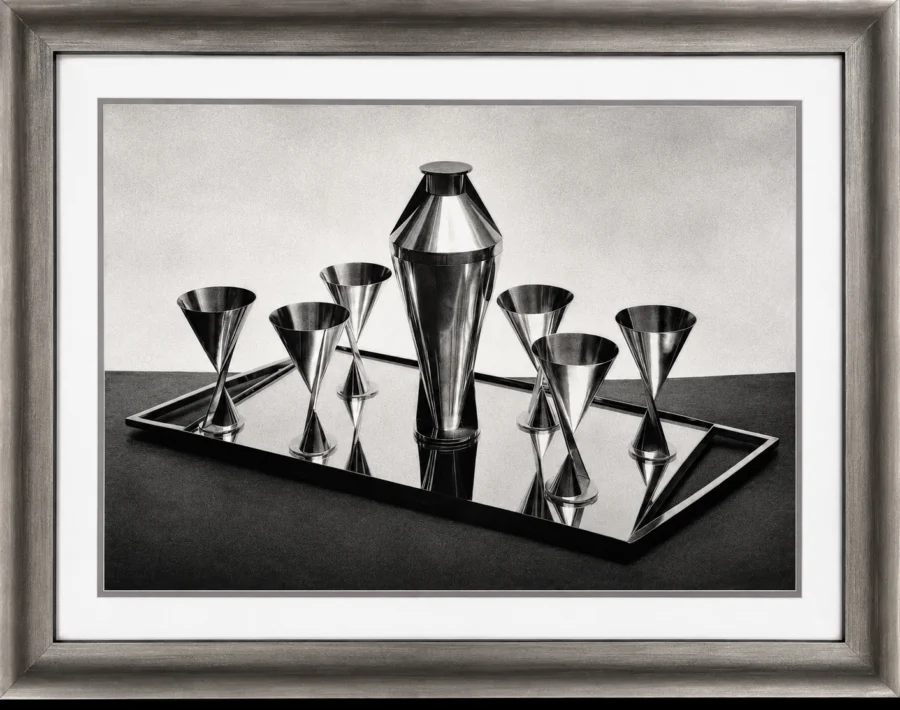
Cocktail set by Maison Desny, c. 1928
Recommended Reading
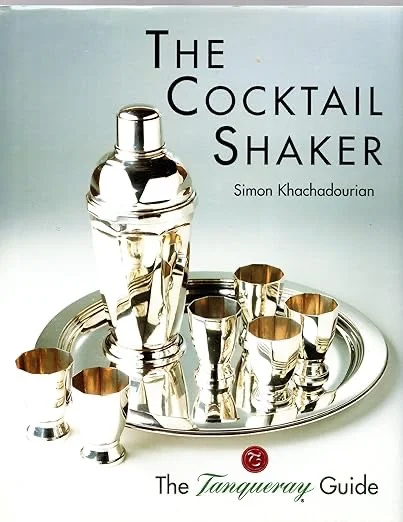
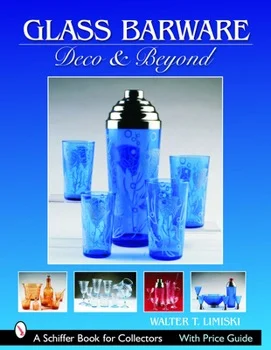
These assorted books are valuable tools for deeper research because Art Deco cocktail shakers and early twentieth century barware were produced in an extraordinary variety of forms, materials, and decorative styles. While a collector may immediately recognize the appeal of a particular shaker, accurate identification often depends on more subtle details found in its construction and finish.
Reference books make those details easier to understand by combining photographs with descriptive information, company histories, and documented patterns. They help connect individual objects to the broader history of American and European glassmakers, metalware manufacturers, and the changing design trends of the 1920s and 1930s. By also illustrating related pieces used in the cocktail setting, these books provide a fuller picture of how shakers were originally designed, marketed, and used.
For collectors, dealers, and historians, this type of research makes it possible to compare examples, avoid incorrect attributions, distinguish period originals, and better understand the role barware played in modern entertaining. In this way, a decorative object becomes more than something attractive to display. It becomes a documented piece of design history.

If you are interested in further stories of Art Deco design, collecting, and celebrating the artistry of early 20th Century:

Related Products from ArtDecoCollection.com