
The Tuschinski Theatre stands as one of the most extraordinary cinematic monuments of the early twentieth century, occupying a singular position in the evolution of Art Deco architecture and interior design. Opened in 1921, the theater is a rare and ambitious fusion of Amsterdam School expressionism, late Art Nouveau, Arts and Crafts ideals, and emerging Art Deco geometry, unified into a richly immersive environment rather than a single stylistic statement. Its lavish interiors combine sculptural brickwork, stained glass, exotic woods, wrought metal, and hand-painted ornament to create a total work of art that elevated moviegoing into a theatrical and social event. More than a cinema, Tuschinski represented a new cultural ideal, where modern entertainment was framed by craftsmanship, symbolism, and architectural drama. Its influence resonates internationally as an early and influential model for the grand Art Deco movie palaces that would soon define urban nightlife and popular culture across Europe and the United States.
The Tuschinski Theatre and the Rise of the Art Deco Cinema Palace

Abraham Icek Tuschinski and the Creation of a Cinematic Landmark
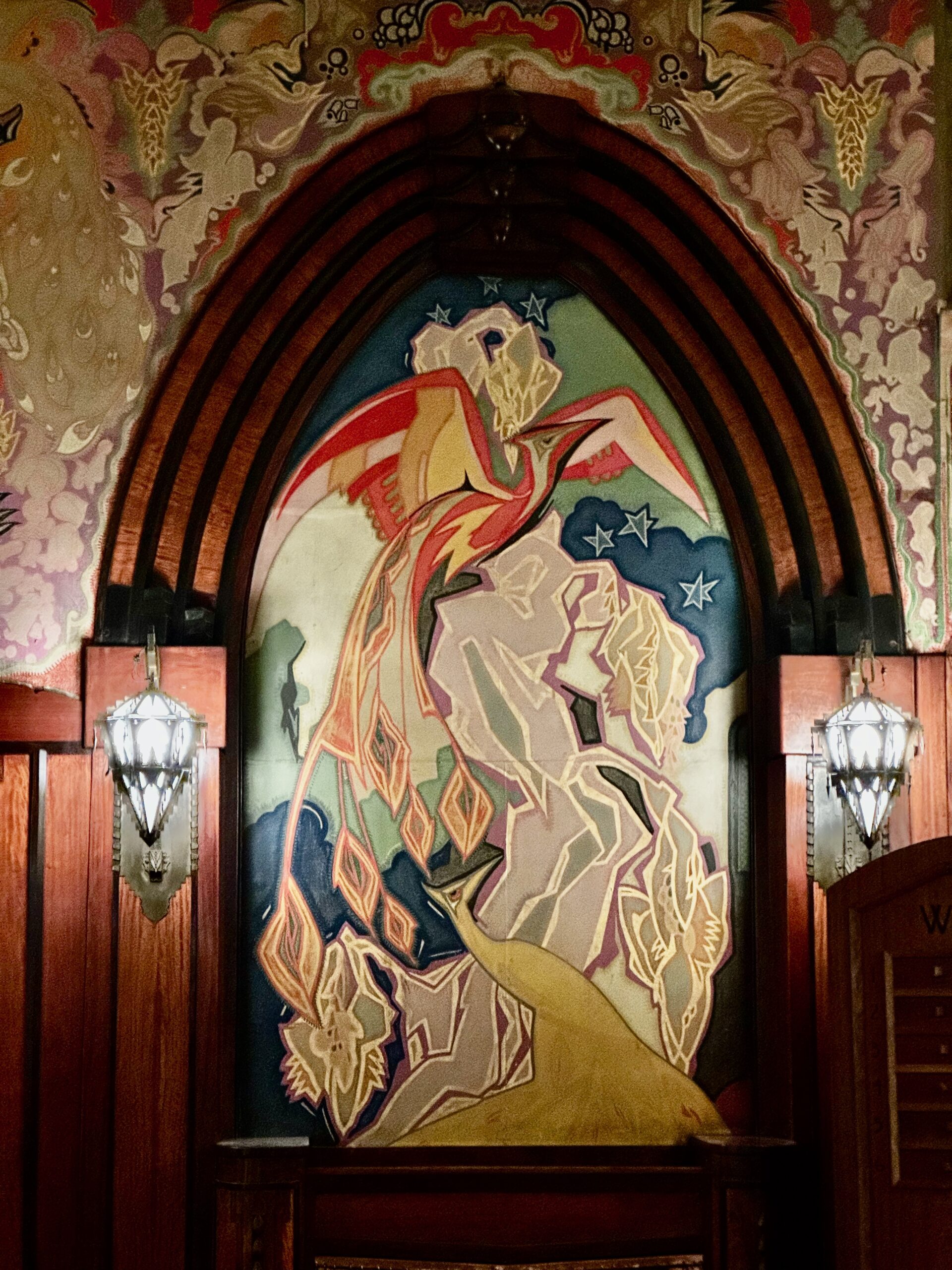
The Tuschinski cinema is a movie theater in Amsterdam, a city renowned for its distinctive historical theaters; however, this theater is so unusual that it is unique in the city. Built in 1920 and modeled after the era of grand opera houses, this enormous two-balconied silent movie cinema holds over 1,800 people. Designed by Abraham Icek Tuschinski, a Jewish tailor from Poland who was about to move to the US, he decided to build a theatre instead while visiting his brother-in-law in Holland. Architect Hijman Louis de Jong was patiently trying to interpret the vision of Tuschinski’s design, an overimaginative tailor with little architectural training. Tuschinski was interested in Japanese culture, a country that had recently opened up to the Western world, influencing the artists of the European avant-garde. He also admired the grandeur of dark Gothic churches and the exotic travels around the world, which in those days was represented by the peacock.
The Physical Structure and Spatial Design of the Tuschinski Theatre
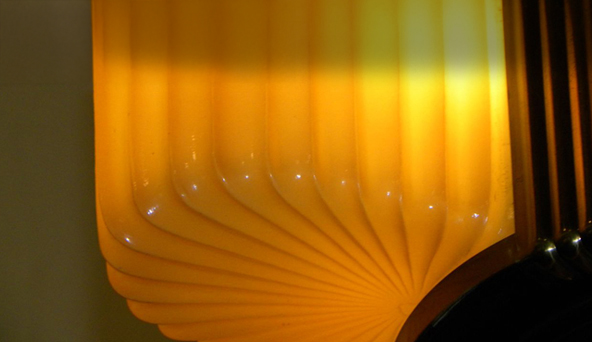
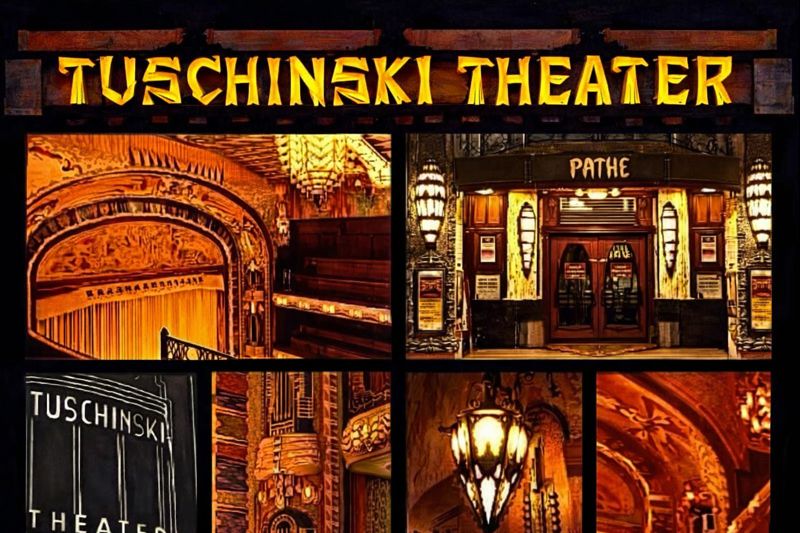
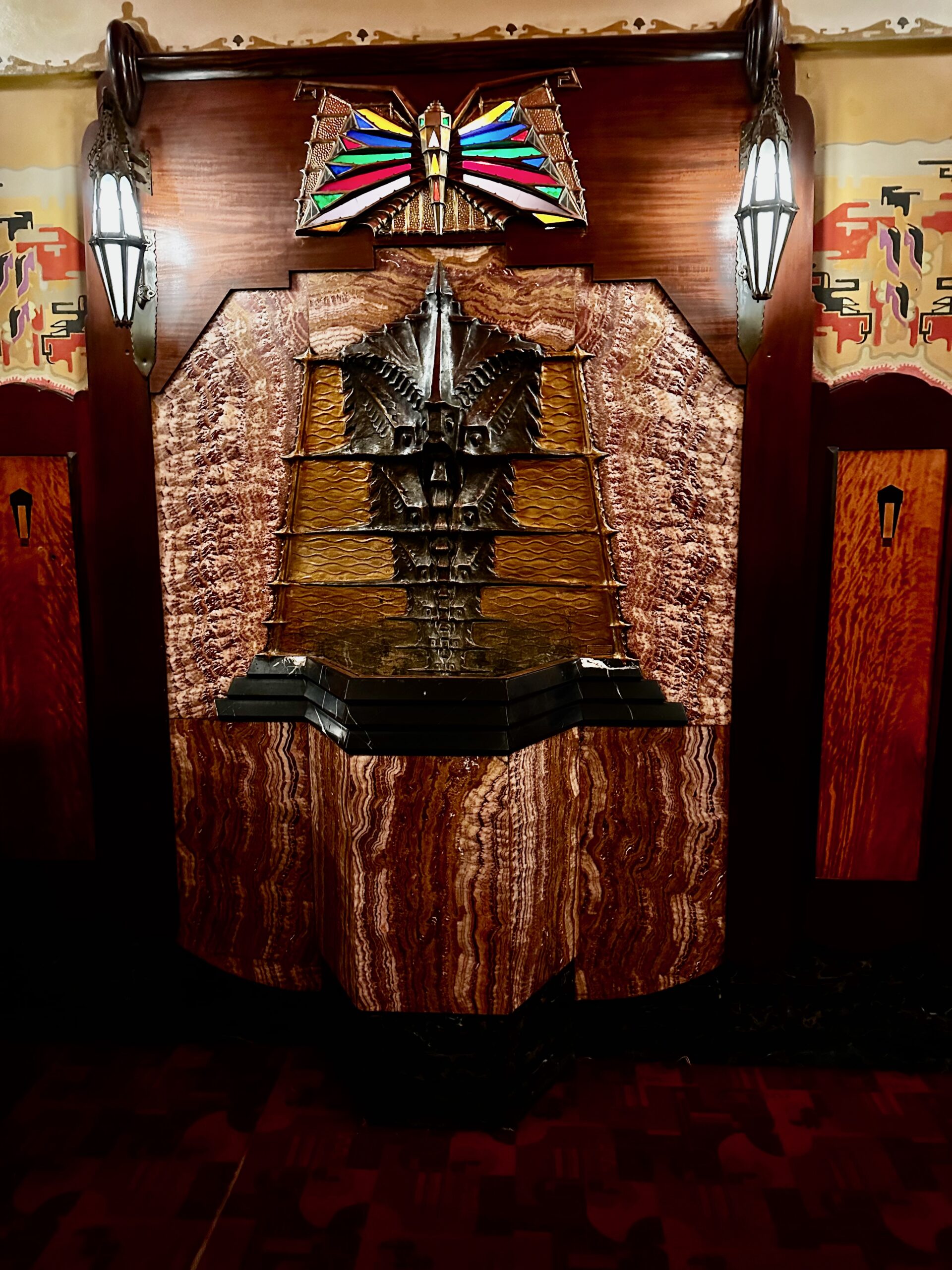
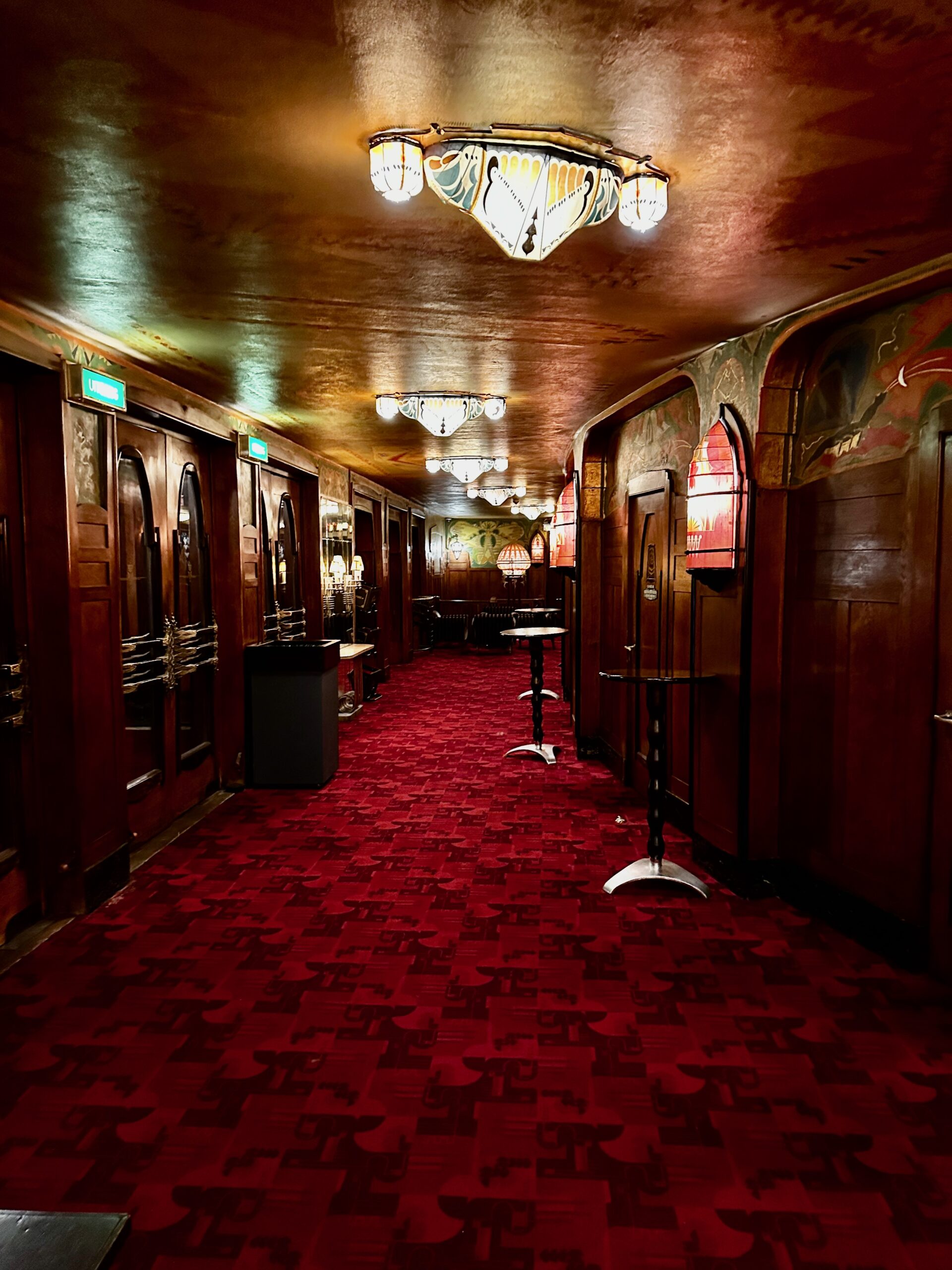
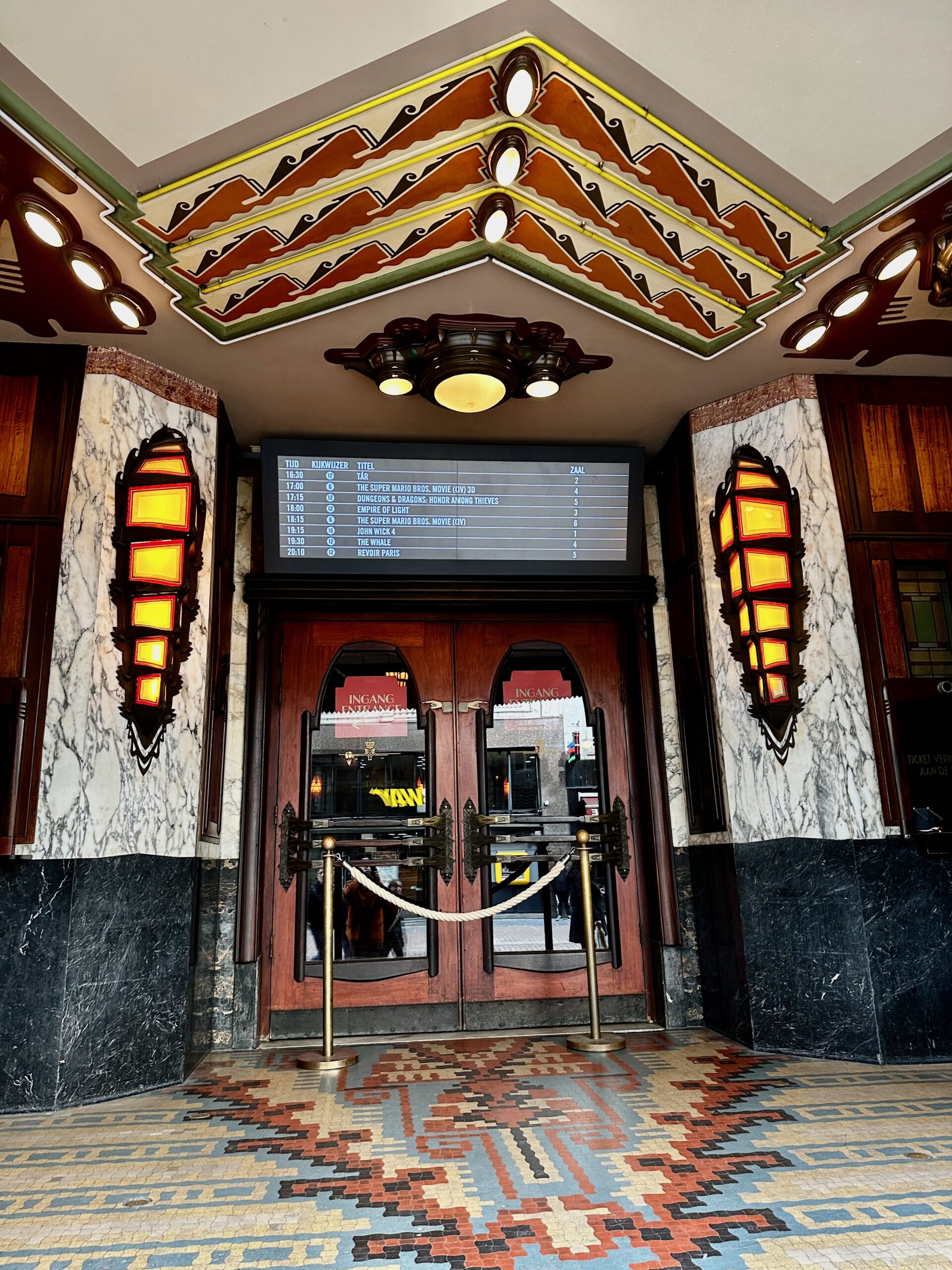
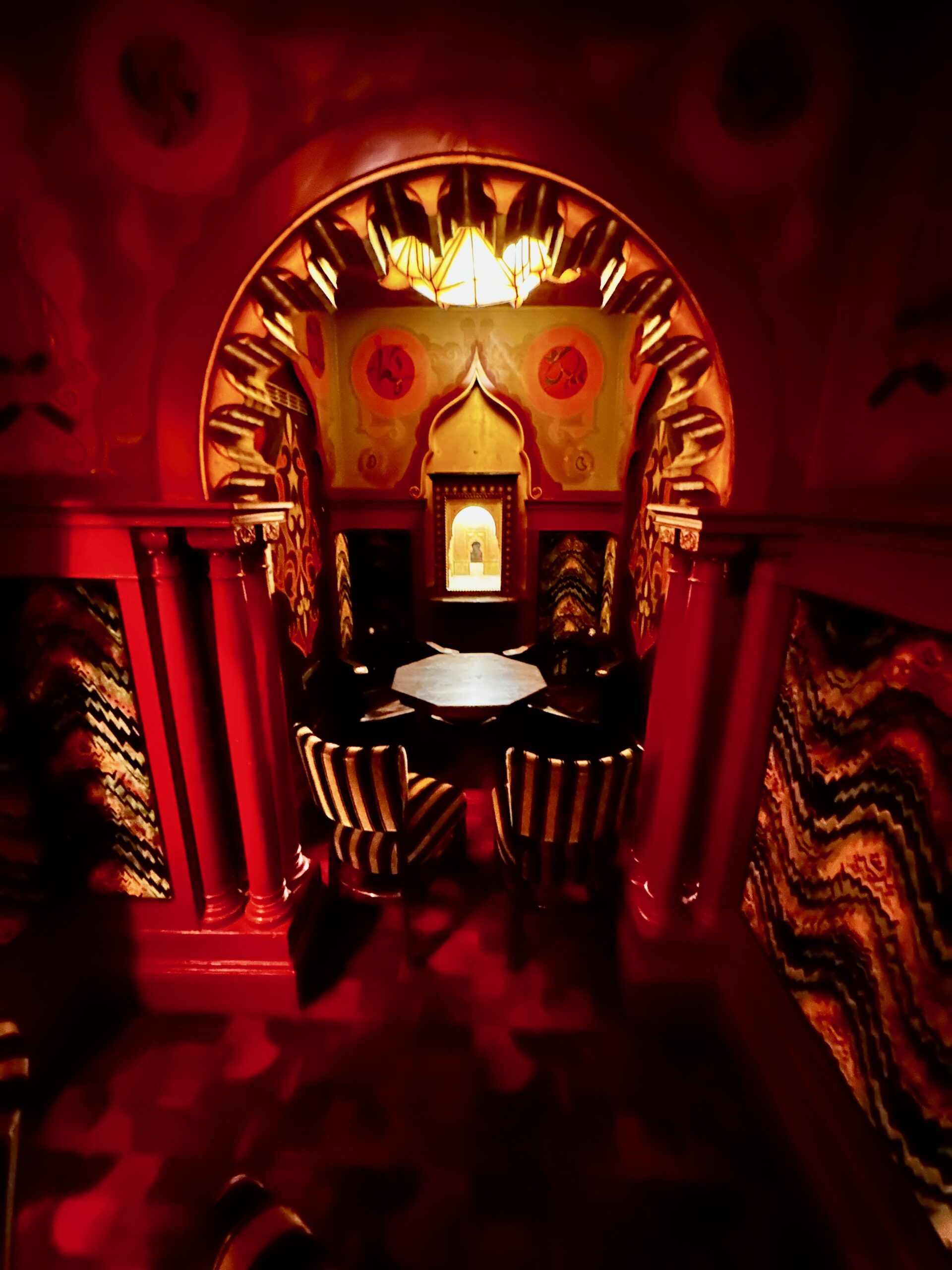
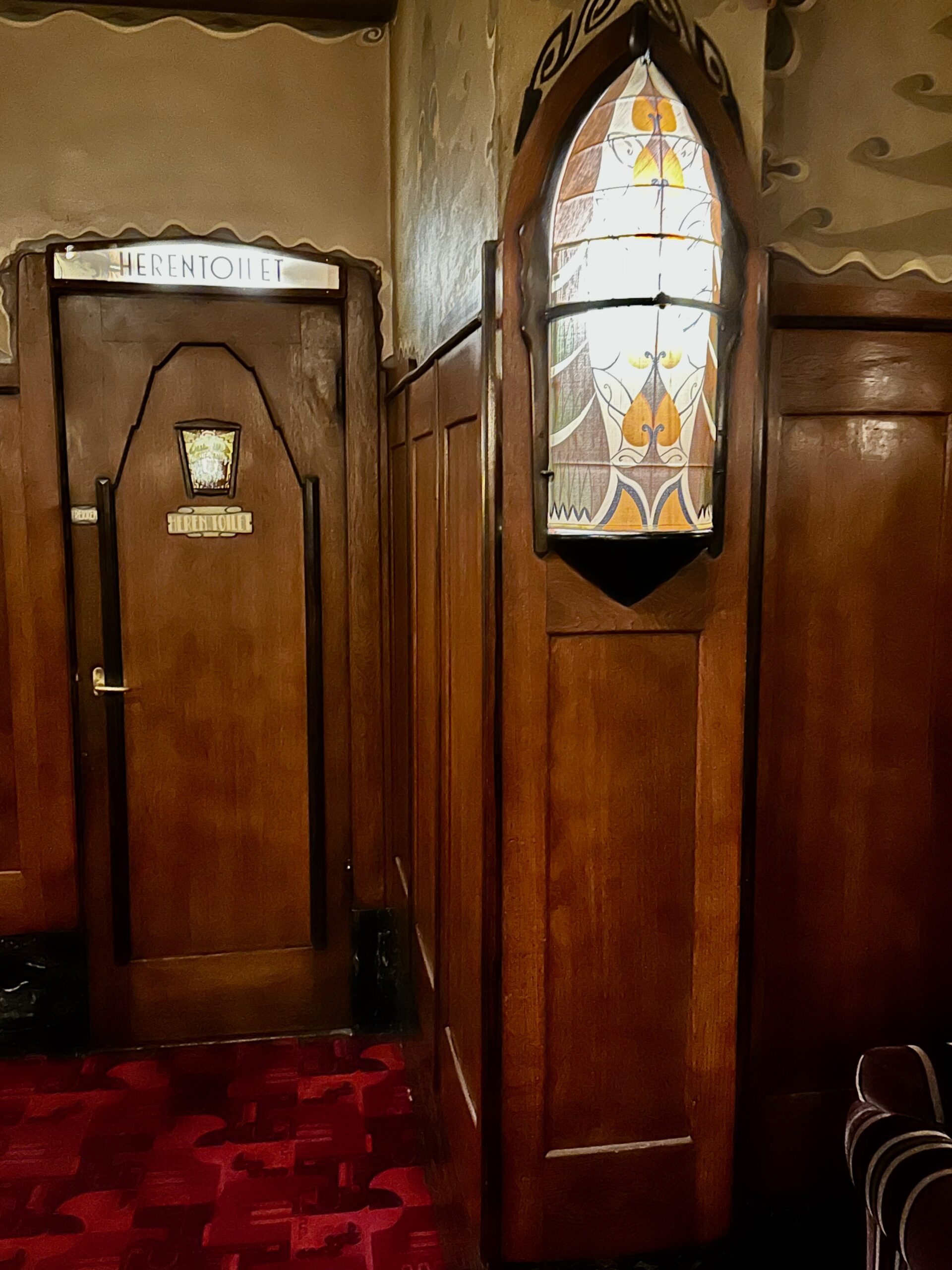
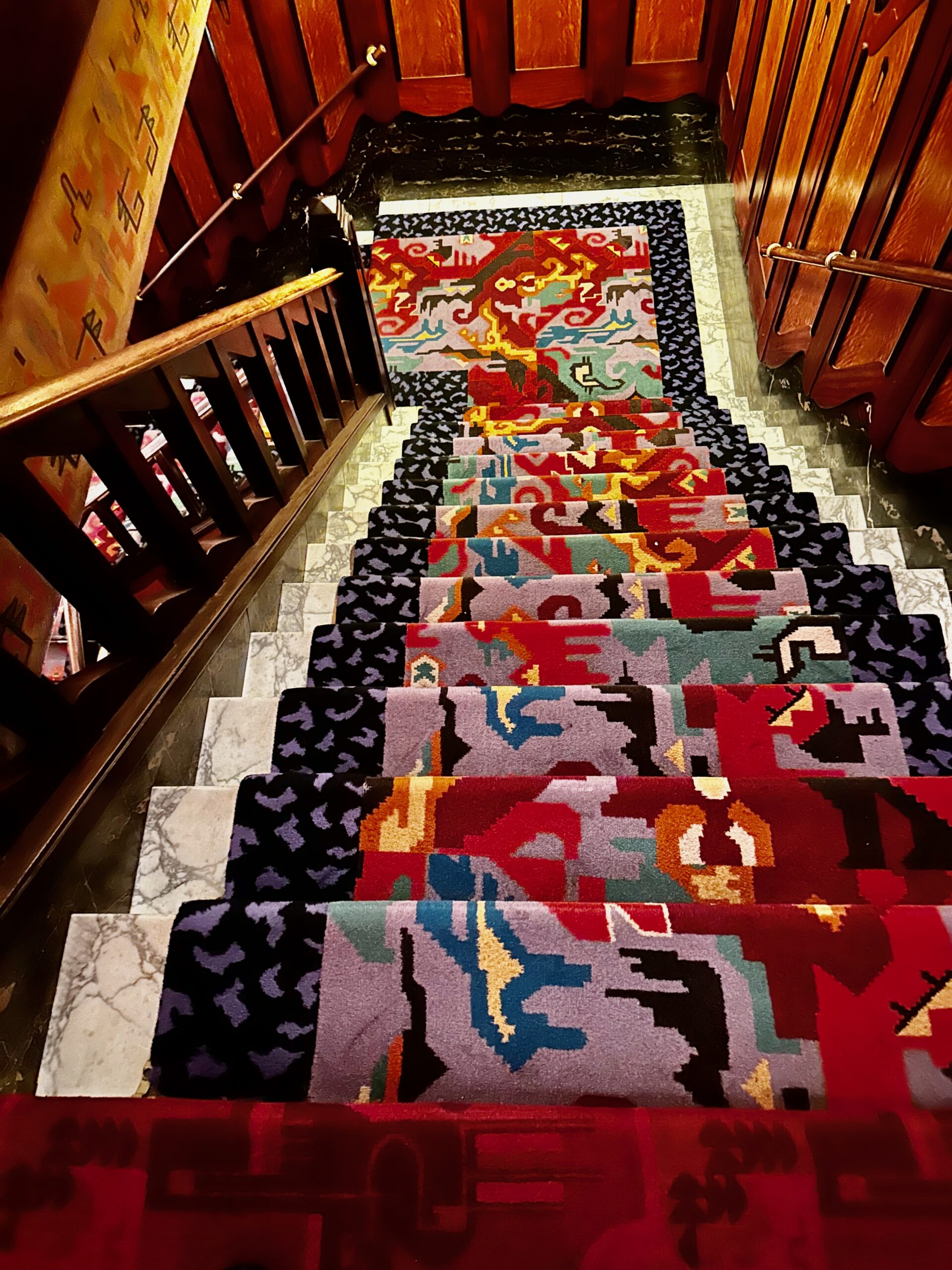
The exterior with two 80-foot high spires, many Art Deco lamp fixtures, and a cavernous staircase entrance resembles an old Gothic church. Entering through the enormous wooden doors, you’ll notice the large chevron Deco brass handles and once in the lobby, a beautiful ceiling dome. This hand-painted soft green dome has abstract art nouveau designs with lighting around its circumference (see the pictures in the comments). Throughout the lobby, images of Art Nouveau-style peacocks are in both the ornate wallpaper and hand-woven carpets from Morocco. Warm butterscotch colored light is illuminated through dozens of Art Deco light fixtures on the walls and ceilings. The hallways and the labyrinth of staircases have Art Deco designs carved into the dark walls of wood. In addition, on the hallway walls are green glazed tiles and bronze ironwork. These halls lead you on to other rooms, including a Japanese tea room, several private suites and a cabaret-dinner club named La Gaité. These pre-entertainment areas were reserved for special pre-showing events with movie stars and the entertainment elite.
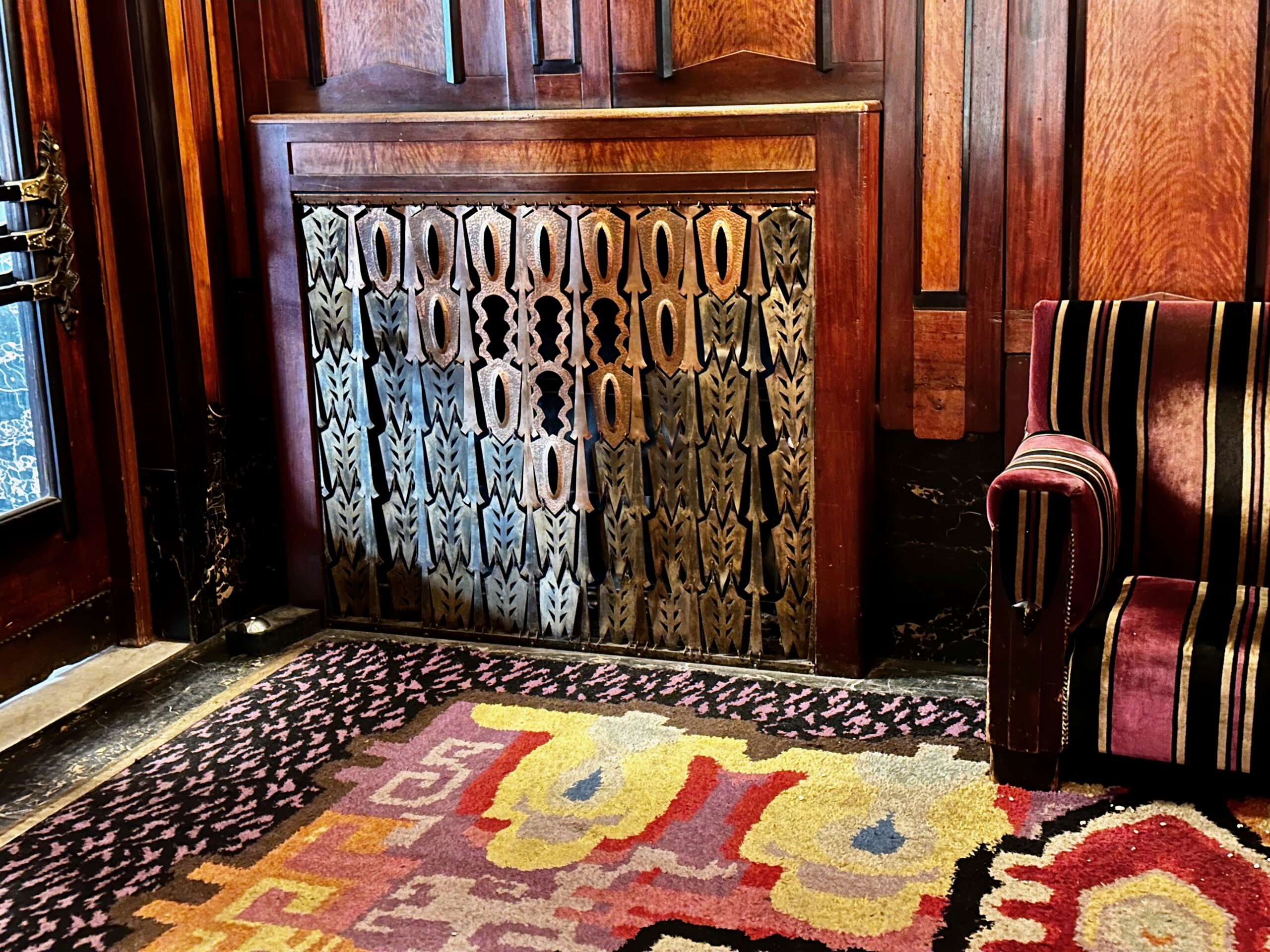
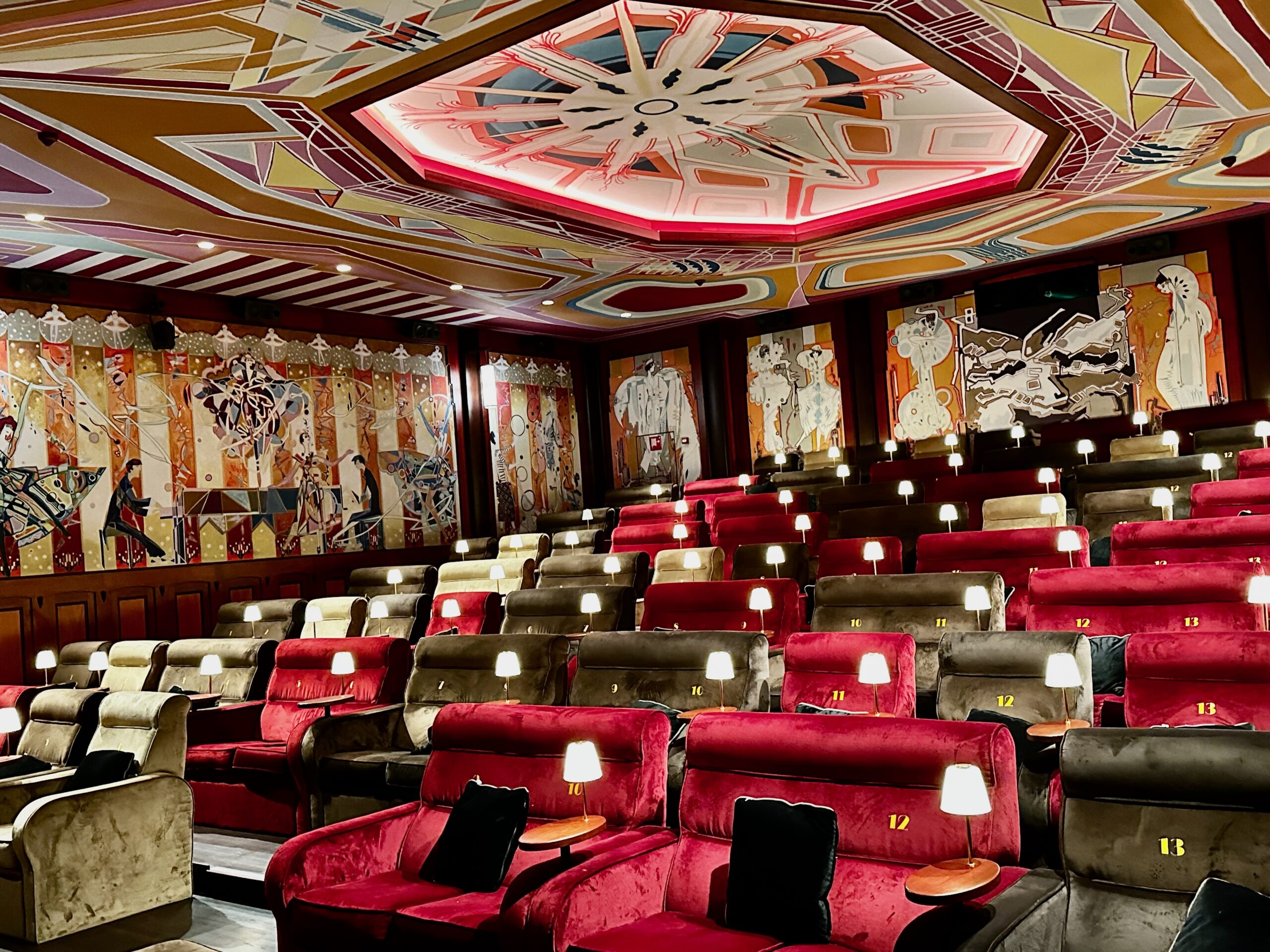
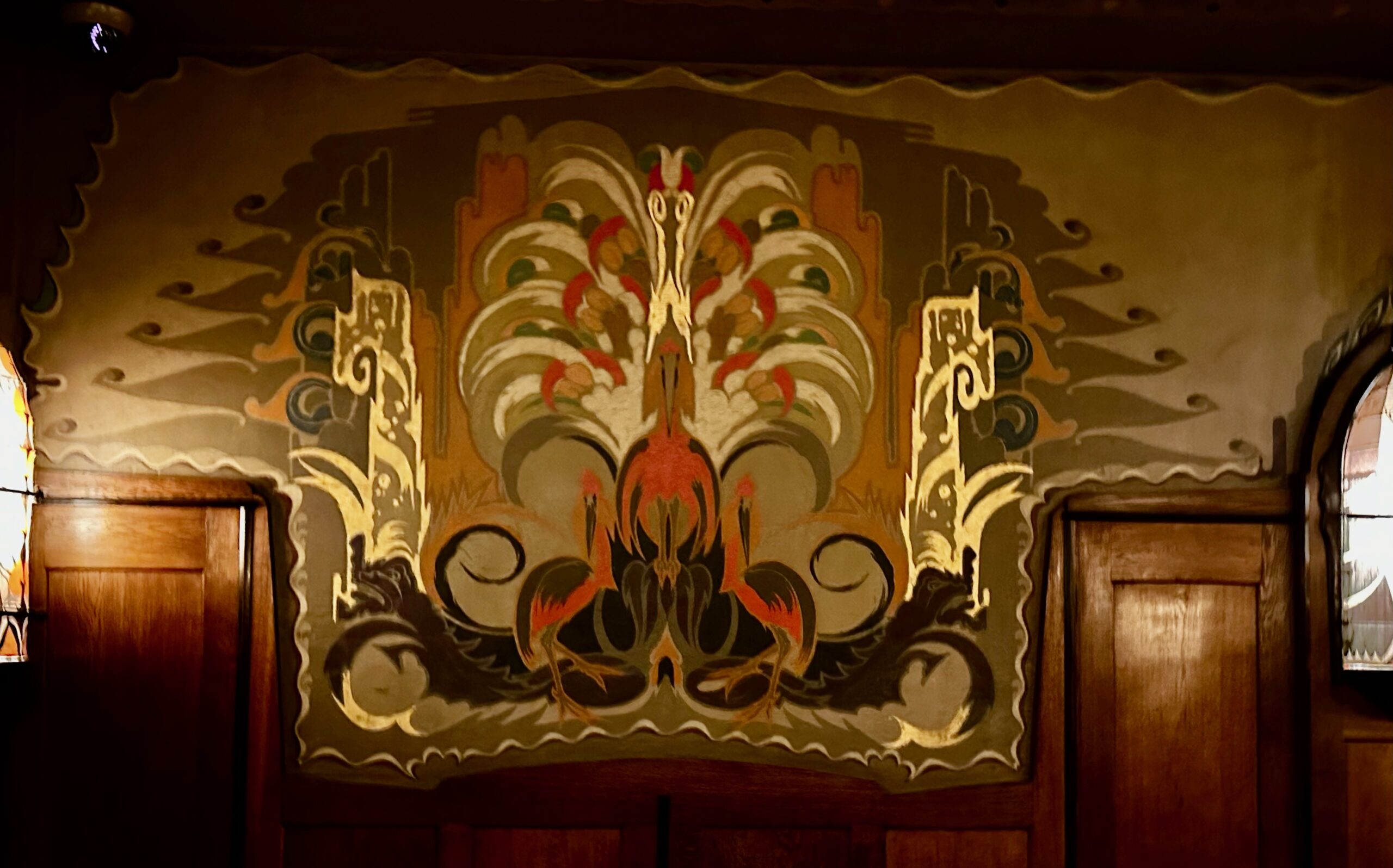
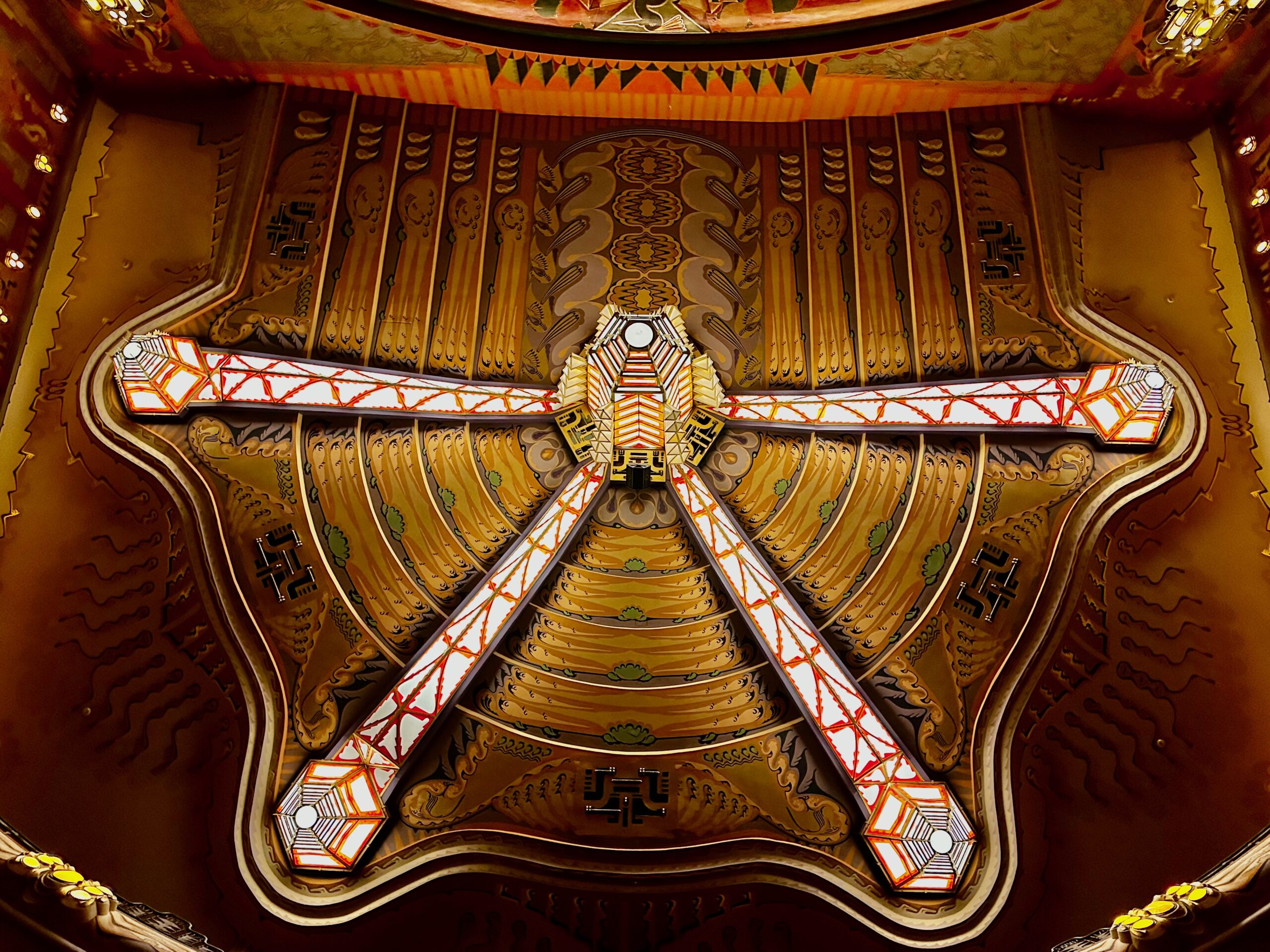
This ornate carpet continues up several flights of stairs to the eight-story high balconies, where the finest seats can be found with several love seats for two (see the video below). These two balconies look out to an enormous movie screen designed with a pit in front where a 17-piece orchestra and a Wurlitzer organ that rises from below the stage is inlaid with ivory and gold. In 1923, the organ was replaced with a 160 Wurlitzer, one of the largest theater organs in the world. High above the 80-foot gold ceiling is a large 60-foot-wide Art Deco lamp symbolizing the tail of a peacock. This shines down upon the main seating area of the theatre with hundreds of soft Art Deco lights illuminating under the balconies’ railing. Arched around the screen are three tiers of private seats. These tiny VIP rooms on the sides of the screen are for those who both want to see and be seen.

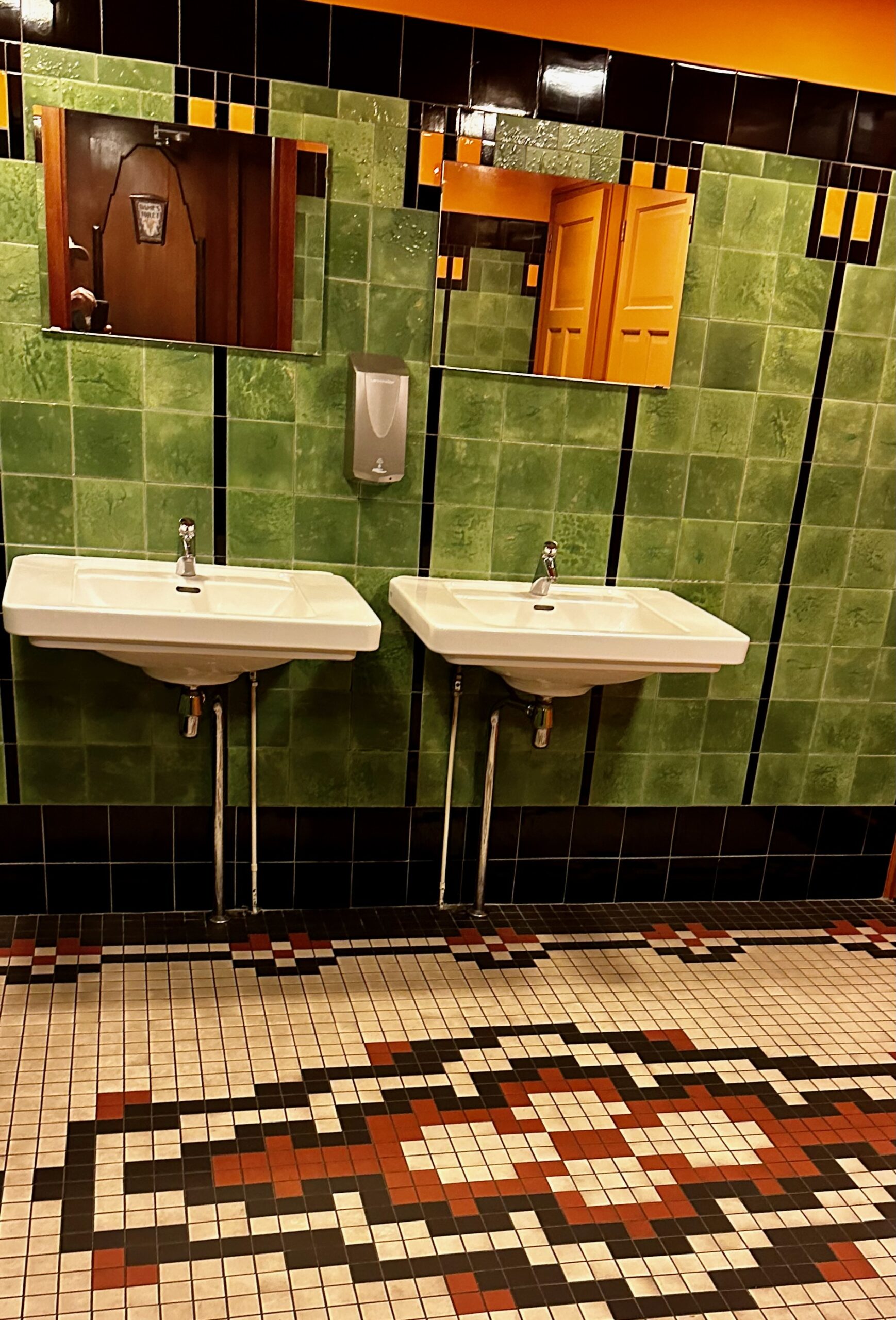
Tuschinski continued to battle with his architect over his unique vision and ended up having to fire him over creative differences. It took three years to build the theater. He hired two more architects, Pieter den Besten and Jaap Gidding who completed the interior. These two architects had a better knowledge of electrical technologies and installed an enormous heating system controlling a unified temperature throughout the grand hall. There are over a thousand lights throughout the theater, and had an acoustic curvature design that helps sound travel evenly to the back of the enormous room. During the roaring 20s, the Tuschinski showed both Hollywood silent movies and the European Avant-garde cinema. During the 1930s, it was equipped and updated with the best sound systems of the day. Tuschinski went on to open four more theaters, the Thalia, Cinema Royal, Scala, and Olympia, managing these companies during the booming years of advancing movie theater technology. Then, in May of 1940, Nazi German forces occupied the Netherlands, and the Tuschinski theater was taken over by the secret police. Tuschinski’s theater was renamed the Tivoli and began showing German Nazi propaganda films. Sadly, in 1942, Abraham Tuschinski and many Jewish families in Holland were rounded up and sent to the Auschwitz death camps, where Tuschinski and his family were murdered.
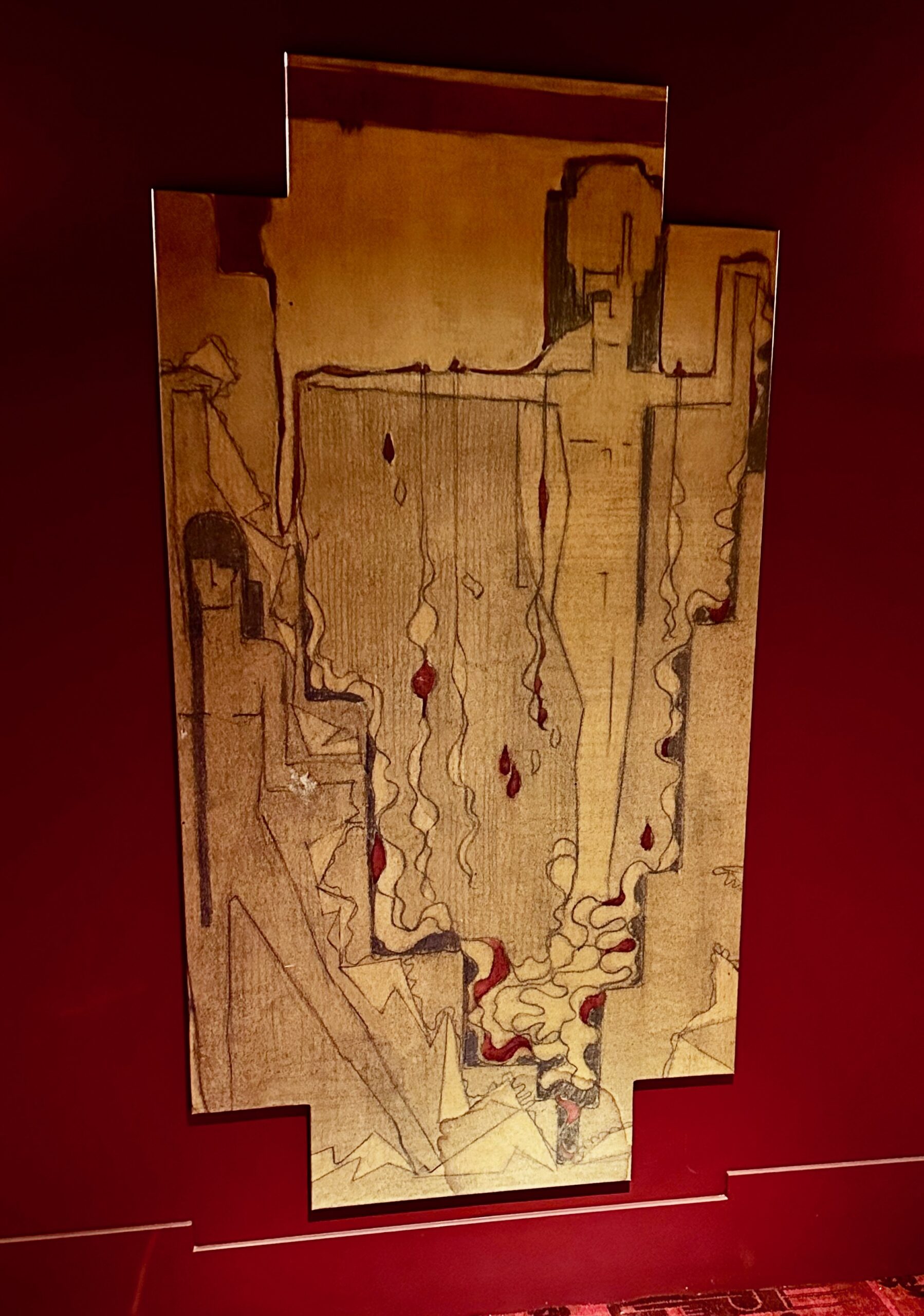
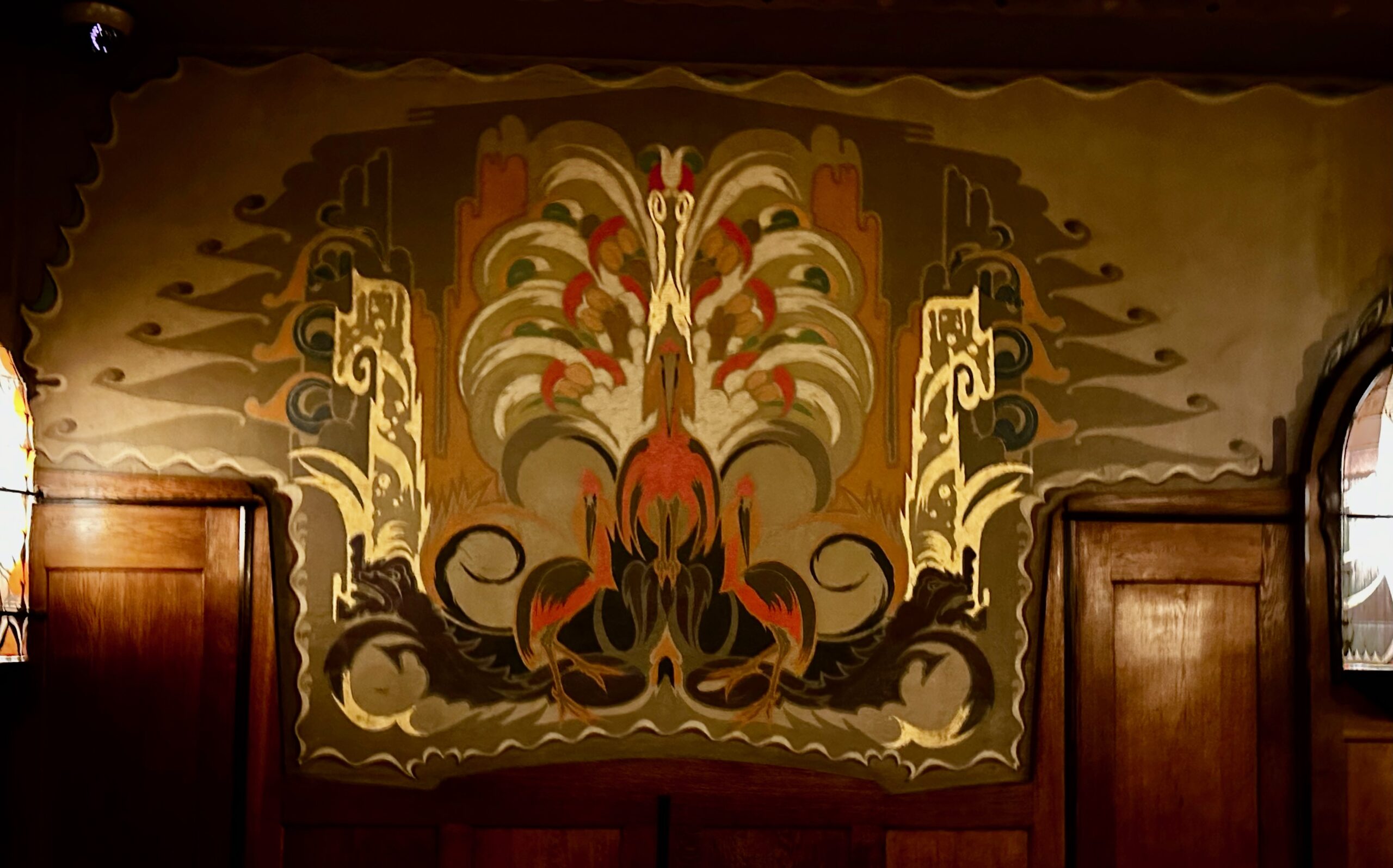
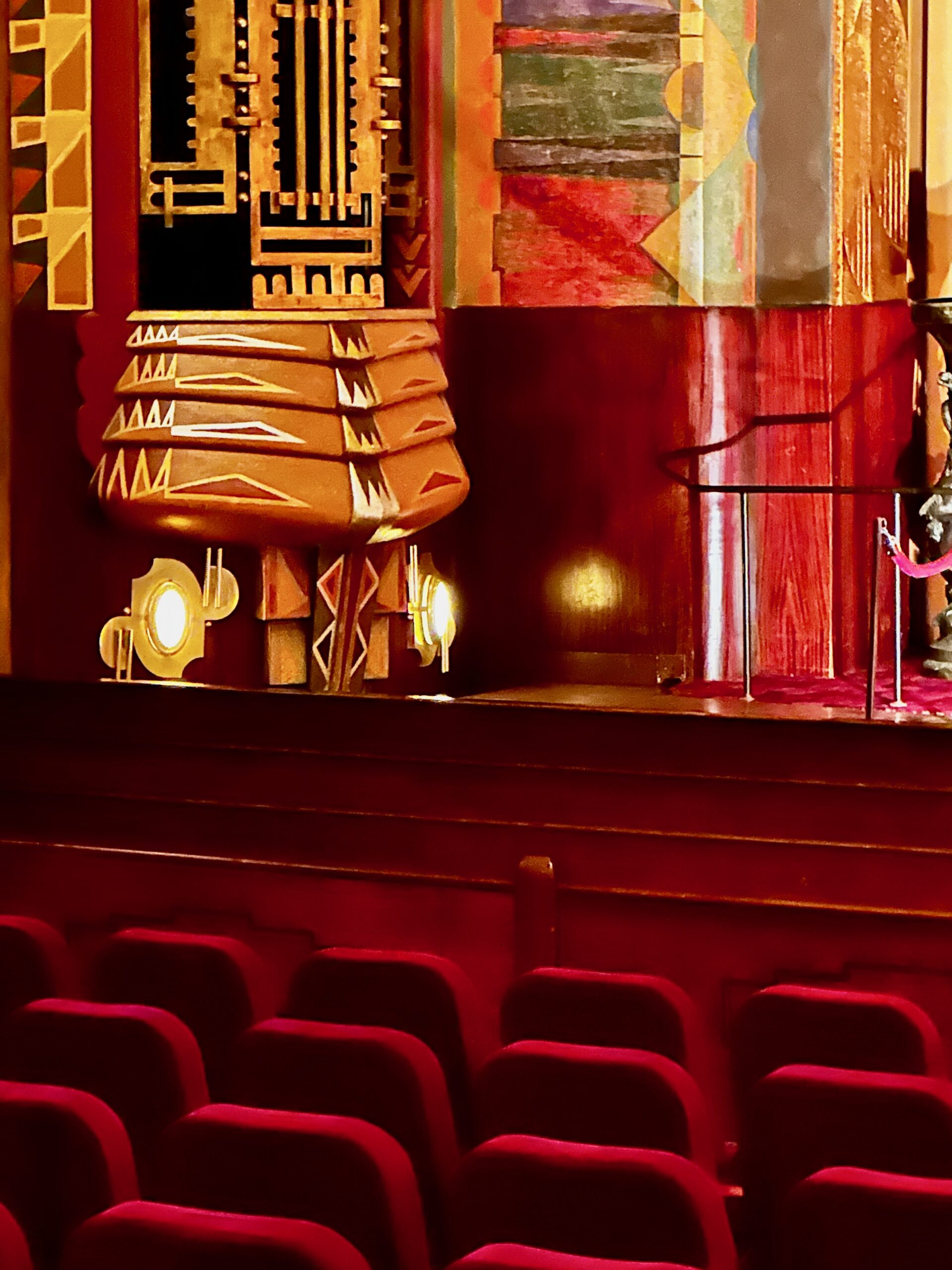
After the war in 1945
The Tuschinski reopened as both a cinema and a live performance theater, where Judy Garland, Marlene Dietrich, Dizzy Gillespie, Fats Domino, and Dionne Warwick all have performed on this stage. Each decade saw some form of restoration, including the 1960s, when the heating system was updated, 1970s, when the sound system. In the 1980s, the carpet was replaced, an enormous undertaking with dozens of rolls being flown in from the original artists in Morocco. In the 1990s, new projection equipment was installed, and in the early 2000s, a full renovation took place, including repainting the woodwork and updating the electrical wiring. Recently, the backstage area has been turned into more VIP rooms, and the theater has held several red carpet events, including their annual celebrity film festival. It has also held special screenings of the 90th anniversary of the movie Metropolis and a trilogy event of The Lord of the Rings. Today, the Tuschinski cinema belongs to the big distributor Pathé, and the marquee reads Theater Tuschinski Pathé over its entrance. It is on many architectural critics’ lists as one of the top ten historic theaters in the world.
An Amsterdam School Masterwork at the Crossroads of Art Nouveau and Art Deco
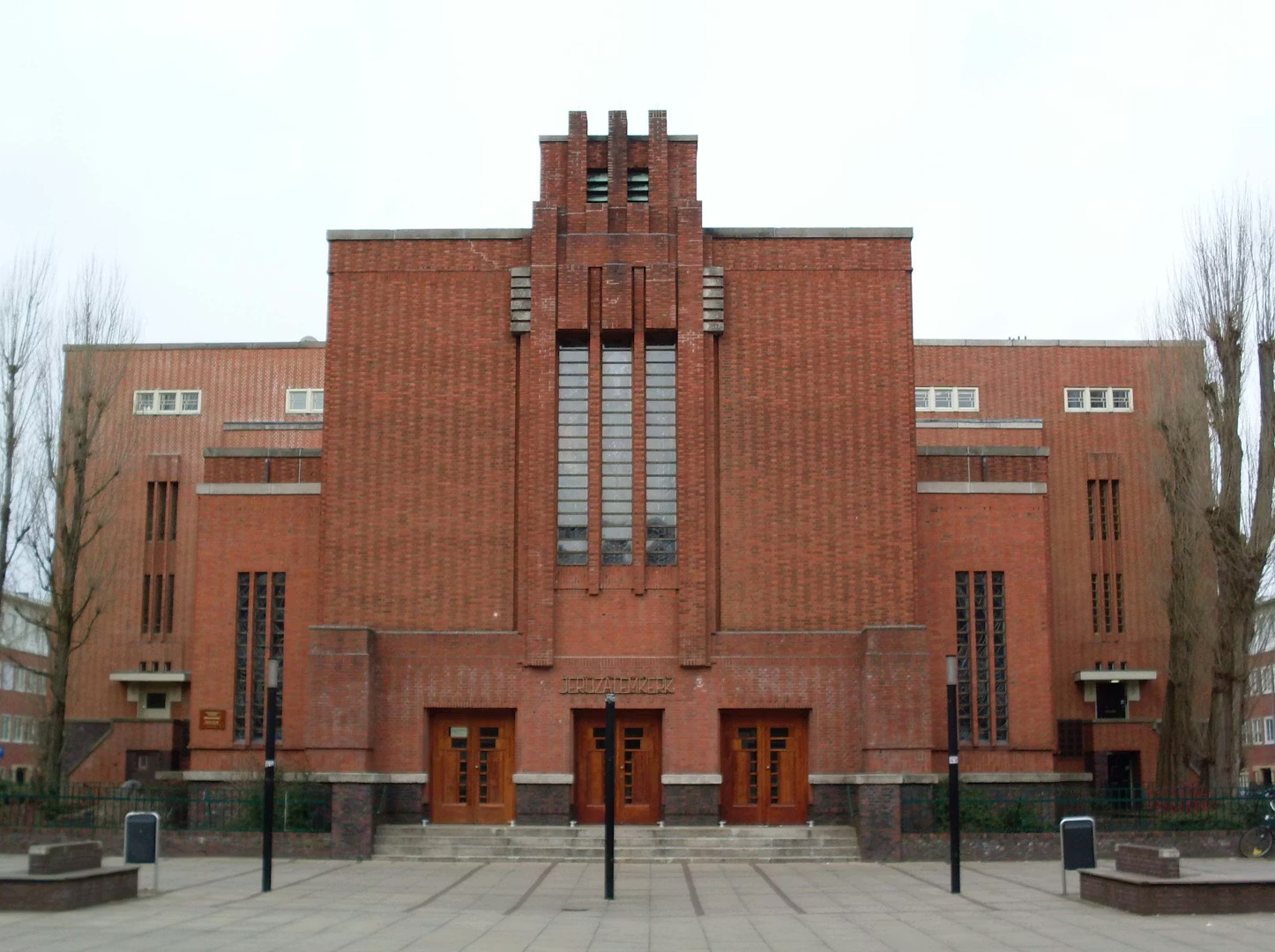
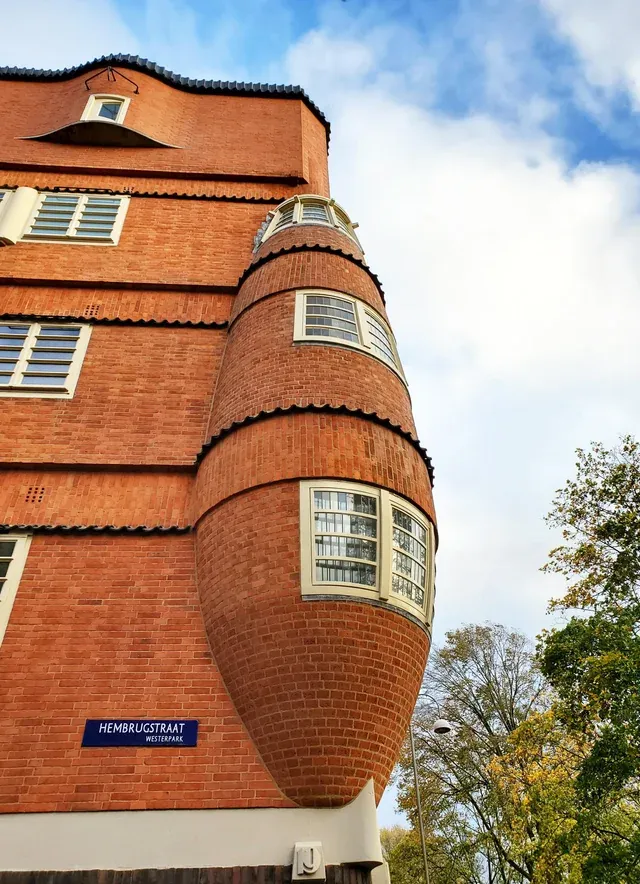
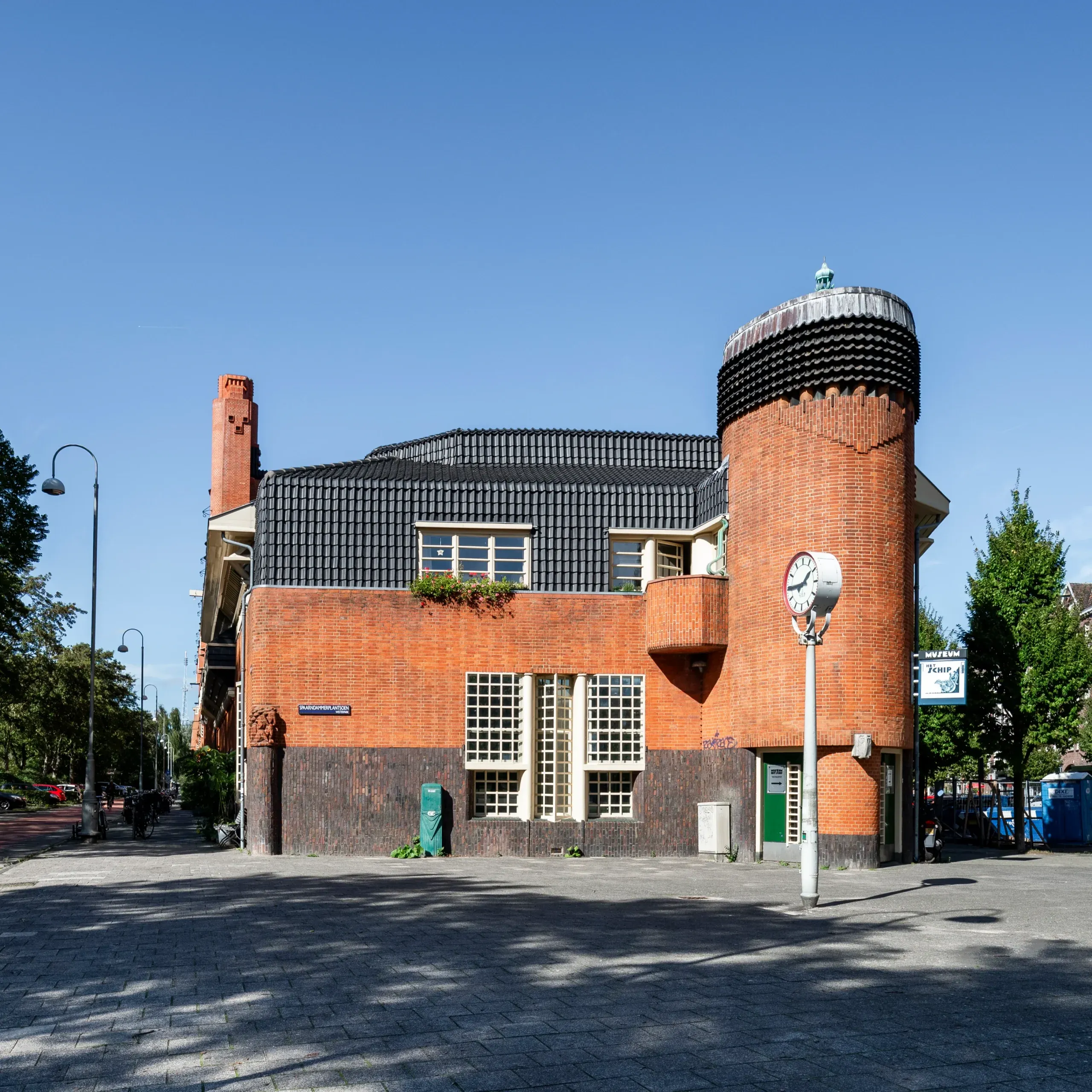

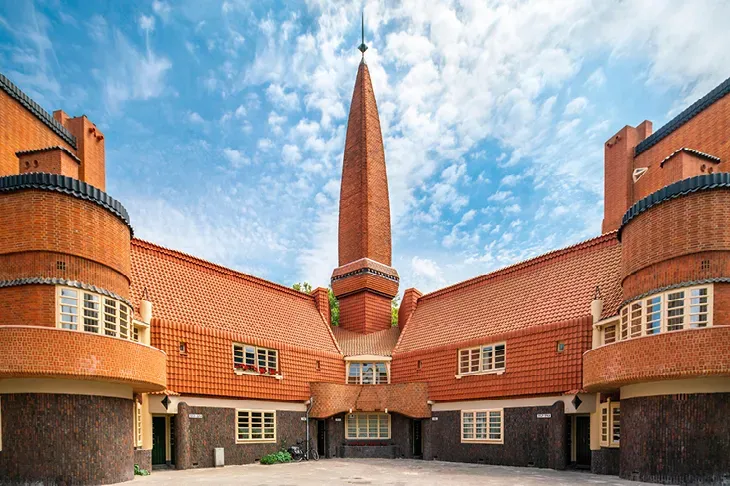
Within this Amsterdam School framework, the theater synthesizes elements of Art Nouveau, Arts and Crafts, and Art Deco into a coherent and highly theatrical whole. Art Nouveau is visible in the fluid lines, organic ornament, and sense of movement that animate both exterior and interior spaces. Arts and Crafts ideals emerge through the emphasis on craftsmanship, material richness, and hand finished surfaces, reinforcing the human scale and tactile quality of the design. Art Deco appears in the building’s sense of glamour and spectacle, expressed through bold color combinations, stylized geometric accents, luxurious materials, and dramatic lighting effects suited to the golden age of cinema. Rather than presenting these styles as separate or competing languages, the Tuschinski Theatre absorbs and transforms them, resulting in an immersive environment that is best understood as an Amsterdam School masterwork enriched by Art Nouveau, Arts and Crafts, and early Art Deco influences.
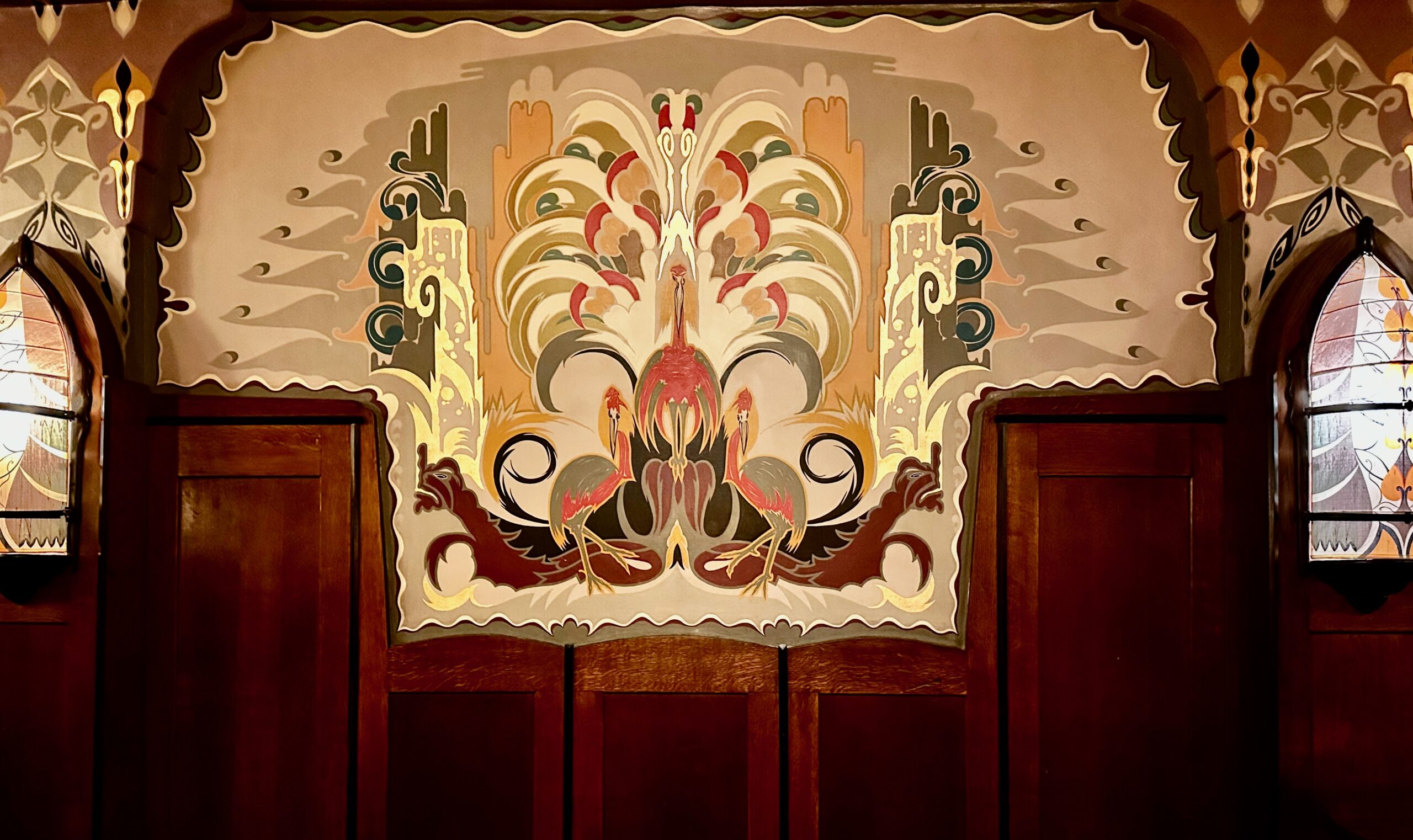
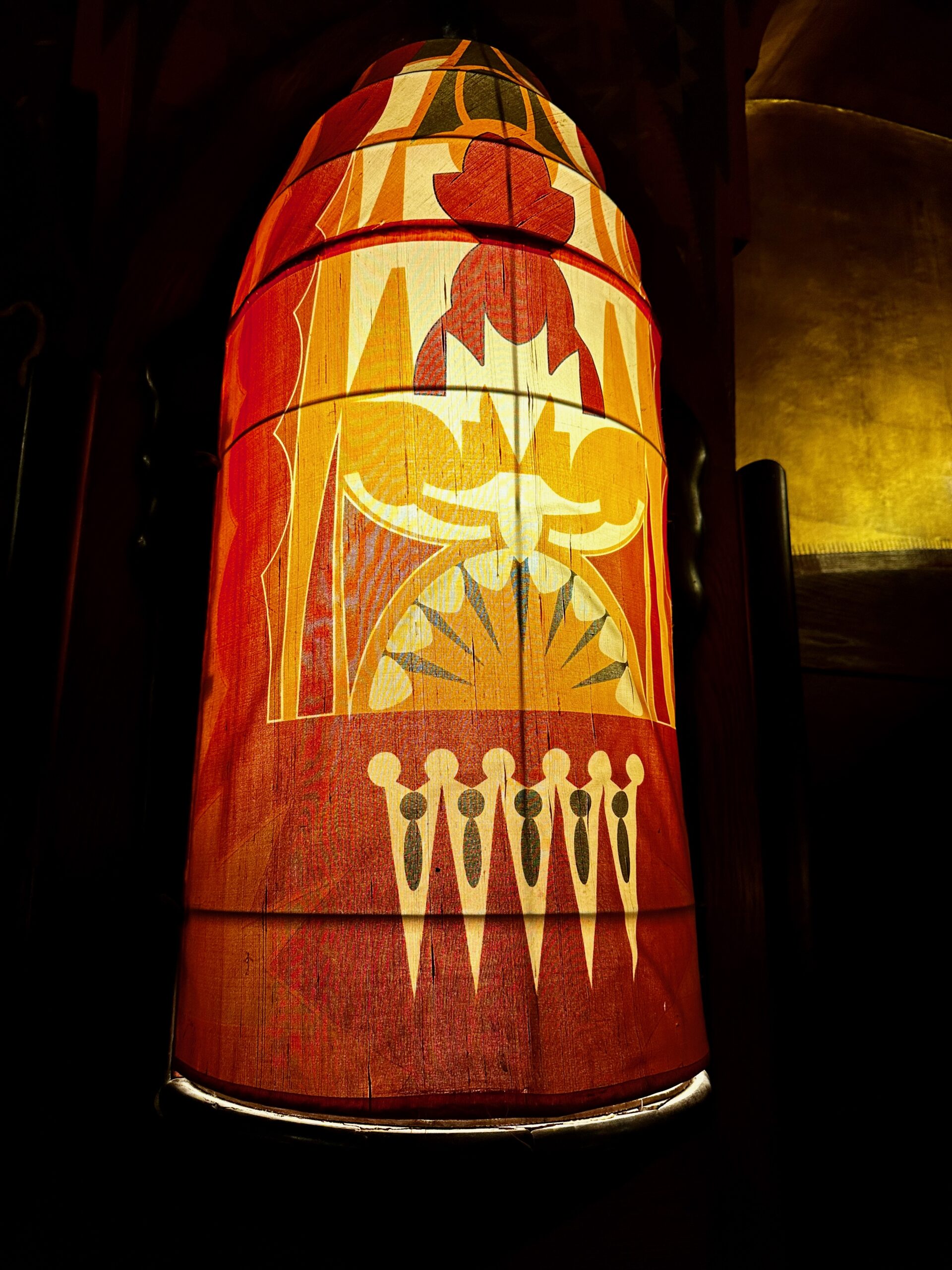

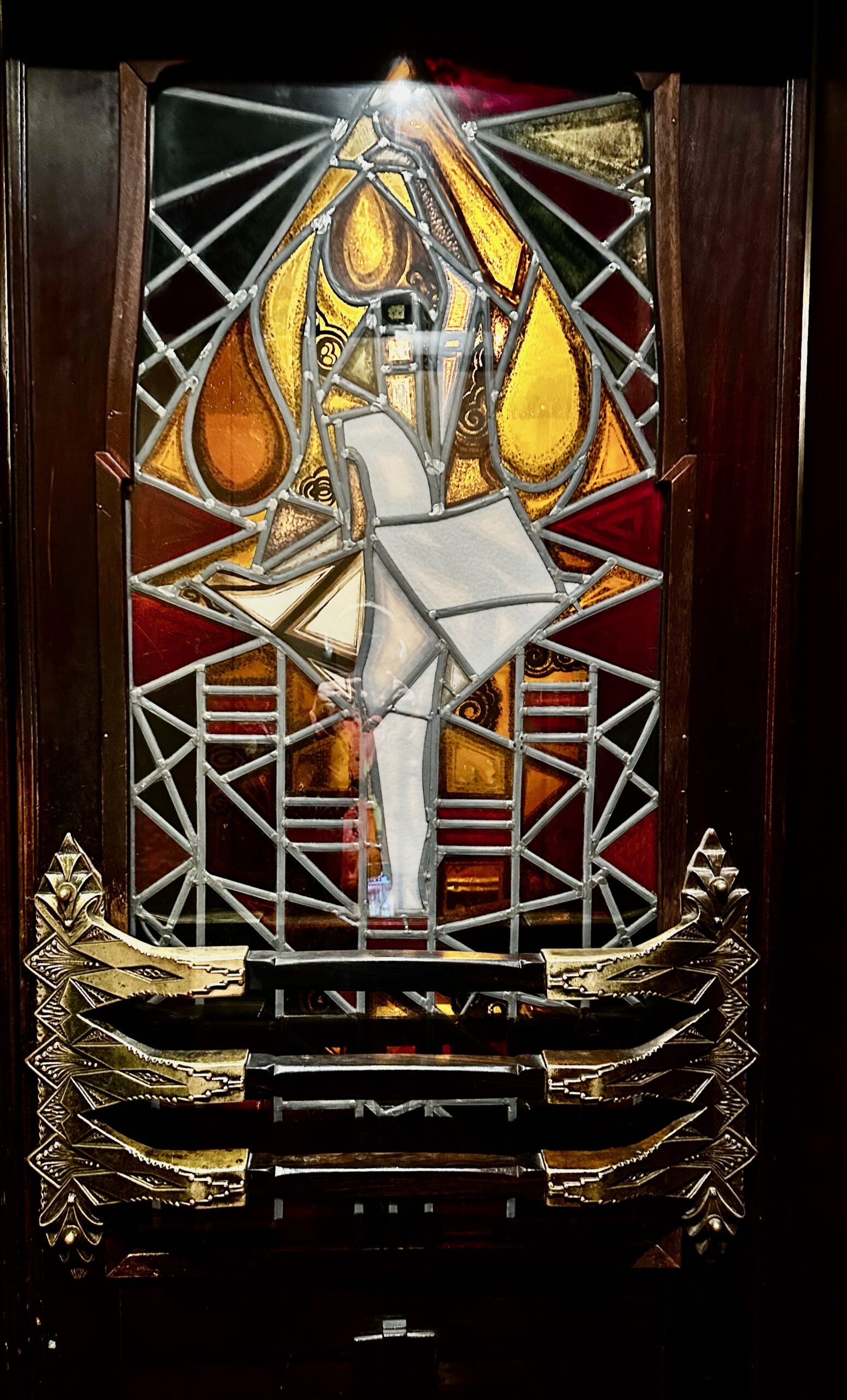
The Tuschinski Theatre stands as one of the most distinctive cinema buildings in Europe precisely because it resists classification within a single stylistic movement. While its decorative richness often leads it to be described as Art Deco, the intellectual and architectural foundation of the theater is more accurately rooted in the Amsterdam School. This is evident in its expressive massing, sculptural interiors, and the conviction that architecture should function as a total work of art. Every aspect of the building was conceived as part of a unified experience, where structure, ornament, lighting, furnishings, metalwork, and graphics operate together to create atmosphere, emotion, and narrative. This holistic approach places the Tuschinski firmly within the Amsterdam School tradition, even as it embraces a broad range of contemporary influences.
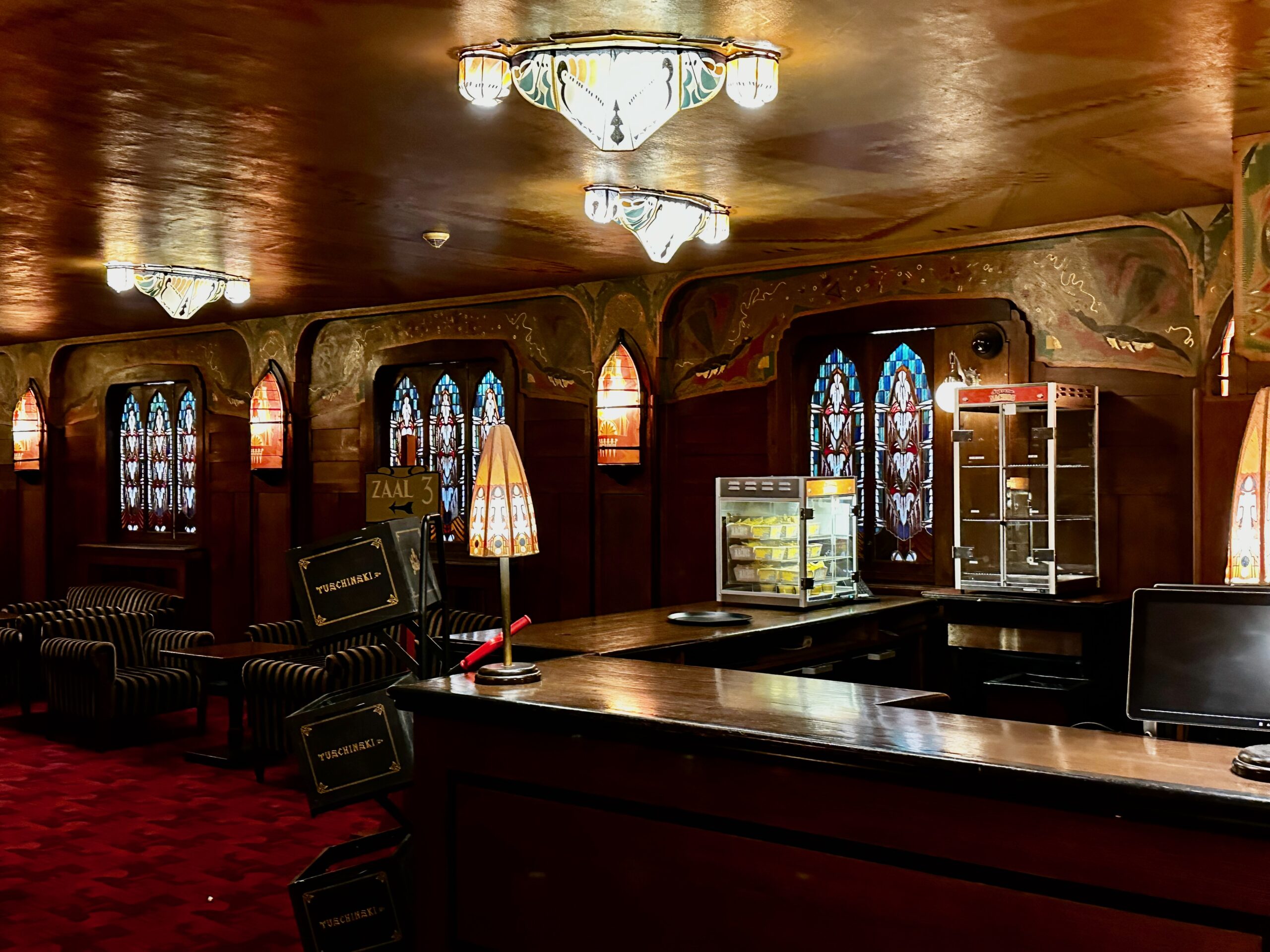
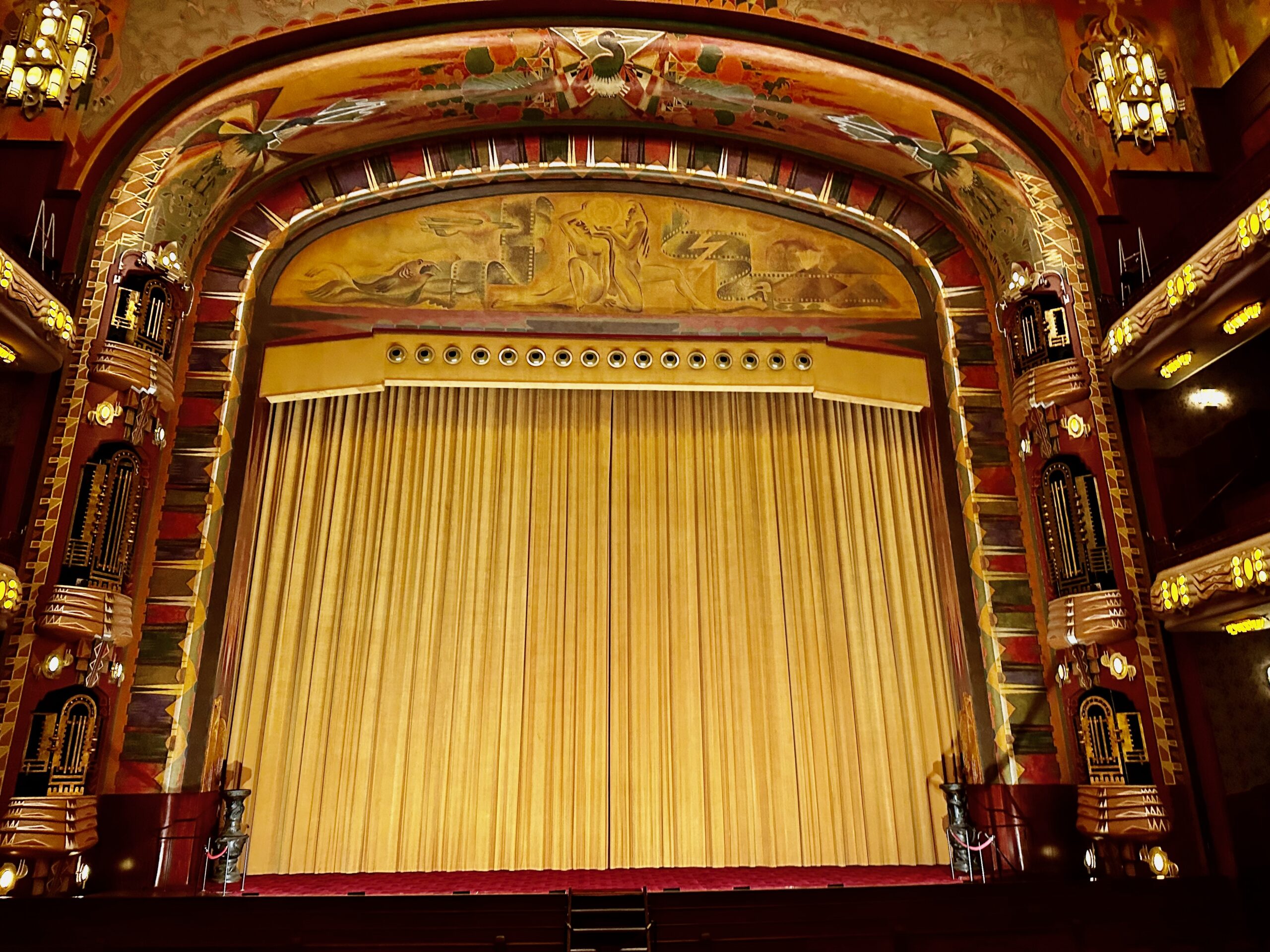
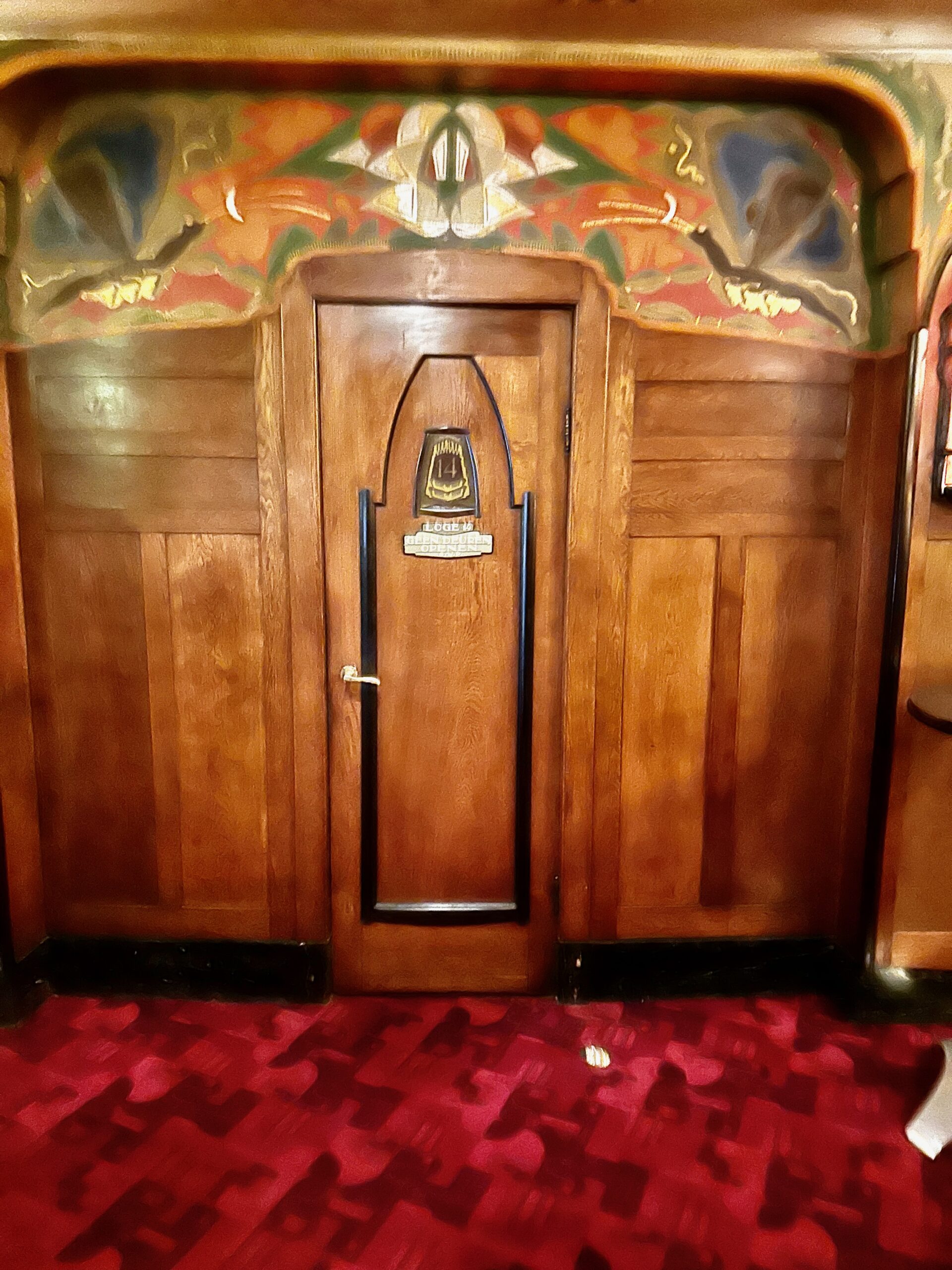
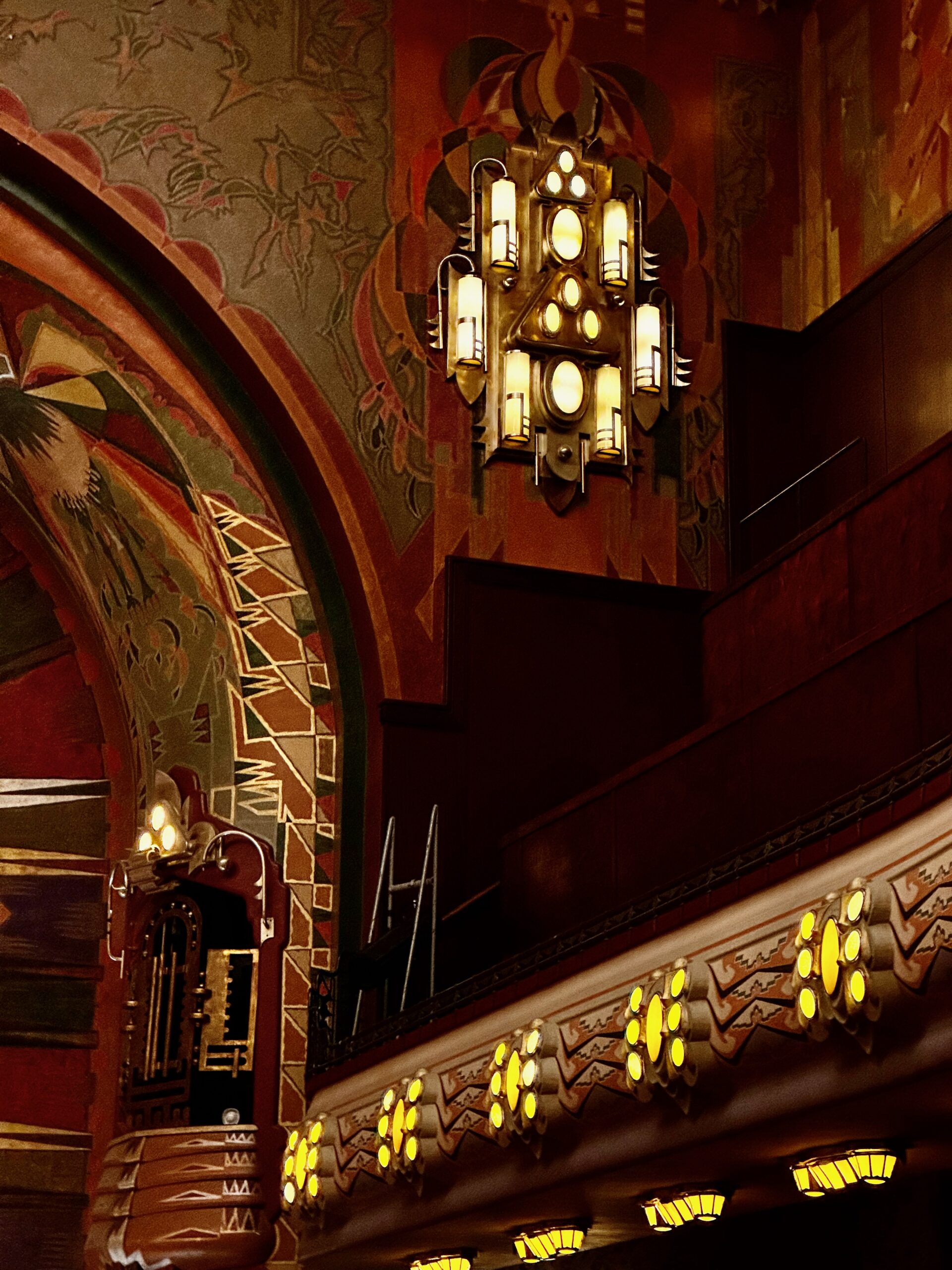

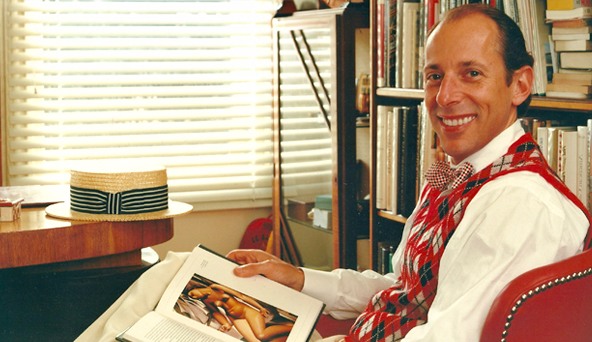
I first visited the Tuschinski Theater in 1999, and it made a lasting impression on me. I returned in 2023 with my friend Sylvain Berkowitsch, a Belgian antique dealer, and personally photographed the interiors shown here. Experiencing the building firsthand was extraordinary, offering a rare opportunity to fully absorb its scale, craftsmanship, and atmosphere at an unhurried pace. I strongly recommend visiting in person, whether to attend a performance or simply to experience the interior spaces themselves. During my visit, the theater was open daily and allowed free movement through much of the building, enabling me to explore and document the architecture extensively. This level of access provided a rewarding and uncommon chance to appreciate the theater’s design in a meaningful and immersive way.

– Rick Fishman, Items from my own collection and research.
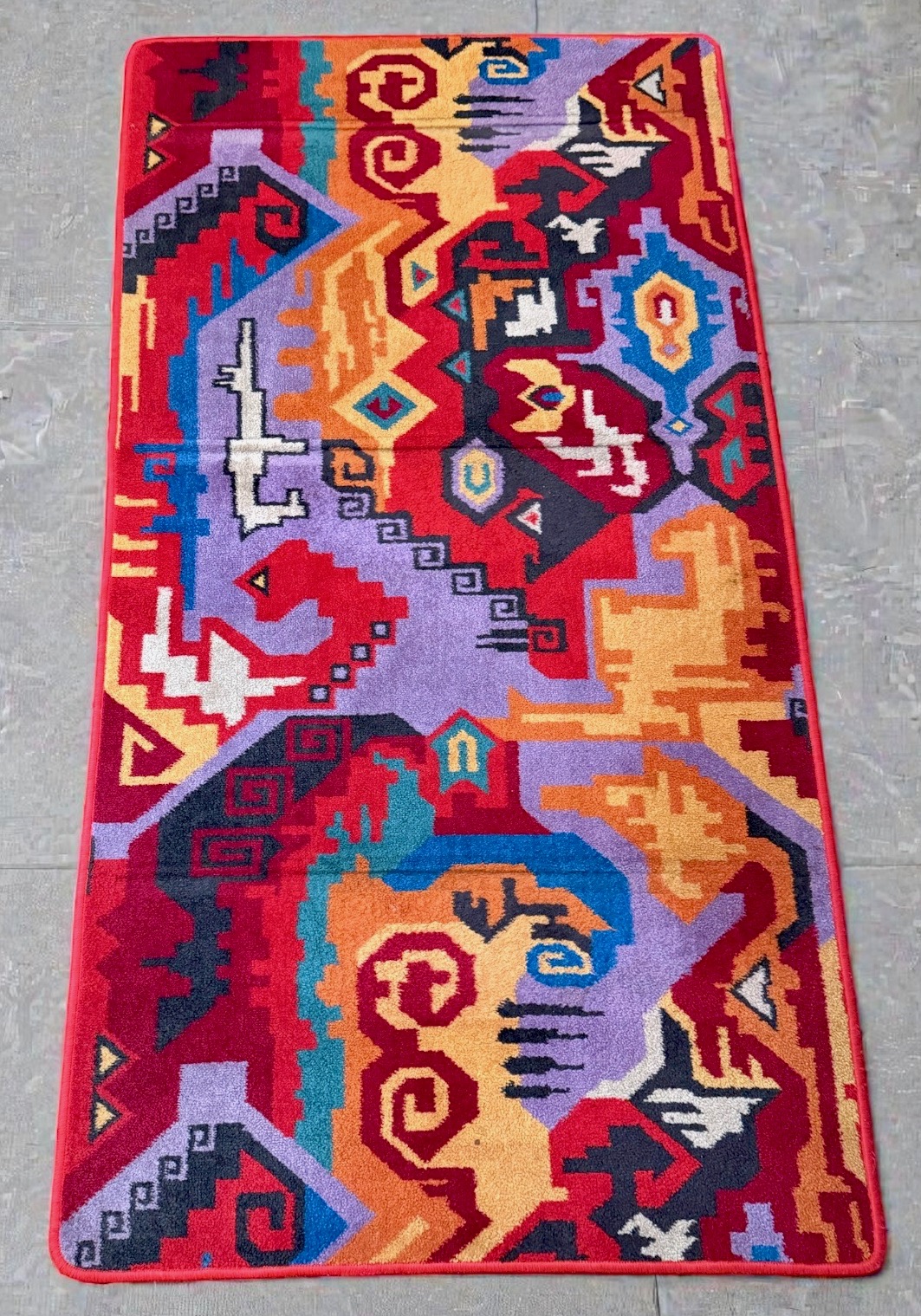

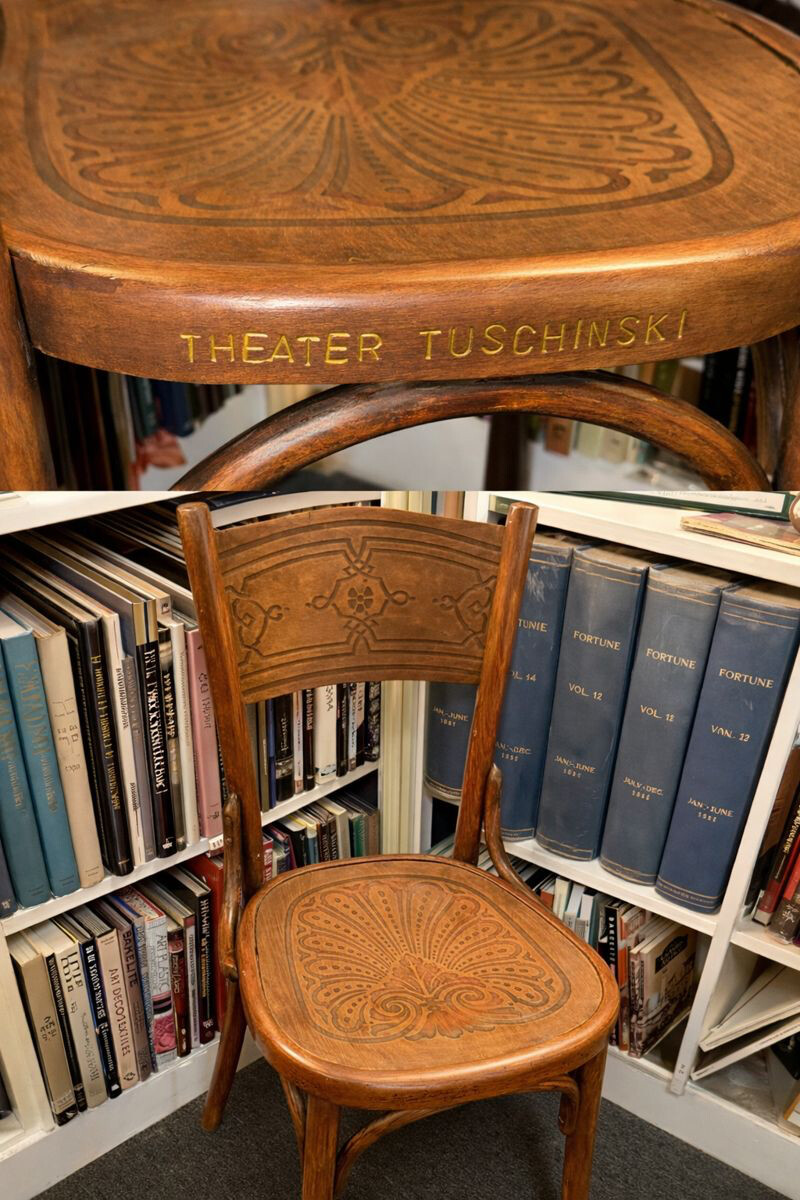
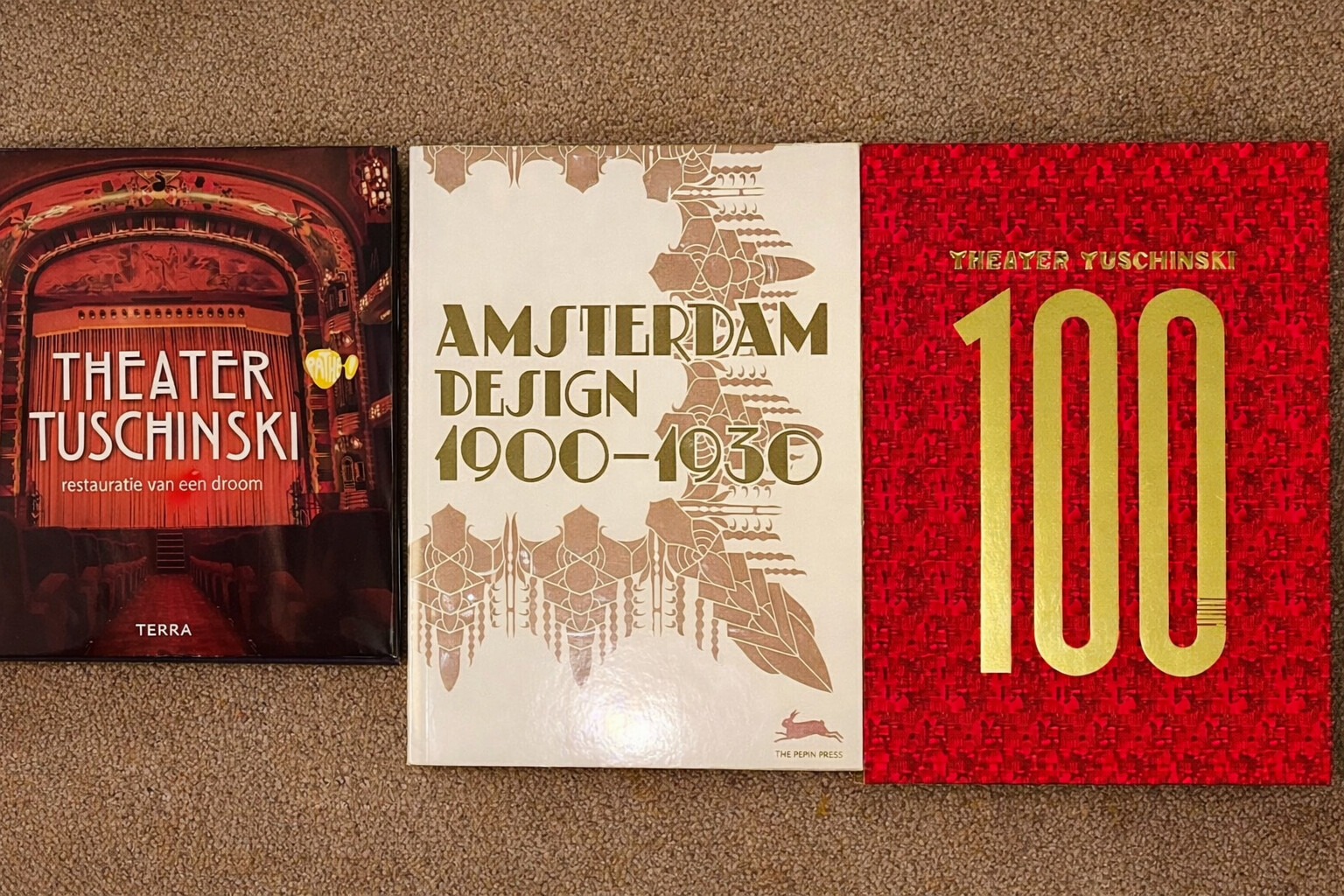
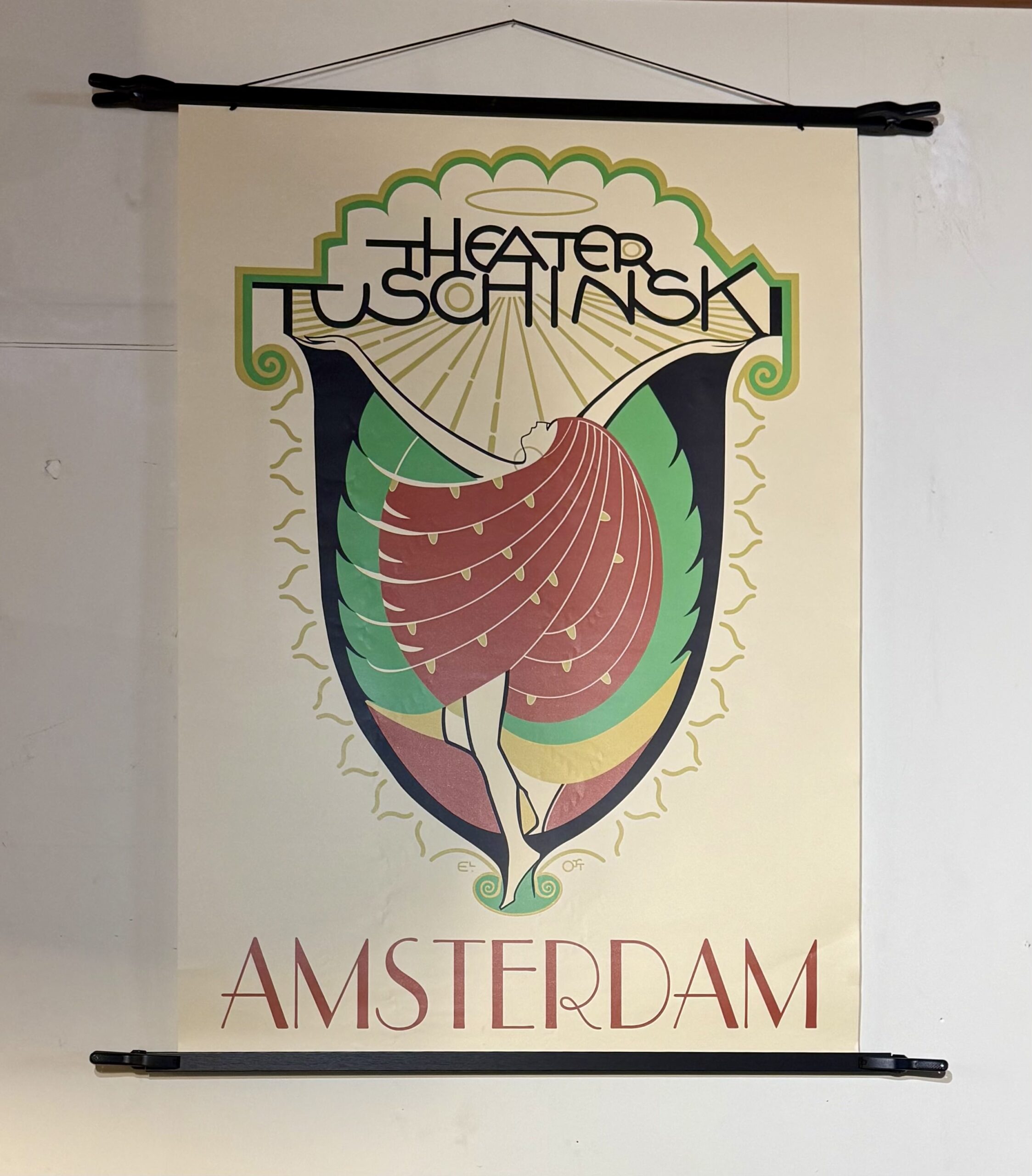
Top: Original Tuschinski Moroccan carpet sample; Amsterdam School light fixture; original bentwood chair from the theater. Bottom: Reference books; poster from the theater archives.
Related Products from ArtDecoCollection.com