
The Queen Mary: A Floating Art Deco Masterpiece
How Britain’s Greatest Ocean Liner Came to Define an Era
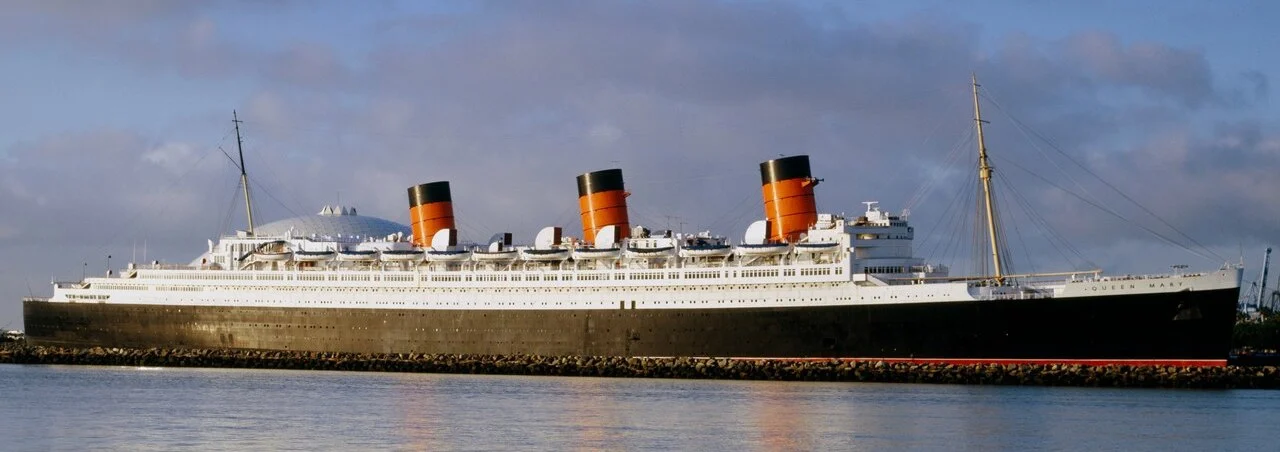
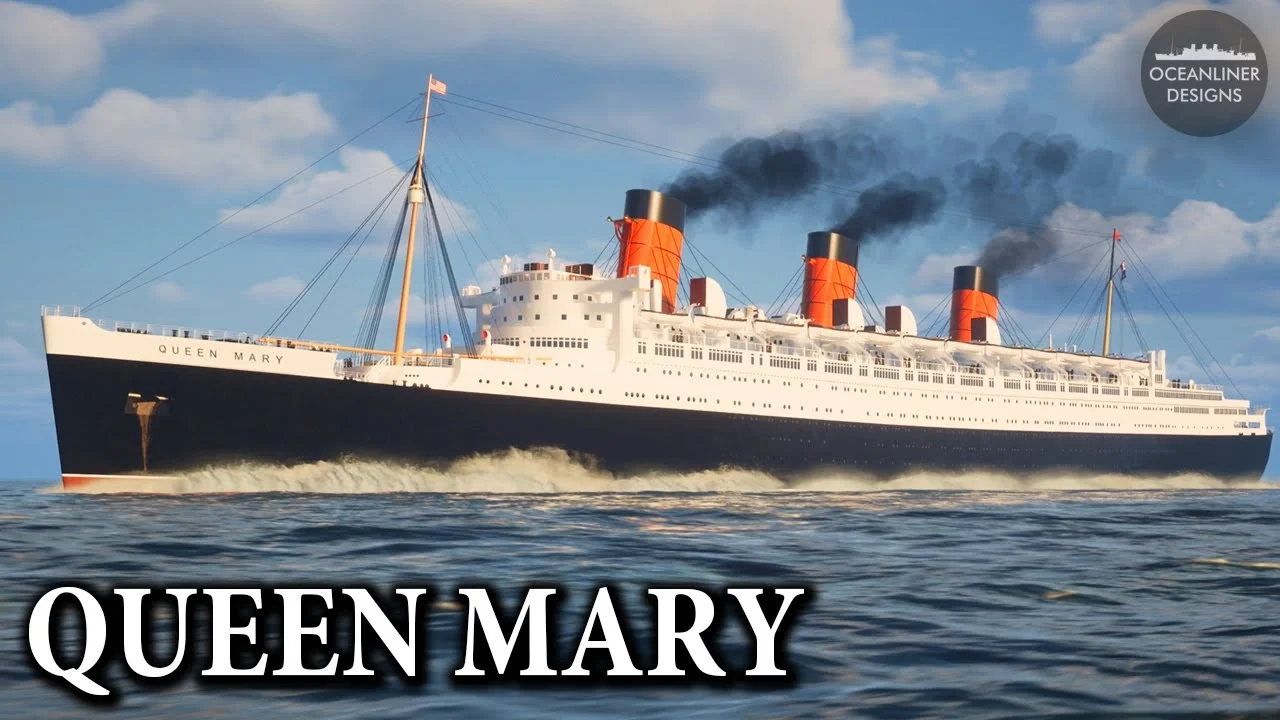
When RMS Queen Mary departed Southampton on her maiden voyage in May 1936, she carried with her something beyond the usual expectations of a new ocean liner. Britain had been watching France and Germany launch ships of increasing speed and design ambition for the better part of a decade, and what Cunard sent into the Atlantic in response was not simply a competitive entry but a fully articulated position on what British craftsmanship, engineering and design could accomplish at their most ambitious. At 1,019 feet in length and just over 80,000 tons, she was among the largest ships afloat, and she looked every inch of it. She arrived with five dining areas, two swimming pools, a grand ballroom, a squash court, cocktail bars, and even a small working hospital, amenities that set a new benchmark for transatlantic travel almost immediately. Commanded by Sir Edgar Britten on that inaugural crossing, she reached New York on June 1, 1936, having covered the Atlantic with a speed that set the press on both sides of the ocean talking. Three decades of service, a world war, and more than fifty million visitors since her permanent mooring in Long Beach, California, have confirmed what her earliest passengers already suspected: that some ships are built to last and some are built to matter, and the best ones manage both at the same time.
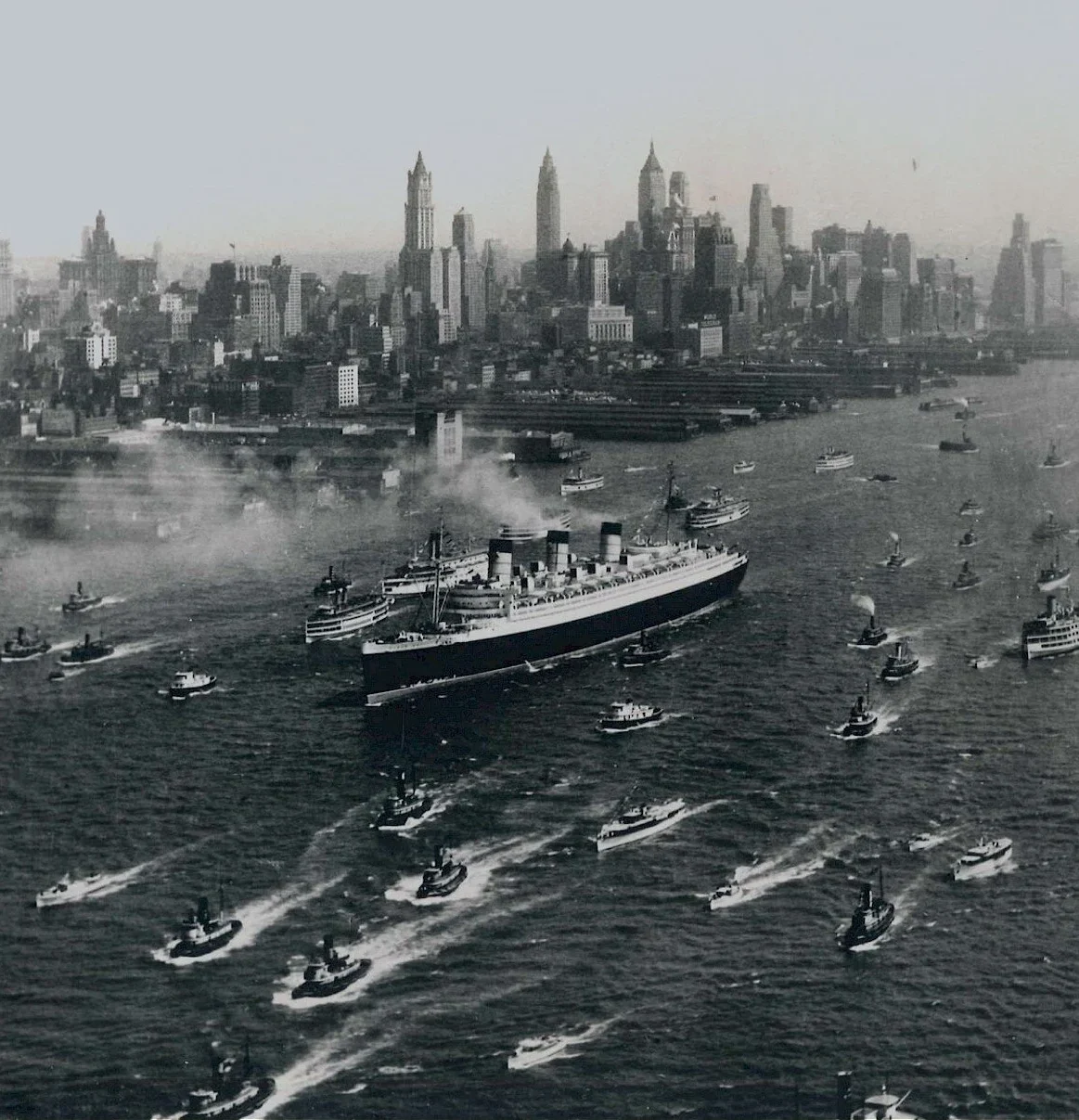
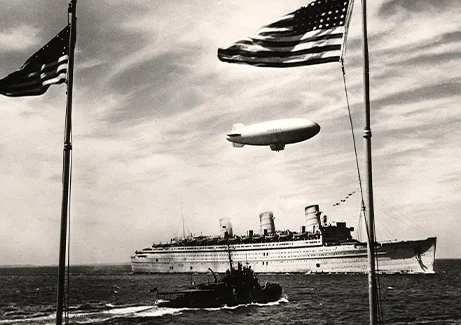
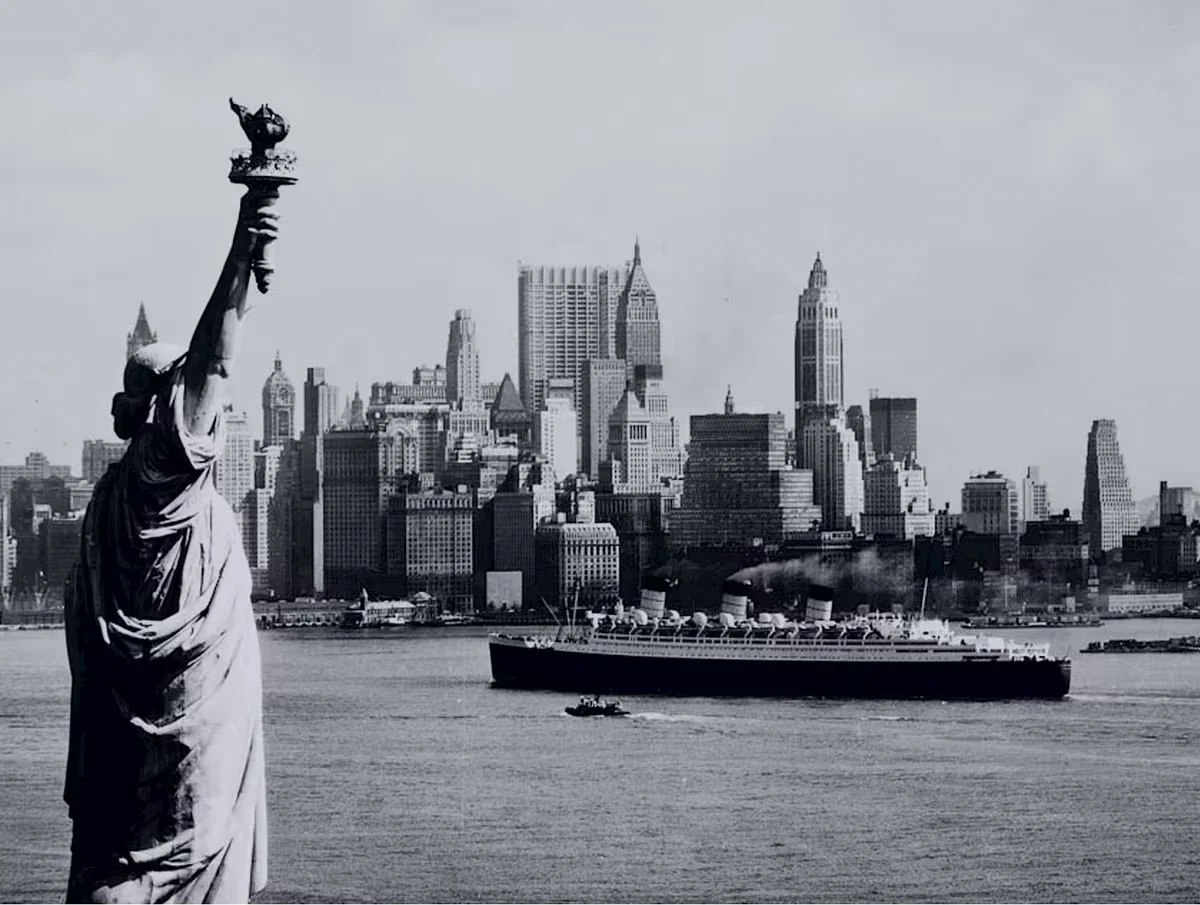
Left: Queen Mary Arriving in New York Harbor, 1936, Middle: Queen Mary and Dirigible, New York Harbor, 1936, Right: Queen Mary Passing the Statue of Liberty, New York Harbor, c. 1936
The commission that produced the Queen Mary grew directly from competitive pressure that Cunard could no longer afford to ignore. Germany had launched the Bremen and the Europa at the end of the 1920s, modern ships that raised what passengers expected from a transatlantic crossing in terms of both speed and visual extravegence. France was developing what would become the SS Normandie, a liner that would eventually define Art Deco design at sea with a coherence and ambition no ship before or since has equaled. Cunard’s response was to commit to not one but two enormous new ships, intended to alternate weekly sailings and together offer a frequency and scale of service that no single rival could replicate. When she was finally completed at a cost of 3.5 million pounds, ten million rivets held her steel superstructure together, and everyone connected with the project understood that what had emerged from those yards was something considerably larger than a competitive response.
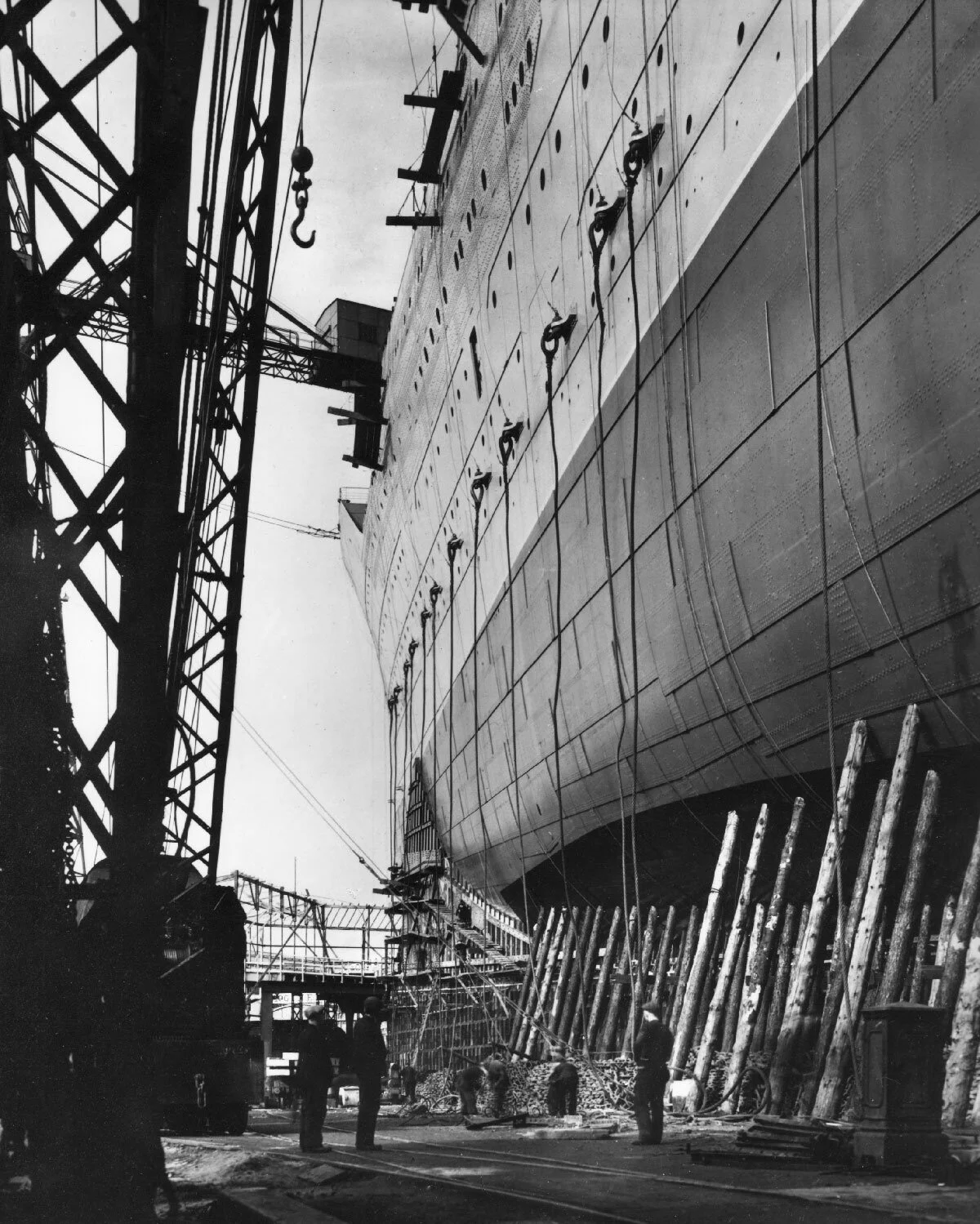
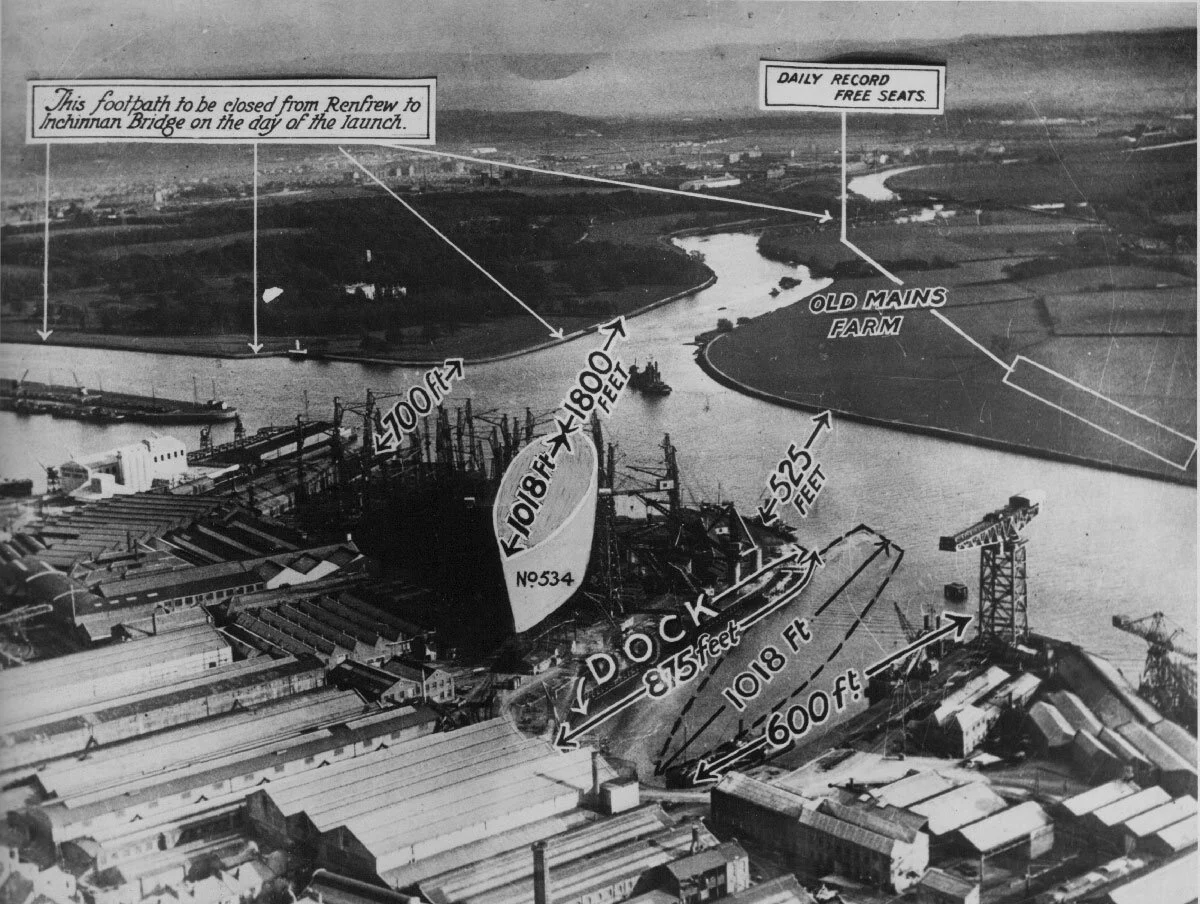

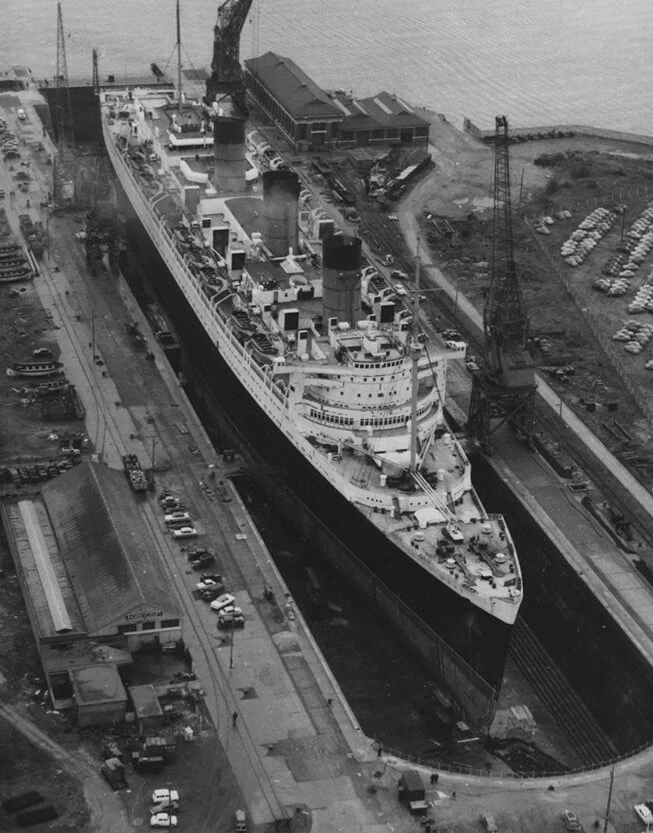
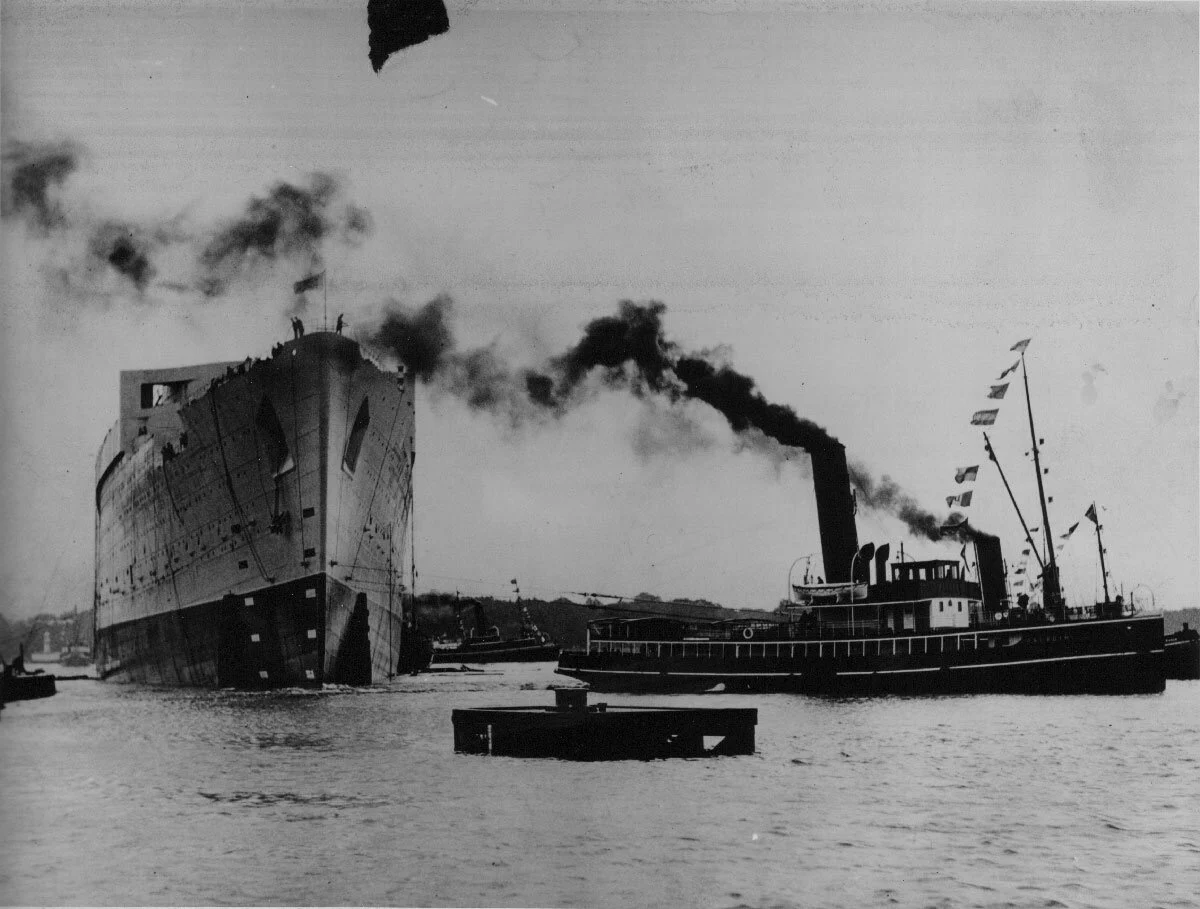

Top: Left: Under Construction, John Brown & Company, Clydebank, 1934, Middle: Aerial Plan of Hull No. 534, Clydebank, 1934, Right: Launch Ceremony, Clydebank, 1934 Bottom: Left: In Dry Dock, Southampton, c. 1936, Middle: At Launch, River Clyde, 1934, Right: Departing the Clyde, 1934
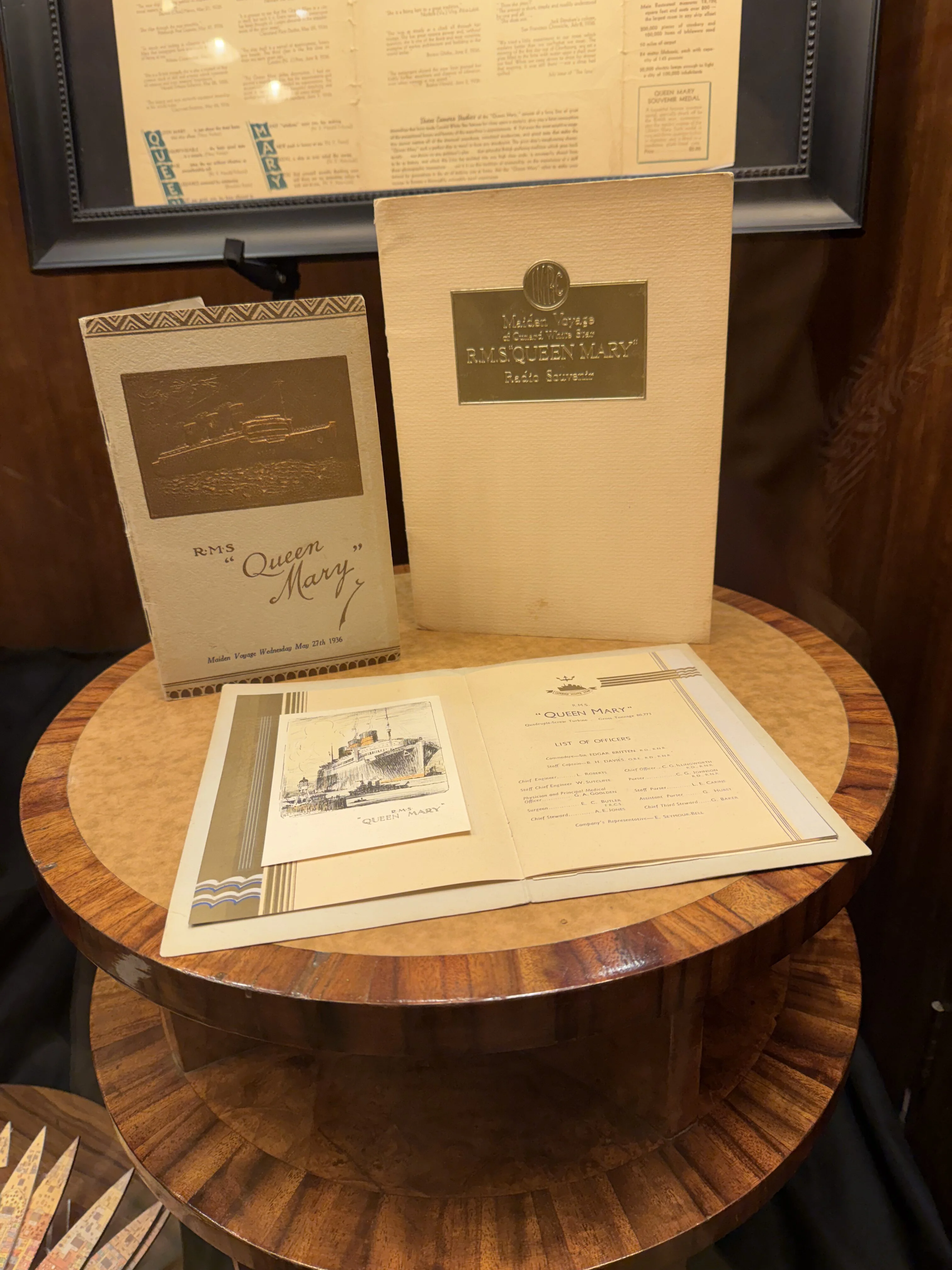
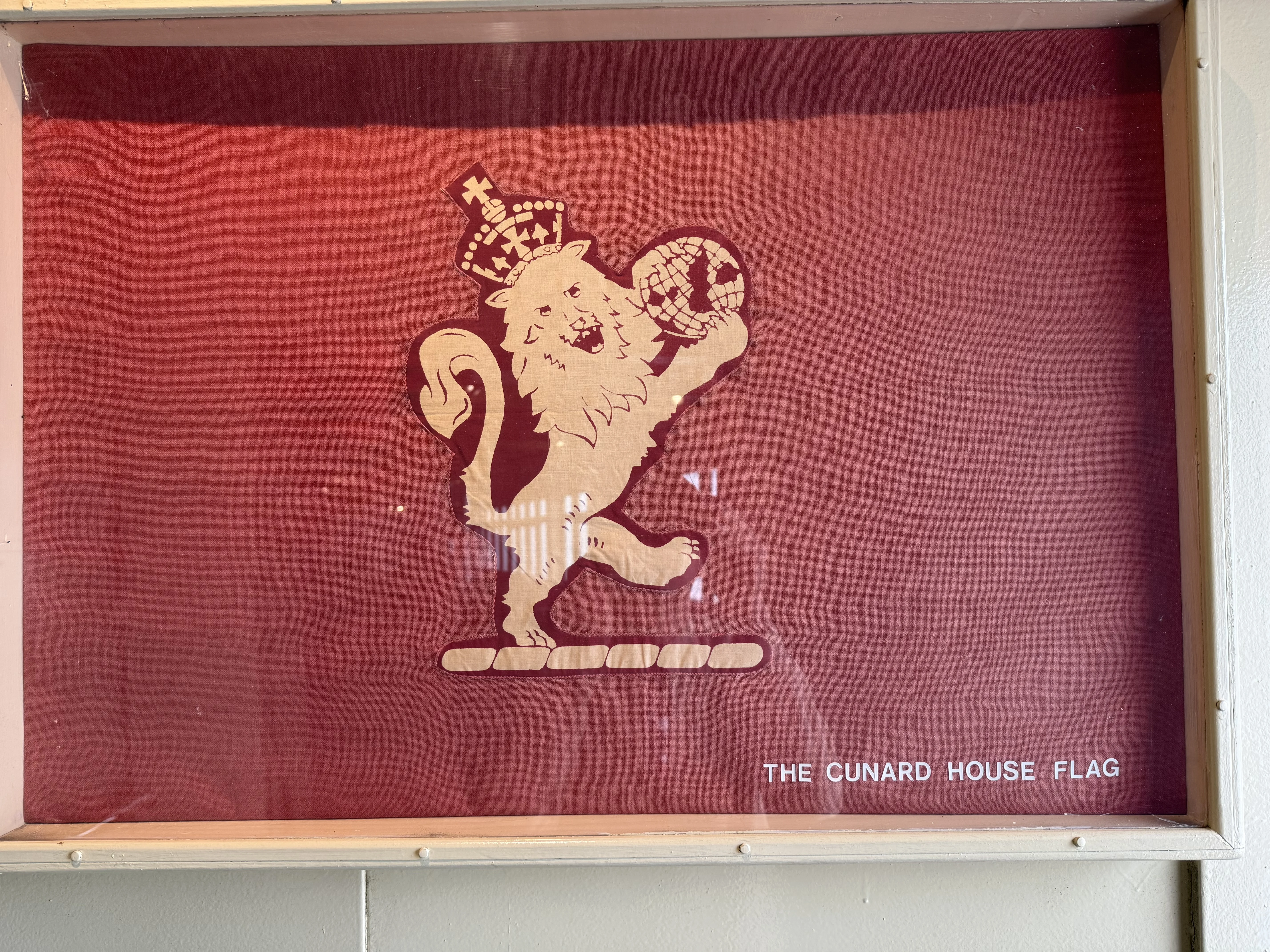
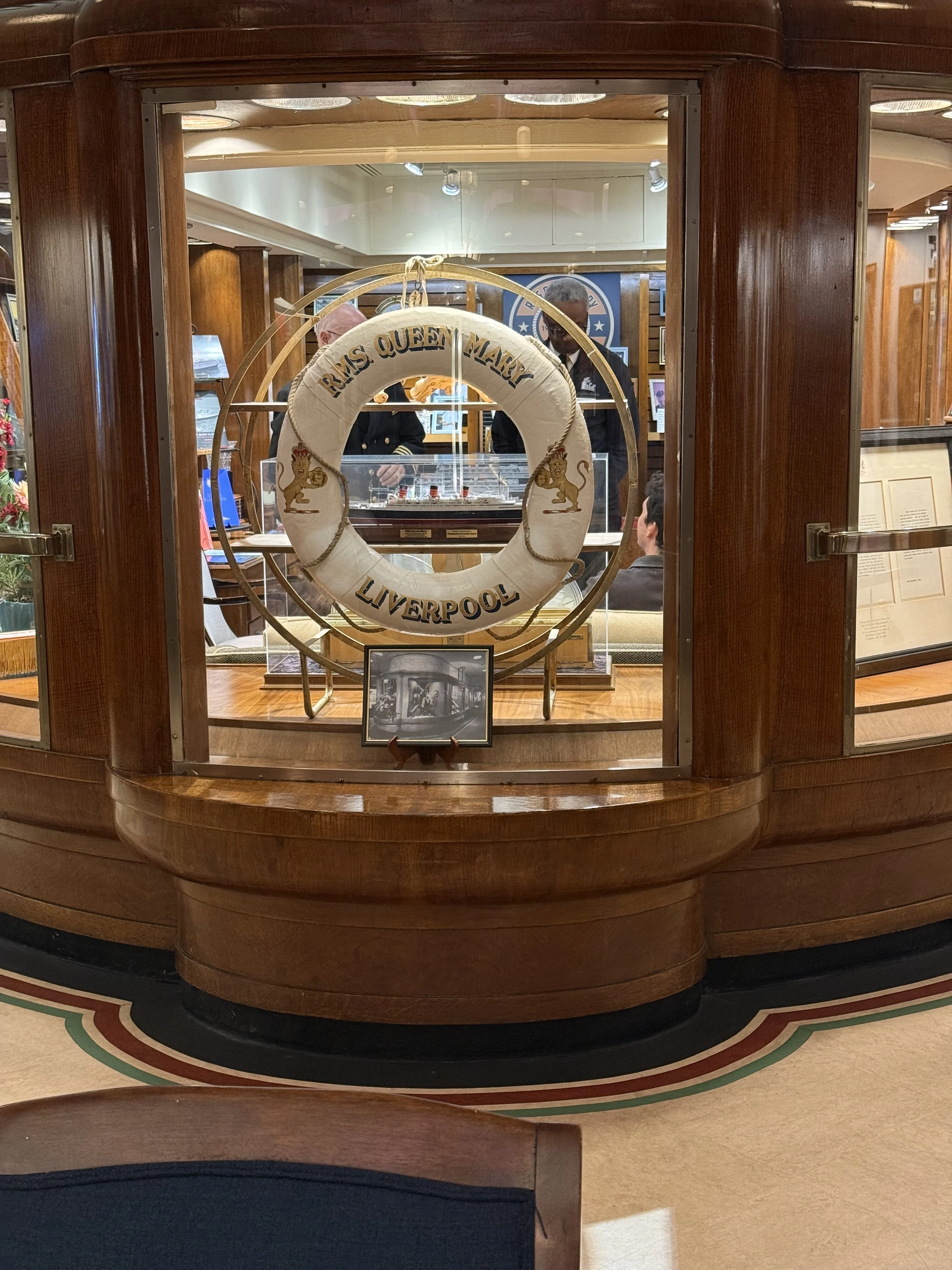

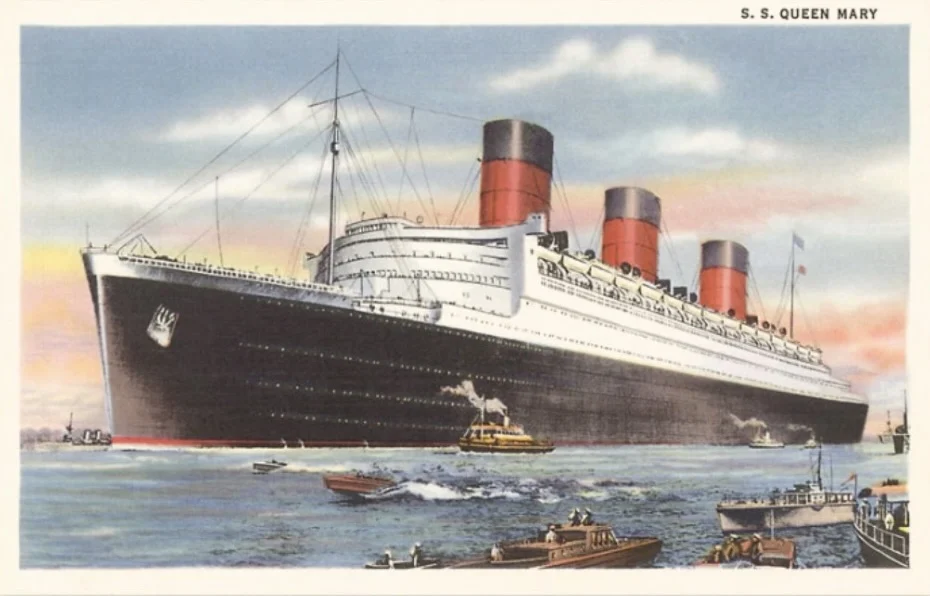

Top: Left: Maiden Voyage Memorabilia, 1936, Middle: Life Ring Display, Long Beach, Right: Cunard House Flag, Long Beach Bottom: Left: Queen Mary, Pencil Drawing, 2016, Middle: Queen Mary, Postcard Illustration, c. 1936, Right: Cunard U.S.A., Travel Poster, c. 1936
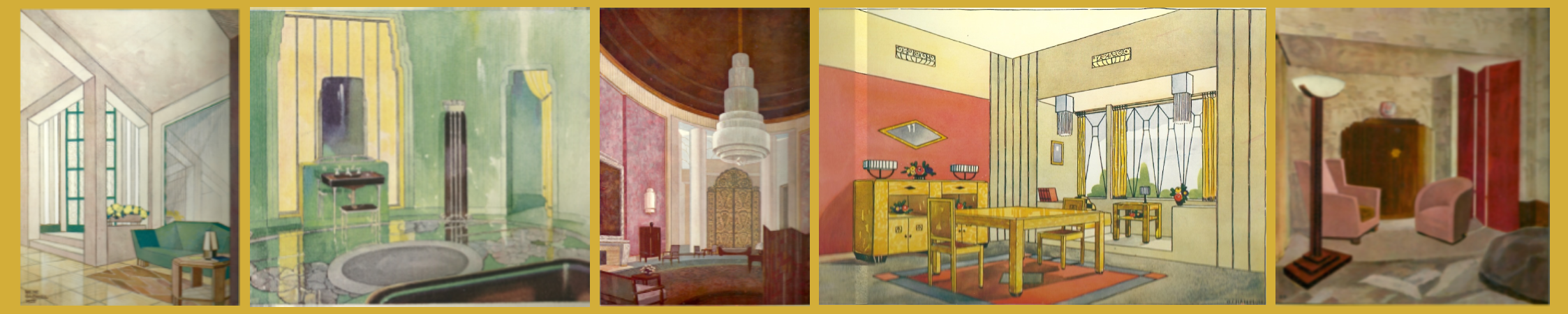
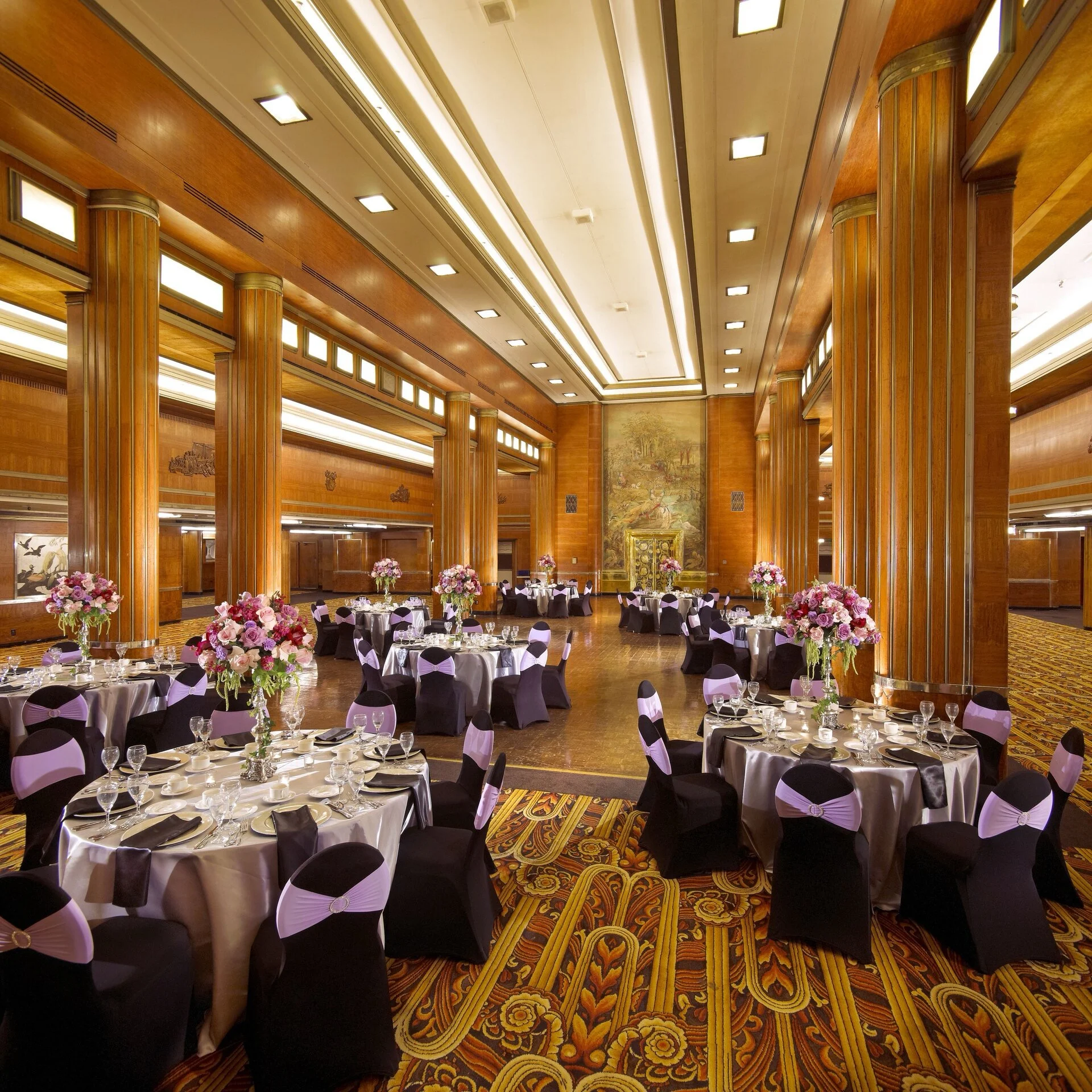
The interior design program of the Queen Mary drew from Art Deco’s central convictions. Where the Normandie pursued a theatrical unity of decorative effect, orchestrated by some of the most adventurous designers France had produced, the Queen Mary took a different approach: one grounded in material richness, considered proportion, and the belief that a room should feel as good to live in as it looks to enter. The architects Arthur Joseph Davis and Benjamin Wistar Morris led the design effort, assembling a program that made extensive use of Art Deco’s full vocabulary of geometric form, controlled material contrast, and integrated ornament, without ever allowing decoration to overwhelm the architecture beneath it. More than fifty species of wood from across the British Empire were used throughout the ship’s public rooms and staterooms, each selected for its grain, its color, and its regional character, with more than a thousand tons of Burmese teak used for the decks alone. Alongside the richly grained timbers, the design program incorporated state-of-the-art materials, including bakelite plastics and linoleum tiling set on a cork base, which nearly eliminated the sound of footsteps and gave the corridors and public rooms an unusual quality of quiet. The effect was one of gathered richness, a ship that felt truly designed rather than furnished, where every surface had been considered in relation to every other and nothing placed without purpose. Passengers who crossed on both the Normandie and the Queen Mary often noted that the two ships offered different versions of luxury, and that the Queen Mary’s version felt more livable, more sustained, and in some ways more honest about what a great interior actually required.
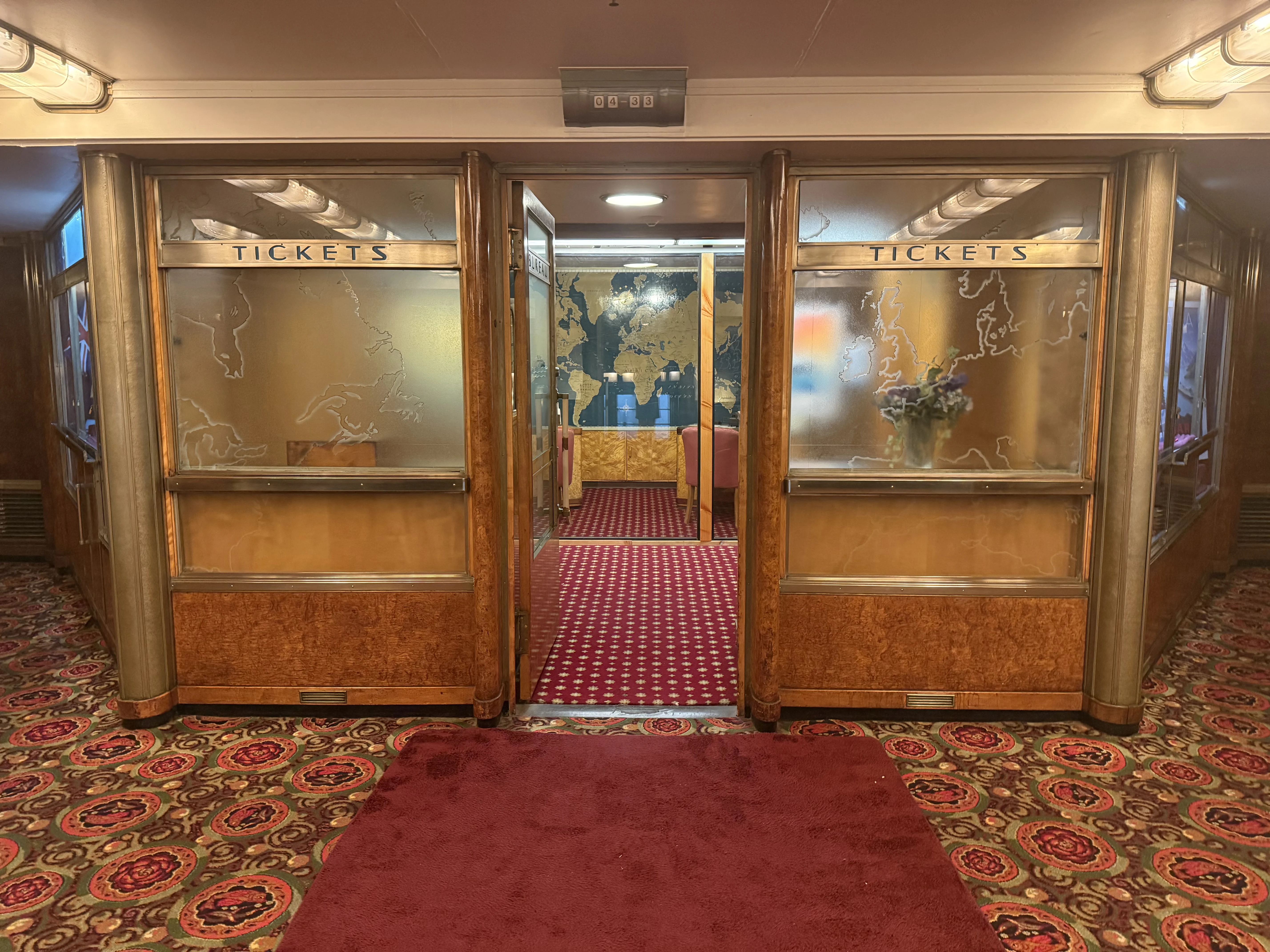
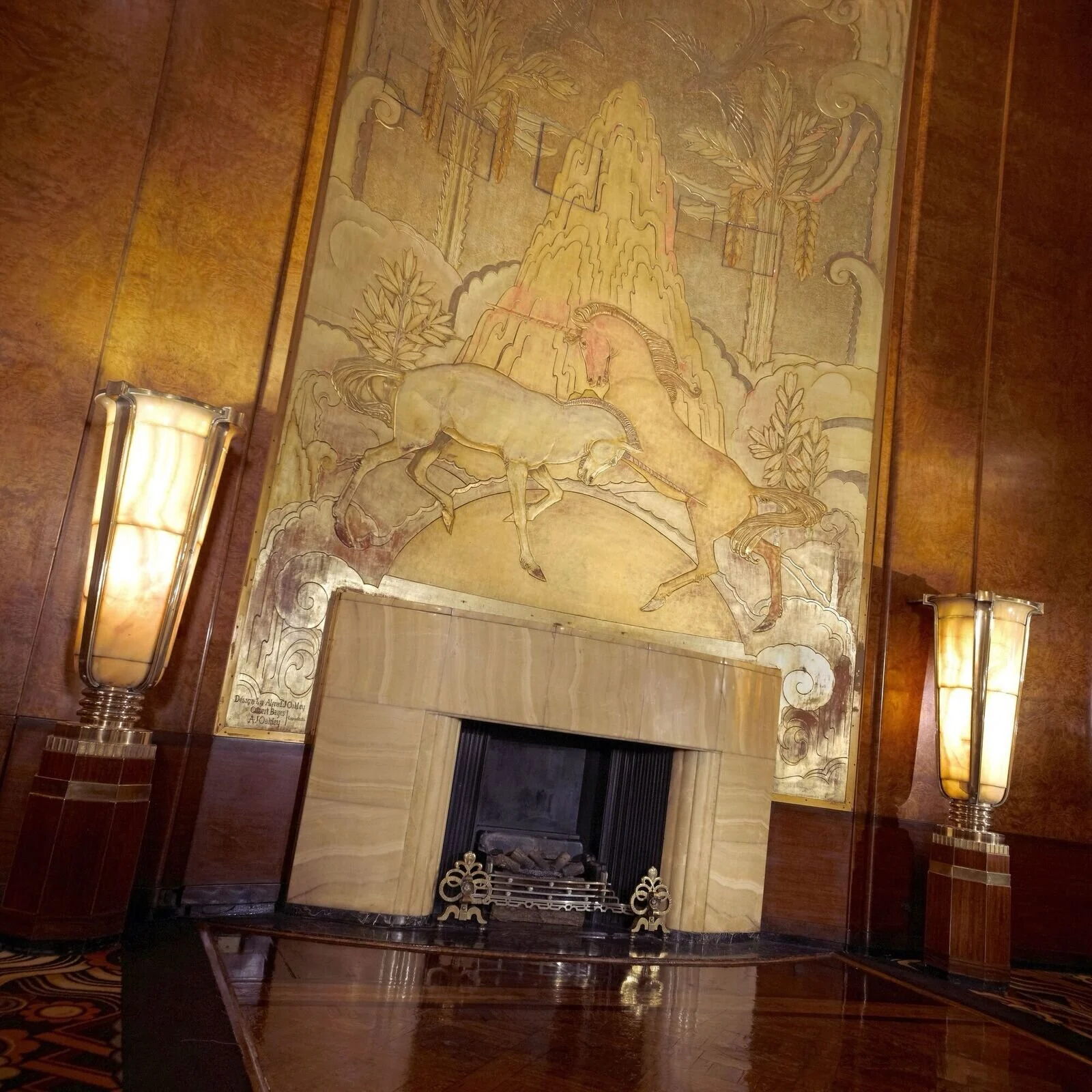

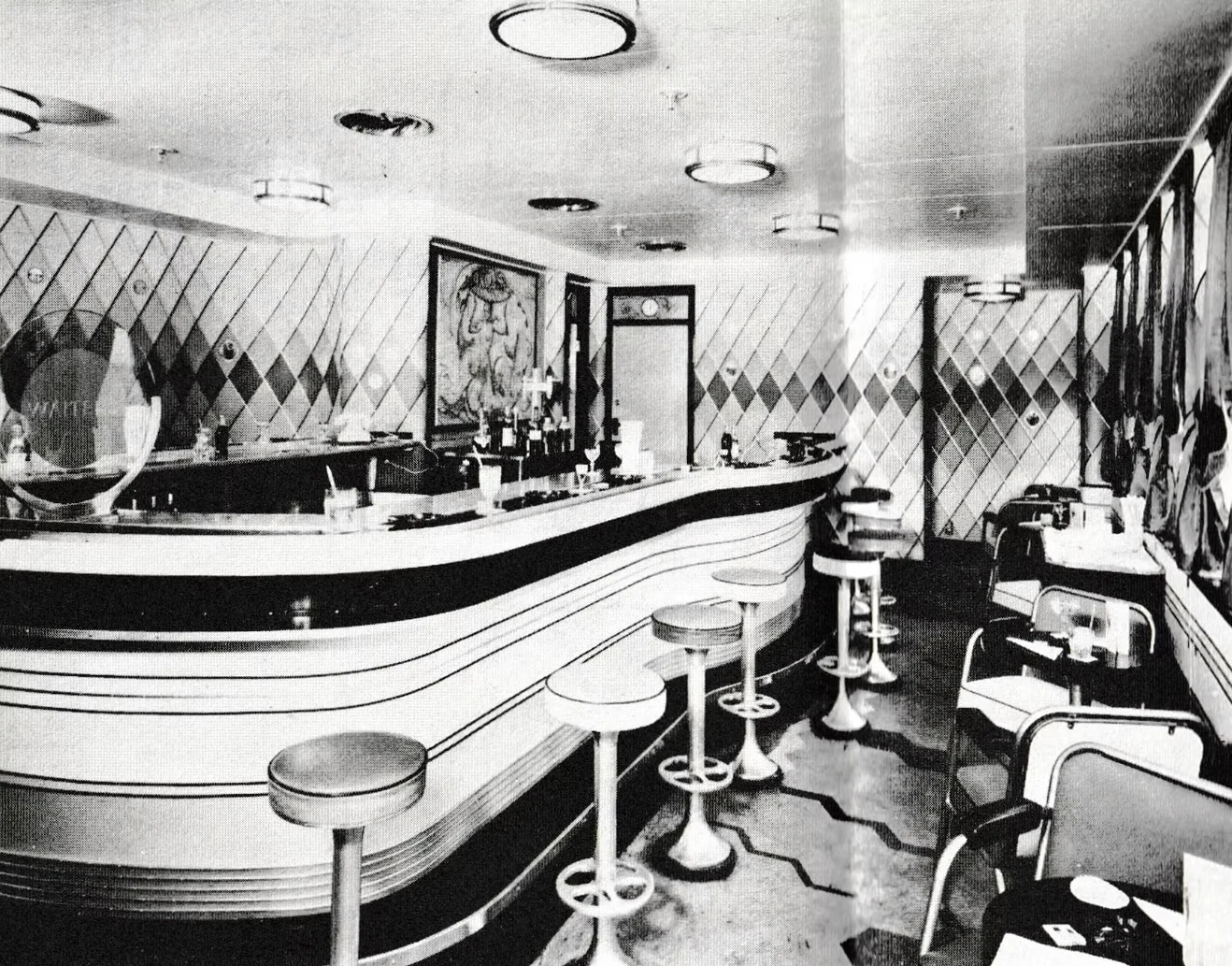
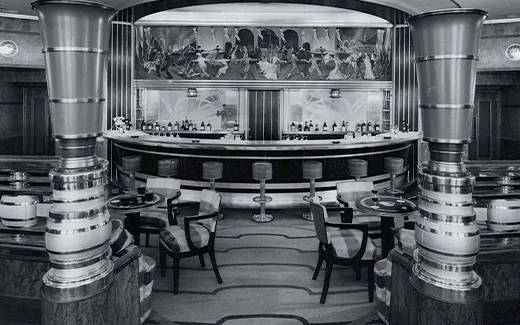
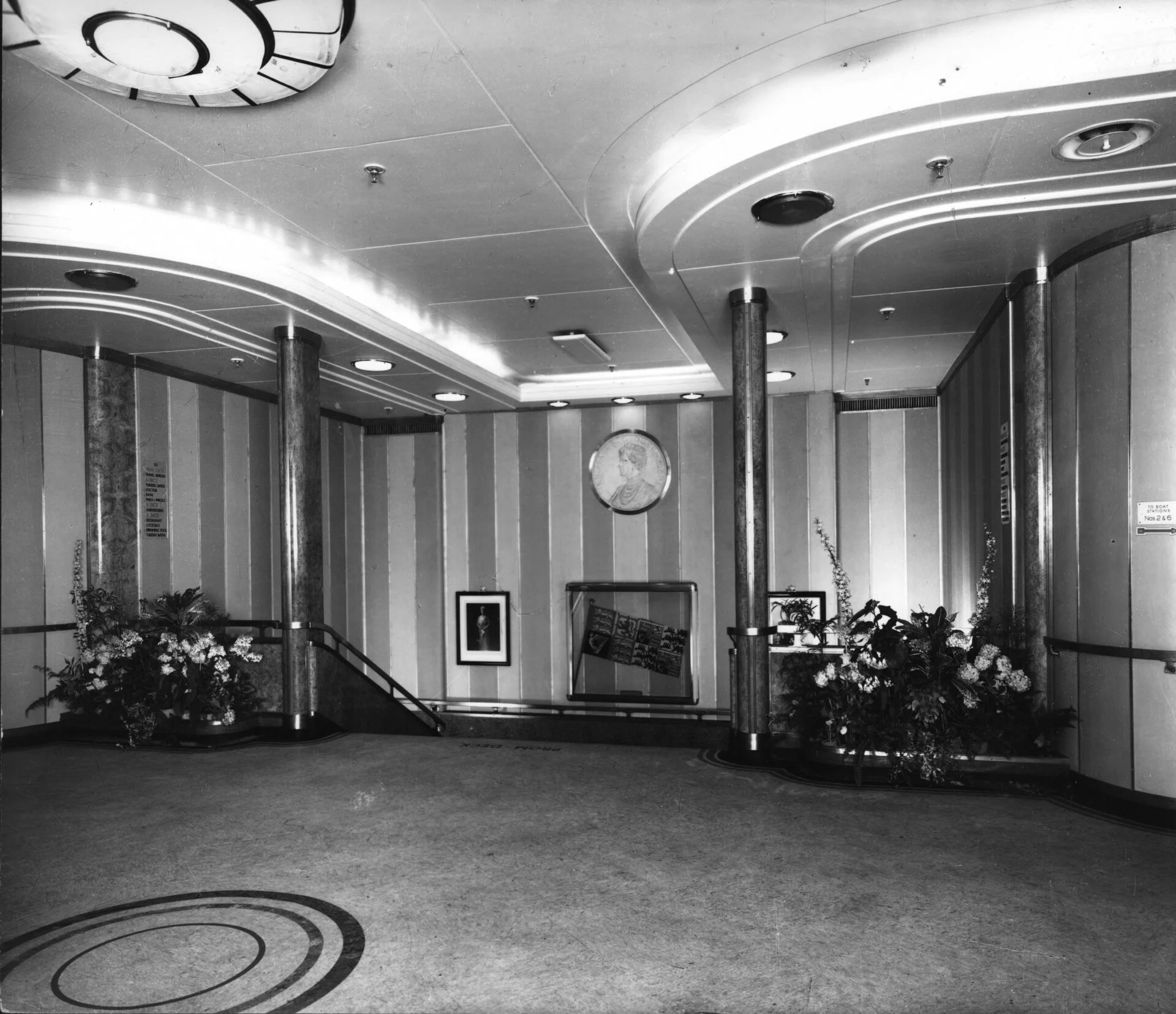
Top: Left: Ticket Office, Long Beach, Middle: First Class Lounge Fireplace, Alfred J. Oakley and Gilbert Bayes, 1936, Right: Observation Bar, Long Beach Bottom: Left: The Mermaid Bar, 1936, Middle: Cocktail Bar, 1936, Right: First Class Foyer, 1936
Individual rooms aboard the Queen Mary demonstrated the range of what the period’s design thinking could produce, given the resources to follow through. The Observation Bar, positioned at the ship’s forward end with a semicircular form and panels of Macassar ebony, used its wide windows not simply to admit light but to borrow the ocean as a compositional element, making the horizon a permanent feature of the room’s visual field regardless of where passengers were seated. The Verandah Grill, painted and decorated by Doris Zinkeisen, occupied a more intimate register and achieved something rarer than spectacle: an interior that felt personal rather than monumental. Cecil Beaton, who had encountered a great deal of fine interiors on both sides of the Atlantic, described it as the prettiest room on any ship, a judgment that in that era carried real weight. The Grand Salon dining room spanned three full stories in height, and a large illuminated map of the Atlantic route displayed a small motorized model of the ship that tracked the crossing’s daily progress for passengers watching from their tables. Throughout the vessel, lighting was handled with the layered approach that distinguished the finest Art Deco interiors from the merely decorative, using concealed fittings, architectural glass, and porthole arrangements that shifted in quality across the arc of a day at sea.
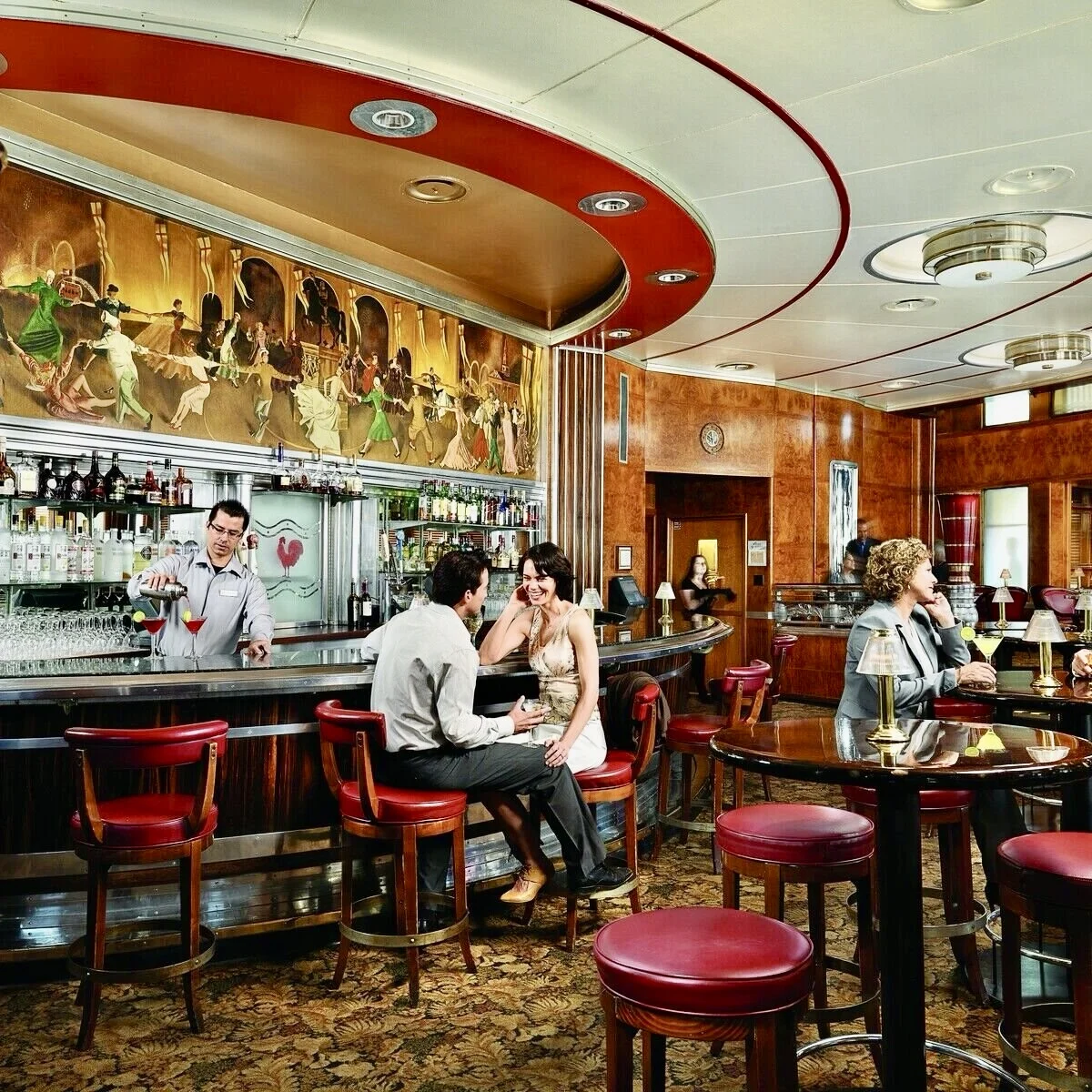
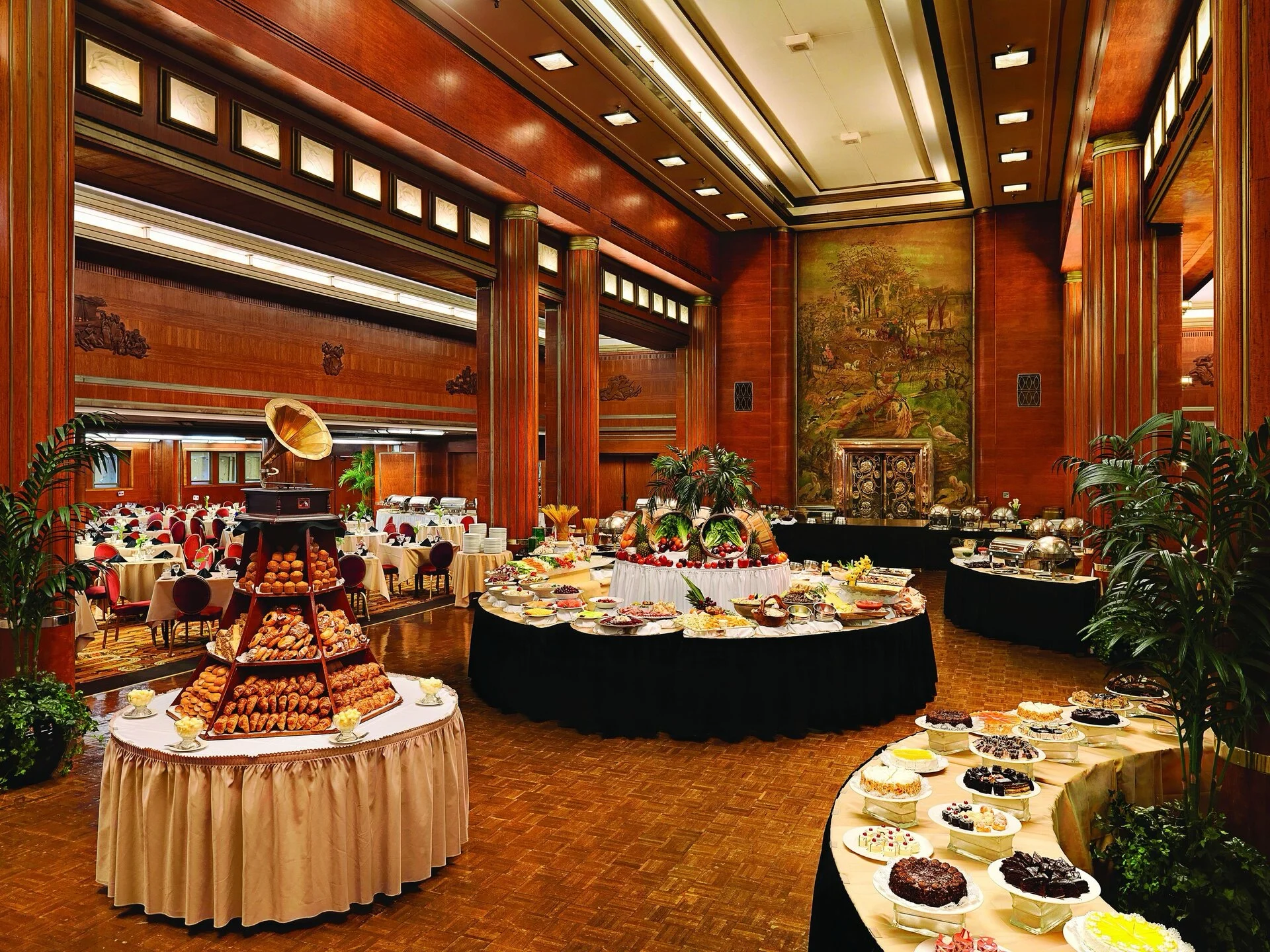
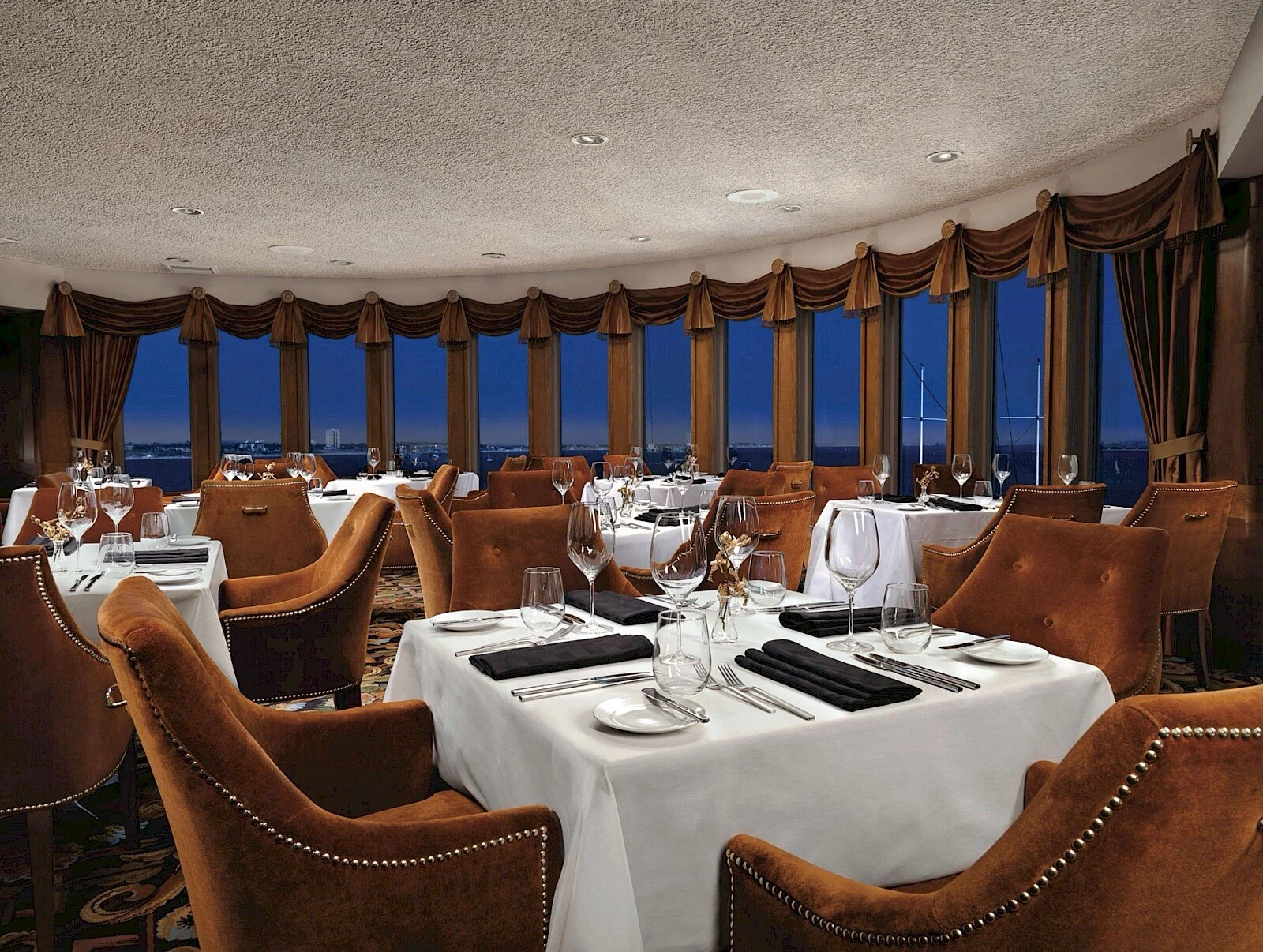
Left: Observation Bar, Long Beach, Middle: Grand Salon, Long Beach, Right: Sir Winston’s Restaurant, Long Beach
The Queen Mary was also, by any measure, one of the fastest ships of her era. In August 1936, only months after her maiden voyage, she captured the Blue Riband for the fastest average Atlantic crossing, a distinction that carried genuine cultural weight at a time when speed was the most visible proof of what modern engineering could accomplish. The competition that developed with the Normandie for that record became one of the defining technological and sporting rivalries of the decade, generating press attention on both sides of the ocean and drawing public interest to both ships in ways no advertising campaign could have manufactured. The Blue Riband Trophy, the physical prize awarded for the fastest Atlantic crossing, is pictured in our SS Normandie journal.
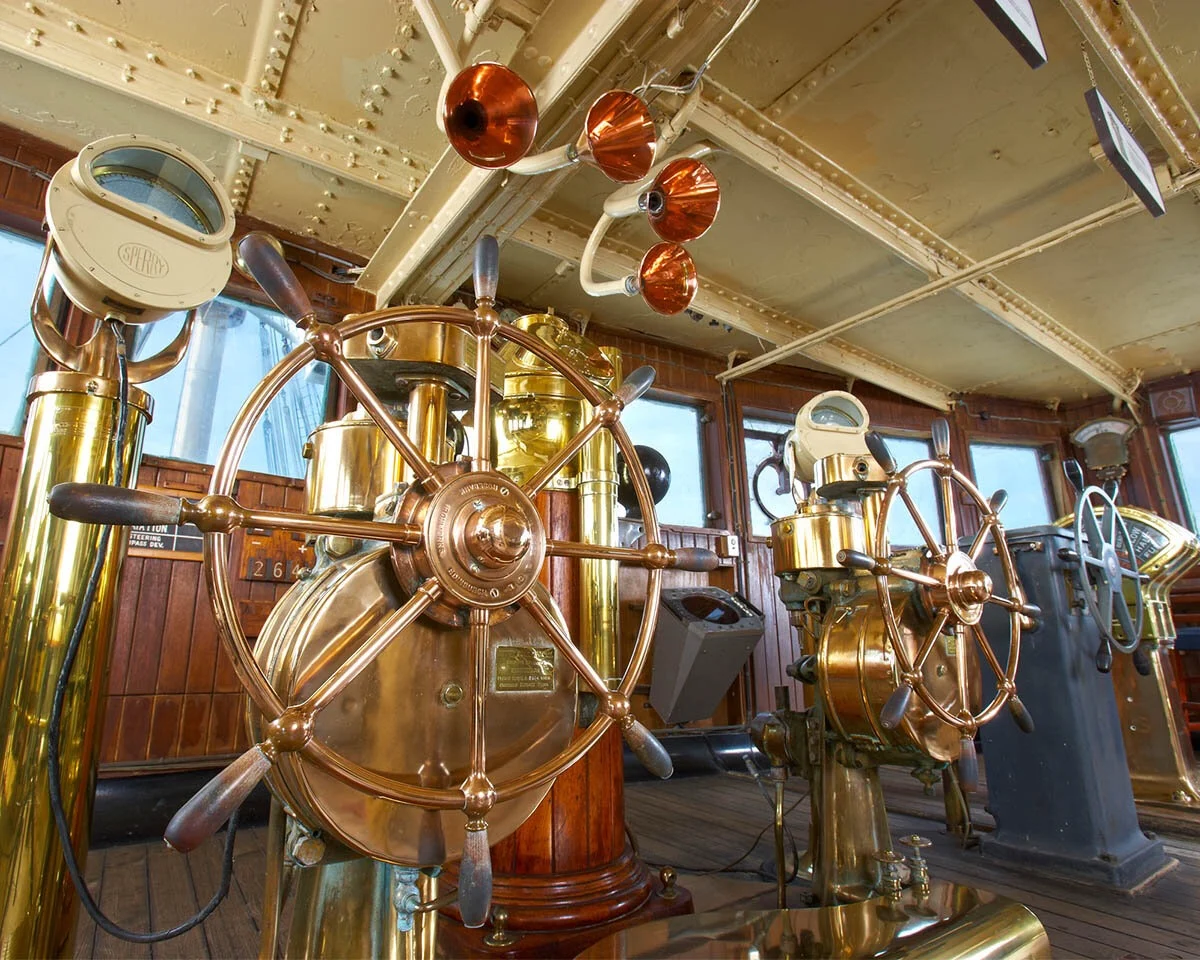
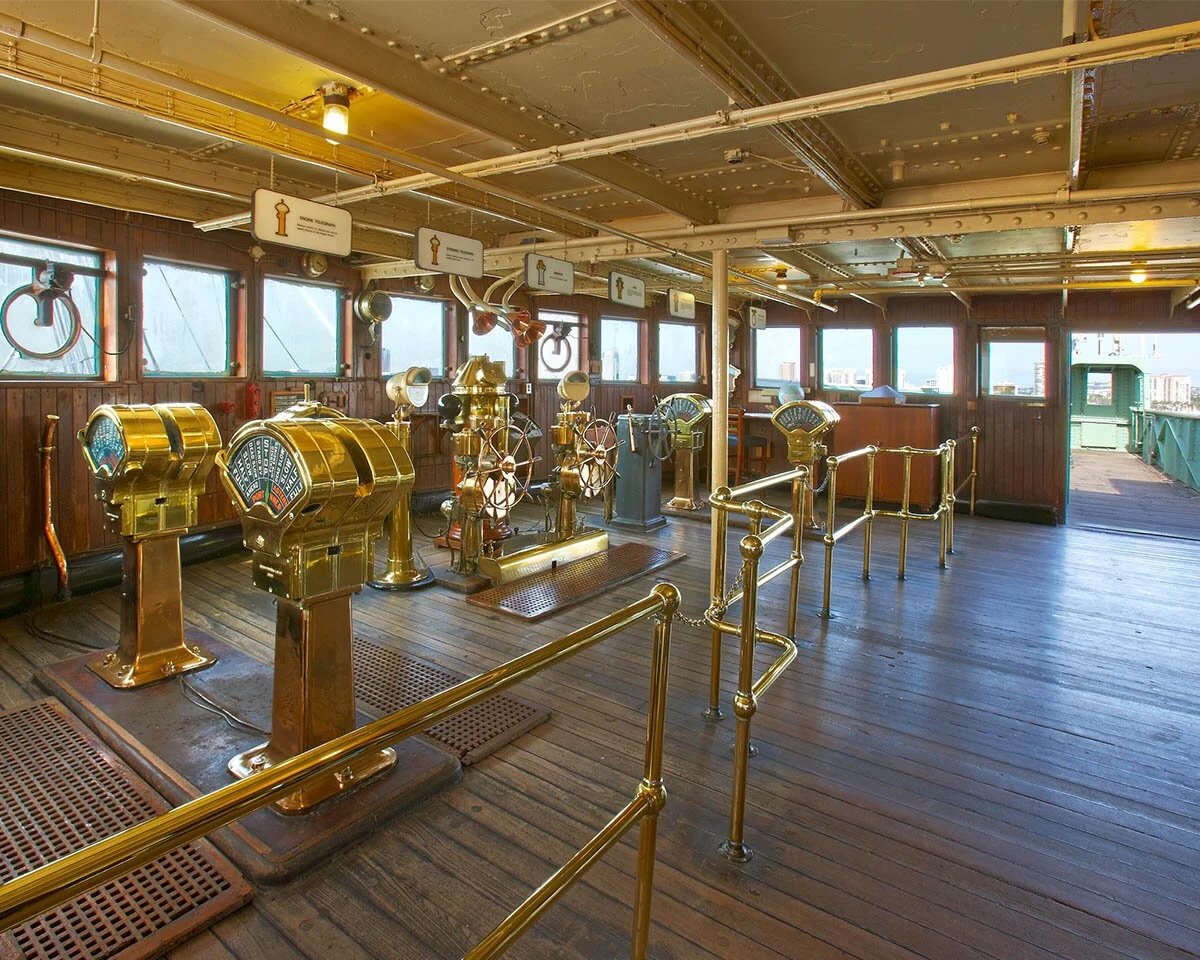
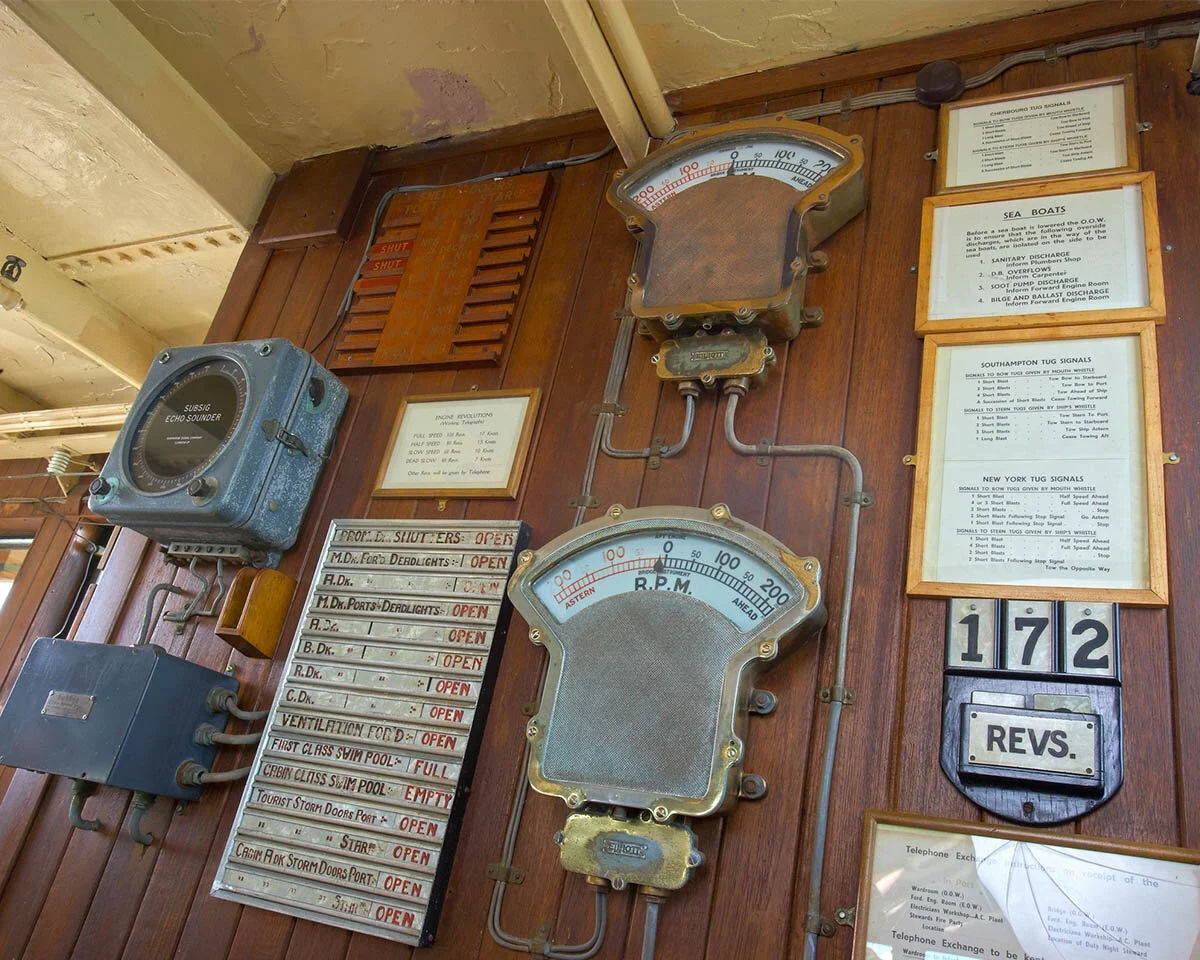
Left: Wheelhouse Detail, Long Beach, Middle: Wheelhouse, Long Beach, Right: Bridge Instrument Panel, Long Beach
From her first voyages, the Queen Mary attracted passengers who understood that the crossing itself was part of the occasion. The roster of those who sailed reads as an index of the twentieth century’s most recognizable figures: Audrey Hepburn, Clark Gable, Fred Astaire, Judy Garland, Marlene Dietrich, Greta Garbo, Bing Crosby, Gary Cooper, Buster Keaton, Mary Pickford, Douglas Fairbanks Jr., and Walt Disney were among the performers who crossed aboard her.
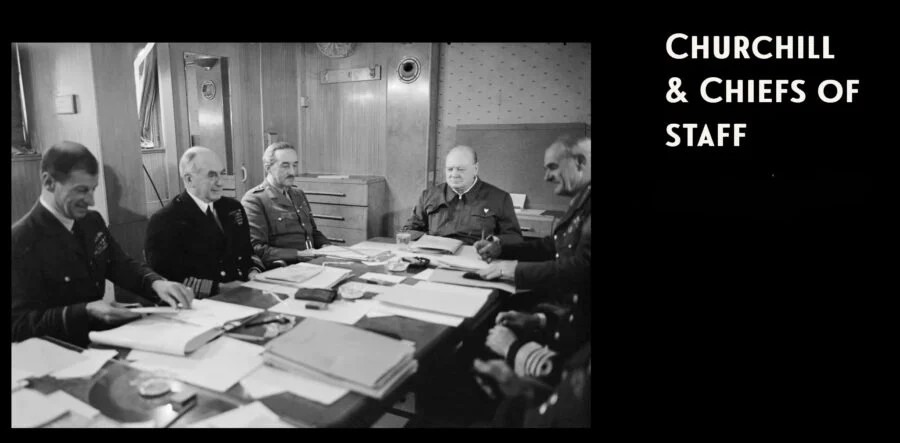
Winston Churchill sailed three times and used at least one crossing to work through planning for the WWII Normandy invasion with his staff.
Dwight D. Eisenhower and John F. Kennedy both traveled aboard the ship, as did Queen Elizabeth II, the Duke and Duchess of Windsor, and Jacqueline Kennedy Onassis. The Verandah Grill converted each evening into the Starlight Club, an intimate venue for dancing and late entertainment that became one of the most coveted social spaces on the entire Atlantic route. For this world of performers, statesmen, and people accustomed to having things done at the highest level, the Queen Mary was not simply the most prestigious way to get from Southampton to New York. The crossing itself functioned as a kind of social interval, five days between two worlds where the usual structures of public life were suspended, and the ship’s first-class accommodations were well-suited to those who knew how to use that time.
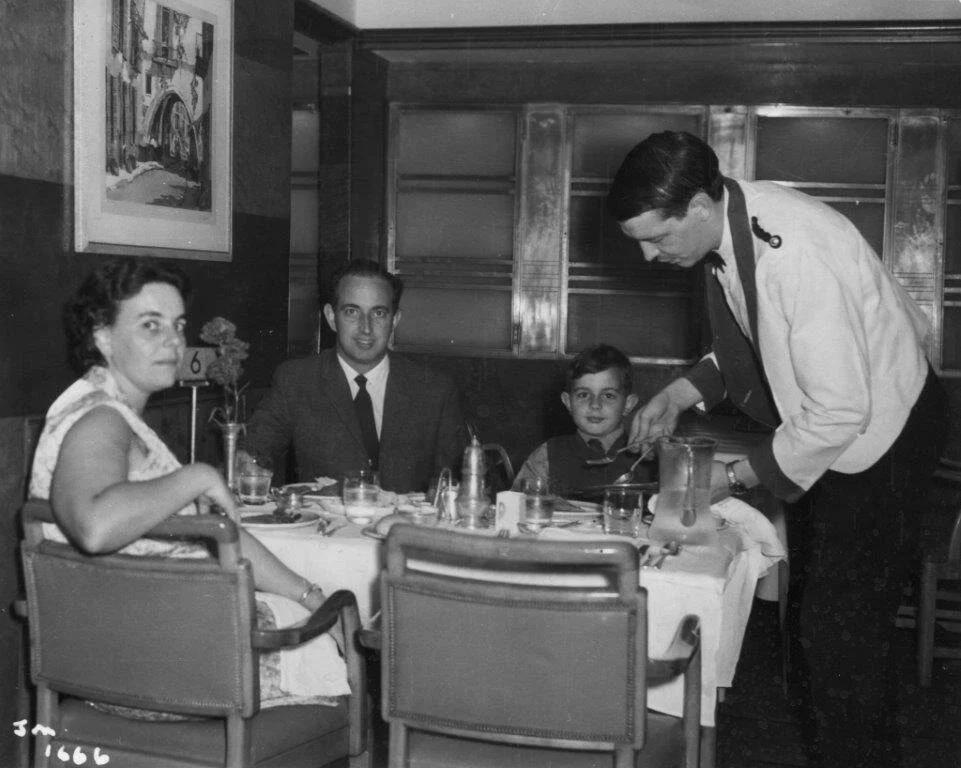
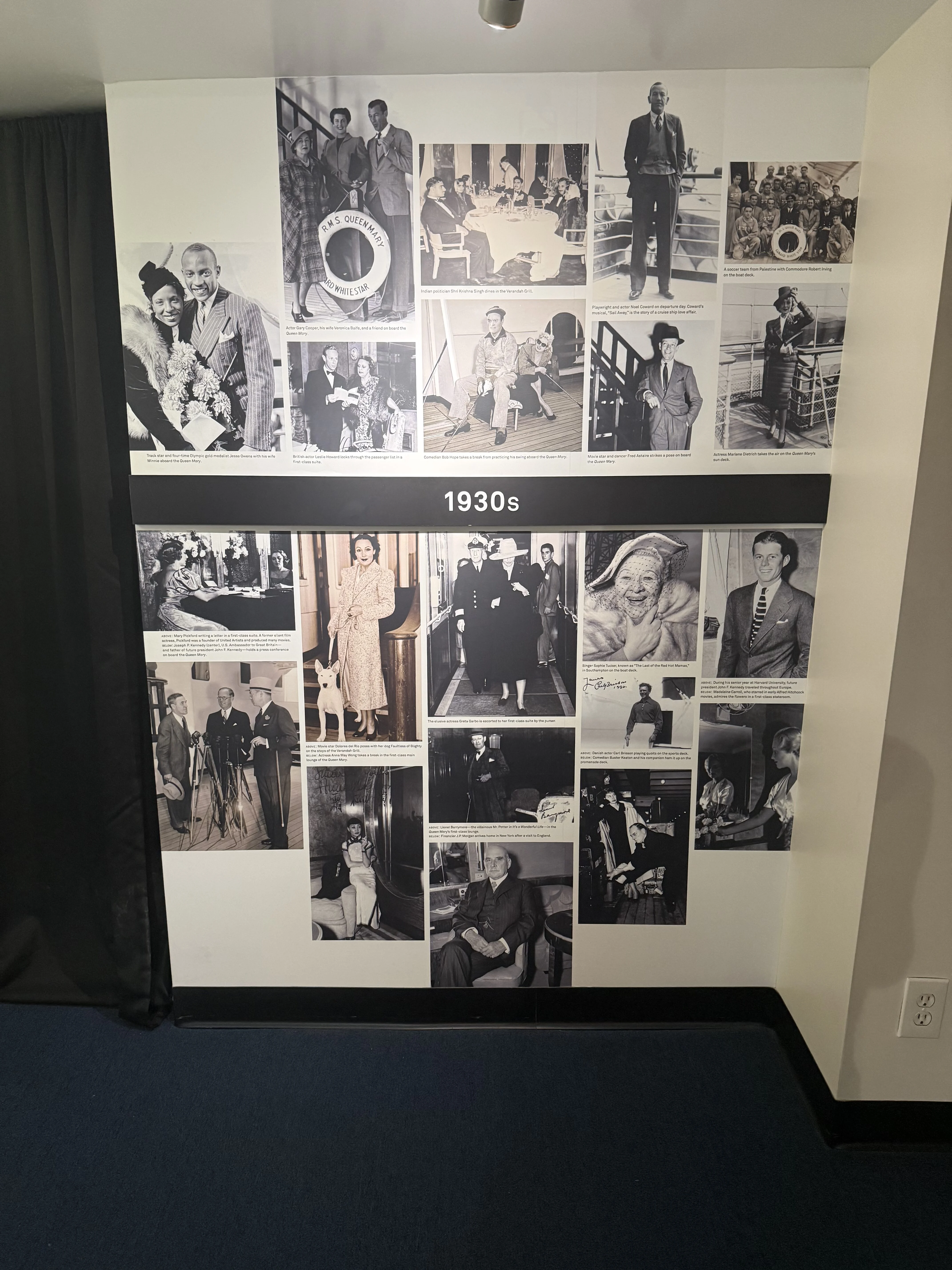
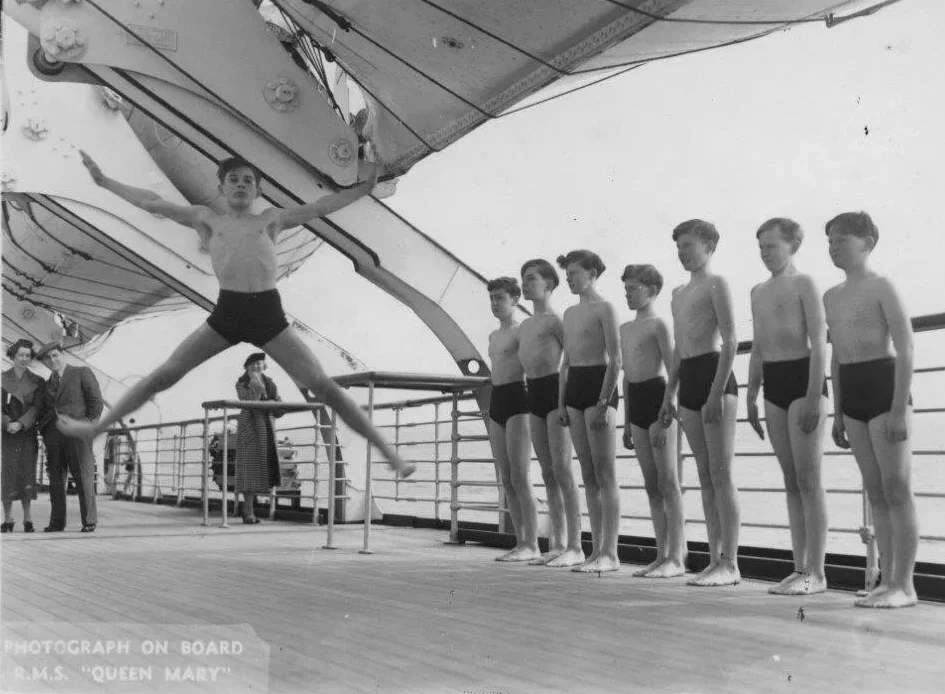
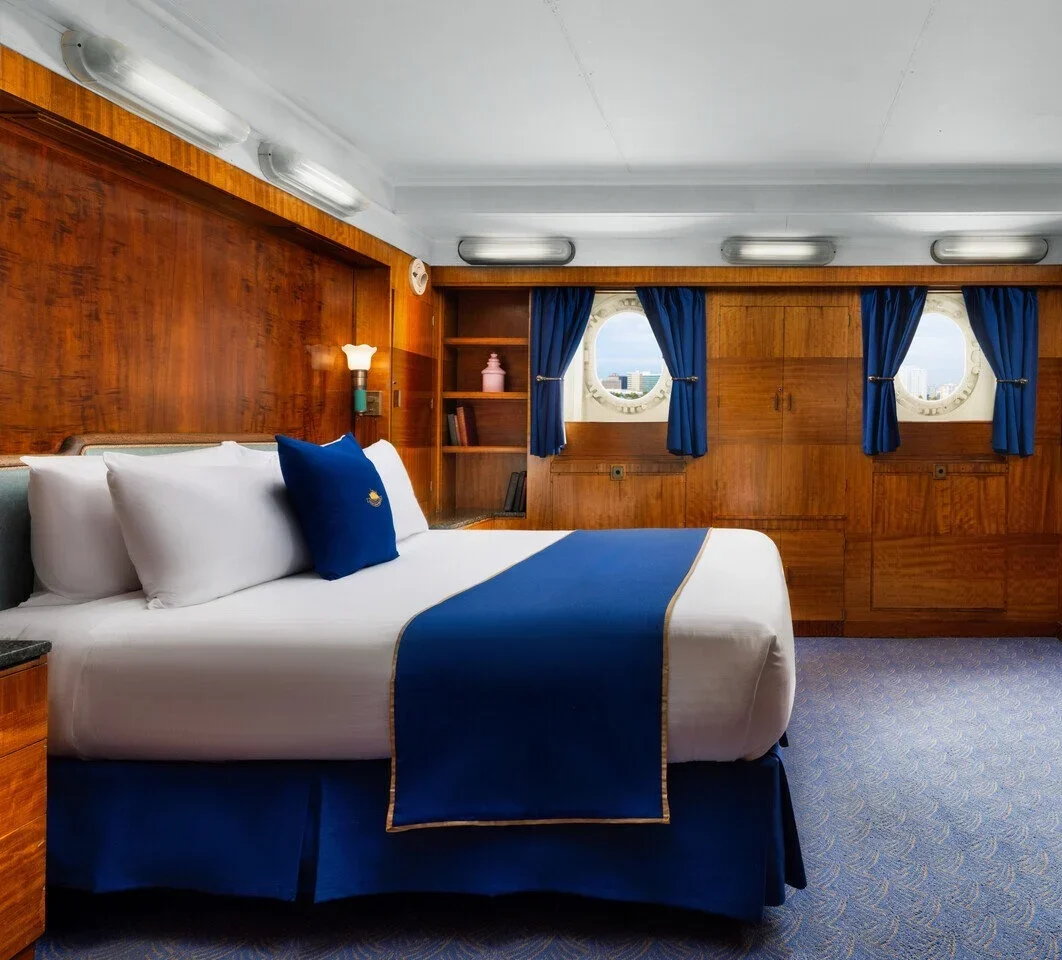
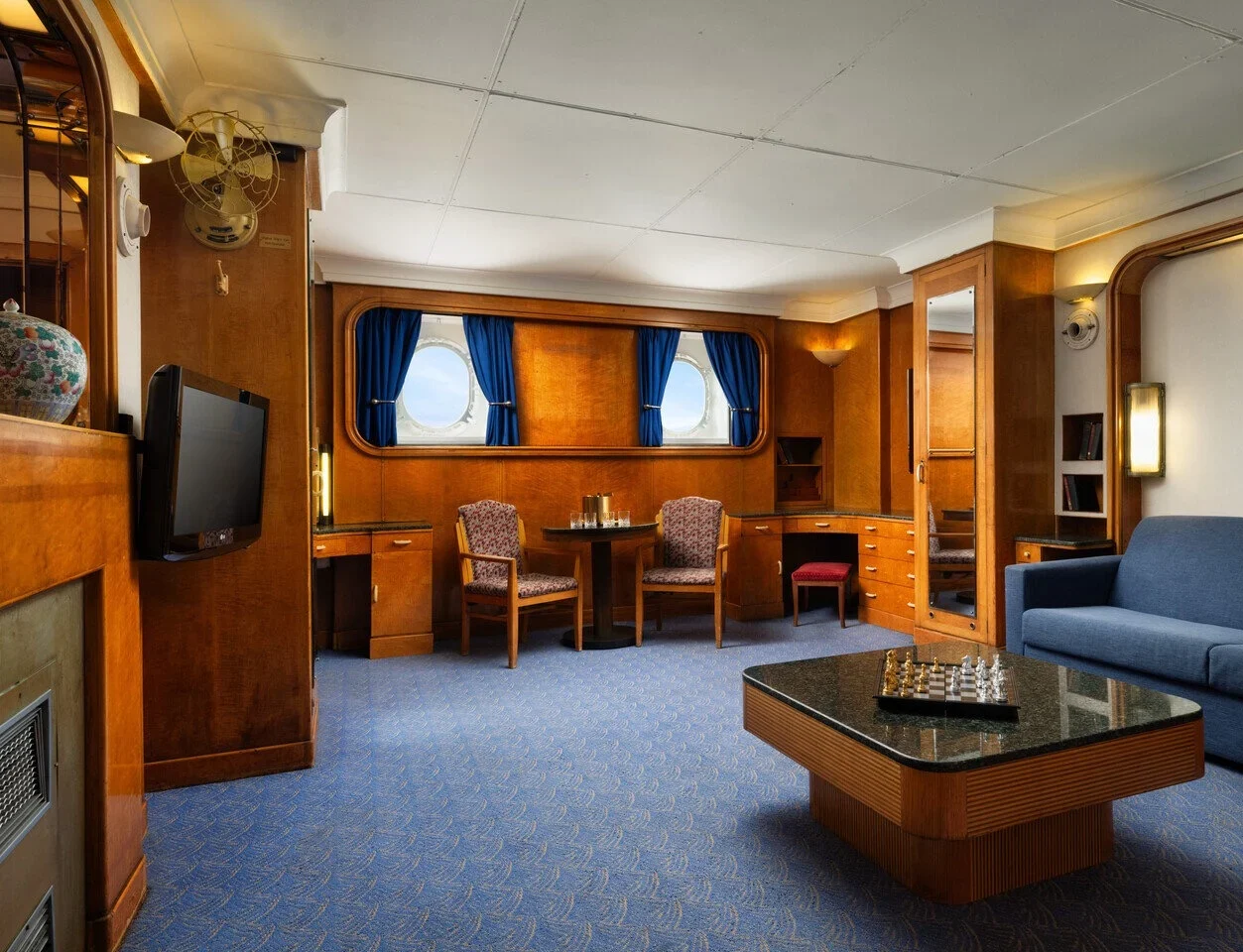

Top: Left: Tourist Class Dining Room, c. 1950, Middle: Famous Passengers Display, Long Beach, Right: Children on Sun Deck, c. 1936 Bottom: Left: First Class Stateroom, Long Beach, Middle: First Class Cabin, Long Beach, Right: Cunard Uniform Display, Long Beach
The outbreak of the Second World War transformed the Queen Mary. Her furnishings were removed to warehouses, six miles of carpet rolled up, 220 cases of china and silver set aside, and the rich wood paneling covered in leather. Stateroom beds were replaced by triple-tiered wooden bunks, the hull and superstructure repainted a flat naval grey, and the combination of her speed and her new coloring earned her the name that followed her through the war years: the Grey Ghost. Hitler recognized the threat directly enough to offer a prize of one million Reichsmarks and Germany’s highest military honor to any U-boat commander who could sink either Queen, a measure of how seriously the two ships were regarded by the enemy. By the armistice, she had carried more than 810,000 troops and traveled over 600,000 miles, a contribution significant enough that Churchill later stated the Queens had helped bring the day of final victory materially forward, a remarkable thing for a man not given to loose praise.
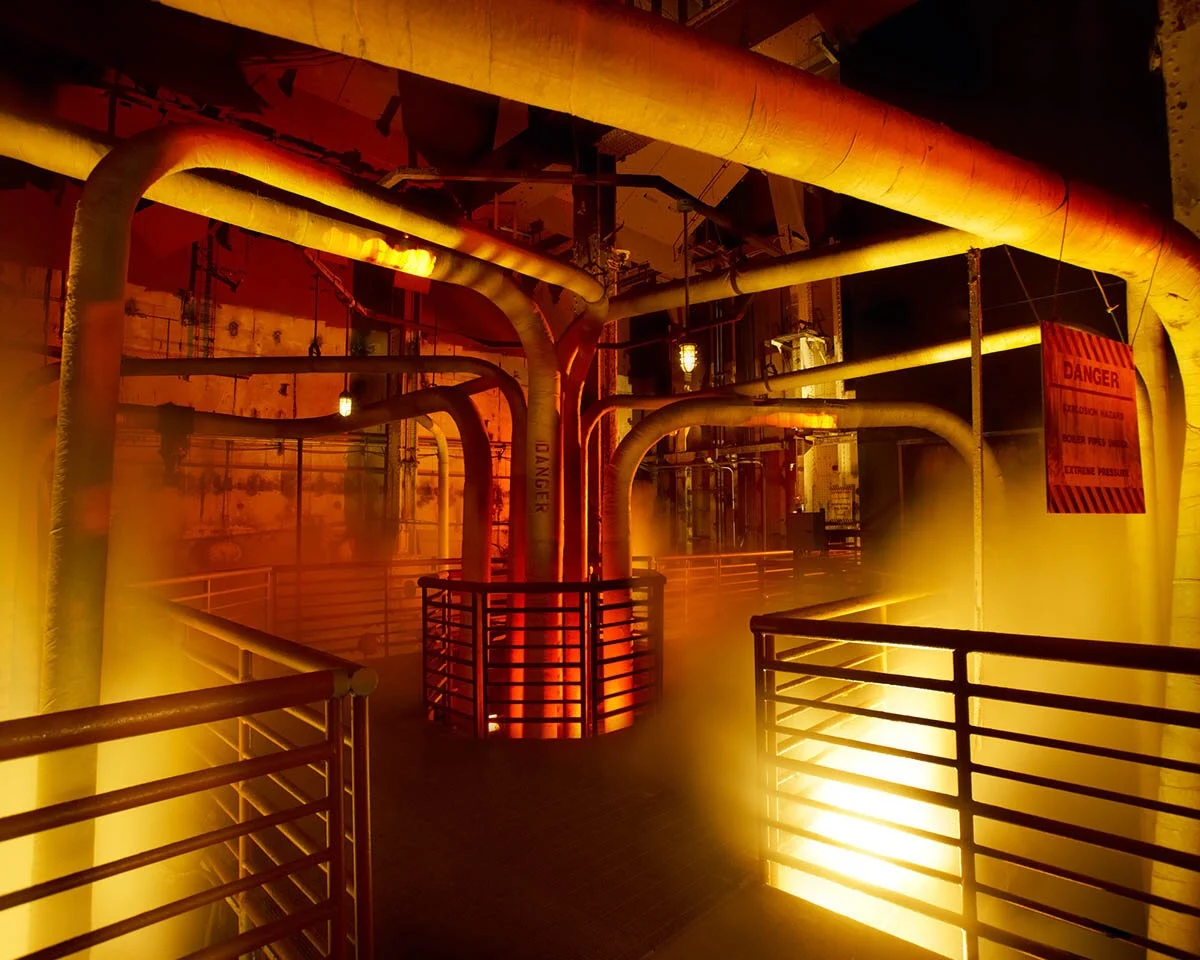

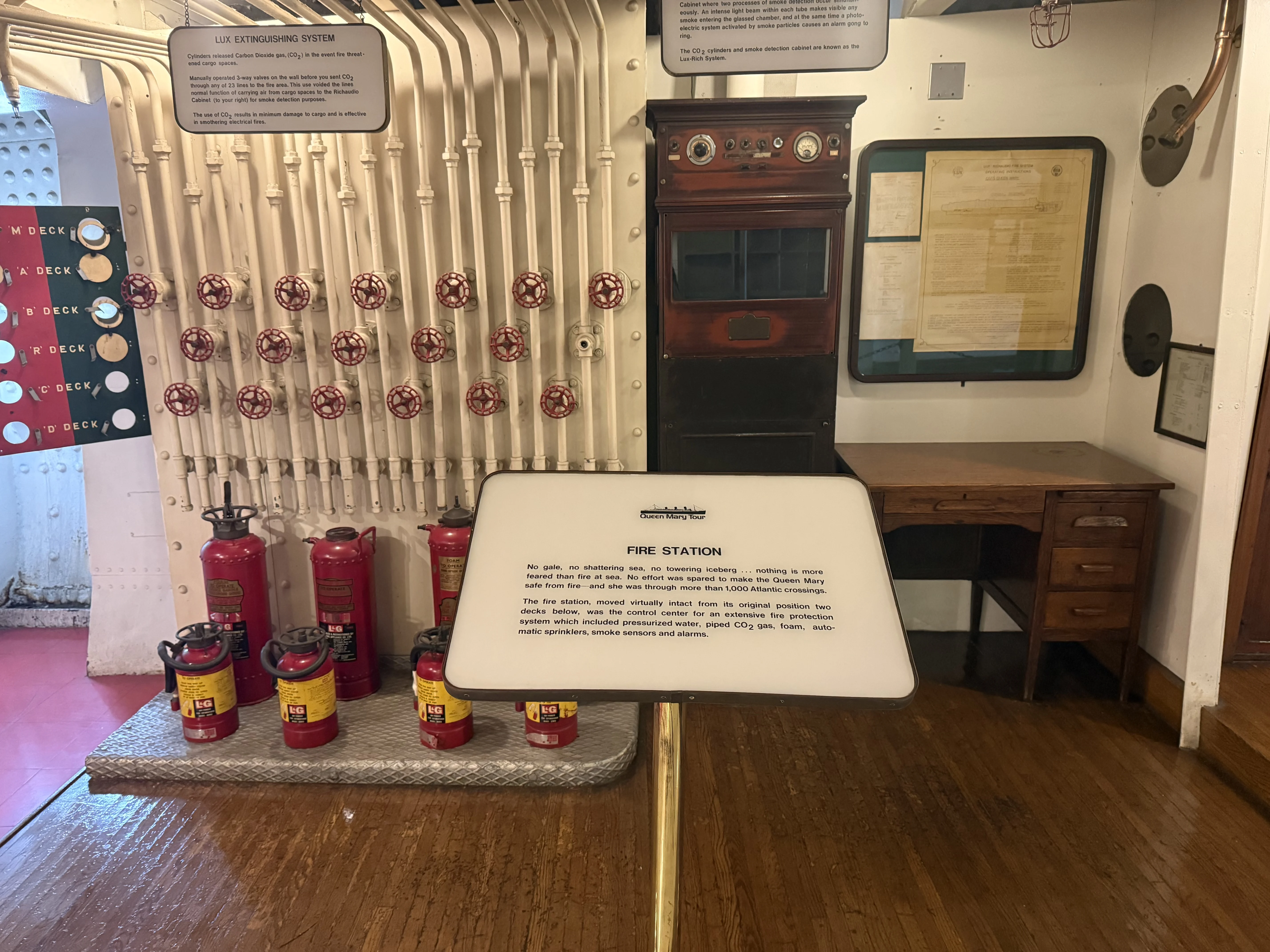


Top: Left: Boiler Room, Long Beach, Middle: Engine Room, Long Beach, Right: Fire Station, Lux Extinguishing System, Long Beach Bottom: Left: Fire Drill Stations Board, Long Beach, Middle: Fire Alarm Indicator Panel, Long Beach, Right: CO2 Fire Suppression Cylinders, Long Beach
Through the late 1940s and into the 1950s, the two ships dominated the transatlantic trade with a reliability that made them the standard against which every other crossing was measured, carrying film stars and heads of state and the full range of postwar society in either direction across the ocean each week. The first commercial jet flights across the Atlantic began in 1958, and the economics of ocean liner travel unraveled faster than anyone in the industry had fully prepared for. A crossing that took five days could now be accomplished in seven hours, and within a few years, the airlines were carrying more transatlantic passengers than all the ocean liners combined. Cunard retired her from active service and she departed Southampton for the final time on October 31, 1967.
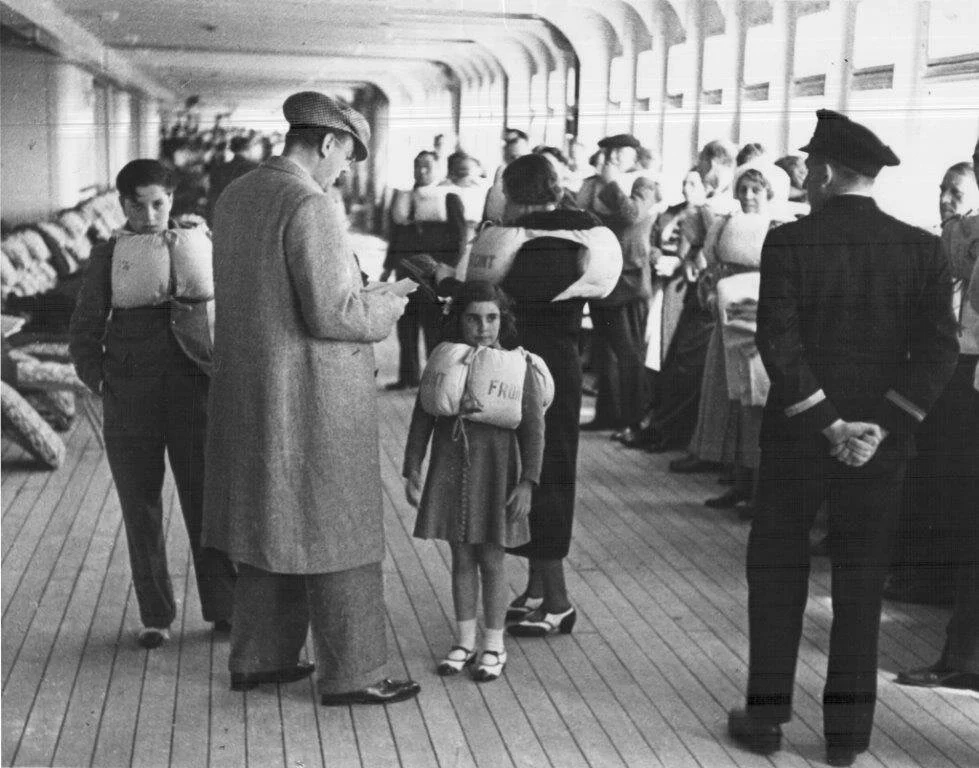
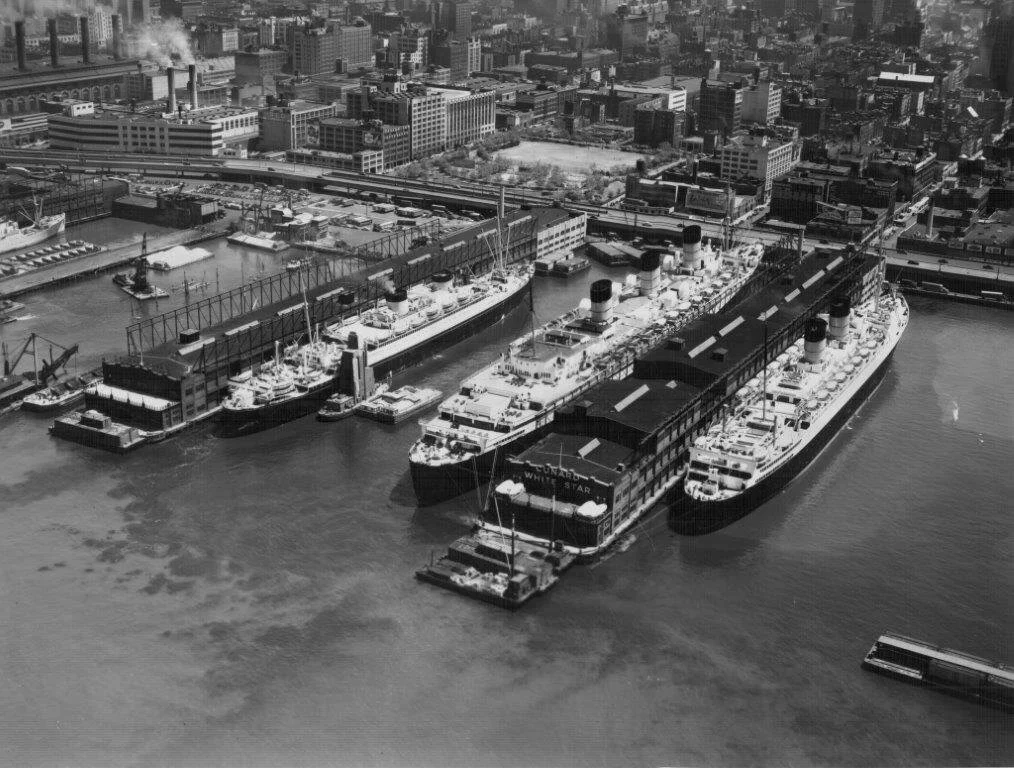

Top: Left: Lifeboat Drill on Deck, c. 1936, Right: Cunard White Star Pier, New York, c. 1936, Bottom: Deck Chairs, Long Beach
Under the command of Captain John Treasure Jones, she arrived in Long Beach, California, on December 9, 1967, and was permanently moored at what would become her home indefinitely. Long Beach had outbid Japanese scrap merchants with a $3.45 million offer, securing the ship on the condition that she would be converted into a permanent tourist attraction. The transformation that followed was extensive and not without loss. Much of the machinery below the waterline was removed to create exhibition space, the original funnels were found too deteriorated to preserve and replaced with replicas, and public rooms were progressively reconfigured for banqueting, retail, and event use over the following decades. After extensive refurbishment and modifications, she opened to the public in May 1971, and in the years that followed, she passed through several operators before the city ultimately reasserted direct control.
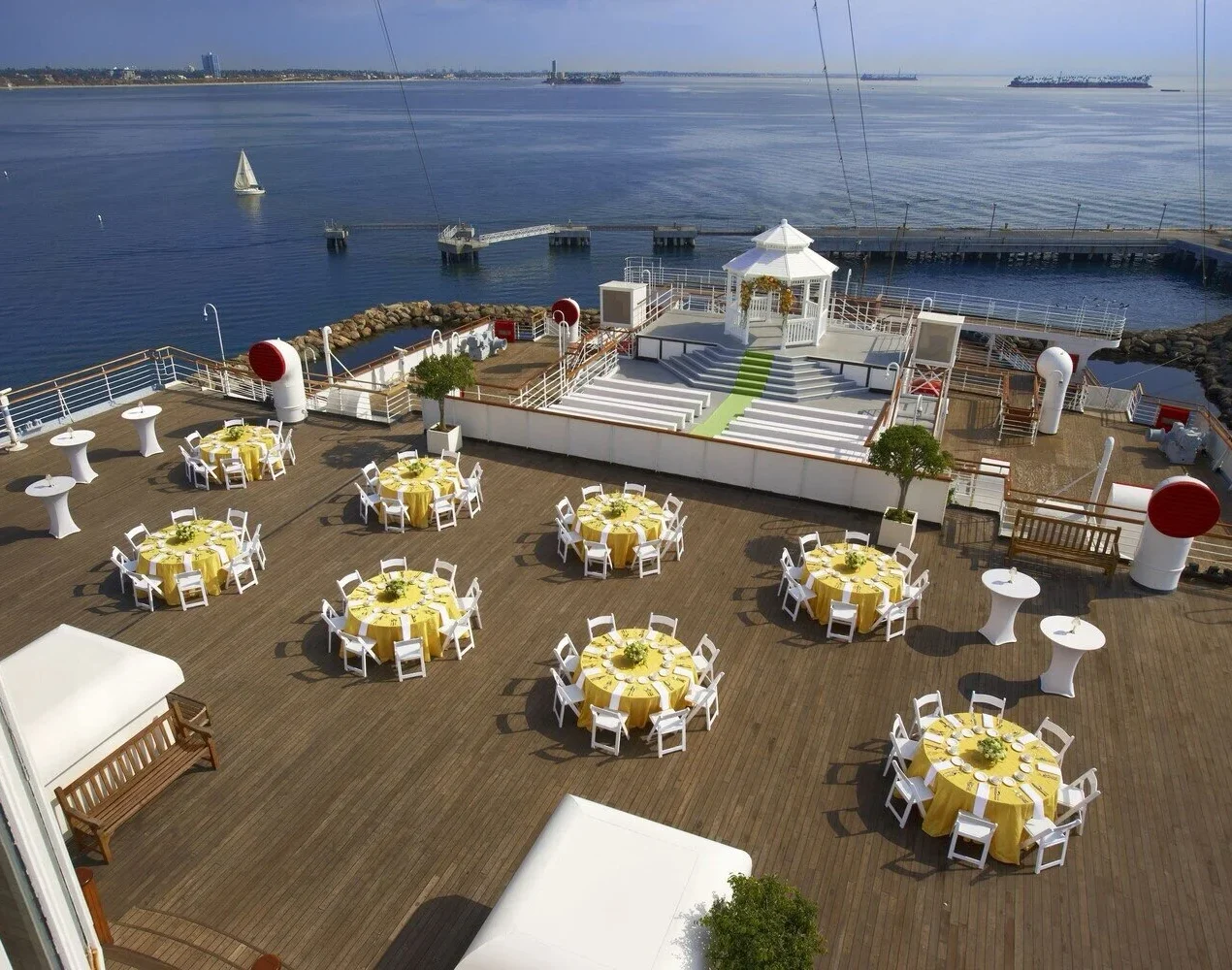
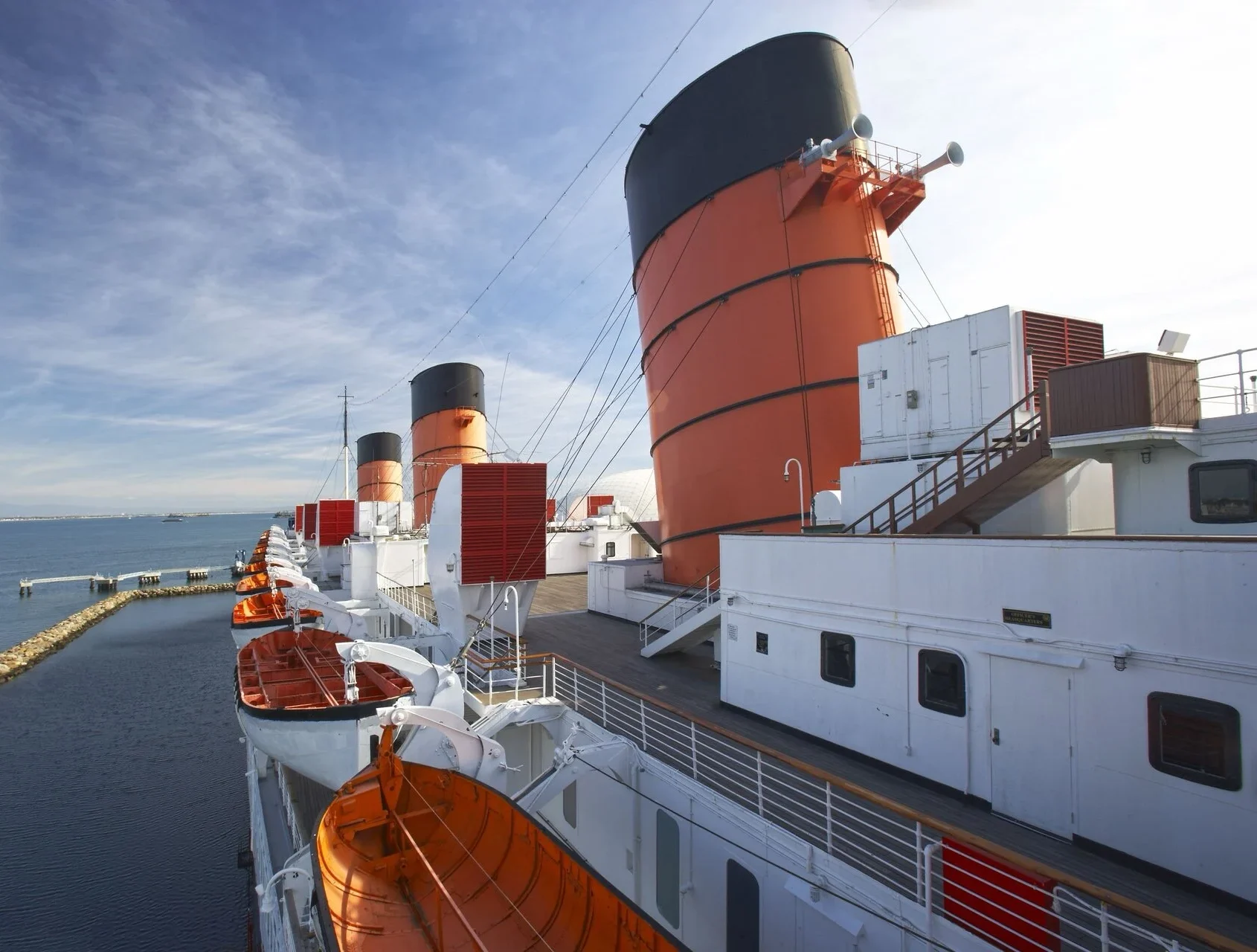
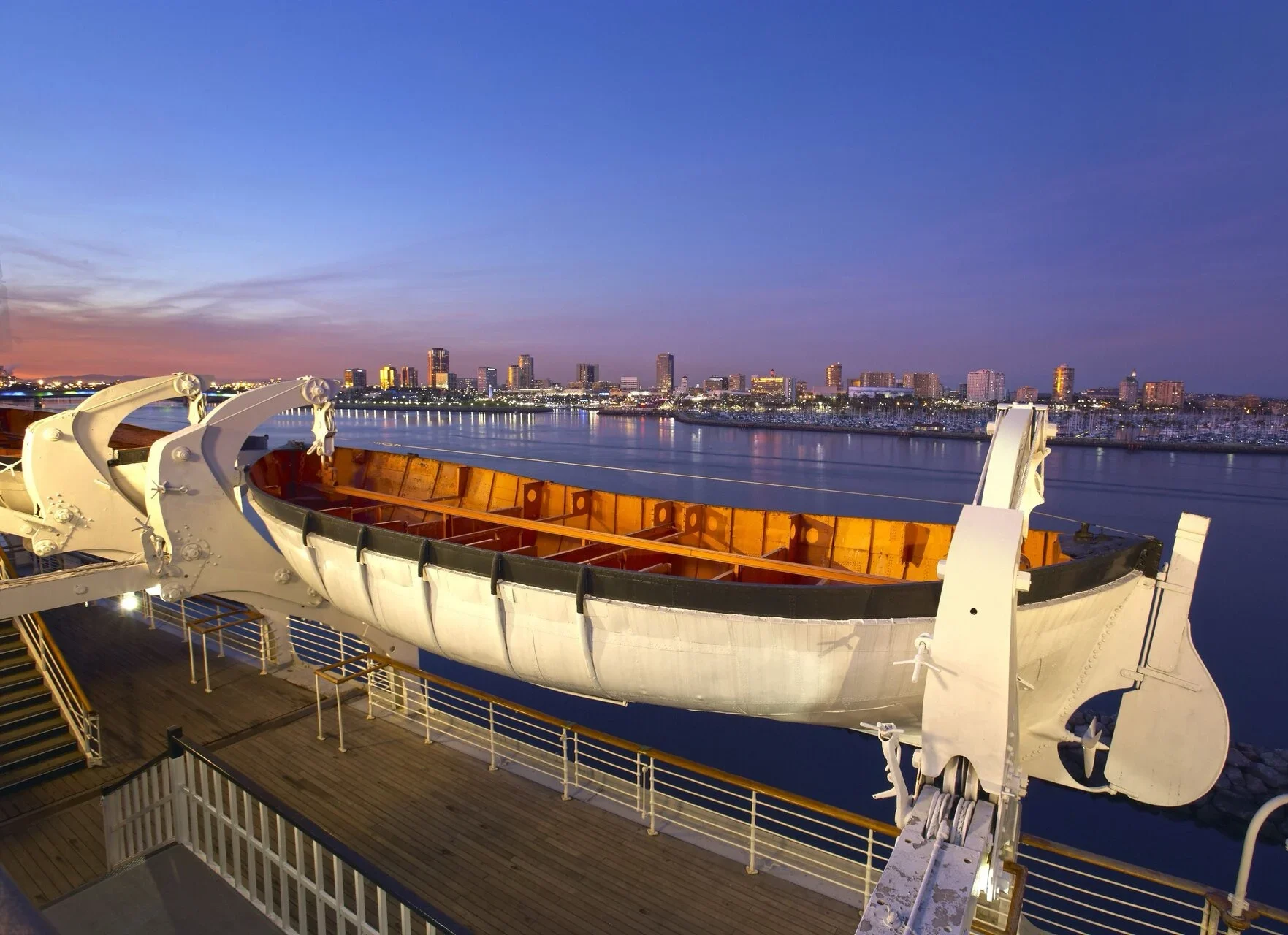
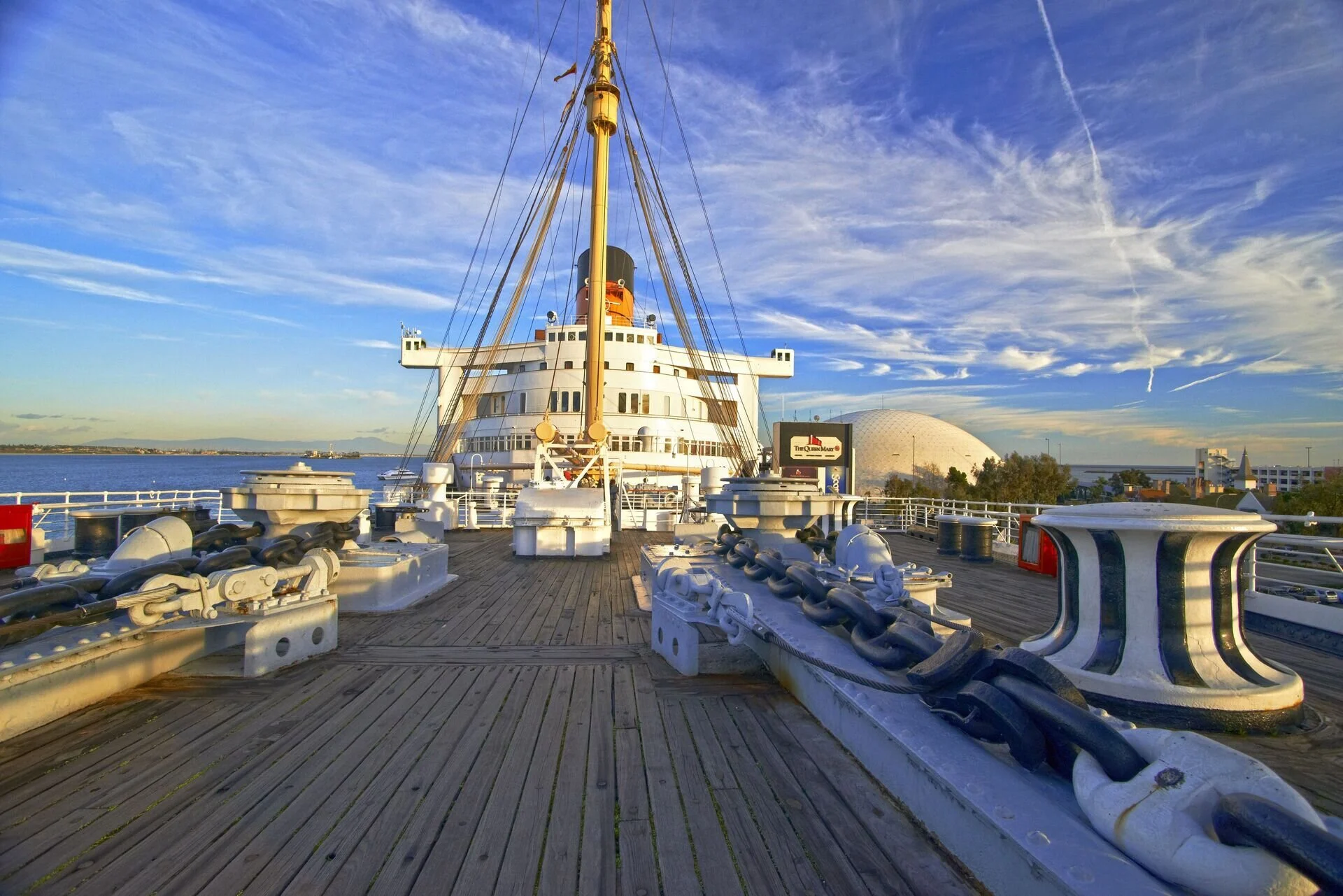
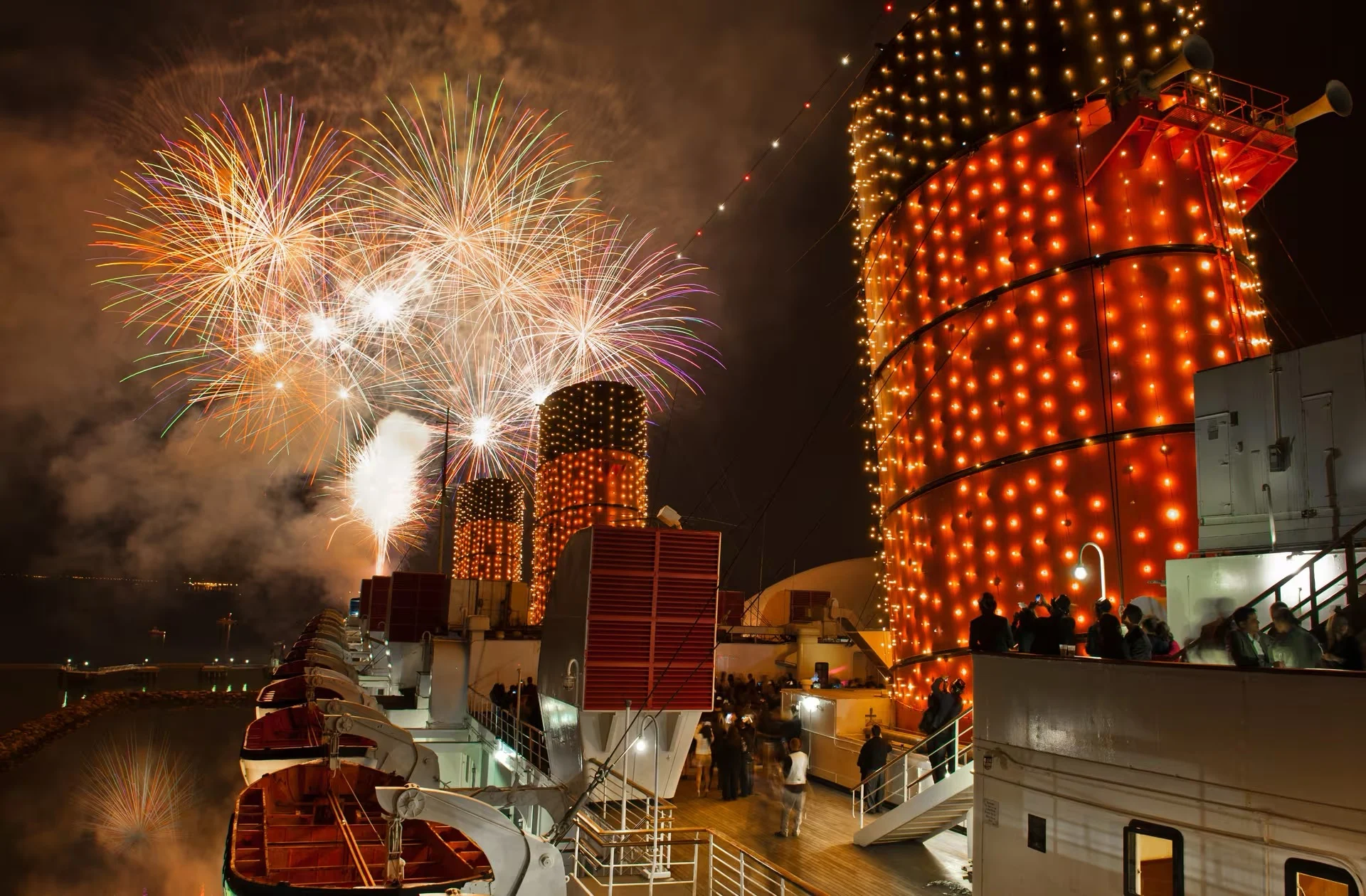

Top: Left: Sun Deck, Long Beach, Middle: Upper Deck and Funnels, Long Beach, Right: Lifeboat Deck at Dusk, Long Beach Bottom: Left: Bow Deck, Long Beach, Middle: New Year’s Eve Fireworks, Long Beach, Right: Bow Deck at Night, Long Beach
She was listed on the National Register of Historic Places in 1993 and designated a California Historical Landmark, and after years of deferred maintenance that threatened her structural integrity, a $43 million restoration effort led to a formal reopening in 2023. In 2024, she was inducted into the Historic Hotels of America registry. The following year, the Queen Mary Heritage Foundation was established with authorization to raise funds and carry out the restoration of original artwork, furnishings, and historic fixtures. Original ticket windows with their etched glass maps of the Atlantic crossing route, the ship’s binnacle in the entrance hall, and Art Deco furnishings throughout the hotel sections stand as evidence that the preservation mandate has been taken seriously. What the Foundation and the ongoing restoration effort are working to preserve is something that cannot be replicated: a complete Art Deco interior environment at a scale that almost nothing else in the world can offer, built when the movement was completed by craftsmen who understood exactly what they were doing.
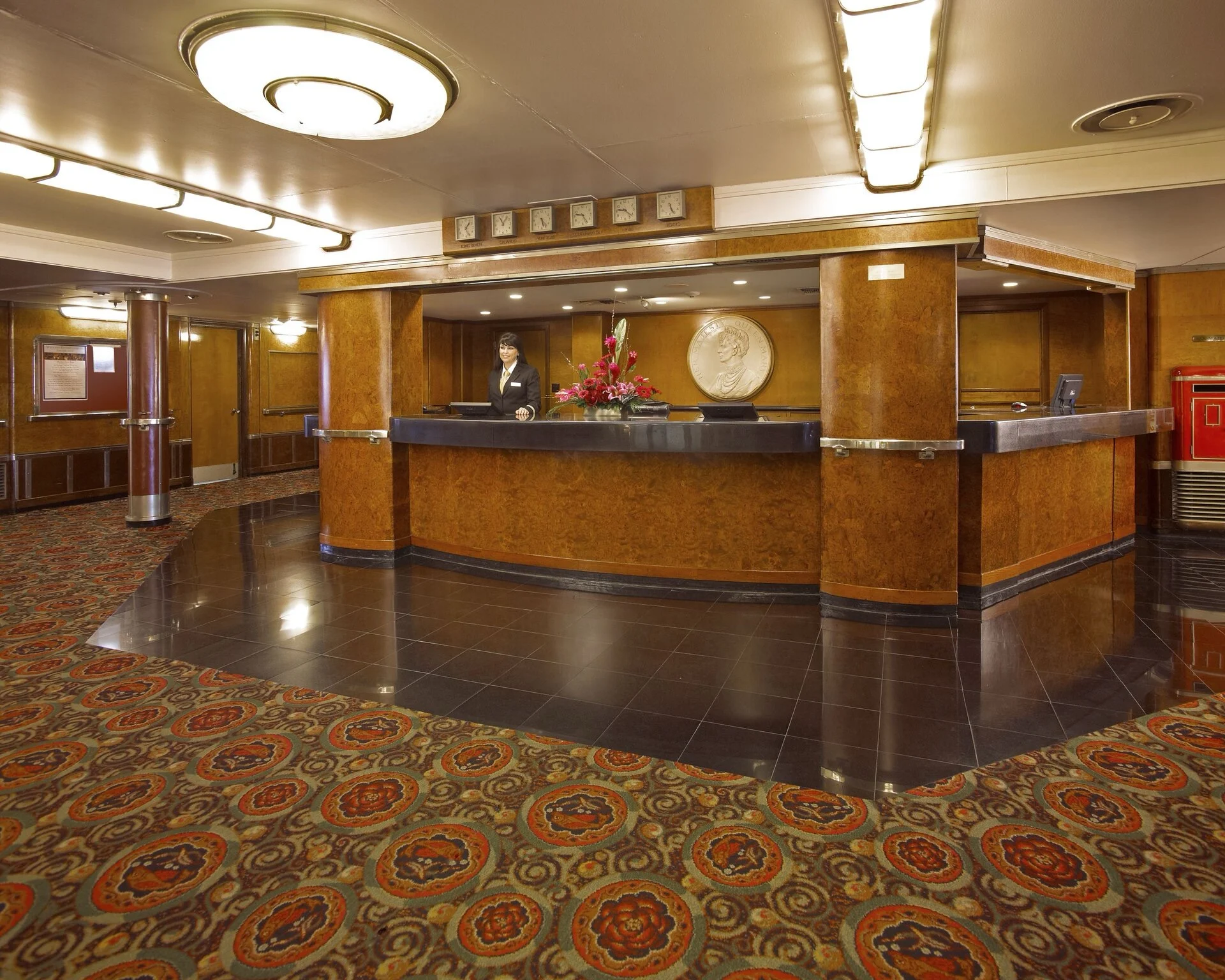
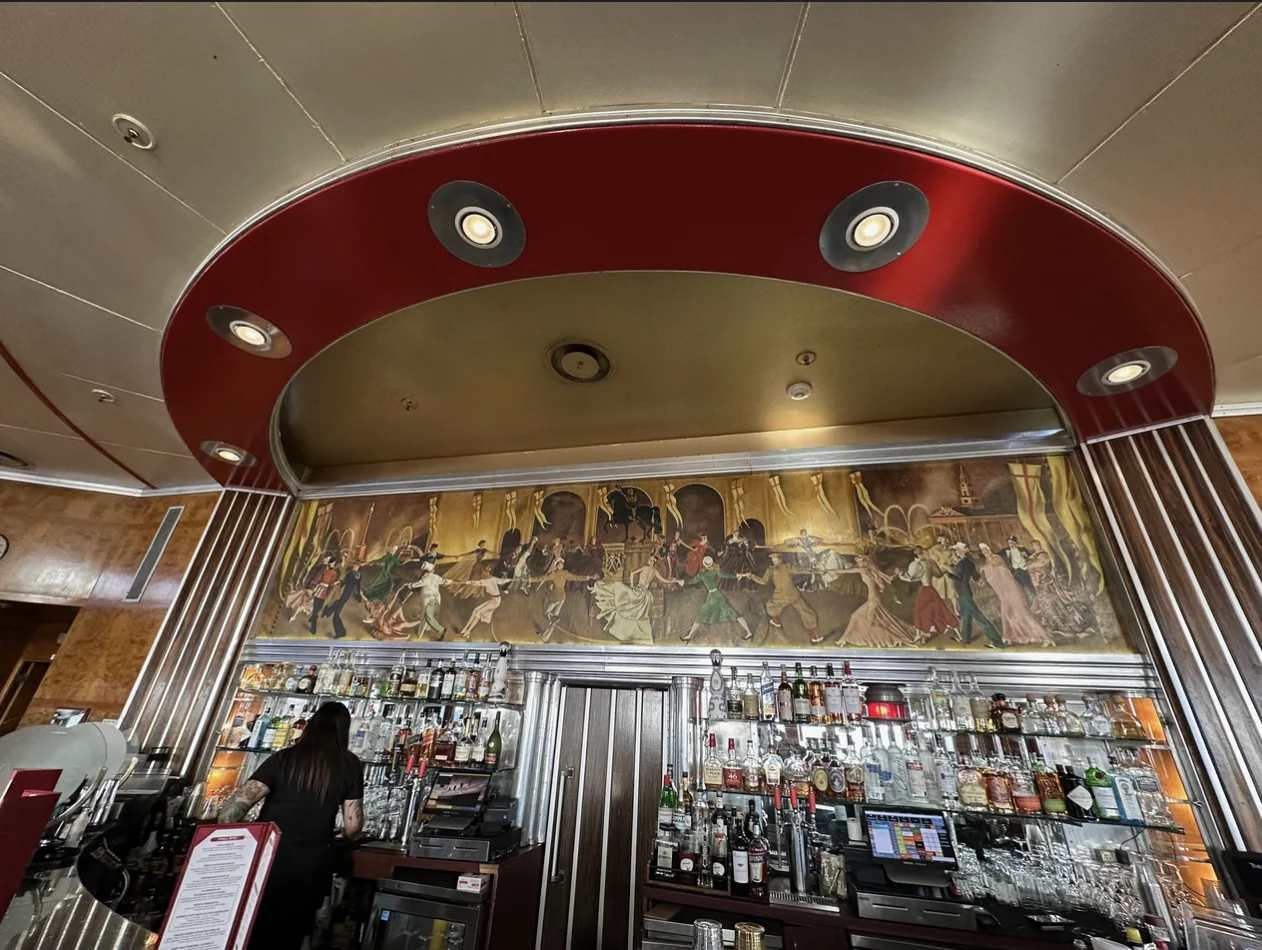

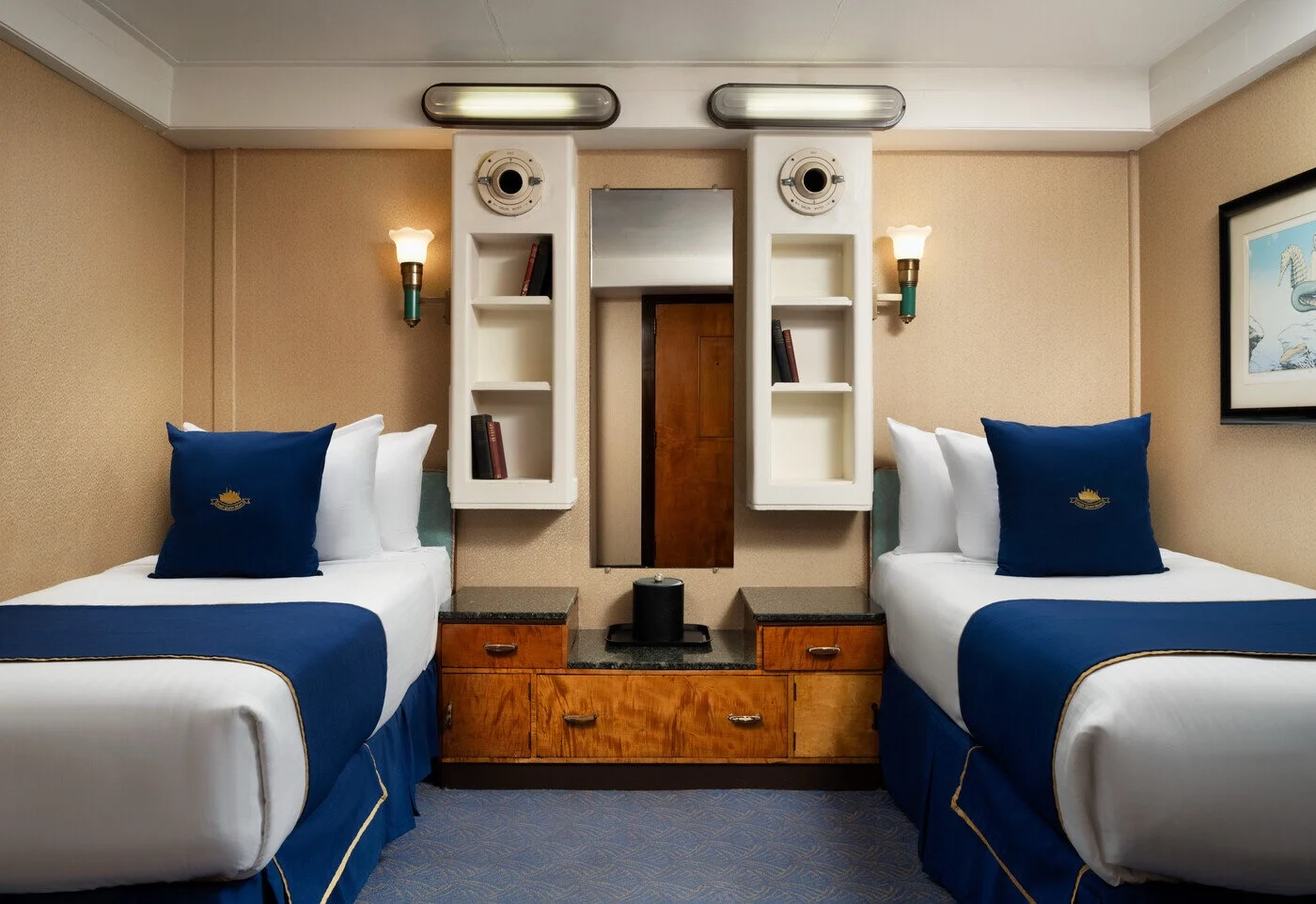

Top: Left: Hotel Reception, Long Beach, Middle: Grand Salon, Long Beach, Right: Observation Bar Mural, Long Beach Bottom: Left: First Class Stateroom, Long Beach, Middle: Twin Stateroom, Long Beach, Right: Stateroom Bathroom, Long Beach
What visitors encounter aboard the Queen Mary today is a surviving argument for what Art Deco believed design could accomplish. The Grand Salon dining room, spanning three stories and once anchored by a mural that tracked the ship’s transatlantic progress with a moving crystal model, retains the proportional authority and material quality that defined the best public spaces of the period. The Observation Bar still reads as a study in how geometry, material selection, and a well-positioned window can do the work of an entire design philosophy. Original decorative panels, metalwork, and woodwork survive throughout the ship in quantities that reflect the seriousness with which the original program was undertaken. The Queen Mary is one of the most complete and most accessible examples of the Art Deco movement ever produced.

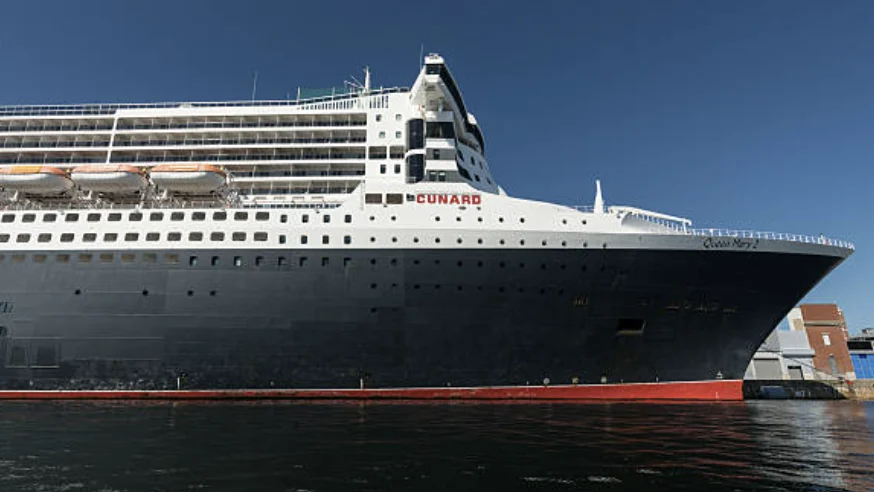
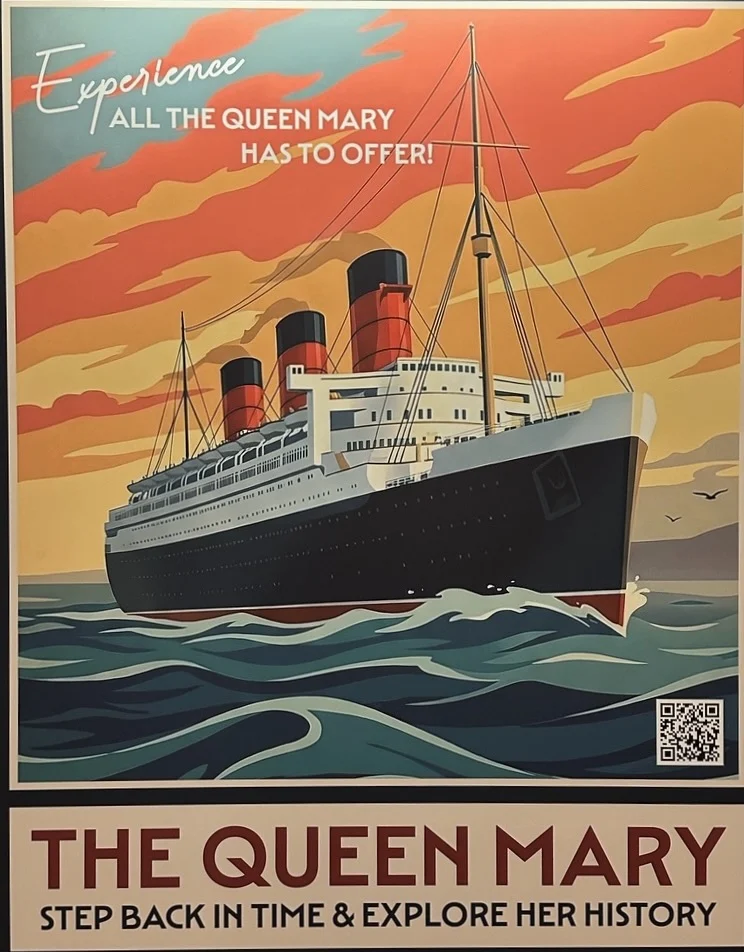
Left: Queen Mary at Night, Long Beach, Middle: RMS Queen Mary 2, Cunard Line, Southampton, Right: “The Golden Era, Now and Tomorrow,” Promotional Campaign, Long Beach
The Queen Mary has had a cultural afterlife as vivid and varied as her working years. Six decades of film production have used the ship as a setting: Assault on a Queen in 1966, The Poseidon Adventure in 1972, The Parent Trap in 1998, Pearl Harbor in 2001, The Aviator in 2004, and Being the Ricardos in 2022 are among the productions drawn to an atmosphere that no studio construction has been able to replicate. Time magazine placed her among the top ten most haunted locations in America, a designation she seems to accept without complaint and that has generated its own dedicated following. Whether understood as a design landmark, a piece of wartime history, a working hotel, a film location, or simply one of the largest and most carefully considered objects the twentieth century produced, the ship rewards sustained attention. Some things built with sufficient conviction and care outlast every calculation made about them at the time of their making, and the Queen Mary is one of them.
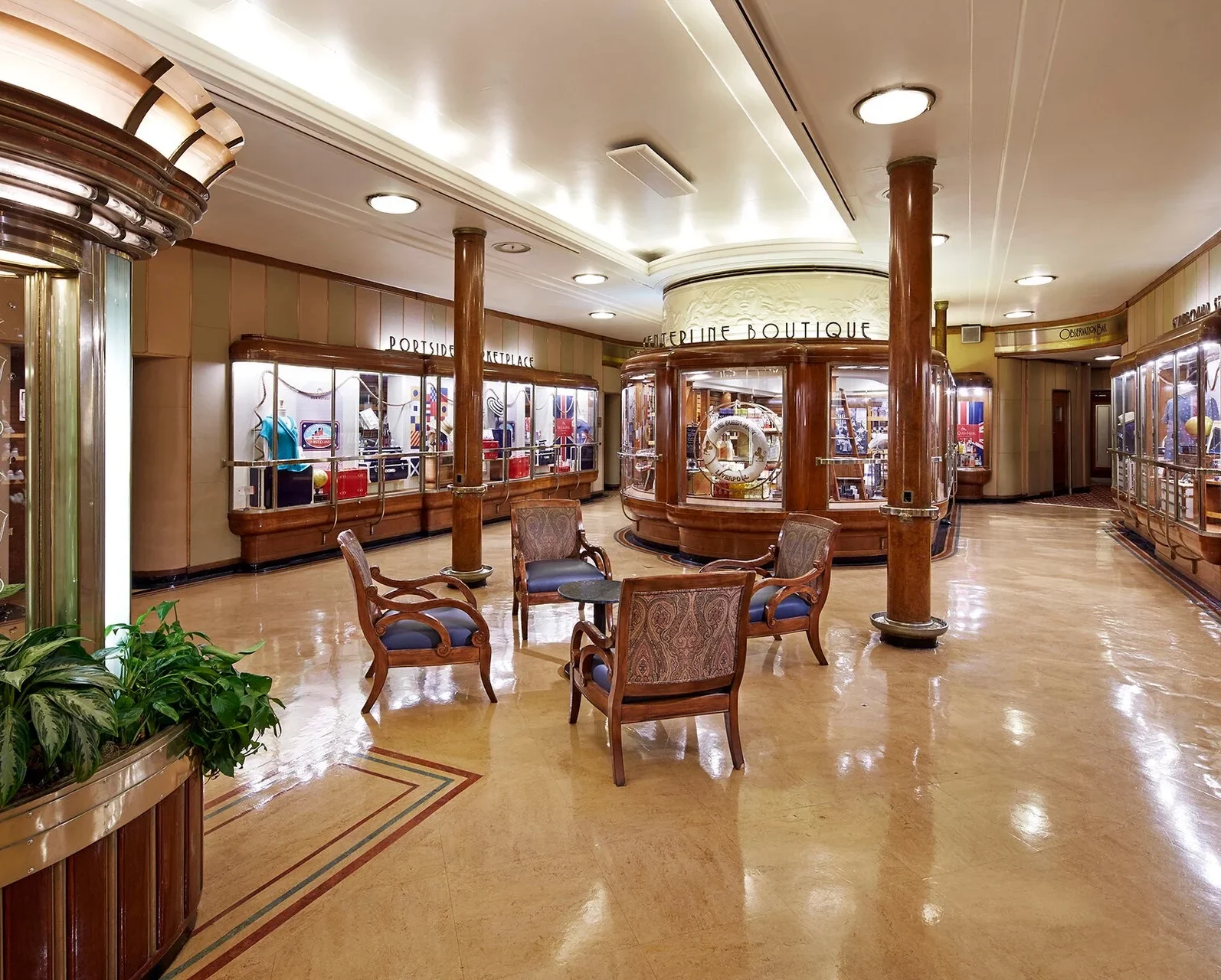


Left: Shopping Promenade, Long Beach, Middle: Gift Shop, Long Beach, Right: Passenger Corridor, Long Beach
Visiting the Queen Mary today is still very much like stepping back in time. From the moment guests are greeted with a warm “welcome aboard,” the ship begins to reveal the atmosphere, scale, and elegance that made her one of the great ocean liners of the 20th century. Many of the rooms retain their original furnishings and rich decorative details, while carefully upgraded areas allow the ship to function as a hotel and historic destination. Throughout the hallways, doorways, lounges, and private rooms, the beautiful woodwork remains one of the great pleasures of the visit. The Queen Mary also continues to host a wide range of events, from music and dancing to historical programs and special exhibitions. Daily tours are available for hotel guests and the general public, with display rooms set up throughout the ship to show interiors, objects, and views much like those experienced when the Queen Mary first entered service. In the Observation Bar, lively entertainment on many evenings helps bring the spirit of the ship back to life.
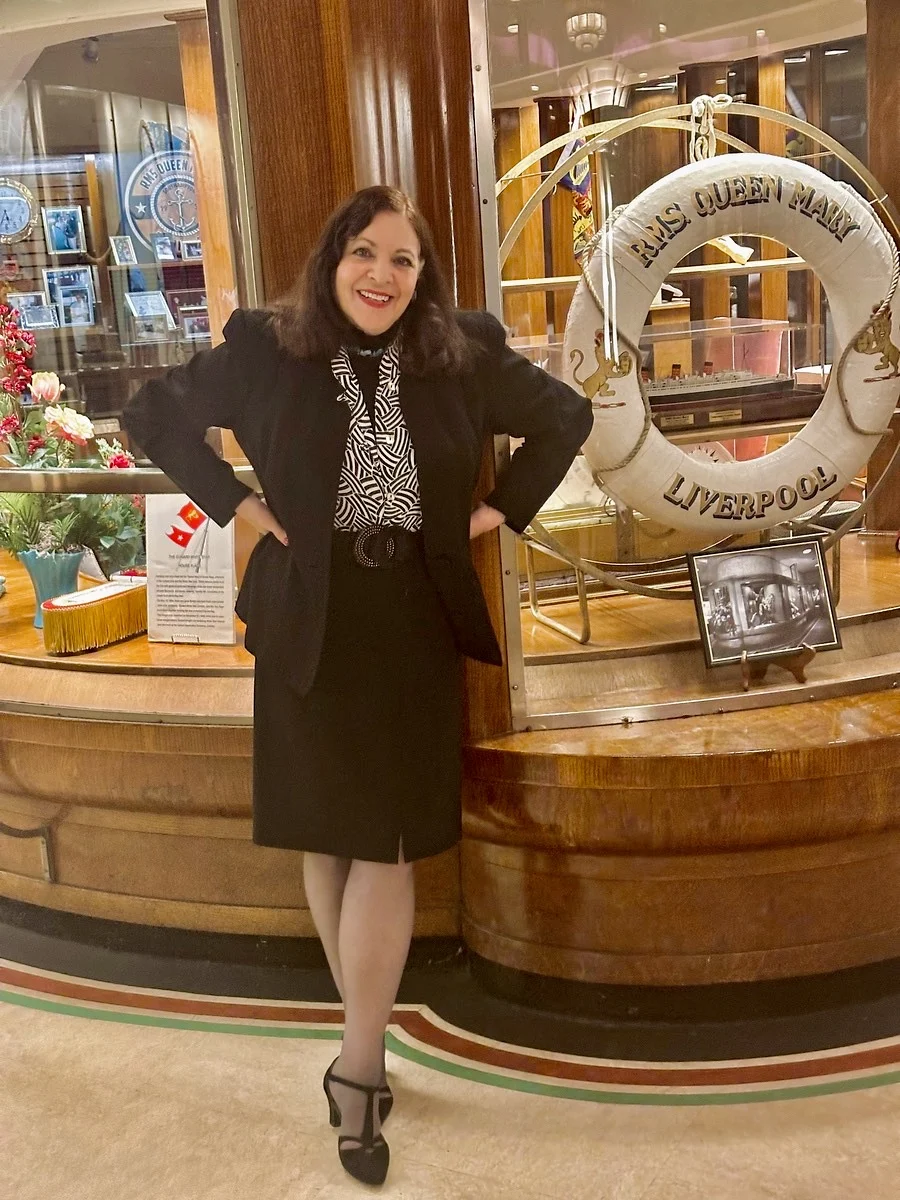
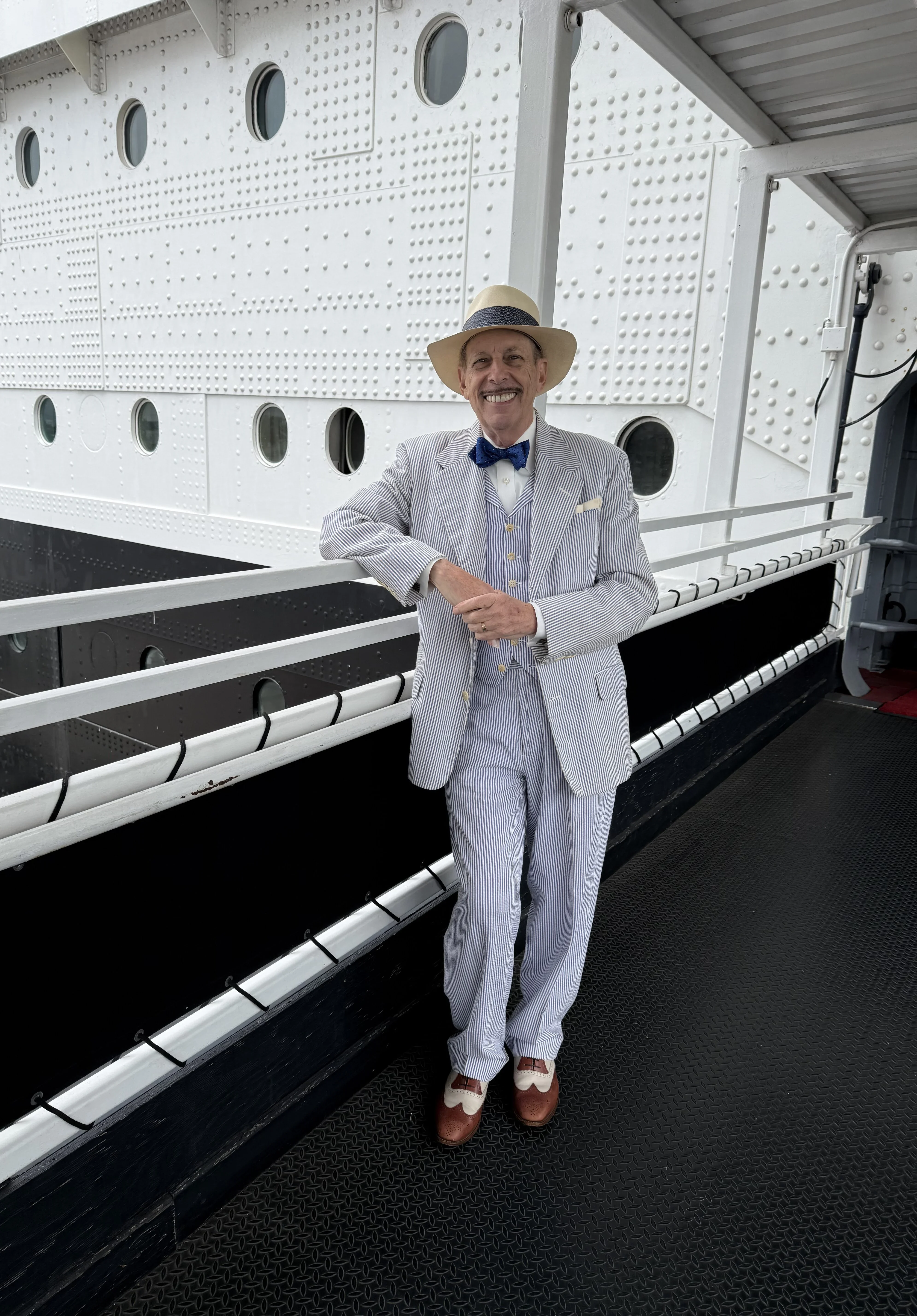
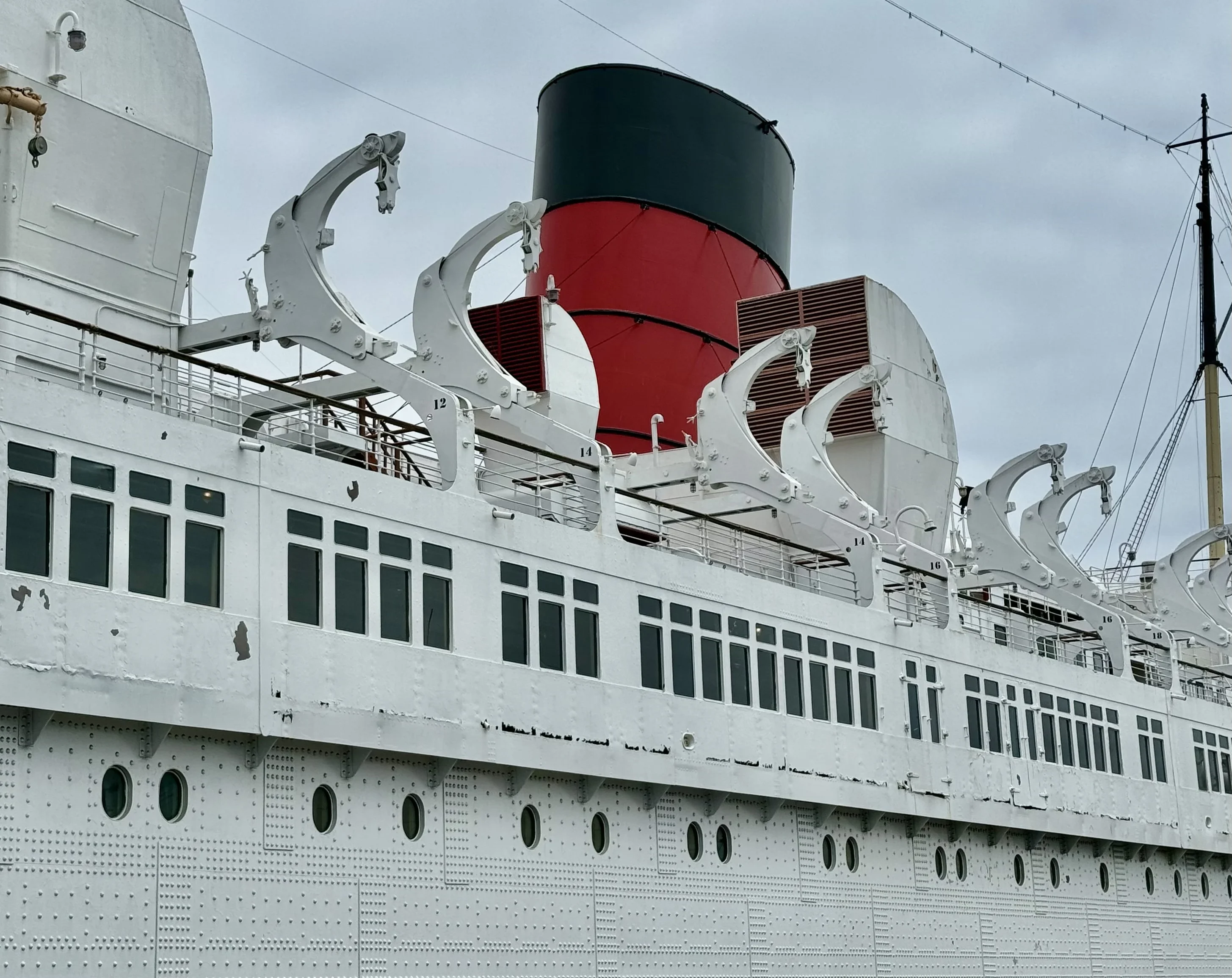
Left: Laurie Gordon on the Promenade of the Queen Mary, Long Beach, Middle: Rick Fishman Boarding the Queen Mary, Long Beach, Right: Funnel and Davits, Long Beach
Recommended Reading
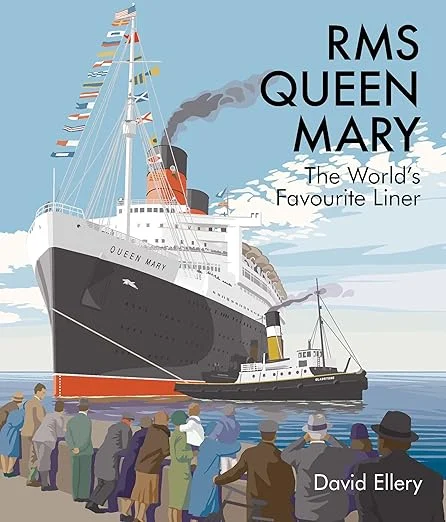
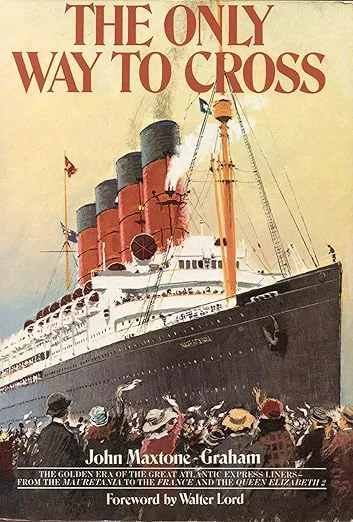
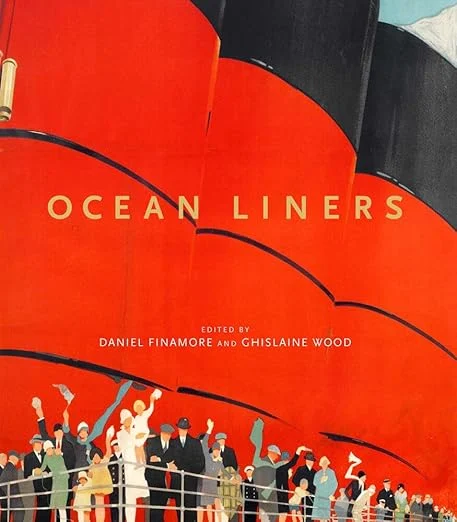
For those who want to go deeper into the history of the Queen Mary and the world she represented, three books stand out as particularly rewarding. RMS Queen Mary: The World’s Favourite Liner by David Ellery, published by Seaforth in 2023, is the most comprehensive single volume on the ship, a new and expanded edition of a long out-of-print work, drawing on first-hand interviews and more than four hundred illustrations to cover everything from the Clydebank years through the Long Beach restoration. The Only Way to Cross by John Maxtone-Graham is the definitive account of the golden age of transatlantic travel, tracing the full arc of the great liners from the late nineteenth century through the jet age with the kind of authority and wit that has kept it in print since 1972. For the design dimension, Ocean Liners: Glamour, Speed and Style, edited by Daniel Finamore and Ghislaine Wood for the Victoria and Albert Museum’s 2018 exhibition, examines how the great ships became floating laboratories for Art Deco design and modern luxury, with the Queen Mary featured throughout as one of the period’s most complete examples.

If you are interested in further stories of Art Deco design, collecting, and celebrating the artistry of early 20th Century: