
Bauhaus and Art Deco in the Modern Age
Bauhaus and Art Deco are often placed side by side because they grew out of the same modern world, even though they moved in very different directions. Art Deco loved glamour, polish, rich materials, and stylized beauty, while Bauhaus pushed toward simplicity, clarity, and the idea that good design could improve everyday life. One made modernity feel elegant and dramatic, and the other tried to make it functional, rational, and universal. That contrast is part of what makes the period so interesting. The first half of the twentieth century was not defined by one single look, but by a range of movements responding to war, industry, speed, technology, and social change. Bauhaus belonged to that larger design spectrum, even if some people prefer to treat it as a world of its own. Either way, its influence on architecture, furniture, graphics, and modern consumer culture is impossible to miss, and when placed beside Art Deco it helps show just how wide the visual language of the modern age could be.
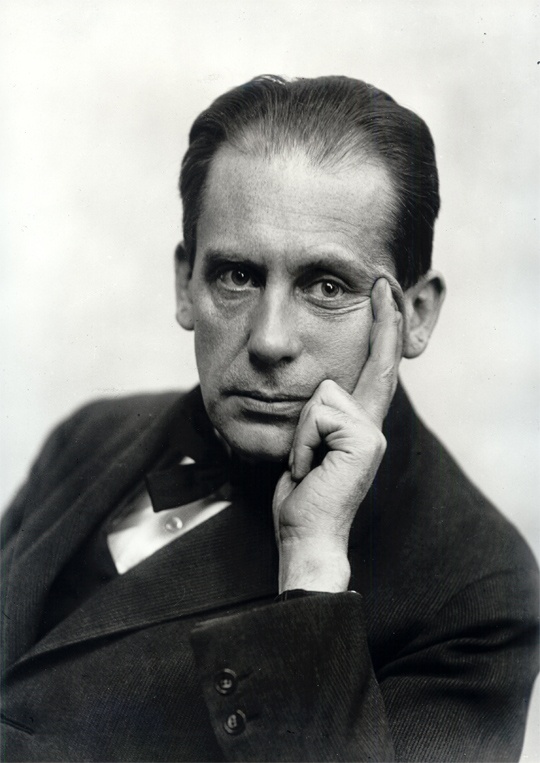
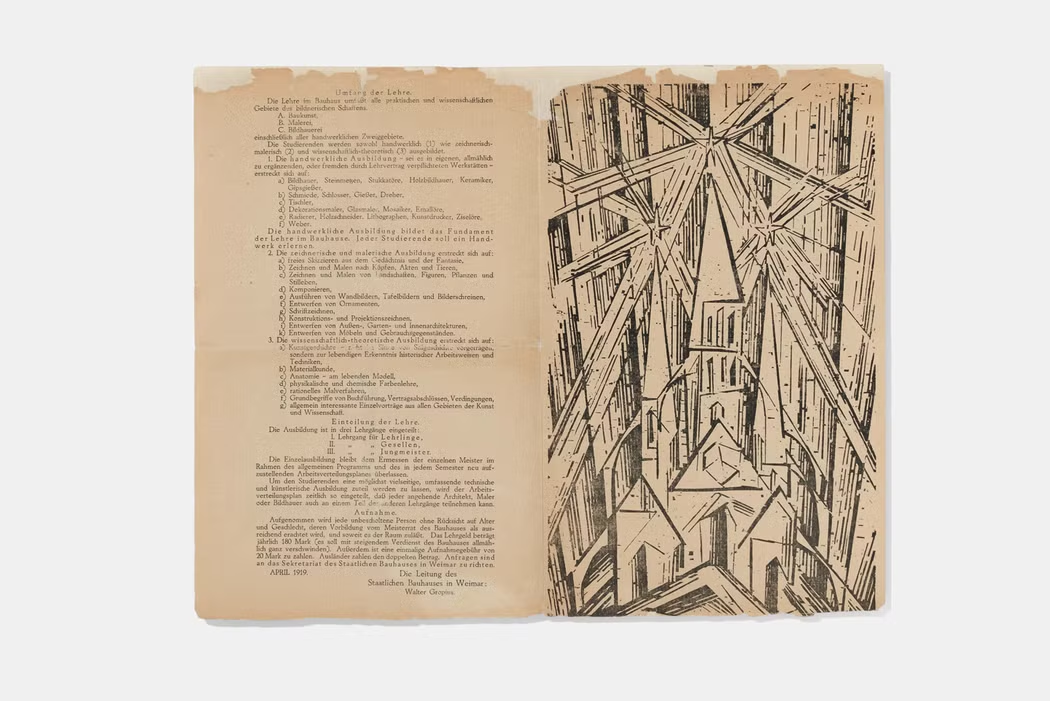
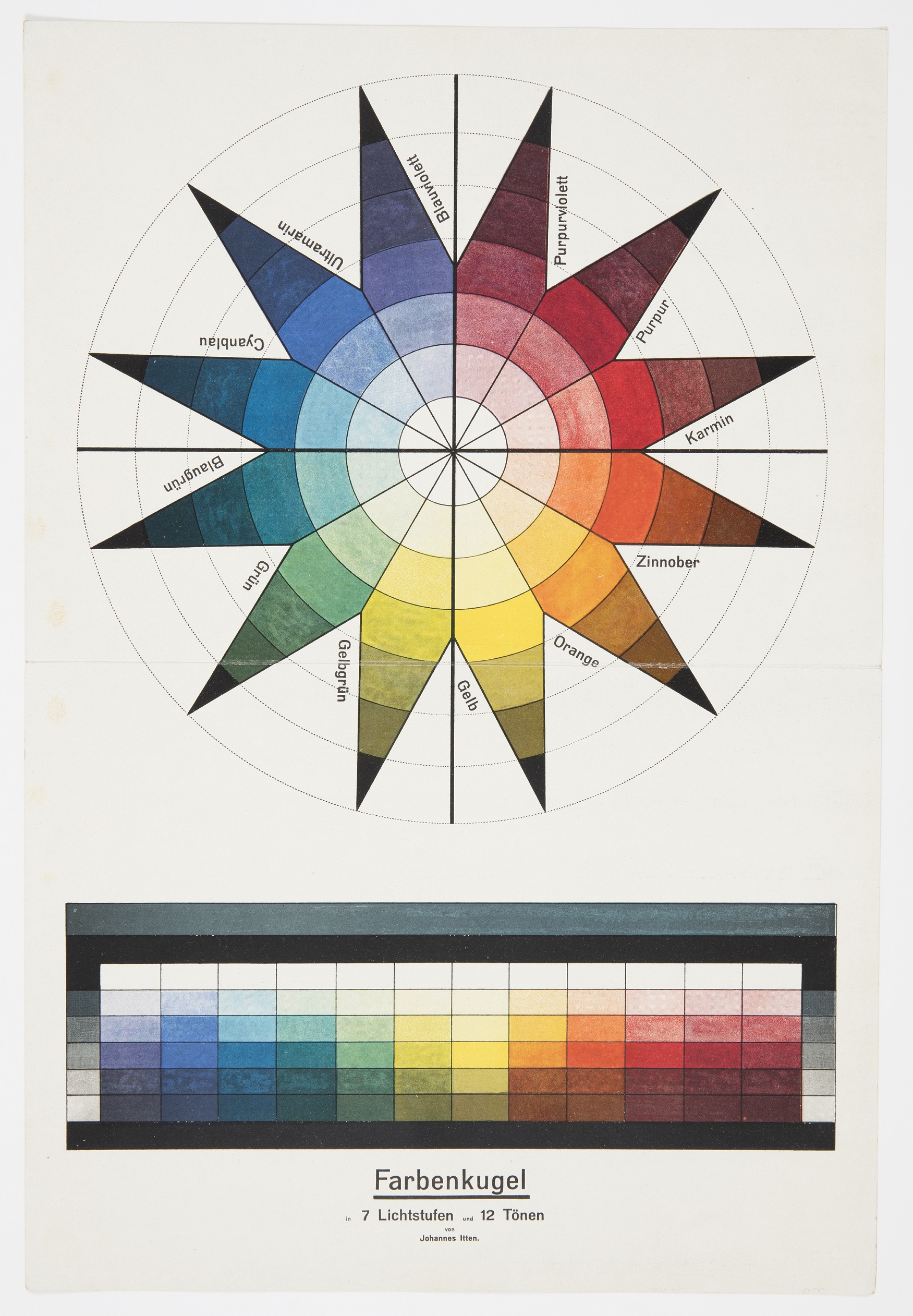
Left: Walter Gropius, Founder of the Bauhaus, Middle: Bauhaus Manifesto, Lyonel Feininger cover, Right: Johannes Itten Color Star, foundation of Bauhaus color theory
The Bauhaus was founded by Walter Gropius in Weimar in 1919, in the unsettled years after World War I. Germany was politically unstable, economically strained, and culturally searching for a new direction, and in that atmosphere, Bauhaus proposed that design could help rebuild daily life. Instead of looking backward to old styles and inherited symbols, it looked toward a modern world shaped by new materials, new forms, and new ways of living. Earlier decorative traditions often carried strong ties to class, religion, nationalism, or historical identity, and Bauhaus tried to move away from that weight. It focused on proportion, usefulness, honest materials, and the beauty of well-made things. The goal was not to strip life of beauty, but to find beauty in clarity, order, and purpose. That idea shaped nearly everything the school touched, from furniture and textiles to posters, lamps, and eventually entire buildings.
The Weimar years are sometimes overshadowed by the more famous Dessau period, but they were where the school’s ideas first took shape. These early years still belonged to a Germany alive with Expressionism, experimentation, and postwar uncertainty, so Bauhaus had not yet settled into the clean modern image people usually picture today. It was still testing its philosophy, still forming its teaching methods, and still working out what modern design might actually look like in practice. One of the most important moments from this period was the 1923 Bauhaus exhibition, which tried to show the public that the school’s ideas had real practical value. The centerpiece was Haus am Horn, an experimental house that brought together architecture, furniture, lighting, textiles, and interior planning into one complete environment. Its square form was plain, almost severe, but that was part of the point. The house was less about outward display and more about rethinking how modern living could be organized from the inside out, with every room and object considered as part of a larger system.
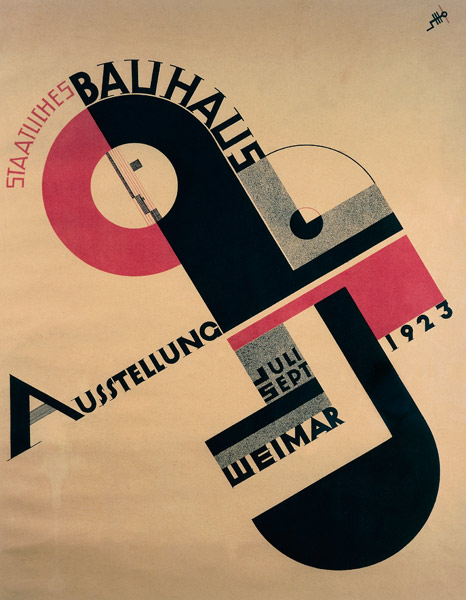

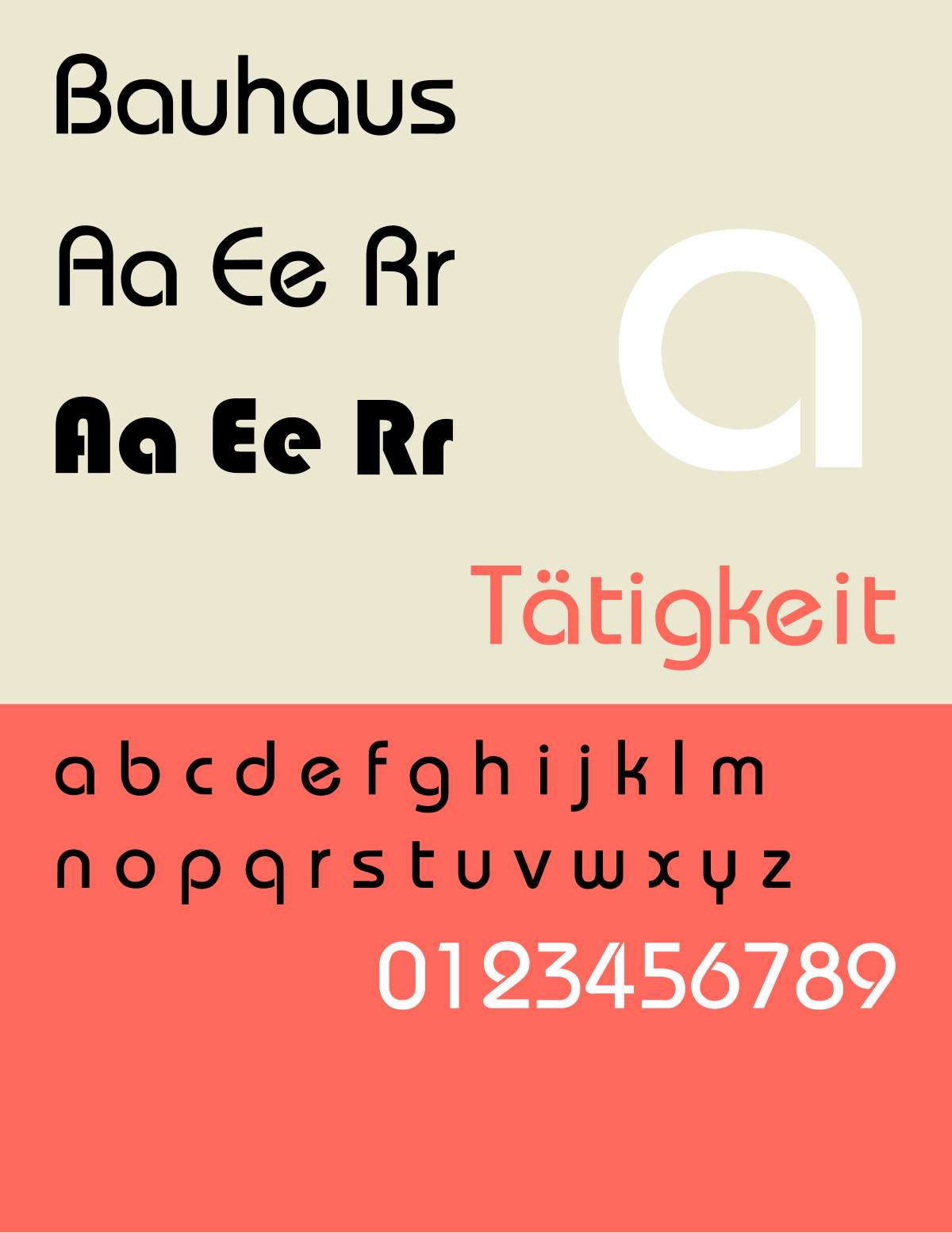
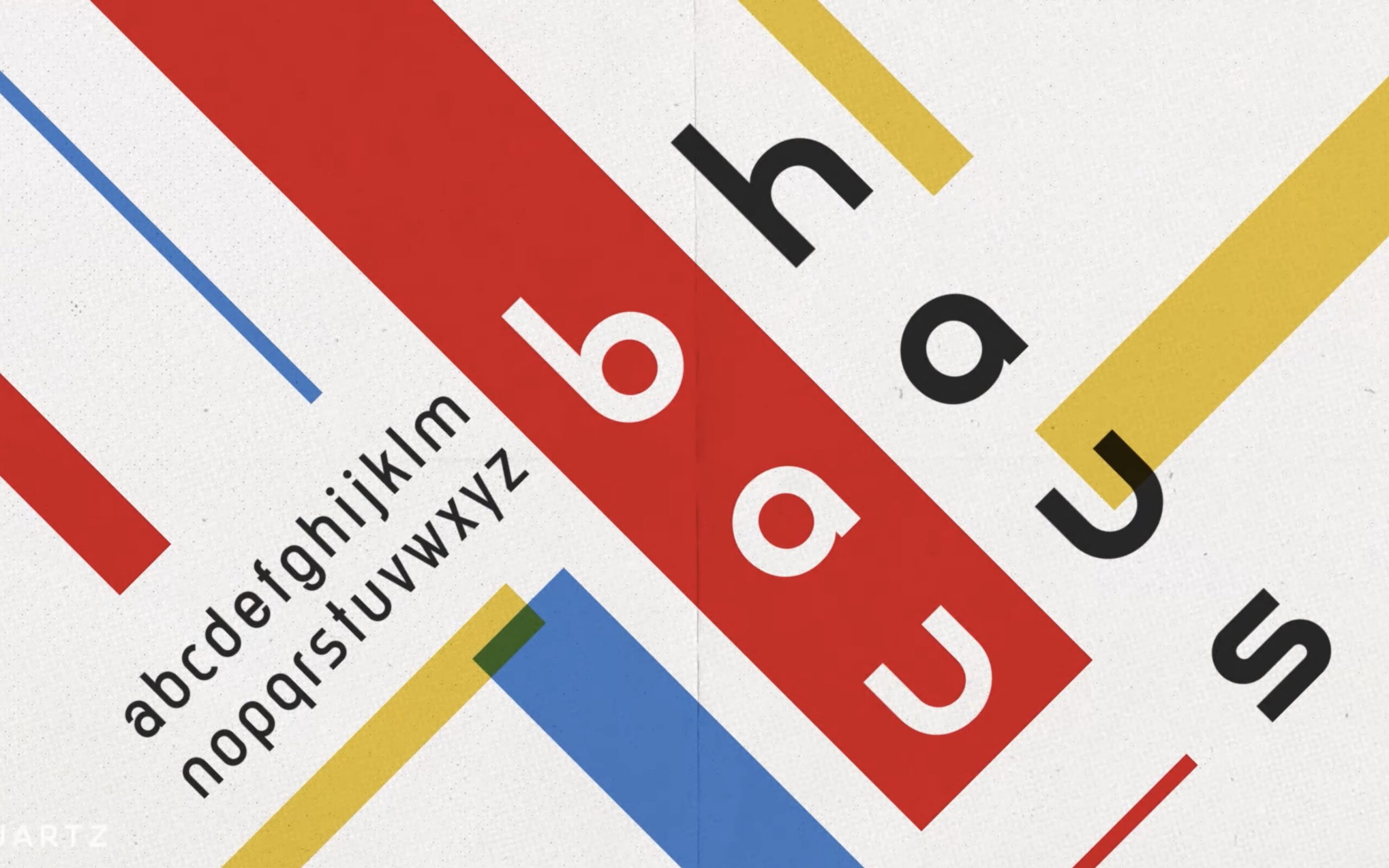
Left: Bauhaus Exhibition Poster, Weimar 1923, Middle: Moholy-Nagy, Chicago, Bauhaus ideas in America, Right: Bauhaus Typography, modern sans serif design
Bauhaus was not just a style. It was also a new model of education. Gropius wanted to unite art, craft, and architecture rather than keep them separated by status or tradition, and that alone made the school feel different from older academies. Students did not simply choose a discipline and repeat established formulas. They began with a Preliminary Course that introduced the essentials of material, form, color, composition, and space before moving into workshops. Johannes Itten helped shape that early course, pushing students to think seriously about contrast, structure, and the emotional force of form. From there, students moved into weaving, metal, ceramics, mural painting, printing, cabinetmaking, photography, and later architecture. The school also attracted remarkable teachers and artists, including Paul Klee, Wassily Kandinsky, László Moholy-Nagy, and Joost Schmidt. What mattered was not only the brilliance of individual figures, but the sense that design could no longer be divided neatly into fine art on one side and useful craft on the other. Typography and poster design became some of the clearest expressions of this thinking. Historic scripts and blackletter carried strong cultural associations, especially in Germany, so Bauhaus designers moved instead toward sans serif lettering, simplified geometry, and bold, uncluttered layouts. In Joost Schmidt’s work, especially text, color, and shape become one unified language, and the page itself stops being decorative and starts becoming an active field of modern design.
Bauhaus is often remembered for austere buildings and tubular steel chairs, but life at the school was far more energetic than that image suggests. Students and faculty built a real social world around the workshops, with performances, costumes, parties, and a strong sense of community. That part of the story matters because Bauhaus was never just about objects. It was also about collaboration, experimentation, and a new kind of creative culture. The atmosphere could be playful, theatrical, and at times eccentric, which helped fuel the school’s inventiveness. Women were central to that story too, even though the institution was hardly free of the prejudices of its time. Women were admitted from the start, which was progressive, but many were steered toward weaving rather than architecture or metalwork. Even within those limits, they shaped some of the school’s most important work. Marianne Brandt became one of the leading figures of the metal workshop and created teapots, lamps, and other objects that are now icons of modern design. Alma Siedhoff-Buscher brought real originality to children’s furniture and toy design, creating pieces whose abstract forms still feel fresh and inventive now. Otti Berger brought intelligence and innovation to textile design, showing that the modern interior was shaped just as much by fabric, tactility, sound, and texture as by steel and glass. Her work helps broaden the image of what Bauhaus was, because the movement was not only about hard surfaces and geometry. It was also about the lived experience of interiors and the materials people physically touched every day.

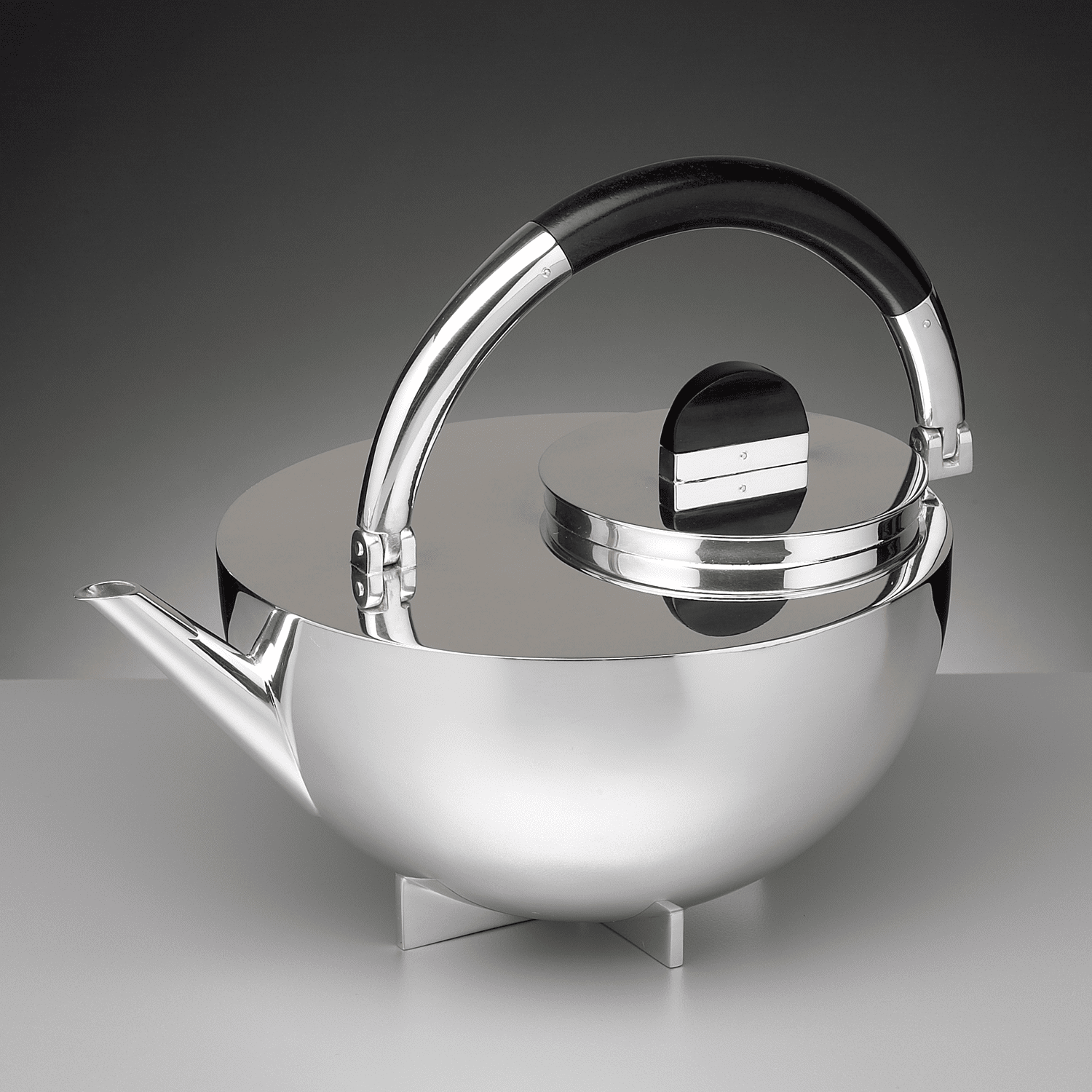
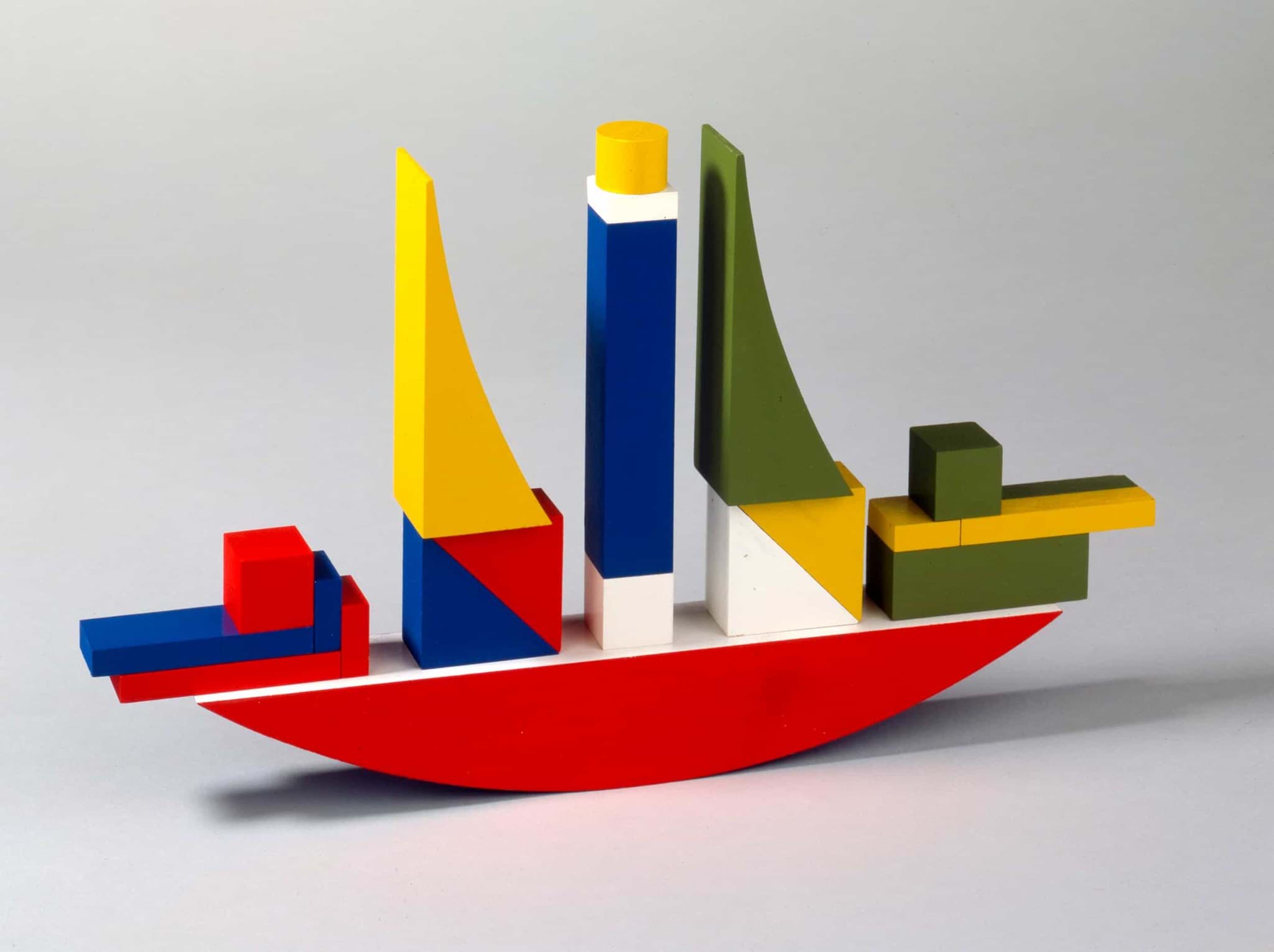
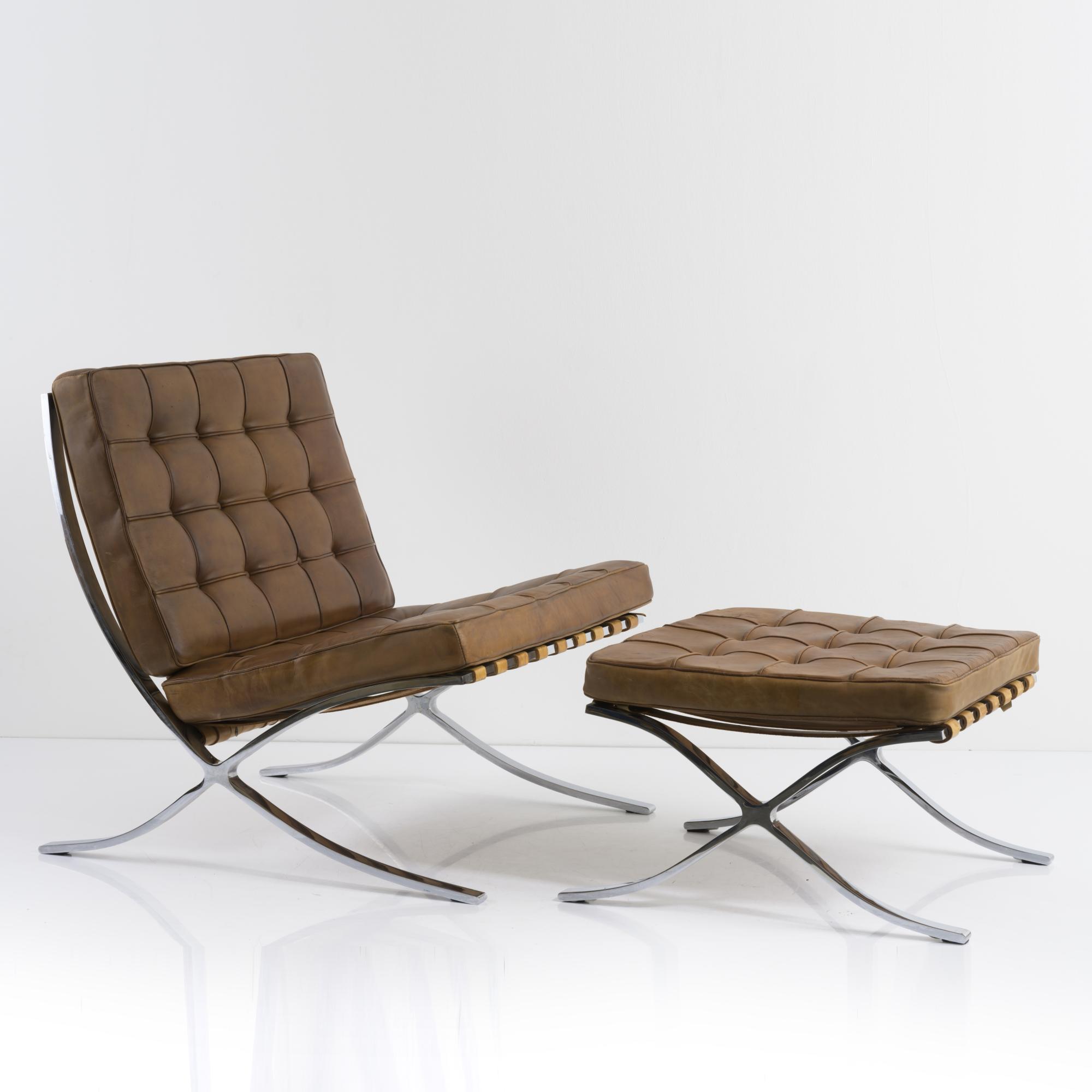

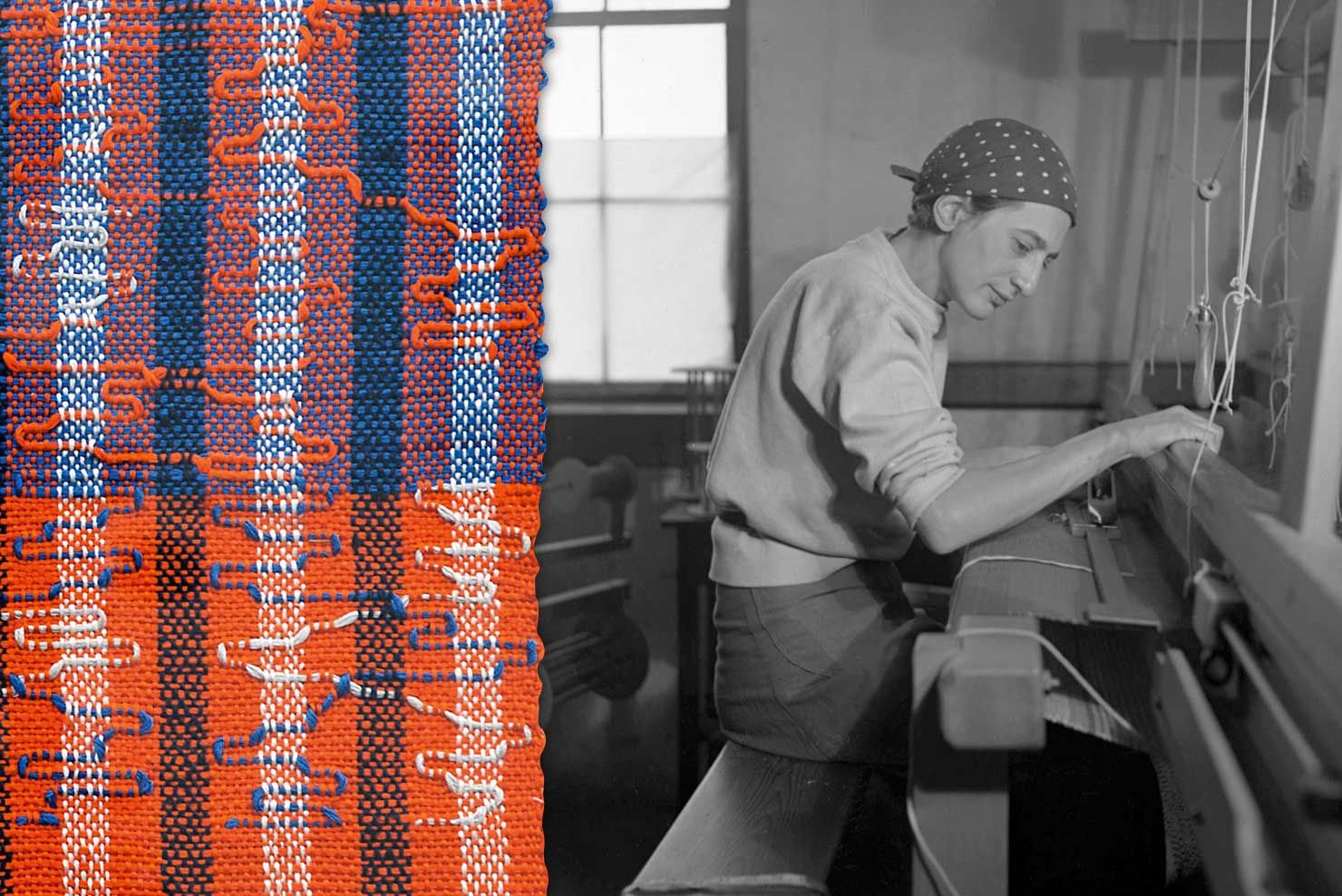
Top: Left: Otti Berger, Bauhaus textile innovator, Middle: Marianne Brandt Teapot, geometric metalwork, Right: Alma Siedhoff-Buscher Toys, playful Bauhaus design, Bottom: Left: Barcelona Chair, modernist furniture icon, Middle: Wilhelm Wagenfeld Lamp, light in pure form, Right: Anni Albers Textile, weaving as modern art
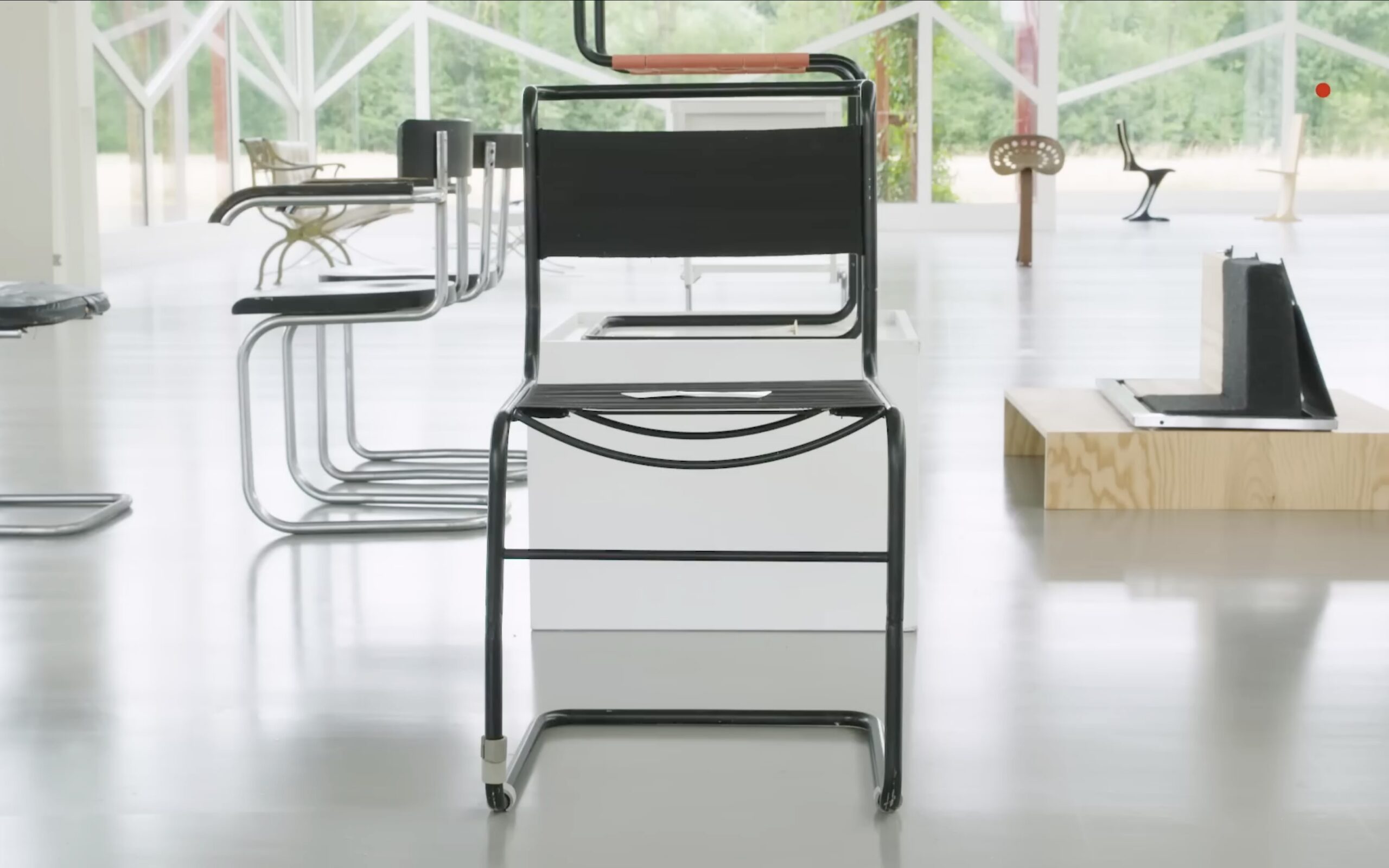
As the school evolved, it moved further toward industrial production, and that shift became one of the reasons Bauhaus had such a lasting influence. Gropius had imagined a renewed community of makers, but Bauhaus increasingly focused on manufacturing, standardization, and design for modern life on a wider scale. Furniture became one of the clearest examples. Marcel Breuer’s tubular steel chairs turned industrial material into something light, elegant, and surprisingly domestic, while Mies van der Rohe later brought a more refined architectural and furniture language to the movement. Pieces like the Barcelona chair showed that restraint could still feel luxurious, which is one of the places where Bauhaus and Art Deco come surprisingly close. Both embraced modern materials and sharp silhouettes, even if their deeper aims were different. When the school moved to Dessau in 1925, it entered its most famous phase, and Gropius’s Bauhaus building there gave physical form to many of the school’s core ideas. Glass, steel, concrete, asymmetry, and a clear expression of structure all came together in a building that still looks remarkably modern. This is the image many people now associate with Bauhaus, but it is worth remembering that this fully developed architectural language grew out of the more experimental, less settled years in Weimar.
Bauhaus was always politically vulnerable. It depended on public support, and conservative critics often saw it as too radical, too experimental, or too detached from German tradition. As politics in Germany shifted further to the right, the pressure became harder to resist. The move from Weimar to Dessau was partly about survival, and the final move to Berlin came in an even darker atmosphere. The Nazis shut the school down in 1933, treating modernism as degenerate, dangerous, and un-German. What followed was both a diaspora and a tragedy. Gropius later taught at Harvard, Mies van der Rohe went to Chicago, and László Moholy-Nagy founded the New Bauhaus there in 1937. Tel Aviv also became a major center for Bauhaus-related and International Style architecture, especially in what is now called the White City. At the same time, exile, persecution, and murder were part of this same history. Otti Berger’s murder at Auschwitz remains one of the clearest reminders that the story of Bauhaus is not only one of influence and innovation, but also one of lives destroyed by fascism.

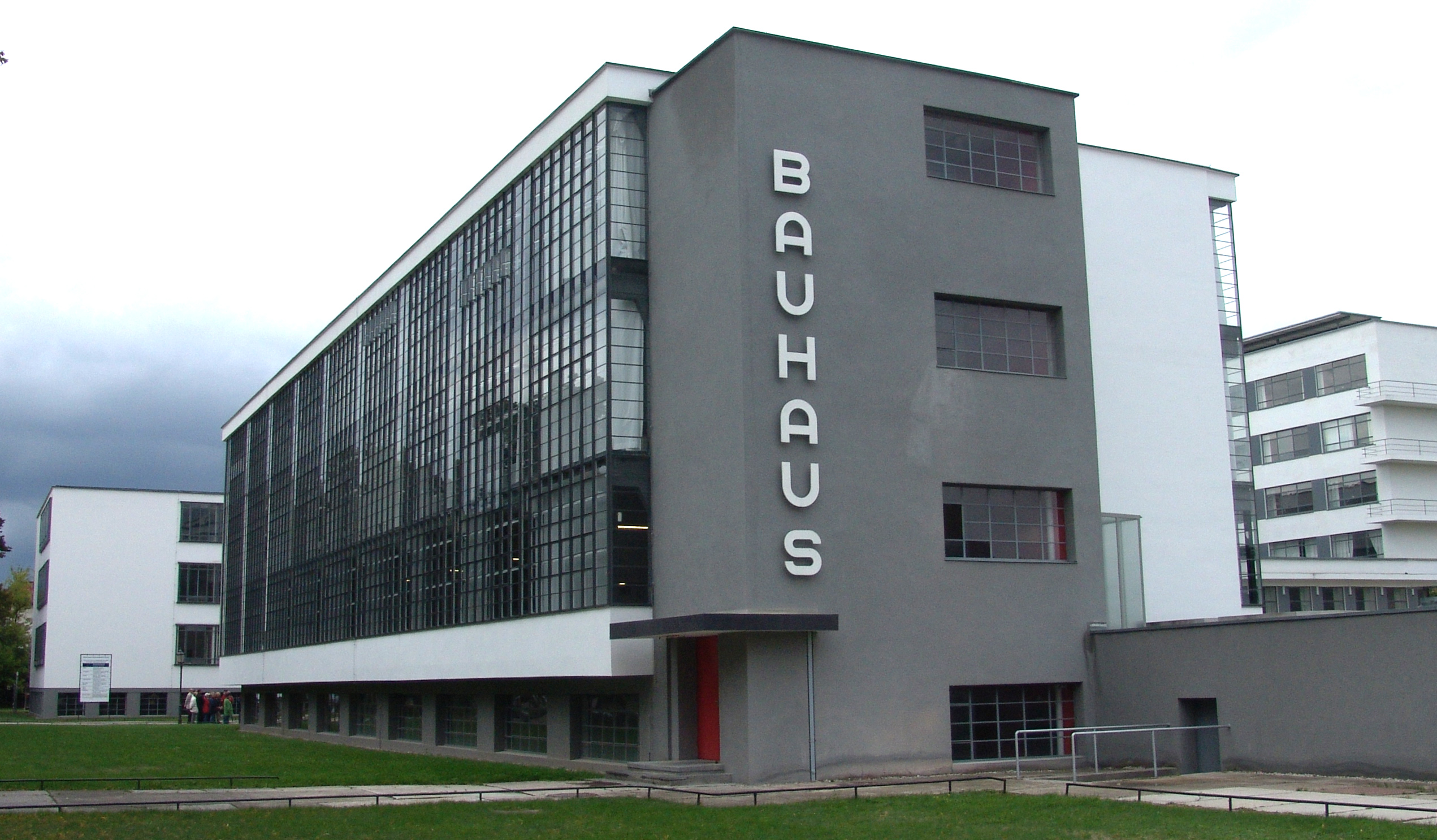
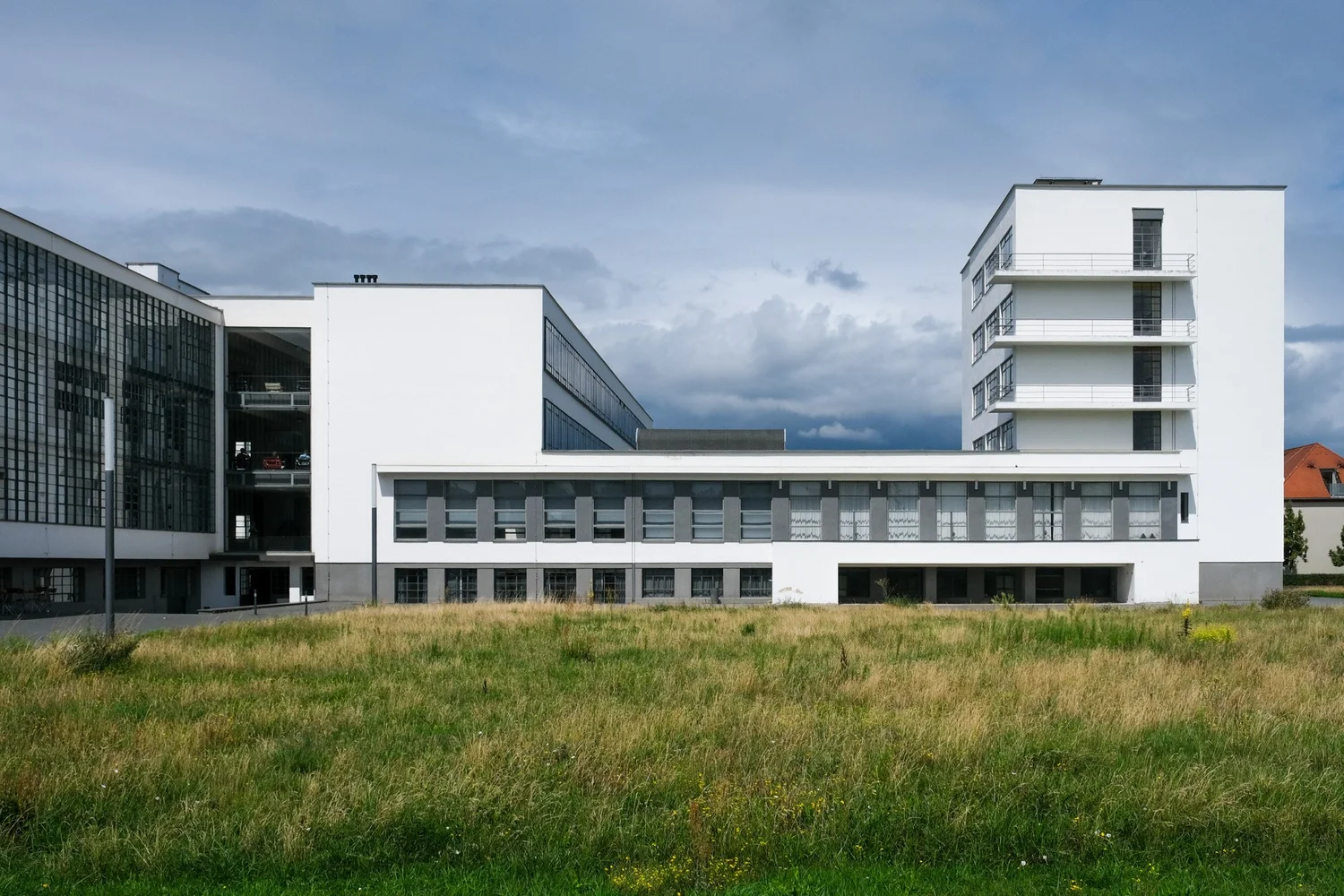
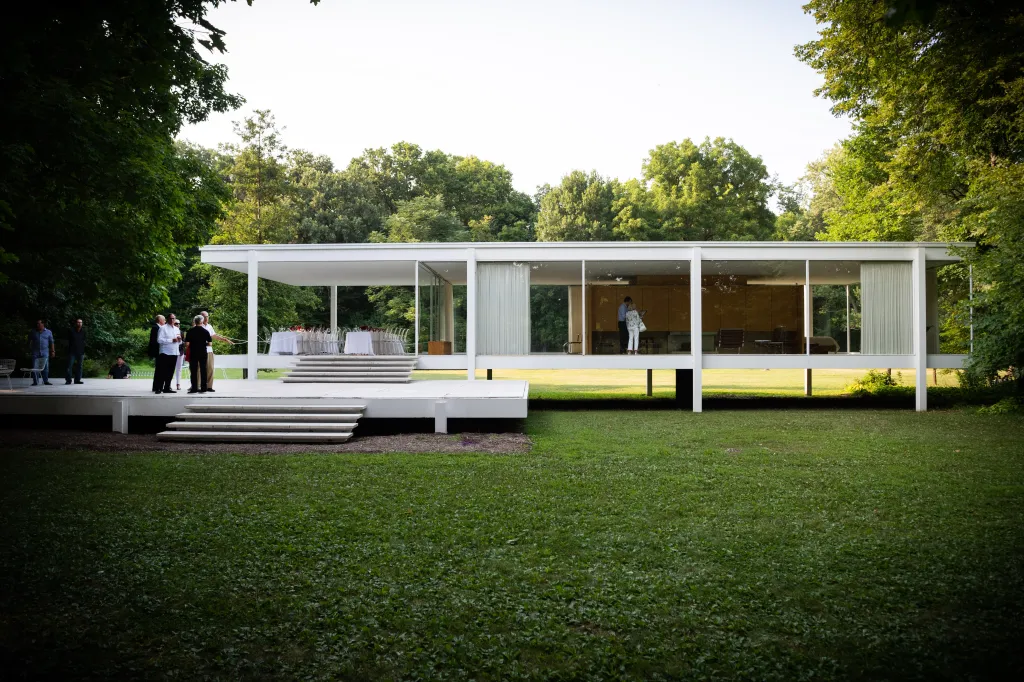

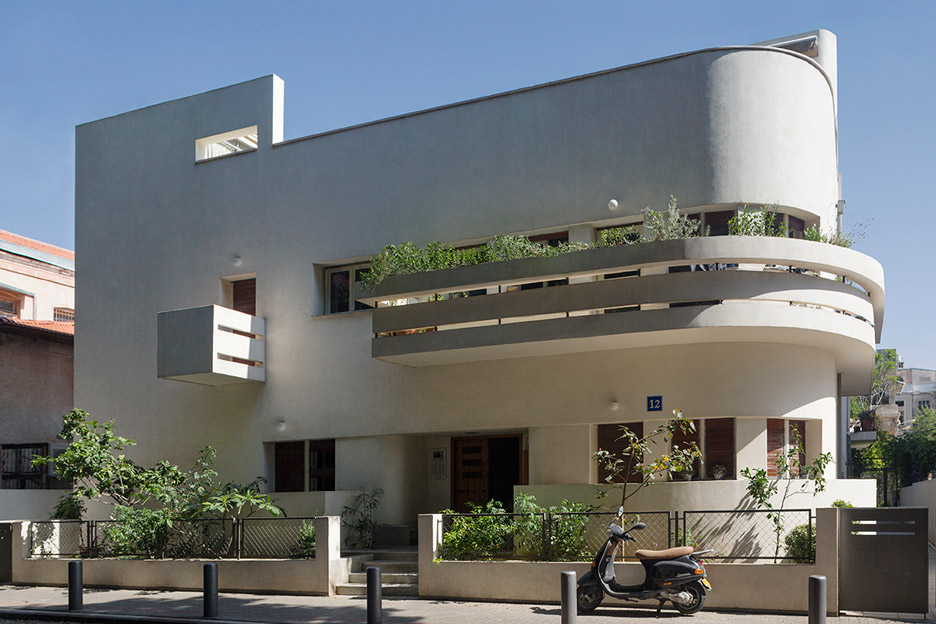
Top: Left: Handwerkerbrunnen, Weimar craft tradition, Middle: Bauhaus Dessau, main building front view, Right: Bauhaus Dessau, glass and structure from the side, Bottom: Left: Farnsworth House, Mies in America, Middle: Monument to the March Dead, Gropius and early modernism, Right: Avraham Soskin House, Bauhaus in Tel Aviv
After World War II, Bauhaus ideas continued to spread through architecture, design education, furniture, and industrial design across Europe and the United States. They blended especially well with Scandinavian modernism, where simplicity, craftsmanship, and warm materials like teak and rosewood softened some of the harder edges of early modernism. Clean lined interiors, practical furniture, and uncluttered spaces all owe something to that shared legacy. Over time, those ideas filtered into mass consumer culture as well, which is one reason people often see echoes of Bauhaus in later furniture systems, retail design, office interiors, and even flat-packed home goods. The movement began with ambitious ideas about reshaping modern life, and in many ways it succeeded. Its influence also reached far beyond furniture and buildings. Bauhaus cared deeply about typography, usability, proportion, and the shaping of objects as part of daily life, so its ideas carried naturally into industrial products, office machines, and eventually digital devices. That is why the link to Apple feels relevant. Steve Jobs cared intensely about typography, form, and the union of usefulness and beauty, and the Macintosh, iMac, MacBook, and iPhone all belong to a longer design lineage that Bauhaus helped define. The materials changed and the technology changed, but the underlying idea remained the same: everyday objects should be intelligently designed, visually clear, and satisfying to use.
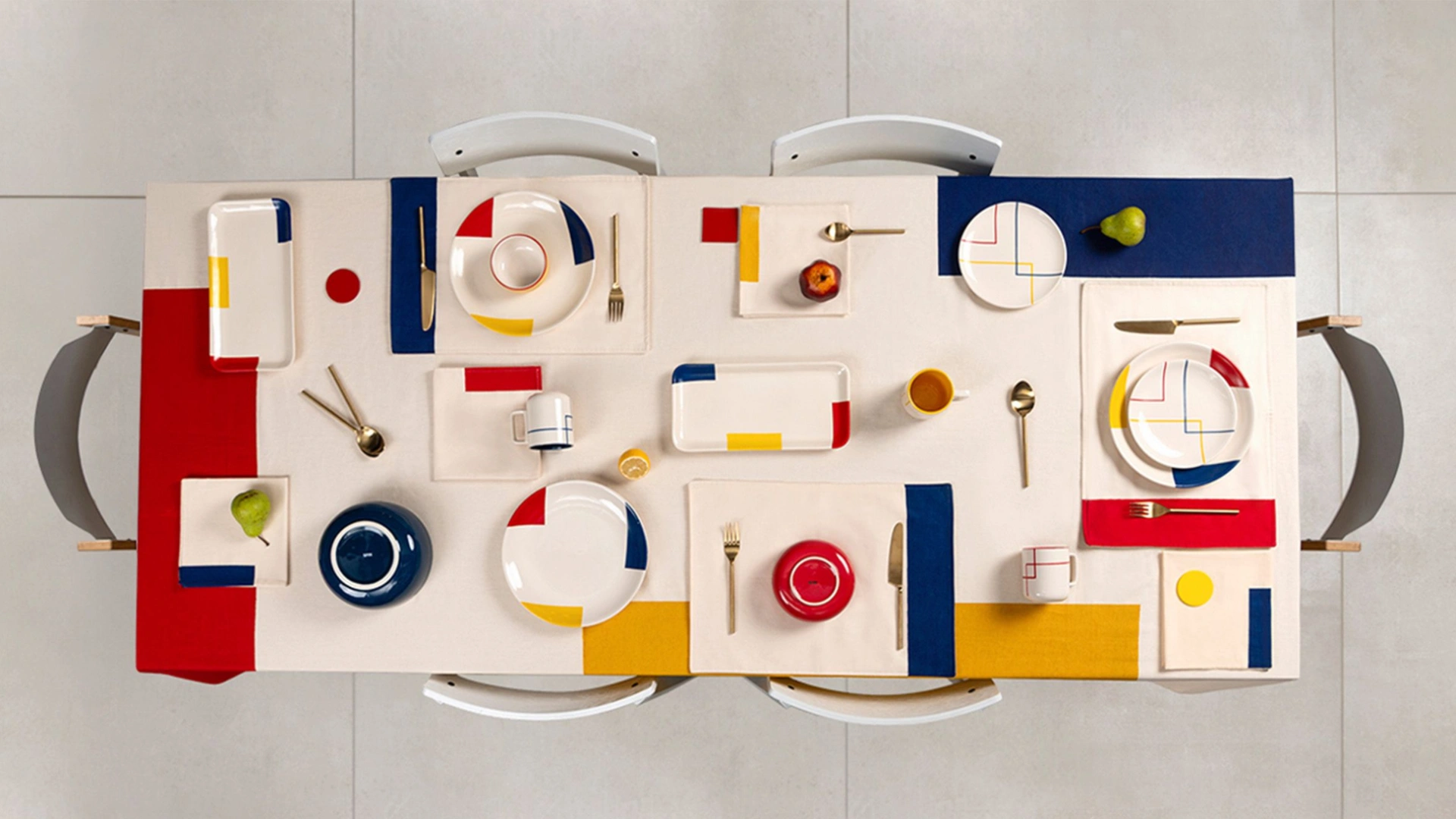
The visual afterlife of Bauhaus has shifted over time as well. The original movement could be fairly restrained, with white walls, dark lettering, steel, and glass creating a cool and controlled atmosphere. Later generations came to identify it more strongly with primary colors and basic shapes, and much of that image comes from Bauhaus graphics and teaching theories, especially the association of circles, triangles, and squares with red, yellow, and blue. That language became one of the movement’s most recognizable legacies and moved from poster design and pedagogy into museums, branding, retail, and popular culture. Seen next to Art Deco, Bauhaus reveals another side of the modern age. Art Deco turned modernity into glamour, polish, luxury, and spectacle. Bauhaus tried to shape it through clarity, structure, and useful form. One celebrated the excitement of the modern world, and the other tried to organize it. They were never as far apart as they first seemed, because both were responses to the same era and both were fascinated by industry, new materials, speed, and changing ways of life. That is part of why both still feel so alive today. They continue to shape the buildings we admire, the interiors we live in, the graphics we recognize, and the objects we use every day.
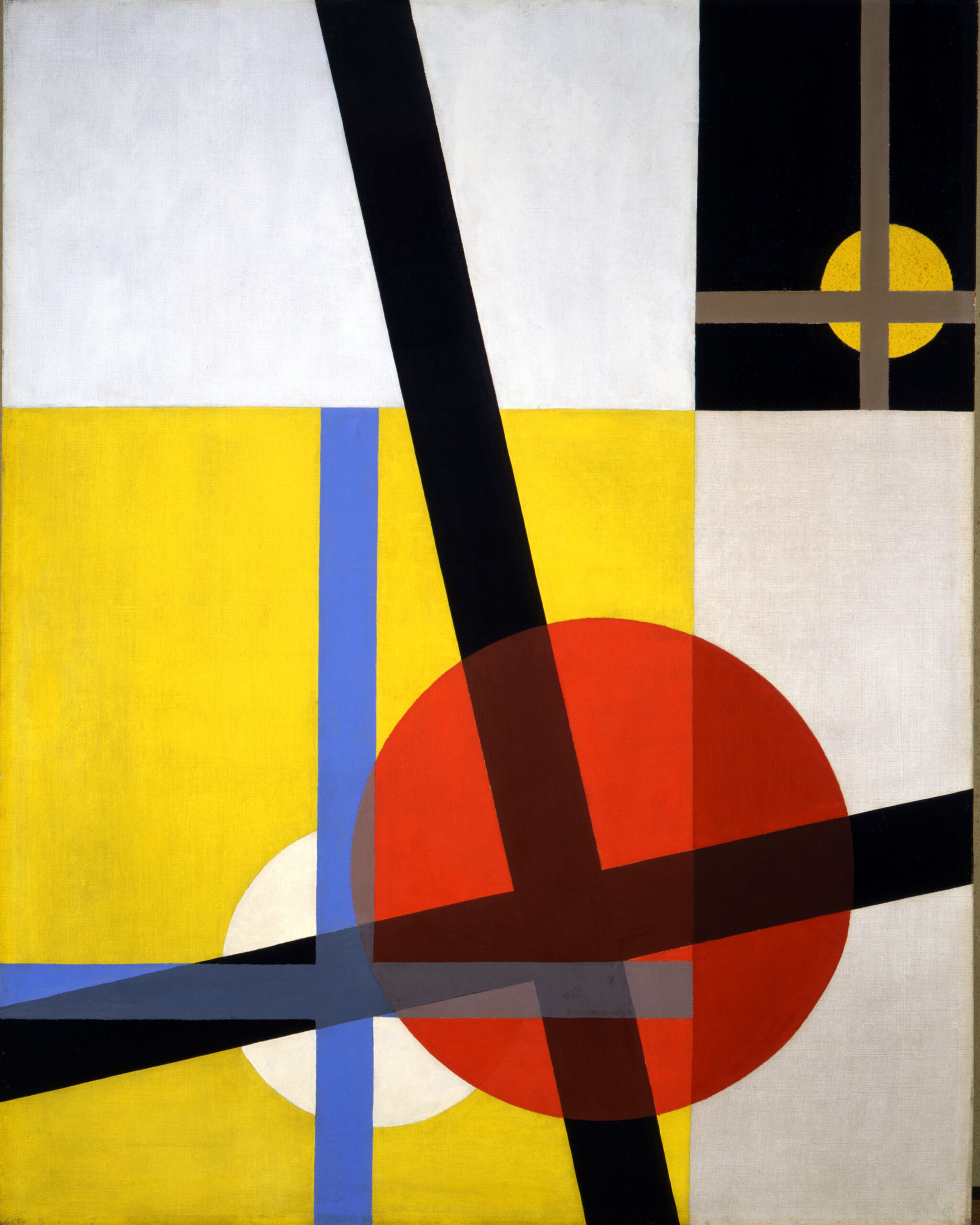
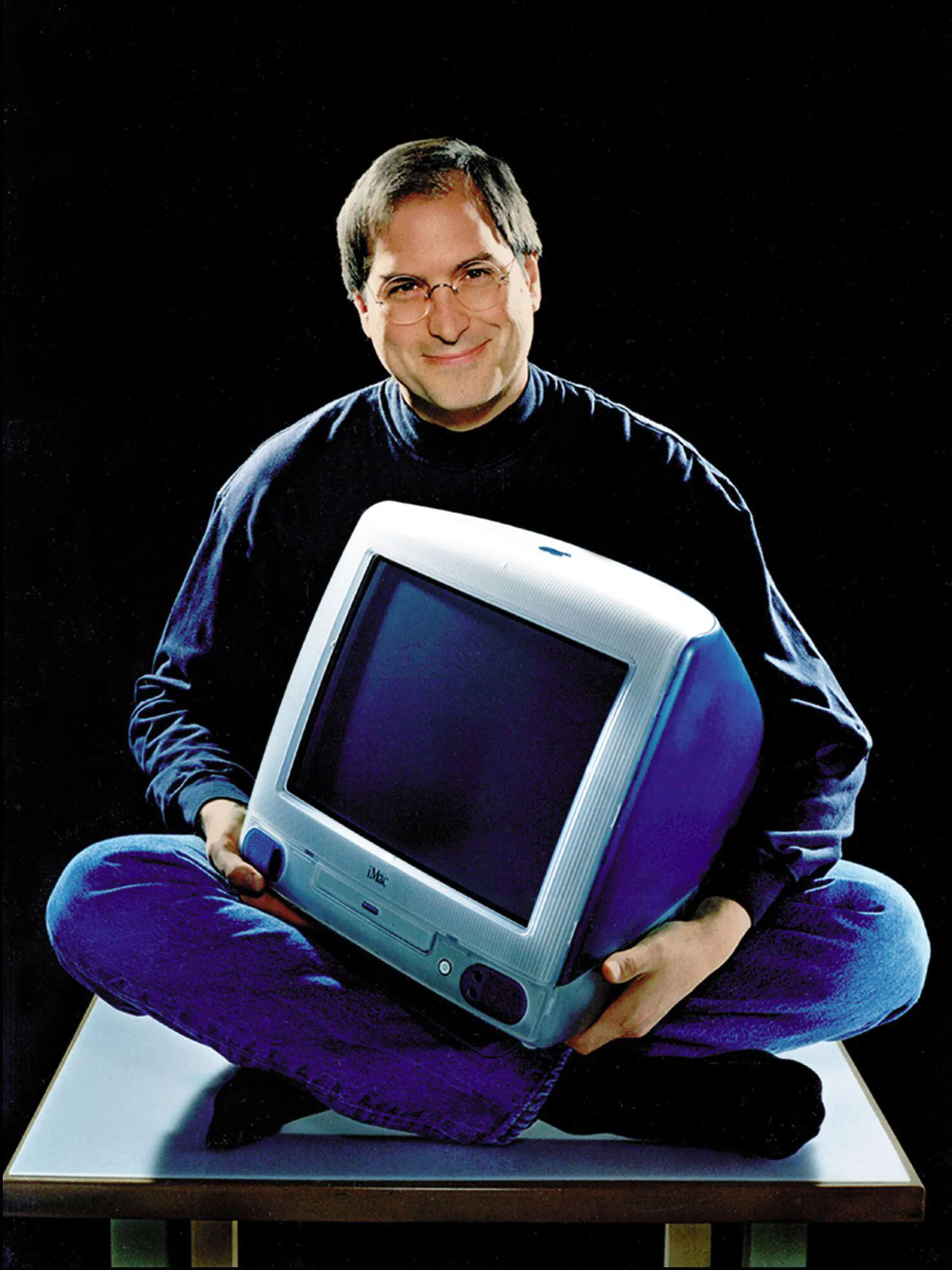
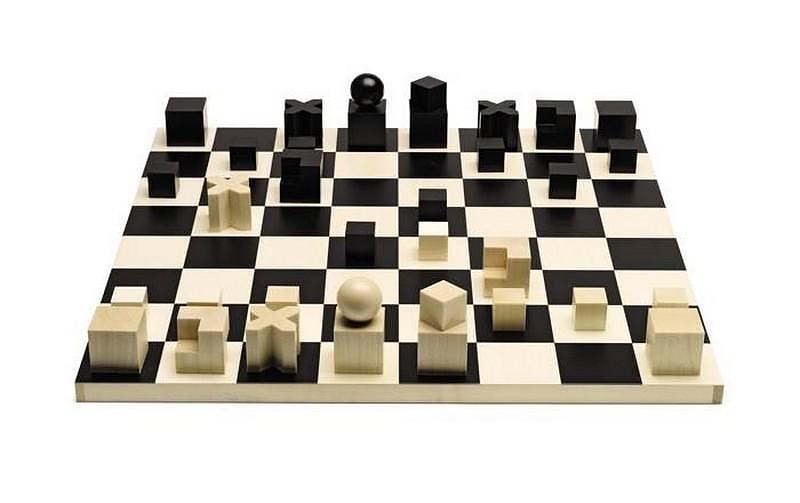



Top: Left: Bauhaus Geometric Composition, shape color and abstraction, Middle: Steve Jobs with iMac, Bauhaus ideas in technology, Right: Josef Hartwig Chess Set, geometry made playable, Bottom: Left: Michael Graves Kettle, postmodern echo of Bauhaus form, Middle: Marcel Breuer Wassily Chair, tubular steel modernism, Right: Braun SK4 Record Player, clean industrial design legacy



If you are interested in further stories of Art Deco design, collecting, and celebrating the artistry of early 20th Century:

Related Products