
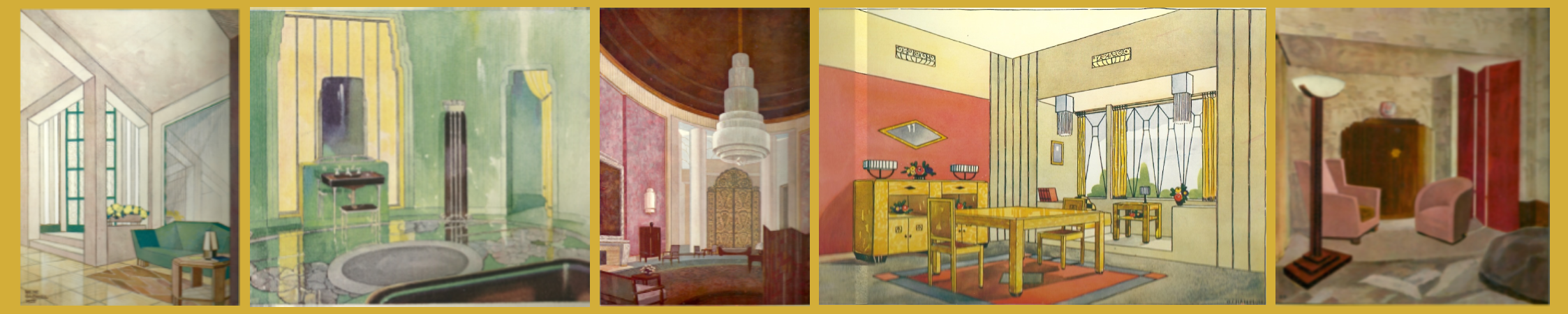
Art Deco Rugs Transformed the Floor into a Canvas for Modern Living

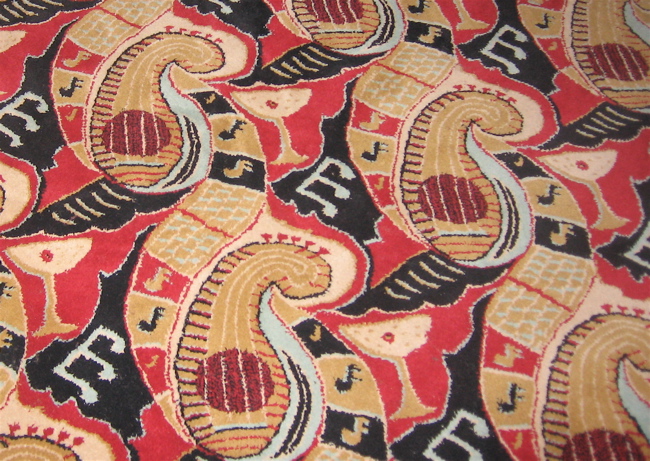
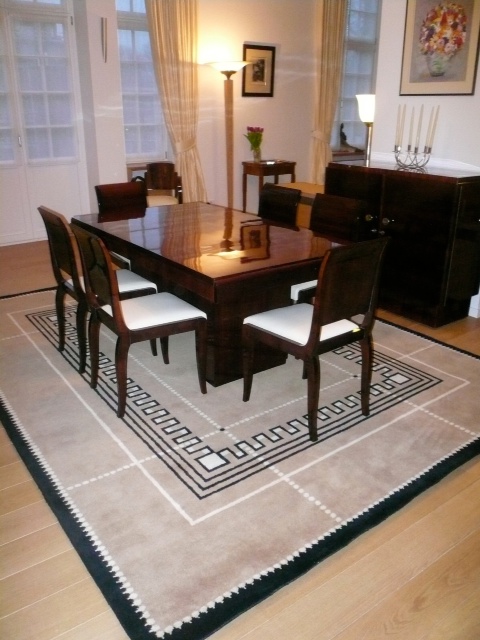
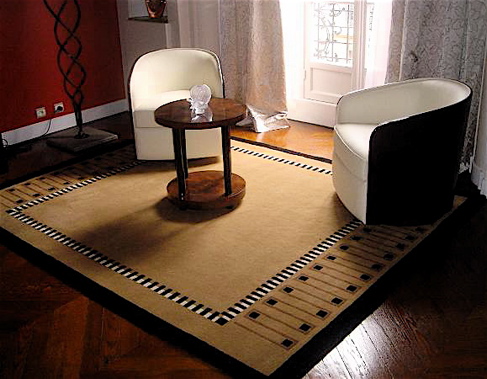
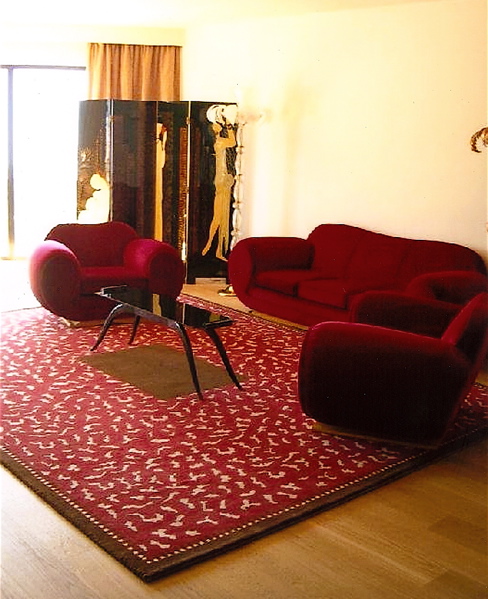
Art Deco rugs hold an important place in the history of twentieth century design because they brought the modern spirit directly to the floor. During the 1920s through the 1940s, architecture, furniture, lighting, glass, metalwork, and fashion all embraced a new language of geometry and refinement and rugs changed with them. No longer limited to traditional revival patterns or dense historical ornament, the Art Deco rug became a designed object in its own right, one that helped define the mood of a room with the same authority as a lacquer cabinet or a sculptural chandelier. Circular and oval rugs expanded the formal vocabulary even further, breaking from the convention of the rectangular floor covering and giving designers a new way to organize space, soften angular interiors, and create focal points that felt sculptural as much as decorative. In the finest interiors of the period, the floor was not treated as a passive background. It became part of the composition, reinforcing the structure and visual rhythm of the space. That represented a genuine shift in how designers and homeowners thought about the surfaces beneath their feet. Before Art Deco, a rug was expected to complement the room. During the Deco era, it was expected to help lead it. The best examples did exactly that, anchoring entire interiors with the same confidence and clarity that defined the architecture and furnishings above them. They were not accessories. They were statements and they still read as such nearly a century after the finest of them were made.

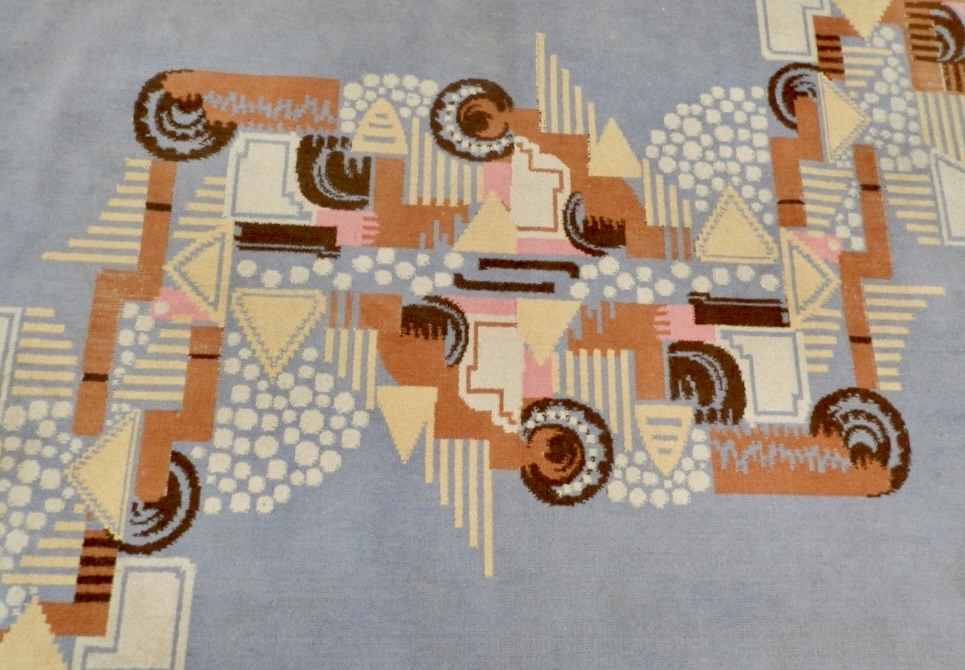

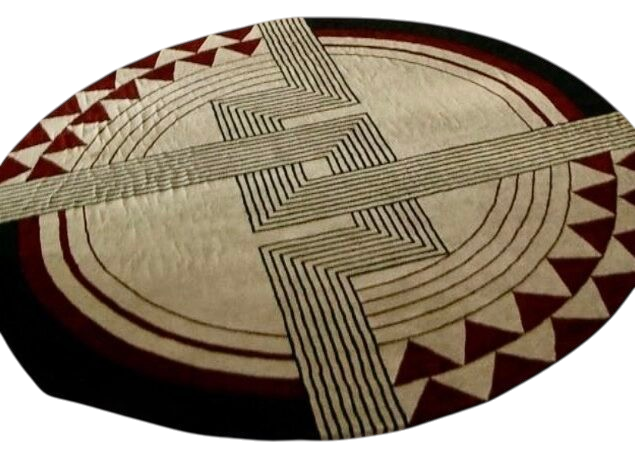


Top: Left: French Art Deco rug in azure, indigo, and sand, circa 1930, Middle: Art Deco wool rug with modernist geometric design, 1930s, Right: French Art Deco rug in earthy browns and teals, circa 1920s. Bottom: Left: Reproduction of Marion Dorn’s Art Deco rug, circa 1933, Middle: Circular rug with geometric border in Craftsman-style natural tones, Right: Circular rug with Frank Lloyd Wright-inspired geometric design
What gives these rugs their lasting power is the clarity of their design language. Art Deco favored order, control, and stylized movement, and in rugs, that translated into stepped forms, zigzags, and patterns that feel almost architectural in their conception. Many seem to echo the age that produced skyscrapers, ocean liners, glamorous apartments, jazz clubs, and movie palaces. Even when designers drew from flowers, leaves, clouds, or other natural forms, they translated them into something sharper and more disciplined than what earlier decorative traditions would have allowed. The result was ornament without clutter, movement without chaos. Color played an equally important role. The period had a taste for drama, and rug designers answered with memorable combinations of black, ivory, jade green, ruby, cobalt, gold, silver gray, tobacco brown, coral, and rust. Some carpets used strong contrast to heighten their graphic effect, while others relied on tonal subtlety to create atmosphere. A well-designed Deco rug did not simply occupy space. It established mood, bringing warmth to a polished interior of chrome, glass, and marble, or adding sophistication to a room filled with rich wood and velvet upholstery. Because the best examples are rooted in strong composition rather than novelty, their colors and patterns continue to work beautifully in both period rooms and contemporary settings.


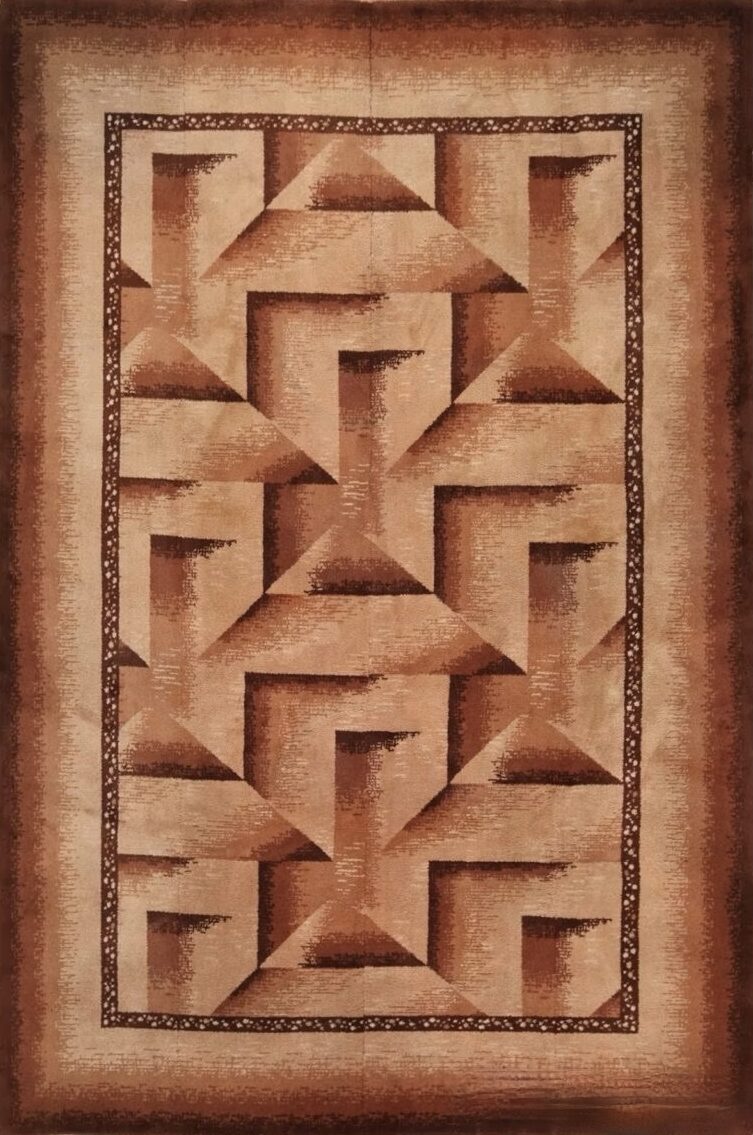
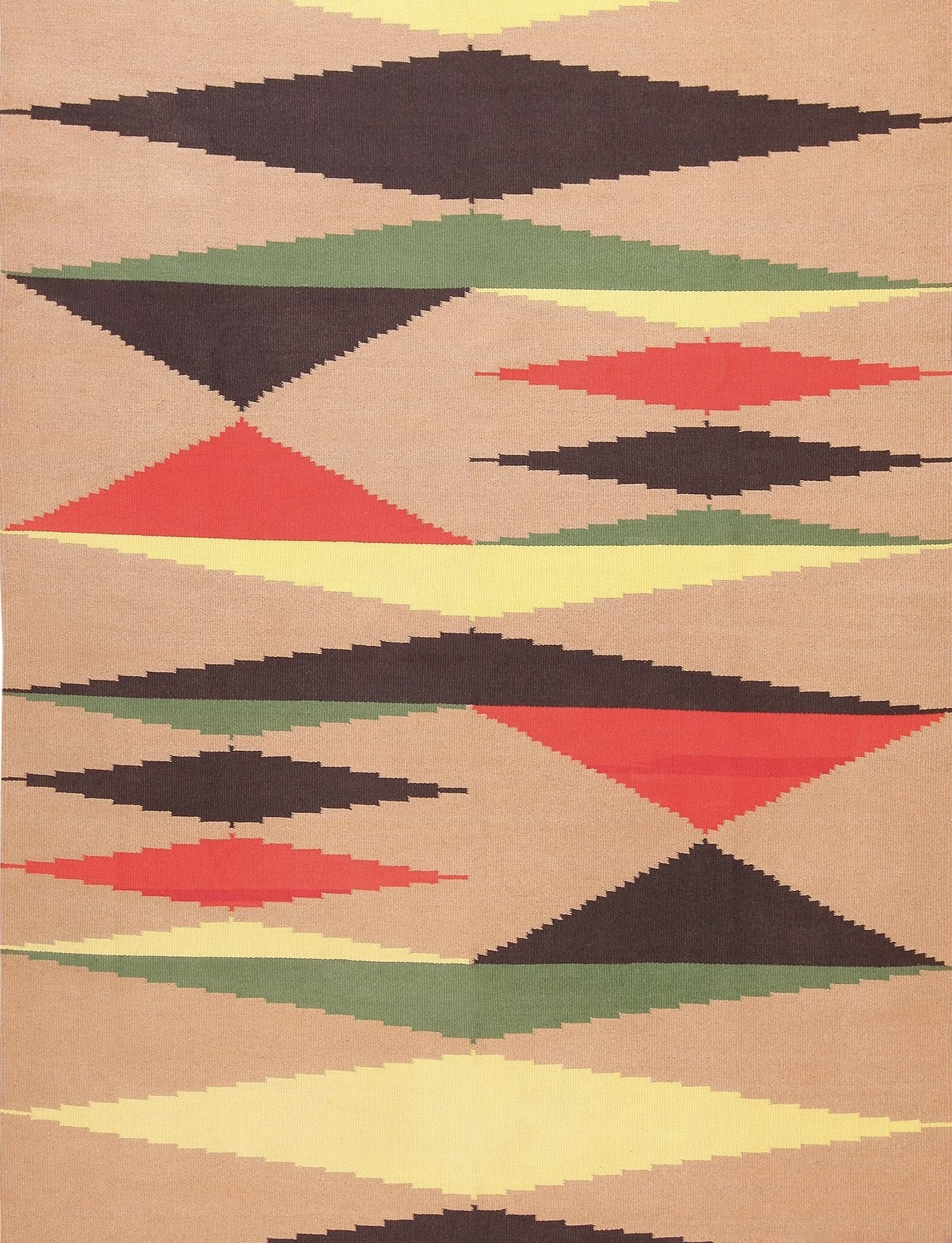

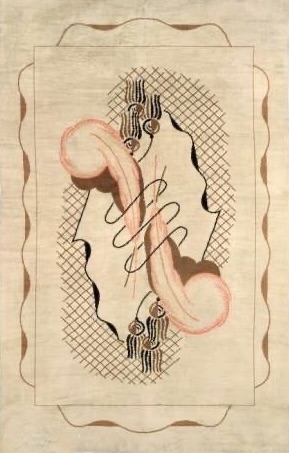
Top: Left: Frank Lloyd Wright Coonley Playhouse rug, 1912 design, Middle: Round geometric rug by Ilya Bolotowsky, Right: Art Deco Wilton rug with checkerboard geometry. Bottom: Left: French Art Deco flat-woven kilim, Middle: Czechoslovakian Art Deco rug, 1930s, Right: English Modernist rug by Ronald Grierson, circa 1935
Construction is central to the story of Art Deco rugs, and understanding how they were made deepens the appreciation of what they achieved. Many of the finest period examples were hand tied rugs, also called hand knotted rugs, and that method gives them a richness that is immediately felt underfoot and seen in the precision of the design. Each knot is individually formed on the loom, creating a dense surface with real depth, subtle variation, and long-lasting durability that no shortcut can replicate. This technique allowed workshops to achieve crisp geometry, controlled color transitions, and a luxurious pile that supported the visual importance of the pattern. A hand-tied Art Deco rug was not just a practical furnishing. It was a serious decorative object, consistent with the period’s broader commitment to craftsmanship and luxury. Indian workshops proved especially adept at this work, drawing on a centuries-old weaving tradition to produce Art Deco rugs that combined geometric modernism with exceptional hand-knotted quality. Their quality of execution is part of what separates an original period carpet from the many later interpretations inspired by the style. Tufted rugs belong to a later continuation of the story and deserve mention as well. Tufting made it possible to produce rugs more quickly and at a lower cost, while still capturing the strong geometry and bold visual language of the period. In many revival interiors, tufted rugs helped keep Deco design alive and accessible, echoing the stepped forms, dramatic borders, and striking color fields of earlier hand-tied models, even if they did not carry the same artisanal weight. They show that the language of Art Deco was strong enough to survive changing methods of production and changing markets, while still retaining its visual authority.

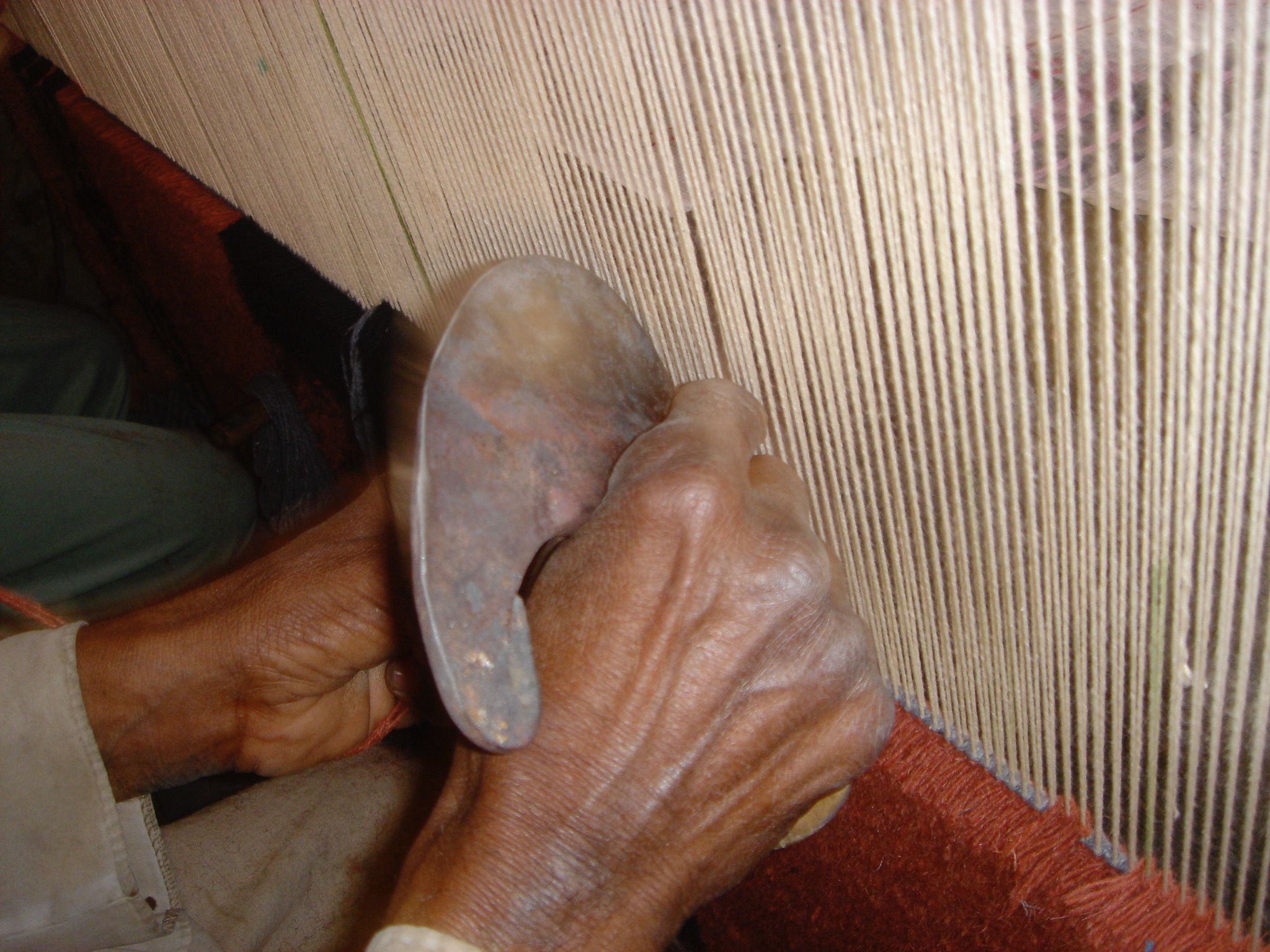

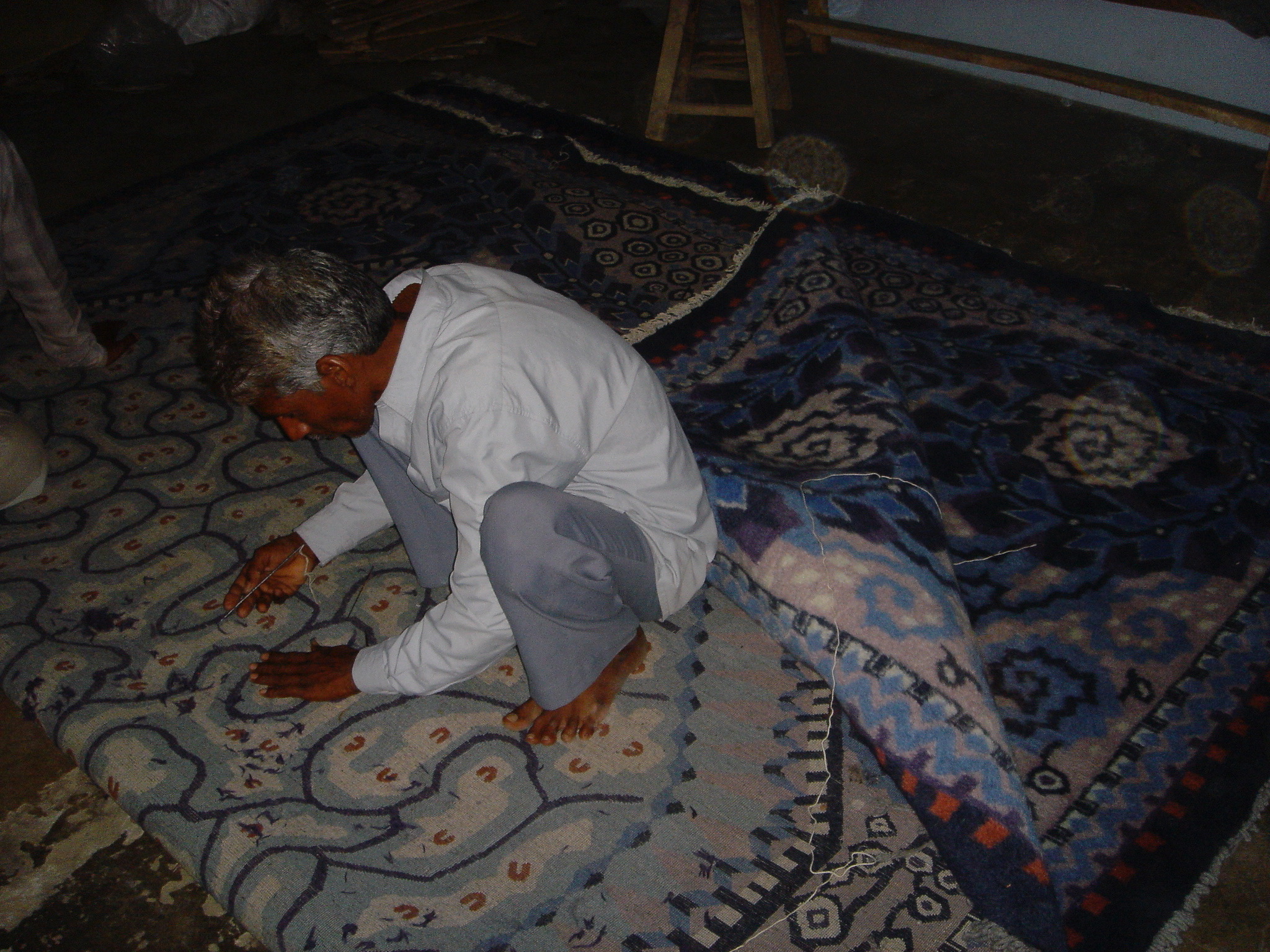
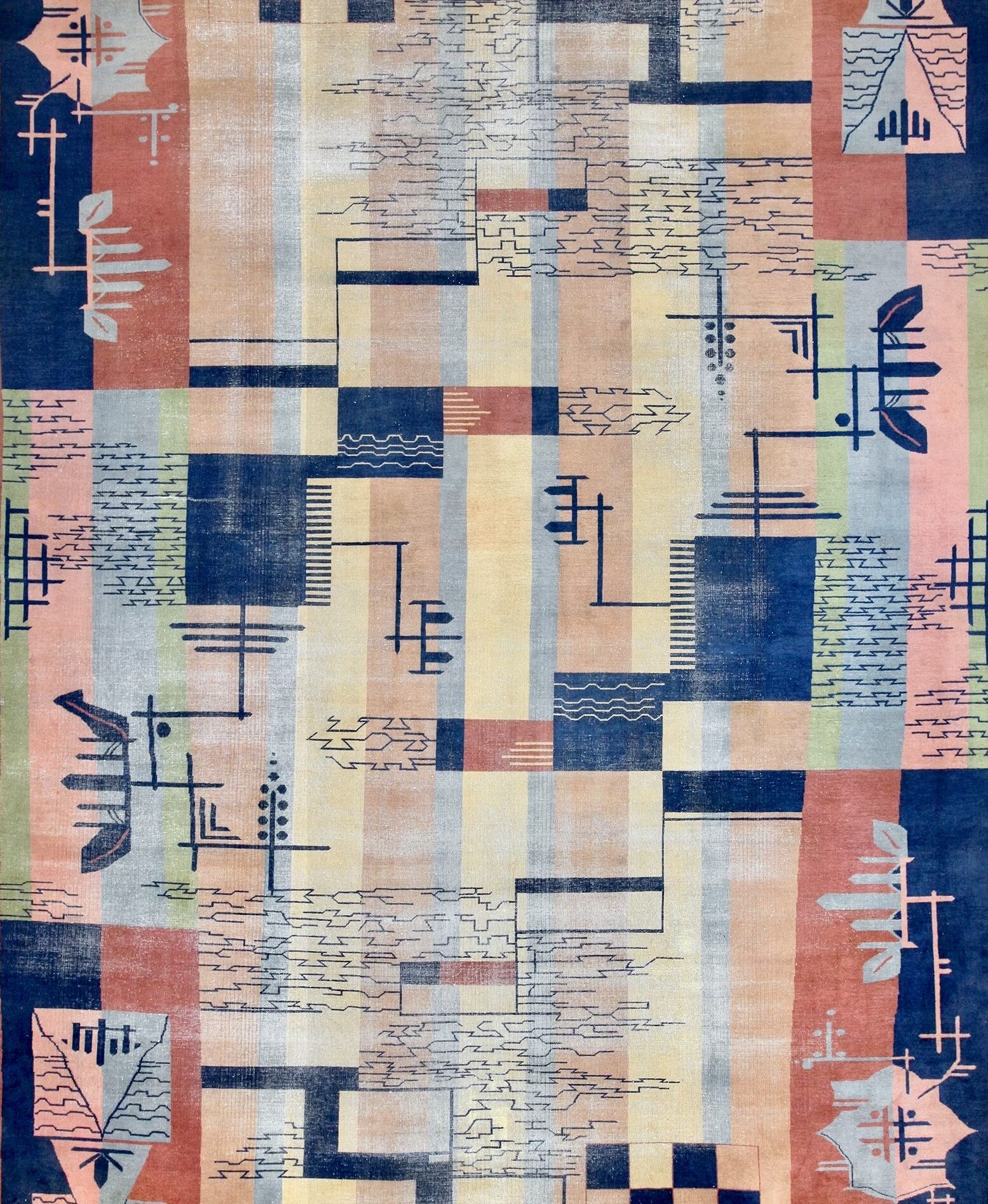

Top: Left: Scandinavian Swedish flat-weave kilim, Middle: Hand-weaving on a traditional loom, Right: Indian Art Deco rug, circa 1920s. Bottom: Left: Traditional rug making by hand, Middle: French Art Deco Savonnerie, circa 1925, Right: Hand restoration of a patterned carpet
French Art Deco rugs represent one of the most refined and intellectually ambitious expressions of the style. In France, the carpet was often conceived as part of a complete decorative environment in which furniture, wall treatments, lighting, and architecture were all considered together, and the rug was expected to participate as a full member of that ensemble. Designers like Ivan da Silva-Bruhns, Paule Leleu, Christian Bérard, and Emile Jacques Ruhlmann approached the rug not as a finishing touch but as a compositional anchor, creating pieces that feel designed rather than merely decorated. Their patterns could be abstract, architectural, and intensely modern, yet they remained grounded in excellent materials and decorative discipline. A French Art Deco rug does not rely on excess. It achieves luxury through composition, refinement, and the careful control of line and color. French workshops were also among the first to treat the rug as an artistic statement on equal footing with painting and sculpture, which gave these pieces a seriousness that the broader market did not always share. The results were rugs that are tailored, deliberate, and often surprisingly bold in their willingness to strip away the decorative conventions that earlier generations had taken for granted. For collectors and historians, French Deco rugs remain among the most sought-after examples in the field, because they represent a moment when art, and design ambition converged on a single surface with remarkable clarity.
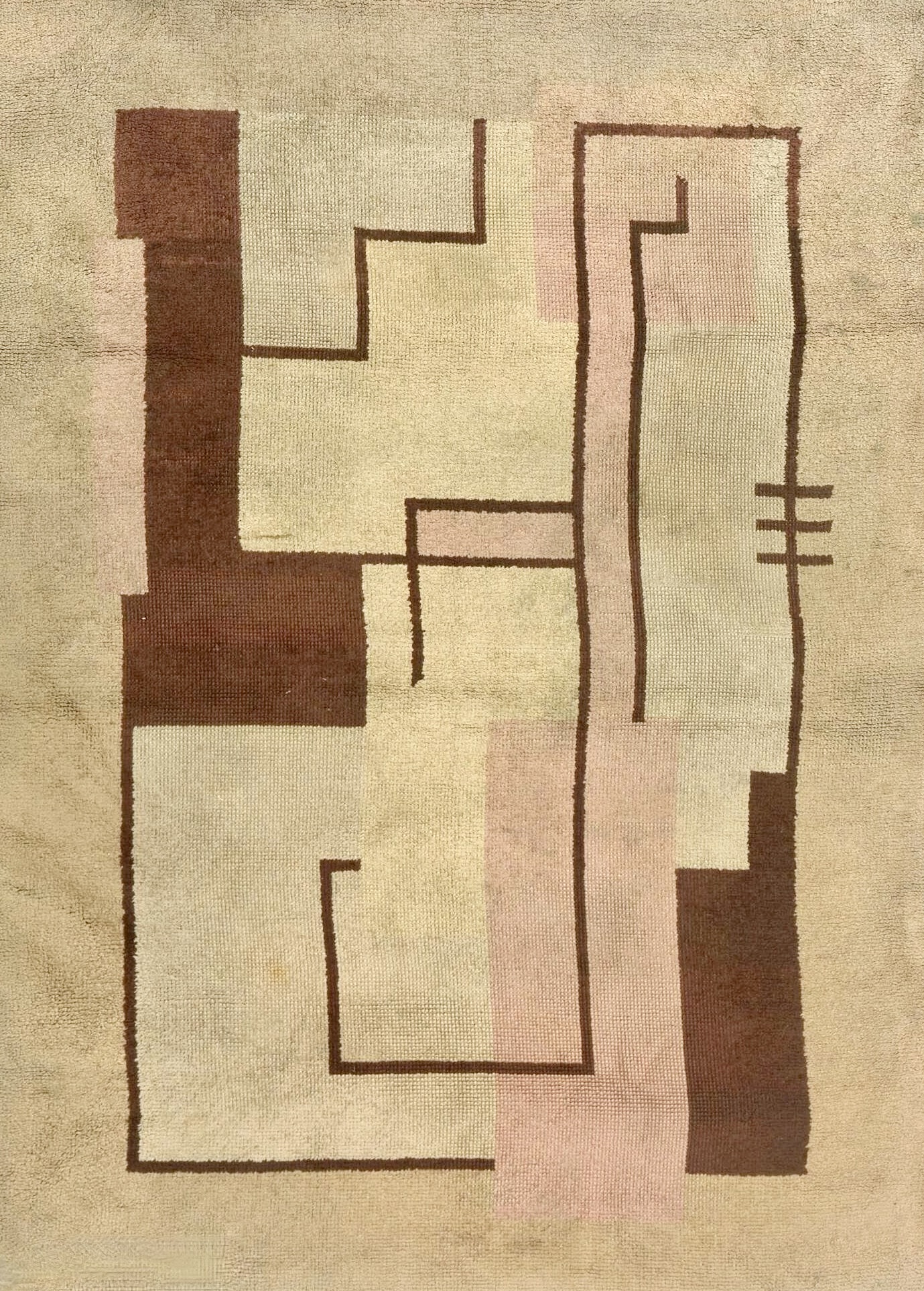
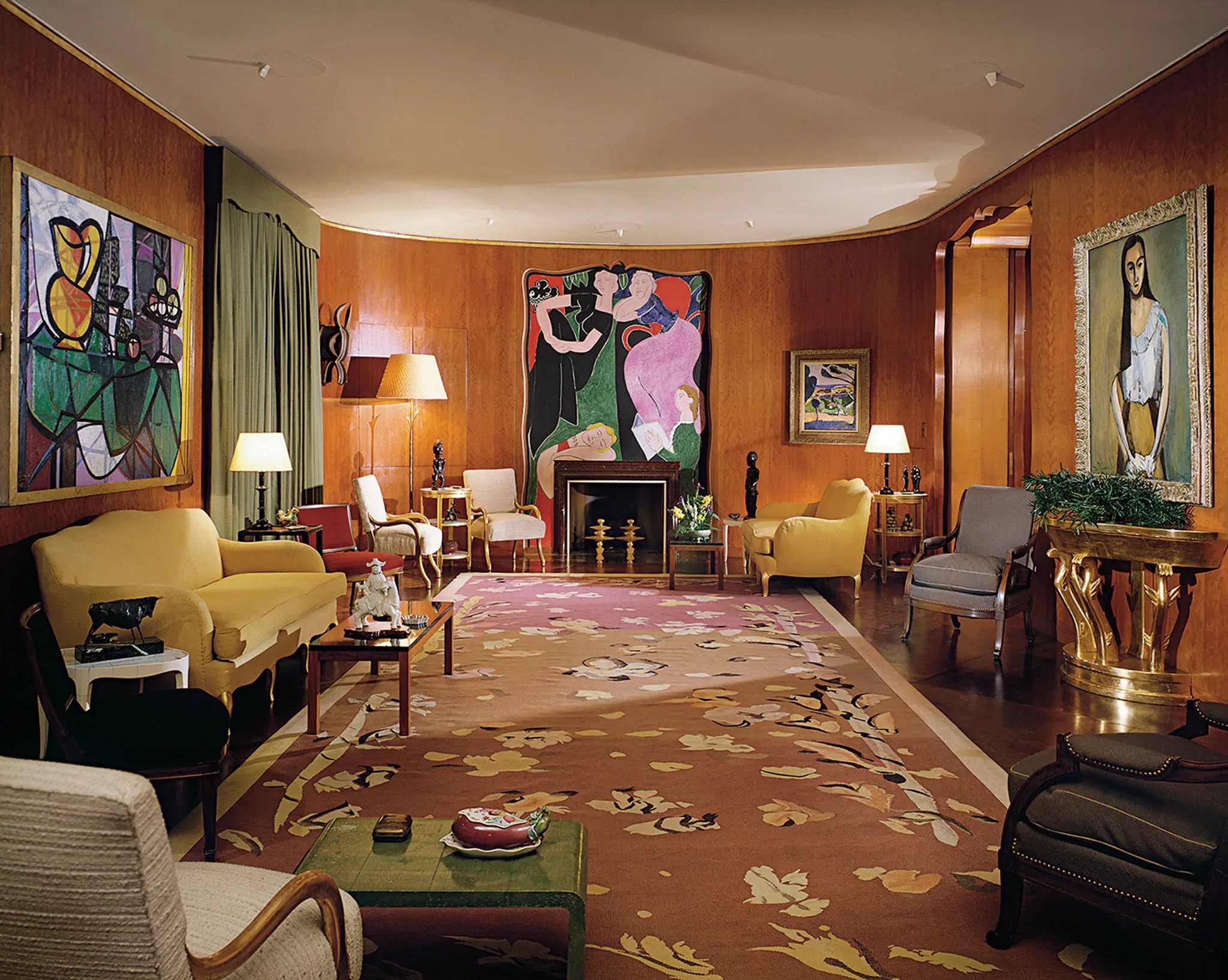
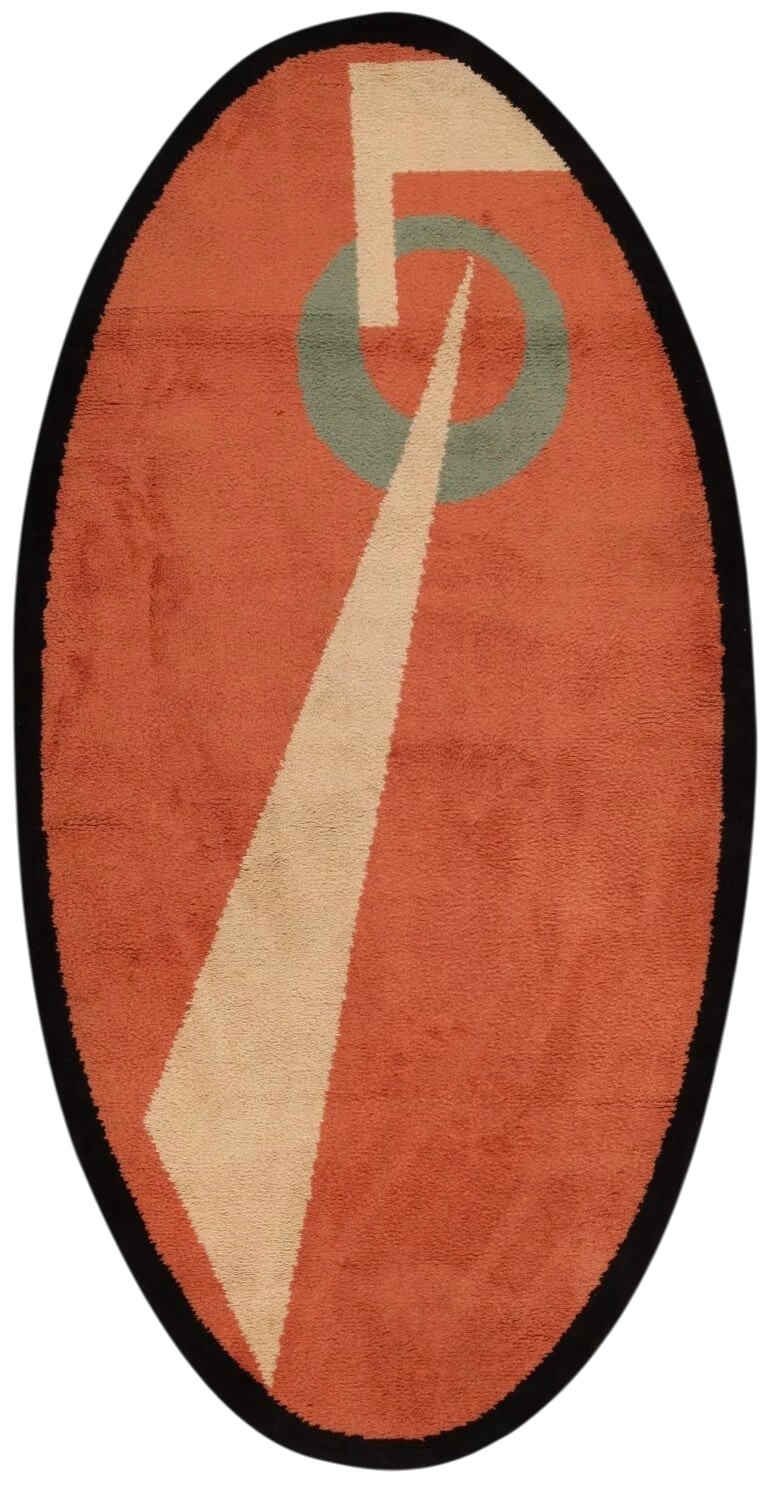

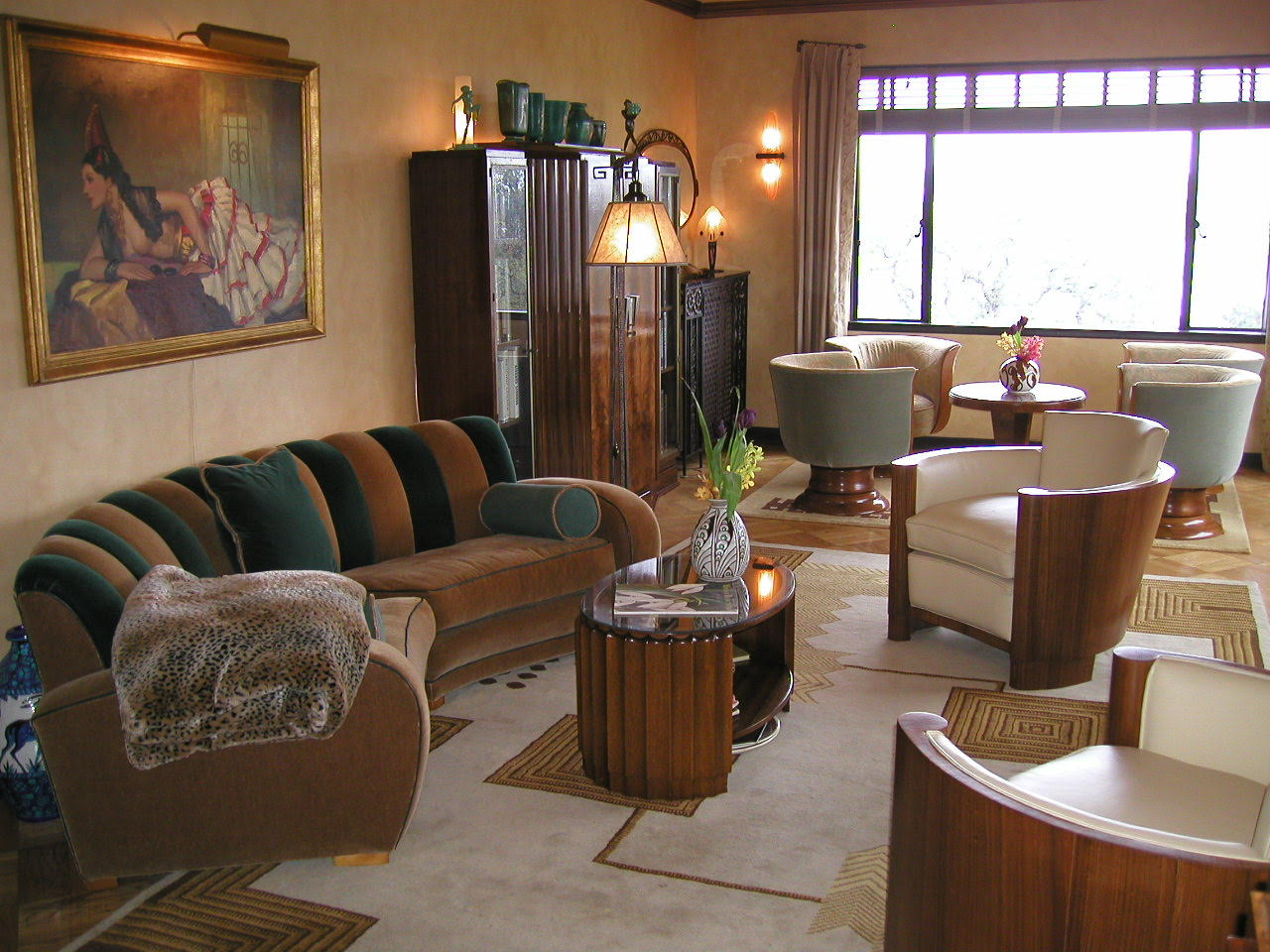
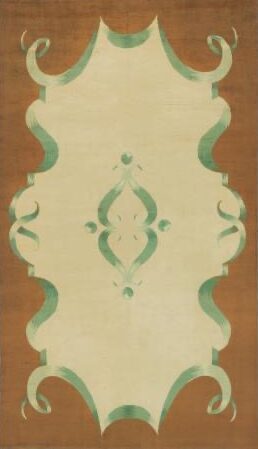
Top: Left: French Art Deco Savonnerie, circa 1928, Middle: Nelson A. Rockefeller living room designed by Jean-Michel Frank, circa 1938, Right: French Art Deco rug in coral, green, ivory, and black, 1920s. Bottom: Left: Art Deco Savonnerie in the manner of Ivan da Silva Bruhns, 1920s, Middle: Art Deco rug in a period-styled interior, Right: French Art Deco Savonnerie by André Arbus, circa 1937
Among the most distinctive branches of the Art Deco rug story are the Chinese Nichols rugs, produced in cities like Tianjin and Shanghai during the 1920s through the 1940s and closely associated with the Western export market. These rugs developed a character that was both international and deeply individual, drawing from centuries of Chinese decorative tradition while absorbing the graphic boldness and modern geometry of Western Deco taste. Chinese Nichols rugs often feature open fields, with bold borders. Stylized botanical forms, clouds, vases, dragons, flowers, and symbolic imagery, are presented with clarity and restraint. Their use of negative space is one of their most attractive and recognizable qualities. Rather than overwhelming the eye with density, many of these rugs allow a single motif or a small group of elements to sit within a broad field of color, This creates a sense of balance and sophistication that feels strikingly modern even today. The palette can be especially memorable, with deep blues, golds, browns, corals, and soft neutrals arranged in ways that are both elegant and confident. In the best examples, traditional Chinese symbols are re-imagined with a graphic sensibility and vibrant, contrasting jewel tones that place them firmly within the Deco era while honoring their cultural origins. For modern collectors, Chinese Nichols Deco rugs hold a particular appeal because their restrained compositions and balanced color work translate so naturally into contemporary rooms.


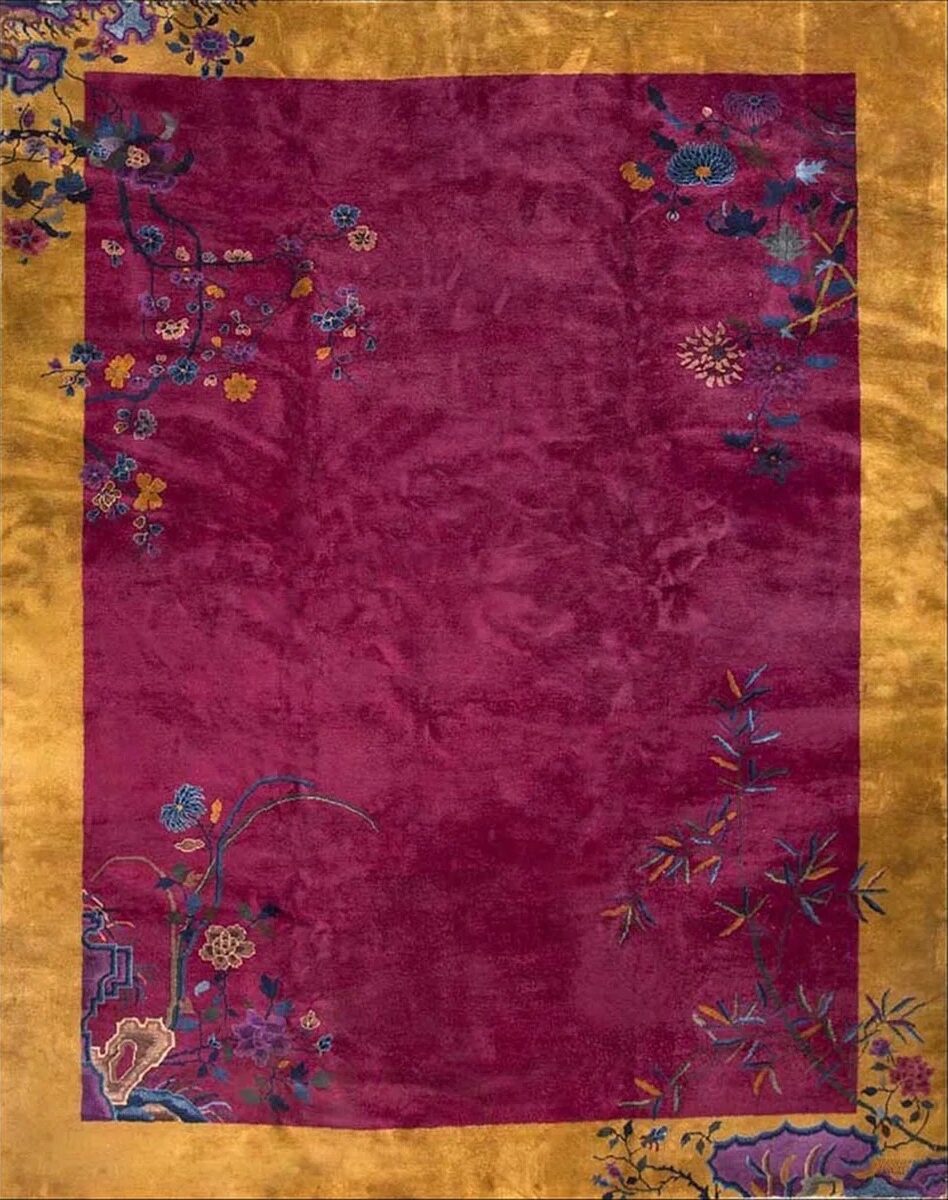


Top: Left: Chinese Art Deco rug with red field and blue border, Middle: Nichols Art Deco rug with green field and purple border, 1920s, Right: Chinese Art Deco rug attributed to Walter Nichols, circa 1920s. Bottom: Left: Chinese Art Deco rug with navy field and floral motifs, Middle: Chinese Art Deco pictorial rug in hand-tufted wool, Right: Chinese rug with Dragon and Phoenix design
American Art Deco rugs add another important dimension to the story, especially in public spaces where design was meant to impress on a grand scale and reach audiences far beyond the private home. In the United States, Deco moved naturally into lobbies of hotels, office buildings, department stores, apartments and entertainment venues. American interiors often embraced a more commercial and theatrical interpretation of the style than what was typical in France or China. The American approach valued pattern, rhythm, glamour, and strong visual effect, and rugs in these settings were expected to do far more than provide comfort. They had to support the architecture, reinforce the atmosphere, and guide the movement of people through large, often dramatic spaces. Movie theater carpets deserve special attention within that story. During the Deco period, cinemas were among the most architecturally ambitious public interiors of the age, designed as complete environments in which lighting, murals, metalwork, furnishings, and floor treatments all worked together to create a sense of glamour and escape. The carpets used in these theaters were often machine-made rather than hand-tied, but their design importance was substantial, repeating patterns, rich color, and strong directional movement that helped extend the architecture and heighten the excitement of the space. In these settings, the rug became part of the theatrical experience itself. American movie theaters taught an entire generation to see carpeting as part of modern design, not just as a utilitarian surface.


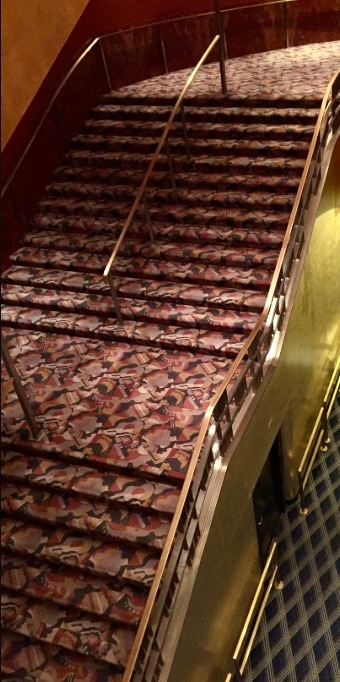
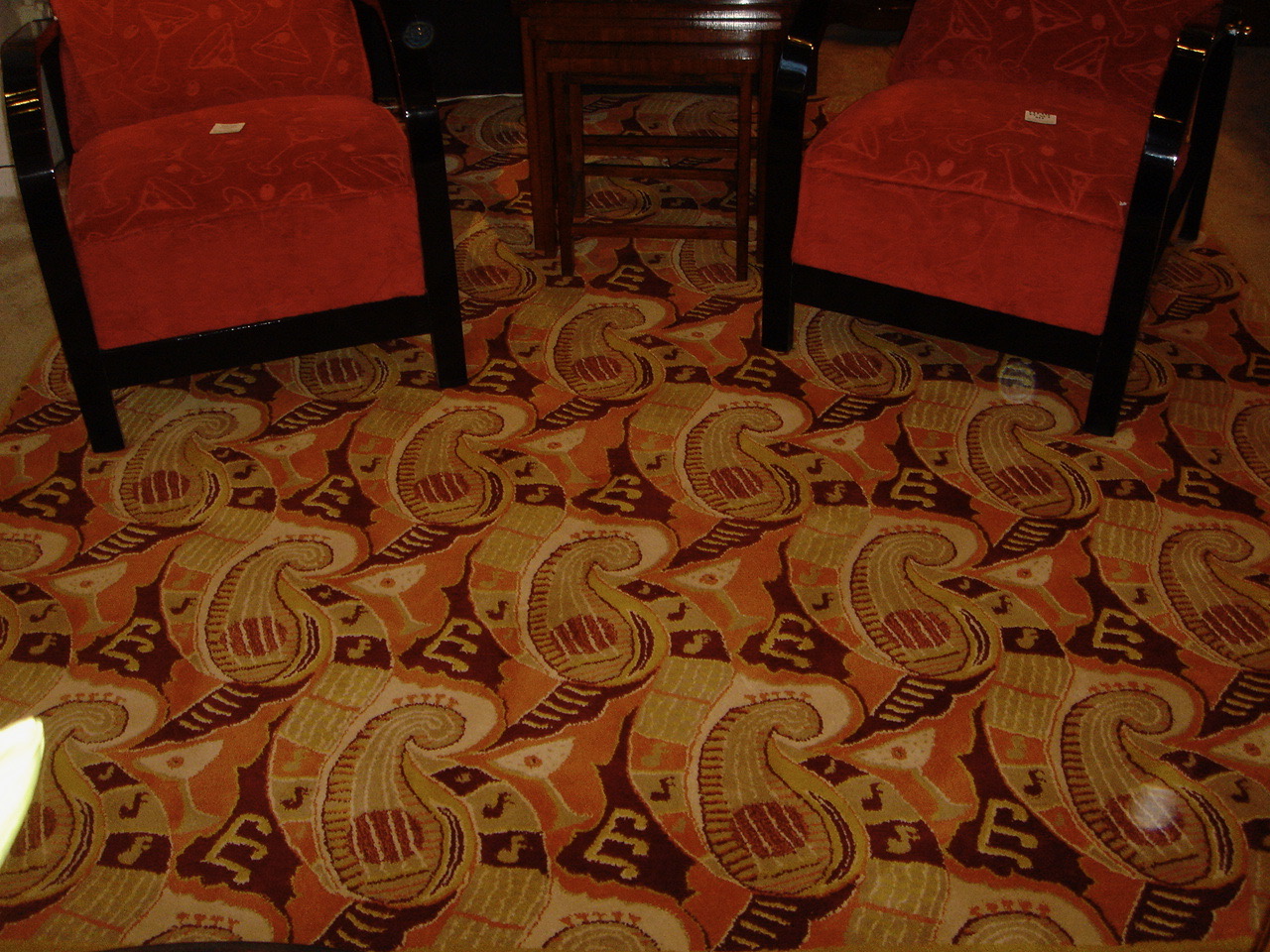
Top: Left: Art Deco carpet detail, Paramount Theatre, Oakland, California, Middle: Lobby of the Warner Theatre, Torrington, Connecticut, Right: Ruth Reeves carpet detail, Radio City Music Hall grand foyer, 1932. Bottom: Left: Lobby of the Orinda Theatre, Orinda, California, Middle: Main staircase, Radio City Music Hall, New York City, Right: Art Deco Collection Martini Club Rug
Art Deco revival rugs form an important chapter of their own, showing how the design language of the period continues to inspire long after the original era has ended. While original Deco rugs from the 1920s through the 1940s remain the most historically significant, revival examples carried forward the same fascination with bold geometry, stepped forms, and glamorous surface effect. These later rugs were often produced in tufted or machine-made versions, though some were also woven with high-quality craftsmanship, and they helped introduce Deco style to new interiors in decades when the original pieces were becoming increasingly scarce and collectible. In many cases, revival rugs do not attempt to copy period examples exactly. Their importance lies in proving that Art Deco never truly disappeared from the vocabulary of interior design. The geometry holds. The proportions hold. The sense of confidence and structure that made these rugs compelling in the 1920s continues to make them compelling today, whether in an original hand-tied example from the period or a thoughtful modern reinterpretation. Revival rugs are part of the proof that the best Art Deco design was never a trend. It was a standard.


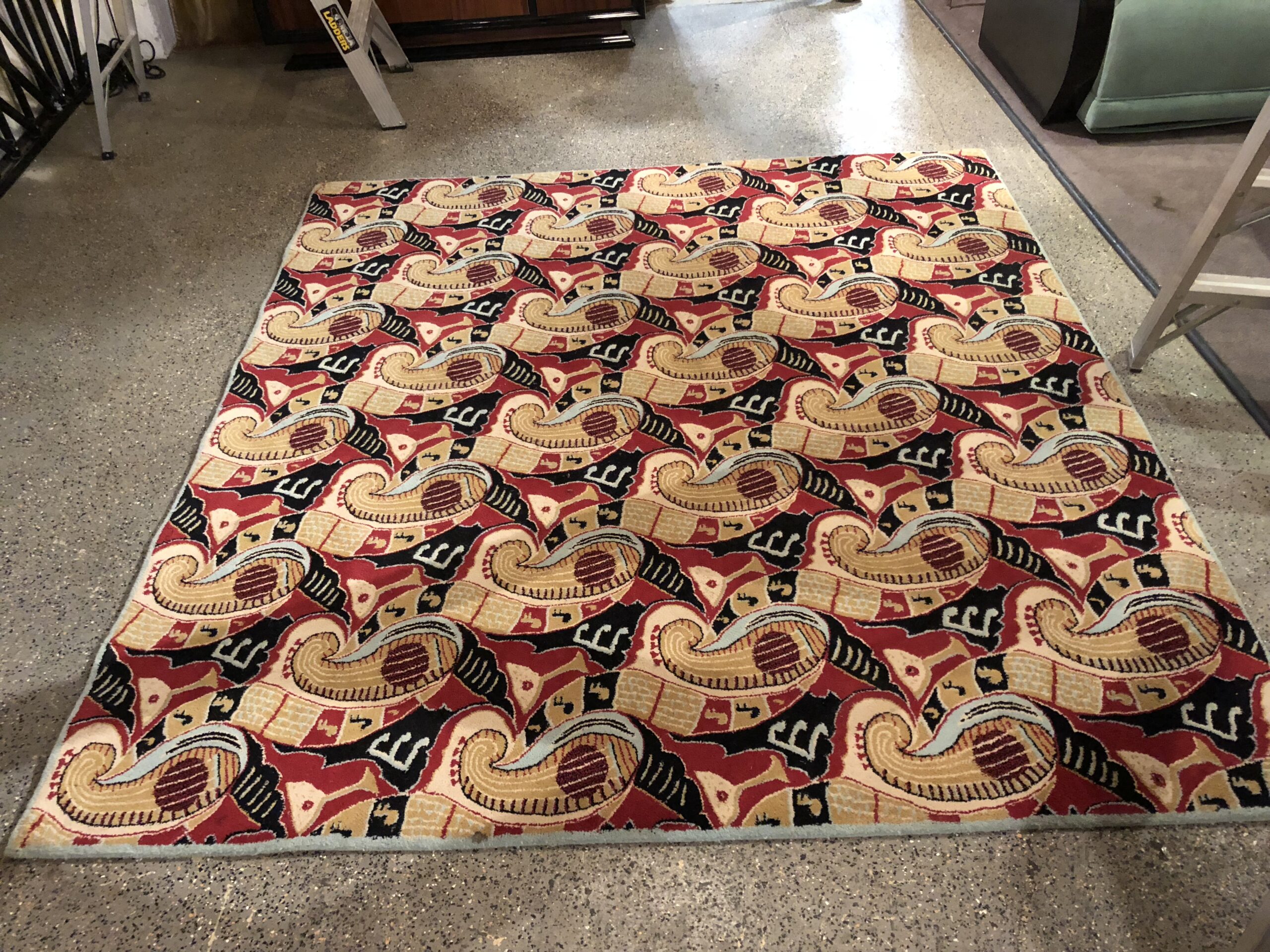
Left: Art Deco Collection recreation of the San Francisco Fox Theater carpet, 1930s design, Middle: Art Deco Collection custom carpet in Ruhlmann design, Right: Art Deco Collection Martini Club Rug, recreated from a vintage carpet fragment
The enduring appeal of Art Deco rugs lies in the union of beauty, structure, and invention that defined them from the beginning. Whether hand-tied in luxurious materials by skilled artisans, interpreted through the spacious elegance of Chinese Nichols production, refined in the tailored language of French design, or adapted for the public glamour of American hotels and movie theaters, these rugs embody the ambitions of the Art Deco era with unusual completeness. A great Art Deco rug does not simply decorate a room. It organizes it, enriches it, and gives it identity. That is why they continue to fascinate collectors, designers, and historians alike. They remain among the clearest expressions of a period that believed modern living should be not only efficient, but elegant.

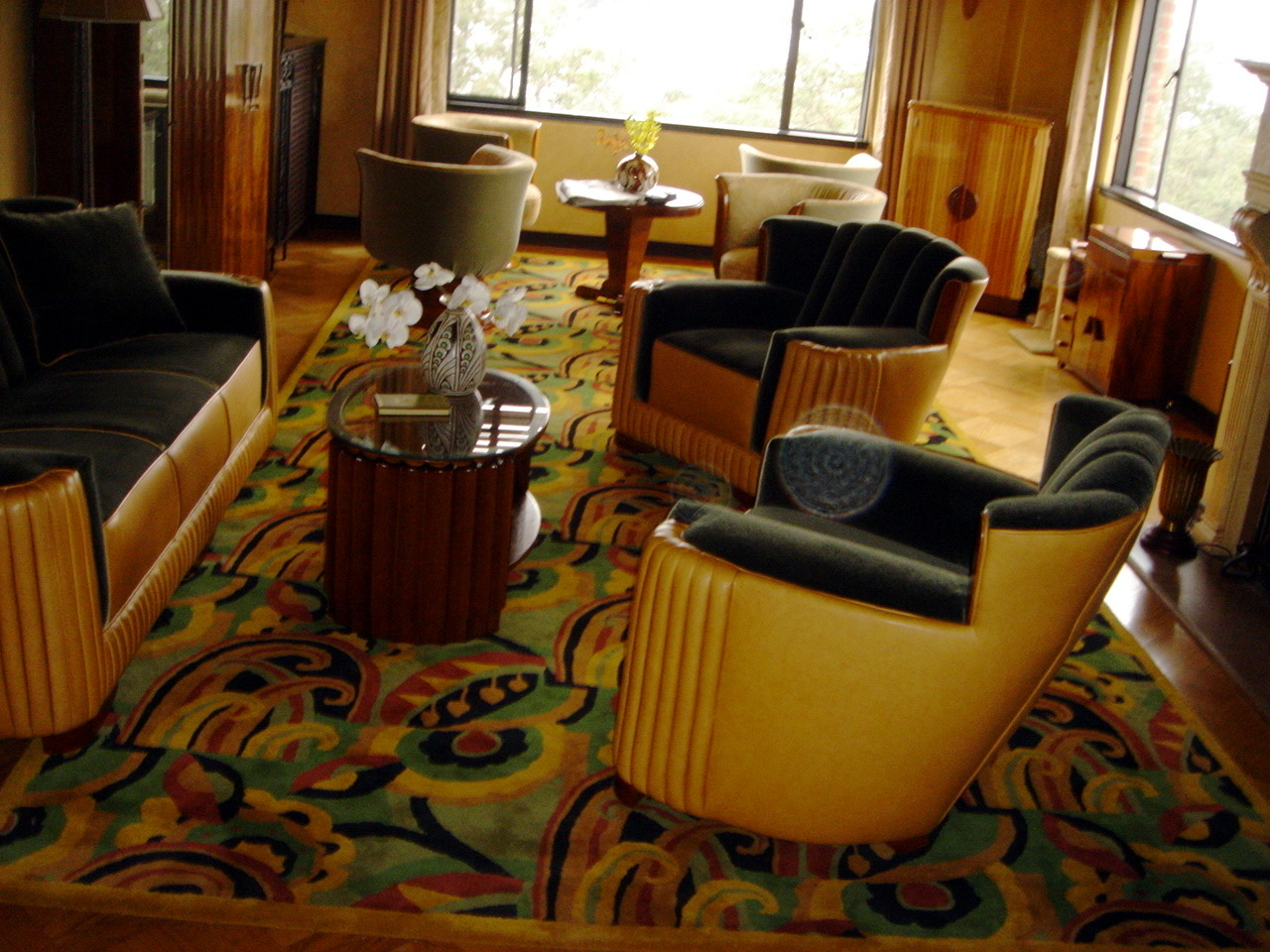
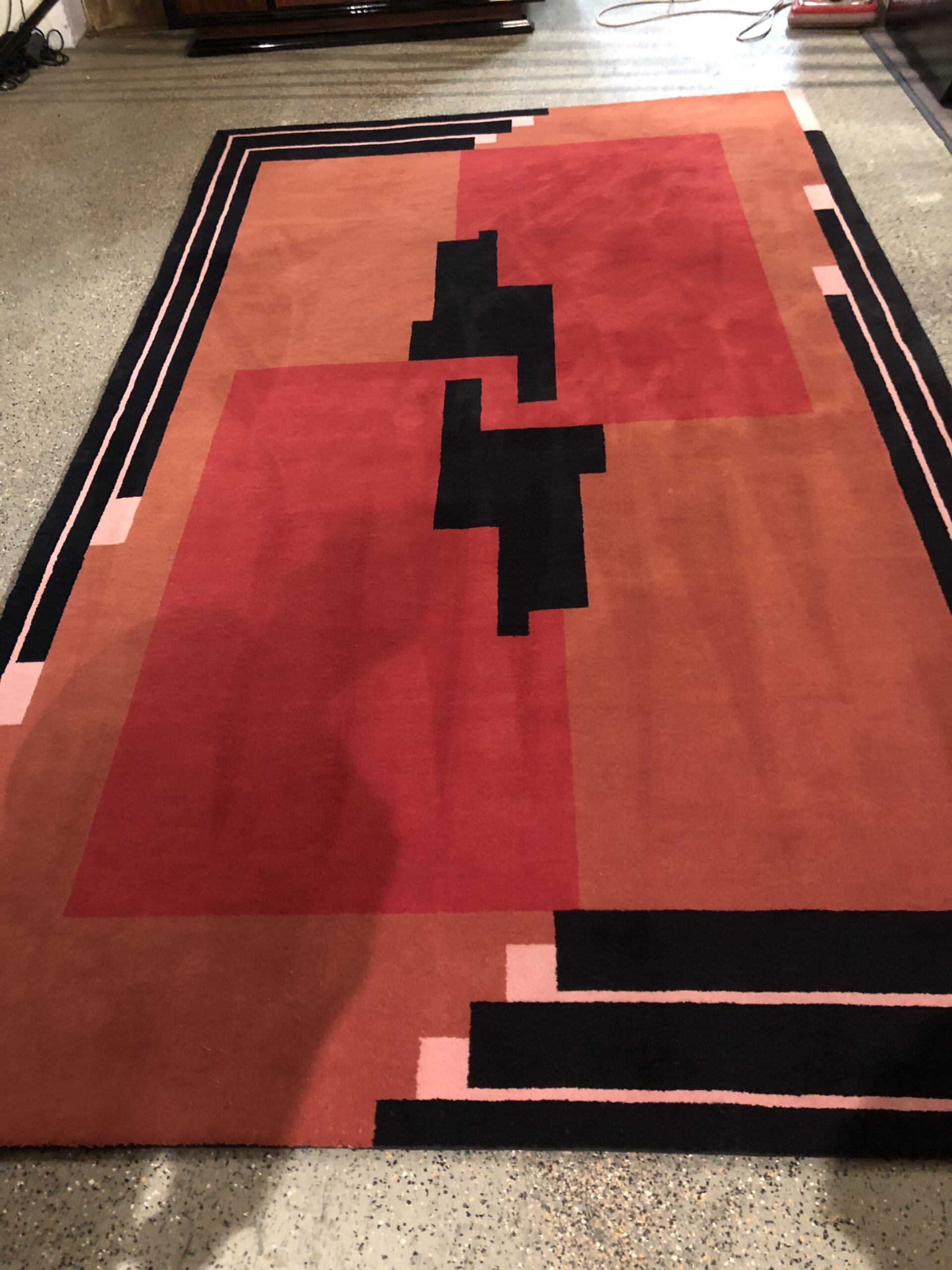
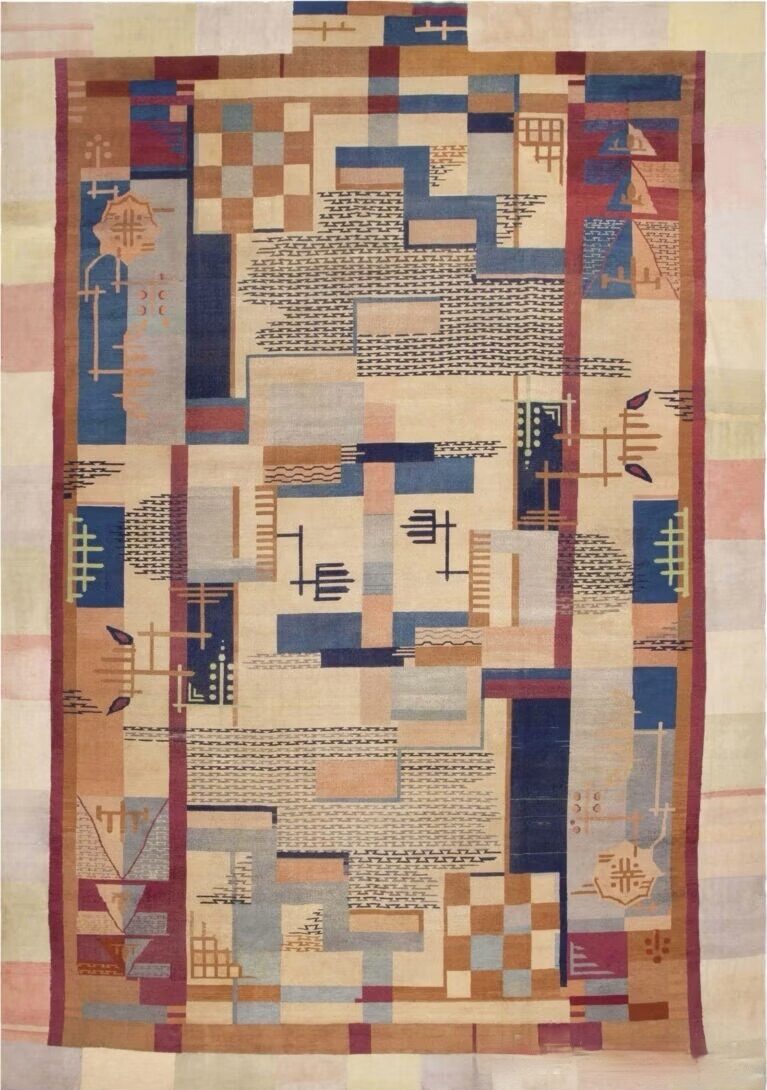
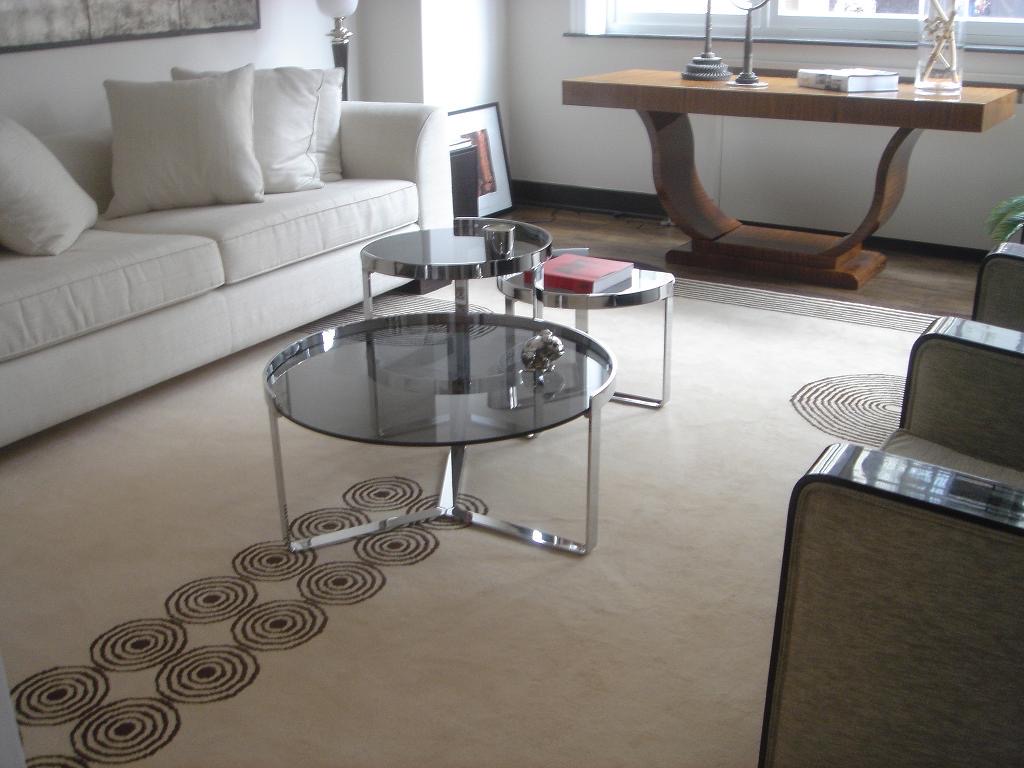

Top: Left: French Savonnerie ‘Pyramides’ carpet by Paul Hasaerts, circa 1928, Middle: Art Deco rug in a period-styled lounge, Right: Indian Art Deco rug with geometric patchwork design, early 20th century. Bottom: Left: Art Deco rug by Ivan da Silva Bruhns with geometric abstraction and color blocking, Middle: Art Deco rug in a contemporary living room, Right: Art Deco Savonnerie with rectilinear design
Recommended Reading
For those looking to explore the textile side of Art Deco design in greater depth, Art Deco Textiles: The French Designers by Alain-René Hardy is an exceptional resource. The book examines the work of the French designers who helped define the period’s approach to pattern, color, and material, covering not only rugs but the full range of decorative textiles that shaped Deco interiors. It is well illustrated and offers valuable context for understanding how the rugs discussed in this article fit within the broader design ambitions of the era.

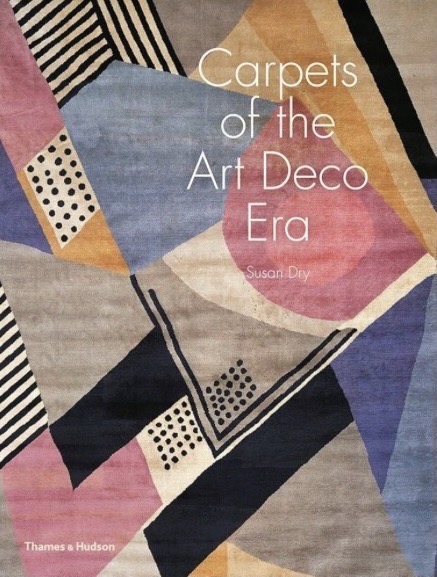
If you are interested in further stories of Art Deco design, collecting, and celebrating the artistry of early 20th Century:
Related Products from ArtDecoCollection.com