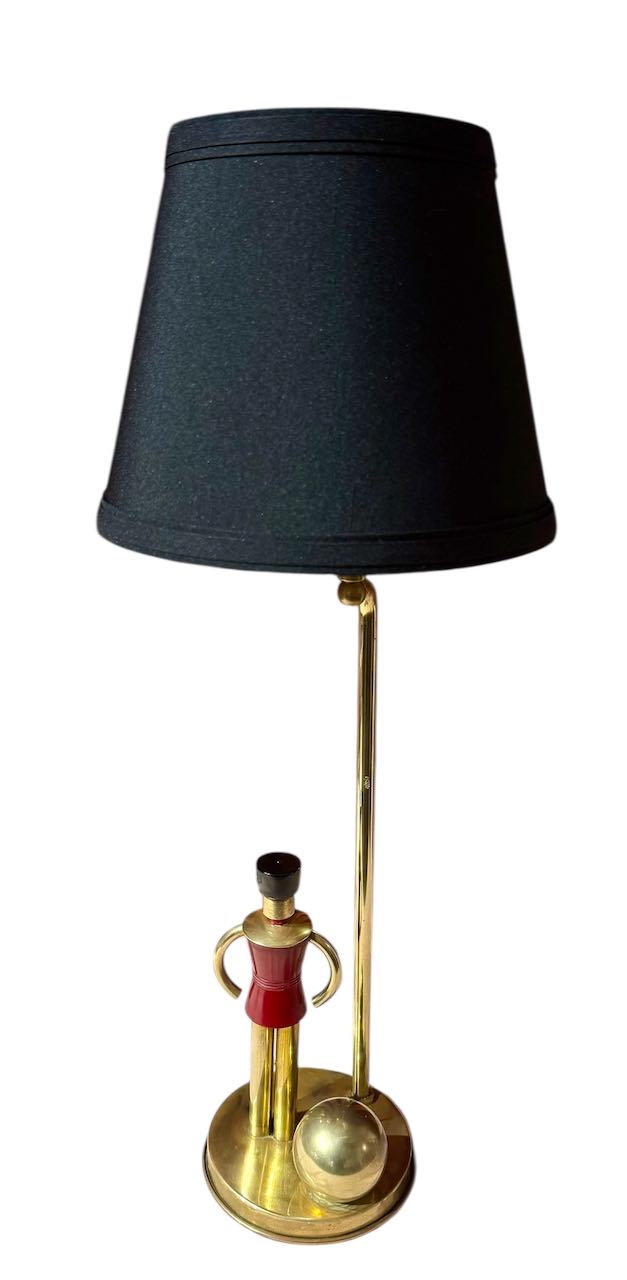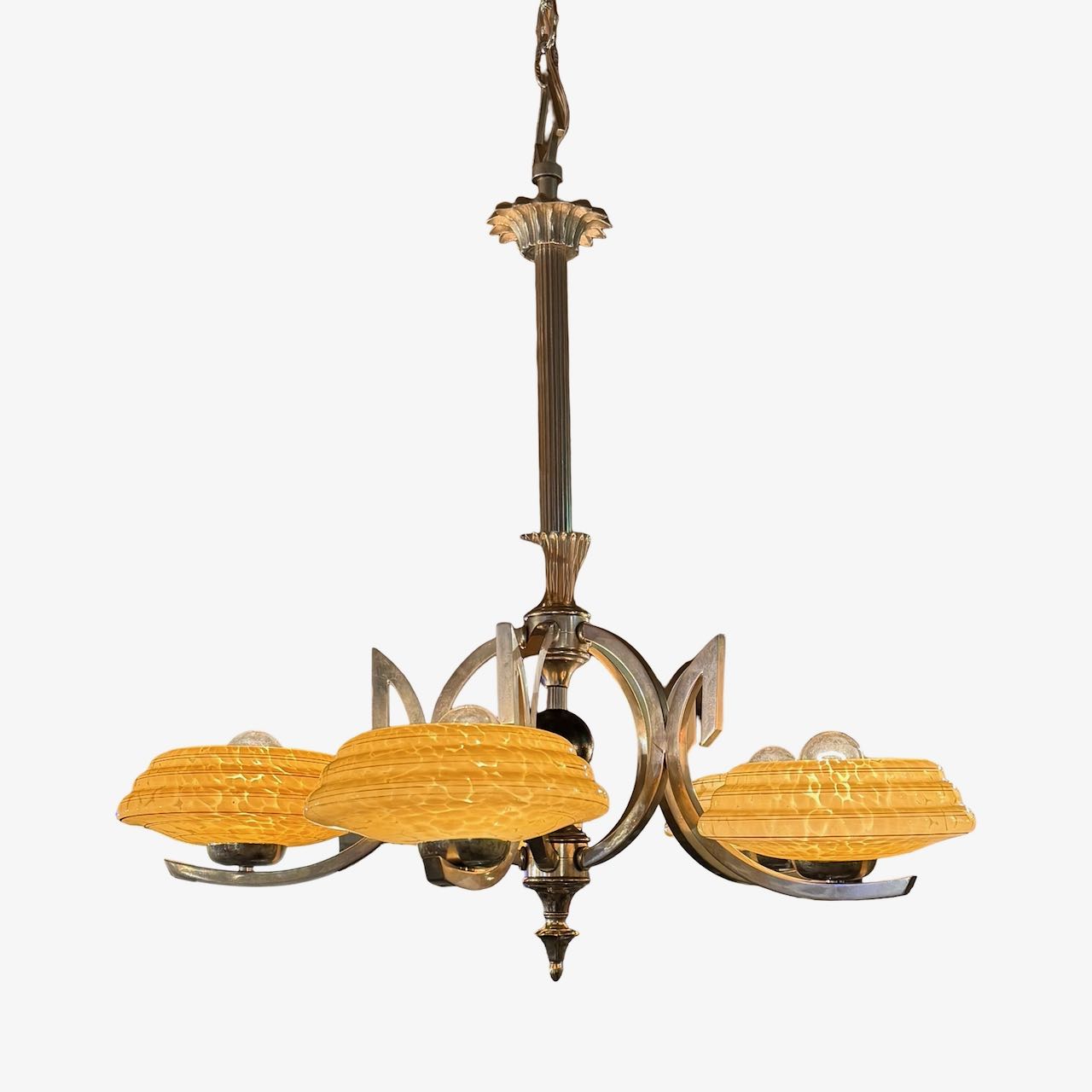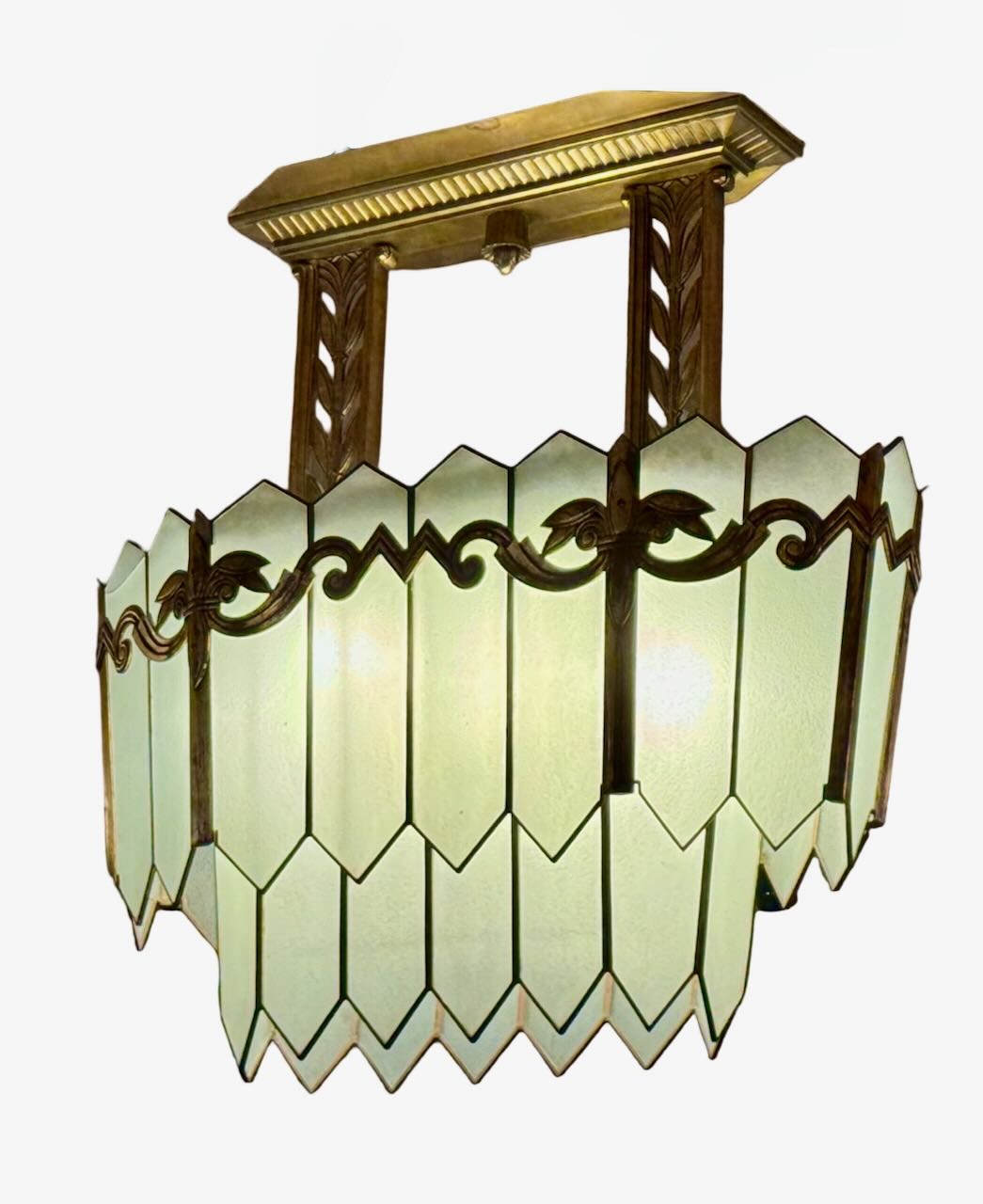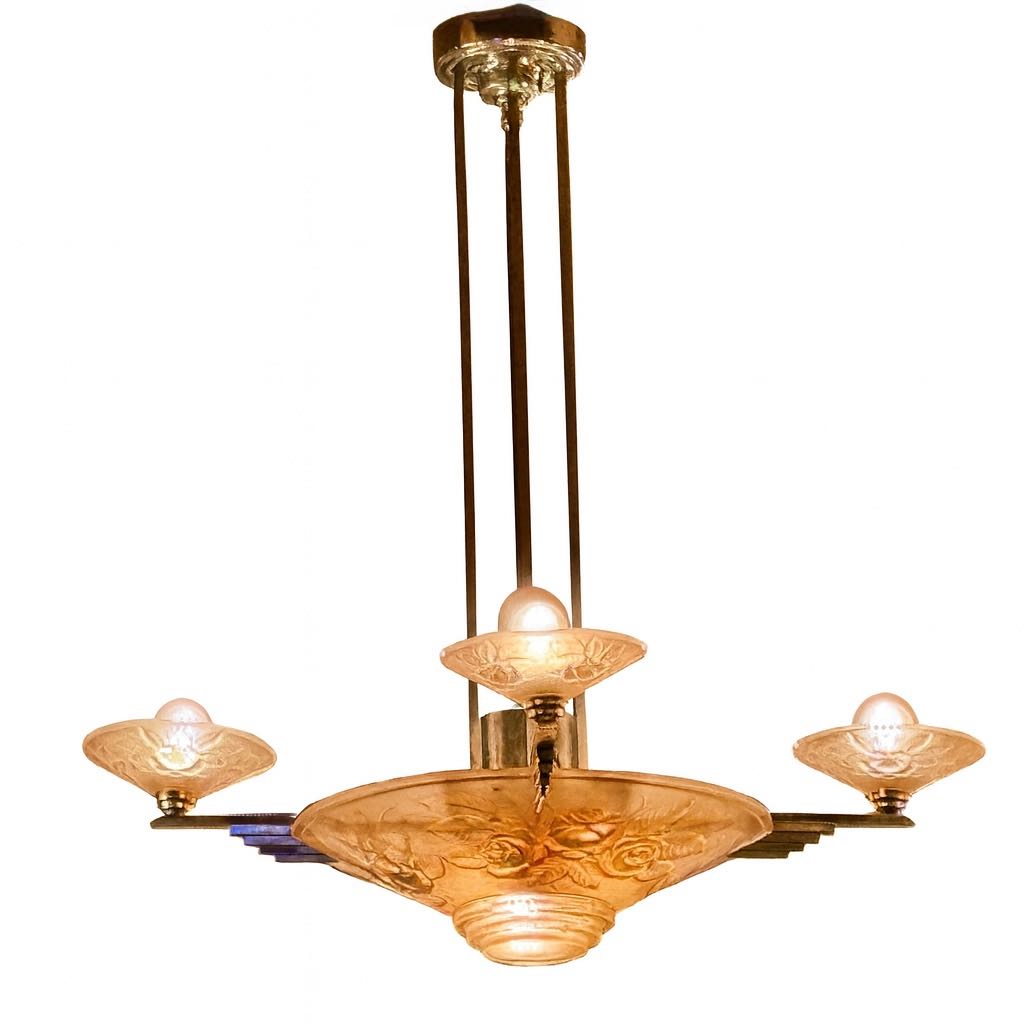

American lighting drew heavily on the machine age, incorporating materials such as pressed glass, cast aluminum, stamped steel, and chromium plating that were readily available through domestic manufacturing. Slip shade fixtures became a defining American contribution, with companies like Markel, Lincoln Manufacturing, Lightolier, and Consolidated Glass producing coordinated sets of chandeliers, sconces, and table lamps built around interchangeable molded glass shades. These shades were often made by industrial glasshouses in Ohio, Pennsylvania, and other Midwestern regions known for efficient yet high quality production. Their faceted, ribbed, or stylized geometric surfaces were engineered to distribute light evenly while reinforcing modern architectural forms. Many American fixtures used standardized socket fittings and modular hardware that allowed homeowners to replace glass or maintain the lighting with minimal effort. Commercial interiors such as theaters, department stores, and office buildings embraced similar designs that aligned with new architectural trends. Architects and industrial designers supported this direction by promoting clarity of form and practical illumination suited to manufactured materials. Collectors and designers continue to value these fixtures for their sturdy construction, thoughtful engineering, and compatibility with both traditional and modern interiors.
Art Deco Lighting from 1925 to 1945
Art Deco lighting from 1925 to 1945 reflects the artistic ambition and technical excellence of the early modern era. European designers elevated lighting into refined sculpture, using rich materials, bold geometry and new decorative ideas that expressed the optimism of the time. France led the movement with designers who transformed bronze, glass and mixed metals into elegant forms that defined luxury in both private residences and grand public interiors.

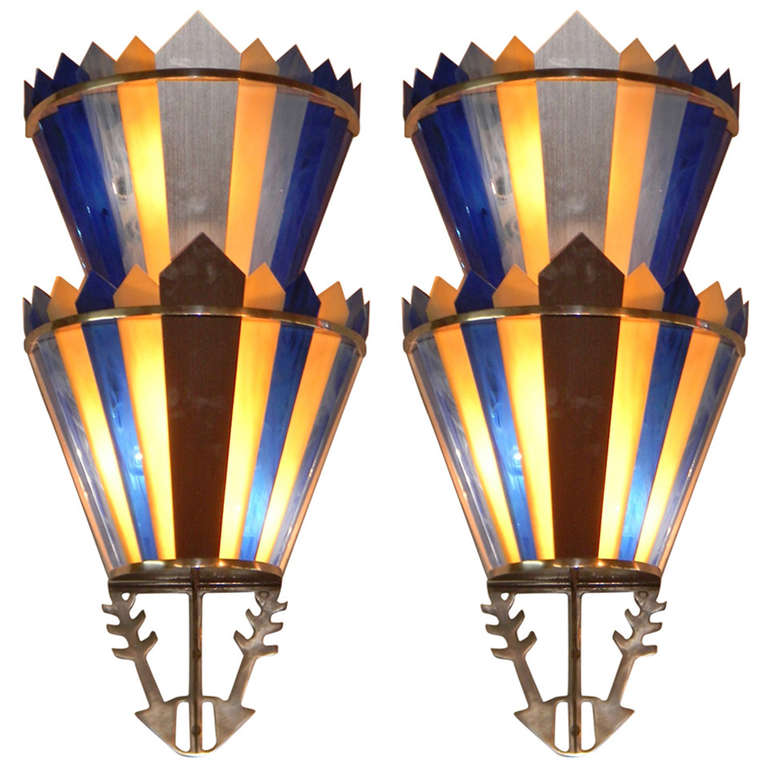
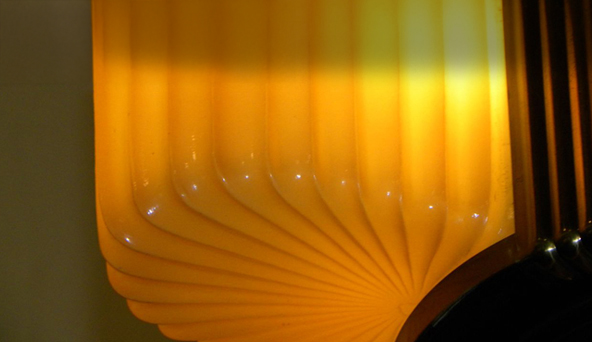
Left: A monumental 1920s theater chandelier from the Warfield Theater in San Francisco showcasing the grand architectural scale of early American Art Deco lighting. Right: Original Art Deco movie theater sconces from the Vanity Ballroom in Detroit, MI, illustrating the dramatic, light-driven atmosphere of 1930s entertainment spaces.
Among the most celebrated names are Edgar Brandt, who created wrought iron masterpieces with graceful fluid lines, and glassmakers such as Degue, Sabino, and Lalique, each bringing their own artistic language to chandeliers, sconces, and table lamps. Degue produced striking molded glass with dramatic patterns, Sabino created opalescent forms that glow with soft color, and Lalique offered sculptural glass that remains a symbol of refined French artistry. Petito and other metalworkers also contributed lighting with strong architectural silhouettes and meticulous craftsmanship, giving collectors an extraordinary range of European expression.
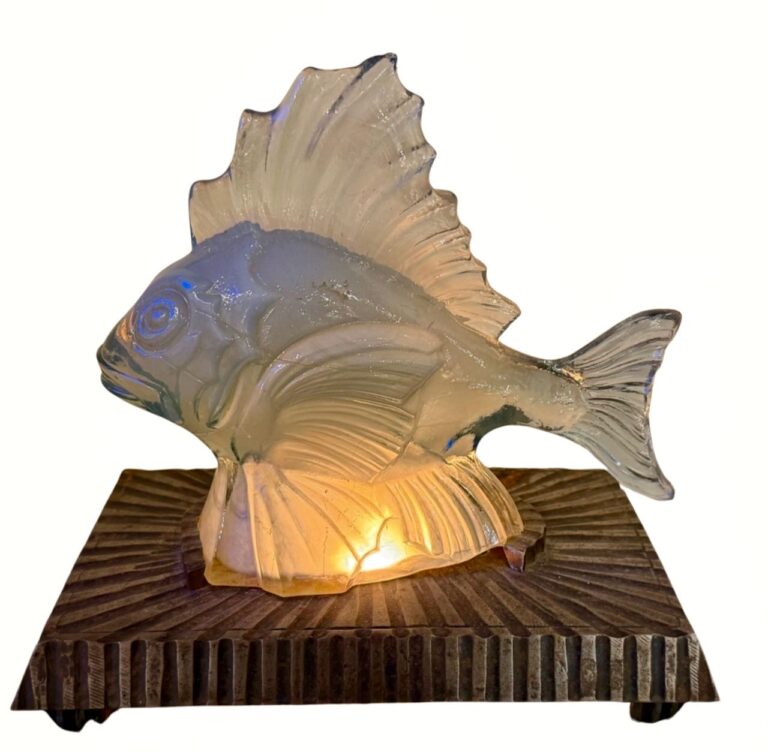
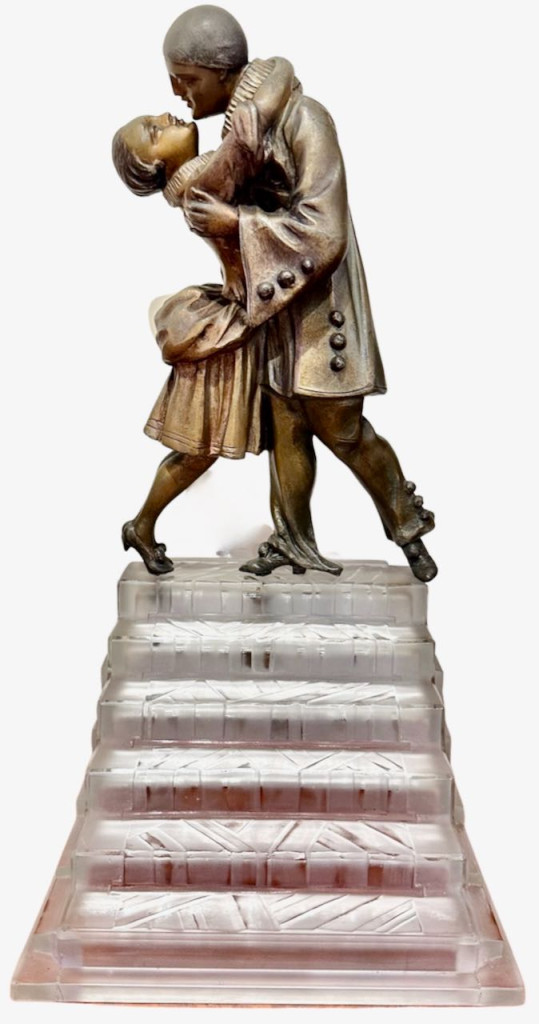

Left: A 1930s opalescent “Poisson” glass sculpture by Verlys displaying the luminous qualities prized in French Art Deco design. Middle: A Sabino stepped glass lamp with lover’s motif exemplifying the sculptural romanticism of opalescent Art Deco glasswork. Right: A skyscraper-form Degue chandelier representing the bold geometric lighting styles of French Art Deco interiors.
Edgar Brandt brought to lighting the same sculptural authority that defined his ironwork, using hand-forged elements to build pieces that feel both fluid and monumental. His lamps and sconces often pair iron arms with glass shades made by leading ateliers, creating a harmony between metal and light. David Guéron, working under the name Degue, expanded the language of molded glass through bold patterns, frosted surfaces, and deeply cast relief work. His factory produced a wide range of geometric designs that could shift in mood depending on the metal mounts they were paired with.

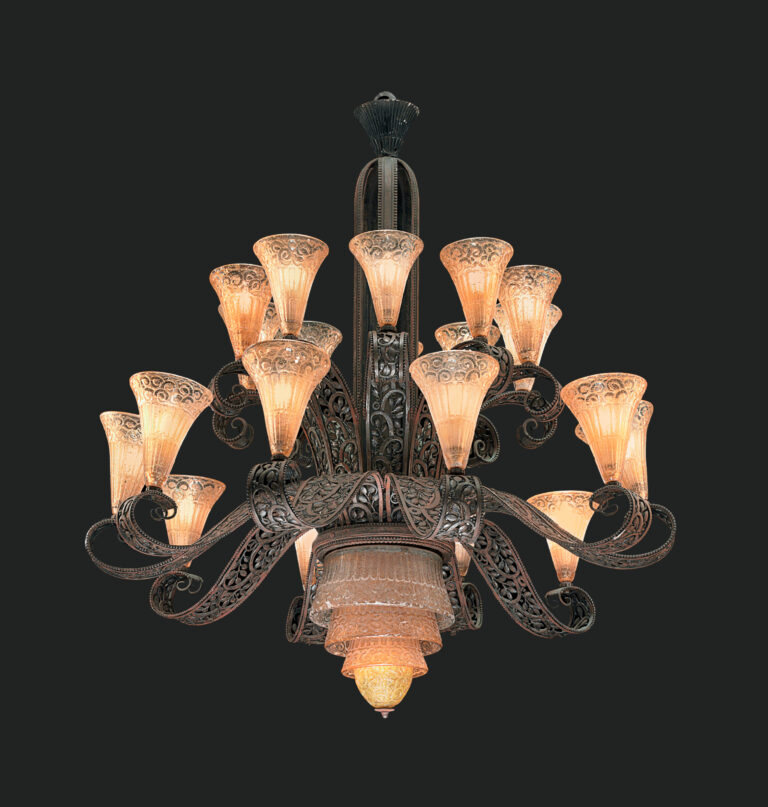
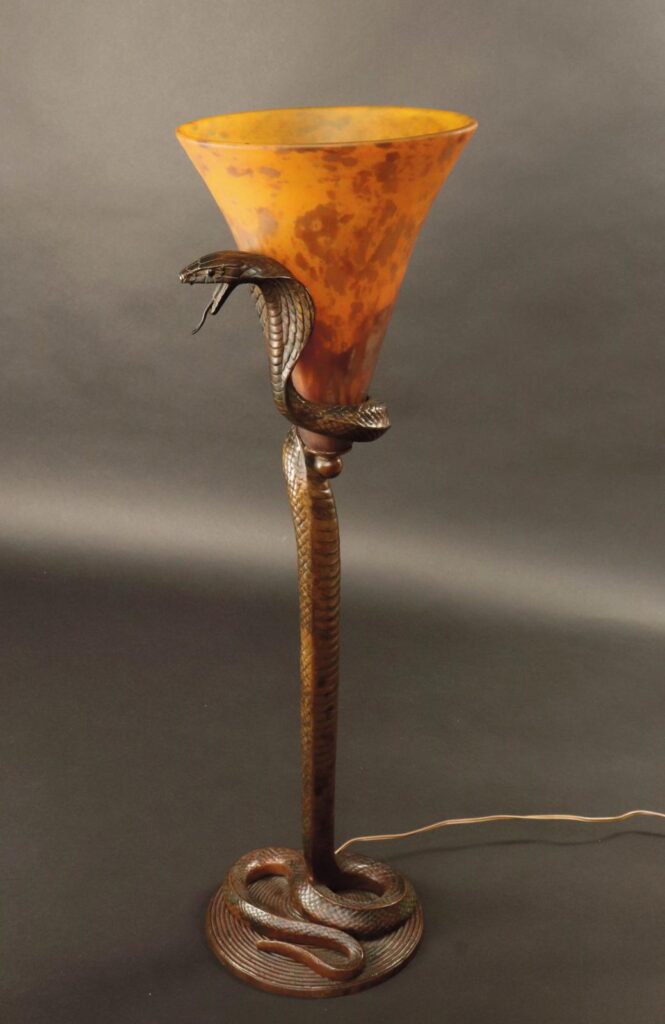
Left: An Edgar Brandt table lamp with Daum Nancy glass, demonstrating the refined fusion of wrought iron and sculptural glass. Middle: A 1925 Edgar Brandt chandelier with Daum Frères shades capturing the harmony of ironwork and illuminated craftsmanship. Right: Edgar Brandt’s 1925 Cobra lamp, highlighting his mastery of sinuous lines and expressive metalwork.
Sabino added an unmistakable sense of softness to Art Deco lighting through his opalescent glass, which changes color as the viewing angle shifts. Lalique approached lighting with a sculptor’s eye, designing shades and fixtures that feel like carved artworks brought to life by illumination. Together, these designers formed a foundation of artistry and technical ambition that defined French lighting during the period.
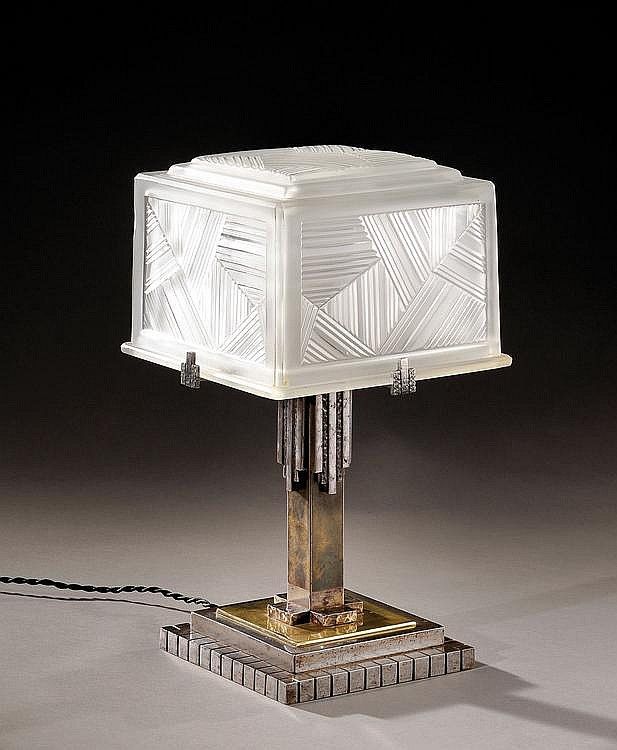
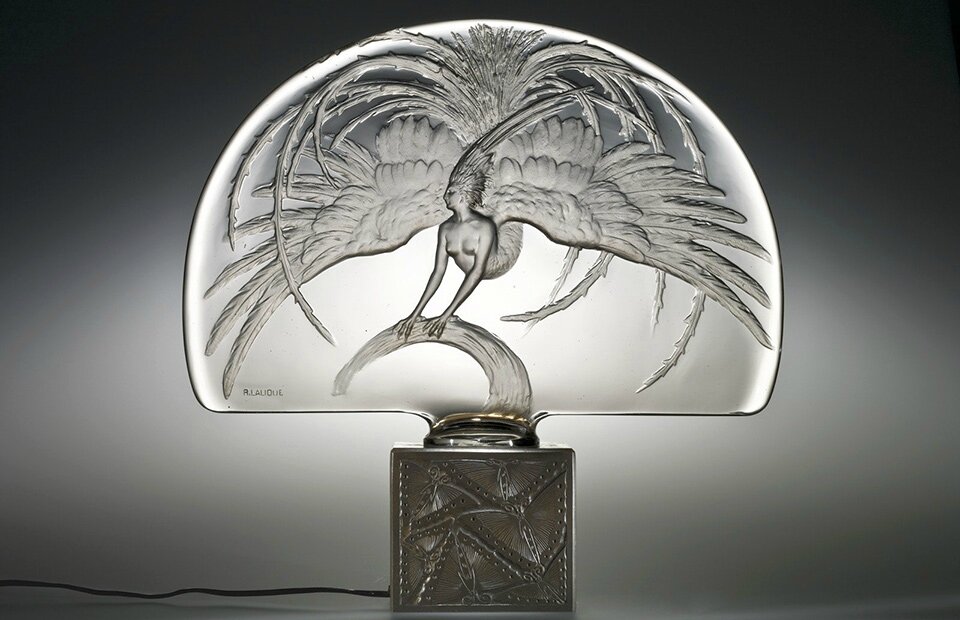
Left: A 1930 Sabino desk lamp combining hammered iron and molded glass to achieve subtle geometric illumination. Right: René Lalique’s 1922 “Oiseau de Feu” illuminated centerpiece reflecting his signature blend of mythic form and radiant glasswork.
Petito’s contribution to the era lies in the precision of his metalwork, which favors clean lines, carefully stepped silhouettes, and restrained elegance. His fixtures embody the architectural clarity that collectors prize in European Art Deco objects. Gilbert Rohde represented a new American voice, using chrome, wood, and glass in combinations that reflected the streamlined optimism of the machine age. His lamps often blend practicality with sculptural presence, making them highly desirable in both vintage and contemporary interiors.
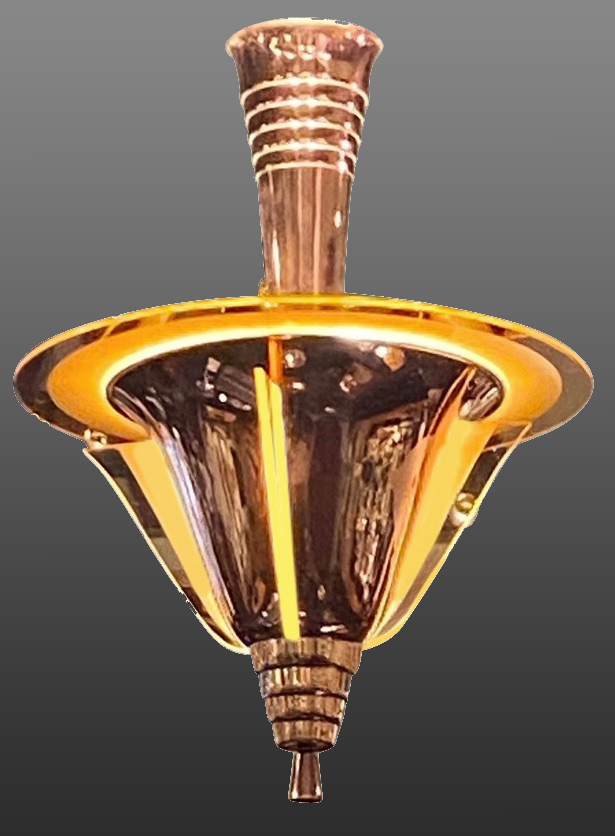
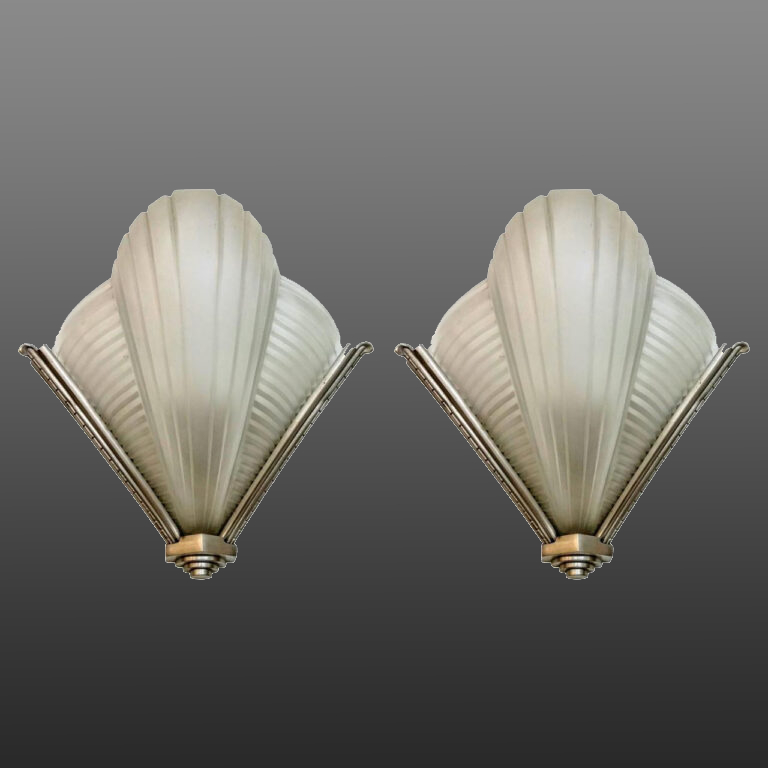

Left: A copper and frosted glass chandelier by Petitot demonstrating the designer’s signature streamlined silhouettes and elegant illumination effects. Middle: A pair of ribbed French Art Deco wall sconces by Petitot showing the clean lines and balanced geometry of his metalwork. Right: A nickel and brass lamp by Gilbert Rohde representing the modern American shift toward chrome-accented, machine-age lighting.
Austria continued this creative momentum through workshops in Vienna, where designers emphasized clean shapes, chrome surfaces, and subtle elegance. Their work merged simplicity with quiet glamour, resulting in fixtures that feel at home in both period interiors and today’s modern environments. The marriage of artistic skill and technical precision is what keeps these Austrian pieces in high demand among decorators and advanced collectors.


Left: A Viennese Art Deco ceiling lamp from the 1920s showcasing the Austrian emphasis on chrome surfaces and refined simplicity. Right:A pair of 1930s bronze Joan of Arc table lamps featuring kneeling figures holding frosted crown-shaped shades in classic French Art Deco style.
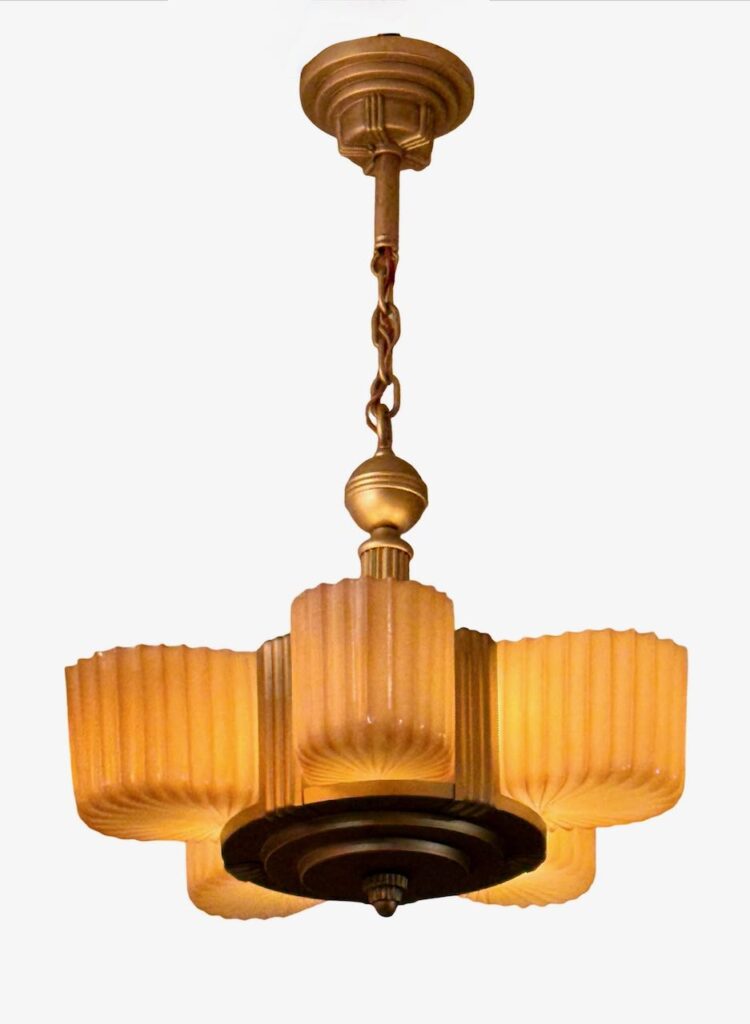
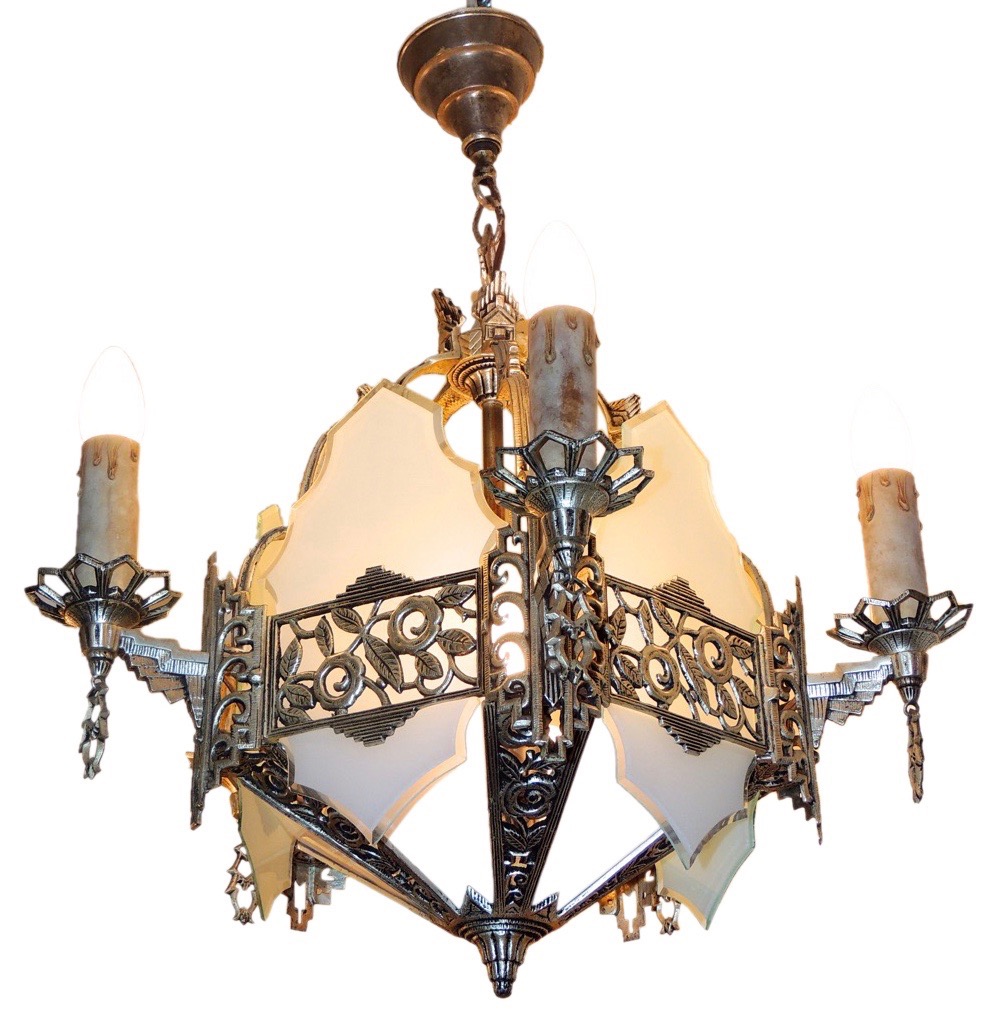
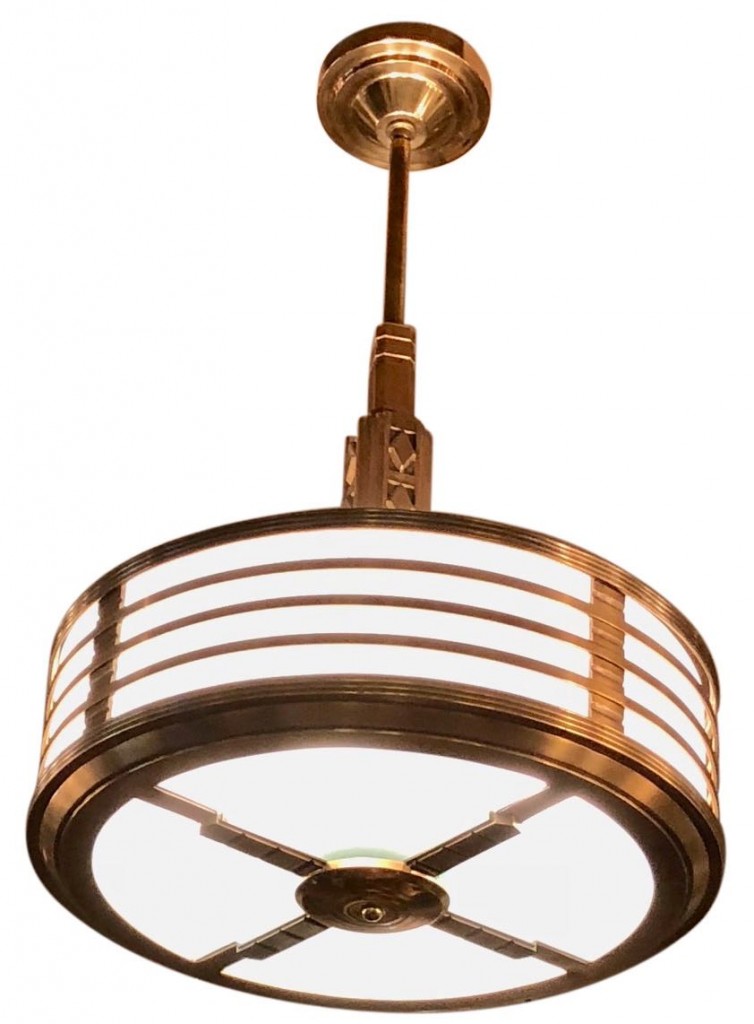
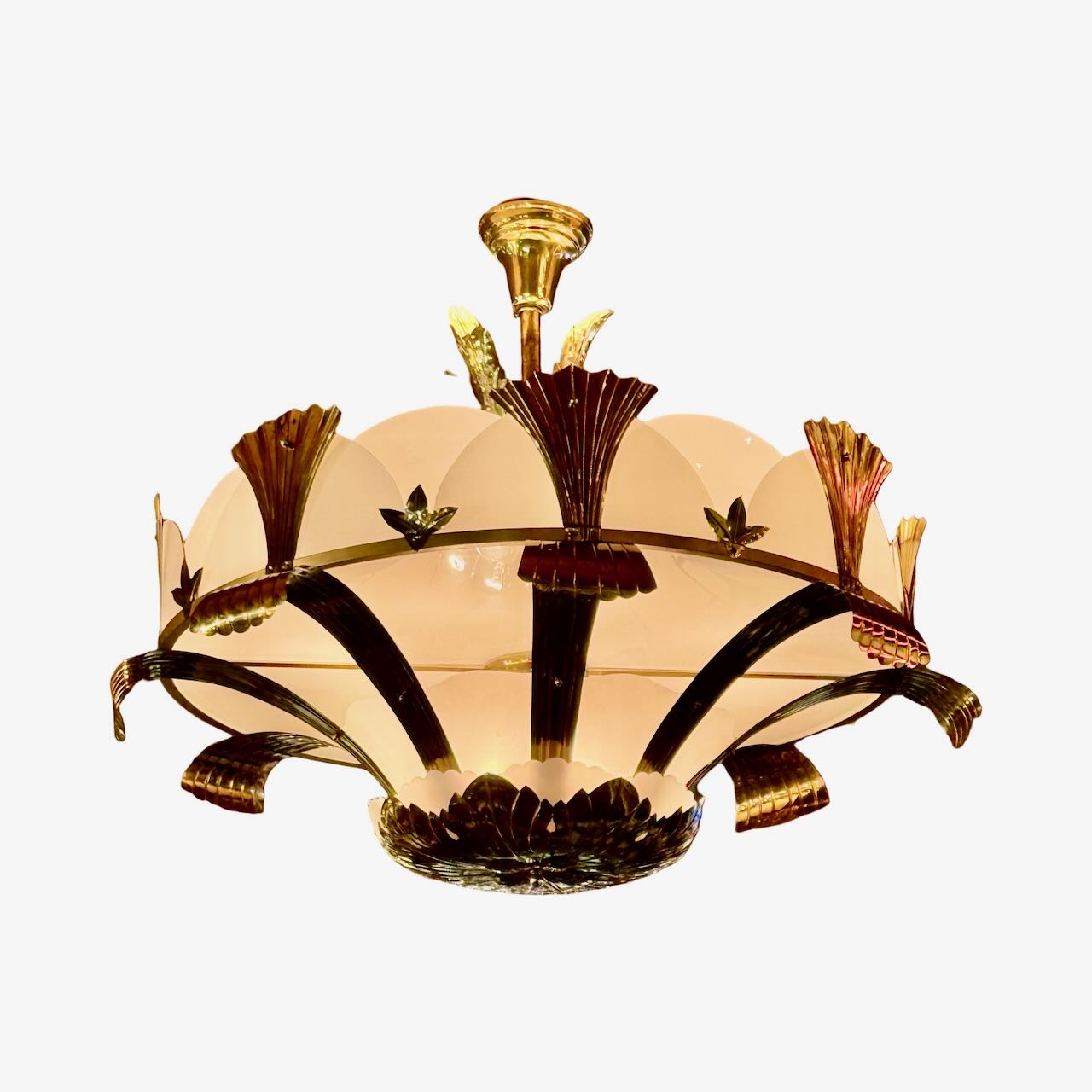
Left: A 1930s American Markel chandelier with faceted amber slip shades and a brass-finished frame showcasing the geometric elegance of early slip-shade lighting. Center: A romantic American Art Deco chandelier combining Gothic, Spanish Colonial Revival, and French decorative influences with frosted glass panels and lost-wax cast metalwork. Right: A stepped copper bronze Modernist Art Deco theater chandelier featuring original milk glass, precise metal detailing, and the bold geometric presence typical of early American commercial lighting.
Collectors and designers value lighting from this period because each piece reflects the creative ideals of its maker and the cultural energy of its time. Whether European or American, the finest Art Deco lighting offers exceptional materials, expert craftsmanship, and a timeless sophistication that continues to attract new admirers.
If you are interested in further stories of Art Deco design, collecting, and celebrating the artistry of early 20th Century:
Related Products from ArtDecoCollection.com