

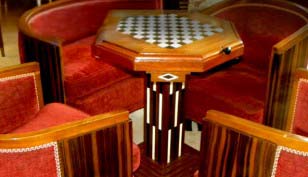
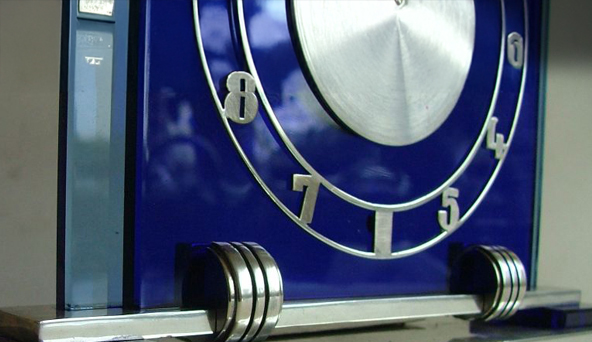
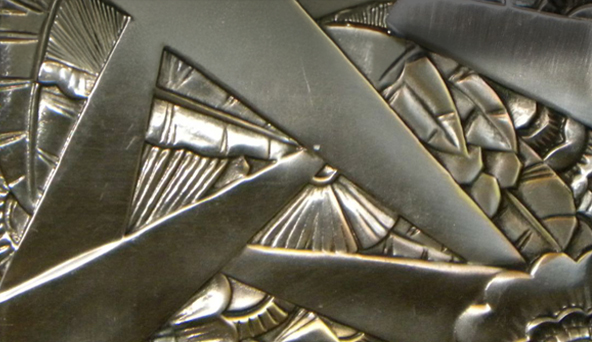
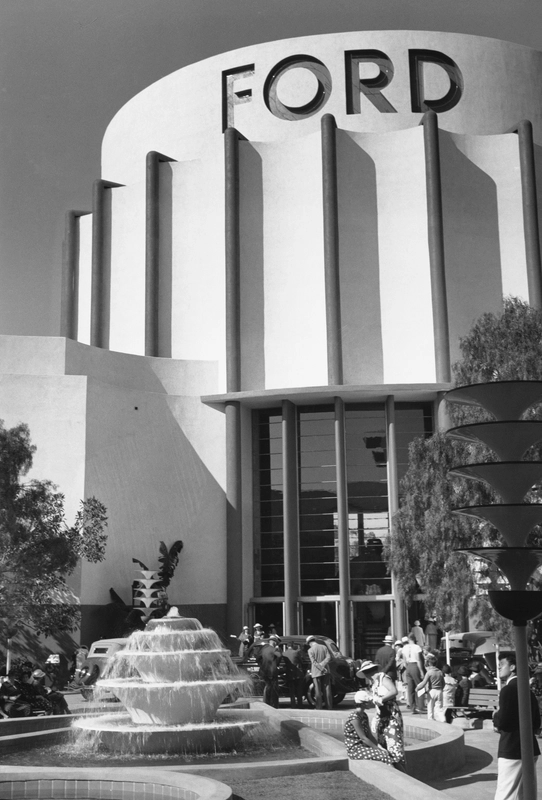
Left: George Eastman Museum, Rochester, NY, Middle: Ford Building, San Diego, Julius Shulman, 1934, Right: Kodak Gift No. 1A case, 1930
✕
ART & STATUES
CERAMICS & GLASS
Art Deco Around The World
Walter Dorwin Teague's Art Deco Kodak Cameras
How one designer wrapped the everyday camera in the geometry of the Jazz Age
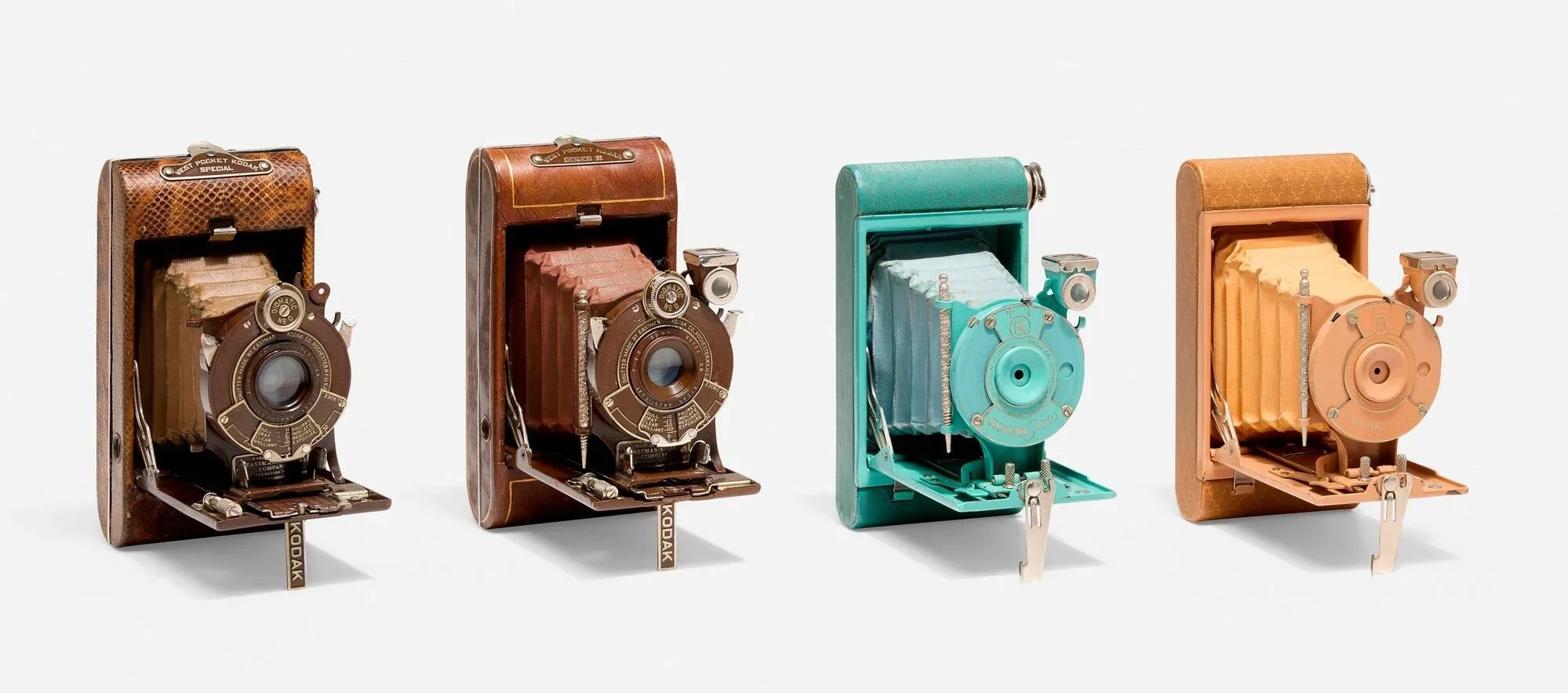
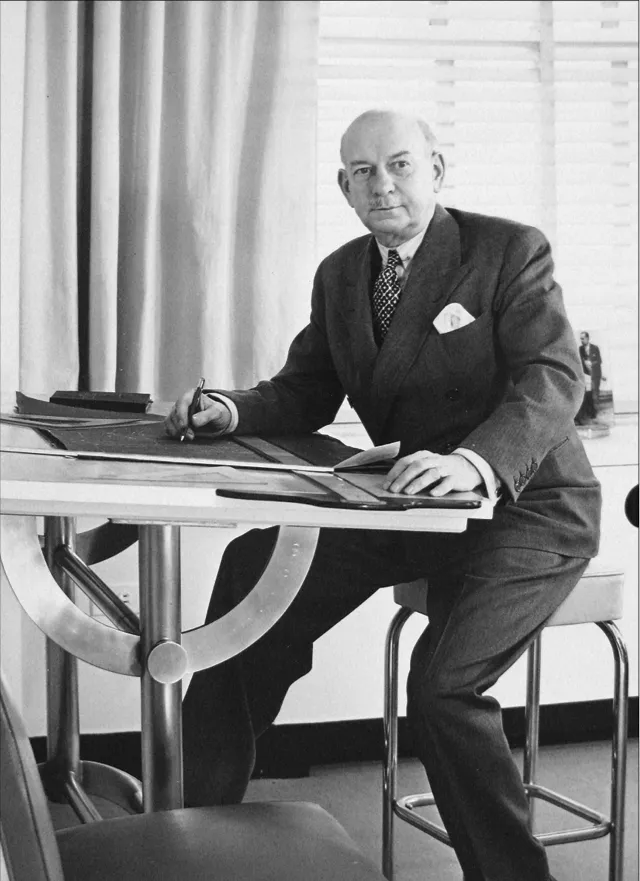 Before 1928, a camera looked like what it was: a plain black box built to take pictures and nothing else. Walter Dorwin Teague changed that. Born in Pendleton, Indiana, in 1883, Teague spent two decades as an illustrator and typographer in New York before opening his own design studio in 1926, at the exact moment Art Deco was taking hold of American taste. Eastman Kodak came calling in 1928, on the recommendation of curators at the Metropolitan Museum of Art who thought a camera company needed exactly his eye. Teague had never designed a camera in his life. The company let him spend one week a month in Rochester learning the mechanics from their own engineers, and within two years he had reshaped the entire consumer line in the style of the moment.
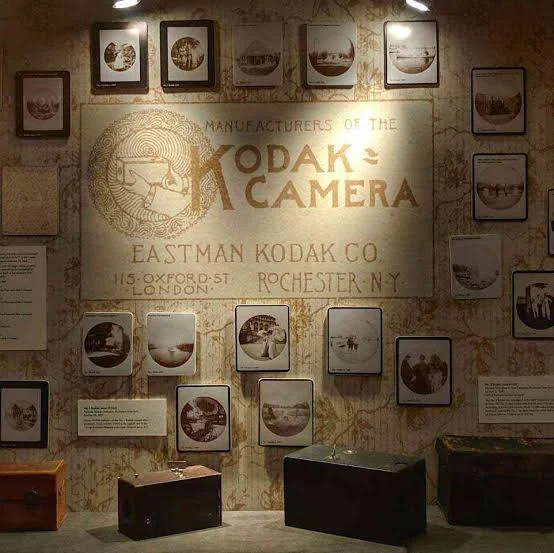
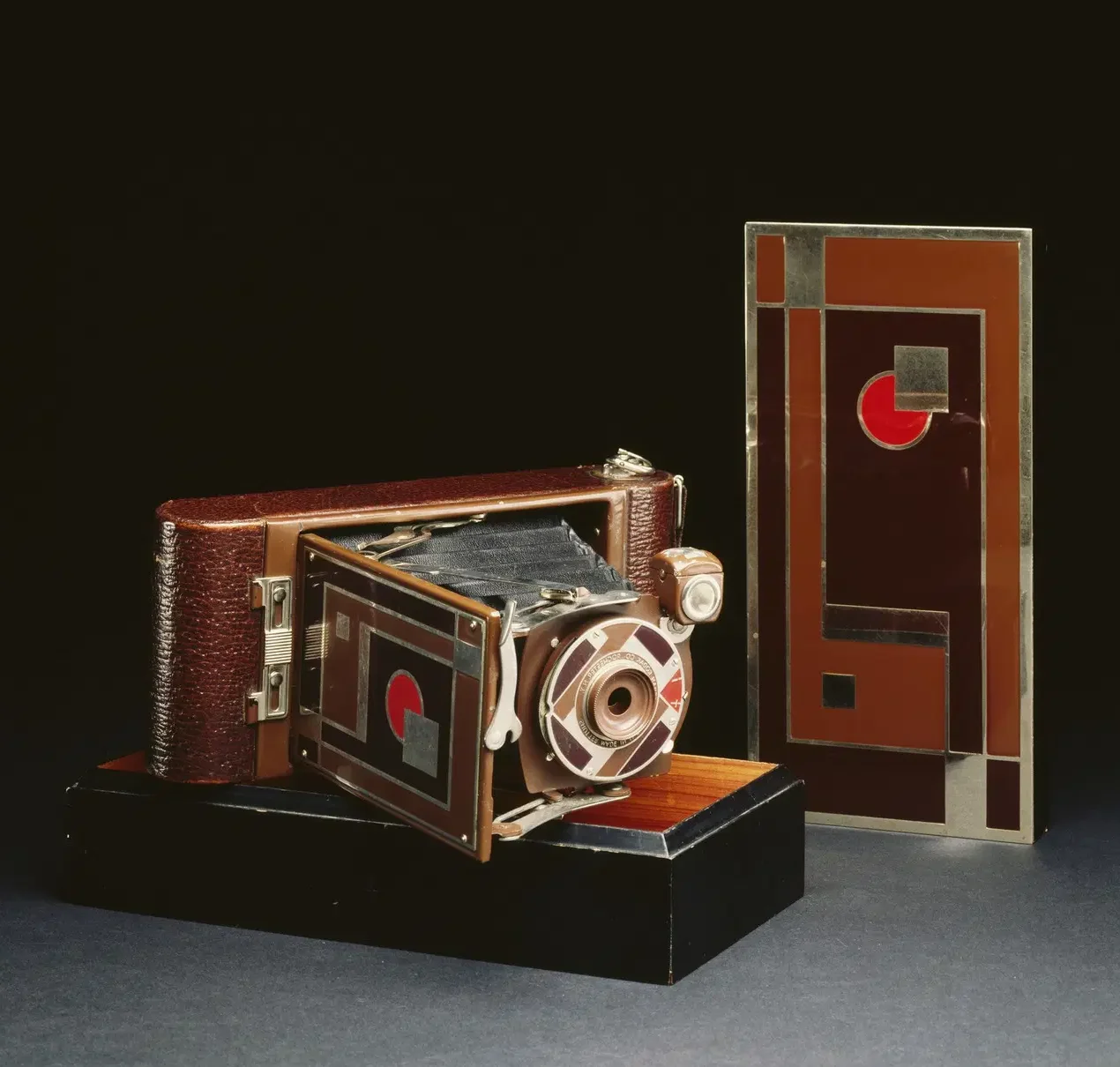
 The 1A Gift Kodak, released for the 1930 holiday season, wrapped a plain folding camera in interlocking geometric bands of black, brown, silver, and red, sold in an ebonized cedar box built to look like a wrapped gift rather than a mailer for film. Kodak’s own advertising called it one of the finest-looking cameras ever offered, and it showed exactly how far the Deco vocabulary of zigzags and sunbursts had traveled, from skyscraper lobbies down into a fifteen-dollar object meant to sit in a coat pocket. The Bantam Special followed in 1936, a small precision camera clad in Bakelite and chrome, still considered one of the most elegant camera designs of the century and a clear cousin of the streamlined radios and appliances filling American homes at the same time. Teague kept refining the line for decades, from the dollar Baby Brownie that put a camera in the hands of an entire generation, to the Brownie Hawkeye in 1950, closing out a Kodak partnership that had opened the door for Deco design to reach nearly every American household.
What made the partnership work was not decoration for its own sake. Teague believed a well-designed object should announce exactly what it did, and a camera clad in Art Deco geometry signaled precision and modernity to a customer who had never before thought to ask a camera to look like anything at all.
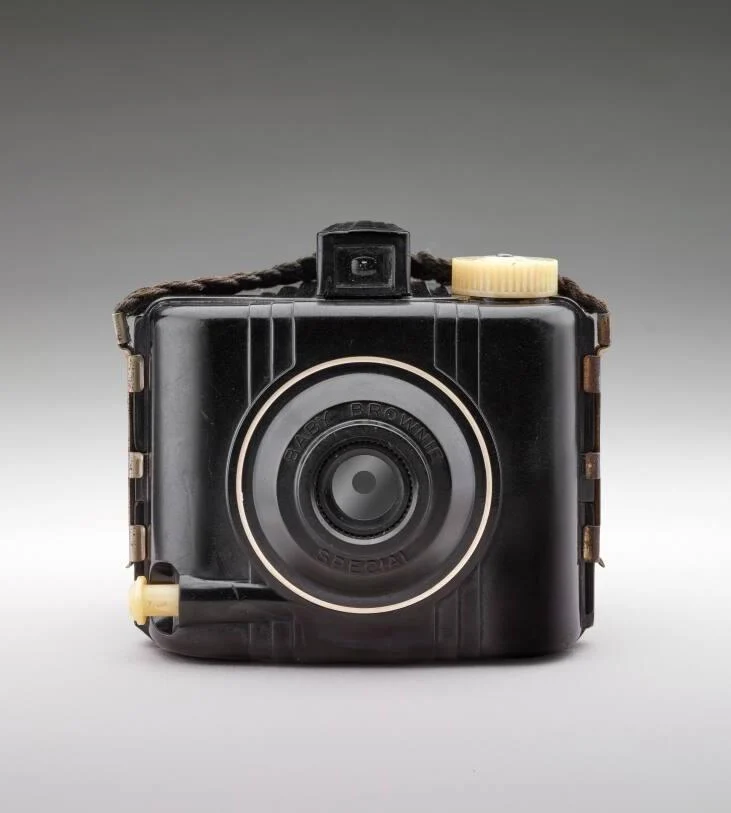
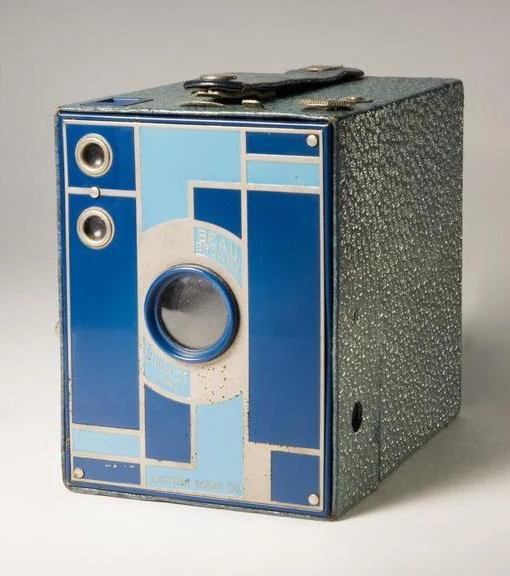
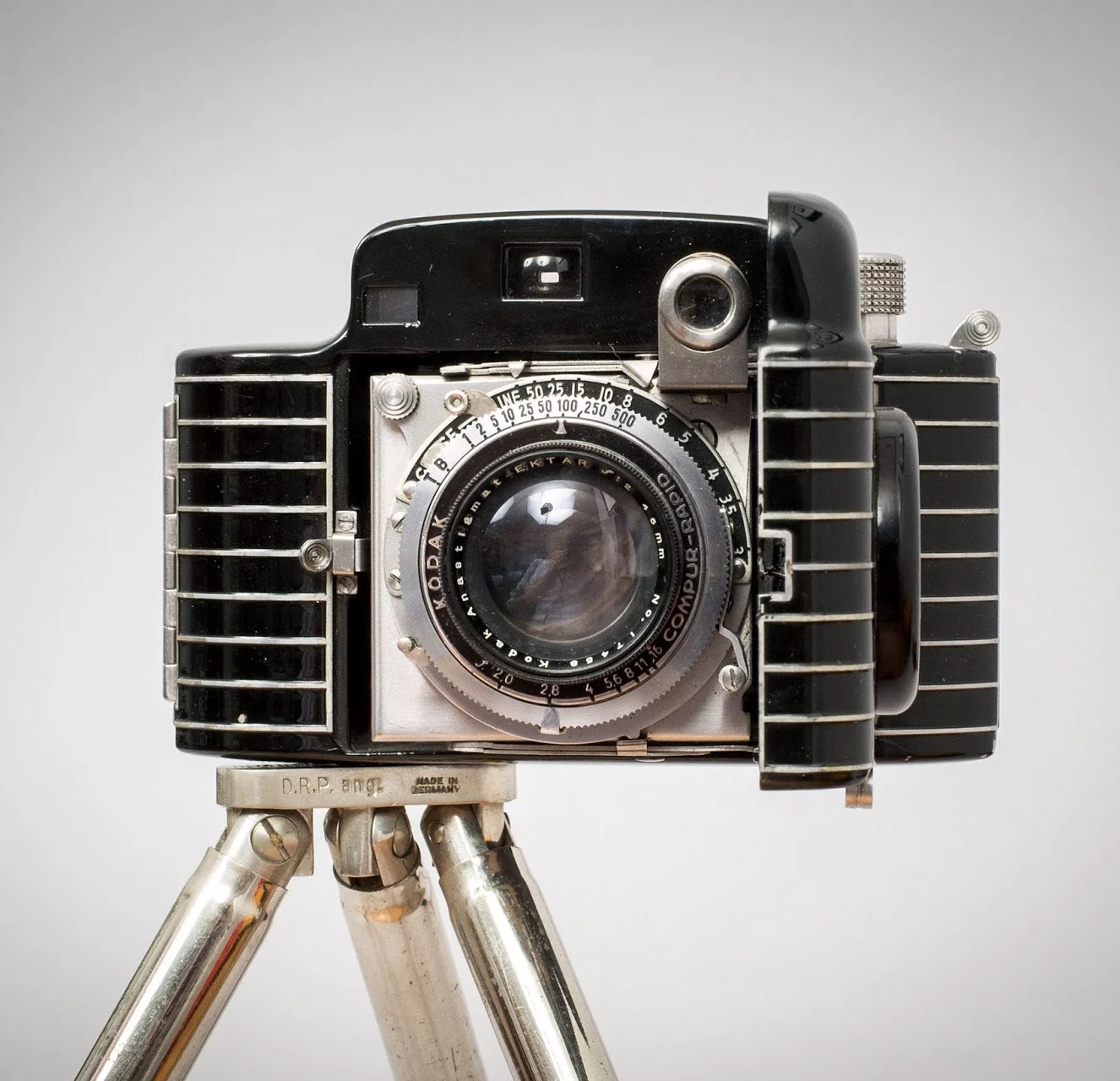
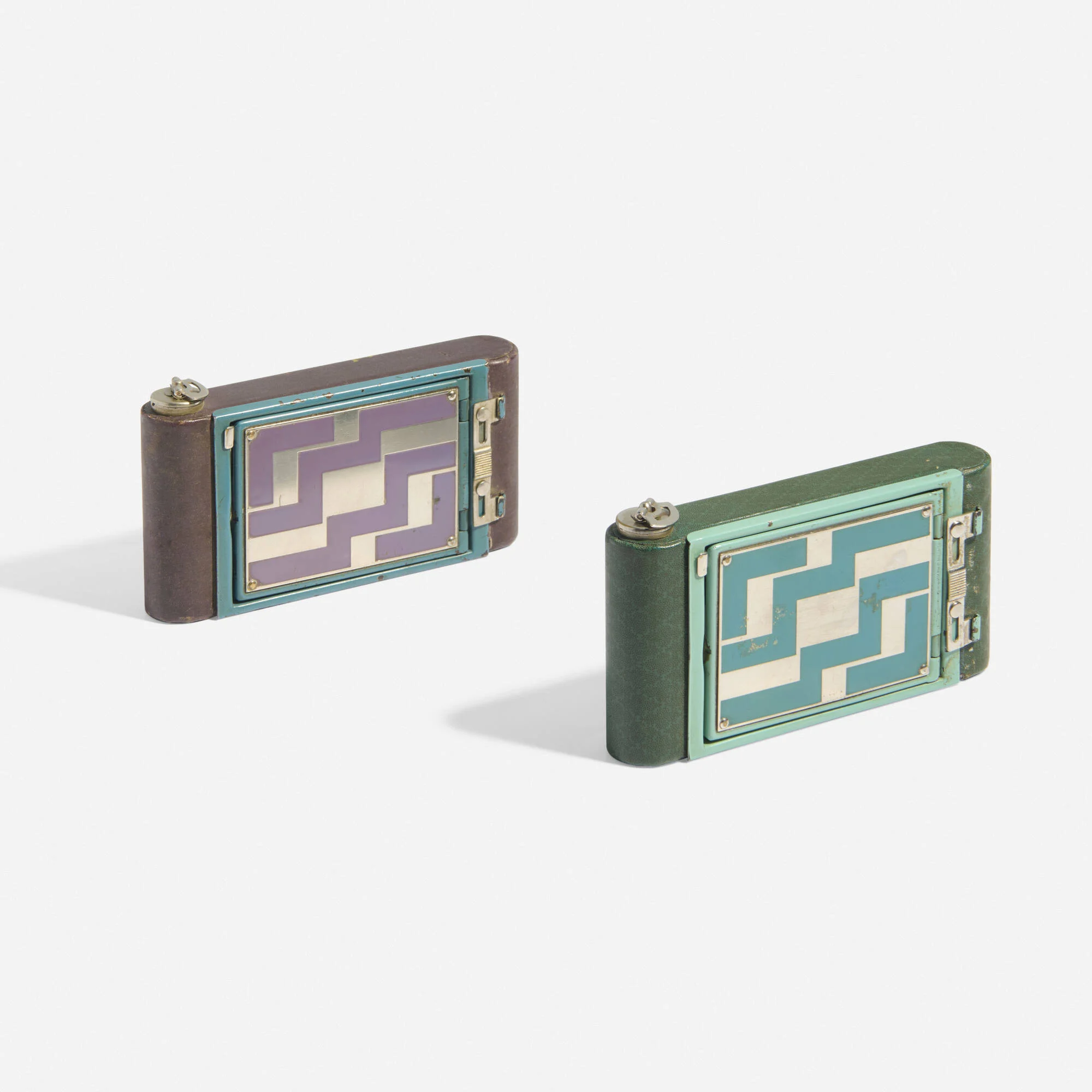
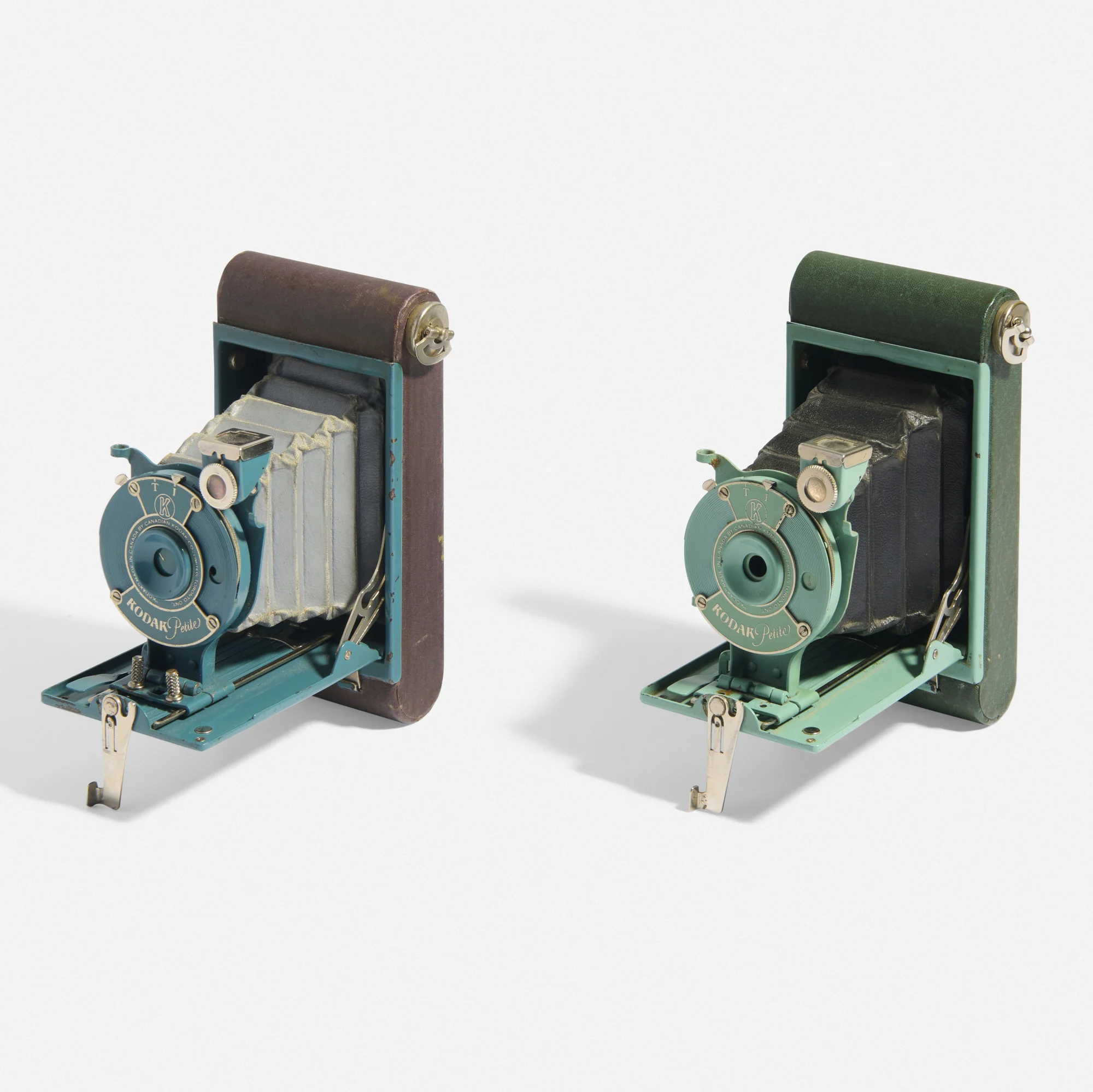
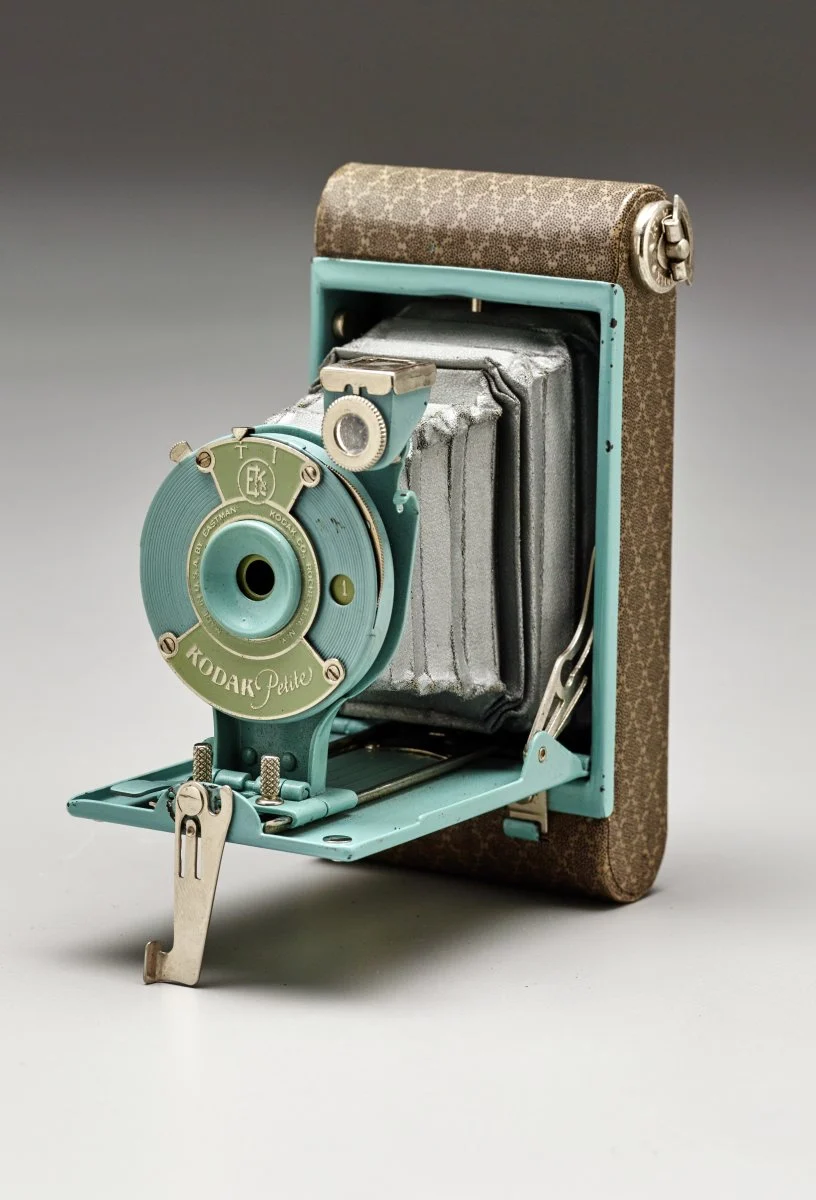
Top: Left: Baby Brownie Special, 1938, Middle: Beau Brownie, blue enamel, c. 1930, Right: Bantam Special, 1936. Bottom: Left: Kodak Petite, green enamel, c. 1929, Right: Kodak Petite, blue enamel, c. 1929
That same instinct carried Teague to the 1939 New York World’s Fair, where he served on the official Board of Design, the only industrial designer among a roster otherwise made up of architects. He personally designed the Kodak Hall of Lights and the Ford Building, both built in the same streamlined, geometric language he had already brought to Kodak’s cameras a decade earlier. It was, in many ways, the same idea scaled up from a fifteen-dollar box to an entire pavilion, the conviction that the modern world, in the hand or on the horizon, deserved to look modern.
ART & STATUES
CERAMICS & GLASS
© Copyright Art Deco Collection. 2026 All rights reserved. Site Map