

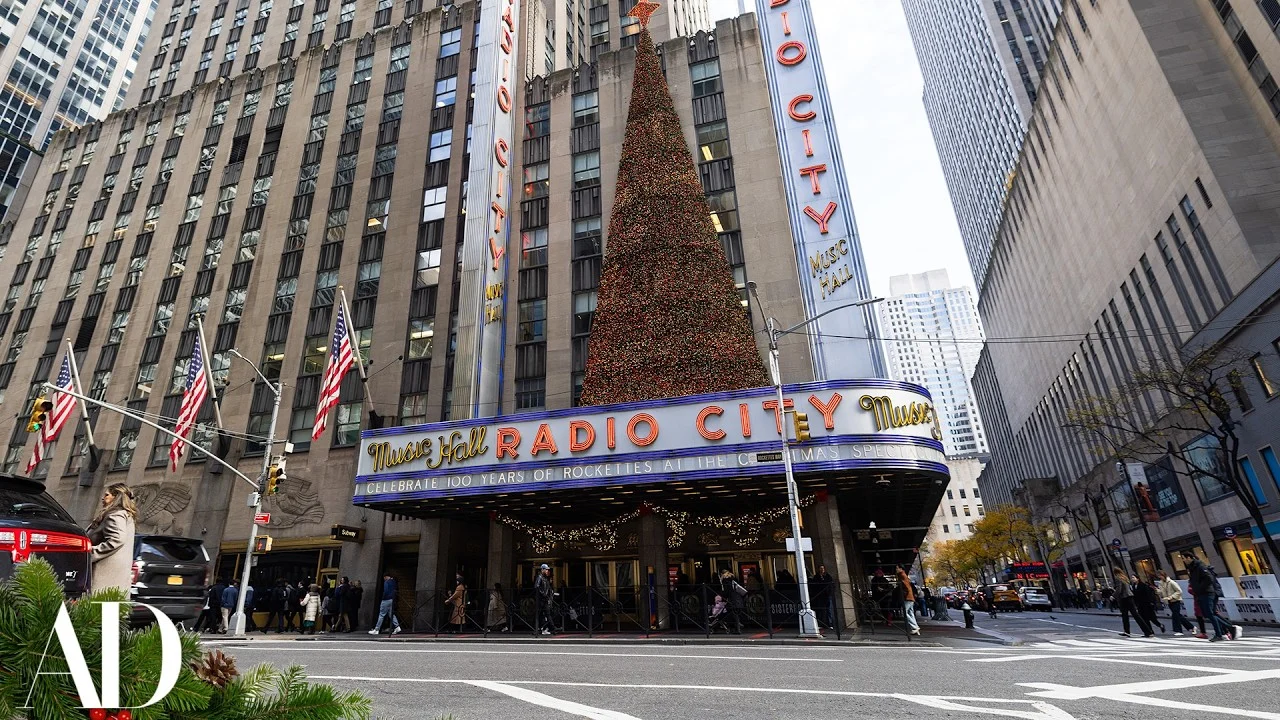
The building’s survival was never guaranteed. By the late 1970s, financial trouble put Radio City at risk of demolition, until a public campaign won it landmark protection in 1978, and a careful 1999 restoration left Deskey’s original vision intact rather than improved upon. The architect who led that restoration, Hugh Hardy, later said nobody could be arrogant enough to think they could improve on what Deskey had built in 1932, and the finished work bore that conviction out. Nearly a century later, more than three hundred million visitors have walked beneath that same setting-sun arch, still glowing exactly as it did on opening night in 1932.
✕
ART & STATUES
CERAMICS & GLASS
Art Deco Around The World
Radio City Music Hall, New York's Art Deco Showpiece
How a last-minute change of plans turned New York’s grandest theater into a showcase for American modern design
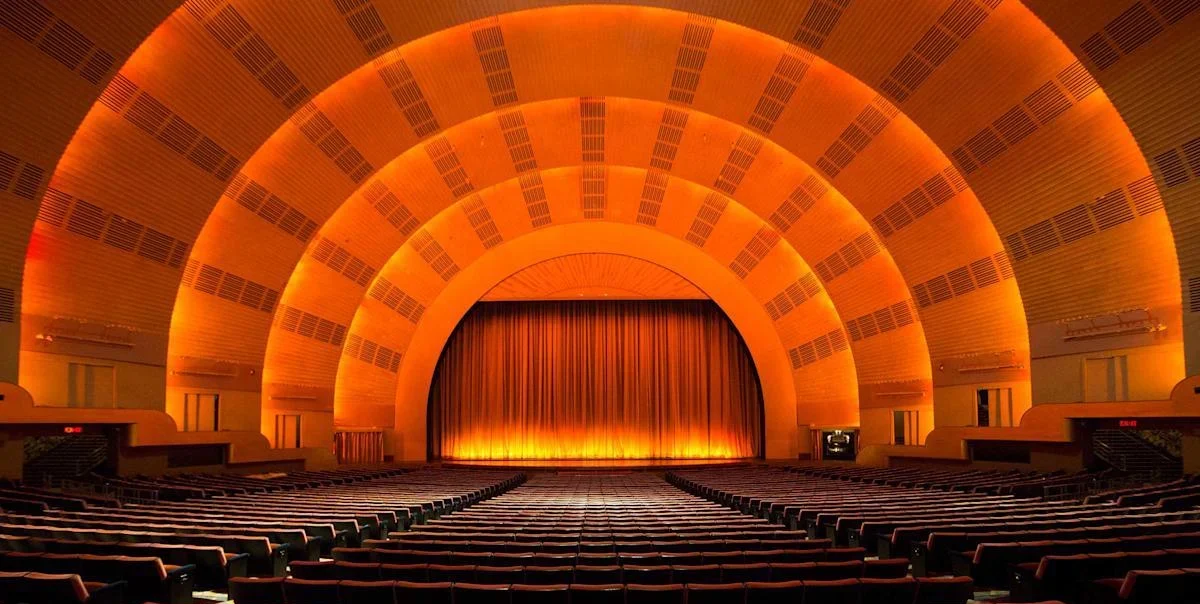
 When John D. Rockefeller Jr. began planning the theater that would anchor his new Rockefeller Center, the man he hired to run it very nearly steered it in the opposite direction from the one that made it famous. Samuel “Roxy” Rothafel, the era’s leading authority on movie palaces, wanted the traditional ornate rococo style that had defined grand theaters for decades, all gilt curls and plaster garlands. Rockefeller’s team ran a design competition instead, and the winning entry came from a relatively unknown designer named Donald Deskey, who had spent months at the 1925 Paris Exposition and touring the Bauhaus, and who proposed something Rothafel had never considered: a theater that looked forward instead of back. Deskey later described the compromise style he landed on as modern rococo, sleek and geometric but still theatrical enough to satisfy the man paying for it, and the result, completed in 1932 alongside architect Edward Durell Stone, became one of the most complete Art Deco interiors ever built in America.
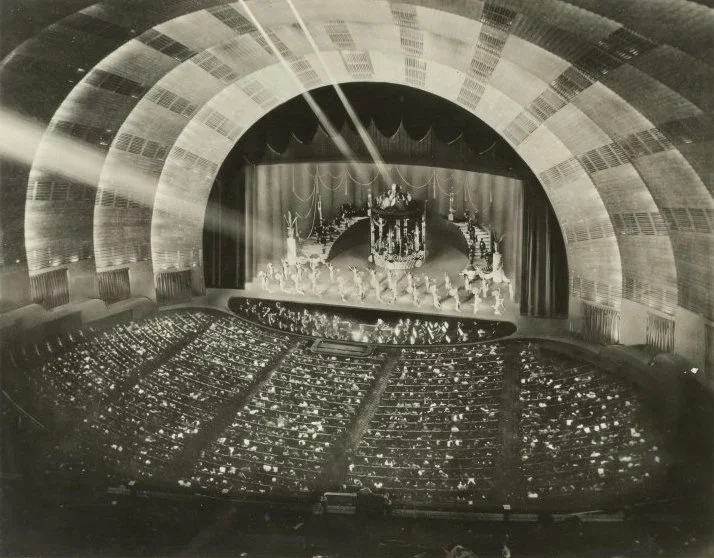
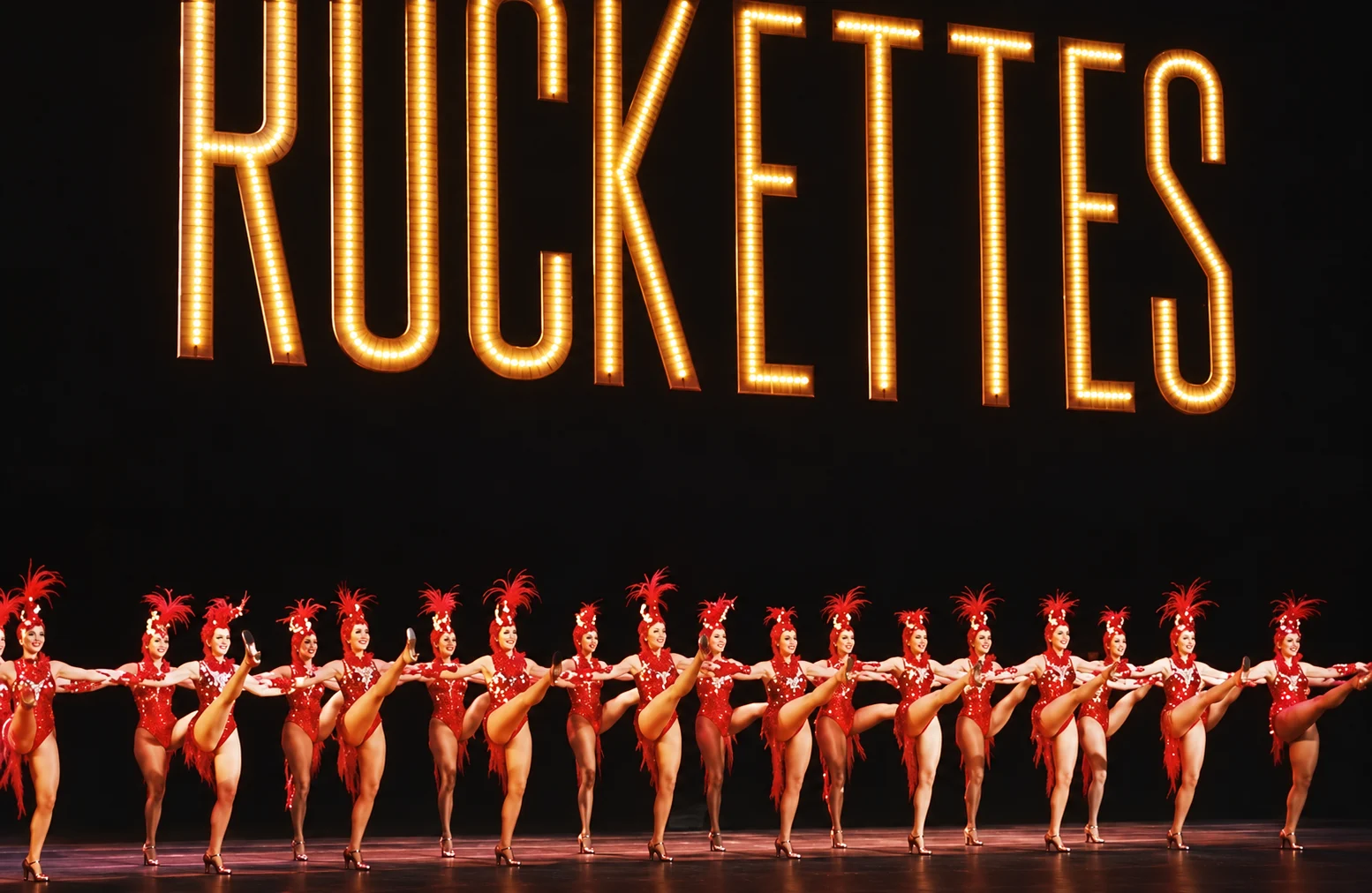
The theater’s centerpiece is its Great Stage, framed by a proscenium arch built to resemble a rising sun, its bands of gold and aluminum radiating outward across the ceiling in a pattern that turns the entire auditorium into a single piece of Deco ornament. Deskey filled the nearly 6,000-seat hall with materials nobody expected to see in a luxury theater, aluminum wall coverings, Bakelite fixtures, tubular steel furniture, and cork paneling, mixed without apology alongside marble and gold foil. The effect was jarring enough at the time that one contemporary critic wrote the Music Hall was so complete it hardly needed performers at all, that the building’s own beauty was sufficient.
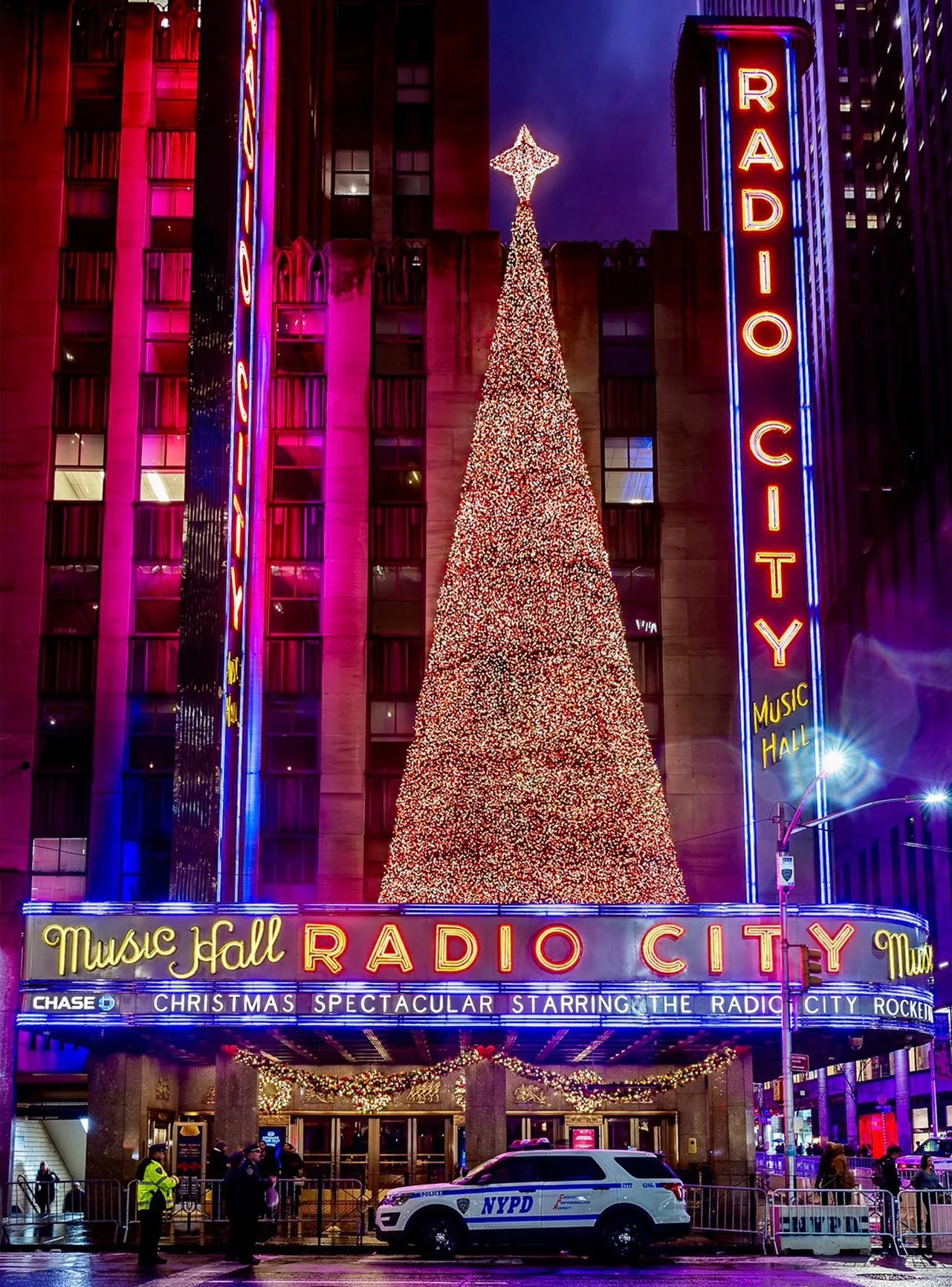
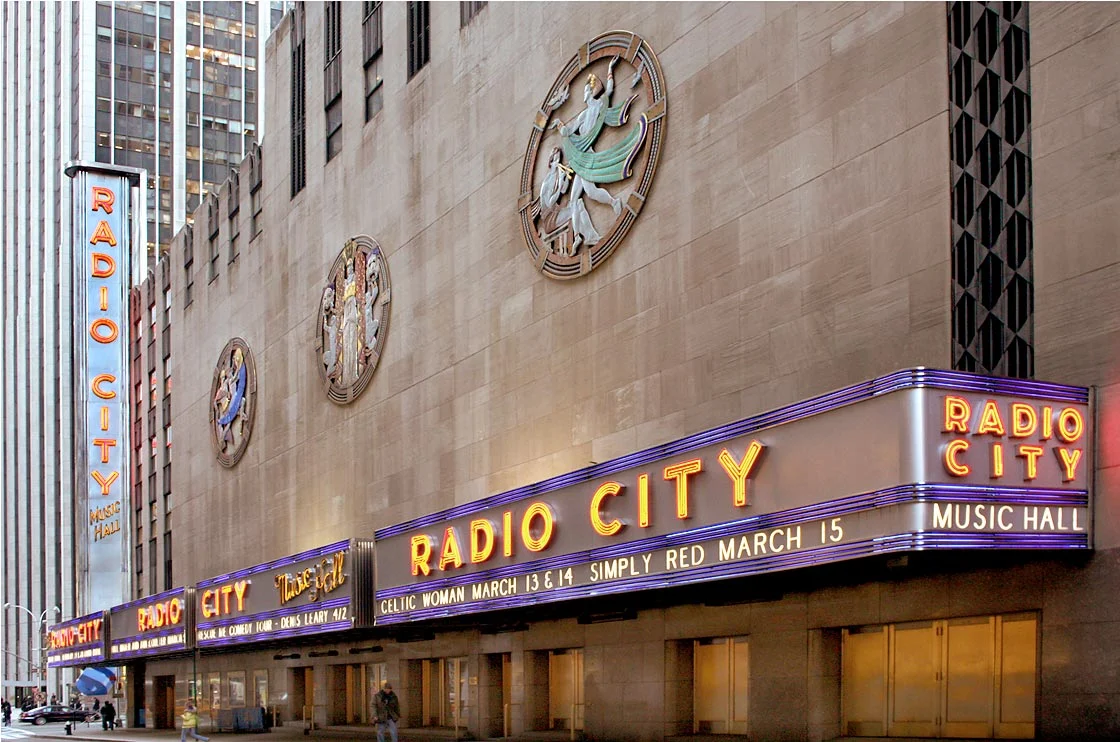
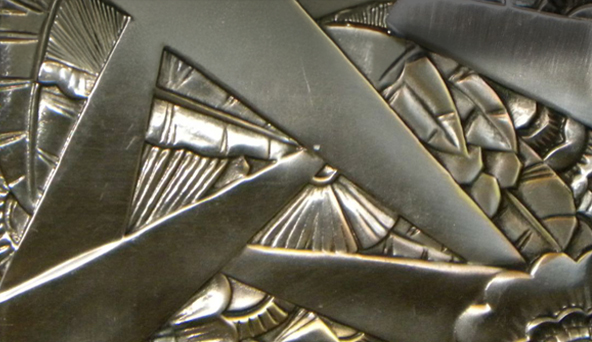
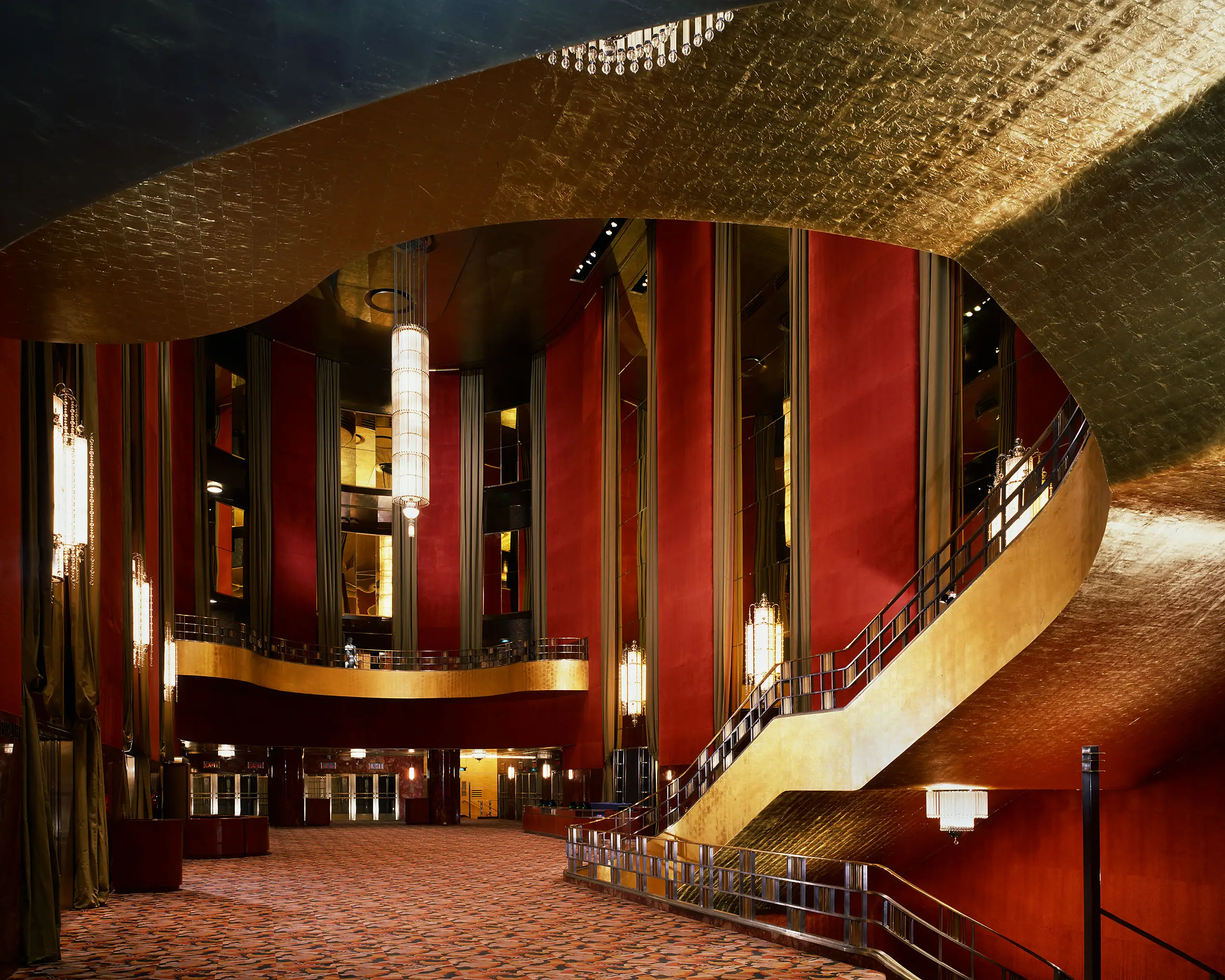
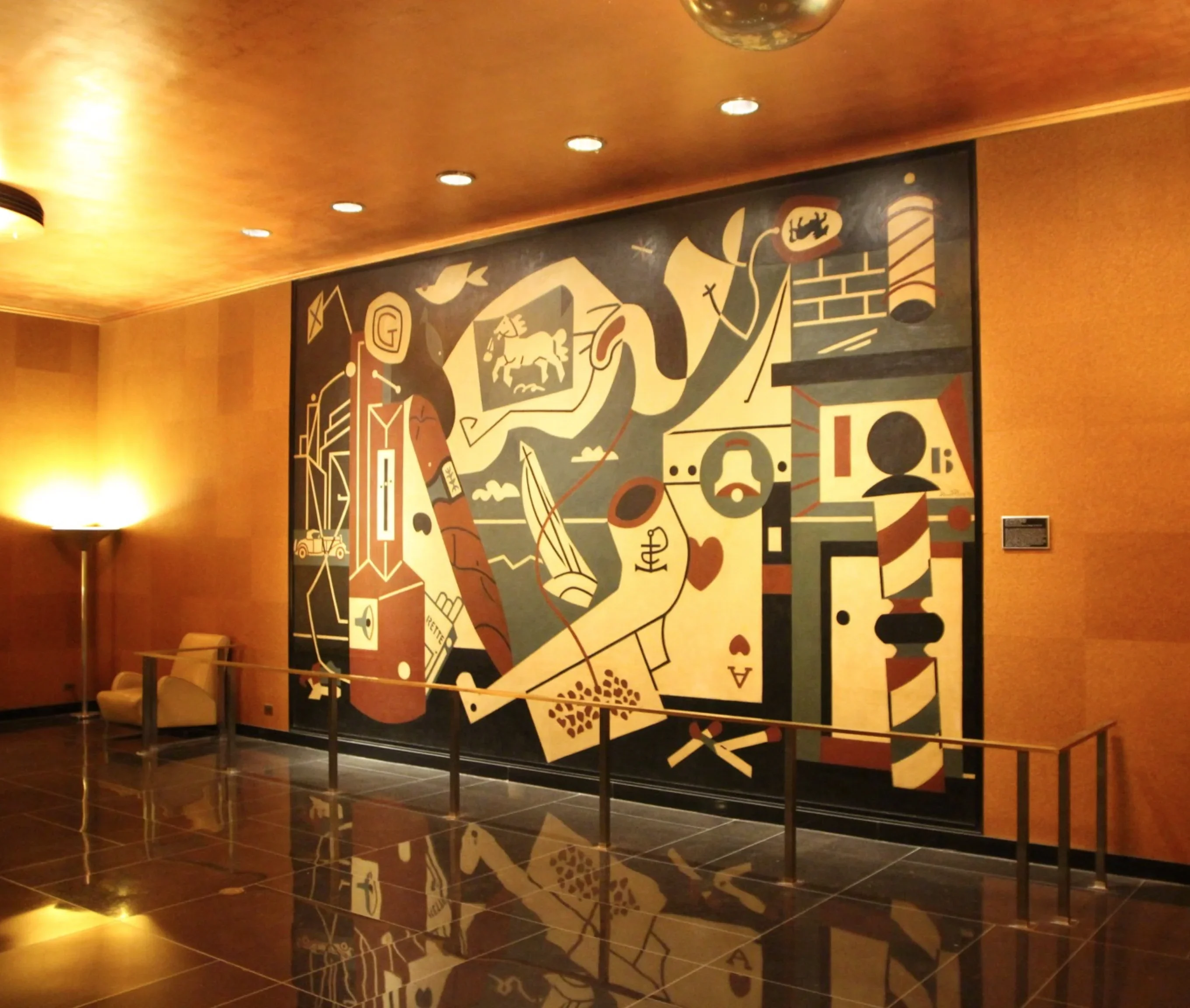
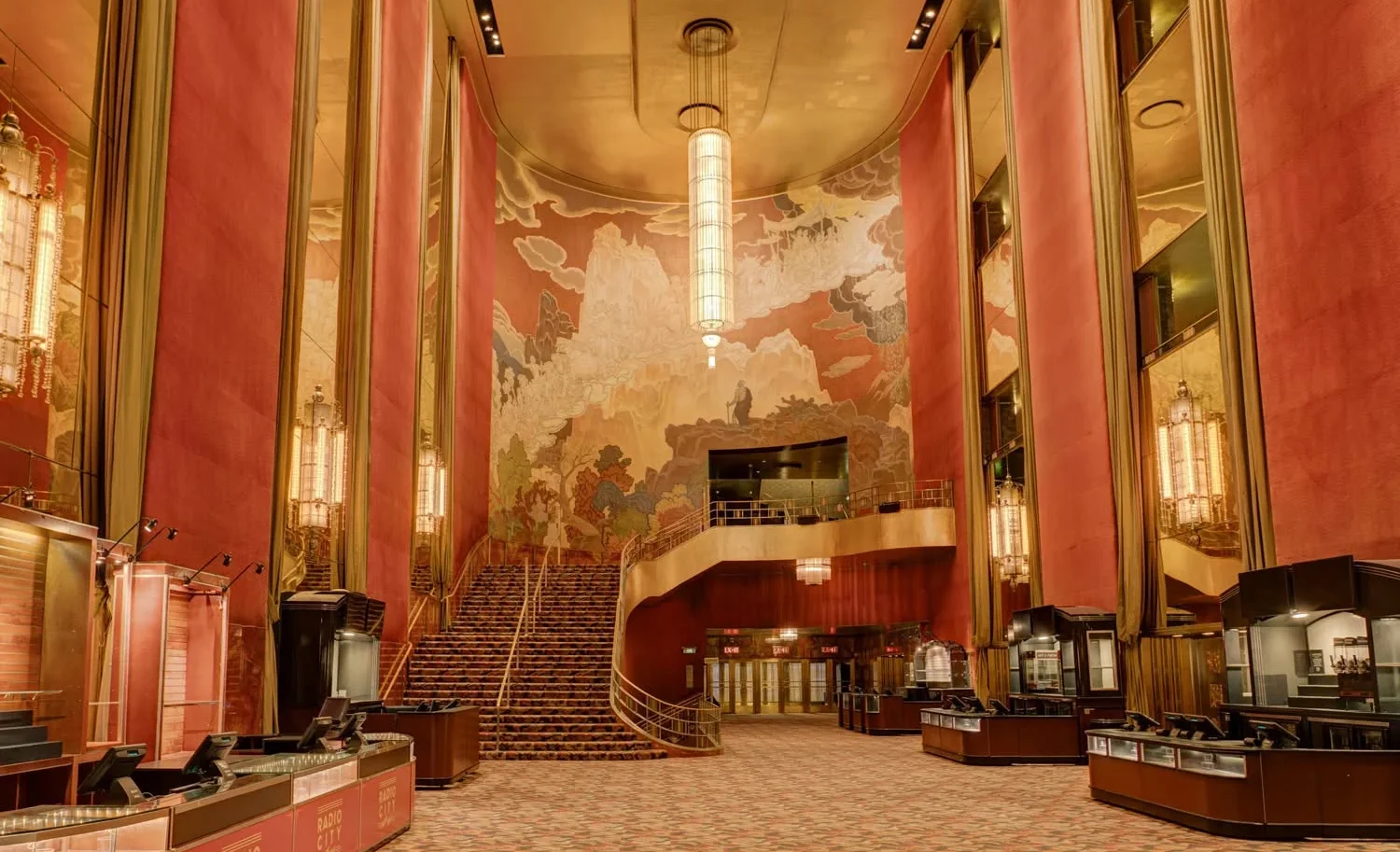
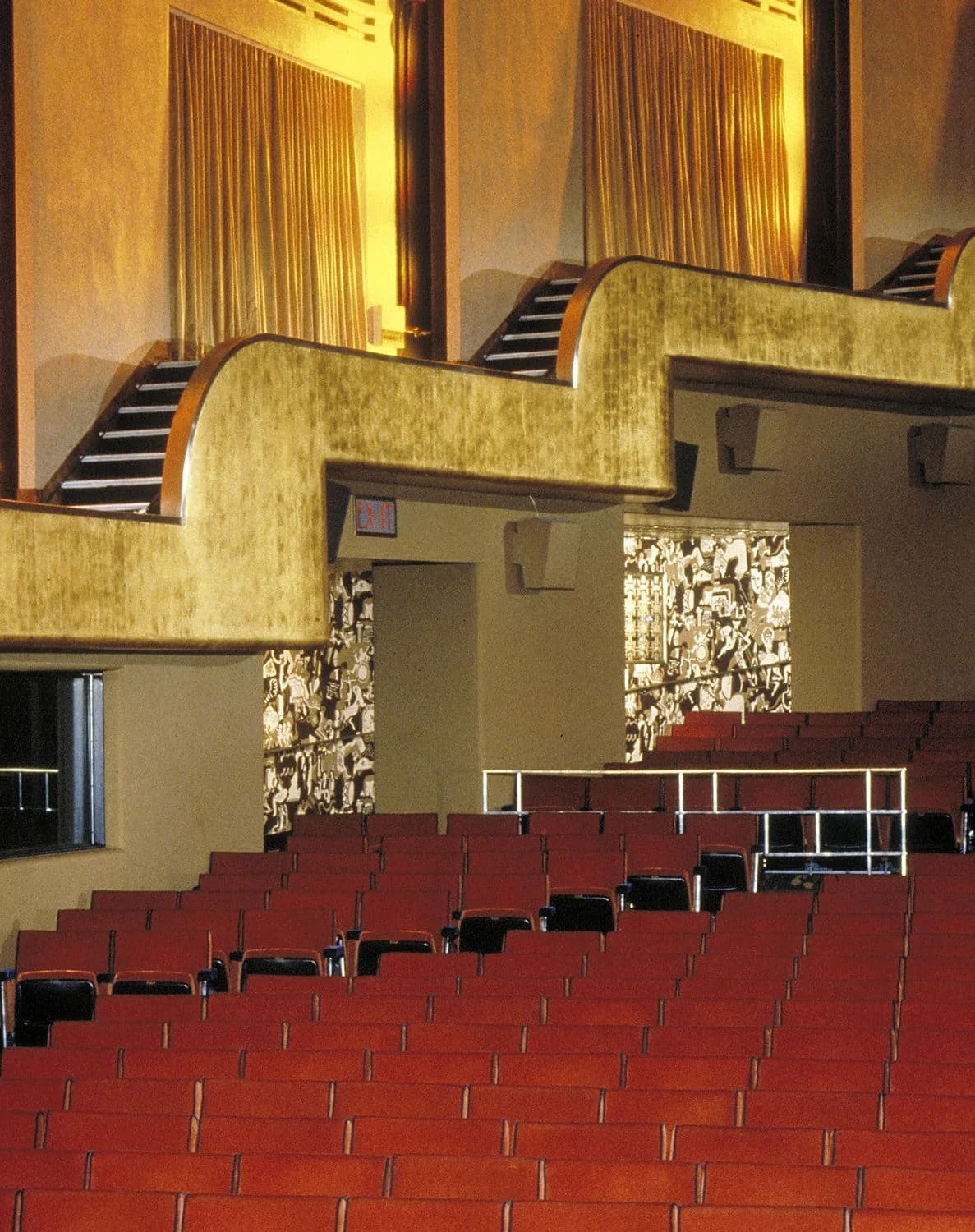 Deskey treated no space in the building as an afterthought, which is part of what makes Radio City hold up as a total design rather than a single showpiece room. The Grand Foyer alone runs three stories high, lined with murals and sculpture by some of the era’s most prominent working artists, its scale meant to feel like an event before the show had even begun. Upstairs, the Men’s Lounge, nicknamed the Nicotine Room, wrapped its walls in tobacco-brown aluminum foil printed with a mural on the history of tobacco, foil that was, in one of the building’s stranger footnotes, manufactured by the R.J. Reynolds Tobacco Company itself. Even the ceiling height and sightlines throughout the building were treated as design problems worth solving in the same geometric language as everything else, rather than left to the architects as purely structural concerns.
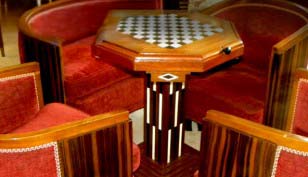
Deskey designed the carpets too, including one patterned with violins and wine glasses for the lounges, and the furniture in the Roxy Suite, a private apartment built above the stage for Rothafel that survives today largely as Deskey left it. Even the railings, signage, and balustrades throughout the building carry his hand, the kind of total control over every surface that only a handful of Art Deco commissions ever achieved. It is this insistence on designing everything, down to the carpet underfoot, that separates Radio City from a merely decorated theater and makes it a genuine total work of art.


ART & STATUES
CERAMICS & GLASS
© Copyright Art Deco Collection. 2026 All rights reserved. Site Map