


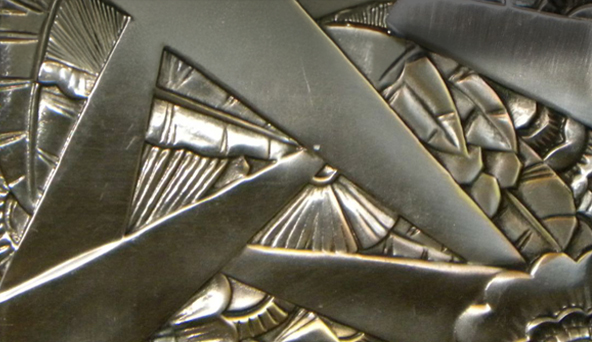

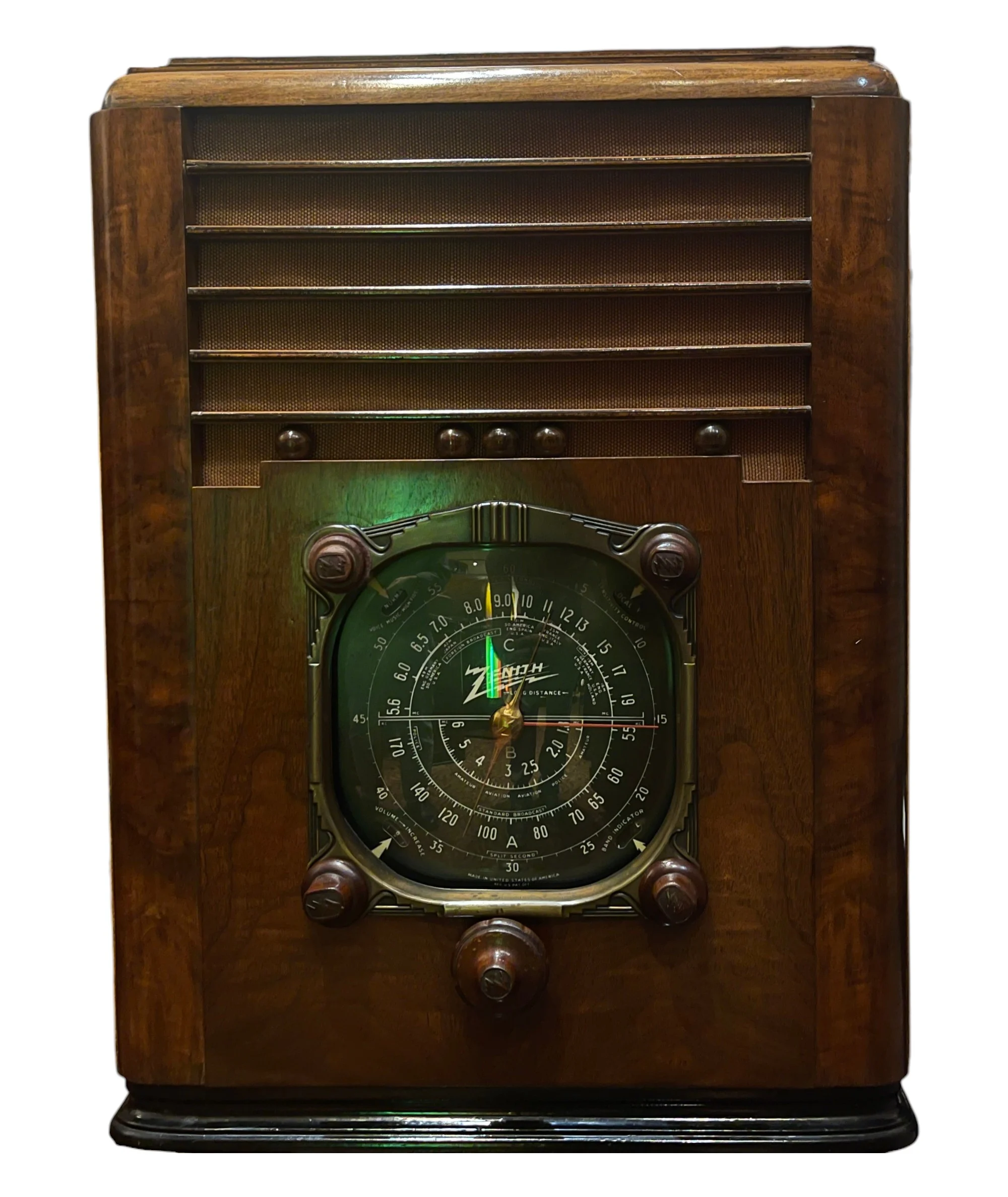
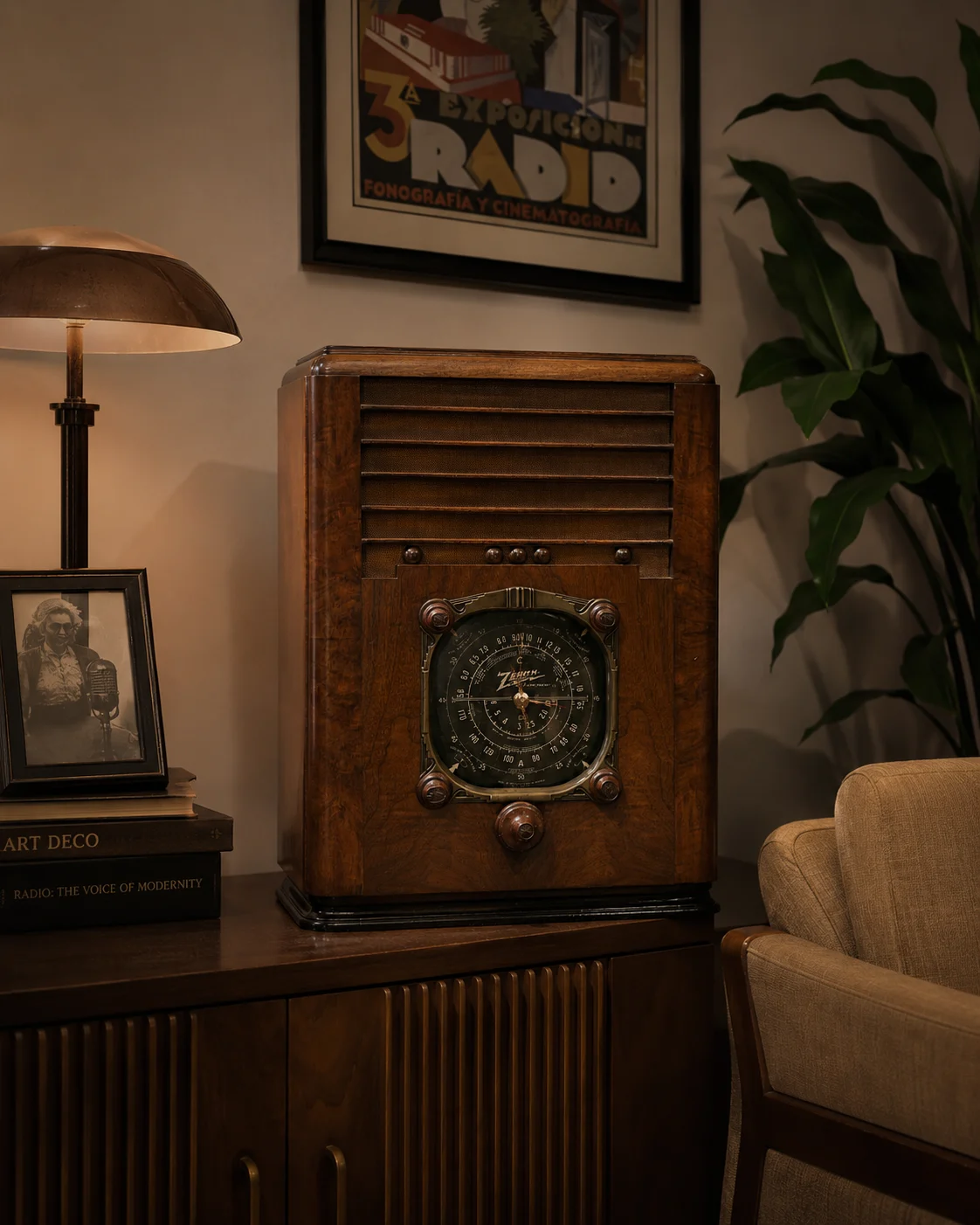
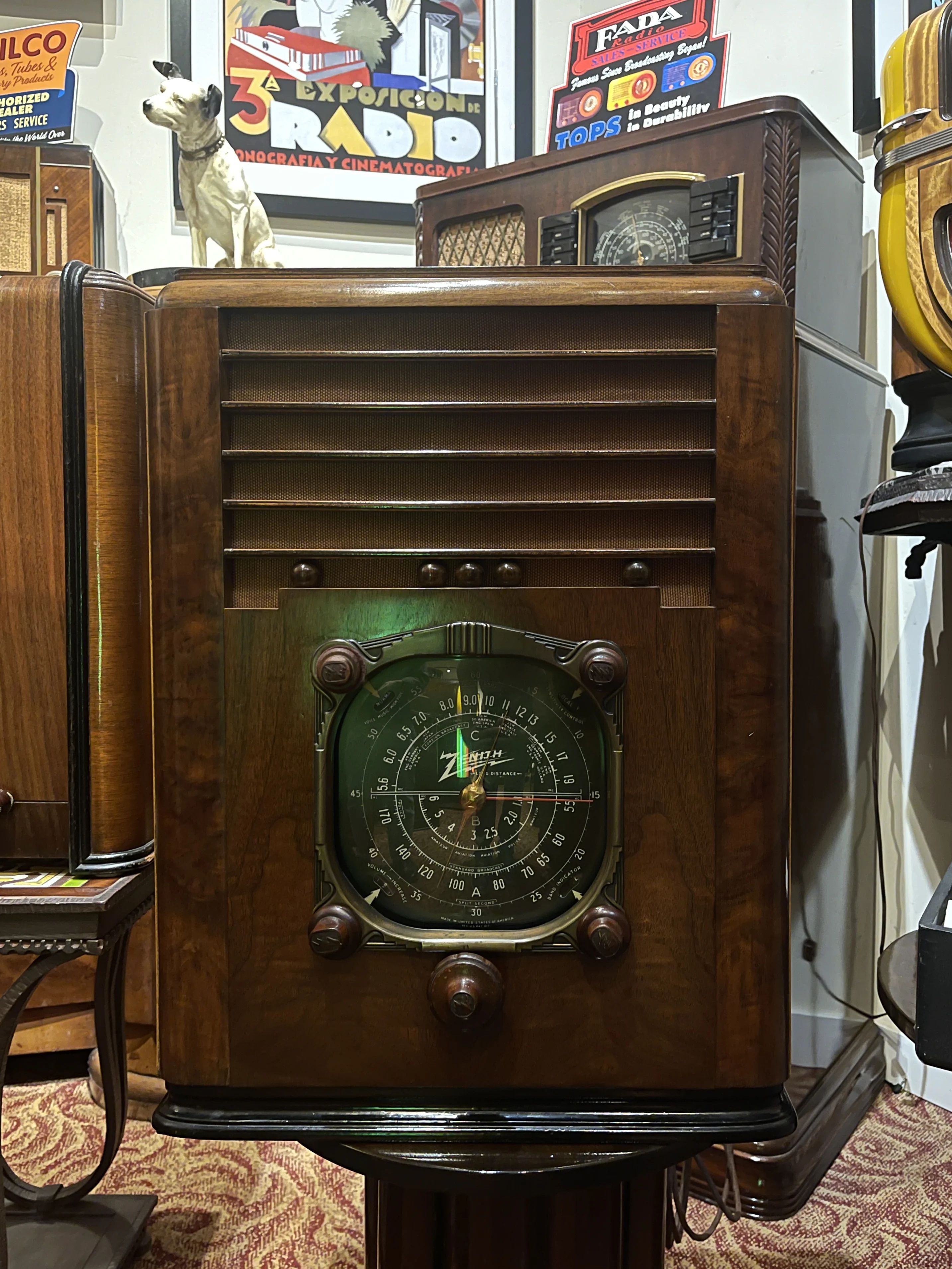
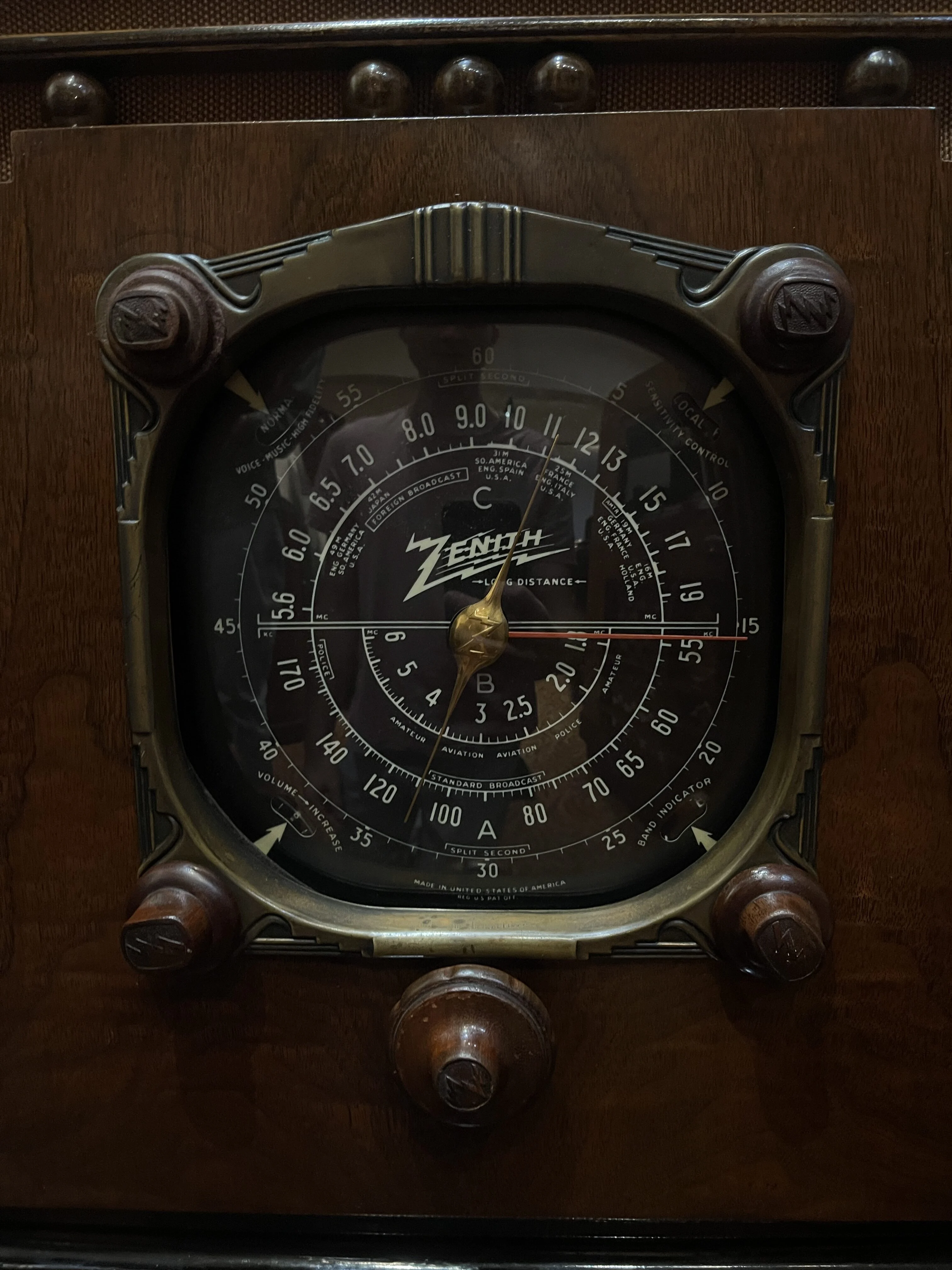


This 1937 Zenith Model 6-S-128 is a large tombstone-style tube radio, one of the most distinctive designs Zenith produced that year, its walnut cabinet built with heavy rounded edges and horizontal wooden louvers spanning the upper face. The cabinet's front is faced in dense, richly figured walnut burl, giving the whole piece a warmth and presence that has made it a standout among Zenith's late 1930s tombstone lineup. Below the grille sits Zenith's signature aviation-style black dial, a round window with a gold two-pronged "propeller" tuning indicator and a red sweeping "split second" hand for fine tuning, framed in a stepped bezel with four wooden knobs at the corners and a fifth centered below.
Clocks & Music
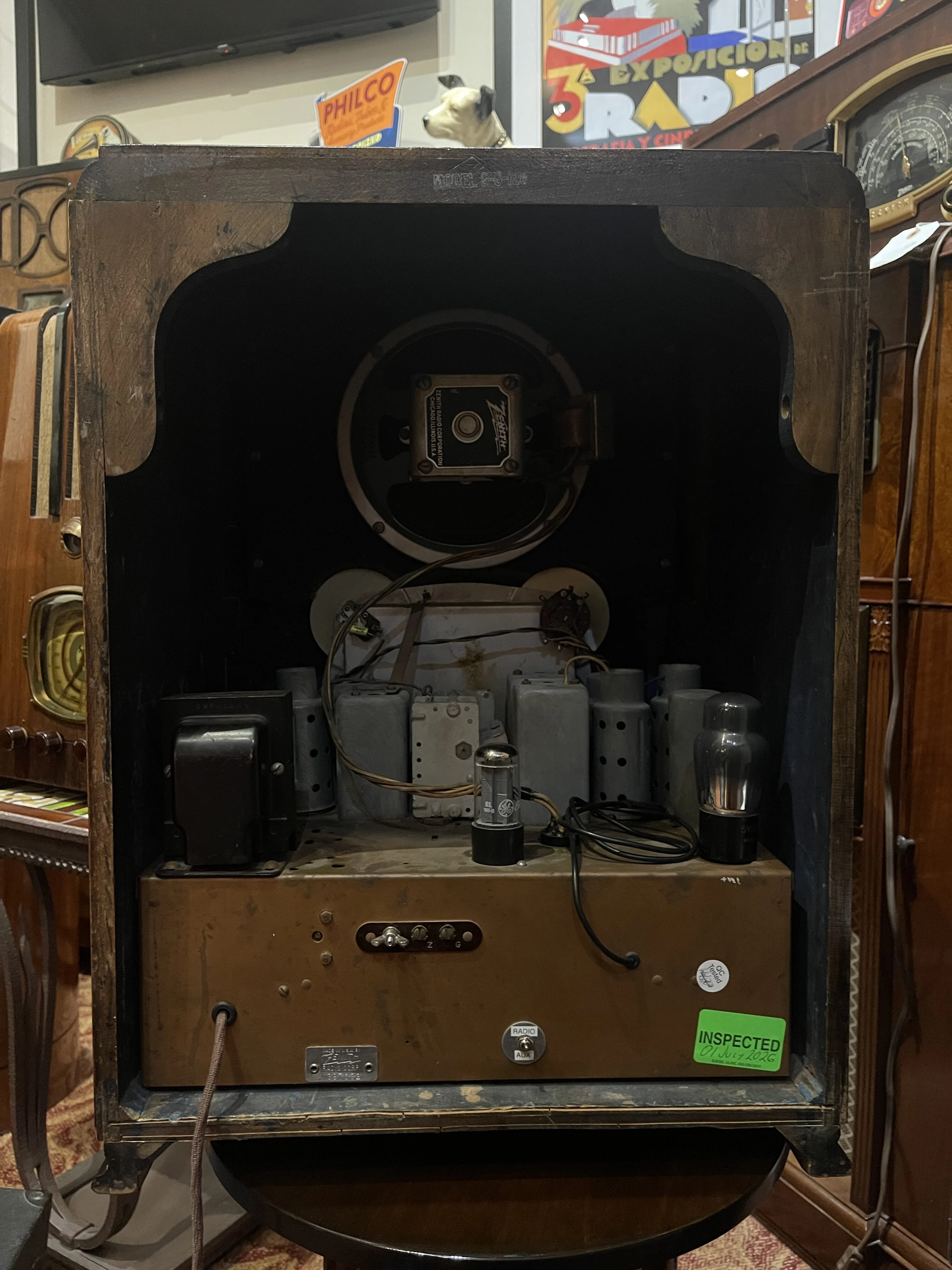
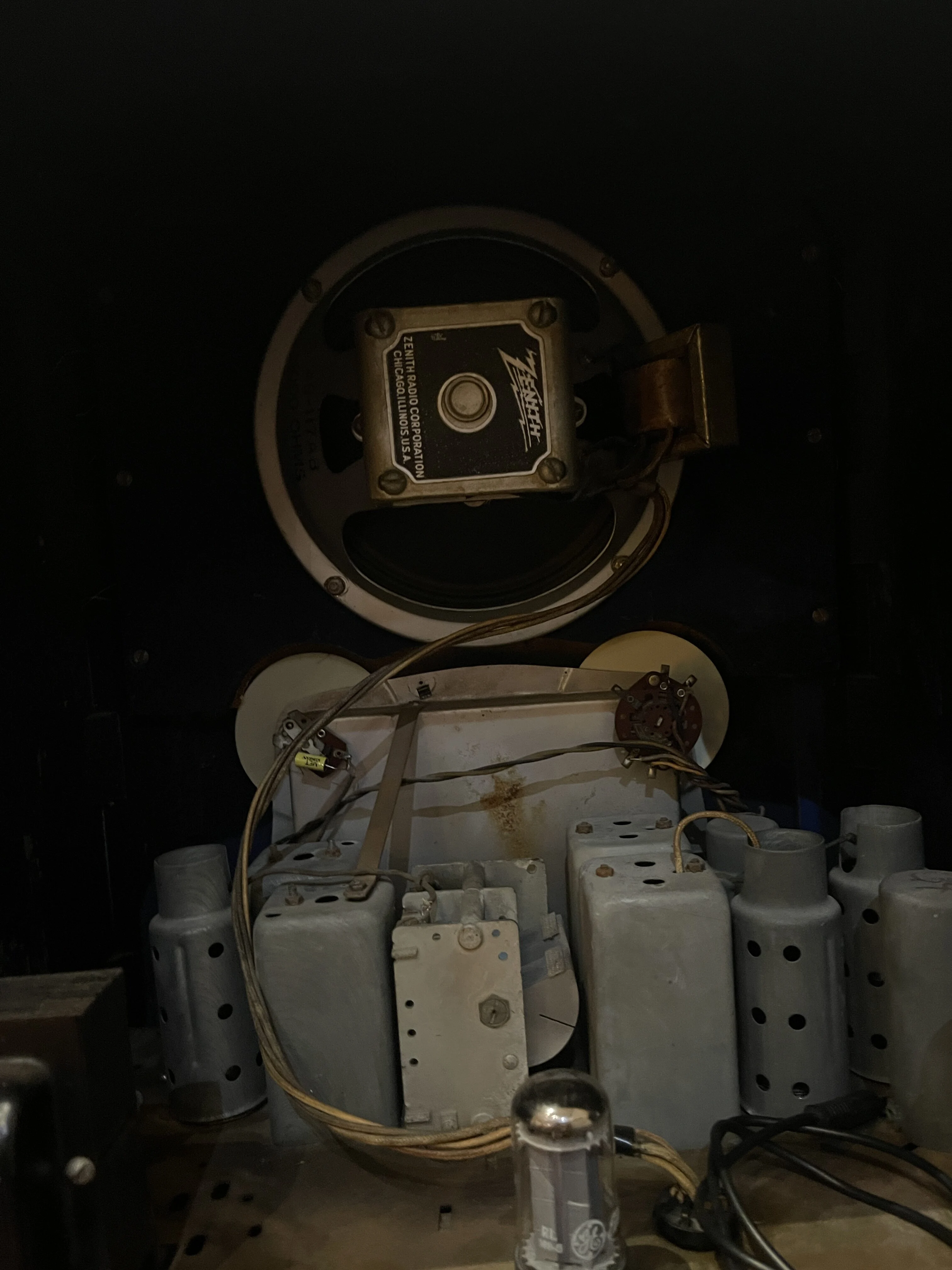
The 6-S-128 is a six-tube, three-band AC superheterodyne set covering Standard Broadcast, Police, and Shortwave, first appearing in the fall of 1936 and sold into the 1937 model year, driven through its original 8-inch speaker for excellent volume and fidelity for a radio of its size. The chassis carries a heavy flywheel mounted on the tuning shaft, giving the tuning knob the same luxurious, weighted feel that made Zenith's higher-end sets so well regarded in period reviews.
Standing a little less than two feet tall, the 6-S-128 was designed to be a genuine focal point for a room rather than a background appliance, and its dense walnut burl front face and rounded tombstone silhouette remain one of the clearest expressions of late Art Deco radio design. It represents the last and most sculptural evolution of the tombstone format before Zenith moved toward the broader console and tabletop shapes that would follow later in the decade.
This example has been restored and fitted with an 1/8 inch adapter, allowing a smartphone, iPhone, iPod, computer, or record player to connect and play through the radio's original tube driven sound. Access old vinyl or a favorite streaming playlist and bring the warm, bright, analogue tone of a vintage Zenith tube amplifier to any music or recording, the same combination of digital convenience and analogue depth still sought after in tube amps built today.