
Ceramics & Glass

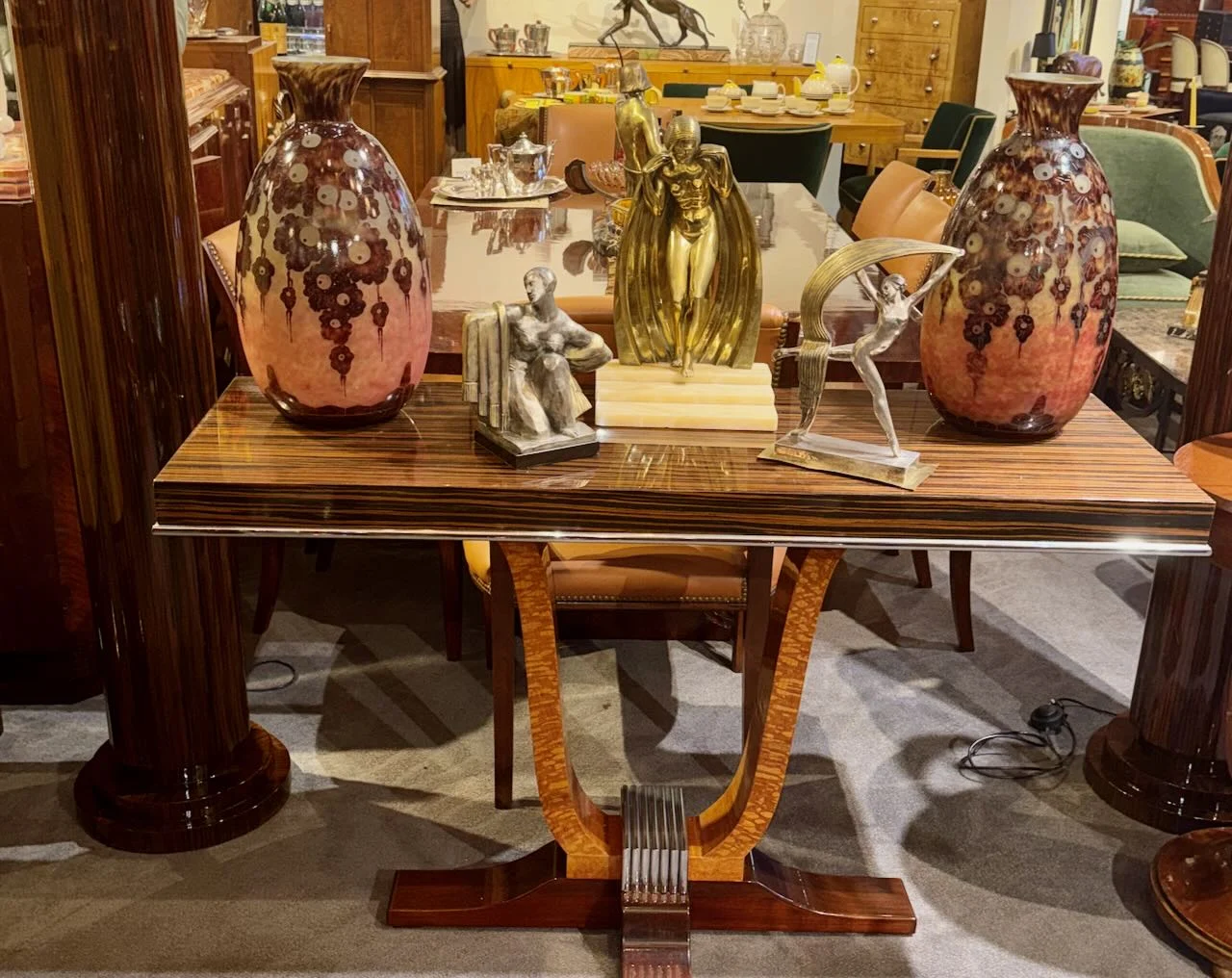


Important Pair of Le Verre Français “Capucines” Art Deco Glass Vases by Charles Schneider, circa 1928–1930
Important Pair of Le Verre Français “Capucines” Art Deco Glass Vases by Charles Schneider, circa 1928–1930
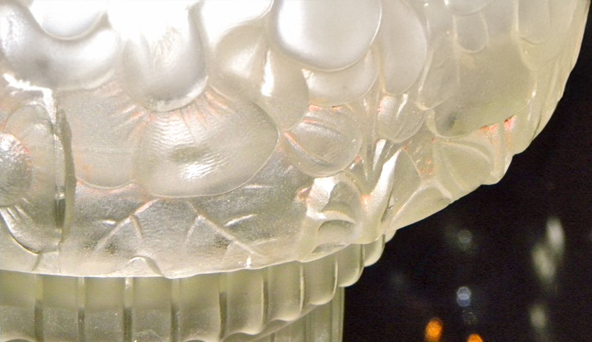
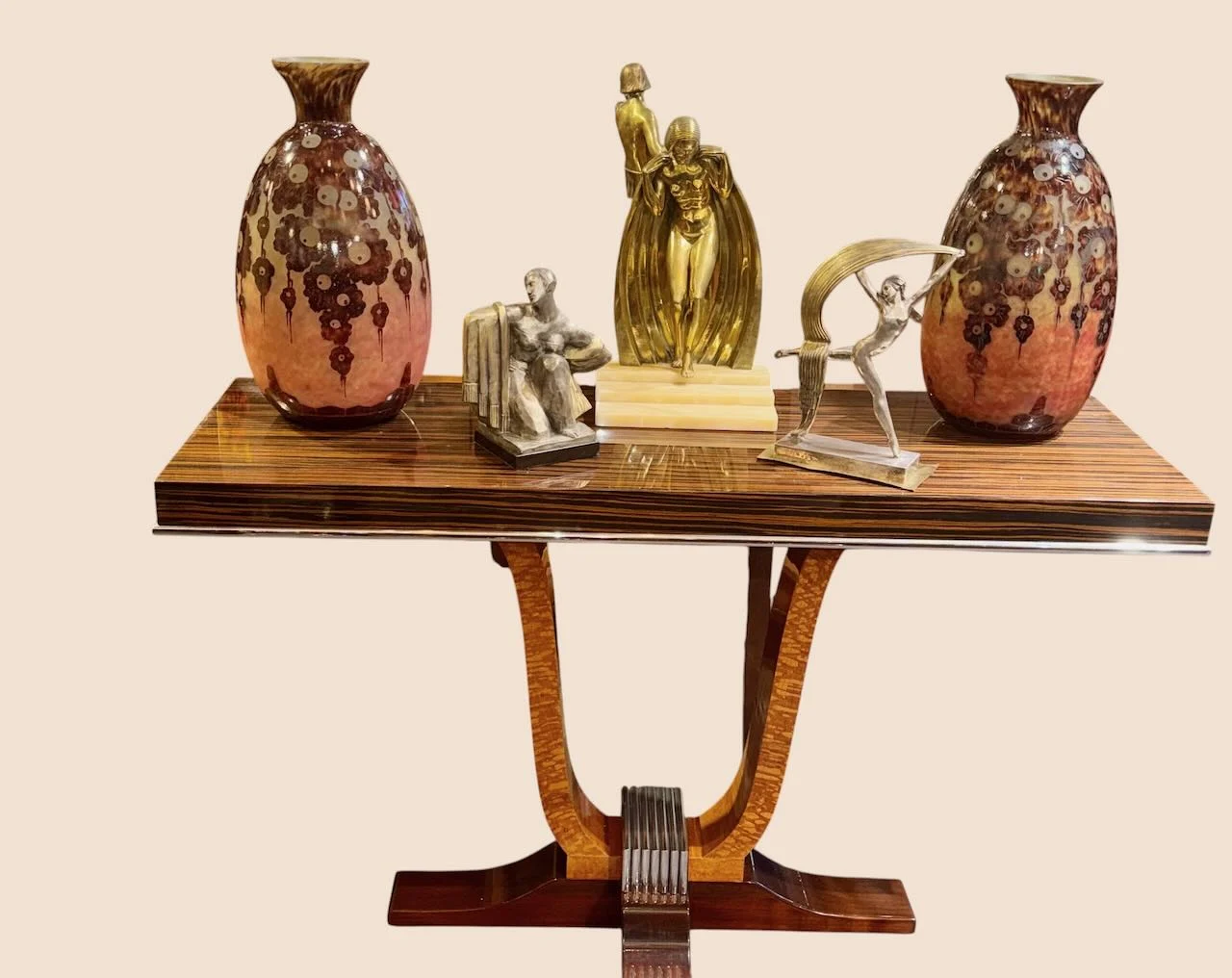
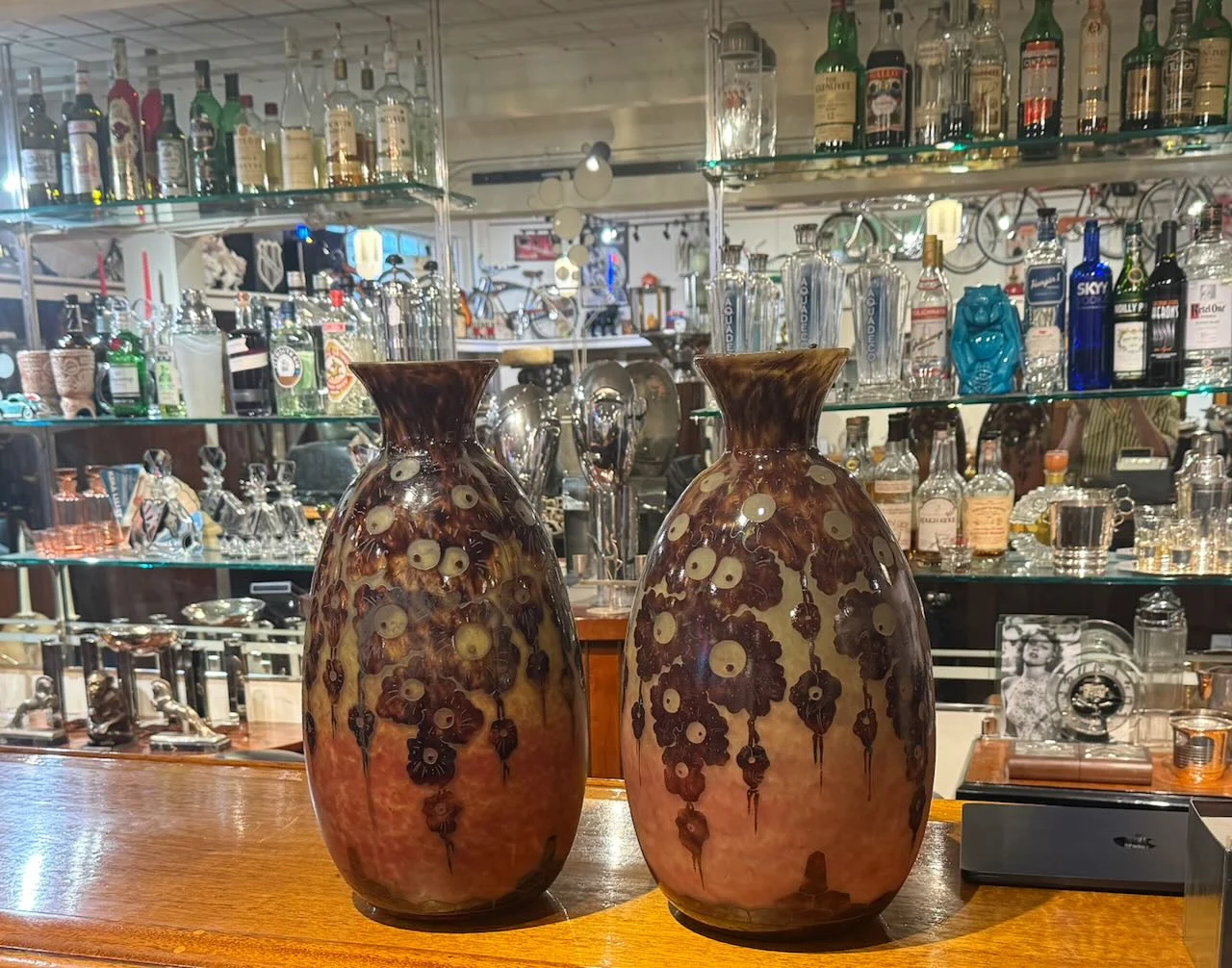
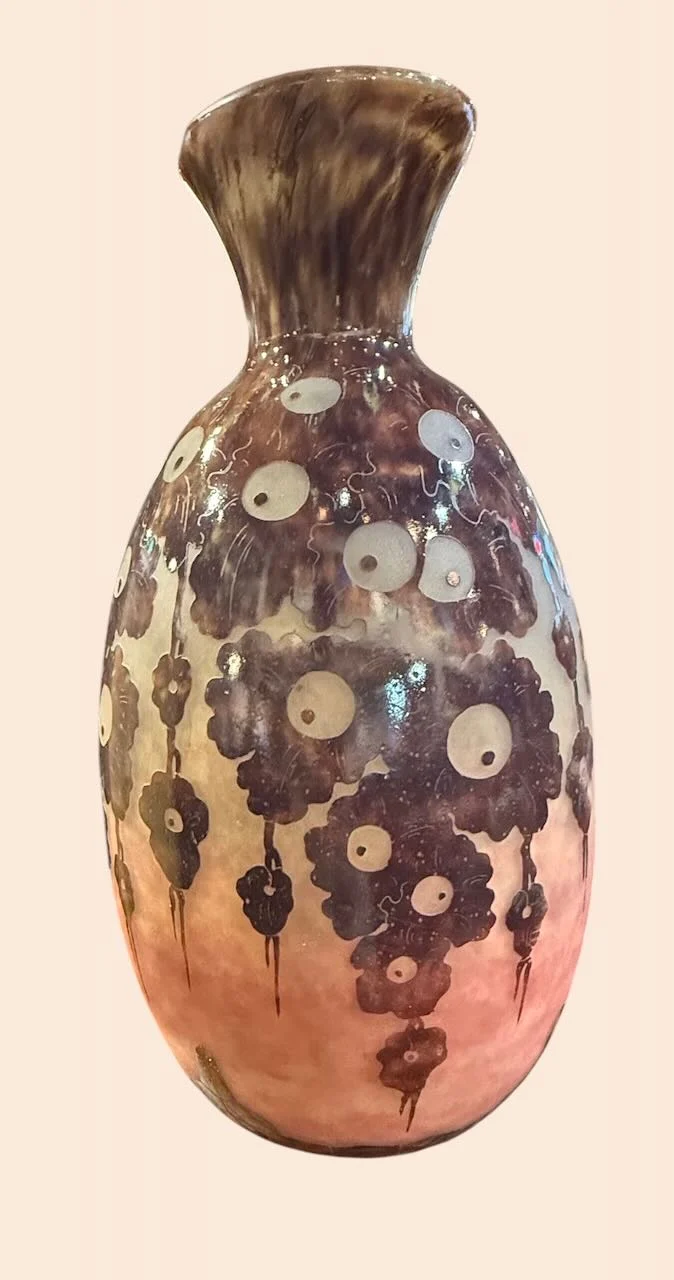
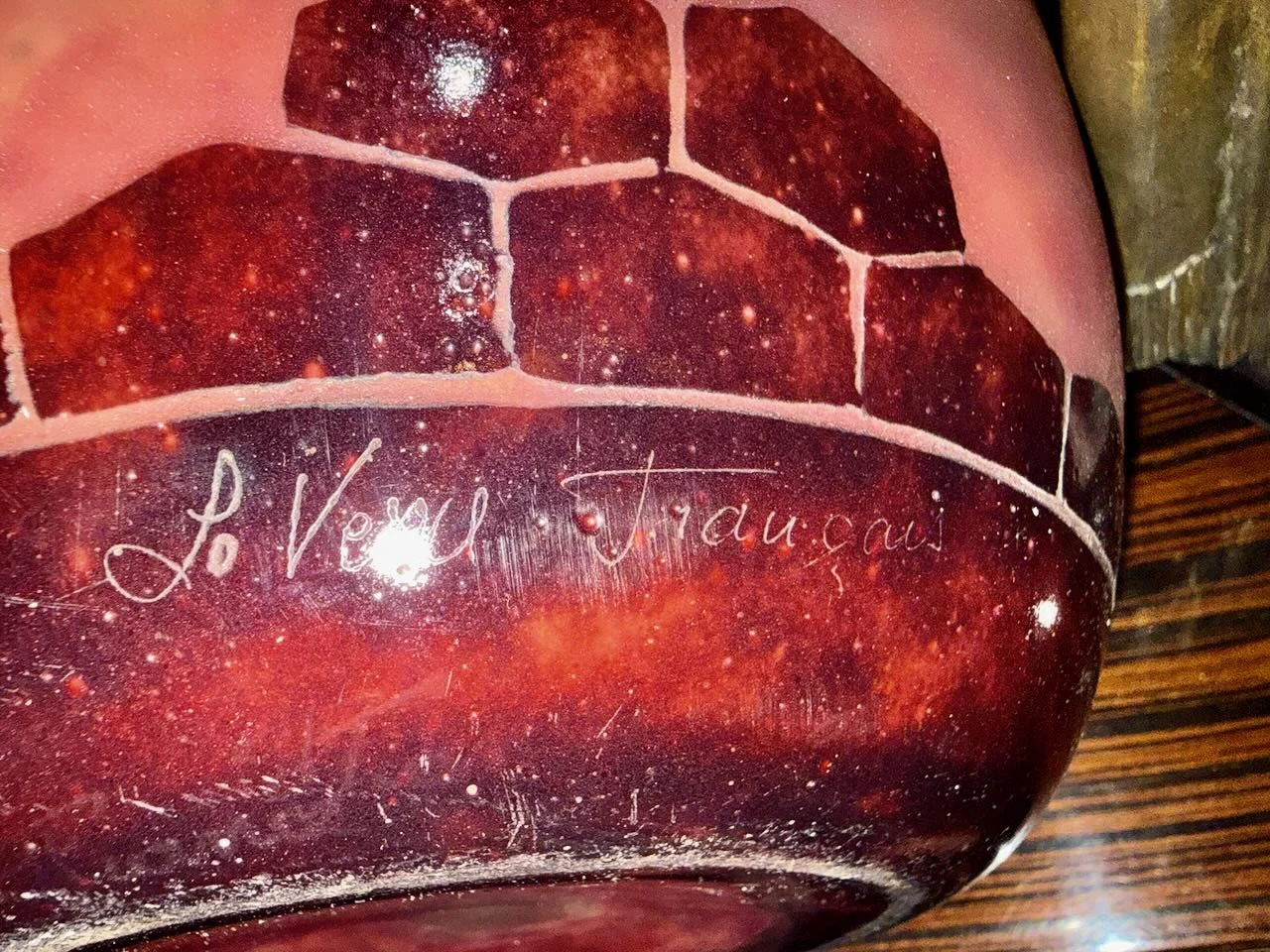
An exceptional matched pair of large Le Verre Français Art Deco glass vases by Charles Schneider, produced at the Schneider glassworks in Épinay-sur-Seine, France. Each vase measures approximately 19 inches tall by 10 inches wide, giving the pair considerable presence. The decoration is executed in richly layered shades of amber, burnt orange, rose, brown and deep violet, with broad stylized flowers cascading across the body. Circular centers and fine engraved details animate the blossoms, while the lower portion incorporates a distinctly geometric arrangement of faceted forms. The short neck opens dramatically into a broad flared mouth, creating a strong sculptural silhouette.
The Design is called “Capucines” or Nasturtiums décor, probably dating from about 1928–1930. The attribution is particularly persuasive because documented Capucines examples use the same large circular flower heads, elongated linear stems, orange and brown coloration and geometric accents. A known Capucines vase measuring 47 cm has an orange multilayered body, acid etched floral decoration and geometric motifs at the base; another 46.4 cm example in orange and brown shares virtually the same monumental scale. A museum publication also specifically dates Schneider's Capucines design to 1928–1930.
The inscription in your close up photograph is important: it reads “Le Verre Français. Le Verre Français was registered by the Schneider glassworks in 1918 as a separate line from the more costly Schneider branded production. The line became particularly successful in the United States because of its bold colors, highly stylized naturalistic decoration and striking contrast between polished and acid etched surfaces. More than 180 decorative patterns have been recorded. From 1925 onward the additional name Charder, a contraction of Charles Schneider, also began to appear, although Le Verre Français continued to be used as a signature in its own right