
René Magritte
René François Ghislain Magritte was born on November 21, 1898, in Lessines, in the province of Hainaut, Belgium, the oldest son of Léopold Magritte, a tailor and textile merchant, and Régina Bertinchamps, a milliner. He began lessons in drawing in 1910, and in 1912, at the age of thirteen, his mother drowned herself in the River Sambre, a tragedy that has been widely linked to recurring imagery of obscured faces in his later work. From 1916 to 1918, he studied at the Académie Royale des Beaux-Arts in Brussels under Constant Montald and poster designer Gisbert Combaz. In 1922, he married Georgette Berger, whom he had first met as a child in 1913, and she would become his model, muse, and lifelong companion. That same year, the poet Marcel Lecomte showed him a reproduction of Giorgio de Chirico’s The Song of Love, an encounter Magritte described as one of the most moving moments of his life, saying his eyes “saw thought for the first time.” He moved to Paris in 1927, where he became friends with André Breton and joined the Surrealist group for three years before returning to Brussels in 1930. He remained in Brussels during the German occupation in World War II, a decision that led to a break with Breton. Magritte died of pancreatic cancer on August 15, 1967, and was interred in Schaerbeek Cemetery in Brussels.
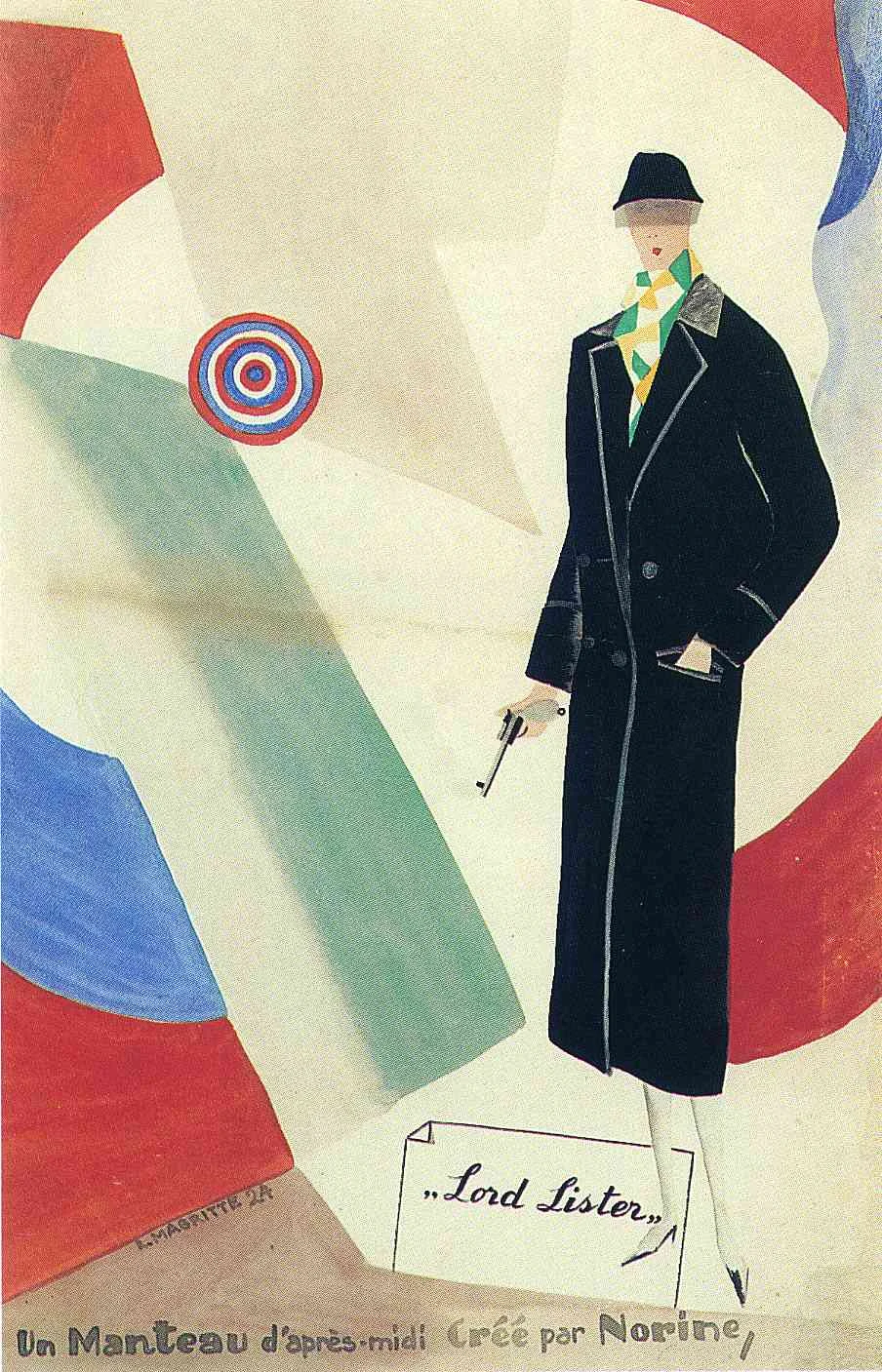
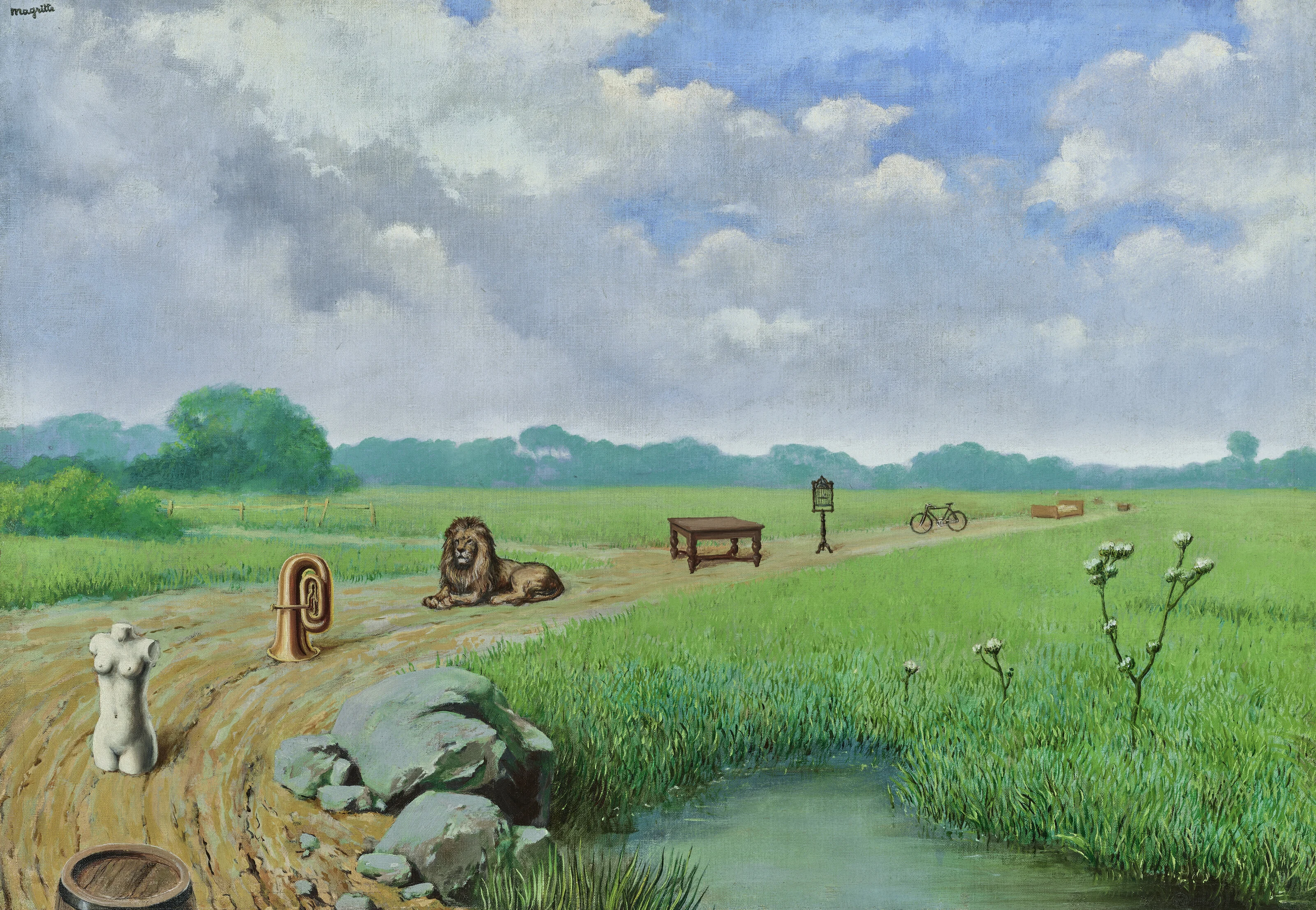
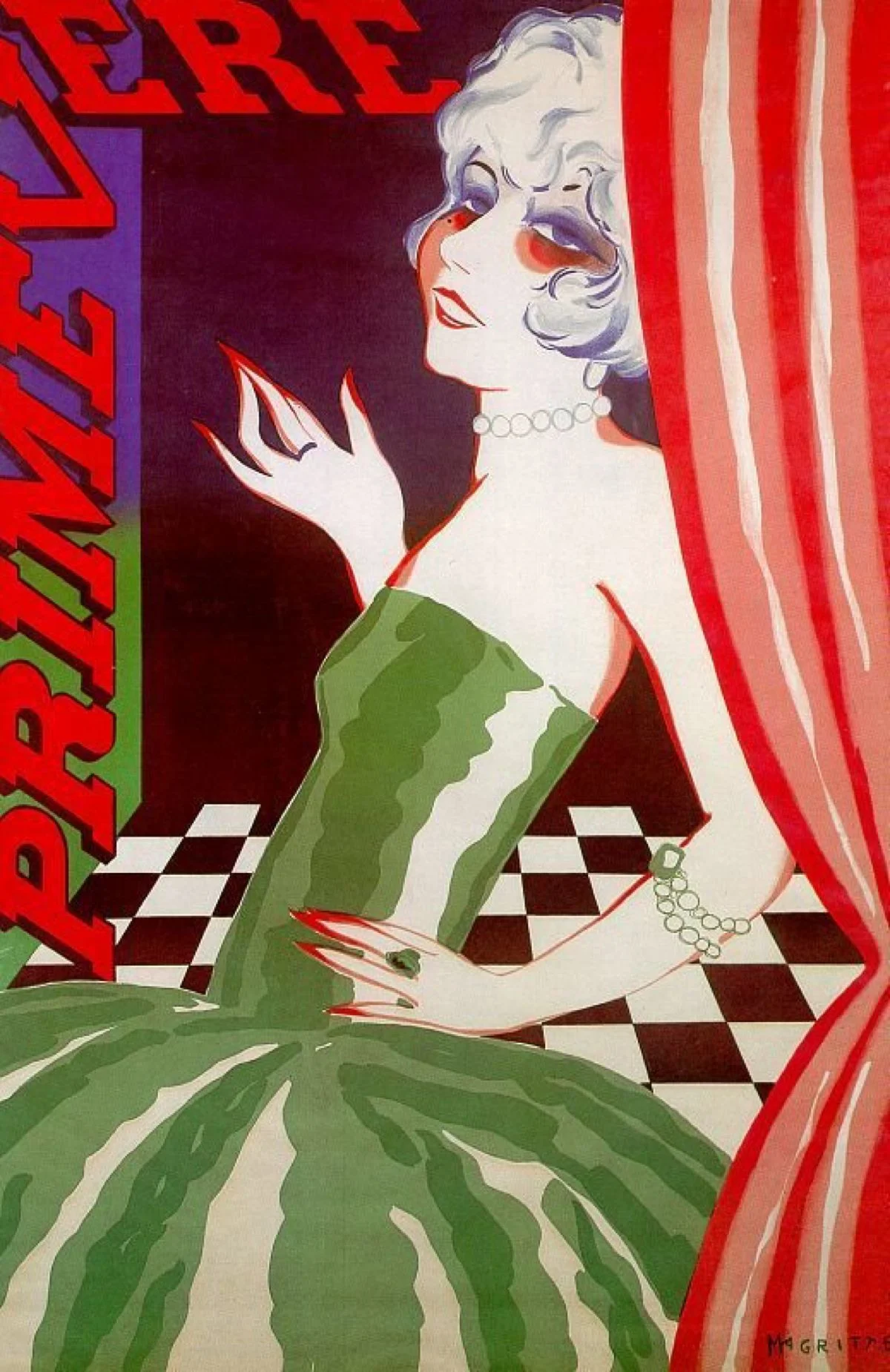
Magritte worked as a draughtsman in a wallpaper factory and as a poster and advertisement designer until 1926, when a contract with Galerie Le Centaure in Brussels made it possible for him to paint full-time. He produced his first surreal painting, The Lost Jockey, in 1926, and held his first solo exhibition in Brussels the following year. In 1929, he completed The Treachery of Images, depicting a pipe beneath the words “Ceci n’est pas une pipe,” a work that became one of the most recognized paintings of the twentieth century. After Galerie Le Centaure closed in 1929, he returned to Brussels and resumed working in advertising, forming an agency with his brother Paul to earn a living. His first solo exhibition in the United States was held at the Julien Levy Gallery in New York in 1936, followed by an exposition at the London Gallery in 1938. Between 1934 and 1937, he drew film posters under the pseudonym “Emair” for the German sound film distributor Tobis Klangfilm. The 1960s brought a great increase in public awareness of his work, and retrospective exhibitions followed at the Museum of Modern Art in 1965, the Metropolitan Museum of Art in 1992 and 2013, and the Centre Georges Pompidou in 2016. The Magritte Museum opened in Brussels in 2009, housing some 200 original paintings, drawings, and sculptures, the largest Magritte archive anywhere.
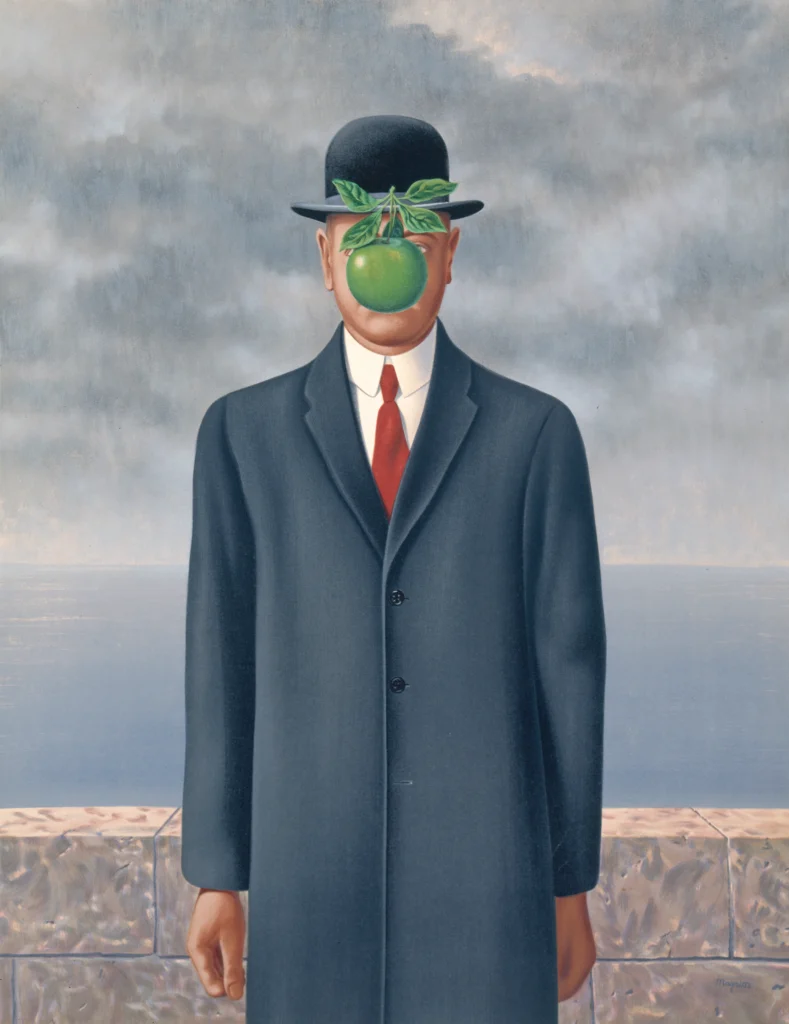
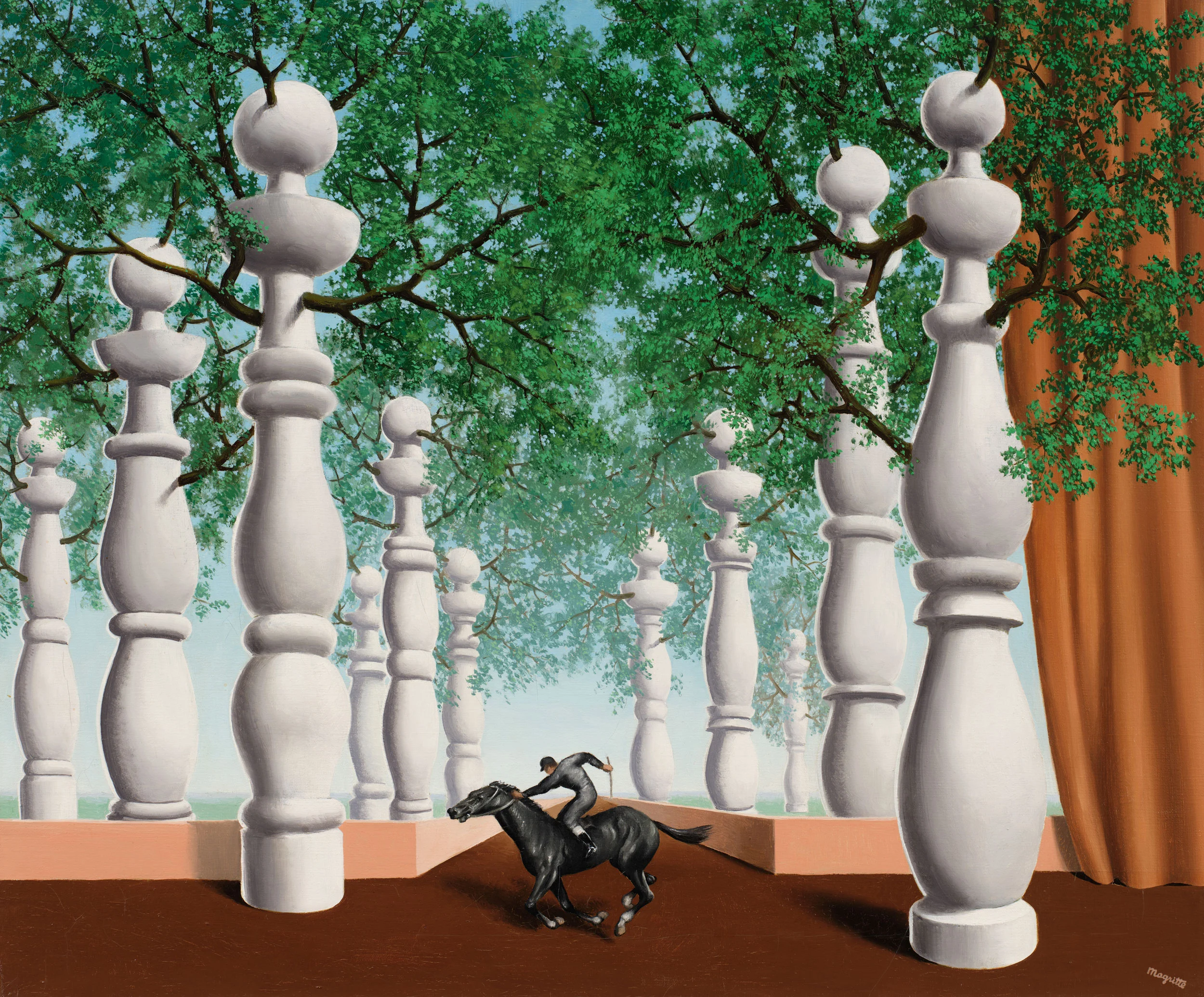
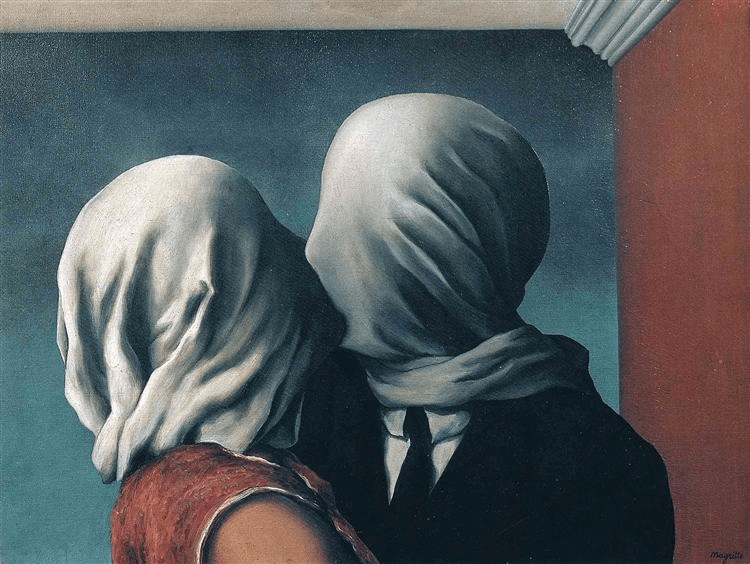
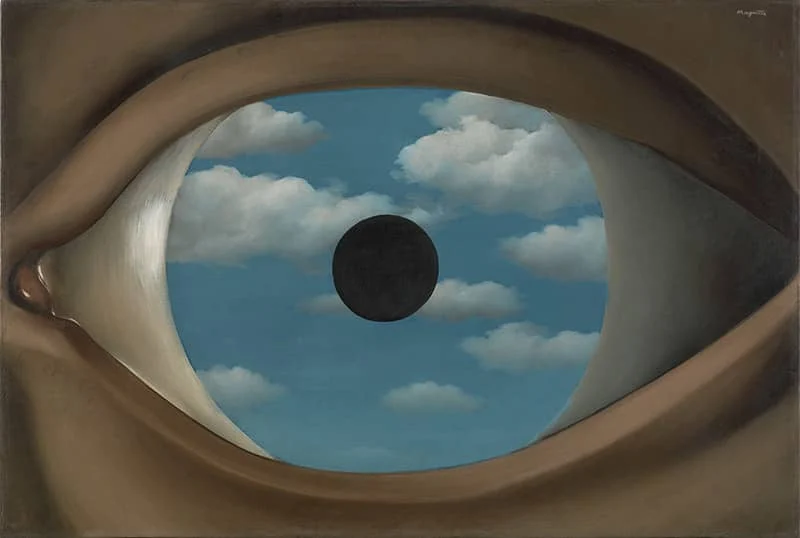
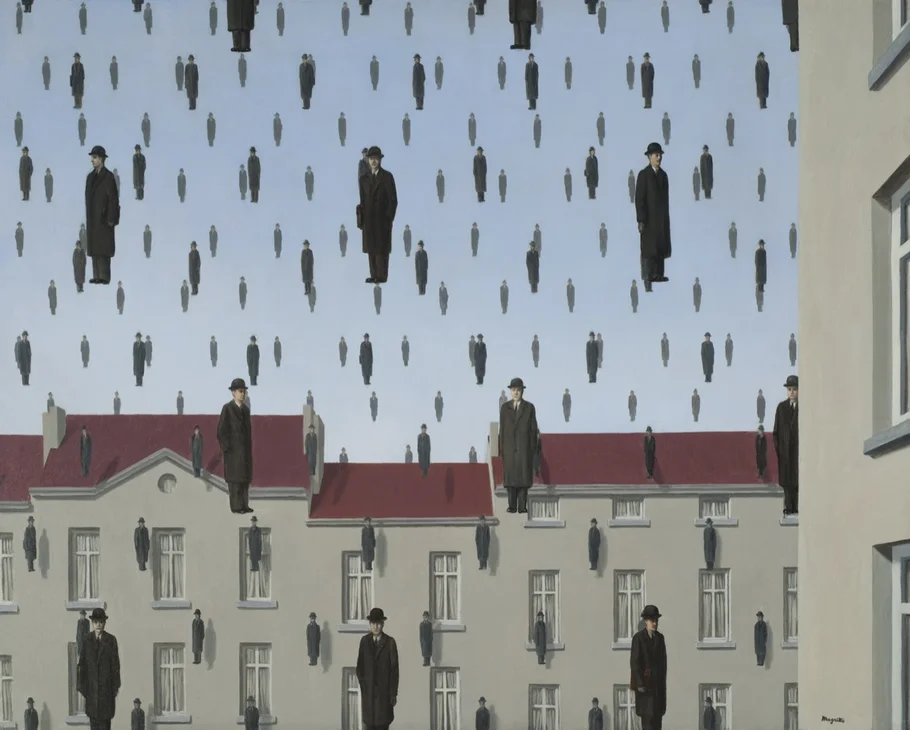
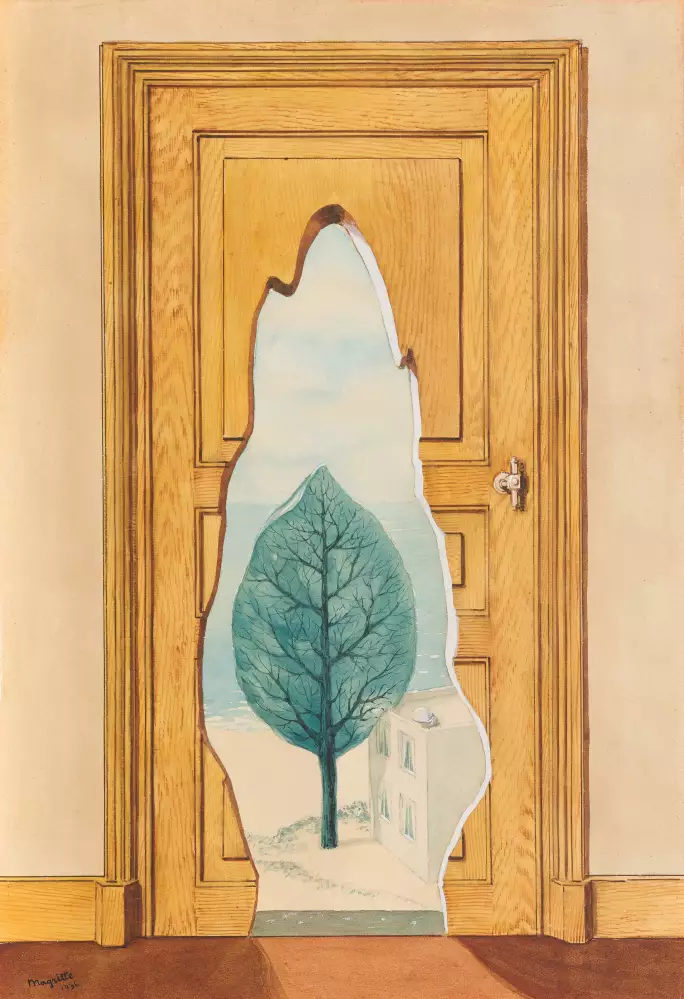
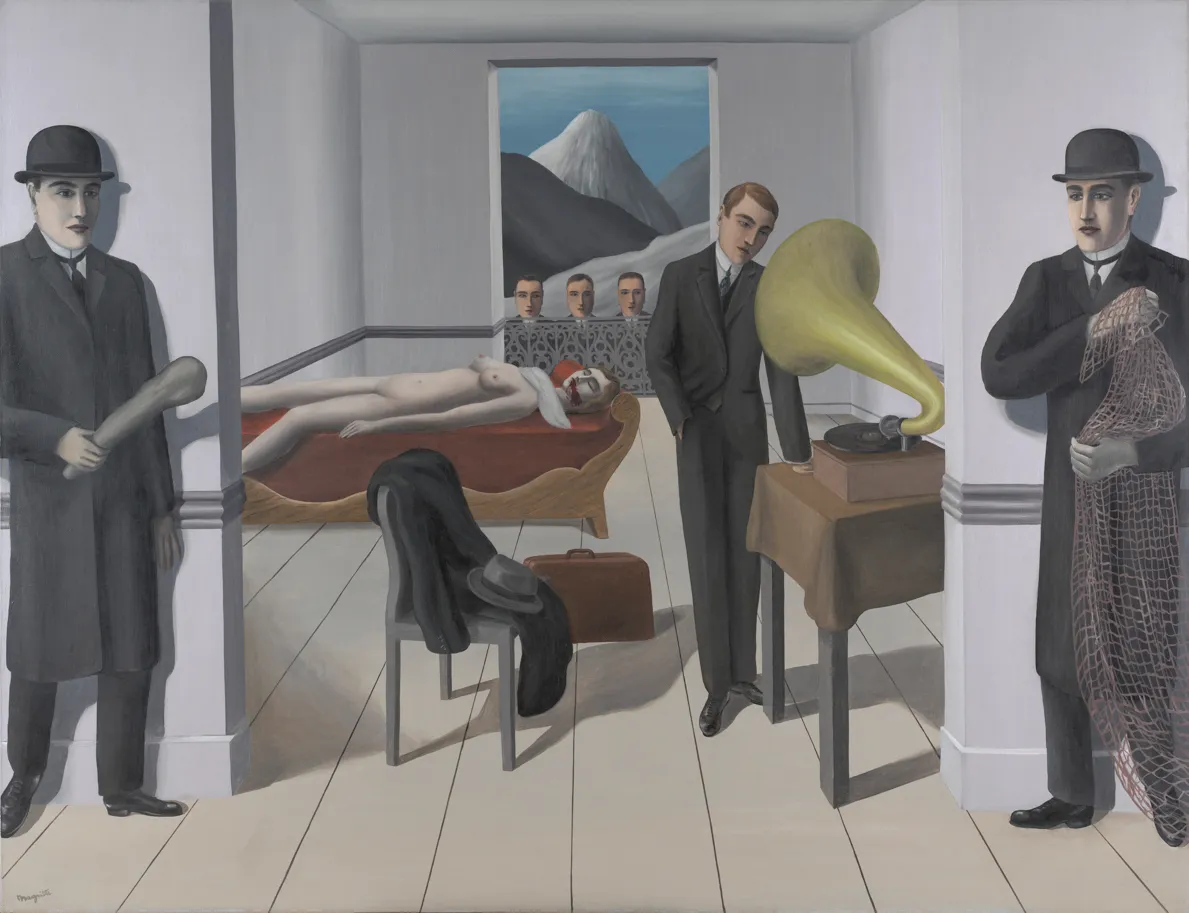
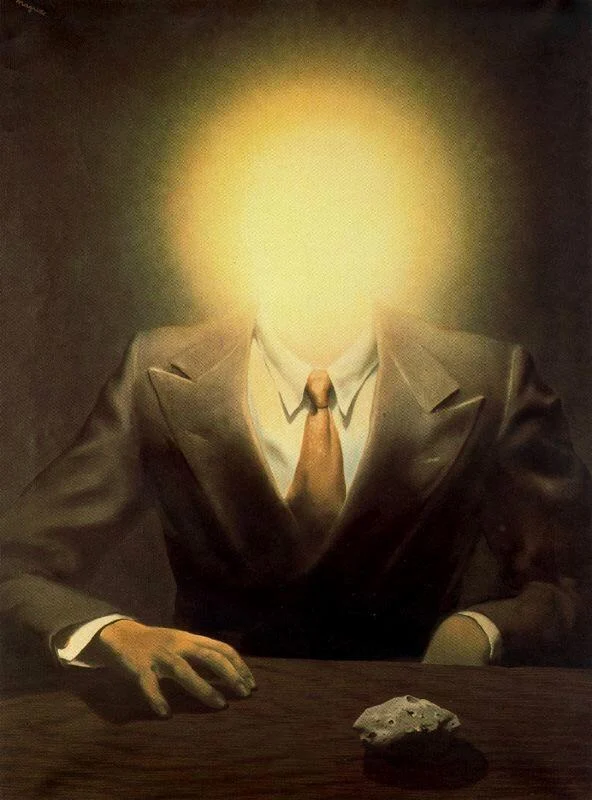
Magritte’s version of Surrealism was characterized by an illusionistic, dream-like quality in which familiar objects were placed in unfamiliar, unexpected contexts to provoke questions about the nature of reality and representation. Unlike the automatic style of Surrealists such as Joan Miró, his approach was representational and precise, using ordinary objects to create what he called “poetically disciplined” images. He described his paintings as “visible images which conceal nothing” but which evoke mystery, and considered art not an end in itself but a means of making the essential mystery of the world visible.
Key Influences
- Pop Art and Conceptual Art: His imagery directly influenced the development of pop art, minimalist art, and conceptual art, with artists such as Andy Warhol, Jasper Johns, and Ed Ruscha acknowledging his impact on their work.
- Language and Representation: The Treachery of Images fundamentally challenged assumptions about the relationship between images and reality, becoming one of the most referenced works in philosophy, semiotics, and visual culture.
- Visual Culture at Large: His “sound knowledge of how to present objects in a manner both suggestive and questioning” made his imagery among the most frequently adapted in advertisements, album covers, book jackets, and film.
- Surrealism as Philosophy: His systematic disruption of dogmatic views of the physical world expanded Surrealism beyond aesthetic style into a broader philosophical inquiry accessible to a wide public.
- Belgian Cultural Identity: He became one of Belgium’s most celebrated cultural figures, appearing on the 500-franc banknote and ranking among the greatest Belgians in national polls, cementing Surrealism as central to the country’s artistic identity.
If you are interested in further stories of the artists who shaped Art Deco, return to our artists page to browse the full directory.
Related Products from ArtDecoCollection.com