
Oscar Bach
Oscar Bruno Bach was born Oscar Bruno Bakstik on December 13, 1884, in Breslau, Germany. As a young man, he studied painting at the Royal Academy in Berlin and attended the Imperial Academy of Art there from 1898 to 1902, while also completing a four-year apprenticeship in the metallic arts. Following his formal education, he became artistic director of a metallic arts firm in Hamburg, where he created an ornate, jewel-encrusted Bible cover for the study of Pope Leo XIII, an early piece of his craft that remains in the Vatican’s permanent collection to this day. Two years later, still in his twenties, he won several important commissions to design metalwork for civic buildings, including Berlin’s new City Hall. Between 1904 and 1911, he worked as a successful metalsmith across Germany while maintaining a studio in Venice, traveling extensively through Europe, the Middle East, and North Africa, an experience that exposed him to an enormous range of decorative styles, histories, materials, and techniques. In 1911, he won the Grand Prize at the World’s Exposition in Turin for a bed he designed for Kaiser Wilhelm II. He emigrated to the United States in 1912, settling in New York City, where he opened a metal design studio with his brother Max. Bach died in 1957.
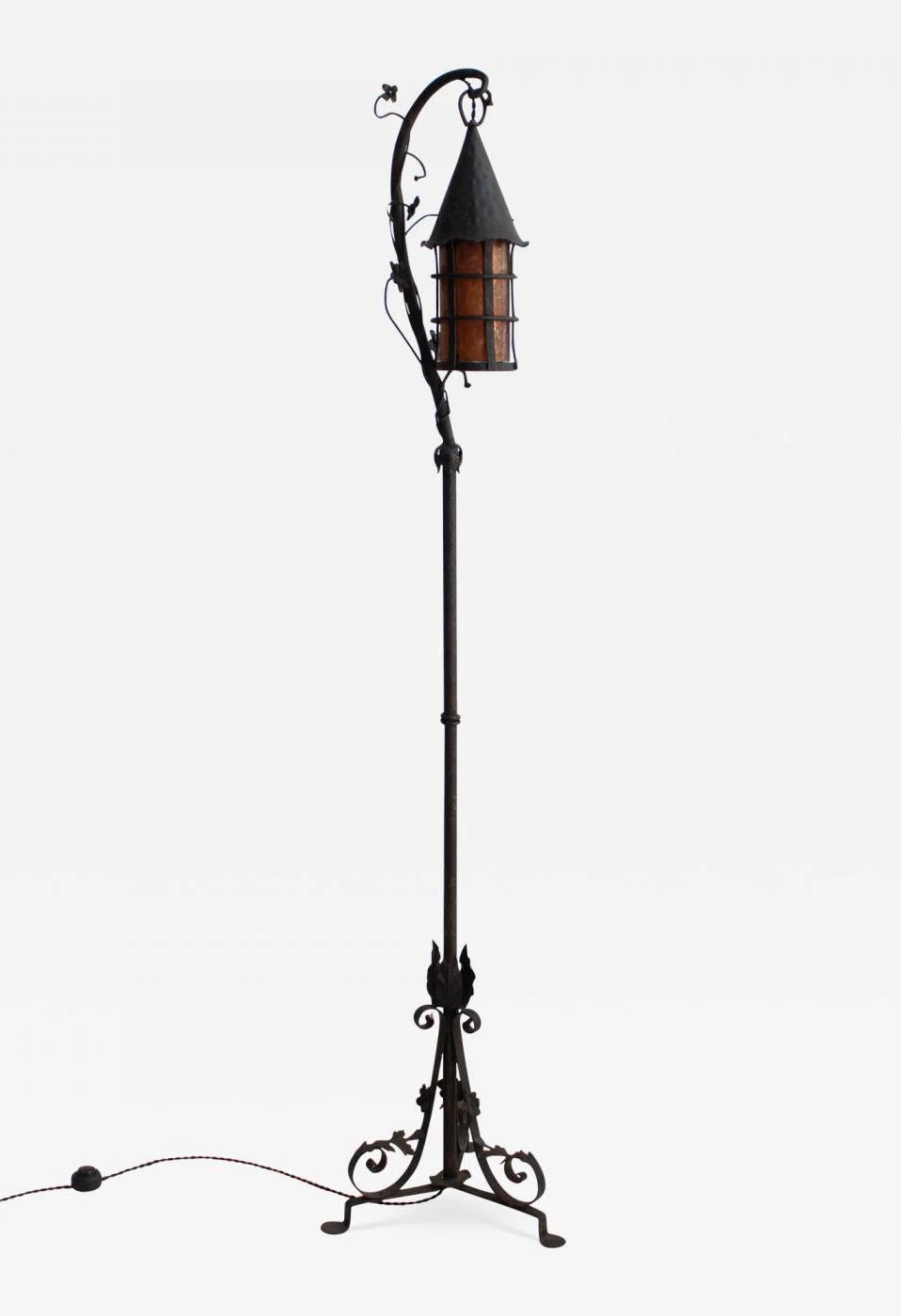
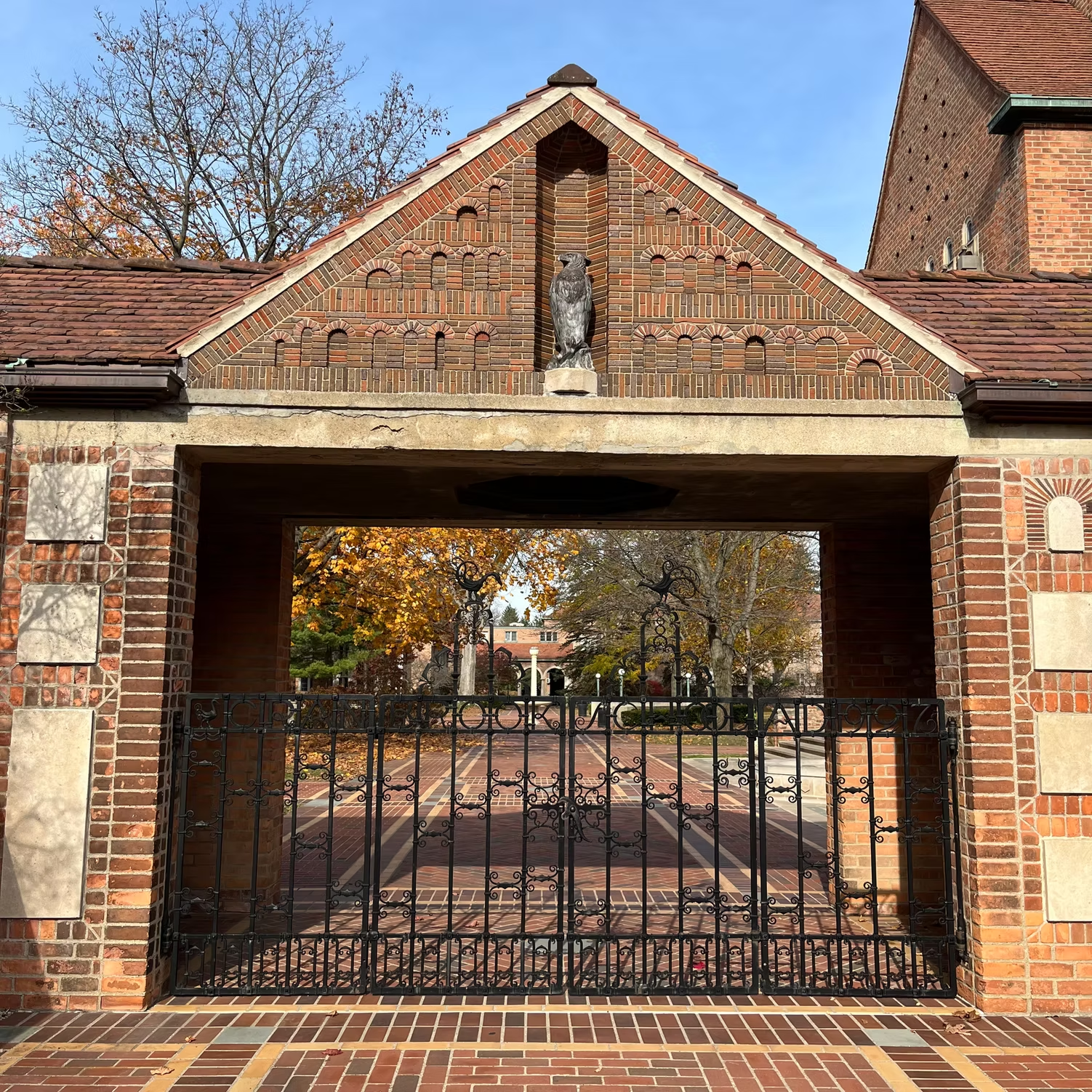
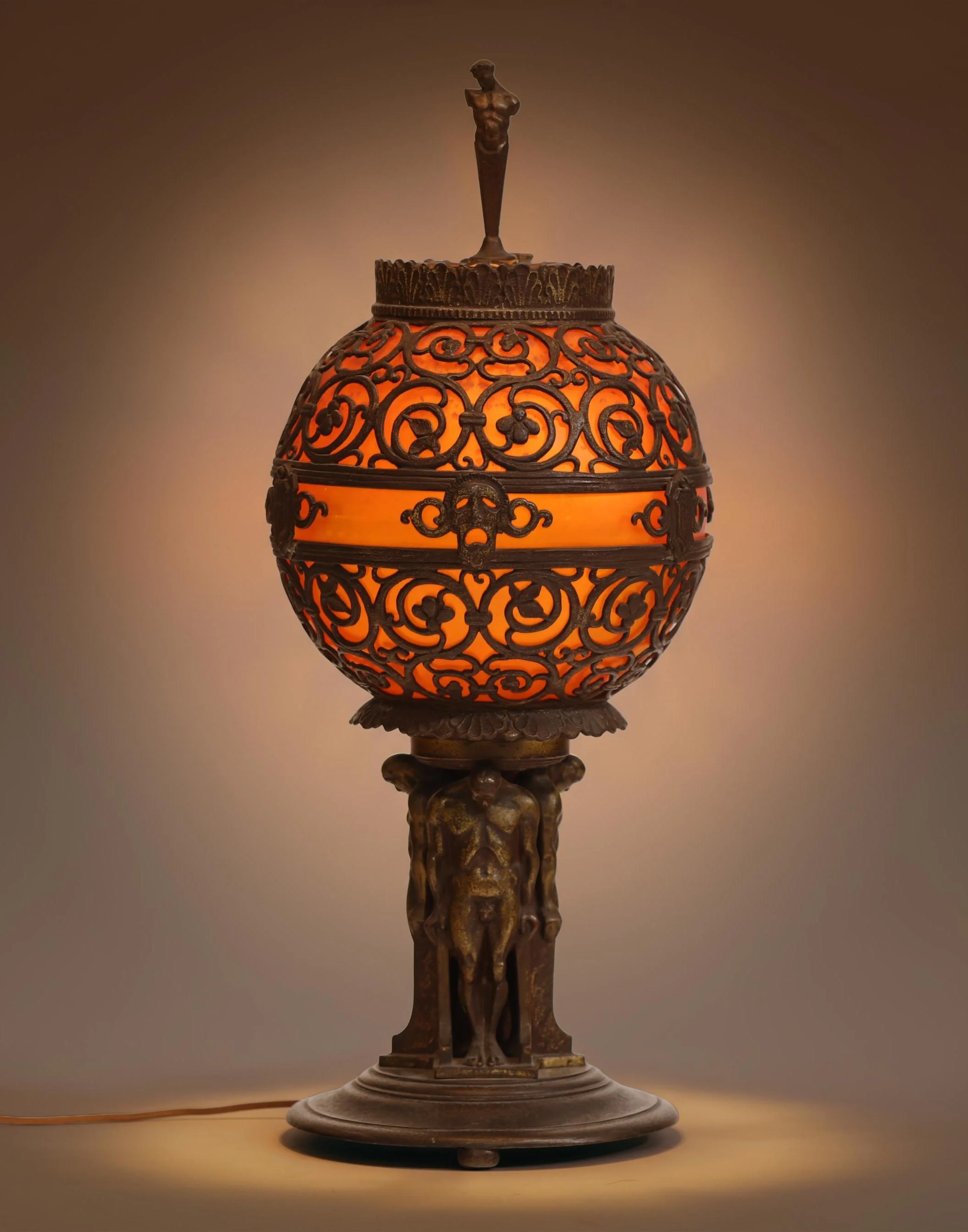
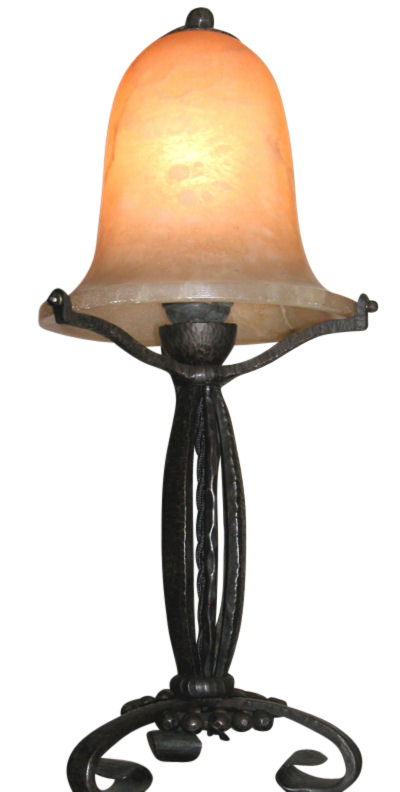
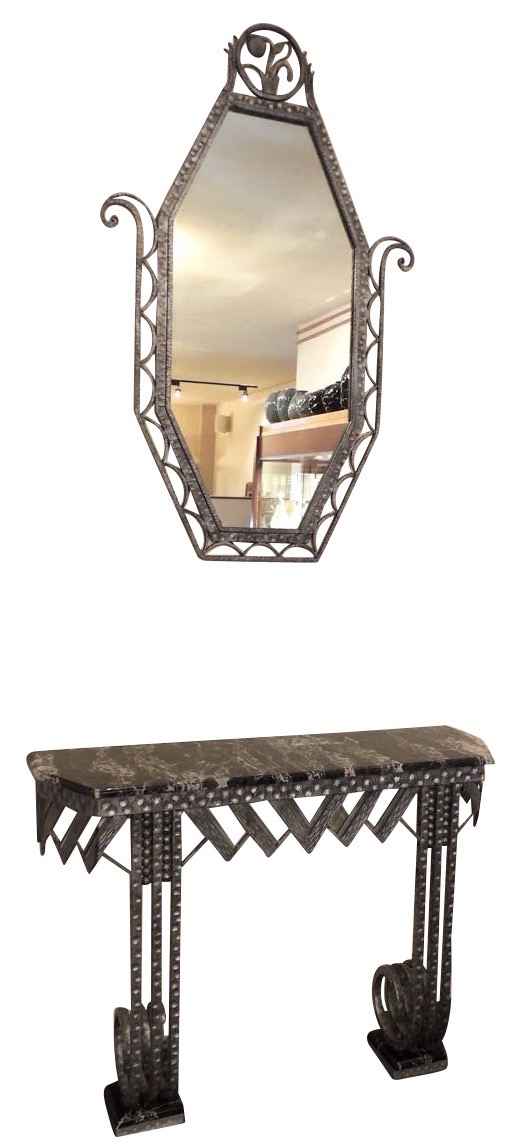
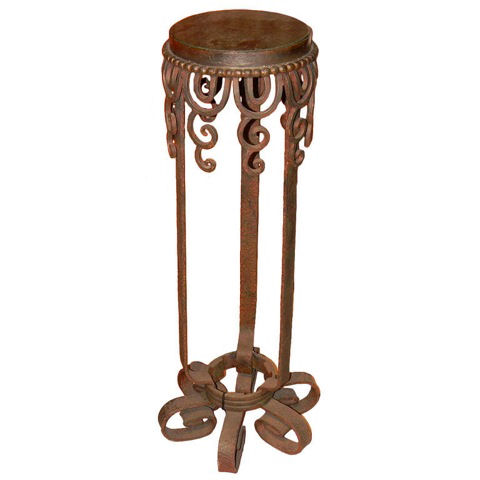
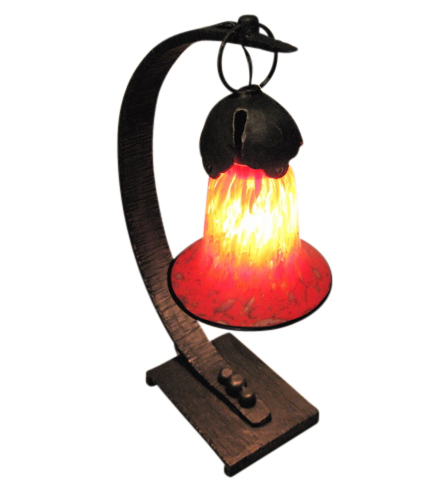
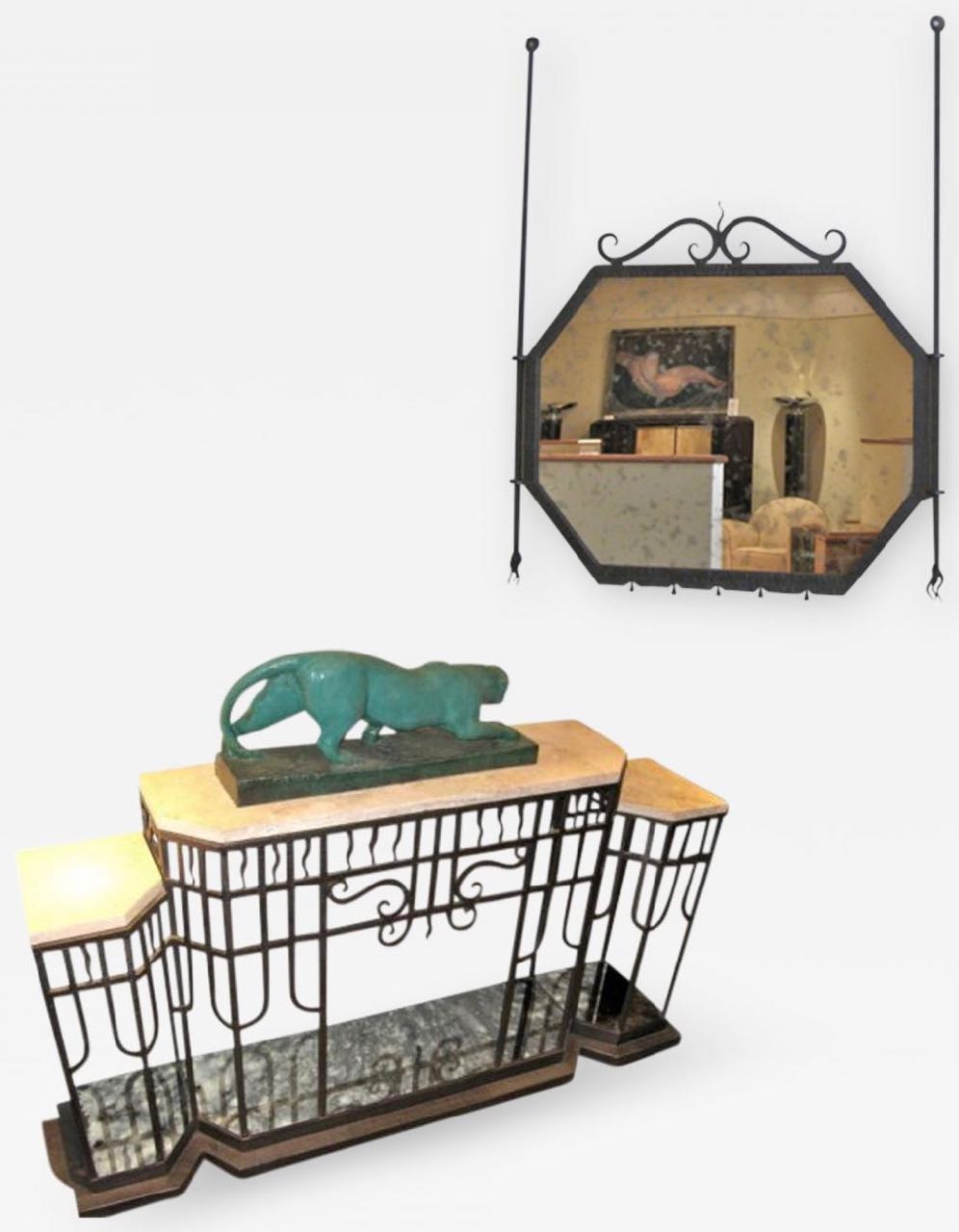
Bach quickly established himself as one of the most technically skilled and commercially successful decorative metalworkers in America, producing work that ranged from small domestic objects like ashtrays, lamps, and humidors to grand-scale architectural commissions for some of the country’s most iconic landmarks, including the Woolworth Building, Riverside Church, and the Toledo Museum of Art. He was a savvy self-marketer, advertising consistently in trade publications like Metal Arts, decor-focused magazines like International Studio, and leisure-oriented titles like Theatre and Country Life, and he made a practice of securing a local retail venue in each region his commission work took him, selling his designs through high-end department stores including Manhattan’s B. Altman, Pittsburgh’s Joseph Horne, and Toledo’s Forster-Smith. He exhibited routinely at the Metropolitan Museum’s industrial art exhibitions and other museums, and the Architectural League of New York awarded him a medal of honor for design and craftsmanship in industrial art in 1926. His pieces from this period were often stamped with the inscription “Oscar B Bach New York Studios Inc” alongside an image of a woman flanked by two double Bs, and he produced smaller items like ashtrays and lamps through a kind of small-scale mass production while remaining fully capable of creating uniquely luxurious commissions for exclusive private clients.
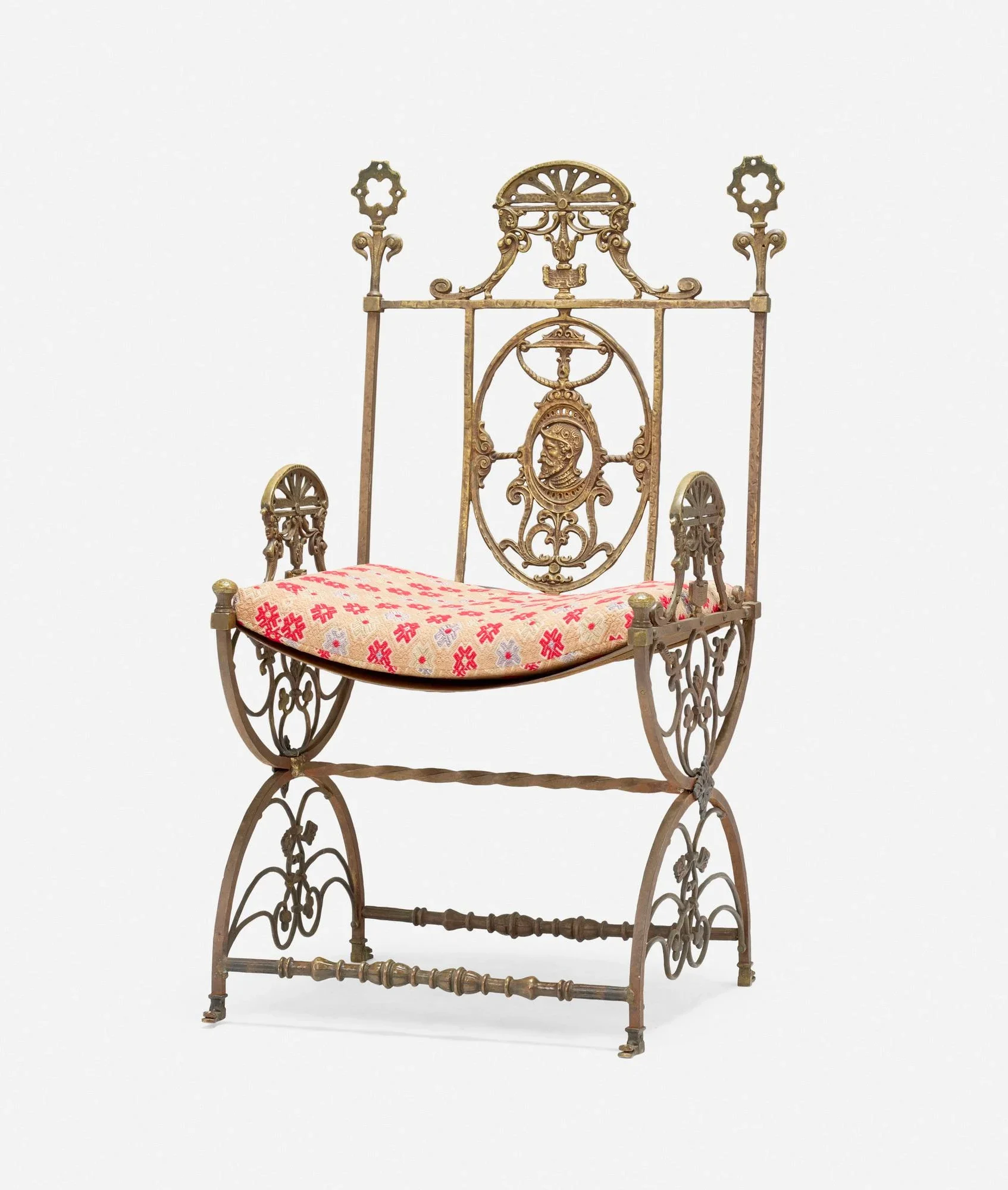
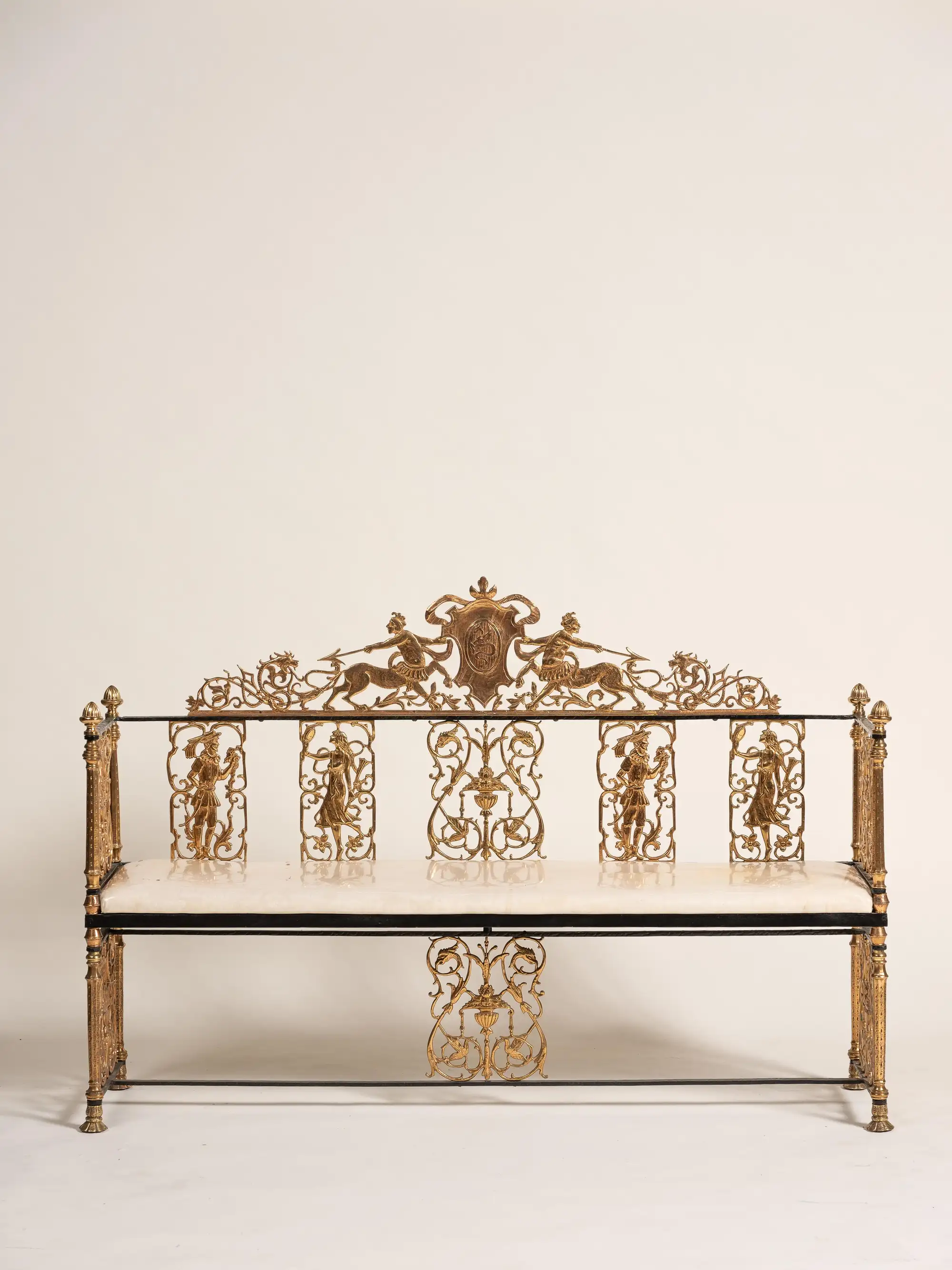
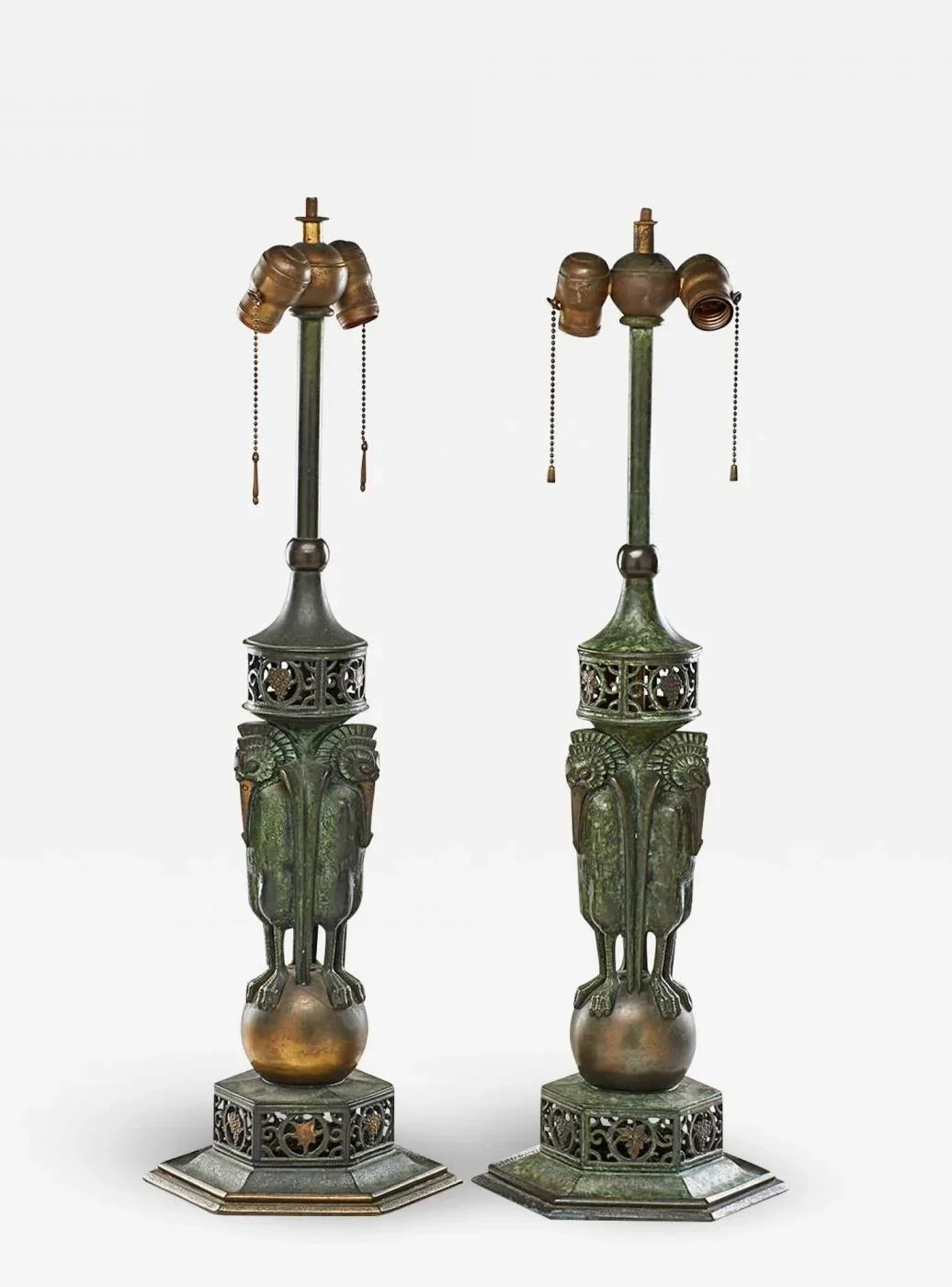
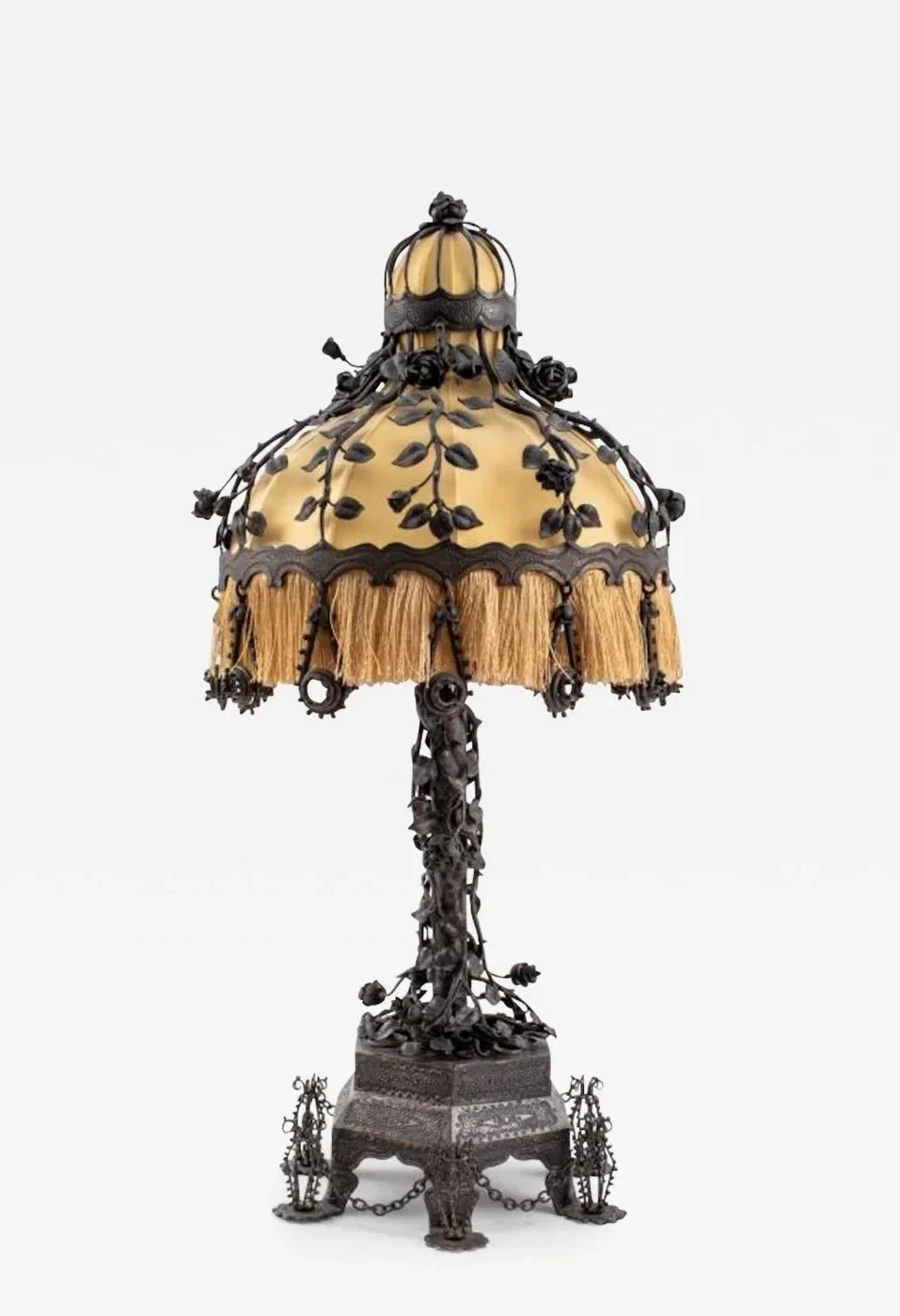
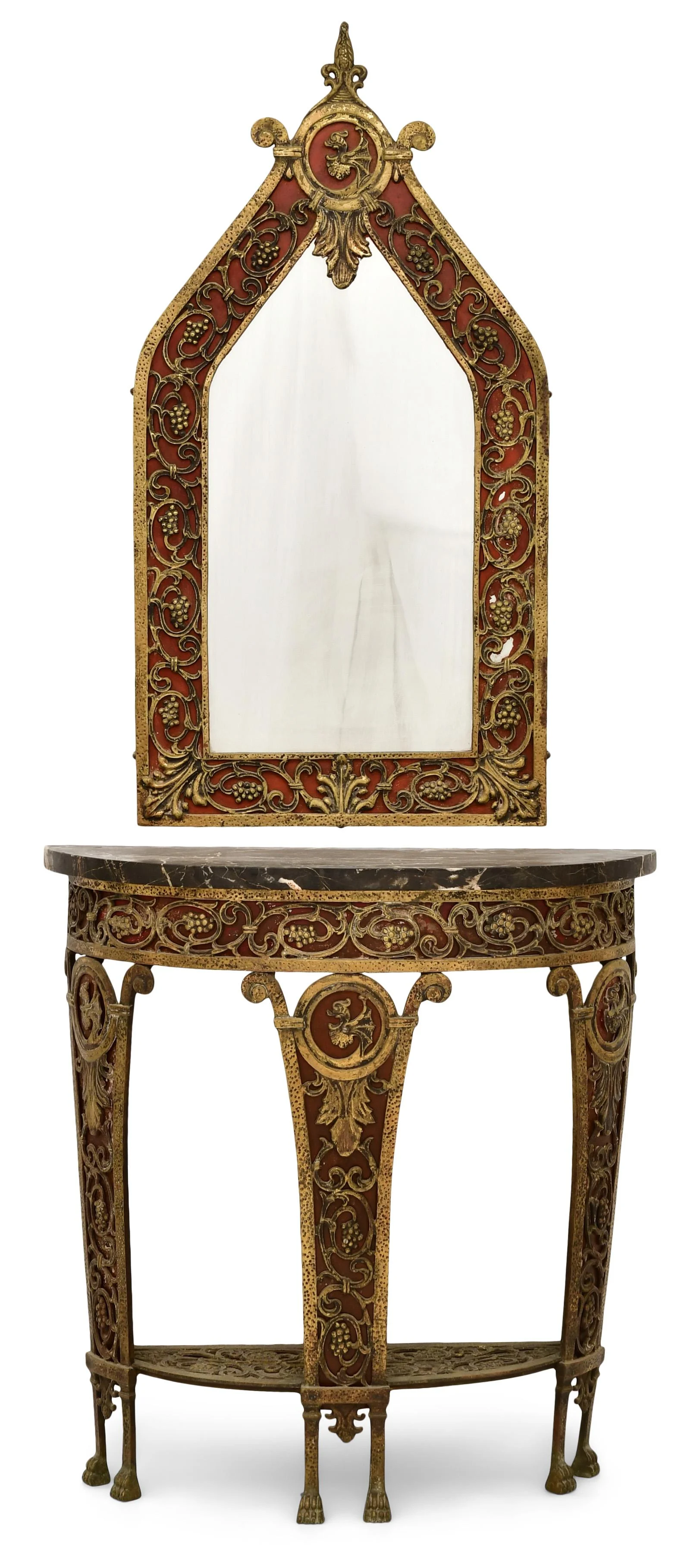
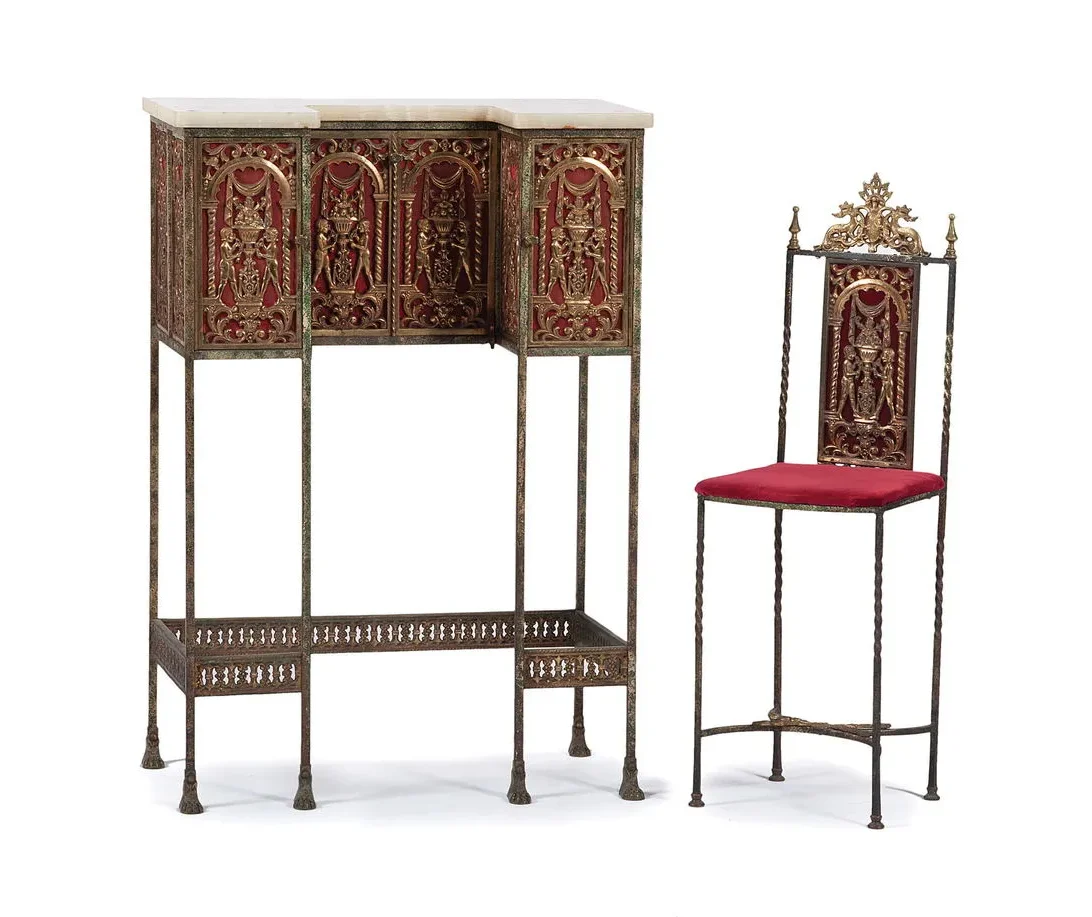
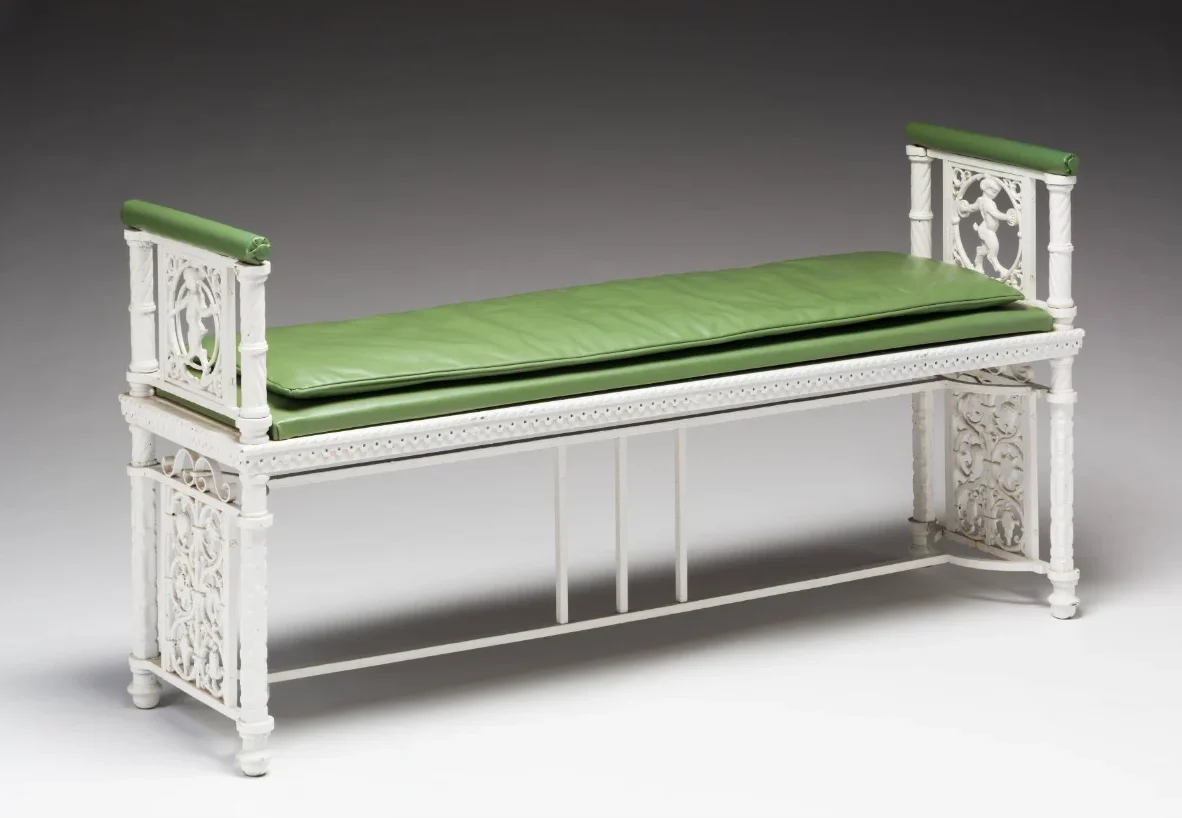
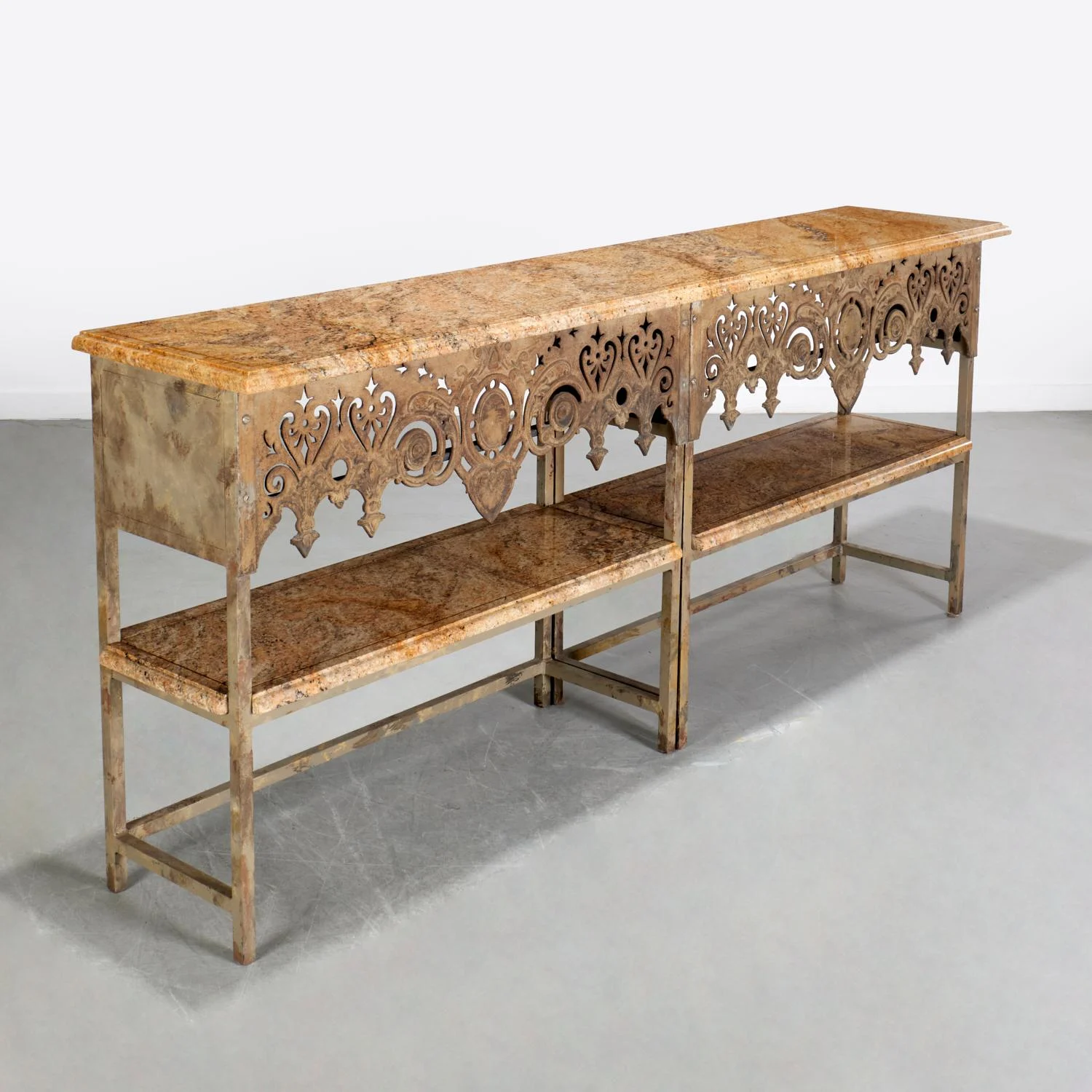
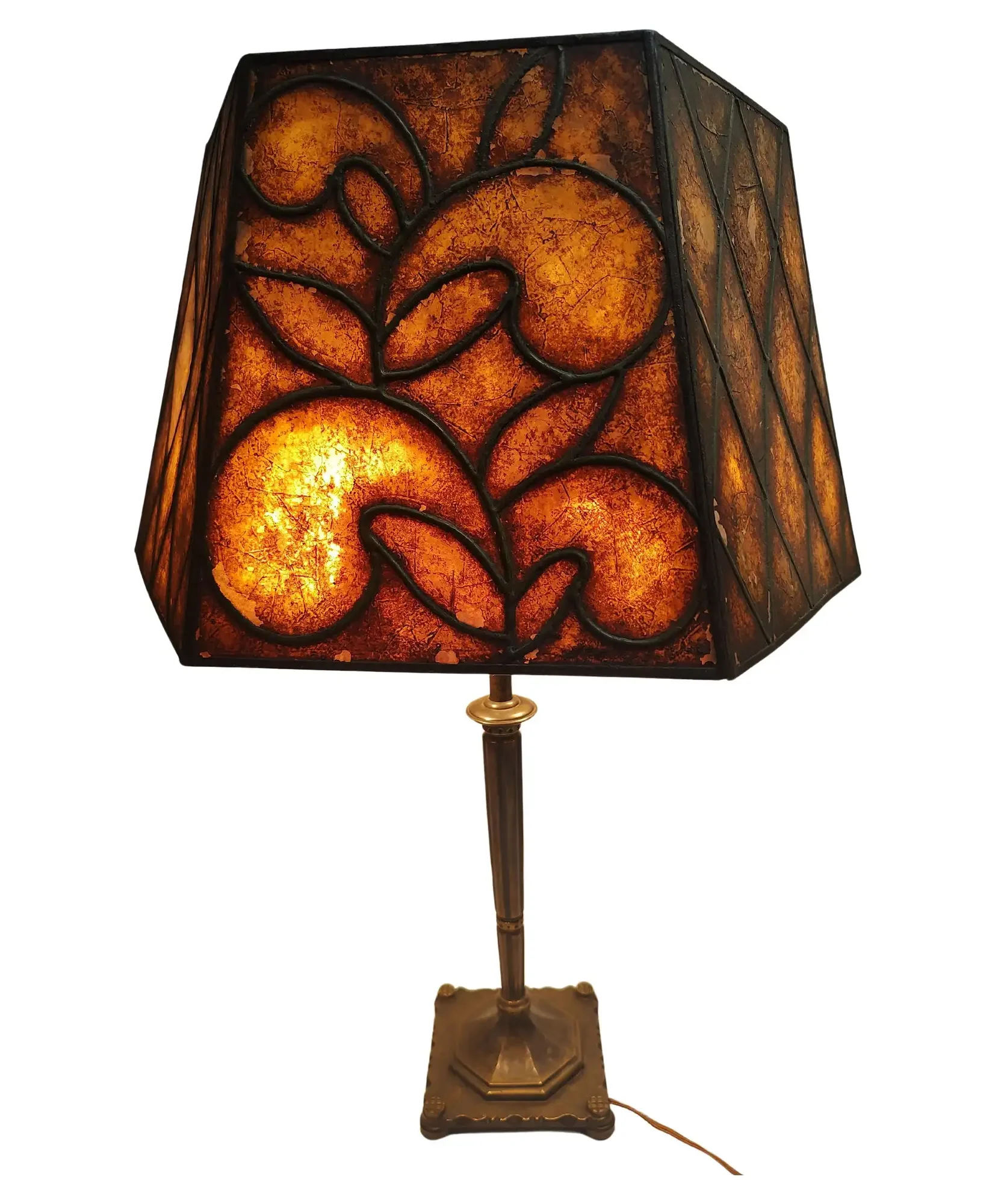
Bach’s stylistic range was as diverse as his command of metals, moving fluidly between Arts and Crafts, Gothic and Tudor Revival, Spanish Baroque, French Directoire, English Chippendale, and American Art Deco depending on the commission. Thematically, he returned repeatedly to the signs of the zodiac, lush scrolling grapevines, classical masks, mythological figures, and elements of Italianate and Germanic grotesque ornament, weaving these motifs into work that ranged from delicate tabletop objects to monumental architectural ironwork. This combination of historical fluency and technical virtuosity allowed his metalwork to help define taste and style across a broad swath of American interiors and public buildings during the first half of the twentieth century.
Key Influences
- American Decorative Metalwork: His technical mastery and stylistic range made him one of the defining figures of decorative ironwork and bronze production in early twentieth-century America.
- Architectural Ornament: His commissions for landmark buildings including the Woolworth Building and Riverside Church, helped establish decorative metalwork as an essential element of major American architecture.
- Cross-Cultural Style Synthesis: His extensive travels through Europe, the Middle East, and North Africa gave him an unusually broad vocabulary of decorative traditions that he applied fluidly across historical revival and Art Deco commissions alike.
- Vatican Commission: His jeweled Bible cover for Pope Leo XIII, still held in the Vatican collection, established his international reputation while he was still in his twenties.
- Department Store Retail Model: His practice of pairing custom commissions with retail distribution through major department stores helped bring fine decorative metalwork to a broader American consumer base.
If you are interested in further stories of the artists who shaped Art Deco, return to our artists page to browse the full directory.
Related Products from ArtDecoCollection.com