
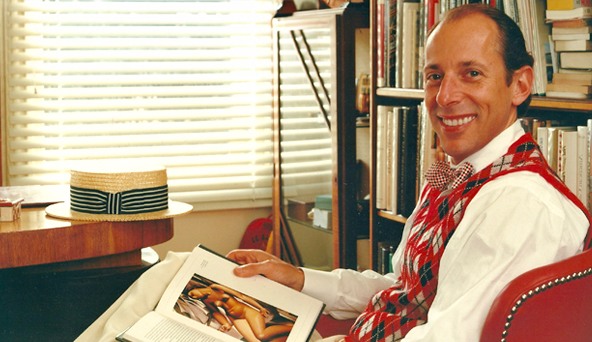
Mauro Varotti is a contemporary Italian woodcarver and the owner of his eponymous furniture workshop, located in Rimini, a historic town along the Adriatic coast known for its own long tradition of skilled craftsmanship. His practice centers on marquetry and fine inlaid work, a discipline that demands both technical precision and an eye for material, requiring the careful matching of grain, tone, and texture across dozens of individual wood veneers to build a single unified surface. His output has been described as driven by a tremendous personal passion for the trade, and the resulting pieces reflect years spent refining the exacting hand skills that marquetry requires. Rather than treating design history as a distant reference point, Varotti approaches earlier movements as living traditions to engage with directly, frequently beginning his process from an original period piece and rebuilding it through his own hand rather than designing entirely from scratch. This working method places him somewhere between a restorer and an artist, and it has shaped a body of work that speaks fluently to two distinct chapters of early twentieth-century Italian design: the dynamic geometry of Futurism and the decorative richness of Art Deco. His pieces circulate today through international design platforms and private collections, valued for the density and intricacy of their inlay work as much as for the historical dialogue they carry forward.
Mauro Varotti
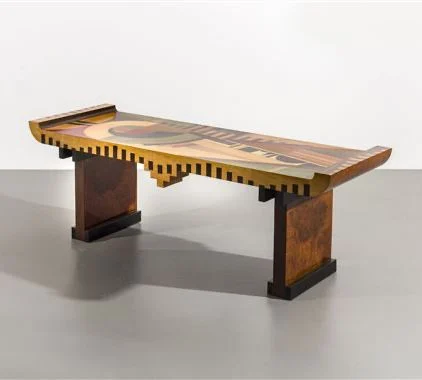
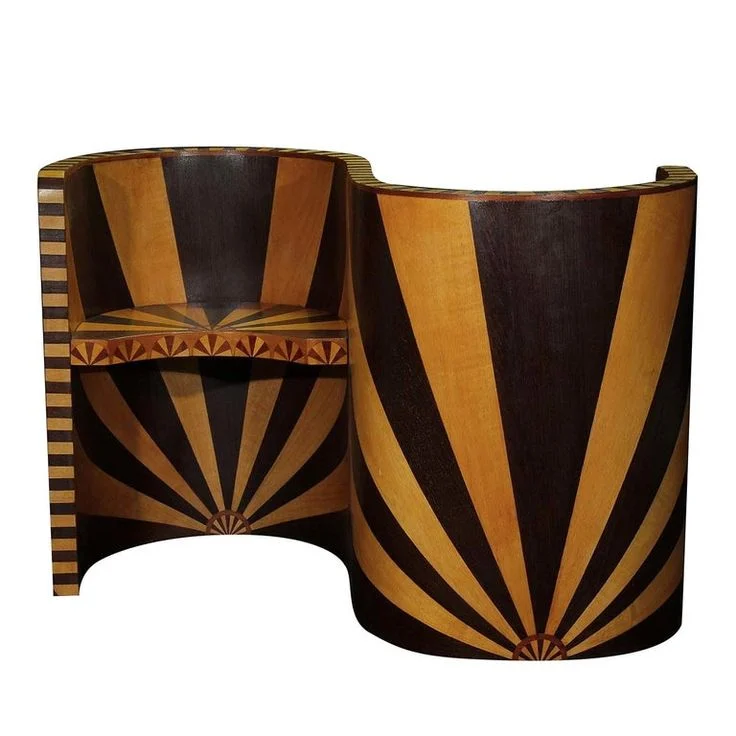
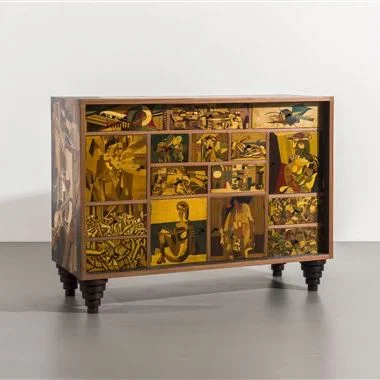
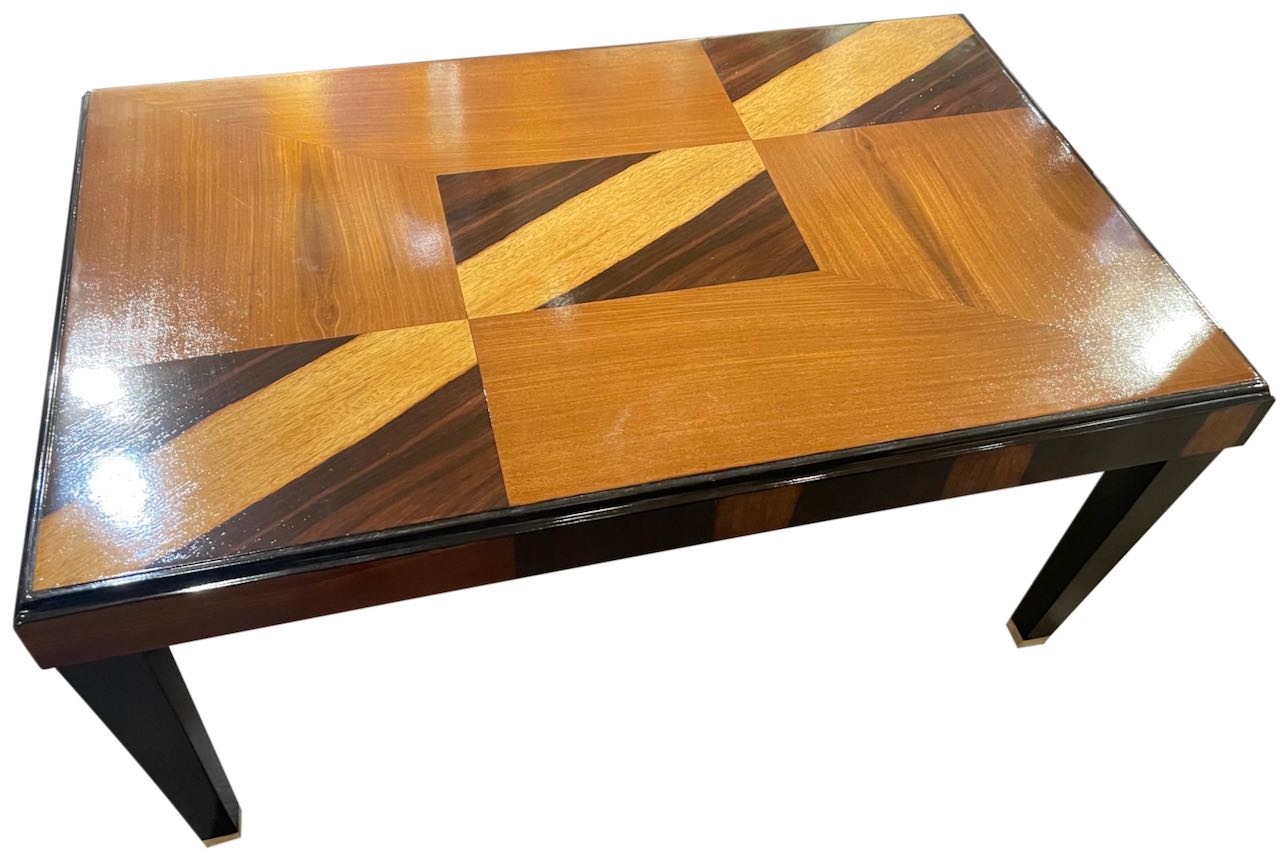
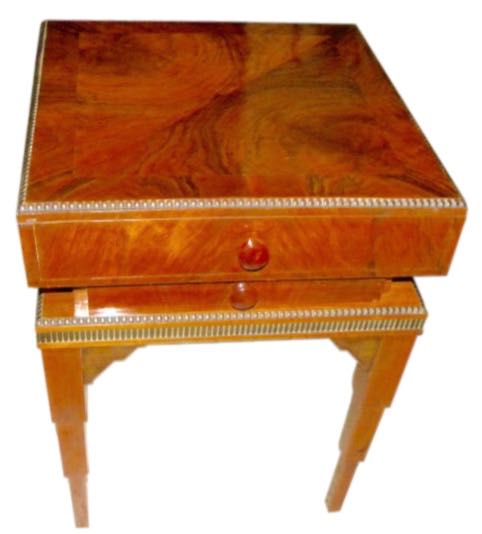
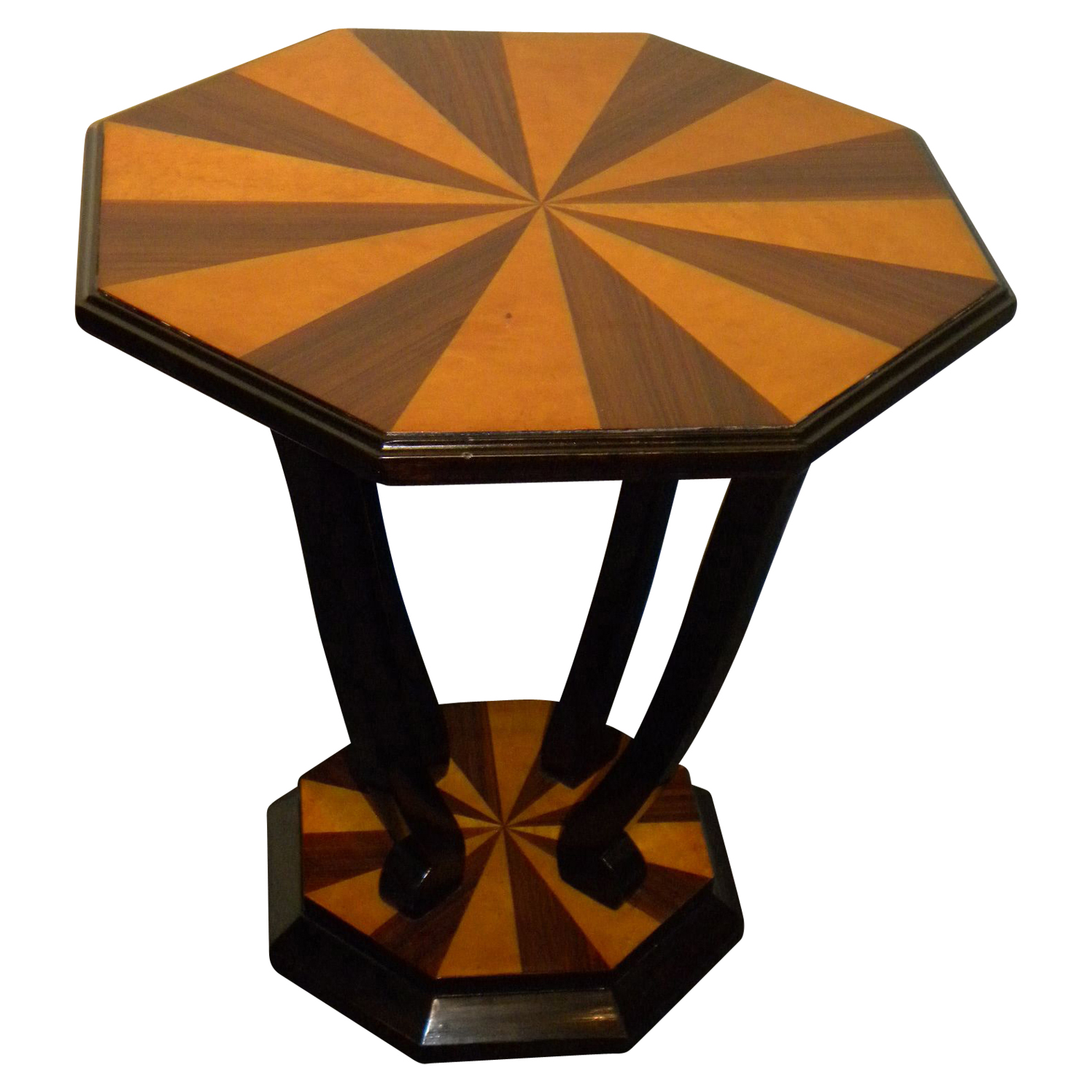
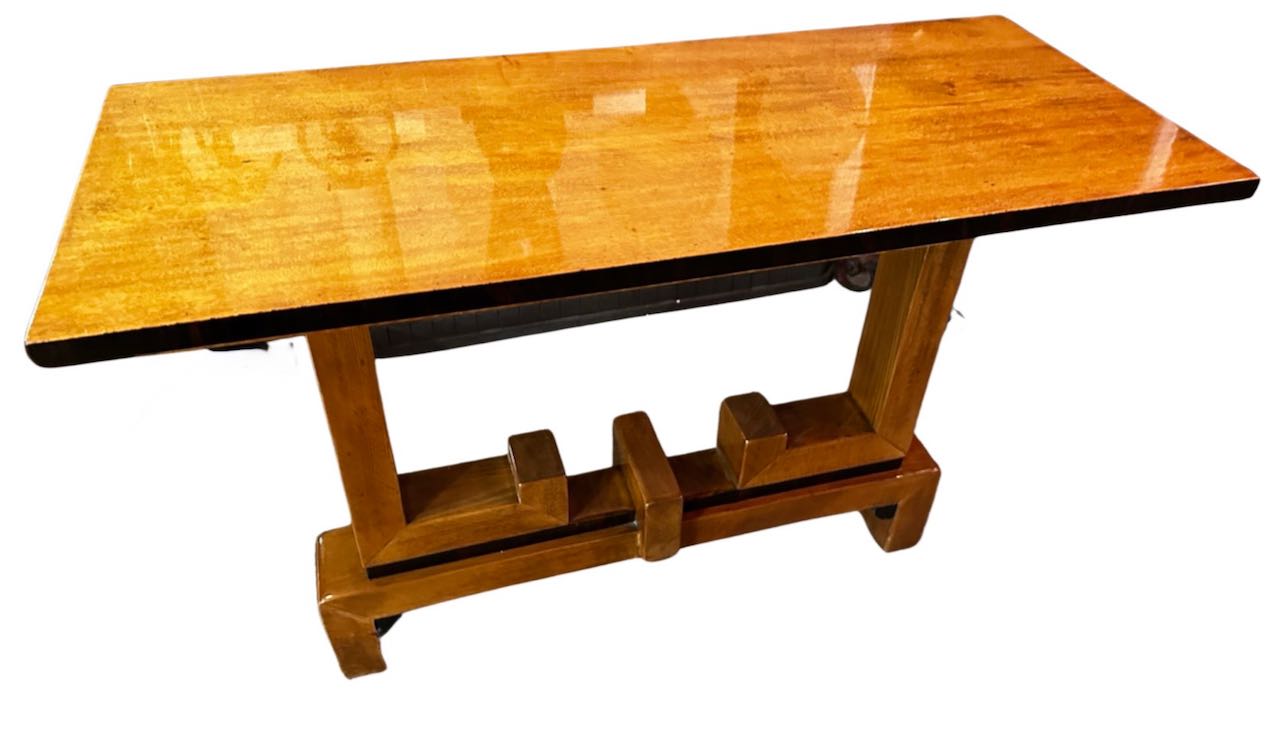
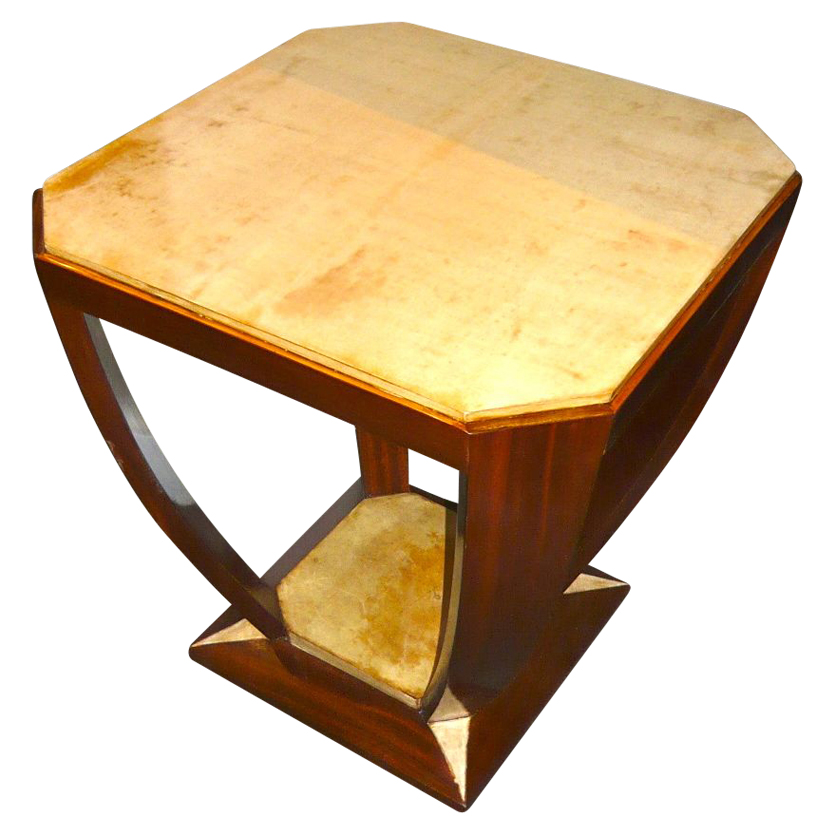
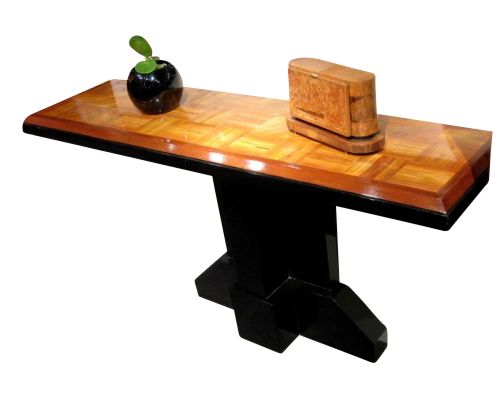
Varotti’s furniture spans tables, sideboards, and armchairs, most constructed from honeycomb wood panels and finished with elaborate inlays in fine woods including rosewood, walnut, ash, and beech. One notable table, created in the 2000s, draws directly on the dynamic geometric forms of Italian Futurist artist Fortunato Depero, its honeycomb structure covered in walnut inlays and its surfaces rendered with mesmerizing geometric patterns reminiscent of the Renaissance marquetry tradition. In 2010, he produced a striking Art Deco tribute armchair, starting from an original 1930s seat and rebuilding it with sophisticated inlays of rosewood, beech, ash, and walnut, upholstered in red leather. His sideboards similarly evoke the jewel-like decorative language of the Art Deco period. His pieces are sold through international design platforms including 1stDibs, Pamono, and Artemest, and are held by private collectors who value his work for its craftsmanship and its dialogue with early 20th-century Italian design movements.
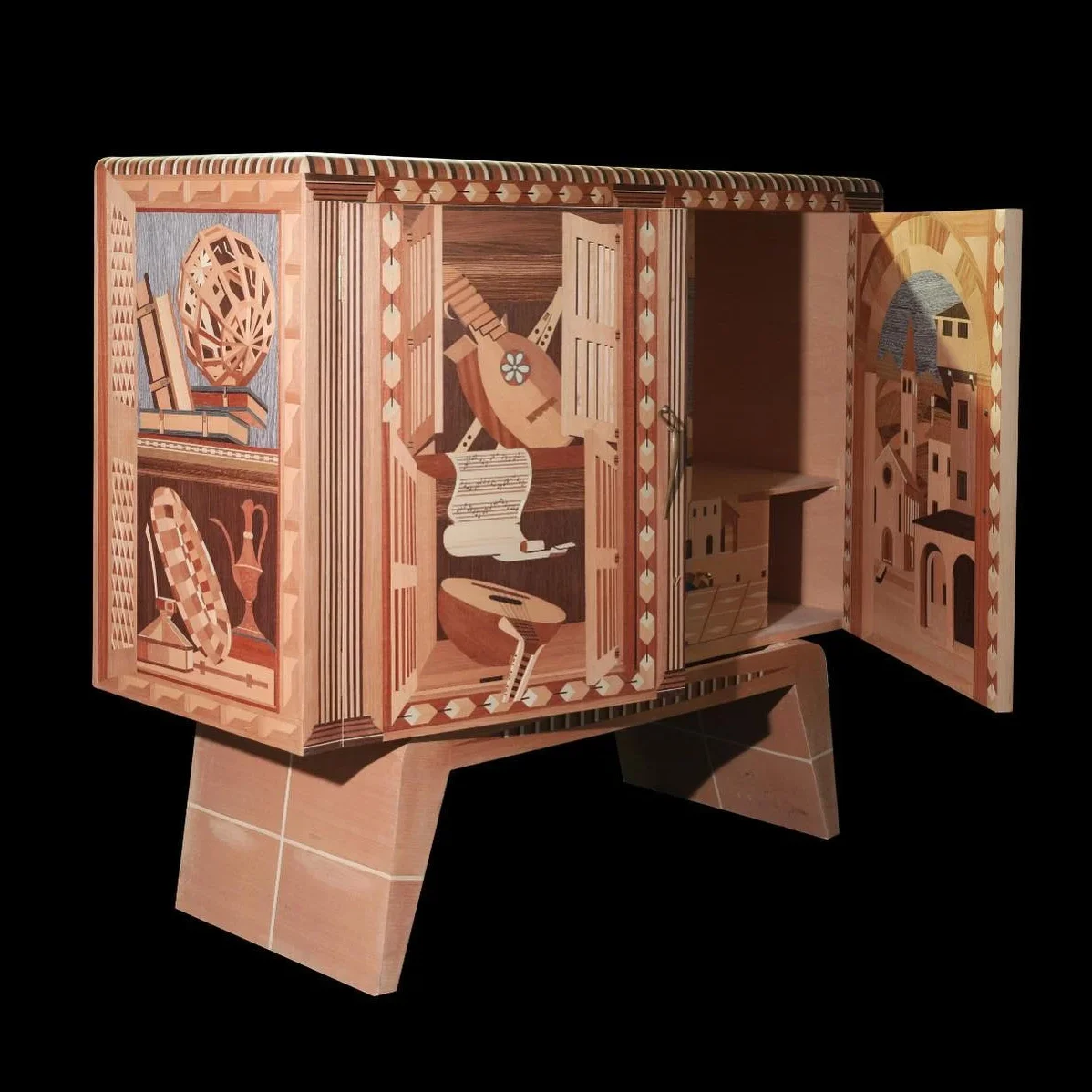
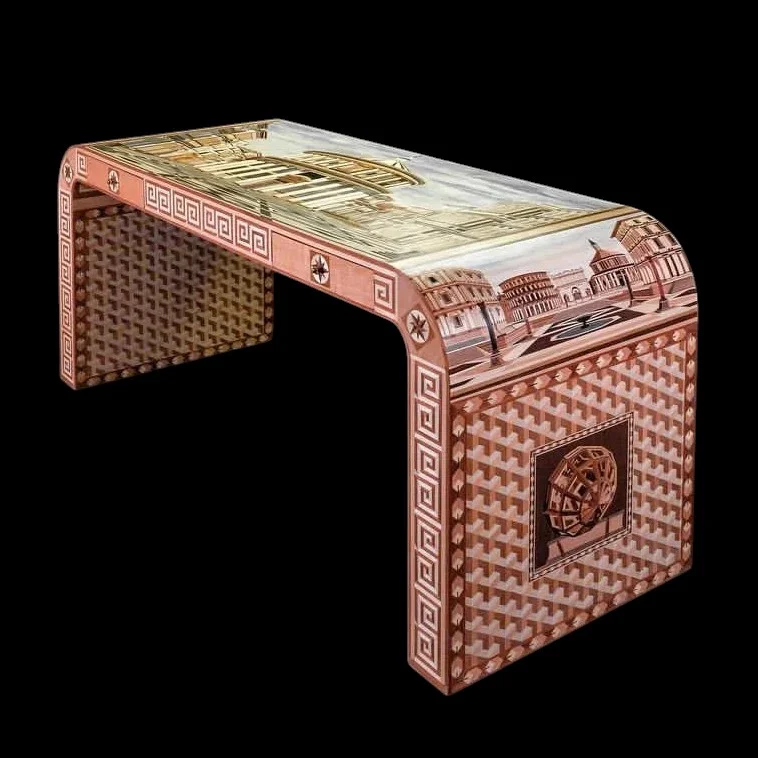
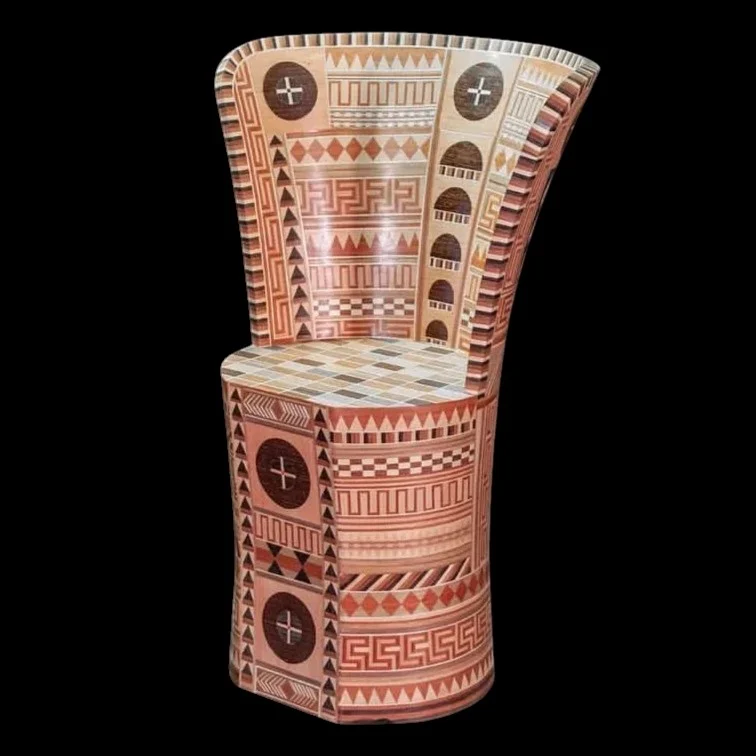
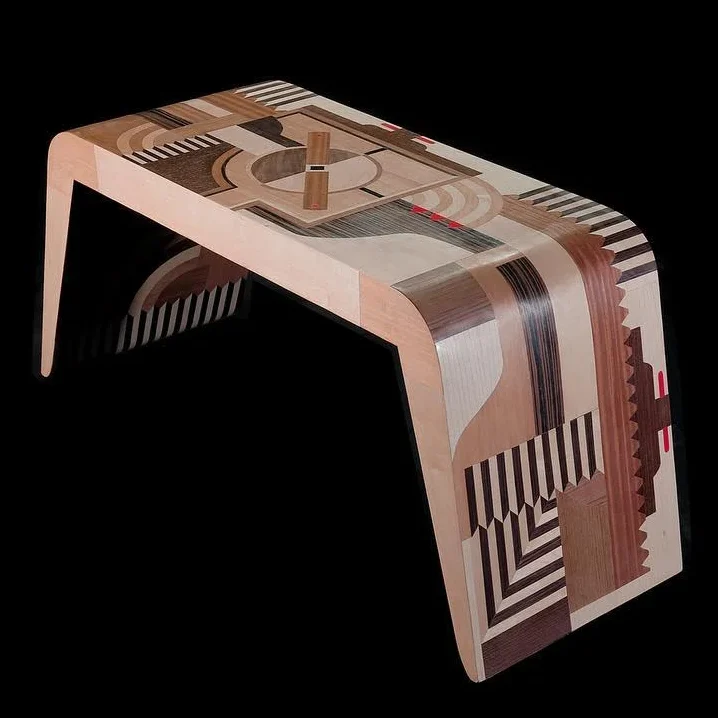
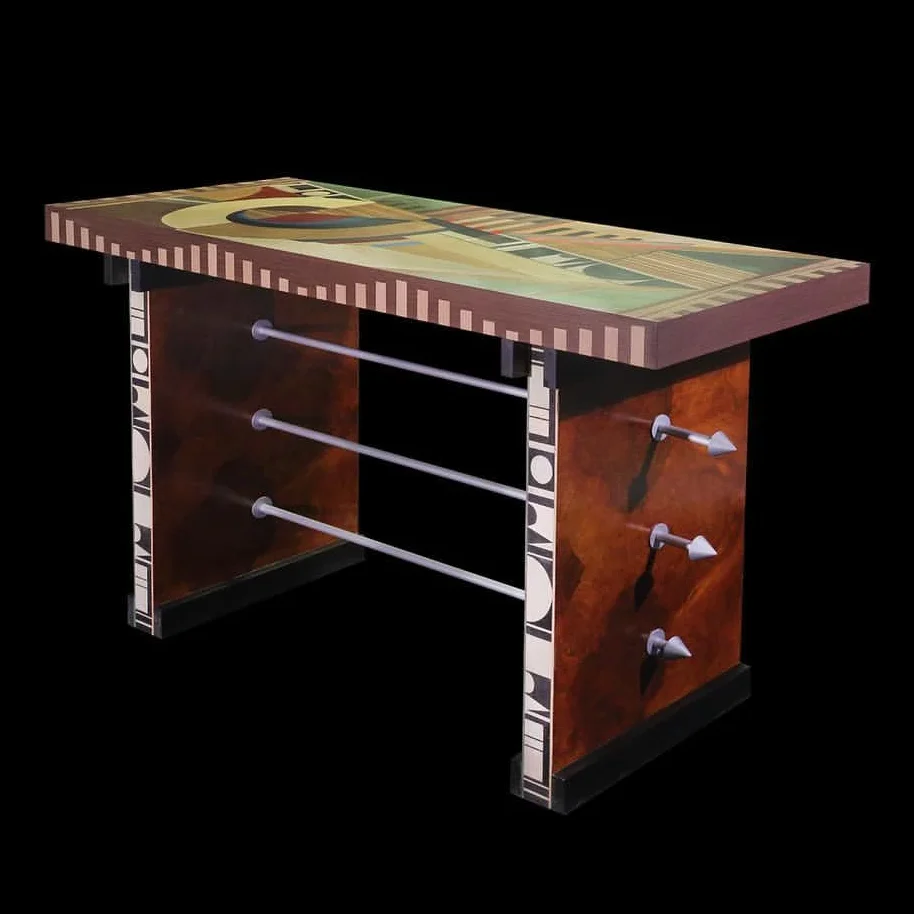
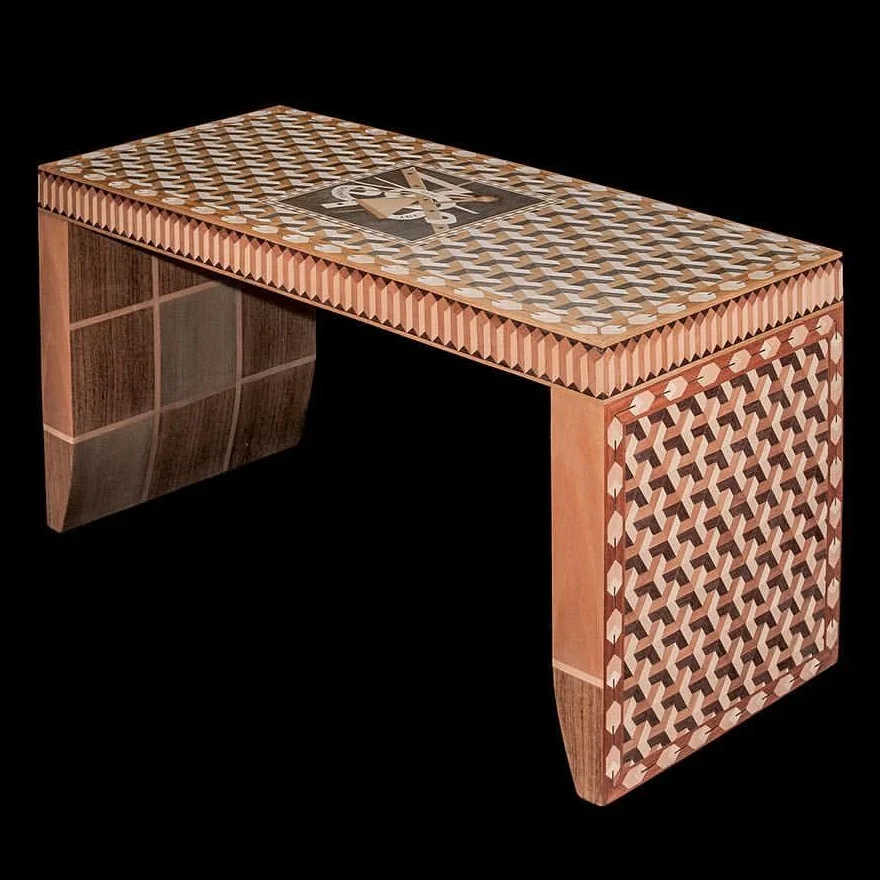
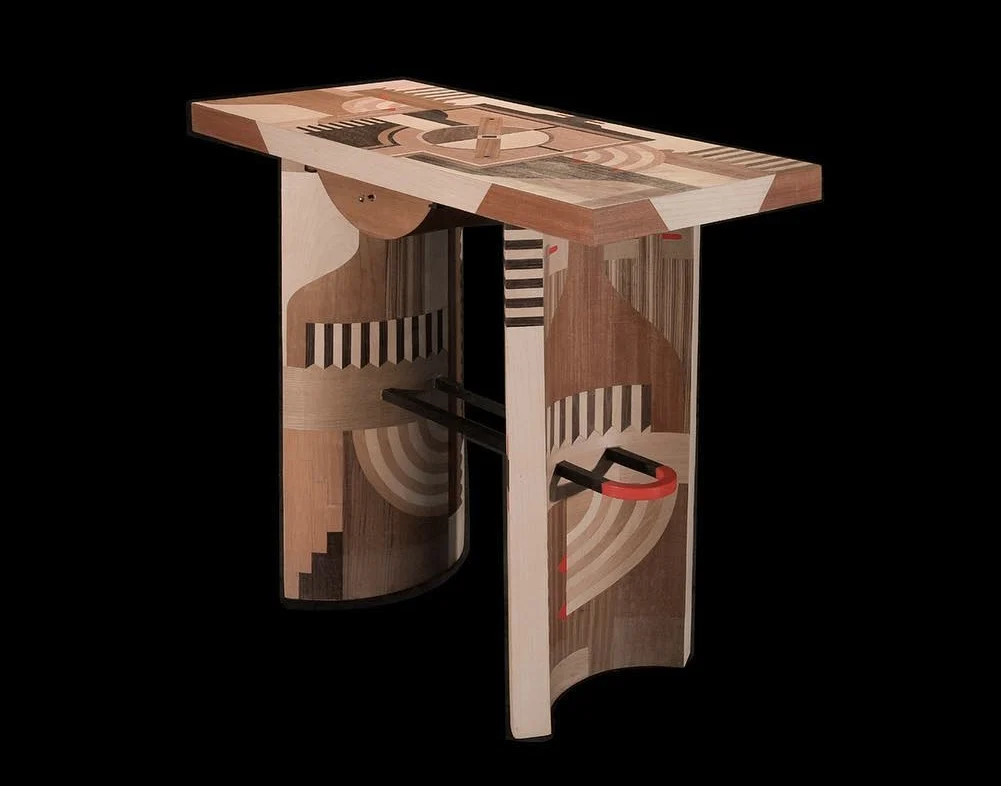
Varotti’s work sits at the intersection of restoration and original design, treating historic forms and materials as a living foundation for new creation rather than a template for direct reproduction. His pieces are distinguished by dense, intricate inlay work that recalls Renaissance marquetry traditions while applying them to explicitly modern forms, producing furniture that reads simultaneously as homage and as an independent artistic statement. The honeycomb wood panels he favors as a base structure allow his surface decoration, whether geometric Futurist patterning or Art Deco ornament, to take on a sculptural, almost jewel-like density.
Key Influences
- Italian Futurism: His engagement with Fortunato Depero’s dynamic geometric vocabulary demonstrates the continuing vitality of Futurist visual language in contemporary Italian craft.
- Art Deco Revival: His tribute pieces, built from original period frames, keep the decorative language of 1930s design in active circulation rather than confined to museum collections.
- Marquetry Craft Tradition: His work sustains and extends the centuries-old Italian tradition of fine wood inlay, adapting techniques rooted in the Renaissance to modern furniture forms.
- Rimini Craft Heritage: His workshop’s location on the Adriatic coast situates his practice within a regional tradition of skilled woodworking and decorative craft.
- Restoration as Creation: His method of beginning from original historical pieces and transforming them through new inlay work offers a distinctive model for how contemporary makers can engage with design history without simple imitation.
If you are interested in further stories of the artists who shaped Art Deco, return to our artists page to browse the full directory.

Related Products from ArtDecoCollection.com