
Josef Hoffmann
Josef Hoffmann was an Austrian architect and designer whose work helped set the visual language that Art Deco would later build on, especially through his crisp geometry and love of complete interiors. Born in 1870 in Brtnice in Moravia, he trained in Vienna and was shaped early by Otto Wagner’s push toward function, simplicity, and honest materials. He became a founding figure of the Vienna Secession, where he helped define a new direction for modern design that rejected clutter and favored clarity. Hoffmann was not only an architect, he was an all round designer who treated furniture, lighting, metalwork, glass, textiles, and spaces as one connected system. In 1903 he co founded the Wiener Werkstätte with Koloman Moser and Fritz Wärndorfer, creating a workshop model where artists and craftspeople produced everything needed for a unified interior. This idea of a total environment became one of his most lasting contributions to Art Deco culture, even before the term existed. He also taught at Vienna’s School of Applied Arts, influencing generations of designers through rigorous assignments and high standards. Hoffmann’s own view of creativity was clear in 1923 when he said he preferred the artist moved by inspiration, even while his work looked precise and controlled.



Hoffmann’s most famous project, the Stoclet Palace in Brussels, is often seen as a bridge between Vienna Secession and mature Art Deco, with strict geometry, luxurious materials, and a fully designed interior world. The building’s exterior reads as modern and architectural, while inside, every surface and object was planned to work together, including furniture and decorative schemes made with Wiener Werkstätte artists like Gustav Klimt. His earlier Purkersdorf Sanatorium also showed his shift toward clean, logical forms that pointed forward to later modern design. In furniture and objects, Hoffmann became known for disciplined geometry, especially squares, a trait that earned him the nickname “Square Hoffmann.” Designs like the Sitzmaschine chair and the Kubus armchair became icons because they look simple at a glance but feel carefully engineered in proportion and detail. Even his smaller works, like cutlery, glassware, and lamps, carried the same controlled rhythm and repeatable structure that fit Art Deco’s taste for order and polish. Between the wars, he also turned to practical building types like housing and exhibitions, showing he could adapt his design thinking beyond elite commissions. By the end of his career, Hoffmann’s influence was everywhere, in how Art Deco interiors balanced luxury with structure, and in how modern design learned to treat the room as a complete composition.
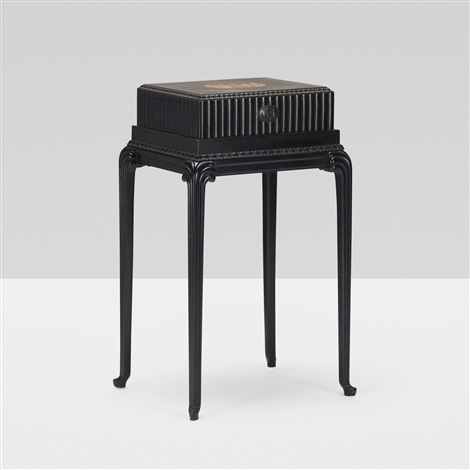

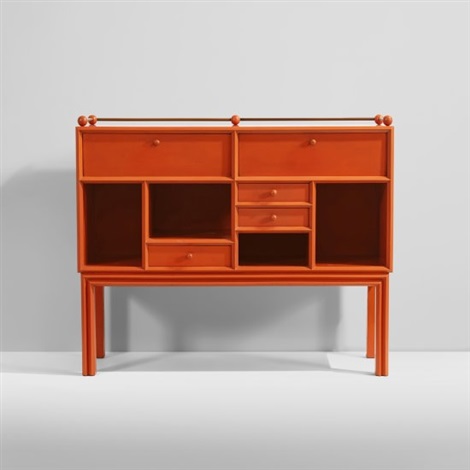


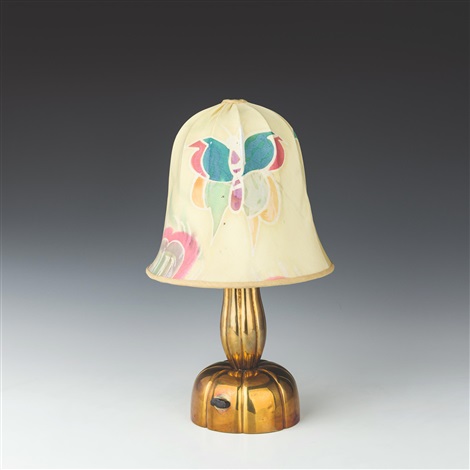

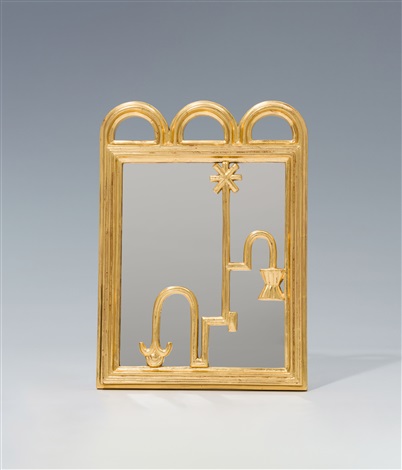
Hoffmann’s style is clean, geometric, and highly organized, often built from squares and grids that make his work feel calm and exact. He favored smooth surfaces, clear outlines, and decoration that feels built into the structure rather than added on afterward. Even when he used rich materials, he kept the shapes controlled so the luxury never turned into excess. His best interiors feel like complete systems, where furniture, lighting, patterns, and layout speak the same visual language. That mix of restraint and richness is a big reason his work sits so naturally in the Art Deco story.
Key Influences
- Vienna Secession: Helped define a new modern design direction in Vienna that cleared the path for Art Deco’s clean lines and bold structure.
- Wiener Werkstätte: Proved that unified interiors, made with high craft across many materials, could be a modern luxury standard.
- Stoclet Palace: Set a benchmark for the fully designed Art Deco environment, from architecture down to furniture and decorative detail.
- Geometric Modern Design: Made strict geometry, especially the square and grid, a signature approach that designers copied for decades.
- Design Education: Trained and influenced generations through teaching and mentorship, spreading his standards far beyond Vienna.
If you are interested in further stories of the artists who shaped Art Deco, return to our artists page to browse the full directory.