

J.C. Leyendecker
Joseph Christian Leyendecker was born on March 23, 1874, in Montabaur, Germany, to Peter and Elizabeth Leyendecker. In 1882, the entire Leyendecker family immigrated to Chicago, Illinois. As a teenager, around 1890, he apprenticed at the Chicago printing and engraving company J. Manz & Company, eventually working his way up to staff artist, while simultaneously taking night classes at the School of the Art Institute of Chicago. After studying drawing and anatomy under John Vanderpoel, he and his brother Frank enrolled in the Académie Julian in Paris from October 1895 through June 1897, where his work won four awards and one of his paintings was exhibited in the Paris salon. In early 1902, the family relocated to New York City, and in 1914, the Leyendecker brothers built a home in New Rochelle, an artists’ colony in the suburbs. Leyendecker lived for nearly fifty years with the Canadian-born Charles A. Beach, who came to his studio in 1903 looking for modeling work and became his studio manager, frequent model, and life partner. Leyendecker died on July 25, 1951, of an acute coronary occlusion at his home in New Rochelle.
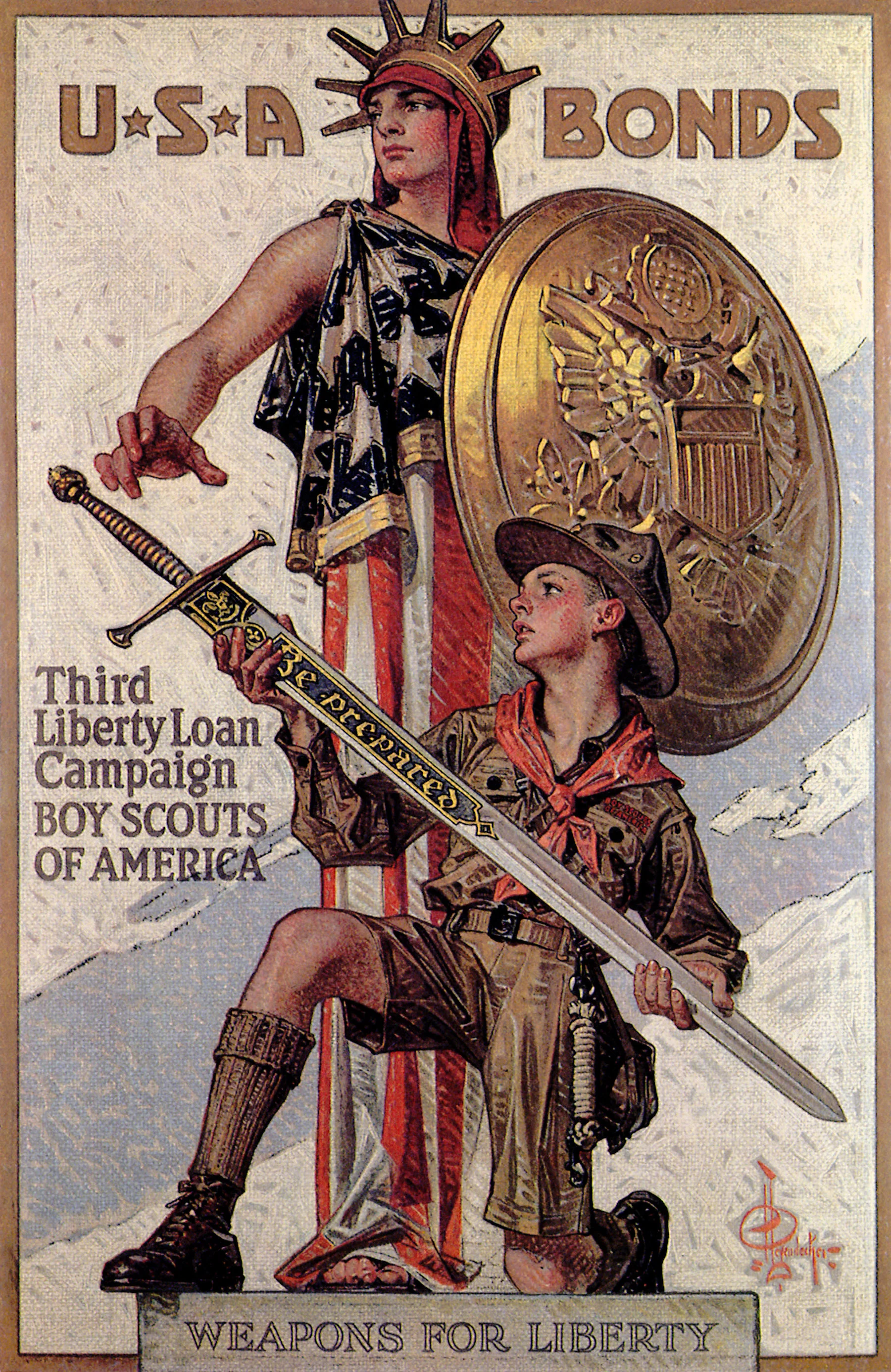
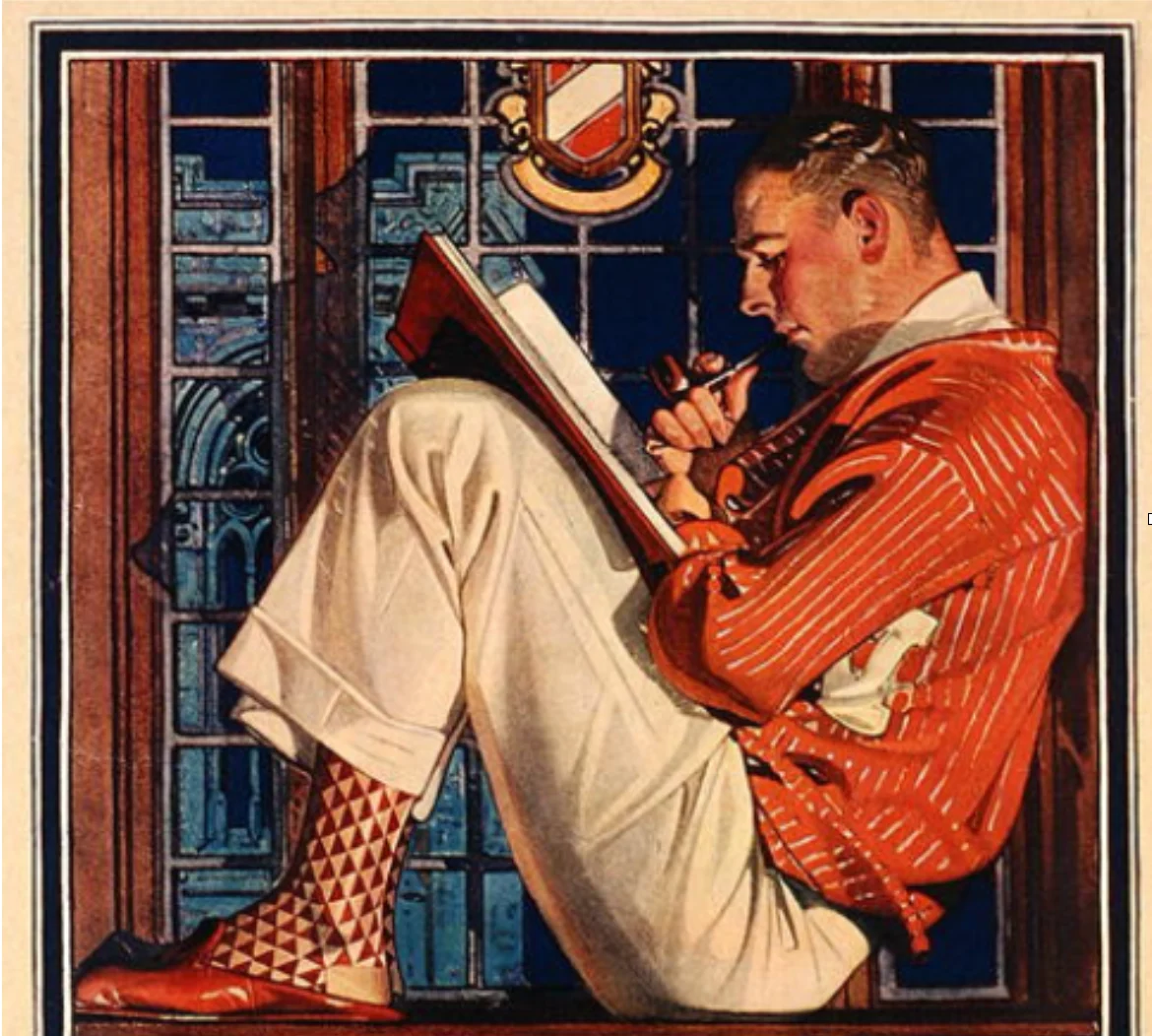
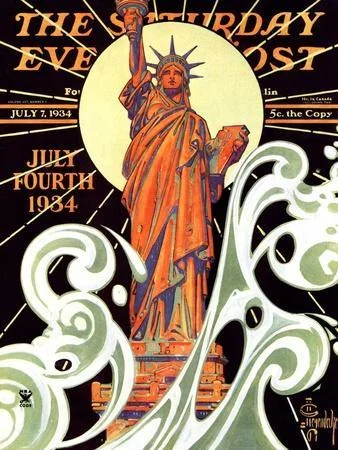
Leyendecker’s first cover illustration for The Saturday Evening Post was published in its May 20, 1899 issue, launching a forty-four-year association with the magazine that would produce 322 covers and introduce iconic visual traditions including the New Year’s Baby, the modern image of Santa Claus, flowers for Mother’s Day, and firecrackers on the Fourth of July. He also produced 80 covers for Collier’s Weekly and illustrated for Ladies’ Home Journal, Judge, and numerous other publications. His advertising work defined an era in American commercial art, with major clients including Arrow brand shirts and collars, B. Kuppenheimer men’s clothing, Hart Schaffner & Marx, Kellogg’s, Ivory Soap, Gillette Safety Razors, and Pierce-Arrow Automobiles. His Arrow Collar Man advertisements, which featured a succession of handsome male models including future actors Brian Donlevy and Fredric March, became one of the most recognized advertising campaigns in American history. During both World Wars, he painted military recruitment and war bonds posters for the U.S. government. After 1930, his career began to slow as key clients moved on and the Post’s editorial leadership changed, and by the time of his death, he and Beach were maintaining their New Rochelle estate alone, having let all household staff go. His 1914 painting Beat-up Boy, Football Hero sold at auction in 2021 for $4.12 million. The largest public collection of his original artwork is held at the Haggin Museum in Stockton, California.
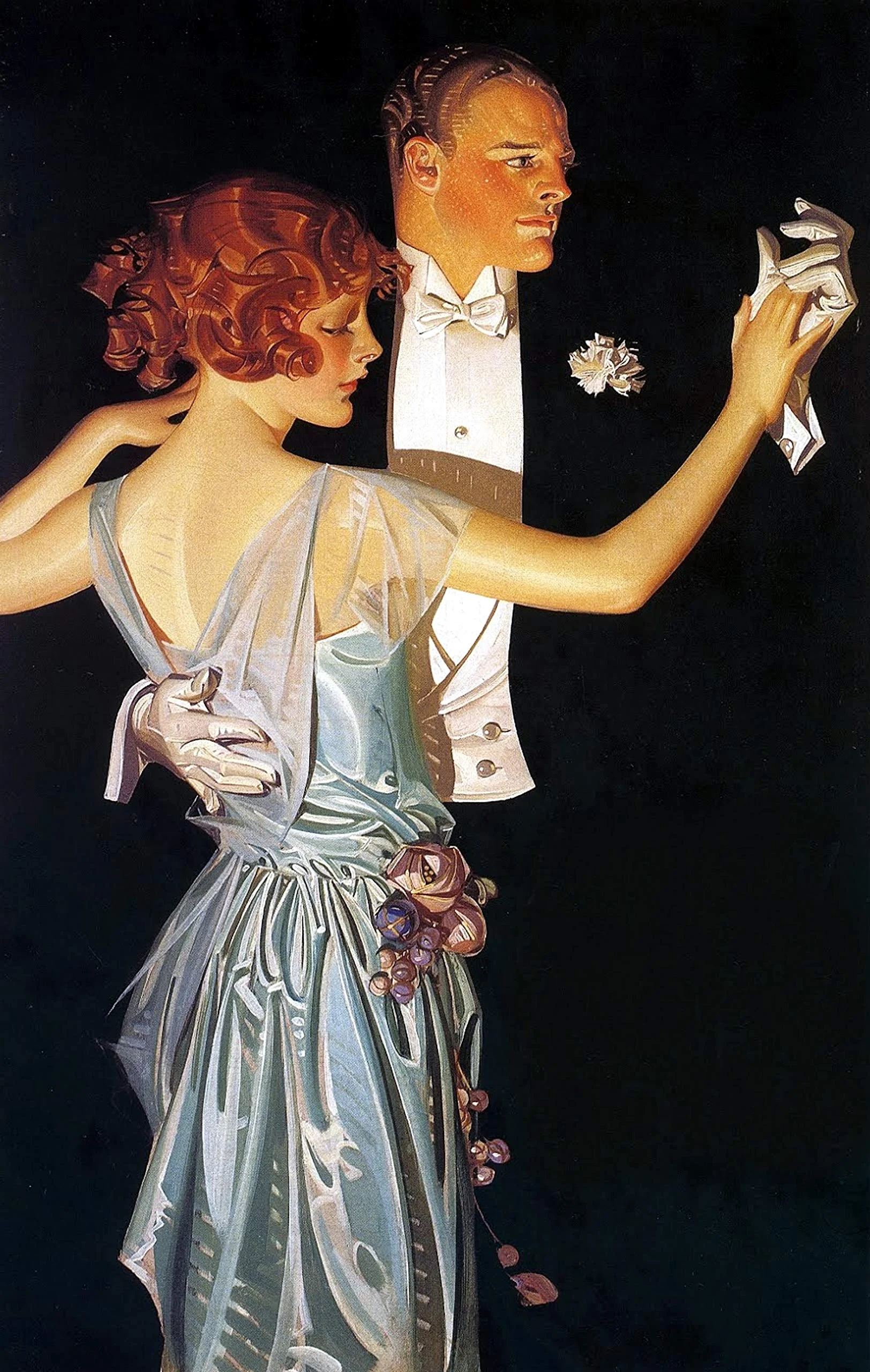
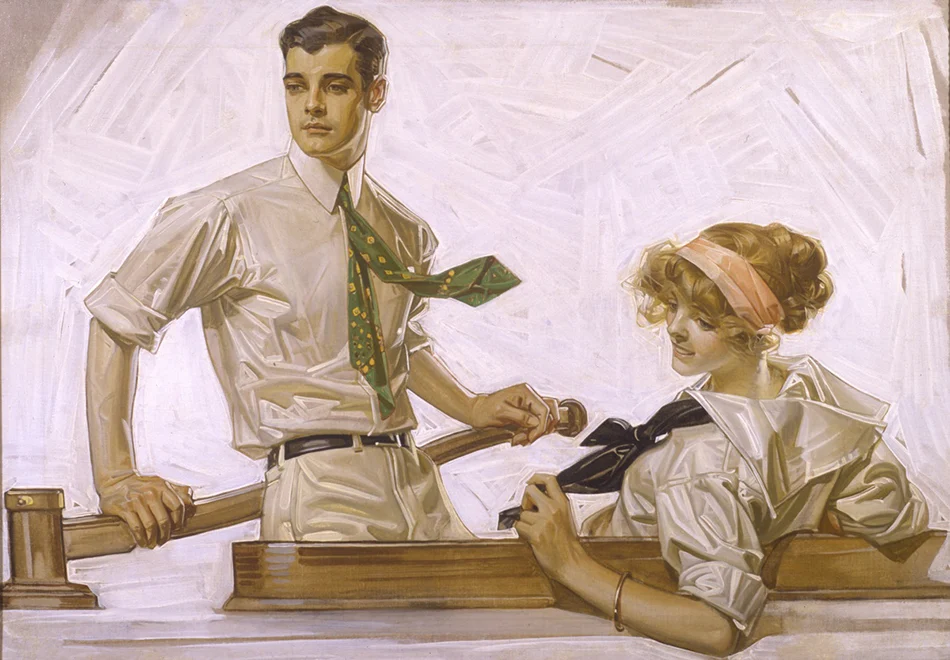

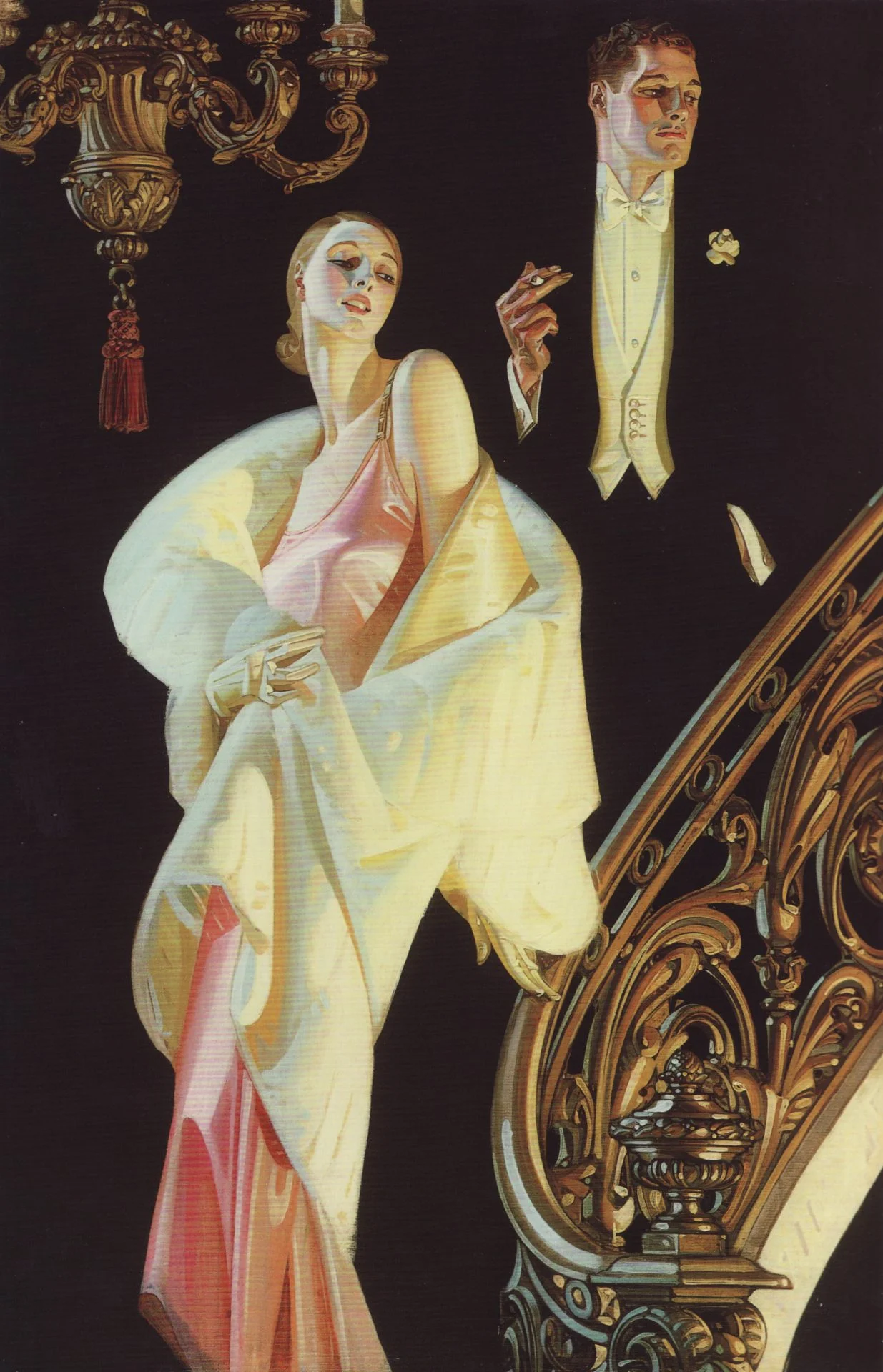
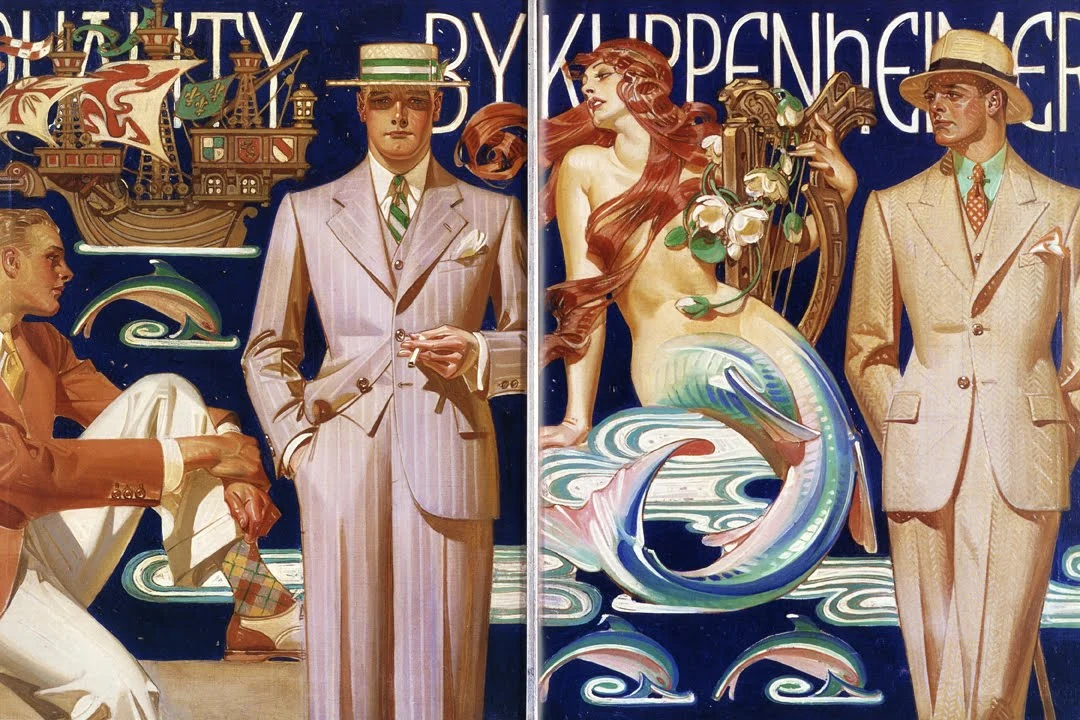
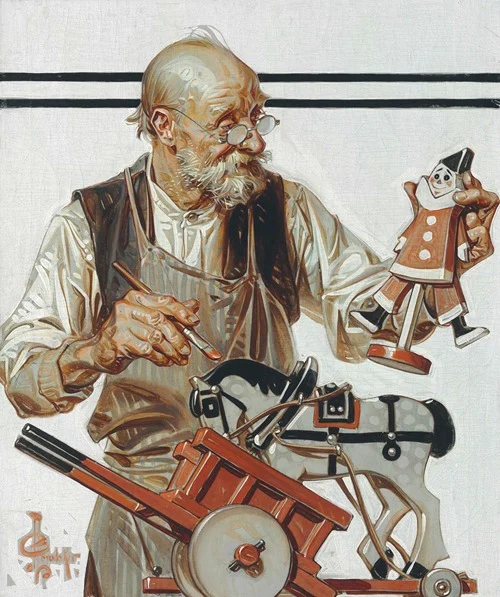
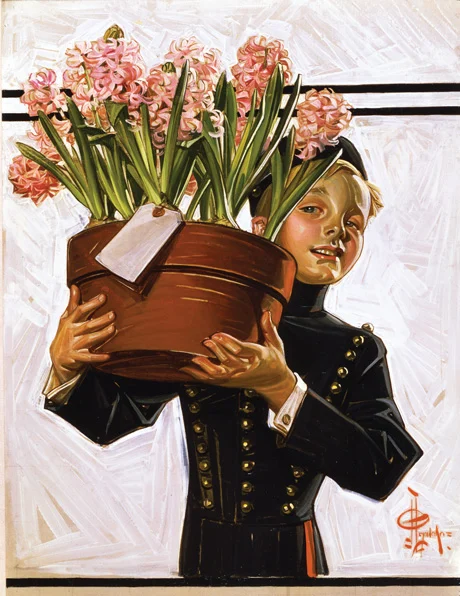
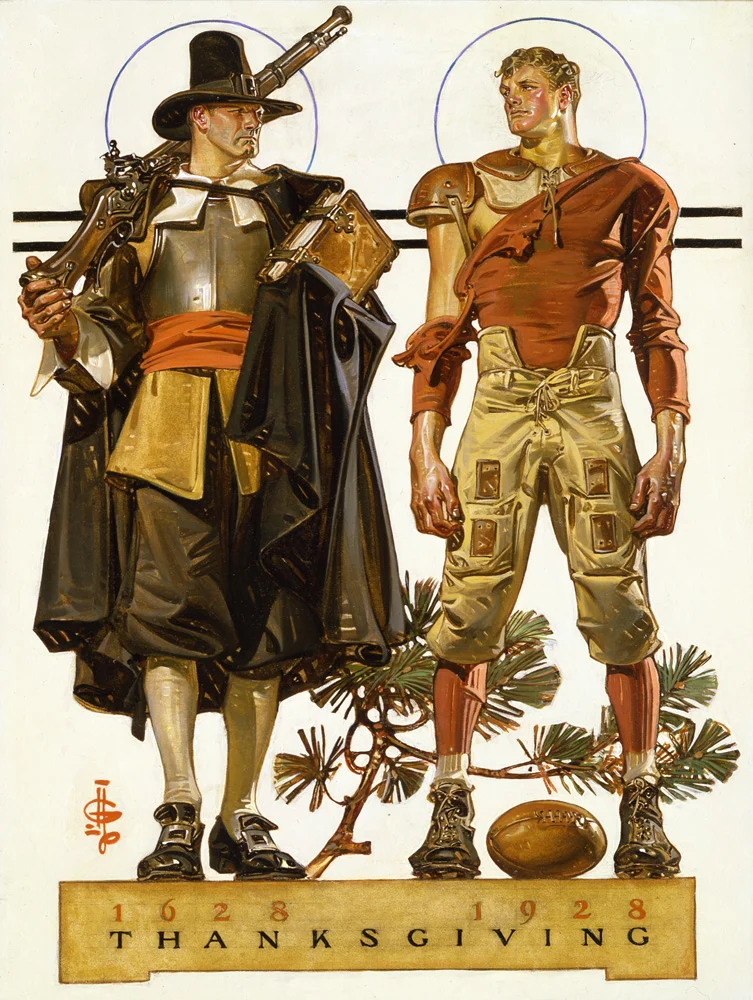
Leyendecker was a classically trained draughtsman who eschewed the use of photography in favor of direct drawing from life, and his secret painting medium of oils and turpentine produced the rich, fluid brushstrokes and luminous surfaces that are the hallmarks of his work. His illustrations presented sleek, idealized figures with a distinctive sense of elegance that set the visual tone for American commercial art in the first half of the twentieth century. He was equally adept at sophisticated portrayals of fashionable men and women and at poignant, whimsical scenes capturing the antics of children, the bond between mothers and infants, and the intensity of athletes in competition.
Key Influences
- Modern Magazine Cover: He helped invent the magazine cover as a miniature poster designed to engage viewers, impart an idea, and sell an issue in a single glance at the newsstand.
- American Visual Culture: His Saturday Evening Post covers popularized the modern images of Santa Claus and the New Year’s Baby, and established the tradition of giving flowers on Mother’s Day.
- Norman Rockwell: He was the chief influence upon and friend of Norman Rockwell, whose early Post covers bore a strong resemblance to Leyendecker’s work, and many of Rockwell’s iconic visual themes were reinterpretations of ideas Leyendecker had established.
- Advertising Illustration: His Arrow Collar Man and other campaigns set the standard for aspirational imagery in American advertising and demonstrated the commercial power of an idealized visual identity.
-
Painting Technique: His distinctive method of working directly from life with a proprietary medium of oils and turpentine produced a luminous, fluid brushwork style that influenced generations of illustrators and remains widely studied by artists today.
If you are interested in further stories of the artists who shaped Art Deco, return to our artists page to browse the full directory.

Related Products from ArtDecoCollection.com