




Alvar Aalto
Hugo Alvar Henrik Aalto was born on February 3, 1898, in Kuortane, Finland, the son of a land surveyor. His family moved to Jyväskylä in central Finland when he was young, and he enrolled to study architecture at the Helsinki University of Technology in 1916, though his studies were interrupted by the Finnish Civil War, in which he fought on the side of the White Army. He graduated in 1921 and in 1923 opened his own office in Jyväskylä. On October 6, 1924, he married architect Aino Marsio, who would become his closest creative collaborator until her death from cancer in 1949. Together they founded the design company Artek in 1935 with visual arts promoter Maire Gullichsen and art historian Nils-Gustav Hahl. In 1941, he accepted a visiting professorship at the Massachusetts Institute of Technology, returning to Finland during World War II to direct the Reconstruction Office before completing Baker House at MIT in 1949. He married architect Elissa Mäkiniemi in 1952, who continued to direct his practice after his death. Aalto received the Royal Gold Medal for Architecture in 1957 and the Gold Medal from the American Institute of Architects in 1963. He died in Helsinki on May 11, 1976, and in 2026 his works were inscribed on the UNESCO World Heritage List.

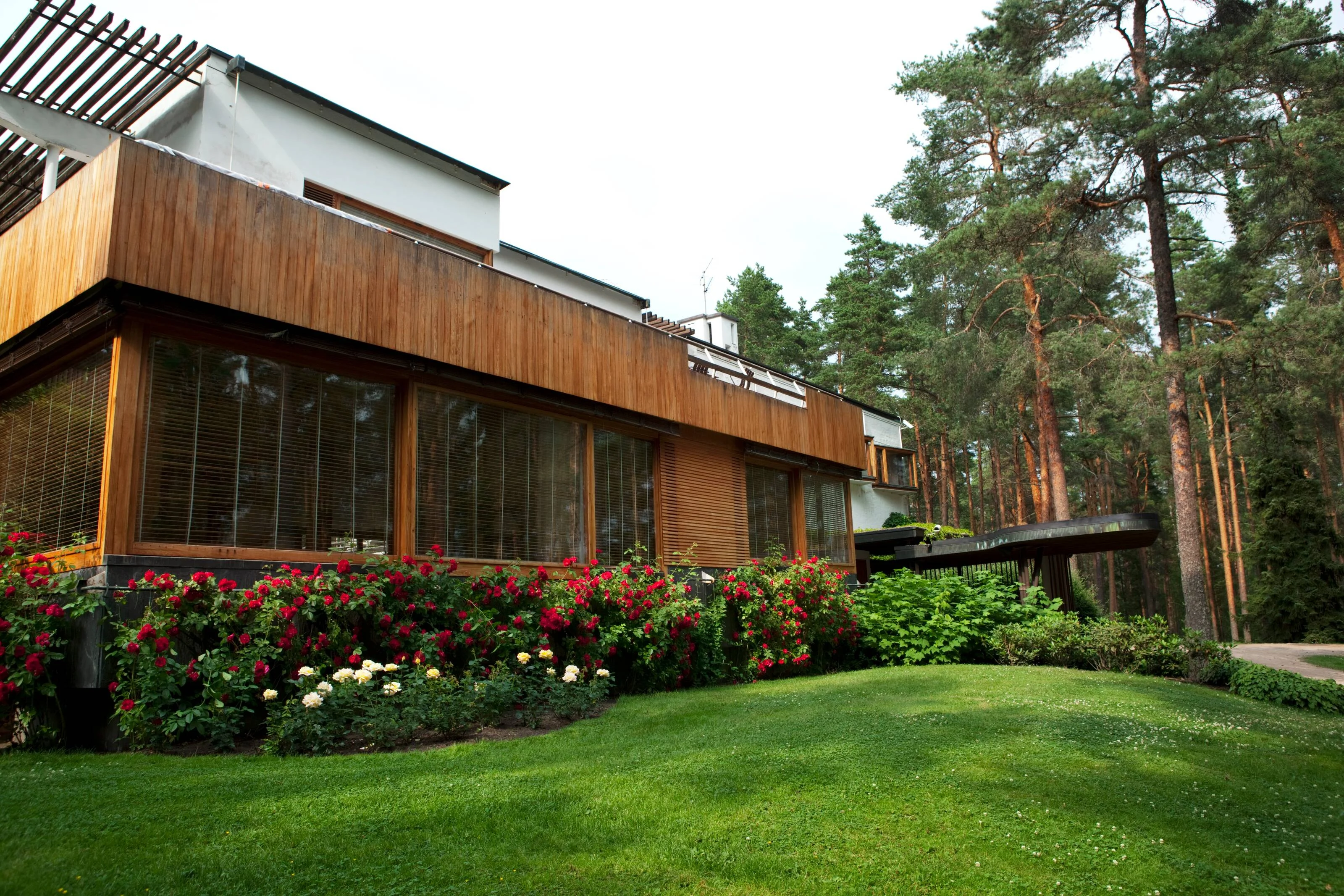
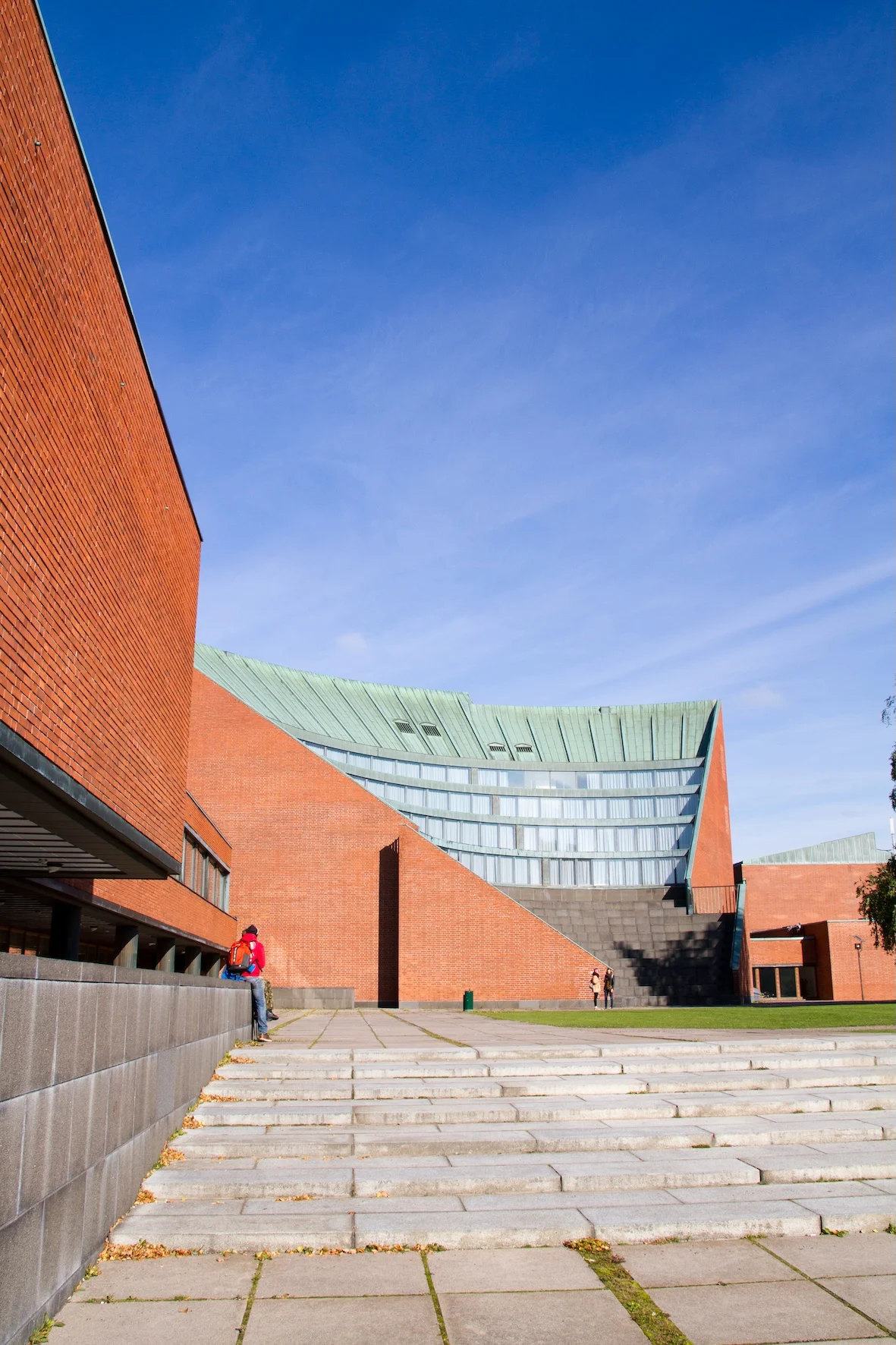
Aalto’s early career was characterized by Nordic Classicism before a decisive shift toward Functionalism in the late 1920s, exemplified by the Viipuri Municipal Library and the Paimio Sanatorium, which brought him international attention when they were completed in 1932 and 1935 respectively. He was the second architect ever, after Le Corbusier, to have a solo exhibition at the Museum of Modern Art in New York, in 1938, and Frank Lloyd Wright described his Finnish Pavilion at the 1939 New York World’s Fair as a “work of genius.” His furniture designs, developed in close collaboration with Aino, included the celebrated Paimio Chair, the Model 60 stacking stool, and his patented bent plywood techniques, which profoundly influenced Charles and Ray Eames and George Nelson. The sinuous Aalto Vase, designed in 1936 and still manufactured by Iittala, became one of the most recognized design objects of the 20th century. He designed over 500 individual buildings during his career, approximately 300 of which were built, including the Säynätsalo Town Hall, the Helsinki University of Technology campus, the Finlandia Hall, and the Baker House dormitory at MIT. His Artek stools are currently used in Apple Stores worldwide.


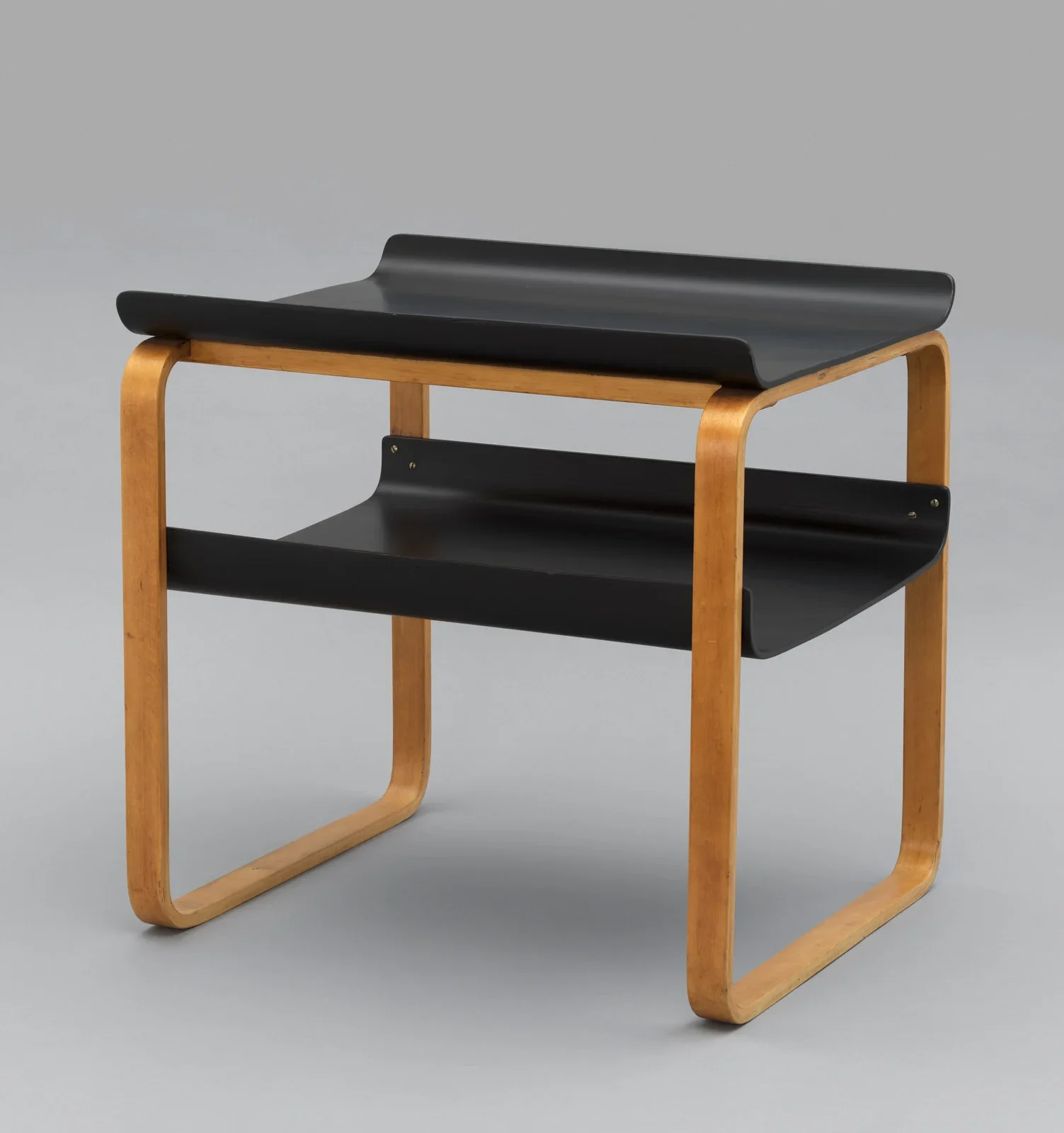
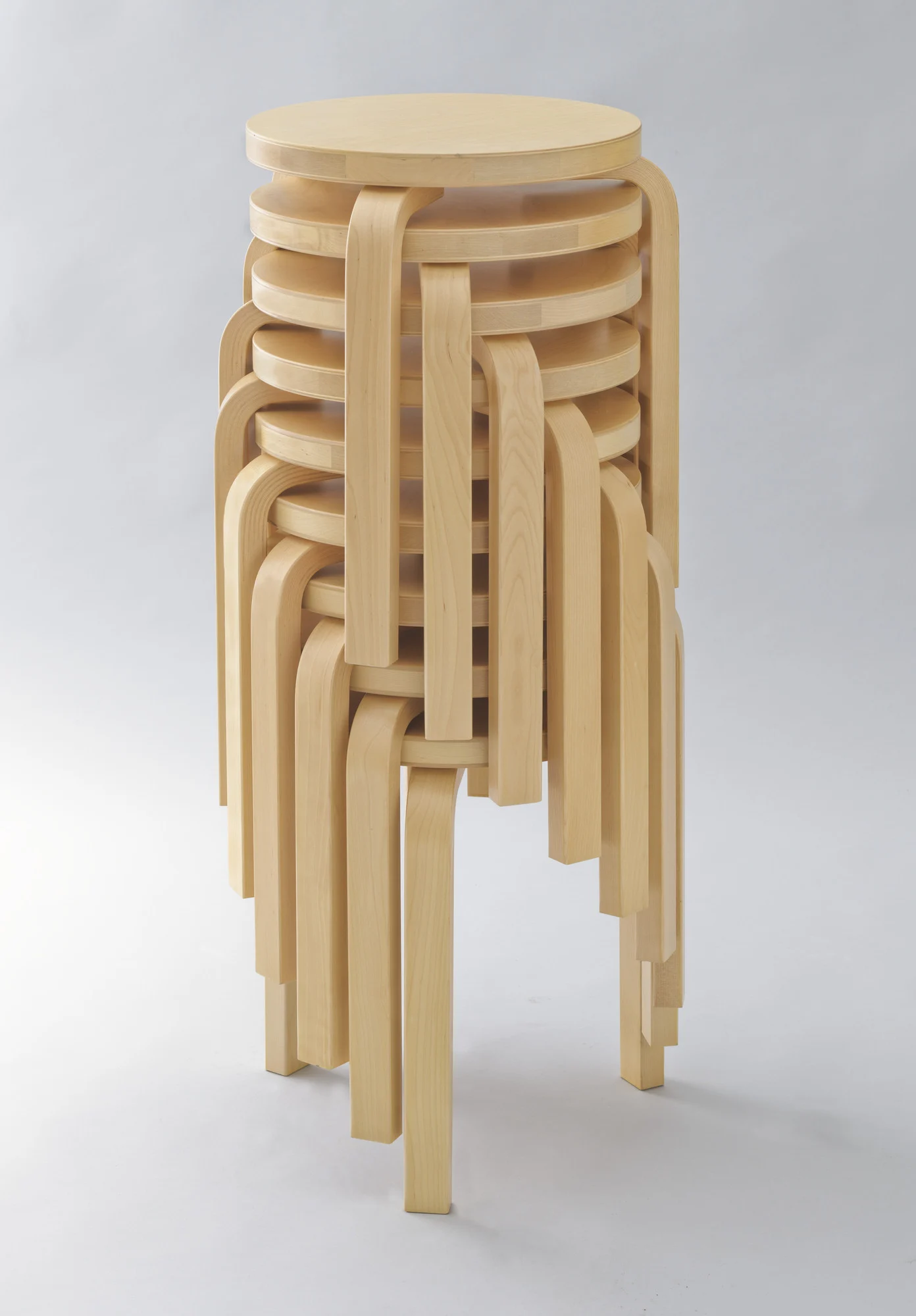

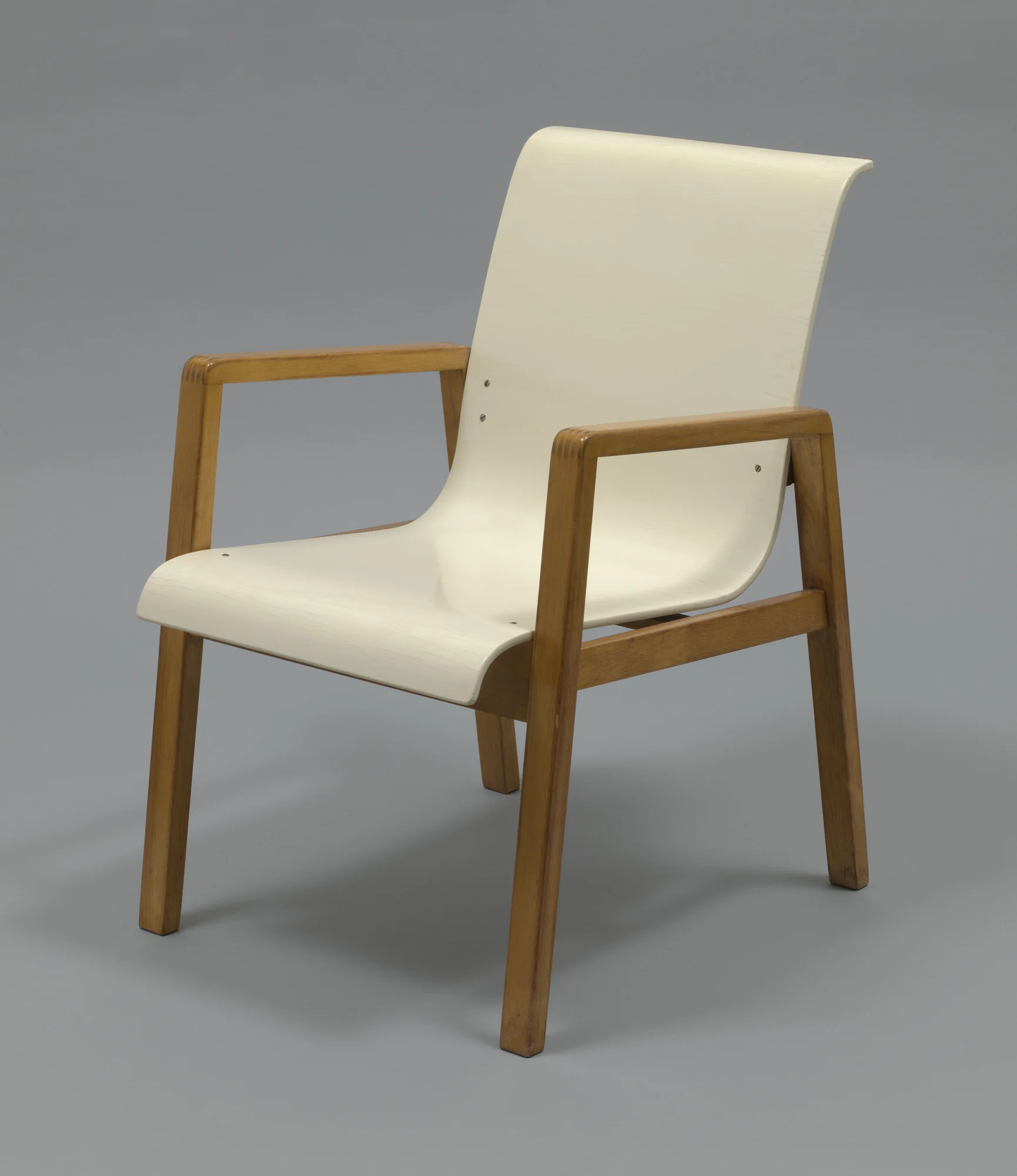

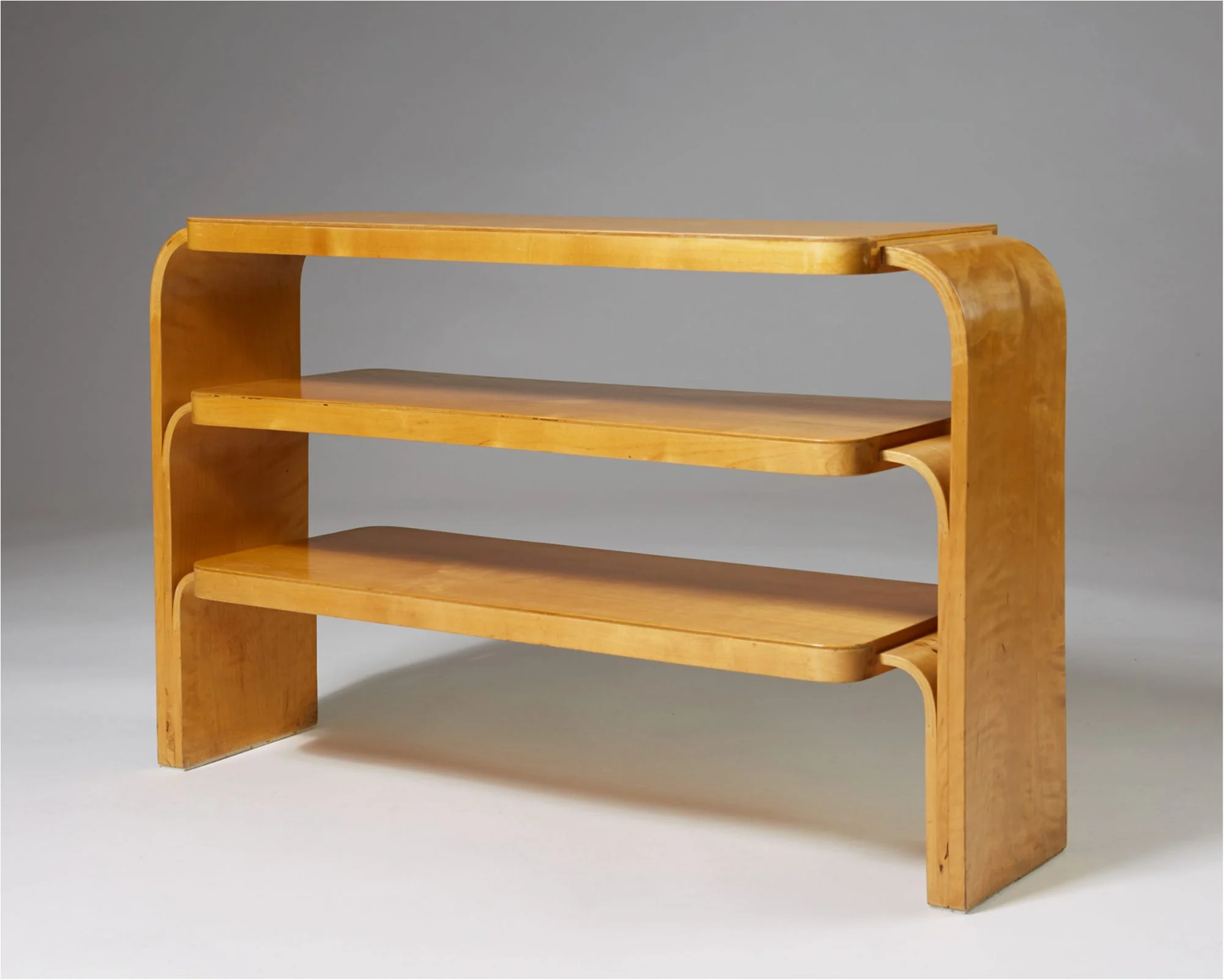
Aalto approached every commission as a Gesamtkunstwerk, designing not only the building but the interior surfaces, furniture, lamps, and glassware as a unified whole. His mature work moved away from purist International Style Modernism toward a more organic, humanistic approach in which natural materials, warm colors, and undulating forms created what Sigfried Giedion described as qualities of “mood, atmosphere, and intensity of life” that departed from direct functionality. He never regarded himself as an artist, seeing painting and sculpture as branches of the tree whose trunk was architecture.
Key Influences
- Bent Plywood Innovation: His patented bent plywood furniture techniques transformed Scandinavian Modern design and directly shaped the aesthetic of Charles and Ray Eames and George Nelson.
- Organic Modernism: His humanistic departure from strict International Style functionalism toward organic, nature-inspired forms opened a path that influenced generations of architects seeking alternatives to the rigid geometries of orthodox modernism.
- Artek: The company he co-founded in 1935 became one of the most important design manufacturers in Scandinavia and remains the primary vehicle through which his furniture designs reach the world today.
- Finnish National Identity: His work gave Finland an internationally recognized architectural identity at a formative moment in the country’s history, with Giedion famously declaring that “Finland is with Aalto wherever he goes.”
- UNESCO World Heritage: The 2026 inscription of thirteen Aalto sites on the World Heritage List confirmed his place among the most significant architects of the 20th century.
If you are interested in further stories of the artists who shaped Art Deco, return to our artists page to browse the full directory.

Related Products from ArtDecoCollection.com