

Art & Statues


Wiener Werkstätte: Design in Vienna 1903-1932 by Christian Brandstätter
Wiener Werkstätte: Design in Vienna 1903-1932 by Christian Brandstätter
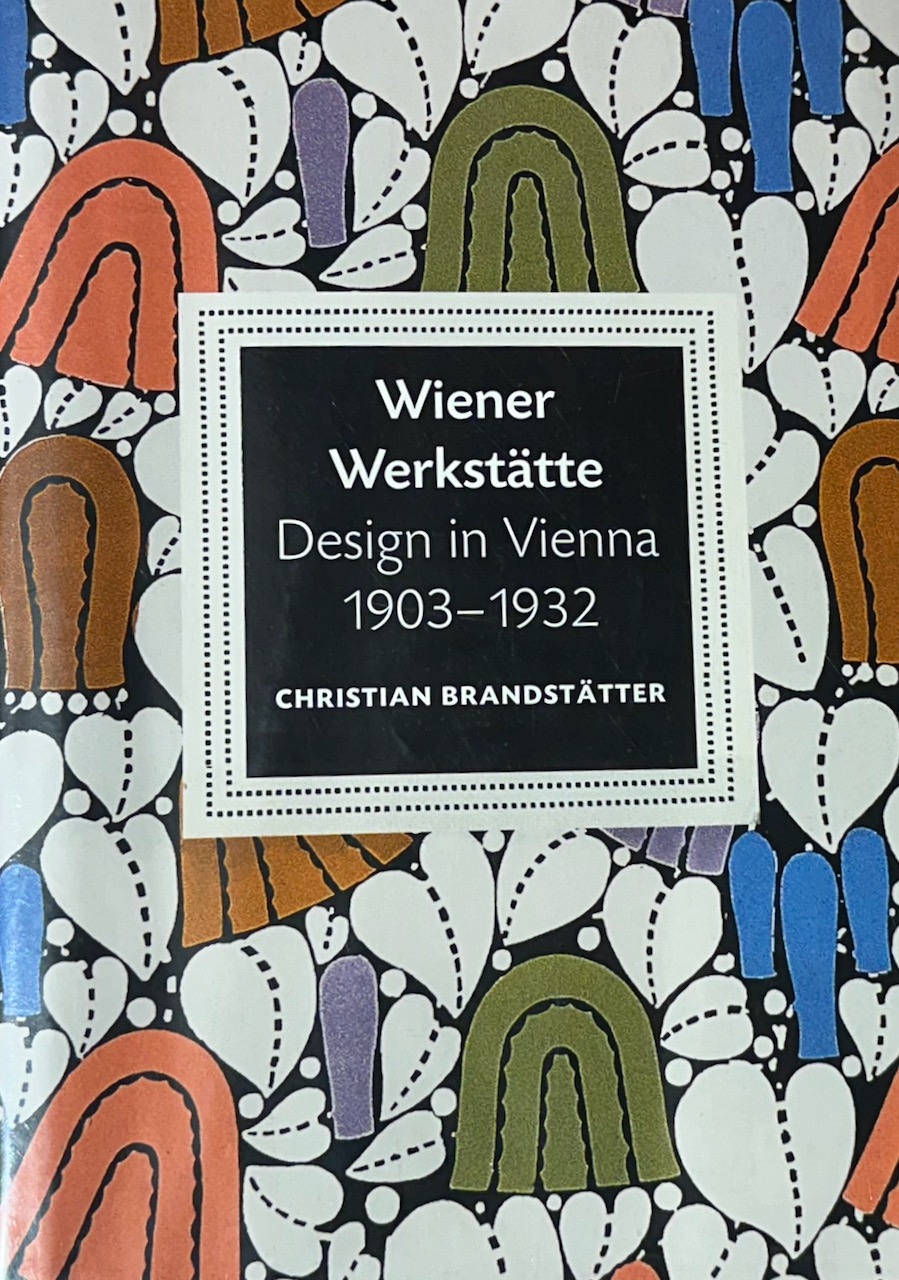
Published by Harry N. Abrams in 2003, this hardcover offers a comprehensive record of the Wiener Werkstätte, the Vienna Workshops founded in 1903 to unite the fine and applied arts. The book brings together four hundred pages of illustration and history, covering the movement from ambitious integrated environments, such as Josef Hoffmann's Palais Stoclet in Brussels and the Cabaret Fledermaus in Vienna, down to individual objects like enameled glass stemware and printed postcards. The cover reflects that same decorative sensibility, using a bold repeating pattern of arches and leaf forms in the flattened, stylized manner associated with the Vienna Secession. Christian Brandstätter, a leading publisher and author on Viennese art of the twentieth century, assembled the material from decades spent documenting the period. The book remains one of the most complete English-language surveys of the Werkstätte's output.
The Wiener Werkstätte grew out of the Vienna Secession and set out to erase the distinction between fine art and craft, producing furniture, textiles, ceramics, jewelry, graphics, and entire interiors under a shared design philosophy. Brandstätter's book traces that ambition across the workshops' three decades of activity, pairing large-scale architectural commissions with smaller decorative objects to show how consistently the aesthetic carried through every scale of production. Artists and designers featured include Josef Hoffmann, Koloman Moser, Otto Prutscher, Vally Wieselthier, and Oskar Kokoschka, among many others associated with the workshops.
Christian Brandstätter has spent much of his career as the leading publisher of books on Viennese art and design, based in Vienna and drawing on close access to the archives and objects of the period. His scholarship has done much to keep the Wiener Werkstätte's history visible outside German-language sources, and this book stands as one of his most thorough treatments of the subject.
This title is an essential reference for collectors of Viennese decorative arts and Secessionist design, and its scope makes it useful both for identifying individual pieces and for understanding the workshops as a whole. The generous illustration throughout also makes it rewarding simply to browse.