








Art & Statues
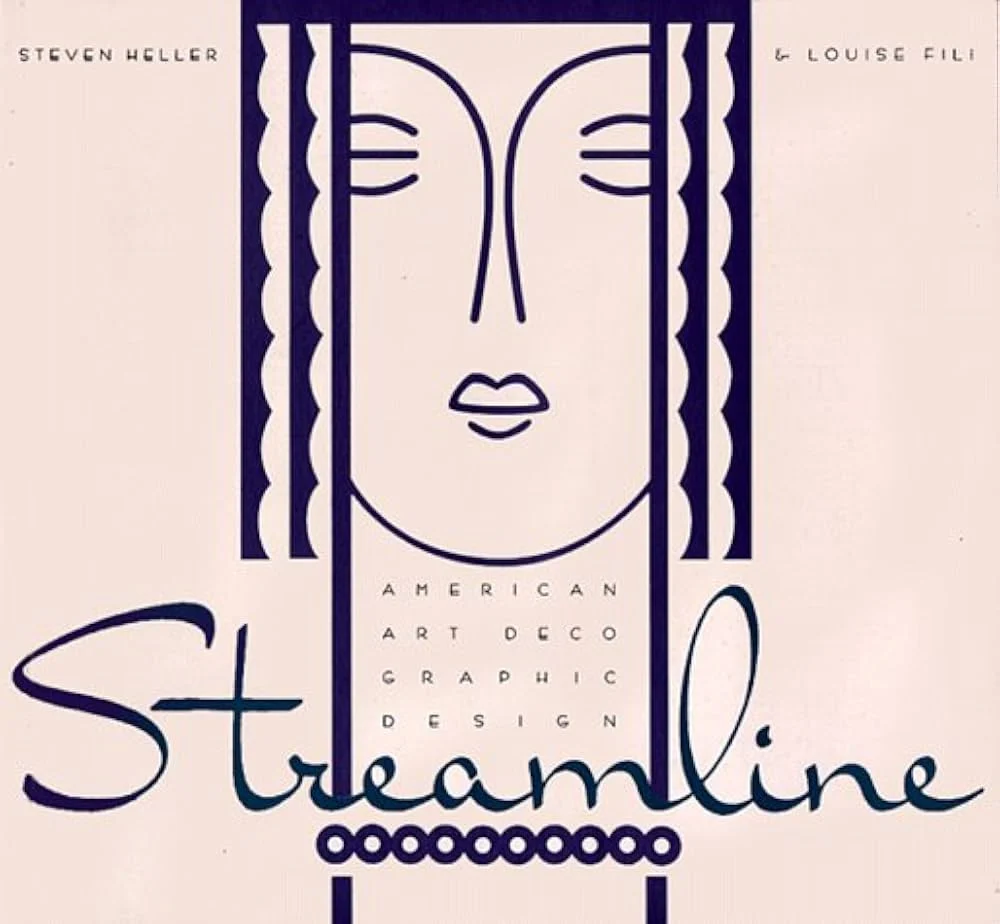


Streamline: American Art Deco Graphic Design by Steven Heller and Louise Fili
Streamline: American Art Deco Graphic Design by Steven Heller and Louise Fili
Published by Chronicle Books in 1995, this softcover surveys the graphic design of the American Art Deco era, gathering advertisements, magazine covers, packaging, and posters from the period into a single visual reference. Authors Steven Heller and Louise Fili, longtime collaborators on a series of design history titles covering Italian, Dutch, and French Art Deco among others, turn here to the distinctly American strand of the style, tracing how straight lines and streamlined forms replaced the flowing curves of Art Nouveau in commercial art of the 1920s and 1930s.
The book covers streamlining's reach across graphic design, architecture, vehicle design, and furnishings, illustrating how the aesthetic moved from packaging and advertising into nearly every corner of American consumer culture. The cover reflects that geometric sensibility directly, showing a stylized Art Deco face rendered in flat black and cream against a soft peach background. Heller and Fili's books are widely regarded among designers for the quality and rarity of the period material they reproduce.
The book moves through the visual language that defined American commercial design during the interwar years, drawing connections between graphic design and the broader Streamline Moderne aesthetic that shaped everything from consumer products to World's Fair architecture. Advertising figures like Earnest Elmo Calkins and Egmont Arens appear throughout, alongside period packaging, magazine layouts, and posters that capture how thoroughly the modernistic look permeated American commercial life by the 1930s.
Steven Heller spent thirty-three years as an art director at the New York Times, including nearly three decades at the New York Times Book Review, and has written extensively on design history throughout his career. Louise Fili is a graphic designer known for her own distinctive typographic work, and together the two have produced a long series of books documenting Art Deco graphic design across different countries, of which this is the American entry.
This book is a valuable visual reference for graphic designers, collectors of vintage advertising and packaging, and anyone researching the commercial art of the American Art Deco period. Its emphasis on rare and rediscovered material makes it a useful resource beyond the more commonly reproduced examples found in other design histories.

info@artdecocollection.com