








Art & Statues
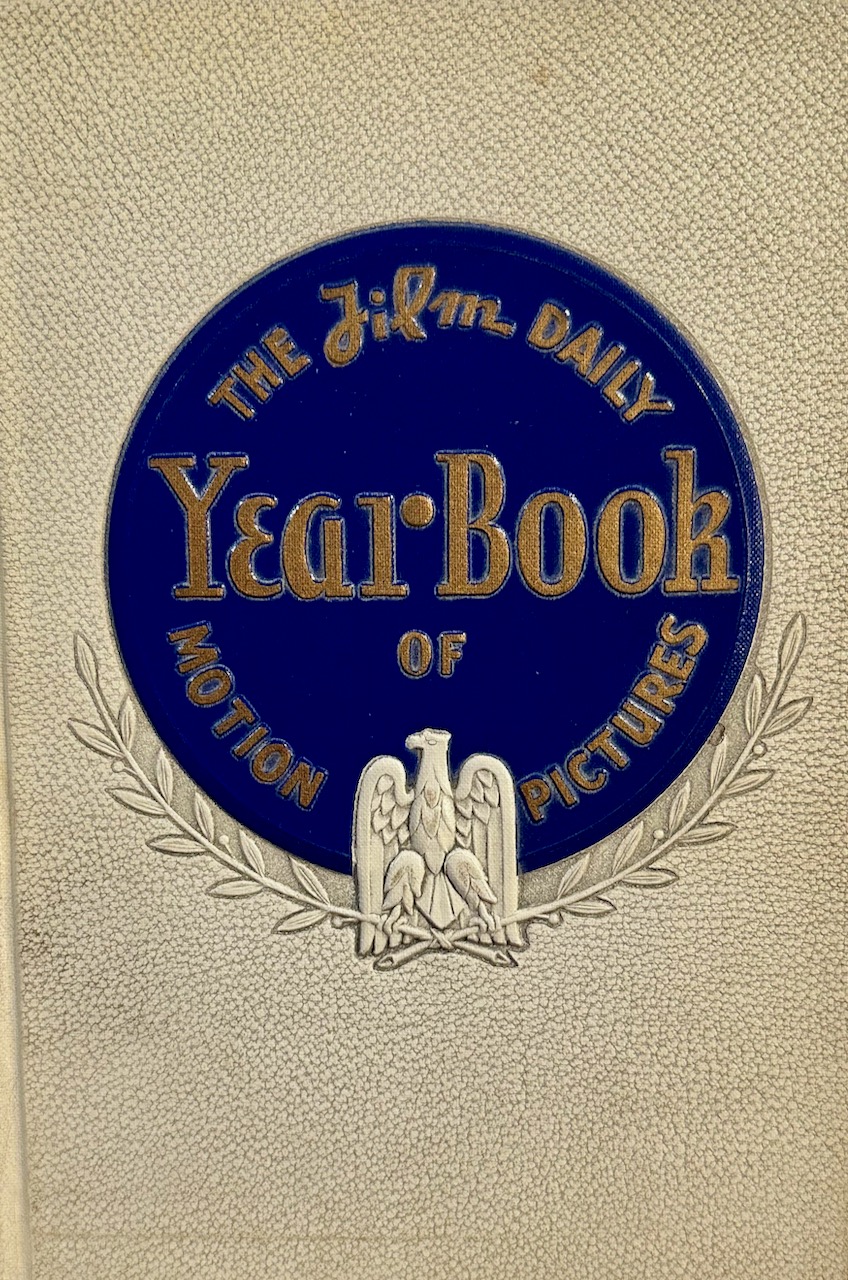


The Film Daily Year Book of Motion Pictures, 1938
The Film Daily Year Book of Motion Pictures, 1938
Published in New York by The Film Daily and edited by Jack Alicoate, this is the twentieth annual edition of the industry's essential reference, running to roughly 1,280 pages, the largest volume issued in the series to that point. Bound in an embossed cover with a laurel wreath and eagle beneath a blue medallion, the book catalogs the American film industry as it stood in 1938, including release lists, studio and personnel directories, financial statements, and advertising from producers, distributors, and equipment suppliers. Its scope covers the full business of Hollywood at the height of the studio system, from major releases to the many trade companies that supported production and distribution. Volumes from this series are prized today for the detailed, contemporaneous record they offer of a specific year in film history. The binding's substantial heft reflects just how large the American film industry had grown by the late 1930s.
Inside, the year book follows the structure typical of the series, opening with editorial commentary on the state of the industry before moving into extensive statistical and directory sections. Readers will find comprehensive listings of films released during the year, along with cast, studio, and distributor information, alongside company financial data and a wide range of period advertisements from studios, stars, and industry vendors. That combination of hard data and trade advertising makes the book a uniquely detailed snapshot of Hollywood's business side in a single year.
Jack Alicoate served as editor of The Film Daily and its year book for decades, shaping the publication into the standard reference of record for the industry. The Film Daily itself was one of the most widely read trade papers in Hollywood during the studio era, and its year books were consulted by studio executives, distributors, and exhibitors alike for their thoroughness.
This volume is a significant research tool for film historians and collectors interested in the studio system at its peak, and its advertising sections in particular offer a vivid picture of the industry's visual culture in 1938. The scale and condition of surviving copies vary widely, making well-preserved examples especially desirable.

info@artdecocollection.com