

Art & Statues
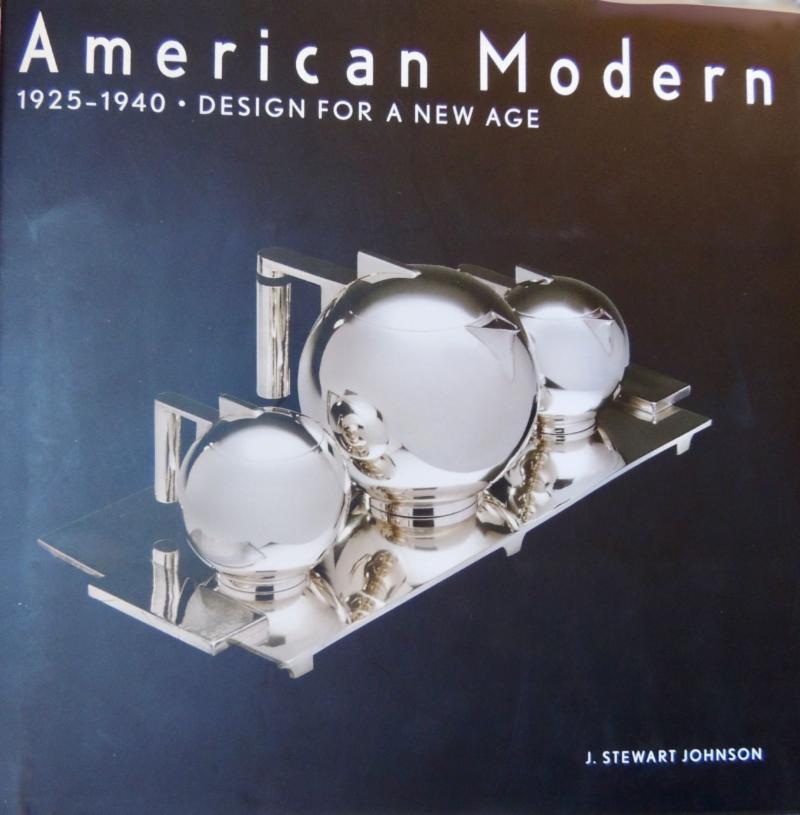
American Modern, 1925-1940: Design for a New Age
Published by Harry N. Abrams in 2000, American Modern serves as the companion volume to an exhibition organized by the American Federation of Arts and The Metropolitan Museum of Art, curated by J. Stewart Johnson. The book showcases more than 125 works by around fifty designers who defined a distinctly American, unmistakably modern aesthetic during the fifteen years between the world wars. Figures like Norman Bel Geddes, Donald Deskey, Raymond Loewy, Gilbert Rohde, and Russel Wright appear throughout, their furniture, dinnerware, and industrial designs standing as some of the clearest expressions of the era's machine age optimism. Johnson's introductory essay traces how museums and department stores helped popularize modern design for a broad American audience, while also examining the period's fascination with streamlining and the emerging concept of planned obsolescence. Across 192 pages with 172 illustrations, 142 of them in full color, the book presents chairs, textiles, lamps, cocktail sets, clocks, and other objects that made stylish modern design accessible well beyond a wealthy elite.
J. Stewart Johnson organized this book around a straightforward premise, that American designers working between 1925 and 1940 created something genuinely distinct from the European Art Deco movement that influenced them. Where French Art Deco often emphasized luxury materials and hand craftsmanship, the American designers featured here, including Walter Dorwin Teague, Eliel Saarinen, Kem Weber, and Paul Frankl, embraced new industrial materials and mass production techniques to bring modern design within reach of an expanding middle class. Johnson's essay unpacks this shift in detail, covering how department stores and museum exhibitions helped introduce these ideas to American consumers who had never before encountered furniture or housewares designed with this level of formal ambition.
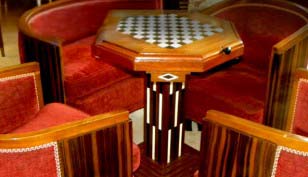
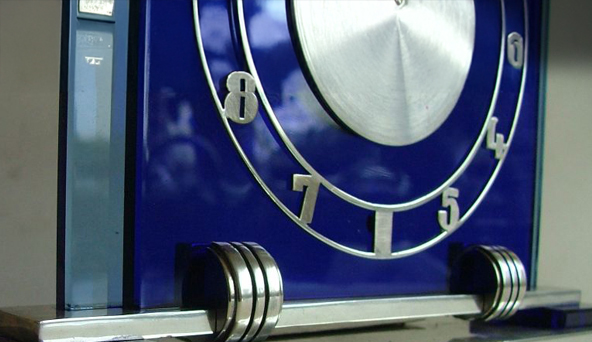
The objects reproduced throughout the book span an unusually wide range of categories, from Russel Wright's now iconic American Modern dinnerware to chrome plated cocktail sets, streamlined clocks, and textiles patterned with the geometric abstraction typical of the period. Each piece is presented with the kind of detail collectors need, supported by biographical entries on the fifty designers whose work appears in the book and an appendix explaining the new materials, including early plastics and chrome alloys, that made much of this design possible. The book's large format and strong color photography let readers study surface detail and construction on objects that are often small enough to be easy to overlook in broader design surveys.
As the catalog for a major museum exhibition drawing on the collections of both The Metropolitan Museum of Art and private collector John C. Waddell, this book carries scholarly weight beyond a typical coffee table survey. It remains a key reference specifically for the American side of the international modern design movement, distinguishing this country's particular blend of streamlining, industrial optimism, and democratized style from its European counterparts. For collectors of American Art Deco and Machine Age design, this book fills a role that few others match.

info@artdecocollection.com