

Art & Statues
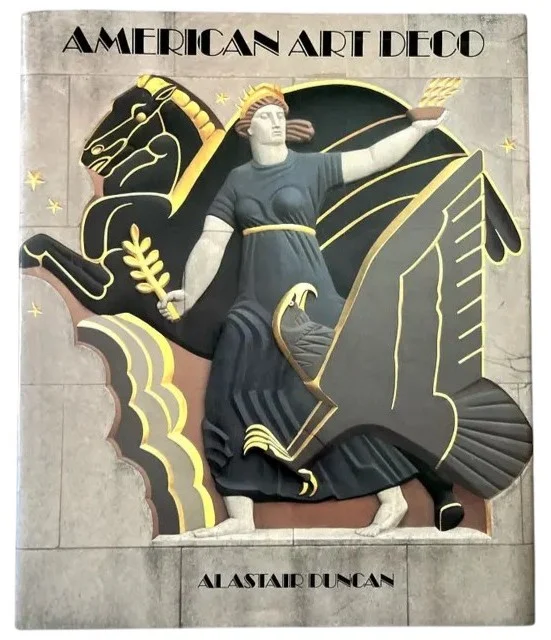


American Art Deco by Alastair Duncan
American Art Deco by Alastair Duncan
Published by Harry N. Abrams in 1986, this 288-page volume is a comprehensive survey of the Art Deco style as it developed in the United States, gathering more than five hundred illustrations, over two hundred in color, across architecture, furniture, and the decorative arts. Author Alastair Duncan, an internationally recognized authority on Art Deco and Art Nouveau who spent fourteen years with Christie's in New York cataloguing sales devoted to the period, traces the style through both American-born designers and the European émigré designers who settled in the United States during the 1920s and 1930s. The book covers landmark architecture including the Chrysler Building, Radio City Music Hall, and the Richfield Oil Building, alongside furniture by designers such as Paul Frankl, Donald Deskey, and Russel Wright, and decorative objects ranging from cocktail shakers to the Trylon and Perisphere of the 1939 New York World's Fair. The cover reproduces a detail of "Wisdom," Lee Lawrie's monumental limestone relief above the entrance to 30 Rockefeller Plaza, one of the most recognized works of American Art Deco sculpture.
Duncan organizes the book by chapters covering exhibitions, media types, world's fairs, and industrial design styles, giving readers a structural framework for understanding how Art Deco moved through American architecture and applied arts during the interwar period. He draws a clear distinction between the two major currents that shaped American Deco, the decorative influence arriving from France and the more austere modernism coming out of Germany and Austria, and traces how each was absorbed and transformed by American designers, particularly after the stock market crash of 1929 reshaped the direction of both fields.
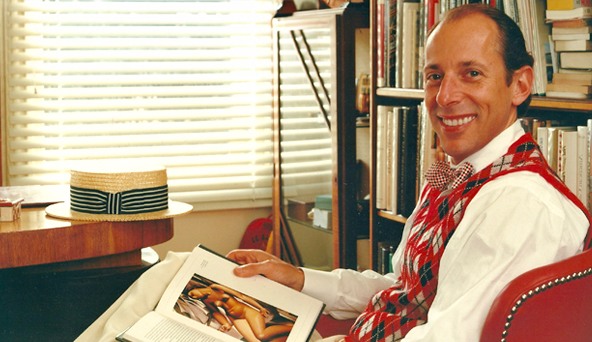
Alastair Duncan built his expertise through years spent organizing and cataloguing major Art Nouveau and Art Deco sales at Christie's, and later served as guest curator for exhibitions at the Smithsonian Institution. That auction house background gives the book a strong grounding in identifying and dating individual objects, complementing its broader historical narrative with the kind of precise technical detail collectors rely on.
This book remains a standard reference for collectors and researchers of American Art Deco across architecture, furniture, and decorative objects, valued both for the breadth of its coverage and the quality of its illustration. It serves equally well as an introduction to the period and as a detailed resource for identifying specific designers and pieces.

info@artdecocollection.com