
Peter Mintun and the Art Deco Songbook
How Jazz Age melody, printed glamour, and Peter Mintun’s devotion keep a vanishing world alive
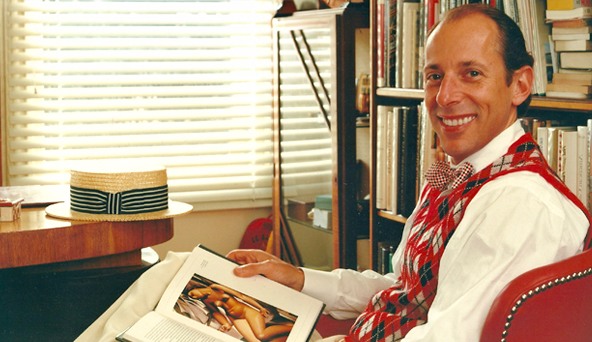
One of the great pleasures of my life in the Art Deco world has been getting to know and admiring Peter Mintun for close to 40 years. His life and work reflect exactly the kind of story we hoped to share through the Art Deco Resource Guide Journal, not simply the story of a performer or collector, but of a person whose dedication has given shape, memory, and meaning to an entire cultural world. At Art Deco Collection, we have always been drawn to people whose passion goes beyond ownership. Peter belongs in that tradition. His music, archive, sheet music collection, and devotion to the Great American Songbook reflect a life shaped by preservation, elegance and scholarship. This is one purpose of the Journal, to recognize people and collections that keep the Art Deco period alive. It is our living cultural inheritance.
Long before the word “retro” became a fashionable shortcut for the past, pianist Peter Mintun had already found his musical home in the decades before he was born. Growing up in Berkeley, California, during the 1950s-60s, when rock and roll was beginning to dominate popular taste, Mintun was drawn instead to the earlier sounds he heard at home. I asked Peter why was he so drawn to sheet music and music of this period.
“Inspired by “Fats’ Waller and encouraged by my parents, I grew up wanting to play piano. Sheet music filled our piano bench, my mom’s from the 20s–40s, my parents played older records, LPs and 78s and in my grandmother’s piano bench, music from the teens. The songs were wonderful, but the cover artwork and information captivated me even more. My father’s patients began donating their old sheet music, expanding my world into past entertainment history.”
“In high school, collector Edward Linotti taught me to organize systematically and identify what was common versus rare. To me, the “golden age” of sheet music spans World War I to II, when cover art was most creative and songs became the backbone of American popular music. Today, a detailed database and Facebook keep my passion alive and shared.”
What began as a childhood attraction soon became a vocation, a lifelong commitment to the sophisticated popular music of the Jazz Age and the years that followed. From that early fascination, Peter developed a career that placed him in some of the most atmospheric rooms in San Francisco. His music belonged naturally to hotel lounges, cocktail rooms, restaurants, private parties. These Art Deco inspired interiors where melody, elegance, and social style still had meaning. He was not simply reviving old songs, he was carrying forward a complete cultural mood, one connected to polished nightlife, urbane wit, beautiful clothes, and the syncopated confidence of the modern age. In that sense, Peter became part of a broader rediscovery of 1920s and 1930s culture, a revival in which music, fashion and collecting all began speaking to one another again.

Scroll down to see the collection!
That is why his sheet music collection is more than a group of printed songs. It is a visual archive of the world his music inhabits. The covers of popular sheet music from the Art Deco period often carried the same sophistication as the songs themselves, with stylized figures, angular typography and geometric borders. Theatrical lighting, nightclub imagery, skyscraper forms come to life on the page. Before radio and recordings became dominant, sheet music was one of the great commercial vehicles for popular song, and its covers were designed to sell not only a melody but a dream. In Peter Mintun’s collection, these works become a bridge between sound and image, between the piano bench and the printed page. Here is the story of the American songbook and the Art Deco imagination
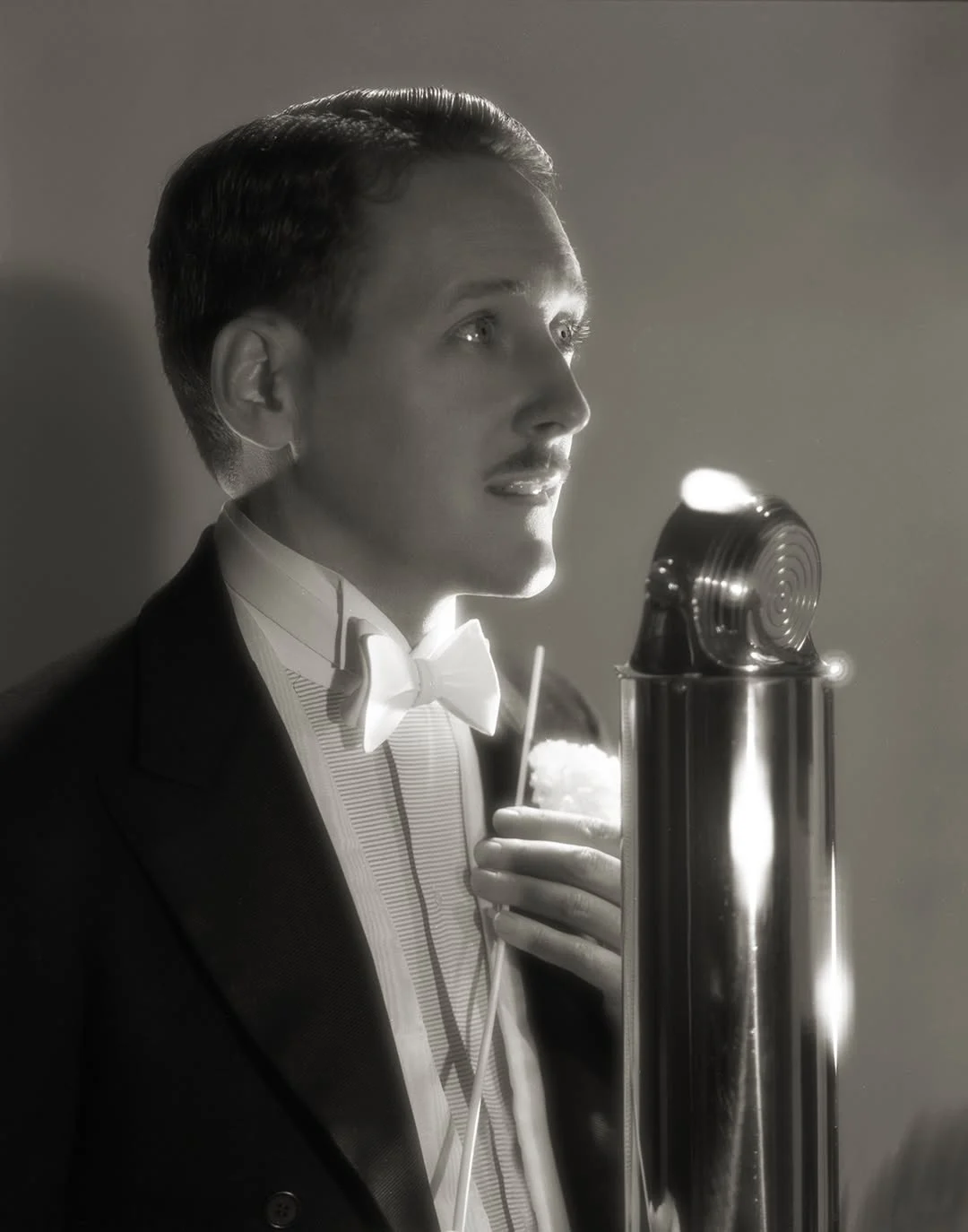
Peter Mintun by Golden Hollywood: Prints and Lore from Mark A Vieira
After high school, Peter Mintun spent one semester at Sonoma State College, but the classroom was not where he wanted to be. He later recalled that he was a poor student, frustrated by classes, because all he really wanted to do was perform. At only eighteen, he joined the Musicians’ Union, AFM Local 6, and began shaping a professional life around the music that had already captured him. This was not a casual interest in old songs. For Peter, the popular music of the 1920s, 1930s, and 1940s was a living language, and he pursued it with the seriousness of someone who understood that style, rhythm, lyrics, and presentation all belonged together.
When I first met Peter what was immediately striking was that his devotion to the period did not stop at the piano. He drove a vintage car, dressed in period clothing, and surrounded himself with people who shared the same belief that the past could be studied, inhabited, and brought forward with intelligence. This was not costume or novelty. It was a point of view. Peter and many of his friends were willing to choose period correctness over convenience, not because it was easy, but because it gave their lives and performances a kind of coherence rarely found in modern culture.
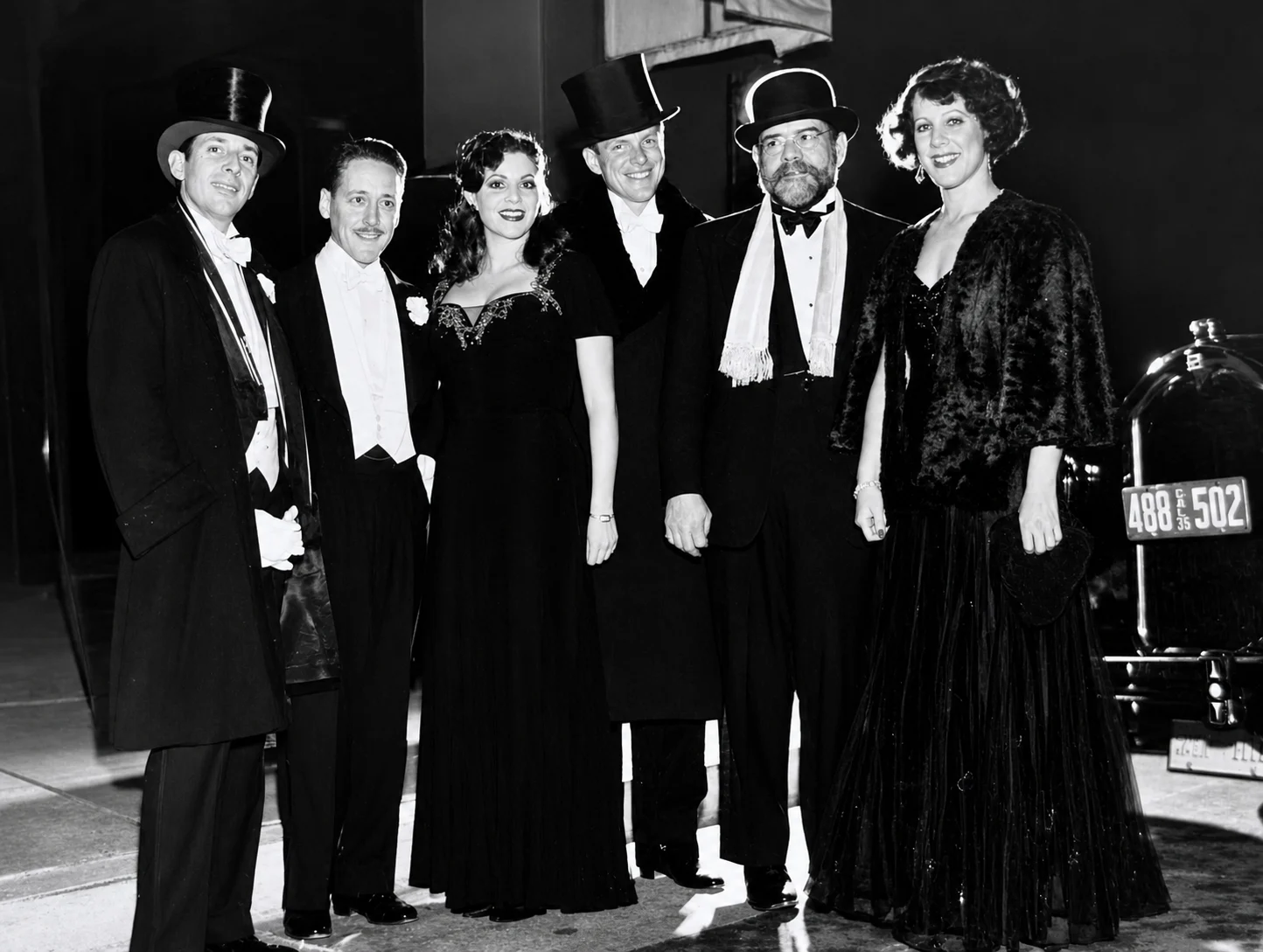
Rick Fishman, Peter Mintun, Laurie Gordon, Eric Bernhoft, Ed Linotti & Rusty Frank
Art Deco Preservation Ball, The Paramount Theater, Oakland, CA 1987
Peter Mintun became such a meaningful presence in the Art Deco revival. In San Francisco, especially, the renewed interest in the 1920s and 1930s was not limited to buildings, furniture, or decorative objects. It included music, dancing, fashion, graphics, manners, nightlife, and the rediscovery of a more deliberate social style. Through his connection to the Art Deco Society of California, Peter’s music became part of a larger cultural movement that helped to bring this period back into public view. His performances helped give that revival its sound and in 1985, he was given an Art Deco Society Preservation Award for his contributions to music.

Laurie Gordon and Peter Mintun were part of the Art Deco Society of California’s early circle: Laurie Gordon was the founder and producer of signature events such as the Art Deco Preservation Ball and Gatsby Summer Afternoon, while Mintun brought the era to life through its popular music and performance culture. Together, they helped bridge the ideas of the Art Deco movement by connecting preservation, design, fashion, music, and social history into a living public experience.
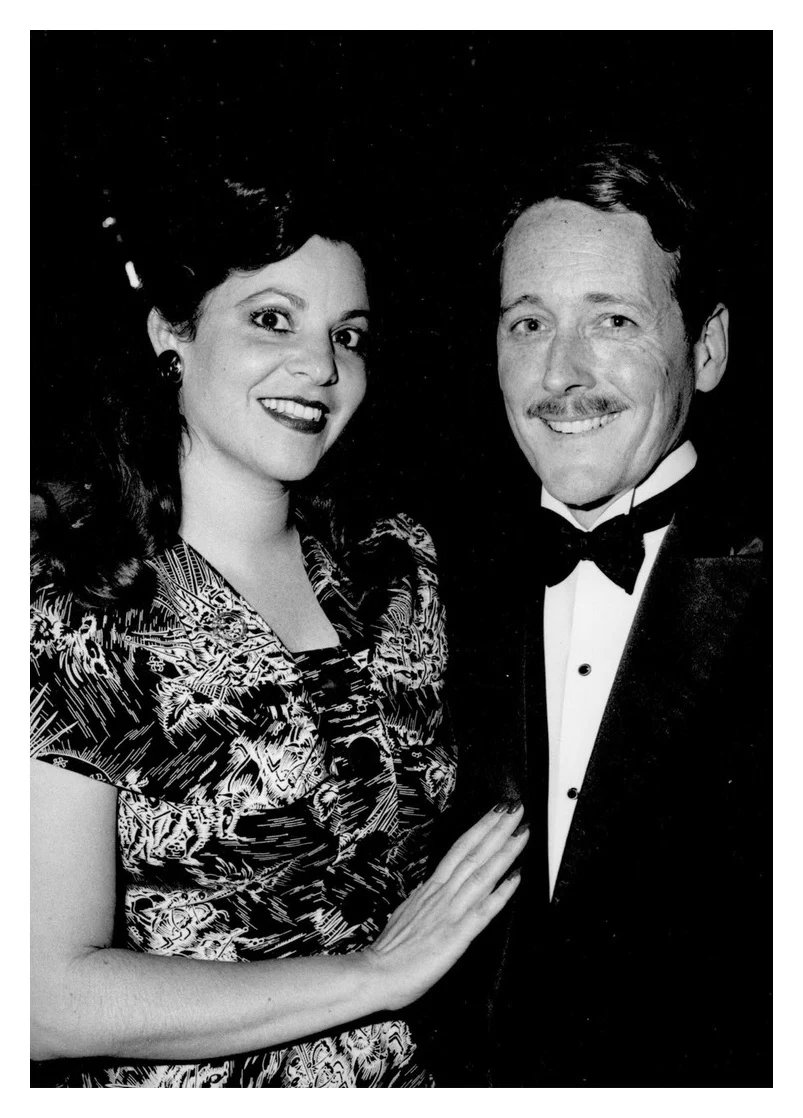
Peter with Laurie Gordon, creator of the Art Deco Preservation Ball
Pictured below is tap-dance instructor and Art Deco enthusiast Rusty Frank, who generously spent time with Peter teaching him to dance in a style reminiscent of classic Hollywood.

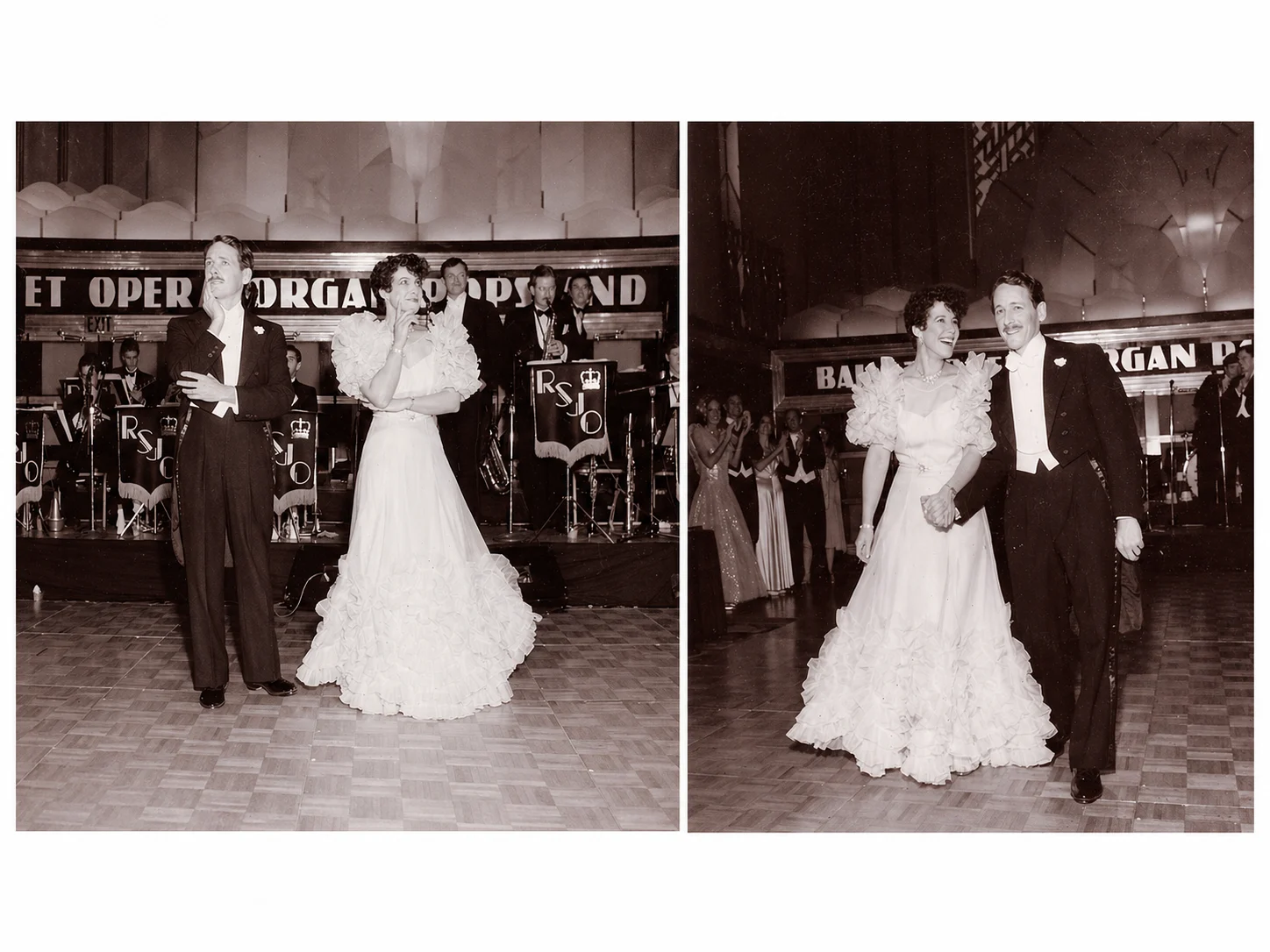
Rusty Frank, dancer and Peter Mintun Performing together at the 1986 Art Deco Preservation Ball
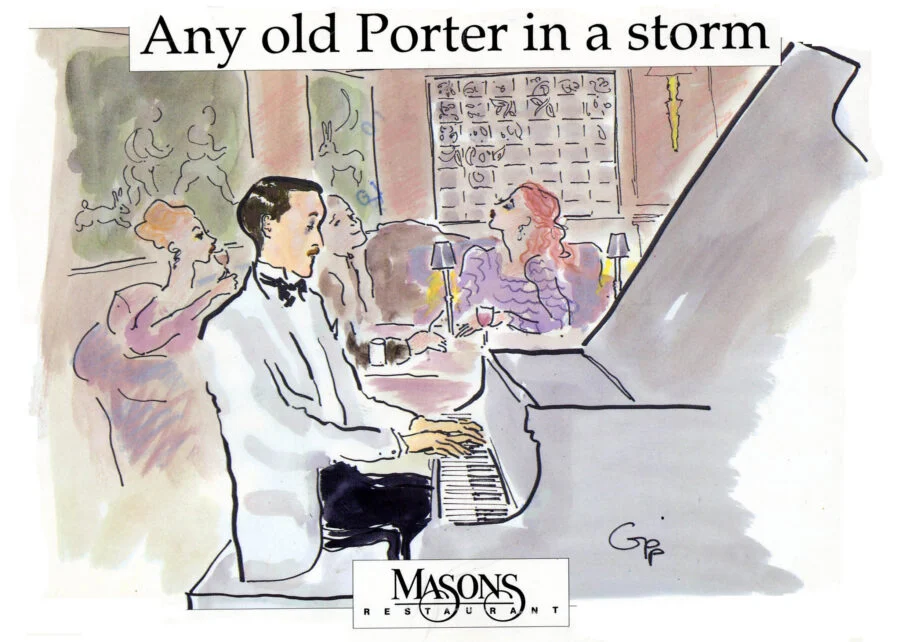
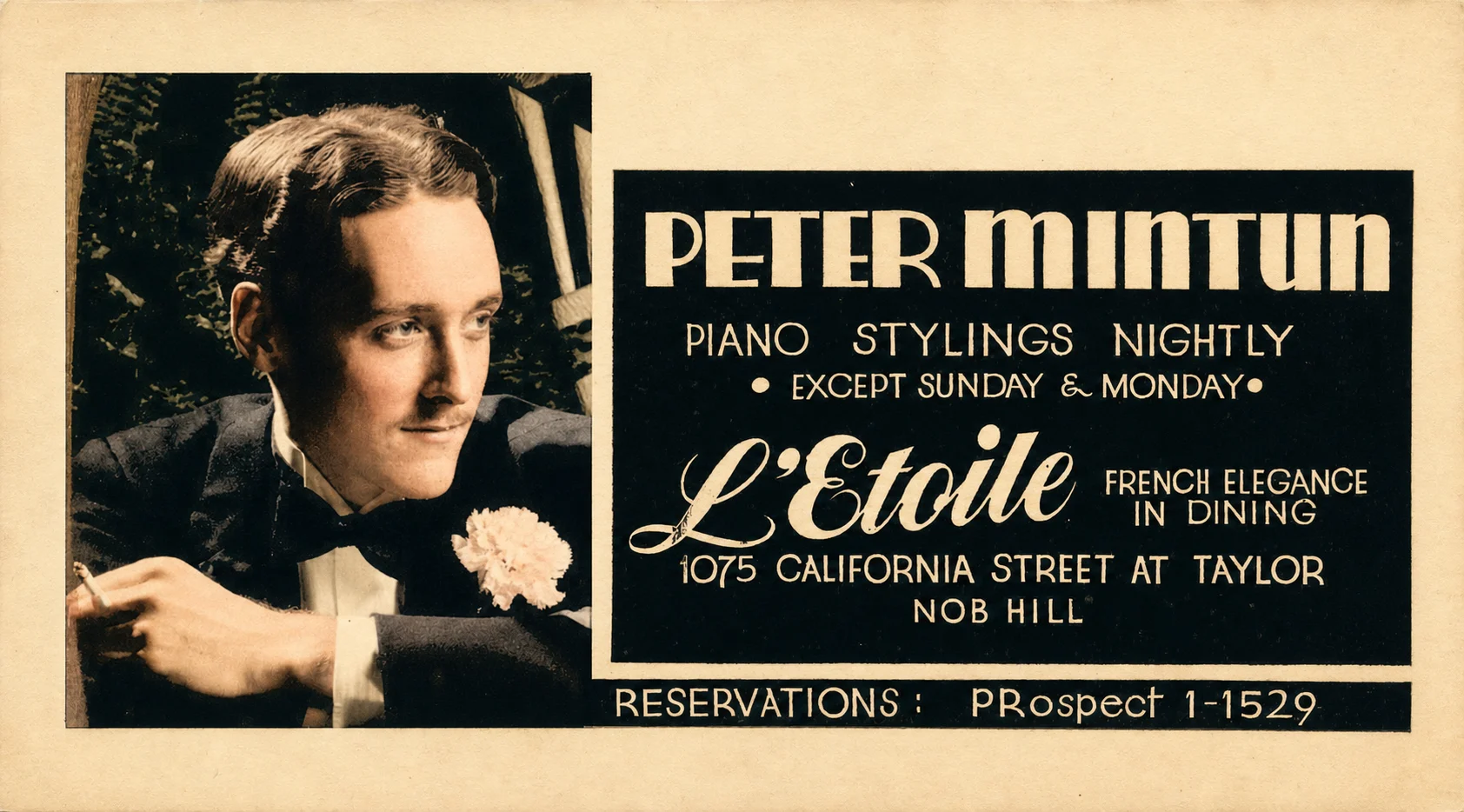
After his engagement at L’Étoile ended in 1989, Peter Mintun was quickly brought into the nearby Fairmont Hotel, where he played at Masons. It was a difficult moment for San Francisco. The earthquake soon affected business across the city, and Masons never developed the same magic or popularity as L’Étoile. Still, Peter’s audience followed him. Celebrities, San Francisco society figures, and devoted admirers continued to seek out the particular mood he created at the piano, a mood that seemed less like entertainment than a doorway back into an earlier and more elegant world.
Among those who heard him was Brendan Gill, the New Yorker writer and architecture critic, who recognized that Peter’s style would make sense in Manhattan. Gill told him that if he ever moved to New York, he could certainly play at the Carlyle Hotel. That suggestion proved prophetic. Peter began accepting New York engagements while still maintaining his San Francisco work, moving between Masons and the Madison Room in the Villard Houses hotel in Manhattan. It was there that the manager of the Carlyle heard him and hired him for Bemelmans Bar.
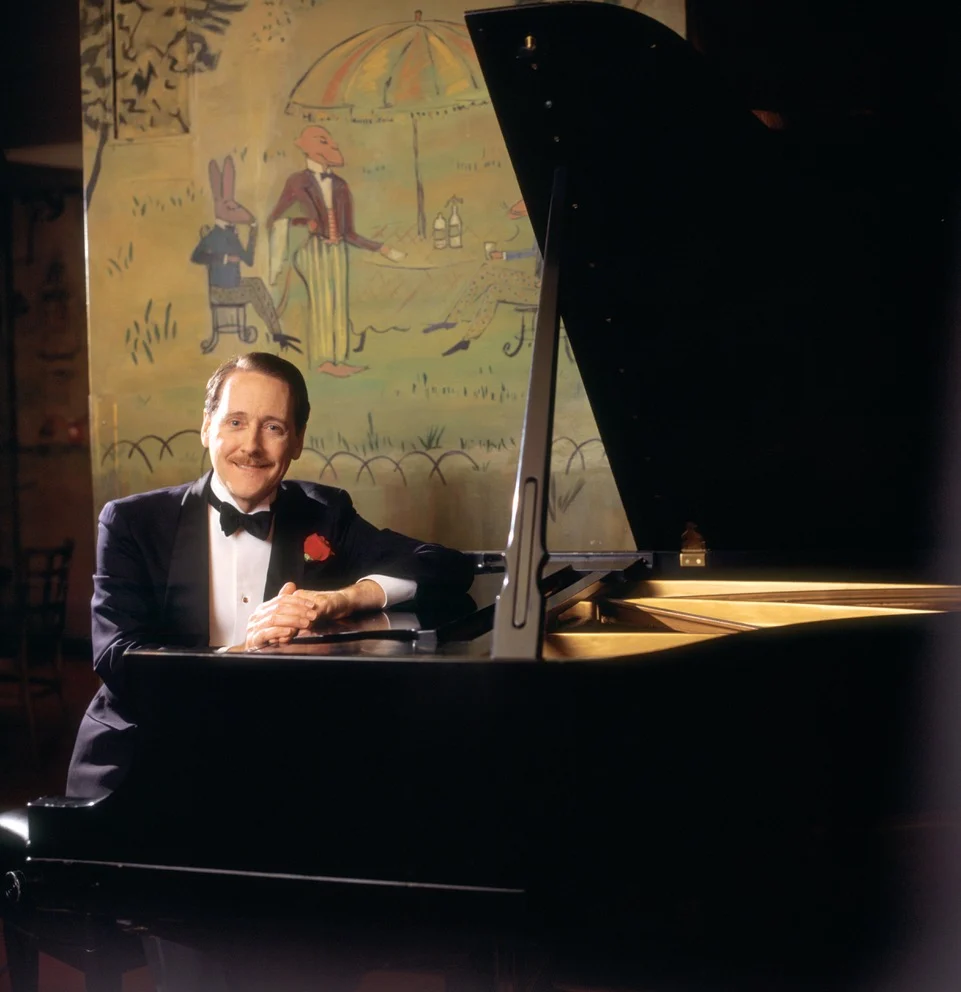
Peter Mintun at the Carlyle Hotel’s Bemelmans Bar. The bar’s murals are by Ludwig Bemelmans, who created the beloved children’s picture-book Madeline. (Photo by Kyle Ericksen)
Bemelmans was exactly the sort of room where Peter’s music belonged. With its Upper East Side elegance, intimate scale, and seven foot Steinway grand, the bar offered a setting in which the songs of the 1920s, 1930s, and 1940s felt completely at home. Peter alternated nights with the legendary Barbara Carroll, whose own career reached back into the 1940s. Under the same roof, Bobby Short was holding court at the Café Carlyle, calling himself a saloon pianist while entertaining one of New York’s most sophisticated audiences. Peter had entered a world where nightlife, wit and music still carried a sense of continuity.
By the end of the 1990s, Peter was ready to make New York his home and, as he put it, learn how to live in snow. He sold his San Francisco house and purchased an 1897 Manhattan brownstone that had retained much of its original interior. His remark that he felt it was his duty to buy the house, to keep it from being modernized, says a great deal about him. Preservation was not something he separated from performance. It was part of the same instinct. He and his partner at the time, Eric Bernhoft, moved there in 2001 with hundreds of boxes of collections, including records, sheet music and piano rolls along with memorabilia connected to the composer Dana Suesse.
When Peter was playing Bemelmans five nights a week, New York Magazine named it the city’s best piano bar. But as hotel ownership changed, that particular chapter came to an end, and Peter moved on to other historic settings, including The Greenbrier in West Virginia, a grand hotel designed with Dorothy Draper’s theatrical decorative vision. These rooms mattered because Peter understood that songs were not isolated things. They belonged to the supper clubs, ballrooms and the graphic imagination of the age.
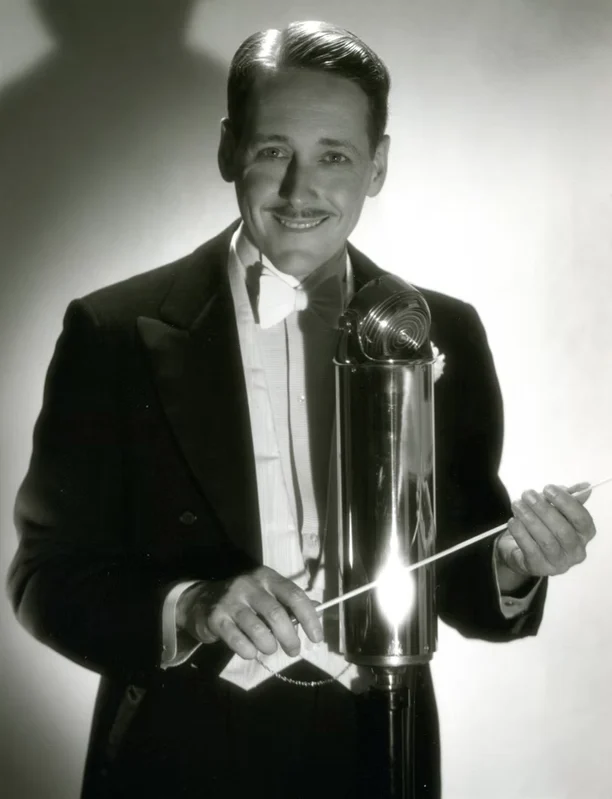
Photo by Mark Alan Vieira, 1987
New Year’s Eve 2013
During the 1990’a Peter continued to commute between San Francisco and New York, he had a standing annual New Year’s gig at the San Francisco Symphony’s Gala Concert and Dance at Davies Symphony Hall. Peter had led his orchestra at the Symphony’s New Year’s Eve Gala since 1994, turning the stage of Davies Hall into a sophisticated dance floor where guests in cocktail attire and masquerade masks could step directly into the music of another era. The evening began with the swinging lounge sounds of The Martini Brothers in the main lobby, followed by a gala concert with conductor Michael Francis. After the concert, guests moved into a full building celebration with prosecco, desserts, and dancing. On the stage of Davies Symphony Hall, the Peter Mintun Orchestra created its own world, evoking the golden age of American popular music. The Jesters vocal trio performed alongside the Orchestra where elegance and melody, carried the night toward midnight. At the edge of a new year, with masks, music, and celebration all around, Peter’s orchestra offered a living connection to the sophistication and spirit of the 1930s.
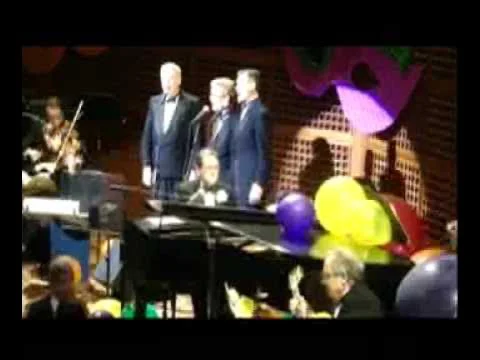
The Jesters vocal group performing at the San Francisco New Year’s Gals with the Peter Mintun Orchestra 2013
Peter Mintun’s performance career reflects a lifetime devoted to the Great American songbooks and the social world that surrounded it. His music has always carried more than melody, it carries a deep understanding of how songs and the intimacy of the piano come together.
That understanding leads directly to one of the most visually compelling areas of Peter’s collection, his remarkable Art Deco sheet music. For him, printed music was never merely a place to preserve songs, it was a visual record of the culture that produced them. In these works, the song becomes something the reader can see before a single note is played, creating a bridge between Peter’s piano, the Great American Songbook, and the larger Art Deco world he has spent a lifetime preserving.
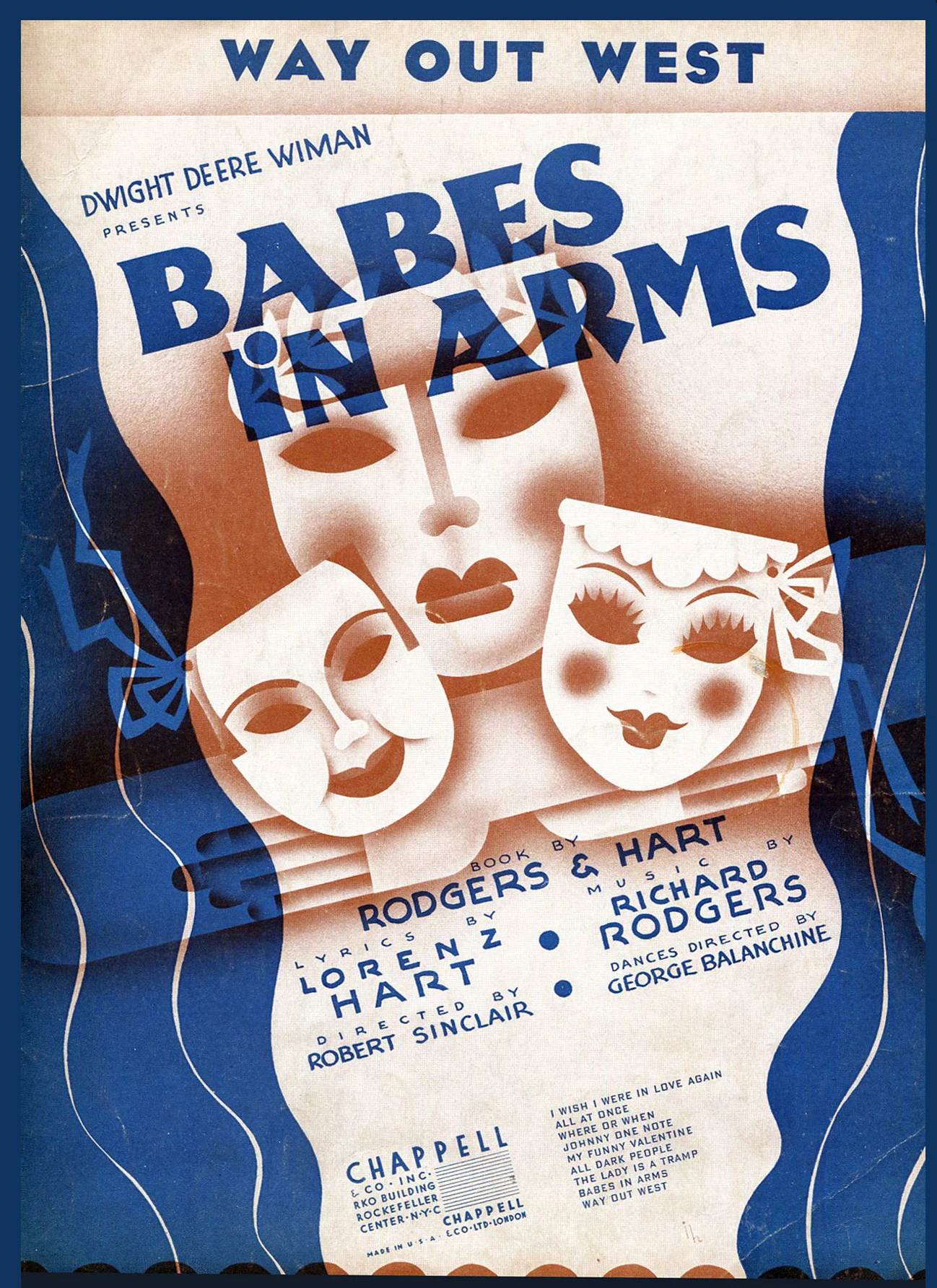
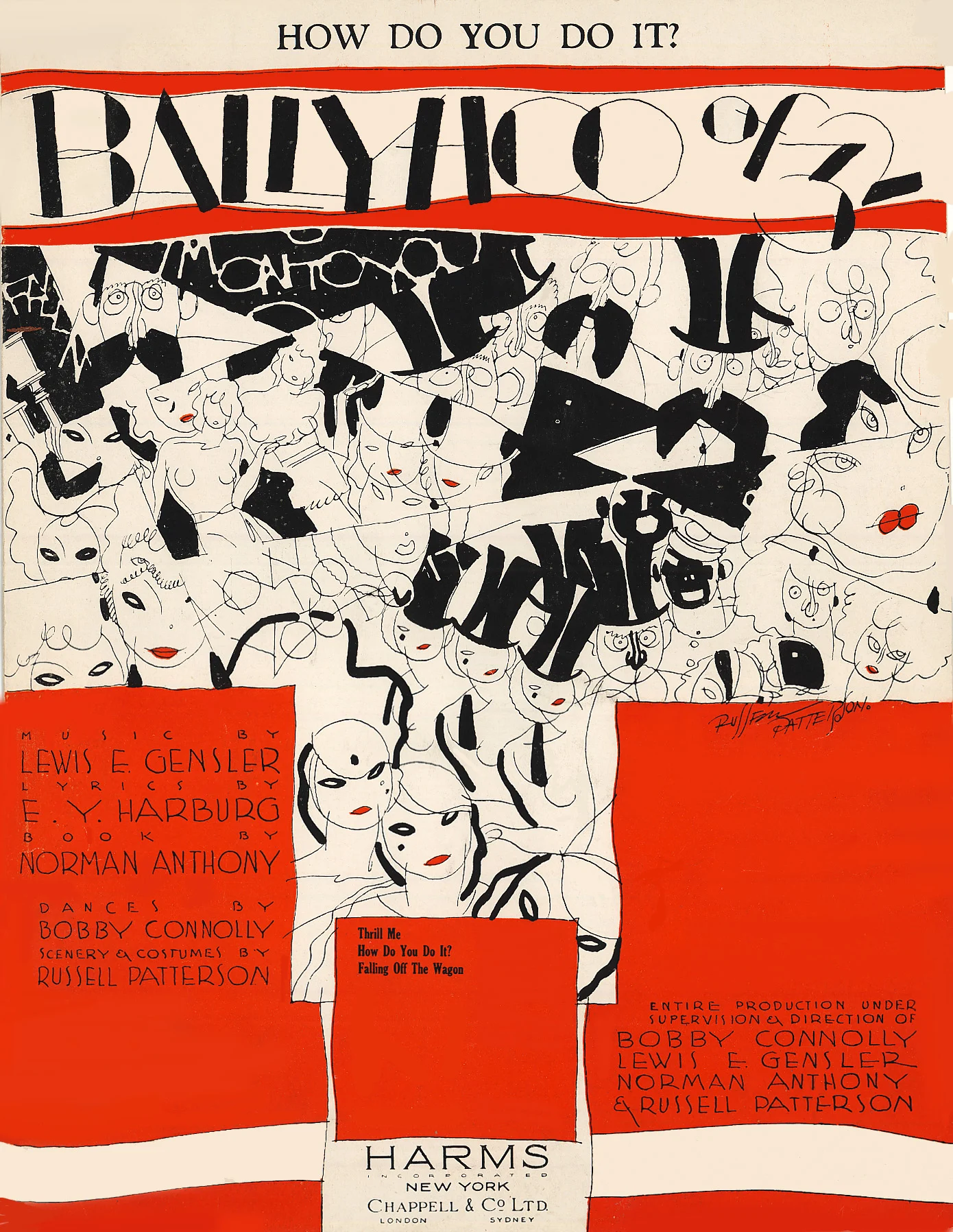
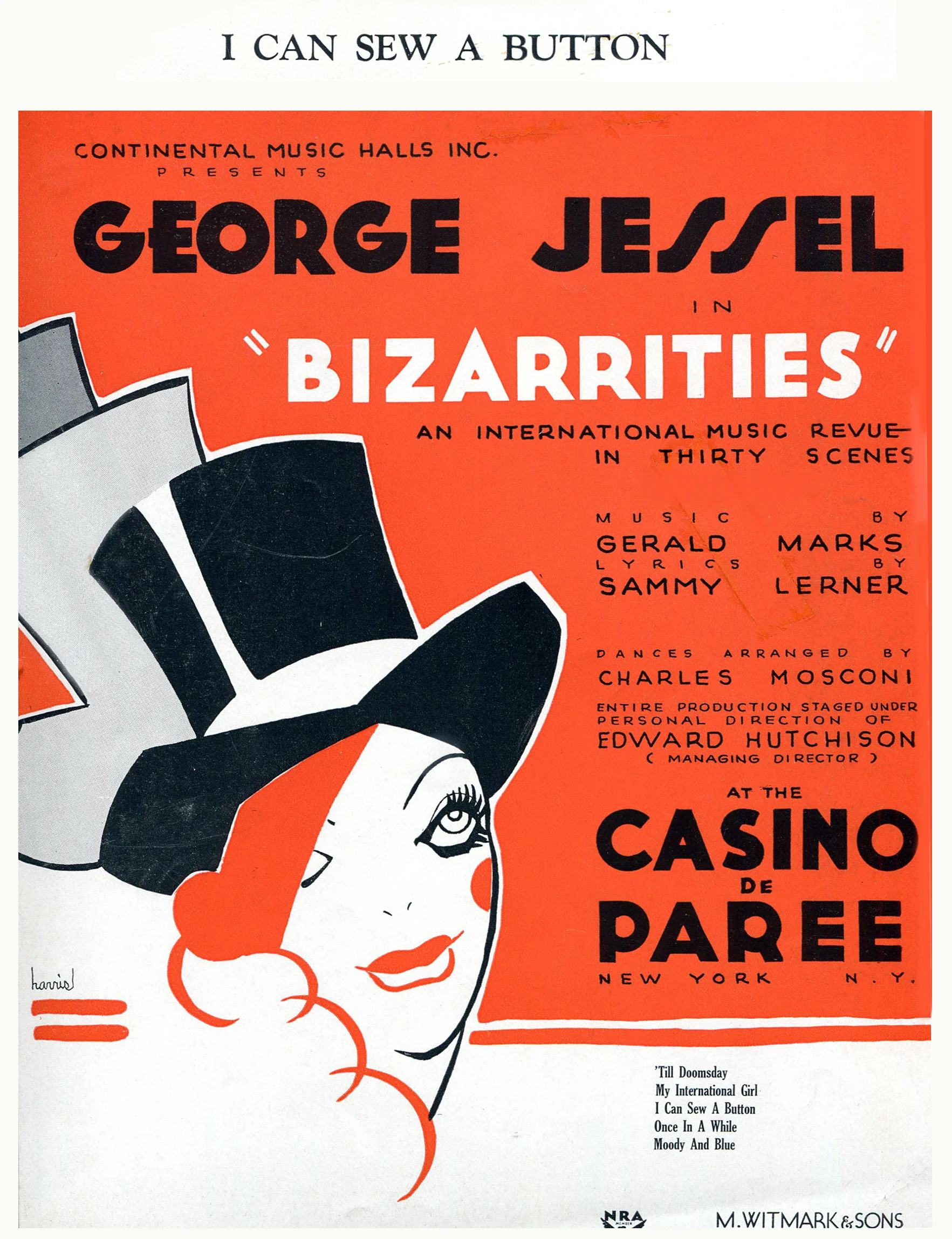
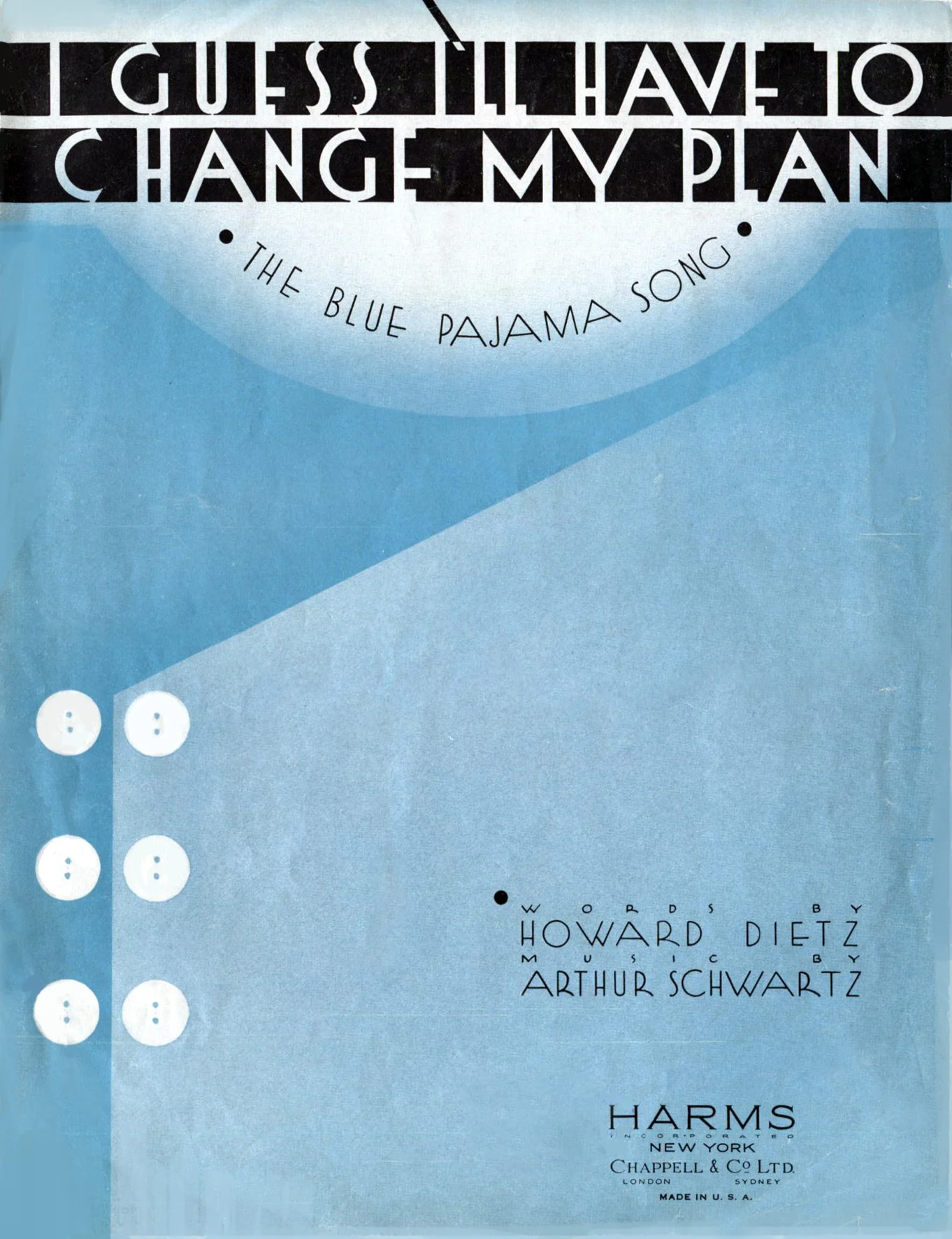
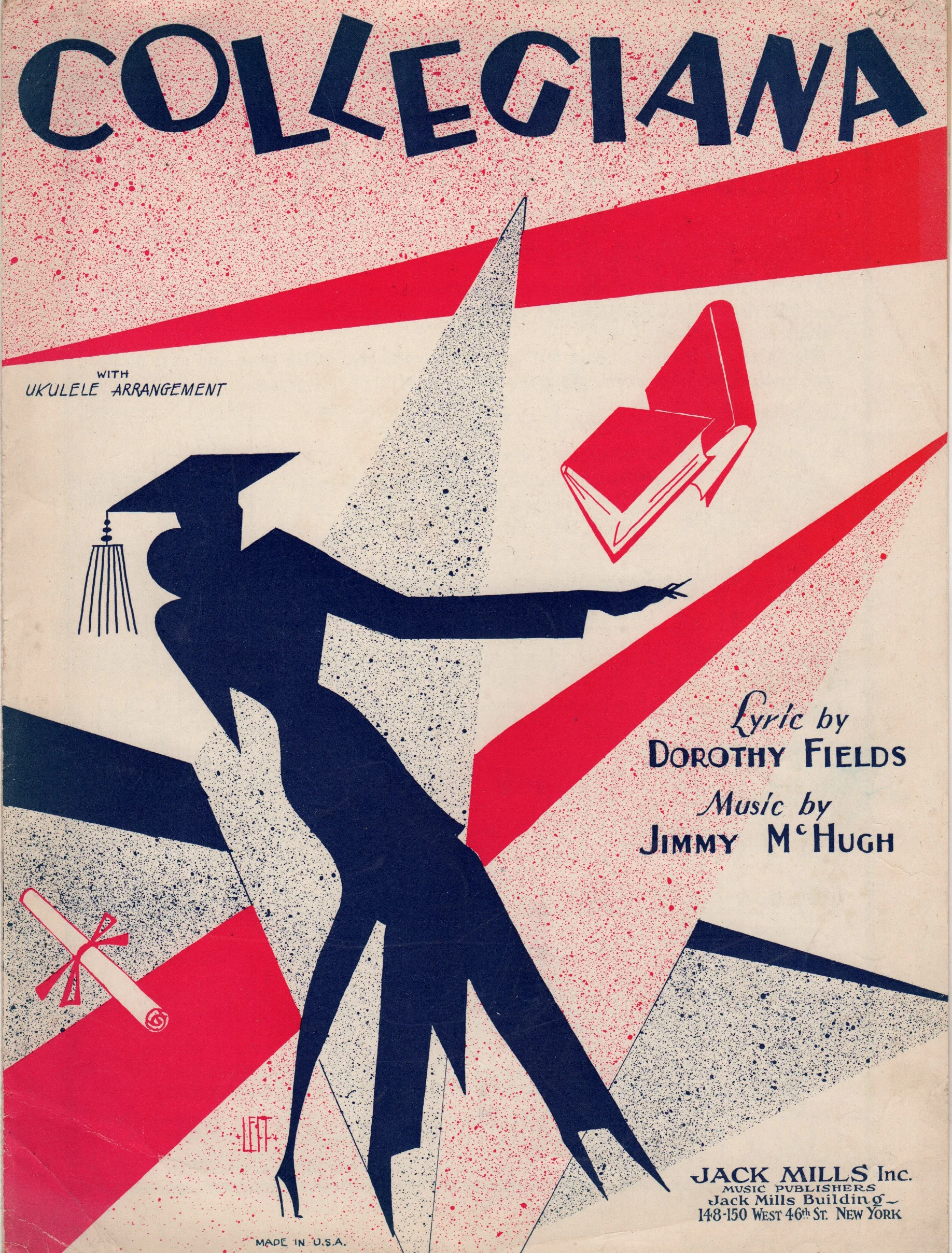
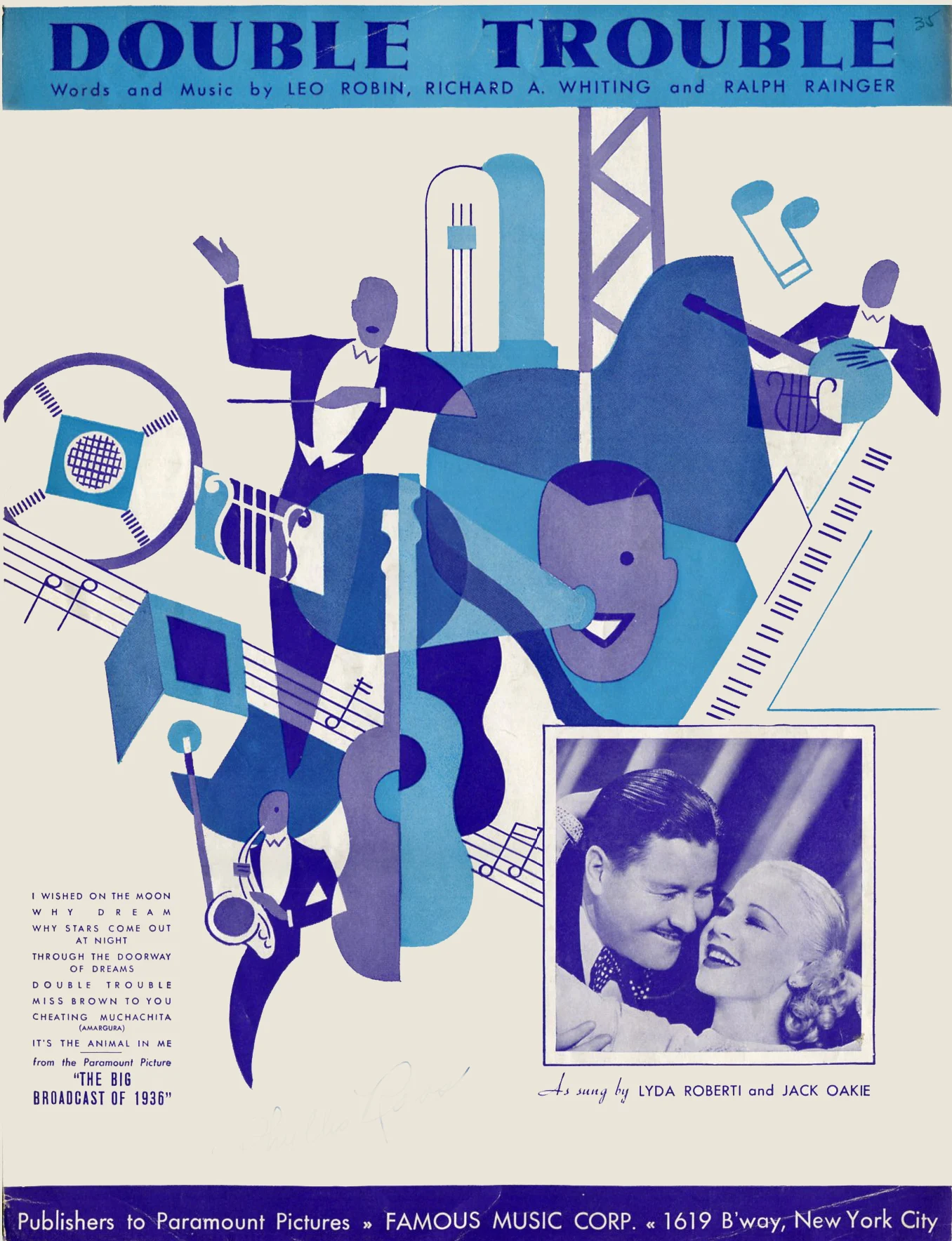
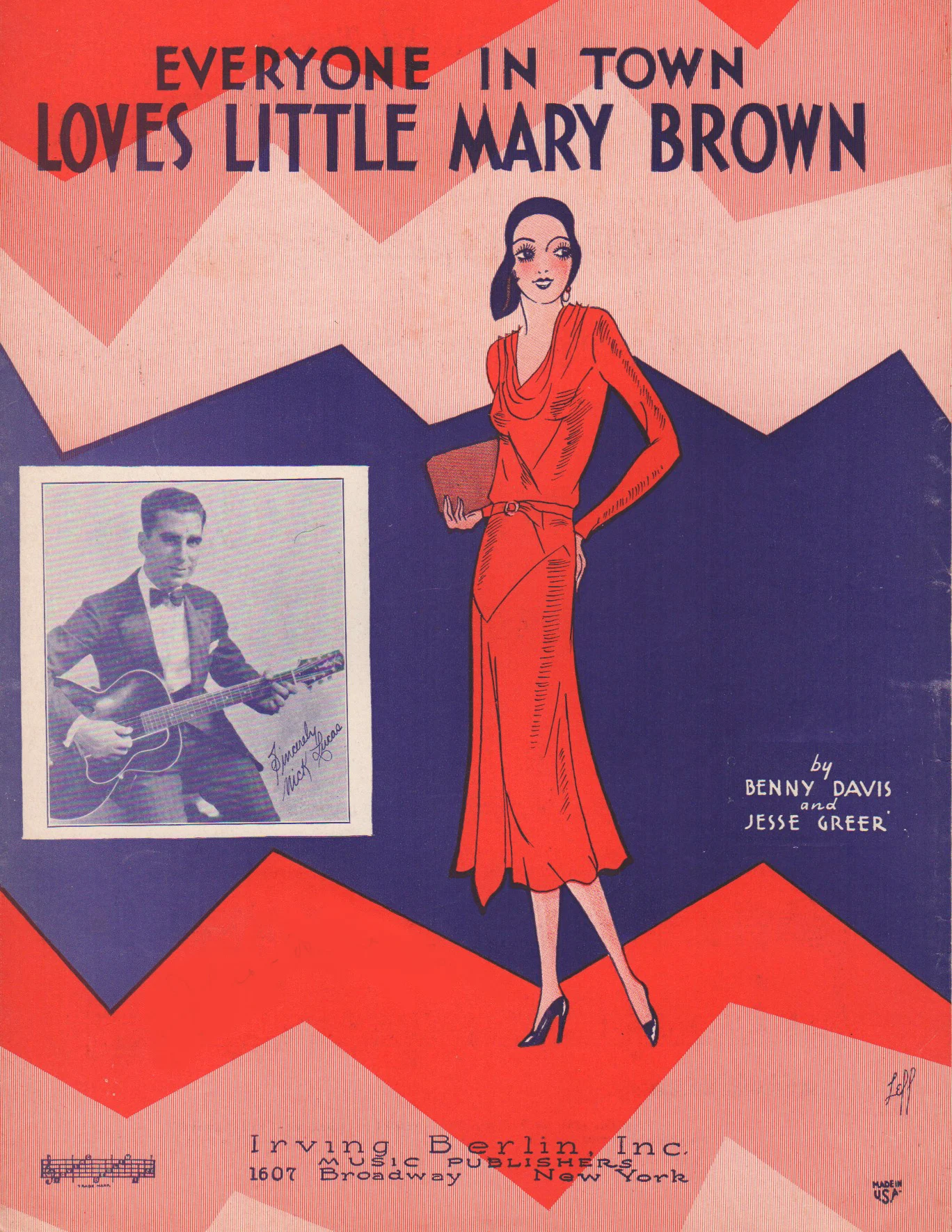

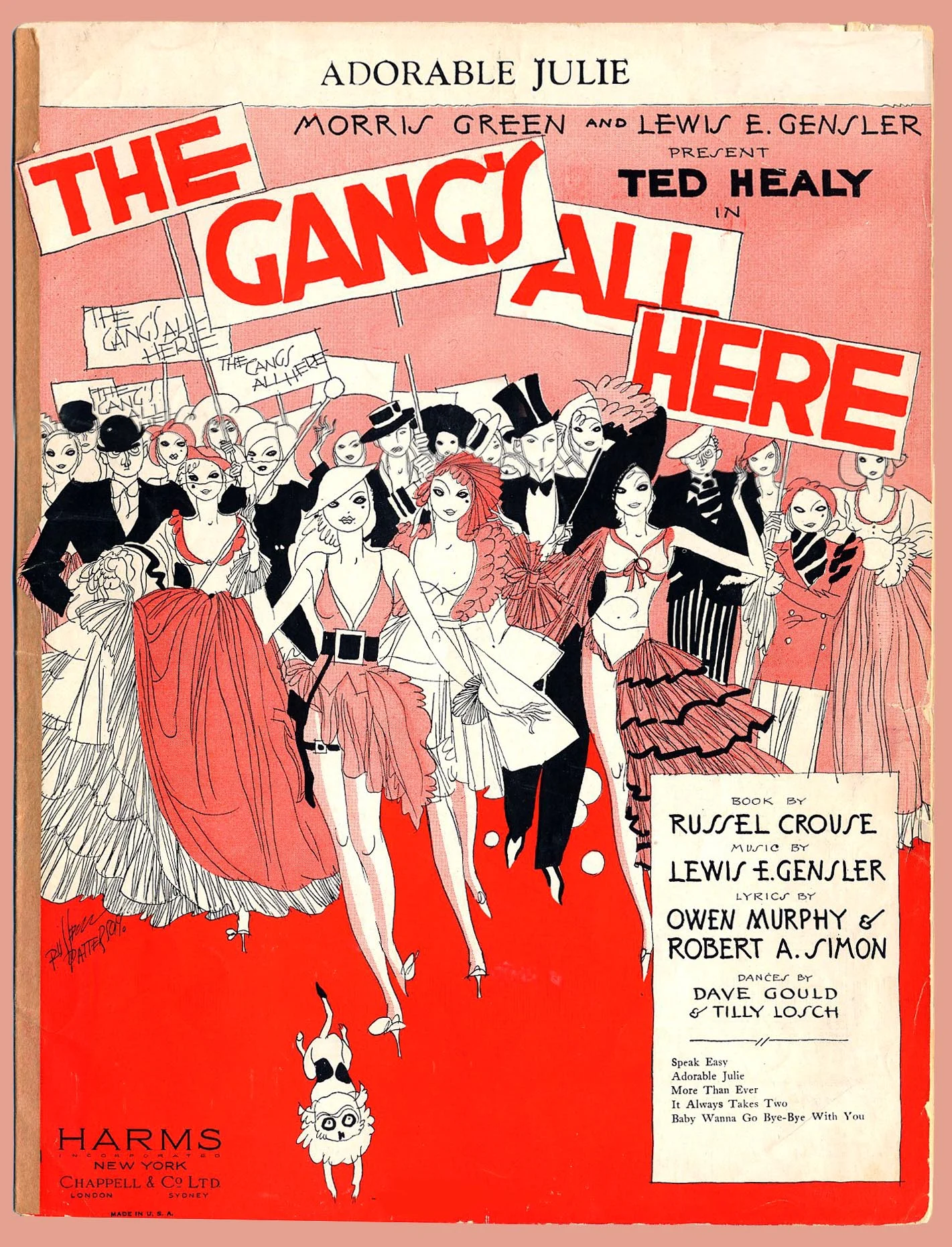
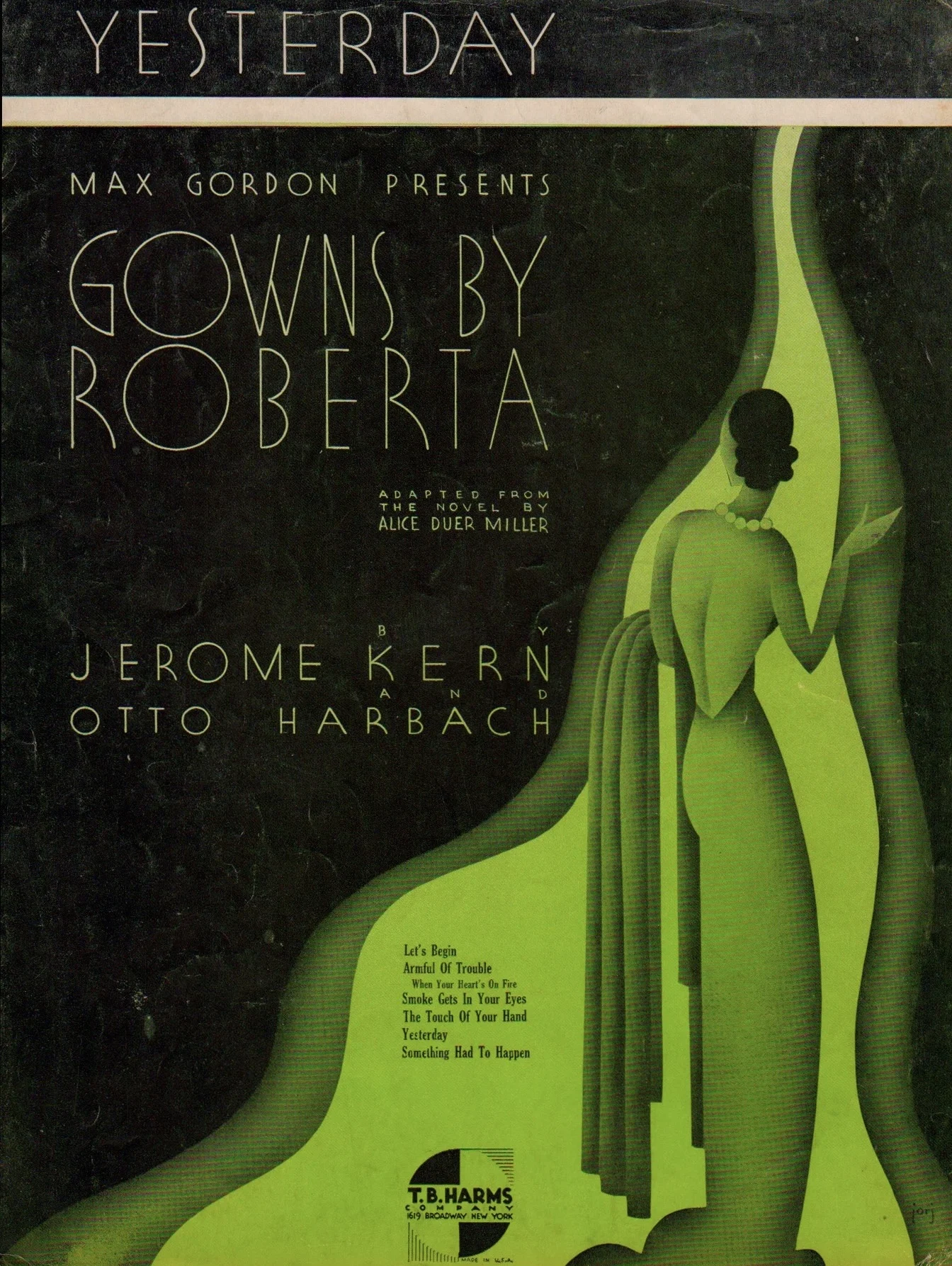
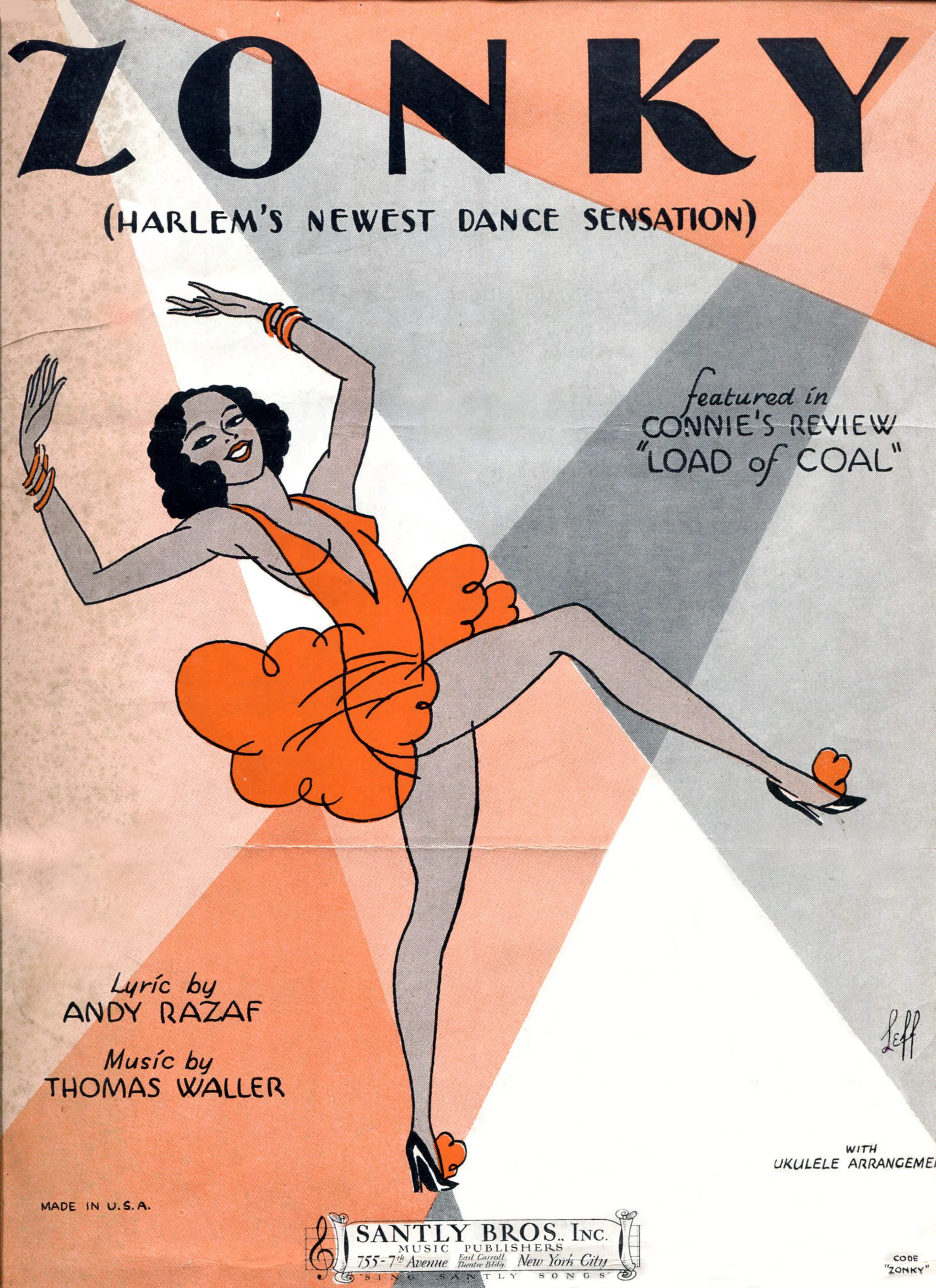
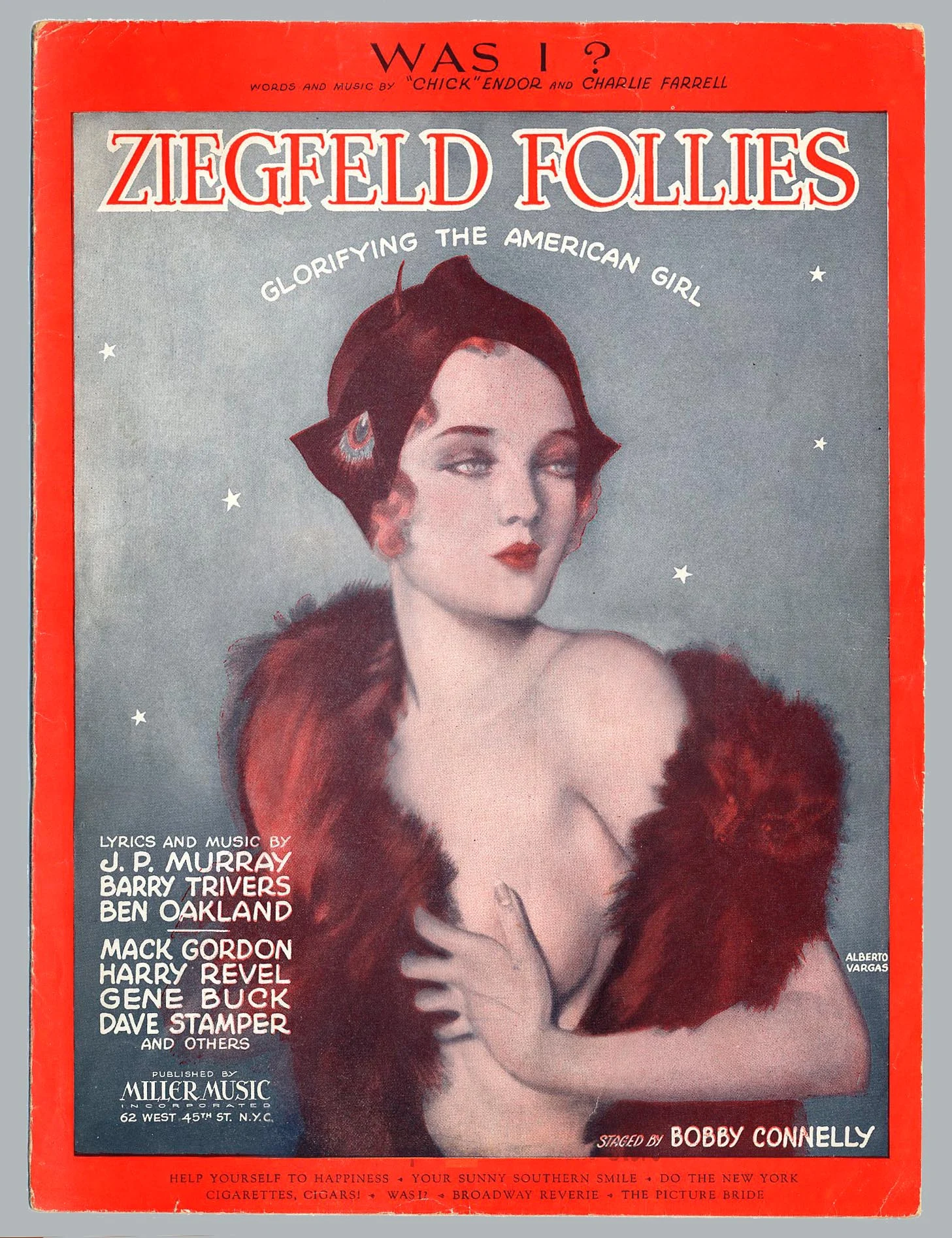
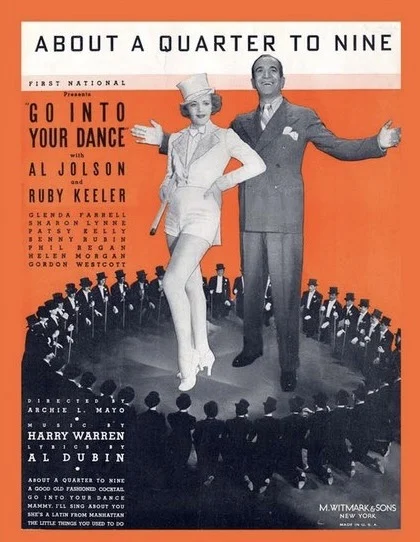
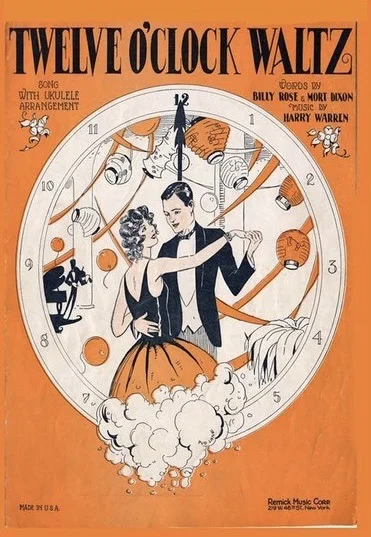
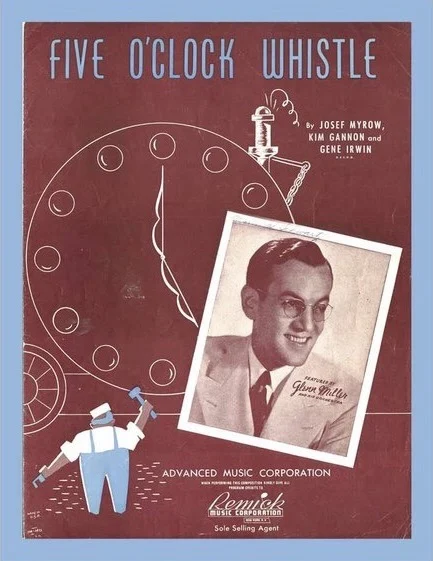
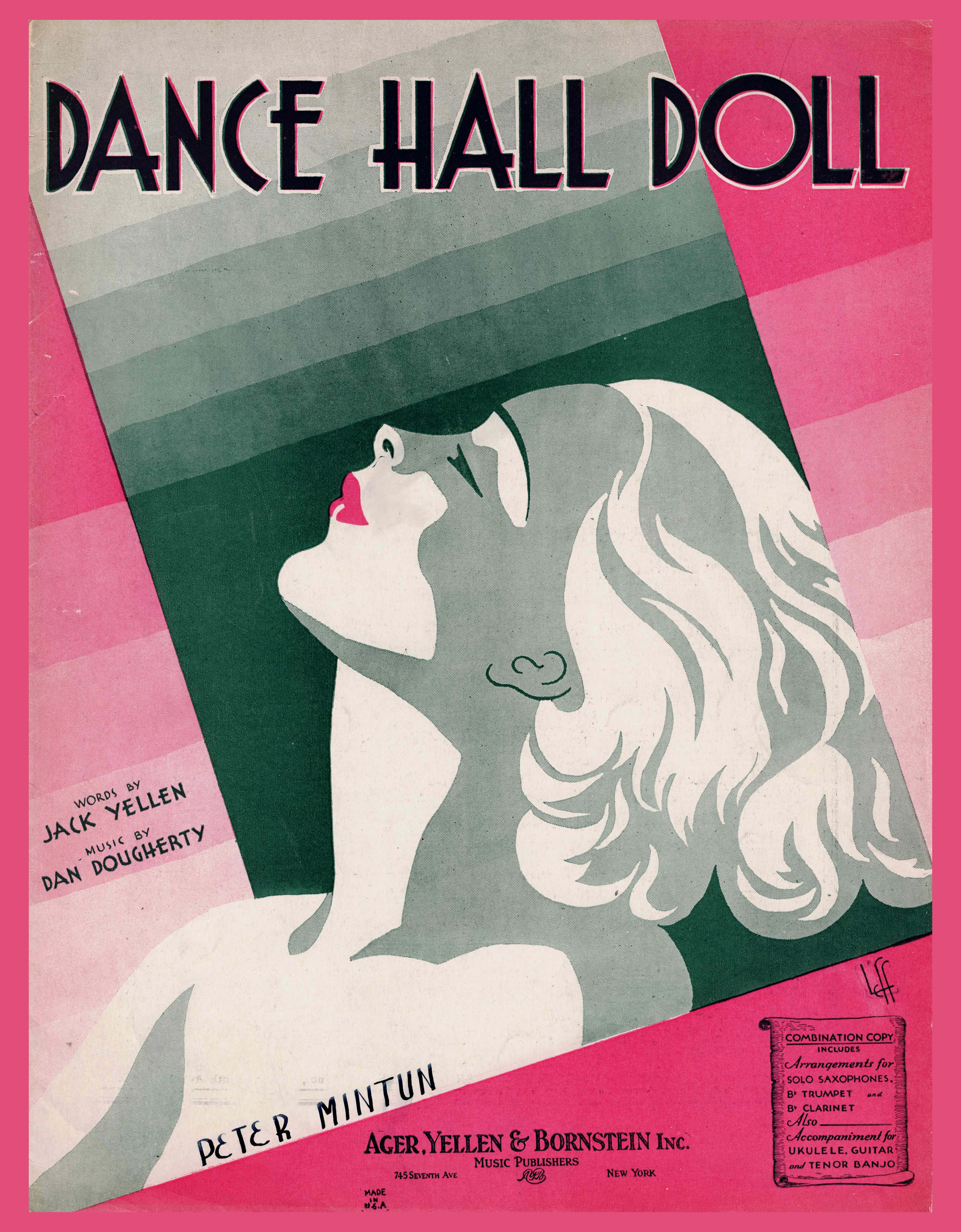
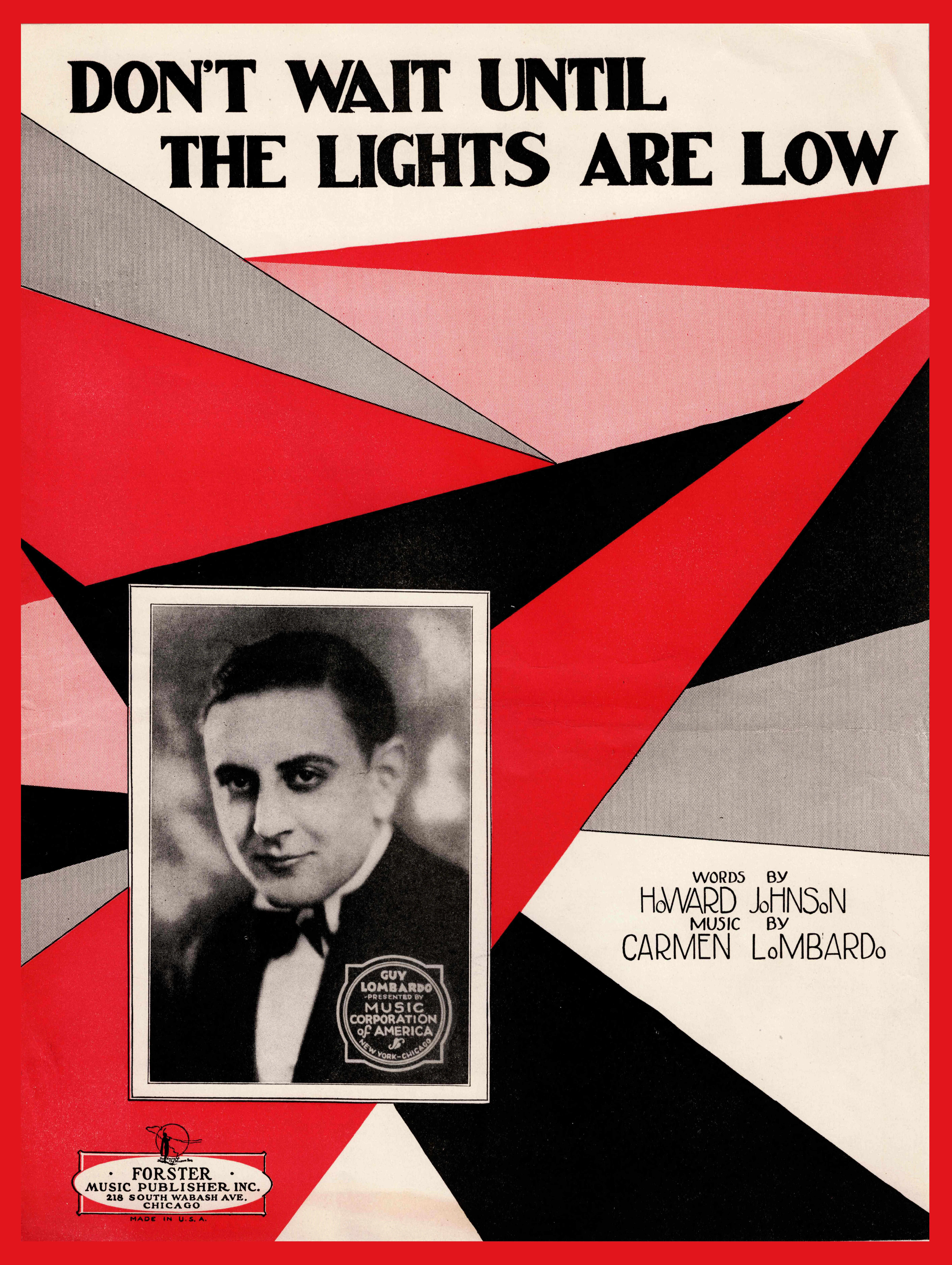
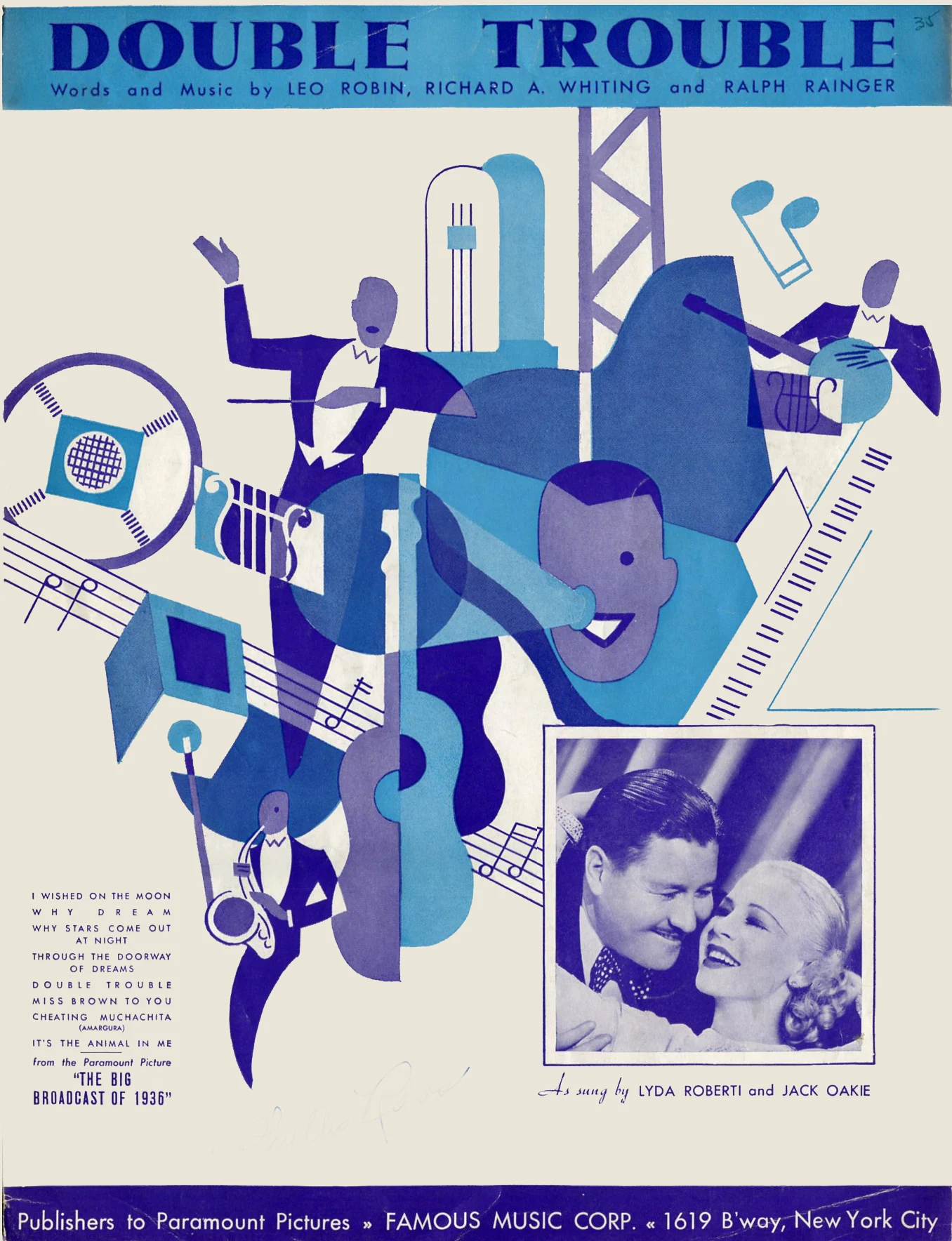
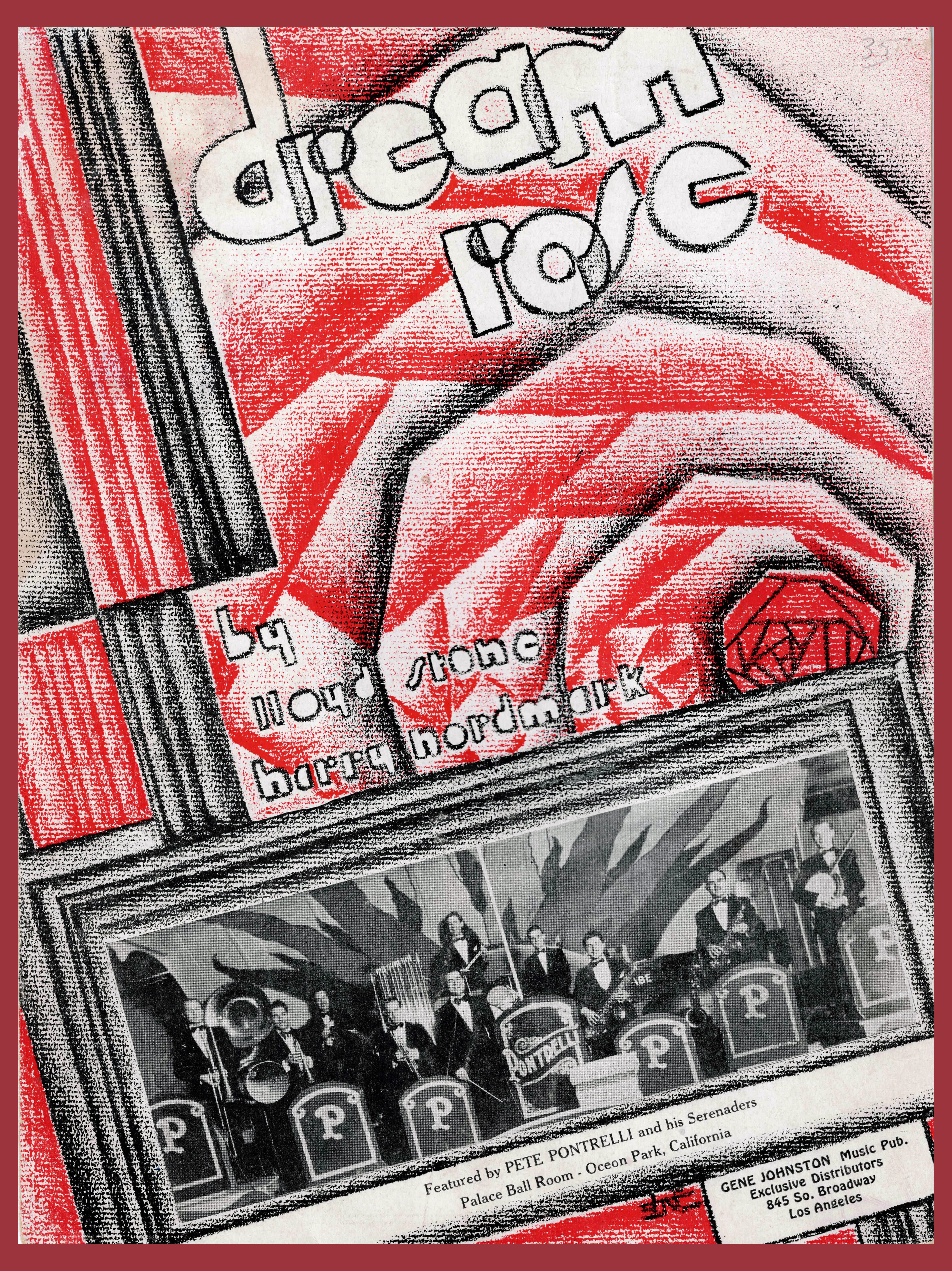
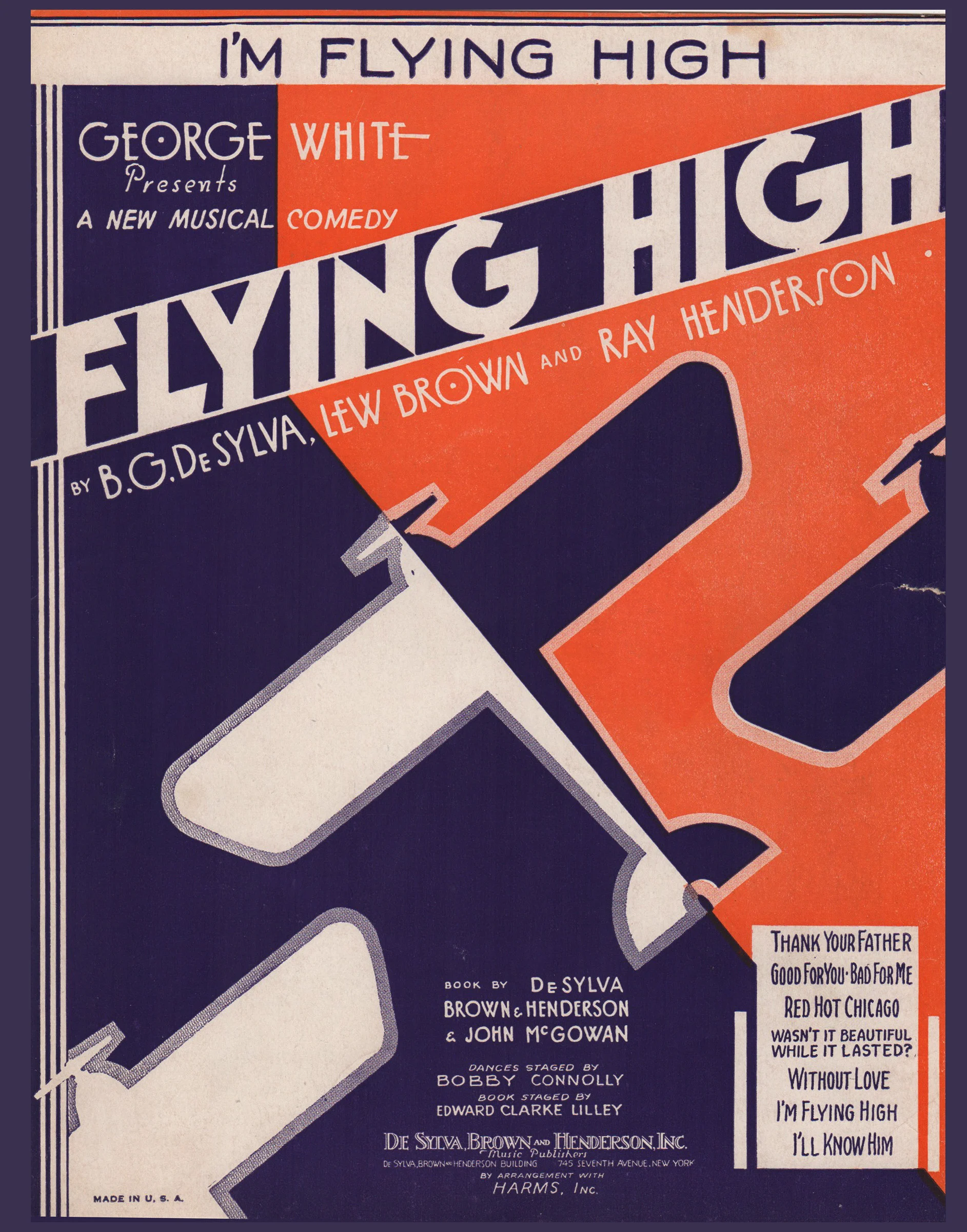
Sheet music was one of the great popular art forms of the early twentieth century, especially during the Jazz Age and the rise of the movie musical. Long before a song could be streamed or instantly replayed, it often entered the home through a beautifully printed cover, purchased at a music shop. Played on the family piano, hotels, clubs, and theaters, these covers sold more than music. Movies, Broadway, Tin Pan Alley, and dance bands all fed into this visual and musical world, creating a common language that brought people together through melody and design.

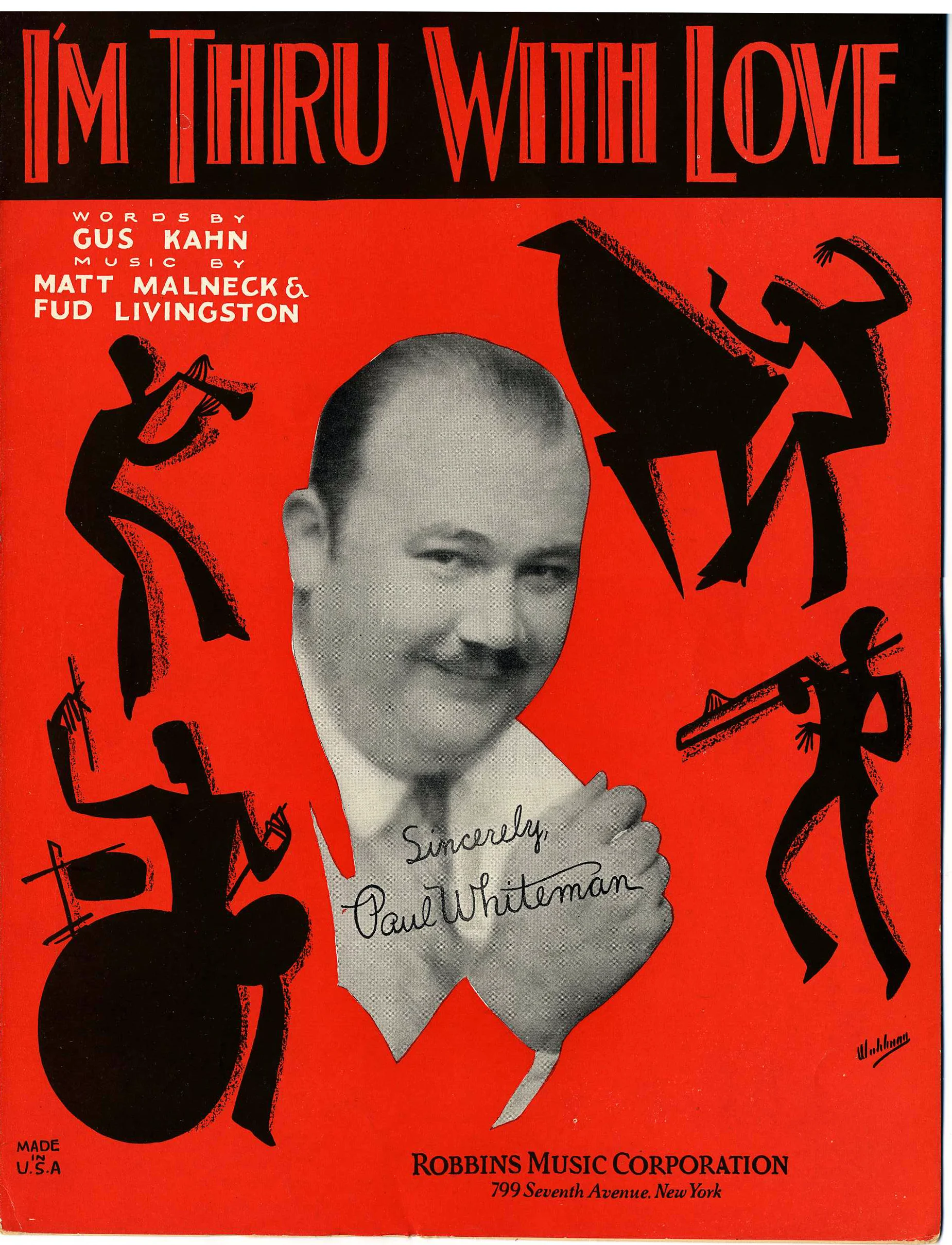

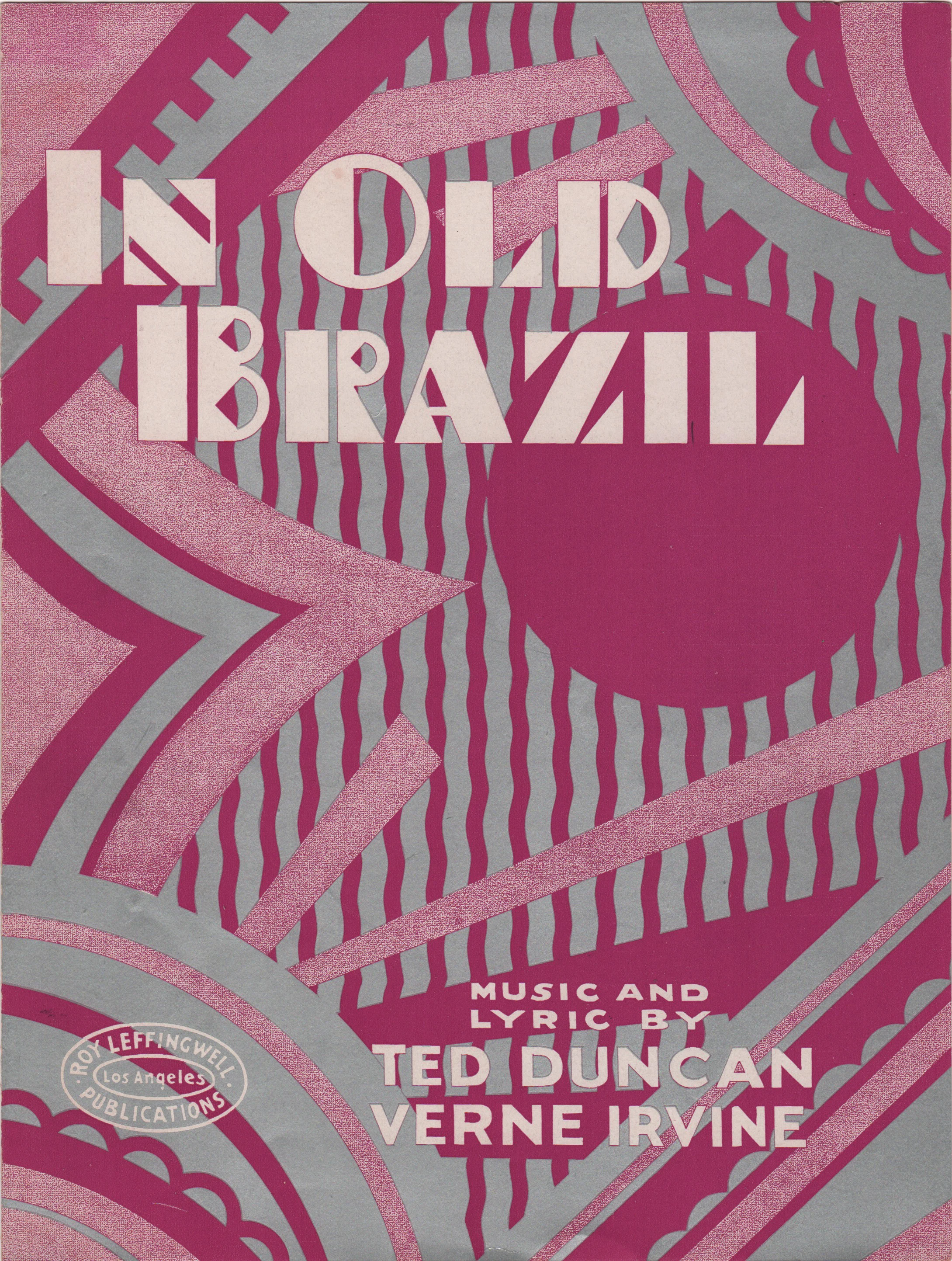
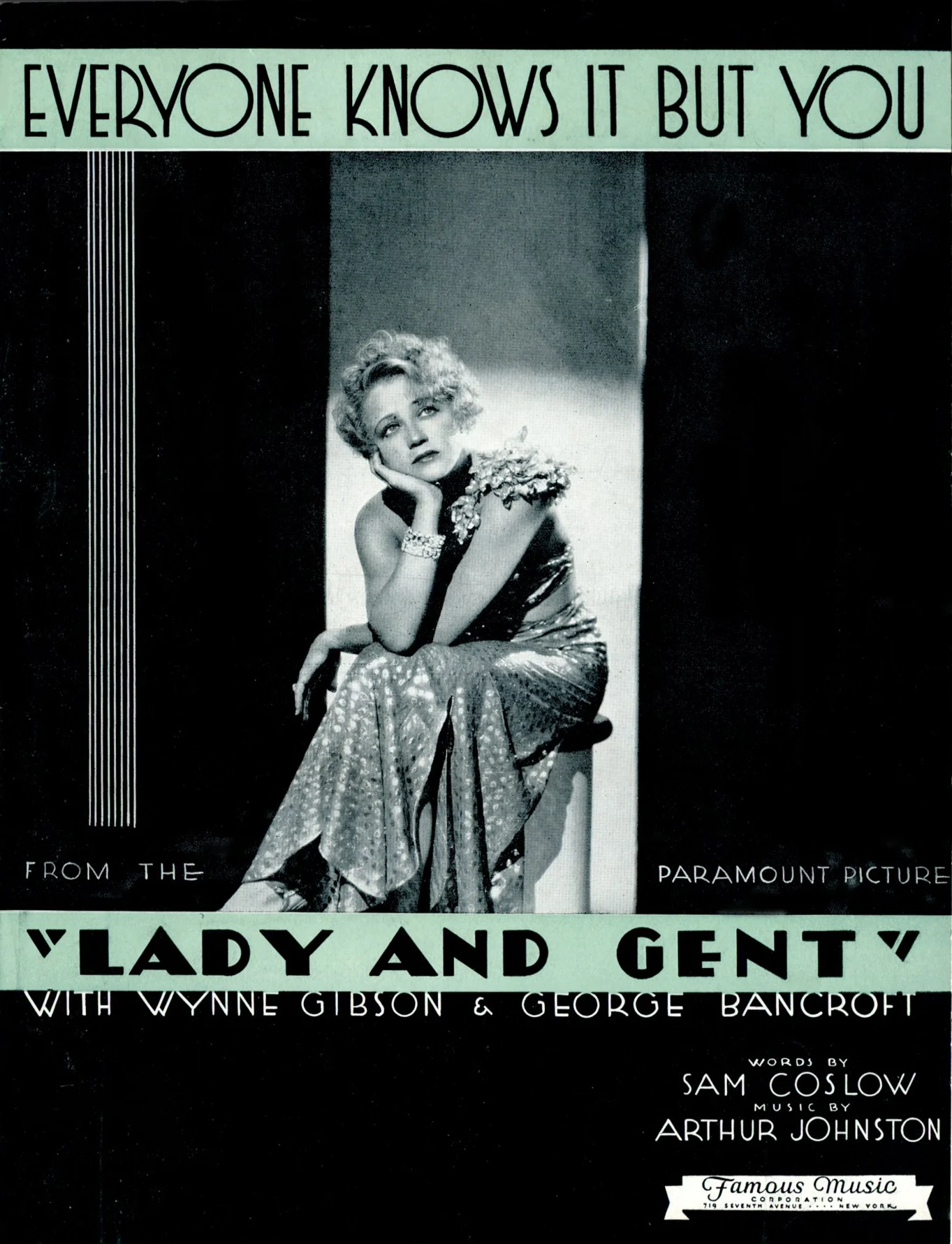
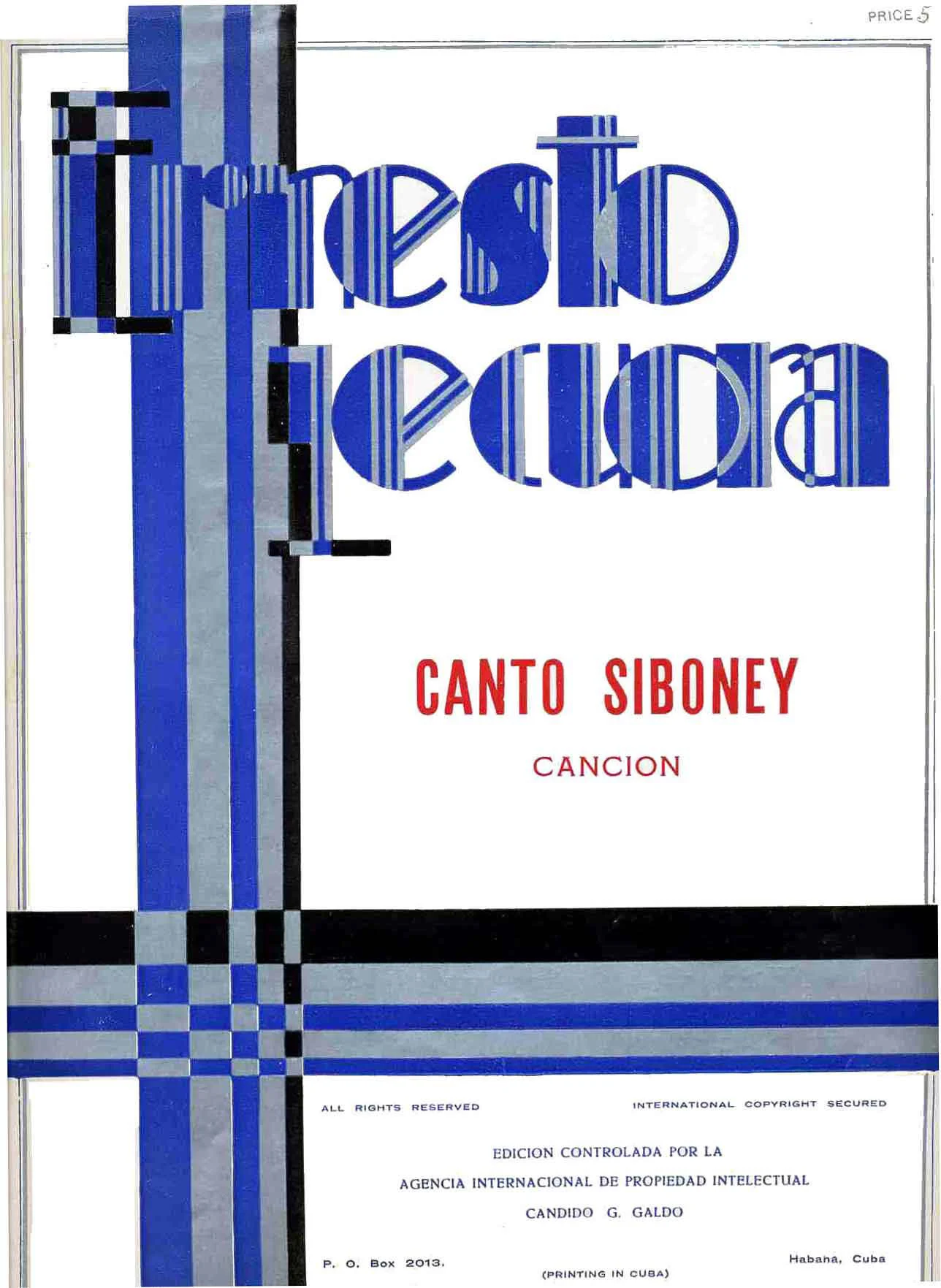

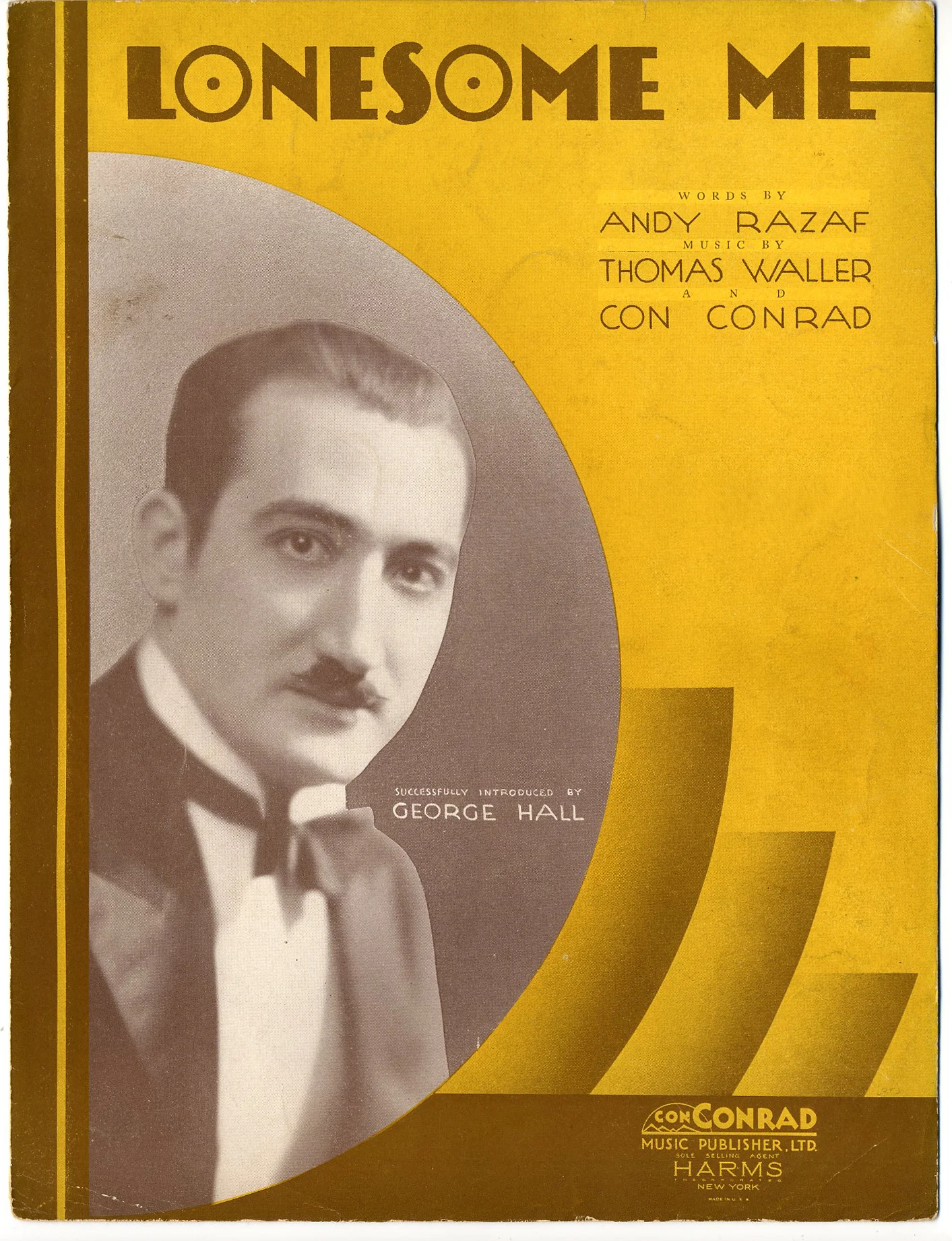

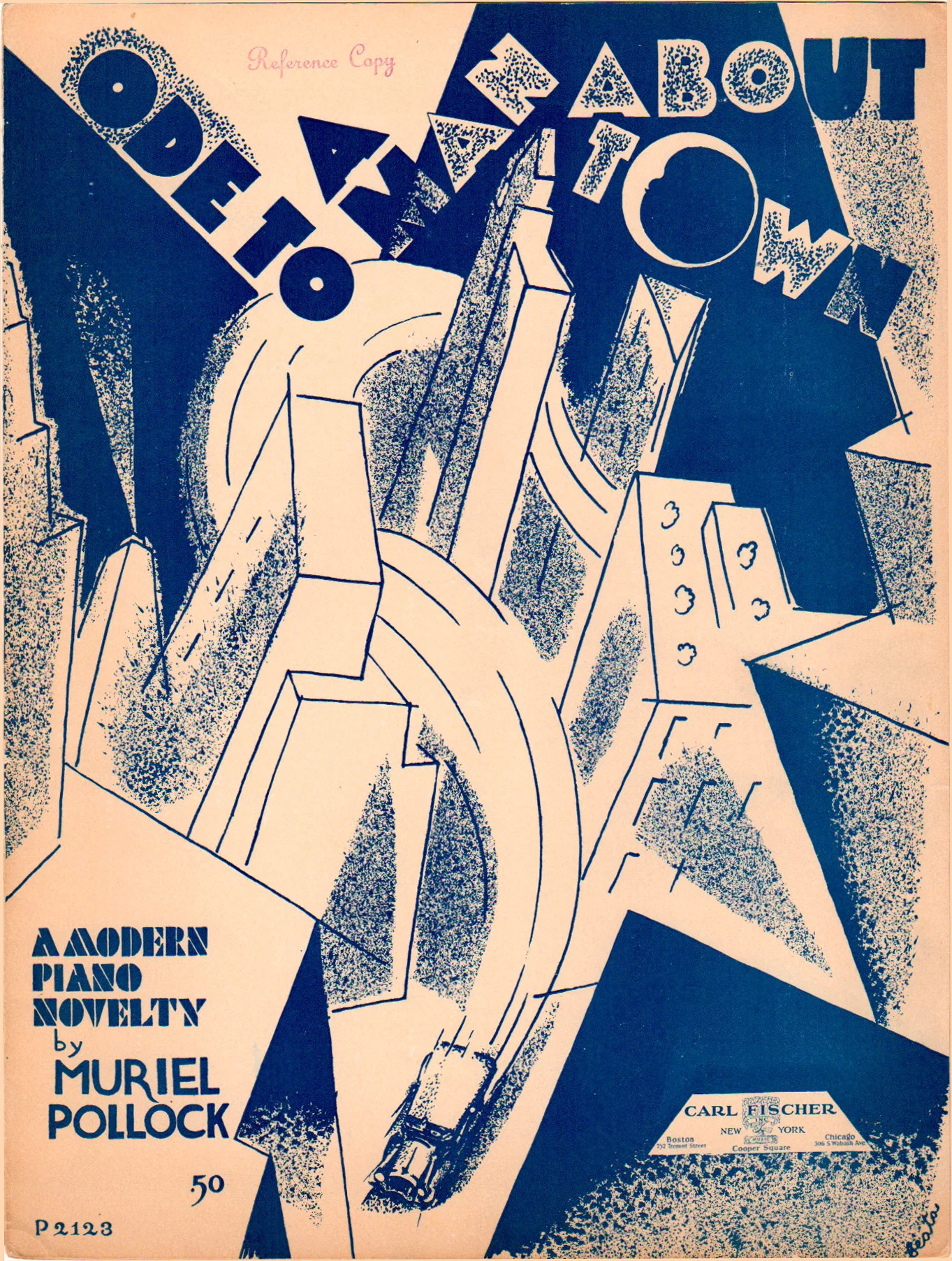
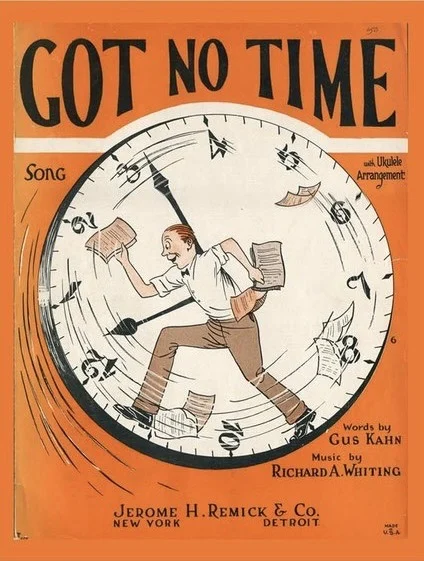


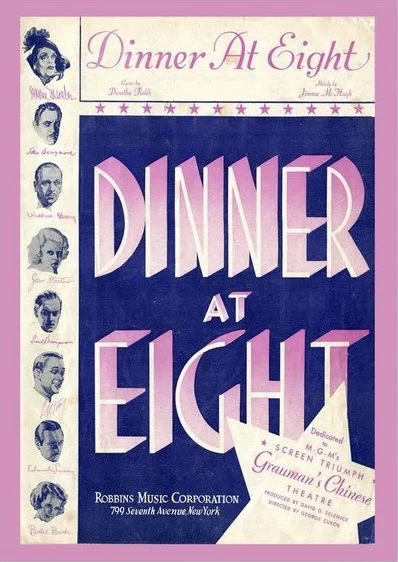
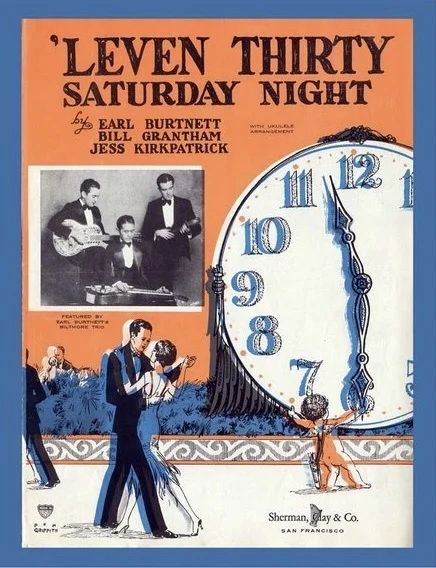
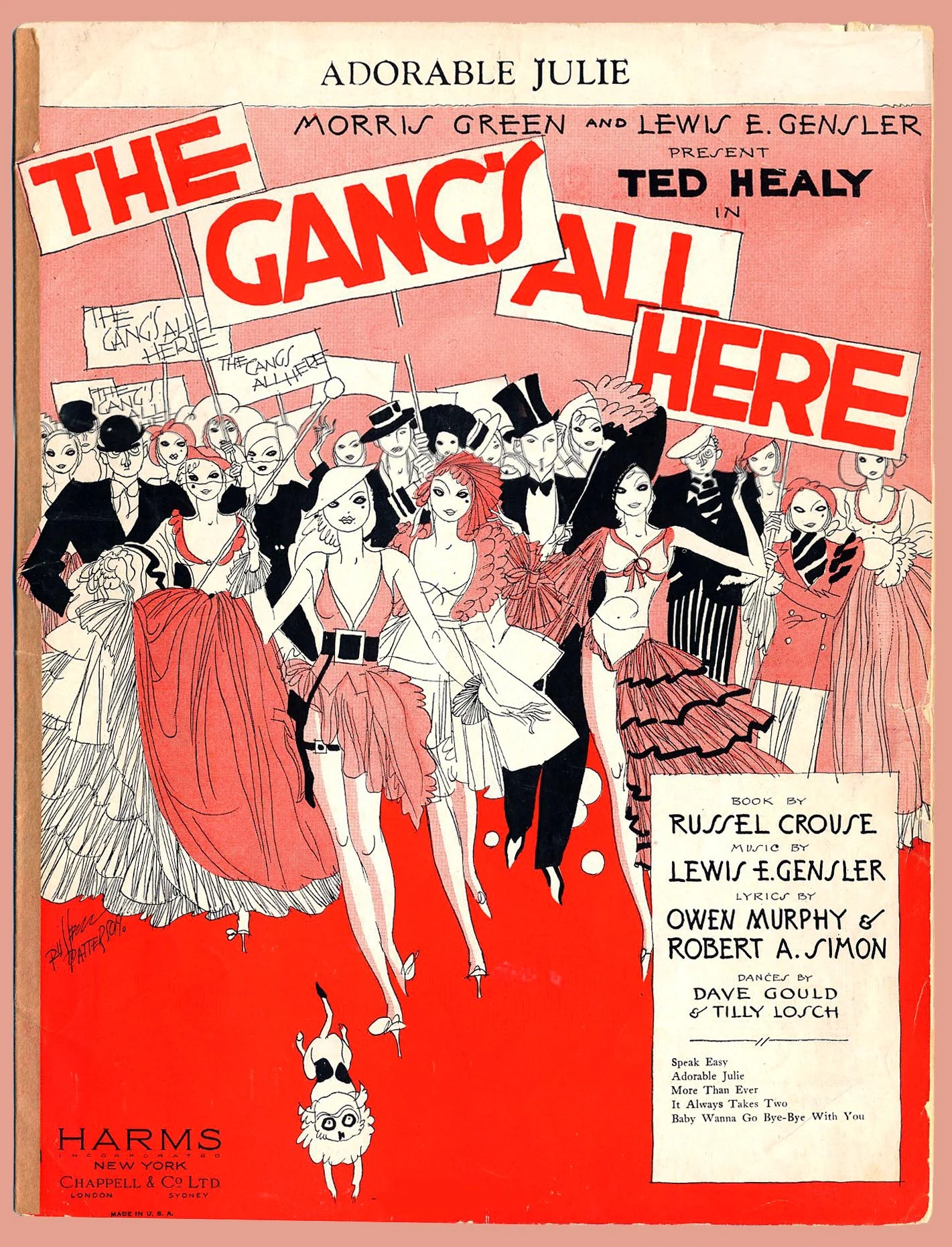
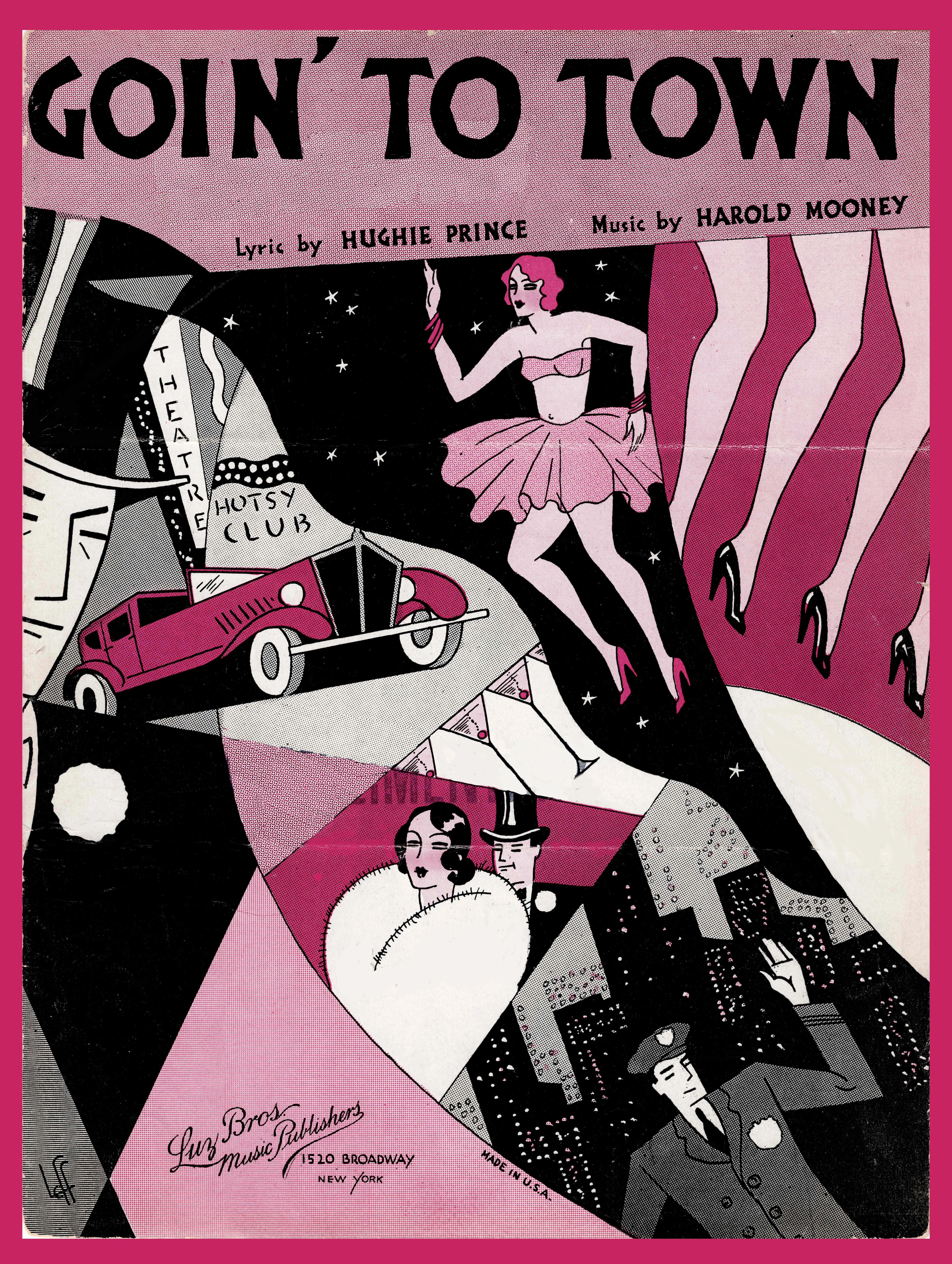


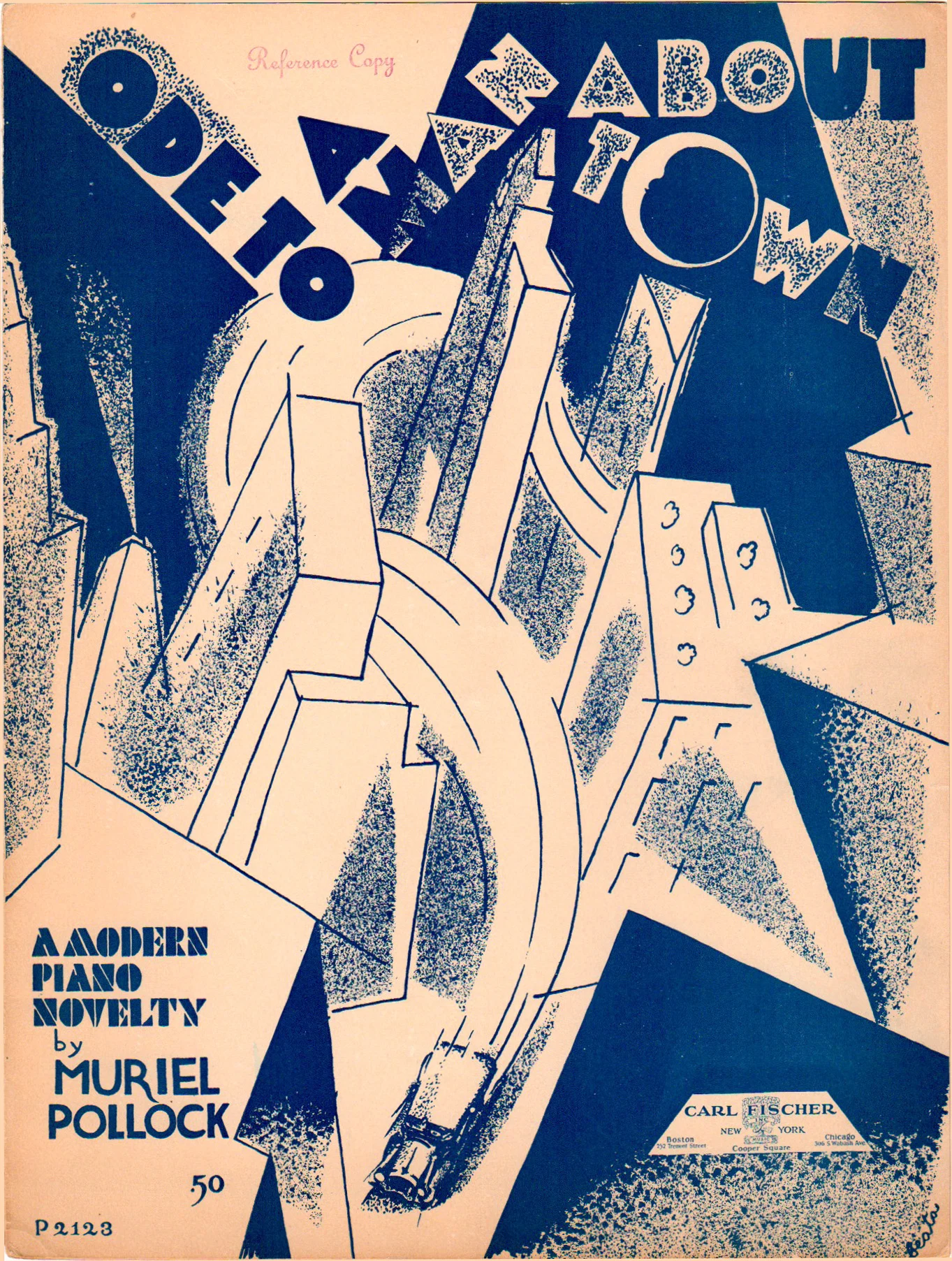

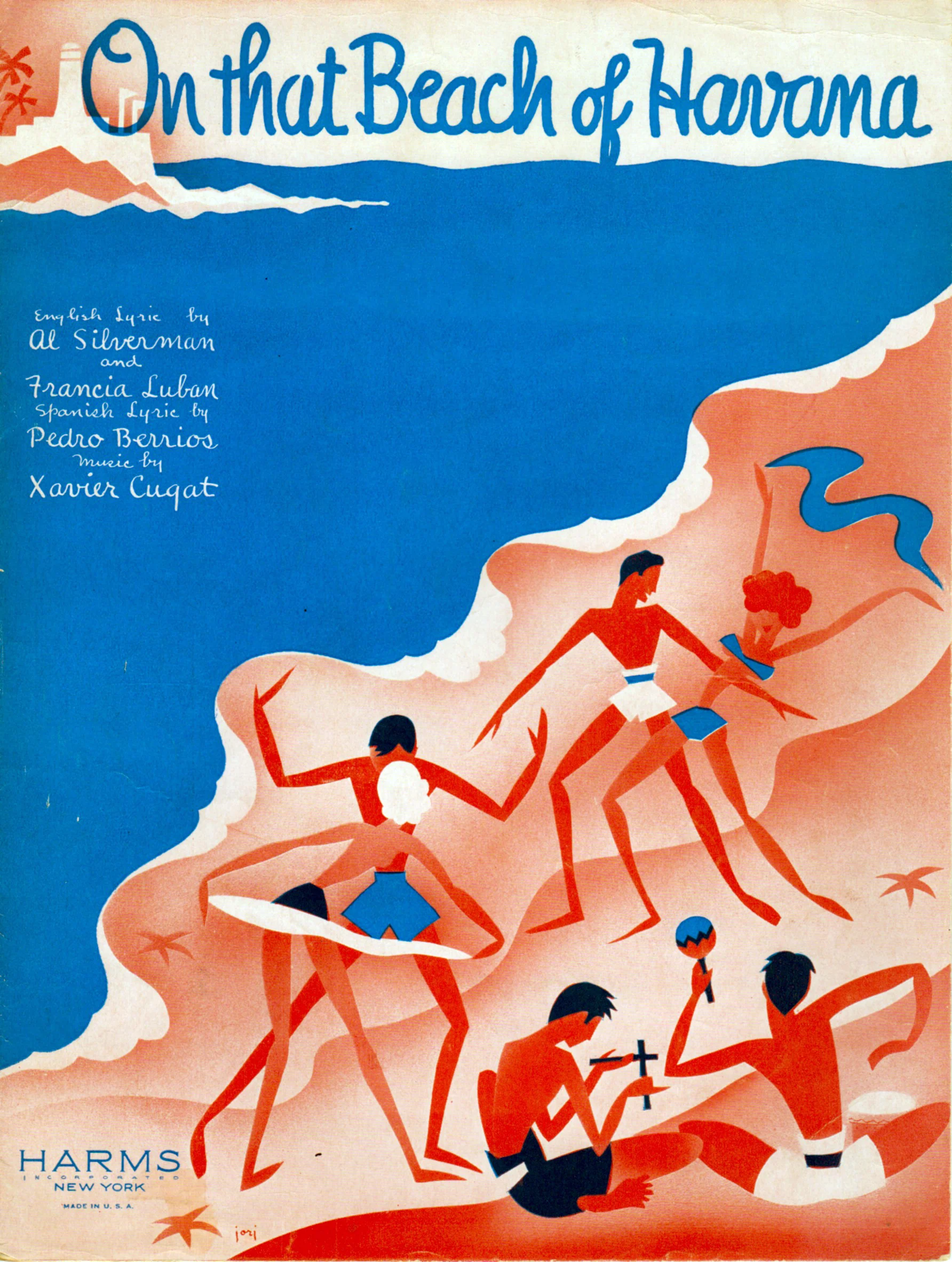
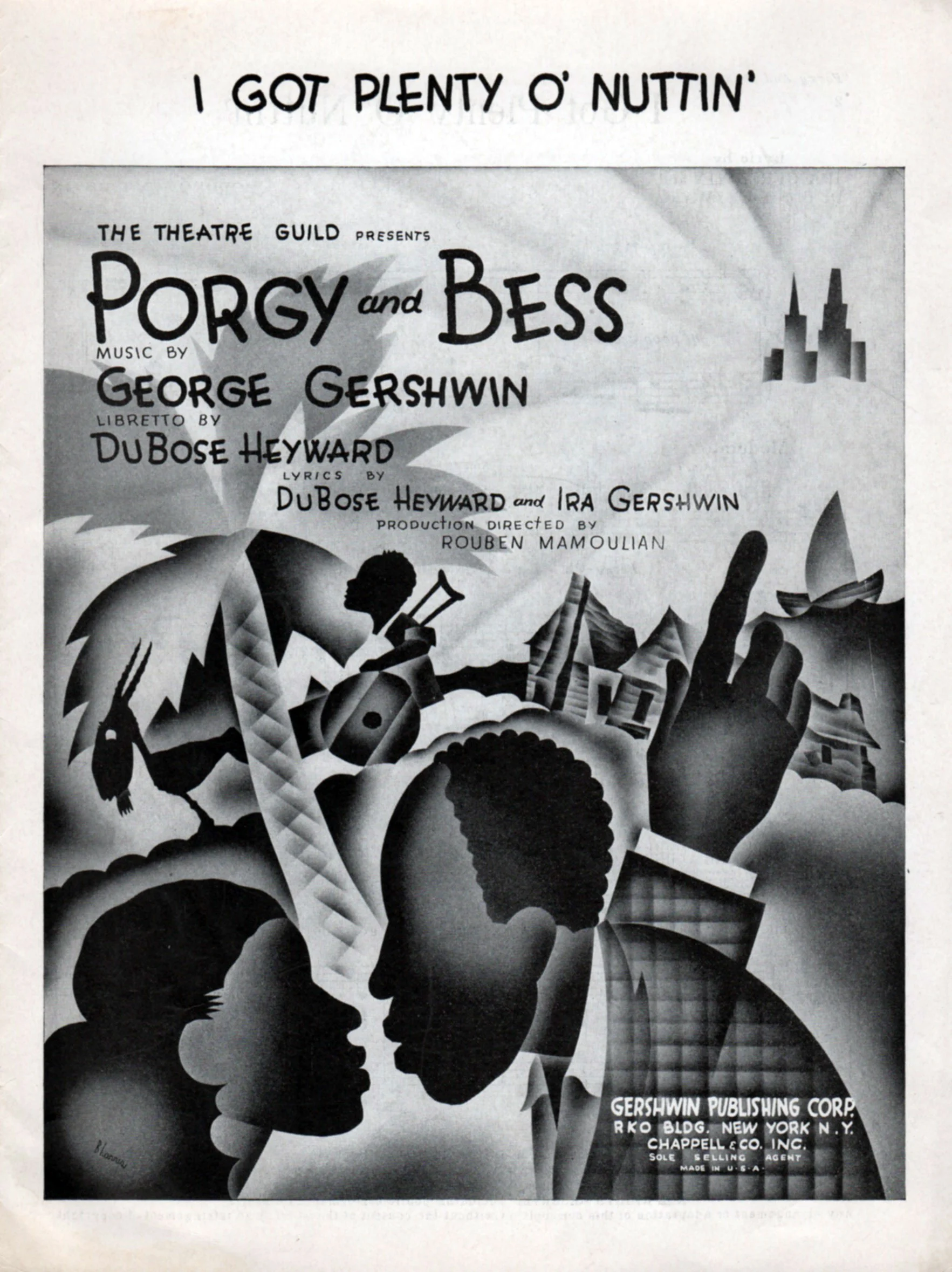


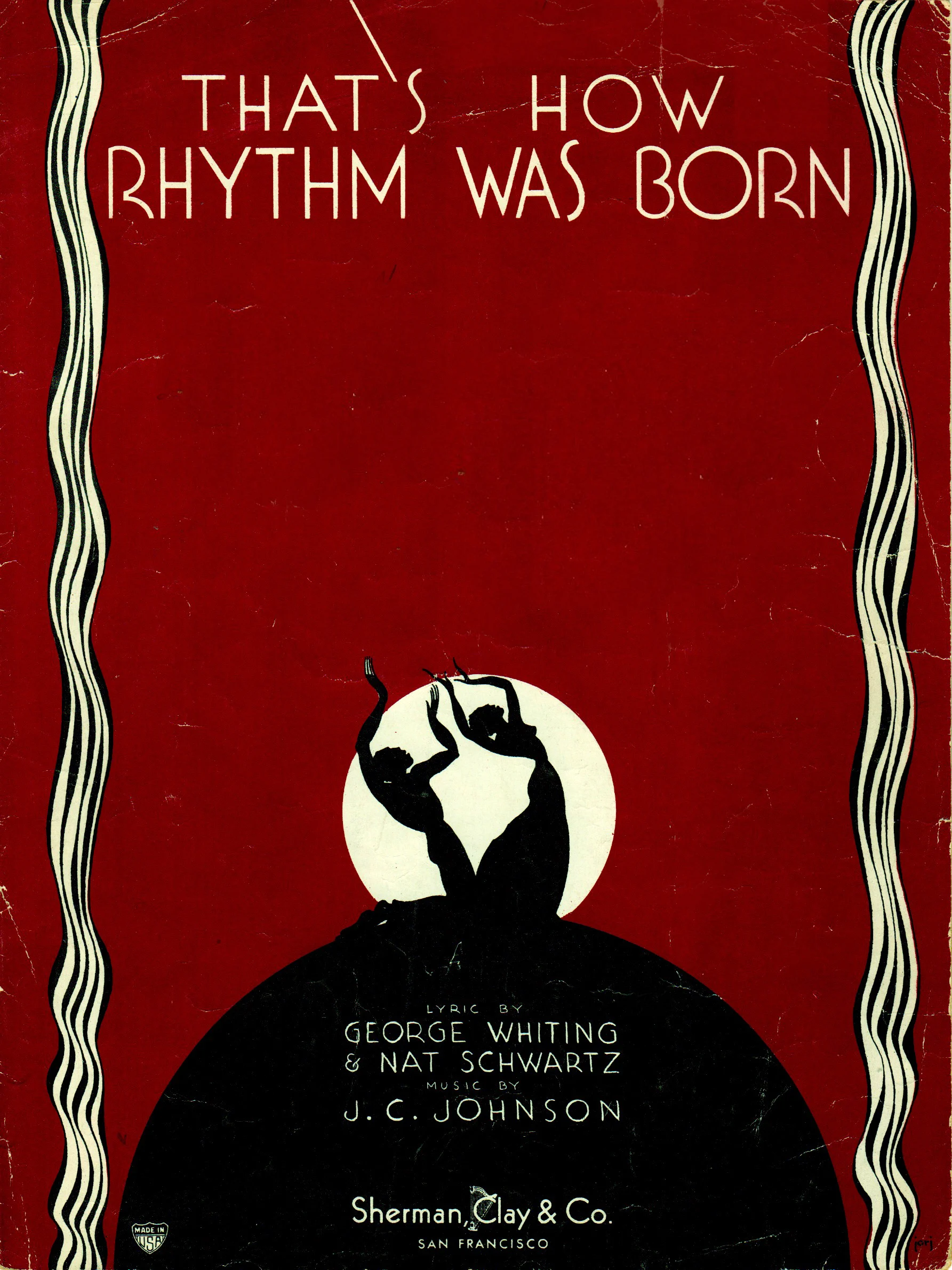

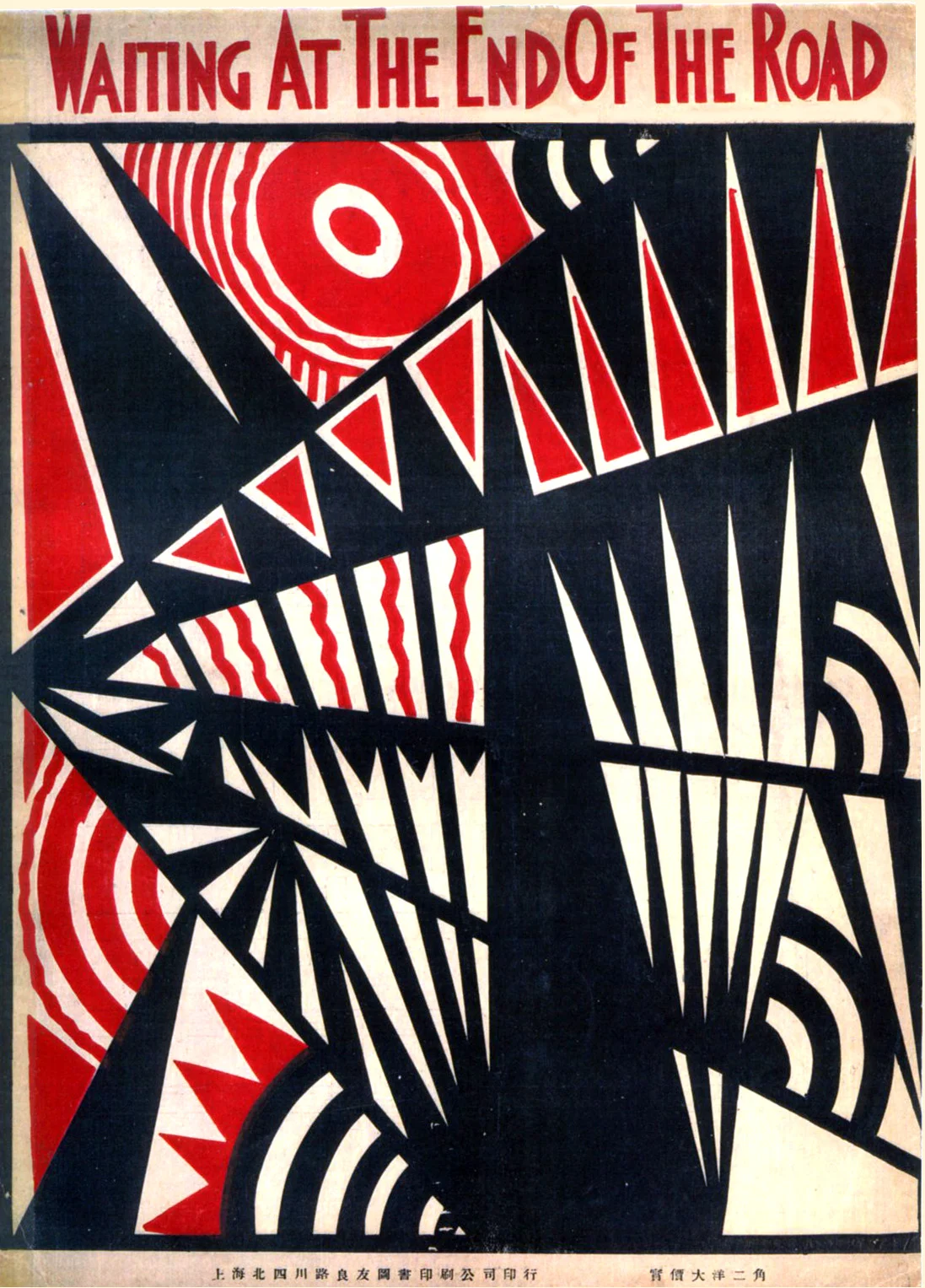

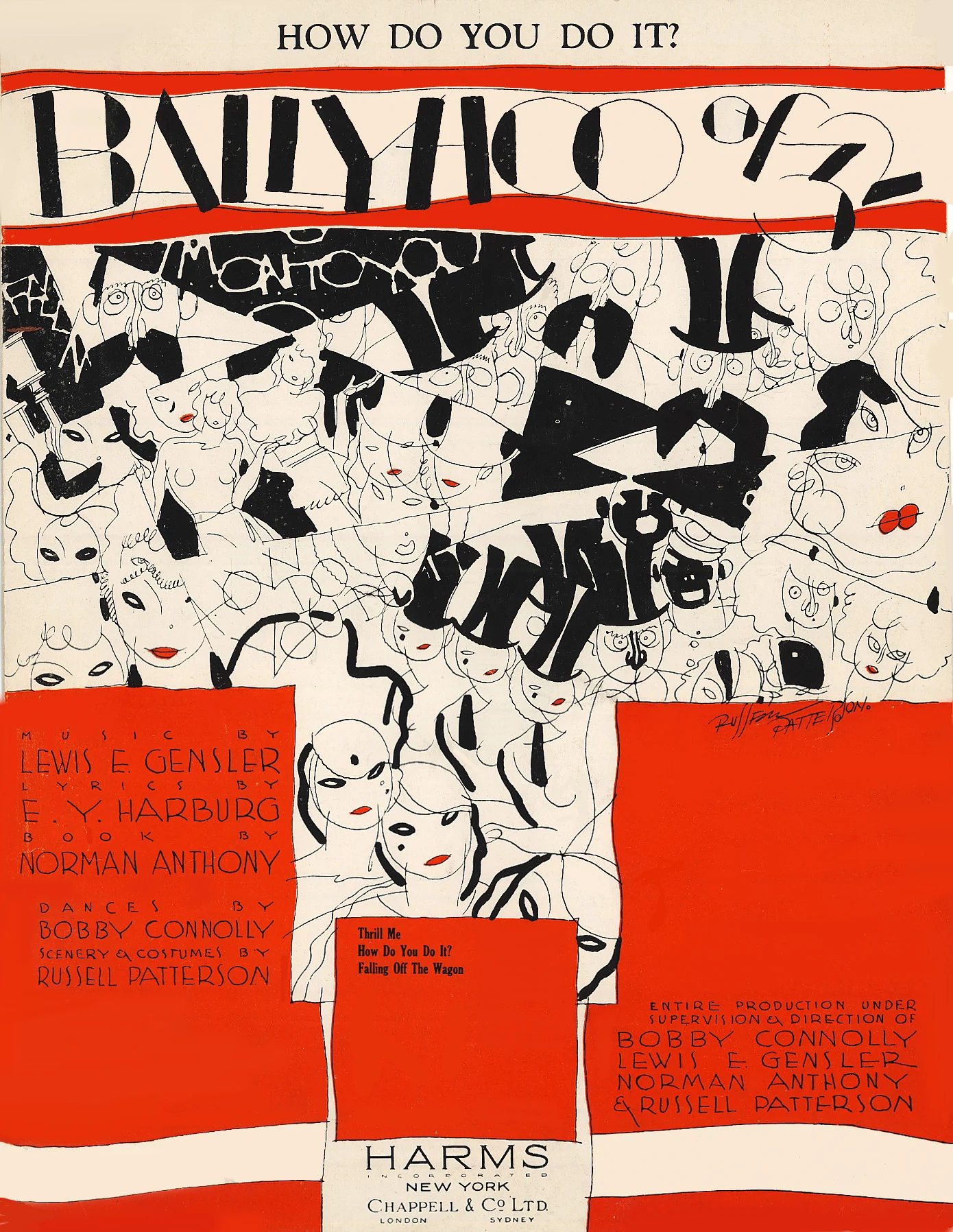

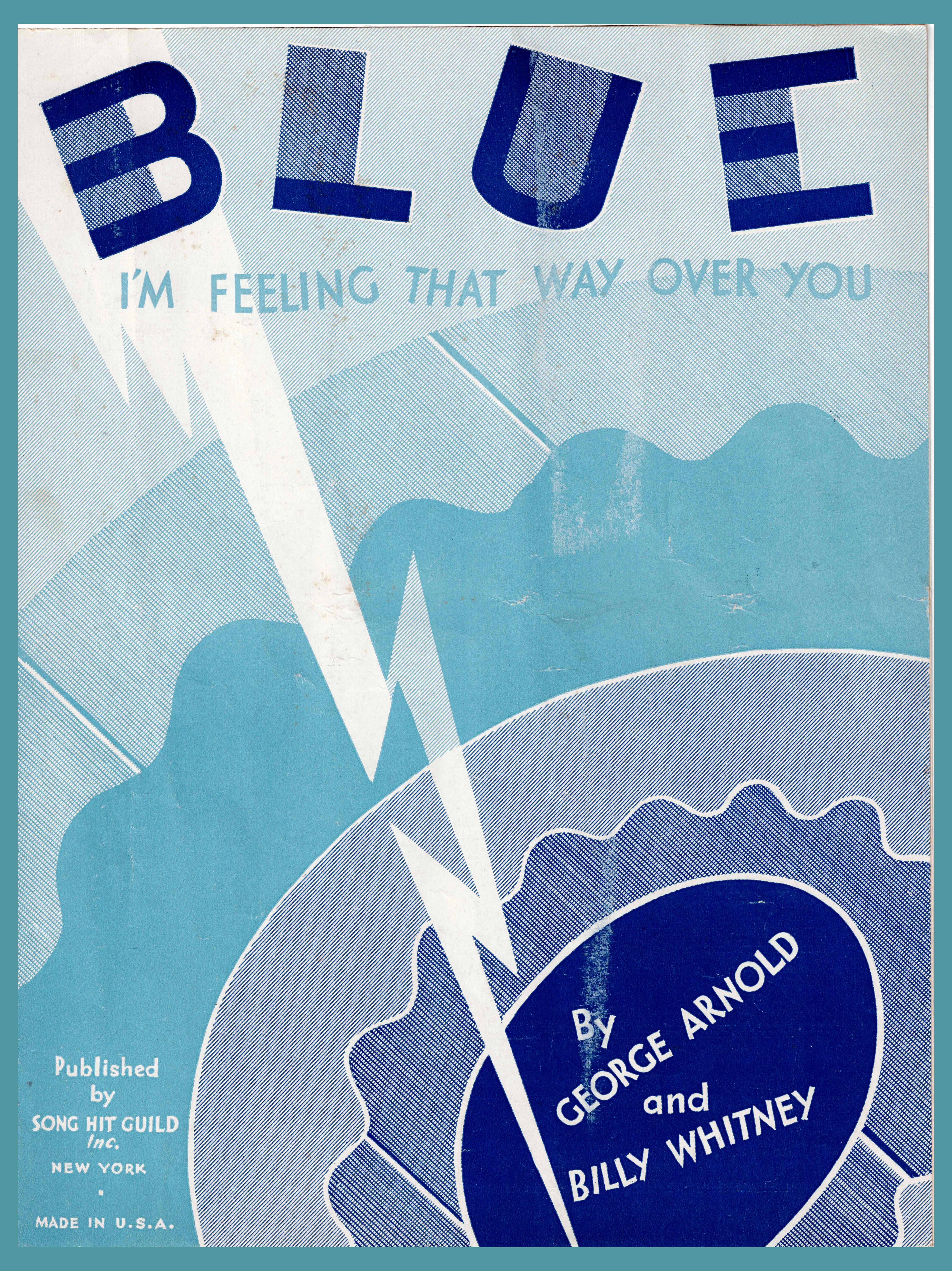
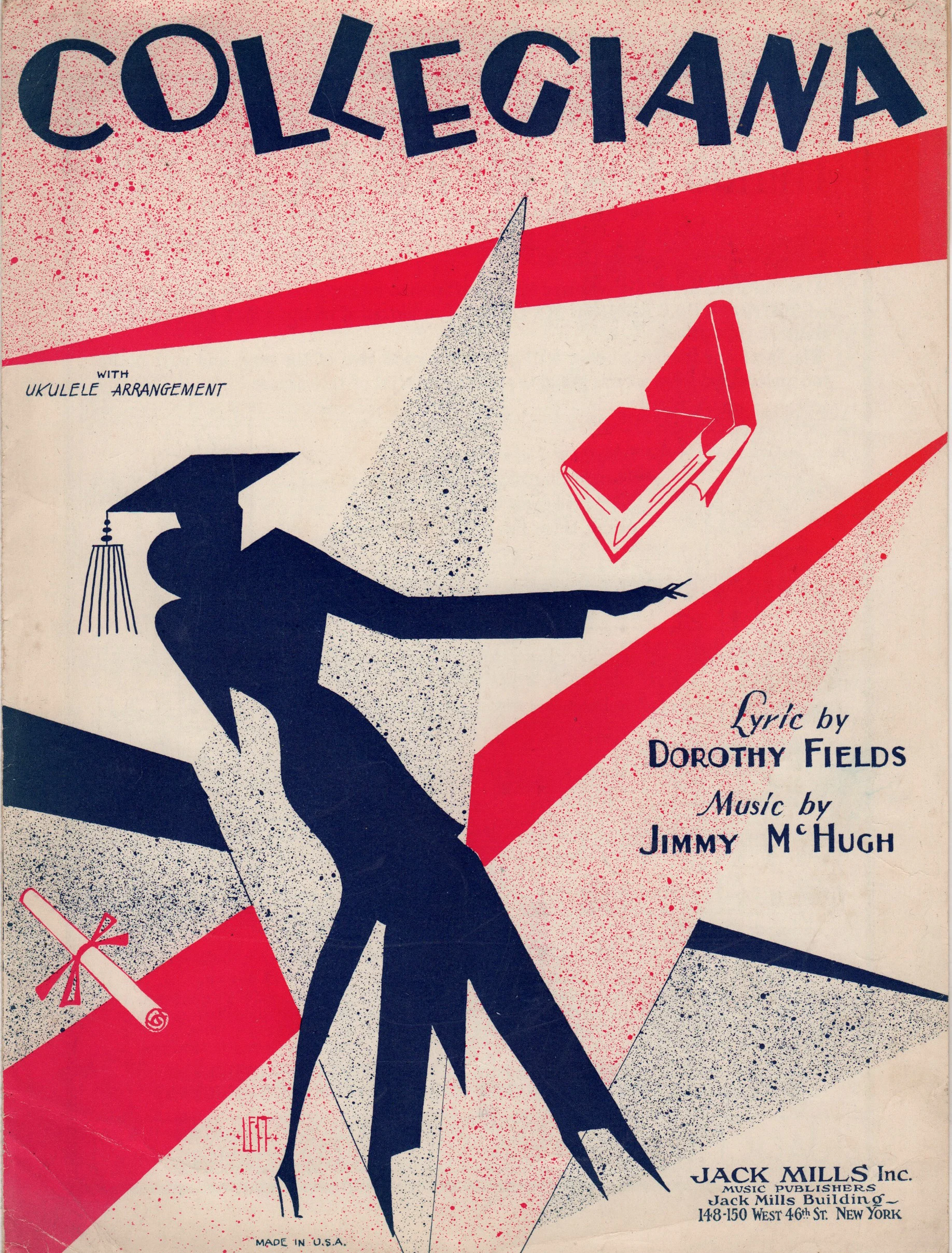
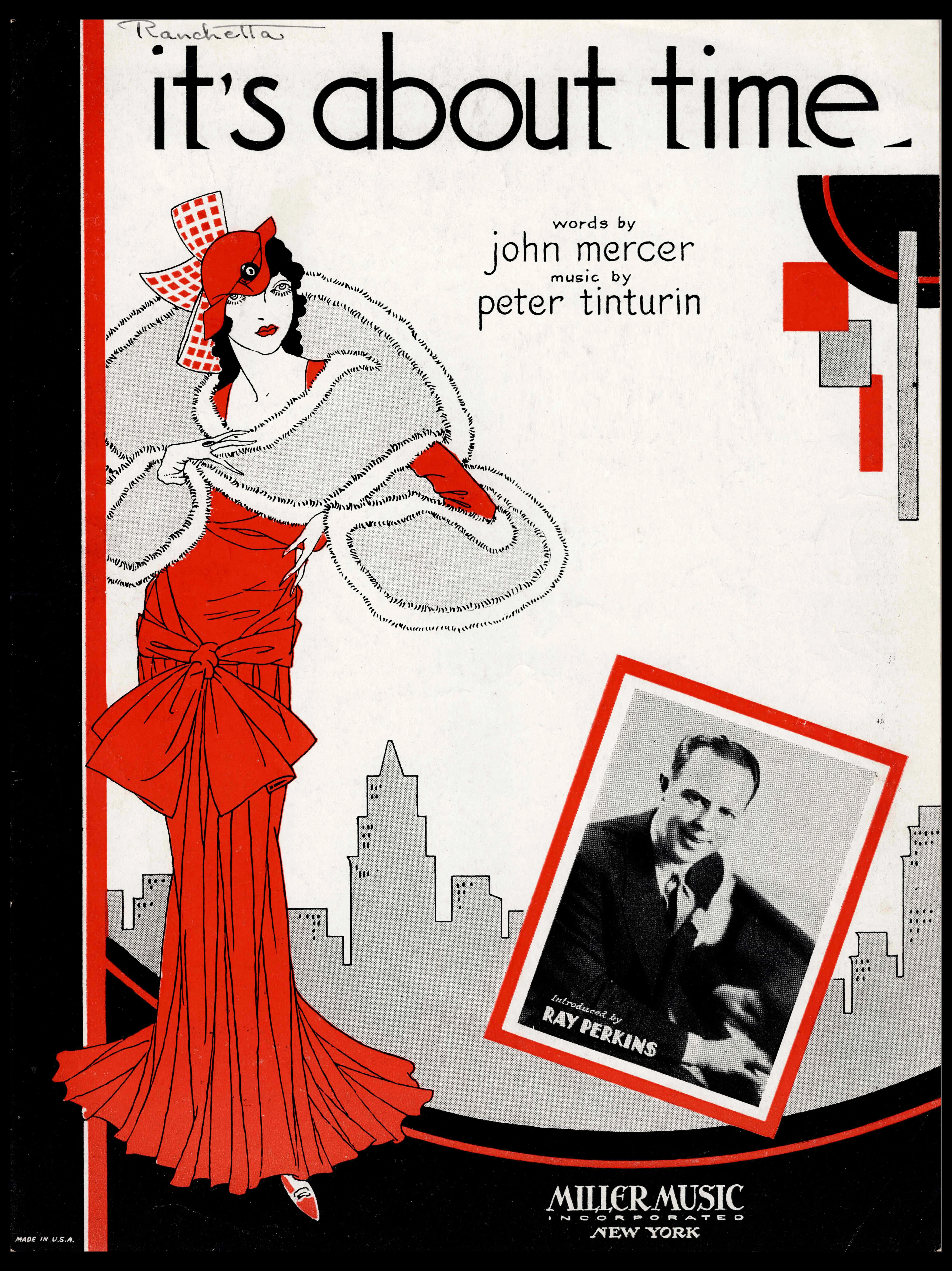
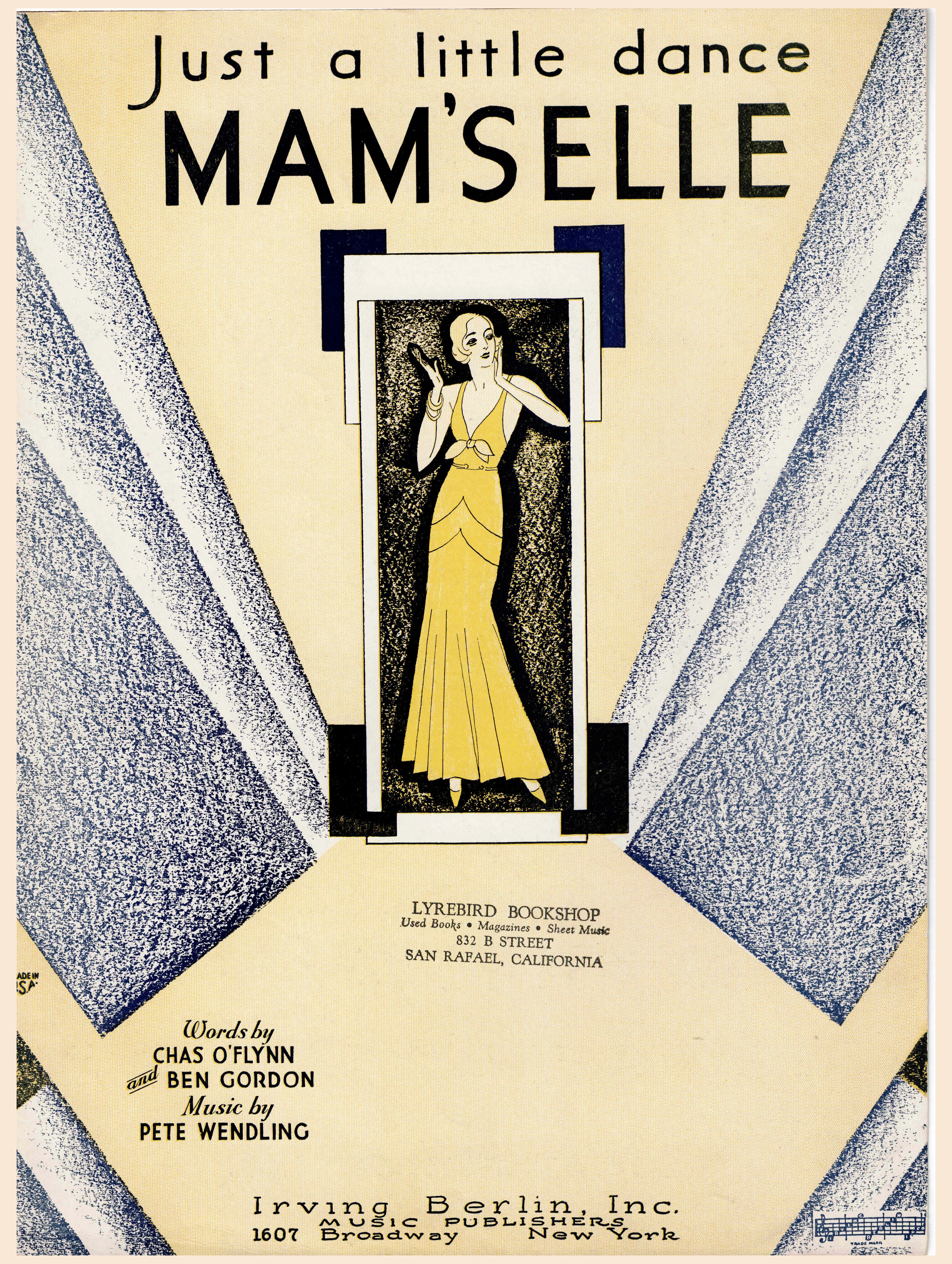
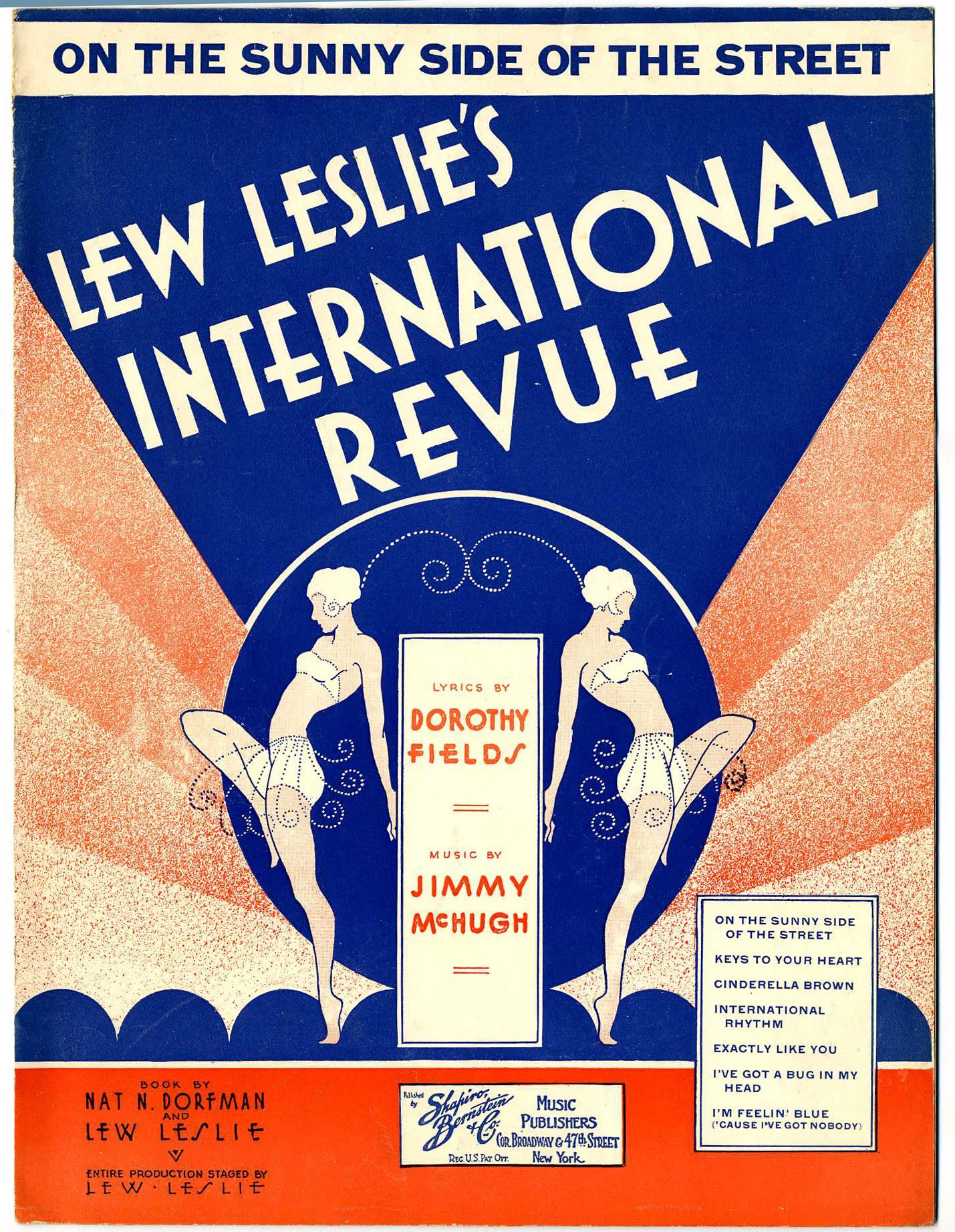

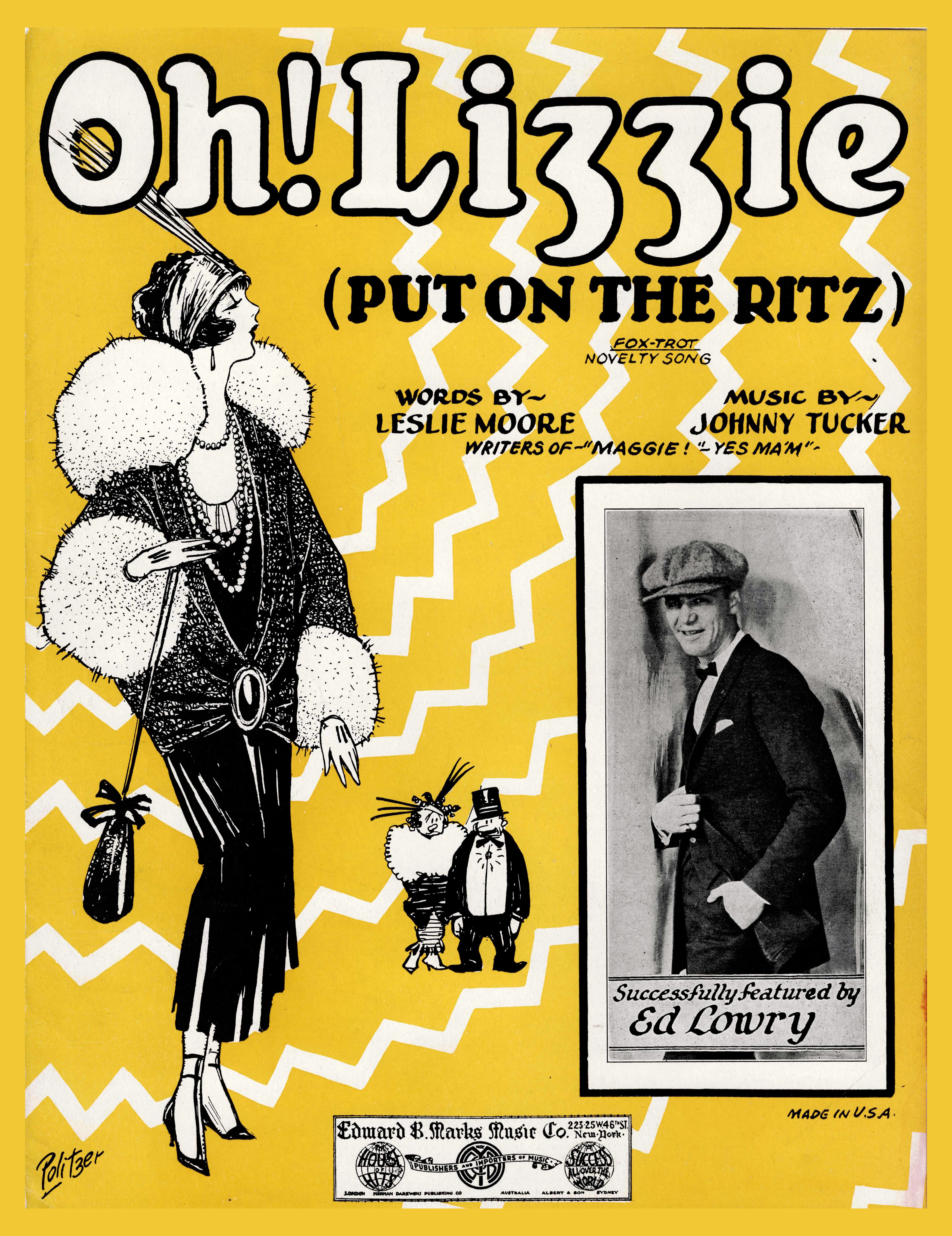
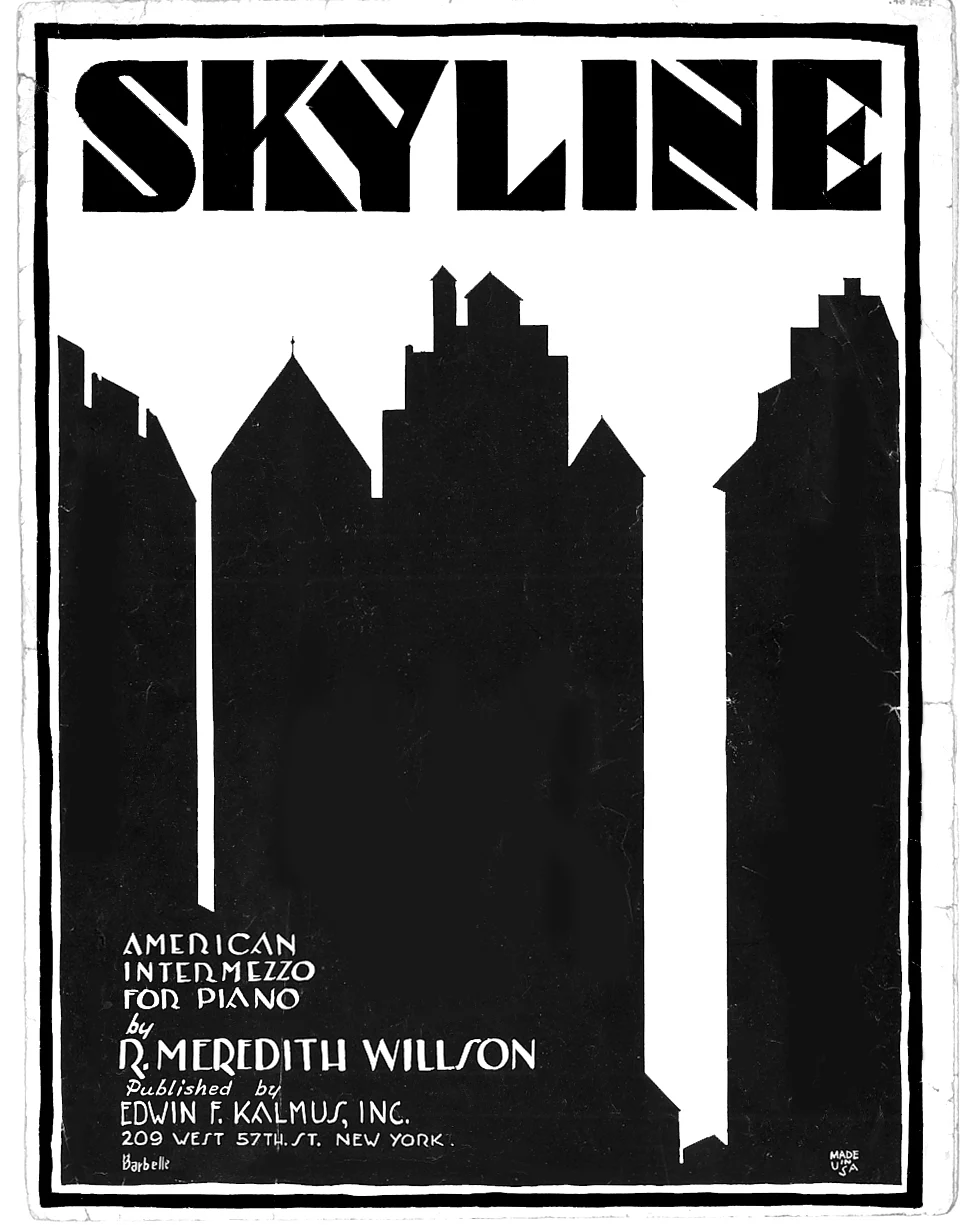
Peter Mintun’s world is best understood as the work of a self taught society pianist, historian, collector, and devoted interpreter of the Great American Songbook. His deep knowledge of George Gershwin, Dana Suesse, early popular song, rare sheet music, and period performance has made him an important cultural voice in his own right. From his long association with Michael Feinstein to his preservation of material such as Dana Suesse’s first ever music folio, Peter has helped keep this musical world alive.
When I first met Peter, he was playing at L’Etoile in San Francisco. On one of those early evenings, he performed Dana Suesse’s Afternoon of a Black Faun, a piece that immediately stayed with me. There was something haunting and unforgettable in the melody, and Peter seemed to understand how deeply I responded to it. For years afterward, whenever I came to hear him play, he would often begin that piece as I entered the room. It became a personal musical greeting of sorts, and even now, that melody remains one of my strongest memories of Peter’s artistry.
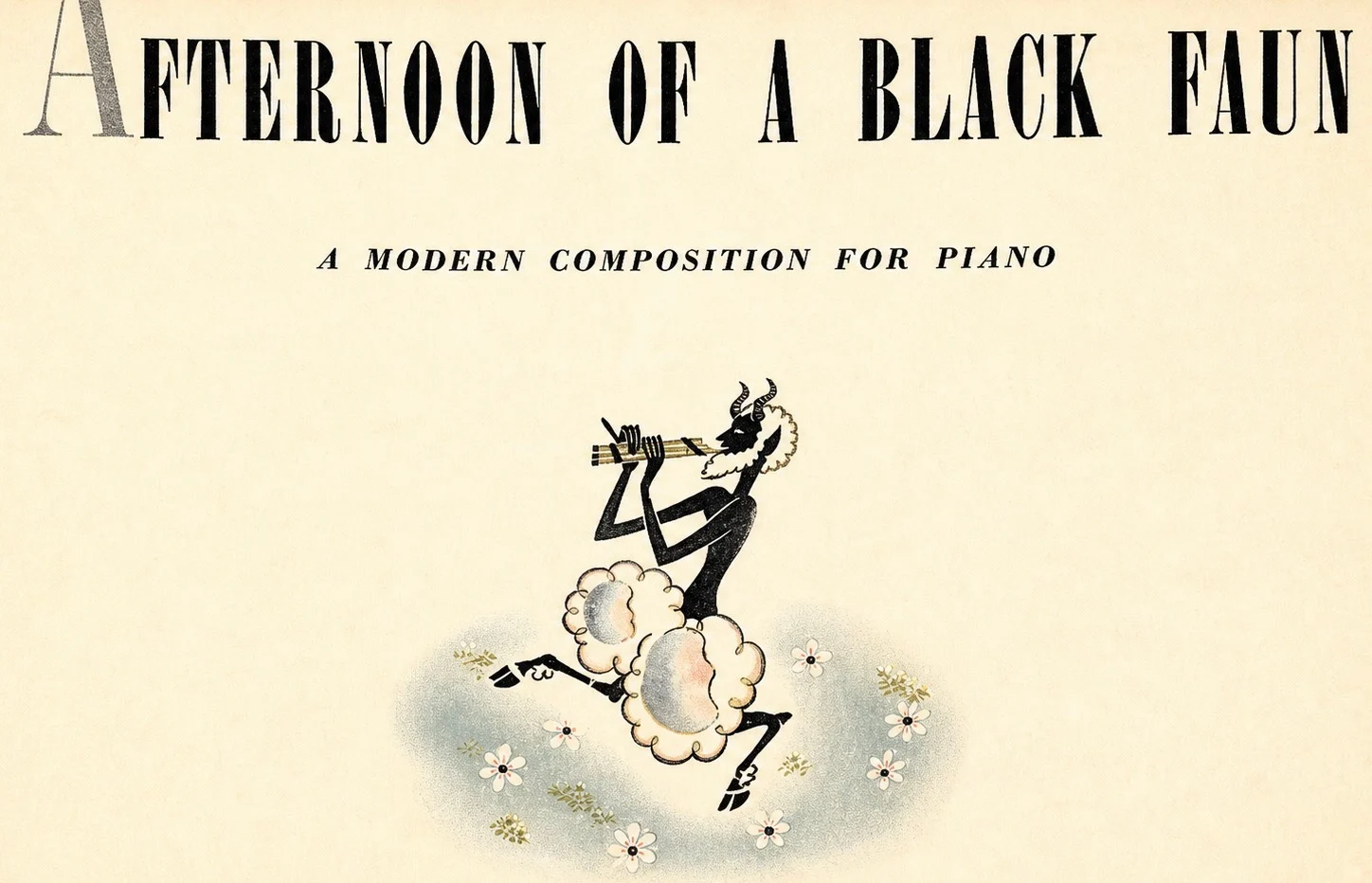
For more on his performances, recordings, history, and continuing work, visit Peter Mintun’s website at:
PeterMintun.com
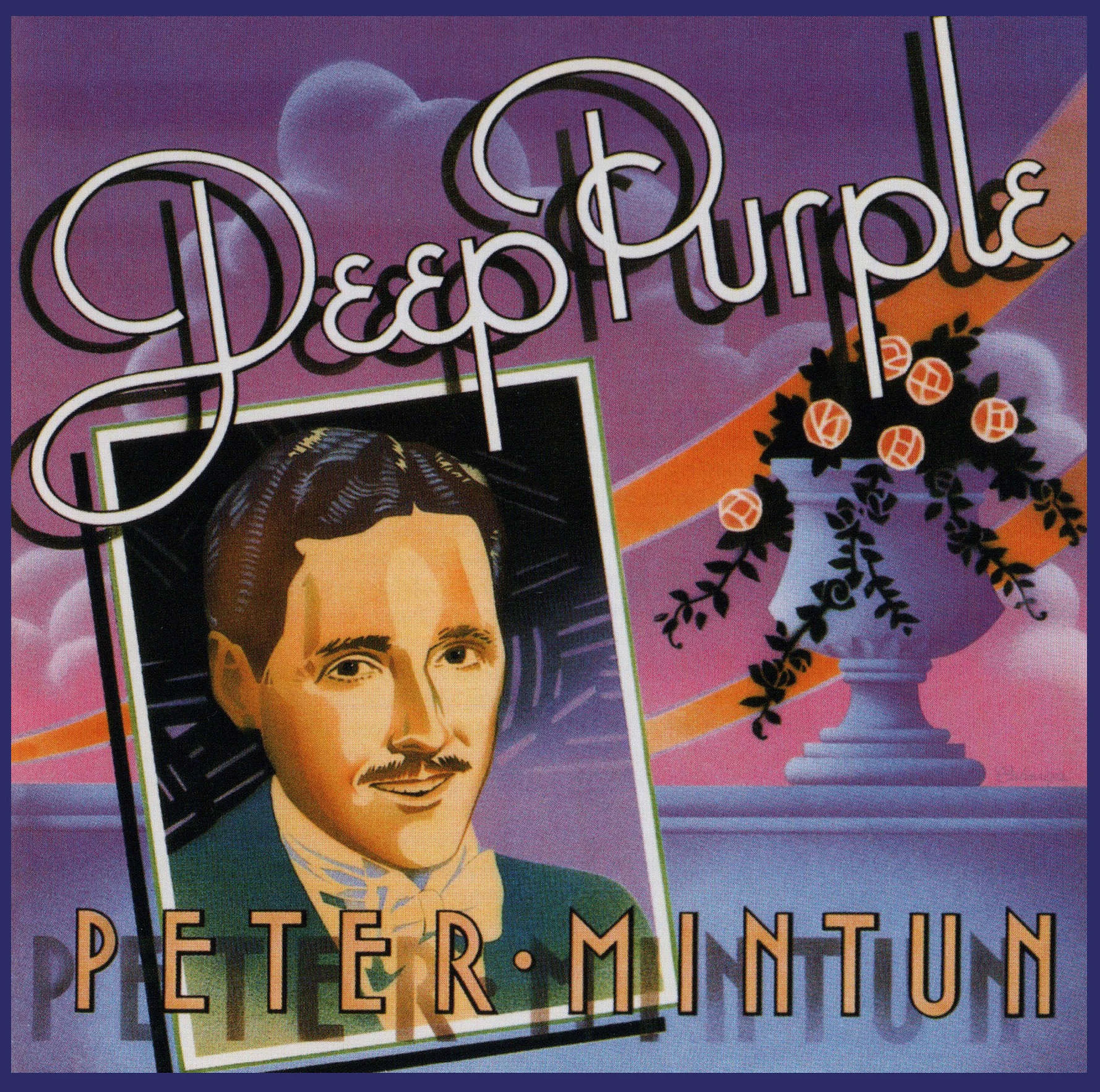
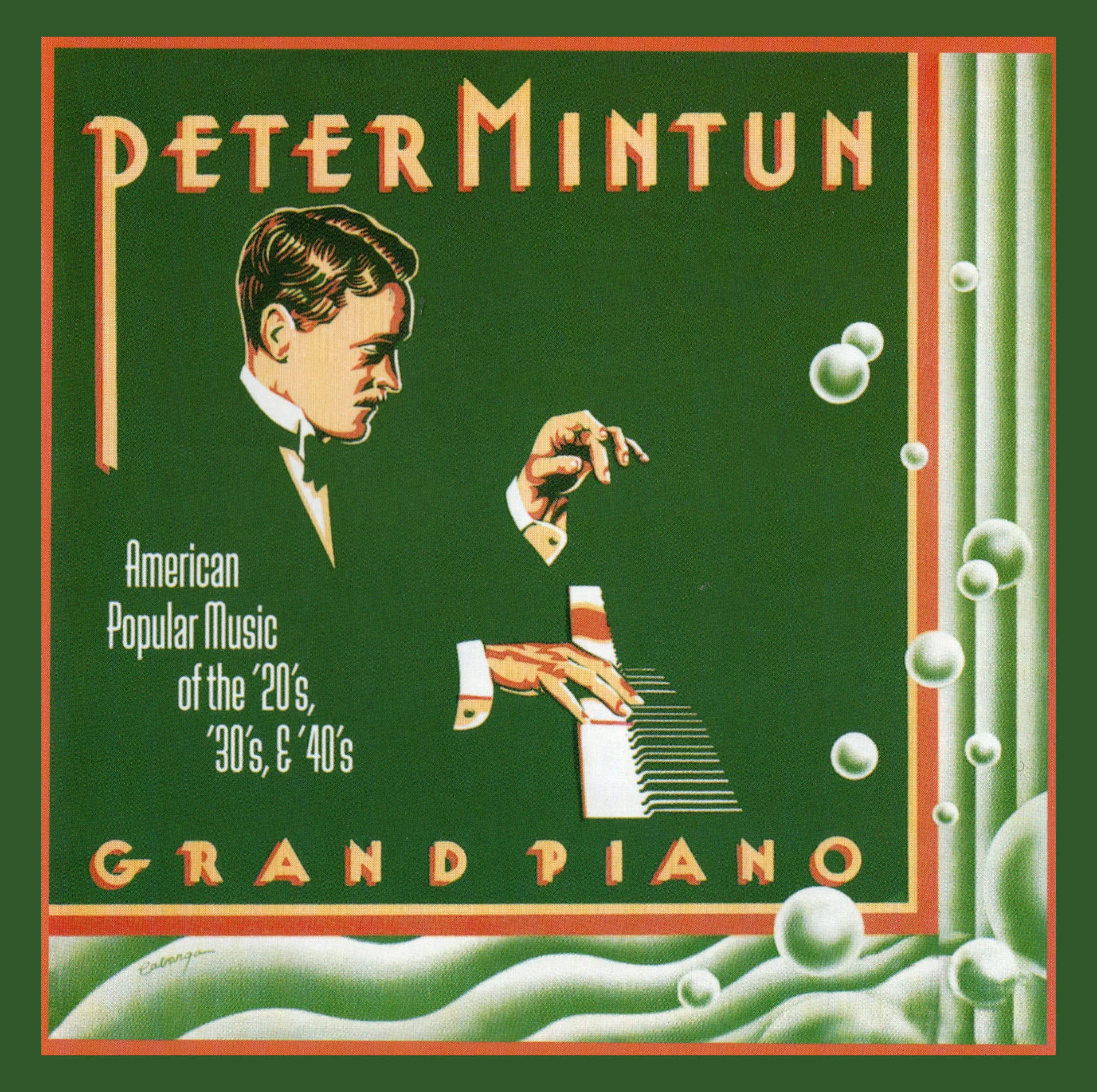
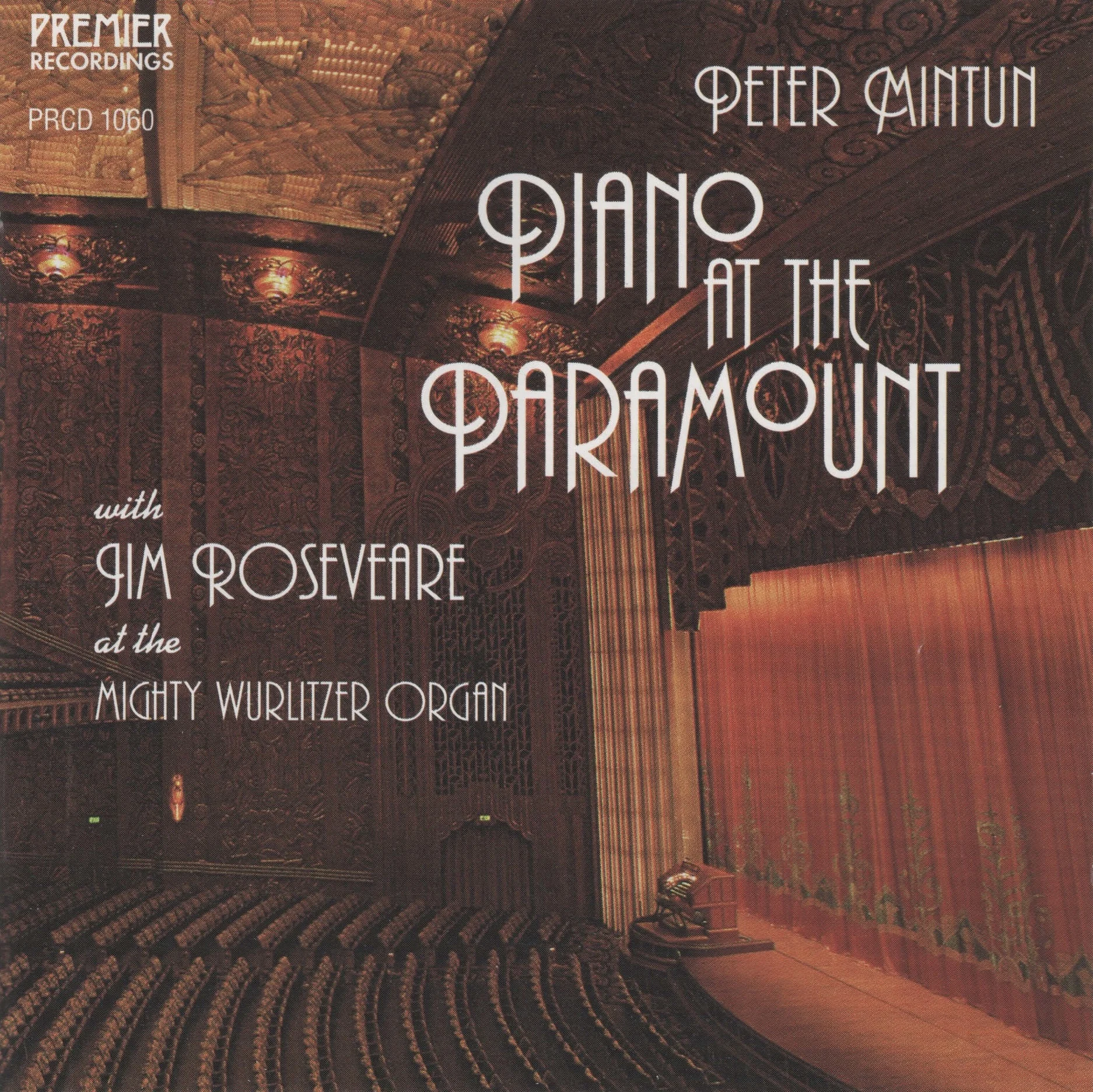
To Purchase Peter Mintun’s Music, click on any photo above.
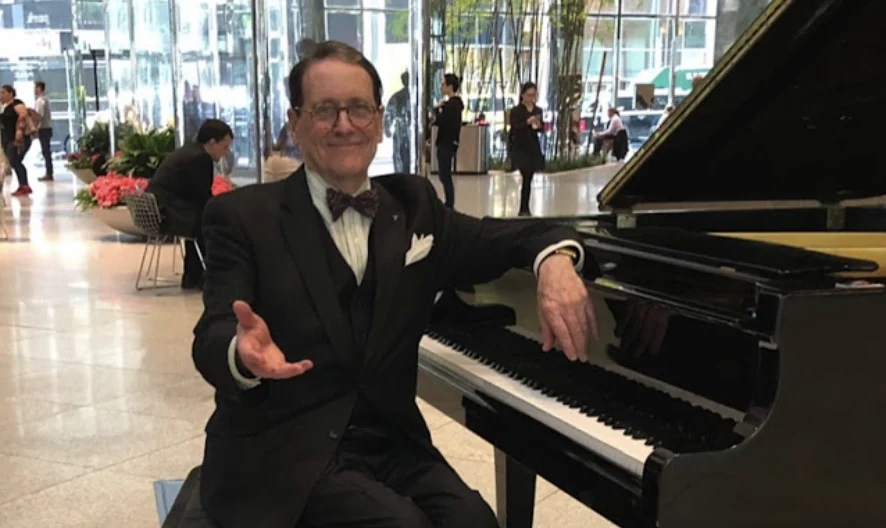
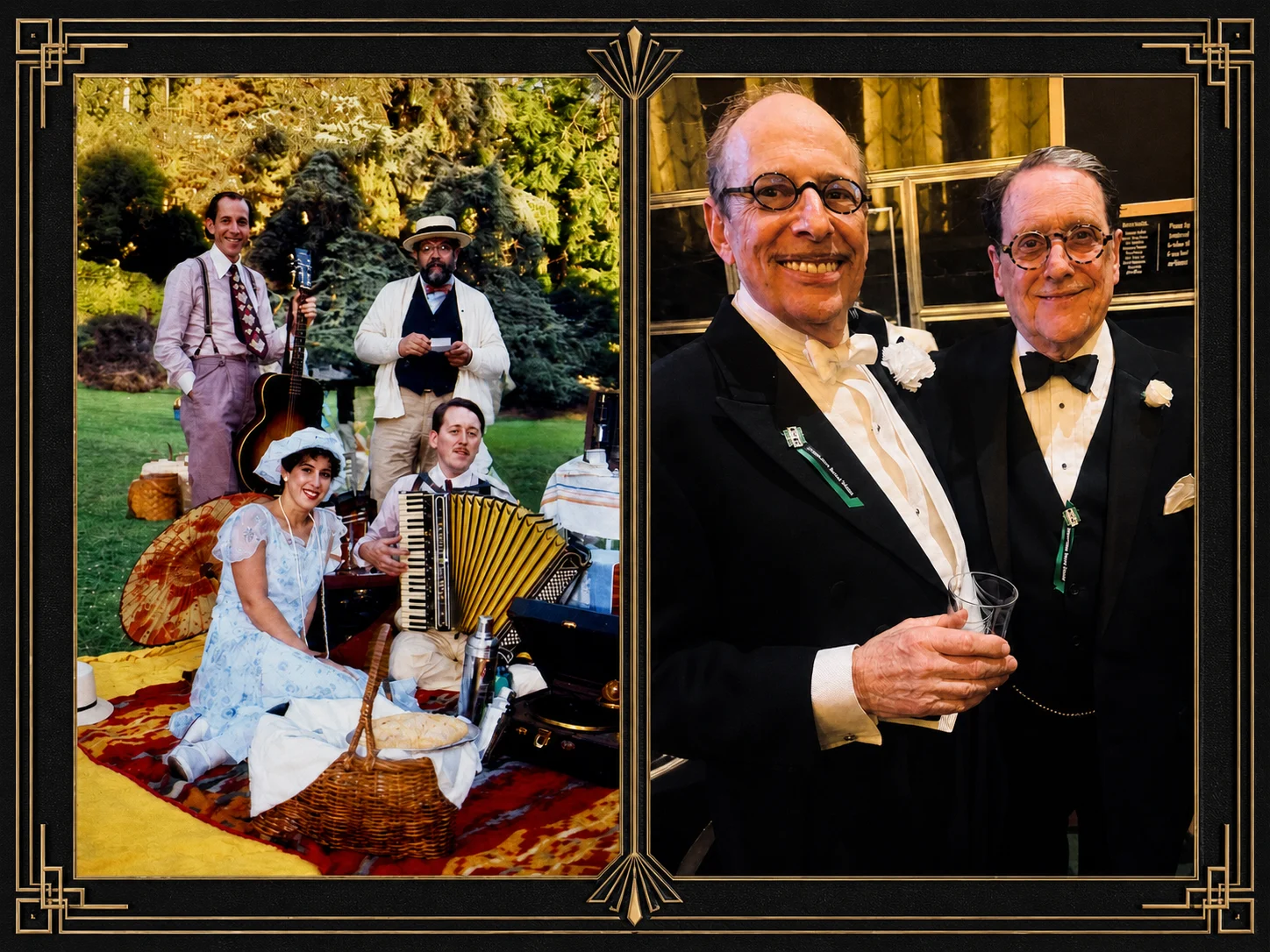
LEFT: My First Gatsby Summer Afternoon Event in 1986, Rusty Frank, Peter Mintun & Ed Linatti.
RIGHT: Peter and I at The Art Deco Preservation Ball 2025
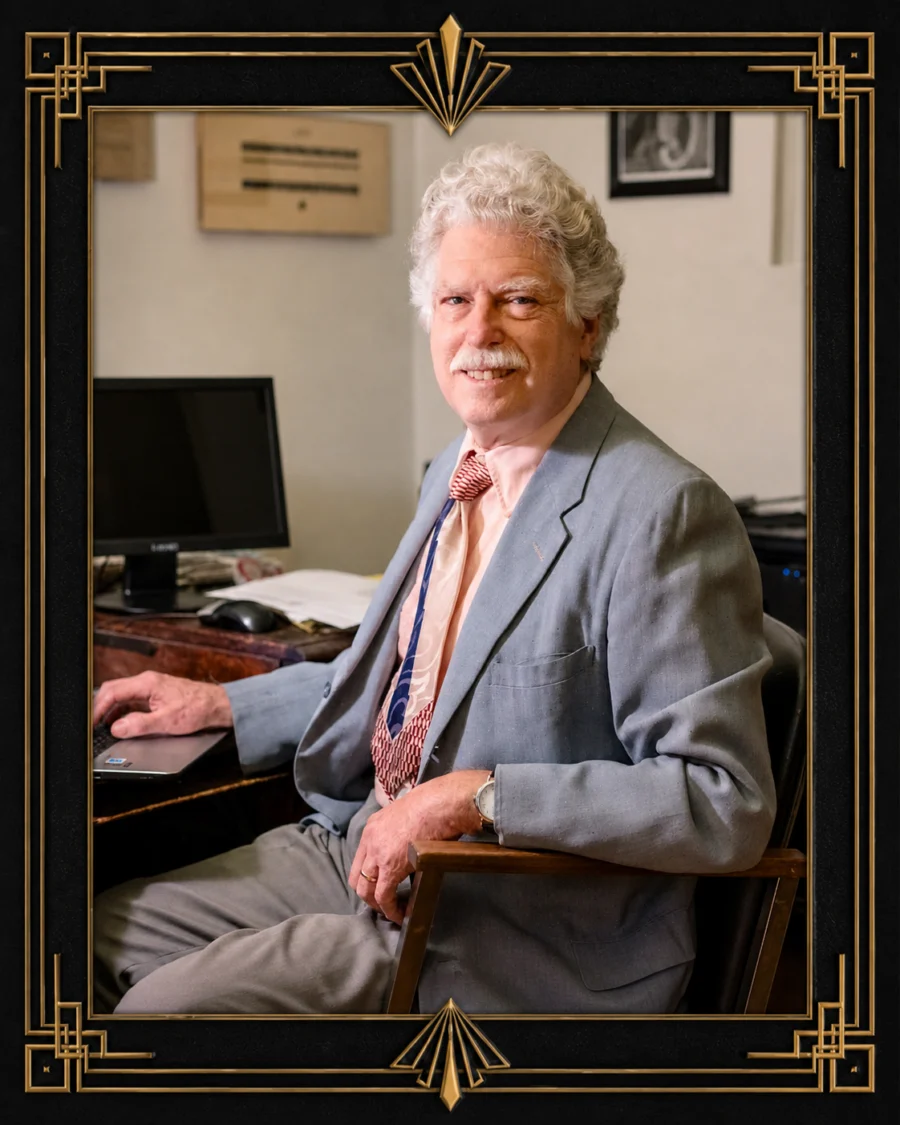
Parts of this article were originally published in The Syncopated Times, February 2026, under the title Peter Mintun: The Talk of the Town by Hal Glatzer. Hal is an interesting figure in his own right, a writer, novelist, guitarist, performer, and longtime friend of both Peter Mintun and myself.
For more information visit:
If you are interested in further stories of Art Deco design, collecting, and celebrating the artistry of early 20th Century:
Related Products