
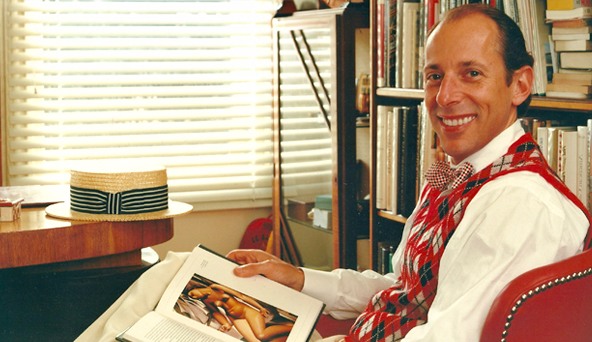




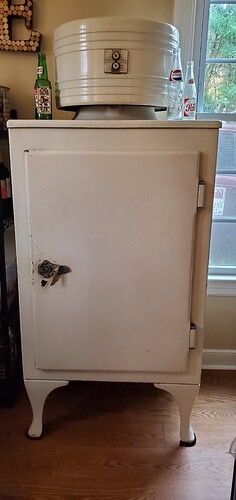

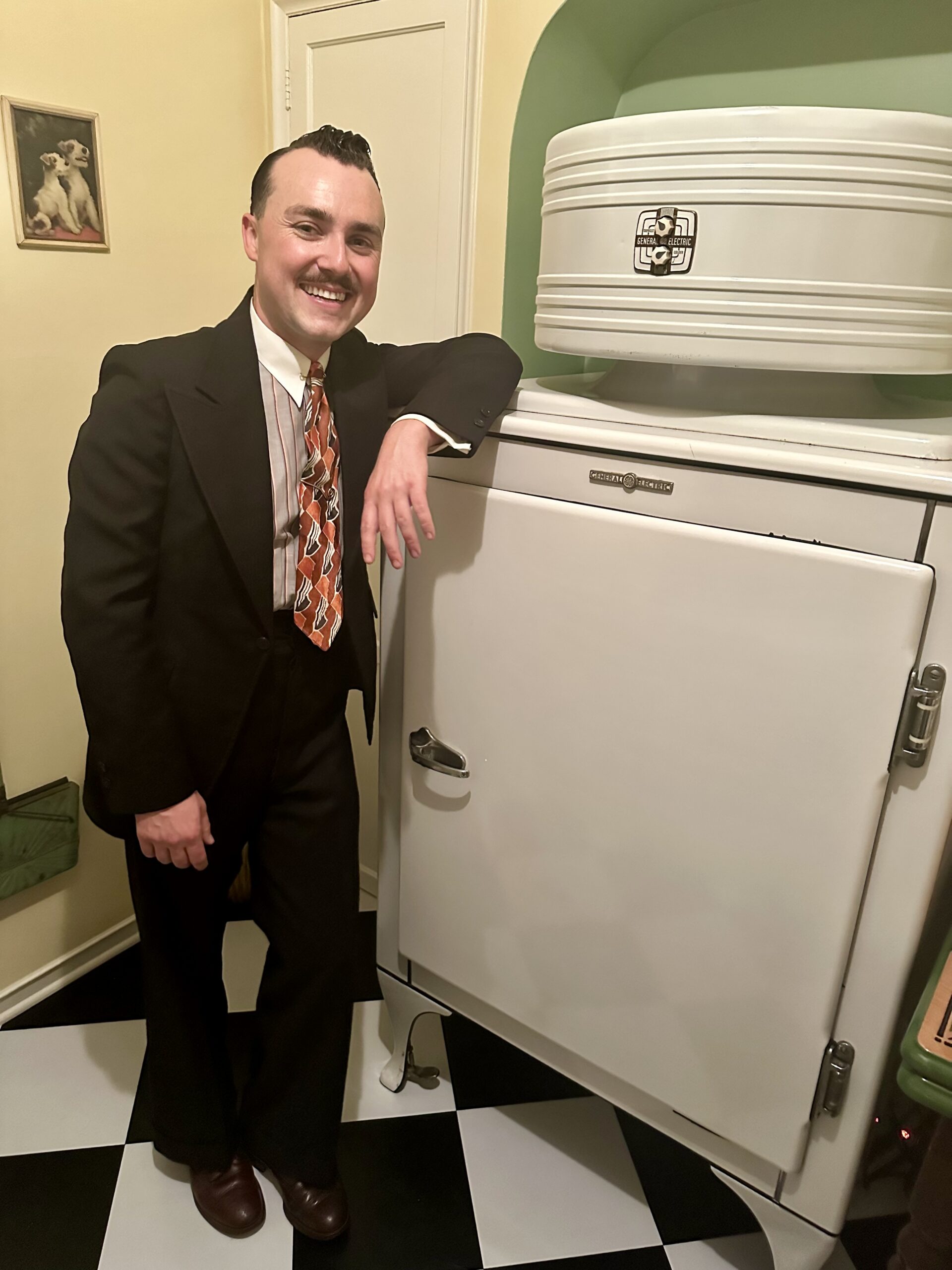
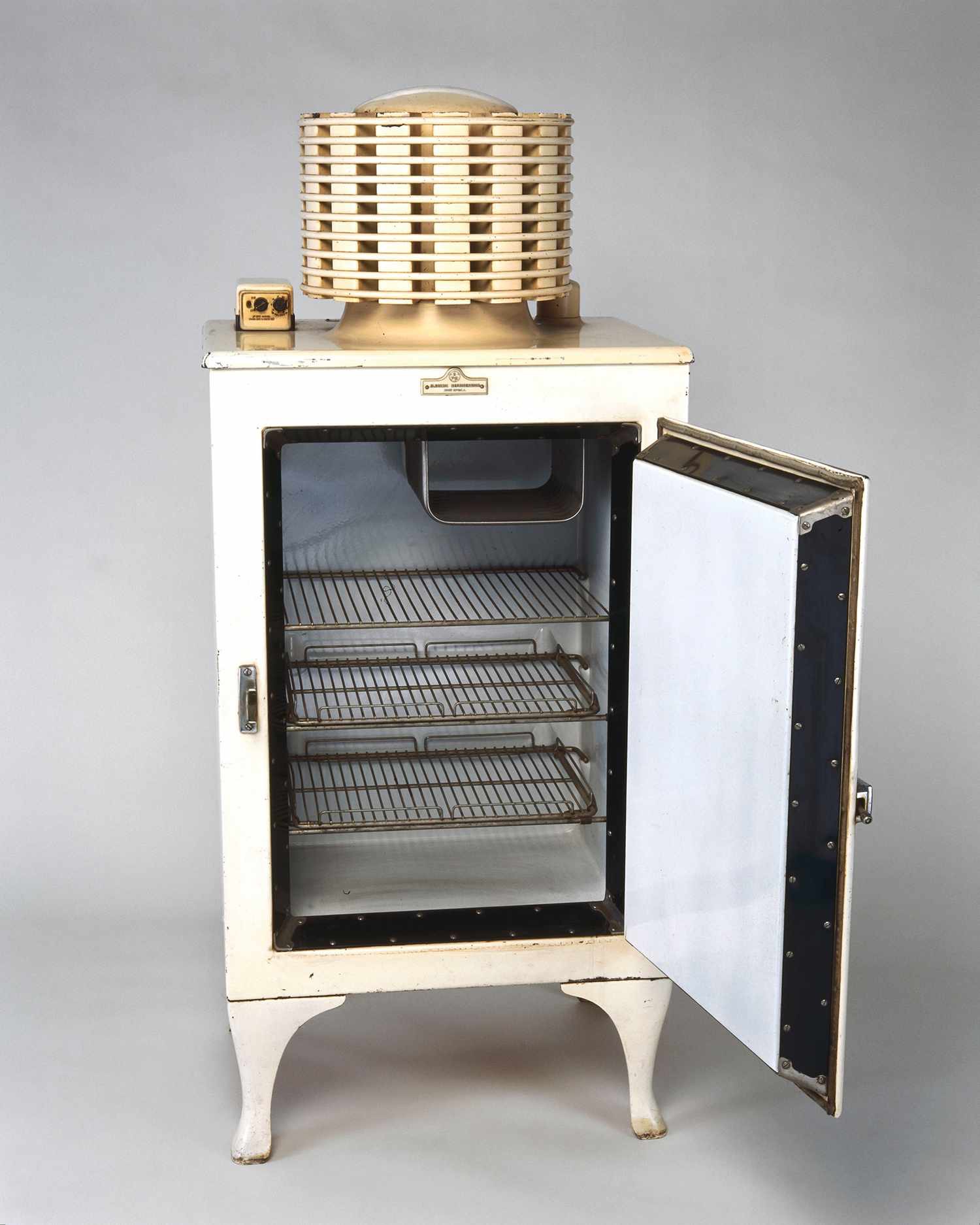
Max Raymond with his restored General Electric monitor top
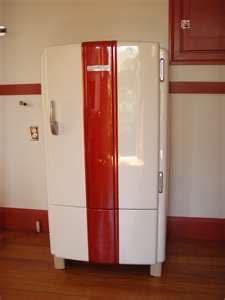
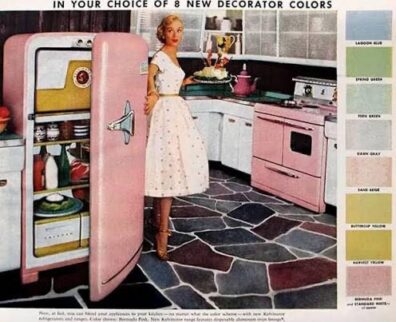
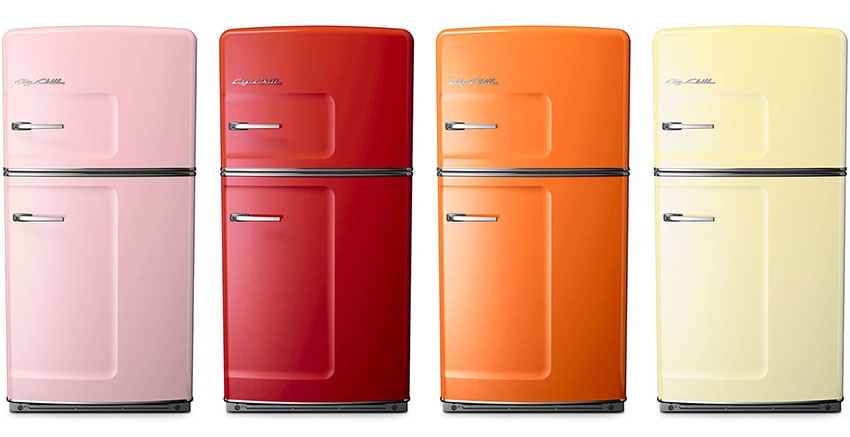
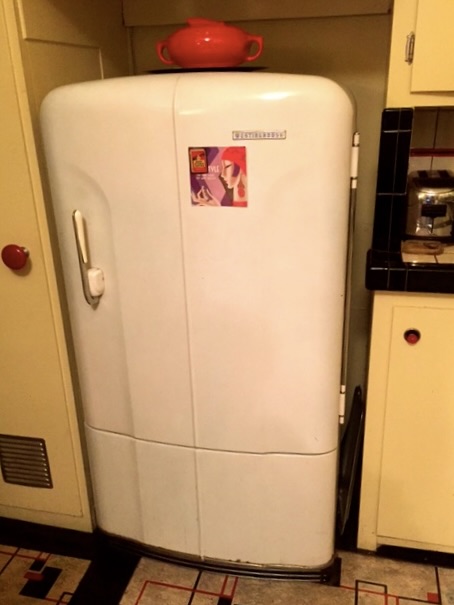
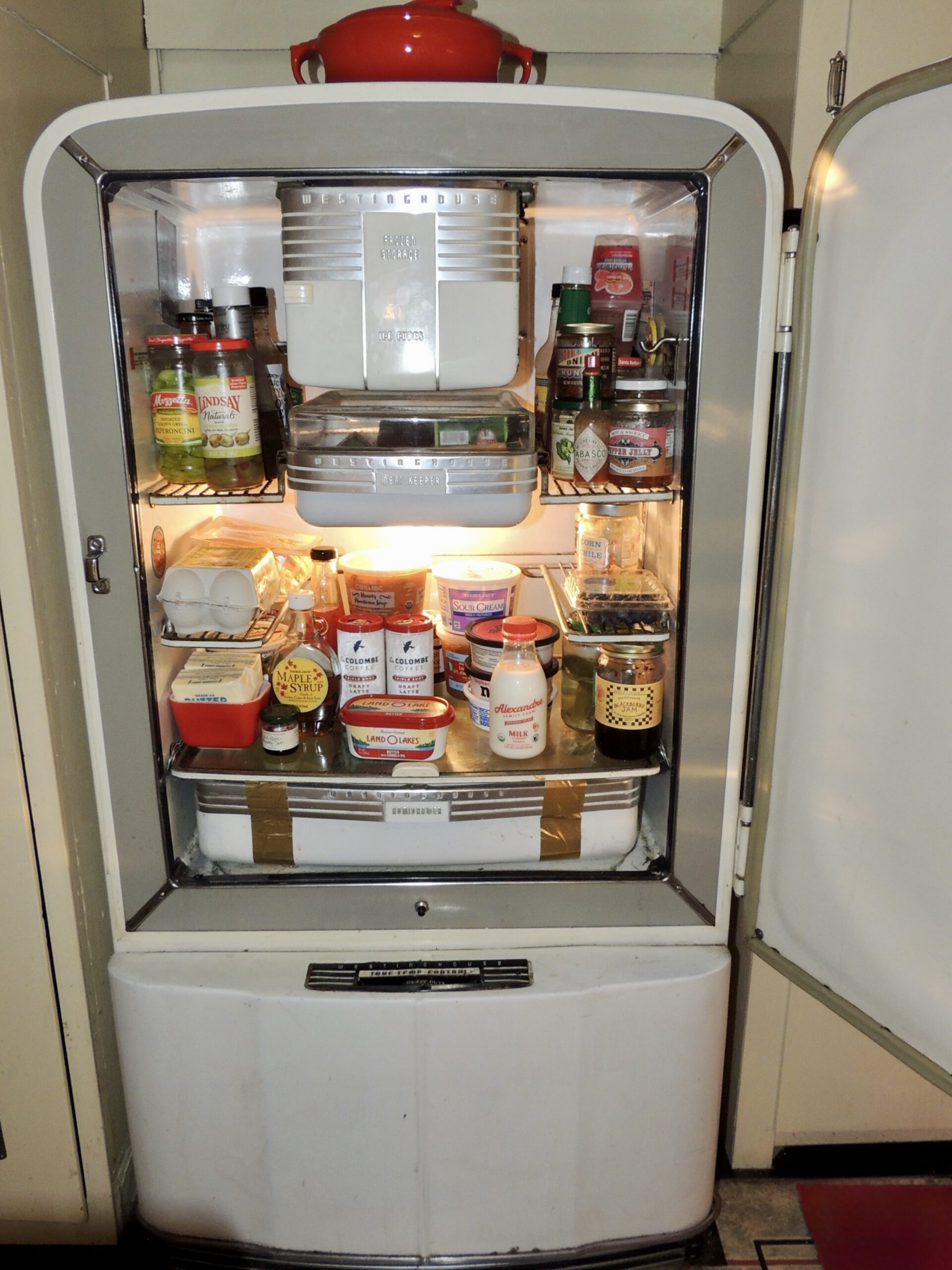
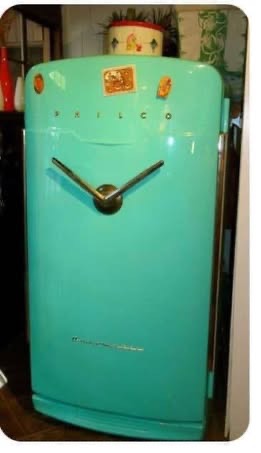
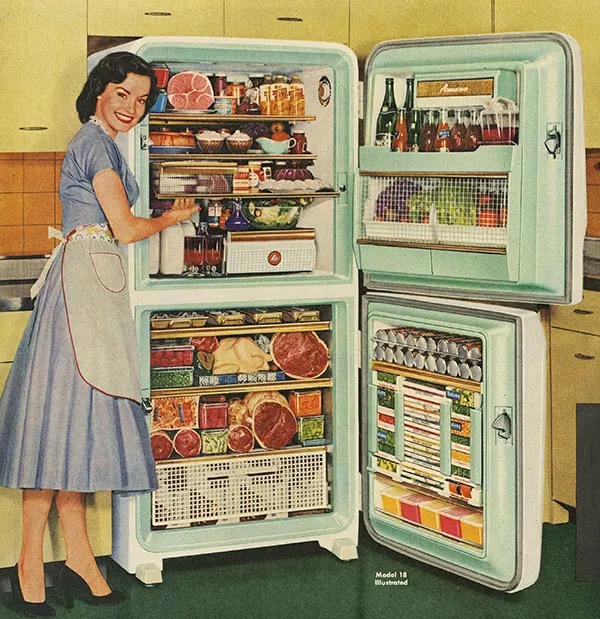
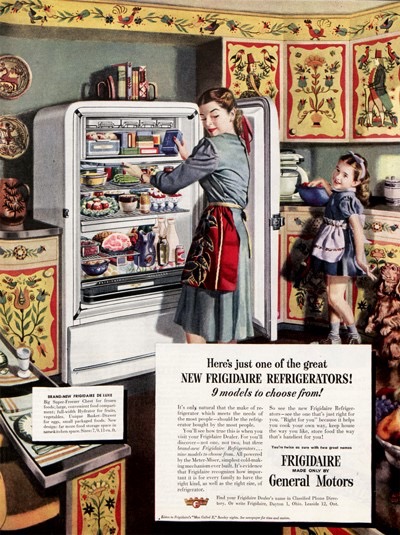
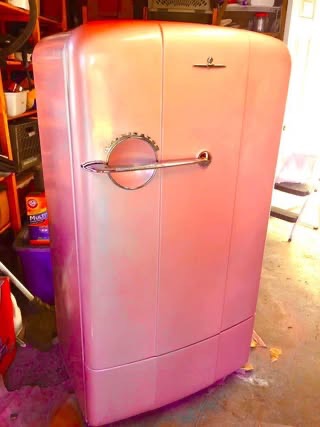
As the industry developed, safety and design both improved. Sulfur dioxide, used in many early machines, was dangerous if it leaked, so by about 1940 Freon began replacing it in many refrigerator systems. This change helped open the door for more manufacturers to compete in a rapidly growing market. Companies such as Philco introduced models that combined practical innovation with striking style, including clever V shaped door handles that could be opened comfortably with either hand. With streamlined curves, chrome trim, strong horizontal lines, and rich 1930s colors, these refrigerators became beautiful focal points in the modern kitchen. By the late 1930s, full color magazine advertisements promoted a rainbow of choices, making the refrigerator both a machine and a design statement. Though the refrigerator has changed in shape, color, and technology over time, it remains one of the kitchen’s great style pieces, and even today many new designs still borrow from the fun, colorful spirit and smart visual flair of the Art Deco past.