
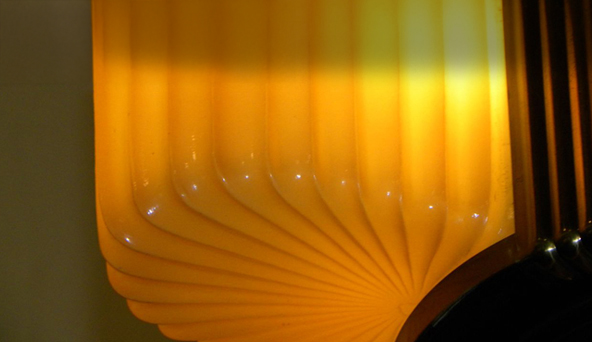
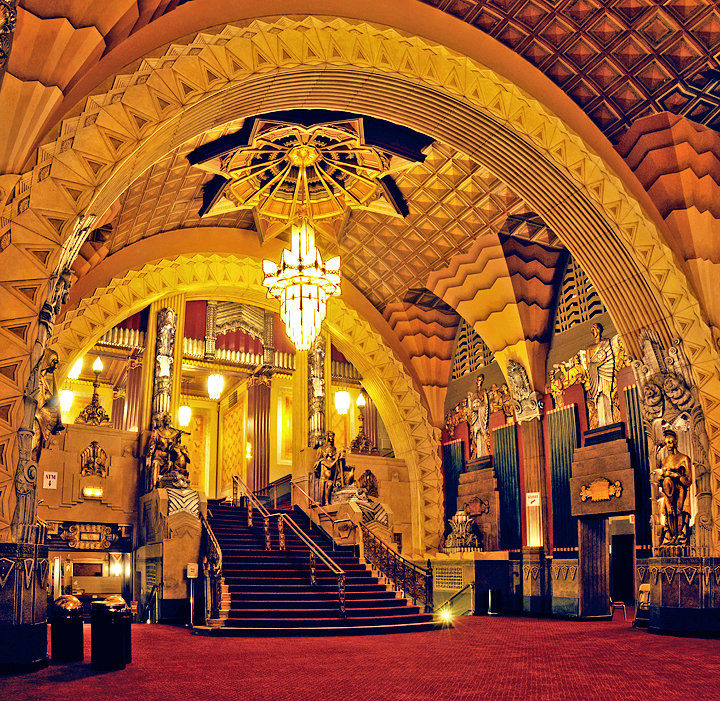
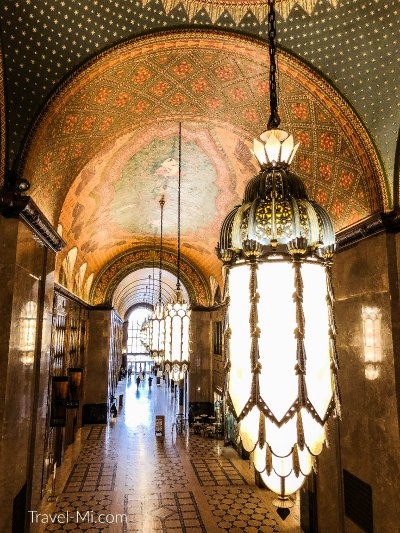
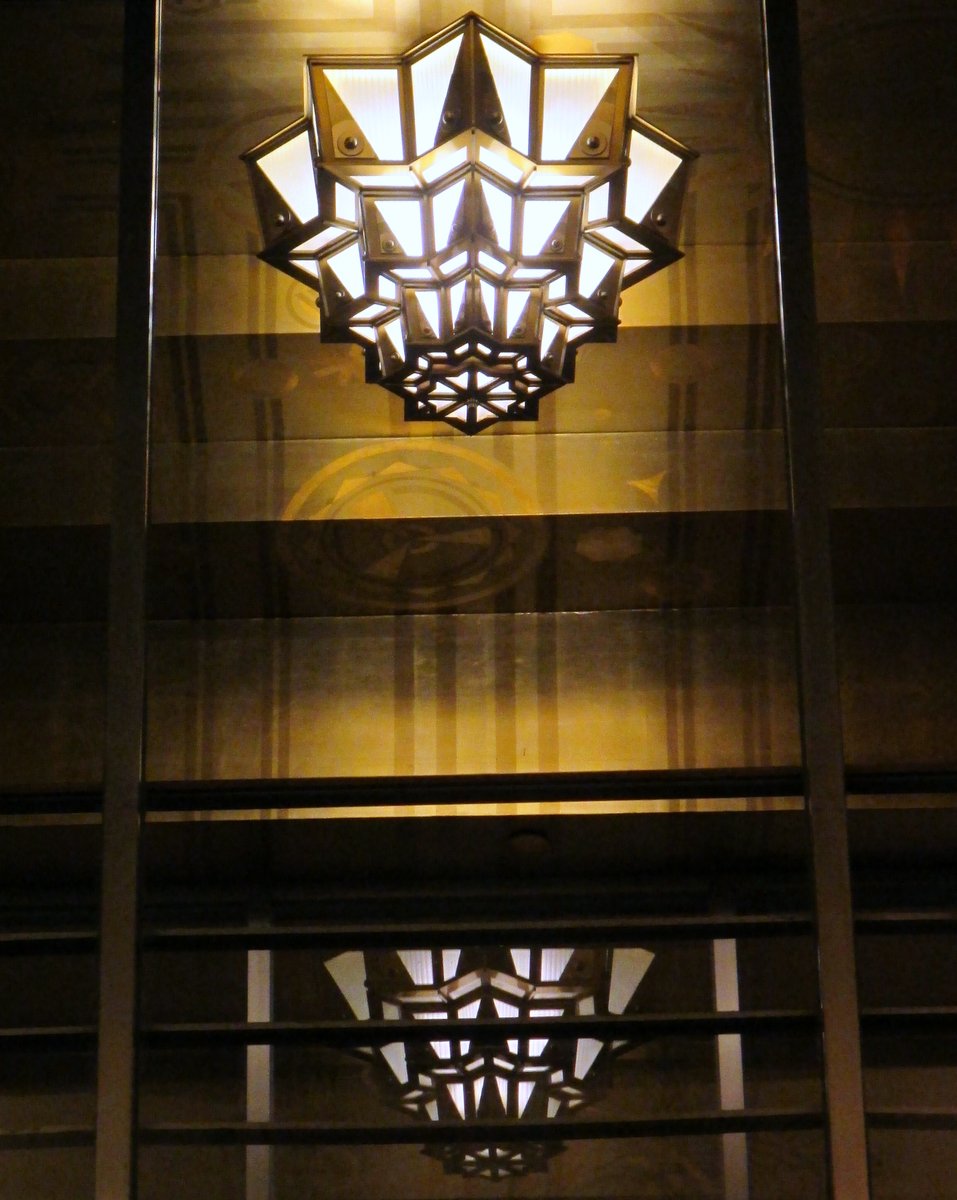
The Empire State Building, completed in 1931, was originally meant to feature an ornate geometric chandelier in architect William F. Lamb’s blueprints, but because the stock market had crashed and the Great Depression had begun, the lobby fixture was simplified to reduce cost. Seventy years later, during a 2000 restoration, the original plans were rediscovered, and Rambusch Lighting Studios finally created the chandelier as it had first been intended. At the Los Angeles Pantages Theatre, opened in 1930, a hanging vertical lamp filled with geometric glass forms serves as the centerpiece of the lobby, and because the theater hosted the Academy Awards for several years, critics have often said that its arches, golden ceilings, and chandelier are as memorable as the auditorium itself. In Detroit’s 1928 Fisher Building, Hungarian artist Géza Maróti designed a dozen pedestal chandeliers for a 50-foot-high Art Deco corridor, and these 15-foot fixtures, made of brass, copper, steel, and milk glass, combine arched tops with repeated tapered forms to create elongated lanterns. The final example is a 1940 fixture now at the Crystal Bridges Museum of Art in Bentonville, Arkansas, whose curved blown glass form gives it a softer and more organic appearance than the others. Readers are invited to follow the links for larger images of each chandelier and to view, at the end of the article, a video from the Kelly Art Deco Light Museum along with additional examples of Depression Era milk glass in the comments.
Art Deco Milk Glass Chandelier
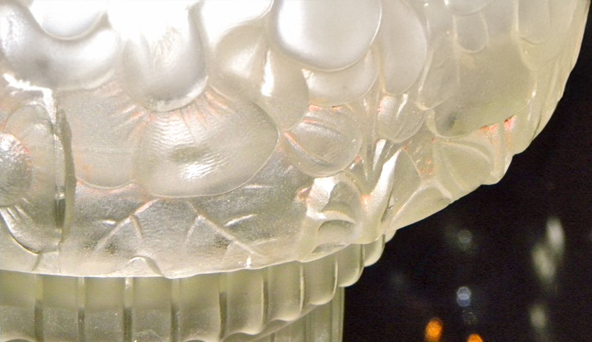
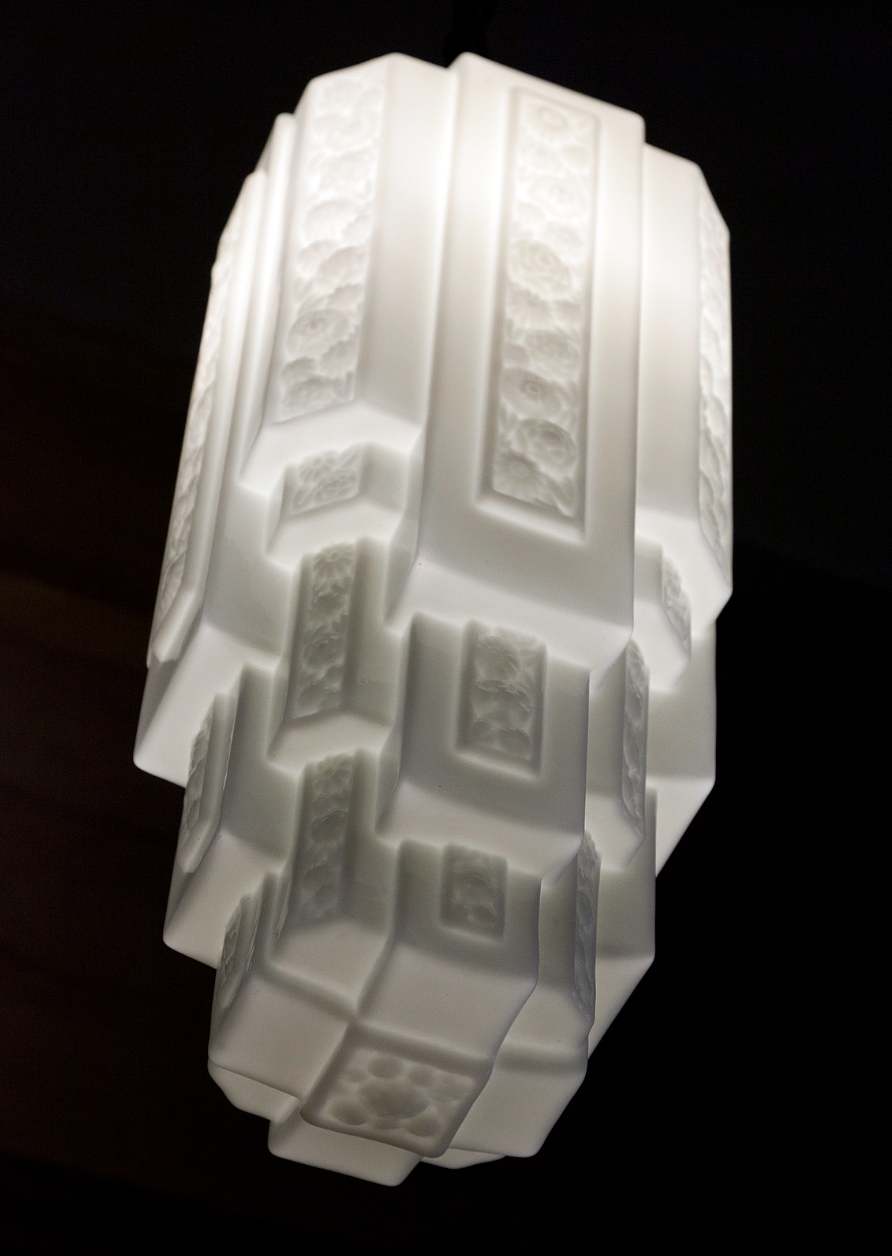
Milk glass is a white-infused glass used in figurines, dishes, and lighting fixtures, first invented in Venice during the 1600s, and also known as opal glass or lamb broth glass. Although it has a long and historically significant past, it may have been used more widely than ever during the Great Depression of the 1930s, which is why it is so often associated with Depression Era glass. This article focuses specifically on its use in beautiful chandeliers, with examples drawn from grand train stations, elegant theaters, and even what was once the tallest building in the world. Together, these fixtures show etched glass, molded glass, and blown glass, each treated as a true work of art. One example is the 1935 chandelier from the Paramount Theatre in Yorkville, New York, a three-foot-high vertical block fixture descending in elongated stepped levels, its details defined by copperfoil construction and recently restored by the CFL Lamp Company. Other early examples include the smaller chandelier at the 1933 Belmont Historic Hotel, with stylized flowers etched into its narrowing stepped form, the enormous 15-foot milk glass tube chandeliers of Omaha Union Station, the glowing pedestal fixtures of Fort Worth’s 1931 T&P Union Station, and the tall pendant chandeliers of Los Angeles’s 1929 Desmond’s Building, whose architect Gilbert Stanley Underwood is also remembered for Omaha’s station.
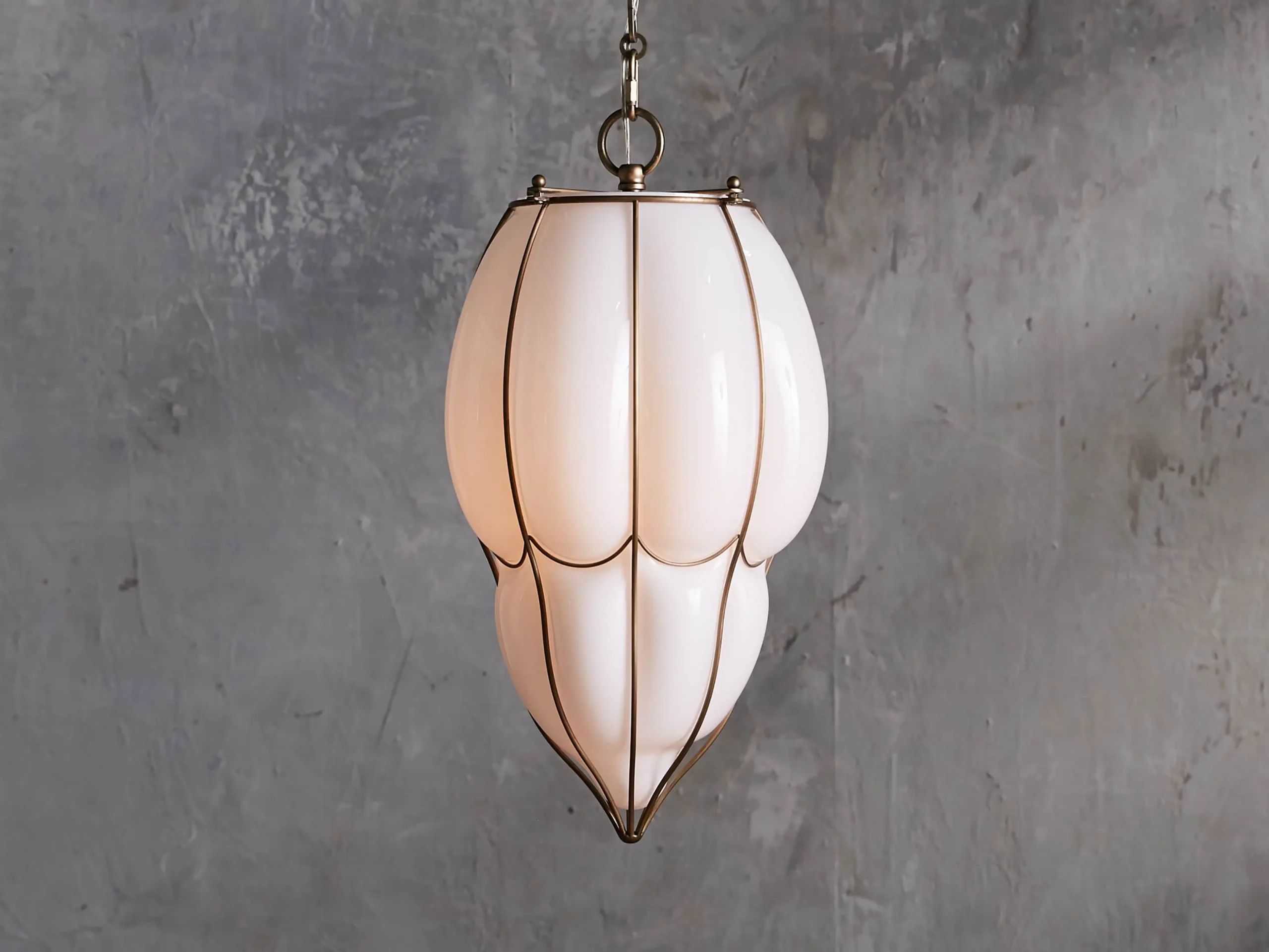
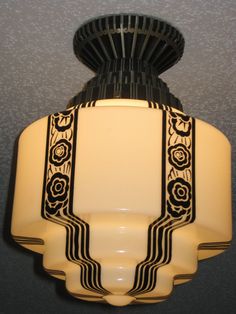
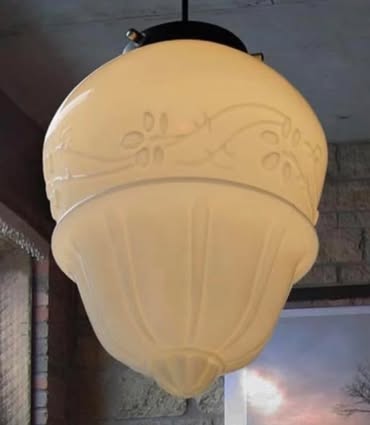

Related Products from ArtDecoCollection.com