


Collecting Art Deco Compacts and Vanity Cases
One of the most rewarding parts of our work at Art Deco Collection is meeting collectors whose passion and dedication to preservation inspire projects that go well beyond ownership alone. Many of these individuals are driven not only to build remarkable collections and environments, but also to share their knowledge in thoughtful and lasting ways. These are the special stories we are proud to feature in the Art Deco Resource Guide Journal, because they reflect exceptional vision, deep personal commitment, and a genuine desire to preserve, document, and honor ideas that deserve recognition and study.
Powder compacts are among the most intimate Art Deco objects because they were made to be held, opened, and used in public, like a small piece of personal architecture with a mirror inside. Long before the Deco years, early powder cases existed in discreet forms, but the 1920s transformed them into confident accessories meant to be seen. After World War I, cosmetics shifted from taboo to fashionable, and the compact became part of a new, modern public life that included offices, theaters, restaurants, and dance floors. By 1920 and 1921, the compact was no longer a novelty; it was a practical companion for quick touch-ups and a signal of style. A typical compact paired a mirror with loose powder, often dispensed through a sifter, plus a puff, and many included a second compartment for rouge. Because it lived in a handbag or palm, the compact condensed the era’s ideals into a small, satisfying object that could be used in seconds. Even modest examples show the period’s taste for clean lines and modern surface pattern, while the best feel both engineered and decorative at once. In the Art Deco period, the compact’s outer lid became its stage, a place where glamour, geometry, and craftsmanship met at fingertip scale.
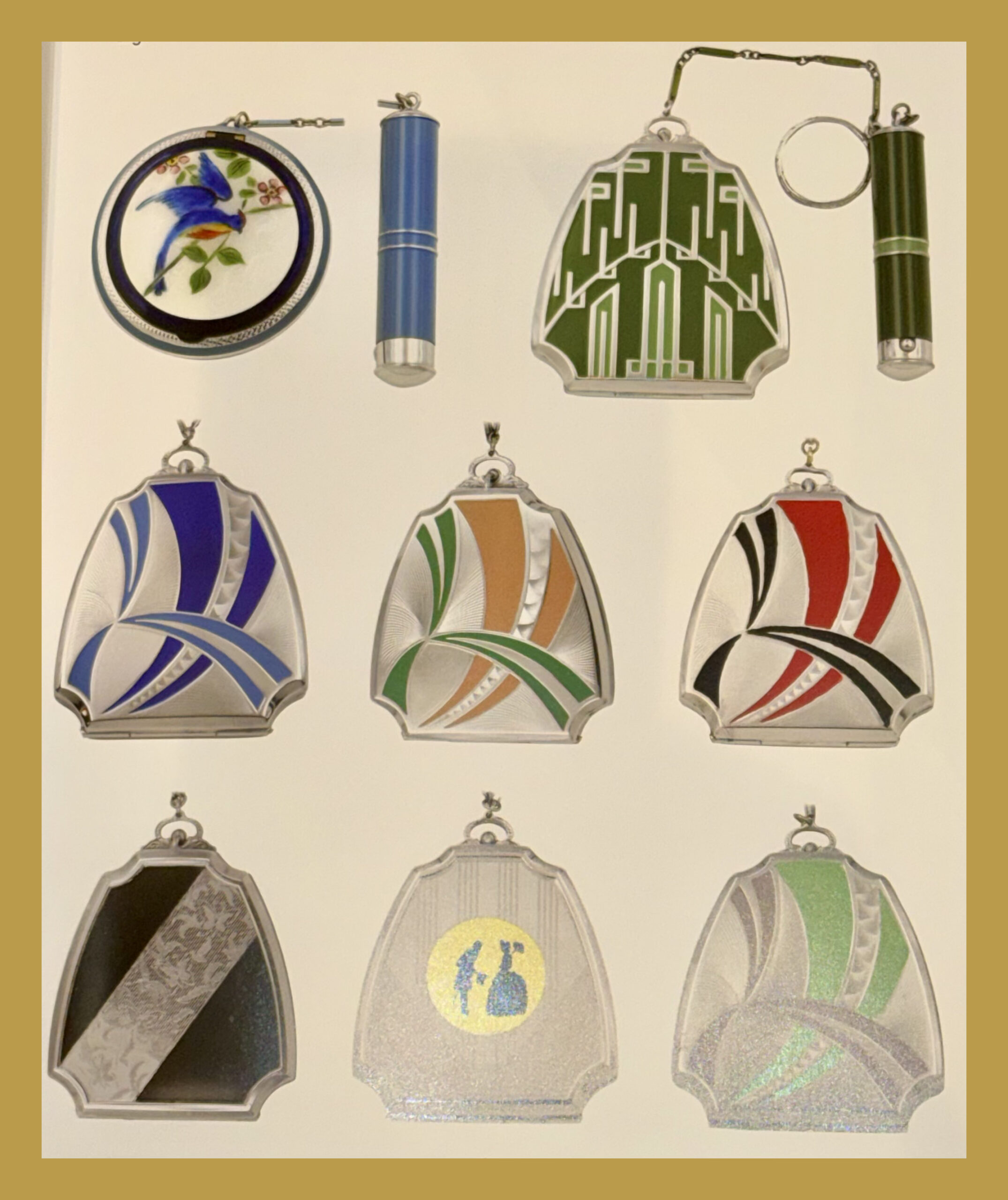
In the United States, compact making quickly became a serious industry, tied to jewelry and “novelty” manufacturing rather than the cosmetics houses alone. Major makers treated compacts as accessories of quality, often selling them through jewelry stores and better department stores, where they were chosen like bracelets or cigarette cases. Designs were planned in advance for seasonal catalogs, so new patterns could arrive in time for holiday purchases and special occasions. Early cases could be restrained, stamped with pressed metal motifs, or finished with guilloché texture, but the category rapidly moved toward richer decoration. Enamel and color printing opened the door to bolder looks, and the compact became a miniature billboard for modern taste. American makers also popularized the dance compact, fitted with a finger ring or short chain so it could be carried in hand and flashed under the lights. Materials ranged from durable nickel alloys and plated finishes to sterling and gold wash, depending on the market, and the same form could be interpreted as everyday or luxurious. From the start, advertising framed the compact as a modern gift and a personal luxury, something functional that still felt like jewelry.
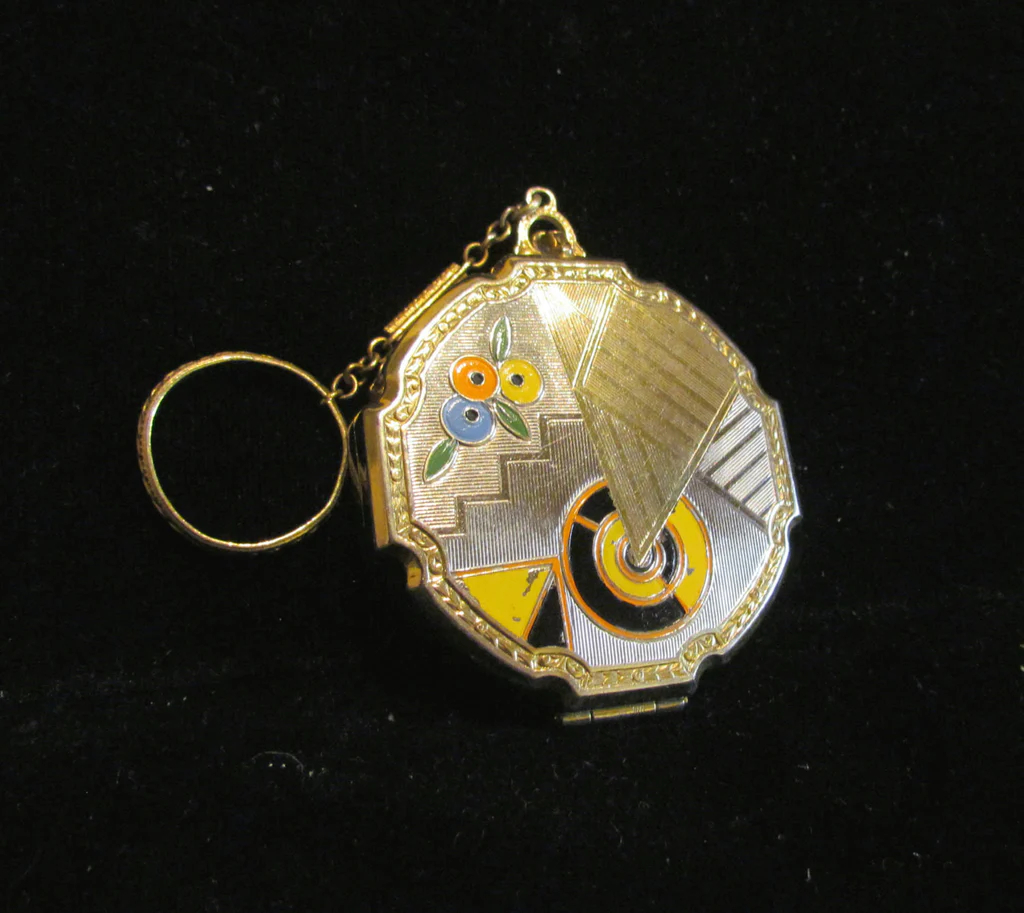
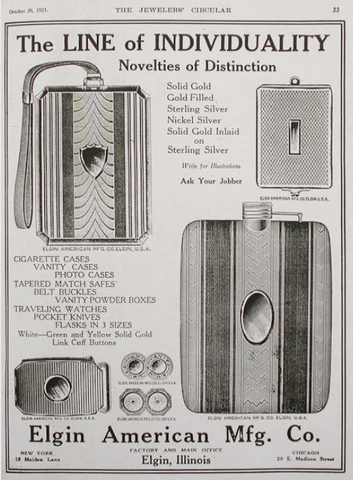
Left: Evans compact dance purse, 1920s. Enameled geometric lid with finger ring chain, made to be carried in the hand and shown off as jewelry. Right: Elgin American Mfg. Co. advertisement, The Jewelers’ Circular, October 26, 1921. Promoting vanity cases and compacts as modern “novelties of distinction.”
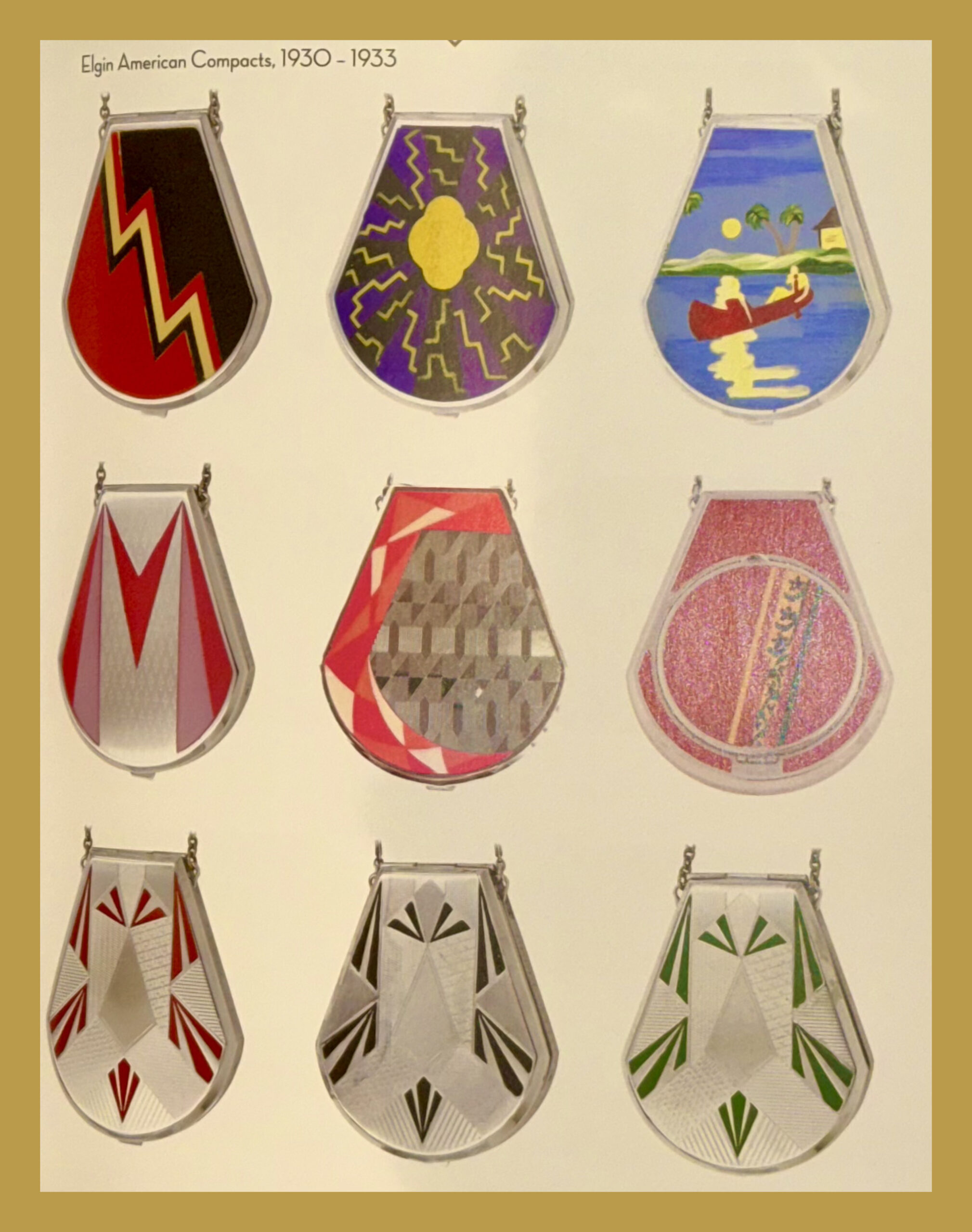
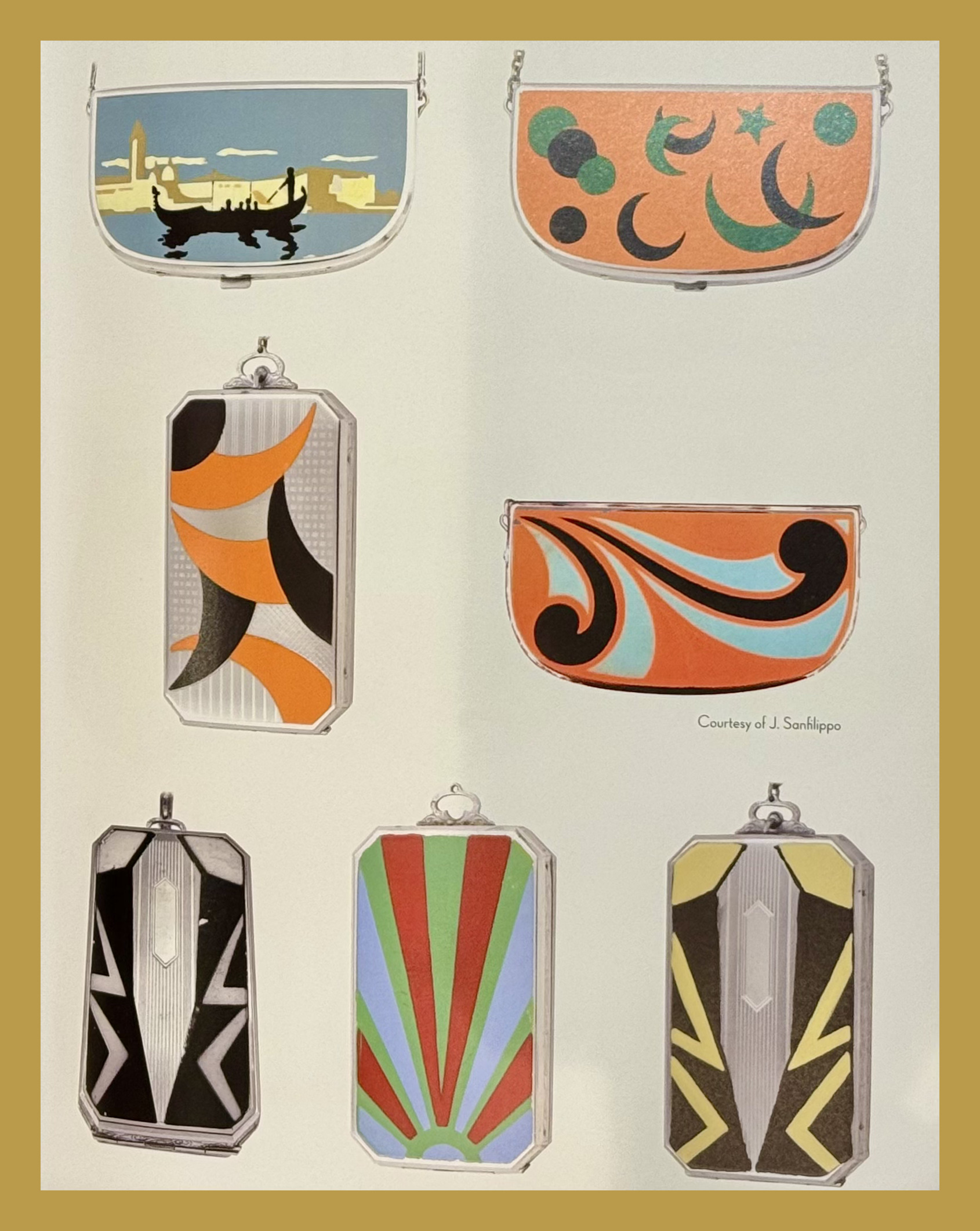
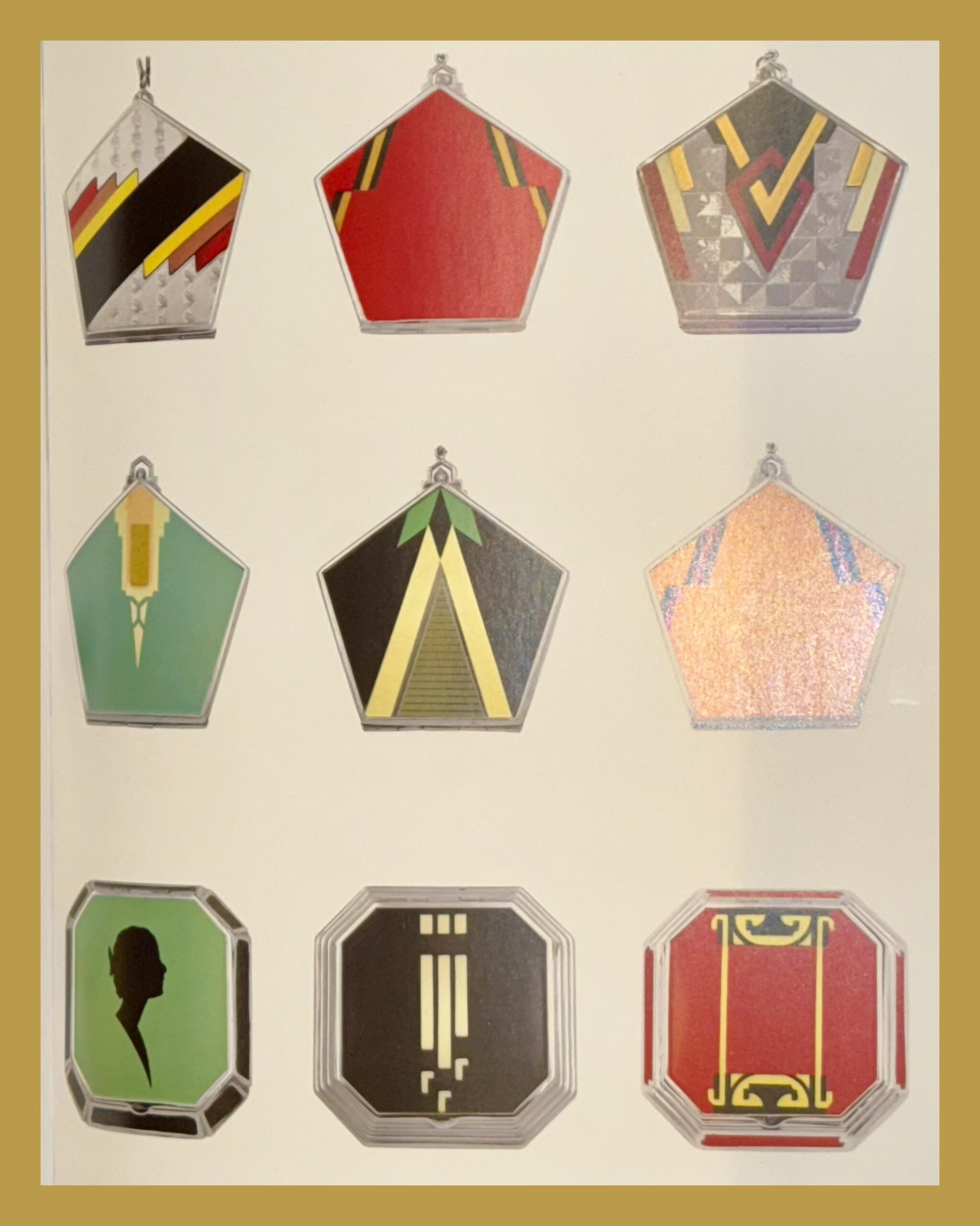
Color and form define Art Deco compacts, capturing the ease with which the movement’s architectural and graphic language found expression in small, handheld objects. Some lids are pure geometry, built from chevrons, sunbursts, stepped forms, speed lines, and sharp framing that looks lifted from the era’s posters and skyscraper ornament. Others lean into illustration, with stylized women, theatrical figures, and nightlife themes rendered in crisp lines and bold blocks of color. Enamel made jewel tones possible, from deep blues and greens to fiery reds and sunny yellows, often paired with metallic accents that catch light like jewelry. Guilloché and patterned metal offered a different kind of color, creating shimmer through texture and repeating lines rather than pigment. Global inspiration is evident everywhere, including Egyptomania following the discovery of Tutankhamun’s tomb, as well as broader tastes for East Asian motifs, tropical birds, and imagined “exotic” scenes that were popular across Deco design. Many patterns appeared in multiple colorways, so a single design could feel subtle in one version and dramatically modern in another. Because the compact lid was the part everyone saw, makers treated it like a tiny composition, balancing symmetry, contrast, and shine to make the object memorable.
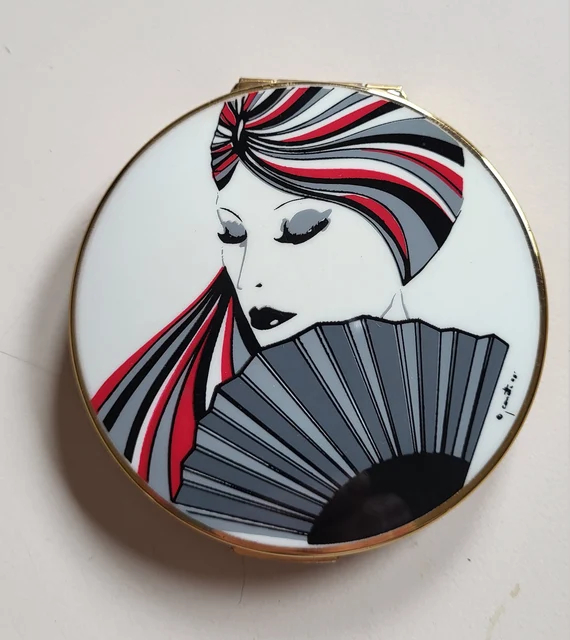
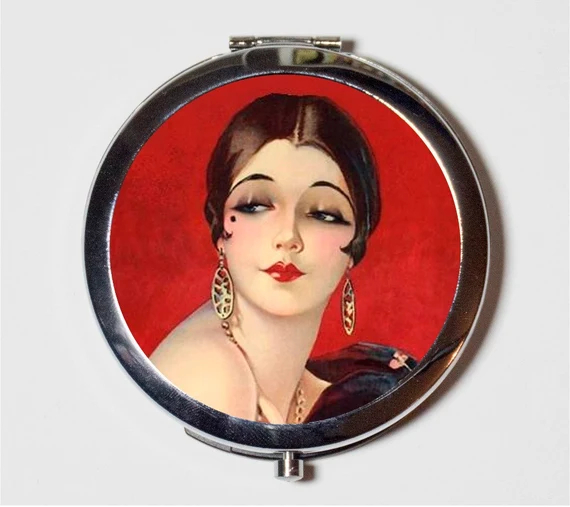
Left: Stylized portrait with a fan and flowing hair, rendered in crisp lines and striking Art Deco color blocks. Middle: Flapper figure framed by bold geometry, capturing the era’s love of sleek silhouettes and stage-ready glamour. Right: Classic 1920s beauty portrait, a compact that doubles as a miniature piece of period illustration.
Just as striking as the exterior is the way these compacts open, close, and function, since Art Deco style often paired visual polish with smart engineering. Interiors are typically organized with a mirror and neatly separated zones for powder and rouge, with fitted trays designed to keep everything clean and portable. Closures were engineered to feel precise, with hinges and clasps that still deliver a satisfying snap when they are in good condition. Some examples include protective inner covers, sifters, sliding panels, or cleverly arranged compartments that make the inside feel like a small machine. Form also varied widely, from round compacts to squares and rectangles, from slender dance compacts to pendant styles meant to be worn on a cord. At the luxury end, European jewelers elevated the idea into vanity cases and minaudières, turning the compact into an evening accessory that could replace a bag entirely. Even when materials were lavish, the best pieces kept an Art Deco discipline, with crisp edges, strong proportion, and a sense that every surface was designed. Today, collectors look for examples where color remains bright, plating is sound, mirrors stay clear, and the mechanism still closes with confidence.
At the high end, European jewelers pushed the compact toward pure luxury, treating it as an objet d’art in precious metal, enamel, lacquer, and gemstones, and sometimes turning it into a full evening-case replacement. The idea expands beyond powder and mirror into a complete set of essentials, arranged with the same rigor you see in Art Deco furniture and architecture, where every plane, hinge, and compartment is part of the design. Van Cleef and Arpels formalized this concept with the Minaudière in 1933, a refined case meant to carry multiple items in one sculptural object, often finished with rich color and meticulous detailing. These pieces show Art Deco at its most elevated, where functional objects are transformed into wearable, collectible designs. In the best examples, luxury is not just materials, but the discipline of the layout and the elegance of the engineering. They also demonstrate how Art Deco could be both restrained and extravagant, depending on finish and motif.
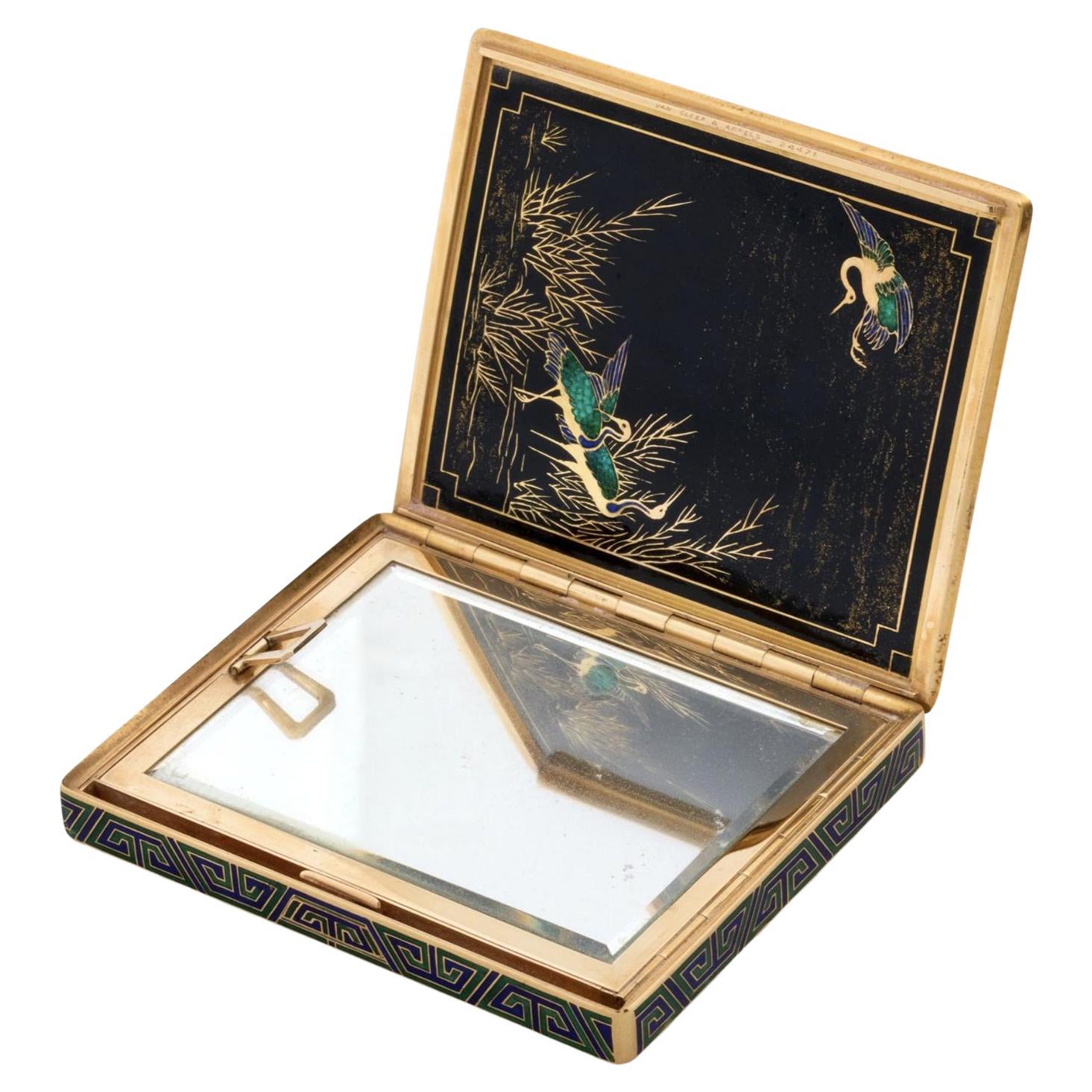
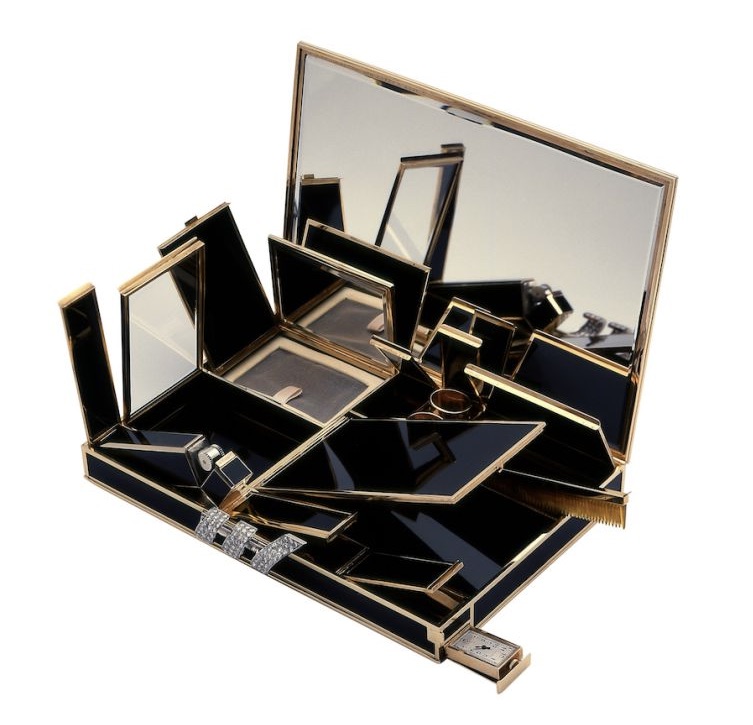
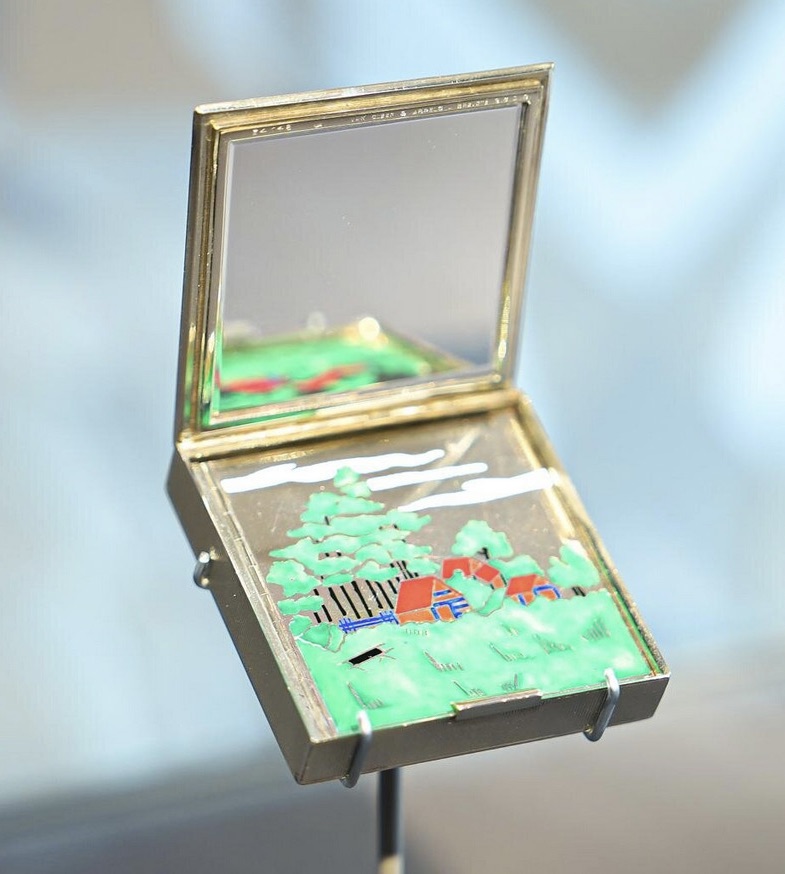
Left: Van Cleef & Arpels lacquered compact with stylized birds and gilt detailing, framed by a bold Greek key border. Middle: Van Cleef & Arpels minaudière-style evening case, unfolding into a geometric “tool kit” of mirrors and compartments in sleek black and gold. Right: Van Cleef & Arpels vanity compact with mirror and lacquered interior scene, a jewel-like take on the everyday powder case.
The compact’s golden moment was relatively brief. The Great Depression disrupted luxury production and spending, and the market gradually shifted toward simpler, cheaper cases aligned with pressed powder formats, then later toward plastic packaging designed to be discarded once empty. Even so, Art Deco compacts remain highly collectible because they concentrate an entire era’s design ideals into a palm-sized object, and many still function beautifully as mirrors and keepsakes. For collectors, condition matters most in the details: enamel chips, worn plating, cloudy mirrors, and loose hinges tend to determine both value and visual impact. When you find a strong example with clean geometry and a satisfying clasp, it feels like discovering a small, complete work of Art Deco design that was meant to travel. The most memorable pieces still stop you in your tracks purely on color, composition, and silhouette.
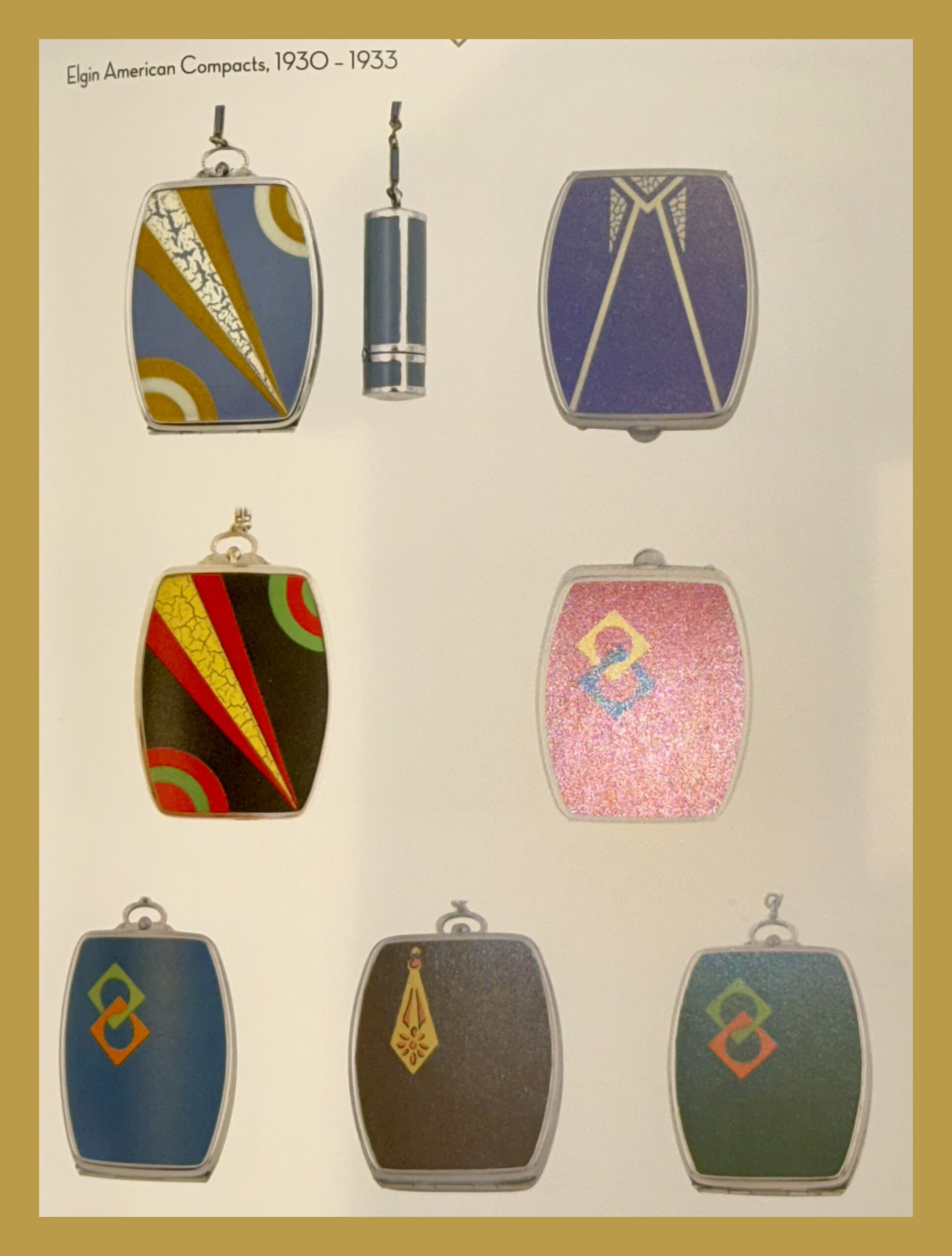
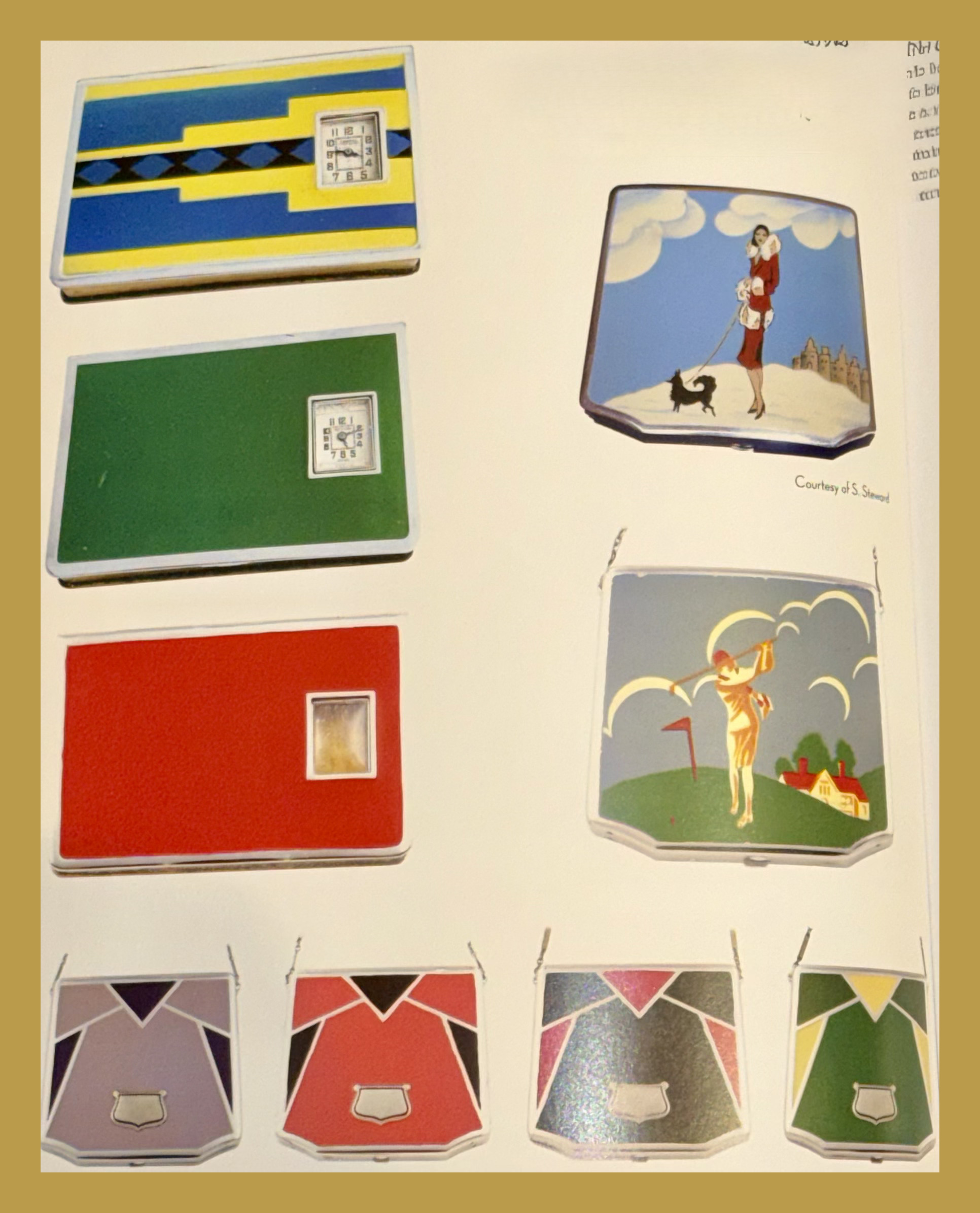
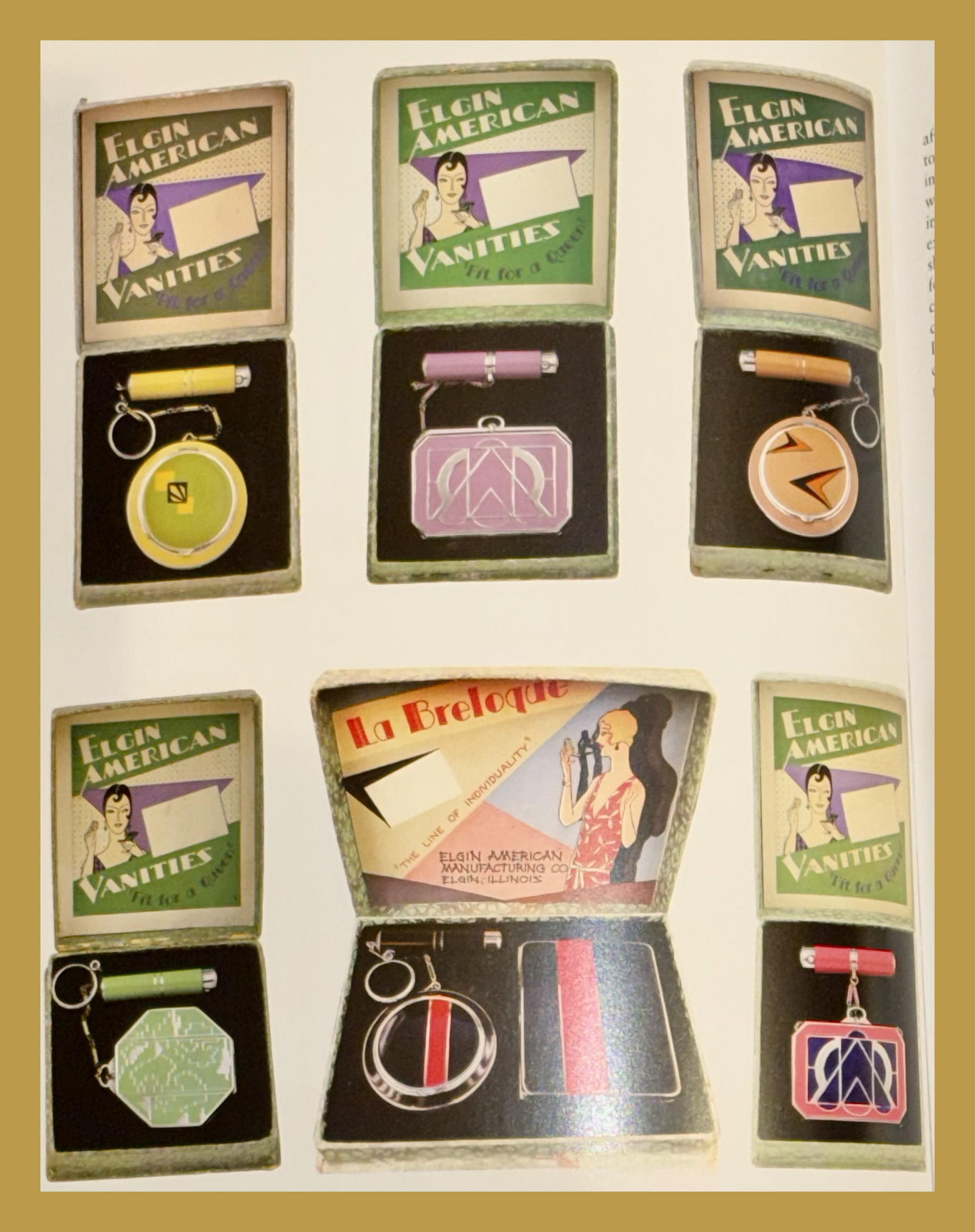
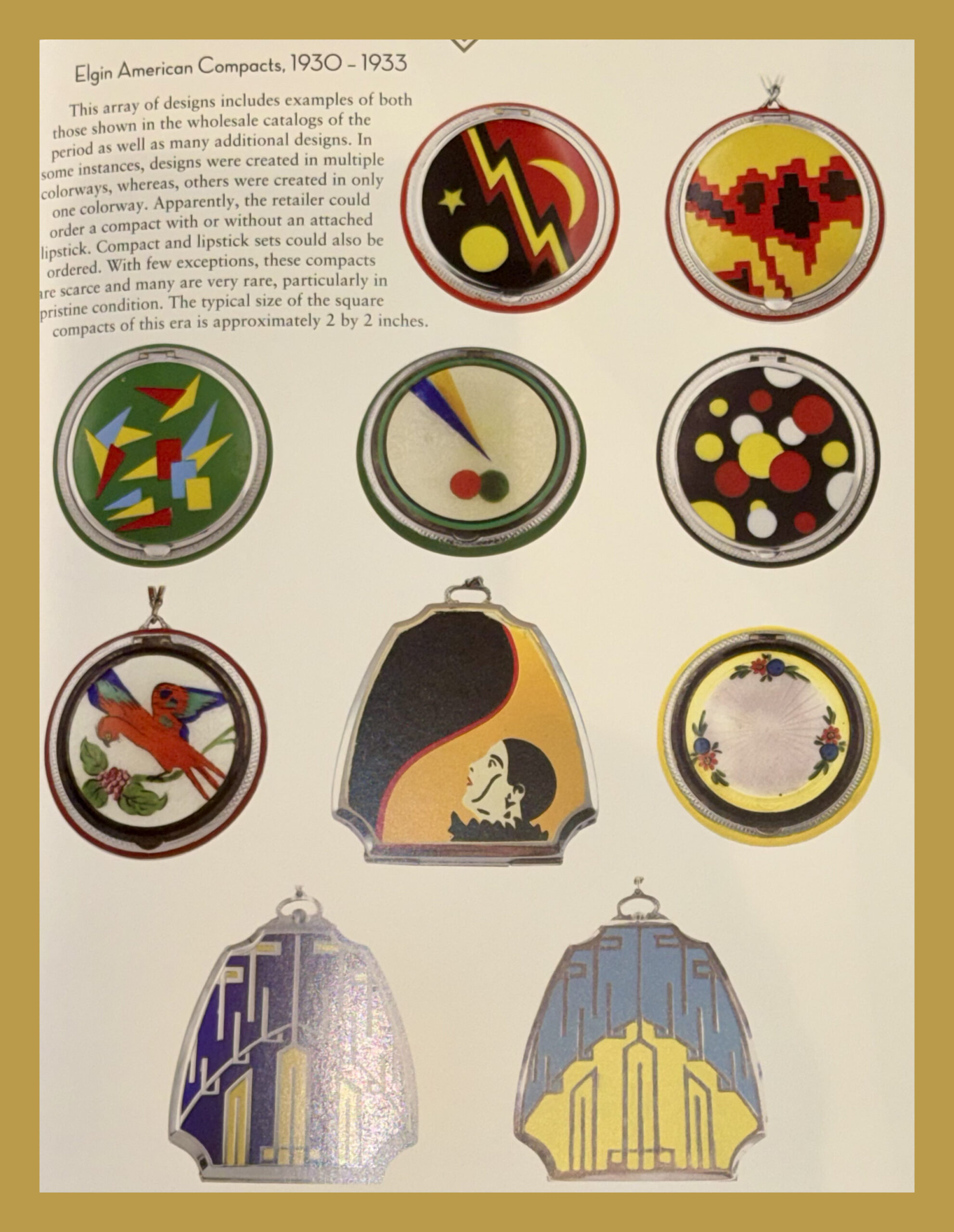
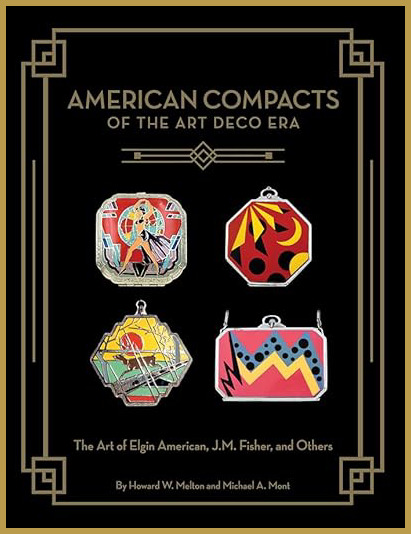
We would like to give special recognition to American Compacts of the Art Deco Era: The Art of Elgin American, J.M. Fisher, and Others by Howard W. Melton and Michael A. Mont. This primary reference helped inspire the journal and supported our effort to present accurate historical context, including maker documentation and period detail. We are grateful for the authors’ scholarship and for the way their work helps preserve the record of these designs.
Laurie Gordon on Collecting Art Deco Compacts

Rick Fishman and I had our first date in April, and the following month, he gave me a birthday gift, a compact that remains one of the true gems of my collection. In that moment, I knew he understood me and, more importantly, my deep fascination with Art Deco. I had begun collecting compacts years earlier, during my first trip to Paris while I was still in college. At the time, it was merely a personal interest. Once Rick and I began traveling together in earnest and spending long days at antique shows and markets, those small objects took on a greater meaning.
As we searched for pieces on a grand scale, French posters, ceramics, chandeliers, and furniture, these finely crafted compacts became mementos of our journey. They are small but powerful expressions of Deco design, each one a window into the sophistication of the era. I often imagine the woman who once held one in her hand, catching her reflection in the tiny mirror, touching up her lipstick, or patting her cheeks with the miniature powder puff.
What continues to captivate me is their precision and refinement, the luminous enameled colors, the beautiful metalwork, and the satisfaction of the perfectly engineered “snap” as each compact opens and closes. Some were created by cosmetic companies to glamorize and promote their brands, while others commemorate World’s Fairs or special events. Together, they form a charming display, and even now, I still slip one into an evening bag on special occasions, carrying a small piece of Art Deco elegance with me.
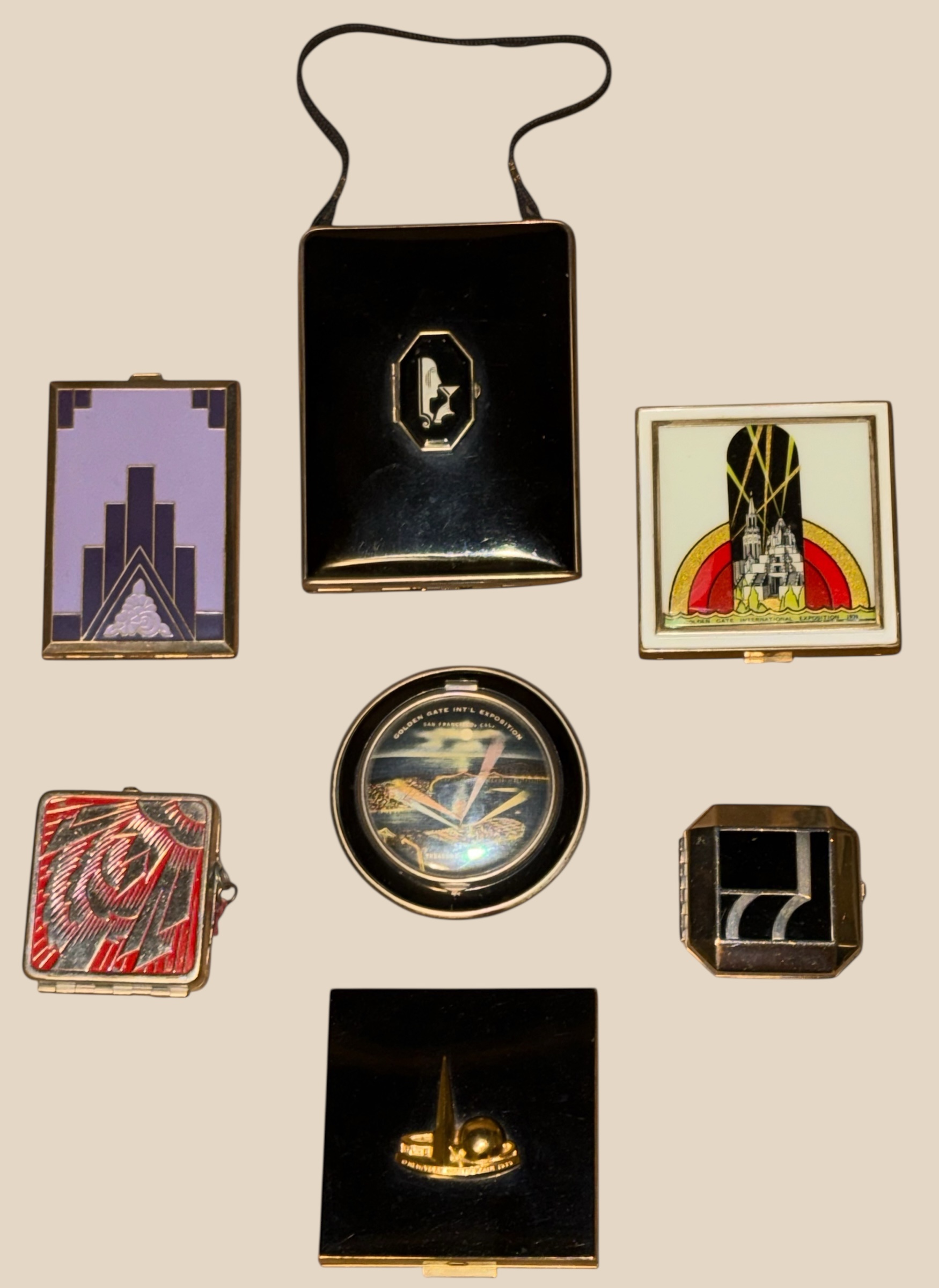
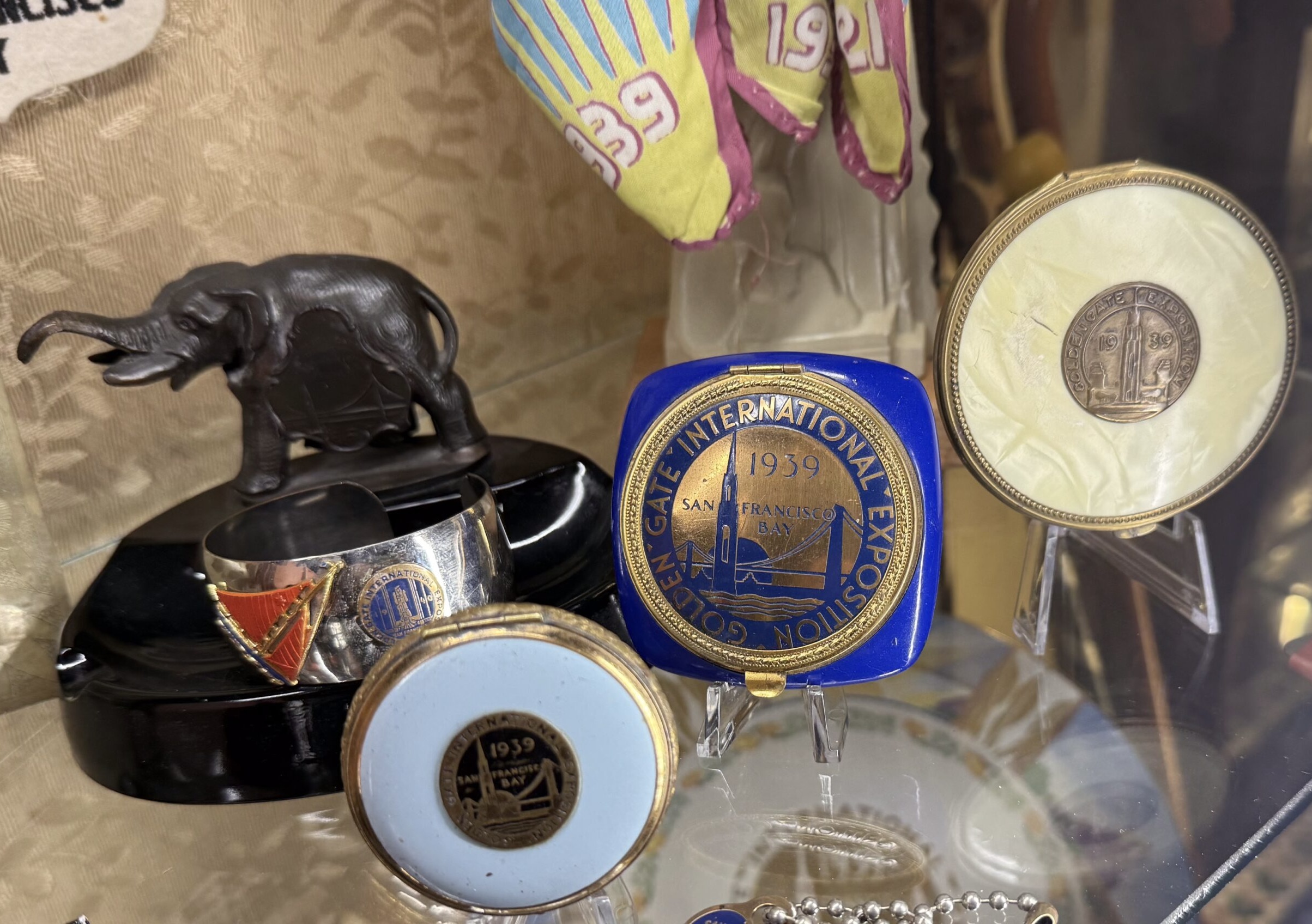
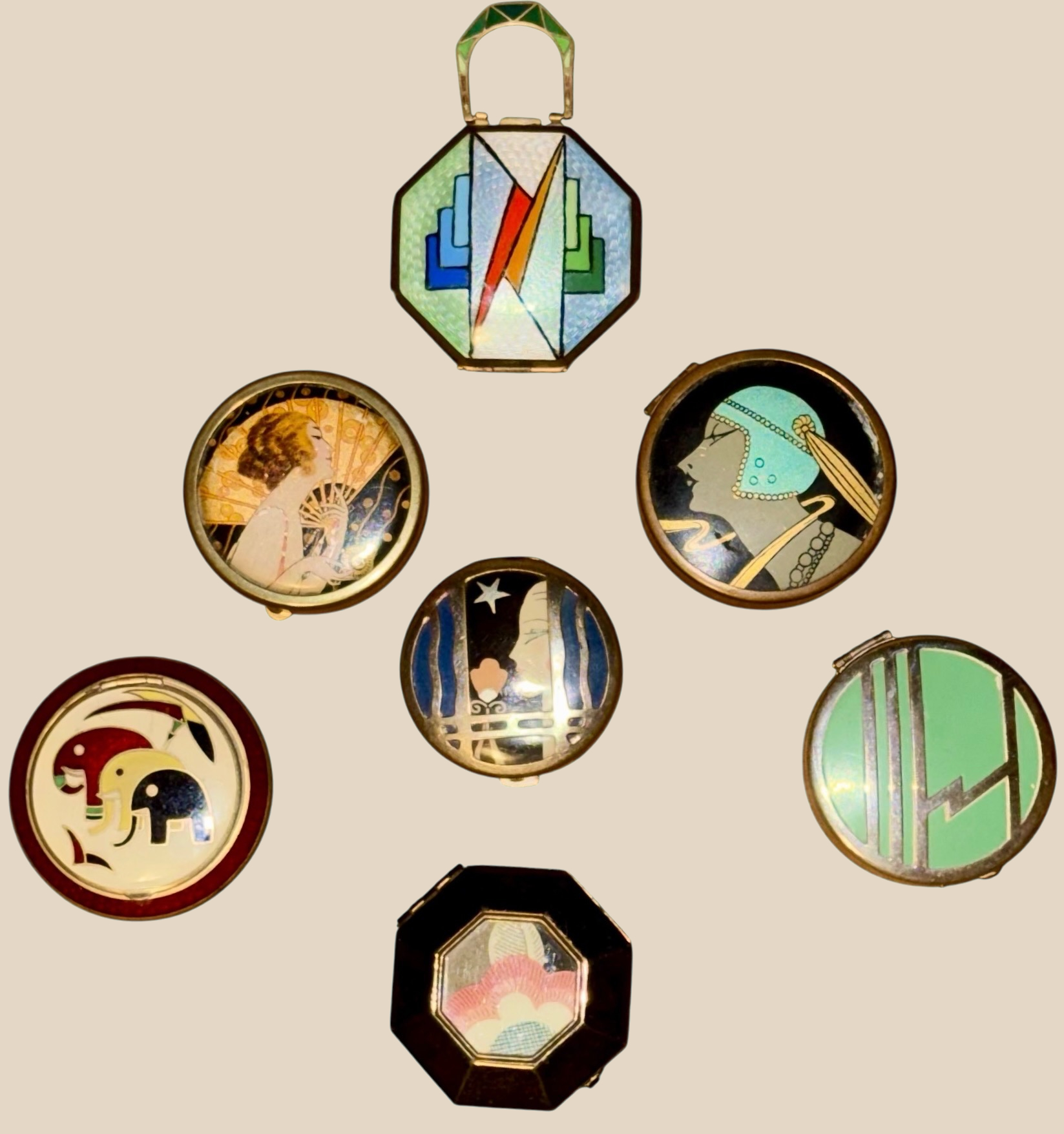
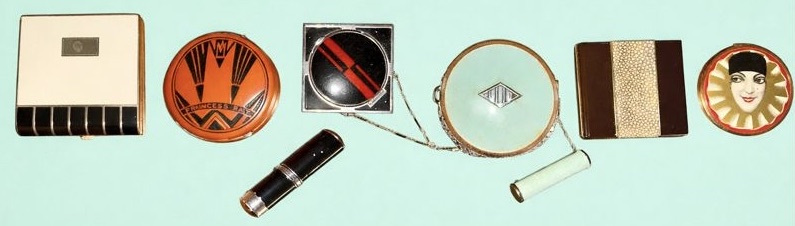
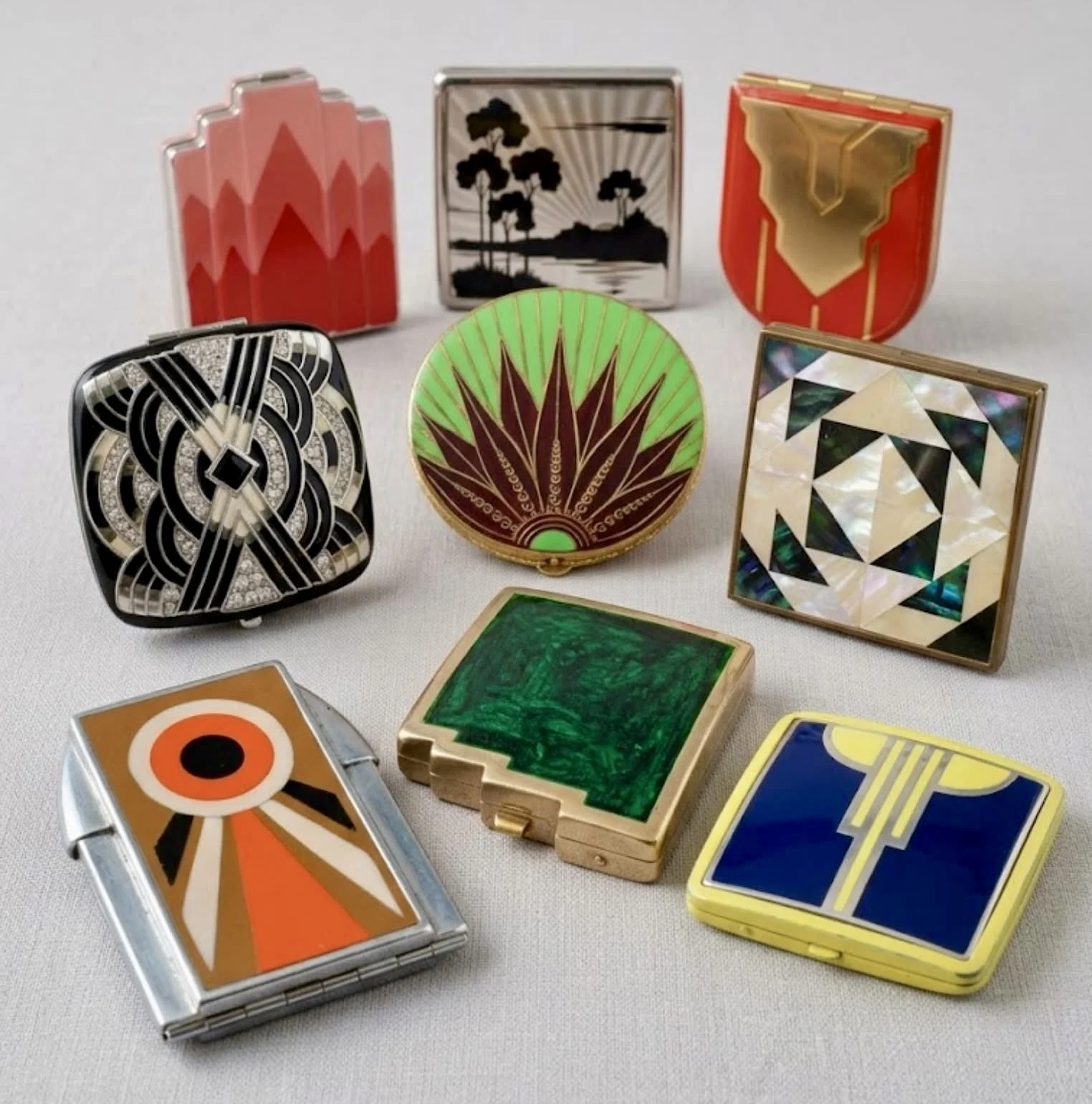
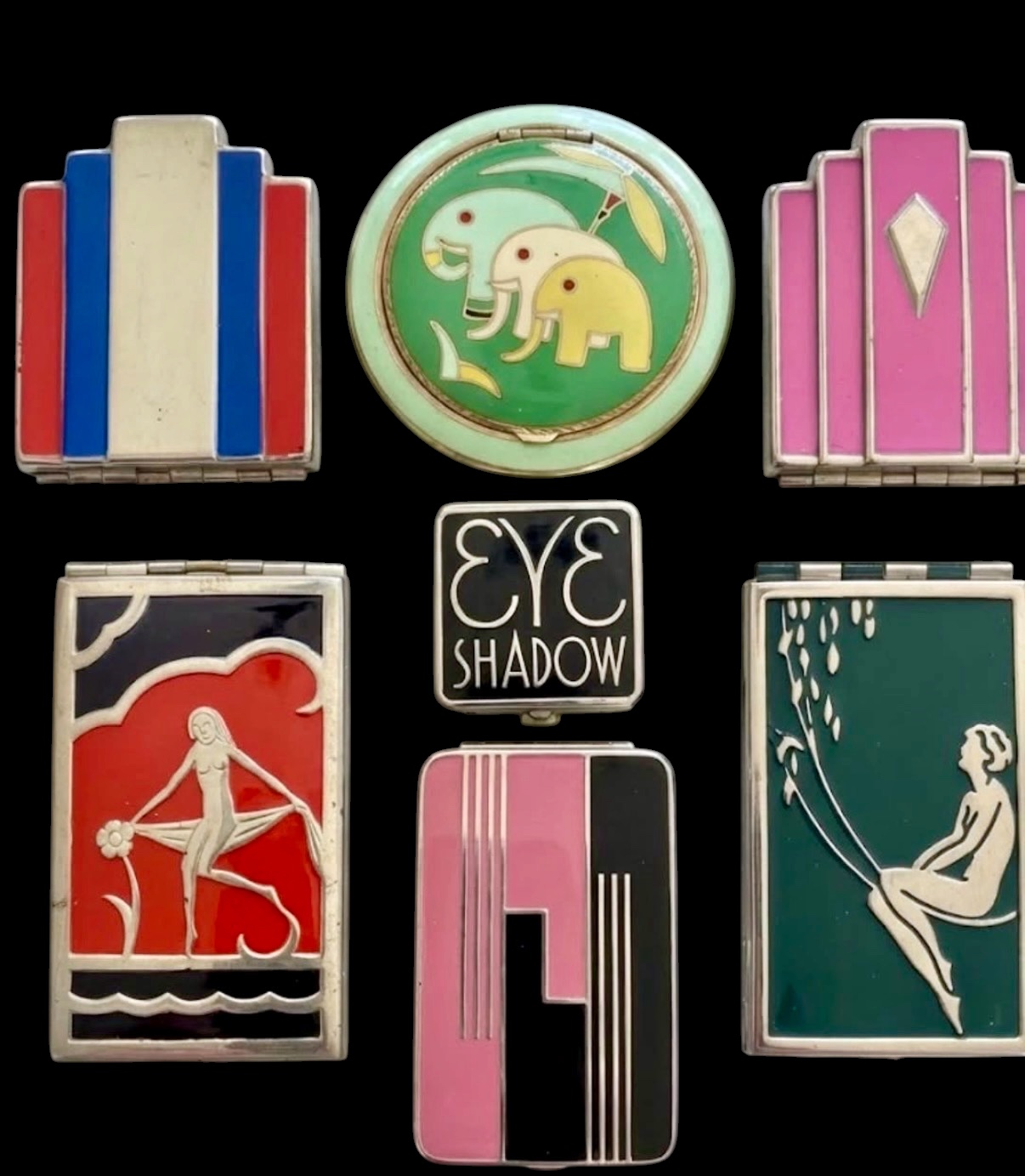
Compacts from the collection of Laurie Gordon, illustrating the remarkable breadth of Art Deco compact design.
Further Reading
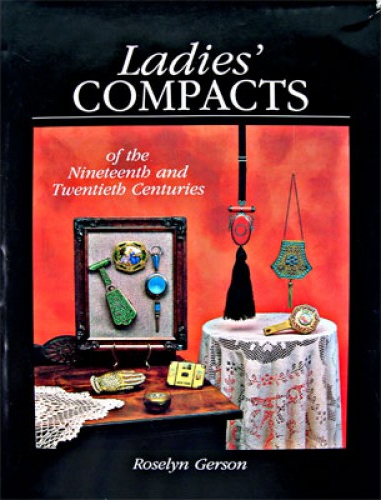
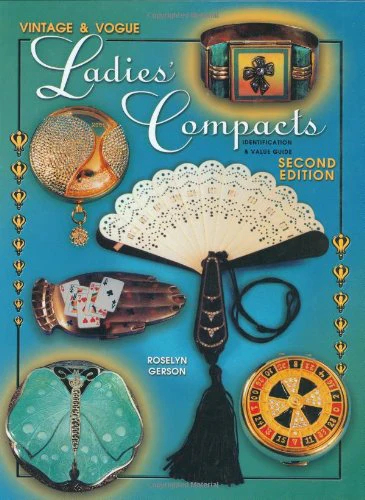
Click any cover to view the book on Amazon.

If you are interested in further stories of Art Deco design, collecting, and celebrating the artistry of early 20th Century: