
Maurice Dufrêne
Maurice Dufrêne was born in Paris in 1876, the son of a wholesale commodities merchant. From an early age, he showed an affinity for furniture, gathering scraps of wood, cardboard, and fabric from his father’s workplace to fashion into decorative artworks. He studied at the École des Arts Décoratifs, originally planning to become a painter before abandoning that path to work for Julius Meier-Graefe at La Maison Moderne, a gallery that employed artists to produce editions of original furniture. By the age of 23, Dufrêne was the gallery’s director, working alongside designers such as Henry van de Velde, Victor Horta, Charles Plumet, and Anthony Selmersheim. In 1904, he helped found the Société des Artistes Décorateurs, which quickly became one of France’s most prominent organizations of contemporary designers, and he would exhibit at its annual salon for the next thirty years. He taught at the École Boulle from 1912 to 1923 and also at the École des Arts Appliqués. In 1921, the Galeries Lafayette entrusted him with the direction of the Maîtrise workshop, a position he held until 1952. Dufrêne died in Nogent-sur-Marne in 1955.

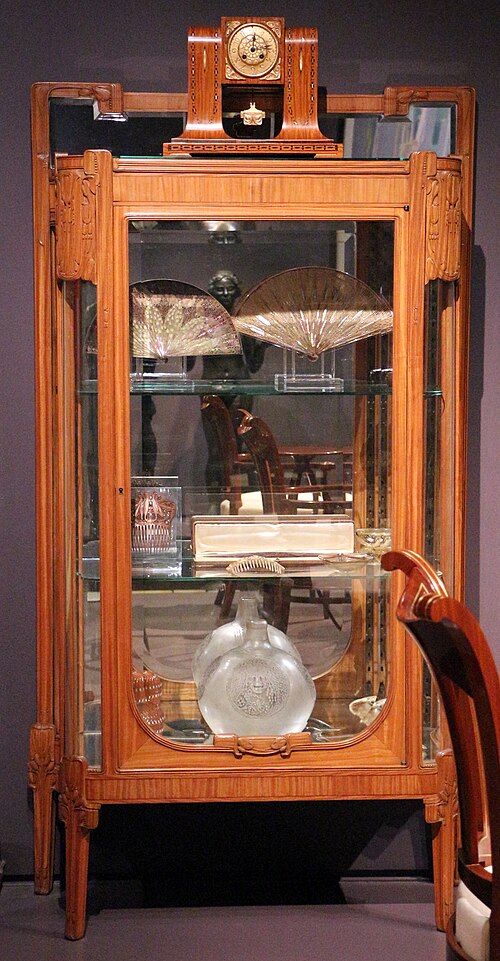
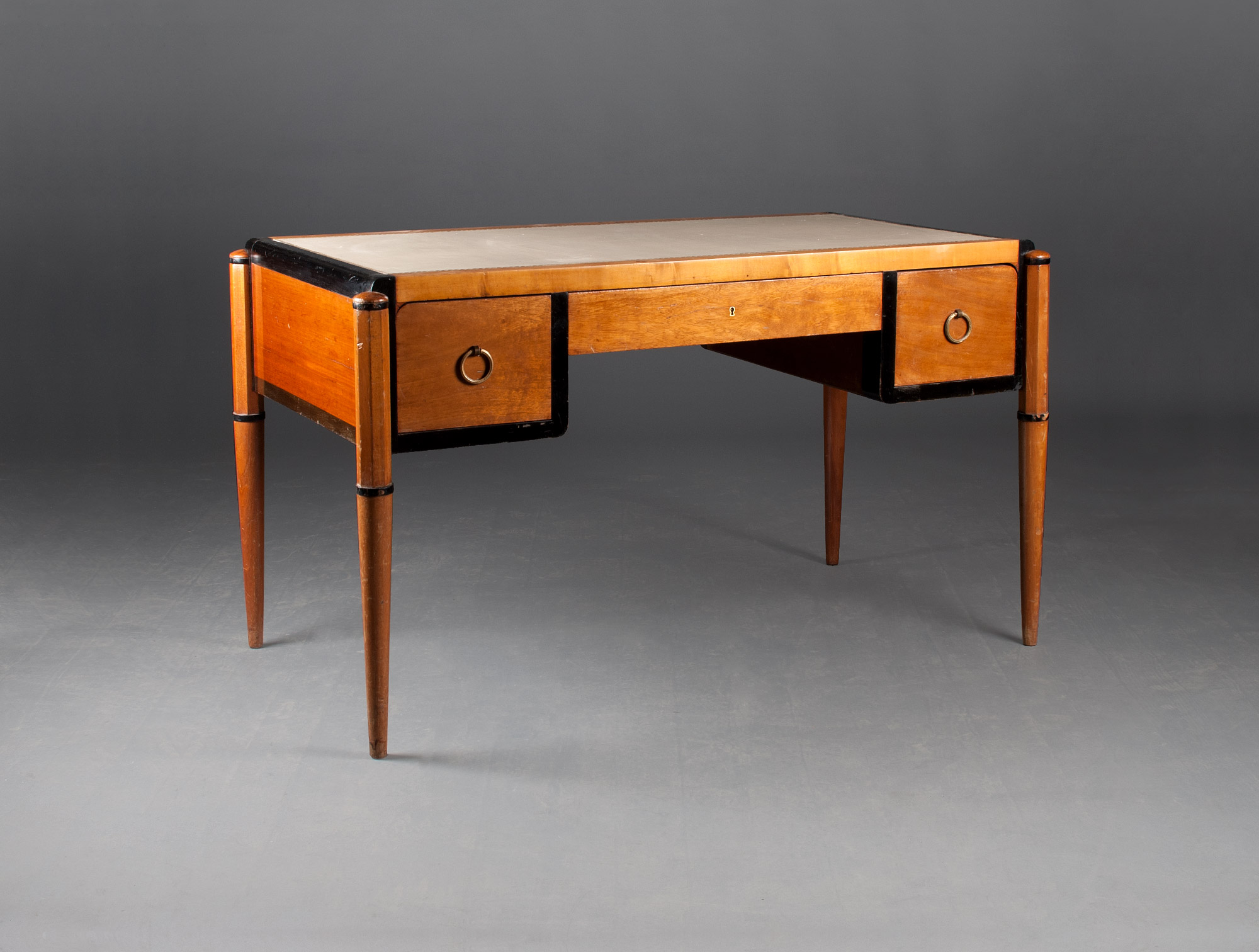
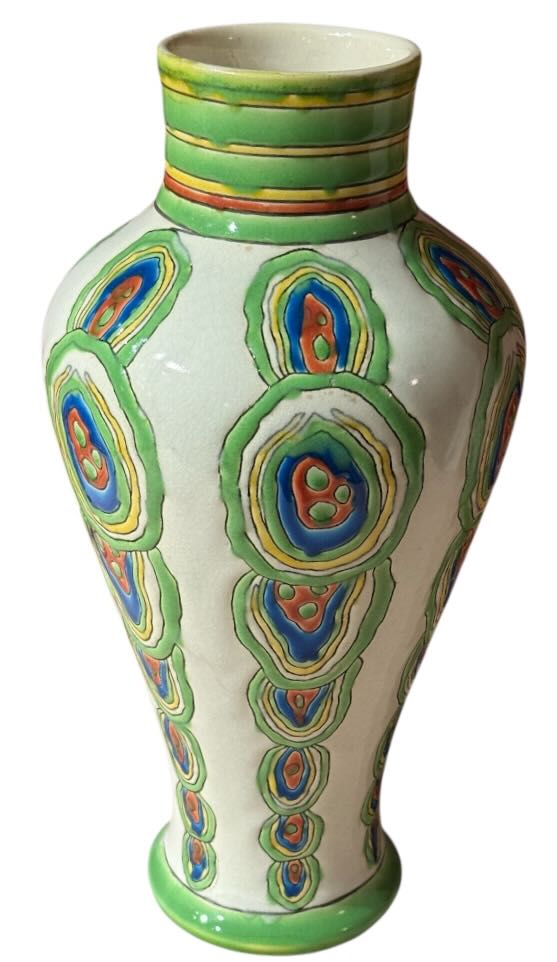
Dufrêne first showed his own work in 1902 and from 1903 onward exhibited regularly at the Salon d’Automne and the Salons of the Société Nationale des Beaux-Arts. At La Maison Moderne, he led a shift in the gallery’s production toward the popular Art Nouveau style before his own work evolved toward more structured, neoclassical forms. He designed across many media, including metalwork, ceramics, glass, and fabric, though he was best known for his furniture. He was one of the primary set designers on the 1919 film Le Carnaval des Vérités. Under his direction, the Maîtrise workshop at Galeries Lafayette produced high-quality furniture, textiles, carpets, wallpapers, and decorative objects intended for a wider public than elite collectors. His exhibit at the 1925 International Exposition of Modern Industrial and Decorative Arts in Paris helped solidify the quintessential Art Deco style, and he also designed luxury boutiques, a music salon, and the living room of the Ambassade Française pavilion for the exposition. He produced designs for Christofle, the large firm that manufactured high-quality Art Deco metalwork, and decorated rooms for the Palais de l’Élysée and numerous embassies on behalf of Le Mobilier National. His work was honored at the 1915 Panama-Pacific International Exposition in San Francisco and can be found today in the Musée des Arts Décoratifs and the Budapest Museum of Applied Arts.
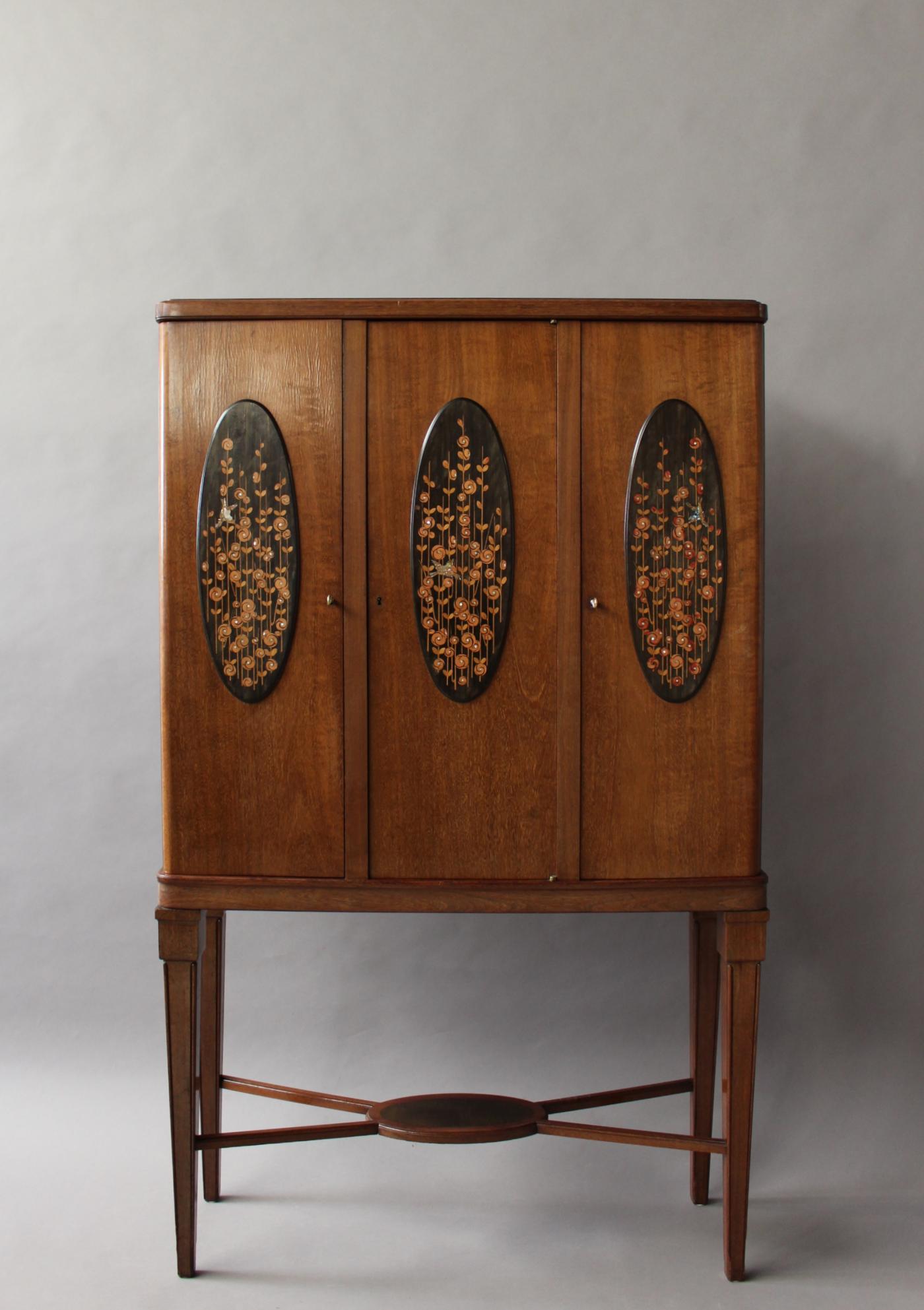

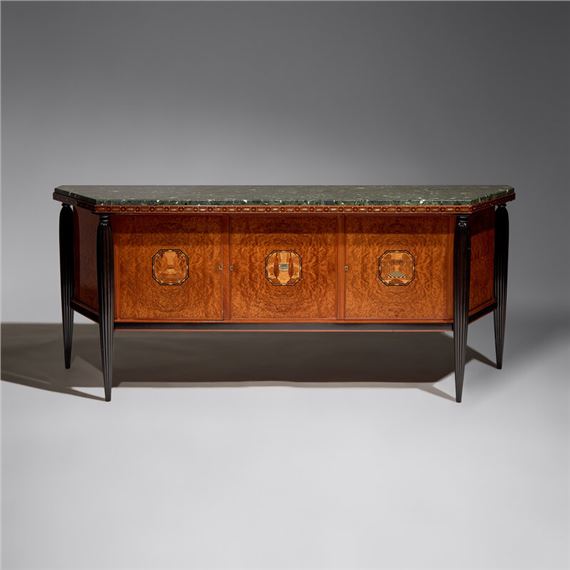
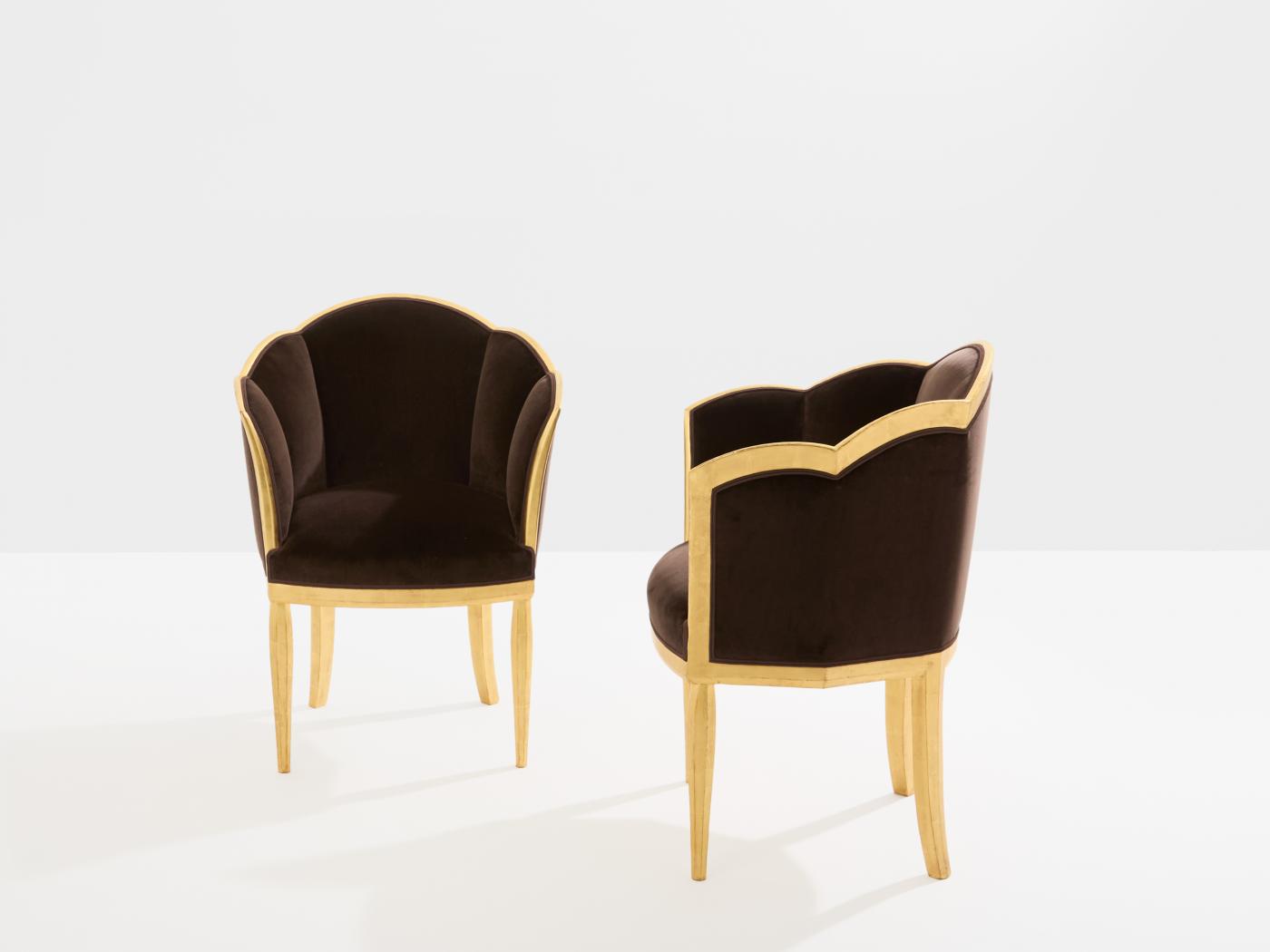


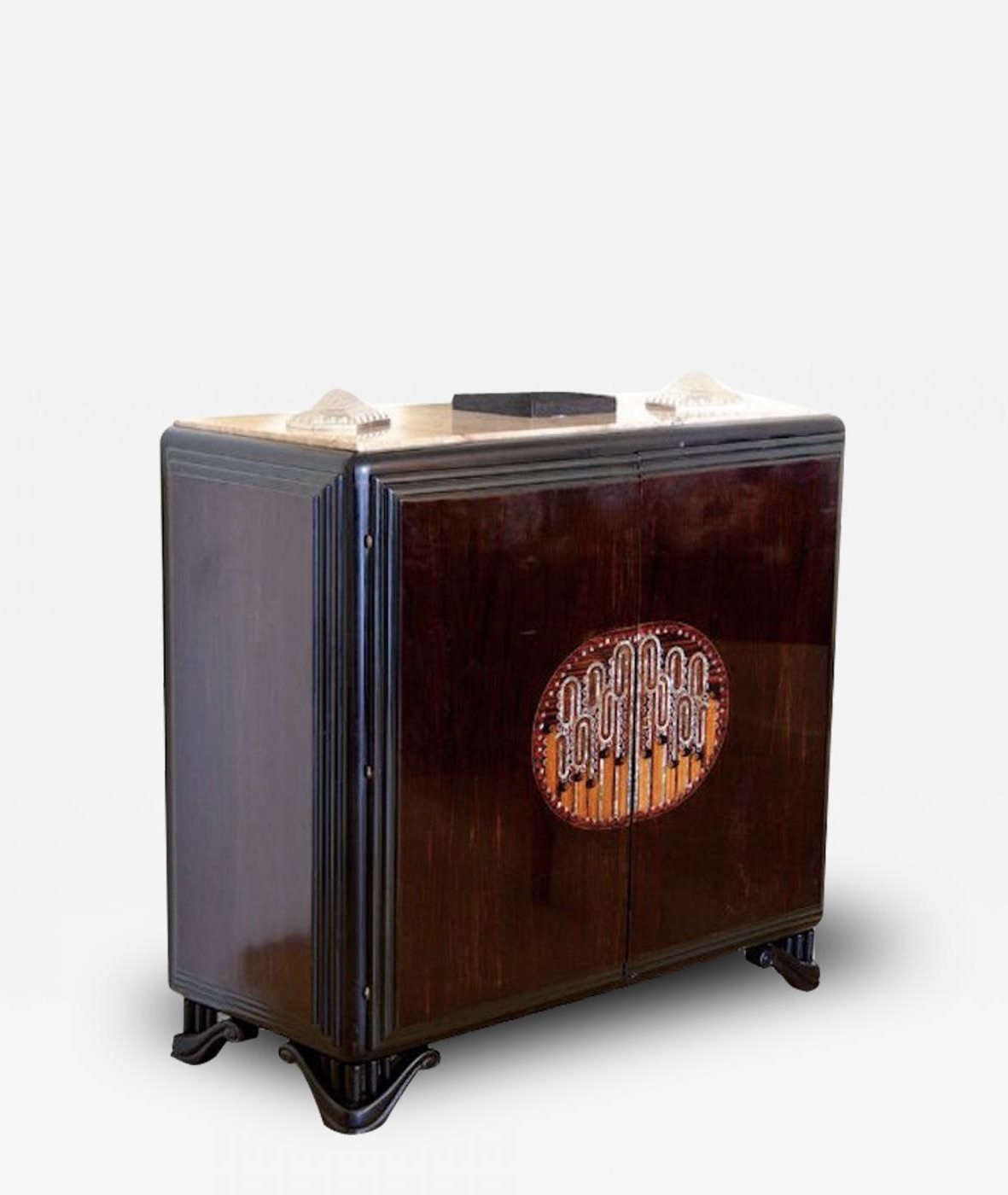
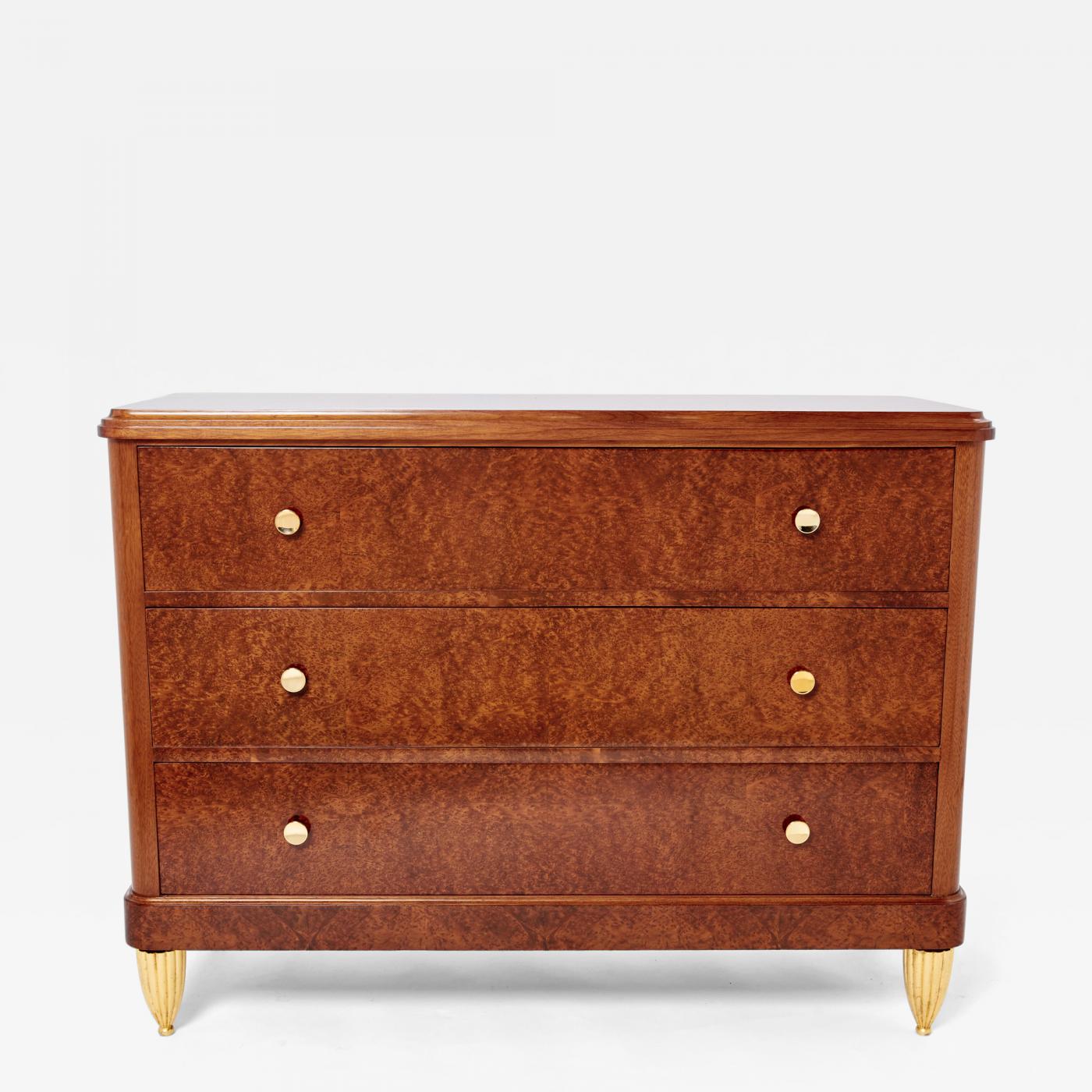
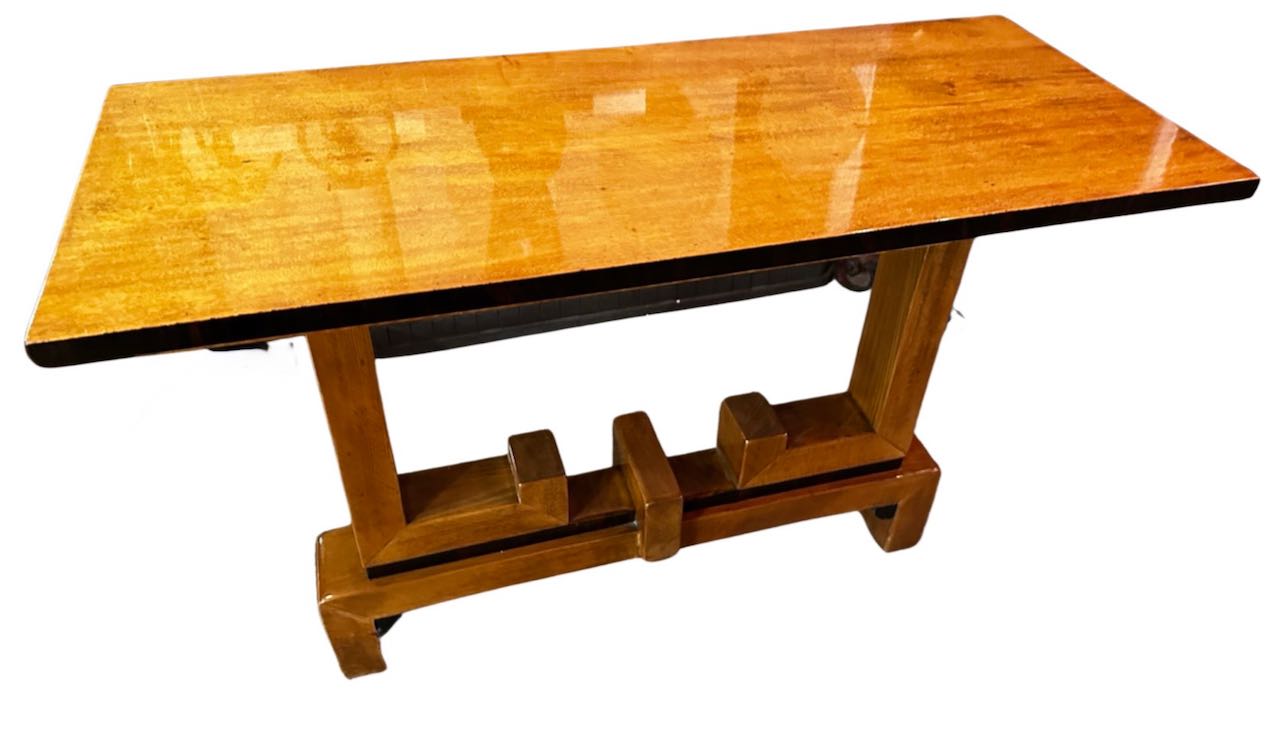
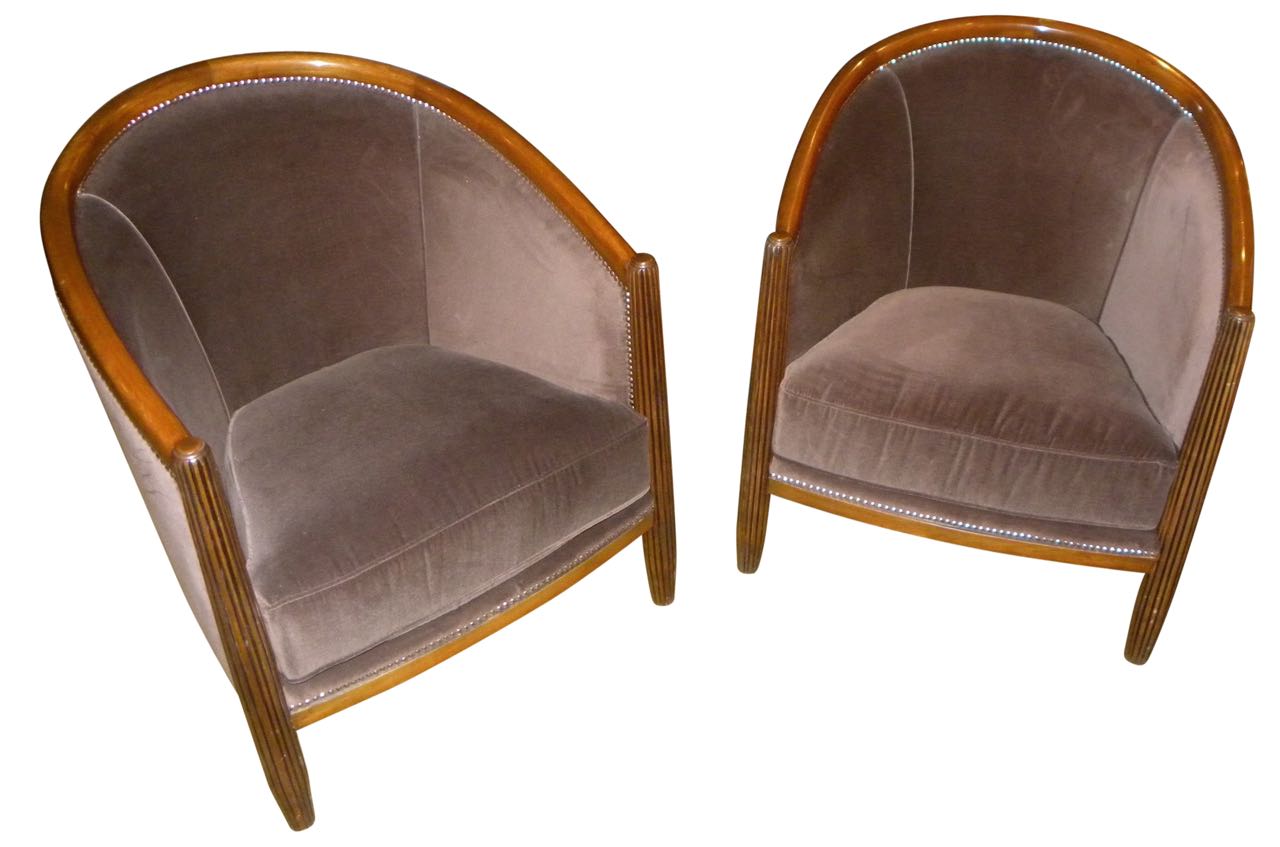
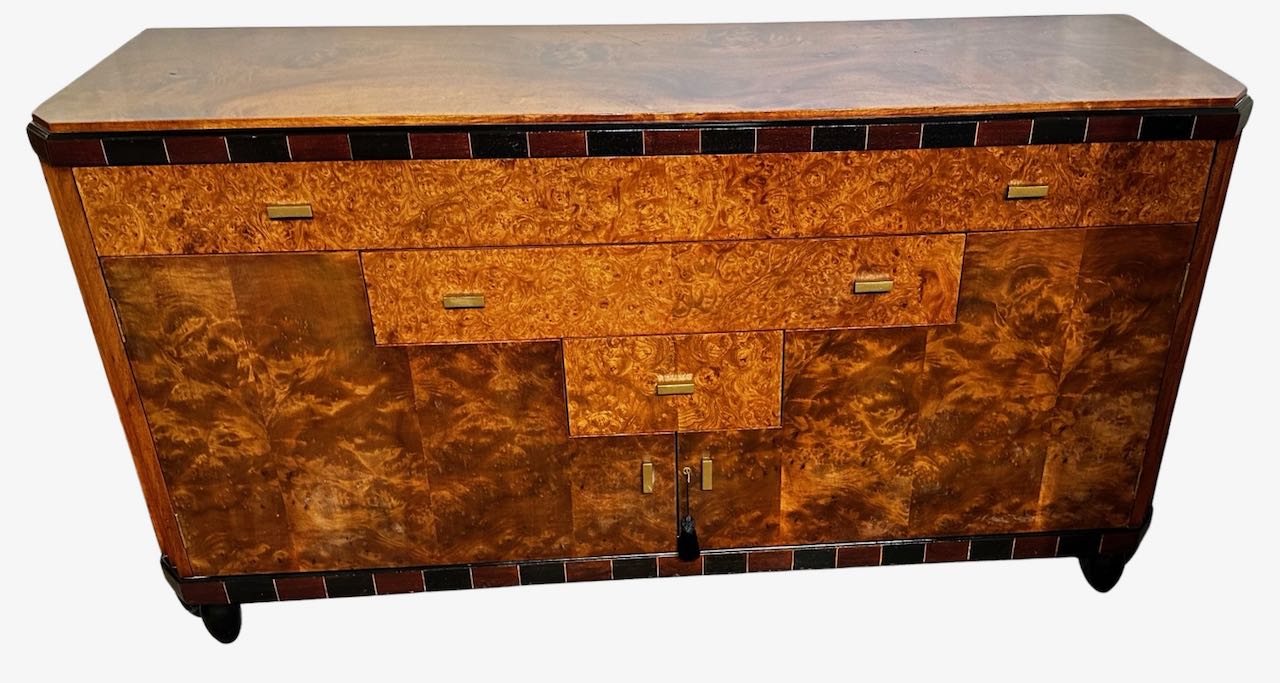
Dufrêne’s career admirably illustrates the transition between Art Nouveau and Art Deco, as his early work featured supple, organic lines that gradually gave way to more structured compositions and sharper volumes. His furniture designs from 1910 onward are austere and neoclassical, reminiscent of the Louis XVI style, usually executed in dark mahogany with minimal carved ornament. He championed individuality in design and openly despised the uniform tubular steel furniture of the 1930s, insisting that the works of La Maîtrise be registered and signed.
Key Influences
- Democratizing Modern Design: His leadership of the Maîtrise workshop demonstrated that department stores could bring high-quality decorative arts to a broad public, reshaping how modern taste was disseminated in France.
- Art Nouveau to Art Deco Transition: His evolving body of work provided a bridge between the two defining aesthetic movements of early 20th-century French design.
- Craftsmanship as Philosophy: His insistence on individual, signed, workshop-produced furniture offered a counterpoint to industrial mass production and influenced how French designers valued artisanal methods.
- Complete Interior Design: His practice of designing unified decorative ensembles, harmonizing furniture, textiles, and objects within a single space, advanced the concept of the total interior.
- Design Education: His decades of teaching at the École Boulle and the École des Arts Appliqués shaped a generation of French designers and reinforced the link between institutional training and professional practice.
If you are interested in further stories of the artists who shaped Art Deco, return to our artists page to browse the full directory.
Related Products