
Eugene Schoen
Eugene Schoen was born in New York City in 1880. He studied architecture at Columbia University and graduated in 1901. During his summers as a student, he worked for McKim, Mead & White, gaining early exposure to elite architectural practice. After graduation, Columbia’s William R. Ware arranged a travel stipend for him and introduced him to the architect Otto Wagner. Wagner then introduced Schoen to Josef Hoffmann, one of the founders of the Wiener Werkstätte. That connection gave Schoen a direct encounter with Viennese modernism before he developed his own mature style. Around 1904, he began professional practice, first briefly working in the office of Robert W. Gibson. He soon became the partner of Swedish architect Axel S. Hedman in the firm Hedman & Schoen. Their commissions included synagogues, factories, theater work, and other architectural projects in and around New York. Even in these early years, Schoen showed an interest in combining classical structure with a more geometric and modern decorative language.
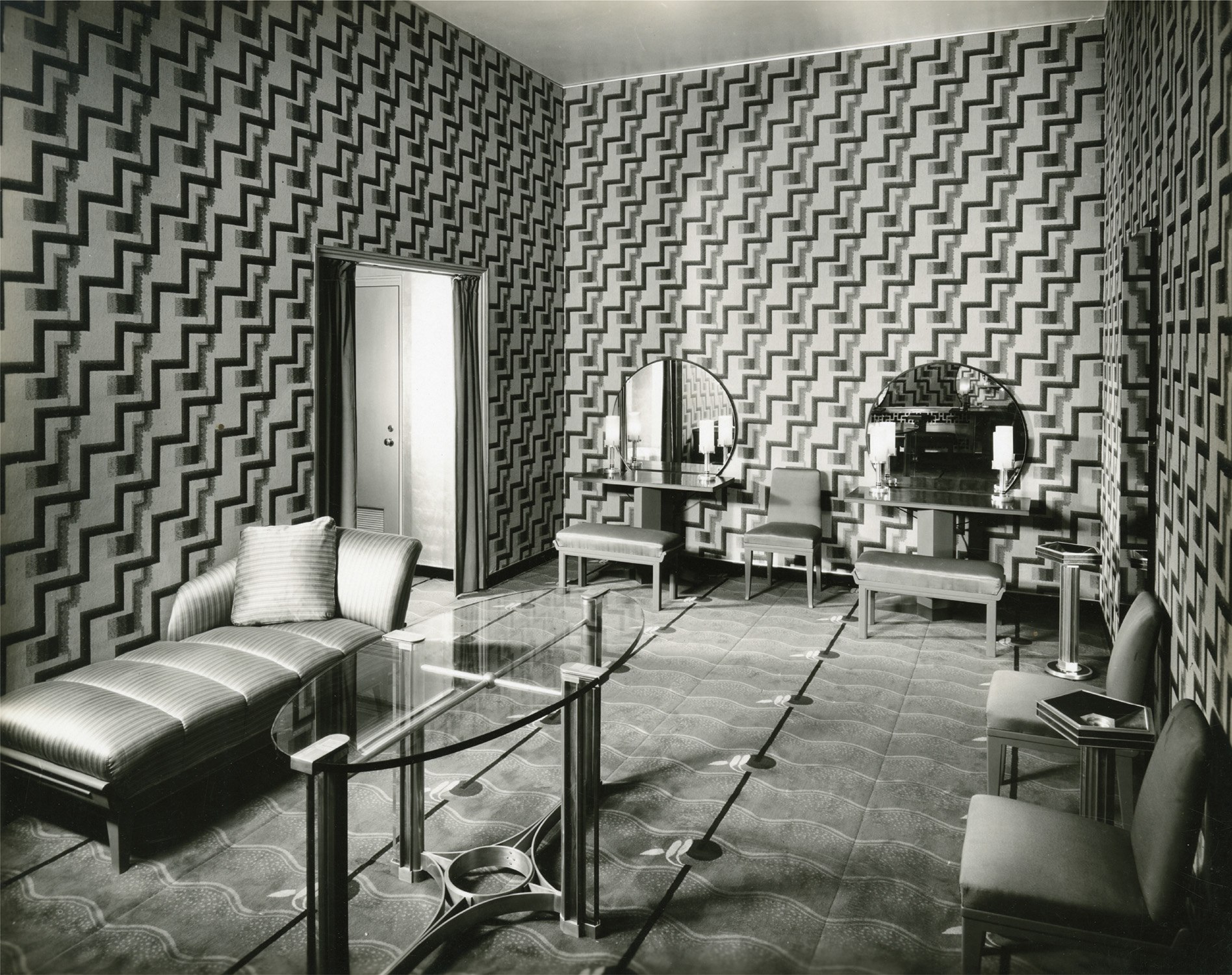
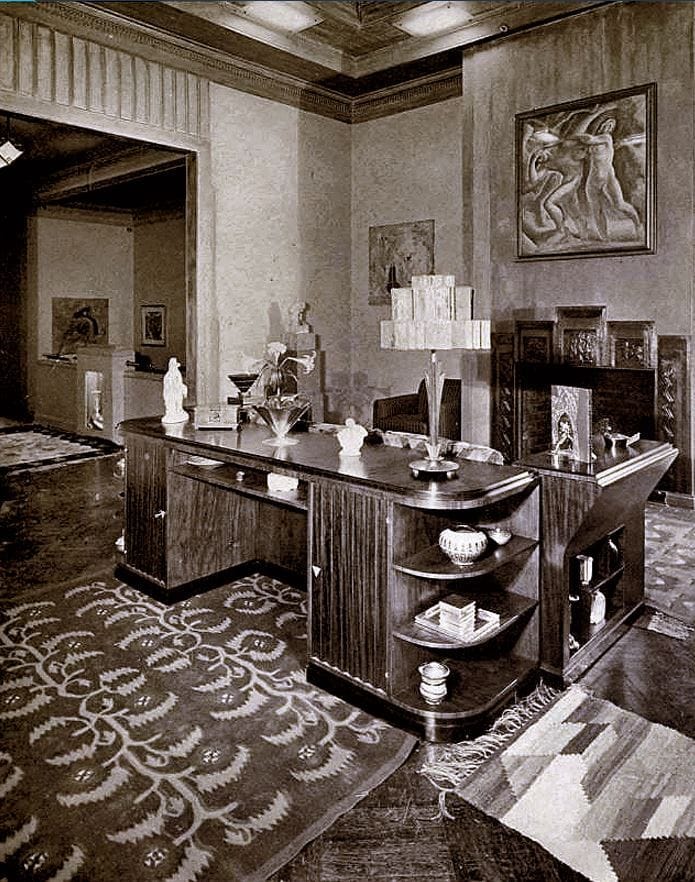
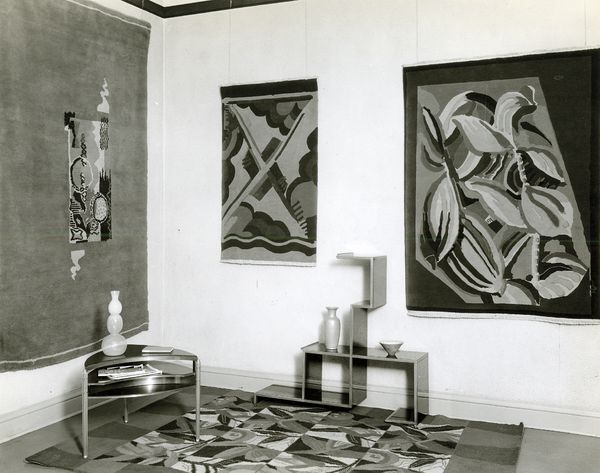
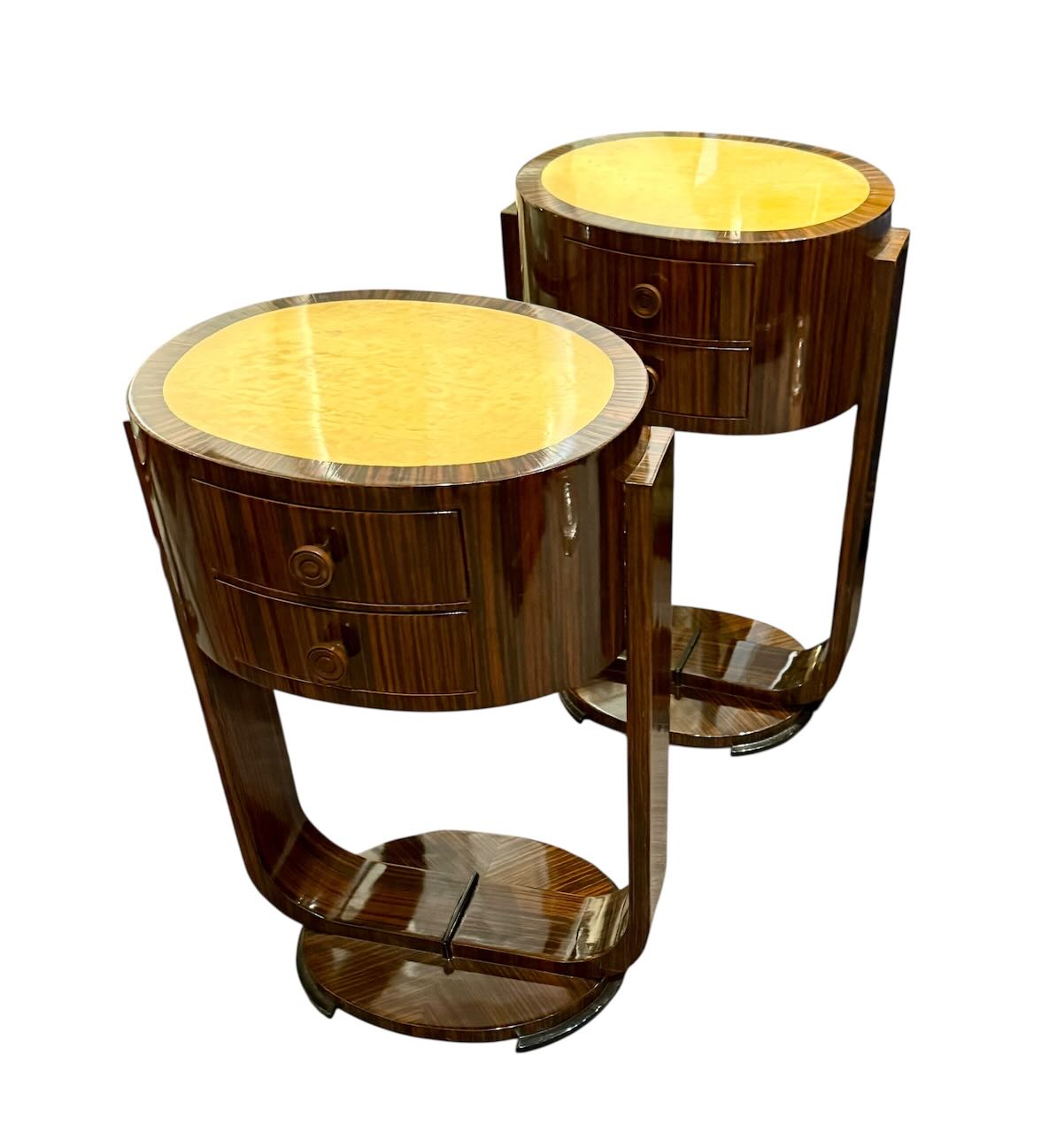
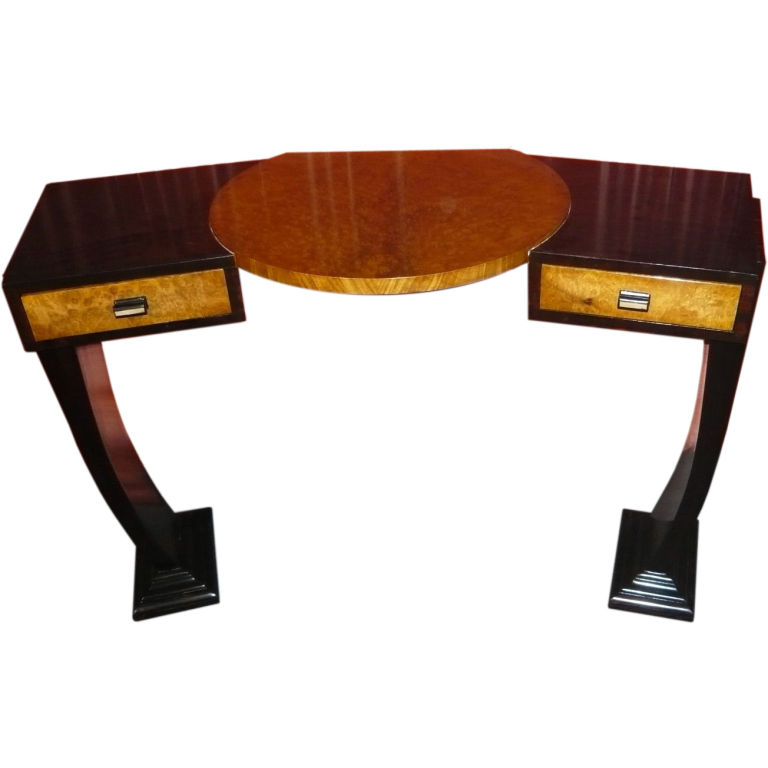
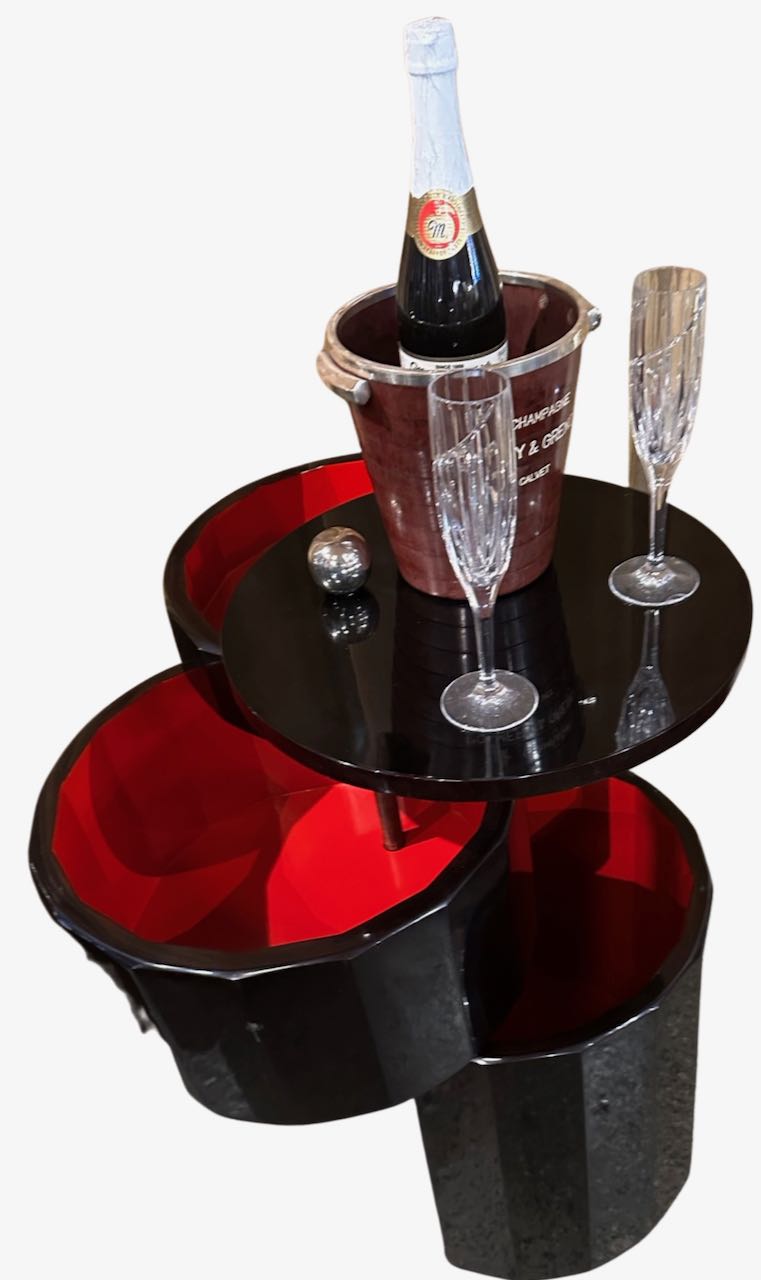
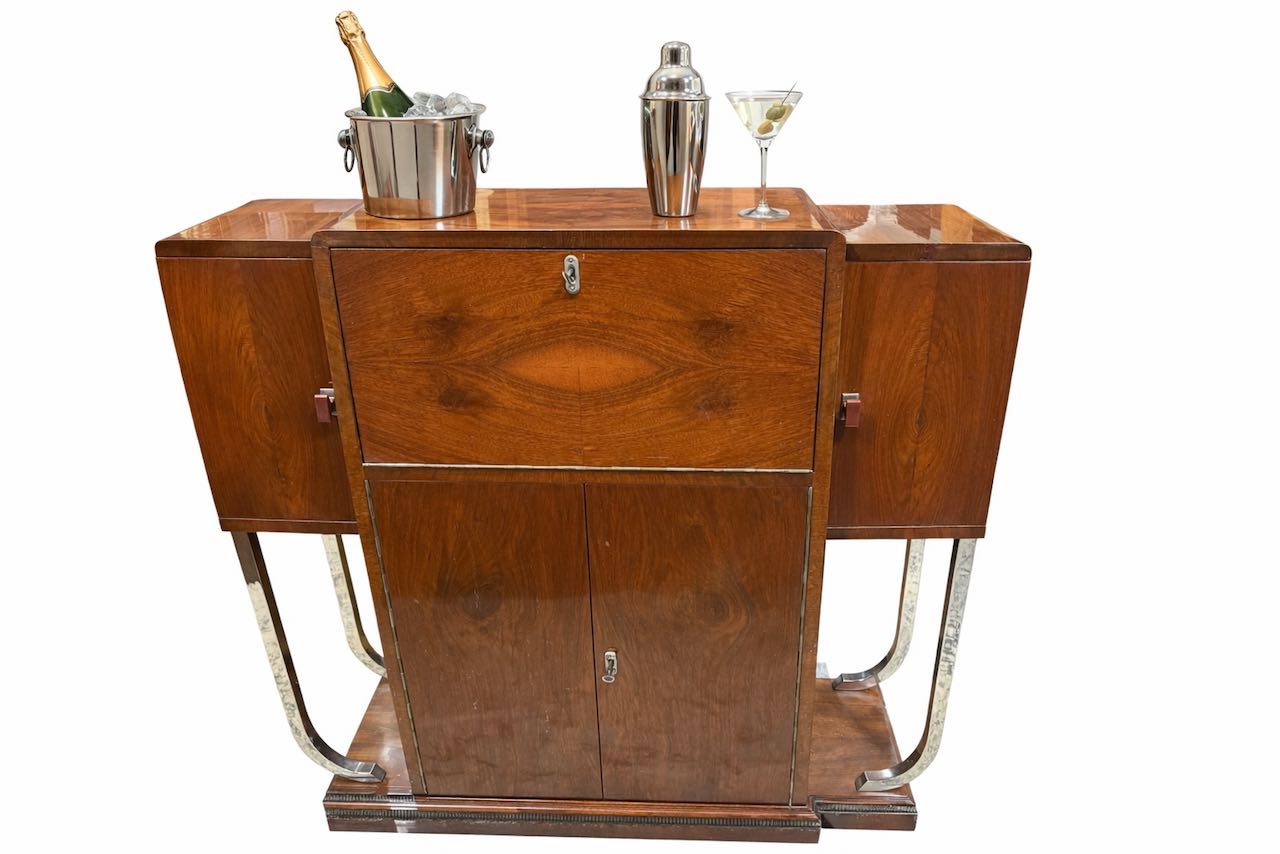
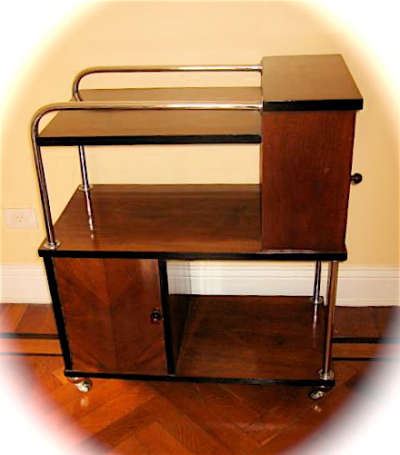
During World War I, when architectural work grew scarce, Schoen temporarily became general manager of his uncle’s International Oxygen Company in Newark. After the war, he returned to design and produced a series of branch banks for the Public National Bank of New York through the 1920s. The decisive turning point in his career came after he visited the 1925 Paris Exposition des Arts Décoratifs et Industriels Modernes. Inspired by that fair, he opened an interior decorating gallery in New York and shifted much of his attention from architecture to interiors. There he designed furniture, lighting, rugs, and complete room settings in a distinctly American version of Art Deco, then often described as moderne. His work merged Viennese geometry with French elegance, and much of his furniture was produced by Schmieg, Hungate and Kotzian as highly refined one of a kind pieces. He was willing to use materials such as Fabrikoid, Flexwood, Monel, Bakelite, and polished metal to give his interiors a polished metropolitan modernity. Schoen became a visible figure in important exhibitions at Macy’s and the Metropolitan Museum, and he served on the cooperating committee for the Met’s 1929 show The Architect and the Industrial Arts. In 1930 Donald Deskey brought him in to design the interiors of the RKO Roxy at Rockefeller Center, a project praised at the time for its grace and refinement. His later commissions for hotels, showrooms, clubs, and the Cafritz house, along with signature pieces like his demilune chair and skyline inspired tables, confirmed his reputation as one of the most sophisticated American Art Deco designers, even earning him the nickname the American Ruhlmann.
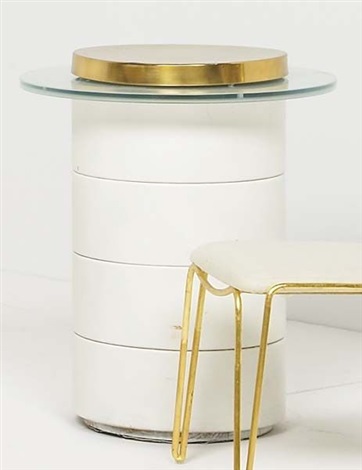

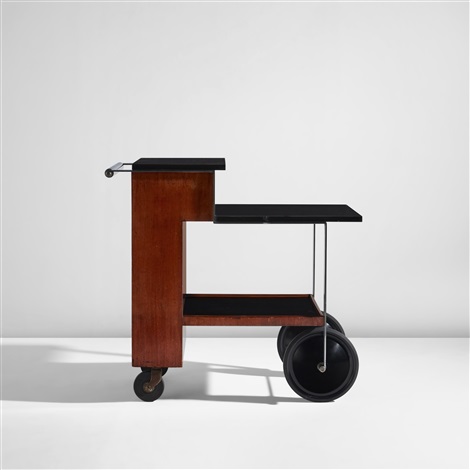
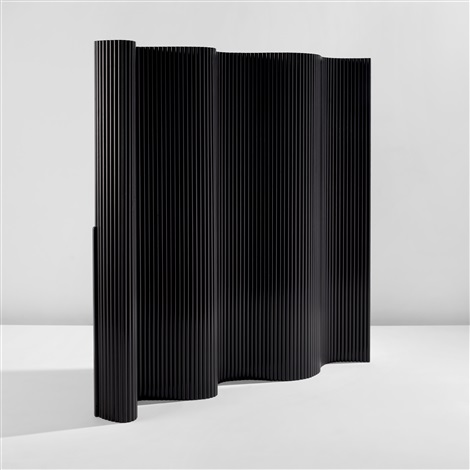
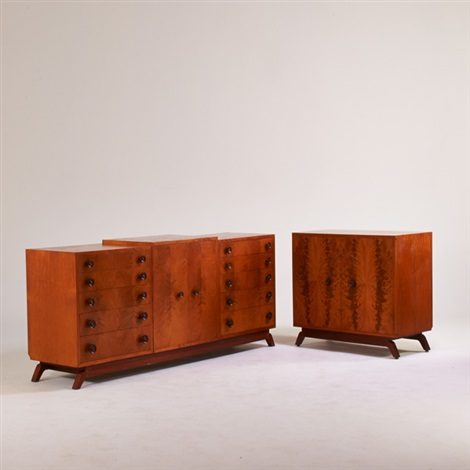
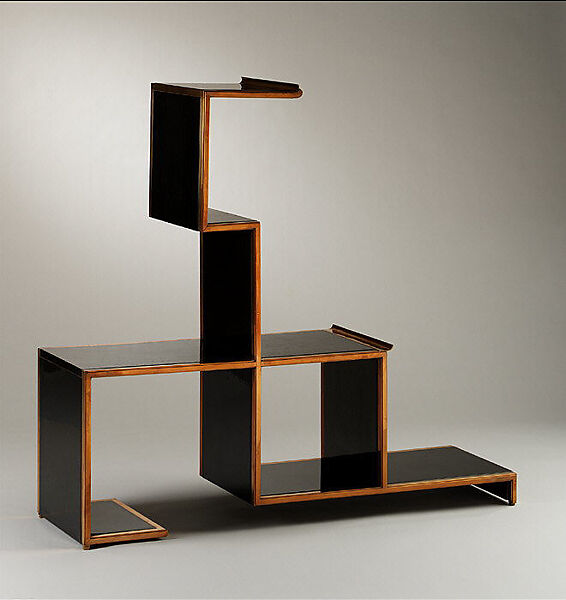
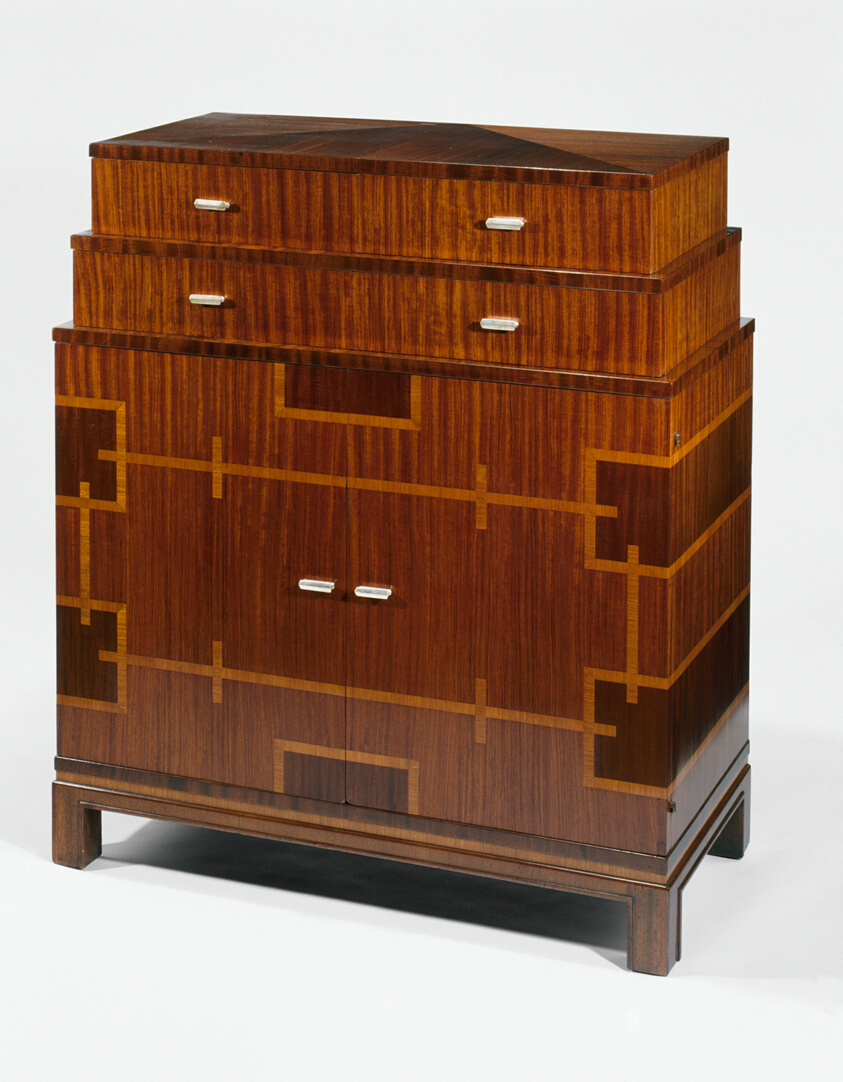
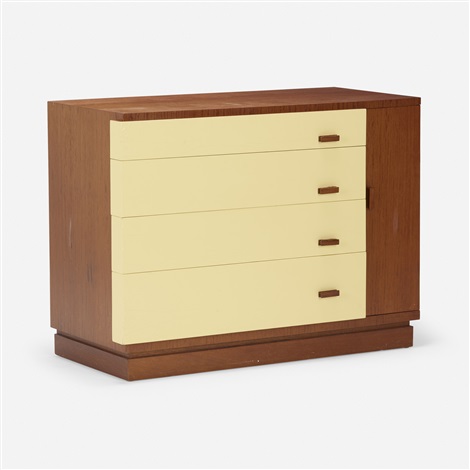
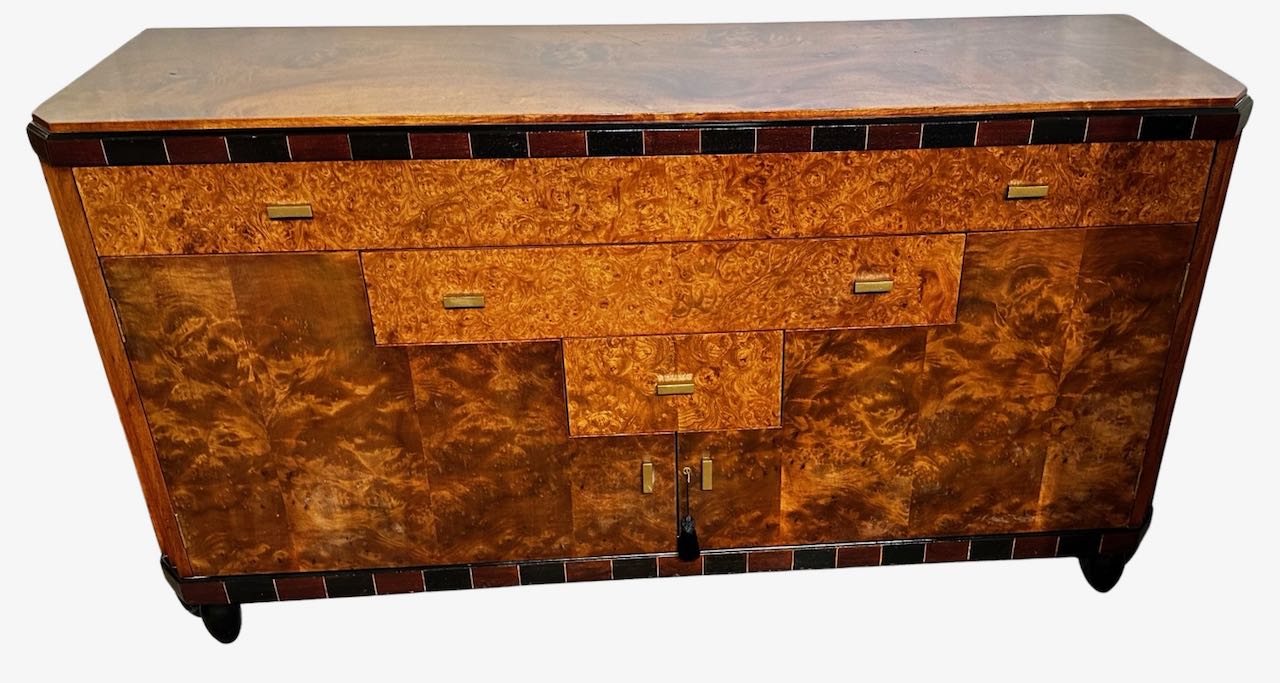
Schoen’s style balanced Viennese structure with French luxury and American urban energy. He favored rich veneers, exotic woods, softened curves, and precise geometry. At his boldest, he used Bakelite, bronze, Monel, black surfaces, and stepped forms that echoed the Manhattan skyline. Even when his furniture was glamorous, it remained controlled and architectural rather than merely decorative. His best work gave American Art Deco a refined metropolitan character that felt both international and unmistakably New York.
Key Influences
- Viennese Modernism: His introduction to Otto Wagner and Josef Hoffmann gave him a disciplined geometric foundation and linked him directly to Wiener Werkstätte ideas.
- The 1925 Paris Exposition: The Paris fair redirected his career and sharpened his embrace of French Art Deco elegance.
- Architecture: His early architectural training kept his furniture structured, balanced, and deeply aware of space and proportion.
- New Materials: His willingness to use Fabrikoid, Flexwood, Monel, Bakelite, and metal helped push his interiors toward a more modern expression.
- New York Modernity: Museum exhibitions, showrooms, and the visual drama of the city gave his work the urbane energy that made it a distinctly American form of Art Deco.
If you are interested in further stories of the artists who shaped Art Deco, return to our artists page to browse the full directory.
Related Products