
Erik Magnussen
Erik Magnussen was born on May 14, 1884, in Frederiksberg, Copenhagen, the son of author and translator Johannes Julius Claudi Magnussen. From 1898 to 1901, he apprenticed as a sculptor at his uncle’s art gallery, Winkel & Magnussen, where he held his first exhibition in 1901. He studied sculpting under the Norwegian sculptor Stephan Sinding and silver chasing under the silversmith Viggo Hansen. From 1907 to 1909, he worked as a chaser in Otto Rohloff’s workshop at the Royal School and Museum of Applied Arts in Berlin. Though largely self-taught in metalsmithing, his training across leading workshops in Denmark and Germany gave him finely honed skills that would define his career. In 1909, he returned to Copenhagen and opened his own jewelry and silver workshop, having already sold his renowned Grasshopper brooch to the Museum of Decorative Art in Copenhagen. In 1925, at the age of 41, Magnussen emigrated to the United States, identifying himself as a sculptor upon his arrival in New York. He returned to Denmark in 1939, where he continued working primarily in jewelry until his later years, and died on February 24, 1961.
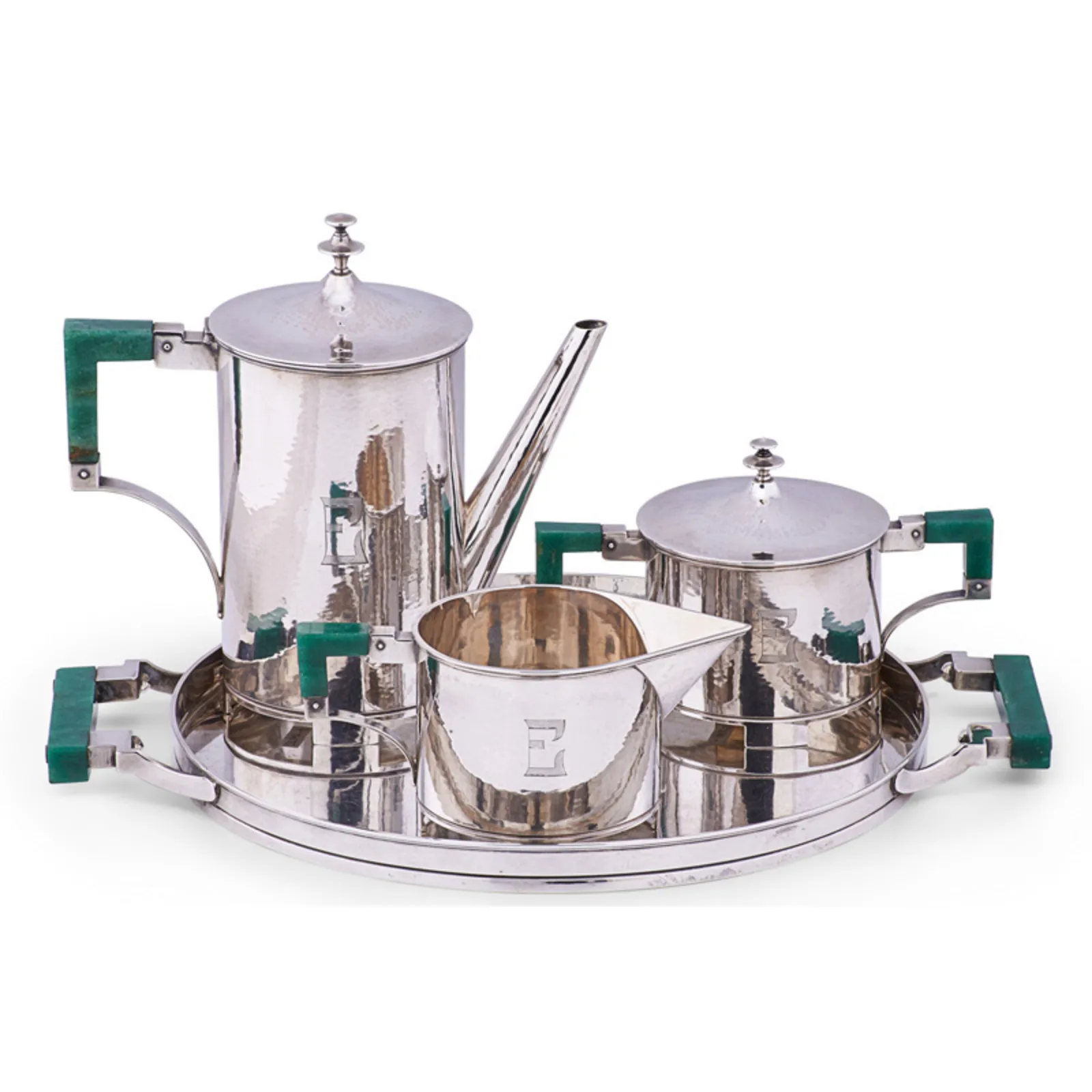


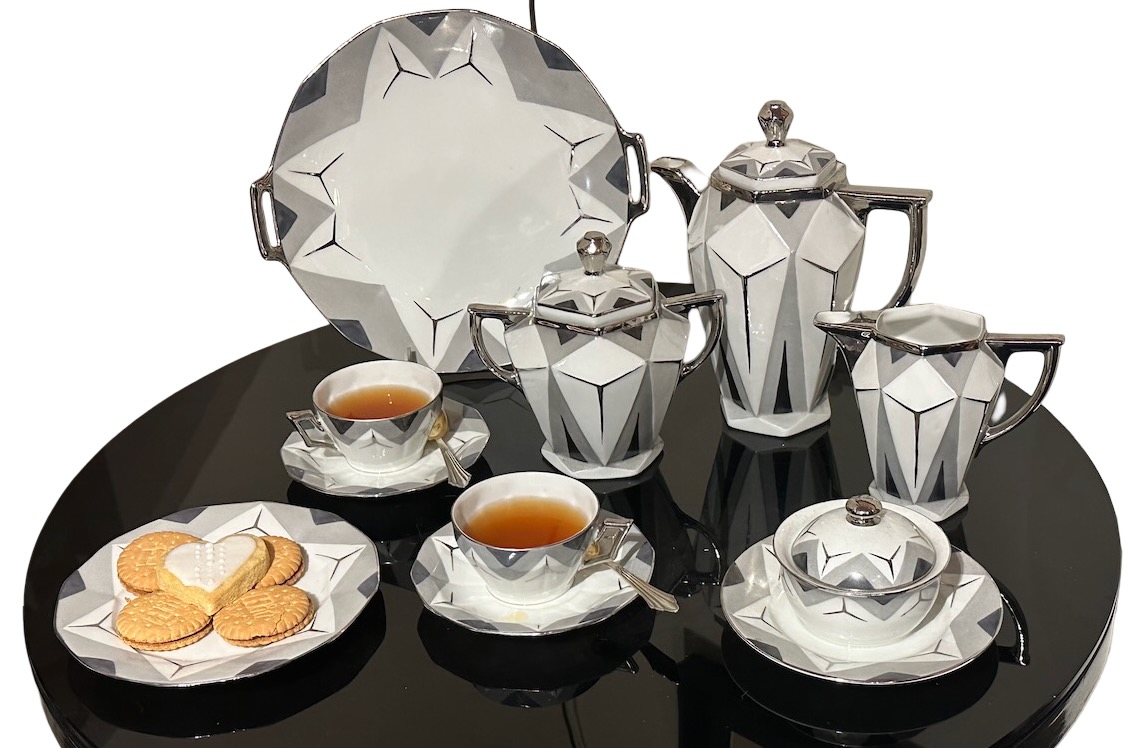
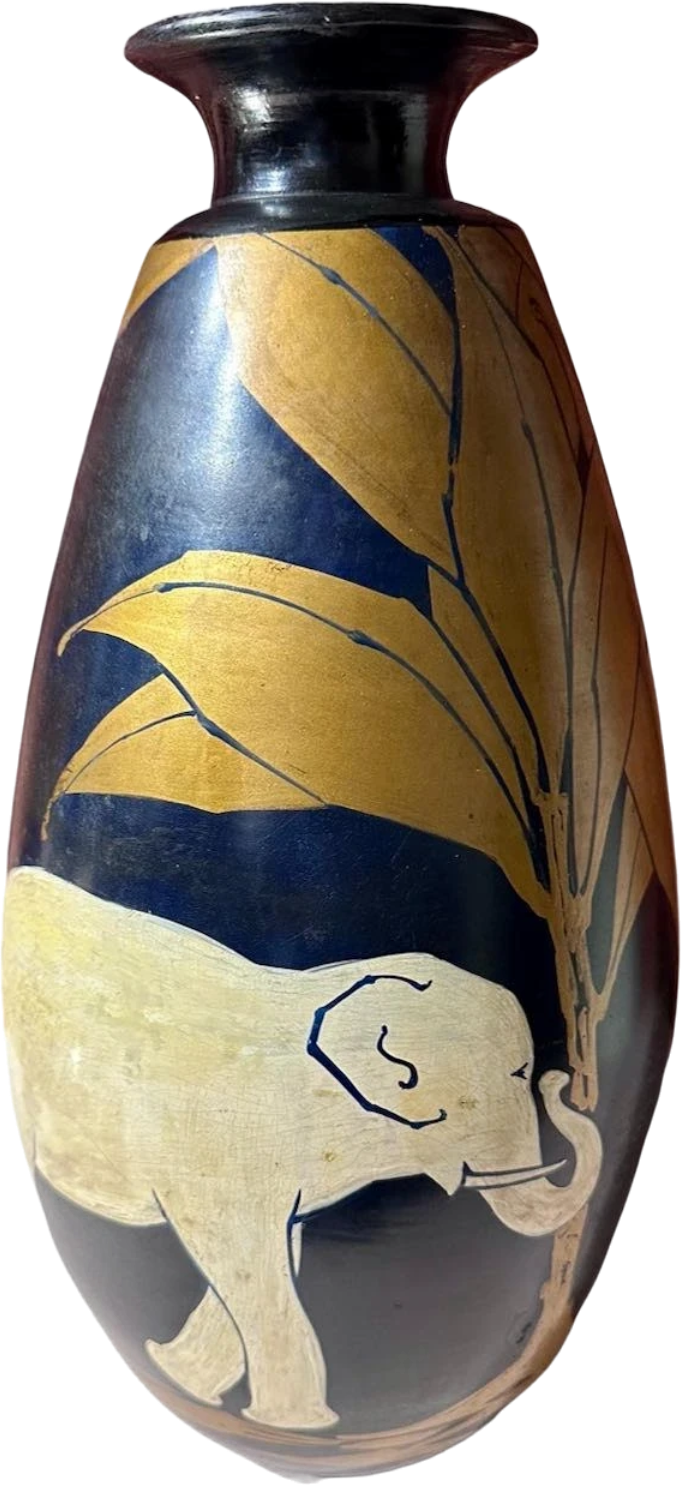
After closing his first Copenhagen workshop in 1912, Magnussen became director of the Department of Arts and Crafts at Bing & Grøndahl, where he designed porcelains decorated with gold and silver. He briefly worked at the P. Ipsens Enke terra cotta factory, and in 1922, one of his designs won the grand prize at the International Exposition in Rio de Janeiro. Upon arriving in America in 1925, Magnussen was hired by the Gorham Manufacturing Company in Providence, Rhode Island, where he was given autonomous authority to create a line of modern tableware designs. His “Cubic” coffee service, introduced by Gorham in November 1927 as “The Lights and Shadows of Manhattan,” became a watershed moment for modern American design, though its extreme styling found no American buyers even during the boom economy. He also created deluxe console sets in sterling silver and ivory that were exhibited through the Women Decorators’ Club in New York and featured in publications such as Town and Country and Vogue. Gorham’s efforts to introduce modern silver styles proved commercially unsuccessful, and Magnussen left the company in 1929 to work for the New York branch of the German firm August Dingeldein & Son. He opened his own workshop in Chicago in 1932 and moved it to Los Angeles in 1933 before closing it and returning to Denmark in 1939. Faced with a scarcity of materials after the onset of World War II, he mainly created jewelry during his later years in Copenhagen.


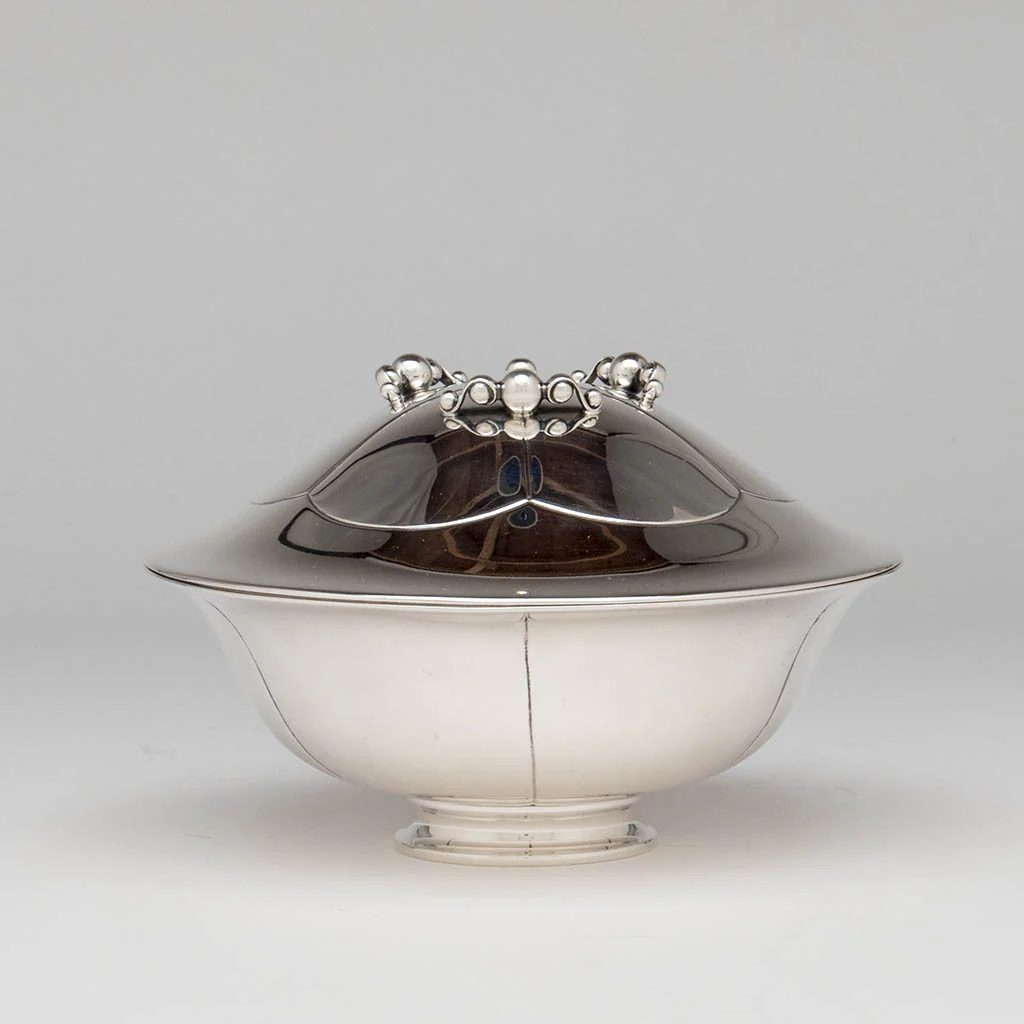

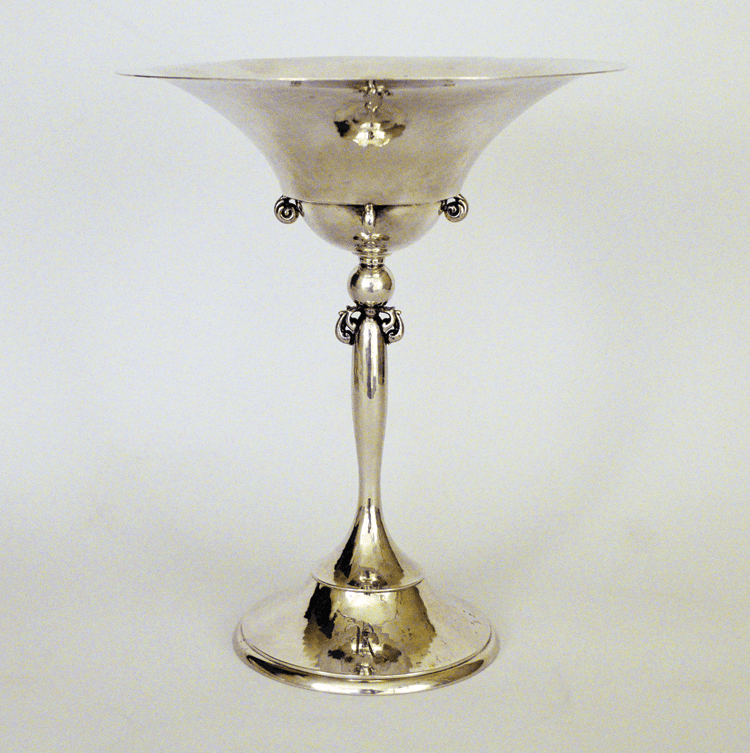
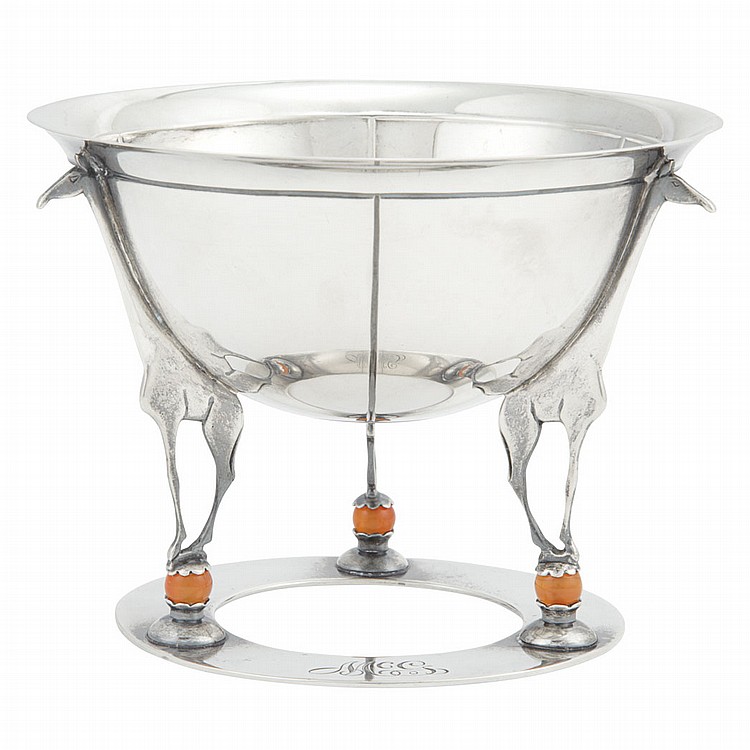
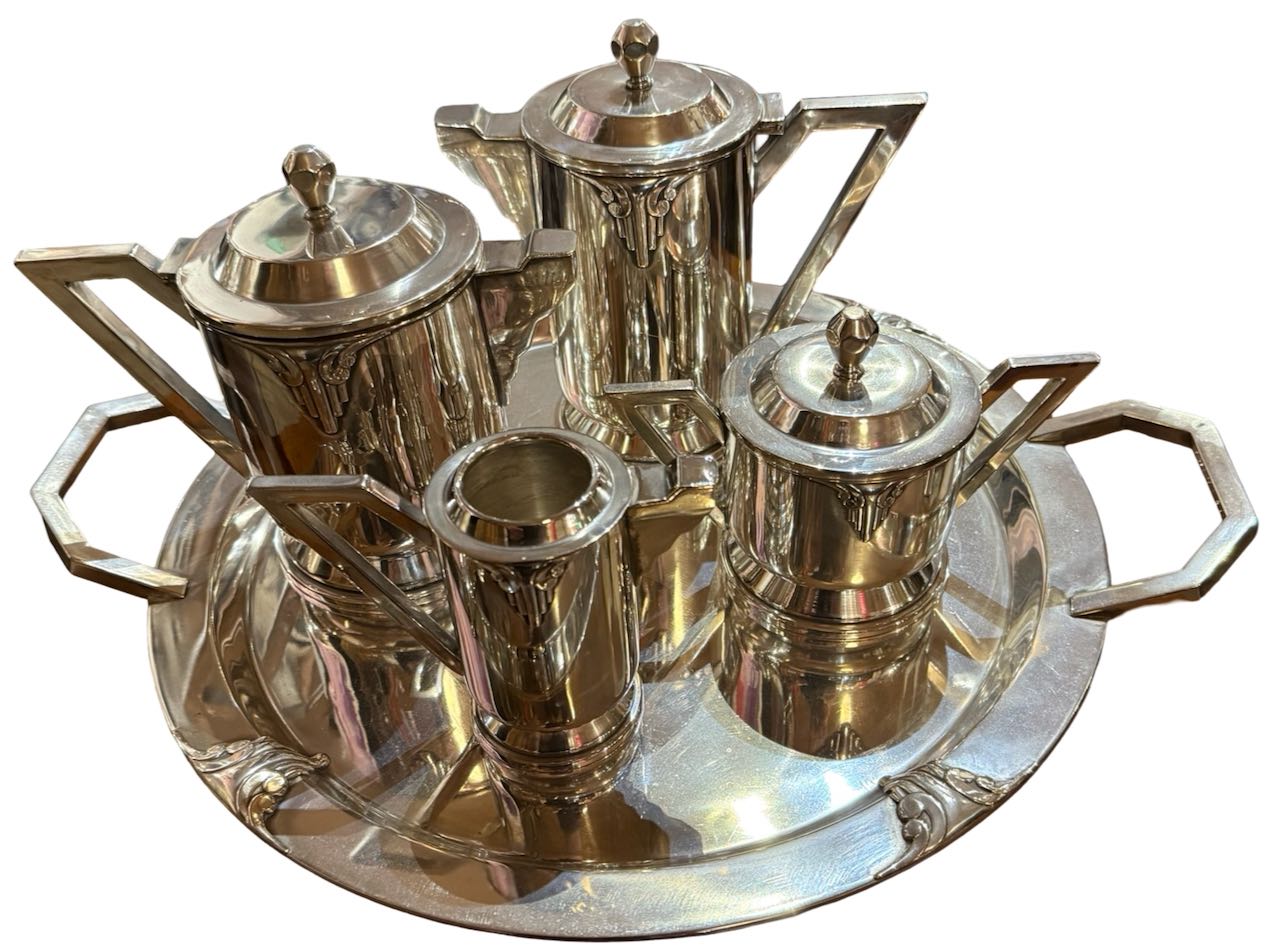
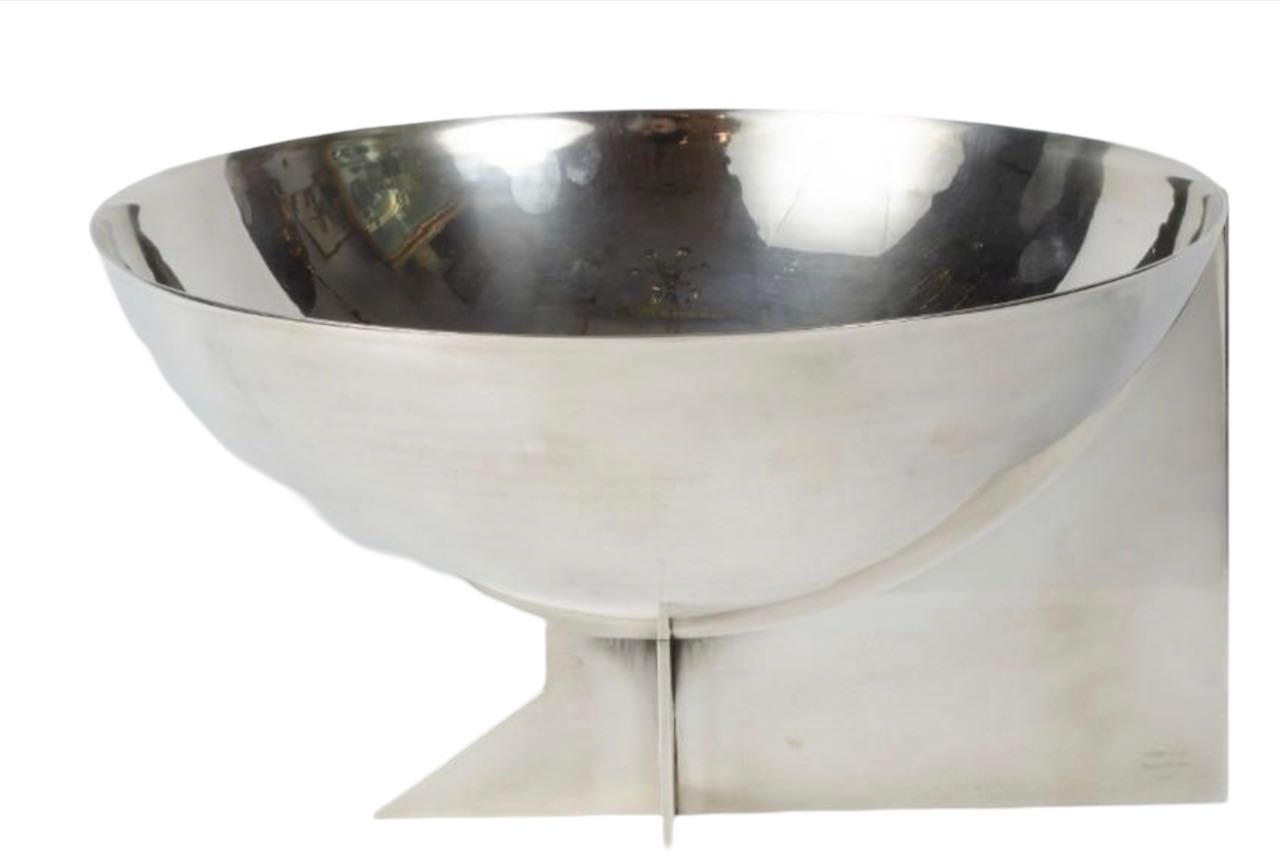
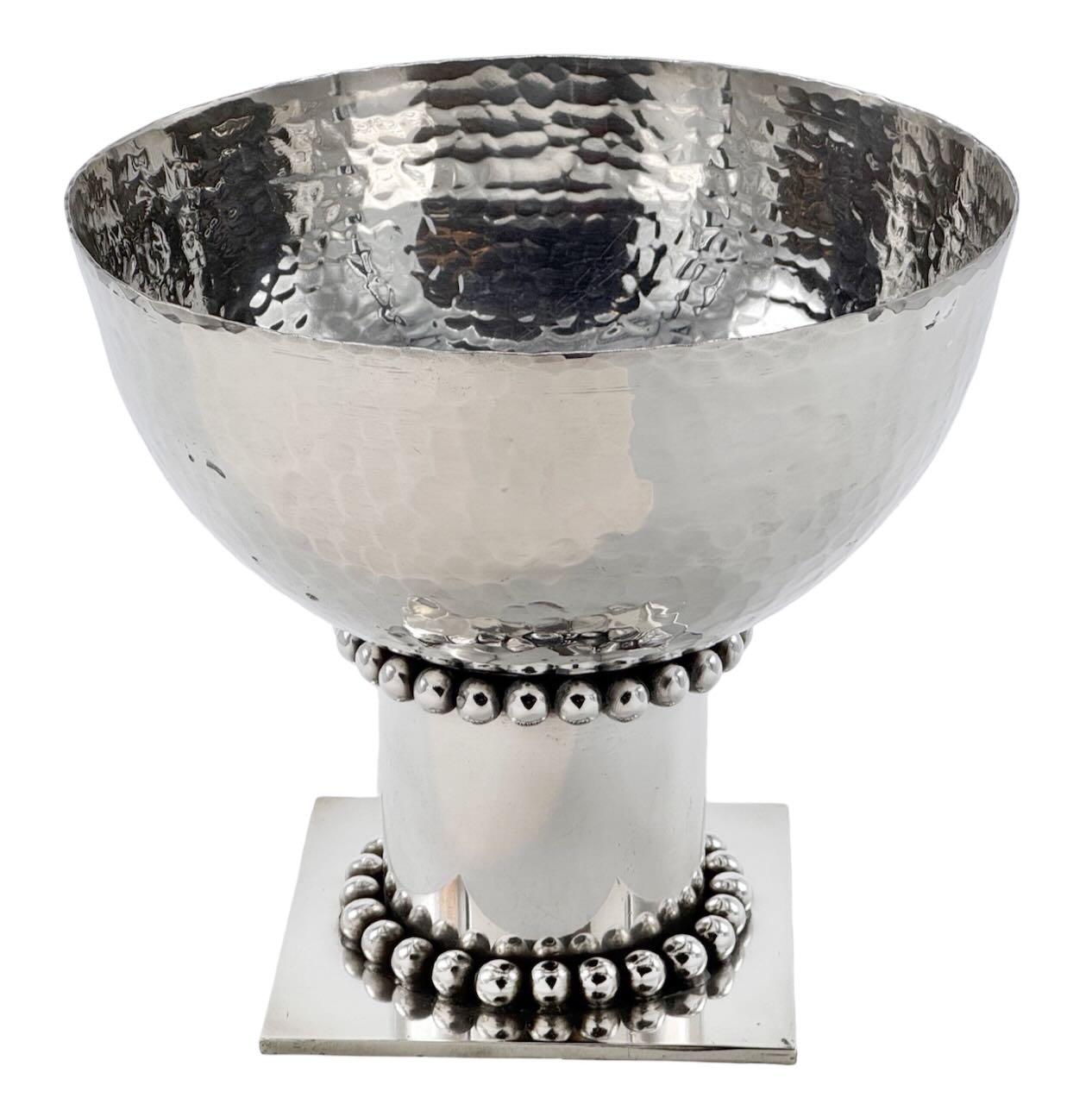
Magnussen’s early jewelry was designed in the Danish Skønvirke style, using insects and semi-precious stones inspired by René Lalique. His American work shifted decisively into Art Deco, drawing on Cubism and skyscraper architecture to create bold geometric forms in silver. His pieces often played off the luster of silver against luxury materials such as ivory, turquoise, and ebony, conforming to the period’s taste for dramatic contrasts and highly accented design elements.
Key Influences
- Modern American Silver: His “Lights and Shadows of Manhattan” coffee service introduced Cubist aesthetics to American silverwork and remains one of the most ambitious objects in the deluxe modern mode.
- European Modernism in America: His role at Gorham helped American manufacturers recognize the need to develop modern design lines that could compete with European imports after the 1925 Paris Exposition.
- Sculptural Metalwork: His training as both sculptor and silversmith elevated decorative metalwork beyond craft, treating tableware and console sets as fine art objects.
- Cross-Media Design Practice: His movement between silver, jewelry, porcelain, and terra cotta demonstrated the versatility of the modern designer across decorative disciplines.
- Scandinavian Design in America: His work brought Danish craft traditions and Scandinavian decorative sensibilities to a prominent American manufacturer, broadening the visual vocabulary available to the American market.
If you are interested in further stories of the artists who shaped Art Deco, return to our artists page to browse the full directory.
Related Products