
Clarice Cliff
Clarice Cliff was born in Tunstall, Stoke-on-Trent on January 20, 1899, into a large working-class family in the heart of England’s pottery district. At the age of thirteen, she entered the pottery industry, beginning as a gilder who applied simple gold lines on ware and gradually learning freehand painting and other skills. In 1916, she moved to the A. J. Wilkinson factory in Newport, Burslem, where her talent for bold decoration was noticed by the owner, Colley Shorter, who offered her the chance to experiment with design on ware with minor flaws. Her early pieces, marked with the name “Bizarre,” introduced bright colours and geometric patterns at a time when most domestic pottery remained conservative. By the late 1920s she was granted her own studio and began producing her distinctive modern style ceramics under her own name. Despite the economic turmoil of the 1930s, her work remained commercially successful and widely exported, bringing modern artistry into homes across Britain and beyond. She continued to direct and influence her pottery works until the mid-1960s and passed away in 1972, leaving behind a legacy of pioneering female-driven design.


Cliff’s journey from factory apprentice to one of the most celebrated designers of Art Deco ceramics is remarkable for its clarity of purpose and innovation. She combined an early grounding in the technical and decorative processes of pottery with a fearless adoption of modern styling, including abstract motifs, vibrant colour palettes and unconventional shapes that spoke to the spirit of the 1920s and 1930s. Her desire to master every stage of production, from gilding and enamelling to modelling and pattern book creation, set her apart from many contemporaries. She became one of the first women in the Staffordshire pottery industry to build a personal brand on her own name and direct a creative studio of young decorators. Her work brought modernism into the domestic sphere, making stylish design accessible rather than exclusive. In her later years she experienced declining commercial demand as tastes shifted, but the revival of interest in her output from the 1970s onward affirmed the enduring power of her vision. Today her ceramics are cherished by collectors, museums and design lovers, underscoring her role as both artist and innovator.



 |
 |
.
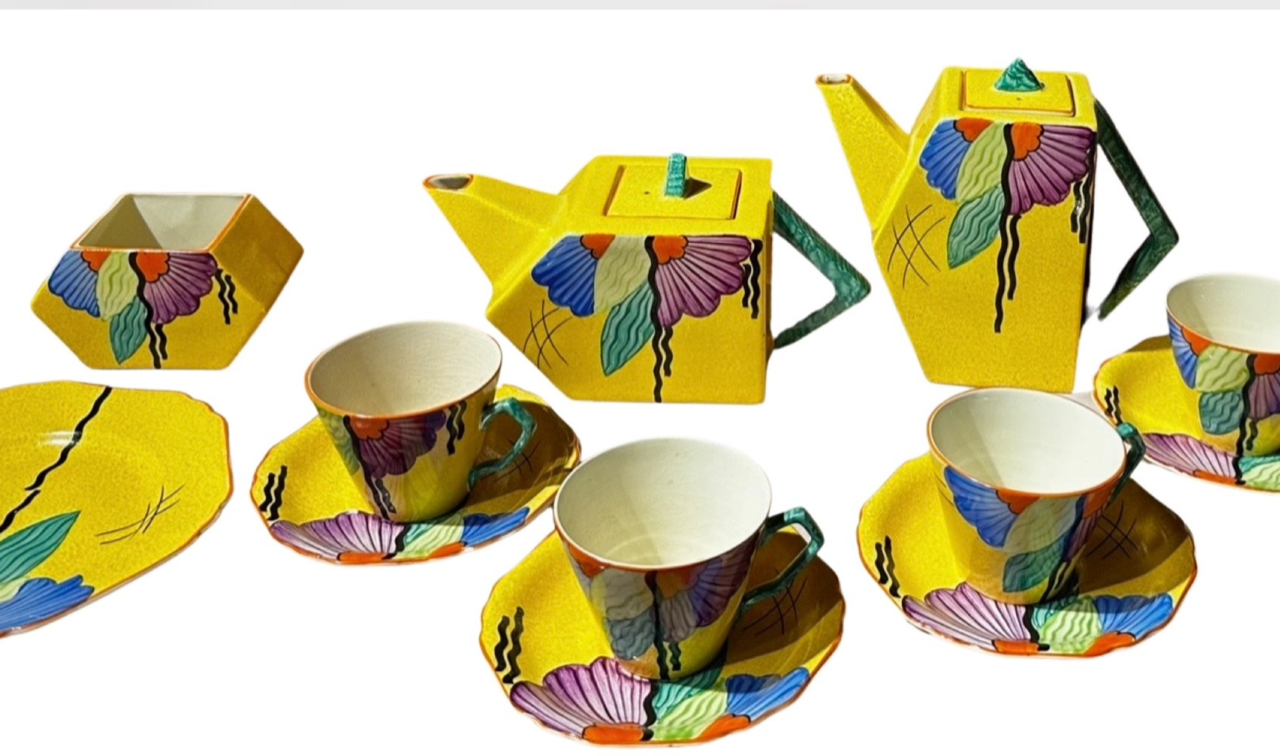
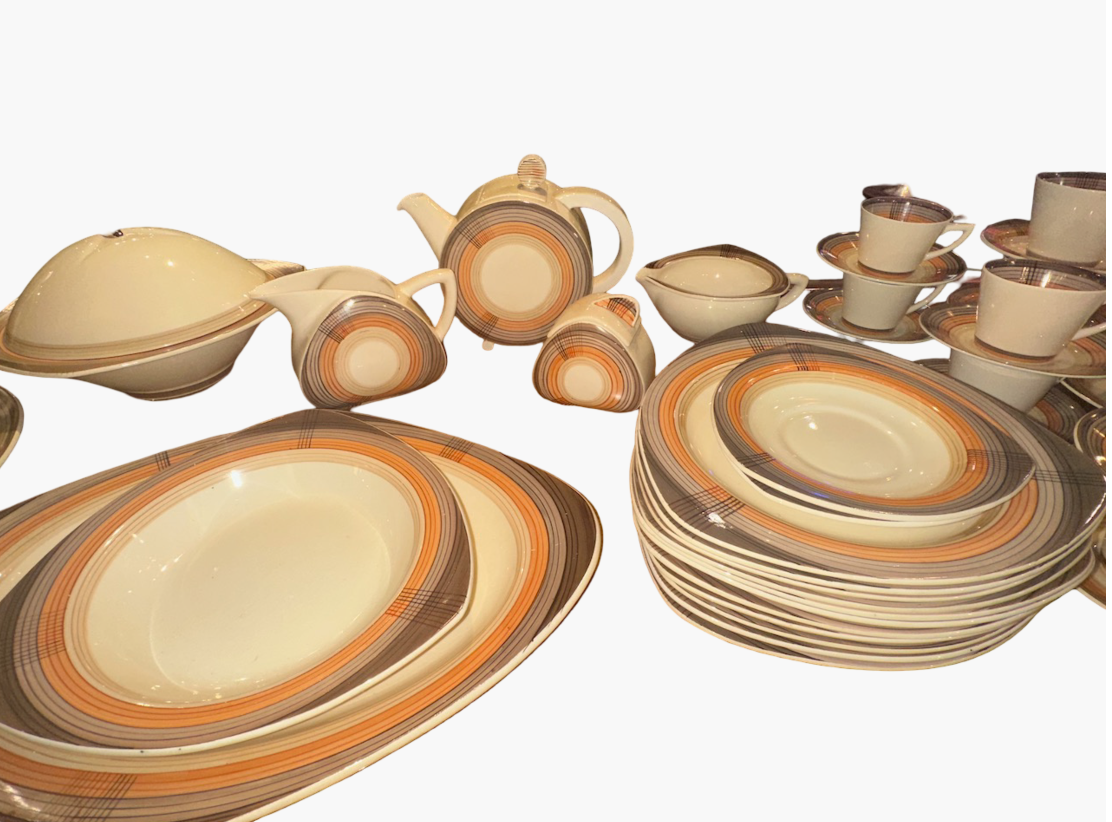
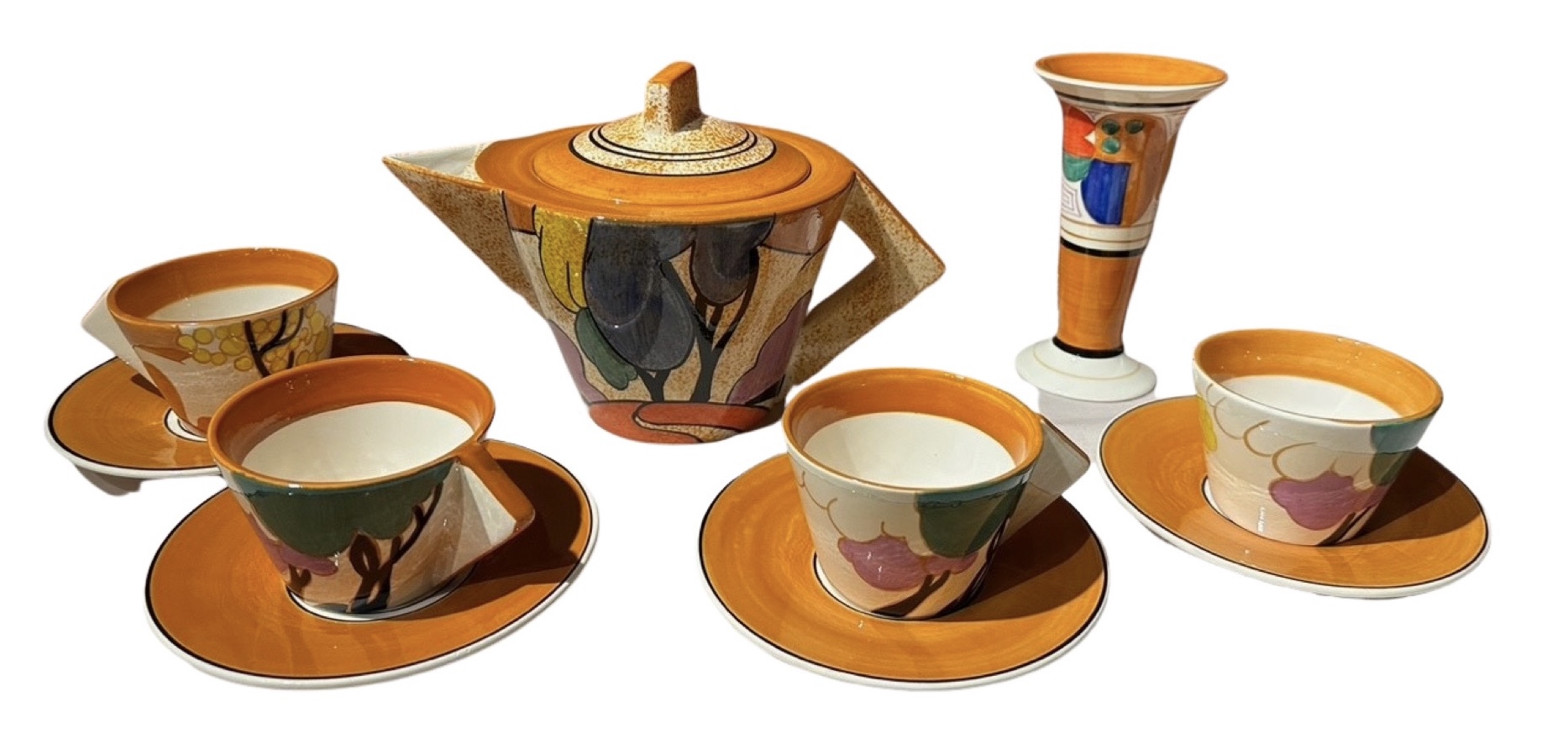
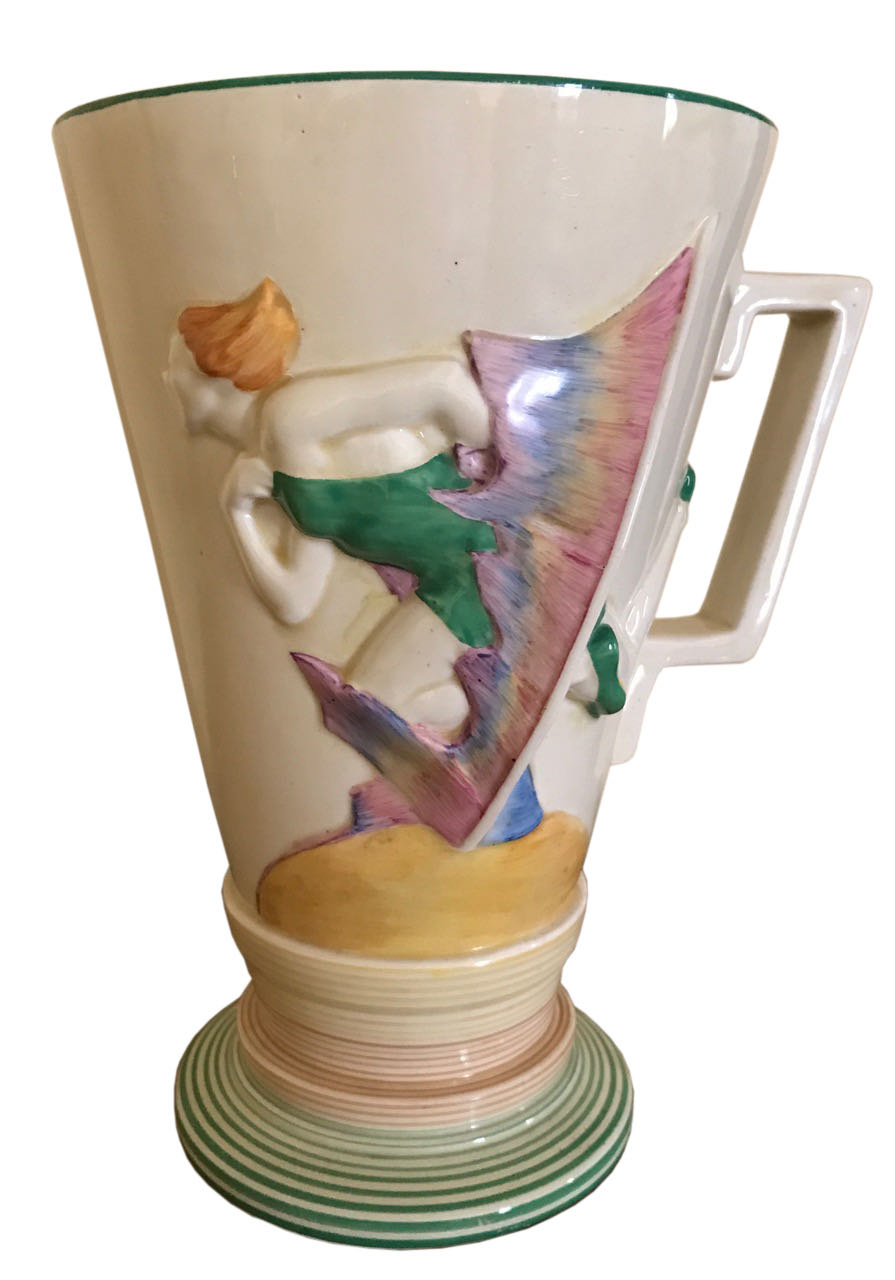
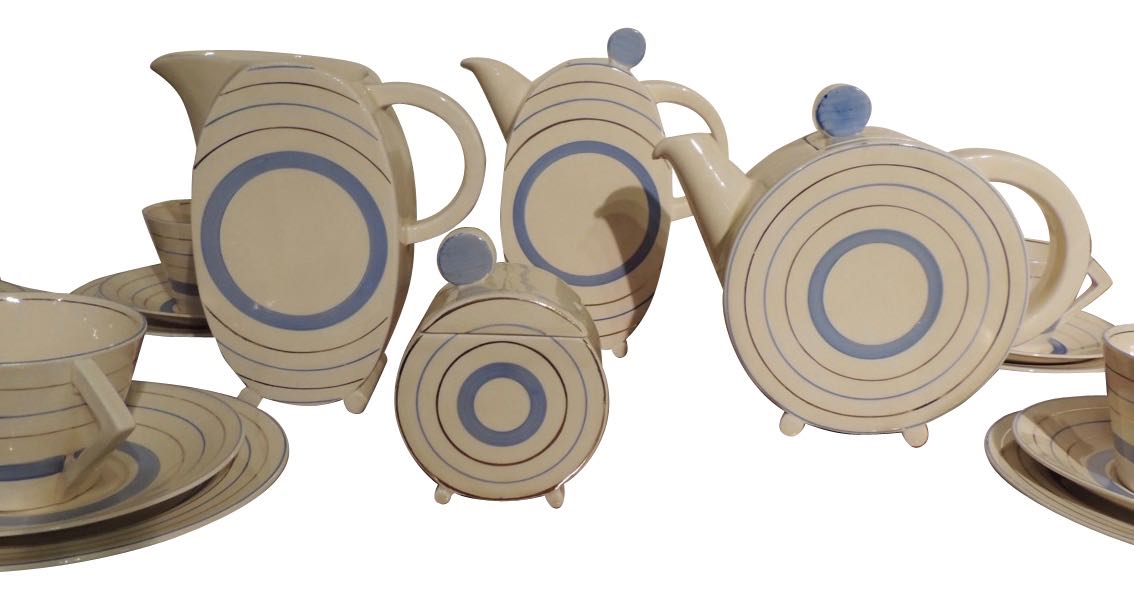
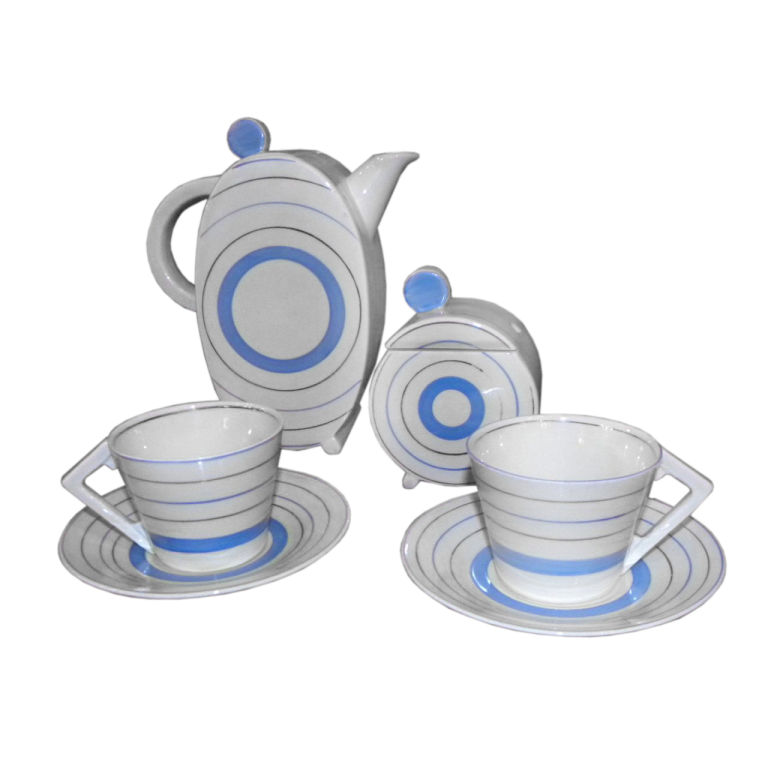
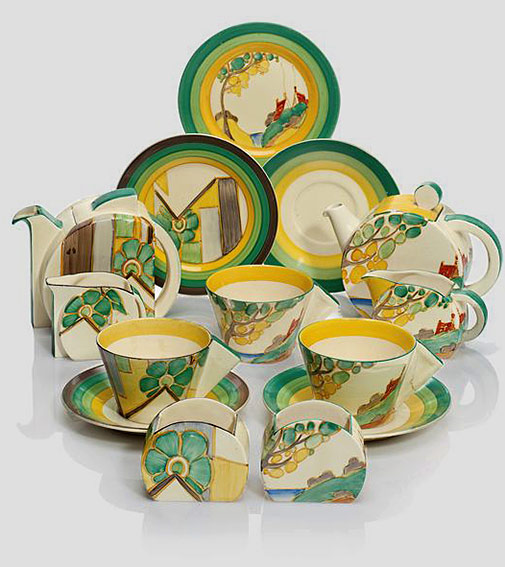
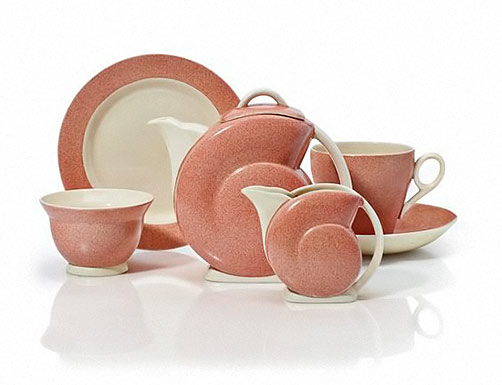
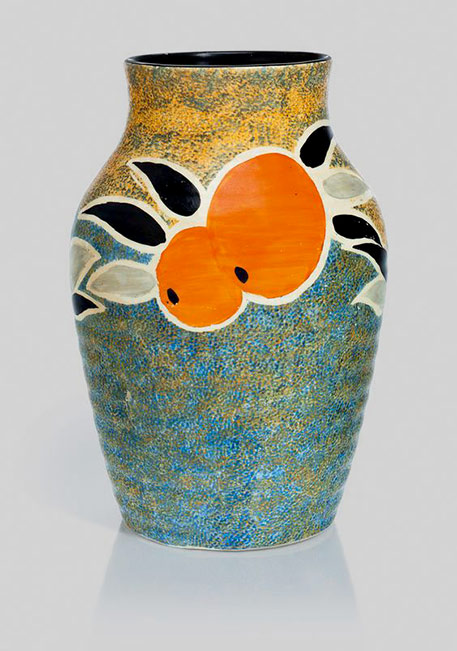
Cliffs style is recognised for bold colour, strong geometry and a playful yet disciplined modern aesthetic. She used abstract shapes, stylised flowers and simplified landscapes in vivid hues applied to crisp white pottery surfaces. Her decorative forms often incorporated unconventional vessel shapes such as cones, pyramids and stepped profiles that challenged expectations of domestic ware. She balanced graphic clarity with hand-painted nuance, encouraging a sense of joy, liveliness and accessibility in objects meant for everyday use. Through her designs she proved that function and artistic expression could coexist in the home.
Key Influences:
The working-class pottery tradition of Stoke-on-Trent: Early apprenticeship in the heart of England’s ceramics industry grounded her in craft and technique.
Modernist Art Deco and abstract art movements: She drew from the aesthetic energy of the 1920s and 1930s to create domestic objects that looked forward.
Industrial production with hand decoration: Her ambition to control shape, colour and finish placed her designs at the intersection of manufacturing and artistry.
Personal branding and pioneering female creative leadership: By putting her name on work and leading a studio of decorators, she broke conventions of her era.
The principle of design for everyday life: She believed stylish, modern objects should be used and enjoyed, not hidden away, and this philosophy shaped her work and its popularity.
If you are interested in further stories of the artists who shaped Art Deco, return to our artists page to browse the full directory.
Related Products