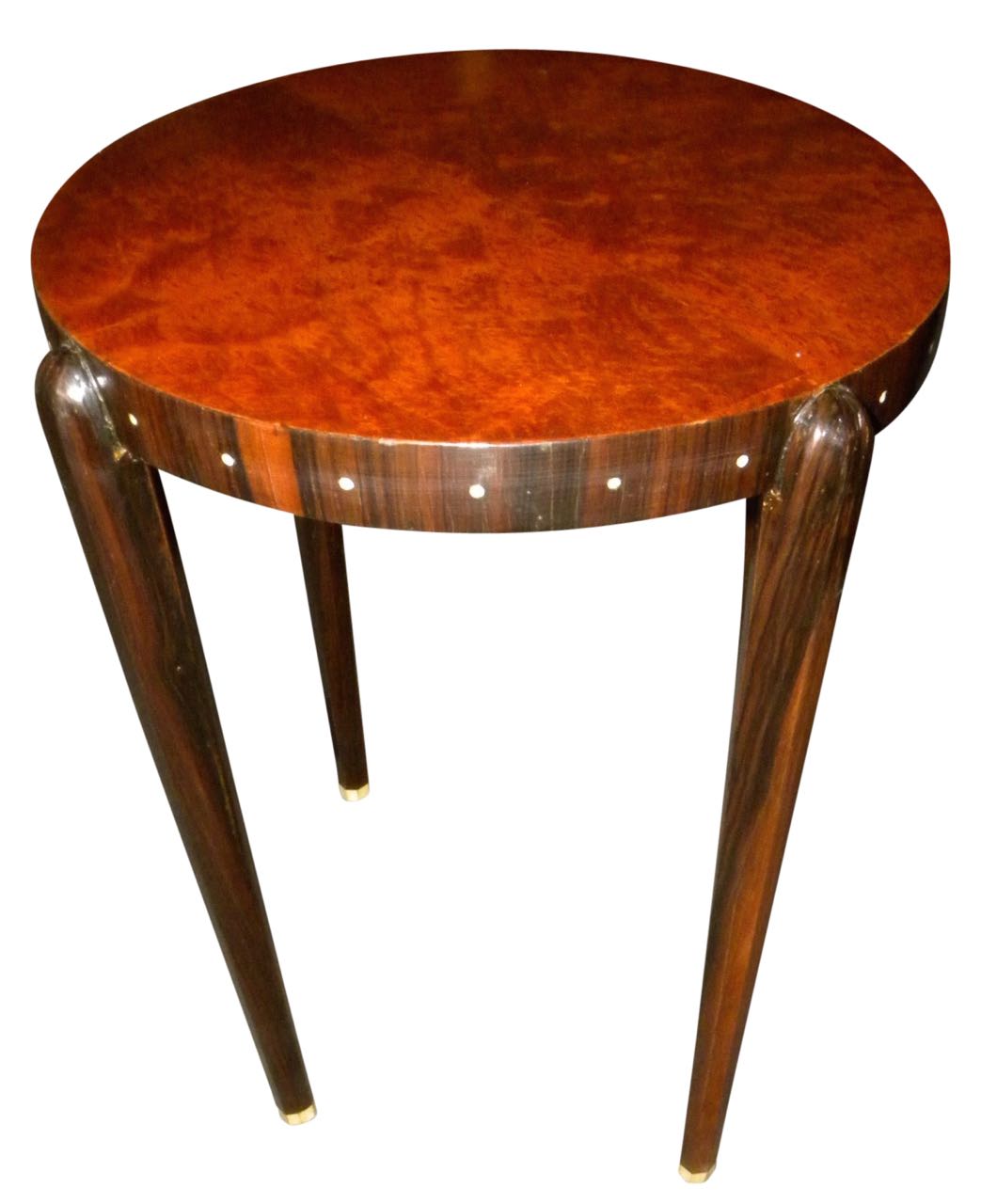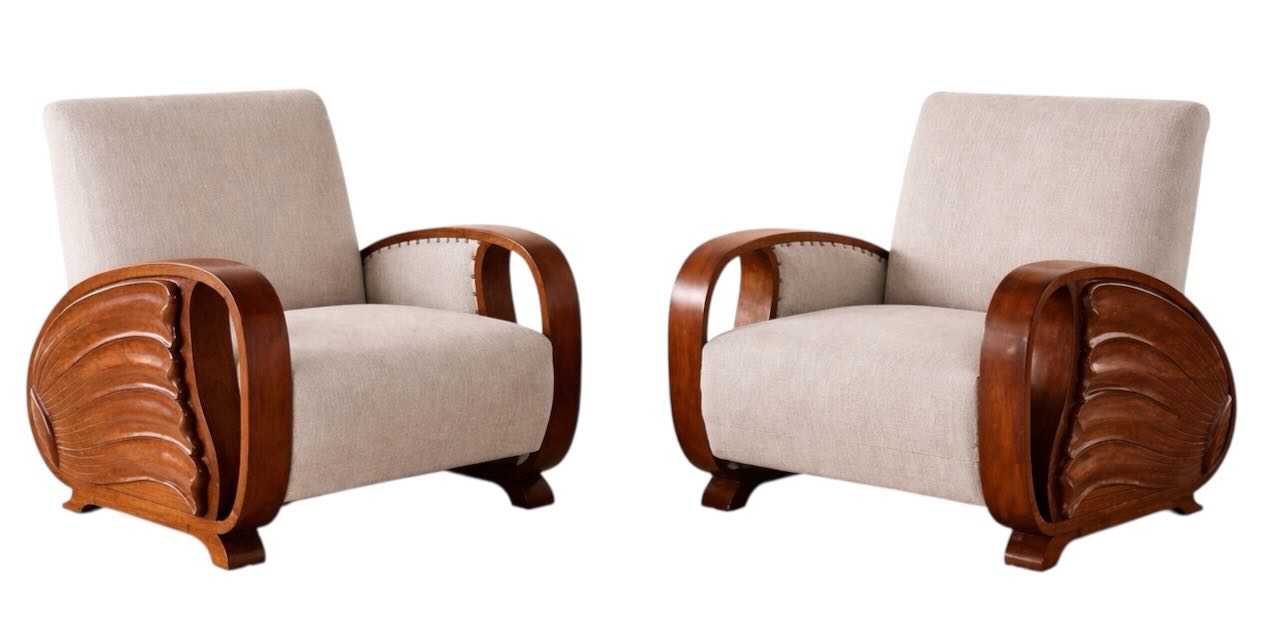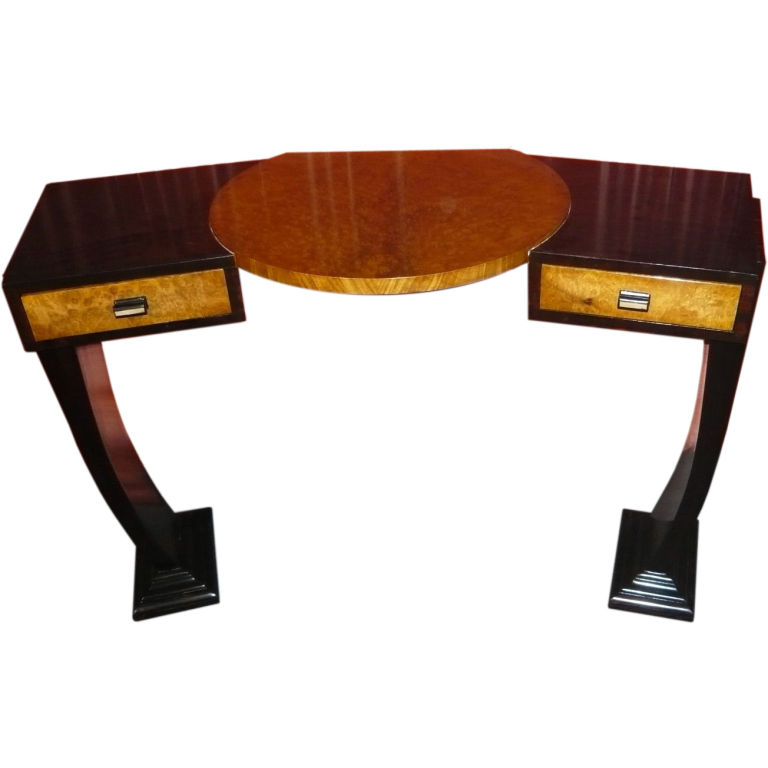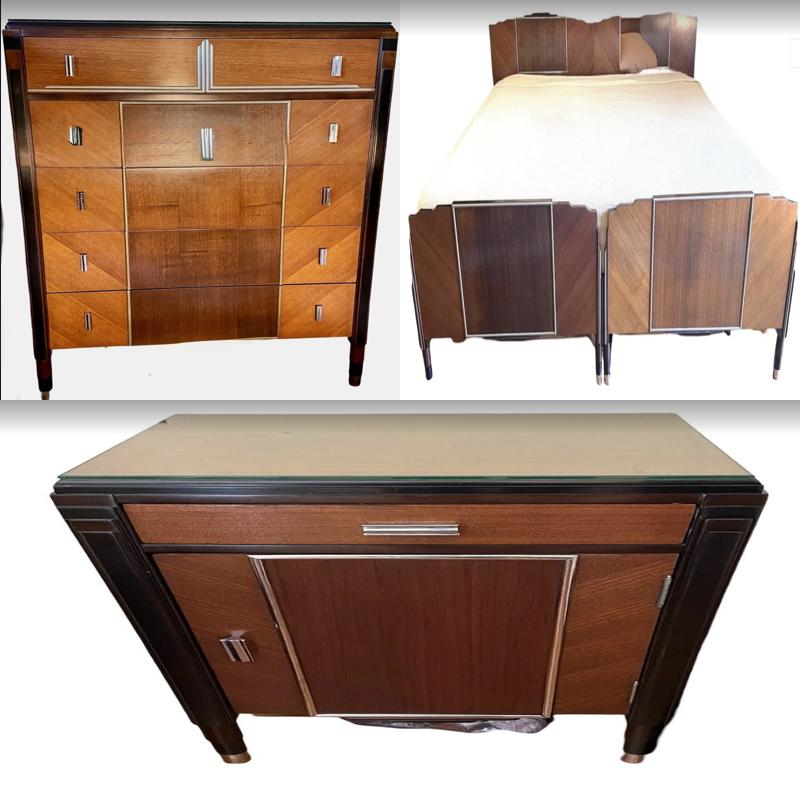





Axel Einar Hjorth
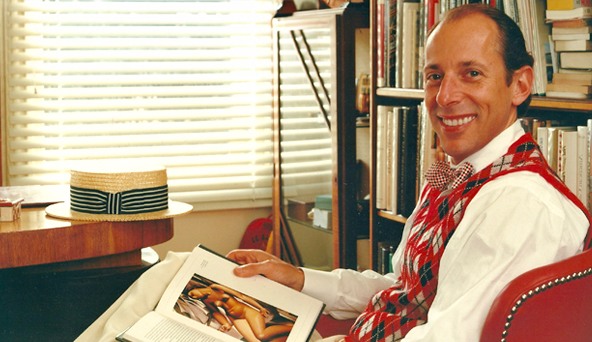
Axel Einar Hjorth was born on March 7, 1888, in the small Swedish village of Krokek, just outside Norrköping. Due to a difficult youth, he was placed with a well-off foster family. At the age of 20, he moved to Stockholm to study architecture and design at the Högre Konstindustriella Skolan, later known as Konstfack. He was forced to drop out when his foster father died, but his education was sufficient to secure a position designing furniture and interiors for the city of Stockholm’s Stads Hantverks Förening in 1918. Throughout the 1920s, he worked with various manufacturers, including H. Joop & Co., Myrstedt & Stern, Jonssons, and Svenska Möbelfabrikerna in Bodafors. In 1927, he was appointed chief architect and designer at the department store Nordiska Kompaniet in Stockholm, one of the most important producers of modernist furniture in Sweden, a position he held until 1938. During his time at NK, he designed both public and private interiors and worked with international clients, including Iranian royalty. After leaving NK, he started his own business and continued working independently.
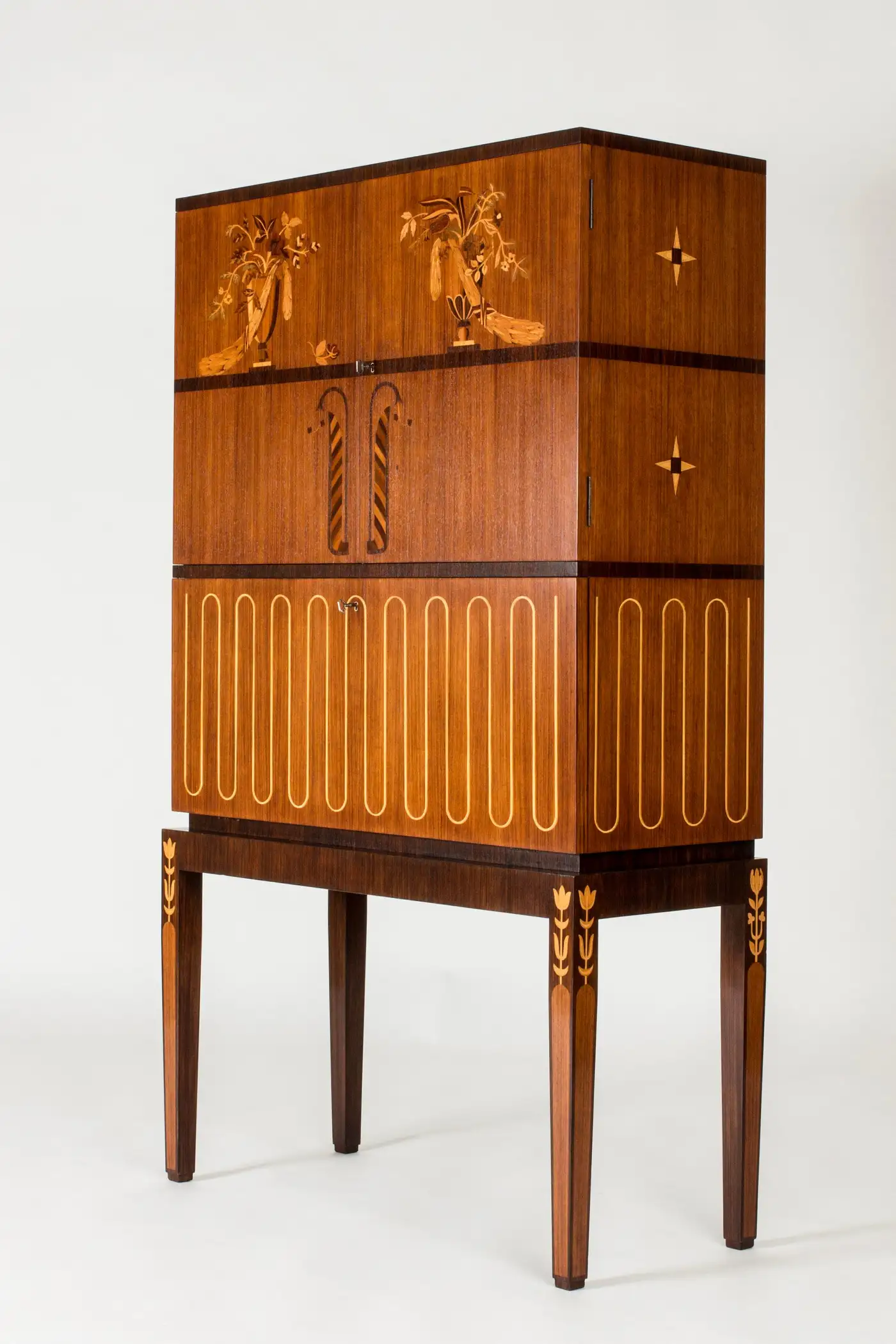
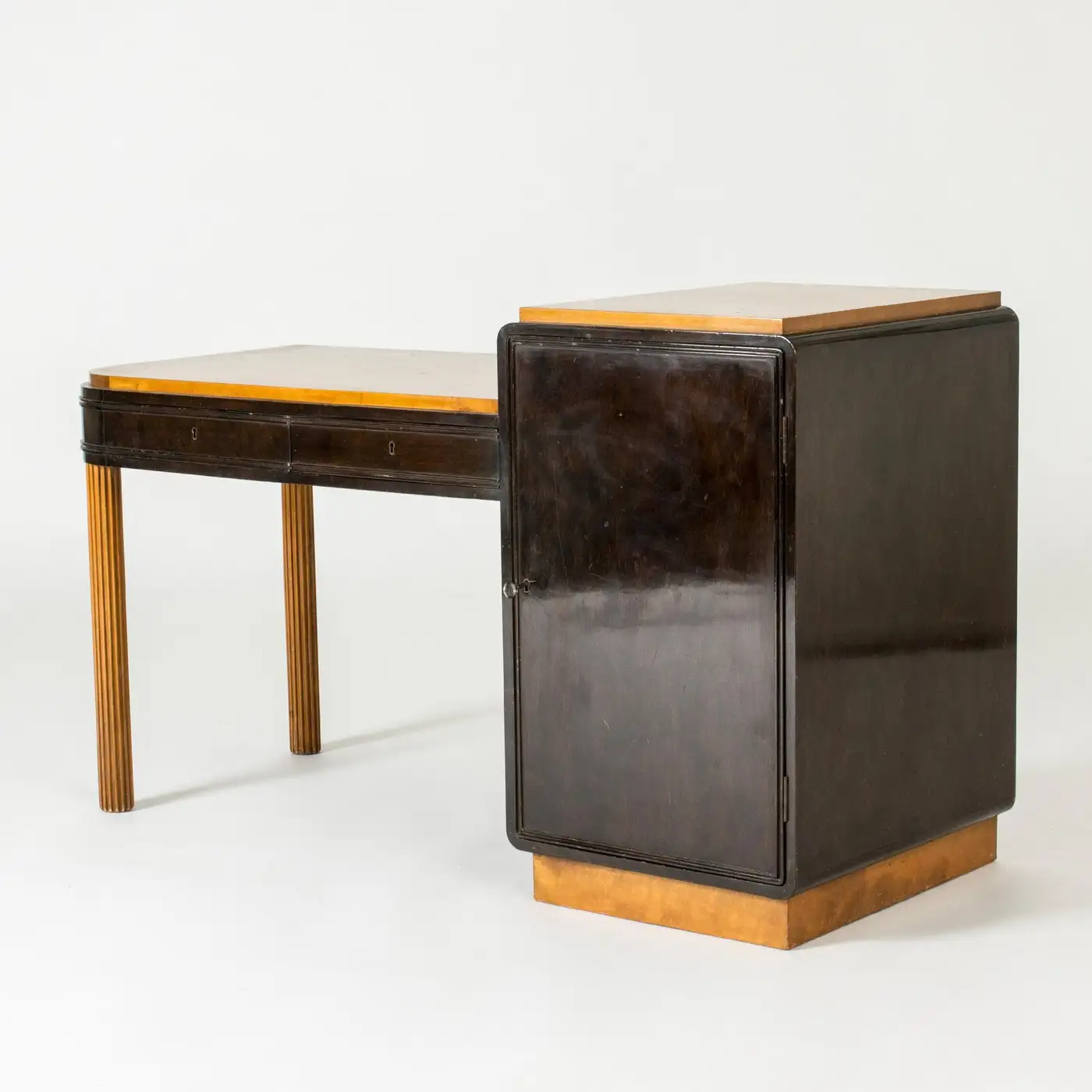
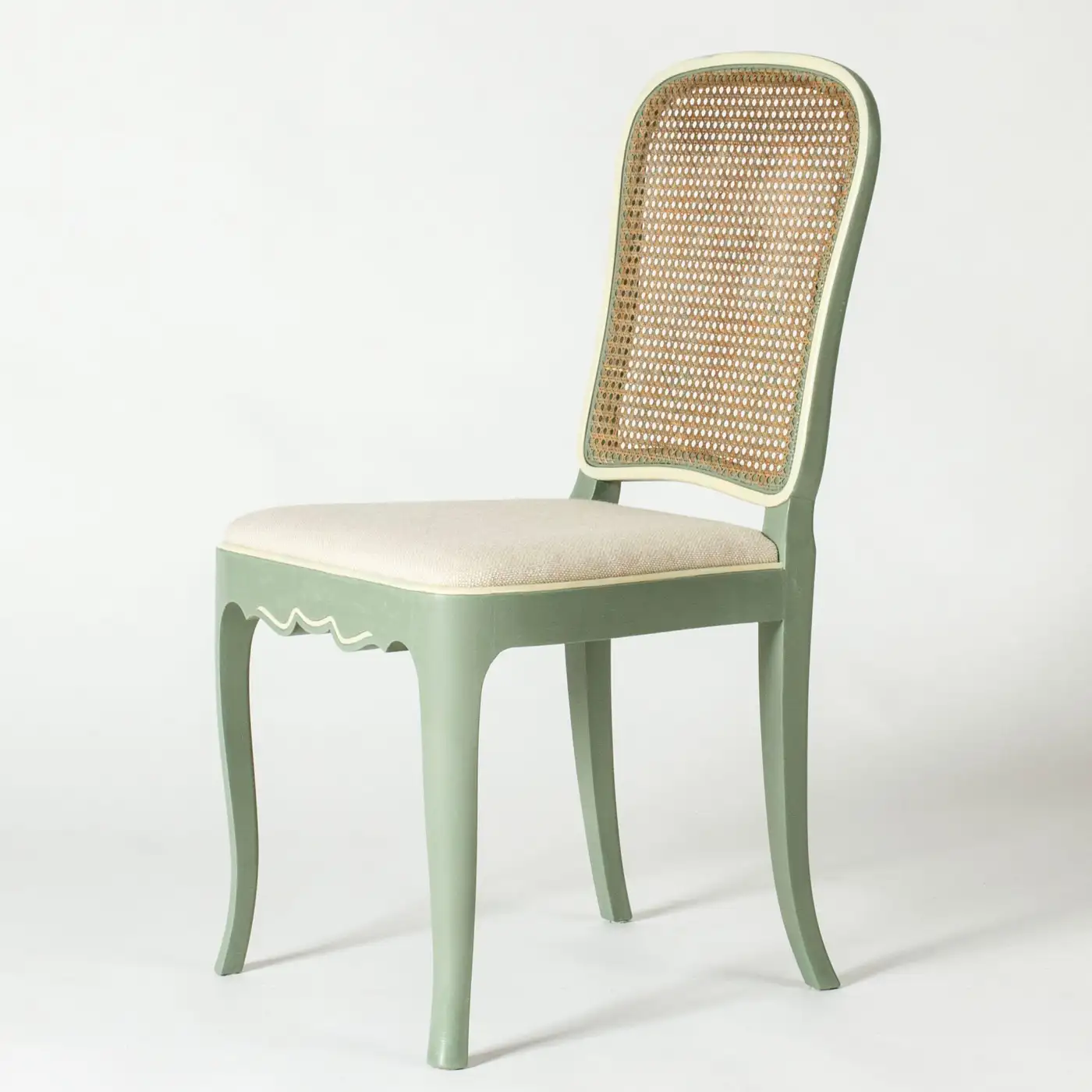
In 1923, Hjorth served as head of the assembly section of the Jubilee Exhibition in Gothenburg, an event that the British critic P. Morton Shand characterized as the beginning of Swedish dominance in the decorative arts. Together with contemporaries Carl Hörvik and Carl Malmsten, he represented Stockholm at the exhibition of Contemporary Swedish Decorative Arts at the Metropolitan Museum in New York in 1927, an event instrumental in introducing Swedish design to America. His first project for Nordiska Kompaniet was a stand for the World Fair in Barcelona in 1929, where he exhibited the Louis Cabinet and Caesar Cabinet. Over the course of his career, he showed work at the Stockholm Exhibition in 1930, the Dorland House exhibition in London in 1931, and the World Fairs in Chicago, Brussels, Paris, and New York. In the 1930s, he designed a furniture collection out of pine meant for serial production known as Sportstugemöbler, or furniture for holiday houses, with pieces named after Stockholm’s archipelago islands including Blidö, Sandhamn, Torö, and Lovö. He also prepared and curated annual exhibitions for NK throughout his tenure there. Although several of his contemporary colleagues received great attention in the history of Swedish architecture and design, Hjorth was often overlooked due to a lack of published and archived works. More recently, interior designer Pierre Yovanovitch has been credited with bringing Hjorth to the attention of a younger generation of designers, featuring his pieces in projects across Europe.
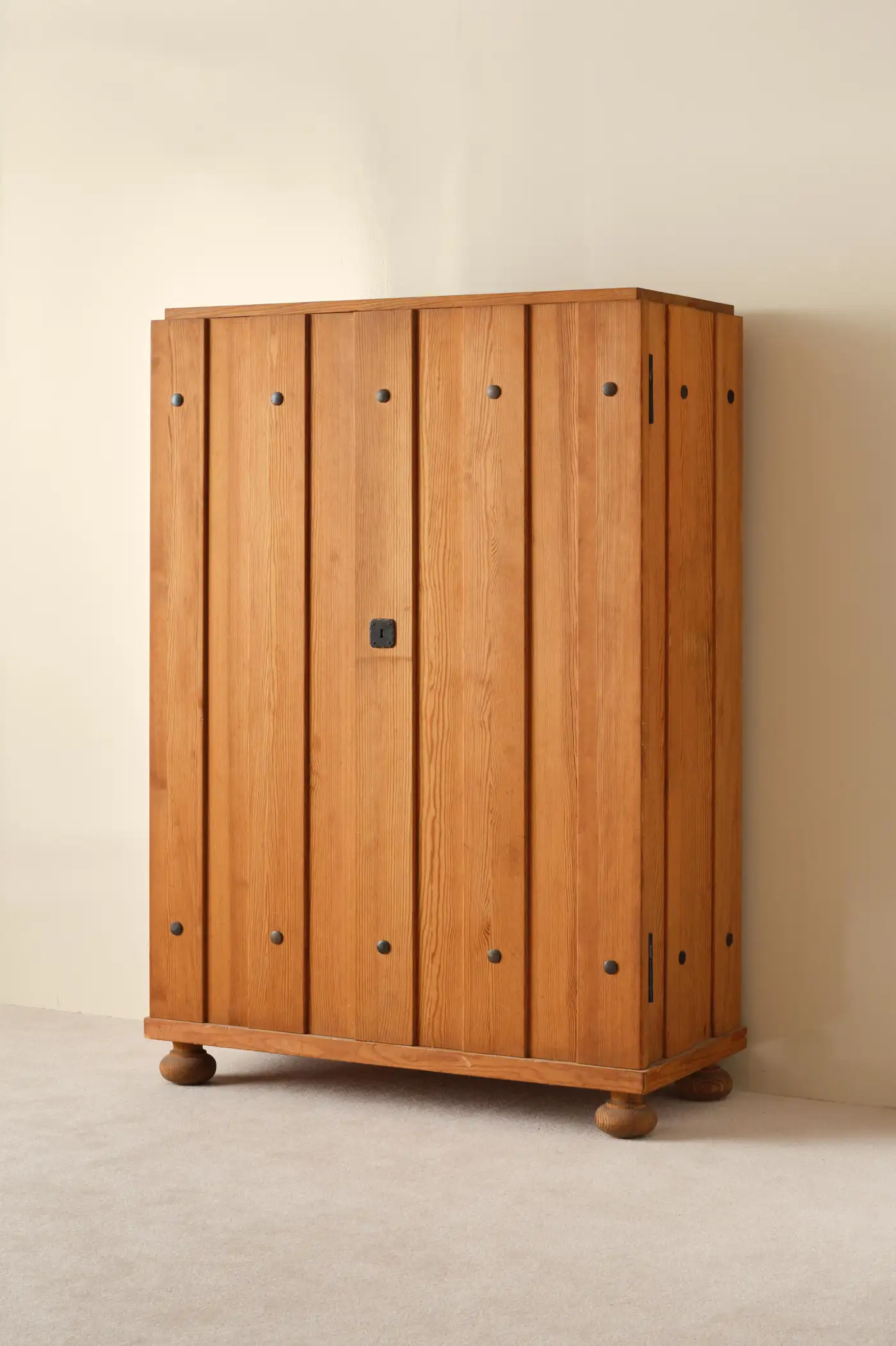
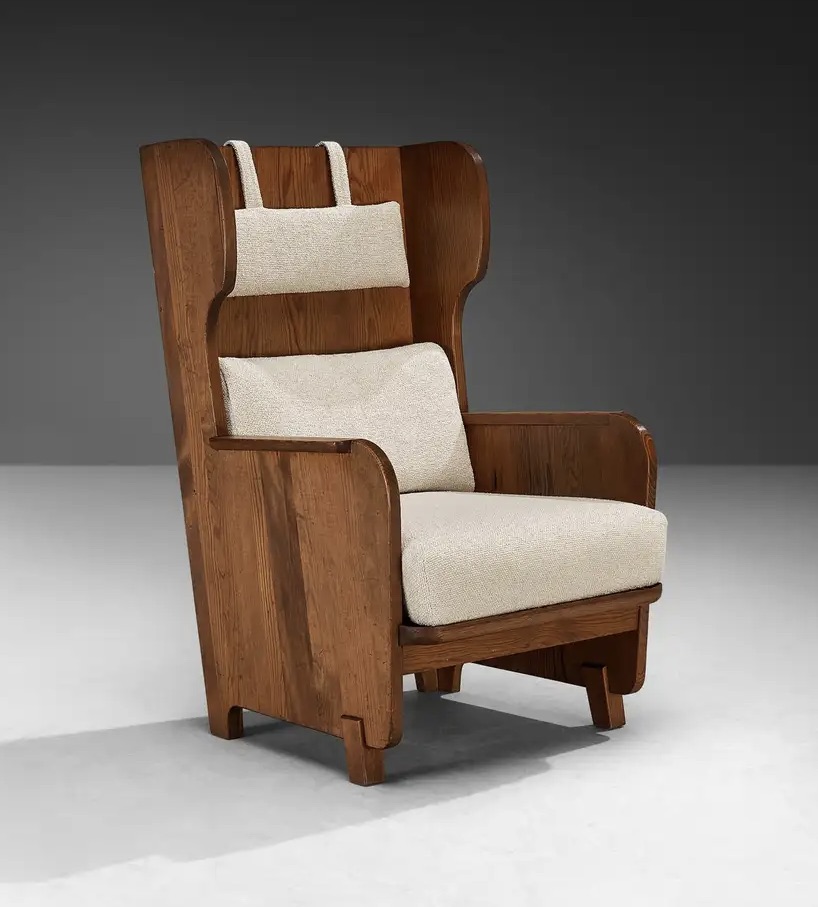
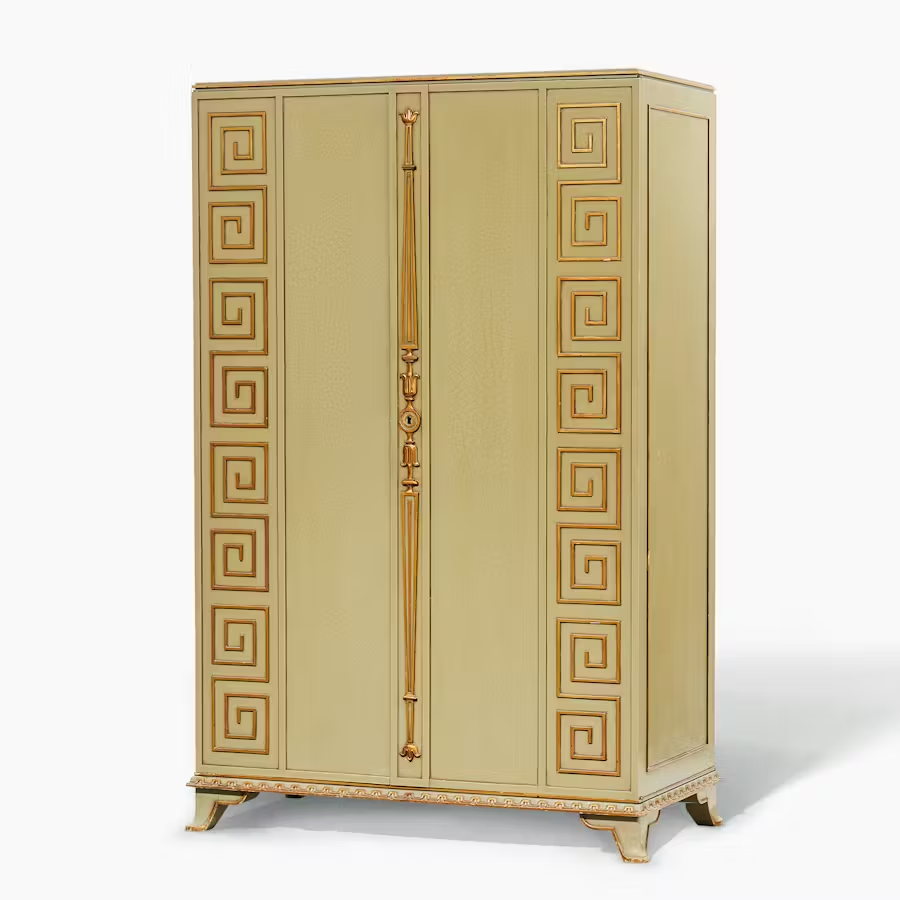
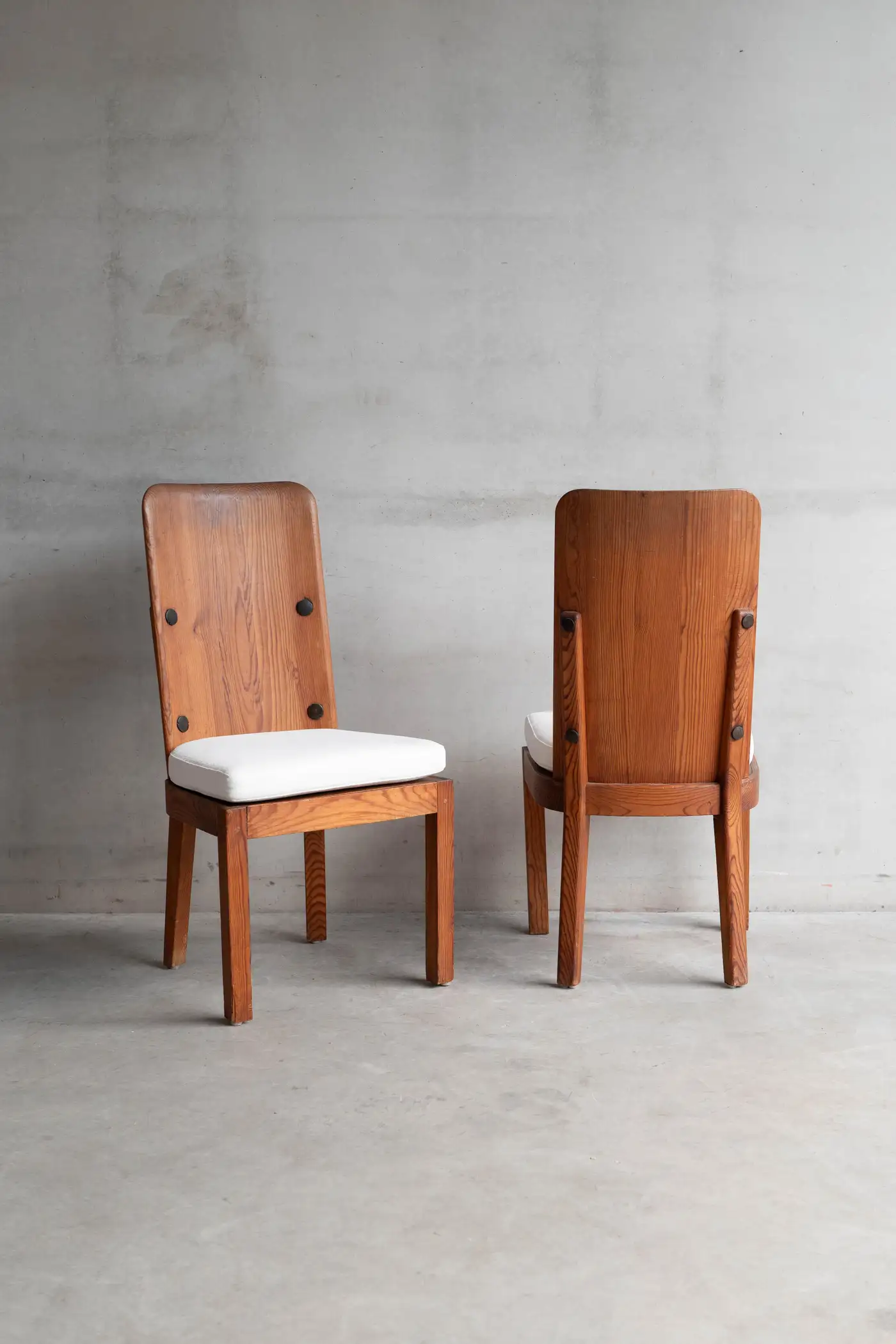
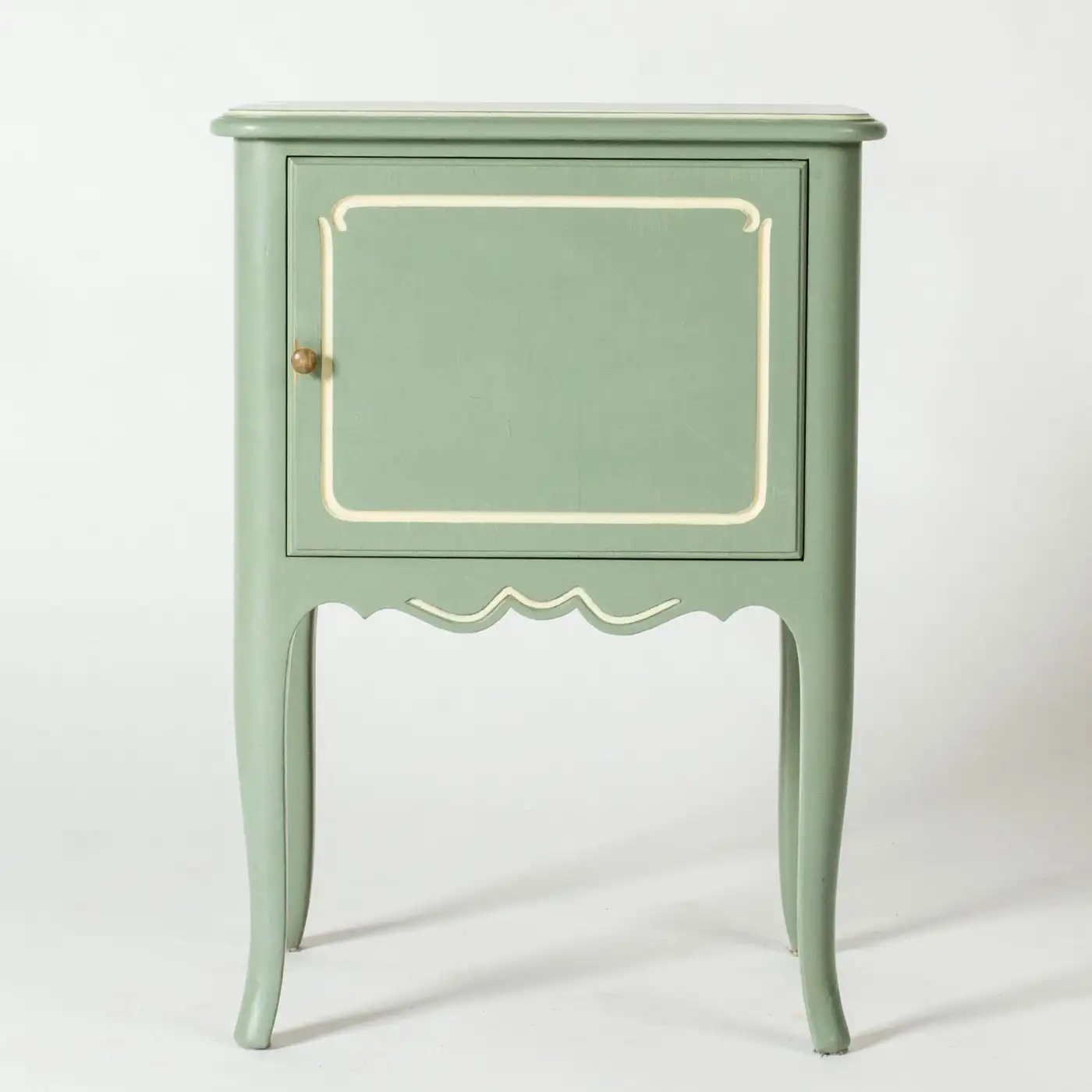
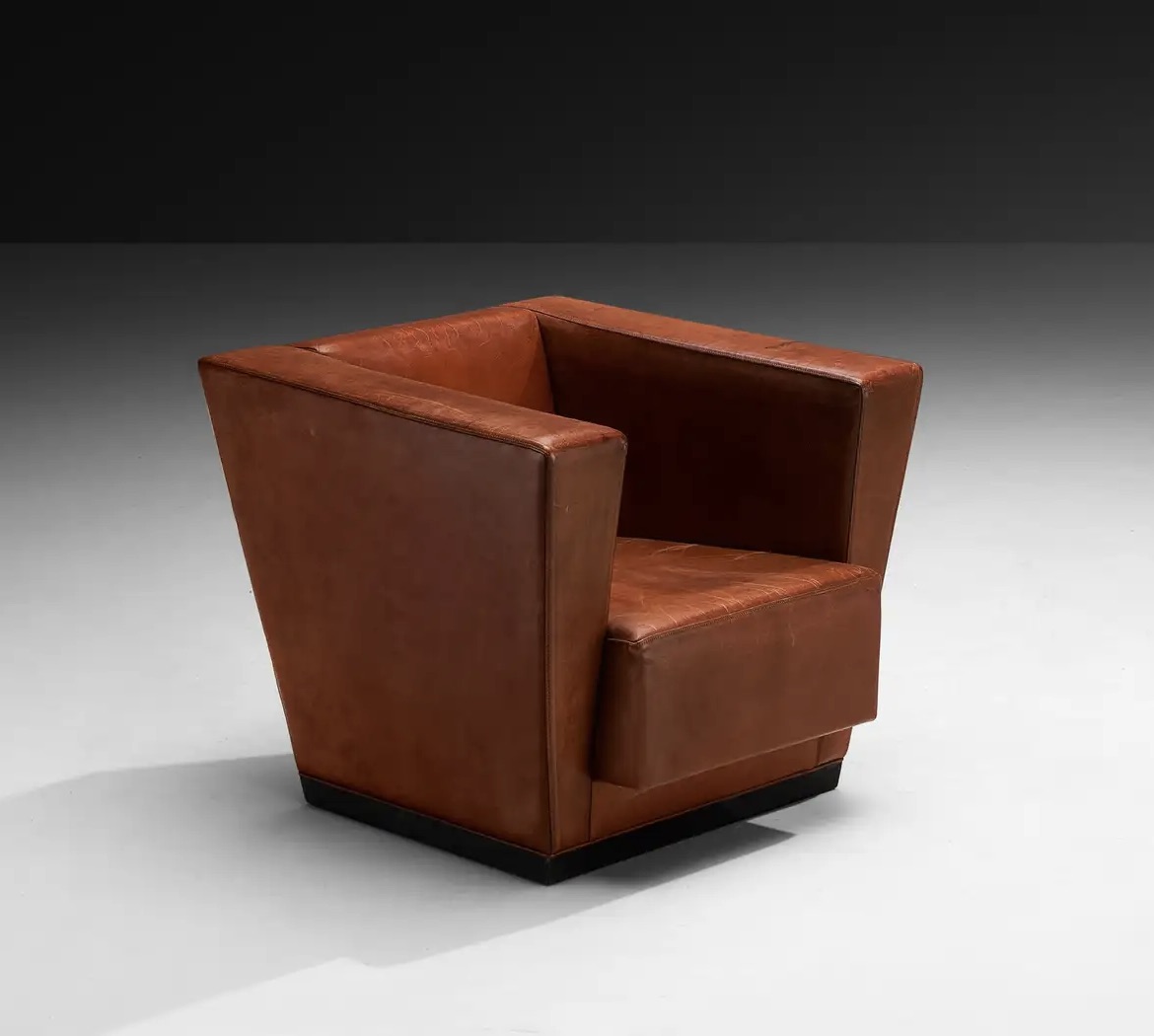

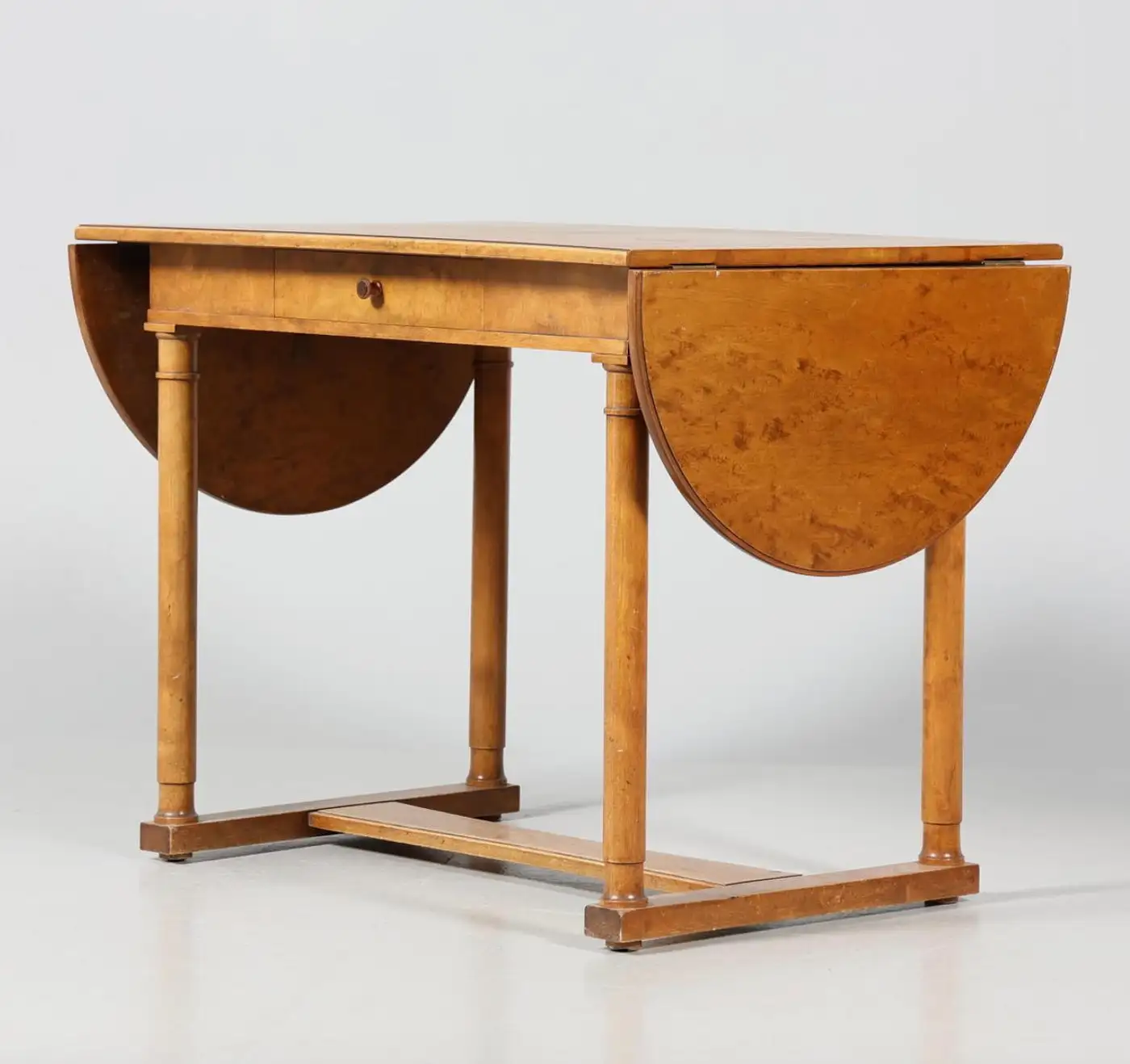
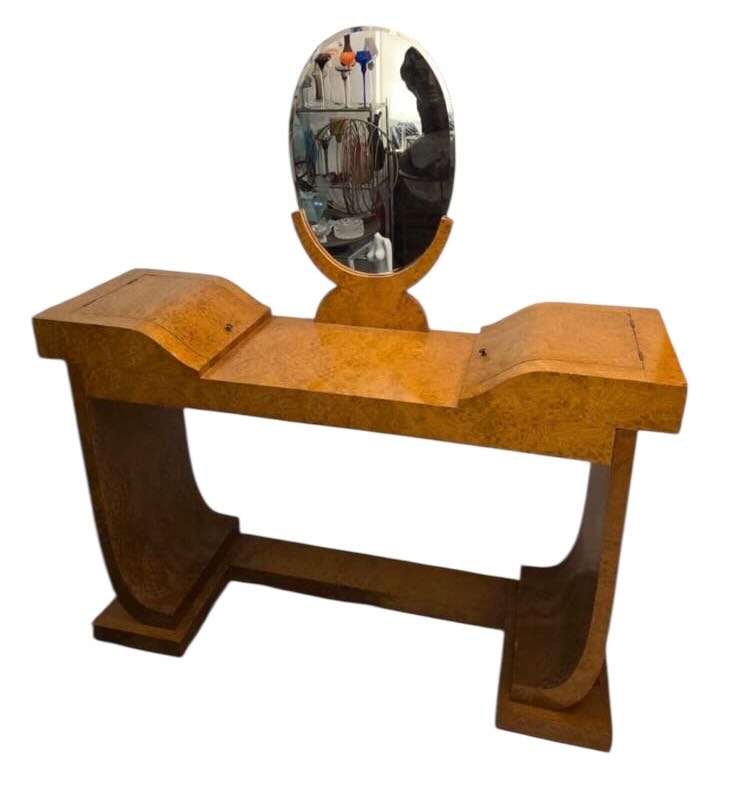
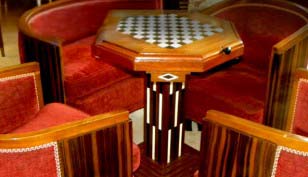
Hjorth’s designs ranged from the luxuriousness of neoclassicism to the severity of functionalism, sharply distinct in style, materials, and character. Unlike many of his contemporaries, he did not conform to the socially oriented ideas of Svensk Form, often incorporating playful ornamentation from different historical periods, such as French Art Deco, using mixed exotic woods, bright colors, and textiles. His Sportstugemöbler collection is particularly renowned for its union of Swedish rural traditions with international modernism, displaying strong proportions and simplicity in construction.
Key Influences
- Swedish Design Internationally: His participation in landmark exhibitions in Gothenburg, New York, and multiple World Fairs helped establish Sweden’s international reputation in the decorative arts.
- Modernist Furniture Production: His work at Nordiska Kompaniet shaped one of Sweden’s most important manufacturers of modern furniture and set standards for Scandinavian design retail.
- Tradition and Modernism: His Sportstugemöbler collection demonstrated that rural craft traditions and modernist principles could be unified, anticipating directions later explored by designers such as Charlotte Perriand and Pierre Chapo.
- Ornament in Modern Design: His willingness to incorporate historical ornamentation into modern forms offered an alternative to the strict functionalism that dominated Scandinavian design discourse.
- Swedish Grace Movement: His early neoclassical work contributed to the development of Swedish Grace as a recognized national style that balanced elegance and simplicity.
If you are interested in further stories of the artists who shaped Art Deco, return to our artists page to browse the full directory.
Related Products