

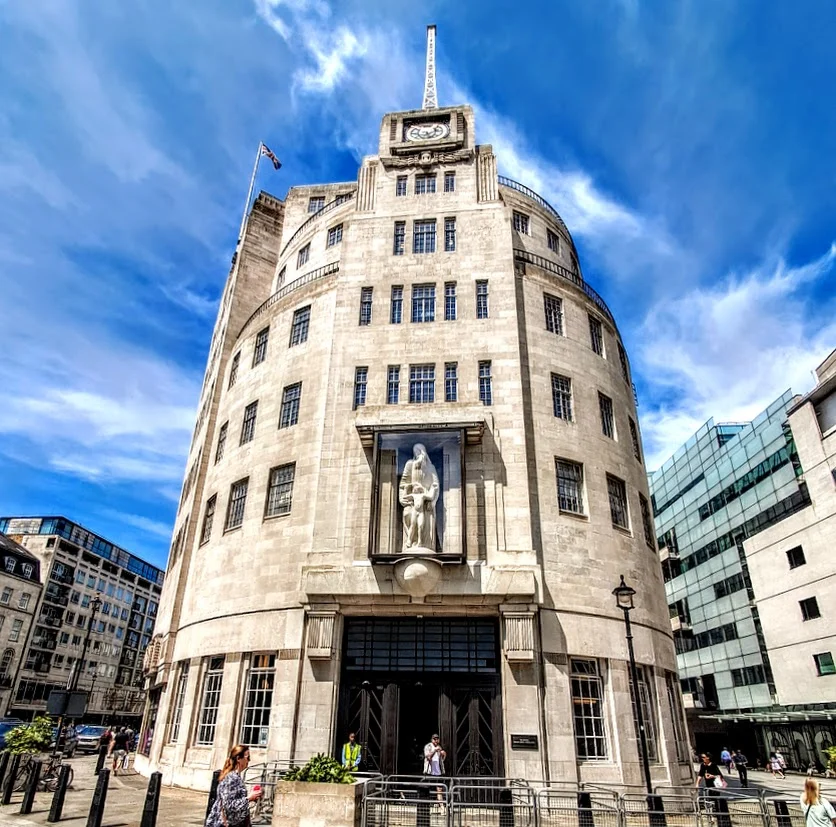
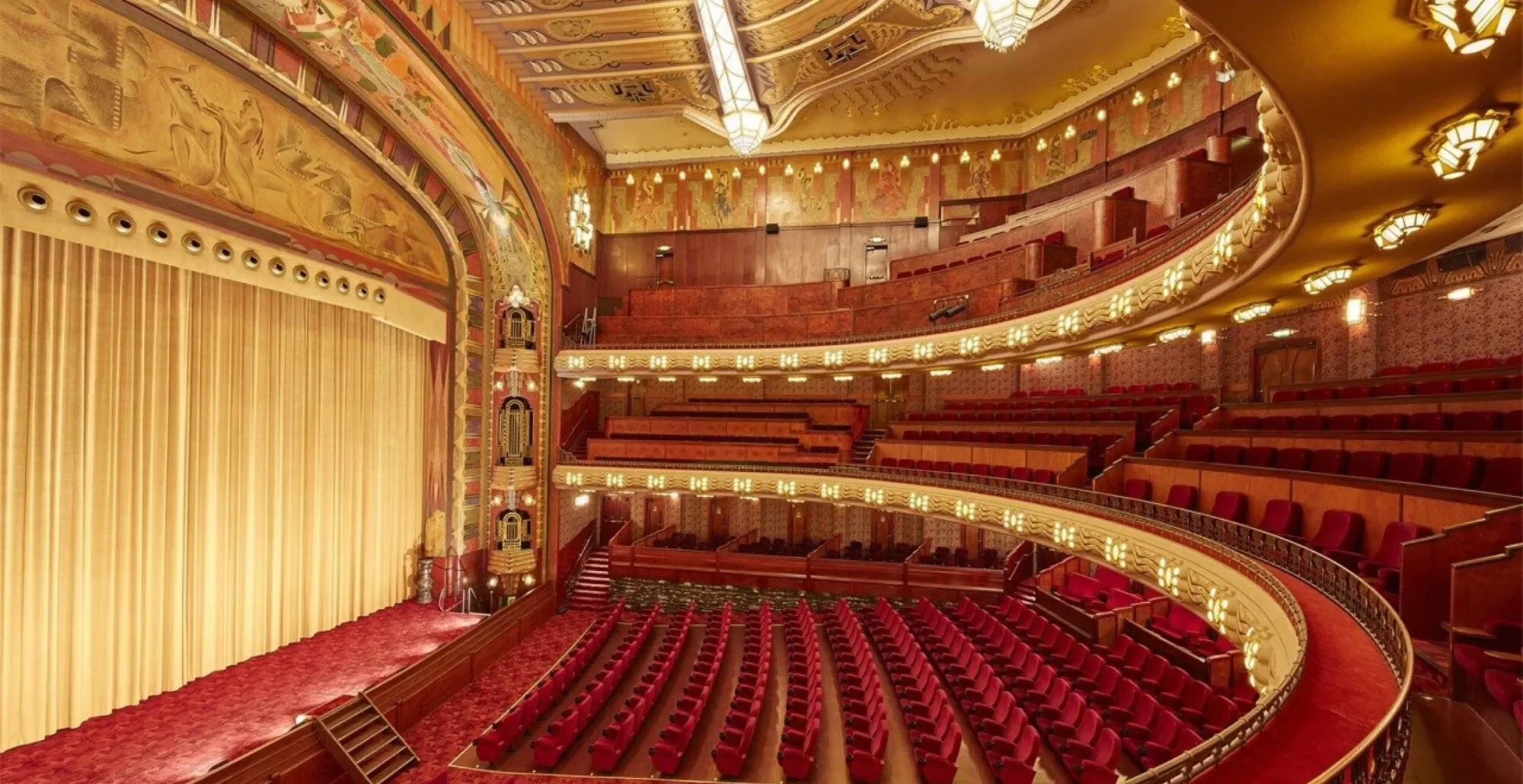
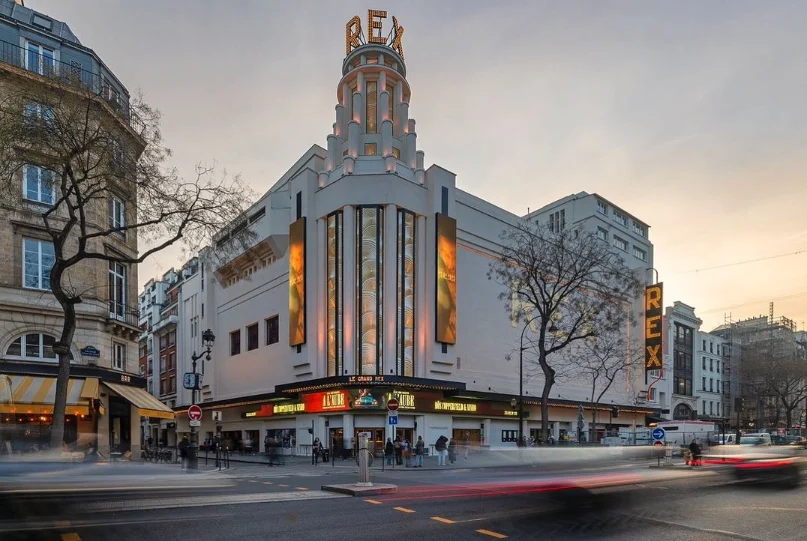
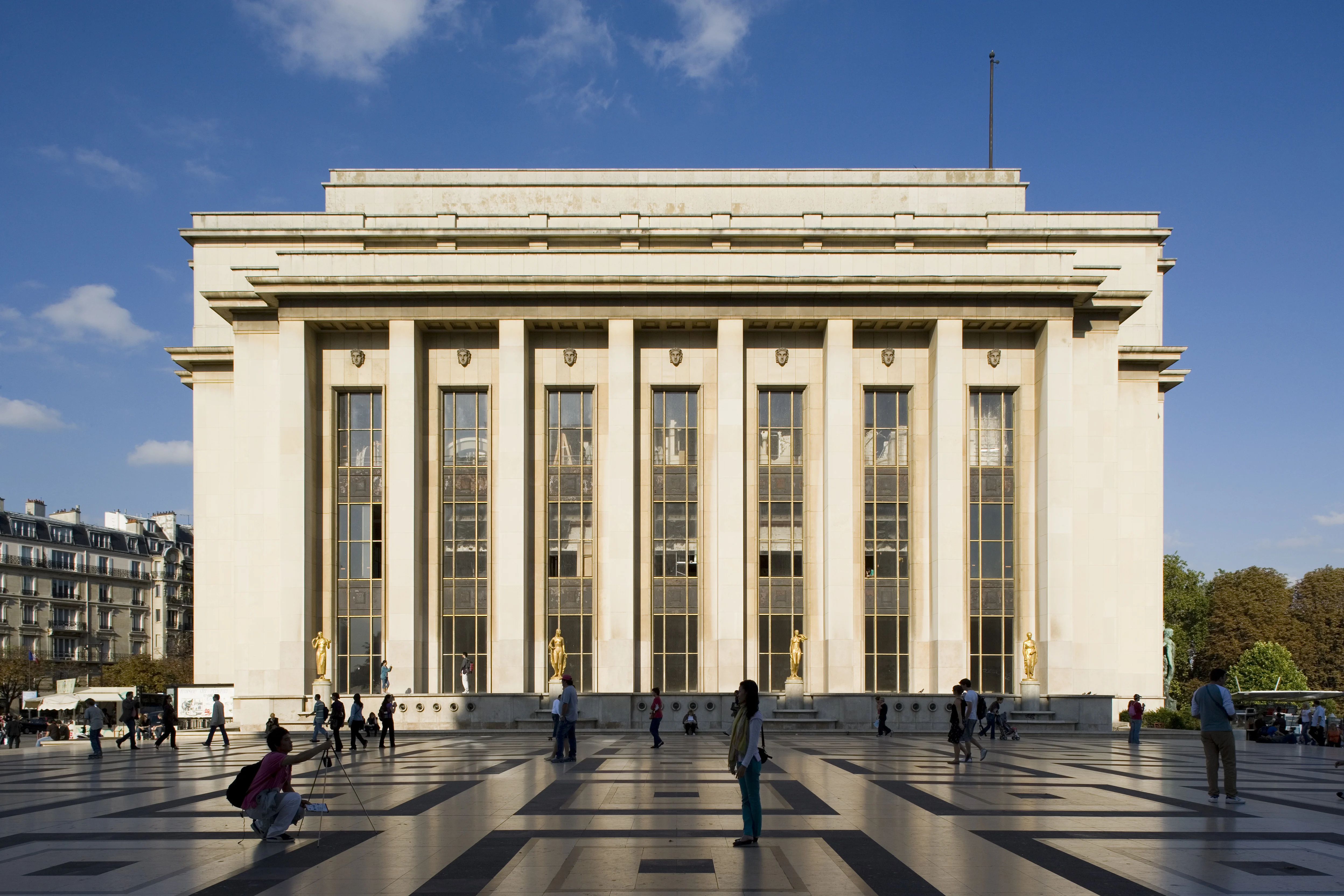
Top: Left: Broadcasting House, London. Right: Tuschinski Theatre interior, Amsterdam. Bottom: Left: Grand Rex, Paris, 1932. Right: Palais de Chaillot, Paris, 1937.
✕
ART & STATUES
CERAMICS & GLASS
Art Deco Around The World
European Art Deco Buildings, Landmarks Across the Continent
From Paris cinemas to Warsaw towers, the buildings that gave Europe its own Art Deco skyline.
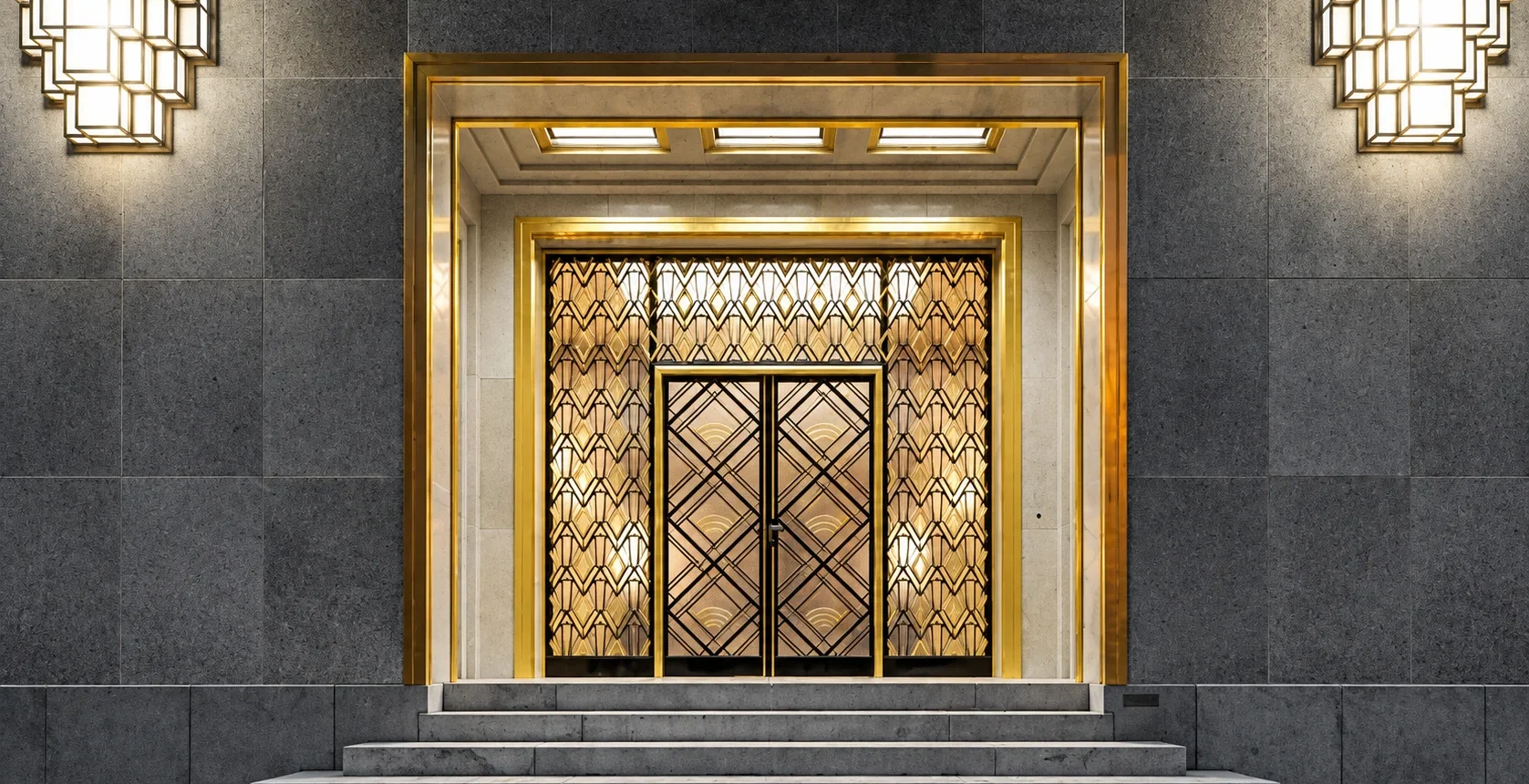
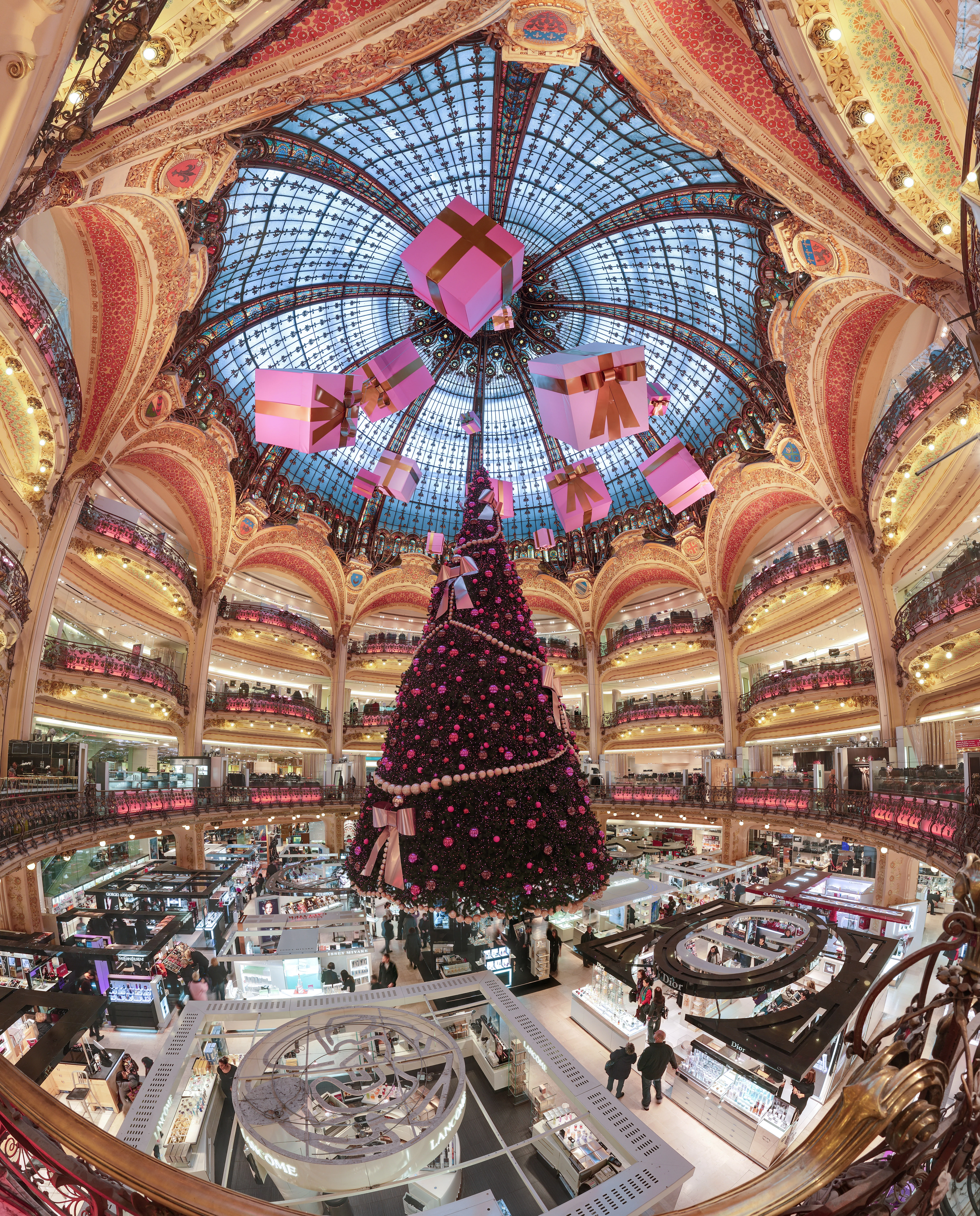 Art Deco took its name from the 1925 Exposition Internationale des Arts Décoratifs in Paris, and the city kept building in the style long after the fairgrounds closed. The Grand Rex, which opened in 1932 with the American theater engineer John Eberson on its design team, is the most theatrical example: its façade was sculpted by Henri-Édouard Navarre, its great hall was decorated by Maurice Dufrêne, and its starry ceiling rises more than thirty meters above a relief of a Mediterranean city. The Palais de la Porte Dorée, built for the 1931 Colonial Exposition, takes a different approach, wrapping its exterior in a 1,200 square meter bas-relief carved by Alfred Janniot. Even the department stores joined in, and Galeries Lafayette traded the curves of its Art Nouveau origins for geometric lines when it was redesigned in 1932. Together they show how completely the style took over Paris, in places built for entertainment, empire, and everyday shopping alike.
London’s Art Deco is a story of newspapers, factories, and private houses rather than palaces. The Daily Express Building on Fleet Street, completed in 1932 by Ellis and Clarke, wrapped a concrete frame engineered by Owen Williams in black Vitrolite and chrome strips, and its foyer by Robert Atkinson added plaster reliefs by Eric Aumonier above an oval staircase. A 2025 Time Out ranking by Art Deco expert Dominic Lutyens named it the greatest Art Deco building in the world. A year later, the Hoover Building opened in Perivale, where Wallis, Gilbert and Partners decorated a working factory with geometric ornament, a choice architect Thomas Wallis defended as having a psychological effect on the worker. At Eltham Palace, Stephen and Virginia Courtauld hired Seely & Paget to build a modern house beside a medieval great hall, with an entrance hall by the Swedish designer Rolf Engströmer and a room upstairs for their pet lemur, Mah-Jongg.

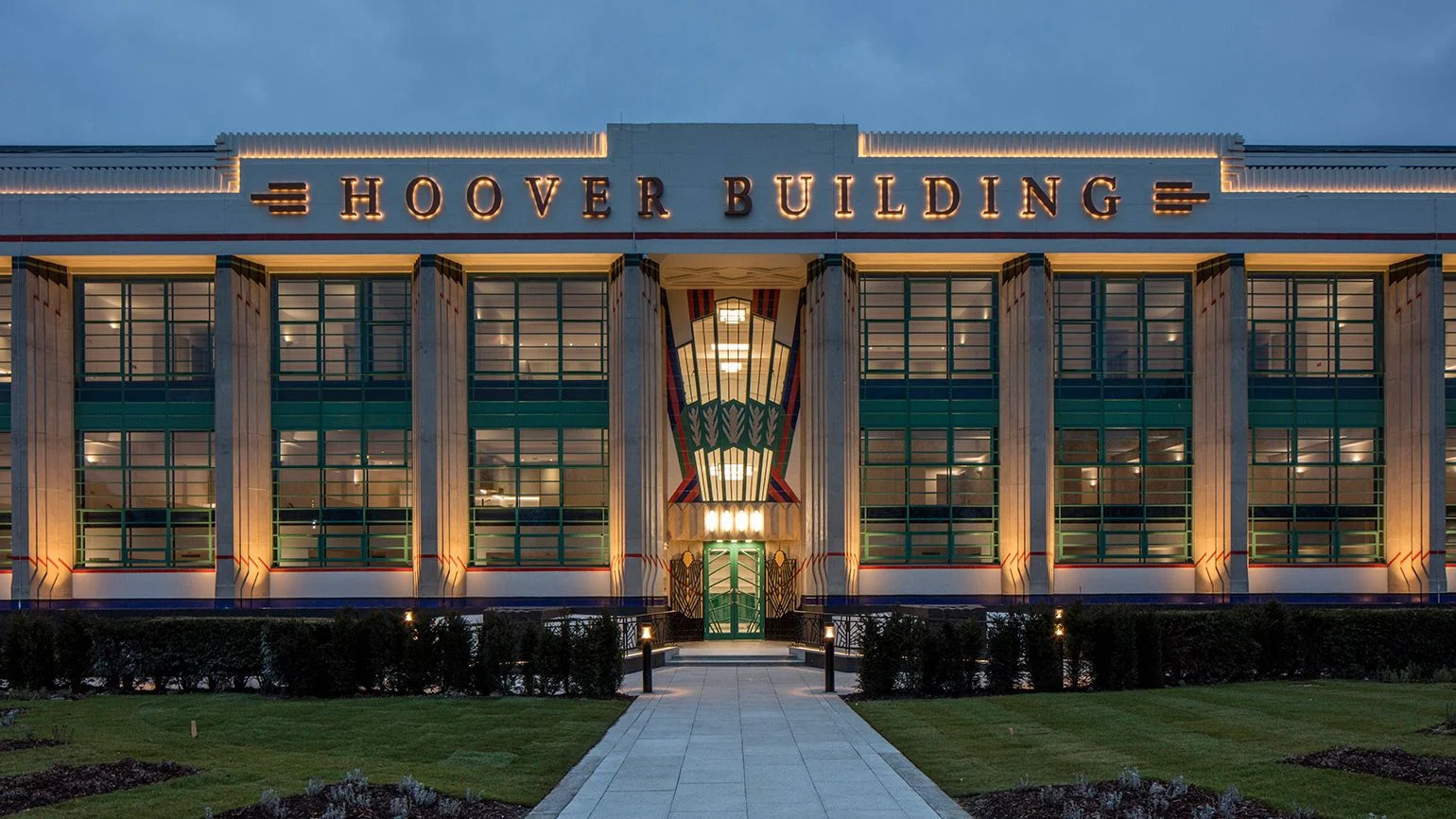
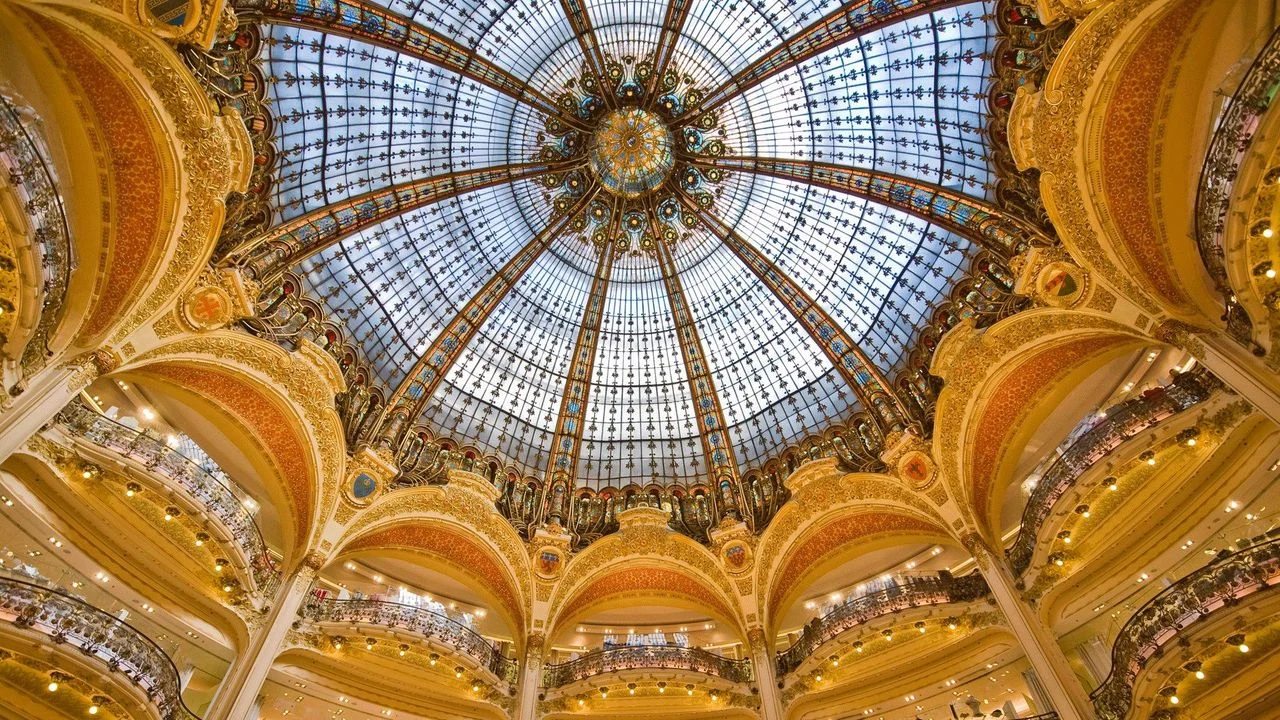
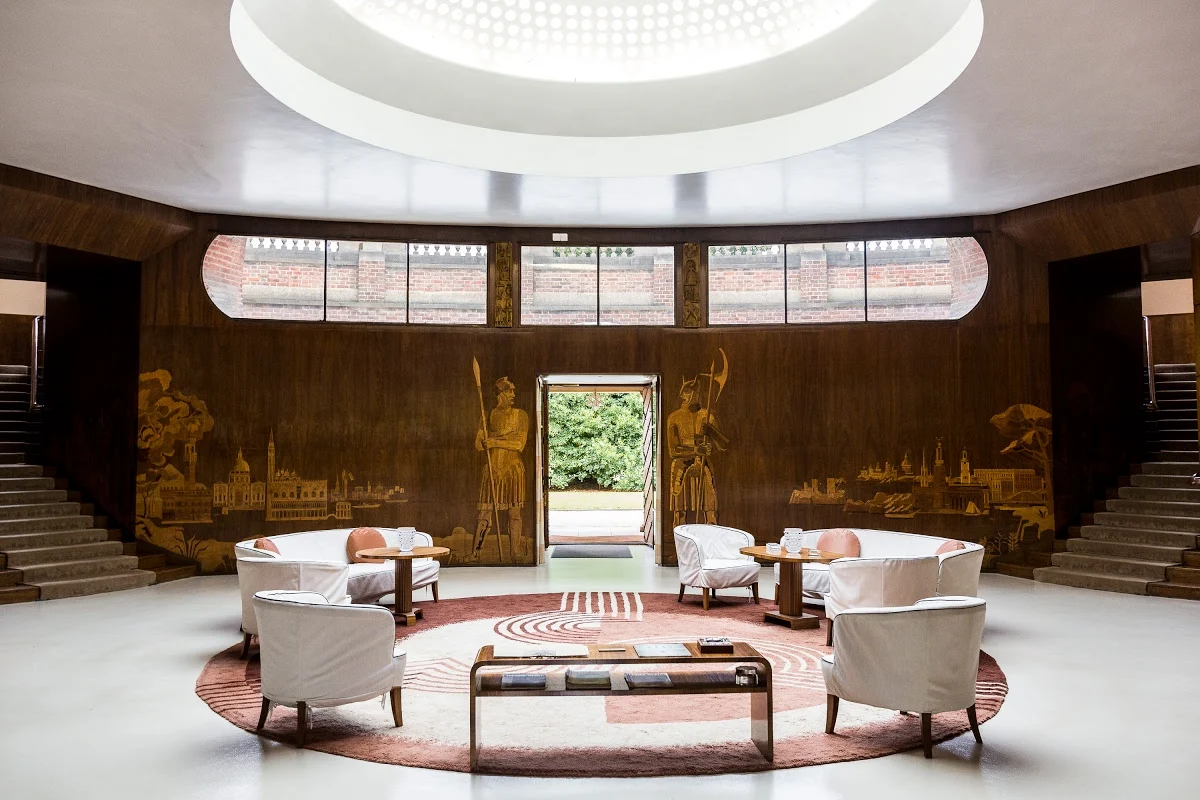
Top: Left: National Basilica of the Sacred Heart, Brussels. Right: Hoover Building, Perivale, 1933. Bottom: Left: Galeries Lafayette dome, Paris. Right: Eltham Palace entrance hall, London.
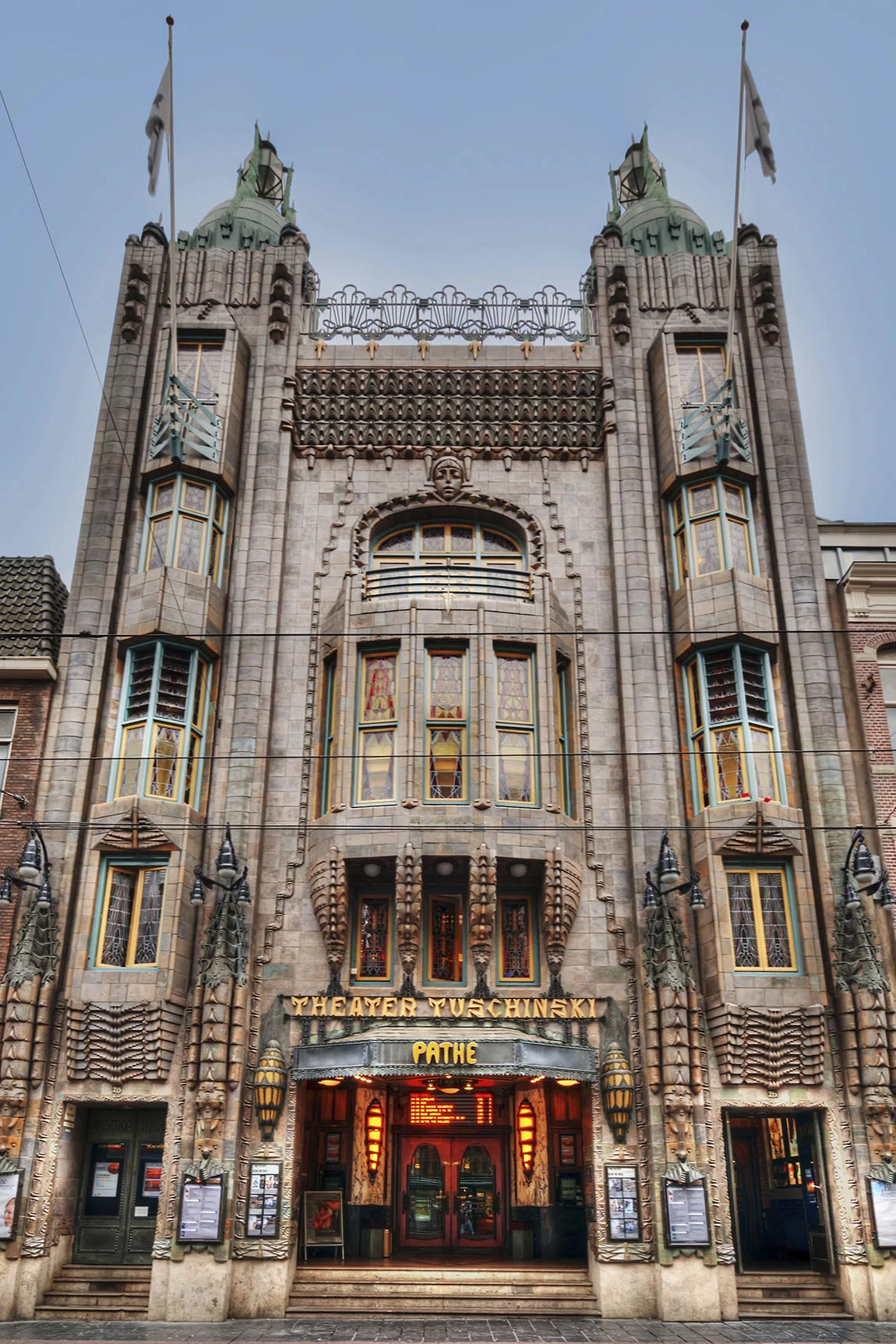 Belgium and the Netherlands produced some of the Continent’s most distinctive Art Deco. In Brussels, Michel Polak designed the Villa Empain between 1930 and 1934 for Baron Louis Empain, a house of polished granite, bronze, marble, and stained glass that the Boghossian Foundation restored after decades of neglect and has operated as a cultural center since 2010. The Flagey Building, completed in 1938 by Joseph Diongre, takes the shape of an ocean liner and was built as the home of Belgium’s national broadcaster, and its Studio 4 concert hall, where musicians from Chuck Berry to Chet Baker performed, is still praised for its acoustics. Antwerp’s Boerentoren, finished in 1932, rose 95.8 meters, making it the second tallest building in Europe at the time, behind only Madrid’s Telefónica Building. Across the border in Amsterdam, the Tuschinski Theatre opened in 1921, a cinema that blends Art Deco geometry with the brick fantasies of the Amsterdam School.
Further east, the style arrived with a different mood. Warsaw’s Prudential building, completed in 1933 and designed by Marcin Weinfeld, rose 66 meters across eighteen stories on a steel frame engineered by Stefan Bryła and Wenczesław Poniż, making it the tallest building in interwar Poland and the sixth tallest skyscraper in Europe when it opened. It survived the Warsaw Uprising after being struck by roughly a thousand artillery shells, which bent the tower and left only its steel frame standing, and it reopened in 2018 as the five-star Hotel Warszawa. In Prague, the Alcron Hotel opened in 1932, designed by Alois Krofta, who also owned it, and after decades of nationalization and closure it reopened in 1998 with its public rooms restored to their original Art Deco style. Charlie Chaplin and Winston Churchill were among its guests before the war, a reminder that these buildings were meant to be seen, visited, and talked about.
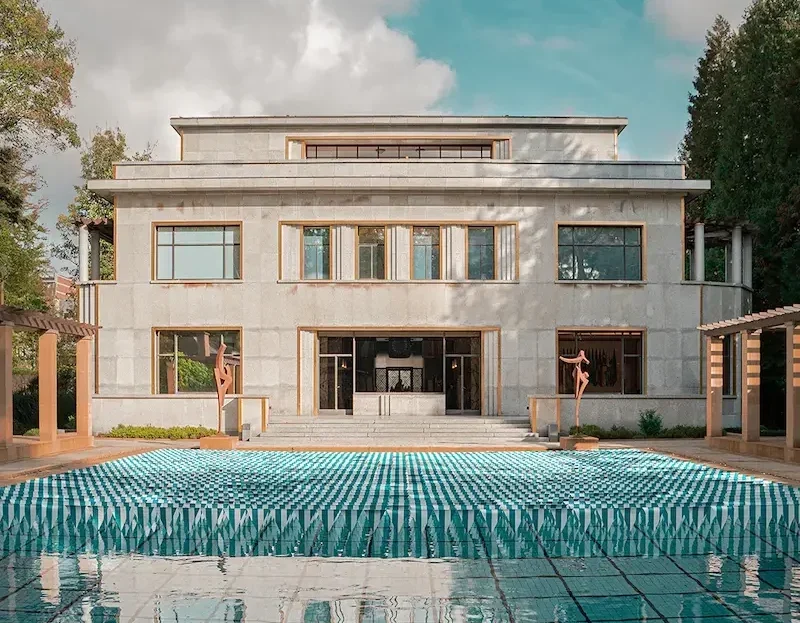
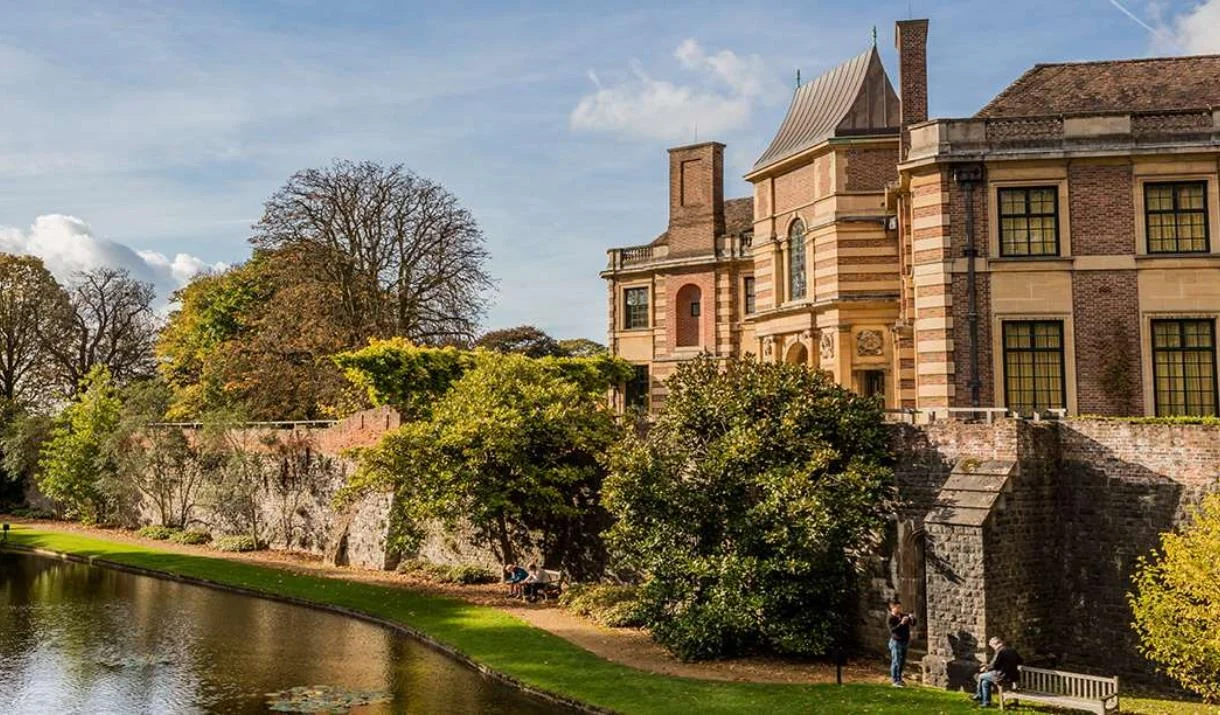
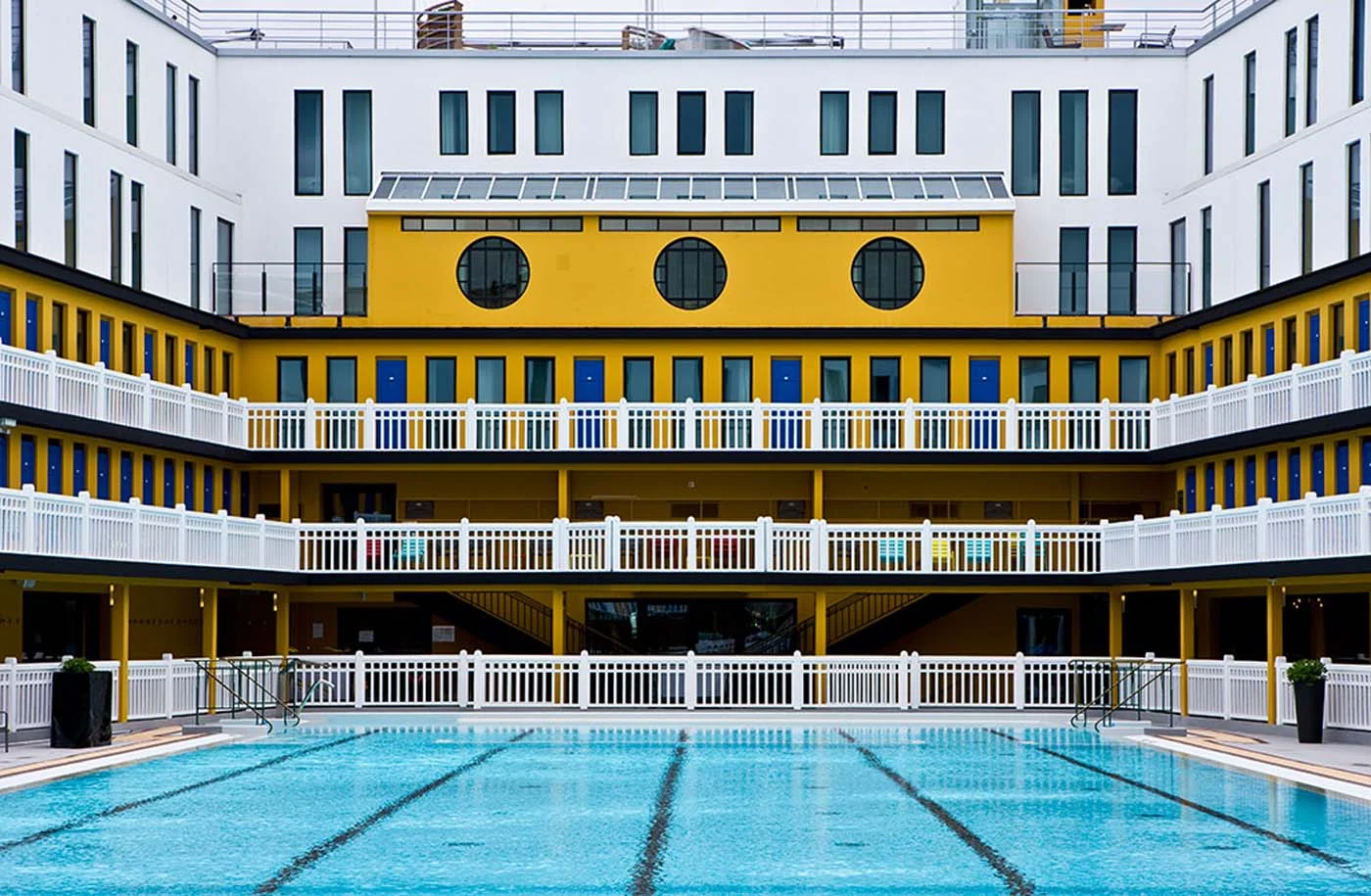
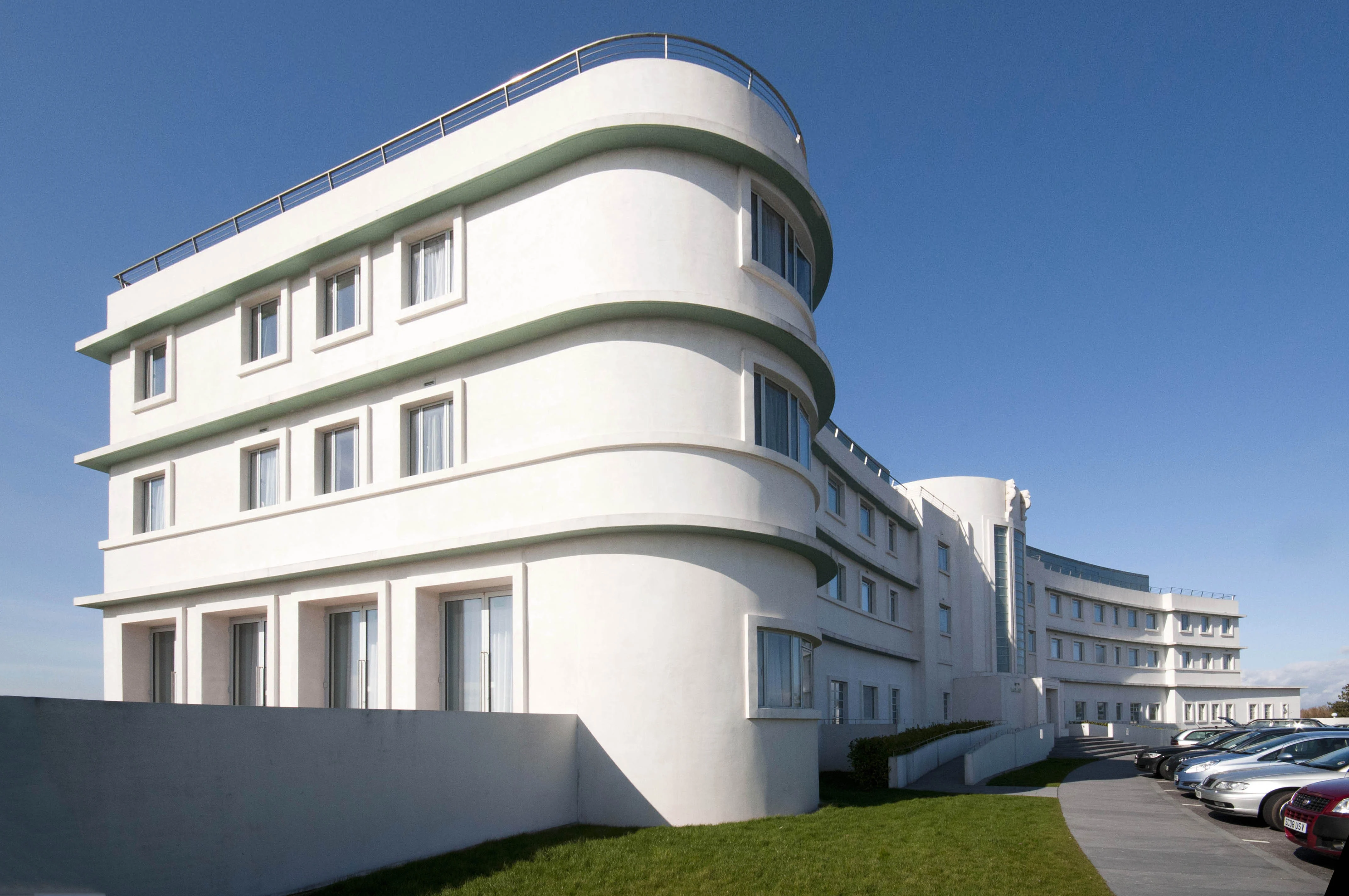
Top: Left: Villa Empain, Michel Polak, Brussels. Right: Eltham Palace, London. Bottom: Left: Piscine Molitor, Paris, 1929. Right: Midland Hotel, Oliver Hill, Morecambe.
What these buildings share is a willingness to treat everyday commissions, from cinemas and factories to hotels and offices, as occasions for ornament and ambition. Many were damaged, abandoned, or converted in the decades after the 1930s, and the fact that so many survive, from Eltham Palace to the Hoover Building to Hotel Warszawa, owes as much to later restoration as to the original builders. They are easy to find in most European cities, and they remain some of the clearest evidence of how widely the style spread.


Related Products from ArtDecoCollection.com
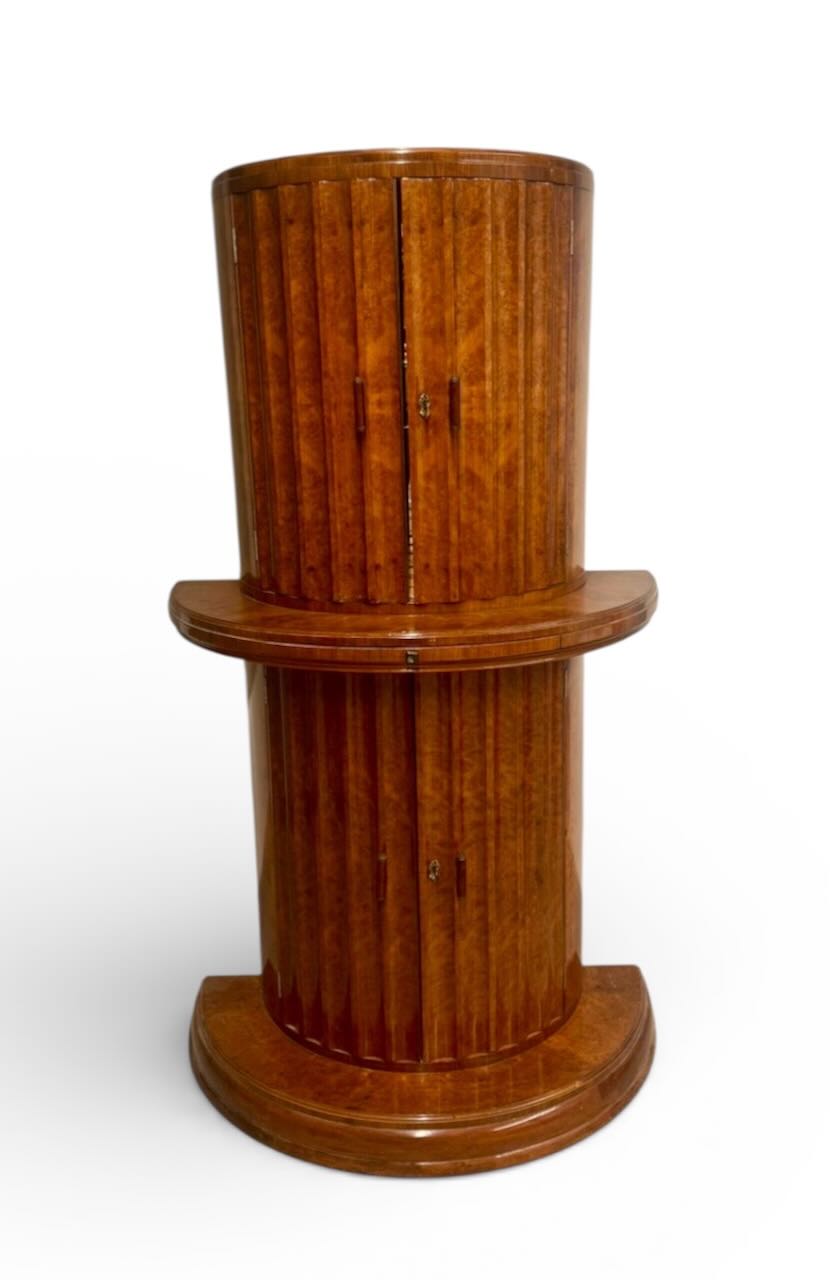
Art Deco Burr Walnut Cocktail Cabinet by Harry and Lou Epstein England circa 1930s
Jean Canneel Bronze Sculpture of Rider on Rearing Horse

Jean Dunand Dinanderie Vase French Art Deco Rare

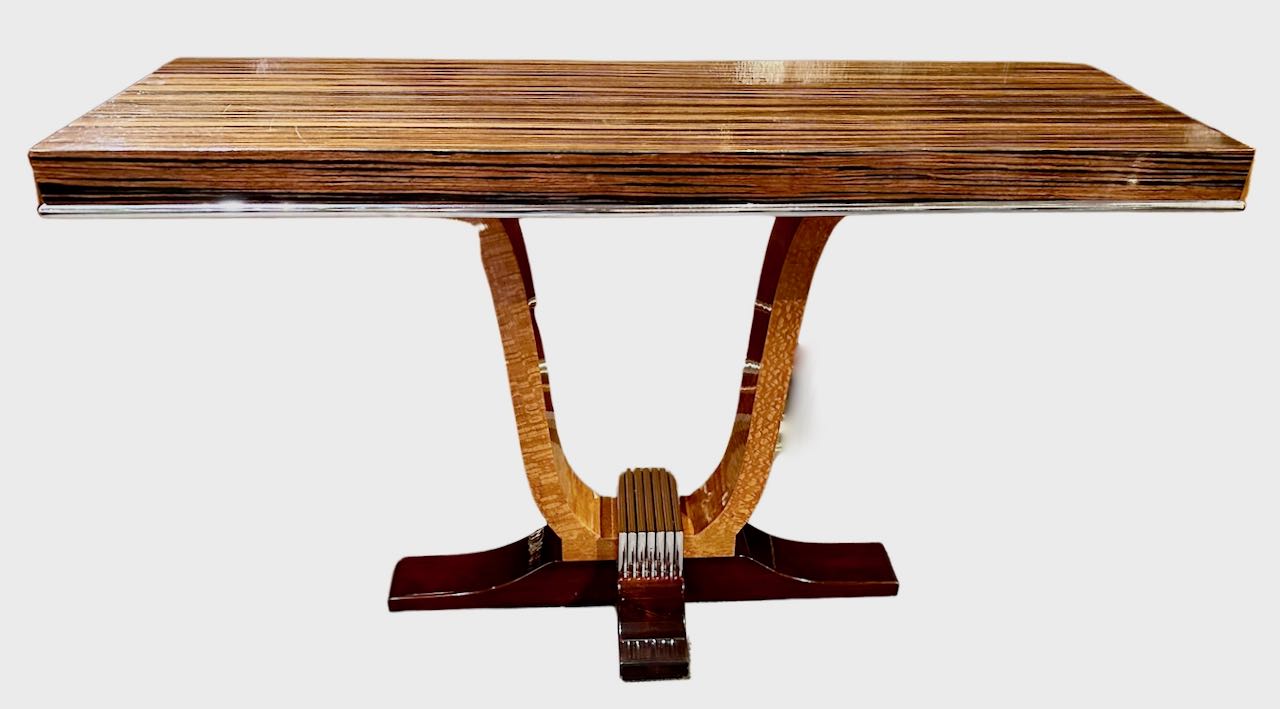
French Style Art Deco Console Macassar & Chrome
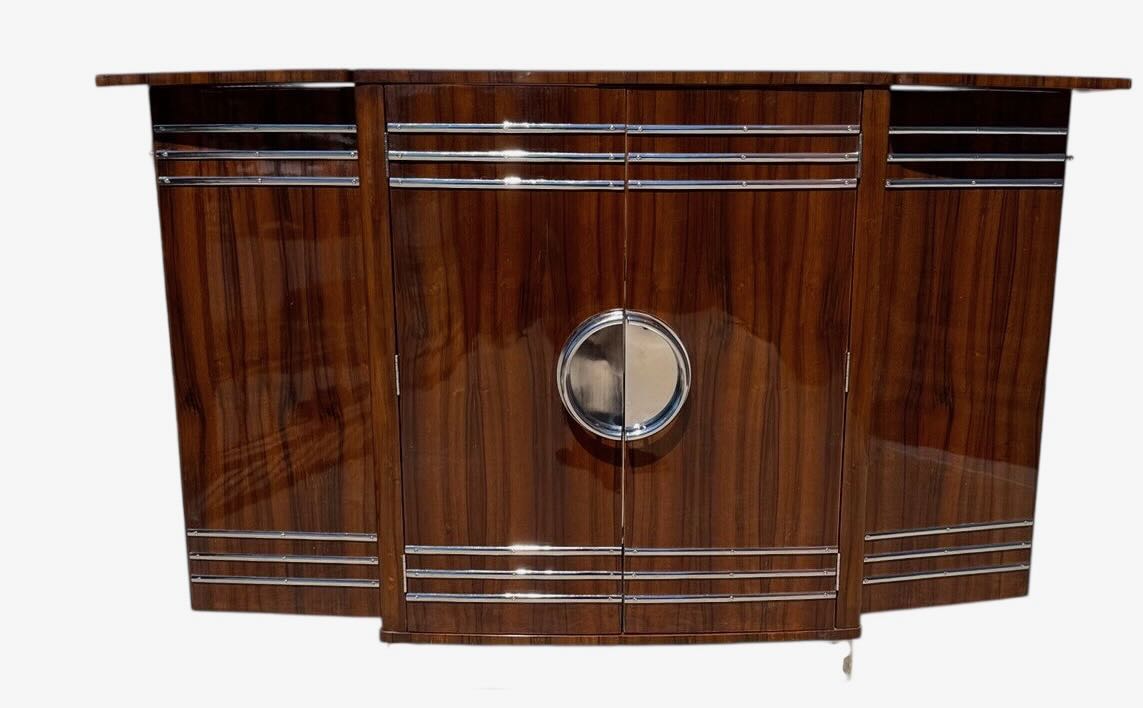
English Art Deco Yacht Flip Top Bar in Flamed Walnut
ART & STATUES
CERAMICS & GLASS
© Copyright Art Deco Collection. 2026 All rights reserved. Site Map