

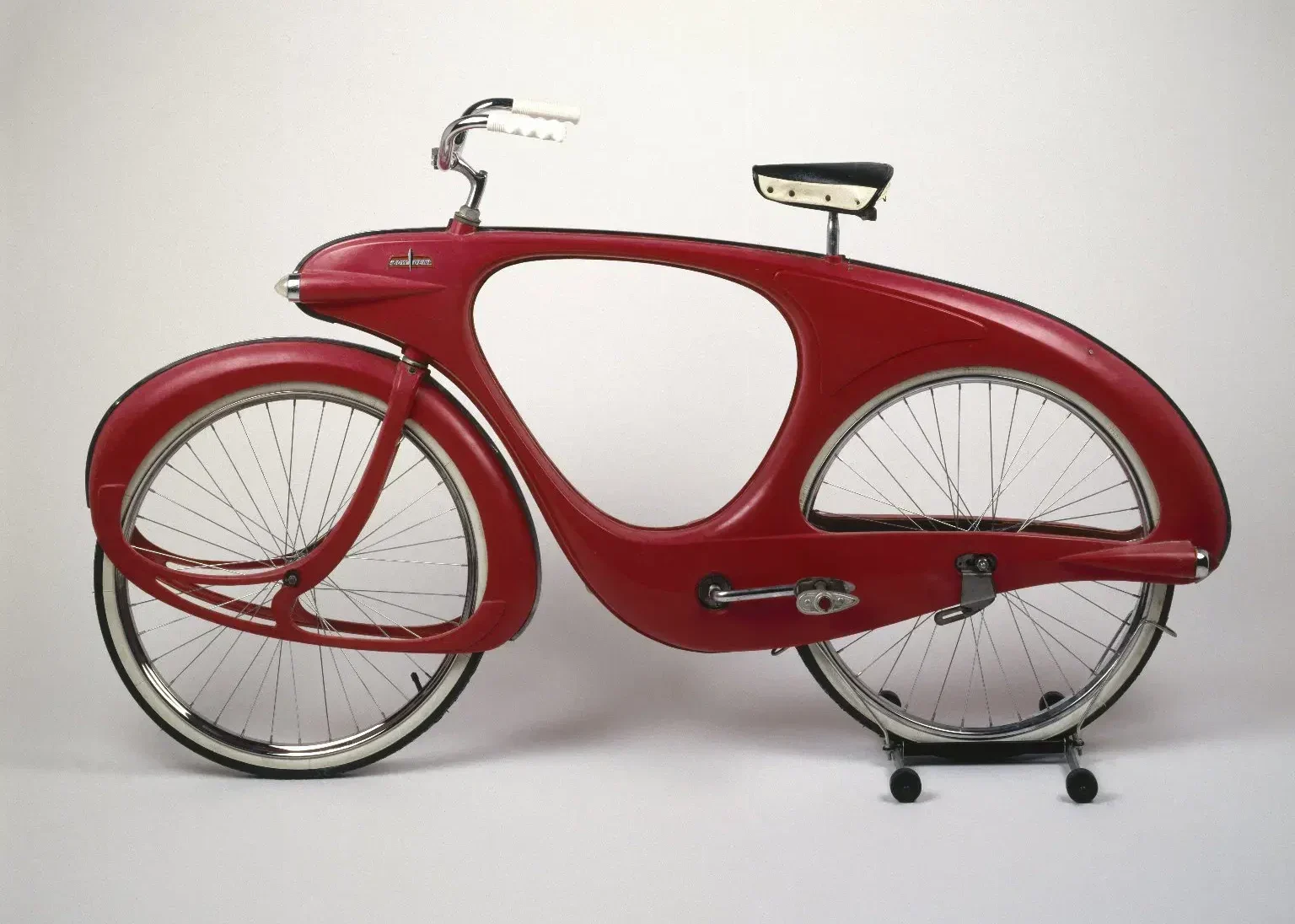
Interest in the Spacelander returned in the 1980s, when John Howland and Michael Kaplan bought the rights to the name and a modified reproduction sold for $4,000 in 1988, more than forty times the original price. Original examples have since entered museums, among them the Brooklyn Museum, which holds a reddish-pink fiberglass Spacelander made in 1960, bought through the Marie Bernice Bitzer Fund. Seen from today, the bicycle sits between Streamline Moderne and the mid-century modern design of the postwar years, carrying the look of the 1930s into the space age.
✕
ART & STATUES
CERAMICS & GLASS
Art Deco Around The World
Bowden Spacelander, the Space Age Bicycle Built on 1930s Streamlining
How a British car designer’s 1946 prototype became a fiberglass bicycle in 1960.
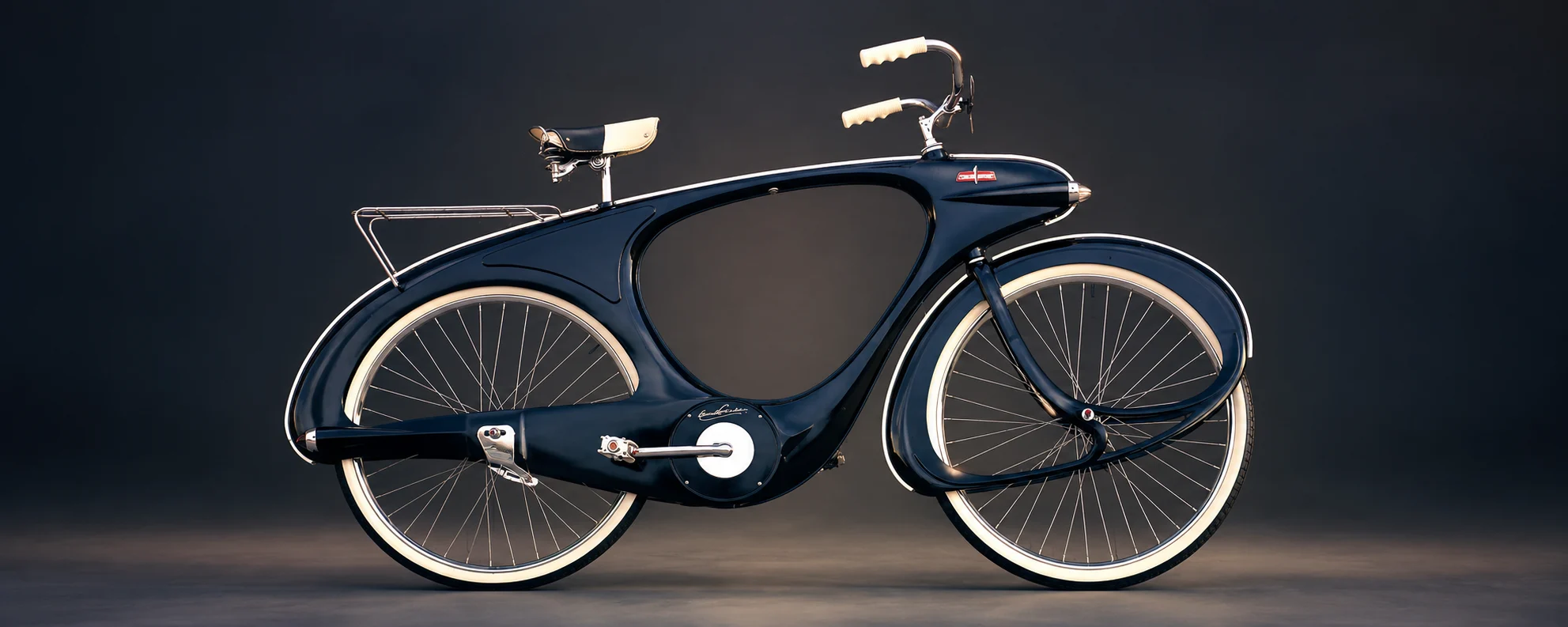
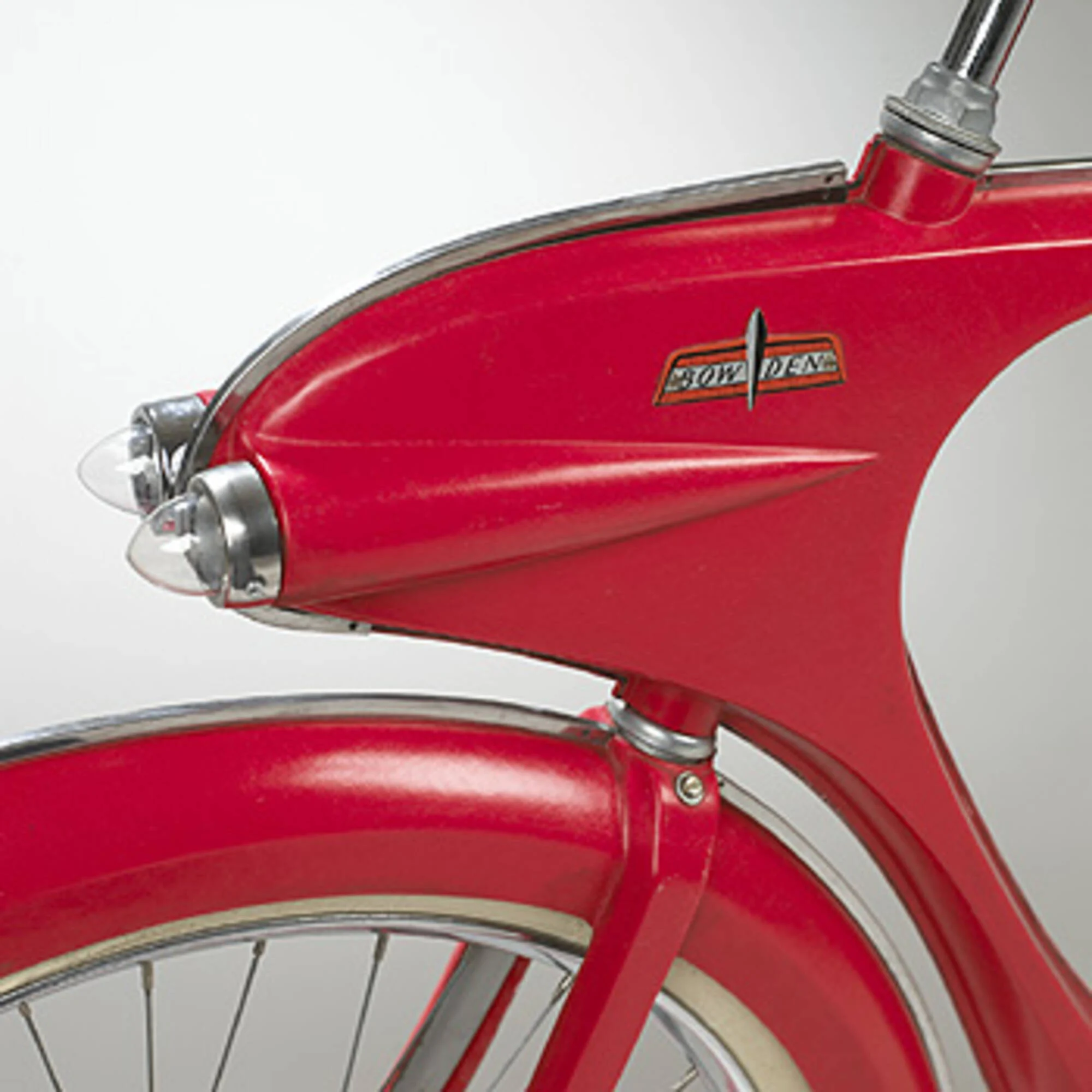
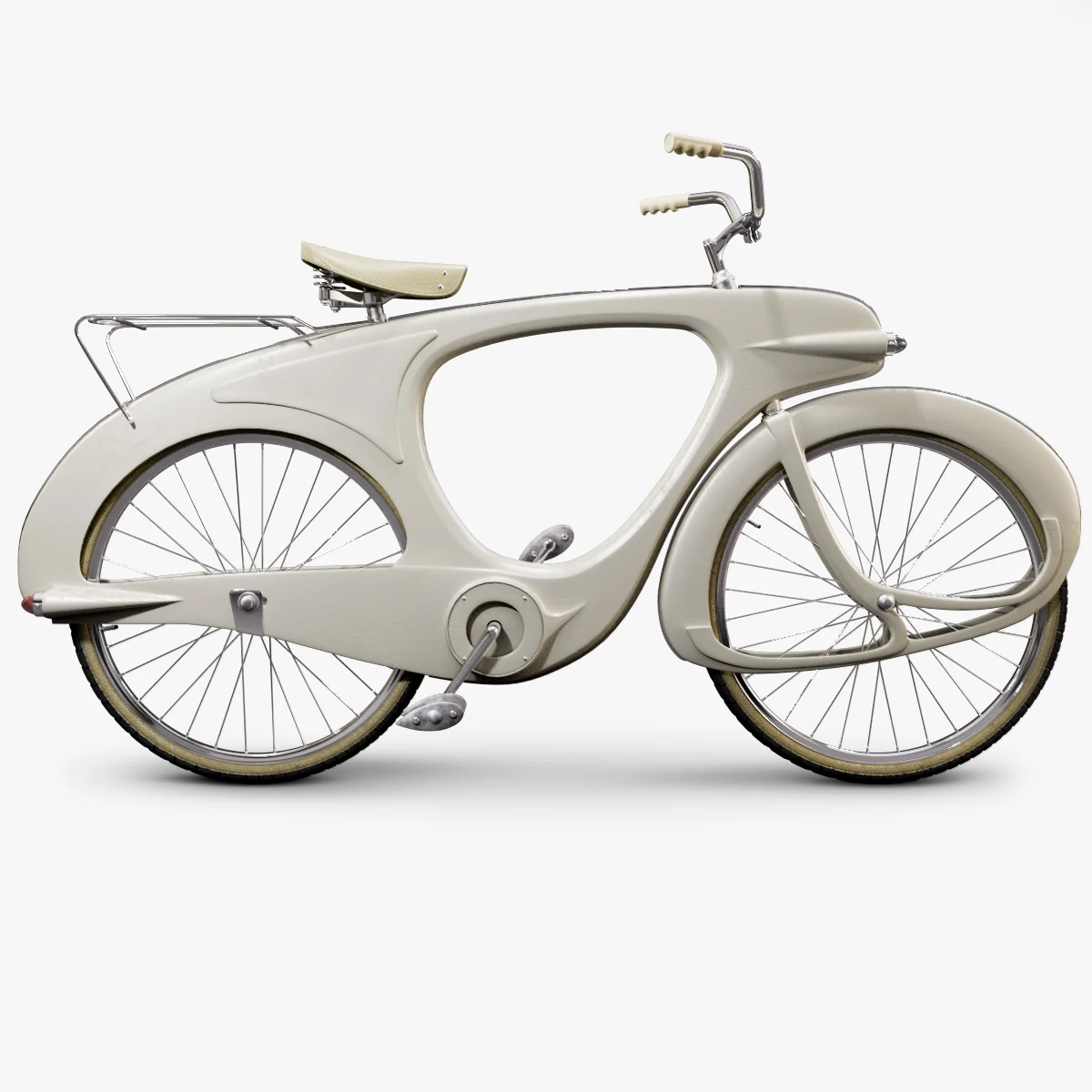
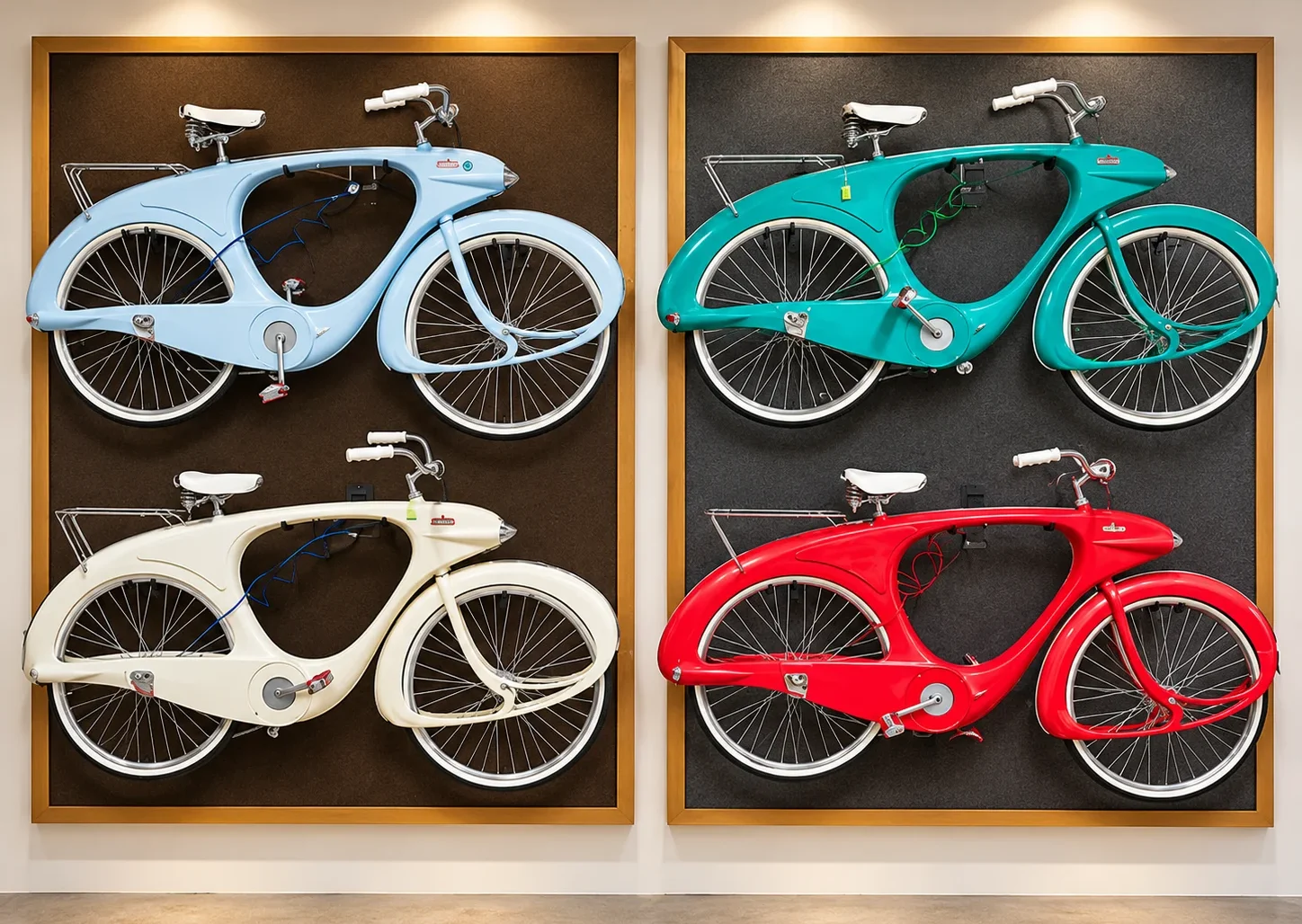
 The Bowden Spacelander, designed by a former Humber body engineer, wraps a molded fiberglass shell around a metal frame and adds cone-shaped headlights and taillights, chrome trim, and whitewall tires. It went on sale in 1960 for $89.50, one of the more expensive bicycles of its day, in five colors that included Charcoal Black, Cliffs of Dover White, Meadow Green, Outer Space Blue, and Stop Sign Red. At more than six feet long, the single-speed bicycle looked more like a small vehicle than a bike. Its shape came from the streamlining that had spread across transportation in the 1930s, the same impulse behind Schwinn’s Streamline Aerocycle of 1934 and behind industrial designers such as Raymond Loewy, who applied smooth, tapering forms to everything from locomotives to pencil sharpeners. The Spacelander arrived well after Streamline Moderne peaked, which makes it a late example of a style that treated speed as a matter of appearance.
Benjamin Bowden was born in North Kensington, London, in 1906, studied the violin at the Guildhall and engineering at the Regent Street Polytechnic, and joined the Rootes Group as an automobile designer in 1925. By the late 1930s he was chief body engineer at Humber in Coventry, and during the war he designed an armored car used by Winston Churchill and King George VI. In 1945 he left Rootes and formed a design studio in Leamington Spa with John Allen, one of the first firms of its kind in Britain. Among its early work was the body of the Healey Elliott, a 2.4-liter sports car with a chassis developed by Achille Sampietro, which local historians credit as the first British car to break 100 miles an hour, in 1947. The firm, Allen-Bowden Ltd, worked from 4 The Parade in Leamington, and he is remembered there as an industrial designer and consulting engineer.
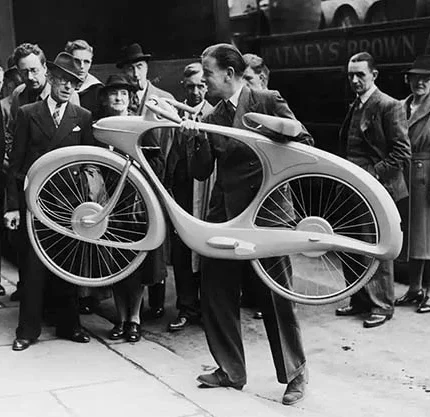
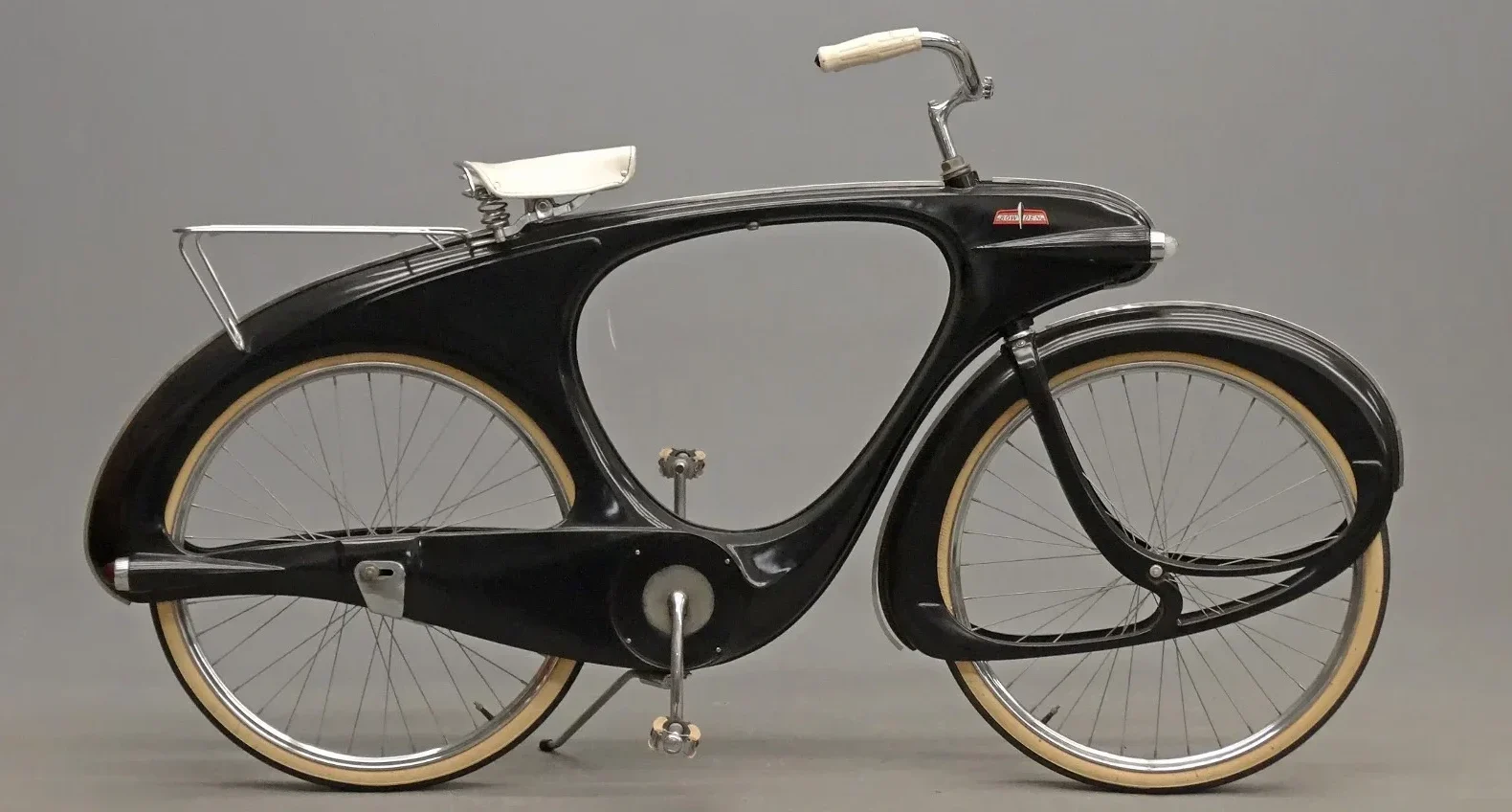
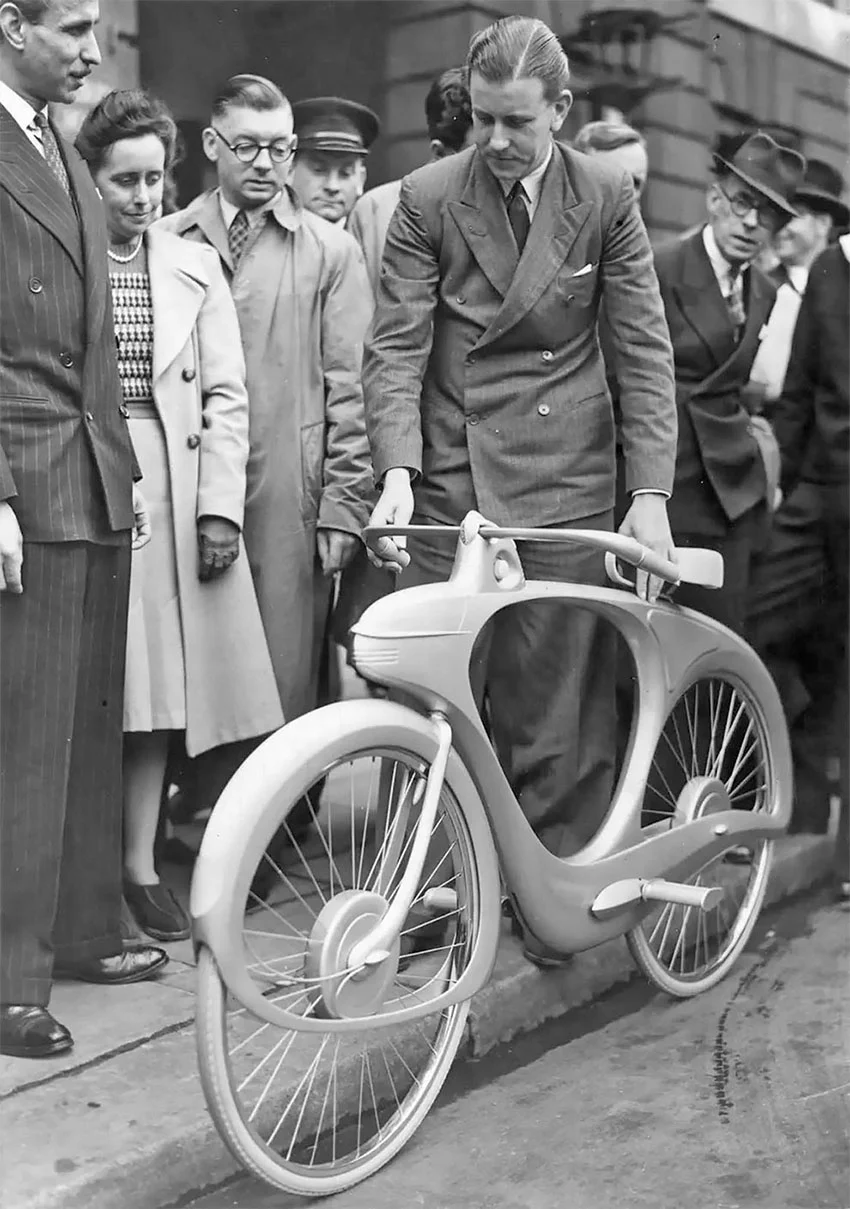
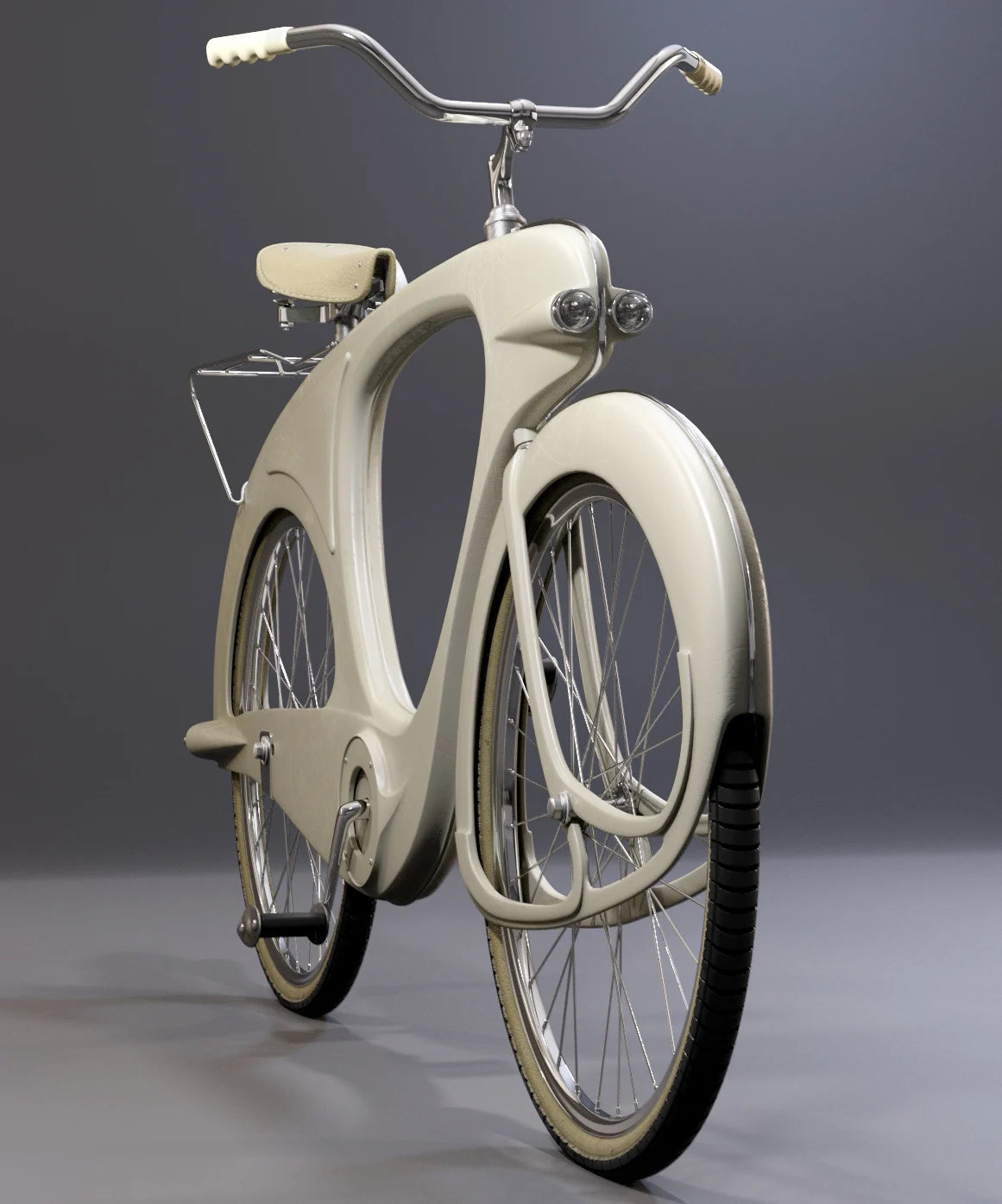 His first version was made for Britain Can Make It, an exhibition organized by the Council of Industrial Design and held at the Victoria and Albert Museum from September to November 1946. King George VI opened it, and about 1.5 million people visited. Called the Classic, it was a streamlined aluminium bicycle meant to show what the bicycle of the future would look like, and the press nicknamed it the Tomorrow Cycle. A hub dynamo stored energy on descents and released it on climbs, and Bowden claimed it could manage a one-in-ten gradient at five miles an hour. It also had built-in front and rear lights, an electric bell with push buttons, twist-grip brake controls, and a dashboard with a small radio and loudspeaker. The MG Auto Company built the prototype by hand. When it was shown at Leamington Town Hall in July 1947, a boy in the crowd remarked, “Wot, no engine!”
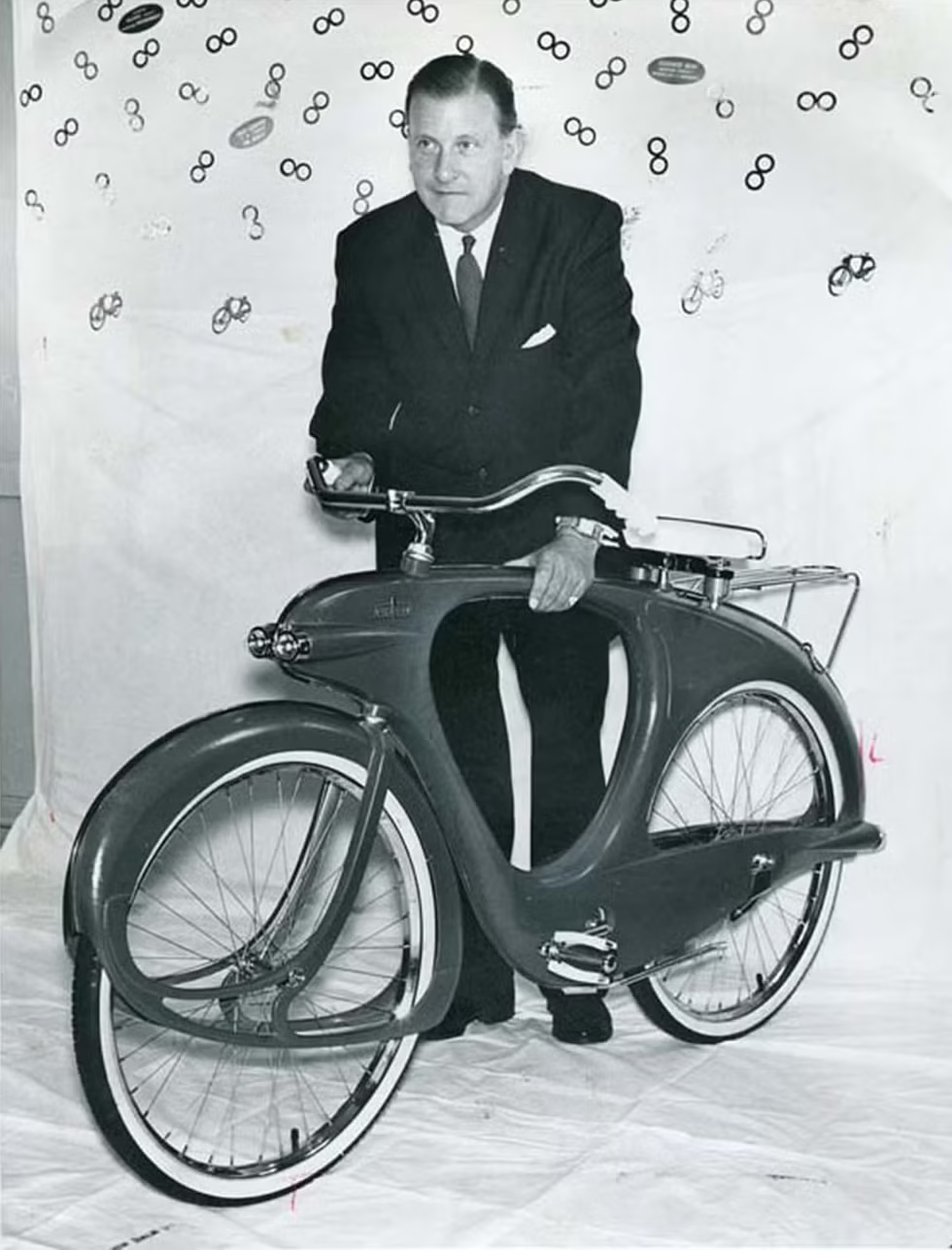
No British manufacturer would pay for the retooling the Classic required, and a plan to build it in South Africa in 1949 ended when import policy changed. Bowden moved to North America in the early 1950s, where he later worked on the early Chevrolet Corvette and Ford Thunderbird, and in 1959 he met Joe Kaskie of the George Morrell Corporation in Muskegon, Michigan, who suggested building it in fiberglass. Bowden dropped the hub dynamo for a standard sprocket and chain, chose the name Spacelander to reflect the Space Race, and contracted Bomard Industries to produce it in 1960, fourteen years after the prototype. The fragile frame and unusual design made the bicycle hard to sell to established distributors. Only 522 were shipped before production stopped, although more complete sets of parts were made, and Bomard later went out of business. A third design, the 300, survives only as a few prototypes.


ART & STATUES
CERAMICS & GLASS
© Copyright Art Deco Collection. 2026 All rights reserved. Site Map