



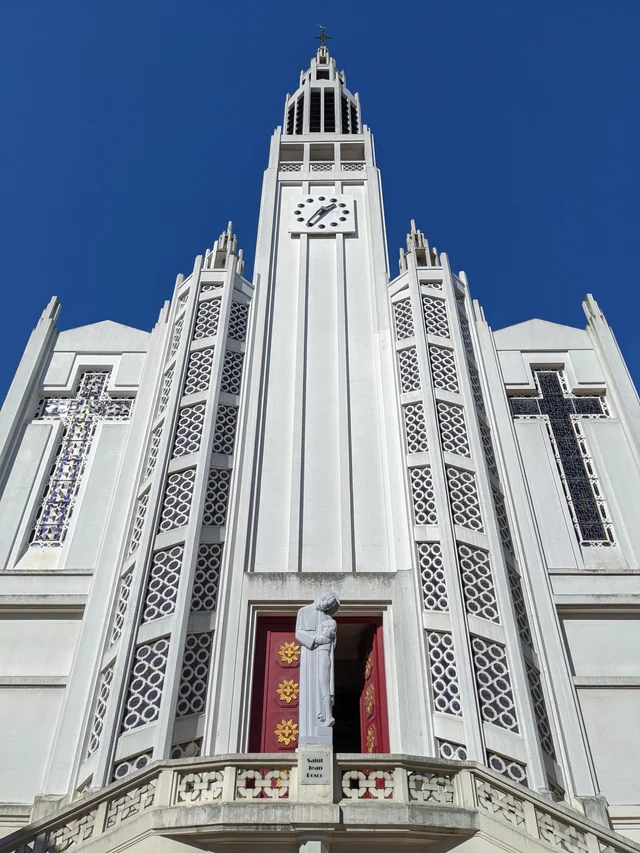
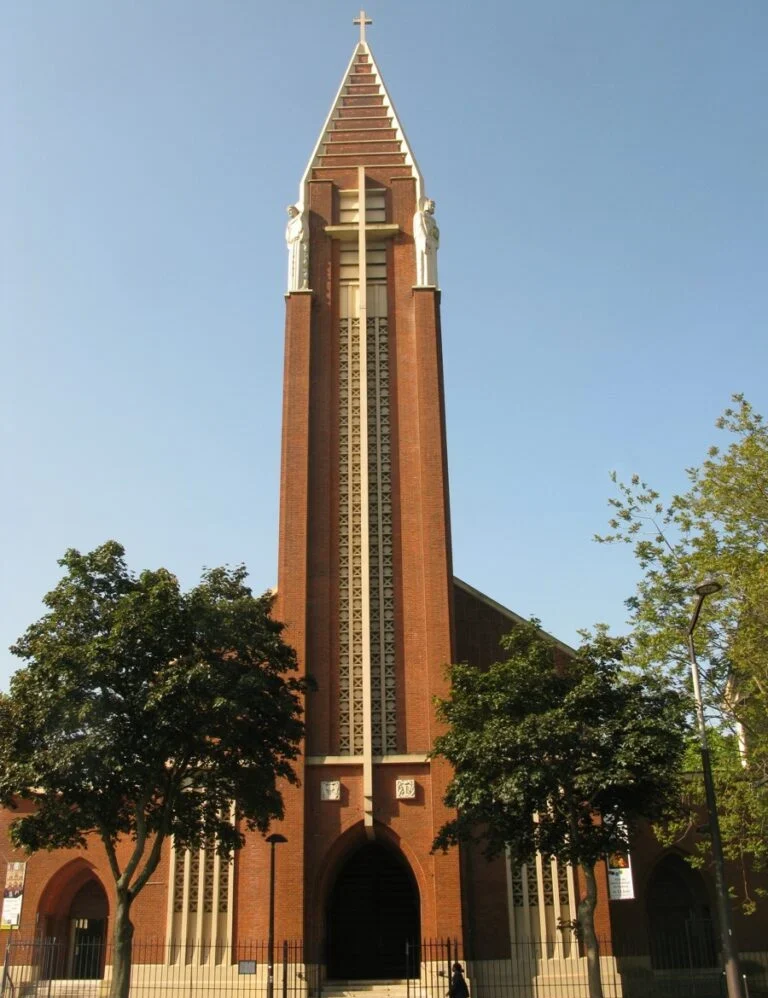
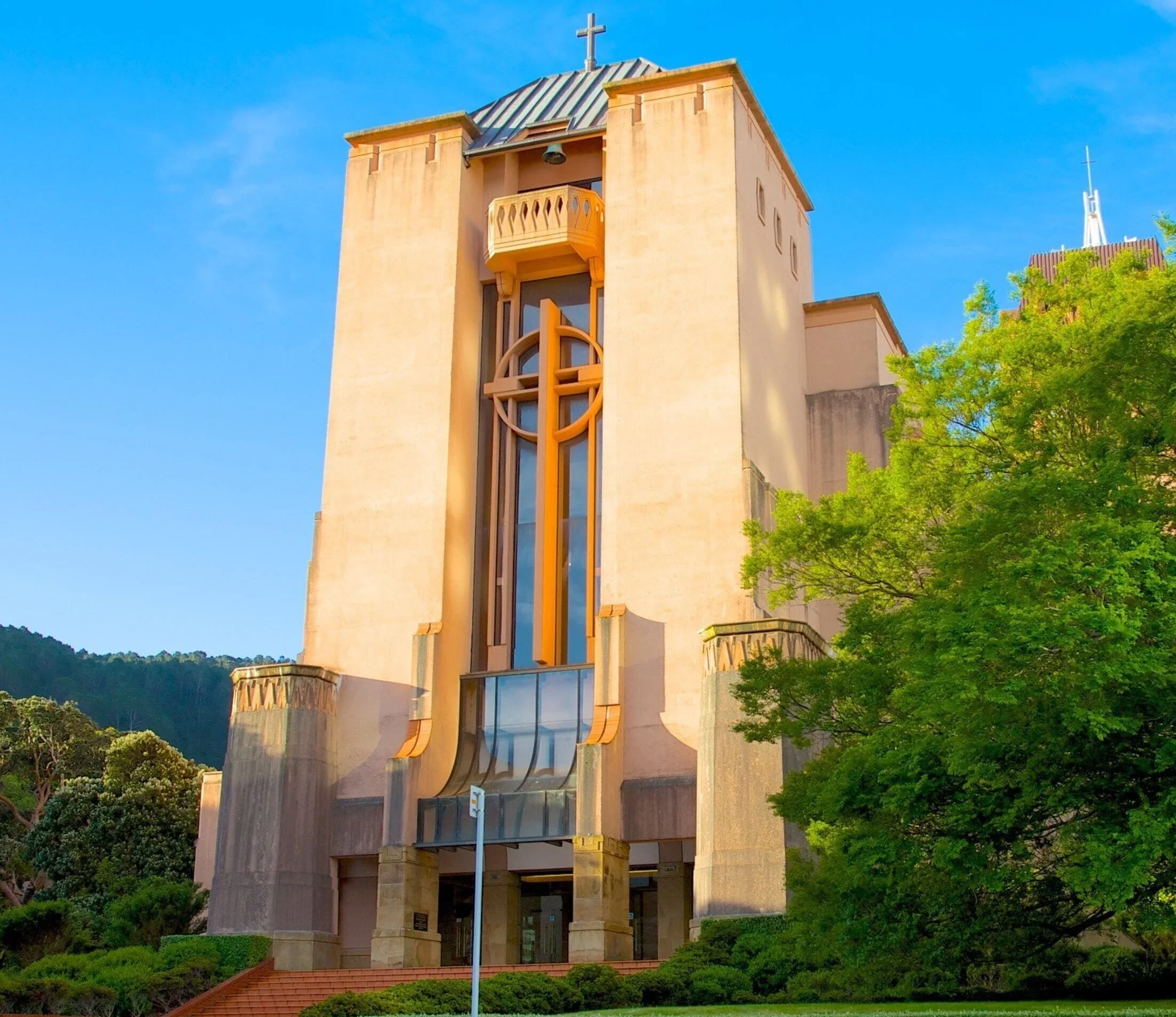
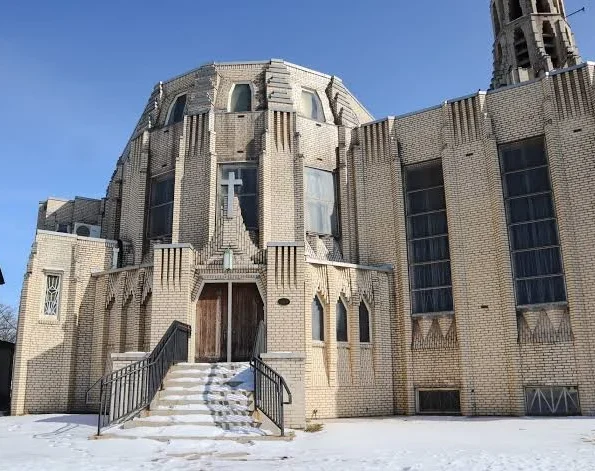
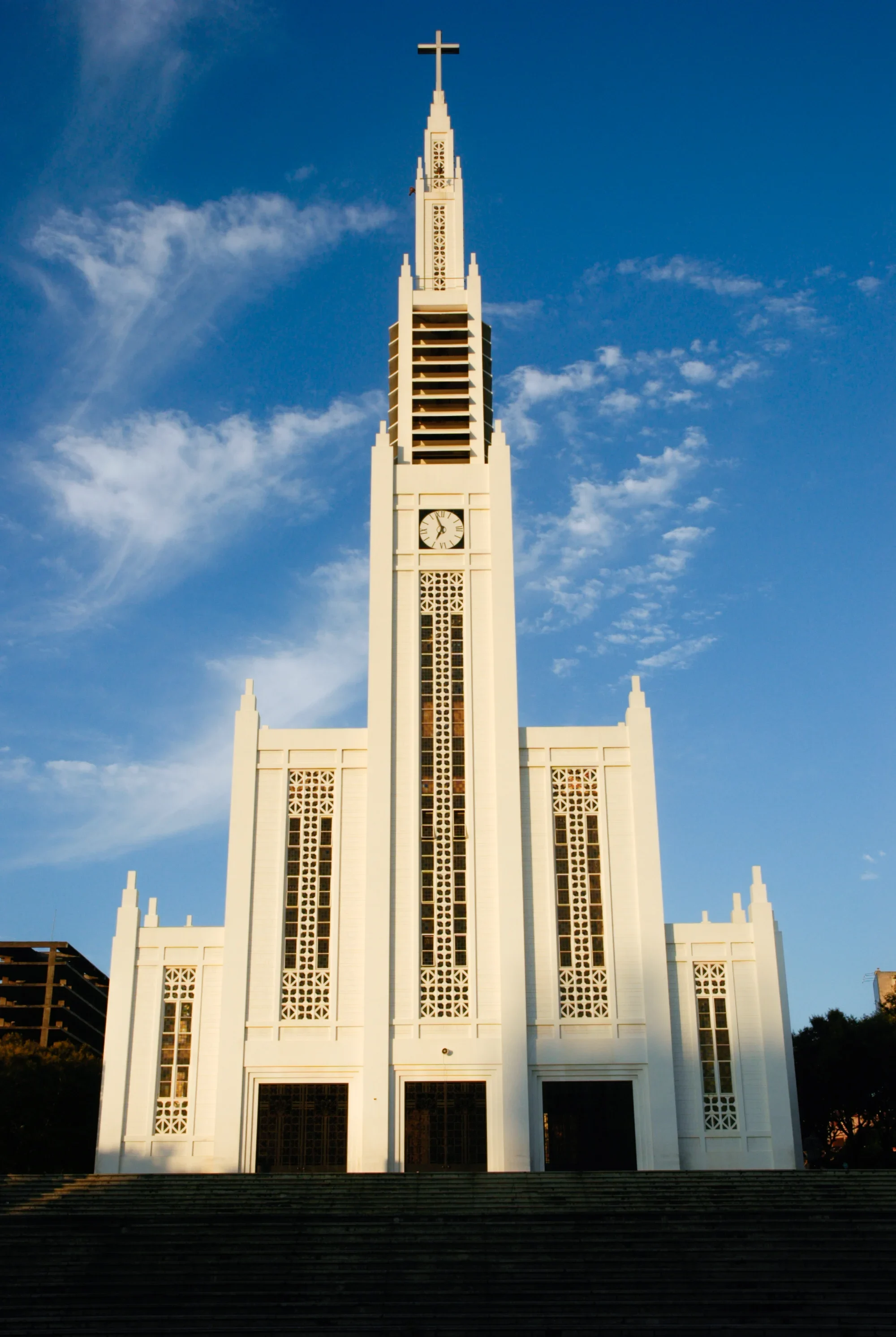
Top: Left: Azéma, Saint-Antoine-de-Padoue, Paris. Right: Wood, Wellington Cathedral. Bottom: Left: Lothian, St. Peter’s Maronite, Windsor. Right: Freitas e Costa, Maputo Cathedral.
✕
ART & STATUES
CERAMICS & GLASS
Art Deco Around The World
Art Deco Churches, Concrete, Glass, and Worship Across Three Continents
From Paris and Brussels to Tulsa and Jersey, how the modern style found a place in worship.
 Art Deco is best known through secular buildings, from skyscrapers such as the Chrysler Building to movie palaces like the Oakland Paramount Theatre, but churches adopted it too, often because of a new material. In 1922, the pastor of Le Raincy, outside Paris, consulted Auguste Perret about a church the parish could barely afford, since it had 300,000 francs and the lowest quote came to 1,800,000. Perret chose reinforced concrete, and his brother Gustave built Notre-Dame du Raincy in about fourteen months, between April 1922 and June 1923. Its concrete screen walls hold stained glass designed by Maurice Denis and made in Marguerite Huré’s workshop, and its facade rises 45 meters. The church was consecrated on 17 June 1923. Le Raincy is better known as a landmark of early modern architecture than as an Art Deco church, but it set the pattern for the concrete churches that followed in Paris and Brussels.
Paris has two of the style’s clearest examples. Saint-Jean-Bosco in the 20th arrondissement was designed by Dumitro Rotter, and Cardinal Jean Verdier laid its first stone in March 1933. Rotter died in 1937 and his son completed the work. Massive concrete pillars divide the nave into six traverses, the 53-meter bell tower holds a carillon of 28 bells, the Mauméjean brothers designed the murals and mosaics, and Raymond Subes made the ironwork, with the decoration finished between 1940 and 1944. Sainte-Odile in the 17th arrondissement was designed by Jacques Barge, who was about thirty when chosen, and begun in 1935. Strikes and the war delayed it until 1946. Its 72-meter tower is the tallest in Paris. François Decorchemont made the three large nave windows from pâte de verre set in cement rather than lead, and Robert Barriot made an enameled copper retable for the choir. Both churches were classified as historic monuments in 2001.
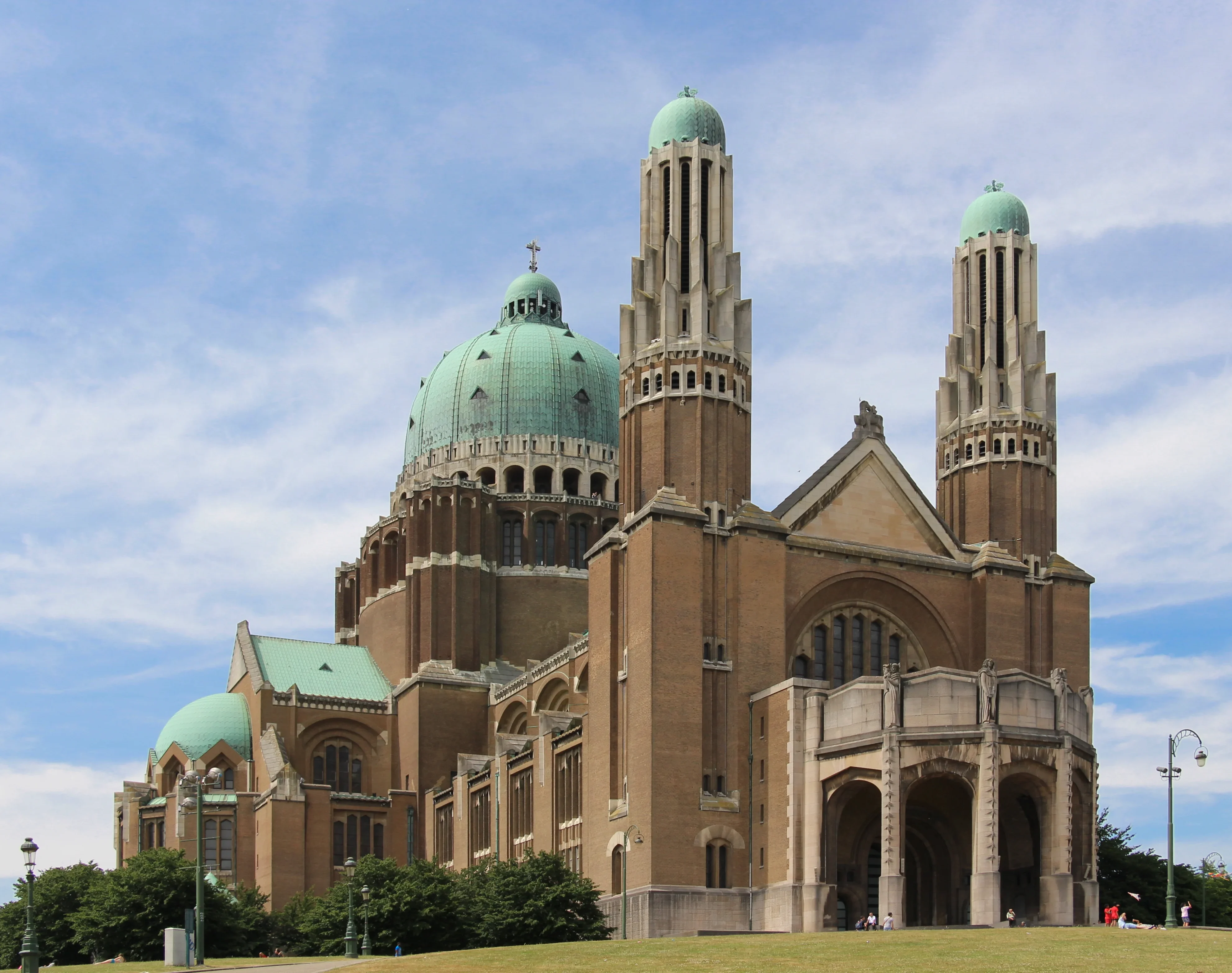
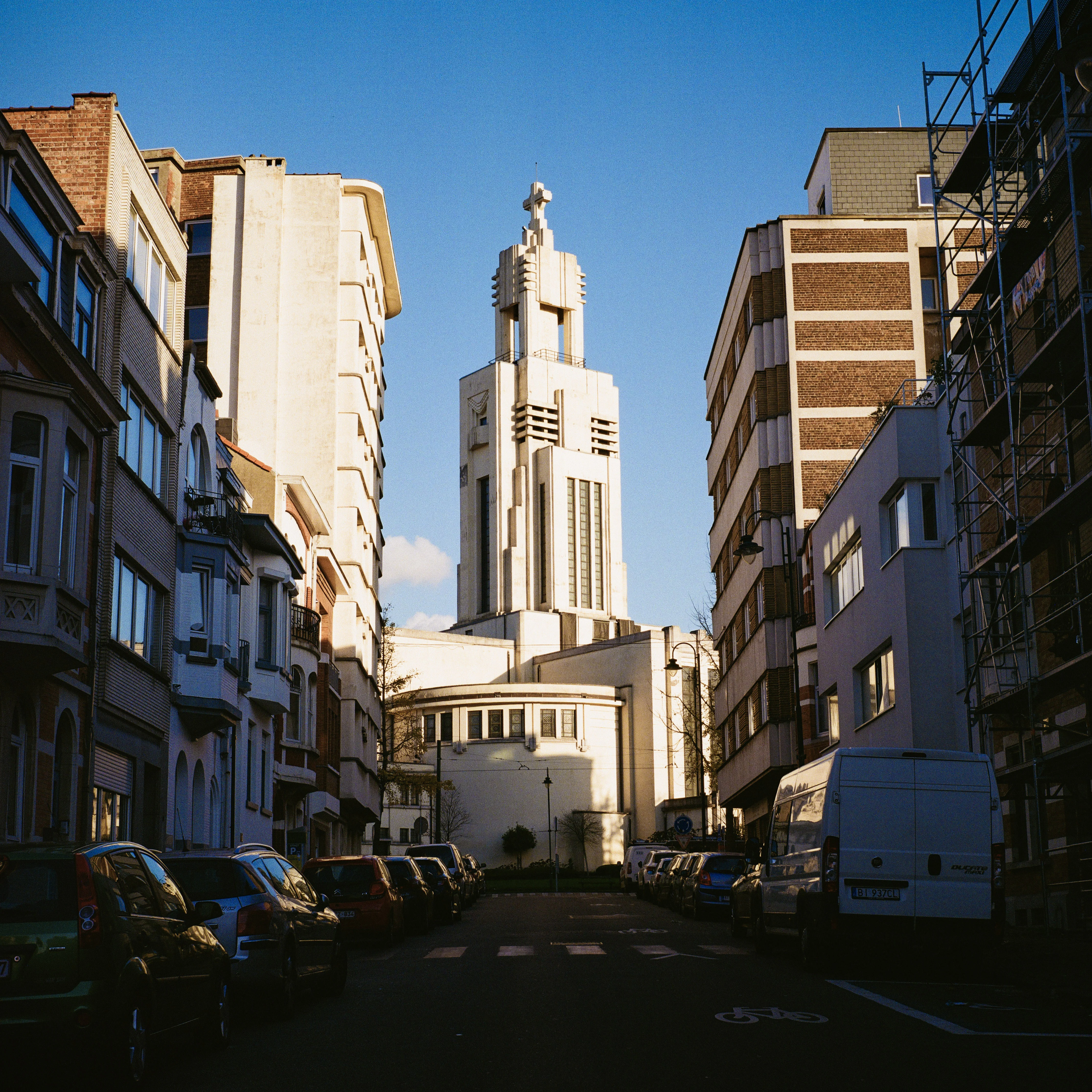


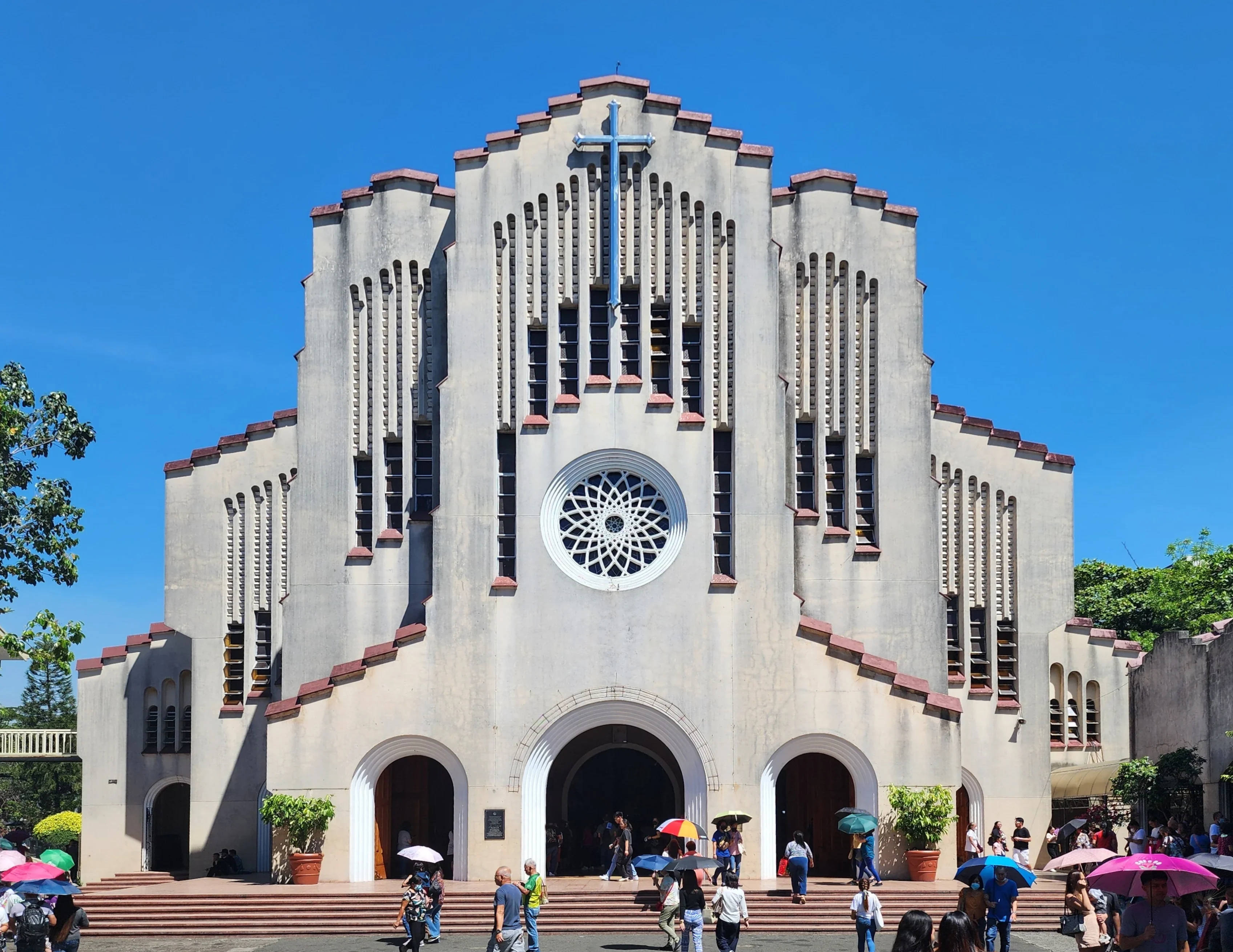
Top: Left: Rotter, Saint-Jean-Bosco, Paris. Middle: Van Huffel, Koekelberg Basilica, Brussels. Right: Guiannotte and Watteyne, St. Augustine, Brussels. Bottom: Left: Kurke, Holy Spirit Cathedral, Bismarck. Middle: Goff and Robinson, Boston Avenue, Tulsa. Right: Concio, Baclaran Church, Parañaque.
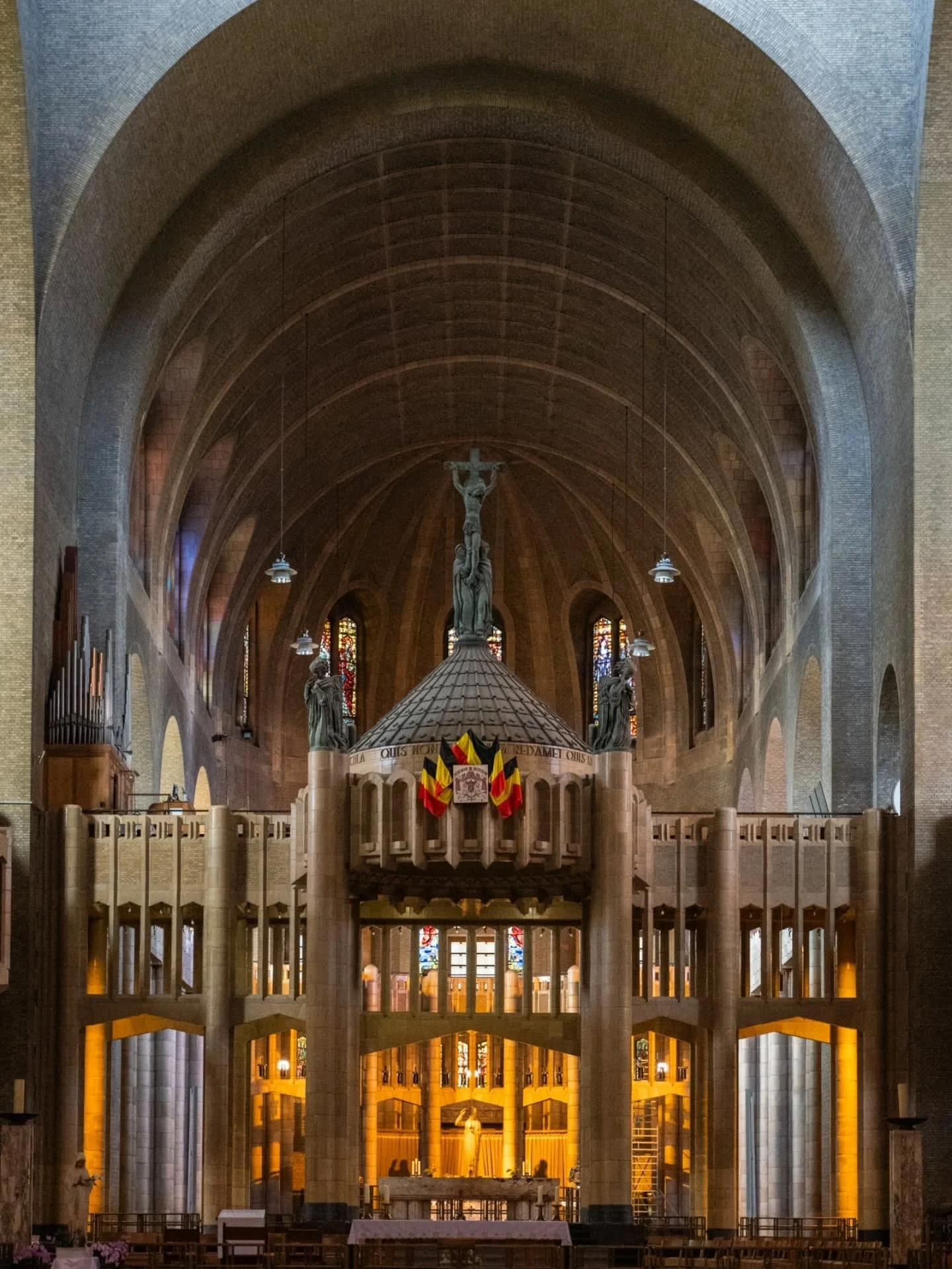 Brussels built on a larger scale. The Basilica of the Sacred Heart in Koekelberg began as a neo-Gothic design by Pierre Langerock, and after the First World War Albert Van Huffel’s Art Deco design replaced it. Leopold II laid the first stone on 12 October 1905, both world wars interrupted construction, and the cupola and external structure were finished in 1969. The dome rises 89 meters, the nave is 141 meters long, and at completion the basilica was the fifth-largest church in the world. In Forest, the Church of St. Augustine by Léon Guiannotte and André Watteyne followed the Perret model in reinforced concrete, with a Greek cross inscribed in a circle and a bell tower on four pillars at the crossing. It was consecrated on 25 March 1935 and is one of three major reinforced-concrete churches in Brussels, with Koekelberg and St. John the Baptist in Molenbeek-Saint-Jean. Its concrete proved poor, however, and the building began to deteriorate in the 1960s.
In North America the style reached churches through ambitious local commissions. Boston Avenue Methodist Church in Tulsa, built from 1927 to 1929 at a cost of $1.25 million, is credited to Bruce Goff and Adah Robinson, and experts still disagree about who deserves more credit. Its 225-foot tower rises beside a semicircular auditorium, Robert Garrison made the terra cotta figures, and the stained glass draws on Oklahoma flowers such as tritomas and coreopsis. It became a National Historic Landmark in 1999. In Montreal, Joseph-Égilde-Césaire Daoust built Saint-Esprit-de-Rosemont in gray limestone between 1931 and 1933, with windows by Guido Nincheri and Art Deco lamps. Its original steeple was removed in 1949 because explosions at a nearby mine had made it unstable. In Bismarck, North Dakota, the Cathedral of the Holy Spirit, designed by William F. Kurke in monolithic concrete and dedicated in 1945, is believed to be the only Art Deco cathedral in the United States.
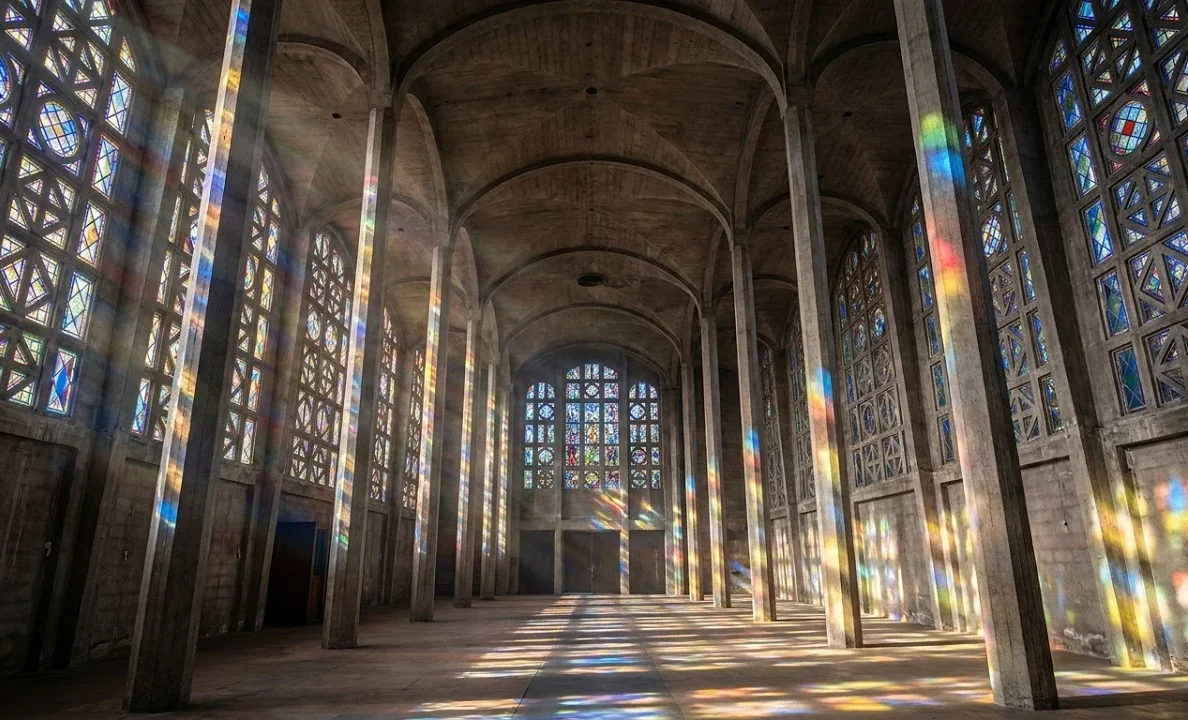
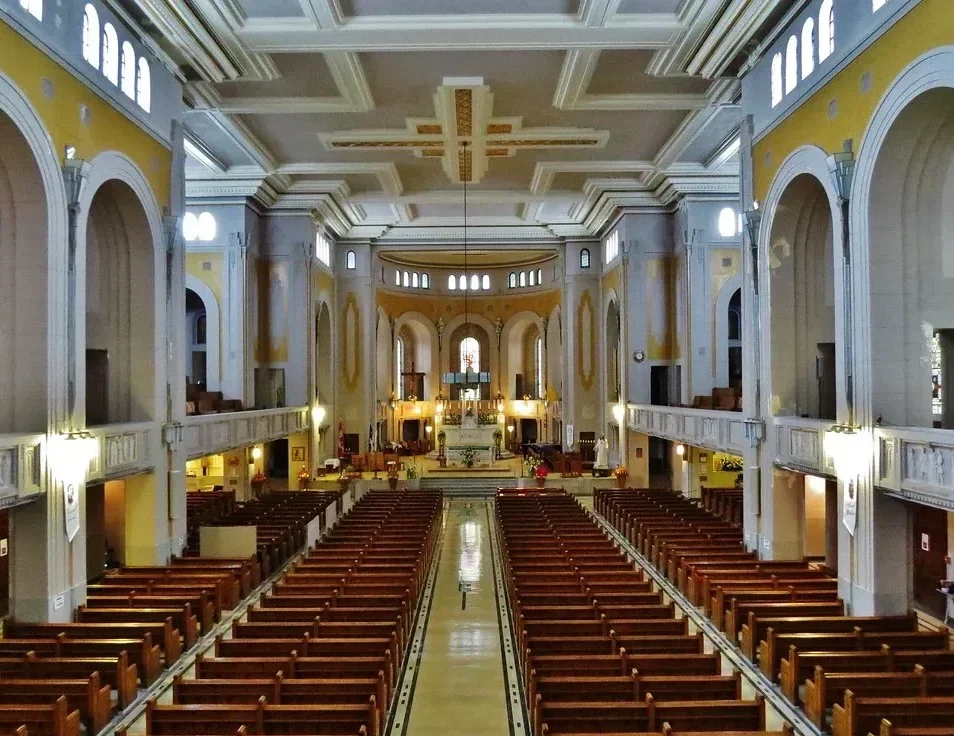
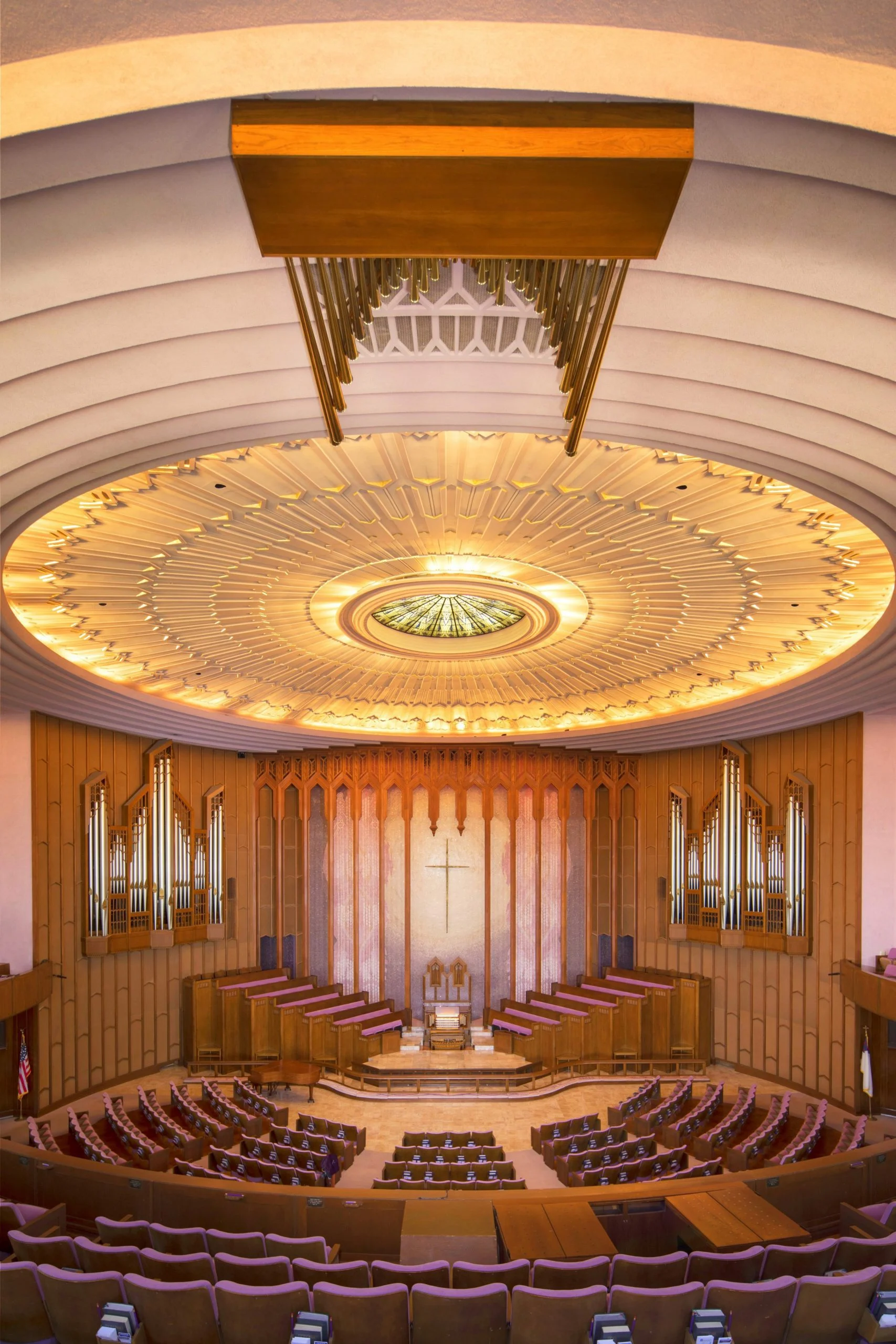
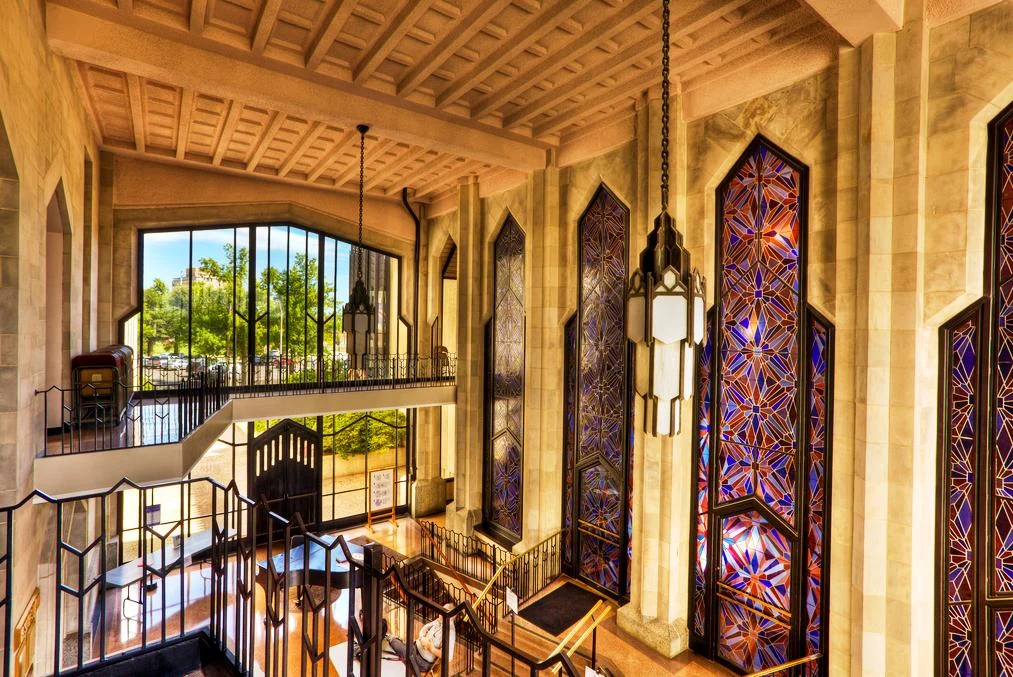

Top: Left: Perret, Notre-Dame du Raincy. Right: Daoust, Saint-Esprit-de-Rosemont, Montreal. Bottom: Left: Diongre, St. John the Baptist, Brussels. Middle: Goff and Robinson, Boston Avenue, Tulsa. Right: Barge, Sainte-Odile, Paris.
National Shrine of the Little Flower, Royal Oak, Michigan
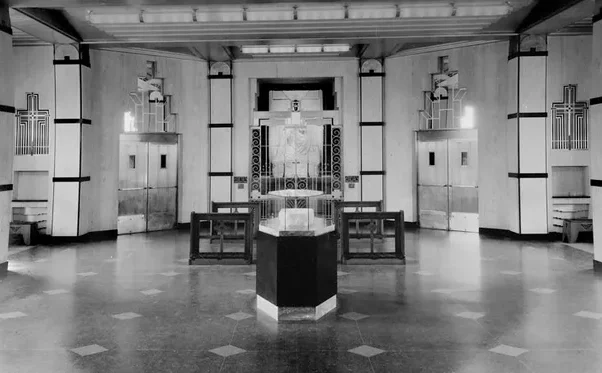
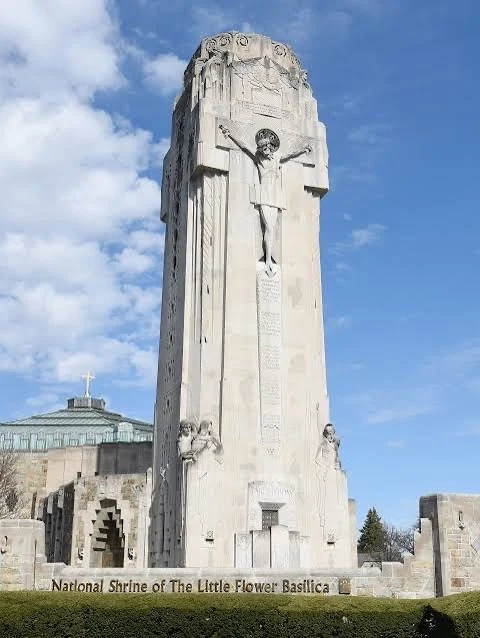
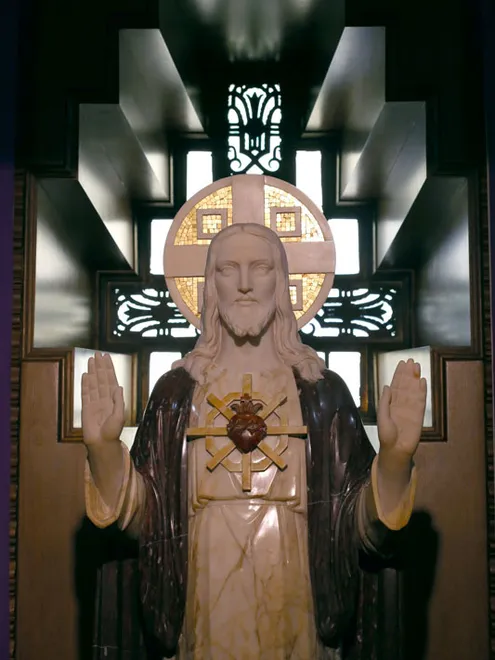 Few American churches carry the style as fully as the National Shrine of the Little Flower, north of Detroit in Royal Oak. Henry J. McGill, a New York architect, designed it for Father Charles Coughlin, a parish priest who became one of the most popular radio broadcasters of the 1930s. Much of the money came from his listeners’ donations. The tower went up first, between 1929 and 1931, and the church followed between 1933 and 1936. The Charity Crucifixion Tower is faced in limestone, and sculptor Rene Paul Chambellan worked his figures into the stone itself. On the Woodward Avenue facade a Christ on the cross stands 28 feet high. Beneath it are Christ’s seven last words, and at the base are angular archangels, a Roman soldier, and a haloed woman, all cut in flat, stylized planes rather than soft, realistic modeling. The tower was meant as a cross the Ku Klux Klan could not burn, after the Klan had burned crosses near the parish.
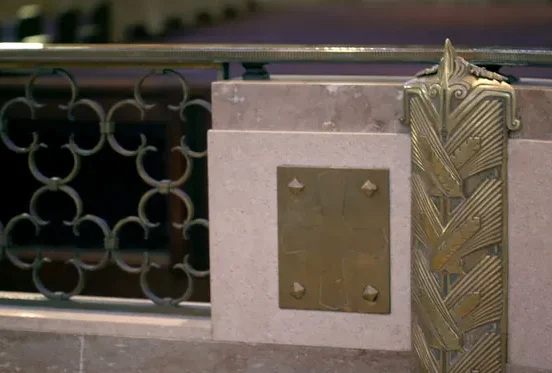
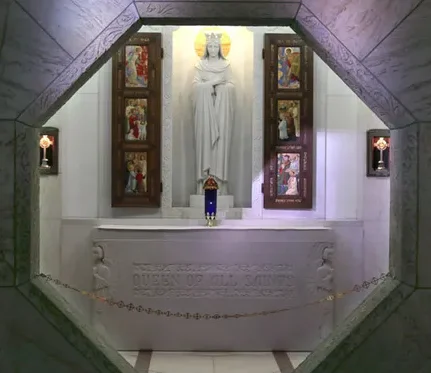
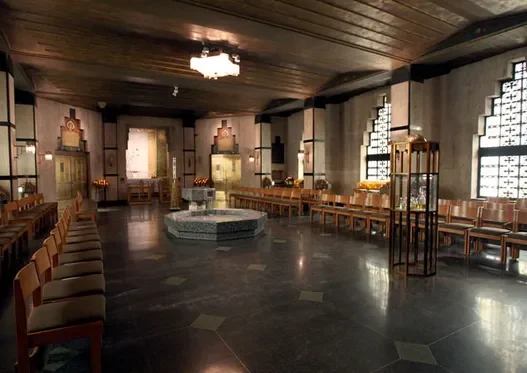
 Inside, the church was among the first in the Detroit area to use a round sanctuary with the altar at its center. Above the altar hangs a massive baldachin in the same geometric language as the exterior. Throughout the interior, zigzag bands, stepped forms, and faceted relief take the place of traditional Gothic ornament. One relief shows Thérèse of Lisieux, the saint known as the Little Flower, kneeling before the Virgin and Child, and the figures are reduced to clean angles and repeated lines. In 2015 Pope Francis named the church a minor basilica, a recognition of the building’s standing as much as of its congregation.




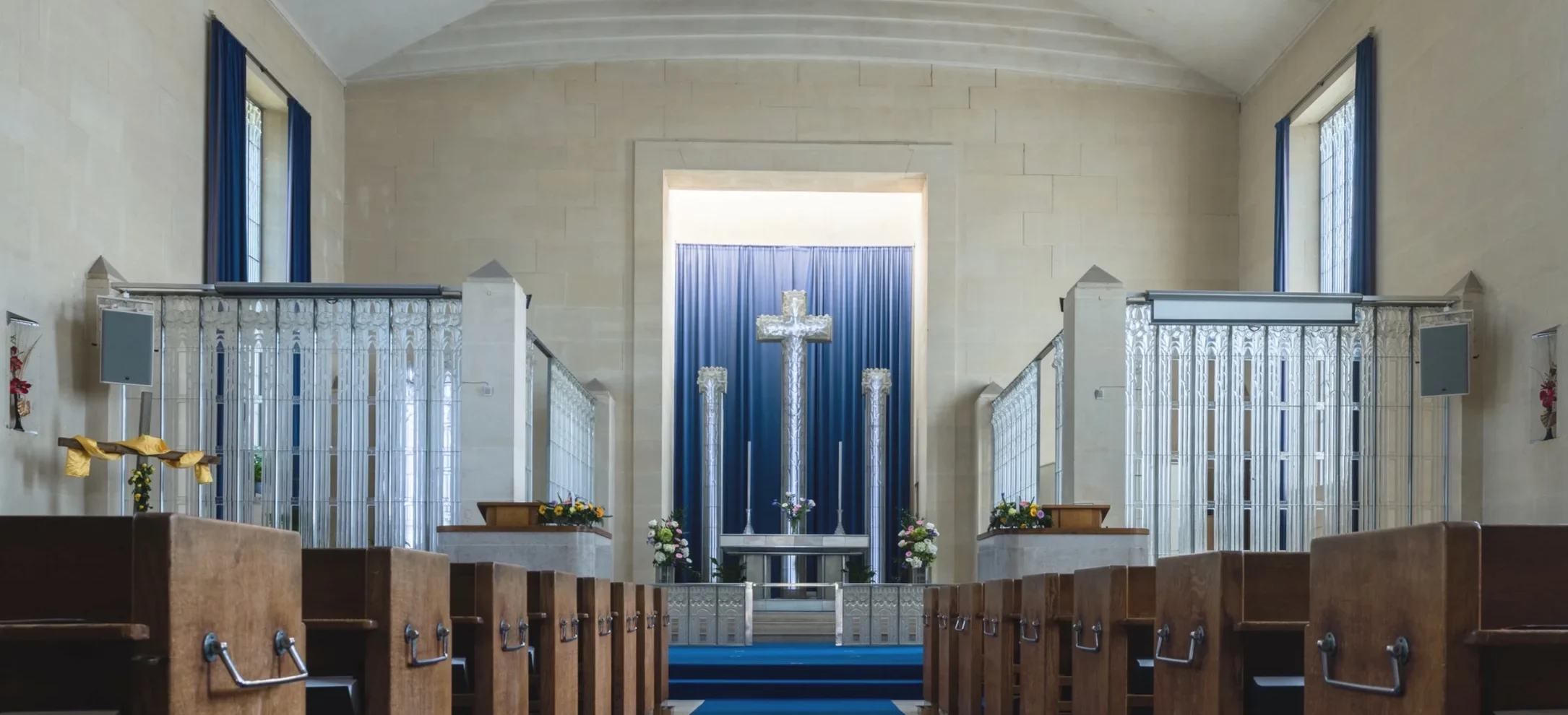
The most unusual Art Deco church interior is on the island of Jersey. St Matthew’s in Millbrook, a chapel dating to the 1840s, became the Glass Church in September 1934, when Florence Boot, widow of Boots founder Jesse Boot, paid for René Lalique to decorate it. He made a glass cross more than three meters high above the altar, glass screens, a glass font, and frosted angels set into the doors. In Rio de Janeiro, Christ the Redeemer opened on 12 October 1931 and is described as the largest Art Deco sculpture in the world.

ART & STATUES
CERAMICS & GLASS
© Copyright Art Deco Collection. 2026 All rights reserved. Site Map