

Russel Wright
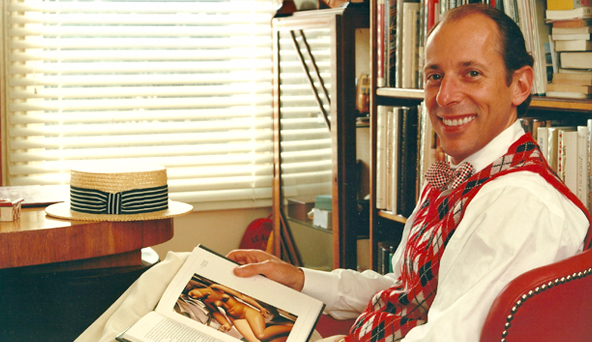
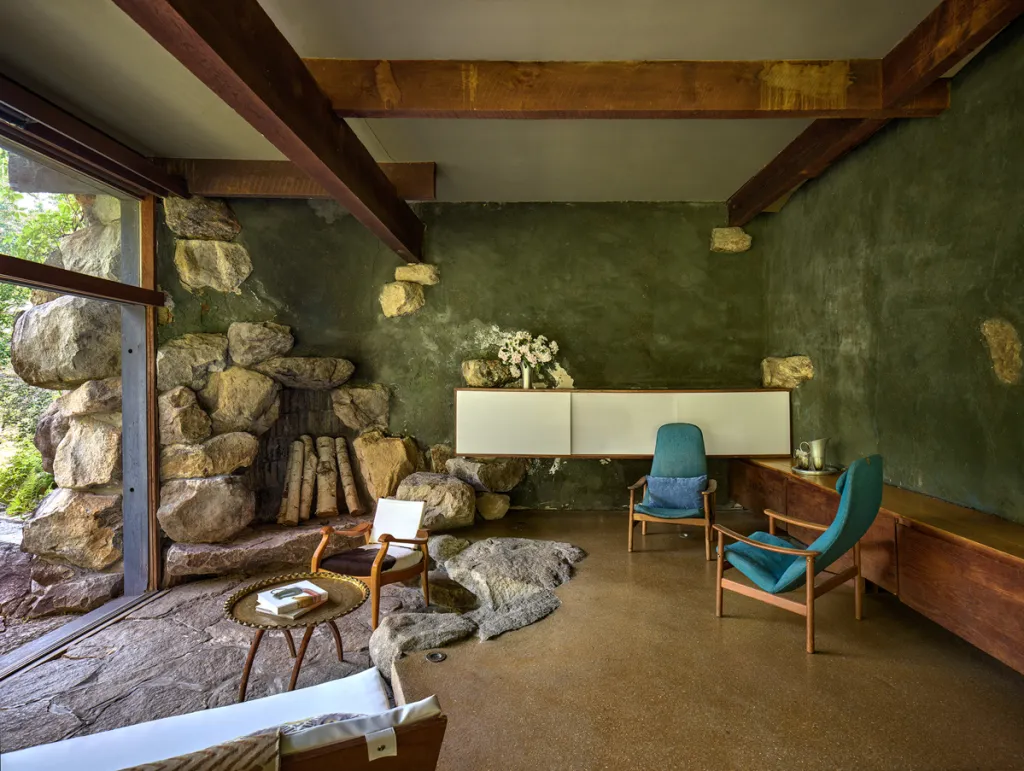
Russel Wright was born on April 3, 1904, in Lebanon, Ohio. He studied at the Art Academy of Cincinnati while still in high school and attended the Art Students League in New York for a year. Meant for a legal career, he enrolled at Princeton in 1922, but he was drawn to the theater and left to design sets with Norman Bel Geddes. In 1927 he met Mary Einstein at the Maverick Festival in Woodstock, New York, and they married the same year. Her business sense shaped his career, and she urged him to establish himself in industrial design. In 1942 the couple bought a 75-acre abandoned quarry and logging site in Garrison, New York, which he named Manitoga and spent the next 34 years developing into a home and studio set within a woodland garden. Mary died of cancer in 1952, and he later built the house, Dragon Rock, between 1956 and 1962, moving there full time in the mid-1960s. In 2001 the Cooper Hewitt honored him with a retrospective, and in 2011 the U.S. Postal Service placed him on a sheet of stamps celebrating twelve influential industrial designers. Wright died of a heart attack on December 21, 1976, after a battle with cancer, and his daughter Ann continues to manage his designs through Russel Wright Studios.

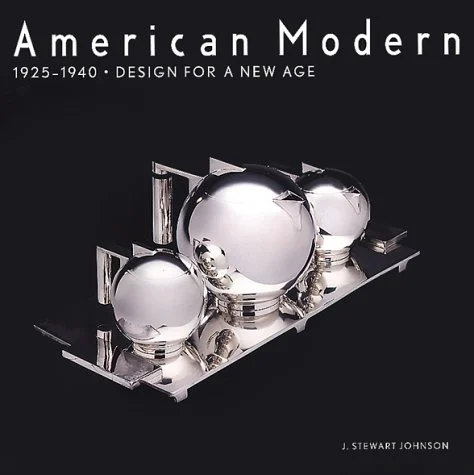
After his theater career ended, Wright began designing theatrical props and small objects, and he and Mary soon created life-size celebrity caricature masks and miniature plaster animals. In the early 1930s he turned to spun aluminum, having realized that sterling silver and pewter were too expensive for the market he wanted to reach. He exhibited in the Metropolitan Museum’s 1931 survey of Contemporary American Industrial Art, and by 1932 Wurlitzer had commissioned him to design radios and an accordion. In 1935 he established Russel Wright Associates with Irving Richards and launched his American Modern furniture in complete room displays at Macy’s, a novel marketing idea at the time. His American Modern dinnerware, designed in 1937 and introduced in 1939, was manufactured by Steubenville Pottery until 1959 and became the most widely sold American ceramic dinnerware in history. Its soft, curving forms and muted glazes in colors like coral and sea foam made modern design feel relaxed and welcoming. Over his career he designed about eleven lines of dinnerware in ceramic and plastic, including Casual China in 1946 and the Melmac line Residential, which won the Museum of Modern Art’s Good Design Award in 1953. With Mary he wrote the best-selling Guide to Easier Living in 1950, which treated the home as a small industry and showed how efficient design could reduce housework and increase leisure time. In 1955 the State Department sent him to Southeast Asia to research handicraft industries, and from 1968 to 1976 he was the primary architect of the National Park Service’s Summer in the Parks program.

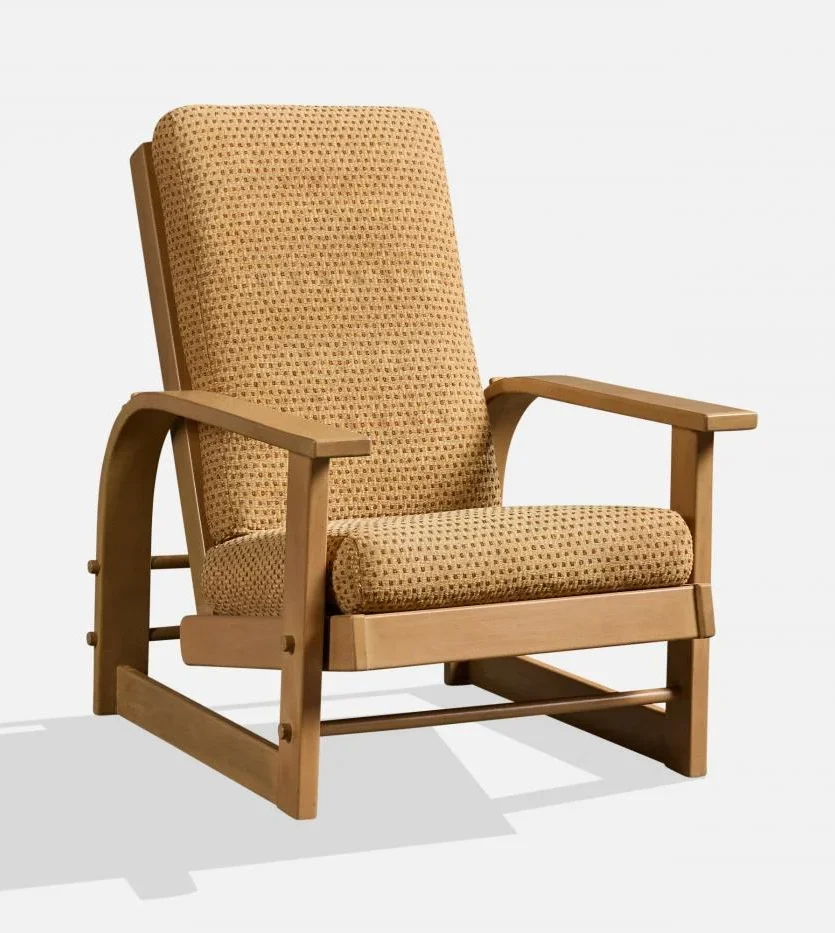
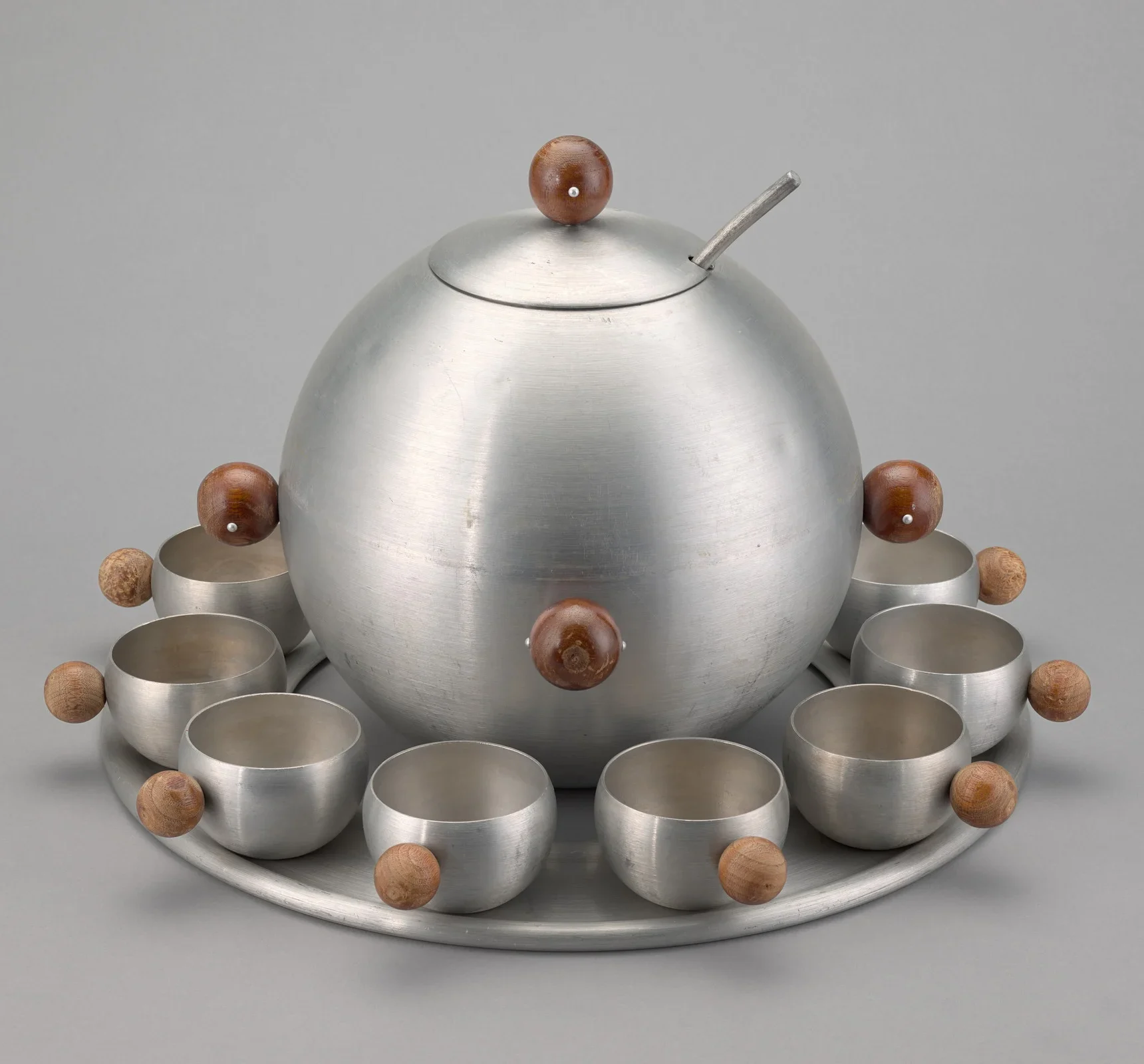


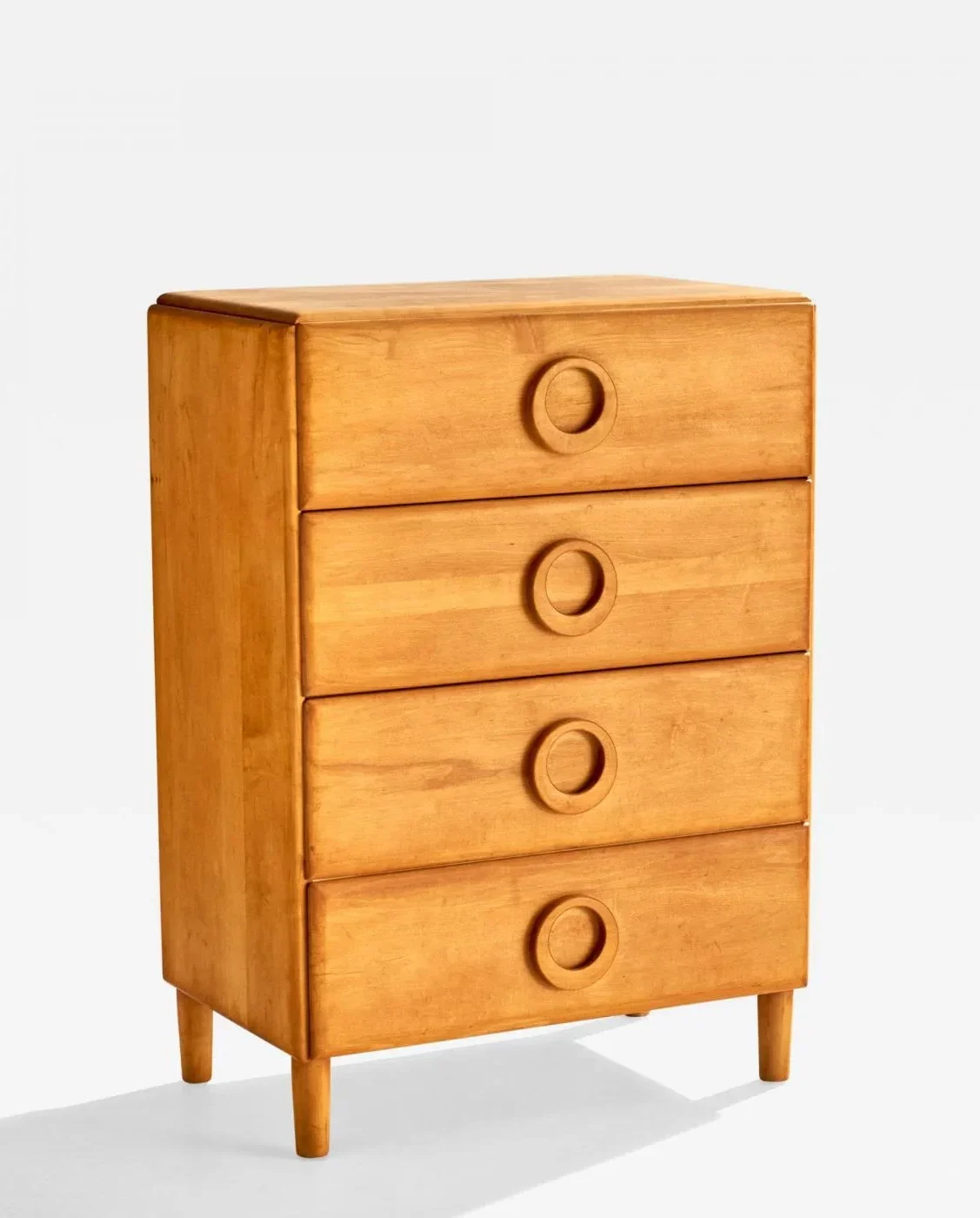
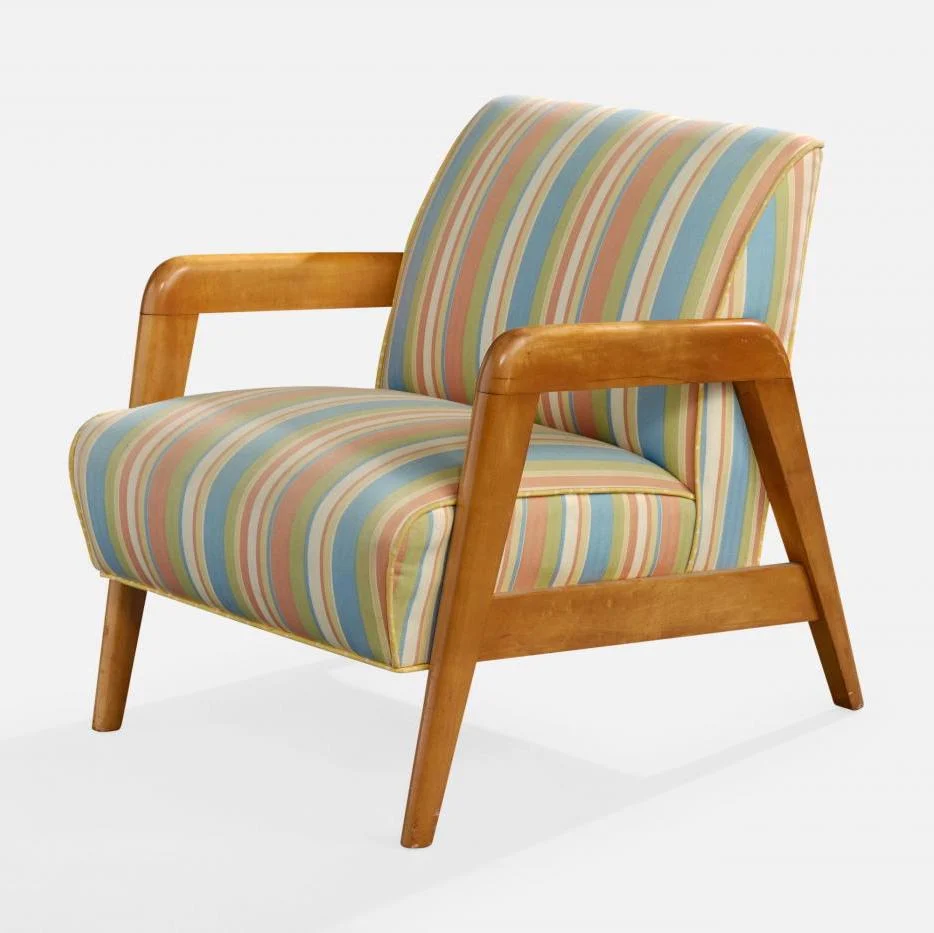
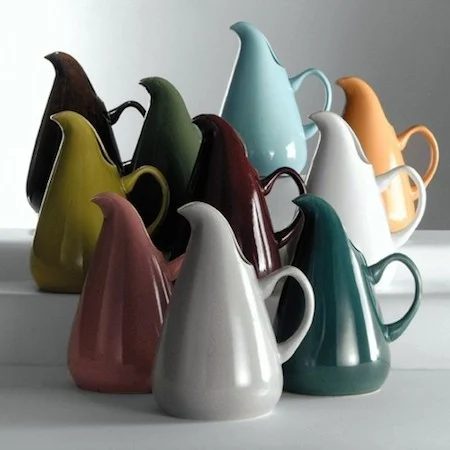
Wright favored soft, organic curves and informal, practical shapes over rigid geometry, giving his tableware a relaxed modern look that felt distinctly American. His early spun aluminum pieces belong to the Machine Age, yet he softened the metal’s cold finish by rubbing it with emery cloth until it resembled pewter. Behind it all lay his belief that good design is for everyone, a philosophy of casual elegance meant to make modern living easy and affordable.
Key Influences
- American Modern Dinnerware: His best-selling line brought modern design to millions of American dinner tables.
- Informal Living: His casual, practical approach changed how Americans entertained and set the table.
- Guide to Easier Living: His 1950 book with Mary shaped the postwar ideal of efficient, relaxed suburban life.
- Lifestyle Branding: His signature was among the first attached to lifestyle-marketed products, paving the way for later personality-driven brands.
- Manitoga: His home and woodland garden remains a model of design in harmony with the landscape.
If you are interested in further stories of the artists who shaped Art Deco, return to our artists page to browse the full directory.

Related Products from ArtDecoCollection.com