Coles Phillips
Clarence Coles Phillips was born on October 3, 1880, in Springfield, Ohio, to Jacob and Anna Seys Phillips. As a boy he sketched animals and caricatures of his friends. His lower-middle-class family expected little more of him than steady work, and his first job was as a clerk at the American Radiator Company. He left to attend Kenyon College from 1902, where he contributed illustrations to the yearbook and the college monthly and designed the cover of the 1908 book Songs of Kenyon. He left Kenyon in his junior year for Manhattan, determined to earn his living as an artist, and after night classes at the Chase Art School he formed his own studio of artists, which included the young Edward Hopper. In 1907, with his money running out and his landlord growing restless, he took a drawing to Life magazine, and its publisher J. A. Mitchell hired him onto the staff at the age of twenty-six. He signed his early work C. Coles Phillips and used the shorter name Coles Phillips after 1911. From 1905 until his death he lived and worked in New Rochelle, New York, a favorite community of illustrators that was also home to J. C. Leyendecker and Norman Rockwell. A kidney ailment left him effectively finished as an artist by 1924, and he died at home on June 13, 1927, at the age of 46, the same day his friend and neighbor Leyendecker took Phillips’s four children into Manhattan to see the Lindbergh parade.
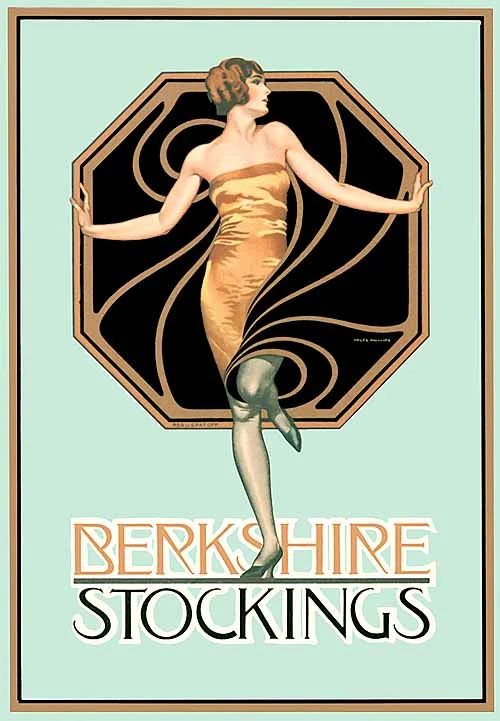
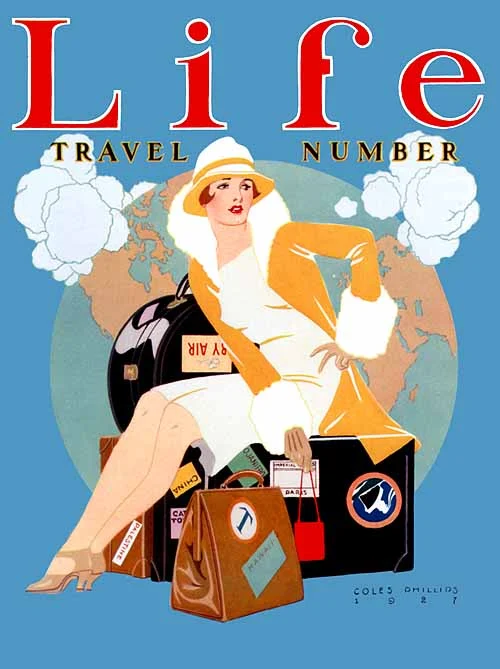
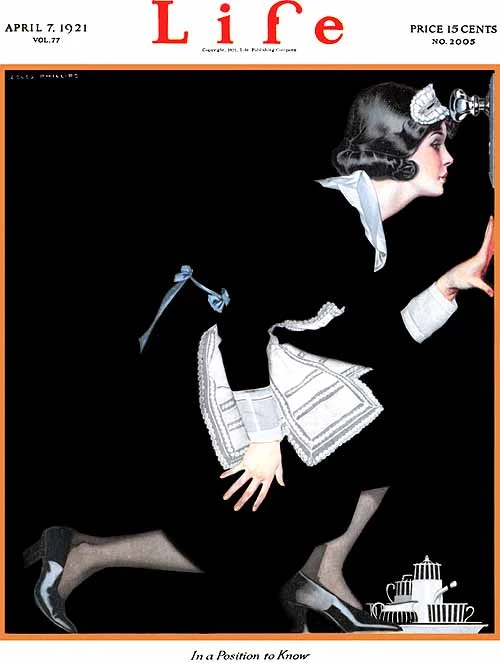
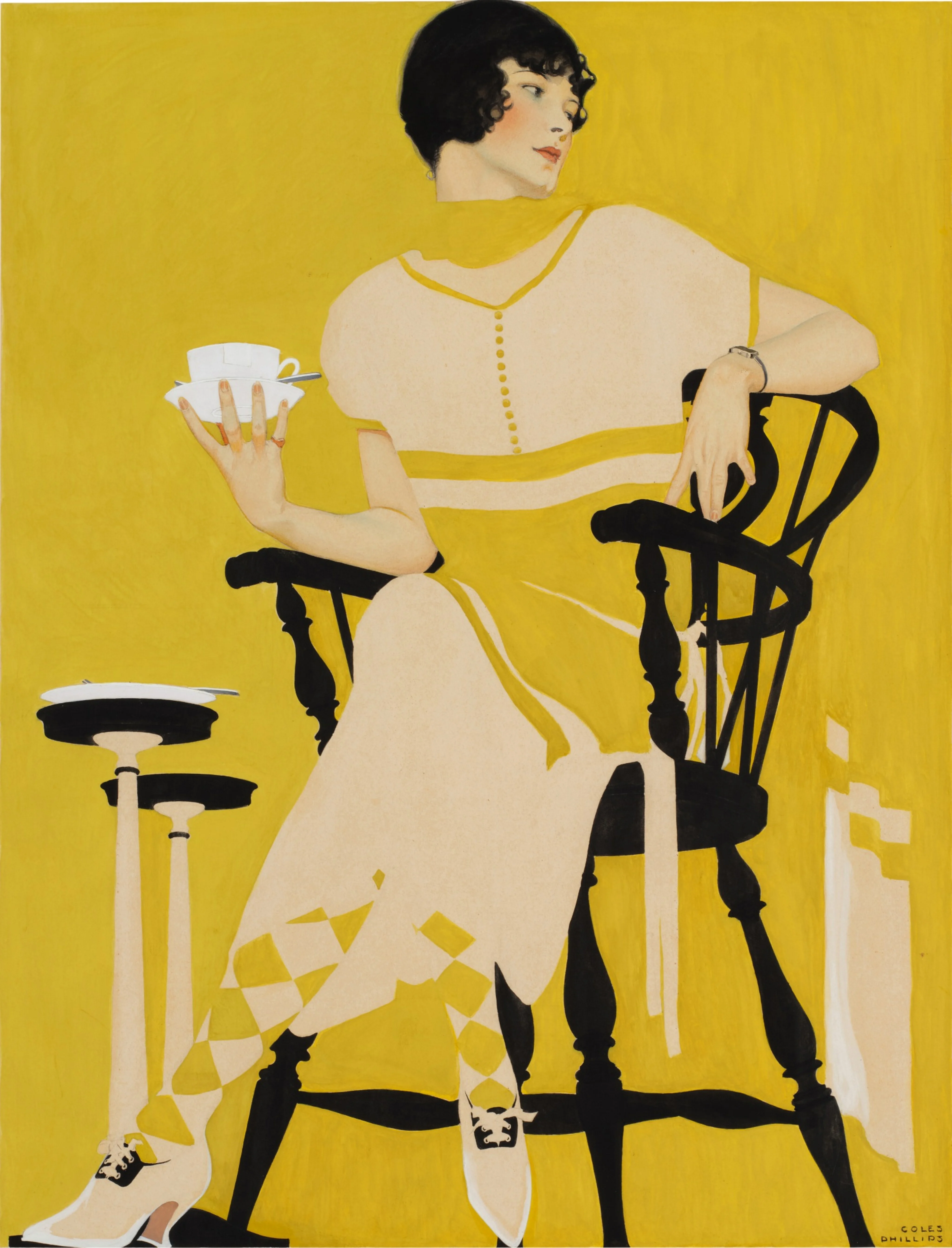
When Life began printing color covers in 1908, Phillips introduced his Fadeaway Girl, a figure whose clothing matched the background and seemed to disappear into it. The cover was an instant success, and over the next four years he painted 54 covers for Life and one a month for Good Housekeeping. For two years beginning in 1912 he was the sole cover artist for Good Housekeeping, where he produced some of his finest Fadeaway Girl covers. He also painted covers for Collier’s and the Saturday Evening Post, and over his career he produced about 70 covers for Life. Between 1907 and 1927 he was ranked alongside Maxfield Parrish and J. C. Leyendecker among the most popular illustrators in the nation. A shrewd businessman as well as an artist, he drew advertising clients ranging from Holeproof Hosiery to Community Plate flatware. His Holeproof series, which showed women’s ankles, was considered daring for its time, and he sometimes wrote the copy himself. He published books of his images, including A Young Man’s Fancy in 1912 and A Gallery of Girls, and his work also appeared on postcards and posters. Though his career lasted only about twenty years, Kenyon’s library holds a portfolio of 25 of his advertisements, and a 1918 Luxite Hosiery advertisement later appeared on a U.S. postage stamp.
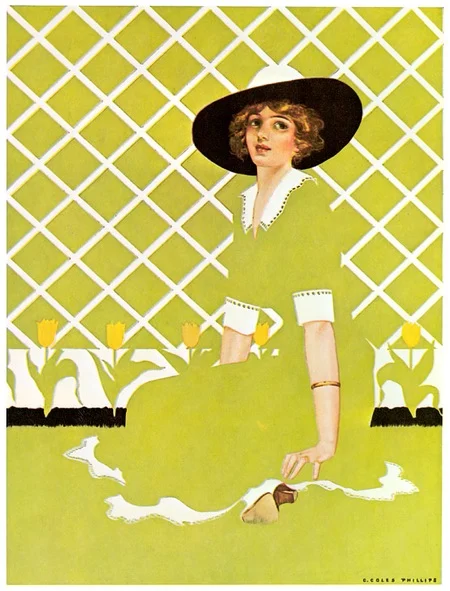
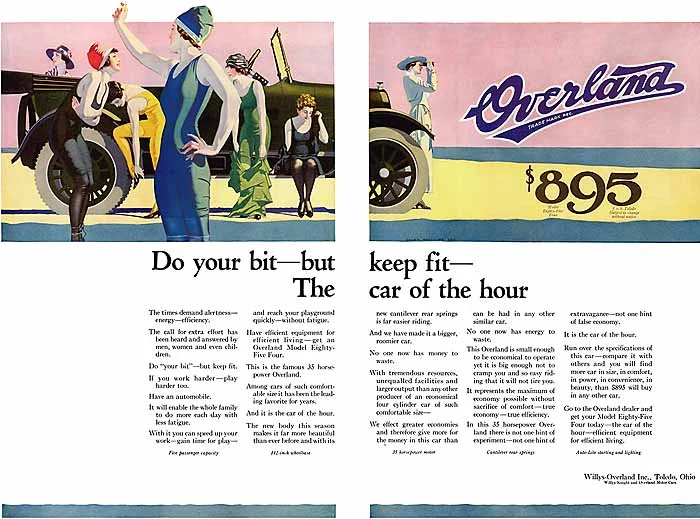
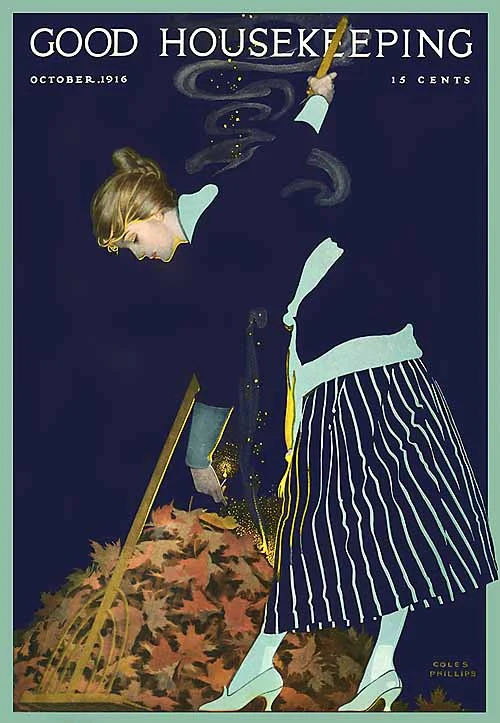
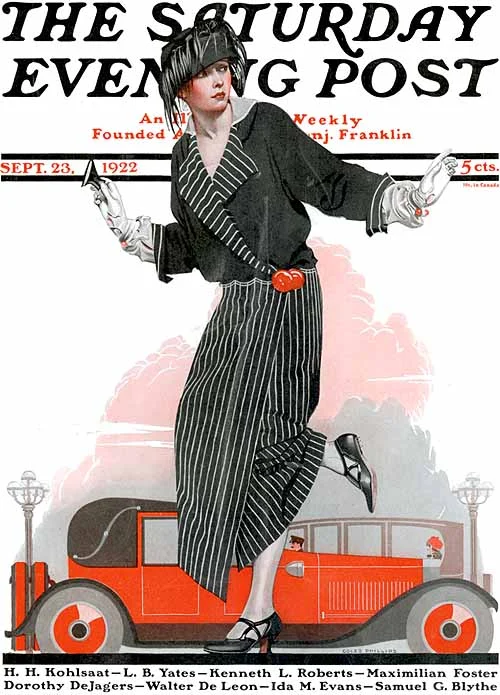
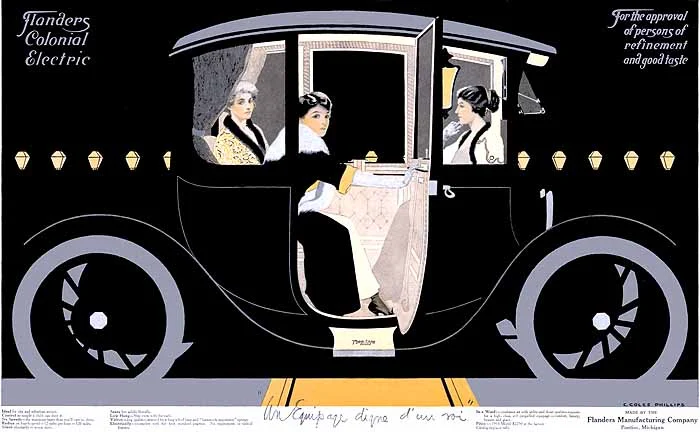
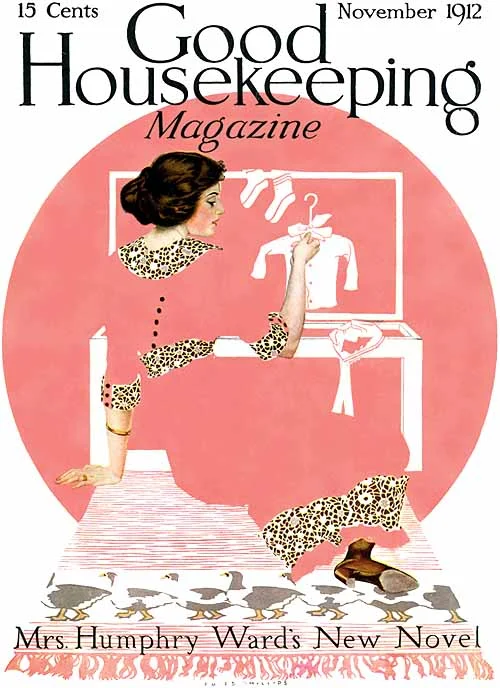
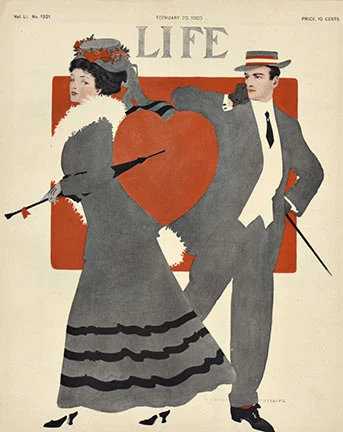
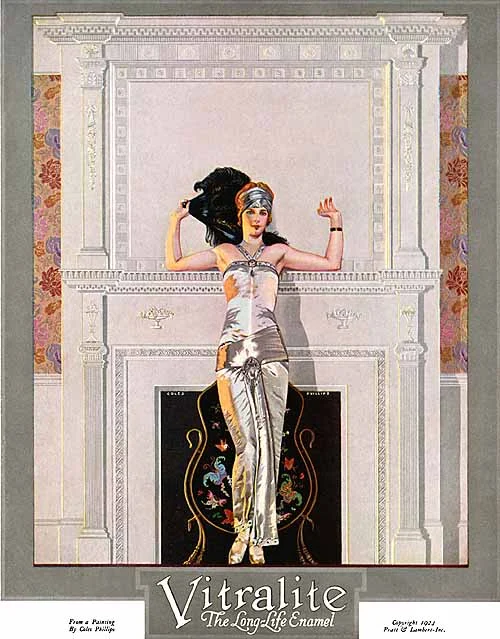
Phillips tied his figures into the background by matching a dress to the color around it, so the figure seemed to dissolve into negative space. The effect was a poster-like simplicity that rested on meticulous advance planning of every shape needed to carry the illusion of a full figure. Working in watercolor, he pictured fashionable young women as modern and polished, replacing the prim Gibson Girl with a sleeker ideal that suited the Art Deco age.
Key Influences
- The Fadeaway Girl: His signature device made negative space a design tool in magazine cover art.
- The Modern American Woman: His fashionable young women replaced the prim Gibson Girl with a sleeker, more modern ideal.
- Art Deco Advertising: His flat, poster-like designs brought modern graphic style to American advertising.
- Magazine Cover Art: His Life and Good Housekeeping covers made him one of the most popular illustrators of the Golden Age.
- The Pin-Up: Some social historians credit his glamorous Fadeaway Girl with creating the first American pin-up.
If you are interested in further stories of the artists who shaped Art Deco, return to our artists page to browse the full directory.

Related Products from ArtDecoCollection.com